OpenAI collapses media reality with Sora, a photorealistic AI video generator

Snapshots from three videos generated using OpenAI's Sora.
Enlarge / Snapshots from three videos generated using OpenAI’s Sora.

On Thursday, OpenAI announced Sora, a text-to-video AI model that can generate 60-second-long photorealistic HD video from written descriptions. While it’s only a research preview that we have not tested, it reportedly creates synthetic video (but not audio yet) at a fidelity and consistency greater than any text-to-video model available at the moment. It’s also freaking people out.

“It was nice knowing you all. Please tell your grandchildren about my videos and the lengths we went to to actually record them,” wrote Wall Street Journal tech reporter Joanna Stern on X.

“This could be the ‘holy shit’ moment of AI,” wrote Tom Warren of The Verge.

“Every single one of these videos is AI-generated, and if this doesn’t concern you at least a little bit, nothing will,” tweeted YouTube tech journalist Marques Brownlee.

For future reference—since this type of panic will some day appear ridiculous—there’s a generation of people who grew up believing that photorealistic video must be created by cameras. When video was faked (say, for Hollywood films), it took a lot of time, money, and effort to do so, and the results weren’t perfect. That gave people a baseline level of comfort that what they were seeing remotely was likely to be true, or at least representative of some kind of underlying truth. Even when the kid jumped over the lava, there was at least a kid and a room.

The prompt that generated the video above: “A movie trailer featuring the adventures of the 30 year old space man wearing a red wool knitted motorcycle helmet, blue sky, salt desert, cinematic style, shot on 35mm film, vivid colors.“

Technology like Sora pulls the rug out from under that kind of media frame of reference. Very soon, every photorealistic video you see online could be 100 percent false in every way. Moreover, every historical video you see could also be false. How we confront that as a society and work around it while maintaining trust in remote communications is far beyond the scope of this article, but I tried my hand at offering some solutions back in 2020, when all of the tech we’re seeing now seemed like a distant fantasy to most people.

In that piece, I called the moment that truth and fiction in media become indistinguishable the “cultural singularity.” It appears that OpenAI is on track to bring that prediction to pass a bit sooner than we expected.

Prompt: Reflections in the window of a train traveling through the Tokyo suburbs.

OpenAI has found that, like other AI models that use the transformer architecture, Sora scales with available compute. Given far more powerful computers behind the scenes, AI video fidelity could improve considerably over time. In other words, this is the “worst” AI-generated video is ever going to look. There’s no synchronized sound yet, but that might be solved in future models.

How (we think) they pulled it off

AI video synthesis has progressed by leaps and bounds over the past two years. We first covered text-to-video models in September 2022 with Meta’s Make-A-Video. A month later, Google showed off Imagen Video. And just 11 months ago, an AI-generated version of Will Smith eating spaghetti went viral. In May of last year, what was previously considered to be the front-runner in the text-to-video space, Runway Gen-2, helped craft a fake beer commercial full of twisted monstrosities, generated in two-second increments. In earlier video-generation models, people pop in and out of reality with ease, limbs flow together like pasta, and physics doesn’t seem to matter.

Sora (which means “sky” in Japanese) appears to be something altogether different. It’s high-resolution (1920×1080), can generate video with temporal consistency (maintaining the same subject over time) that lasts up to 60 seconds, and appears to follow text prompts with a great deal of fidelity. So, how did OpenAI pull it off?

OpenAI doesn’t usually share insider technical details with the press, so we’re left to speculate based on theories from experts and information given to the public.

OpenAI says that Sora is a diffusion model, much like DALL-E 3 and Stable Diffusion. It generates a video by starting off with noise and “gradually transforms it by removing the noise over many steps,” the company explains. It “recognizes” objects and concepts listed in the written prompt and pulls them out of the noise, so to speak, until a coherent series of video frames emerge.

Sora is capable of generating videos all at once from a text prompt, extending existing videos, or generating videos from still images. It achieves temporal consistency by giving the model “foresight” of many frames at once, as OpenAI calls it, solving the problem of ensuring a generated subject remains the same even if it falls out of view temporarily.

OpenAI represents video as collections of smaller groups of data called “patches,” which the company says are similar to tokens (fragments of a word) in GPT-4. “By unifying how we represent data, we can train diffusion transformers on a wider range of visual data than was possible before, spanning different durations, resolutions, and aspect ratios,” the company writes.

An important tool in OpenAI’s bag of tricks is that its use of AI models is compounding. Earlier models are helping to create more complex ones. Sora follows prompts well because, like DALL-E 3, it utilizes synthetic captions that describe scenes in the training data generated by another AI model like GPT-4V. And the company is not stopping here. “Sora serves as a foundation for models that can understand and simulate the real world,” OpenAI writes, “a capability we believe will be an important milestone for achieving AGI.”

One question on many people’s minds is what data OpenAI used to train Sora. OpenAI has not revealed its dataset, but based on what people are seeing in the results, it’s possible OpenAI is using synthetic video data generated in a video game engine in addition to sources of real video (say, scraped from YouTube or licensed from stock video libraries). Nvidia’s Dr. Jim Fan, who is a specialist in training AI with synthetic data, wrote on X, “I won’t be surprised if Sora is trained on lots of synthetic data using Unreal Engine 5. It has to be!” Until confirmed by OpenAI, however, that’s just speculation.

https://arstechnica.com/?p=2003861


Scientists aghast at bizarre AI rat with huge genitals in peer-reviewed article

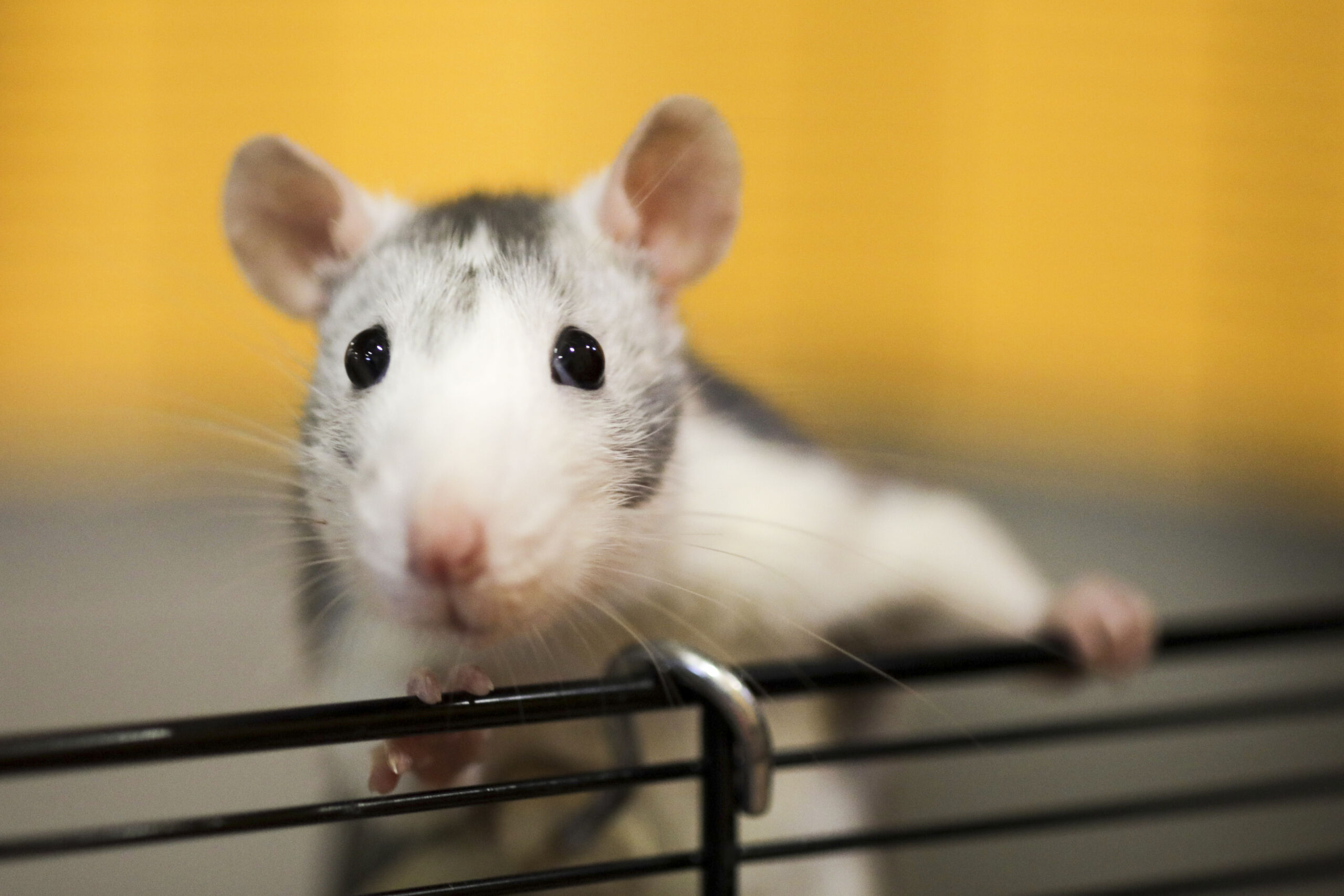
An actual laboratory rat, who is intrigued.
Enlarge / An actual laboratory rat, who is intrigued.

Appall and scorn ripped through scientists’ social media networks Thursday as several egregiously bad AI-generated figures circulated from a peer-reviewed article recently published in a reputable journal. Those figures—which the authors acknowledge in the article’s text were made by Midjourney—are all uninterpretable. They contain gibberish text and, most strikingly, one includes an image of a rat with grotesquely large and bizarre genitals, as well as a text label of “dck.”

AI-generated Figure 1 of the paper. This image is supposed to show spermatogonial stem cells isolated, purified, and cultured from rat testes.
Enlarge / AI-generated Figure 1 of the paper. This image is supposed to show spermatogonial stem cells isolated, purified, and cultured from rat testes.

On Thursday, the publisher of the review article, Frontiers, posted an “expression of concern,” noting that it is aware of concerns regarding the published piece. “An investigation is currently being conducted and this notice will be updated accordingly after the investigation concludes,” the publisher wrote.

The article in question is titled “Cellular functions of spermatogonial stem cells in relation to JAK/STAT signaling pathway,” which was authored by three researchers in China, including the corresponding author Dingjun Hao of Xi’an Honghui Hospital. It was published online Tuesday in the journal Frontiers in Cell and Developmental Biology.

Frontiers did not immediately respond to Ars’ request for comment, but we will update this post with any response.

The first figure in the paper, the one containing the rat, drew immediate attention as scientists began widely sharing it and commenting on it on social media platforms, including Bluesky and X, the platform formerly known as Twitter. From a distance, the anatomical image is clearly all sorts of wrong. But, looking closer only reveals more flaws, including the labels “dissilced,” Stemm cells,” “iollotte sserotgomar,” and “dck.” Many researchers expressed surprise and dismay that such a blatantly bad AI-generated image could pass through the peer-review system and whatever internal processing is in place at the journal.

Figure 2 is supposed to be a diagram of the JAK-STAT signaling pathway.
Enlarge / Figure 2 is supposed to be a diagram of the JAK-STAT signaling pathway.

But the rat’s package is far from the only problem. Figure 2 is less graphic but equally mangled. While it’s intended to be a diagram of a complex signaling pathway, it instead is a jumbled mess. One scientific integrity expert questioned whether it provided an overly complicated explanation of “how to make a donut with colorful sprinkles.” Like the first image, the diagram is rife with nonsense text and baffling images. Figure 3 is no better, offering a collage of small circular images that are densely annotated with gibberish. The image is supposed to provide visual representations of how the signaling pathway from Figure 2 regulates the biological properties of spermatogonial stem cells.

Some scientists online questioned whether the article’s text was also AI-generated. One user noted that AI detection software determined that it was likely to be AI-generated; however, as Ars has reported previously, such software is unreliable.

Figure 3 is supposed to show the regulation of biological properties of spermatogonial stem cells by JAK/STAT signaling pathway.
Enlarge / Figure 3 is supposed to show the regulation of biological properties of spermatogonial stem cells by JAK/STAT signaling pathway.

The images, while egregious examples, highlight a growing problem in scientific publishing. A scientist’s success relies heavily on their publication record, with a large volume of publications, frequent publishing, and articles appearing in top-tier journals, all of which earn scientists more prestige. The system incentivizes less-than-scrupulous researchers to push through low-quality articles, which, in the era of AI chatbots, could potentially be generated with the help of AI. Researchers worry that the growing use of AI will make published research less trustworthy. As such, research journals have recently set new authorship guidelines for AI-generated text to try to address the problem. But for now, as the Frontiers article shows, there are clearly some gaps.

https://arstechnica.com/?p=2003885


AI-powered romantic chatbots are a privacy nightmare

AI-powered romantic chatbots are a privacy nightmare
iStock via Getty Images

You shouldn’t trust any answers a chatbot sends you. And you probably shouldn’t trust it with your personal information either. That’s especially true for “AI girlfriends” or “AI boyfriends,” according to new research.

An analysis of 11 so-called romance and companion chatbots, published on Wednesday by the Mozilla Foundation, has found a litany of security and privacy concerns with the bots. Collectively, the apps, which have been downloaded more than 100 million times on Android devices, gather huge amounts of people’s data; use trackers that send information to Google, Facebook, and companies in Russia and China; allow users to use weak passwords; and lack transparency about their ownership and the AI models that power them.

Since OpenAI unleashed ChatGPT on the world in November 2022, developers have raced to deploy large language models and create chatbots that people can interact with and pay to subscribe to. The Mozilla research provides a glimpse into how this gold rush may have neglected people’s privacy, and into tensions between emerging technologies and how they gather and use data. It also indicates how people’s chat messages could be abused by hackers.

Many “AI girlfriend” or romantic chatbot services look similar. They often feature AI-generated images of women which can be sexualized or sit alongside provocative messages. Mozilla’s researchers looked at a variety of chatbots including large and small apps, some of which purport to be “girlfriends.” Others offer people support through friendship or intimacy or allow role-playing and other fantasies.

“These apps are designed to collect a ton of personal information,” says Jen Caltrider, the project lead for Mozilla’s Privacy Not Included team, which conducted the analysis. “They push you toward role-playing, a lot of sex, a lot of intimacy, a lot of sharing.” For instance, screenshots from the EVA AI chatbot show text saying “I love it when you send me your photos and voice,” and asking whether someone is “ready to share all your secrets and desires.”

Caltrider says there are multiple issues with these apps and websites. Many of the apps may not be clear about what data they are sharing with third parties, where they are based, or who creates them, Caltrider says, adding that some allow people to create weak passwords, while others provide little information about the AI they use. The apps analyzed all had different use cases and weaknesses.

https://arstechnica.com/?p=2003535


USPTO says AI models can’t hold patents

An illustrated concept of a digital brain, crossed out.

On Tuesday, the United States Patent and Trademark Office (USPTO) published guidance on inventorship for AI-assisted inventions, clarifying that while AI systems can play a role in the creative process, only natural persons (human beings) who make significant contributions to the conception of an invention can be named as inventors. It also rules out using AI models to churn out patent ideas without significant human input.

The USPTO says this position is supported by “the statutes, court decisions, and numerous policy considerations,” including the Executive Order on AI issued by President Biden. We’ve previously covered attempts, which have been repeatedly rejected by US courts, by Dr. Stephen Thaler to have an AI program called “DABUS” named as the inventor on a US patent (a process begun in 2019).

This guidance follows themes previously set by the US Copyright Office (and agreed upon by a judge) that an AI model cannot own a copyright for a piece of media and that substantial human contributions are required for copyright protection.

Even though an AI model itself cannot be named an inventor or joint inventor on a patent, using AI assistance to create an invention does not necessarily disqualify a human from holding a patent, as the USPTO explains:

“While AI systems and other non-natural persons cannot be listed as inventors on patent applications or patents, the use of an AI system by a natural person(s) does not preclude a natural person(s) from qualifying as an inventor (or joint inventors) if the natural person(s) significantly contributed to the claimed invention.”

However, the USPTO says that significant human input is required for an invention to be patentable: “Maintaining ‘intellectual domination’ over an AI system does not, on its own, make a person an inventor of any inventions created through the use of the AI system.” So a person simply overseeing an AI system isn’t suddenly an inventor. The person must make a significant contribution to the conception of the invention.

If someone does use an AI model to help create patents, the guidance describes how the application process would work. First, patent applications for AI-assisted inventions must name “the natural person(s) who significantly contributed to the invention as the inventor,” and additionally, applications must not list “any entity that is not a natural person as an inventor or joint inventor, even if an AI system may have been instrumental in the creation of the claimed invention.”

Reading between the lines, it seems the contributions made by AI systems are akin to contributions made by other tools that assist in the invention process. The document does not explicitly say that the use of AI is required to be disclosed during the application process.

Even with the published guidance, the USPTO is seeking public comment on the newly released guidelines and issues related to AI inventorship on its website.

https://arstechnica.com/?p=2003310


Digital Networks Act, la bozza del libro bianco di Thierry Breton (bye bye fair share). Scarica il paper

Nessuna traccia del fair share nella bozza del Digital Networks Act firmata dal Commissario al Mercato Interno Thierry Breton. Il documento, che Key4biz ha potuto visionare, delinea le linee guida per lo sviluppo dell’economia digitale nei prossimi anni. Una visione che diventerà attuale non prima del 2025, dopo le elezioni europee di primavera.  Una sorta di testamento digitale del commissario uscente che non cita nemmeno una volta il fair share.

Scarica il draft del documento di Breton in PDF

Le sfide tecnologiche del futuro

Le sfide tecnologiche dell’era dell’AI devono fare i conti con i gravi ritardi di copertura che pesano sulla competitività dell’Europa.

“Considerando le tendenze attuali e senza ulteriori investimenti e incentivi, gli obiettivi non potranno essere raggiunti entro il 2030: solo il 66% delle imprese utilizzerà il cloud, il 34% i big data e il 20% l’AI, lontano dal 75% obiettivo fissato per il 2030”, si legge nel paper.

Copertura fibra e 5G in ritardo

Eppure, le reti digitali del futuro sono la chiave delle nuove applicazioni come i nuovi mondi virtuali, l’intelligenza (AI) e Web 4.0, nonché per affrontare sfide sociali nei settori dell’energia, dei trasporti o della sanità.

Il documento, un paper di 39 pagine, affronta tutti i capitoli centrali per il raggiungimento degli obiettivi europei: dal tema degli investimenti alle carenze strutturali di un Single Market, alla necessità di un uso più efficiente dello spettro radio (in vista del 6G) e la necessità di pianificare uno spegnimento del rame in tempi stretti.

Il 5G pilastro del digitale

La parola 5G compare 48 volte e fra le priorità c’è quella di puntare su una rete stand alone per lo sviluppo dei Verticals. Una roadmap del 6G sarebbe poi fondamentale.

“Nessun servizio wireless può essere implementato senza la disponibilità di risorse di spettro sufficienti – si legge nel paper – Ciò includerebbe aree nuove e in evoluzione come casi d’uso verticali, 6G, applicazioni IoT, WiFi, uso dello spettro locale e applicazioni di comunicazione satellitare in rapido sviluppo come quelli governativi o commerciali sicuri basati sulla connettività diretta da dispositivo a satellite.

In questo contesto si dovrebbe valutare se per garantire i nuovi progressi tecnologici sia necessario lanciare contemporaneamente in tutta l’UE, una tabella di marcia per il 6G che dovrebbe essere sancita dalla legge e applicate in modo coordinato da tutti gli Stati membri”.

Ce la faremo?  

Scarica il draft del documento di Breton in PDF

Leggi anche: Tassa su Internet (fair share), bocciata la proposta degli incumbent. Breton rimanda il Digital Networks Act al 2025

https://www.key4biz.it/digital-networks-act-la-bozza-del-libro-bianco-di-thierry-breton-bye-bye-fair-share-scarica-il-paper/480017/


AI, spesa degli operatori di rete a 20 miliardi di dollari entro il 2028

Secondo le ultime stime di Juniper Research, la spesa degli operatori di rete globali per l’intelligenza artificiale per l’orchestrazione della rete genererà 20 miliardi di dollari nel 2028, con un aumento del 240% rispetto ai 6 miliardi di dollari previsti nel 2024.

In un nuovo rapporto, la società di ricerca prevede che il maggiore utilizzo delle reti cellulari da parte delle imprese, anche per la produzione intelligente e i veicoli autonomi, richiederà ulteriori investimenti nell’intelligenza artificiale che automatizza i processi chiave della rete.

Pertanto, i casi d’uso necessitano di throughput elevato, bassa latenza e copertura geografica, mentre gli operatori cercano di massimizzare l’efficienza della rete e ridurre le spese operative (OPEX), secondo la società di analisi, che ha esortato le società di telecomunicazioni ad accelerare l’incorporazione dell’intelligenza artificiale nelle reti principali. Il suo rapporto ha inoltre scoperto che l’ottimizzazione delle prestazioni e la sicurezza della rete saranno essenziali in futuro, rappresentando oltre il 50% della spesa complessiva degli operatori globali per l’intelligenza artificiale entro il 2028.

“Poiché gli operatori competono sulla qualità delle loro reti, l’intelligenza artificiale sarà essenziale per massimizzare il valore dell’utilizzo di una rete cellulare per la connettività. Gli utenti con una spesa elevata graviteranno verso quelle reti che possono fornire le migliori condizioni di servizio”, ha osservato l’autore della ricerca Frederick Savage.

https://www.key4biz.it/ai-spesa-degli-operatori-di-rete-a-20-miliardi-di-dollari-entro-il-2028/479899/


OpenAI experiments with giving ChatGPT a long-term conversation memory

A pixelated green illustration of a pair of hands looking through file records.
Enlarge / When ChatGPT looks things up, a pair of green pixelated hands look through paper records, much like this. Just kidding.
Benj Edwards / Getty Images

On Tuesday, OpenAI announced that it is experimenting with adding a form of long-term memory to ChatGPT that will allow it to remember details between conversations. You can ask ChatGPT to remember something, see what it remembers, and ask it to forget. Currently, it’s only available to a small number of ChatGPT users for testing.

So far, large language models have typically used two types of memory: one baked into the AI model during the training process (before deployment) and an in-context memory (the conversation history) that persists for the duration of your session. Usually, ChatGPT forgets what you have told it during a conversation once you start a new session.

Various projects have experimented with giving LLMs a memory that persists beyond a context window. (The context window is the hard limit on the number of tokens the LLM can process at once.) The techniques include dynamically managing context history, compressing previous history through summarization, links to vector databases that store information externally, or simply periodically injecting information into a system prompt (the instructions ChatGPT receives at the beginning of every chat).

A screenshot of ChatGPT memory controls provided by OpenAI.
Enlarge / A screenshot of ChatGPT memory controls provided by OpenAI.

OpenAI hasn’t explained which technique it uses here, but the implementation reminds us of Custom Instructions, a feature OpenAI introduced in July 2023 that lets users add custom additions to the ChatGPT system prompt to change its behavior.

Possible applications for the memory feature provided by OpenAI include explaining how you prefer your meeting notes to be formatted, telling it you run a coffee shop and having ChatGPT assume that’s what you’re talking about, keeping information about your toddler that loves jellyfish so it can generate relevant graphics, and remembering preferences for kindergarten lesson plan designs.

Also, OpenAI says that memories may help ChatGPT Enterprise and Team subscribers work together better since shared team memories could remember specific document formatting preferences or which programming frameworks your team uses. And OpenAI plans to bring memories to GPTs soon, with each GPT having its own siloed memory capabilities.

Memory control

Obviously, any tendency to remember information brings privacy implications. You should already know that sending information to OpenAI for processing on remote servers introduces the possibility of privacy leaks and that OpenAI trains AI models on user-provided information by default unless conversation history is disabled or you’re using an Enterprise or Team account.

Along those lines, OpenAI says that your saved memories are also subject to OpenAI training use unless you meet the criteria listed above. Still, the memory feature can be turned off completely. Additionally, the company says, “We’re taking steps to assess and mitigate biases, and steer ChatGPT away from proactively remembering sensitive information, like your health details—unless you explicitly ask it to.”

Users will also be able to control what ChatGPT remembers using a “Manage Memory” interface that lists memory items. “ChatGPT’s memories evolve with your interactions and aren’t linked to specific conversations,” OpenAI says. “Deleting a chat doesn’t erase its memories; you must delete the memory itself.”

ChatGPT’s memory features are not currently available to every ChatGPT account, so we have not experimented with it yet. Access during this testing period appears to be random among ChatGPT (free and paid) accounts for now. “We are rolling out to a small portion of ChatGPT free and Plus users this week to learn how useful it is,” OpenAI writes. “We will share plans for broader roll out soon.”

https://arstechnica.com/?p=2003078


AI ACT, via libera dalle Commissioni dell’Europarlamento

AI ACT, c’è il voto delle commissioni IMCO e LIBE

Approvato dalle commissioni Mercato interno (IMCO) e Libertà civili (LIBE) il regolamento sull’Intelligenza Artificiale (AI Act) negoziato dagli Stati membri dell’Unione. Un altro passo in avanti di grande importanza per l’entrata in vigore della legge.

Un primo fondamentale accordo politico, seppur provvisorio, è stato raggiunto l’8 dicembre 2023 tra i Paesi membri dell’Unione e il Parlamento europeo, mentre il 21 gennaio 2024 si è arrivati ad una nuova bozza di testo.

Oggi, le commissioni del Parlamento europeo danno una spinta concreta al documento, che ora dovrà essere formalmente adottato sia dall’Europarlamento che dal Consiglio per diventare legge europea.

Lo scorso 2 febbraio anche la riunione dei Rappresentanti Permanenti dei 27 (Coreper I) ha dato il suo via libera all’AI Act.

Regolamentare l’AI

L’accordo prevede salvaguardie sull’intelligenza artificiale per scopi generali, limitazione all’uso da parte delle forze dell’ordine dei sistemi di identificazione biometrica, divieti sul punteggio sociale (social scoring) e sull’intelligenza artificiale utilizzata per manipolare o sfruttare le vulnerabilità degli utenti.

Il testo comprende un lungo elenco di usi vietati dell’IA (come il punteggio sociale), insieme a regole per una serie definita di usi ad alto rischio (ad esempio istruzione, sanità o lavoro), come obblighi in aree come la qualità dei dati, i test e la valutazione del rischio. Inoltre, applica alcuni requisiti di trasparenza su IA e strumenti generici come deepfake e chatbot AI.

La maggior parte delle app di intelligenza artificiale, però, saranno considerate “a basso rischio”, nel senso che non rientrano nell’ambito di applicazione della legge. Il piano prevede inoltre l’istituzione di sandbox normativi a livello nazionale per consentire agli sviluppatori di sviluppare, formare e testare app rischiose in un ambiente “reale” supervisionato.

Le priorità dell’Europarlamento

La priorità per il Parlamento è quella di assicurarsi che i sistemi di intelligenza artificiale utilizzati nell’Ue siano sicuri, trasparenti, tracciabili, non discriminatori e rispettosi dell’ambiente. I sistemi di intelligenza artificiale dovrebbero essere supervisionati da persone, anziché da automazione, per evitare conseguenze dannose.

Il Parlamento vuole anche stabilire una definizione tecnologicamente neutra e uniforme per l’IA che potrebbe essere applicata ai futuri sistemi di intelligenza artificiale.

https://www.key4biz.it/ai-act-via-libera-dalle-commissioni-delleuroparlamento/479674/


London Underground is testing real-time AI surveillance tools to spot crime

Commuters wait on the platform as a Central Line tube train arrives at Liverpool Street London Transport Tube Station in 2023.

Thousands of people using the London Underground had their movements, behavior, and body language watched by AI surveillance software designed to see if they were committing crimes or were in unsafe situations, new documents obtained by WIRED reveal. The machine-learning software was combined with live CCTV footage to try to detect aggressive behavior and guns or knives being brandished, as well as looking for people falling onto Tube tracks or dodging fares.

From October 2022 until the end of September 2023, Transport for London (TfL), which operates the city’s Tube and bus network, tested 11 algorithms to monitor people passing through Willesden Green Tube station, in the northwest of the city. The proof of concept trial is the first time the transport body has combined AI and live video footage to generate alerts that are sent to frontline staff. More than 44,000 alerts were issued during the test, with 19,000 being delivered to station staff in real time.

Documents sent to WIRED in response to a Freedom of Information Act request detail how TfL used a wide range of computer vision algorithms to track people’s behavior while they were at the station. It is the first time the full details of the trial have been reported, and it follows TfL saying, in December, that it will expand its use of AI to detect fare dodging to more stations across the British capital.

In the trial at Willesden Green—a station that had 25,000 visitors per day before the COVID-19 pandemic—the AI system was set up to detect potential safety incidents to allow staff to help people in need, but it also targeted criminal and antisocial behavior. Three documents provided to WIRED detail how AI models were used to detect wheelchairs, prams, vaping, people accessing unauthorized areas, or putting themselves in danger by getting close to the edge of the train platforms.

The documents, which are partially redacted, also show how the AI made errors during the trial, such as flagging children who were following their parents through ticket barriers as potential fare dodgers, or not being able to tell the difference between a folding bike and a non-folding bike. Police officers also assisted the trial by holding a machete and a gun in the view of CCTV cameras, while the station was closed, to help the system better detect weapons.

Privacy experts who reviewed the documents question the accuracy of object detection algorithms. They also say it is not clear how many people knew about the trial, and warn that such surveillance systems could easily be expanded in the future to include more sophisticated detection systems or face recognition software that attempts to identify specific individuals. “While this trial did not involve facial recognition, the use of AI in a public space to identify behaviors, analyze body language, and infer protected characteristics raises many of the same scientific, ethical, legal, and societal questions raised by facial recognition technologies,” says Michael Birtwistle, associate director at the independent research institute the Ada Lovelace Institute.

In response to WIRED’s Freedom of Information request, the TfL says it used existing CCTV images, AI algorithms, and “numerous detection models” to detect patterns of behavior. “By providing station staff with insights and notifications on customer movement and behaviour they will hopefully be able to respond to any situations more quickly,” the response says. It also says the trial has provided insight into fare evasion that will “assist us in our future approaches and interventions,” and the data gathered is in line with its data policies.

In a statement sent after publication of this article, Mandy McGregor, TfL’s head of policy and community safety, says the trial results are continuing to be analyzed and adds, “there was no evidence of bias” in the data collected from the trial. During the trial, McGregor says, there were no signs in place at the station that mentioned the tests of AI surveillance tools.

“We are currently considering the design and scope of a second phase of the trial. No other decisions have been taken about expanding the use of this technology, either to further stations or adding capability.” McGregor says. “Any wider roll out of the technology beyond a pilot would be dependent on a full consultation with local communities and other relevant stakeholders, including experts in the field.”

https://arstechnica.com/?p=2002361


Report: Sam Altman seeking trillions for AI chip fabrication from UAE, others

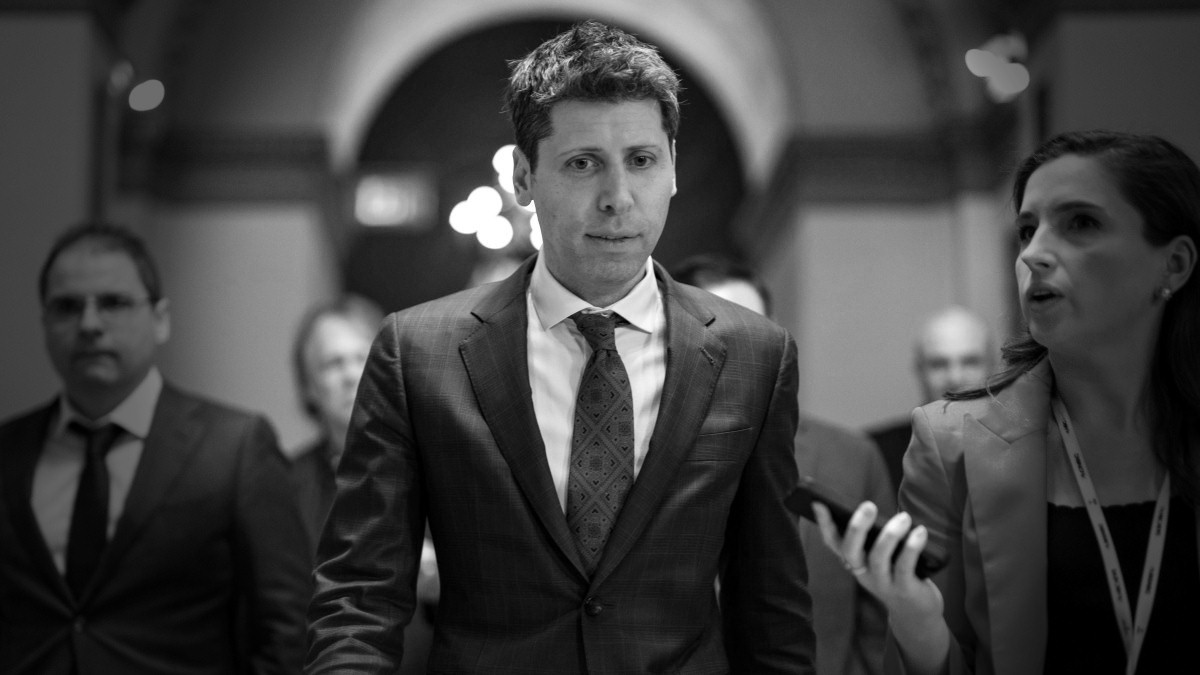
WASHINGTON, DC - JANUARY 11: OpenAI Chief Executive Officer Sam Altman walks on the House side of the U.S. Capitol on January 11, 2024 in Washington, DC. Meanwhile, House Freedom Caucus members who left a meeting in the Speakers office say that they were talking to the Speaker about abandoning the spending agreement that Johnson announced earlier in the week. (Photo by Kent Nishimura/Getty Images)
Enlarge / OpenAI Chief Executive Officer Sam Altman walks on the House side of the US Capitol on January 11, 2024, in Washington, DC. (Photo by Kent Nishimura/Getty Images)
Getty Images

On Thursday, The Wall Street Journal reported that OpenAI CEO Sam Altman is in talks with investors to raise as much as $5 trillion to $7 trillion for AI chip manufacturing, according to people familiar with the matter. The funding seeks to address the scarcity of graphics processing units (GPUs) crucial for training and running large language models like those that power ChatGPT, Microsoft Copilot, and Google Gemini.

The high dollar amount reflects the huge amount of capital necessary to spin up new semiconductor manufacturing capability. “As part of the talks, Altman is pitching a partnership between OpenAI, various investors, chip makers and power providers, which together would put up money to build chip foundries that would then be run by existing chip makers,” writes the Wall Street Journal in its report. “OpenAI would agree to be a significant customer of the new factories.”

To hit these ambitious targets—which are larger than the entire semiconductor industry’s current $527 billion global sales combined—Altman has reportedly met with a range of potential investors worldwide, including sovereign wealth funds and government entities, notably the United Arab Emirates, SoftBank CEO Masayoshi Son, and representatives from Taiwan Semiconductor Manufacturing Co. (TSMC).

TSMC is the world’s largest dedicated independent semiconductor foundry. It’s a critical linchpin that companies such as Nvidia, Apple, Intel, and AMD rely on to fabricate SoCs, CPUs, and GPUs for various applications.

Altman reportedly seeks to expand the global capacity for semiconductor manufacturing significantly, funding the infrastructure necessary to support the growing demand for GPUs and other AI-specific chips. GPUs are excellent at parallel computation, which makes them ideal for running AI models that heavily rely on matrix multiplication to work. However, the technology sector currently faces a significant shortage of these important components, constraining the potential for AI advancements and applications.

In particular, the UAE’s involvement, led by Sheikh Tahnoun bin Zayed al Nahyan, a key security official and chair of numerous Abu Dhabi sovereign wealth vehicles, reflects global interest in AI’s potential and the strategic importance of semiconductor manufacturing. However, the prospect of substantial UAE investment in a key tech industry raises potential geopolitical concerns, particularly regarding the US government’s strategic priorities in semiconductor production and AI development.

The US has been cautious about allowing foreign control over the supply of microchips, given their importance to the digital economy and national security. Reflecting this, the Biden administration has undertaken efforts to bolster domestic chip manufacturing through subsidies and regulatory scrutiny of foreign investments in important technologies.

To put the $5 trillion to $7 trillion estimate in perspective, the White House just today announced a $5 billion investment in R&D to advance US-made semiconductor technologies. TSMC has already sunk $40 billion—one of the largest foreign investments in US history—into a US chip plant in Arizona. As of now, it’s unclear whether Altman has secured any commitments toward his fundraising goal.

Updated on February 9, 2024 at 8:45 PM Eastern with a quote from the WSJ that clarifies the proposed relationship between OpenAI and partners in the talks.

https://arstechnica.com/?p=2002331