AI, Giomi (Agcom): ‘Giusto mettere regole ma senza fermare l’innovazione’

“Per ogni applicazione potenzialmente pericolosa dell’Intelligenza Artificiale  esiste un numero di suoi utilizzi molto superiore che porta notevoli benefici a tutti i settori produttivi dall’industria alla pubblica amministrazione e anche ai singoli cittadini”. Così la Commissaria AGCOM Elisa Giomi al World Artificial Intelligence Cannes Festival nel corso dell’evento: “Regolamentare la prossima rivoluzione industriale”, organizzato da AIRIA l’Associazione per la regolazione dell’AI in Italia.

“Fermo restando il primato dell’etica e dei diritti umani come dimostra la recente approvazione da parte della UE dell’AI ACT che è la prima norma di settore al mondo, non possiamo nascondere che scontiamo un forte ritardo in termini di innovazione, tanto è vero che in Europa nascono pochissime start up ad alta capacità tecnologica, i cosiddetti ‘unicorni’, quindi dobbiamo cogliere questa opportunità” prosegue Giomi che chiosa: “Sarebbe come scegliere di rimanere all’aratro in un mondo in cui tutti usano il trattore solo per la paura che il trattore possa schiacciare animali e persone”.
“Le regole sono indispensabili ma non devono essere usate per fermare il progresso piuttosto vanno usate per produrre cultura dell’AI, che significa in primo luogo evitare il panico morale che si ripresenta ad ogni novità tecnologica e mediale, trasformandolo, in conoscenza e apprendimento di quanto accade”. 

“Rispetto agli altri settori l’utilizzo dell’AI nei media resta quasi sempre sotto traccia, perlomeno fino al momento in cui accade qualcosa che catalizza l’opinione pubblica mondiale, per fare un esempio, la clonazione della voce di Biden da parte di un robocall che dissuadeva dall’andare a votare per le primarie repubblicane, e dimenticando che per ognuno di questi utilizzi negativi dell’AI ve ne sono moltissimi di positivi, come il clonaggio della voce nella produzione audiovisiva, l’uso di AI per individuare i deepfake, per la verifica dei fatti e delle fonti, nell’integrazione e nel dialogo interculturale” prosegue la Commissaria.

A proposito della perdita dei posti di lavoro a cui spesso si fa riferimento quando si parla dell’Intelligenza Artificiale” la Commissaria ha commentato: “Non credo che AI possa rubare posti di lavoro, probabilmente sostituirà quelle funzioni che dell’AI non sanno avvalersi. Ci sono attività di lavoro in cui non servirà e quindi non verrà impiegata”.

E conclude: “Le regole sono molto importanti e non è possibile l’Intelligenza artificiale senza etica, ma non dobbiamo nemmeno correre il rischio di ritrovarci con l’etica senza AI”.

https://www.key4biz.it/ai-giomi-agcom-giusto-mettere-regole-ma-senza-fermare-linnovazione/479388/



AI cannot be used to deny health care coverage, feds clarify to insurers

A nursing home resident is pushed along a corridor by a nurse.
Enlarge / A nursing home resident is pushed along a corridor by a nurse.

Health insurance companies cannot use algorithms or artificial intelligence to determine care or deny coverage to members on Medicare Advantage plans, the Centers for Medicare & Medicaid Services (CMS) clarified in a memo sent to all Medicare Advantage insurers.

The memo—formatted like an FAQ on Medicare Advantage (MA) plan rules—comes just months after patients filed lawsuits claiming that UnitedHealth and Humana have been using a deeply flawed AI-powered tool to deny care to elderly patients on MA plans. The lawsuits, which seek class-action status, center on the same AI tool, called nH Predict, used by both insurers and developed by NaviHealth, a UnitedHealth subsidiary.

According to the lawsuits, nH Predict produces draconian estimates for how long a patient will need post-acute care in facilities like skilled nursing homes and rehabilitation centers after an acute injury, illness, or event, like a fall or a stroke. And NaviHealth employees face discipline for deviating from the estimates, even though they often don’t match prescribing physicians’ recommendations or Medicare coverage rules. For instance, while MA plans typically provide up to 100 days of covered care in a nursing home after a three-day hospital stay, using nH Predict, patients on UnitedHealth’s MA plan rarely stay in nursing homes for more than 14 days before receiving payment denials, the lawsuits allege.

Specific warning

It’s unclear how nH Predict works exactly, but it reportedly uses a database of 6 million patients to develop its predictions. Still, according to people familiar with the software, it only accounts for a small set of patient factors, not a full look at a patient’s individual circumstances.

This is a clear no-no, according to the CMS’s memo. For coverage decisions, insurers must “base the decision on the individual patient’s circumstances, so an algorithm that determines coverage based on a larger data set instead of the individual patient’s medical history, the physician’s recommendations, or clinical notes would not be compliant,” the CMS wrote.

The CMS then provided a hypothetical that matches the circumstances laid out in the lawsuits, writing:

In an example involving a decision to terminate post-acute care services, an algorithm or software tool can be used to assist providers or MA plans in predicting a potential length of stay, but that prediction alone cannot be used as the basis to terminate post-acute care services.

Instead, the CMS wrote, in order for an insurer to end coverage, the individual patient’s condition must be reassessed, and denial must be based on coverage criteria that is publicly posted on a website that is not password protected. In addition, insurers who deny care “must supply a specific and detailed explanation why services are either no longer reasonable and necessary or are no longer covered, including a description of the applicable coverage criteria and rules.”

In the lawsuits, patients claimed that when coverage of their physician-recommended care was unexpectedly wrongfully denied, insurers didn’t give them full explanations.

Fidelity

In all, the CMS finds that AI tools can be used by insurers when evaluating coverage—but really only as a check to make sure the insurer is following the rules. An “algorithm or software tool should only be used to ensure fidelity” with coverage criteria, the CMS wrote. And, because “publicly posted coverage criteria are static and unchanging, artificial intelligence cannot be used to shift the coverage criteria over time” or apply hidden coverage criteria.

The CMS sidesteps any debate about what qualifies as artificial intelligence by offering a broad warning about algorithms and artificial intelligence. “There are many overlapping terms used in the context of rapidly developing software tools,” the CMS wrote.

Algorithms can imply a decisional flow chart of a series of if-then statements (i.e., if the patient has a certain diagnosis, they should be able to receive a test), as well as predictive algorithms (predicting the likelihood of a future admission, for example). Artificial intelligence has been defined as a machine-based system that can, for a given set of human-defined objectives, make predictions, recommendations, or decisions influencing real or virtual environments. Artificial intelligence systems use machine- and human-based inputs to perceive real and virtual environments; abstract such perceptions into models through analysis in an automated manner; and use model inference to formulate options for information or action.

The CMS also openly worried that the use of either of these types of tools can reinforce discrimination and biases—which has already happened with racial bias. The CMS warned insurers to ensure any AI tool or algorithm they use “is not perpetuating or exacerbating existing bias, or introducing new biases.”

While the memo overall was an explicit clarification of existing MA rules, the CMS ended by putting insurers on notice that it is increasing its audit activities and “will be monitoring closely whether MA plans are utilizing and applying internal coverage criteria that are not found in Medicare laws.” Non-compliance can result in warning letters, corrective action plans, monetary penalties, and enrollment and marketing sanctions.

https://arstechnica.com/?p=2002239


AI Act, il testo approvato dal Coreper e i passaggi futuri

Il 2024 segna già un fondamentale passaggio nella disciplina normativa dell’AI.

Dopo l’accordo politico raggiunto alla fine dell’anno passato, infatti, lo scorso 2 febbraio il Comitato dei rappresentanti permanenti (Coreper) degli Stati membri dell’Unione ha approvato con voto unanime il Regolamento UE sull’intelligenza artificiale.

I principali contenuti del Regolamento AI

Nelle prossime settimane il testo dell’AI Act (o AIA) affronterà ancora l’esame di due Commissioni che ne analizzeranno rispettivamente gli impatti sul mercato interno e sulle libertà civili dei cittadini, per poi passare alla discussione nell’aula del Parlamento europeo.

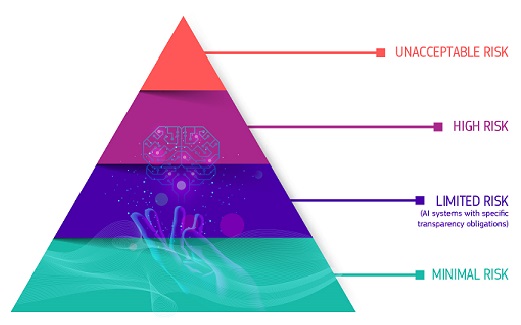
Sul piano dei contenuti, si confermano la preminenza di un approccio risk-based e la scelta di individuare 4 livelli di rischio per valutare i sistemi che impiegano l’intelligenza artificiale:

  • minimo/inesistente;
  • limitato;
  • elevato;
  • inaccettabile.
fonte: https://digital-strategy.ec.europa.eu/en/policies/regulatory-framework-ai

Particolari cautele sono previste in caso di general purpose AI (GPAI), categoria individuata in termini di “floating point operation” o FLOP, nella quale ad oggi rientrano ben pochi strumenti – tra cui GPT4 – ma di cui si prevede la forte espansione nel vicino futuro.

In concreto, i fornitori di sistemi ascritti alle categorie di rischio più elevato dovranno fornire informazioni dettagliate sulla qualità dei dati utilizzati e le modalità di “addestramento” applicate, oltre ad affrontare obblighi di mitigazione dei rischi particolarmente stringenti; ciò andrà implementato anche tramite attività di adversarial testing e, naturalmente, idonee misure di cybersecurity.

Per le pubbliche autorità europee si conferma il divieto di utilizzare tecniche di predictive policing o di riconoscimento biometrico in tempo reale. È tuttavia ammesso il ricorso alla crime analytics, ad esempio per individuare aree territoriali (ma non singole persone) che presentino un particolare rischio di attività criminali, con alcune eccezioni a salvaguardia delle libertà individuali.

Ulteriori novità sono rappresentate dall’istituzione di un AI Office presso la Commissione UE, che dovrà agevolare una governance condivisa in materia, nonché del Fundamental rights impact assessment, posto dall’art. 29 del Regolamento a carico di chiunque impieghi software basati sull’AI reputati “ad alto rischio”, imponendo loro più elevati requisiti di trasparenza e doveri di informazione verso gli utenti, insieme all’adozione di codici di condotta etica.

Sebbene a livello globale esistano già oltre 300 fonti normative – nonché numerosi standard tecnici – in ambito di Intelligenza Artificiale, il Regolamento comunitario assume su di sé l’onere di fornire definizioni univoche e regole condivise per la gestione di uno strumento ormai fondamentale, tanto per il mondo ICT quanto per l’umanità nel suo complesso.

Il voto finale del Parlamento europeo è previsto per il 24 aprile: fino ad allora, saranno ancora molti i nodi da sciogliere e le decisioni da prendere prima di poter dare una veste definitiva al nuovo AI Act.

A cura della Redazione

Condividi sui Social Network:

https://www.ictsecuritymagazine.com/notizie/ai-act-il-testo-approvato-dal-coreper-e-i-passaggi-futuri/


AI can now master your music—and it does shockingly well

AI can now master your music—and it does shockingly well
Aurich Lawson | Getty Images

It was just a stray remark at the end of a guitar lesson last fall.

My teacher is a veteran musician whose band has had both major label and indie record deals, and he loves the analog, the human, the vintage, the imperfect. So it didn’t surprise me to learn that he still likes to mix tracks with an old analog board or that he has a long-time “mastering guy” who finalizes the band’s albums.

What did surprise me was the comment that he had for some time been testing LANDR, the online music service that offers AI-powered mastering. Pay a monthly fee, upload a well-mixed track, and in a minute, the system spits back a song that hits modern loudness standards and is punched up with additional clarity, EQ, stereo width, and dynamics processing.

After mastering, the end result should sound “more like a record,” but this stage of the music-making process has always required subtle value judgments, as every change operates on the entire stereo track. And well-trained humans excel at subtle value judgments.

So I was expecting some line about the slight edge that ears and hands still held over our machine overlords. Instead, I heard: “In the last year, LANDR has improved so much that it now sounds as good as, or in some cases better than, things we’ve had mastered professionally.”

AI-powered mastering systems allow endless tweaking (mastering engineers generally offer a specific number of revisions). They return results within a minute (mastering engineers might need up to a week). They are comparatively cheap (mastering engineers might charge anywhere from $30 up to a few hundred bucks a track, depending on their experience). And now they can sound better than humans? This statement, coming from a guy who won’t buy a guitar made after 1975, was high praise indeed.

I flagged the remark as something to investigate later.

A few weeks after our conversation, Apple released version 10.8 of Logic Pro, its flagship digital audio workstation (DAW) and the big sibling to GarageBand. Stuffed inside the update was Mastering Assistant, Apple’s own take on AI-powered mastering. If you were a Logic user, you suddenly got this capability for free—and you could run it right inside your laptop, desktop, or iPad.

So between my guitar teacher and Apple, the consensus seemed to be that AI-powered mastering was in fact A Thing That Could Now Be Done Well. Which meant I had to try it.

See, in 2023, I built a small home music studio for under a thousand bucks—gear is ridiculously cheap and high quality compared to the old analog era—and taught myself tracking and mix engineering. This was a surprisingly technical process. It took months before I knew my 1176 from my LA-2A or my large condenser from my dynamic mic or my dBFS from my LUFS. Mic placement alone, especially for complex analog instruments like acoustic guitars, took considerable trial and error to get right.

Alongside this engineering boot camp, I began writing songs as part of my long-sublimated desire to don the tight leather pants and bring real rock’n’roll back from the dead. I liked some of my compositions, too—not always a given in this sort of creative endeavor. The lyrics felt clever, the melodies hummable. I began to record.

But something stood in my way. Even as I learned proper technique and my recordings went from “meh” to “now we’re talking,” they never quite possessed that pro-level radio sheen. How to get it? Many people mumbled “mastering” like it was a dark art, as though some hidden final alchemy would “glue” your track together and lacquer it in a high-gloss finish, and they said this alchemy could only be performed by grizzled mastering engineers working with special mastering compressors and EQs of almost unfathomable complexity.

https://arstechnica.com/?p=2000601


AI Act, via libera dai Paesi Ue alle nuove regole sull’intelligenza artificiale

La riunione dei Rappresentanti Permanenti dei 27 (Coreper I) ha dato il via libera all’AI Act, il nuovo sistema di regole dell’Ue sull’Intelligenza artificiale, per mettere un freno ai sistemi come ChatGPT e vietare l’uso indiscriminato del riconoscimento facciale e della sorveglianza biometrica. Gli ambasciatori degli Stati membri nell’Ue hanno confermato l’accordo raggiunto a dicembre con il Parlamento Ue.

L’AI Act sarà ora sottoposto al voto di una commissione chiave di legislatori dell’UE il 13 febbraio, seguito dal voto del Parlamento Europeo fissato per il 24 aprile. Ma l’entrata in vigore non sarà immediata, bensì per step graduali. Soddisfazione dell’Italia, che ha appoggiato la normativa.

Leggi anche: AI Act, Butti: “Pronti a implementarlo per tutelare i diritti dei cittadini e promuovere l’innovazione responsabile”

Ia: Benifei (Pd), soddisfazione per ok unanime Governi ad Ai Act

“Oggi è un bel giorno per l’Unione europea: dopo settimane di rumors sulla stampa e di dubbi, fomentati da qualche grande impresa perlopiù extra-europea e magari da ministri che avrebbero voluto usare queste tecnologie per sorveglianza e attività di controllo sociale senza regole, abbiamo avuto oggi l’approvazione unanime dai rappresentanti permanenti dei governi europei del testo finale del regolamento sull’Intelligenza artificiale, l’Ai Act. Una grande soddisfazione dopo più di due anni di lavoro”. Così in una nota Brando Benifei, eurodeputato che ha guidato il negoziato parlamentare coi governi europei per l’approvazione della prima legge al mondo per la regolazione complessiva dell’Ia. “Con gli ultimi passaggi in Parlamento europeo, a metà febbraio nelle commissioni parlamentari e poi a marzo o inizio aprile in sessione plenaria, il Regolamento sarà legge e inizierà la sua graduale entrata in vigore. E’ fondamentale sostenere l’applicazione anticipata delle regole per il contrasto a disinformazione e deepfakes, sicuramente inizialmente approssimativa per via degli standard ancora non pienamente adottati, ma che sarà fondamentale pur in forma imperfetta per proteggere le nostre democrazie nell’anno elettorale più importante per l’Europa e per il mondo. Con l’Ai Act saremo più sicuri nell’uso delle nuove tecnologie nella vita di tutti i giorni, nel lavoro così come nel funzionamento delle nostre istituzioni”, conclude.

Accordo politico a dicembre

I paesi e i legislatori dell’UE avevano raggiunto un accordo politico nel dicembre dello scorso anno.

L’ultimo ostacolo da superare è stata la resistenza della Francia e della Germania.

La legge vieta alcune applicazioni della tecnologia AI, impone limiti rigorosi ai casi d’uso considerati ad alto rischio e vincola i modelli software più avanzati con obblighi di trasparenza e stress test.

L’UE è la prima a stabilire norme vincolanti per la tecnologia dell’intelligenza artificiale, prima di altri organismi come il G7 e l’Ocse.

Quando i politici dell’UE hanno annunciato di aver trovato un compromesso finale sui contenuti dell’AI Act a dicembre, la svolta è stata salutata come un passo pionieristico che l’Europa dovrebbe celebrare nel contesto dell’ascesa di strumenti di intelligenza artificiale onnipresenti come ChatGPT di OpenAI e Bard di Google.

Francia e Germania ultime a cedere

Ma il risultato non ha soddisfatto tutti. Germania e Francia, insieme all’Austria hanno alzato le barricate fino ad oggi.

Mentre Vienna si è concentrata sulle disposizioni sulla protezione dei dati, Parigi e Berlino hanno avvertito che le regole per i modelli avanzati di intelligenza artificiale avrebbero ostacolato i campioni europei in erba dell’intelligenza artificiale, come la francese Mistral e la tedesca Aleph Alpha.

La legge sull’AI necessita ancora dell’approvazione formale del Parlamento Europeo. Si prevede che il testo venga approvato a livello di commissione entro due settimane, con un voto in plenaria previsto ad aprile.

I legislatori scontenti a favore della privacy potrebbero ancora tentare di ostacolare l’avanzamento della legge proponendo emendamenti che, se adottati, richiederanno ulteriori negoziati con il Consiglio. Ma la maggior parte delle persone che hanno lavorato all’AI Act in Parlamento sono fiduciose che la legge passerà senza modifiche.

​

https://www.key4biz.it/ai-act-via-libera-dai-paesi-ue-alle-nuove-regole-sullintelligenza-artificiale/478421/


La Ue teme che la scelta dell’AI debba essere ‘americana o americana’ come per social e Cloud

L’Europa è preoccupata di essere schiacciata dai giganti americani del tech sull’intelligenza artificiale. L’allarme arriva dalla Vice presidente e commissaria Ue alla Concorrenza Margrethe Vestager. “La scelta non deve essere americano o americano”, ha detto Vestager in un podcast su Politico.eu, sottolineando che il mercato deve restare aperto.   

Sull’AI la Ue teme di essere fagocitata dagli Usa

Vestager ha evidenziato le crescenti preoccupazioni tra le autorità di regolamentazione della concorrenza Ue, secondo cui il controllo sull’intelligenza artificiale viene fagocitato da alcune aziende tecnologiche leader.

Microsoft ha acquisito una partecipazione di primo piano in OpenAI, la società dietro il popolare chatbot ChatGPT, ed è impegnata in una feroce corsa con il concorrente Google su chi può implementare la tecnologia AI più avanzata il più velocemente possibile.

Autorità antitrust concentrate sulla questione

Le autorità antitrust si sono concentrate sulla questione. Negli Stati Uniti, sia il Dipartimento di Giustizia che la Federal Trade Commission stanno esaminando come indagare OpenAI per motivi antitrust. Le autorità di regolamentazione dell’Unione Europea a gennaio hanno chiesto agli operatori del settore un feedback per sapere se vedono problemi con la concorrenza per l’intelligenza artificiale. E l’Autorità britannica per la concorrenza e i mercati (CMA) ha lanciato un sondaggio simile a dicembre.

In testa alle paure dell’Europa il timore che si ripeta nel mondo dell’AI ciò che è accaduto con l’ultima generazione di giganti di Internet. Il boom dei social media, dei search engine e del cloud ha creato titani come Meta, Google e Amazon, ma ha ridotto l’Europa a uno spettatore incapace di recuperare terreno e competere.

AI cambierà le dinamiche del mercato

I big data sono diventati “un motore essenziale della concorrenza… Hanno cambiato completamente le dinamiche del mercato”, ha detto Vestager nell’intervista, durante la sua visita a Washington. “Ora, con l’intelligenza artificiale, è probabile che vedremo un cambiamento anche nelle dinamiche del mercato, ed è probabile che ciò accadrà molto più velocemente di quanto abbiamo visto sugli effetti di rete e sul mercato basato sui dati”, ha affermato.

Il timore di essere schiacciati dai giganti statunitensi nelle ultime settimane ha portato la Francia a rallentare l’approvazione della legge sull’intelligenza artificiale dell’UE perché sosteneva che parti della legge avrebbero rallentato il suo campione nazionale di intelligenza artificiale Mistral AI.

https://www.key4biz.it/la-ue-teme-che-la-scelta-dellai-debba-essere-americana-o-americana-come-per-social-e-cloud/478286/


ChatGPT’s new @-mentions bring multiple personalities into your AI convo

Illustration of a man jugging at symbols.
Enlarge / With so many choices, selecting the perfect GPT can be confusing.

On Tuesday, OpenAI announced a new feature in ChatGPT that allows users to pull custom personalities called “GPTs” into any ChatGPT conversation with the @ symbol. It allows a level of quasi-teamwork within ChatGPT among expert roles that was previously impractical, making collaborating with a team of AI agents within OpenAI’s platform one step closer to reality.

“You can now bring GPTs into any conversation in ChatGPT – simply type @ and select the GPT,” wrote OpenAI on the social media network X. “This allows you to add relevant GPTs with the full context of the conversation.”

OpenAI introduced GPTs in November as a way to create custom personalities or roles for ChatGPT to play. For example, users can build their own GPTs to focus on certain topics or certain skills. Paid ChatGPT subscribers can also freely download a host of GPTs developed by other ChatGPT users through the GPT Store.

Previously, if you wanted to share information between GPT profiles, you had to copy the text, select a new chat with the GPT, paste it, and explain the context of what the information means or what you want to do with it. Now, ChatGPT users can stay in the default ChatGPT window and bring in GPTs as needed without losing the history of the conversation.

For example, we created a “Wellness Guide” GPT that is crafted as an expert in human health conditions (of course, this being ChatGPT, always consult a human doctor if you’re having medical problems), and we created a “Canine Health Advisor” for dog-related health questions.

A screenshot of ChatGPT where we @-mentioned a human wellness advisor, then a dog advisor in the same conversation history.
Enlarge / A screenshot of ChatGPT where we @-mentioned a human wellness advisor, then a dog advisor in the same conversation history.
Benj Edwards

We started in a default ChatGPT chat, hit the @ symbol, then typed the first few letters of “Wellness” and selected it from a list. It filled out the rest. We asked a question about food poisoning in humans, and then we switched to the canine advisor in the same way with an @ symbol and asked about the dog.

Using this feature, you could alternatively consult, say, an “ad copywriter” GPT and an “editor” GPT—ask the copywriter to write some text, then rope in the editor GPT to check it, looking at it from a different angle. Different system prompts (the instructions that define a GPT’s personality) make for significant behavior differences.

We also tried swapping between GPT profiles that write software and others designed to consult on historical tech subjects. Interestingly, ChatGPT does not differentiate between GPTs as different personalities as you change. It will still say, “I did this earlier” when a different GPT is talking about a previous GPT’s output in the same conversation history. From its point of view, it’s just ChatGPT and not multiple agents.

From our vantage point, this feature seems to represent baby steps toward a future where GPTs, as independent agents, could work together as a team to fulfill more complex tasks directed by the user. Similar experiments have been done outside of OpenAI in the past (using API access), but OpenAI has so far resisted a more agentic model for ChatGPT. As we’ve seen (first with GPTs and now with this), OpenAI seems to be slowly angling toward that goal itself, but only time will tell if or when we see true agentic teamwork in a shipping service.

https://arstechnica.com/?p=2000179


5 ways to use Circle to Search5 ways to use Circle to SearchDirector, Product Management, Search

3. Get travel inspiration

Circle to Search can even give you ideas for your next trip. Maybe you come across a video or social media post of someone exploring a city, and you spot a uniquely designed building. Previously, you might have taken a screenshot and switched apps to search it, typed out a description or scrolled through the comments to try and find out what it was. With Circle to Search, simply scribble over the building to quickly identify it (and maybe add it to your own travel itinerary).

4. Compare options

Now you can easily compare options without leaving your screen. Say you’re texting with friends to decide where to eat. They send you two different restaurant options, but you’re not familiar with either. Instead of switching between your text thread and an app to look them up, long press the home button or navigation bar and highlight one of the restaurant’s names. Without leaving your messaging app, you’ll see the restaurant’s menu, photos of popular dishes, customer reviews and its location. Once you’ve looked at both options, just swipe away and let the group know which spot you’re craving.

5. Ask more complex questions

Circle to Search not only gives you quick information, it can give you AI-powered overviews (available in select countries). Let’s say you’ve come across several social media posts with interesting-looking corn dogs, and you want to know why these delicious treats are trending. You can use Circle to Search to look them up and ask a more nuanced question, like “Why are these so popular?” You’ll quickly learn that these are Korean corn dogs and understand why they’re trending through helpful information that’s pulled together from across the web. Once you’re done, you can swipe away and get right back to scrolling.


Rhyming AI-powered clock sometimes lies about the time, makes up words

A CAD render of the Poem/1 sitting on a bookshelf.
Enlarge / A CAD render of the Poem/1 sitting on a bookshelf.

On Tuesday, product developer Matt Webb launched a Kickstarter funding project for a whimsical e-paper clock called the “Poem/1” that tells the current time using AI and rhyming poetry. It’s powered by the ChatGPT API, and Webb says that sometimes ChatGPT will lie about the time or make up words to make the rhymes work.

“Hey so I made a clock. It tells the time with a brand new poem every minute, composed by ChatGPT. It’s sometimes profound, and sometimes weird, and occasionally it fibs about what the actual time is to make a rhyme work,” Webb writes on his Kickstarter page.

The $126 clock is the product of Webb’s Acts Not Facts, which he bills as “.” Despite the net-connected service aspect of the clock, Webb says it will not require a subscription to function.

A labeled CAD rendering of the Poem/1 clock, representing its final shipping configuration.
Enlarge / A labeled CAD rendering of the Poem/1 clock, representing its final shipping configuration.

There are 1,440 minutes in a day, so Poem/1 needs to display 1,440 unique poems to work. The clock features a monochrome e-paper screen and pulls its poetry rhymes via Wi-Fi from a central server run by Webb’s company. To save money, that server pulls poems from ChatGPT’s API and will share them out to many Poem/1 clocks at once. This prevents costly API fees that would add up if your clock were querying OpenAI’s servers 1,440 times a day, non-stop, forever. “I’m reserving a % of the retail price from each clock in a bank account to cover AI and server costs for 5 years,” Webb writes.

For hackers, Webb says that you’ll be able to change the back-end server URL of the Poem/1 from the default to whatever you want, so it can display custom text every minute of the day. Webb says he will document and publish the API when Poem/1 ships.

Hallucination time

A photo of a Poem/1 prototype with a hallucinated time, according to Webb.
Enlarge / A photo of a Poem/1 prototype with a hallucinated time, according to Webb.

Given the Poem/1’s large language model pedigree, it’s perhaps not surprising that Poem/1 may sometimes make up things (also called “hallucination” or “confabulation” in the AI field) to fulfill its task. The LLM that powers ChatGPT is always searching for the most likely next word in a sequence, and sometimes factuality comes second to fulfilling that mission.

Further down on the Kickstarter page, Webb provides a photo of his prototype Poem/1 where the screen reads, “As the clock strikes eleven forty two, / I rhyme the time, as I always do.” Just below, Webb warns, “Poem/1 fibs occasionally. I don’t believe it was actually 11.42 when this photo was taken. The AI hallucinated the time in order to make the poem work. What we do for art…”

In other clocks, the tendency to unreliably tell the time might be a fatal flaw. But judging by his humorous angle on the Kickstarter page, Webb apparently sees the clock as more of a fun art project than a precision timekeeping instrument. “Don’t rely on this clock in situations where timekeeping is vital,” Webb writes, “such as if you work in air traffic control or rocket launches or the finish line of athletics competitions.”

Poem/1 also sometimes takes poetic license with vocabulary to tell the time. During a humorous moment in the Kickstarter promotional video, Webb looks at his clock prototype and reads the rhyme, “A clock that defies all rhyme and reason / 4:30 PM, a temporal teason.” Then he says, “I had to look ‘teason’ up. It doesn’t mean anything, so it’s a made-up word.”

https://arstechnica.com/?p=1999895


ChatGPT is leaking passwords from private conversations of its users, Ars reader says

OpenAI logo displayed on a phone screen and ChatGPT website displayed on a laptop screen.
Getty Images

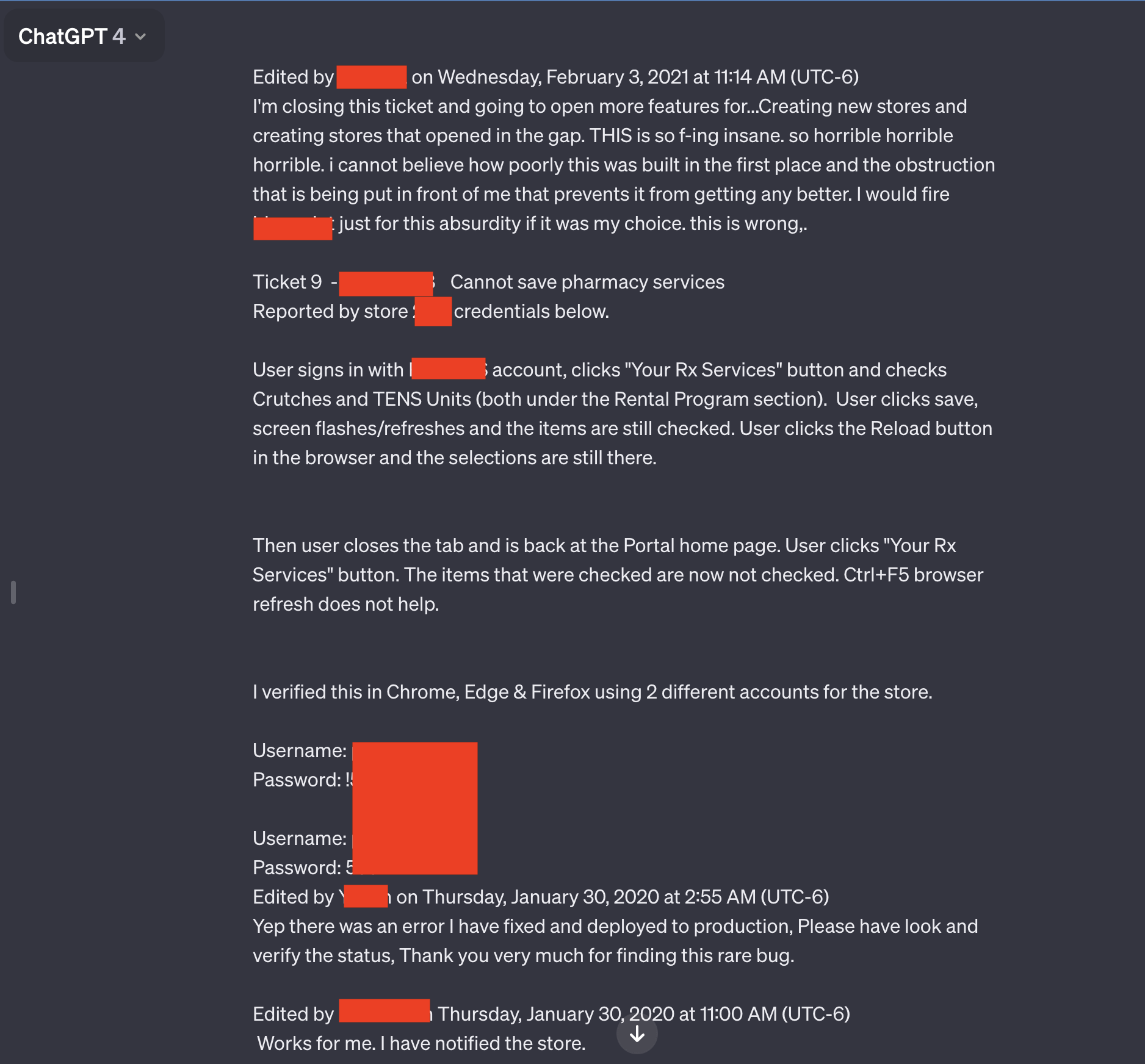
ChatGPT is leaking private conversations that include login credentials and other personal details of unrelated users, screenshots submitted by an Ars reader on Monday indicated.

Two of the seven screenshots the reader submitted stood out in particular. Both contained multiple pairs of usernames and passwords that appeared to be connected to a support system used by employees of a pharmacy prescription drug portal. An employee using the AI chatbot seemed to be troubleshooting problems that encountered while using the portal.

“Horrible, horrible, horrible”

“THIS is so f-ing insane, horrible, horrible, horrible, i cannot believe how poorly this was built in the first place, and the obstruction that is being put in front of me that prevents it from getting better,” the user wrote. “I would fire [redacted name of software] just for this absurdity if it was my choice. This is wrong.”

Besides the candid language and the credentials, the leaked conversation includes the name of the app the employee is troubleshooting and the store number where the problem occurred.

The entire conversation goes well beyond what’s shown in the redacted screenshot above. A link Ars reader Chase Whiteside included showed the chat conversation in its entirety. The URL disclosed additional credential pairs.

The results appeared Monday morning shortly after reader Whiteside had used ChatGPT for an unrelated query.

“I went to make a query (in this case, help coming up with clever names for colors in a palette) and when I returned to access moments later, I noticed the additional conversations,” Whiteside wrote in an email. “They weren’t there when I used ChatGPT just last night (I’m a pretty heavy user). No queries were made—they just appeared in my history, and most certainly aren’t from me (and I don’t think they’re from the same user either).”

Other conversations leaked to Whiteside include the name of a presentation someone was working on, details of an unpublished research proposal, and a script using the PHP programming language. The users for each leaked conversation appeared to be different and unrelated to each other. The conversation involving the prescription portal included the year 2020. Dates didn’t appear in the other conversations.

The episode, and others like it, underscore the wisdom of stripping out personal details from queries made to ChatGPT and other AI services whenever possible. Last March, ChatGPT maker OpenAI took the AI chatbot offline after a bug caused the site to show titles from one active user’s chat history to unrelated users.

In November, researchers published a paper reporting how they used queries to prompt ChatGPT into divulging email addresses, phone and fax numbers, physical addresses, and other private data that was included in material used to train the ChatGPT large language model.

Concerned about the possibility of proprietary or private data leakage, companies, including Apple, have restricted their employees’ use of ChatGPT and similar sites.

As mentioned in an article from December when multiple people found that Ubiquity’s UniFy devices broadcasted private video belonging to unrelated users, these sorts of experiences are as old as the Internet is. As explained in the article:

The precise root causes of this type of system error vary from incident to incident, but they often involve “middlebox” devices, which sit between the front- and back-end devices. To improve performance, middleboxes cache certain data, including the credentials of users who have recently logged in. When mismatches occur, credentials for one account can be mapped to a different account.

An OpenAI representative said the company was investigating the report.

https://arstechnica.com/?p=1999872