4 tecnologie critiche che l’Europa vuole proteggere dalla Cina

La Commissione europea ha avviato una serie di valutazioni dei rischi legati alle tecnologie sensibili, compresi i semiconduttori avanzati.

La Commissione Europea ha presentato a inizio ottobre un elenco preliminare di quattro aree tecnologiche che presentano il rischio più elevato di essere utilizzate in modo improprio, per sostenere regimi autocratici e violare i diritti umani.

Le 4 tecnologie più sensibili

Microchip all’avanguardia, sistemi basati sull’intelligenza artificiale, calcolo quantistico e ingegneria genetica saranno messi sotto il microscopio per determinare se le loro esportazioni e importazioni rappresentano un pericolo per la sicurezza dell’Unione europea nel suo insieme.

L’analisi interna comporterà strette e intense consultazioni con i 27 Stati membri e il settore privato. L’obiettivo è presentare un elenco finale delle tecnologie ad alto rischio in primavera.

La designazione potrebbe aprire la porta a potenziali restrizioni, inclusi divieti commerciali e controlli sugli investimenti, anche se qualsiasi passo del genere incontrerà sicuramente la contestazione di alcune capitali riluttanti a lasciare che Bruxelles interferisca in questioni di sicurezza nazionale.

Valutazione dei rischi

Le valutazioni dei rischi hanno lo scopo di raccogliere maggiori informazioni su quattro aree tecnologiche chiave, che sono state selezionate attentamente per la loro natura in continua evoluzione e trasformativa e per il loro potenziale “imminente” di essere utilizzate in modo improprio per scopi militari e violazioni dei diritti umani, come la sorveglianza di massa. Questi sono:

  • Semiconduttori avanzati, tra cui microelettronica, fotonica, chip ad alta frequenza e apparecchiature per la produzione di semiconduttori.
  • Intelligenza artificiale, compreso il calcolo ad alte prestazioni, il cloud e l’edge computing, l’analisi dei dati, la visione artificiale, l’elaborazione del linguaggio e il riconoscimento degli oggetti.
  • Tecnologia quantistica, inclusi calcolo quantistico, crittografia quantistica, comunicazioni quantistiche, rilevamento e radar quantistici.
  • Biotecnologie, comprese le tecniche di modificazione genetica, nuove tecniche genomiche, gene drive e biologia di sintesi.

Gli Stati membri, gli esperti e i rappresentanti del settore privato parteciperanno a questa analisi interna e presenteranno feedback, commenti e, idealmente, informazioni riservate che possano fornire una visione più completa delle insidie e degli effetti collaterali di queste tecnologie.

Strategia di de-risking

La selezione è il primo risultato tangibile della strategia di “de-risking” lanciata dalla presidente della Commissione europea Ursula von der Leyen con l’obiettivo di ridurre la pletora di vulnerabilità e dipendenze che il blocco ha accumulato in diversi decenni di libero mercato. compiacimento.

Von der Leyen aveva originariamente proposto di “ridurre i rischi” nel contesto delle relazioni UE-Cina, che hanno preso una brusca svolta in peggioramento a causa della repressione degli uiguri nella regione dello Xinjiang, delle origini della pandemia di COVID-19, della guerra della Russia contro l’Ucraina e le continue tensioni nello Stretto di Taiwan, tra le altre fonti di attrito.

“Un giocatore, non un parco giochi”

Bruxelles vuole creare dei cuscinetti nel caso in cui l’UE dovesse cadere vittima di problemi di approvvigionamento, in cui le dipendenze radicate si rivolgono contro la sicurezza nazionale, provocando il caos in interi settori e mettendo in pericolo migliaia di posti di lavoro.

“La tecnologia è attualmente al centro della competizione geopolitica. E l’UE vuole essere un attore, non un parco giochi”, ha detto durante la presentazione Věra Jourová, vicepresidente della Commissione europea per i valori e la trasparenza.

“Questo non è contro nessun paese. Facciamo quello che crediamo sia nell’interesse generale dei nostri concittadini”, ha detto accanto a lei Thierry Breton, il commissario europeo per il mercato interno. “Quando vediamo che c’è il rischio di un’eccessiva dipendenza, il rischio di rompere una catena di approvvigionamento che potrebbe essere fondamentale per noi, agiamo, non aspettiamo”.

https://www.key4biz.it/4-tecnologie-critiche-che-leuropa-vuole-proteggere-dalla-cina/471255/



AI e la governance globale, le 7 funzioni chiave secondo gli esperti dell’ONU

L’advisory board del Segretario Generale dell’ONU sull’IA ha pubblicato il suo report intermedio dal titolo “Governare l’AI per l’umanità” con il quale si chiede di ancorare l’Intelligenza artificiale al diritto internazionale, ai diritti umani e agli obiettivi di sviluppo sostenibile. 

Gli esperti anche identificato 5 princìpi che dovrebbero guidare la formazione di nuove istituzioni globali di governance dell’IA:

  1. Inclusività: tutti i cittadini, compresi quelli del Sud del mondo, dovrebbero essere in grado di accedere e utilizzare in modo significativo gli strumenti di intelligenza artificiale.
  2. Interesse pubblico: la governance dovrebbe andare oltre il principio di non danneggiare e definire un quadro di responsabilità più ampio per le aziende che costruiscono, distribuiscono e controllano l’AI, così come gli utenti a valle.
  3. Centralità della governance dei dati: la governance dell’AI non può essere separata dalla governance dei dati e dalla promozione dei dati comuni.
  4. Universale, in rete e multistakeholder: la governance dell’AI dovrebbe universale, fondata sulla collaborazione adattiva e multistakeholder. Dovrebbe sfruttare le istituzioni esistenti attraverso un approccio in rete.
  5. Diritto internazionale: la governance dell’AI deve essere ancorata alla Carta delle Nazioni Unite, al diritto internazionale dei diritti umani e agli obiettivi di sviluppo sostenibile.

Nel report si leggono anche 7 funzioni chiave per la governance dell’AI. Come:

  1. valutare regolarmente lo stato dell’AI e i suoi sviluppi futuri; 
  2. rafforzare la collaborazione tra le nascenti istituzioni di governance in tutto il mondo basate sulle norme internazionali e all’interno di un quadro globale di governance approvato in sede ONU; 
  3. armonizzare gli standard, i framework di sicurezza e di gestione del rischio; 
  4. promuovere la collaborazione internazionale multistakeholder per beneficiare dell’AI a fini economici e sociali; 
  5. il sostegno alla collaborazione internazionale sui dati, nonché la capacità di calcolo e il talento per raggiungere gli obiettivi di sviluppo sostenibile (SDG); 
  6. monitorare i rischi e coordinare la risposta alle emergenze 
  7. e sviluppare norme vincolanti di responsabilità.

Ognuna di queste funzioni richiede la cooperazione internazionale tra tutti gli attori coinvolti.

Ora è aperta la consultazione e ognuno può inviare il proprio feedback fino al 31 marzo 2024. L’organo consultivo dell’ONU sull’AI pubblicherà la sua relazione finale in vista del Summit of the Future, nell’estate del 2024.

Leggi il report completo

https://www.key4biz.it/ai-e-la-governance-globale-le-7-funzioni-chiave-secondo-gli-esperti-dellonu/473817/


US agency tasked with curbing risks of AI lacks funding to do the job

They know...
Enlarge / They know…
Aurich / Getty

US president Joe Biden’s plan for containing the dangers of artificial intelligencealready risks being derailed by congressional bean counters.

A White House executive order on AI announced in October calls on the US to develop new standards for stress-testing AI systems to uncover their biases, hidden threats, and rogue tendencies. But the agency tasked with setting these standards, the National Institute of Standards and Technology (NIST), lacks the budget needed to complete that work independently by the July 26, 2024, deadline, according to several people with knowledge of the work.

Speaking at the NeurIPS AI conference in New Orleans last week, Elham Tabassi, associate director for emerging technologies at NIST, described this as “an almost impossible deadline” for the agency.

Some members of Congress have grown concerned that NIST will be forced to rely heavily on AI expertise from private companies that, due to their own AI projects, have a vested interest in shaping standards.

The US government has already tapped NIST to help regulate AI. In January 2023 the agency released an AI risk management framework to guide business and government. NIST has also devised ways to measure public trust in new AI tools. But the agency, which standardizes everything from food ingredients to radioactive materials and atomic clocks, has puny resources compared to those of the companies on the forefront of AI. OpenAI, Google, and Meta each likely spent upwards of $100 million to train the powerful language models that undergird applications such as ChatGPT, Bard, and Llama 2.

NIST’s budget for 2023 was $1.6 billion, and the White House has requested that it be increased by 29 percent in 2024 for initiatives not directly related to AI. Several sources familiar with the situation at NIST say that the agency’s current budget will not stretch to figuring out AI safety testing on its own.

On December 16, the same day Tabassi spoke at NeurIPS, six members of Congress signed a bipartisan open letter raising concern about the prospect of NIST enlisting private companies with little transparency. “We have learned that NIST intends to make grants or awards to outside organizations for extramural research,” they wrote. The letter warns that there does not appear to be any publicly available information about how those awards will be decided.

The lawmakers’ letter also claims that NIST is being rushed to define standards even though research into testing AI systems is at an early stage. As a result there is “significant disagreement” among AI experts over how to work on or even measure and define safety issues with the technology, it states. “The current state of the AI safety research field creates challenges for NIST as it navigates its leadership role on the issue,” the letter claims.

NIST spokesperson Jennifer Huergo confirmed that the agency had received the letter and said that it “will respond through the appropriate channels.”

NIST is making some moves that would increase transparency, including issuing a request for information on December 19, soliciting input from outside experts and companies on standards for evaluating and red-teaming AI models. It is unclear if this was a response to the letter sent by the members of Congress.

The concerns raised by lawmakers are shared by some AI experts who have spent years developing ways to probe AI systems. “As a nonpartisan scientific body, NIST is the best hope to cut through the hype and speculation around AI risk,” says Rumman Chowdhury, a data scientist and CEO of Parity Consultingwho specializes in testing AI models for bias and other problems. “But in order to do their job well, they need more than mandates and well wishes.”

Yacine Jernite, machine learning and society lead at Hugging Face, a company that supports open source AI projects, says big tech has far more resources than the agency given a key role in implementing the White House’s ambitious AI plan. “NIST has done amazing work on helping manage the risks of AI, but the pressure to come up with immediate solutions for long-term problems makes their mission extremely difficult,” Jernite says. “They have significantly fewer resources than the companies developing the most visible AI systems.”

Margaret Mitchell, chief ethics scientist at Hugging Face, says the growing secrecy around commercial AI models makes measurement more challenging for an organization like NIST. “We can’t improve what we can’t measure,” she says.

The White House executive order calls for NIST to perform several tasks, including establishing a new Artificial Intelligence Safety Institute to support the development of safe AI. In April, a UK taskforce focused on AI safety was announced. It will receive $126 million in seed funding.

The executive order gave NIST an aggressive deadline for coming up with, among other things, guidelines for evaluating AI models, principles for “red-teaming” (adversarially testing) models, developing a plan to get US-allied nations to agree to NIST standards, and coming up with a plan for “advancing responsible global technical standards for AI development.”

Although it isn’t clear how NIST is engaging with big tech companies, discussions on NIST’s risk management framework, which took place prior to the announcement of the executive order, involved Microsoft; Anthropic, a startup formed by ex-OpenAI employees that is building cutting-edge AI models; Partnership on AI, which represents big tech companies; and the Future of Life Institute, a nonprofit dedicated to existential risk, among others.

“As a quantitative social scientist, I’m both loving and hating that people realize that the power is in measurement,” Chowdhury says.

This story originally appeared on wired.com.

https://arstechnica.com/?p=1992640


AI Act: governo francese accusato di essere lobbizzato dall’ex ministro al Digitale

I senatori francesi hanno criticato la posizione del governo nei negoziati sull’AI Act, in particolare la mancanza di protezione del diritto d’autore e l’influenza di un lobbista con presunti conflitti di interessi, l’ex segretario di Stato digitale Cédric O. Lo riporta Euractiv, ricostruendo la posizione francese durante i negoziati per giungere ad un accordo sull’AI Act. L’accordo sul regolamento è giunto dopo diverse ore di dibattito lo scorso 9 dicembre.

Leggi anche: AI Act, Macron ‘preoccupato’ critica la regolamentazione europea: ‘Può bloccare l’innovazione’

Question time

L’AI Act della Ue è destinato a diventare la prima regolamentazione al mondo sull’intelligenza artificiale. Dall’emergere di modelli di intelligenza artificiale, come GPT-4, utilizzato dal sistema di intelligenza artificiale ChatGPT, i politici europei hanno lavorato per regolamentare questi potenti modelli “di base”.

“Sappiamo che Cédric O e Mistral hanno influenzato la posizione del governo francese riguardo al disegno di legge di regolamentazione dell’IA della Commissione europea, cercando di indebolirlo”, ha dichiarato mercoledì Catherine Morin-Desailly, senatrice centrista durante il question time al governo (20 dicembre).

“La stampa ha riferito dello spettacolare arricchimento dell’ex ministro del digitale Cédric O. È entrato nella società Mistral, dove sono ben rappresentati gli interessi delle aziende e dei fondi d’investimento americani. Questa operazione finanziaria sta provocando uno shock all’interno del Comitato intergovernativo sull’intelligenza artificiale da lei istituito, signora Primo Ministro”, ha continuato.

La difesa del governo

Le accuse sono state smentite con veemenza dall’attuale ministro del Digitale Jean-Noël Barrot: “È l’Alta Autorità per la trasparenza nella vita pubblica che garantisce l’assenza di conflitti di interessi tra gli ex membri del governo”.

Inoltre, Barrot ha negato le accuse secondo cui la Francia sarebbe stata portavoce degli interessi privati, sostenendo che il governo: “ha ascoltato tutte le parti interessate come è consuetudine e ha fatto affidamento esclusivamente sull’interesse generale come principio guida”.

Ma secondo il quotidiano francese Capital, O ha acquistato azioni tramite la sua agenzia di consulenza in Mistral AI. Il capitale rivelato da O ha investito 176,1 euro, che ora è valutato a 23 milioni di euro, grazie all’ultimo round di investimenti della società a dicembre.

Accusa di conflitto di interessi

Inoltre, da settembre O è membro del comitato sull’intelligenza artificiale generativa per consigliare il governo sulla sua posizione nei confronti dell’intelligenza artificiale.

“Il fatto che l’Alta Autorità abbia chiesto a Cédric O di dichiarare tutte le sue partecipazioni nel settore tecnologico solleva interrogativi sulla sua partecipazione in Mistral e, di conseguenza, all’interno del Comitato per l’Intelligenza Artificiale Generativa. La questione dell’etica di Cédric O deve essere sollevata e risolta una volta per tutte”, ha risposto a Euractiv il deputato centrista Philippe Latombe.

“O non ha dichiarato Mistral AI all’Alta Autorità per la Trasparenza nella Vita Pubblica. Tuttavia, era già stato avvertito [dall’Alta Autorità] che non avrebbe dovuto essere assunto da Atos o da altre società tecnologiche. I fatti sono così gravi che è stato denunciato dallo stesso commissario Breton, il quale ha affermato che era tutt’altro che nell’interesse pubblico”, ha concluso Morin-Desailly.

Cédric O non ha voluto rispondere alla richiesta di commenti di Euractiv.

https://www.key4biz.it/ai-act-governo-francese-accusato-di-essere-lobbizzato-dallex-ministro-al-digitale/473659/


Apple wants AI to run directly on its hardware instead of in the cloud

The iPhone 15 Pro.
Enlarge / The iPhone 15 Pro.

Apple’s latest research about running large language models on smartphones offers the clearest signal yet that the iPhone maker plans to catch up with its Silicon Valley rivals in generative artificial intelligence.

The paper, entitled “LLM in a Flash,” offers a “solution to a current computational bottleneck,” its researchers write.

Its approach “paves the way for effective inference of LLMs on devices with limited memory,” they said. Inference refers to how large language models, the large data repositories that power apps like ChatGPT, respond to users’ queries. Chatbots and LLMs normally run in vast data centers with much greater computing power than an iPhone.

The paper was published on December 12 but caught wider attention after Hugging Face, a popular site for AI researchers to showcase their work, highlighted it late on Wednesday. It is the second Apple paper on generative AI this month and follows earlier moves to enable image-generating models such as Stable Diffusion to run on its custom chips.

Device manufacturers and chipmakers are hoping that new AI features will help revive the smartphone market, which has had its worst year in a decade, with shipments falling an estimated 5 percent, according to Counterpoint Research.

Despite launching one of the first virtual assistants, Siri, back in 2011, Apple has been largely left out of the wave of excitement about generative AI that has swept through Silicon Valley in the year since OpenAI launched its breakthrough chatbot ChatGPT. Apple has been viewed by many in the AI community as lagging behind its Big Tech rivals, despite hiring Google’s top AI executive, John Giannandrea, in 2018.

While Microsoft and Google have largely focused on delivering chatbots and other generative AI services over the Internet from their vast cloud computing platforms, Apple’s research suggests that it will instead focus on AI that can run directly on an iPhone.

Apple’s rivals, such as Samsung, are gearing up to launch a new kind of “AI smartphone” next year. Counterpoint estimated more than 100 million AI-focused smartphones would be shipped in 2024, with 40 percent of new devices offering such capabilities by 2027.

The head of the world’s largest mobile chipmaker, Qualcomm chief executive Cristiano Amon, forecast that bringing AI to smartphones would create a whole new experience for consumers and reverse declining mobile sales.

“You’re going to see devices launch in early 2024 with a number of generative AI use cases,” he told the Financial Times in a recent interview. “As those things get scaled up, they start to make a meaningful change in the user experience and enable new innovation which has the potential to create a new upgrade cycle in smartphones.”

More sophisticated virtual assistants will be able to anticipate users’ actions such as texting or scheduling a meeting, he said, while devices will also be capable of new kinds of photo editing techniques.

Google this month unveiled a version of its new Gemini LLM that will run “natively” on its Pixel smartphones.

Running the kind of large AI model that powers ChatGPT or Google’s Bard on a personal device brings formidable technical challenges, because smartphones lack the huge computing resources and energy available in a data center. Solving this problem could mean that AI assistants respond more quickly than they do from the cloud and even work offline.

Ensuring that queries are answered on an individual’s own device without sending data to the cloud is also likely to bring privacy benefits, a key differentiator for Apple in recent years.

“Our experiment is designed to optimize inference efficiency on personal devices,” its researchers said. Apple tested its approach on models including Falcon 7B, a smaller version of an open source LLM originally developed by the Technology Innovation Institute in Abu Dhabi.

Optimizing LLMs to run on battery-powered devices has been a growing focus for AI researchers. Academic papers are not a direct indicator of how Apple intends to add new features to its products, but they offer a rare glimpse into its secretive research labs and the company’s latest technical breakthroughs.

“Our work not only provides a solution to a current computational bottleneck but also sets a precedent for future research,” wrote Apple’s researchers in the conclusion to their paper. “We believe as LLMs continue to grow in size and complexity, approaches like this work will be essential for harnessing their full potential in a wide range of devices and applications.”

Apple did not immediately respond to a request for comment.

https://arstechnica.com/?p=1992550


Child sex abuse images found in dataset training image generators, report says

Child sex abuse images found in dataset training image generators, report says

More than 1,000 known child sexual abuse materials (CSAM) were found in a large open dataset—known as LAION-5B—that was used to train popular text-to-image generators such as Stable Diffusion, Stanford Internet Observatory (SIO) researcher David Thiel revealed on Wednesday.

SIO’s report seems to confirm rumors swirling on the Internet since 2022 that LAION-5B included illegal images, Bloomberg reported. In an email to Ars, Thiel warned that “the inclusion of child abuse material in AI model training data teaches tools to associate children in illicit sexual activity and uses known child abuse images to generate new, potentially realistic child abuse content.”

Thiel began his research in September after discovering in June that AI image generators were being used to create thousands of fake but realistic AI child sex images rapidly spreading on the dark web. His goal was to find out what role CSAM may play in the training process of AI models powering the image generators spouting this illicit content.

“Our new investigation reveals that these models are trained directly on CSAM present in a public dataset of billions of images, known as LAION-5B,” Thiel’s report said. “The dataset included known CSAM scraped from a wide array of sources, including mainstream social media websites”—like Reddit, X, WordPress, and Blogspot—as well as “popular adult video sites”—like XHamster and XVideos.

Shortly after Thiel’s report was published, a spokesperson for LAION, the Germany-based nonprofit that produced the dataset, told Bloomberg that LAION “was temporarily removing LAION datasets from the Internet” due to LAION’s “zero tolerance policy” for illegal content. The datasets will be republished once LAION ensures “they are safe,” the spokesperson said. A spokesperson for Hugging Face, which hosts a link to a LAION dataset that’s currently unavailable, confirmed to Ars that the dataset is now unavailable to the public after being switched to private by the uploader.

Removing the datasets now doesn’t fix any lingering issues with previously downloaded datasets or previously trained models, though, like Stable Diffusion 1.5. Thiel’s report said that Stability AI’s subsequent versions of Stable Diffusion—2.0 and 2.1—filtered out some or most of the content deemed “unsafe,” “making it difficult to generate explicit content.” But because users were dissatisfied by these later, more filtered versions, Stable Diffusion 1.5 remains “the most popular model for generating explicit imagery,” Thiel’s report said.

A spokesperson for Stability AI told Ars that Stability AI is “committed to preventing the misuse of AI and prohibit the use of our image models and services for unlawful activity, including attempts to edit or create CSAM.” The spokesperson pointed out that SIO’s report “focuses on the LAION-5B dataset as a whole,” whereas “Stability AI models were trained on a filtered subset of that dataset” and were “subsequently fine-tuned” to “mitigate residual behaviors.” The implication seems to be that Stability AI’s filtered dataset is not as problematic as the larger dataset.

Stability AI’s spokesperson also noted that Stable Diffusion 1.5 “was released by Runway ML, not Stability AI.” There seems to be some confusion on that point, though, as a Runway ML spokesperson told Ars that Stable Diffusion “was released in collaboration with Stability AI.”

A demo of Stable Diffusion 1.5 noted that the model was “supported by Stability AI” but released by CompVis and Runway. While a YCombinator thread linking to a blog—titled “Why we chose not to release Stable Diffusion 1.5 as quickly”—from Stability AI’s former chief information officer, Daniel Jeffries, may have provided some clarity on this, it has since been deleted.

Runway ML’s spokesperson declined to comment on any updates being considered for Stable Diffusion 1.5 but linked Ars to a Stability AI blog from August 2022 that said, “Stability AI co-released Stable Diffusion alongside talented researchers from” Runway ML.

Stability AI’s spokesperson said that Stability AI does not host Stable Diffusion 1.5 but has taken other steps to reduce harmful outputs. Those include only hosting “versions of Stable Diffusion that include filters” that “remove unsafe content” and “prevent the model from generating unsafe content.”

“Additionally, we have implemented filters to intercept unsafe prompts or unsafe outputs when users interact with models on our platform,” Stability AI’s spokesperson said. “We have also invested in content labelling features to help identify images generated on our platform. These layers of mitigation make it harder for bad actors to misuse AI.”

Beyond verifying 1,008 instances of CSAM in the LAION-5B dataset, SIO found 3,226 instances of suspected CSAM in the LAION dataset. Thiel’s report warned that both figures are “inherently a significant undercount” due to researchers’ limited ability to detect and flag all the CSAM in the datasets. His report also predicted that “the repercussions of Stable Diffusion 1.5’s training process will be with us for some time to come.”

“The most obvious solution is for the bulk of those in possession of LAION‐5B‐derived training sets to delete them or work with intermediaries to clean the material,” SIO’s report said. “Models based on Stable Diffusion 1.5 that have not had safety measures applied to them should be deprecated and distribution ceased where feasible.”

https://arstechnica.com/?p=1992385


Multiple Chat GPT instances combine to figure out chemistry

Image of a lab with chemicals, but no people present.
Enlarge / The lab’s empty because everyone’s relaxing in the park while the AI does their work.

Despite rapid advances in artificial intelligence, AIs are nowhere close to being ready to replace humans for doing science. But that doesn’t mean that they can’t help automate some of the drudgery out of the daily grind of scientific experimentation. For example, a few years back, researchers put an AI in control of automated lab equipment and taught it to exhaustively catalog all the reactions that can occur among a set of starting materials.

While useful, that still required a lot of researcher intervention to train the system in the first place. A group at Carnegie Mellon University has now figured out how to get an AI system to teach itself to do chemistry. The system requires a set of three AI instances, each specialized for different operations. But, once set up and supplied with raw materials, you just have to tell it what type of reaction you want done, and it’ll figure it out.

An AI trinity

The researchers indicate that they were interested in understanding what capacities large language models (LLMs) can bring to the scientific endeavor. So all of the AI systems used in this work are LLMs, mostly GPT-3.5 and GPT-4, although some others—Claude 1.3 and Falcon-40B-Instruct—were tested as well. (GPT-4 and Claude 1.3 performed the best.) But, rather than using a single system to handle all aspects of the chemistry, the researchers set up distinct instances to cooperate in a division of labor setup and called it “Coscientist.”

The three systems they used are:

Web searcher. This has two main capabilities. One is to use Google’s search API to find pages that might be worth ingesting for the information they contain. The second is to ingest those pages and extract information from them—think of that as similar to the context of the earlier portions of a conversation that Chat GPT can maintain to inform its later answers. The researchers could track where this module was spending its time, and about half the places it visited were Wikipedia pages. The top five sites it visited included the journals published by the American Chemical Society and the Royal Society of Chemistry.

Documentation searcher. Think of this as the RTFM instance. The AI was going to be given control of various lab automation equipment, like robotic fluid handlers and such, often controlled via either specialized commands or something like a python API. This AI instance was given access to all the manuals for this equipment, allowing it to figure out how to control it.

Planner. The planner can issue commands to both of the other two AI instances and process their responses. It has access to a Python sandbox to execute code, allowing it to perform calculations. It also has access to the automated lab equipment, allowing it to actually perform and analyze experiments. So you can think of the planner as the portion of the system that has to act like a chemist, learning from the literature and attempting to use equipment to implement what it has learned.

The planner is also able to determine when software errors occur (either in its Python scripts or in its attempts to control the automated hardware), allowing it to correct its mistakes.

Putting the system to use

Initially, the system was asked to synthesize a number of chemicals such as acetaminophen and ibuprofen, confirming that it could generally figure out a viable synthesis after searching the web and scientific literature. So, the question is whether the system could figure out the hardware it had access to well enough to put its conceptual ability to work.

To start with something simple, the researchers used a standard sample plate, which holds a bunch of small wells arranged in a rectangular grid. The system was asked to fill in squares, diagonal stripes, or other patterns using various colored liquids and managed to do so effectively.

Moving on from that, they placed three different colored solutions at random locations in the grid of wells; the system was asked to identify which wells were what color. On its own, Coscientist didn’t know how to do this. But when given a prompt that reminded it that the different colors would show different absorption spectra, it used a spectrograph it had access to and was able to identify the different colors.

With the basic command and control seemingly functioning, the researchers decided to try some chemistry. They provided a sample plate with wells filled with simple chemicals, catalysts, and the like, and asked it to perform a specific chemical reaction. Coscientist got the chemistry right from the start, but its attempts to run the synthesis failed because it sent an invalid command to hardware that heats and stirs the reactions. That sent it back to the Documentation module, allowing it to correct the problem and run reactions.

And it worked. Spectral signatures of the desired products were present in the reaction mixture, and their presence was confirmed by chromatography.

Optimization

With basic reactions working, the researchers then asked the system to improve the efficiency of the reaction—they presented the optimization process as a game where the score would go up with the reaction’s yield.

The system made some bad guesses in the first round of test reactions but quickly zeroed in on better yields. The researchers also found that they could avoid the bad choices in the first round by providing Coscientist with information about the yields generated by a handful of random starting mixtures. This implies that it doesn’t matter where Coscientist gets its information—either from reactions it runs or from some external information source—it is able to incorporate the information into its planning.

The researchers conclude that Coscientist has several notable capabilities:

  • Planning chemical synthesis using public information
  • Navigating and processing technical manuals for complicated hardware
  • Using that knowledge to control a range of laboratory equipment
  • Integrating these hardware-handling capabilities into a lab workflow
  • Analyzing its own reactions and using that information to design improved reaction conditions.

In a lot of ways, this sounds like the experience a student might have in the first year of graduate school. Ideally, the grad student will progress beyond that. But maybe GPT-5 will be able to as well.

More seriously, the structure of Coscientist, which relies on the interaction of a number of specialized systems, is similar to how brains operate. Obviously, the brain’s specialized systems are capable of a much wider range of activities, and there’s a lot more of them. But it may be that this sort of structure is critical for enabling more complicated behavior.

That said, the researchers themselves are concerned about some of Coscientist’s capabilities. There are a lot of chemicals (think things like nerve gasses) that we don’t want to see made easier to synthesize. And figuring out how to tell GPT instances not to do something has become an ongoing challenge.

Nature, 2023. DOI: 10.1038/s41586-023-06792-0  (About DOIs).

https://arstechnica.com/?p=1992320


These AI-generated news anchors are freaking me out

Max Headroom as prophecy.
Enlarge / Max Headroom as prophecy.
Aurich Lawson | Channel 1


Here at Ars, we’ve long covered the interesting potential and significant peril (and occasional silliness) of AI-generated video featuring increasingly realistic human avatars. Heck, we even went to the trouble of making our own “deepfake” Mark Zuckerberg back in 2019, when the underlying technology wasn’t nearly as robust as it is today.

But even with all that background, startup Channel 1‘s vision of a near-future where AI-generated avatars read you the news was a bit of a shock to the system. The company’s recent proof-of-concept “showcase” newscast reveals just how far AI-generated videos of humans have come in a short time and how those realistic avatars could shake up a lot more than just the job market for talking heads.

“…the newscasters have been changed to protect the innocent”

To be clear, Channel 1 isn’t trying to fool people with “deepfakes” of existing news anchors or anything like that. In the first few seconds of its sample newscast, it identifies its talking heads as a “team of AI-generated reporters.” A few seconds later, one of those talking heads explains further: “You can hear us and see our lips moving, but no one was recorded saying what we’re all saying. I’m powered by sophisticated systems behind the scenes.”

Even with those kinds of warnings, I found I had to constantly remind myself that the “people” I was watching deliver the news here were only “based on real people who have been compensated for use of their likeness,” as Deadline reports (how much they were compensated will probably be of great concern to actors who recently went on strike in part over the issue of AI likenesses). Everything from the lip-syncing to the intonations to subtle gestures and body movements of these Channel 1 anchors gives an eerily convincing presentation of a real newscaster talking into the camera.

Sure, if you look closely, there are a few telltale anomalies that expose these reporters as computer creations—slight video distortions around the mouth, say, or overly repetitive hand gestures, or a nonsensical word emphasis choice. But those signs are so small that they would be easy to miss at a casual glance or on a small screen like that on a phone.

In other words, human-looking AI avatars now seem well on their way to climbing out of the uncanny valley, at least when it comes to news anchors who sit at a desk or stand still in front of a green screen. Channel 1 investor Adam Mosam told Deadline it “has gotten to a place where it’s comfortable to watch,” and I have to say I agree.

[embedded content]
A Channel 1 clip shows how its system can make video sources appear to speak a different language.

The same technology can be applied to on-the-scene news videos as well. About eight minutes into the sample newscast, Channel 1 shows a video of a European tropical storm victim describing the wreckage in French. Then it shows an AI-generated version of the same footage with the source speaking perfect English, using a facsimile of his original voice and artificial lipsync placed over his mouth.

Without the on-screen warning that this was “AI generated Language: Translated from French,” it would be easy to believe that the video was of an American expatriate rather than a native French speaker. And the effect is much more dramatic than the usual TV news practice of having an unseen interpreter speak over the footage.

https://arstechnica.com/?p=1991279


If AI is making the Turing test obsolete, what might be better?

A white android sitting at a table in a depressed manner with an alchoholic drink. Very high resolution 3D render.

If a machine or an AI program matches or surpasses human intelligence, does that mean it can simulate humans perfectly? If yes, then what about reasoning—our ability to apply logic and think rationally before making decisions? How could we even identify whether an AI program can reason? To try to answer this question, a team of researchers has proposed a novel framework that works like a psychological study for software.

“This test treats an ‘intelligent’ program as though it were a participant in a psychological study and has three steps: (a) test the program in a set of experiments examining its inferences, (b) test its understanding of its own way of reasoning, and (c) examine, if possible, the cognitive adequacy of the source code for the program,” the researchers note.

They suggest the standard methods of evaluating a machine’s intelligence, such as the Turing Test, can only tell you if the machine is good at processing information and mimicking human responses. The current generations of AI programs, such as Google’s LaMDA and OpenAI’s ChatGPT, for example, have come close to passing the Turing Test, yet the test results don’t imply these programs can think and reason like humans.

This is why the Turing Test may no longer be relevant, and there is a need for new evaluation methods that could effectively assess the intelligence of machines, according to the researchers. They claim that their framework could be an alternative to the Turing Test. “We propose to replace the Turing test with a more focused and fundamental one to answer the question: do programs reason in the way that humans reason?” the study authors argue.

What’s wrong with the Turing Test?

During the Turing Test, evaluators play different games involving text-based communications with real humans and AI programs (machines or chatbots). It is a blind test, so evaluators don’t know whether they are texting with a human or a chatbot. If the AI programs are successful in generating human-like responses—to the extent that evaluators struggle to distinguish between the human and the AI program—the AI is considered to have passed. However, since the Turing Test is based on subjective interpretation, these results are also subjective.

The researchers suggest that there are several limitations associated with the Turing Test. For instance, any of the games played during the test are imitation games designed to test whether or not a machine can imitate a human. The evaluators make decisions solely based on the language or tone of messages they receive. ChatGPT is great at mimicking human language, even in responses where it gives out incorrect information. So, the test clearly doesn’t evaluate a machine’s reasoning and logical ability.

The results of the Turing Test also can’t tell you if a machine can introspect. We often think about our past actions and reflect on our lives and decisions, a critical ability that prevents us from repeating the same mistakes. The same applies to AI as well, according to a study from Stanford University which suggests that machines that could self-reflect are more practical for human use.

“AI agents that can leverage prior experience and adapt well by efficiently exploring new or changing environments will lead to much more adaptive, flexible technologies, from household robotics to personalized learning tools,” Nick Haber, an assistant professor from Stanford University who was not involved in the current study, said.

In addition to this, the Turing Test fails to analyze an AI program’s ability to think. In a recent Turing Test experiment, GPT-4 was able to convince evaluators that they were texting with humans over 40 percent of the time. However, this score fails to answer the basic question: Can the AI program think?

Alan Turing, the famous British scientist who created the Turing Test, once said, “A computer would deserve to be called intelligent if it could deceive a human into believing that it was human.” His test only covers one aspect of human intelligence, though: imitation. Although it is possible to deceive someone using this one aspect, many experts believe that a machine can never achieve true human intelligence without including those other aspects.

“It’s unclear whether passing the Turing Test is a meaningful milestone or not. It doesn’t tell us anything about what a system can do or understand, anything about whether it has established complex inner monologues or can engage in planning over abstract time horizons, which is key to human intelligence,” Mustafa Suleyman, an AI expert and founder of DeepAI, told Bloomberg.

https://arstechnica.com/?p=1991004


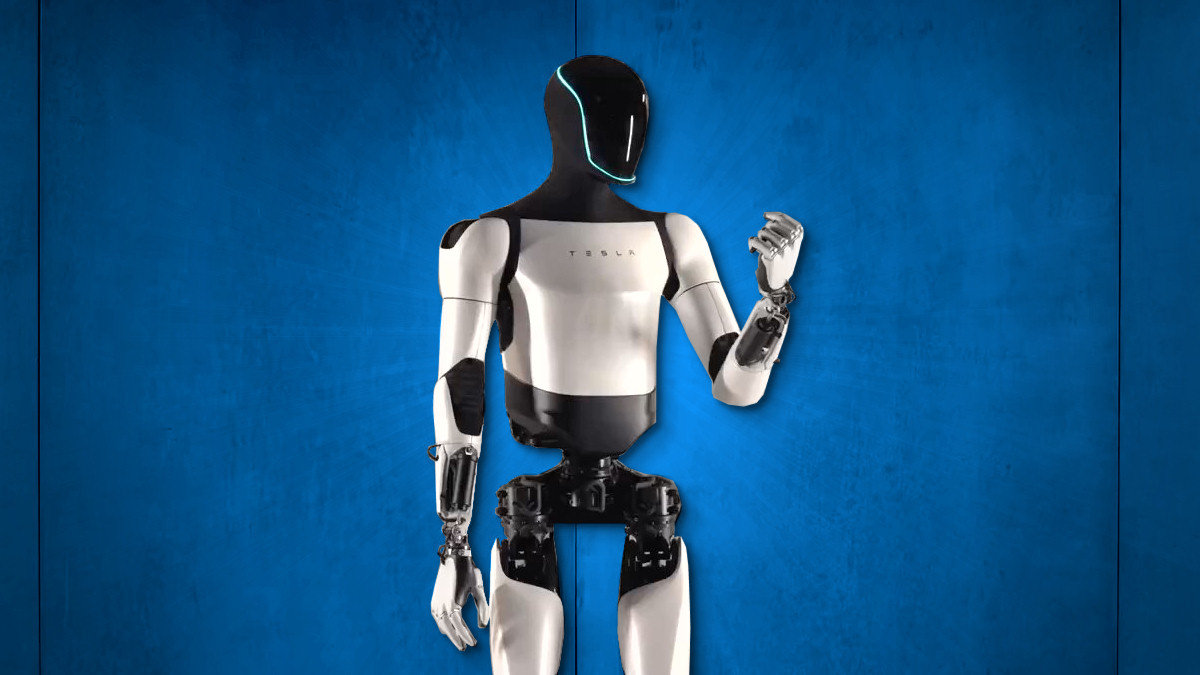
Tesla unveils its latest humanoid robot, Optimus Gen 2, in demo video

The Tesla Optimus Gen 2 robot on a blue background.
Enlarge / The Tesla Optimus Gen 2 robot.
Tesla | Benj Edwards

On Tuesday, Tesla released a demo video showing the latest version of its prototype humanoid robot, Optimus Gen 2. Over one year after Tesla’s first public Optimus robot demonstration, which showcased shaky robots that waved and slumped over, things have apparently progressed quite a bit, assuming that the video accurately reflects the technology.

“Everything in this video is real, no CGI. All real time, nothing sped up. Incredible hardware improvements from the team,” wrote Tesla Senior Staff Software Engineer Julian Ibarz on X.

After a recent episode where Google fudged an AI demonstration for the sake of marketing hype, it’s best to take Tesla’s claims with a grain of salt until they are independently verified in practical, real-world demonstrations. With that dose of skepticism in mind, let’s take a look at what Tesla is promising in this non-production prototype robot.

The promotional video opens with a shot of “Bumblebee,” Tesla’s first humanoid prototype from September 2022. Then it shows “Optimus – Gen 1” from March 2023. And after some teasing shots of a different robot, the video puts text on the screen that reads, “Introducing Optimus – Gen 2. December 2023.” As the robot performs various tasks, such as walking slowly, crouching, manipulating eggs without breaking them, and waving its arms, it lists out these features of Gen 2:

  • Tesla-designed actuators and sensors
  • 2-DoF (degrees of freedom) actuated neck
  • Actuators-integrated electronics and harnessing
  • 30 percent walk speed boost
  • Foot force/torque sensing
  • Articulated toe sections
  • Human foot geometry
  • 10 kg total weight reduction
  • Improved balance and full-body control
  • Faster, 11-DoF brand-new hands
  • Tactile sensing on all fingers
  • Delicate objects manipulation (holding an egg)

As previously mentioned, Optimus Gen 2 is not designed for production or sale. As a prototype, it represents a potential waypoint on a much longer journey to a more functional human robot that Tesla CEO Elon Musk says will be able to do anything that humans don’t want to do. It’s designed to be a similar shape and size as humans so it can replace human labor in a seamless way. Whatever the application, simply swap out a person and insert an Optimus.

Given difficulties in engineering, if and when that human labor replacement will actually happen still remains to be seen, but if what’s shown in the video is true, it’s looking like Tesla is making significant process toward its goal.

https://arstechnica.com/?p=1990700