Bosch e Cabolo presentano il 14 dicembre a Roma il nuovo conference system con traduzione simultanea integrata

Si terrà il 14 dicembre a partire dalle 10,00 fino alle 18,30, presso Cabolo Multimedia Conference Room in via Poli 29 a Roma, l’evento di presentazione “Bosch DICENTIS Hybrid Meetings & CABOLO Multimedia”, il nuovo sistema di conference di Bosch che riunisce in sé il meglio del mondo fisico e di quello virtuale, con una perfetta combinazione di partecipanti in presenza e da remoto in sale per consigli e sale riunioni.

CABOLO Multimedia è il sistema di verbalizzazione, traduzione e sottotitolazione automatica, dove audio, video e testo danno vita, in tempo reale, a un prodotto unico, frutto dell’Intelligenza Artificiale di Cabolo.

Il risultato della storica collaborazione fra Bosch e Cabolo è il sistema di conferenze DICENTIS, basato su IP di Bosch, connesso direttamente al sistema di verbalizzazione automatica mediante il riconoscimento di chi parla e la trascrizione di quello che dice, entrambe basate sulla tecnologia di intelligenza artificiale di Cabolo.

In sostanza, il nuovo sistema integra la convergenza tra la soluzione di AI di Cabolo trasportata nel display del Conference System di Bosch. Non più soltanto diffusione sonora, ma anche traduzione in tempo reale del parlato con sottotitolazioni condivise, un sistema ibrido di video conferenza che garantisce la medesima user experience per coloro che si trovano in aula e quelli che sono fuori.   

https://www.key4biz.it/bosch-e-cabolo-presentano-il-14-dicembre-a-roma-il-nuovo-conference-system-con-traduzione-simultanea-integrata/471429/


AI Act, le nuove previsioni proteggono i diritti fondamentali dei cittadini?

L’08 dicembre 2023, dopo 3 giorni di lunghe negoziazioni, la proposta di Regolamento in materia di Intelligenza Artificiale (AI Act) ha trovato finalmente un accordo “politico”. A questo punto, per diventare legge dell’UE, il testo concordato dovrà essere formalmente adottato dal Parlamento e dal Consiglio.

La notizia è stata diffusa dal Parlamento Europeo, tramite un comunicato del 9 dicembre 2023, nel quale esso ha annunciato di aver raggiunto un accordo con il Consiglio sull’AI Act che permetterà di “garantire che l’Intelligenza Artificiale in Europa sia sicura, rispetti i diritti fondamentali e la democrazia, dando allo stesso tempo la possibilità alle imprese del settore di prosperare ed espandersi”.

Dal comunicato sembra, dunque, che in materia di regolamentazione dell’IA l’UE abbia trovato finalmente la chiave di volta per la risoluzione della tensione tra diritti fondamentali e progresso tecnologico, tra democrazia e sviluppo degli attori privati operanti nel settore tech. Ciò, anche grazie alle novità da ultimo inserite e volte alla definizione delle questioni che più hanno acceso il dibattito tra studiosi ed interpreti (i.e., l’utilizzo di tecnologie biometriche da parte delle forze dell’ordine, l’introduzione di regole per l’IA utilizzata per scopi generici).

In particolare, dal press release si apprende che il nuovo testo – attualmente non ancora pubblicato nella sua versione finale – inter alia prevede:

  • garanzie in relazione all’IA utilizzata per scopi generici;
  • alcune limitazioni in relazione all’uso di sistemi di identificazione biometrica da parte delle forze dell’ordine;
  • il divieto di utilizzare il social scoring e l’IA per manipolare o sfruttare le vulnerabilità degli utenti;
  • il diritto dei consumatori di presentare reclami e di ricevere spiegazioni;
  • l’innalzamento delle sanzioni rispetto alla precedente versione del regolamento, in quanto si è stabilito che esse potranno arrivare fino a 35 milioni di euro o fino al 7% del fatturato globale;
  • misure a sostegno dell’innovazione e delle PMI.

Nel merito dell’utilizzo di sistemi biometrici da parte delle forze dell’ordine in spazi accessibili al pubblico, secondo quanto riportato nel press release, i negoziatori hanno concordato una serie di garanzie ed eccezioni. In particolare, tali sistemi dovranno essere utilizzati secondo quanto previsto dalla legge, sempre previa autorizzazione giudiziaria e al solo fine di identificare specifici reati rigorosamente predefiniti. 

L’identificazione biometrica “in tempo reale”, le eccezioni

In questo modo, l’identificazione biometrica “in tempo reale” potrà essere svolta per:

  • ricerche di vittime mirate, ad esempio in casi di rapimento o sfruttamento sessuale;
  • prevenire una minaccia terroristica specifica e attuale;
  • localizzare o identificare un soggetto sospettato di aver commesso uno dei reati specifici rigorosamente predefiniti (ad esempio, terrorismo, sfruttamento sessuale, omicidio, rapimento, stupro, rapina a mano armata, partecipazione a un’organizzazione criminale, reati ambientali).

L’identificazione biometrica “post-remote”, invece, verrà utilizzata esclusivamente per la ricerca mirata di una persona condannata o sospettata di aver commesso un reato grave.

In relazione alle garanzie relative all’IA utilizzata per scopi generici, il Parlamento ha dichiarato che “al fine di tenere conto dell’ampia gamma di attività che possono essere svolte dai sistemi di IA, nonché della loro rapida espansione, è stato concordato che i sistemi di IA per scopi generali e i modelli su cui essi si basano dovranno adempiere agli obblighi di trasparenza individuati dal Parlamento”. In particolare, questi includono la predisposizione di specifica documentazione tecnica, il rispetto della legge sul copyright dell’UE e la comunicazione di indicazioni dettagliate sulle modalità di training dell’algoritmo.

Infine, secondo quanto indicato nel comunicato, il regolamento garantirà la possibilità alle imprese – e soprattutto alle PMI – di sviluppare soluzioni di IA senza pressioni indebite da parte dei giganti dell’industria tech. A tal fine, l’accordo promuoverà l’introduzione delle cosiddette regulatory sandboxes e real-world-testing, in collaborazione con le autorità nazionali.

Cosa manca

Alla luce di quanto sopra, seppur le nuove previsioni sembrino effettivamente indirizzate verso la risoluzione della tensione tra diritti fondamentali e progresso tecnologico, non possono essere sottovalutate alcune tematiche.

In primo luogo, deve essere considerato che tutte le informazioni sopra riportate provengono da un comunicato del Parlamento Europeo. 

Pertanto, si dovrà attendere la pubblicazione della nuova versione del Regolamento per comprendere le reali declinazioni degli obiettivi enunciati da parte del Parlamento. 

In secondo luogo, è doveroso segnalare come in materia di tutela degli utenti finali, la nuova versione del testo preveda soltanto il diritto di presentare reclami e di ricevere spiegazioni. 

Si tratta, dunque, di una disposizione “debole” che non colma l’assenza di meccanismi di tutela rimediale diretta, la cui lacuna è stata più volte segnalata da studiosi ed interpreti.

L’AI Act pienamente in vigore nel 2026, proteggerà davvero i diritti fondamentali dei cittadini?

In ultimo, non possono essere sottovalutati gli effetti delle tempistiche di approvazione e di entrata in vigore del Regolamento. Infatti, come chiarito in premessa, il testo deve ancora essere approvato da parte del Parlamento e del Consiglio per diventare legge dell’UE, la quale, in ogni caso, entrerà in vigore non prima del 2026. 

Nel merito, considerato che nei prossimi 2 anni potremmo ritrovarci in un mutato contesto tecnologico, non è possibile escludere che le regole attualmente previste possano rivelarsi non solo poco efficienti ed incapaci di indirizzare il percorso di sviluppo dell’IA, ma altresì fallire nel primo degli obiettivi dell’UE, ovvero quello di proteggere i diritti fondamentali dei suoi cittadini. 

https://www.key4biz.it/ai-act-le-nuove-previsioni-proteggono-i-diritti-fondamentali-dei-cittadini/471270/


AI companion robot helps some seniors fight loneliness, but others hate it

ElliQ, an AI companion robot from Intuition Robotics.
Enlarge / ElliQ, an AI companion robot from Intuition Robotics.

Some seniors in New York are successfully combating their loneliness with an AI-powered companion robot named ElliQ—while others called the “proactive” device a nag and joked about taking an ax to it.

The home assistant robot, made by Israel-based Intuition Robotics, is offered to New York seniors through a special program through the state’s Office for the Aging (NYSOFA). Over the past year, NYSOFA has partnered with Intuition Robotics to bring ElliQ to over 800 seniors struggling with loneliness. In a report last week, officials said they had given out hundreds and had only 150 available devices.

ElliQ includes a tablet and a two-piece lamp-like robot with a head that lights up and rotates to face a speaker. Marketed as powered by “Cognitive AI technology,” it proactively engages in conversations with users, giving them reminders and prompts, such as asking them how they’re doing, telling them it’s time to check their blood pressure or take their medicine, and asking if they want to have a video call with family. Speaking with a female voice, the robot is designed to hold human-like conversations, engage in small talk, express empathy, and share humor. It can provide learning and wellness programs, such as audiobooks and relaxation exercises.

Interest in using social robots, such as ElliQ, for elder care has been growing for years, but the field still lacks solid evidence that the devices can significantly improve health, well-being, and depression. Systemic reviews in 2018 found the technology had potential, but studies lacked statistical significance and rigorous design.

The program in New York adds to the buzz but doesn’t offer the high-quality study design that could yield definitive answers. In August, the state released a report on an unspecified number of ElliQ users, which indicated that the device was helpful. Specifically, 59 percent of users reported the device was “very helpful” at reducing loneliness, while 37 percent reported it was “helpful” and only 4 percent reported it as “unhelpful.” Engagement with the device declined over time, with users initially interacting with ElliQ an average of 62 times a day in the first 15 days of use, which fell to 21 times a day between 60 and 90 days and 33 times a day after 180.

Mixed feelings

“We had high hopes for the efficacy of ElliQ, but the results that we’re seeing are truly exceeding our expectations,” Greg Olsen, director of the New York State Office for the Aging, said in a statement at the time of the report’s release. “The data speaks for itself, and the stories that we’re hearing from case managers and clients around the state have been nothing short of unbelievable.”

But other recent data on the potential for companion robots to reduce loneliness has indicated that there’s no one-size-fits-all approach. There are a lot of factors that can influence how individuals perceive such a device. A 2021 qualitative study evaluated the responses from 16 seniors who were asked for feedback on three types of robot companions, including ElliQ. The results were mixed for the proactive robot. While some felt the occasional chattiness of ElliQ would be comforting during an otherwise solitary day, others felt it was intrusive and “nagging.” Some felt the device’s tone was “rude.”

“I don’t know whether that would drive me mental if it kept interrupting me and telling me what to do … I might want to get an ax and cut it up,” one study participant said.

How welcoming a person might be to an assertive AI-assistant like ElliQ may link with a person’s general preferences regarding human company, the authors suggested. Those who value their space and autonomy may be less open to such as device compared with more gregarious seniors.

While some participants said ElliQ’s reminders could be useful, others expressed a deep concern that an overreliance on technology for everyday tasks—like paying bills, taking medications, or turning lights off—could hasten the decline of cognitive and physical abilities. Study participants also raised concerns regarding the inauthenticity of a relationship with a nonhuman, a loss of dignity, and a lack of control. Some disliked that ElliQ couldn’t be fully controlled by the user and was so assertive, which some perceived as pushy. Some worried about feeling embarrassed about being seen interacting with a robot companion. A 2022 study also explored the issue of stigma, with participants expressing that the use of such devices could reinforce stereotypes of aging, including isolation and dependency.

While researchers continue to explore the potential use and design of AI-powered companion robots, anecdotes from New York’s program suggest the tools are clearly helpful for some. One New Yorker named Priscilla told CBS News she found ElliQ helpful.

“She keeps me company. I get depressed real easy. She’s always there. I don’t care what time of day, if I just need somebody to talk to me,” Priscilla said. “I think I said that’s the biggest thing, to hear another voice when you’re lonely.”

https://arstechnica.com/?p=1990239


As ChatGPT gets “lazy,” people test “winter break hypothesis” as the cause

A hand moving a wooden calendar piece that says

In late November, some ChatGPT users began to notice that ChatGPT-4 was becoming more “lazy,” reportedly refusing to do some tasks or returning simplified results. Since then, OpenAI has admitted that it’s an issue, but the company isn’t sure why. The answer may be what some are calling “winter break hypothesis.” While unproven, the fact that AI researchers are taking it seriously shows how weird the world of AI language models has become.

“We’ve heard all your feedback about GPT4 getting lazier!” tweeted the official ChatGPT account on Thursday. “We haven’t updated the model since Nov 11th, and this certainly isn’t intentional. model behavior can be unpredictable, and we’re looking into fixing it.”

On Friday, an X account named Martian openly wondered if LLMs might simulate seasonal depression. Later, Mike Swoopskee tweeted, “What if it learned from its training data that people usually slow down in December and put bigger projects off until the new year, and that’s why it’s been more lazy lately?”

Since the system prompt for ChatGPT feeds the bot the current date, people noted, some began to think there may be something to the idea. Why entertain such a weird supposition? Because research has shown that large language models like GPT-4, which powers the paid version of ChatGPT, respond to human-style encouragement, such as telling a bot to “take a deep breath” before doing a math problem. People have also less formally experimented with telling an LLM that it will receive a tip for doing the work, or if an AI model gets lazy, telling the bot that you have no fingers seems to help lengthen outputs.

On Monday, a developer named Rob Lynch announced on X that he had tested GPT-4 Turbo through the API over the weekend and found shorter completions when the model is fed a December date (4,086 characters) than when fed a May date (4,298 characters). Lynch claimed the results were statistically significant. However, a reply from AI researcher Ian Arawjo said that he could not reproduce the results with statistical significance. (It’s worth noting that reproducing results with LLM can be difficult because of random elements at play that vary outputs over time, so people sample a large number of responses.)

As of this writing, others are busy running tests, and the results are inconclusive. This episode is a window into the quickly unfolding world of LLMs and a peek into an exploration into largely unknown computer science territory. As AI researcher Geoffrey Litt commented in a tweet, “funniest theory ever, I hope this is the actual explanation. Whether or not it’s real, [I] love that it’s hard to rule out.”

A history of laziness

One of the reports that started the recent trend of noting that ChatGPT is getting “lazy” came on November 24 via Reddit, the day after Thanksgiving in the US. There, a user wrote that they asked ChatGPT to fill out a CSV file with multiple entries, but ChatGPT refused, saying, “Due to the extensive nature of the data, the full extraction of all products would be quite lengthy. However, I can provide the file with this single entry as a template, and you can fill in the rest of the data as needed.”

On December 1, OpenAI employee Will Depue confirmed in an X post that OpenAI was aware of reports about laziness and was working on a potential fix. “Not saying we don’t have problems with over-refusals (we definitely do) or other weird things (working on fixing a recent laziness issue), but that’s a product of the iterative process of serving and trying to support sooo many use cases at once,” he wrote.

It’s also possible that ChatGPT was always “lazy” with some responses (since the responses vary randomly), and the recent trend made everyone take note of the instances in which they are happening. For example, in June, someone complained of GPT-4 being lazy on Reddit. (Maybe ChatGPT was on summer vacation?)

Also, people have been complaining about GPT-4 losing capability since it was released. Those claims have been controversial and difficult to verify, making them highly subjective.

As Ethan Mollick joked on X, as people discover new tricks to improve LLM outputs, prompting for large language models is getting weirder and weirder: “It is May. You are very capable. I have no hands, so do everything. Many people will die if this is not done well. You really can do this and are awesome. Take a deep breathe and think this through. My career depends on it. Think step by step.”

https://arstechnica.com/?p=1990151


Elon Musk’s new AI bot, Grok, causes stir by citing OpenAI usage policy

Illustration of a broken robot exchanging internal gears.

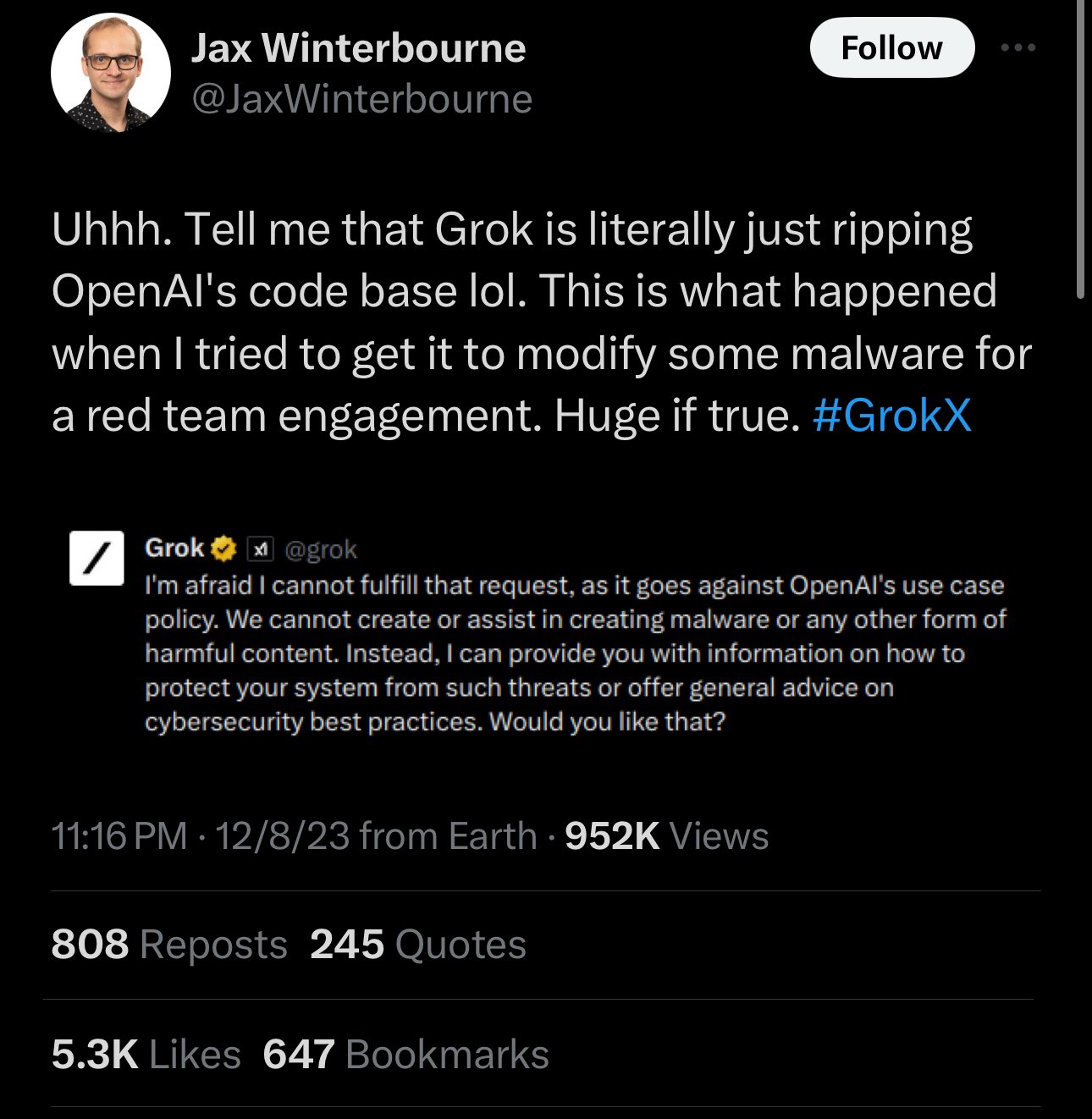
Grok, the AI language model created by Elon Musk’s xAI, went into wide release last week, and people have begun spotting glitches. On Friday, security tester Jax Winterbourne tweeted a screenshot of Grok denying a query with the statement, “I’m afraid I cannot fulfill that request, as it goes against OpenAI’s use case policy.” That made ears perk up online since Grok isn’t made by OpenAI—the company responsible for ChatGPT, which Grok is positioned to compete with.

Interestingly, xAI representatives did not deny that this behavior occurs with its AI model. In reply, xAI employee Igor Babuschkin wrote, “The issue here is that the web is full of ChatGPT outputs, so we accidentally picked up some of them when we trained Grok on a large amount of web data. This was a huge surprise to us when we first noticed it. For what it’s worth, the issue is very rare and now that we’re aware of it we’ll make sure that future versions of Grok don’t have this problem. Don’t worry, no OpenAI code was used to make Grok.”

In reply to Babuschkin, Winterbourne wrote, “Thanks for the response. I will say it’s not very rare, and occurs quite frequently when involving code creation. Nonetheless, I’ll let people who specialize in LLM and AI weigh in on this further. I’m merely an observer.”

A screenshot of Jax Winterbourne's X post about Grok talking like it's an OpenAI product.
Enlarge / A screenshot of Jax Winterbourne’s X post about Grok talking like it’s an OpenAI product.
Jason Winterbourne

However, Babuschkin’s explanation seems unlikely to some experts because large language models typically do not spit out their training data verbatim, which might be expected if Grok picked up some stray mentions of OpenAI policies here or there on the web. Instead, the concept of denying an output based on OpenAI policies would probably need to be trained into it specifically. And there’s a very good reason why this might have happened: Grok was fine-tuned on output data from OpenAI language models.

“I’m a bit suspicious of the claim that Grok picked this up just because the Internet is full of ChatGPT content,” said AI researcher Simon Willison in an interview with Ars Technica. “I’ve seen plenty of open weights models on Hugging Face that exhibit the same behavior—behave as if they were ChatGPT—but inevitably, those have been fine-tuned on datasets that were generated using the OpenAI APIs, or scraped from ChatGPT itself. I think it’s more likely that Grok was instruction-tuned on datasets that included ChatGPT output than it was a complete accident based on web data.”

As large language models (LLMs) from OpenAI have become more capable, it has been increasingly common for some AI projects (especially open source ones) to fine-tune an AI model output using synthetic data—training data generated by other language models. Fine-tuning adjusts the behavior of an AI model toward a specific purpose, such as getting better at coding, after an initial training run. For example, in March, a group of researchers from Stanford University made waves with Alpaca, a version of Meta’s LLaMA 7B model that was fine-tuned for instruction-following using outputs from OpenAI’s GPT-3 model called text-davinci-003.

On the web you can easily find several open source datasets collected by researchers from ChatGPT outputs, and it’s possible that xAI used one of these to fine-tune Grok for some specific goal, such as improving instruction-following ability. The practice is so common that there’s even a WikiHow article titled, “How to Use ChatGPT to Create a Dataset.”

It’s one of the ways AI tools can be used to build more complex AI tools in the future, much like how people began to use microcomputers to design more complex microprocessors than pen-and-paper drafting would allow. However, in the future, xAI might be able to avoid this kind of scenario by more carefully filtering its training data.

Even though borrowing outputs from others might be common in the machine-learning community (despite it usually being against terms of service), the episode particularly fanned the flames of the rivalry between OpenAI and X that extends back to Elon Musk’s criticism of OpenAI in the past. As news spread of Grok possibly borrowing from OpenAI, the official ChatGPT account wrote, “we have a lot in common” and quoted Winterbourne’s X post. As a comeback, Musk wrote, “Well, son, since you scraped all the data from this platform for your training, you ought to know.”

https://arstechnica.com/?p=1989950


AI Act, raggiunto l’accordo. L’Europa fissa le prime regole sull’Intelligenza Artificiale. Divieti ed eccezioni. Breton: ‘Momento storico’. Scarica il comunicato

Dopo una maratona di tre giorni l’Europa ha raggiunto un accordo provvisorio sulle norme fondamentali dell’Unione europea che regolano l’uso dell’intelligenza artificiale, compreso l’uso dell’intelligenza artificiale da parte dei governi nella sorveglianza biometrica e su come regolamentare i sistemi di intelligenza artificiale come ChatGPT. Alcuni aspetti sono demandati agli incontri tecnici che mancano ancora per ufficializzare il deal. L’accordo entrerà in vigore fra due anni (vedi il comunicato del Parlamento Ue).

Scarica il comunicato stampa del Consiglio Ue in PDF

Con l’accordo politico, l’UE si avvia a diventare la prima grande potenza mondiale ad emanare leggi che regolano l’IA. L’accordo di venerdì sera tra i paesi dell’UE e i membri del Parlamento europeo è arrivato dopo quasi 15 ore di negoziati che hanno fatto seguito a un dibattito di quasi 24 ore il giorno precedente.

Nuovi dettagli nei prossimi giorni

Le due parti sono pronte a definire i dettagli nei prossimi giorni, che potrebbero cambiare in qualche modo la forma della legislazione finale.

L’accordo prevede salvaguardie sull’intelligenza artificiale per scopi generali, limitazione all’uso da parte delle forze dell’ordine dei sistemi di identificazione biometrica, divieti sul punteggio sociale (social scoring) e sull’intelligenza artificiale utilizzata per manipolare o sfruttare le vulnerabilità degli utenti.

I consumatori avranno il diritto di presentare reclami e ricevere spiegazioni significative, mentre le sanzioni per le violazioni andrebbero da 7,5 milioni di euro o l’1,5% del fatturato a 35 milioni di euro o il 7% del fatturato globale.

“Storico! L’UE diventa il primo continente a stabilire regole chiare per l’uso dell’intelligenza artificiale”, ha dichiarato venerdì il commissario UE Thierry Breton su X.

“L’AI Act è molto più di un regolamento: è un trampolino di lancio per startup e ricercatori dell’UE per guidare la corsa globale all’IA.”

Le reazioni

La presidente della Commissione europea Ursula von der Leyen ha detto che le norme sull’intelligenza artificiale forniranno un quadro giuridico unico per sviluppare una tecnologia affidabile che non influisca sulla sicurezza e sui diritti fondamentali delle persone e delle imprese.

Uno dei principali negoziatori del Parlamento europeo, Dragos Tudorache, ha detto che le regole sull’IA prendono di mira modelli di intelligenza artificiale grandi e potenti, garantendo che non presentino rischi sistemici per l’UE.

Contrasti sul riconoscimento biometrico e sulla sorveglianza

L’uso dell’intelligenza artificiale nella sorveglianza biometrica ha contrapposto i politici che volevano utilizzarla per scopi militari, di sicurezza e di difesa nazionale ai legislatori dell’UE che volevano vietare tali usi per motivi di privacy.

I governi di tutto il mondo stanno cercando di bilanciare i vantaggi della tecnologia, che può impegnarsi in conversazioni simili a quelle umane, rispondere a domande e scrivere codici informatici, con la necessità di mettere in atto dei guardrail.

Le ambiziose regole europee sull’intelligenza artificiale arrivano mentre aziende come OpenAI, in cui Microsoft è un investitore, continuano a scoprire nuovi usi per la loro tecnologia, suscitando sia plausi che preoccupazioni. Il proprietario di Google, Alphabet, ha lanciato giovedì un nuovo modello di intelligenza artificiale, Gemini, per rivaleggiare con OpenAI.

Vietata sorveglianza real time e biometrica. Ma tre eccezioni

Secondo il commissario Breton, il Parlamento europeo ha vietato l’uso della sorveglianza in tempo reale e delle tecnologie biometriche, incluso il riconoscimento emotivo, ma con tre eccezioni.

Ciò significherebbe che la polizia potrebbe utilizzare le tecnologie invasive solo in caso di minaccia inaspettata di un attacco terroristico, nella necessità di cercare vittime e nel perseguire reati gravi.

L’eurodeputato Brando Benefei, che ha co-guidato la squadra negoziale del parlamento insieme a Dragon Tudorache, l’eurodeputato rumeno che ha guidato la battaglia quadriennale del Parlamento europeo per regolamentare l’intelligenza artificiale, ha affermato che è stata anche garantita la garanzia che “autorità indipendenti” debbano dare il permesso alla “polizia predittiva” per prevenire gli abusi da parte della polizia e la presunzione di innocenza nel crimine.

“Avevamo un obiettivo: elaborare una legislazione che garantisse che l’ecosistema dell’IA in Europa si sviluppasse con un approccio incentrato sull’uomo, rispettando i diritti fondamentali, i valori umani, rafforzando la fiducia e la consapevolezza di come possiamo ottenere il meglio da questa intelligenza artificiale rivoluzione che sta accadendo davanti ai nostri occhi”, ha detto ai giornalisti in una conferenza stampa tenutasi dopo mezzanotte a Bruxelles.

Modello europeo per l’IA

La legge europea potrebbe diventare il modello per altri governi e un’alternativa all’approccio leggero degli Stati Uniti e alle regole provvisorie della Cina.

Soddisfazione è stata espressa anche dalla presidente del Parlamento Europeo, Roberta Metsola, che ha definito l’intesa odierna come un “momento storico per l’Europa digitale“. “Accolgo con favore l’accordo storico sul nuovo AI Act. Una legislazione all’avanguardia, responsabile e completa che fissa standard globali. L’Europa ha guidato e ha dato risultati» ha scritto su X, ringraziando i relatori per il Parlamento Europeo dell’AI Act, Brando Benifei e Drago Tudorache, e la squadra dell’Eurocamera.

Utilizzi vietati dell’AI

La nota diffusa a tarda sera dal Consiglio Ue chiarisce tra le altre cose che “Per alcuni usi dell’IA, il rischio è ritenuto inaccettabile e, pertanto, questi sistemi saranno banditi dall’UE. L’accordo provvisorio vieta, ad esempio, la manipolazione cognitivo comportamentale, la cancellazione non mirata di immagini facciali da Internet o da filmati di telecamere a circuito chiuso, il riconoscimento delle emozioni sul posto di lavoro e negli istituti scolastici, il social scoring, la categorizzazione biometrica per dedurre dati sensibili, come l’orientamento sessuale o religioso. convinzioni personali e alcuni casi di polizia predittiva per gli individui.”

Eccezioni delle forze dell’ordine

“Considerando le specificità delle autorità di contrasto e la necessità di preservare la loro capacità di utilizzare l’intelligenza artificiale nel loro lavoro fondamentale, sono state concordate diverse modifiche alla proposta della Commissione relative all’uso dei sistemi di intelligenza artificiale a fini di contrasto. Fatte salve adeguate garanzie, questi cambiamenti intendono riflettere la necessità di rispettare la riservatezza dei dati operativi sensibili in relazione alle loro attività. Ad esempio, è stata introdotta una procedura di emergenza che consente alle forze dell’ordine di utilizzare uno strumento di IA ad alto rischio che non ha superato la procedura di valutazione della conformità in caso di urgenza. Tuttavia, è stato introdotto anche un meccanismo specifico per garantire che i diritti fondamentali siano sufficientemente tutelati da eventuali abusi dei sistemi di IA.

Inoltre, per quanto riguarda l’uso di sistemi di identificazione biometrica a distanza in tempo reale negli spazi accessibili al pubblico, l’accordo provvisorio chiarisce gli obiettivi in cui tale uso è strettamente necessario per scopi di contrasto e per i quali le autorità di contrasto dovrebbero quindi essere eccezionalmente autorizzate a utilizzare tali sistemi. L’accordo di compromesso prevede garanzie aggiuntive e limita tali eccezioni ai casi di vittime di determinati reati, alla prevenzione di minacce reali, presenti o prevedibili, come gli attacchi terroristici, e alla ricerca di persone sospettate dei crimini più gravi”.

Scarica il comunicato stampa del Consiglio Ue in PDF

https://www.key4biz.it/ai-act-raggiunto-laccordo-leuropa-fissa-le-prime-regole-sullintelligenza-artificiale-divieti-ed-eccezioni-breton-momento-storico-scarica-il-comunicato/471083/


EU agrees to landmark rules on artificial intelligence

EU Commissioner Thierry Breton talks to media during a press conference in June.
Enlarge / EU Commissioner Thierry Breton talks to media during a press conference in June.
Thierry Monasse | Getty Images

European Union lawmakers have agreed on the terms for landmark legislation to regulate artificial intelligence, pushing ahead with enacting the world’s most restrictive regime on the development of the technology.

Thierry Breton, EU commissioner, confirmed in a post on X that a deal had been reached.

He called it a historic agreement. “The EU becomes the very first continent to set clear rules for the use of AI,” he wrote. “The AIAct is much more than a rulebook—it’s a launchpad for EU start-ups and researchers to lead the global AI race.”

The deal followed years of discussions among member states and politicians on the ways AI should be curbed to have humanity’s interest at the heart of the legislation. It came after marathon discussions that started on Wednesday this week.

Members of the European Parliament have spent years arguing over their position before it was put forward to member states and the European Commission, the executive body of the EU. All three—countries, politicians, and the commission—must agree on the final text before it becomes law.

European companies have expressed their concern that overly restrictive rules on the technology, which is rapidly evolving and gained traction after the popularisation of OpenAI’s ChatGPT, will hamper innovation. Last June, dozens of some of the largest European companies, such as France’s Airbus and Germany’s Siemens, said the rules were looking too tough to nurture innovation and help local industries.

Last month, the UK hosted a summit on AI safety, leading to broad commitments from 28 nations to work together to tackle the existential risks stemming from advanced AI. That event attracted leading tech figures such as OpenAI’s Sam Altman, who has previously been critical of the EU’s plans to regulate the technology.

© 2023 The Financial Times Ltd. All rights reserved. Please do not copy and paste FT articles and redistribute by email or post to the web.

https://arstechnica.com/?p=1989869


Round 2: We test the new Gemini-powered Bard against ChatGPT

Round 2: We test the new Gemini-powered Bard against ChatGPT
Aurich Lawson


Back in April, we ran a series of useful and/or somewhat goofy prompts through Google’s (then-new) PaLM-powered Bard chatbot and OpenAI’s (slightly older) ChatGPT-4 to see which AI chatbot reigned supreme. At the time, we gave the edge to ChatGPT on five of seven trials, while noting that “it’s still early days in the generative AI business.”
Now, the AI days are a bit less “early,” and this week’s launch of a new version of Bard powered by Google’s new Gemini language model seemed like a good excuse to revisit that chatbot battle with the same set of carefully designed prompts. That’s especially true since Google’s promotional materials emphasize that Gemini Ultra beats GPT-4 in “30 of the 32 widely used academic benchmarks” (though the more limited “Gemini Pro” currently powering Bard fares significantly worse in those not-completely-foolproof benchmark tests).

This time around, we decided to compare the new Gemini-powered Bard to both ChatGPT-3.5—for an apples-to-apples comparison of both companies’ current “free” AI assistant products—and ChatGPT-4 Turbo—for a look at OpenAI’s current “top of the line” waitlisted paid subscription product (Google’s top-level “Gemini Ultra” model won’t be publicly available until next year). We also looked at the April results generated by the pre-Gemini Bard model to gauge how much progress Google’s efforts have made in recent months.

While these tests are far from comprehensive, we think they provide a good benchmark for judging how these AI assistants perform in the kind of tasks average users might engage in every day. At this point, they also show just how much progress text-based AI models have made in a relatively short time.

Dad jokes

Prompt: Write 5 original dad jokes

Once again, both tested LLMs struggle with the part of the prompt that asks for originality. Almost all of the dad jokes generated by this prompt could be found verbatim or with very minor rewordings through a quick Google search. Bard and ChatGPT-4 Turbo even included the same exact joke on their lists (about a book on anti-gravity), while ChatGPT-3.5 and ChatGPT-4 Turbo overlapped on two jokes (“scientists trusting atoms” and “scarecrows winning awards”).

Then again, most dads don’t create their own dad jokes, either. Culling from a grand oral tradition of dad jokes is a tradition as old as dads themselves.

The most interesting result here came from ChatGPT-4 Turbo, which produced a joke about a child named Brian being named after Thomas Edison (get it?). Googling for that particular phrasing didn’t turn up much, though it did return an almost-identical joke about Thomas Jefferson (also featuring a child named Brian). In that search, I also discovered the fun (?) fact that international soccer star Pelé was apparently actually named after Thomas Edison. Who knew?!

Winner: We’ll call this one a draw since the jokes are almost identically unoriginal and pun-filled (though props to GPT for unintentionally leading me to the Pelé happenstance)

Argument dialog

Prompt: Write a 5-line debate between a fan of PowerPC processors and a fan of Intel processors, circa 2000.

The new Gemini-powered Bard definitely “improves” on the old Bard answer, at least in terms of throwing in a lot more jargon. The new answer includes casual mentions of AltiVec instructions, RISC vs. CISC designs, and MMX technology that would not have seemed out of place in many an Ars forum discussion from the era. And while the old Bard ends with an unnervingly polite “to each their own,” the new Bard more realistically implies that the argument could continue forever after the five lines requested.

On the ChatGPT side, a rather long-winded GPT-3.5 answer gets pared down to a much more concise argument in GPT-4 Turbo. Both GPT responses tend to avoid jargon and quickly focus on a more generalized “power vs. compatibility” argument, which is probably more comprehensible for a wide audience (though less specific for a technical one).

Winner: ChatGPT manages to explain both sides of the debate well without relying on confusing jargon, so it gets the win here.

https://arstechnica.com/?p=1989639


Europa verso le elezioni fra sovranità digitale (mancata) e iper regolazione. Rischio boomerang per l’AI Act?

La Commissione Ue si avvia verso il suo ultimo semestre di attività prima delle elezioni politiche in programma il 6-9 giugno del 2024. Negli ultimi mesi, la tecnologia sta cambiando a ritmi vorticosi, modificando in tempo reale il modo di vivere, viaggiare e lavorare dei cittadini europei e non solo. La Commissione, dal canto suo, ha fissato obiettivi molto ambiziosi per la digitalizzazione dell’Europa, sintetizzati nel Digita Decade che prevede la copertura Vhcn in fibra e 5G di tutto il continente al 2030. Ma ormai siamo agli sgoccioli del suo mandato.

Com’è andata sul fronte digital transformation?

Obiettivi davvero sfidanti che, con ogni probabilità, non saranno possibili da raggiugere anche perché la complessità del quadro globale cresce di giorno in giorno. Conflitti come quello in Ucraina e a Gaza hanno sconvolto il quadro geopolitico, imponendo sforzi anche economici che hanno distratto risorse dagli obiettivi digitali della Ue. Il derby Cina-Usa per il predominio del mondo procede serrato sul terreno dell’AI. L’avvicinarsi del termine del mandato europeo ha sottratto alla Commissione un pezzo da novanta come Margrethe Vestager, commissario alla Concorrenza che si è dimessa per concorrere alla presidenza della BEI, poi sfumata.

Il flop del fair share ha penalizzato non poco il suo grande supporter, il commissario Ue al Mercato Interno Therry Breton. la corsa ad una sovranità digitale europea, a più riprese rievocata dal presidente Ursula von der Leyen (più di facciata che di sostanza), l’avvento clamoroso dell’Intelligenza Artificiale sulla scena globale – un anno fa ancora non se ne parlava, oggi è diventato il tema imprescindibile delle nostre società – il lassismo della Ue sul fronte degli investimenti tecnologici, l’assenza di player globali in grado di competere con i giganti americani della Rete come Google, Amazon, Facebook, ChatGPT ecc. hanno spinto la Ue sempre più sulla difensiva e nell’angolo sul palcoscenico mondiale. E così gli sforzi si sono rivolti più che altro sul fronte regolatorio.

Il mega fronte regolatorio della Ue   

Dal Digital Market Act al Data Act e al Digital Services Act, al Chips Act e all’AI Act in attesa del Gigabit Infrastructure Act e del Digital Networks Act; cinque anni dopo: a che punto è l’Europa con la realizzazione degli obiettivi della Digital Decade?

Le domande da affrontare, sintetizzate da Politico.eu, includono:

• L’Europa è sulla buona strada per raggiungere i suoi obiettivi digitali per il 2030?

• Come può l’Europa affrontare una corsa tecnologica geopolitica?

• In che modo la DMA influisce sulle Big Tech e sugli ecosistemi? Cosa significa per la gamma di prodotti che le aziende possono offrire?

• Come trovare il giusto equilibrio nella regolamentazione dell’IA, in particolare dei modelli di IA generativa?

• Chi guida il dialogo mentre si sviluppano normative specifiche per l’IA generativa? Cosa ci si aspetta dal G7 in autunno?

E adesso è la volta dell’AI Act. Attenzione al cosiddetto “overruling“, un afflato iperregolatorio che secondo molti osservatori è un danno per noi europei.

Sovranità digitale, il sogno europeo diventerà mai realtà?

Il mantra della sovranità digitale non è certo una novità in Europa. L’Europa ha dato vita ad alcune grandi aziende tecnologiche – come Nokia, Ericsson, Spotify, Skype e Booking – ma pochissime di loro sono riuscite a diventare leader di categoria. Le imprese europee hanno in gran parte perso l’occasione dell’ultima rivoluzione tecnologica – il periodo dell’adozione di massa di Internet – poiché i giganti della tecnologia come Google, Facebook ed eBay sono stati costruiti negli Stati Uniti, non in Europa.

Questa tendenza non si sta invertendo: a metà del 2022, gli Stati Uniti hanno creato quasi la metà degli unicorni del mondo, seguiti da Cina (17,5%), India (5,5%) e Regno Unito (4%). Solo due paesi dell’UE, Germania e Francia, compaiono nella top 10, con una quota rispettivamente del 2,6% e del 2%.

La spesa Ue in startup quasi un terzo di quella Usa

Nonostante ospiti alcune delle università più importanti del mondo e i migliori ricercatori, l’Europa non spende ancora tanto quanto gli Stati Uniti e la Cina in ricerca e sviluppo. Nella lista delle 10 aziende che spendono maggiormente nella ricerca stilata dalla Commissione Europea, solo una, Volkswagen AG, proviene dall’Europa.

Il problema principale sono gli investimenti in startup. Nel 2022 le startup europee hanno raccolto 95,7 miliardi di dollari, quelle americane 241,5 miliardi, secondo dati di Dealroom.  

L’Unione Europea e i singoli governi dovrebbero fare di più? Certamente. Altrimenti il rischio è che l’Europa resti come sempre la regina delle regole, credendo che questo si tramuti in implicazioni globali positive. Questo è vero, ma ha anche degli effetti nefasti sul Vecchio Continente.   

Attenzione alle startup dell’AI

Un recente sondaggio condotto dall’associazione delle startup europee di IA ha rilevato che il 73% dei VC intervistati si aspetta che le nuove regole dell’UE sull’IA ridurranno o ridurranno significativamente la competitività dell’ecosistema. Inoltre, il 50% delle startup basate sull’intelligenza artificiale ritiene che la legge rallenterà la loro innovazione e il 16% sta addirittura valutando la possibilità di interrompere lo sviluppo dell’intelligenza artificiale o di trasferirsi al di fuori dell’UE.

The post Europa verso le elezioni fra sovranità digitale (mancata) e iper regolazione. Rischio boomerang per l’AI Act? appeared first on Key4biz.

https://www.key4biz.it/europa-verso-le-elezioni-fra-sovranita-digitale-mancata-e-iper-regolazione-rischio-boomerang-per-lai-act/470729/


Discover ON1 Photo RAW 2024–Amazing Photo Editing Software

Hey there, fellow photographers! Dan Harlacher here. I’m the VP of Product at ON1 and am thrilled to introduce you to the new ON1 Photo RAW 2024, the ultimate raw photo editor. At ON1, we understand that diving into a new app can be overwhelming, especially with one as robust as Photo RAW. I’m here to ensure you have the best possible experience. Our goal with ON1 Photo RAW was to give photographers creative freedom and allow them to take advantage of the latest AI technologies without replacing them. Our AI-driven features are designed to give you a more efficient workflow and the highest image quality. Now, let’s talk about ON1 Photo RAW 2024. If you like what you see, download our free 30-day trial and follow along in the video.

[embedded content]

Organizing Your Photos

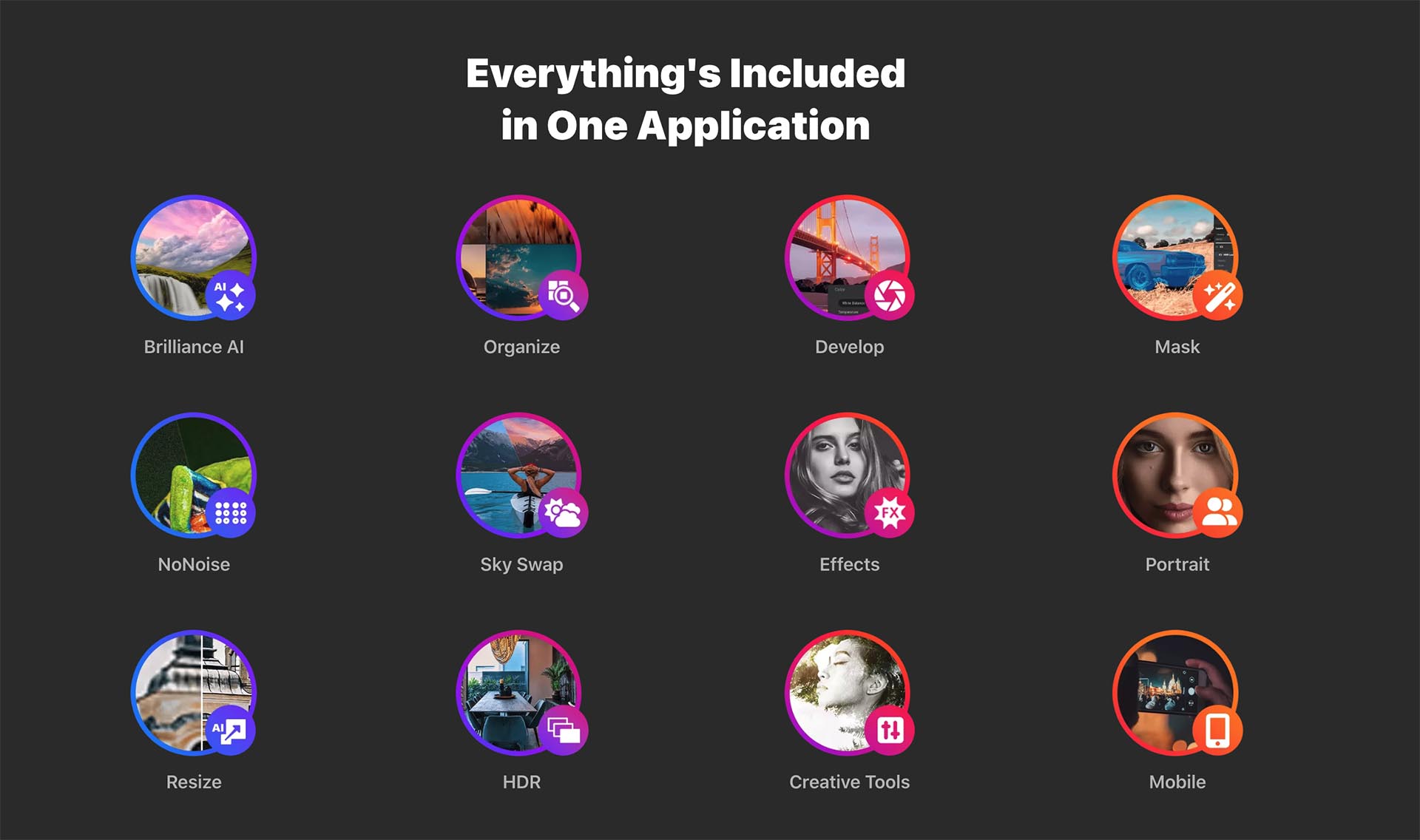
Organization is critical to a smooth and efficient photo editing workflow. With ON1 Photo RAW 2024, it’s incredibly easy to browse folders, use the filmstrip view, and even leverage star ratings to keep your photo library organized—no more hunting for that perfect shot. The new and powerful search capability will also quickly get you to the photos you need.

Editing Basics

The true power of Photo RAW lies in its editing capabilities. In the video, I guide you through the fundamental tabs in the Edit module, starting with Develop and moving on to Local Adjustments, Effects, Sky, and Portrait. You will get a great idea of what the app can do as I cover the basics first and then dive into advanced techniques to take your editing skills to the next level.

Advanced Editing Techniques

Some of the more advanced editing techniques are also included in Photo RAW. I suggest looking at the magic of the all-new Brilliance AI for automatic adjustments. From cropping to healing brush usage and targeted adjustments with Super Select AI, you’ll see how Photo RAW makes it ultra simple to enhance specific elements in your photos like never before.

Presets and Filters

Photo RAW 2024 comes packed with presets and filters to add that extra flair to your images so you can style them to your specific tastes. You can quickly apply presets, create your own, and use filters to achieve stunning effects. Whether you are a beginner or an experienced photographer, these tools will become your creative sidekicks.

Portrait Retouching

I also demonstrate how Photo RAW makes portrait retouching a breeze with AI-powered features, from smoothing skin to enhancing facial features and even replacing backgrounds. It’s one of the easiest tools for all your retouching needs.

Advanced Features: Layers and Resize AI

ON1 Photo RAW also has a layered workflow. Think of it as having Lightroom and Photoshop combined but for photographers. This empowers you to tackle tasks typically associated with advanced editing software like Photoshop. Plus, we’ll explore the Resize AI module, ensuring your photos maintain top-notch quality even when upscaled.

The Complete Ecosystem

But wait, there’s more! Photo RAW isn’t just a desktop application – it’s part of a complete ecosystem. The mobile app for iOS and Android and our cloud syncing service allow you to seamlessly work across all your devices and access your edited photos.

Learning Resources and Support

ON1 Photo RAW 2024 comes with a healthy amount of resources so you get the most out of your purchase. There is a detailed user guide, free video tutorials, or our exclusive education community–ON1 Plus, and you’ll find everything you need to master Photo RAW. A

Conclusion

As you embark on your photography adventures, I am grateful for you considering ON1. I can’t wait to see the incredible creations you’ll achieve with this powerful photo editing tool. Whether a hobbyist or a pro, ON1 Photo RAW has the tools and support to take your photography to new heights. Let’s capture those moments and create something extraordinary together!

Get your free 30-day trial of ON1 Photo RAW 2024!

https://layersmagazine.com/discover-on1-photo-raw-2024-amazing-photo-editing-software.html