“ChatGPT with voice” opens up to everyone on iOS and Android
Aurich Lawson | Getty Images
It may have been a chaotic week at OpenAI, but the company has somehow still found time to roll out a product. “ChatGPT with voice” is available to free users of the ChatGPT app. This feature launched for paying users in September, and if you haven’t heard, it’s a full-blown voice assistant. The feature is still slowly rolling out to devices; on my Android phone, I don’t have a “headphone” icon anywhere, even with a Plus subscription.
When you have the feature, you can open the app, press the “headphone” icon, ask a question, and a stilted robot voice will read out a reply. It’s just like the voice assistants from Apple, Amazon, or Google, but this one is powered by a large language model. ChatGPT’s voice model is purely a question-and-answer type of voice assistant, though. Usually, these things are handy for what they can do on your behalf—make a phone call, control a smart home, take a note, or make a calendar appointment—but this can only answer questions.
ChatGPT with voice is now available to all free users. Download the app on your phone and tap the headphones icon to start a conversation.
Google and Amazon are rebooting their voice assistants to use large language models, so ChatGPT’s voice functionality is definitely a preview of the future. The demo about buying pizza for a large group is more complicated than the current Big Tech voice assistants can handle. ChatGPT’s response is also longer-winded than most voice assistants, giving a 66-word, 23-second answer describing the imagined pizza-eating scenario in excruciating detail.
If you’re interested in chatting up ChatGPT, the voice feature should be rolling out to iOS and Android devices now.
https://arstechnica.com/?p=1986046
Sam Altman wins power struggle, returns to OpenAI with new board
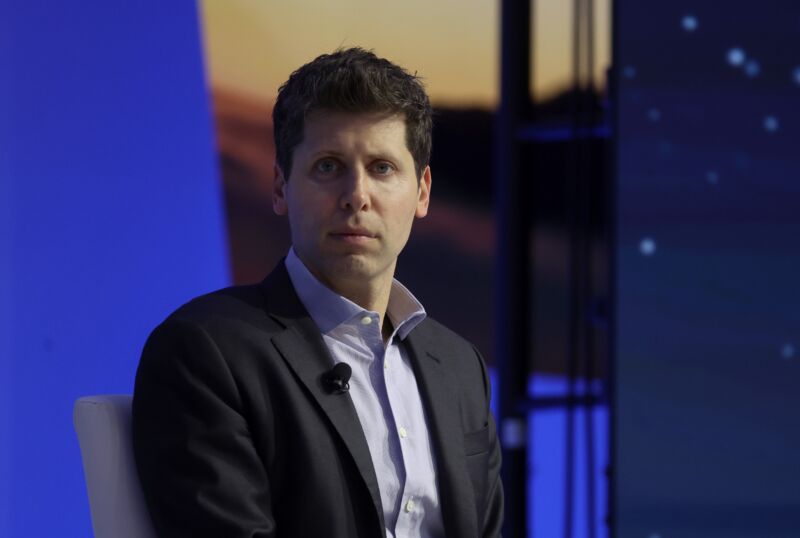
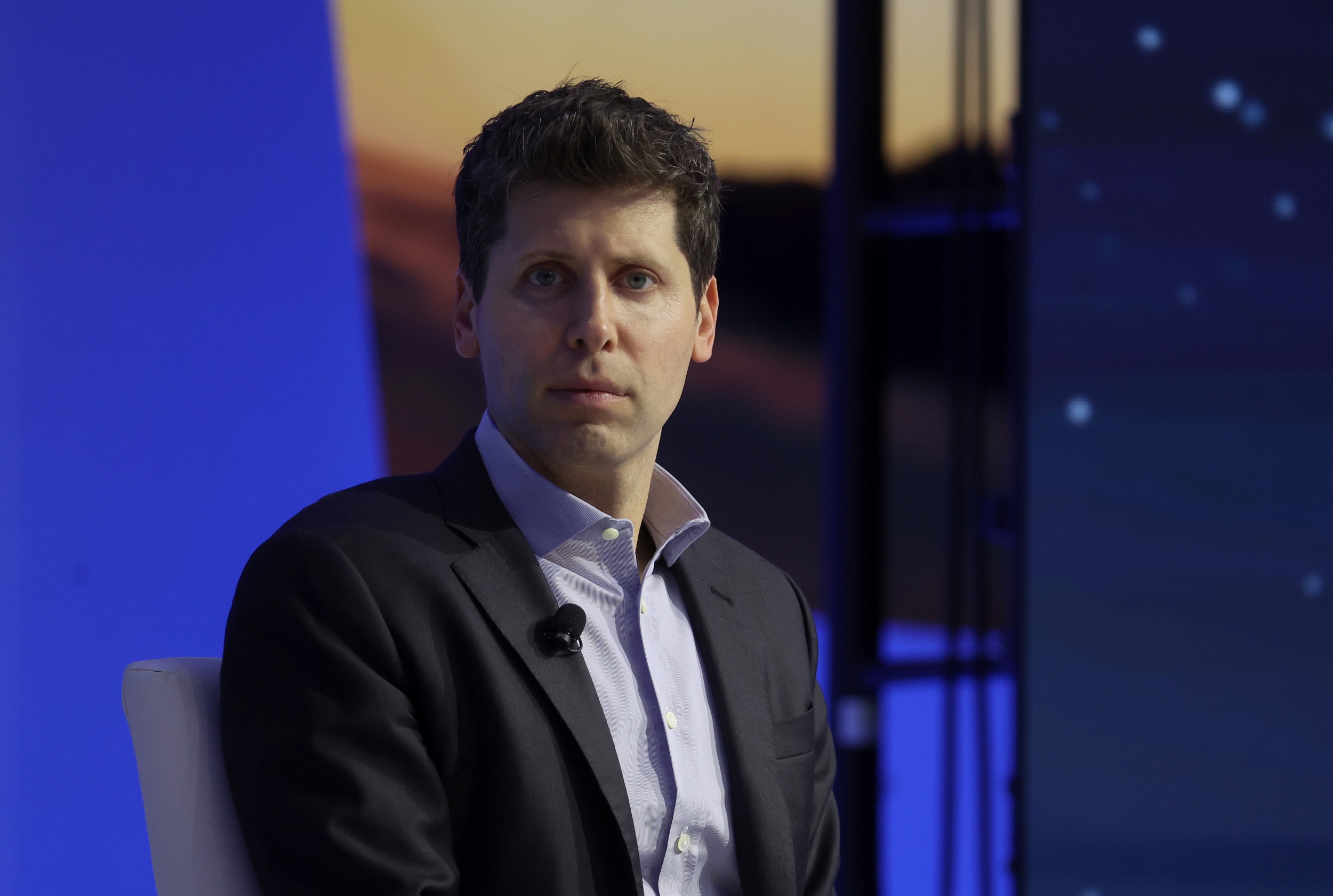
Enlarge/ OpenAI CEO Sam Altman at the APEC CEO Summit at Moscone West on November 16, 2023 in San Francisco.
Getty Images | Justin Sullivan
After five days of chaos triggered by OpenAI’s firing of CEO Sam Altman, the executive is set to return to the company, while the board of directors that fired him is to be almost entirely remade. OpenAI said last night that it “reached an agreement in principle for Sam Altman to return to OpenAI as CEO.”
Altman had accepted a job on Sunday from Microsoft, a major investor in OpenAI. Microsoft also offered to hire OpenAI’s employees, who threatened to resign en masse if Altman wasn’t brought back. According to Altman, Microsoft CEO Satya Nadella supported his return to OpenAI.
“with the new board and w satya’s support, i’m looking forward to returning to openai, and building on our strong partnership with msft,” Altman wrote. Altman also wrote, “i love openai, and everything i’ve done over the past few days has been in service of keeping this team and its mission together.”
OpenAI said that the company and Altman are still “collaborating to figure out the details.” But three of the four board members who remained after the Friday departures of Altman and OpenAI CTO Greg Brockman will leave.
The one OpenAI board member who is staying is Quora CEO Adam D’Angelo, who was reportedly involved in the discussions that led to Altman’s return. The three who are leaving the board are OpenAI Chief Scientist Ilya Sutskever, entrepreneur Tasha McCauley, and Helen Toner of the Georgetown Center for Security and Emerging Technology.
New board could add six members
OpenAI said the “new initial board” will consist of D’Angelo, economist Larry Summers, and former Salesforce co-CEO Bret Taylor, who will be the chair. More board members will reportedly be added. At least for now, Altman will not regain his former position on the board.
“The previous board and Altman’s camp also agreed to conduct an independent investigation into his conduct, the decision to oust him last week and its aftermath, a person familiar with the matter said,” The Wall Street Journal reported. “The new board is expected to add as many as six additional members, the person said, in addition to continuing its duties.”
OpenAI’s interim CEO, Emmett Shear, who led the company for a few days, wrote, “I am deeply pleased by this result, after ~72 very intense hours of work. Coming into OpenAI, I wasn’t sure what the right path would be. This was the pathway that maximized safety alongside doing right by all stakeholders involved. I’m glad to have been a part of the solution.”
Meanwhile, some new details emerged about the days leading up to Altman’s firing. “In the weeks leading up to his shocking ouster from OpenAI, Sam Altman was actively working to raise billions from some of the world’s largest investors for a new chip venture,” Bloomberg reported. Altman reportedly was traveling in the Middle East to raise money for “an AI-focused chip company” that would compete against Nvidia.
OpenAI’s announcement of the firing on Friday provided little detail but said that Altman “was not consistently candid in his communications with the board, hindering its ability to exercise its responsibilities.”
“Slow erosion of trust” before firing
As Bloomberg wrote, “The board and Altman had differences of opinion on AI safety, the speed of development of the technology and the commercialization of the company, according to a person familiar with the matter. Altman’s ambitions and side ventures added complexity to an already strained relationship with the board.”
OpenAI has an unusual structure, with a nonprofit that controls the for-profit subsidiary OpenAI Global. A Wall Street Journal behind-the-scenes report noted that the nonprofit board’s mission is to “ensur[e] the company develops AI for humanity’s benefit—even if that means wiping out its investors.”
“According to people familiar with the board’s thinking, members had grown so untrusting of Altman that they felt it necessary to double-check nearly everything he told them,” the WSJ report said. The sources said it wasn’t a single incident that led to the firing, “but a consistent, slow erosion of trust over time that made them increasingly uneasy,” the WSJ article said. “Also complicating matters were Altman’s mounting list of outside AI-related ventures, which raised questions for the board about how OpenAI’s technology or intellectual property could be used.”
But Altman’s firing was so controversial that it threatened to unravel the company entirely. The WSJ wrote:
Over the weekend, Altman’s old executive team pushed the board to reinstate him—telling directors that their actions could trigger the company’s collapse.
“That would actually be consistent with the mission,” replied board member Helen Toner, a director at a Washington policy research organization who joined the board two years ago.
Toner commented on Altman’s return, writing, “And now, we all get some sleep.”
https://arstechnica.com/?p=1986079
PIN AI, il badge da taschino che usa l’AI per sostituire lo smartphone
In un annuncio molto atteso, Humane, un’azienda fondata da ex dipendenti di Apple Imran Chaudhri e Bethany Bongiorno, ha presentato ufficialmente l’AI PIN, un dispositivo indossabile che sfrutta la potenza dell’intelligenza artificiale con il sogno di soppiantare lo smartphone. Dopo mesi di speculazioni, il mondo può finalmente vedere questo gadget innovativo, che promette di rimodellare il modo in cui ci connettiamo con la tecnologia e gli uni con gli altri.
Cosa è PIN AI
Del tutto simile a una semplice spilla, il PIN AI si appunta ai vestiti, appunto come una spilla, e offre agli utenti un modo diverso per accedere a un’ampia gamma di servizi tramite comandi vocali, gesti tattili o un proiettore laser.
<!-- ENERGIA ITALIA - 300x250 -->
Le caratteristiche dell’AI PIN
Al centro del PIN AI si trovano un processore Snapdragon, una fotocamera ultra-wide, sensori di profondità e un altoparlante. Questa potente combinazione di componenti hardware consente al dispositivo di eseguire una moltitudine di attività. Ciò che distingue l’AI PIN è la sua batteria interna, che offre la flessibilità di una rapida sostituzione attraverso una fonte di alimentazione esterna collegata magneticamente. Ciò garantisce che gli utenti possano mantenere operativo il proprio dispositivo senza scomodi tempi di inattività.
Posizionato come “il nuovo modo di connettersi al mondo”, l’AI PIN ha obiettivi ambiziosi: sostituire gli smartphone tradizionali e offrire agli utenti un modo più coinvolgente e naturale di interagire con la tecnologia. Questo rivoluzionario dispositivo indossabile consente agli utenti di rimanere connessi senza fare affidamento su schermi o tastiere, offrendo un’esperienza più fluida e incentrata sull’uomo.
Un dispositivo multifunzionale
Una delle caratteristiche distintive del PIN AI è la sua capacità di gestire chiamate, messaggi e notifiche direttamente sul PIN stesso. Gli utenti possono rispondere facilmente agli avvisi tramite comandi vocali o tattili, eliminando la necessità di estrarre un telefono o di affidarsi ad altri dispositivi ingombranti. Inoltre, il PIN AI estende le sue funzionalità al controllo della musica, consentendo agli utenti di selezionare brani, gestire playlist e regolare facilmente le impostazioni del volume.
Amazon is going through yet another round of layoffs, reports Computerworld, and once again the company’s devices-and-services division appears to be bearing the brunt of it. The layoffs will primarily affect the team working on Alexa, the Amazon voice assistant that drives the company’s Echo smart speakers and other products.
“Several hundred roles are impacted,” the company said in a statement, “a relatively small percentage of the total number of people in the Devices business who are building great experiences for our customers.”
Amazon says these layoffs result from “discontinue[d] initiatives” that have been discarded as the company invests more resources in generative AI products; the company didn’t specify exactly which initiatives were being discontinued. Amazon hasn’t released an AI-powered version of Alexa yet, but it showed “an early preview” of its efforts in September, “based on a new large language model that’s been custom-built and specifically optimized for voice interactions.”
So far, Amazon has promised faster response times, the ability to talk to Alexa without saying “Alexa” first, and a more conversational chat mode.
Amazon has always had trouble making money from Alexa, which was said to lose as much as $10 billion in 2022. Amazon’s Echo devices have been successful—analysts at Statista say that Amazon controls around two-thirds of the smart speaker market in the US as of January 2023, and the assistant is said to get “a billion interactions a week.” But the hardware is sold at cost, and people interact with Alexa mainly to play music or check the weather, not to spend money on Amazon or anywhere else.
It has been a tough year for Amazon’s devices division, which has already borne a large share of the 27,000 layoffs that the company has announced in the last 12 months. Longtime leader David Limp left the team, though he was replaced by former Microsoft Surface leader Panos Panay. And Amazon has reined in its hardware ambitions, pushing for cheaper devices and delaying or canceling other projects.
On top of that, the company was ordered to pay $46.7 million by a Delaware court that ruled that Alexa had violated another company’s patents.
Whether a generative AI version of Alexa can address all or any of these problems is an open question, but Amazon isn’t the only company betting on generative AI’s moneymaking potential. Microsoft has gone all in on generative AI this year—notwithstanding this week’s drama at OpenAI, the company behind most of the technology Microsoft uses—and Google is trying very hard. Apple has been quiet on this front in public, mentioning “AI” in passing or not at all in this year’s product announcements, but early reports indicate that Apple is working to build generative AI features into iOS 18, the next major version of the software.
https://arstechnica.com/?p=1985794
Reports: Sam Altman in talks for OpenAI return; board members could be ousted
Enlarge/ Then-OpenAI CEO Sam Altman at APEC CEO Summit at Moscone West on November 16, 2023, in San Francisco.
Getty Images | Justin Sullivan
Former OpenAI CEO Sam Altman is in talks to return to the company’s top job days after he was fired, but nothing has been finalized, according to news reports today.
“Discussions are happening between Altman, CEO Emmett Shear and at least one board member, Adam D’Angelo,” Bloomberg wrote, citing anonymous sources. “The talks also involve some of OpenAI’s investors, many of whom are pushing for his reinstatement.” OpenAI shareholders reportedly lobbying for Altman’s reinstatement include Thrive Capital, Khosla Ventures, and Tiger Global Management.
Altman was fired on Friday by the board of directors of OpenAI, Inc., the nonprofit that controls the for-profit subsidiary OpenAI Global. An Altman return could be paired with changes to the board.
“In one scenario being discussed, Altman would become a director on a transitional board,” Bloomberg wrote. Former Salesforce co-CEO Bret Taylor could join the board, the report said.
Besides D’Angelo, who is also Quora’s CEO, the OpenAI board consists of OpenAI Chief Scientist Ilya Sutskever, entrepreneur Tasha McCauley, and Helen Toner of the Georgetown Center for Security and Emerging Technology. Altman was on the OpenAI board until he was forced out of the CEO role and board position last week. The board was previously chaired by Greg Brockman, who was removed from the board when Altman was fired and then quit his post as OpenAI CTO.
“That the board and Altman are in communication is a significant development because until Monday, the directors largely refused to engage with the executive they fired Friday, several people have said,” according to Bloomberg.
A Washington Post report similarly said that “talks were ongoing Tuesday about the future of OpenAI and the potential return of Sam Altman.” Altman’s return may be contingent on removal of the board members who fired him, the Post wrote:
Investors and executives were scrambling to figure out a plan to bring back Altman after it was revealed late Sunday night that he would be leading Microsoft’s new AI lab. Conflicting information was emerging from the negotiations. One person familiar with the situation said the talks were less about specific board members and more about creating a board that was “stable and well-intentioned.” Another person familiar with the matter said Altman would return only if the board members who fired him left.
Microsoft, Salesforce make offers to OpenAI employees
As noted, Altman appears to be headed to Microsoft if he doesn’t return to OpenAI. Microsoft already announced it was hiring Altman, though Microsoft CEO Satya Nadella suggested yesterday that he’s open to Altman returning to OpenAI instead.
Altman wrote yesterday that the “top priority” for himself and Nadella is to ensure that OpenAI “continues to thrive,” and that they “are committed to fully providing continuity of operations to our partners and customers.” The OpenAI/Microsoft partnership “makes this very doable,” he added.
Meanwhile, Microsoft and Salesforce are angling to hire OpenAI employees who are revolting against the Altman firing. By the end of Monday, 747 out of 770 OpenAI employees reportedly signed a letter threatening to quit and join Altman at Microsoft if the firing isn’t reversed.
Microsoft CTO Kevin Scott responded to the petition in a twitter.com post. “To my partners at OpenAI: We have seen your petition and appreciate your desire potentially to join Sam Altman at Microsoft’s new AI Research Lab. Know that if needed, you have a role at Microsoft that matches your compensation and advances our collective mission,” Scott wrote today.
Salesforce CEO Marc Benioff also made a pitch. He wrote yesterday that Salesforce would match the salary and equity of “any OpenAI researcher who has tendered their resignation” and give them positions on the Salesforce Einstein Trusted AI research team.
OpenAI is currently being led by interim CEO Emmett Shear. According to Bloomberg, “Shear has been left in the dark” regarding certain key questions about Altman’s removal. Shear “has told people close to OpenAI that he doesn’t plan to stick around if the board can’t clearly communicate to him in writing its reasoning for Altman’s sudden firing,” Bloomberg wrote.
https://arstechnica.com/?p=1985908
Insider Q&A: Pentagon AI Chief on Network-Centric Warfare, Generative AI Challenges
The Pentagon’s chief digital and artificial intelligence offer, Craig Martell, is alarmed by the potential for generative artificial intelligence systems like ChatGPT to deceive and sow disinformation. His talk on the technology at the DefCon hacker convention in August was a huge hit. But he’s anything but sour on reliable AI.
Not a soldier but a data scientist, Martell headed machine-learning at companies including LinkedIn, Dropbox and Lyft before taking the job last year.
Marshalling the U.S. military’s data and determining what AI is trustworthy enough to take into battle is a big challenge in an increasingly unstable world where multiple countries are racing to develop lethal autonomous weapons.
The interview has been edited for length and clarity.
Q: What is your main mission?
A: Our job is to scale decision advantage from the boardroom to the battlefield. I don’t see it as our job to tackle a few particular missions but rather to develop the tools, processes, infrastructure and policies that allow the department as a whole to scale.
Q: So the goal is global information dominance? What do you need to succeed?
Advertisement. Scroll to continue reading.
A: We are finally getting at network-centric warfare — how to get the right data to the right place at the right time. There is a hierarchy of needs: quality data at the bottom, analytics and metrics in the middle, AI at the top. For this to work, most important is high-quality data.
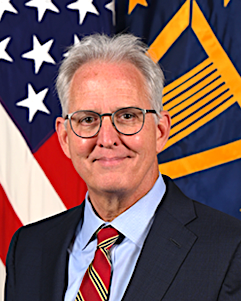
Craig Martell, Chief Digital and AI Officer (CDAO) for the U.S. Department of Defense
Q: How should we think about AI use in military applications?
A: All AI is, really, is counting the past to predict the future. I don’t actually think the modern wave of AI is any different.
Q: Pentagon planners say the China threat makes AI development urgent. Is China winning the AI arms race?
A: I find that metaphor somewhat flawed. When we had a nuclear arms race it was with a monolithic technology. AI is not that. Nor is it a Pandora’s box. It’s a set of technologies we apply on a case-by-base basis, verifying empirically whether it’s effective or not.
Q: The U.S. military is using AI tech to assist Ukraine. How are you helping?
A: Our team is not involved with Ukraine other than to help build a database for how allies provide assistance. It’s called Skyblue. We’re just helping make sure that stays organized.
Q: There is much discussion about autonomous lethal weaponry – like attack drones. The consensus is humans will ultimately be reduced to a supervisory role — being able to abort missions but mostly not interfering. Sound right?
A: In the military we train with a technology until we develop a justified confidence. We understand the limits of a system, know when it works and when it might not. How does this map to autonomous systems? Take my car. I trust the adaptive cruise control on it. The technology that is supposed to keep it from changing lanes, on the other hand, is terrible. So I don’t have justified confidence in that system and don’t use it. Extrapolate that to the military.
Q: The Air Force’s “loyal wingman” program in development would have drones fly in tandem with fighter jets flown by humans. Is the computer vision good enough to distinguish friend from foe?
A: Computer vision has made amazing strides in the past 10 years. Whether it’s useful in a particular situation is an empirical question. We need to determine the precision we are willing to accept for the use case and build against that criteria – and test. So we can’t generalize. I would really like us to stop talking about the technology as a monolith and talk instead about the capabilities we want.
Q: You are currently studying generative AI and large-language models. When might it be used in the Department of Defense?
A: The commercial large-language models are definitely not constrained to tell the truth, so I am skeptical. That said, through Task Force Lima (launched in August) we are studying more than 160 use cases. We want to decide what is low risk and safe. I’m not setting official policy here, but let’s hypothesize. Low-risk could be something like generating first drafts in writing or computer code. In such cases, humans are going to edit, or in the case of software, compile. It could also potentially work for information retrieval — where facts can be validated to ensure they are correct.
SecurityWeek’s Cyber AI & Automation Summit pushes the boundaries of security discussions by exploring the implications and applications of predictive AI, machine learning, and automation in cybersecurity programs. (Register – Free)
Q: A big challenge with AI is hiring and retaining the talent needed to test and evaluate systems and label data. AI data scientists earn a lot more than what the Pentagon has traditionally paid. How big a problem is this?
A: That’s a huge can of worms. We have just created a digital talent management office and are thinking hard about how to fill a whole new set of job roles. For example, do we really need to be hiring people who are looking to stay at the Department of Defense for 20-30 years? Probably not. But what if we can get them for three or four? What if we paid for their college and they pay us back with three or four years and then go off with that experience and get hired by Silicon Valley? We’re thinking creatively like this. Could we, for example, be part of a diversity pipeline? Recruit at HBCUs (historically Black colleges and universities)?
Microsoft Hires Sam Altman and OpenAI’s New CEO Vows to Investigate His Firing
Microsoft snapped up Sam Altman and another architect of OpenAI for a new venture after their sudden departures shocked the artificial intelligence world, leaving the newly installed CEO of the ChatGPT maker to paper over tensions by vowing to investigate Altman’s firing.
The developments Monday come after a weekend of drama and speculation about how the power dynamics would shake out at OpenAI, whose chatbot kicked off the generative AI era by producing human-like text, images, video and music.
It ended with former Twitch leader Emmett Shear taking over as OpenAI’s interim chief executive and Microsoft announcing it was hiring Altman and OpenAI co-founder and former President Greg Brockman to lead Microsoft’s new advanced AI research team.
Despite the rift between the key players behind ChatGPT and the company they helped build, both Shear and Microsoft Chairman and CEO Satya Nadella said they are committed to their partnership.
Microsoft invested billions of dollars in the startup and helped provide the computing power to run its AI systems. Nadella wrote on X, formerly known as Twitter, that he was “extremely excited” to bring on the former executives of OpenAI and looked “forward to getting to know” Shear and the rest of the management team.
In a reply on X, Altman said “the mission continues,” while Brockman posted, “We are going to build something new & it will be incredible.”
OpenAI said Friday that Altman was pushed out after a review found he was “not consistently candid in his communications” with the board of directors, which had lost confidence in his ability to lead the company.
In an X post Monday, Shear said he would hire an independent investigator to look into what led up to Altman’s ouster and write a report within 30 days.
Advertisement. Scroll to continue reading.
“It’s clear that the process and communications around Sam’s removal has been handled very badly, which has seriously damaged our trust,” wrote Shear, who co-founded Twitch, an Amazon-owned livestreaming service popular with video gamers.
He said he also plans in the next month to “reform the management and leadership team in light of recent departures into an effective force” and speak with employees, investors and customers.
After that, Shear said he would “drive changes in the organization,” including “significant governance changes if necessary.” He noted that the reason behind the board removing Altman was not a “specific disagreement on safety.”
OpenAI last week declined to answer questions on what Altman’s alleged lack of candor was about. Its statement said his behavior was hindering the board’s ability to exercise its responsibilities.
An OpenAI spokeswoman didn’t immediately reply to an email Monday seeking comment. A Microsoft representative said the company would not be commenting beyond its CEO’s statement.
After Altman was pushed out Friday, he stirred speculation that he might be coming back into the fold in a series of tweets. He posted a photo of himself with an OpenAI guest pass on Sunday, saying this is “first and last time i ever wear one of these.”
Hours earlier, he tweeted, “i love the openai team so much,” which drew heart replies from Brockman, who quit after Altman was fired, and Mira Murati, OpenAI’s chief technology officer who was initially named as interim CEO.
It’s not clear what transpired between the announcement of Murati’s interim role Friday and Shear’s hiring, though she was among several employees on Monday who tweeted, “OpenAI is nothing without its people.” Altman replied to many with heart emojis.
Shear said he stepped down as Twitch CEO because of the birth of his now-9-month-old son but “took this job because I believe that OpenAI is one of the most important companies currently in existence.”
His beliefs on the future of AI came up on a podcast in June. Shear said he’s generally an optimist about technology but has serious concerns about the path of artificial intelligence toward building something “a lot smarter than us” that sets itself on a goal that endangers humans.
It’s an issue that Altman consistently faced since he helped catapult ChatGPT to global fame. In the past year, he has become Silicon Valley’s most sought-after voice on the promise and potential dangers of artificial intelligence.
He went on a world tour to meet with government officials earlier this year, drawing big crowds at public events as he discussed both the risks of AI and attempts to regulate the emerging technology.
Altman posted Friday on X that “i loved my time at openai” and later called his ouster a “weird experience.”
“If Microsoft lost Altman he could have gone to Amazon, Google, Apple, or a host of other tech companies craving to get the face of AI globally in their doors,” Daniel Ives, an analyst with Wedbush Securities, said in a research note.
Microsoft is now in an even stronger position on AI, Ives said. Its shares rose nearly 2% before the opening bell and were nearing an all-time high Monday.
The Associated Press and OpenAI have a licensing and technology agreement allowing OpenAI access to part of the AP’s text archives.
AI-robotica connubio già esistente: in arrivo nuove e potenti armi?
L’interesse per l’incorporazione dei robot in ambito di security, polizia e operazioni militari è stato costante negli ultimi anni ed è già stata largamente esplorato in Nord America come in Europa.
L’integrazione dei robot in questi ambiti potrebbe sembrare analoga a quella dei cani in polizia e in ambiti militari nel 20esimo secolo.
E’ vero che negli anni i cani hanno servito tra le altre cose da guardie, sentinelle, portatori di messaggi e rilevatori di mine.
I robot di utilità, progettati per svolgere un ruolo di supporto per gli esseri umani, stanno imitando i nostri compagni a quattro zampe non solo nella forma, ma anche nel funzionamento. Dotati di tecnologia di sorveglianza e in grado di trasportare attrezzature, munizioni e altro come parte delle catene di rifornimento, potrebbero ridurre significativamente il rischio di danni ai soldati.
Aggiungeranno le armi?
Tuttavia, i robot di utilità assumerebbero senza dubbio una dimensione diversa se ad essi venissero aggiunti sistemi d’arma. Essenzialmente, diventerebbero varianti terrestri del velivolo MQ-9 Predator Drone attualmente utilizzato dalle forze armate statunitensi.
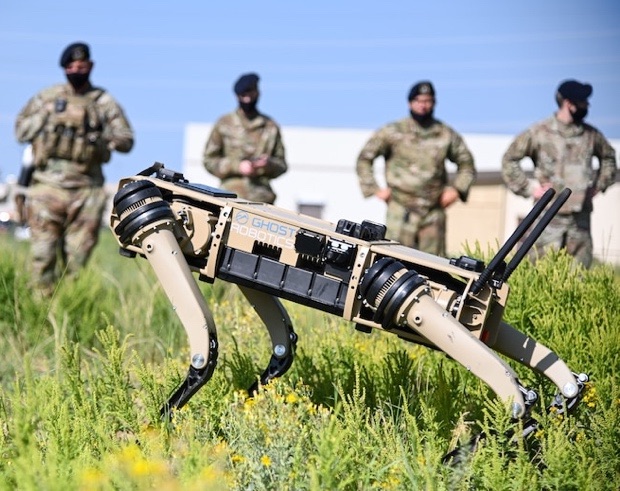
Nel 2021, la società Ghost Robotics ha presentato uno dei suoi robot a quattro zampe, chiamato Q-UGV, armato con un fucile senza pilota per scopi speciali 4. L’evento dimostrativo si è focalizzato sull’arma dei robot di utilità.
L’arma del robot va ancora azionata dall’uomo
È importante notare come ogni aspetto di questa fusione di armi e robotica operi in modo diverso. Sebbene il robot stesso sia semi-autonomo e possa essere controllato da remoto, l’arma montata non ha capacità autonome ed è completamente controllata da un operatore.
Nel settembre 2023, i Marines hanno condotto un test di prova coinvolgendo un altro robot di utilità a quattro zampe. Hanno misurato la sua capacità di “acquisire e perseguire obiettivi con un’arma anticarro leggera M72”.
Alcune aziende contro il cane armato
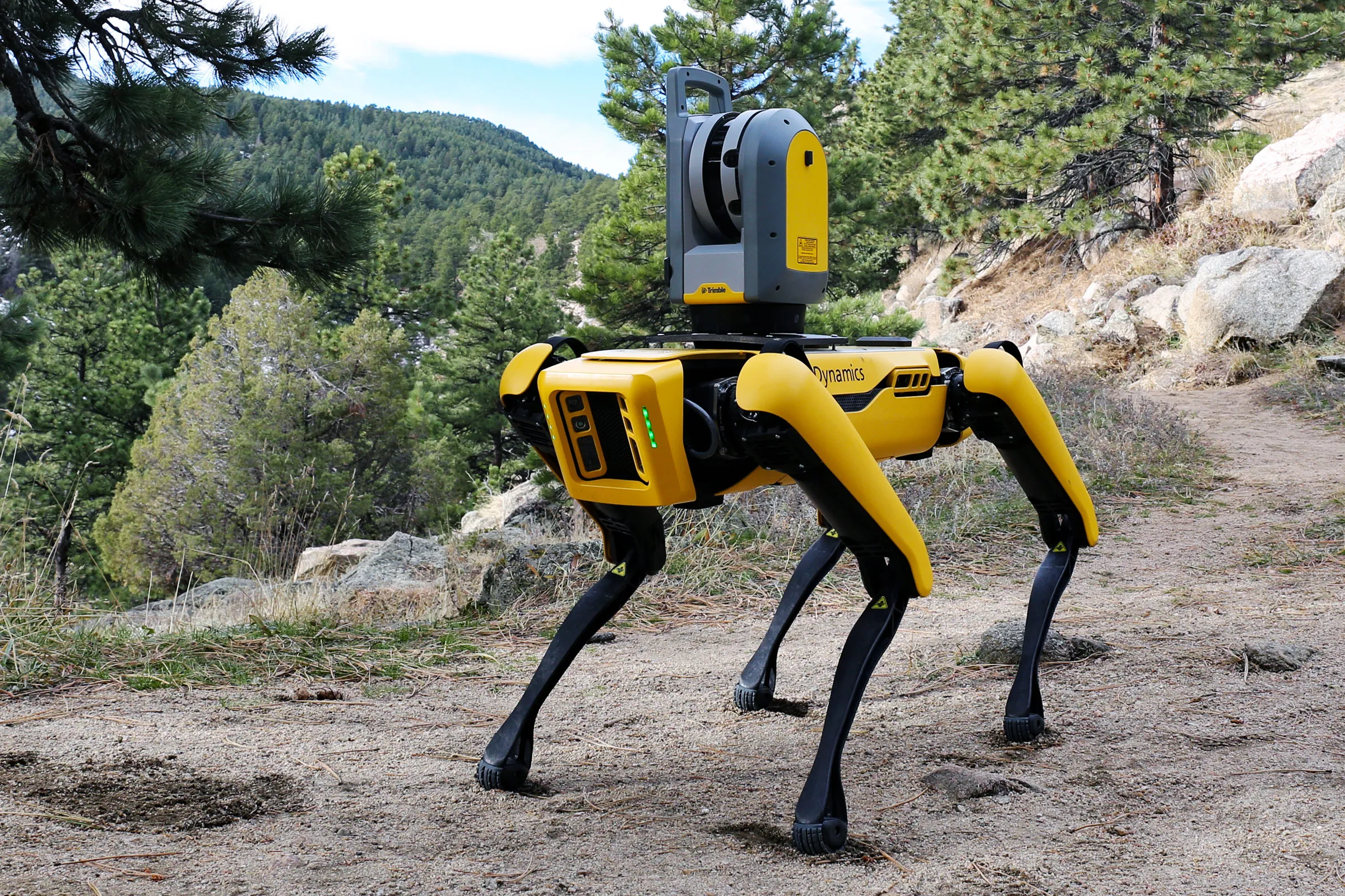
Il test ha riacceso il dibattito etico sull’uso di sistemi d’arma automatizzati e semiautomatici in guerra. Non sarebbe un grande passo per nessuna di queste piattaforme incorporare il rilevamento delle minacce basato sull’intelligenza artificiale e la capacità di “agganciarsi” agli obiettivi. In effetti, sistemi di mira di questo tipo sono già disponibili sul mercato. Nel 2022, una dozzina di aziende leader nel settore della robotica hanno firmato una lettera aperta ospitata sul sito web di Boston Dynamics, che ha creato un robot di utilità simile a un cane chiamato Spot. Nella lettera le aziende si sono espresse contro l’utilizzo come arma dei robot disponibili in commercio.
Robot con armi incorporate già usati in battaglia
Tuttavia, la lettera afferma anche che le società non hanno contestato “le tecnologie esistenti che le nazioni e le loro agenzie governative utilizzano per difendersi e far rispettare le proprie leggi”. A questo punto, vale la pena considerare se i buoi siano già scappati per quanto riguarda l’utilizzo dell’intelligenza artificiale come arma. I sistemi d’arma con tecnologia intelligente integrata nella robotica vengono già utilizzati in combattimento.
ChatGPT già testato sui cani-robot
Questo mese, Boston Dynamics ha pubblicizzato un video che mostra come l’azienda ha aggiunto il chatbot AI ChatGPT al suo robot Spot. Si può vedere la macchina rispondere alle domande e alle conversazioni di uno degli ingegneri dell’azienda utilizzando diverse “personalità”, come un maggiordomo inglese. Le risposte provengono dal chatbot AI, ma Spot pronuncia le parole.
È un passo affascinante per il settore e, potenzialmente, positivo. Ma mentre Boston Dynamics mantiene il suo impegno a non utilizzare come armi i propri robot, altre società potrebbero non pensarla allo stesso modo. Esiste anche il rischio di un uso improprio di tali robot da parte di persone o istituzioni prive di una bussola morale. Come suggerisce la lettera aperta: “Quando possibile, esamineremo attentamente le applicazioni previste dai nostri clienti per evitare potenziali armi”.
Cani robot ancora non sparano (per ora)
I cani robot non puntano ancora le armi contro le forze avversarie. Ma ci sono tutti gli elementi affinché questo scenario diventi realtà, se lasciato senza controllo. Il rapido ritmo di sviluppo sia dell’intelligenza artificiale che della robotica sta creando una tempesta perfetta che potrebbe portare allo sviluppo di nuove e potenti armi.
Il recente vertice sulla sicurezza dell’IA tenutosi a Bletchley Park ha avuto un esito positivo per la regolamentazione dell’IA, sia nel Regno Unito che a livello internazionale. Tuttavia, c’erano segni di una divisione filosofica tra gli obiettivi del vertice e quelli del comitato AI in Weapon Systems.
OpenAI board attempts to hit “Ctrl-Z” in talks with Altman to return as CEO
Enlarge/ OpenAI CEO Sam Altman speaks during the OpenAI DevDay event on November 06, 2023 in San Francisco.
Just over a day since the surprise firing of OpenAI CEO Sam Altman that sent shock waves through the tech industry, the OpenAI board is reportedly engaging in discussions with Altman to potentially return as chief executive of the company, according to The Verge, citing people familiar with the matter. The outlet says that Altman is “ambivalent” about returning and would want significant changes to how the company is run.
The New York Times reports that the talks are part of a pressure campaign from OpenAI investors, led by Microsoft, who has invested $13 billion in the for-profit arm of OpenAI.
The move would be a dramatic about-face for the board, which has received intense scrutiny from all corners of the tech world for abruptly and surprisingly firing one of the tech industry’s most high-profile CEOs. Altman was popular with both Microsoft leadership and OpenAI staff, and his firing came as a shock to employees, who reportedly pushed back against OpenAI Chief Scientist Ilya Sutskever’s handling of the move during an all-hands meeting on Friday.
The overtures toward Altman suggest that the board may have been surprised by the sizable reaction from the world at large—and is keenly feeling the aforementioned pressure from investors like Microsoft who have bet big on OpenAI’s technology.
In an internal memo obtained by Axios on Saturday, OpenAI COO Brad Lightcap hinted at criticism of how the firing was handled and confirmed that Altman was not fired in response to “malfeasance or anything related to our financial, business, safety, or security/privacy practices.” With no apparent legal wrongdoing at play, and with broad support within the company (present board of directors excluded), the path could clear for Altman’s return, should he choose to accept it.
In the OpenAI blog post that first announced Altman’s firing on Friday, the board wrote that Altman was fired because he “was not consistently candid in his communications with the board, hindering its ability to exercise its responsibilities.” COO Lightcap wrote in his memo on Saturday that the firing was due to a “breakdown in communication between Sam and the board.” The firing prompted OpenAI President Greg Brockman to quit in solidarity with Altman on Friday afternoon.
As we’ve previously reported, several sources citing OpenAI insiders suggest that a culture clash with OpenAI Chief Scientist Ilya Sutskever over safety issues and the commercial direction of OpenAI was the primary reason for Altman’s firing. Sutskever, a member of the OpenAI board, reportedly orchestrated the ouster, which came as a surprise to both Altman and Brockman. Altman was a member of the board, and Brockman served as chairman. Now four board members remain.
If Altman were to return to OpenAI, we do not yet know what that would mean for Sutskever’s position at the company, or if others like Brockman and the three senior OpenAI researchers who also resigned would return with Altman as well. According to the New York Times, Altman and Brockman have already taken initial planning steps toward founding a new AI company and have received pledges of support from investors, should that take place.
“The best case for the board is that Sam and Greg come back, the 4 board members resign, and lay low for a long while,” speculated venture capitalist Will Hubbard on X. “The worst case for the board is that Sam and Greg start another company, take all OpenAI’s talent and future funding, and have a lawsuit brought against them.” No plans for a lawsuit have been announced.
But even if the talks with Altman go nowhere, the fact they are taking place serves as yet another unexpected turn in this very unusual series of events. Expect further updates as details emerge.
https://arstechnica.com/?p=1985272
Details emerge of surprise board coup that ousted CEO Sam Altman at OpenAI
Enlarge/ Ilya Sutskever, OpenAI Chief Scientist, speaks at Tel Aviv University on June 5, 2023.
On Friday, OpenAI fired CEO Sam Altman in a surprise move that led to the resignation of President Greg Brockman and three senior scientists. The move also blindsided key investor and minority owner Microsoft, reportedly making CEO Satya Nadella furious. As Friday night wore on, reports emerged that the ousting was likely orchestrated by Chief Scientist Ilya Sutskever over concerns about the safety and speed of OpenAI’s tech deployment.
“This was the board doing its duty to the mission of the nonprofit, which is to make sure that OpenAI builds AGI that benefits all of humanity,” Sutskever told employees at an emergency all-hands meeting on Friday afternoon, as reported by The Information.
Since its founding, OpenAI has pursued the development of artificial general intelligence (or AGI), which is a hypothetical technology that would be able to perform any intellectual task a human can do, potentially replacing a large number of humans at their jobs.
Internally at OpenAI, insiders say that disagreements had emerged over the speed at which Altman was pushing for commercialization and company growth, with Sutskever arguing to slow things down. Sources told reporter Kara Swisher that OpenAI’s Dev Day event on November 6, with Altman front and center in a keynote pushing consumer-like products, was an “inflection moment of Altman pushing too far, too fast.”
In a joint statement released Friday night, Altman and Brockman said they were “shocked and saddened” by the board’s actions. And they weren’t the only ones shocked by the news, as tech insiders took to social media on Friday to share their reactions. Angel investor Ron Conway wrote, “What happened at OpenAI today is a Board coup that we have not seen the likes of since 1985 when the then-Apple board pushed out Steve Jobs. It is shocking; it is irresponsible; and it does not do right by Sam & Greg or all the builders in OpenAI.”
OpenAI has an unusual structure where its for-profit arm is owned and controlled by a non-profit 501(c)(3) public charity. Prior to yesterday, that non-profit was controlled by a board of directors that included Altman, Brockman, Ilya Sutskever and three others who were not OpenAI employees: Adam D’Angelo, the CEO of Quora; Tasha McCauley, an adjunct senior management scientist at RAND corporation; and Helen Toner, director of strategy and foundational research grants at Georgetown’s Center for Security and Emerging Technology. Now, only Sutskever, D’Angelo, McCauley, and Toner remain.
Enlarge/ A block diagram of OpenAI’s unusual structure, provided by OpenAI.
Surprise moves and turmoil
According to the joint statement from Brockman and Altman, Altman’s firing came as a complete surprise to the pair, and they laid out a rough timeline of what happened. On Thursday night, Altman was asked to attend a remote board meeting on Friday at noon. The next day, Brockman, who was Chairman of the OpenAI board, was not invited to this board meeting, where Altman was fired.
Around 30 minutes later, Brockman was informed by Sutskever that he was being removed from his board role but could remain at the company, and that Altman had been fired (Brockman declined, and resigned his role later on Friday). According to Brockman, the OpenAI management team was only made aware of these moves shortly after the fact, but former CTO (now interim CEO) Mira Murati had been informed on Thursday night.
Key questions remain about accusations made against Altman in the OpenAI blog post that announced his departure, where the board said that Altman “was not consistently candid in his communications with the board, hindering its ability to exercise its responsibilities.” That has yet to be clarified by the company, but insiders say the move was mostly a power play that resulted from a cultural schism between Altman and Sutskever over Altman’s management style and drive for high-profile publicity. On September 29, Sutskever tweeted, “Ego is the enemy of growth.”
Enlarge/ Sam Altman and Ilya Sutskever speak together at Tel Aviv University on June 5, 2023.
The schism is causing further turmoil on the inside. Three AI researchers loyal to Altman departed the company as well on Friday, resigning in reaction to the news: Jakub Pachocki, GPT-4 lead and OpenAI’s director of research; Aleksander Madry, head of a team evaluating AI risk, and Szymon Sidor, an open source baselines researcher.
Pushing back the “veil of ignorance”
Rumors have already begun swirling about potential internal breakthroughs at OpenAI that may have intensified the slow/fast rift within the company, owing to Sutskever’s role as co-lead of a “Superalignment” team that is tasked with figuring out how to control hypothetical superintelligent AI. At the APEC CEO Summit on Thursday, Altman said, “Four times now in the history of OpenAI—the most recent time was just in the last couple of weeks—I’ve gotten to be in the room when we push the veil of ignorance back and the frontier of discovery forward. And getting to do that is like the professional honor of a lifetime.”
The concern here not necessarily being that OpenAI has developed superintelligence, which experts say is unlikely, but that the new breakthrough Altman mentioned may have added pressure to a company that is fighting within itself to proceed safely (from its non-profit branch) but also make money (from its for-profit subsidiary). Altman also recently said that GPT-5, presumed to be a powerful successor to the alarm-causing GPT-4, is now in development.
As news spread, some predictably shared quips on social media. X user shaurya wrote, “this is like the roman empire for people who do matrix multiplication.” And AI futurist Daniel Jeffries said, “The entire AI industry would like to thank the OpenAI board for giving us all a chance to catch up.“
But not all reactions were doom and gloom. As Friday night wore on, some at OpenAI made forward-looking statements. Evan Morikawa, Engineering Manager at OpenAI wrote on X, “For those wondering what’ll happen next, the answer is we’ll keep shipping. @sama & @gdb weren’t micro-managers. The ✨ comes from the many geniuses here in research product eng & design. There’s clear internal uniformity among these leaders that we’re here for the bigger mission.”
Expect to hear more on the OpenAI board’s side of the story as further details emerge.
Update: 11/18/2023 – 2:30 PM Eastern
“Decision not made in response to malfeasance”
An internal memo written by OpenAI chief operating officer Brad Lightcap obtained by Axios says that the board’s decision to fire Altman “was not made in response to malfeasance or anything related to our financial, business, safety, or security/privacy practices. This was a breakdown in communication between Sam and the board.”
The memo states that the announcement to fire Altman “took all of us by surprise,” and that Lightcap has made efforts to better understand “the reasons and process behind their decision.”
“I’m sure you all are feeling confusion, sadness, and perhaps some fear,” Lightcap writes. “We are fully focused on handling this, pushing toward resolution and clarity, and getting back to work. Our collective responsibility right now is to our teammates, partners, users, customers, and the broader world who shares our vision of broadly beneficial AGI. Hang in there, we are behind you all 1000%.”
After reassuring staff that the company’s position remains strong and expressing support for Mira Murati as interim CEO, he states, “We still share your concerns about how the process has been handled, are working to resolve the situation, and will provide updates as we’re able.”