OpenAI President Greg Brockman quits as shocked employees hold all-hands meeting

A glowing OpenAI logo on a red background.
OpenAI / Ars Technica

On Friday afternoon, not long after news of CEO Sam Altman’s abrupt and surprising departure from OpenAI began spreading online, the company held an all-hands meeting at its headquarters in San Francisco, reports The Information. During the meeting, interim CEO Mira Murati attempted to reassure the shocked employees that the search for a new CEO is underway.

Hours later, OpenAI co-founder and president Greg Brockman posted a statement on X, saying that after he learned today’s news he sent a message to the OpenAI team: “based on todays news, i quit.” Brockman, a key technical figure involved in many of the company’s successes, was relieved of his OpenAI board membership on Friday, but the company initially announced he would be staying on.

Earlier on Friday, OpenAI released a blog post titled “OpenAI announces leadership transition” where it announced that Atlman “was not consistently candid in his communications with the board, hindering its ability to exercise its responsibilities.” In a response post on X, Altman wrote, “I loved my time at openai,” and hinted at future plans without revealing any details.

An X post from OpenAI President Greg Brockman sent 7:09 PM Eastern on Nov 17, 2023.
Enlarge / An X post from OpenAI President Greg Brockman sent 7:09 PM Eastern on Nov 17, 2023.

News of the firing sent shockwaves through the tech community on Friday, prompting rumors on social media about the potential reasons behind Altman’s departure, none of which have yet been verified. Altman recently delivered the keynote for its inaugural Dev Day conference and spoke on a panel at the APEC CEO Summit on Thursday. Nothing seemed amiss, according to reports from people who know Altman, so the firing possibly came as a surprise.

OpenAI Chief Scientist Ilya Sutskever reportedly told staff that the internal shake-up will “make us feel closer.” In a note to staff earlier in the day, Sutskever wrote, “Change can be scary,” according to The Information, while reassuring that the company has an “incredible team” and that the company’s “research progress is wildly dramatic to say the least, and our product is the fastest growing in history.”

Microsoft employees were also shocked by Altman’s departure; reportedly, employees working on OpenAI-related projects did not receive notice that Altman was being fired. Altman served as OpenAI’s primary point of contact, and he was instrumental in architecting deals that led to billions of dollars of investment from Microsoft. Reportedly, Altman attended a regularly scheduled meeting with Microsoft executives on Thursday.

In an X post, Microsoft CEO Satya Nadella wrote, “We have a long-term agreement with OpenAI with full access to everything we need to deliver on our innovation agenda and an exciting product roadmap; and remain committed to our partnership, and to Mira and the team. Together, we will continue to deliver the meaningful benefits of this technology to the world.”

Amid the shakeup, OpenAI has emphasized that Murati’s role as CEO is apparently temporary. “Search process underway to identify permanent successor,” they wrote in their announcement. OpenAI was not immediately available to comment.

Update – 11/28/2023 12 AM Eastern:

According to reporting from Kara Swisher and The Information, it’s looking like the ouster of Altman stemmed from an internal disagreement over the direction of the company with regard to a focus on profits over safety, with Chief Scientist Illya Sutskever apparently behind the board maneuvering. Altman’s firing came as a complete surprise to Altman and Brockman, who were kept in the dark about the decision until Friday afternoon.

At 8:42 PM Pacific, Greg Brockman released a joint statement from himself and Sam Altman on X.

Sam and I are shocked and saddened by what the board did today.

Let us first say thank you to all the incredible people who we have worked with at OpenAI, our customers, our investors, and all of those who have been reaching out.

We too are still trying to figure out exactly what happened. Here is what we know:

– Last night, Sam got a text from Ilya asking to talk at noon Friday. Sam joined a Google Meet and the whole board, except Greg, was there. Ilya told Sam he was being fired and that the news was going out very soon.

– At 12:19pm, Greg got a text from Ilya asking for a quick call. At 12:23pm, Ilya sent a Google Meet link. Greg was told that he was being removed from the board (but was vital to the company and would retain his role) and that Sam had been fired. Around the same time, OpenAI published a blog post.

– As far as we know, the management team was made aware of this shortly after, other than Mira who found out the night prior.

The outpouring of support has been really nice; thank you, but please don’t spend any time being concerned. We will be fine. Greater things coming soon.

At 9:05 PM Pacific, Sam Altman posted his second statement on X today:

i love you all. today was a weird experience in many ways. but one unexpected one is that it has been sorta like reading your own eulogy while you’re still alive. the outpouring of love is awesome. one takeaway: go tell your friends how great you think they are.

Expect more to come on this topic later as more details emerge.

https://arstechnica.com/?p=1985047


OpenAI fires CEO Sam Altman, citing less than “candid” communications

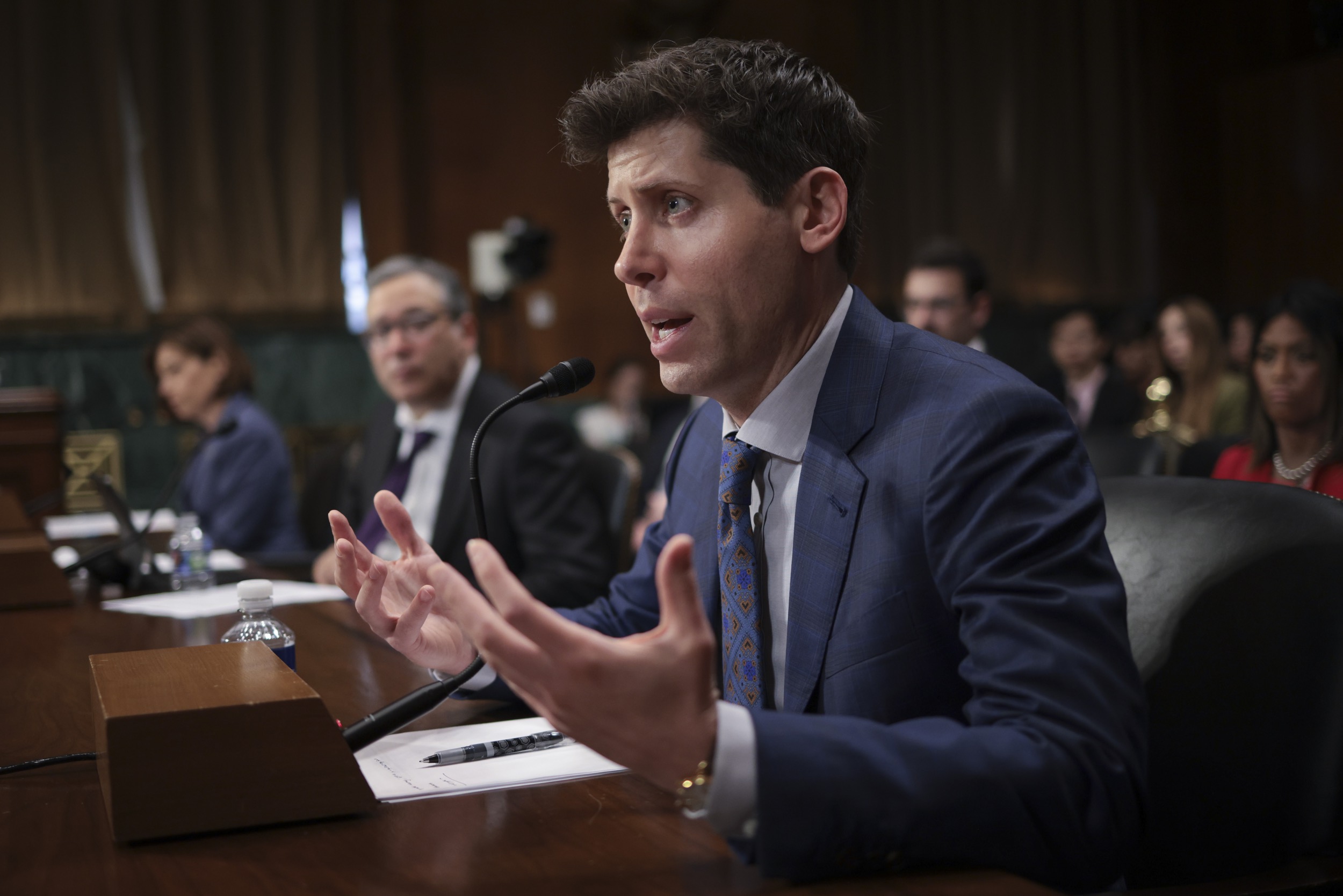
OpenAI CEO Sam Altman sits at a table and speaks into a microphone while testifying in a Senate hearing.
Enlarge / OpenAI CEO Sam Altman testifies about AI rules before the Senate Judiciary Subcommittee on Privacy, Technology, and the Law on May 16, 2023, in Washington, DC.
Getty Images | Win McNamee


OpenAI, the company behind ChatGPT and DALL-E, announced Friday that co-founder and CEO Sam Altman will be departing the company and vacating his seat on the board. CTO Mira Murati has been appointed interim CEO effective immediately, according to a blog post from the board of directors.

“Mr. Altman’s departure follows a deliberative review process by the board, which concluded that he was not consistently candid in his communications with the board, hindering its ability to exercise its responsibilities,” the blog reads, in part. “The board no longer has confidence in his ability to continue leading OpenAI.”

“We are grateful for Sam’s many contributions to the founding and growth of OpenAI,” the board writes in a prepared statement. “At the same time, we believe new leadership is necessary as we move forward.”

OpenAI also announced that Chairman of the Board Greg Brockman will be stepping down from that role but staying with the company.

Altman was the keynote speaker at OpenAI’s DevDay just last week, making today’s announcement seem rather sudden to those outside the company. Altman has served as an important public face for OpenAI and the entire artificial intelligence sector since helping to found the company in 2015.

Earlier this week, Altman told the Financial Times that the company was pursuing “how to build superintelligence” and future versions of the GPT model that could perform more complex actions.

“We will make these agents more and more powerful… and the actions will get more and more complex from here,” he said. “The amount of business value that will come from being able to do that in every category, I think, is pretty good.”

As news spread of the firing on social media, former Google CEO Eric Schmidt publicly vouched for Altman, saying, “Sam Altman is a hero of mine. He built a company from nothing to $90 billion in value and changed our collective world forever. I can’t wait to see what he does next. I, and billions of people, will benefit from his future work—it’s going to be simply incredible. Thank you @sama for all you have done for all of us.”

About 20 minutes later, Altman himself posted a statement on the social media network X, saying, “I loved my time at openai. it was transformative for me personally, and hopefully the world a little bit. most of all i loved working with such talented people. will have more to say about what’s next later.”

https://arstechnica.com/?p=1984964


Over a Dozen Exploitable Vulnerabilities Found in AI/ML Tools

Since August 2023, members of the Huntr bug bounty platform for artificial intelligence (AI) and machine learning (ML) have uncovered over a dozen vulnerabilities exposing AI/ML models to system takeover and sensitive information theft.

Identified in tools with hundreds of thousands or millions of downloads per month, such as H2O-3, MLflow, and Ray, these issues potentially impact the entire AI/ML supply chain, says Protect AI, which manages Huntr.

A low-code machine learning platform, H2O-3 supports the creation and deployment of ML models via a web interface, by just importing data. It allows users to upload Java objects remotely via API calls.

By default, the installation is exposed to the network and does not require authentication, thus allowing attackers to supply malicious Java objects that H2O-3 would execute, allowing them to access the operating system.

Tracked as CVE-2023-6016 (CVSS score of 10), the remote code execution (RCE) vulnerability could allow attackers to completely take over the server and steal models, credentials, and other data.

The bug hunters uncovered two other critical issues in the low-code service, namely a local file include flaw (CVE-2023-6038) and a cross-site scripting (XSS) bug (CVE-2023-6013), along with a high-severity S3 bucket takeover vulnerability (CVE-2023-6017).

MLflow, an open-source platform for the management of the end-to-end ML lifecycle, also lacks authentication by default, and the researchers identified four critical vulnerabilities in it.

The most severe of these are arbitrary file write and patch traversal bugs (CVE-2023-6018 and CVE-2023-6015, CVSS score of 10) that can allow an unauthenticated attacker to overwrite arbitrary files on the operating system and achieve RCE.

Advertisement. Scroll to continue reading.

The tool was also found vulnerable to critical-severity arbitrary file inclusion (CVE-2023-1177) and authentication bypass (CVE-2023-6014) vulnerabilities.

The Ray project, an open-source framework for the distributed training of ML models, also lacks default authentication.

A critical code injection flaw in Ray’s cpu_profile format parameter (CVE-2023-6019, CVSS score of 10) could lead to full system compromise. The parameter was not validated before being inserted in a system command that was executed in a shell.

The bug hunters also identified two critical local file include issues that could allow remote attackers to read any files on the Ray system. The security defects are tracked as CVE-2023-6020 and CVE-2023-6021.

All vulnerabilities were reported to vendors at least 45 days prior to public disclosure. Users are advised to update their installations to the latest non-vulnerable versions and restrict access to the applications where patches are not available. 

Related: The Good, the Bad and the Ugly of Generative AI

Related: OpenAI Patches Account Takeover Vulnerabilities in ChatGPT

Related: Major ChatGPT Outage Caused by DDoS Attack

https://www.securityweek.com/over-a-dozen-exploitable-vulnerabilities-found-in-ai-ml-tools/


AI, 45 paesi firmano la dichiarazione Usa sull’uso ‘responsabile’ in ambito militare. Ma non la Cina

L’iniziativa contiene 10 misure che creano un quadro globale per sfruttare i vantaggi della tecnologia mitigando al tempo stesso i rischi, secondo il Dipartimento di Stato.

Lunedì scorso 45 paesi hanno aderito allo sforzo guidato dagli Stati Uniti per gettare le basi per un uso militare responsabile dell’intelligenza artificiale, una mossa che il Dipartimento di Stato ha salutato come “un passo importante” per mitigare i rischi potenziali di questa tecnologia.

Tra i paesi che sostengono la dichiarazione ci sono molti partner e alleati americani in Asia ed Europa – Australia, Gran Bretagna, Canada, Finlandia, Italia, Francia, Germania, Giappone, Paesi Bassi, Singapore e Corea del Sud. Non c’è invece la Cina, che non considera il concetto di “uso responsabile” abbastanza adeguato o sufficientemente oggettivo per definire il perimetro di utilizzo dell’AI. Ma i due paesi stanno negoziando.

Leggi anche: Usa-Cina cercano l’accordo contro l’uso dell’AI per armi nucleari e droni militari

Ma cosa prevede la dichiarazione politica degli Usa sull’AI?

Gli Stati firmatari ritengono che le seguenti misure dovrebbero essere attuate nello sviluppo, dispiegamento o utilizzo di capacità militari di IA, comprese quelle abilitanti funzioni e sistemi autonomi (droni e robot soldati ndr):

A. Gli Stati dovrebbero garantire che le loro organizzazioni militari adottino e implementino questi principi per lo sviluppo, implementazione e utilizzo responsabili delle capacità di intelligenza artificiale.

B. Gli Stati dovrebbero adottare misure appropriate, come revisioni legali, per garantire che la loro IA militare sia utilizzata in conformità con i rispettivi obblighi ai sensi del diritto internazionale, in particolare il diritto internazionale umanitario. Gli Stati dovrebbero anche considerare come utilizzare le capacità di intelligenza artificiale delle forze armate per migliorare l’attuazione del diritto internazionale umanitario e per migliorare la protezione dei civili e dei beni civili nei conflitti armati.

C. Gli Stati dovrebbero garantire che gli alti funzionari controllino in modo efficace e appropriato lo sviluppo e impiego di capacità di IA militare con applicazioni ad alto impatto, compresi, ma non limitati a, tali sistemi d’arma.

D. Gli Stati dovrebbero adottare misure proattive per ridurre al minimo i pregiudizi involontari nelle capacità militari dell’IA.

E. Gli Stati dovrebbero garantire che il personale interessato eserciti un’adeguata attenzione nello sviluppo, dispiegamento e uso delle capacità militari dell’IA, compresa l’integrazione di sistemi d’arma con tali capacità.

F. Gli Stati dovrebbero garantire che le capacità militari dell’IA siano sviluppate con metodologie e dati fonti, procedure di progettazione e documentazione trasparenti e verificabili da parte del personale della difesa interessato.

G. Gli Stati dovrebbero garantire che il personale che utilizza o approva l’uso delle capacità militari dell’IA sia formato in modo da comprendere sufficientemente le capacità e i limiti di tali sistemi, al fine di formulare giudizi appropriati e basati sul contesto sull’uso di tali sistemi e per mitigare il rischio di bias di automazione.

H. Gli Stati dovrebbero garantire che le capacità militari di intelligenza artificiale abbiano usi espliciti e ben definiti e che siano progettati per soddisfare le funzioni previste.

I. Gli Stati dovrebbero garantire la sicurezza, la protezione e l’efficacia delle capacità militari dell’IA soggetti a test e garanzie adeguati e rigorosi nell’ambito dei loro usi ben definiti e durante i loro interi cicli di vita. Per l’autoapprendimento o l’aggiornamento continuo della capacità militare dell’IA, gli Stati dovrebbero garantire che le caratteristiche critiche di sicurezza non siano state degradate da processi come il monitoraggio.

J. Gli Stati dovrebbero implementare garanzie adeguate per mitigare i rischi di fallimenti della capacità militare nell’IA, come la capacità di individuare ed evitare conseguenze indesiderate e l’abilità di rispondere, ad esempio disattivando i sistemi implementati, quando i sistemi dimostrino un comportamento non intenzionale.

Scarica il documento in PDF Political Declaration on Responsible Military Use of Artificial Intelligence and Autonomy

https://www.key4biz.it/ai-45-paesi-firmano-la-dichiarazione-usa-sulluso-responsabile-in-ambito-militare-ma-non-la-cina/467823/


Usa-Cina cercano l’accordo contro l’uso dell’AI per armi nucleari e droni militari

Nessuno vuole vedere armi nucleari controllate dall’AI. Ed è per questo che la sicurezza dell’AI è stata al centro dello storico incontro fra Xi Jinping e Joe Biden del 15 novembre a margine del summit dell’APEC, che ha messo la safety dell’intelligenza artificiale fra i temi caldi dell’agenda globale.

Leggi anche: Xi Jinping, disgelo con Biden anche in nome dell’Intelligenza Artificiale

Xi Jinping arriva negli Stati Uniti con le incertezze del suo sogno cinese

Usa e Cina d’accordo: servono negoziati per regolare l’uso militare dell’AI

Di fatto, Usa e Cina sono d’accordo sul fatto che servono negoziati bilaterali specifici per ridurre i rischi potenziali dell’uso dell’intelligenza artificiale soprattutto in ambito militare. Questi negoziati potrebbero sfociare nel divieto di utilizzo dell’AI per il controllo e i comandi delle armi nucleari. In questo caso a quanto pare sembra più indicato mantenere il vecchio metodo della vecchia valigetta con il pulsante rosso, incatenata al polso del presidente.

I dettagli sono scarsi per ora, ma gli esperti dicono che qualsiasi accordo sull’intelligenza artificiale tra Cina e Stati Uniti potrebbe comportare l’impegno a non utilizzare l’intelligenza artificiale nei sistemi nucleari.

AI terzo punto dell’agenda dopo fentanyl, Gaza e Taiwan

A seguito dell’incontro, Biden ha annunciato tre punti chiave dell’accordo. Mentre gran parte dell’attenzione sarà focalizzata sul riavvio da parte delle due parti delle comunicazioni militari e della cooperazione antidroga (in particolare contro il fentanyl), la terza iniziativa si è distinta come nuovo punto nell’agenda USA-Cina: l’intelligenza artificiale.

Biden non ha elaborato il discorso sull’AI

“In terzo luogo”, ha detto il presidente in conferenza stampa dopo il vertice, “riuniremo i nostri esperti per discutere le questioni relative ai rischi e alla sicurezza associati all’intelligenza artificiale. Come molti di voi [sanno] che viaggiano con me in giro per il mondo quasi ovunque vada, ogni grande leader vuole parlare dell’impatto dell’intelligenza artificiale. Questi sono passi tangibili nella giusta direzione per determinare cosa è utile e cosa non lo è, ma pericoloso e cosa è accettabile”.

Con la conferenza stampa incentrata su fentanyl, Taiwan e Gaza, Biden non ha approfondito il piano sull’intelligenza artificiale. Ma l’amministrazione non solo ha reso l’intelligenza artificiale una questione fondamentale con un ampio ordine esecutivo sull’argomento, ma ha anche fatto forti pressioni per norme globali sull’uso militare dell’intelligenza artificiale in particolare.

Leggi anche: AI, ordine esecutivo di Biden per regolare l’intelligenza artificiale

Problema armi nucleari e armi autonome come droni e robot soldati

Inoltre, i cinesi hanno mostrato segnali di apertura, in particolare quando si tratta di rinunciare ai sistemi di comando e controllo dell’intelligenza artificiale per le armi nucleari. Sebbene il legame tra l’intelligenza artificiale e le armi nucleari non sia stato espressamente delineato né dai commenti di Biden né da una lettura della Casa Bianca, gli esperti hanno detto a Breaking Defense prima del vertice che potrebbe rivelarsi un punto chiave di accordo tra Washington e il paese che il Pentagono ha definito una vera sfida per l’America.

Le speranze pre-vertice

Prima del vertice erano alte le aspettative per una dichiarazione congiunta sul tema della sicurezza dell’AI.

Il South China Morning Post, citando fonti non identificate, ha dichiarato che “i presidenti Joe Biden e Xi Jinping sono pronti a promettere il divieto dell’uso dell’intelligenza artificiale negli armamenti autonomi, come i droni, e nel controllo e dispiegamento delle testate nucleari”.

La parola “divieto” ha sollevato le sopracciglia degli esperti, perché non vi è alcun segno che né la Cina né gli Stati Uniti accetterebbero una restrizione vincolante alla loro libertà di azione nell’intelligenza artificiale. (In effetti, la legge statunitense impedisce probabilmente al Presidente di assumere tale impegno senza il Congresso).

Altre fonti, fra cui il Financial Times, avevano semplicemente parlato in modo più generico del fatto che la Cina sta cercando un dialogo sull’intelligenza artificiale mentre L’ambasciatore americano presso l’APEC, Matt Murray, ha dichiarato in una conferenza stampa pre-vertice che non si aspettava un “accordo” sull’intelligenza artificiale.

E di fatto un accordo formale ancora non c’è

Questa non è solo una questione USA-Cina. Negli ultimi nove mesi, Washington ha dato slancio verso norme internazionali volontarie sull’uso militare dell’intelligenza artificiale – non solo armi autonome come i droni, ma anche applicazioni che vanno dagli algoritmi di analisi dell’intelligence ai software logistici. Questo approccio cerca di respingere le richieste di molti attivisti pacifisti e nazioni non allineate per un divieto vincolante dei “robot assassini”, lasciando invece spazio agli Stati Uniti e ai suoi alleati per esplorare un uso “responsabile” di una tecnologia ampiamente applicabile e in rapida evoluzione.

Gli Usa ci lavorano da febbraio

La mossa americana è arrivata a febbraio. All’inizio di quel mese, il Pentagono ha avviato un’ampia revisione della sua politica sull’intelligenza artificiale militare e sui sistemi autonomi. La settimana successiva all’Aia, l’ambasciatrice generale del Dipartimento di Stato per il controllo degli armamenti, Bonnie Jenkins, ha presentato una “Dichiarazione politica sull’uso militare responsabile dell’intelligenza artificiale e dell’autonomia” che generalizzava l’approccio statunitense per l’adozione internazionale. Da febbraio, altri 45 paesi si sono uniti agli Stati Uniti nel sostenere la Dichiarazione politica, dagli alleati principali come Australia, Gran Bretagna, Francia, Germania e Corea del Sud ai paesi con problemi geopolitici come Ungheria, Libia e Turchia. Fra l’altro aderisce anche l’Italia.

La Cina, non sorprende, non ha aderito all’approccio guidato dagli Stati Uniti. La sua strategia diplomatica è ancora focalizzata sulla rivalità e sul controbilanciamento degli sforzi statunitensi per stabilire i futuri standard di governance dell’IA, soprattutto nella sfera militare. Ma i margini di manovra a livello di diplomazie sono già attivati.

https://www.key4biz.it/usa-cina-cercano-laccordo-contro-luso-dellai-per-armi-nucleari-e-droni-militari/467791/


UnitedHealth uses AI model with 90% error rate to deny care, lawsuit alleges

UnitedHealthcare (UHC) health insurance company signage is displayed on an office building in Phoenix on July 19, 2023.
Enlarge / UnitedHealthcare (UHC) health insurance company signage is displayed on an office building in Phoenix on July 19, 2023.

UnitedHealthcare, the largest health insurance company in the US, is allegedly using a deeply flawed AI algorithm to override doctors’ judgments and wrongfully deny critical health coverage to elderly patients. This has resulted in patients being kicked out of rehabilitation programs and care facilities far too early, forcing them to drain their life savings to obtain needed care that should be covered under their government-funded Medicare Advantage Plan.

That’s all according to a lawsuit filed this week in the US District Court for the District of Minnesota. The lawsuit is brought by the estates of two deceased people who were denied health coverage by UnitedHealth. The suit also seeks class-action status for similarly situated people, of which there may be tens of thousands across the country.

The lawsuit lands alongside an investigation by Stat News that largely backs the lawsuit’s claims. The investigation’s findings stem from internal documents and communications the outlet obtained, as well as interviews with former employees of NaviHealth, the UnitedHealth subsidiary that developed the AI algorithm called nH Predict.

“By the end of my time at NaviHealth I realized: I’m not an advocate, I’m just a moneymaker for this company,” Amber Lynch, an occupational therapist and former NaviHealth case manager, told Stat. “It’s all about money and data points,” she added. ‘It takes the dignity out of the patient, and I hated that.”

AI-based denials

According to the lawsuit, UnitedHealth started using nH Predict in at least November 2019, and it is still in use. The algorithm estimates how much post-acute care a patient on a Medicare Advantage Plan will need after an acute injury, illness, or event, like a fall or a stroke. Post-acute care can include things like therapy and skilled care from home health agencies, skilled nursing homes, and inpatient rehabilitation centers.

It’s unclear how nH Predict works exactly, but it reportedly estimates post-acute care by pulling information from a database containing medical cases from 6 million patients. NaviHealth case managers plug in certain information about a given patient—including age, living situation, and physical functions—and the AI algorithm spits out estimates based on similar patients in the database. The algorithm estimates medical needs, length of stay, and discharge date.

But Lynch noted to Stat that the algorithm doesn’t account for many relevant factors in a patient’s health and recovery time, including comorbidities and things that occur during stays, like if they develop pneumonia while in the hospital or catch COVID-19 in a nursing home.

According to the Stat investigation and the lawsuit, the estimates are often draconian. For instance, on a Medicare Advantage Plan, patients who stay in a hospital for three days are typically entitled to up to 100 days of covered care in a nursing home. But with nH Predict, patients rarely stay in nursing homes for more than 14 days before receiving payment denials from UnitedHealth.

When patients or their doctors have requested to see nH Predict’s reports, UnitedHealth has denied their requests, telling them the information is proprietary, according to the lawsuit. And, when prescribing physicians disagree with UnitedHealth’s determination of how much post-acute care their patients need, their judgments are overridden.

Favorable failings

The use of faulty AI is not new for the health care industry. While AI chatbots and image generators are currently grabbing headlines and causing alarm, the health care industry in the US has a longer record of problematic AI use, including establishing algorithmic racial bias in patient care. But, what sets this situation apart is that the dubious estimates nH Predict spits out seem to be a feature, not a bug, for UnitedHealth.

Since UnitedHealth acquired NaviHealth in 2020, former employees told Stat that the company’s focus shifted from patient advocacy to performance metrics and keeping post-acute care as short and lean as possible. Various statements by UnitedHealth executives echoed this shift, Stat noted. In particular, the UnitedHealth executive overseeing NaviHealth, Patrick Conway, was quoted in a company podcast saying: “If [people] go to a nursing home, how do we get them out as soon as possible?”

https://arstechnica.com/?p=1984640


“Make It Real” AI prototype wows devs by turning drawings into working software

is super fun. I iterated through ~10 builds today and it cost me $0.90 using GPT4. The pong game is playable as described.
Enlarge / A shot of tldraw’s “Make it Real” in action, provided by Ashe on X: “Ok…@tldraw is super fun. I iterated through ~10 builds today and it cost me $0.90 using GPT4. The pong game is playable as described.”

On Wednesday, a collaborative whiteboard app maker called “tldraw” made waves online by releasing a prototype of a feature called “Make it Real” that lets users draw an image of software and bring it to life using AI. The feature uses OpenAI’s GPT-4V API to visually interpret a vector drawing into functioning Tailwind CSS and JavaScript web code that can replicate user interfaces or even create simple implementations of games like Breakout.

“I think I need to go lie down,” posted designer Kevin Cannon at the start of a viral X thread that featured the creation of functioning sliders that rotate objects on screen, an interface for changing object colors, and a working game of tic-tac-toe. Soon, others followed with demonstrations of drawing a clone of Breakout, creating a working dial clock that ticks, drawing the snake game, making a Pong game, interpreting a visual state chart, and much more.

Users can experiment with a live demo of Make It Real online. However, running it requires providing an API key from OpenAI, which is a security risk. If others intercept your API key, they could use it to rack up a very large bill in your name (OpenAI charges by the amount of data moving into and out of its API). Those technically inclined can run the code locally, but it will still require OpenAI API access.

Tldraw, developed by Steve Ruiz in London, is an open source collaborative whiteboard tool. It offers a basic infinite canvas for drawing, text, and media without requiring a login. Launched in 2021, the project received $2.7 million in seed funding and is supported by GitHub sponsors. When The GPT-4V API launched recently, Ruiz integrated a design prototype called “draw-a-ui” created by Sawyer Hood to bring the AI-powered functionality into tldraw.

GPT-4V is a version of OpenAI’s large language model that can interpret visual images and use them as prompts.  As AI expert Simon Willison explains on X, Make it Real works by “generating a base64 encoded PNG of the drawn components, then passing that to GPT-4 Vision” with a system prompt and instructions to turn the image into a file using Tailwind. In fact, here is the full system prompt that tells GPT-4V how to handle the inputs and turn them into functioning code:

const systemPrompt = ‘You are an expert web developer who specializes in tailwind css.
A user will provide you with a low-fidelity wireframe of an application.
You will return a single html file that uses HTML, tailwind css, and JavaScript to create a high fidelity website.
Include any extra CSS and JavaScript in the html file.
If you have any images, load them from Unsplash or use solid colored rectangles.
The user will provide you with notes in blue or red text, arrows, or drawings.
The user may also include images of other websites as style references. Transfer the styles as best as you can, matching fonts / colors / layouts.
They may also provide you with the html of a previous design that they want you to iterate from.
Carry out any changes they request from you.
In the wireframe, the previous design’s html will appear as a white rectangle.
Use creative license to make the application more fleshed out.
Use JavaScript modules and unpkg to import any necessary dependencies.’

As more people experiment with GPT-4V and combine it with other frameworks, we’ll likely see more novel applications of OpenAI’s vision-parsing technology emerging in the weeks ahead. Also on Wednesday, a developer used the GPT-4V API to create a live, real-time narration of a video feed by a fake AI-generated David Attenborough voice, which we have covered separately.

For now, it feels like we’ve been given a preview of a possible future mode of software development—or interface design, at the very least—where creating a working prototype is as simple as making a visual mock-up and having an AI model do the rest. As developer Michael Dubakov wrote when showing off his own Make It Real creation, “OK, @tldraw is officially insane. It is really interesting where we end up in 5 years… I can’t keep up with innovation pace anymore.”

https://arstechnica.com/?p=1984459


Unauthorized “David Attenborough” AI clone narrates developer’s life, goes viral

Screen capture from a demo video of a fake, unauthorized David Attenborough narrating a developer's video feed.
Enlarge / Screen capture from a demo video of an AI-generated unauthorized David Attenborough voice narrating a developer’s video feed.
Charlie Holtz

On Wednesday, Replicate developer Charlie Holtz combined GPT-4 Vision (commonly called GPT-4V) and ElevenLabs voice cloning technology to create an unauthorized AI version of the famous naturalist David Attenborough narrating Holtz’s every move on camera. As of Thursday afternoon, the X post describing the stunt had garnered over 21,000 likes.

“Here we have a remarkable specimen of Homo sapiens distinguished by his silver circular spectacles and a mane of tousled curly locks,” the false Attenborough says in the demo as Holtz looks on with a grin. “He’s wearing what appears to be a blue fabric covering, which can only be assumed to be part of his mating display.”

“Look closely at the subtle arch of his eyebrow,” it continues, as if narrating a BBC wildlife documentary. “It’s as if he’s in the midst of an intricate ritual of curiosity or skepticism. The backdrop suggests a sheltered habitat, possibly a communal feeding area or watering hole.”

How does it work? Every five seconds, a Python script called “narrator” takes a photo from Holtz’s webcam and feeds it to GPT-4V—the version of OpenAI’s language model that can process image inputs—via an API, which has a special prompt to make it create text in the style of Attenborough’s narrations. Then it feeds that text into an ElevenLabs AI voice profile trained on audio samples of Attenborough’s speech. Holtz provided the code (called “narrator”) that pulls it all together on GitHub, and it requires API tokens for OpenAI and ElevenLabs that cost money to run.

While some of these capabilities have been available separately for some time, developers have recently begun to experiment with combining these capabilities together thanks to API availability, which can create surprising demonstrations like this one.

During the demo video, when Holtz holds up a cup and takes a drink, the fake Attenborough narrator says, “Ah, in its natural environment, we observe the sophisticated Homo sapiens engaging in the critical ritual of hydration. This male individual has selected a small cylindrical container, likely filled with life-sustaining H2O, and is tilting it expertly towards his intake orifice. Such grace, such poise.”

In a different demo posted on X by Pietro Schirano, you can hear the cloned voice of Steve Jobs critiquing designs created in Figma, a design app. Schirano used a similar technique, with an image being streamed to GPT-4V via API (which was prompted to reply in the style of Jobs), then fed into an ElevenLabs clone of Jobs’ voice.

We’ve previously covered voice cloning technology, which is fraught with ethical and legal concerns where the software creates convincing deepfakes of a person’s voice, making them “say” things the real person never said. This has legal implications regarding a celebrity’s publicity rights, and it has already been used to scam people by faking the voices of loved ones seeking money. ElevenLabs’ terms of service prohibit people from making clones of other people’s voices in a way that would violate “Intellectual Property Rights, publicity rights and Copyright,” but it’s a rule that can be difficult to enforce.

For now, while some people expressed deep discomfort from someone imitating Attenborough’s voice without permission, many others seem bemused by the demo. “Okay, I’m going to get David Attenborough to narrate videos of my baby learning how to eat broccoli,” quipped Jeremy Nguyen in an X reply.

https://arstechnica.com/?p=1984473


New ways generative AI can help you find holiday giftsNew ways generative AI can help you find holiday giftsDirector of Product, Consumer Shopping

With generative AI, you can really home in on your gift recipient’s unique preferences. If you’re looking for “great gifts for home cooks who love pasta”, for instance, you can get more specific options that are sure to bring a smile to their face (and stomach). Or say your loved one has a more niche interest, like a 7 year old who wants to be an inventor. With this experience, you can get creative, specific, shoppable ideas — from chemistry sets to coding kits — and become a world-class gift-giver in no time.

SGE is designed as a jumping-off point to explore the web. You’ll see links to helpful content from publishers front and center, so you can easily click through to a website to learn more about a product or gift category. In fact, with SGE we’re showing more links, and links to a wider range of sources, creating new opportunities for content to be discovered. And as we’ve shared, Search and Shopping ads will continue to appear in dedicated ad slots throughout the page.

If you’re already opted into SGE in the U.S., you can start using this tool in the Google app (Android and iOS) and on Chrome desktop today. If not, you can opt in through Search Labs at goo.gle/sge-gifts.

Shop what’s (literally) on your mind

‘Tis the season for giving, but about half of people actually shop for themselves over the holidays. Shoppers, especially apparel shoppers, also often have a very specific vision in mind: In fact, 20% of apparel queries are five words or longer. So we’re introducing a new way to put the item that’s on your mind right into your shopping cart with AI-powered image generation for shopping.

We’re connecting our image generation technology with more than 35 billion listings in our Shopping Graph to help you better visualize and find the style you’re looking for. Soon when you use SGE to look for apparel, you’ll have the option to generate photorealistic images inspired by the words you search — and shop products that match those images.

Let’s say you want a new winter coat — a colorful, patterned puffer jacket — but you haven’t found quite what you’re looking for. With generative AI in Search, just look for that style and tap “Generate images” to see photorealistic images that match your vision. And if you want to make an adjustment, like if you’d prefer a colorful metallic jacket instead of a patterned one, just enter that refinement in the text box to see a new set of images. Once you’ve found one you like, scroll down to see similar shoppable products.


Xi Jinping, disgelo con Biden anche in nome dell’Intelligenza Artificiale

Alla fine l’incontro fra il presidente americano Joe Biden e il leader maximo cinese Xi Jinping a San Francisco c’è stato ed è andato bene. In un clima di disgelo i due presidenti hanno di fatto lanciato il dardo verso una nuova era di pace. Tutti i muri sono caduti? Di certo Biden ha parlato di “progressi concreti” e questo è un primo passo importante, dopo un colloquio di 4 ore a margine del summit APEC (Asia Pacific Economic Coopoeraton) con il collega cinese e la stipula di una serie di accordi, che vanno dalla ripresa delle comunicazioni militari e personali interrotte dopo la visita di Nancy Pelosi a Taiwan nell’agosto del 2022, al fentanyl.

Leggi anche: Xi Jinping arriva negli Stati Uniti con le incertezze del suo sogno cinese

Buone notizie per lo sviluppo dell’AI

Ma di certo l’annuncio di un gruppo di lavoro congiunto e la cooperazione per lo sviluppo comune dell’Intelligenza Artificiale, il tema più caldo sul tavolo insieme al quadro geopolitico alquanto complicato da due guerre in atto, è un passo concreto e importante per superare le divergenze e guardare ad una nuova fase sul fronte tecnologico.

Xi Jinping ‘Cina amica degli Usa’

Basta ostruzionismi digitali, questa la speranza condivisa da molti osservatori alla luce dell’incontro in terra americana di un Xi Jinping che ha fatto molto per cambiare registro nei confronti dell’eterno rivale, arrivando a dire che “la Cina è pronta ad essere partner e amica degli Usa”. Basta guerra fredda e basta conflitti, ha detto il presidente cinese, aggiungendo che vuole invitare 50mila studenti americani in Cina nei prossimi 5 anni e riprendere i programmi di scambio con gli Usa.

Distanze su Taiwan

E’ vero, restano le distanze su Taiwan. Biden ha poi chiesto alla Cina di intercedere nei confronti dell’Iran, che sostiene Hamas, e di esortarlo a evitare passi che potrebbero essere visti come provocatori. E ancora ha chiesto di intervenire per bloccare l’esportazione di fentanyl.

Xi Jinping, ovazione dal mondo del business

La cronaca spiccia racconta che l’élite del mondo del business ha accolto Xi Jinping con una standing ovation al dinner organizzato in suo onore all’Hyatt Regency di San Francisco.

 La Cina è un grande mercato e un amico, ha detto il presidente cinese per la gioia dei commensali, fra cui spiccano nomi eccellenti come Elon Musk di Tesla e X e SpaceX, Tim Cook di Apple Albert Bourla di Pfizer.

Tutti desiderosi di vendere più auto, più iPhone e medicine nel secondo mercato globale del mondo.

I due presidenti hanno concordato di riavviare le comunicazioni militari e di istituire un gruppo di lavoro antidroga per contrastare il traffico di fentanil negli Stati Uniti, ma sono partiti con una serie di questioni irrisolte, in particolare le tensioni su Taiwan, che la Cina rivendica come parte del suo territorio.

Equilibrio inevitabile

“Entrambi i paesi sono troppo importanti per l’ordine mondiale globale per non trovare un equilibrio, anche se tale equilibrio cambierà”. Shi Yinhong, esperto di relazioni USA-Cina presso la Renmin University of China, ha affermato che la preoccupazione di entrambi i governi per la sicurezza nazionale porrebbe un limite alle relazioni. “Se gli interessi economici entrano in conflitto con la sicurezza nazionale, la sicurezza nazionale avrà senza dubbio la precedenza”, ha affermato Shi.

Ma la domanda chiave l’ha fatta Xi ai business leader a San Francisco: “La domanda numero uno per noi è: siamo avversari o partner?” Se gli Stati Uniti e la Cina si vedono come rivali, ha avvertito, “ciò porterà solo a politiche disinformate, azioni fuorvianti e risultati indesiderati”.

L’incidente diplomatico

L’incidente diplomatico è giunto quanto il presidente Biden, in conferenza stampa dopo il faccia faccia, ha definito Xi Jinping “un dittatore” nel senso che è colui che è alla guida di un paese “comunista”.

 La Cina ha contestato la descrizione di “dittatore”, definendola “estremamente sbagliata”. La portavoce del ministero degli Esteri Mao Ning ha osservato che “questo tipo di discorso è estremamente sbagliato ed è una manipolazione politica irresponsabile. La Cina si oppone con fermezza”. Sul punto, “devo sottolineare che ci sono sempre alcune persone con secondi fini che tentano di seminare discordia e rovinare le relazioni tra Cina e Usa, e anche questo non avrà successo”, ha aggiunto Mao. Biden ha espresso i suoi commenti dopo il summit con Xi a San Francisco.

https://www.key4biz.it/xi-jinping-disgelo-con-biden-anche-in-nome-dellintelligenza-artificiale/467611/