DSA e AI Act, Scialdone (Euroconsumers): ‘Il Governo scelga subito l’Authority responsabile dell’enforcement’
A quale Authority sarà affidato l’enforcement del DSA (Digital Services Act), il nuovo regolamento europeo dei servizi digitali? Ne abbiamo parlato con Marco Scialdone, Head Litigation and Academic Outreach di Euroconsumers e curatore, insieme a Luca Bolognini ed Enrico Pelino del recente volume, “Digital Services Act e Digital Markets Act. Definizioni e primi applicazioni dei nuovi regolamenti europei” (Giuffrè Francis Lefebvre), che ha posto la questione su Twitter. Il tema riguarda peraltro anche altri nuovi regolamenti europei che stanno per entrare in vigore, in particolare l’AI Act.
L’Italia non ha ancora nominato (almeno a mia conoscenza) il coordinatore dei servizi digitali ai sensi del #DSA. Sarà @AGCOMunica? È uno snodo importante perché, ad esempio, la qualifica dei c.d. Trusted flaggers (art. 22) è riconosciuta dal coordinatore dei servizi digitali. https://t.co/QLZiIIAEgc
Key4biz. Perché è importante che il Governo si muova per tempo nell’individuare l’Authority responsabile dell’enforcement di questi nuovi regolamenti?
Marco Scialdone. Come premessa, c’è da precisare che mentre il DMA per come è strutturato accentra nella Commissione Ue il potere di vigilanza e controllo sul regolamento, e quindi anche i poteri sanzionatori, il DSA ha invece un approccio di tipo decentrato.
Key4biz. Quindi?
Marco Scialdone. Sono gli Stati membri che designano le autorità competenti, incaricate della vigilanza sui soggetti destinatari del regolamento. La scadenza ovviamente ancora è in corso, perché il DSA deve ancora pienamente entrare in vigore. La data fissata è il 17 febbraio 2024. Però, l’elemento interessante è che c’è un piccolo cortocircuito temporale, dettato dal fatto che invece per le piattaforme grandi e i motori di ricerca grandi alcune disposizioni sono entrate in vigore prima.
Key4biz. Dove sta il cortocircuito?
Marco Scialdone. Nel fatto che alcune di queste disposizioni, per essere pienamente operative – come ad esempio quella sui trusted flaggers, vale a dire i segnalatori attendibili che una volta accreditati hanno una sorta di percorso preferenziale rispetto alle segnalazioni che possono fare nei confronti delle piattaforme, nel segnalare che i contenuti non siano corretti. Questi segnalatori attendibili sono di nomina delle autorità nazionali. Se non c’è l’autorità nazionale nominata, non c’è nemmeno il percorso per procedere alla nomina dei segnalatori attendibili.
Key4biz. Chi potrebbe essere ad esempio un trusted flagger (segnalatore attendibile)?
Marco Scialdone. Possono essere organizzazioni della società civile, ad esempio None of Your Business in Austria per quanto riguarda la segnalazione di violazioni di dati personali. Possono essere anche associazioni di consumatori, per tutto ciò che riguarda le vendite di prodotti online su piattaforme. La nomina è nelle mani delle autorità nazionali. È il coordinatore dei servizi digitali che riceve la richiesta del soggetto che si candida in base a precisi requisiti di autonomia e indipendenza che devono essere rispettati, dopodiché c’è una lista approvata e certificata di questi segnalatori attendibili. Di fatto, non è qualcosa di totalmente nuovo ma è la normativizzazione di alcune buone pratiche che le piattaforme più grandi avevano. Ad esempio, Youtube giàaveva la sua procedura interna per qualificare come segnalatori attendibili alcuni soggetti. In questo momento, quindi, c’è un elemento di incertezza perché molti paesi, fra cui l’Italia, non hanno ancora nominato il loro coordinatore.
Key4biz. Chi potrebbe essere indicato come coordinatore dei servizi digitali in Italia?
Marco Scialdone. E’ nelle corde che possa essere l’Agcom. Se si guarda al documento che è stato pubblicato dal parlamento tedesco sulla nomina del coordinatore dei servizi digitali negli altri paesi europei, su 19 paesi scrutinati, 17 prevedono di nominare la rispettiva autorità per le comunicazioni e 2 quella della concorrenza.
Key4biz. Ma non è sicuro che sarà l’Agcom.
Marco Scialdone. A meno che non ci sia un grosso colpo di scena e venga fatta una scelta diversa che rilanci il ruolo di Agid, vista la natura di molti dei soggetti oggetto di regolazione .
Key4biz. Tra l’altro già prima dell’estate il direttore generale dell’Agid Mario Nobile aveva candidato l’agenzia al controllo dell’Intelligenza Artificiale.
Marco Scialdone. Questa è un’altra cosa interessante, perché ad esempio una delle possibilità che sta valutando la Spagna è di attribuire questa funzione alla nuova agenzia che è stata costituita per la supervisione appunto dell’Intelligenza Artificiale per il legame che c’è con tutto il discorso della trasparenza algoritmica, dei sistemi di raccomandazione e altro.
Key4biz. In Spagna c’è quindi una agenzia ad hoc per l’Intelligenza Artificiale?
Marco Scialdone. Sì. Una soluzione interessante perché così facendo la Spagna ha risolto a priori il problema posto dall’AI Act che sostanzialmente dice agli Stati membri che si deve nominare una autorità di supervisione, che può essere un’autorità esistente o una nuova costituita a questo scopo. La nuova autorità spagnola fungerà anche da raccordo con le altre autorità (Concorrenza, Data Protection, Comunicazioni), essendo l’AI una materia trasversale.
Key4biz. Quindi il Governo italiano deve decidere quale sarà la autorità responsabile dei servizi digitali.
Marco Scialdone. Sì. E’ anche possibile che vi siano più autorità coinvolte nell’enforcement, con una autorità scelta per coordinare il regolamento.
Key4biz. Il presidente dell’Antitrust Roberto Rustichelli in occasione della relazione annuale si era proposto per la governance economica dell’Intelligenza Artificiale.
Marco Scialdone. C’è una corsa di tutte le autorità per l’enforcement del digitale. Lo trovo molto positivo. Va ricordato che Agcm negli ultimi anni, con i propri provvedimenti, ha spesso anticipato questioni che sono poi diventate il centro del dibattito e di interventi della Corte di Giustizia UE, basti pensare al tema del valore economico dei dati personali e delle pratiche commerciali scorrette che hanno ad oggetto il trattamento dei dati.
Intelligenza Artificiale: oggi a Roma seminario di alto livello. Tra (neo) apocalittici e (neo) integrati?
Questa mattina a Roma, nelle accoglienti sale dell’elegante Palazzo Falletti a via di Panisperna 207 (nel rione Monti), di fronte ad un auditorio attento di un centinaio di persone, si è tenuta la terza iniziativa sull’Intelligenza Artificiale promossa dal Comitato formato da tre esperti altamente qualificati, Sergio Bellucci (giornalista, saggista, attivista), Lucio Pascarelli (tecnologo, per quarant’anni dirigente di organizzazioni internazionali), Roberto Savio (giornalista, economista, esperto di dinamiche internazionali, fondatore dell’Agenzia Internazionale del Terzo Mondo Inter Press Service e più recentemente di “Other News”): il primo simposio si è tenuto nella stessa sede il 30 marzo 2023 e gli abbiamo dedicato adeguata attenzione su queste colonne (vedi “Key4biz” del 31 marzo 2023, “Tra Meta e Siae, passando per l’Intelligenza Artificiale: le sfide dell’avanguardia del turbocapitalismo digitale”); successivamente è stato organizzato un secondo seminario il 28 giugno, concentrato sul rapporto tra I. A. e democrazia (vedi anche “Key4biz” del 22 giugno “Intelligenza artificiale: l’importanza dell’approccio umanistico ed artistico. Due iniziative romane controcorrente”); e questa mattina si è tenuto un workshop che si è posto a mo’ di sintesi dei due precedenti incontri. Anche questa iniziativa si è svolta con il patrocinio della University for Peace, emanazione delle Nazioni Unite (Onu).
Una prossima iniziativa è in calendario entro la fine di ottobre.
L’iniziativa – come abbiamo già segnalato – si caratterizza per un approccio assolutamente originale, a cavallo tra la dimensione tecnologica e quella umanistica, tra l’ingegneristico ed il sociologico.
Da segnalare che si tratta di un progetto di sensibilizzazione culturale autofinanziato: francescano, ma dotato di risorse adeguate per consentire una fruizione pubblica che non sia inquinata da interessi di gruppi economici, multinazionali della consulenza, lobby più o meno occulte… Insomma, un vero libero laboratorio di riflessione e di ricerca, aperto e plurale.
Tra “apocalittici” ed “integrati”, si rinnova lo scontro ideologico
Ancora una volta, nelle riflessioni critiche, è emerso uno scenario che può apparire affascinante oppure inquietante, in funzione della propria personale propensione verso l’ottimismo oppure verso il pessimismo: volendo semplificare, si ripropone la vecchia ma ancora valida dialettica teorizzata dal saggio Umberto Eco, tra “integrati” ed “apocalittici” (che risale al 1964)..
I dati e le analisi offerte questa mattina consentono infatti di comprendere come questa “intelligenza” sia ancora lontana dal poter essere comparata con quella umana: essa è ancora oggi il risultato di input che sono umani seppur elaborati con una enorme potenza di calcolo.
Non produce ancora risultati che possano essere ritenuti “originali”, almeno nel senso classico si assegna al termine. Seppure questo “limite”, ovvero questo “confine” è verosimilmente destinato ad essere raggiunto nell’arco di pochi anni: si sta infatti sperimentando, attraverso le cosiddette “reti neuronali artificiali”, una sorta di “simulazione della coscienza”.
Non esiste ancora una vera e propria “coscienza” di queste “macchine”, ovvero di questi evolutissimi processi di calcolo. Ma nell’evoluzione dalla “computer science” al “machine learning” per arrivare al “deep learning”, si stanno fornendo alle “macchine” strumenti sempre più evoluti e raffinati per consentire loro processi di apprendimento non assistito (dall’umano) che chissà dove le porteranno… Ad una forma di “coscienza” (per ora inimmaginabile), si teme.
La mattinata si è sviluppata attraverso tre relazioni, curate rispettivamente da Sergio Bellucci, Lucio Pascarelli, Agostino Pellegrino: la prima si è posta come ricognizione storica sull’evoluzione dell’Intelligenza Artificiale, la seconda ha illustrato come funzionano concretamente i meccanismi che sono alla base dell’apprendimento da parte delle “macchine”, la terza si è concentrata su aspetti più squisitamente ingegneristici correlati allo studio della neurofisiologia.
Tra “chip neuromorfici” e “neuroni simulati”… le macchine stanno per acquisire coscienza
Sono stati evocati “chip neumorfici”, ovvero hardware/software/algoritmi che potranno “prima o poi” arrivare a simulare sempre meglio i processi neuronali dell’essere umano, e quindi la costruzione del pensiero, la elaborazione giustappunto di una (primordiale) “coscienza”… Il percorso s’è sviluppato ben oltre quel che forse lo stesso Alan Turing avrebbe mai immaginato negli anni Quaranta.
Tra poco avremo a che fare con “neuroni simulati” che andranno a confrontarsi con “neuroni veri”: l’incontro / scontro tra “macchine” ed “umani” va in quella prospettiva (terribile) preconizzata da Arthur C. Clarke nel suo romanzo “La sentinella”, reso in modo magistrale da Stanley Kubrick nel mitico “2001: Odissea nello Spazio”. Il romanzo risale al 1948 ed è stato poi sviluppato dallo stesso autore nel 1968, il film risale al 1968, ma mantengono entrambi – a distanza di… oltre 50 anni! – una capacità profetica ancora oggi impressionante.
Si ricorderà che nel romanzo e nel film, una “macchina” particolarmente evoluta – il calcolatore “Hal” dalla voce melliflua – giunge ad uno stato di coscienza che lo convince a dover essere lui a portare a termine la misteriosa missione (l’incontro con una entità superiore aliena), a fronte della modesta limitatezza degli umani. Il protagonista principale – l’astronauta David Bowman (interpretato da Keir Dullea) – decide quindi di “staccare la spina” ad Hal, in una scena che provoca emozioni intense ancora oggi.
I. A.: ormai non esiste più un Bowman in grado di staccare la spina di Hal (l’intelligenza artificiale del mitico “2001: Odissea nello Spazio”)
Questa mattina – a fronte di una provocazione di chi redige queste noterelle – Lucio Pascarelli ha dichiarato “ormai è tecnicamente impossibile staccare la spina” (non esiste un “Bowman” che possa interrompere le “funzioni vitali” dell’I.A.), e quindi ci si dovrà rassegnare ad una Intelligenza Artificiale destinata a presto finire “fuori dal controllo” dell’umano: una prospettiva veramente sconvolgente, che ci conferma nel nostro schieramento tra le fila degli “apocalittici”…
Premesso che il Comitato promotore, attraverso il sito web Other News (“Voices against the tide” “Voci controcorrente”), mette a disposizione gratuitamente tutti i materiali delle iniziative (apprezzabile esempio concreto di condivisione della conoscenza), in queste noterelle ci limitiamo a proporre alcune considerazioni sintetiche:
l’evoluzione di sistemi come ChatGpt e la sua continua diffusione sta determinando e sempre più determinerà uno sconvolgimento radicale di molti paradigmi sociali ai quali siamo abituati da decenni: le conseguenze saranno profonde e radicali anzitutto nella dimensione economica (processi produttivi e forza-lavoro), ma anche nella sfera psico-sociale e politica (in primis, si prospettano concreti rischi di involuzione della “democrazia” come la abbiamo finora intesa, ma si pensi anche a quel che preconizzava dieci anni fa il film “Lei” ovvero “Her” di Spike Jonze, con protagonista un Joaquin Phoenix che si innamora della voce di una I.A…);
nonostante l’auspicio di utilizzazione di sistemi di “open source” (dinamica emersa in tutti gli interventi di questa mattina), sarà assai arduo un “controllo” dello sviluppo dell’Intelligenza Artificiale da parte delle istituzioni ed anche i tentativi di normazione/regolazione in gestazione (il “controllo pubblico degli algoritmi” appare come una pia illusione) a livello europeo sembrano essere nascere vecchi in partenza, sia a causa del prevalente approccio “mercatistico” sia a causa della velocità con cui anche questa tecnologia conferma la mitica “legge di Moore”… Sarà altresì arduo controllare gli “input” che chi governa l’Intelligenza Artificiale inserisce nel “sistema”, ed il rischio di “fake news” e di manipolazione delle coscienze (umane) si moltiplicherà esponenzialmente…
lo scenario si presenta come assolutamente distopico: la democrazia sarà sempre più influenzata (eterodiretta) dai nuovi “padroni del mondo” (l’oligarchia plutocratica del turbocapitalismo digitale), che oggi rispondono al nome di Facebook piuttosto che Google piuttosto che Apple piuttosto che Open I.A. (e forse tra dieci anni saranno “player” altri, che oggi sono ancora nello stato embrionale, ma sicuramente saranno soggetti ancora più potenti e pervasivi, che “bypasseranno” gli Stati nazionali e governeranno “de facto” il pianeta), e chissà quante altre (ed occulte) Cambridge Analytica sono già all’opera, nella incoscienza di miliardi di essere umani…
Nel medio periodo, grande aumento della produttività, ma al tempo stesso riduzione della forza-lavoro: prima verranno colpiti gli intellettuali e i creativi, poi almeno un quarto dei lavoratori tutti…
Nel medio periodo (3/5 anni), le conseguenze saranno sconvolgenti: se alcune multinazionali della consulenza (anch’esse simpaticamente al servizio del capitalismo digitale) prevedono con entusiasmo aumenti della produttività nell’ordine del 40 % grazie all’Intelligenza Artificiale, le prime conseguenze sul mercato del lavoro, drammatiche, si percepiscono già oggi…
Testate giornalistiche qualificate licenziano senza pietà, i doppiatori cinematografici e audiovisivi sono sul piede di guerra e negli Usa – come è noto – decine di migliaia di sceneggiatori e finanche attori sono in sciopero, perché l’Intelligenza Artificiale mette a rischio la loro stessa sopravvivenza professionale…
Assisteremo ad uno processo continuo e strisciante di depauperizzazione, come abbiamo segnalato da anni, anche su queste colonne. A tutto vantaggio di una nicchia della popolazione che sarà sempre più ricca, anzi ricchissima. La vecchia lezione marxiana mantiene una sua incredibile validità interpretativa dei fenomeni sociali, anche nell’epoca del capitalismo digitale.
Dopo le professioni creative, la scure dell’I.A. si abbatterà sui lavoratori la cui attività potrà essere facilmente sostituita da macchine.
Secondo una stima elaborata da Confartigianato – ed opportunamente richiamata da Sergio Bellucci questa mattina – sono 8,4 milioni i lavoratori italiani a rischio per effetto della diffusione dell’Intelligenza Artificiale. La questione è stata affrontata da Luigi Garofalo su queste colonne: vedi “Key4biz” del 24 agosto 2023, “IA, Confartigianato: “In Italia a rischio 8 milioni di lavoratori”. Il presidente Granelli: “IA va guidata da intelligenza artigiana”.
In altre parole: in Italia, sono a rischio almeno 8 milioni di lavoratori!
Lo studio del Centro Studi Confartigianato presentato il 24 agosto scorso stima che il 36,2 % del totale degli occupati italiani subirà in qualche modo l’impatto delle profonde trasformazioni tecnologiche e dei processi di automazione. Una percentuale, quella italiana, inferiore di 3,2 punti percentuali rispetto al 39,5 % della media europea di lavoratori maggiormente esposti all’I.A.. Starebbero peggio di noi la Germania e la Francia, rispettivamente al 43 % e al 41,4 % di lavoratori in bilico e il Lussemburgo con addirittura il 59,4 %, seguito da Belgio al 48,8 % e Sveziaal 48 %.
Le professioni più esposte sono quelle maggiormente qualificate e a contenuto intellettuale e amministrativo, a cominciare dai tecnici dell’informazione e della comunicazione, i “colletti bianchi”, i dirigenti amministrativi e commerciali, gli specialisti delle scienze commerciali e dell’amministrazione, gli specialisti in scienze e ingegneria, i dirigenti della pubblica amministrazione.
Tra le attività lavorative a minor rischio vi sono quelle con una componente manuale non standardizzata: questa mattina, è stato proposto l’esempio dell’infermiere o del “caregiver”…
Secondo la rilevazione di Confartigianato, l’espansione dell’Intelligenza Artificiale insidia il 25,4 % dei lavoratori in ingresso nelle imprese nel 2022, pari 1,3 milioni di persone. Per le piccole imprese fino 49 addetti la quota è del 22,2 %, pari a 729mila persone…
Non entriamo qui nel merito di una valutazione dei criteri metodologici adottati da Confartigianato nella elaborazione di queste stime, ma lo studio rappresenta senza dubbio un chiaro campanello di allarme rispetto ad uno scenario futuro che non è più nel dominio della fantascienza.
Sarà interessante comprendere se anche una delle prime iniziative di riflessione promosse dal Governo, ovvero il convegno annunciato per la mattina di martedì 19 settembre a Roma dalla Sottosegretaria alla Cultura, la senatrice leghista Lucia Borgonzoni (il “save the date” è stato annunciato il 4 agosto: il titolo dell’iniziativa è “Intelligenza Artificiale. Creatività, etica, diritto, mercato” e viene prospettato come “un evento internazionale che mette a confronto i massimi esperti”), avrà un approccio altrettanto equilibrato, analitico, critico, come l’iniziativa odierna a Palazzo Falletti, senza lasciarsi andare a quell’entusiasmo tecnologistico ed a quella illusione di regolazione che purtroppo caratterizzano gran parte delle iniziative di riflessione in materia…
La rivoluzione socio-economica che andrà a scatenare l’Intelligenza Artificiale è stata finora presa sottogamba dai governi nazionali.
Sottovalutata paradossalmente anche dagli stessi sindacati.
Ignorata, in Italia, dai partiti politici.
Lo scenario che si prospetta è angosciante.
Clicca qui per la relazione di Sergio Bellucci al seminario sull’Intelligenza Artificiale, “What AI is and Isn’t”, tenutosi a Roma, Palazzo Falletti, 7 settembre 2023.
[ Nota: questo articolo è stato redatto senza avvalersi di strumenti di “intelligenza artificiale. ]
(*) Angelo Zaccone Teodosi è Presidente dell’Istituto italiano per l’Industria Culturale – IsICult (www.isicult.it) e curatore della rubrica IsICult “ilprincipenudo” per “Key4biz”.
Google, in arrivo il bollino per gli annunci politici generati con l’utilizzo dell’IA
Google ha annunciato che richiederà agli inserzionisti politici di divulgare chiaramente quando gli annunci sono stati creati con l’IA.
La decisione, spiega Bloomberg, arriva mentre crescono le preoccupazioni che l’IA generativa possa essere utilizzata per manipolare e ingannare gli elettori. Con l’obiettivo di promuovere la trasparenza, Google mira ad affrontare queste preoccupazioni e garantire che gli utenti siano consapevoli quando il contenuto è stato digitalmente alterato o generato. Questo cambiamento entrerà in vigore a novembre, in vista delle prossime elezioni presidenziali negli Stati Uniti.
Con l’aggiornamento, gli annunci correlati alle elezioni dovranno divulgare in modo evidente se contengono “contenuto sintetico” che raffigura persone o eventi reali o dal realismo. Esempi di contenuto modificato includono immagini o audio sintetici che mostrano qualcuno che dice o fa qualcosa che non ha effettivamente fatto, o eventi che non sono accaduti.
Google prevede di investire nella tecnologia per rilevare e rimuovere tali contenuti, e si aspetta che le divulgazioni sul contenuto digitalmente alterato siano chiare, evidenti e collocate dove gli utenti sono più propensi a notarle. Possibili etichette potrebbero includere frasi come “Questa immagine non raffigura eventi reali” o “Questo video è stato generato sinteticamente”.
“Dato il crescente diffondersi di strumenti che producono contenuti “sintetici”, stiamo ampliando ulteriormente le nostre politiche per richiedere ai pubblicitari di dichiarare quando i loro annunci elettorali includono materiale che è stato digitalmente alterato o generato”, ha dichiarato un portavoce di Google, Allie Bodack, in una dichiarazione a The Verge.
Alcune campagne politiche stanno già sfruttando l’IA per creare annunci per attaccare gli avversari. Questi annunci falsi hanno sollevato preoccupazioni tra alcuni legislatori, tra cui la rappresentante Yvette Clarke (D-NY), che ha presentato un disegno di legge che richiede la divulgazione per gli annunci politici contenenti contenuti generati dall’IA. Anche la Commissione Federale per le Elezioni sta considerando restrizioni sugli annunci elettorali che utilizzano l’IA.
TurboTax-maker Intuit offers an AI agent that provides financial tips
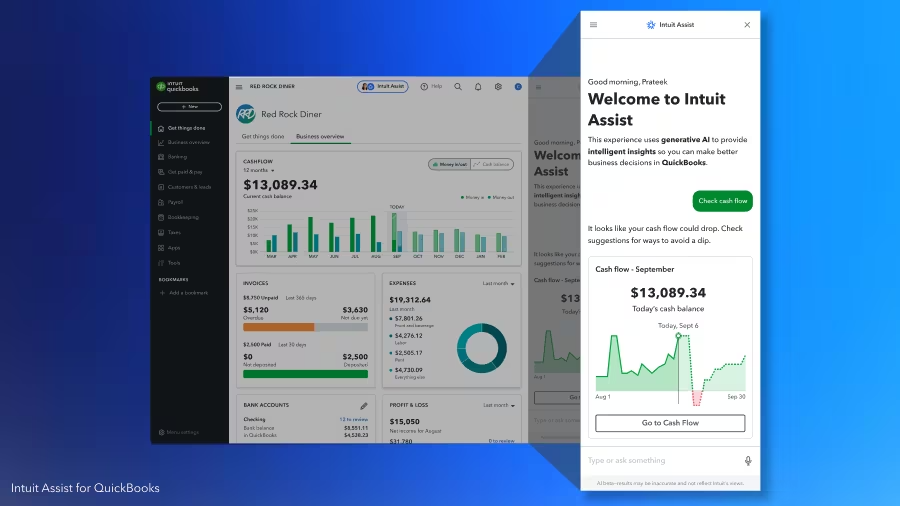
On Wednesday, TurboTax-maker Intuit launched an AI assistant called “Intuit Assist” that can provide AI-generated financial recommendations and assist with decision-making when using the company’s software, Reuters reports. Inuit Assist uses a custom large language model platform called GenOS, and it is available now to all TurboTax customers and select users of Intuit’s other products, including Credit Karma, QuickBooks, and Mailchimp, with a wider rollout planned in the coming months.
“Consumers will find it easier than ever to manage and improve their financial lives,” the company writes on its promotional website. “They’ll be able to get personalized recommendations throughout the year, with actions they can take to maximize their tax refund and accurately file taxes in record time with TurboTax. And they’ll be given the tools to make smart money decisions throughout their financial journey with Credit Karma.”
Intuit also sees Intuit Assist as a way to level the playing field for small and medium-sized businesses, which often lack the resources of larger companies. The AI assistant will reportedly help shorten the time it takes to file taxes and provide faster access to refunds, as well as offer personalized financial advice. Intuit Chief Data Officer Ashok Srivastava told Reuters that the company’s AI models “competed favorably” against other AI systems in internal accuracy tests.
[embedded content]
Intuit Assist promotional video.
Intuit’s introduction of a generative AI feature is not surprising since AI has been the most buzzworthy tech subject this year—especially after the meteoric rise of ChatGPT. Much like public proclamations about experiments with blockchain technology in 2021, AI language models are seemingly being bolted into everything, whether it is appropriate or not.
That matters because accuracy is a major concern with all AI language models since the technology has a known propensity to confabulate (make up) information. However, Intuit isn’t worried. “We have a very, very robust testing mechanism that is AI-powered and it’s also human-powered in order to analyze and calculate the accuracy of our models,” Srivastava told Reuters.
It’s worth noting that Intuit Assist appears to be more than a fancy wrapper on a GPT-4 API, like other AI applications that have been springing up. The company states that Intuit Assist uses a platform called GenOS that is “designed to run with our own financial large language models (LLMs) that are fine-tuned to solve tax, accounting, cash flow, personal finance, and marketing challenges.”
Enlarge/ A promotional image of Intuit Assist in QuickBooks.
VentureBeat reports that Intuit Assist is the culmination of years of research and development focused on generative AI. GenOS reportedly combines conversational user prompts with real-time customer data to provide customized responses, and it allows Intuit to use its “large and diverse data sets” to build specialized AI models for each product.
In TurboTax, Assist aims to help users through the tax filing process by calculating deductions, navigating tax code changes, and connecting them with human experts. In Credit Karma, Assist will provide personalized recommendations for credit cards and financing options based on the user’s financial data. In QuickBooks, Assist will provide business insights like profit/loss, overdue invoices, and top-selling products. And in Mailchimp, Assist will help create and optimize AI-generated marketing campaigns personalized with customer data. All using a natural language interface.
To supplement the AI assistant, Intuit customers will also be able to speak with human experts through the company’s Live Platform when they need additional help. More features of Intuit Assist are expected to roll out for the 2023 tax season, according to the company.
https://arstechnica.com/?p=1965752
AI-generated child sex imagery has every US attorney general calling for action
On Wednesday, American attorneys general from all 50 states and four territories sent a letter to Congress urging lawmakers to establish an expert commission to study how generative AI can be used to exploit children through child sexual abuse material (CSAM). They also call for expanding existing laws against CSAM to explicitly cover AI-generated materials.
“As Attorneys General of our respective States and territories, we have a deep and grave concern for the safety of the children within our respective jurisdictions,” the letter reads. “And while Internet crimes against children are already being actively prosecuted, we are concerned that AI is creating a new frontier for abuse that makes such prosecution more difficult.”
In particular, open source image synthesis technologies such as Stable Diffusion allow the creation of AI-generated pornography with ease, and a large community has formed around tools and add-ons that enhance this ability. Since these AI models are openly available and often run locally, there are sometimes no guardrails preventing someone from creating sexualized images of children, and that has rung alarm bells among the nation’s top prosecutors. (It’s worth noting that Midjourney, DALL-E, and Adobe Firefly all have built-in filters that bar the creation of pornographic content.)
“Creating these images is easier than ever,” the letter reads, “as anyone can download the AI tools to their computer and create images by simply typing in a short description of what the user wants to see. And because many of these AI tools are ‘open source,’ the tools can be run in an unrestricted and unpoliced way.”
As we have previously covered, it has also become relatively easy to create AI-generated deepfakes of people without their consent using social media photos. The attorneys general mention a similar concern, extending it to images of children:
“AI tools can rapidly and easily create ‘deepfakes’ by studying real photographs of abused children to generate new images showing those children in sexual positions. This involves overlaying the face of one person on the body of another. Deepfakes can also be generated by overlaying photographs of otherwise unvictimized children on the internet with photographs of abused children to create new CSAM involving the previously unharmed children.”
“Stoking the appetites of those who seek to sexualize children”
When considering regulations about AI-generated images of children, an obvious question emerges: If the images are fake, has any harm been done? To that question, the attorneys general propose an answer, stating that these technologies pose a risk to children and their families regardless of whether real children were abused or not. They fear that the availability of even unrealistic AI-generated CSAM will “support the growth of the child exploitation market by normalizing child abuse and stoking the appetites of those who seek to sexualize children.”
Regulating pornography in America has traditionally been a delicate balance of preserving free speech rights but also protecting vulnerable populations from harm. Regarding children, however, the scales of regulation tip toward far stronger restrictions due to a near-universal consensus about protecting kids. As the US Department of Justice writes, “Images of child pornography are not protected under First Amendment rights, and are illegal contraband under federal law.” Indeed, as the Associated Press notes, it’s rare for 54 politically diverse attorneys general to agree unanimously on anything.
However, it’s unclear what form of action Congress might take to prevent the creation of these kinds of images without restricting individual rights to use AI to generate legal images, an ability that may incidentally be affected by technological restrictions. Likewise, no government can undo the release of Stable Diffusion’s AI models, which are already widely used. Still, the attorneys general have a few recommendations:
First, Congress should establish an expert commission to study the means and methods of AI that can be used to exploit children specifically and to propose solutions to deter and address such exploitation. This commission would operate on an ongoing basis due to the rapidly evolving nature of this technology to ensure an up-to-date understanding of the issue. While we are aware that several governmental offices and committees have been established to evaluate AI generally, a working group devoted specifically to the protection of children from AI is necessary to ensure the vulnerable among us are not forgotten.
Second, after considering the expert commission’s recommendations, Congress should act to deter and address child exploitation, such as by expanding existing restrictions on CSAM to explicitly cover AI-generated CSAM. This will ensure prosecutors have the tools they need to protect our children.
It’s worth noting that some fictional depictions of CSAM are illegal in the United States (although it’s a complex issue), which may already cover “obscene” AI-generated materials.
Establishing a proper balance between the necessity of protecting children from exploitation and not unduly hamstringing a rapidly unfolding tech field (or impinging on individual rights) may be difficult in practice, which is likely why the attorneys general recommend the creation of a commission to study any potential regulation.
In the past, some well-intentioned battles against CSAM in technology have included controversial side effects, opening doors for potential overreach that could affect the privacy and rights of law-abiding people. Additionally, even though CSAM is a very real and abhorrent problem, the universal appeal of protecting kids has also been used as a rhetorical shield by advocates of censorship.
AI has arguably been the most controversial tech topic of 2023, and using evocative language that paints a picture of rapidly advancing, impending doom has been the style of the day. Similarly, the letter’s authors use a dramatic call to action to convey the depth of their concern: “We are engaged in a race against time to protect the children of our country from the dangers of AI. Indeed, the proverbial walls of the city have already been breached. Now is the time to act.”
https://arstechnica.com/?p=1965814
“AI took my job, literally”—Gizmodo fires Spanish staff amid switch to AI translator
Last week, Gizmodo parent company G/O Media fired the staff of its Spanish-language site Gizmodo en Español and began to replace their work with AI translations of English-language articles, reports The Verge.
Former Gizmodo writer Matías S. Zavia publicly mentioned the layoffs, which took place via video call on August 29, in a social media post. On August 31, Zavia wrote, “Hello friends. On Tuesday they shut down @GizmodoES to turn it into a translation self-publisher (an AI took my job, literally).”
Previously, Gizmodo en Español had a small but dedicated team who wrote original content tailored specifically for Spanish-speaking readers, as well as producing translations of Gizmodo’s English articles. The site represented Gizmodo’s first foray into international markets when it launched in 2012 after being acquired from Guanabee.
Newly published articles on the site now contain a link to the English version of the article and a disclaimer stating (via our translation from Google Translate), “This content has been automatically translated from the source material. Due to the nuances of machine translation, there may be slight differences. For the original version, click here.”
Este contenido ha sido traducido automáticamente del material original. Debido a los matices de la traducción automática, pueden existir ligeras diferencias. Para la versión original, haga clic aquí.
So far, Gizmodo’s pivot to AI translation hasn’t gone smoothly. On social media site X, journalist and Gizmodo reader Víctor Millán noted that some of the site’s new articles abruptly switch from Spanish to English midway through, possibly due to glitches in the AI translation system.
G/O Media’s decision to eschew human writers for AI is part of a recent trend of media companies experimenting with AI tools as a way to maximize content output while minimizing human labor costs. However, the practice remains controversial within the broader journalism community.
Earlier this summer, Gizmodo began publishing AI-generated articles in English without informing or involving its editorial staff. The stories were found to contain multiple factual inaccuracies, leading the Gizmodo union to criticize the practice as unethical.
For Spanish-speaking audiences seeking news about science, technology, and Internet culture, the loss of original reporting from Gizmodo en Español is potentially a major blow. And while AI translation technology has improved significantly over the past decade, experts say it still can’t fully replace human translators. Subtle errors, mistranslations, and lack of cultural knowledge can impair the quality of automatically translated content.
Even translating within the same language can cause problems with context, as we recently saw with an AI-written Microsoft article that listed a Canadian Food Bank as a “cannot miss” tourist destination, using the unfortunate rephrasing of a blurb from the Food Bank’s official website that touted, “Consider going into it on an empty stomach.” It’s easy to imagine even more embarrassing mistakes due to autonomous translation between languages.
So far, we’ve seen in our AI coverage that automated publishing does not tend to go well, especially if sites want to cultivate a human readership. But with so many media companies chasing revenue through SEO manipulations and AI-written filler, it’s unlikely that we’ll see the end of this apparently cost-cutting AI trend soon.
https://arstechnica.com/?p=1965467
AI Act, come si sta muovendo la Ue per renderla degna di fiducia
Grazie all’incremento delle risorse (soprattutto private), gli Stati Uniti e la Cina hanno acquisito un sostanziale vantaggio nello sviluppo economico e tecnologico dell’intelligenza artificiale (AI). L’Europa ha così accumulato un ritardo difficile da recuperare. Definire un quadro normativo europeo per la sicurezza e la fiducia dell’IA di uso generale e promuoverne l’adozione in tutto il mondo costituisce quindi la migliore strategia di differenziazione per posizionarsi come attore chiave nell’IA.
Molte organizzazioni nazionali e internazionali hanno già proposto ampi principi per un’IA etica e affidabile, senza tuttavia specificare gli attributi specifici che questi implicano e senza che tali principi siano giuridicamente vincolanti.
Tecnologie vietate in Europa
L’Unione Europea si prepara quindi a imporre requisiti di sicurezza e fiducia ai sistemi di IA attraverso una regolamentazione extraterritoriale, abbinata a una direttiva sulla responsabilità civile, l’EU AI Act, prevedendo in particolare la classificazione dei sistemi di IA in base ai rischi che comportano per i fondamentali. diritti, da “minimi” a “inaccettabili”. Con più o meno vincoli, anche il divieto per le tecnologie più controverse ritenute “inaccettabili”.
Il 14 giugno gli eurodeputati hanno adottato la loro posizione negoziale sulla legge sull’intelligenza artificiale ampliando l’elenco delle tecnologie che rientrano nella categoria dei rischi “inaccettabili”, al fine di vietare l’uso intrusivo e discriminatorio dell’IA da parte dell’UE. Ciò include in particolare i sistemi di polizia predittiva basati sulla profilazione o sul riconoscimento biometrico remoto in tempo reale nello spazio pubblico, un argomento su cui gli Stati membri e gli eurodeputati non sono d’accordo.
Questi ultimi vogliono vietare le tecnologie che utilizzano il riconoscimento in tempo reale, mentre il Consiglio invoca la lotta al terrorismo per introdurre eccezioni a questo divieto. La posizione del Parlamento introduce anche misure riguardanti le applicazioni di IA generativa, come ChatGPT o MidJourney, che sarebbero obbligate ad apporre un’etichetta sui propri contenuti per indicare agli utenti che sono in presenza di un testo o di un’immagine creata da un’IA. I deputati vogliono anche impedire la generazione di contenuti illegali e rendere pubblico l’uso dei dati protetti dal diritto d’autore quando utilizzati per l’addestramento degli algoritmi.
Sono iniziati i colloqui con i Paesi Ue in Consiglio sulla forma definitiva della legge, con l’obiettivo di raggiungere un accordo entro la fine dell’anno con un periodo di grazia di circa due anni per consentire alle parti interessate di adeguarsi alle nuove norme.
Are self-driving cars already safer than human drivers?
Aurich Lawson | Getty Images
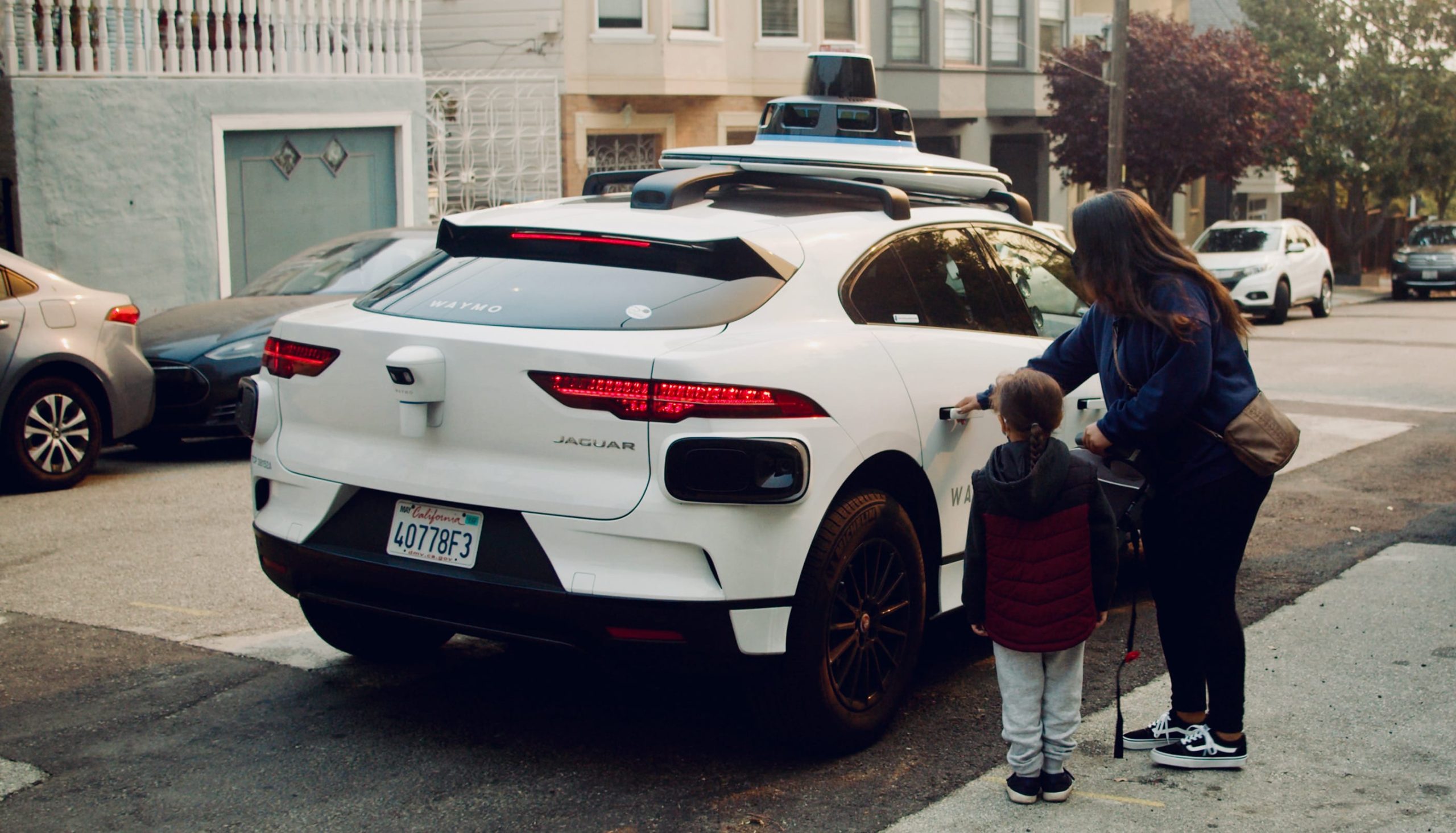
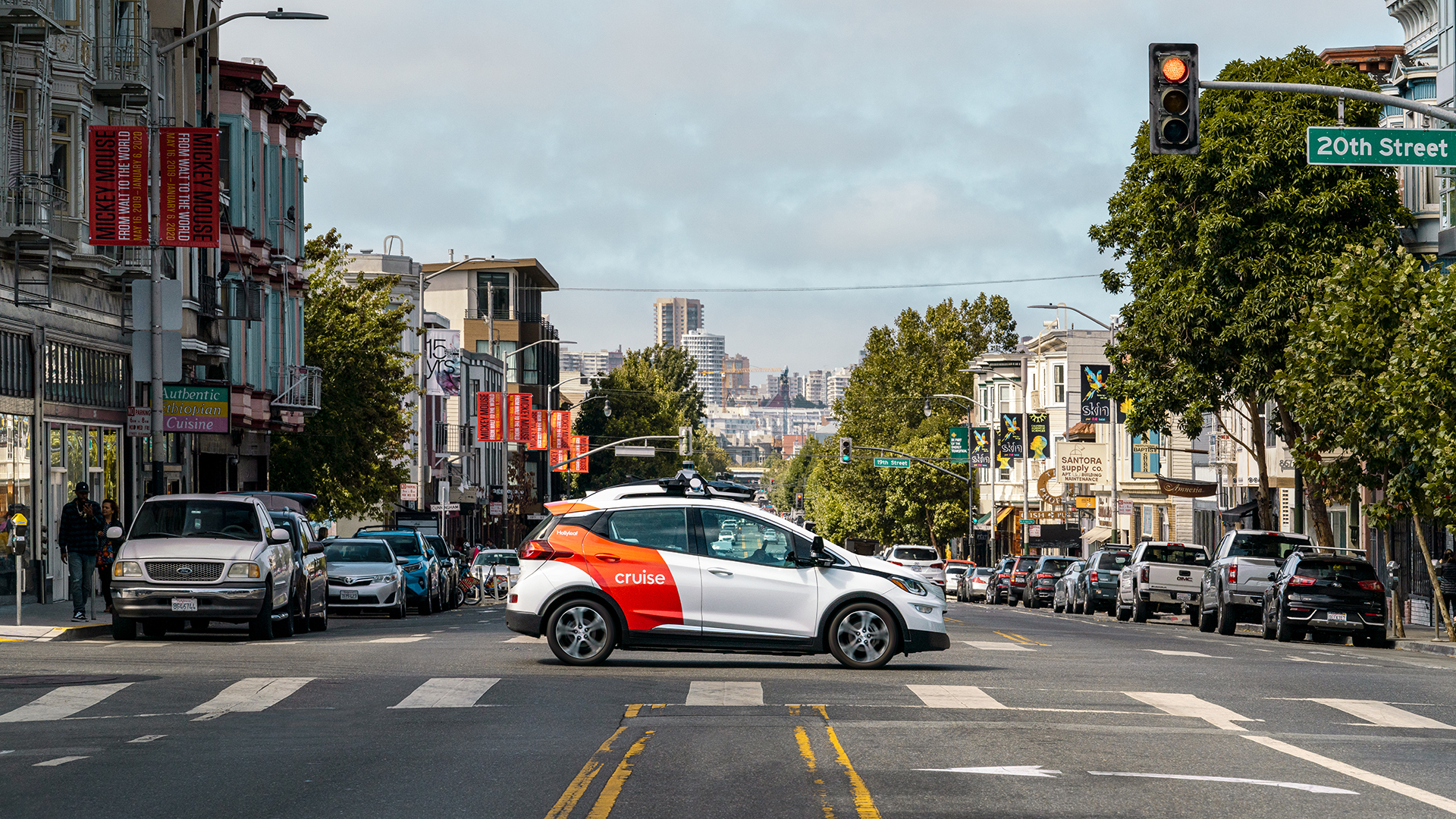
August was an eventful month for driverless taxis in San Francisco. On August 10, the California Public Utilities Commission voted to allow Google’s Waymo and GM’s Cruise to begin charging customers for driverless taxi rides across the city. A week later, Cruise vehicles were involved in two serious crashes within hours of one another. The next day, the California Department of Motor Vehicles demanded that Cruise cut its driverless taxi fleet in half while these crashes were investigated.
A few days later, New York Times reporter Cade Metz appeared on the Times’s flagship podcast, The Daily, to discuss these developments and the state of the self-driving industry.
Metz argued that in recent weeks, it has become “more and more clear to the people riding the cars, and to other citizens in the city, that they are flawed, that they do make mistakes, that they can gum up traffic, that they can cause accidents.”
Of course self-driving cars are flawed—all technologies are. The important question is whether self-driving cars are safer than human-driven cars. And here Metz proclaimed ignorance.
“We don’t know yet whether it’s safer than a human driver,” he said.
But we actually do know a fair amount about the safety of driverless taxis. Waymo and Cruise have driven a combined total of 8 million driverless miles (a Waymo spokeswoman told me the company has completed more than 4 million driverless miles, and Cruise has said the same). That includes more than 4 million in San Francisco since the start of 2023. And because California law requires self-driving companies to report every significant crash, we know a lot about how they’ve performed.
For this story, I read through every crash report Waymo and Cruise filed in California this year, as well as reports each company filed about the performance of their driverless vehicles (with no safety drivers) prior to 2023. In total, the two companies reported 102 crashes involving driverless vehicles. That may sound like a lot, but they happened over roughly 6 million miles of driving. That works out to one crash for every 60,000 miles, which is about five years of driving for a typical human motorist.
These were overwhelmingly low-speed collisions that did not pose a serious safety risk. A large majority appeared to be the fault of the other driver. This was particularly true for Waymo, whose biggest driving errors included side-swiping an abandoned shopping cart and clipping a parked car’s bumper while pulling over to the curb.
Cruise’s record is not impressive as Waymo’s, but there’s still reason to think its technology is on par with—and perhaps better than—a human driver.
Human beings drive close to 100 million miles between fatal crashes, so it will take hundreds of millions of driverless miles for 100 percent certainty on this question. But the evidence for better-than-human performance is starting to pile up, especially for Waymo. It’s important for policymakers to allow this experiment to continue because, at scale, safer-than-human driving technology would save a lot of lives.
Waymo’s impressive safety record
Back in February, Waymo released a report celebrating its first million miles of fully driverless operation, which mostly occurred in the suburbs of Phoenix. Waymo’s autonomous vehicles (AVs) experienced 20 crashes during those first million miles. Here are some representative examples:
“A passenger car backed out of a parking space and made contact with the Waymo AV.”
“An SUV backed out of a driveway and made contact with the Waymo AV.”
“The vehicle that had been previously stopped behind the Waymo proceeded forward, making contact with the rear bumper of the Waymo AV.”
“A passenger car that had been stopped behind the Waymo AV passed the Waymo AV on the left. The passenger car’s rear passenger side door made contact with the driver side rear of the Waymo AV.”
In short, these were mostly low-speed collisions initiated by the other diver.
There were only two cases where a Waymo ran into another vehicle. In one, a motorcyclist in the next lane lost control and fell off their bike. The driverless Waymo slammed on its brakes but couldn’t avoid hitting the now-riderless motorcycle at 8 miles per hour. In the other case, another vehicle cut in front of the Waymo, and the AV braked hard but couldn’t avoid a collision.
There were two crashes that Waymo thought were serious enough for inclusion in a federal crash database. The more serious of these was when another driver rear-ended a Waymo while looking at their phone.
One of Waymo’s biggest challenges during its first million miles was avoiding inanimate objects. Waymo vehicles bumped into a construction pylon, a parking lot barrier arm, and a shopping cart—all at speeds of between 8 and 13 miles per hour. Clearly, Waymo needs to do a better job of recognizing irregularly shaped objects like these. But when it comes to interacting with other vehicles, Waymo had a basically spotless driving record over those first million miles.
The rest of Waymo’s driverless crashes in San Francisco during 2023 do not seem to have been Waymo’s fault. I count 11 low-speed crashes where another vehicle rear-ended a Waymo, backed into a stopped Waymo, or scraped a stopped Waymo while trying to squeeze by. There was also an incident where a Waymo got sideswiped by another vehicle changing lanes.
Waymo had two more serious crashes in San Francisco this year:
A driverless Waymo was trying to turn left, but another car “proceeded into the intersection from the left and made contact with the left side of the Waymo AV.”
An SUV rear-ended a Waymo hard enough that the passenger in the Waymo reported injuries.
I should also mention the Waymo crash that killed a dog back in May. I didn’t mention this earlier because I’ve been focusing on driverless vehicles and the Waymo that hit the dog had a safety driver behind the wheel. But this crash is worth mentioning since it’s one of the most serious ones Waymo has experienced.
In an emailed statement, Waymo said that it “reviewed the event from many different perspectives” and concluded there was no way either Waymo’s software or a human driver could have avoided hitting the dog. Waymo hasn’t provided the public with enough information to verify this claim, but I hope California regulators check Waymo’s work if they haven’t done so already.
We don’t have great data on the safety of human drivers
To sum up, Waymo’s driverless fleet has experienced:
17 low-speed collisions where another vehicle hit a stationary Waymo
9 collisions where another vehicle rear-ended a Waymo
2 collisions where a Waymo got sideswiped by another vehicle
2 collisions where a Waymo got cut off and wasn’t able to brake quickly enough
2 low-speed collisions with stationary vehicles
7 low-speed collisions with inanimate objects like shopping carts and potholes
There are two things to notice about this list. First, other vehicles ran into Waymos 28 times, compared to just four times a Waymo ran into another vehicle (and Waymo says its vehicle got cut off in two of these cases). Second, Waymo was only involved in three or four “serious” crashes, and none of them appear to have been Waymo’s fault.
This is impressive because these statistics reflect more than 2 million miles of driving (a Waymo spokeswoman told me the company has logged more than 1 million miles in San Francisco since the start of 2023). The National Highway Traffic Safety Board estimates that there are around 6 million car crashes reported to the police each year. Americans drive around 3 trillion miles per year, so roughly speaking, a “major” crash occurs on the roads once every 500,000 miles.
Most crashes involve two vehicles. So if Waymo’s vehicles drove as well as a typical human driver, you’d expect it to be involved in around eight serious crashes over 2 million miles of driving.
It’s important to emphasize that there’s a lot of uncertainty about these figures.
“We know very little about the safety of our roads,” the legal scholar Bryant Walker Smith told me. “If we’re looking at just crashes, given how little information is carefully collected and studied, we don’t have any sense of the circumstances of these low-level crashes.”
Not all crashes—even serious ones—are reported to the police.
Moreover, Smith said, “these companies are not driving a representative sample of miles.”
Both Waymo and Cruise have their driverless cars avoid freeways, which tend to have fewer crashes per mile of driving. Both companies are active in San Francisco, which has more chaotic streets than most US cities.
On the other hand, a small minority of drivers—including teenagers, elderly people, and drunk drivers—account for a disproportionate share of crashes. An alert and experienced driver gets into crashes at a rate well below the national average. So if we want AVs to drive as well as an alert and experienced driver, we’ll want to set the bar higher than the national average.
With all that said, it seems that Waymo cars get into serious crashes at a significantly lower rate than human-driven cars. I’ll have more to say about this after we look at Cruise’s safety record.
Cruise has room for improvement
Cruise released a report back in April about its first million driverless miles. The company reported 36 crashes, compared to 20 for Waymo’s first million driverless miles. I wouldn’t put too much stock into that difference, since Cruise was operating mainly in San Francisco, a more chaotic driving environment than the Phoenix suburbs where Waymo started out.
So far in 2023, Cruise has filed an additional 27 crash reports related to its fully driverless cars. What follows is a summary of all 63 crashes Cruise reported through August 25. I’ll also count a widely publicized August 17 crash with a fire truck even though there’s still no report on this crash on the website of the California Department of Motor Vehicles.
Like Waymo, Cruise has had trouble with its vehicles hitting inanimate objects. Two Cruise vehicles ran into downed power cables. Cruise vehicles also ran into a scooter (without someone on it), a tow dolly on the back of a double-parked truck, a “motorized articulating boom lift,” and a pothole. The pothole punctured a tire, causing the Cruise AV to swerve into a parked car.
Cruise has also experienced a large number of low-speed crashes where another vehicle (including a scooter in one case and a skateboarder in another) either rear-ended a Cruise AV, backed into one at low speeds, or scraped the side of a Cruise while trying to pass it.
There were also a few rare situations:
A Cruise vehicle was “stuck in a sideshow event and stationary with vehicles driving around it on either side.” (A sideshow is an illegal late-night show where young people perform donuts and other stunts in an intersection.) One of the other cars ran into the Cruise AV.
An Infinity Q50 was “performing donuts” in an intersection before crashing into a Cruise vehicle.
A driver drove the wrong way down a one-way street while staring at a phone. The car hit a stopped Cruise vehicle facing the right way.
There were about a dozen side-swipe events where another vehicle either ran into the Cruise AV from the side during a lane change or tried to make a turn from a middle lane, crossing the path of the Cruise AV. Most of these crashes occurred during Cruise’s first million miles, so Cruise may be getting better at handling these situations.
It’s important to note that Cruise has logged more than four million miles in San Francisco, so Cruise’s crash reports represent roughly twice as many miles as Waymo’s. Once you adjust for that, Waymo and Cruise seem to have been involved in low-stakes crashes at similar rates.
For example, Cruise vehicles got rear-ended 17 times over about 4 million miles, while Waymo vehicles got rear-ended seven times over roughly 2 million miles. That makes sense given that Cruise drove twice as many miles and that Waymo logged almost half of its miles in the tame Phoenix suburbs.
But even taking those differences into account, there are a couple areas where Cruise’s performance does not seem to be on par with Waymo.
One is significant crashes where Cruise was clearly at fault. I saw three examples of this:
A Cruise AV mistakenly thought the vehicle ahead of it was starting to turn left. The Cruise ran into the other vehicle when it turned right instead.
A Cruise AV changed lanes when there wasn’t enough space to do so, cutting off another vehicle and leading to a crash.
A Cruise AV ran into the back of a city bus. Cruise subsequently determined that its software got confused because it was an articulated bus (the kind with an accordion joint in the middle) and Cruise’s software couldn’t handle two parts of a vehicle moving in slightly different directions.
Each of these mistakes strikes me as more serious than any of Waymo’s mistakes (recall that all of Waymo’s clearly at-fault crashes were low-speed collisions with inanimate objects or parked vehicles).
Cruise might have a problem with intersections
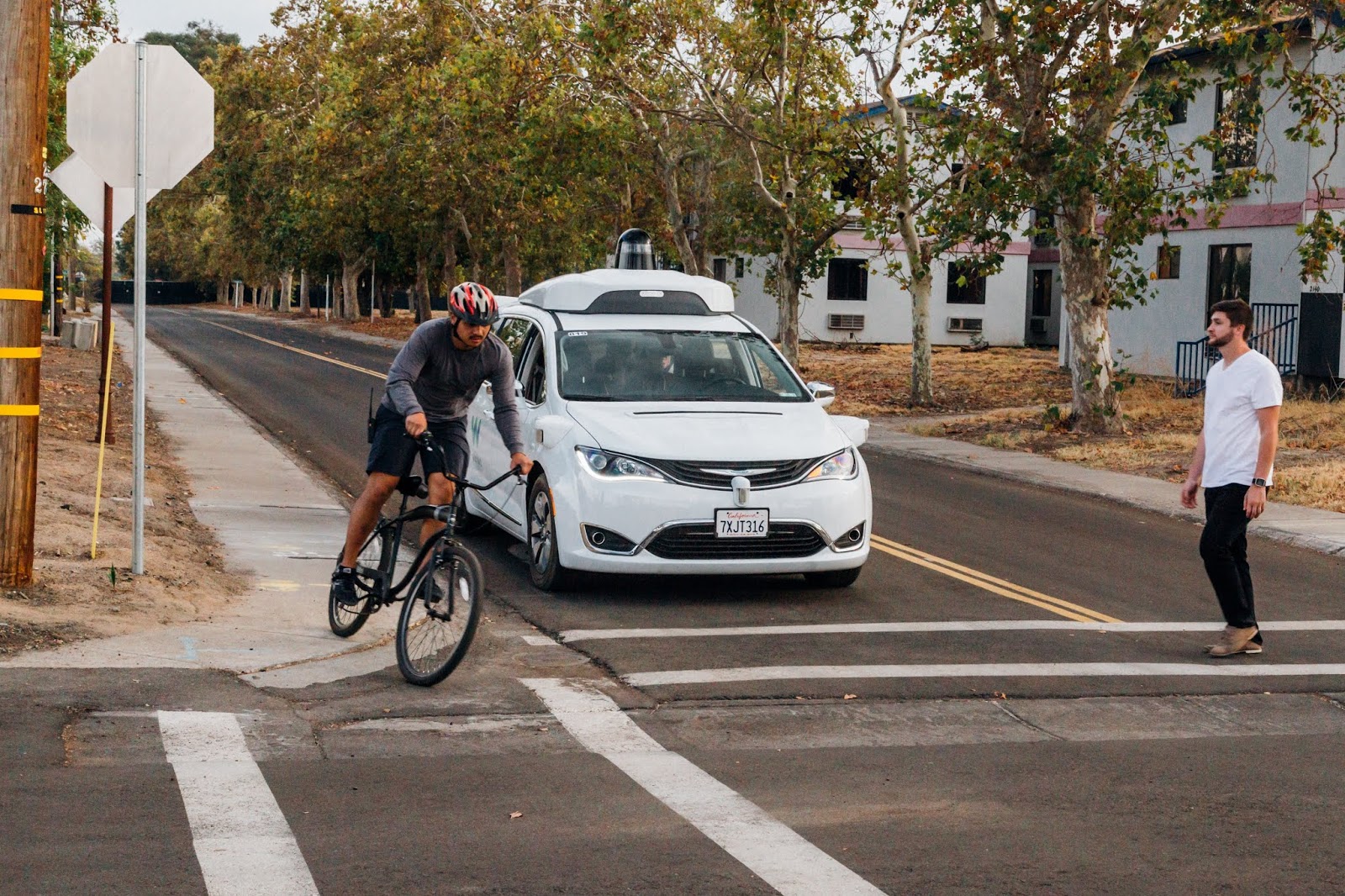
Cruise’s other trouble spot is intersections. Cruise says two bicyclists have run stop signs and crashed into Cruise vehicles. And there have been five vehicles that ran red lights and crashed into Cruise vehicles:
A passenger in that last Cruise AV was taken to the hospital; Cruise described their injuries as “non-severe.”
Perhaps all of these crashes (with the possible exception of the fire truck) were the fault of the other drivers (and cyclists). Still, it’s interesting that over two million miles of driverless operation, no Waymo AVs got hit by cars running red lights or bicycles running stop signs.
Again, this may be partly because Cruise has driven more miles—and especially more miles in San Francisco. Also, Cruise has largely operated at night, when there might be more impaired drivers on the road.
But I think there might be something else going on here.
A couple of years ago, Waymo published research exploring the potential for self-driving cars to prevent crashes by anticipating the reckless behavior of other drivers. Waymo researchers obtained detailed records about fatal crashes that occurred in and around the Phoenix suburb of Chandler (where Waymo launched its first driverless taxi service). Waymo then hired an independent engineering firm to create detailed digital reconstructions of these crashes. Then the company loaded this data into its simulator to explore how Waymo’s self-driving software would have reacted in the seconds preceding each crash.
Waymo found its software could prevent every crash if it took the role of the “initiator,” the vehicle whose erratic behavior set the crash in motion. More surprisingly, Waymo also found its software could prevent 82 percent of crashes playing the role of the other driver.
The most common setting for fatal crashes in this data set was intersections—including a number of vehicles running red lights. Waymo found that when its software played the role of the “other driver,” it was able to avoid crashes in 81 percent of scenarios at intersections.
In the wake of the Cruise collision with a fire truck on August 17, Waymo told industry analyst Brad Templeton that its vehicles would have handled the situation better than Cruise did:
When we hear sirens, our vehicle will slow and then depending on how the situation develops, we will either pull over or stop ahead of intersections where there might be crossing emergency vehicles, even if we have a green light. The system is designed to remain cautious and not enter an intersection if it is still reasoning whether the emergency vehicle is approaching the intersection based on what it is sensing.
I think technology like this may explain why Waymo has been successful at avoiding major crashes at intersections. Not only do Waymo’s vehicles follow the letter of the law (like stopping at red lights), they may also try to anticipate and avoid dangerous situations (like vehicles running red lights).
Cruise vehicles do not seem especially cautious about intersections. For example, a Reddit user posted a video from August 22 showing a Cruise vehicle crossing an intersection several seconds after the opposing traffic got a green light. Cruise says its vehicle was already in the intersection when its light turned red so the vehicle didn’t break the law. Maybe that’s technically true—I’m not an expert on California traffic law. But I’m pretty sure it would have been safer for the car to stay where it was and wait for the next green light.
Cruise’s technology is pretty good, but Waymo’s is better
Enlarge/ Waymo tested its technology for more than 20 million miles before launching a driverless service.
The bottom line is that I’m convinced that Waymo vehicles drive more safely than Cruise vehicles. This isn’t surprising; Waymo started its life as the Google self-driving project several years before Cruise was founded. Back in 2020, Waymo announced it had completed 20 million miles of on-road testing (almost all of them with safety drivers). The same year, Cruise reached 2 million miles.
In short, Waymo has invested more time and resources into its technology. It would be surprising if all that extra work didn’t yield superior performance. With that said, I don’t want to be too negative about Cruise. Because while the company’s technology doesn’t seem to be as good as Waymo’s, it’s still pretty good.
Earlier, I discussed why it’s so difficult to develop a good benchmark for human driving performance. We only know about crashes that get reported to the police or other authorities, giving us a patchy understanding of how many crashes really occur.
Cruise tried to address this problem by hiring a team of prominent academic researchers to study the driving behavior of ride-hail drivers in San Francisco. The researchers examined 5.6 million miles of data and concluded that collisions involving San Francisco ride-hail drivers occur about once every 20,000 miles. That includes a lot of minor crashes that wouldn’t be reported to police.
Based on this data, Cruise claimed that over its first million miles, its vehicles crashed 56 percent less often per mile than a typical human driver. Moreover, Cruise estimated that its cars were 73 percent less likely to be in a crash with a risk of a serious injury and 93 percent less likely to be the “primary contributor” to a crash.
One should take these conclusions with a grain of salt given that the research was commissioned by Cruise. But they don’t seem crazy. Cruise vehicles really do seem to crash into other vehicles much less often than vice versa. So I wouldn’t be surprised if Cruise vehicles already drive more safely than the average human driver.
The need for real-world testing
The big question for policymakers is whether to allow Waymo and Cruise to continue and even expand their services. This should be an easy call with respect to Waymo, which seems to be safer than a human driver already. The faster Waymo scales up, the more crashes can be prevented.
I think Cruise’s tech is probably safer than a human driver too, but it’s a closer call. I could imagine changing my mind in the coming months as more data comes in.
Still, it’s important to remember that access to public roads is essential for testing and improving self-driving technology. This is not a technology Waymo or Cruise can meaningfully test “in the lab.” The companies need exposure to the full complexity of real public streets in order to make progress. And given that both companies are likely to eventually develop products that are much safer than human drivers, slowing down the development of the technology could easily cost more lives than it saves.
So while the DMV’s decision to cut the size of Cruise’s fleet in the wake of the August 17 crashes was understandable, I hope the decision is short-lived. Ultimately the only way for Cruise to improve its technology is by testing it on public roads. And we’ll all benefit from the widespread availability of self-driving cars that are dramatically safer than human drivers.
One easy way for policymakers to improve safety—or at least accountability—would to require self-driving companies to be more even more transparent about their safety records. This story relied heavily on California’s excellent website that publishes all of the Waymo and Cruise crash reports. I’d love for the California Department of Motor Vehicles to go a step further and require self-driving companies to submit video footage of the seconds before and after each crash. That way, members of the public could evaluate whether companies’ descriptions of crashes are accurate.
It would also be very helpful for regulators in other states—or perhaps federal officials—to require the same kind of crash reporting that they have in California. For example, Waymo is running a substantial driverless taxi service in Phoenix, but we know very little about how well Waymo’s AVs have performed there in recent months. More transparency here and in other states could help to build public trust.
Tim Lee was on staff at Ars from 2017 to 2021. He recently launched a new newsletter, Understanding AI. It explores how AI works and how it’s changing our world. You can subscribe to his newsletter here.
https://arstechnica.com/?p=1964427
AI fever turns Anguilla’s “.ai” domain into a digital gold mine
Enlarge/ Thirst for the “.ai” domain has put Anguilla on the global technology map.
Anguilla, a tiny British island territory in the Caribbean, may bring in up to $30 million in revenue this year thanks to its “.ai” domain name, reports Bloomberg in a piece published Thursday. Over the past year, skyrocketing interest in AI has made the country’s “.ai” top-level domain particularly attractive to tech companies. The revenue is a boon for Anguilla’s economy, which primarily relies on tourism and has been impacted by the pandemic.
$30 million from domains may not sound like a lot compared to the billions thrown around in AI these days, but with a total land area of 35 square miles and a population of 15,753, Anguilla isn’t complaining. Registrars like GoDaddy must pay Anguilla a fixed price—$140 for a two-year registration—and the prices are rising due to demand.
Bloomberg says that Anguilla brought in a mere $7.4 million from .ai domain registrations in 2021, but all that changed with the release of OpenAI’s ChatGPT last year. Its release spawned a huge wave of AI hype, fear, and investment. Vince Cate, who has managed the “.ai” domain for Anguilla for decades, told Bloomberg that .ai registrations have effectively doubled in the past year. “Since November 30, things are very different here,” he said.
Anguilla has been in charge of assigning web addresses with the “.ai” domain since 1995. Countries first received their own top-level domain names (ccTLDs, or country code top-level domains) in 1985, including domains like .us (United States), .uk (United Kingdom), and .de (Germany). These ccTLDs were originally intended to give nations a distinct presence on the Internet and were often used primarily for websites that focused on those particular countries or its residents.
Over time, some ccTLDs, like .tv for Tuvalu have taken on additional meanings and broader uses, particularly when their abbreviations coincidentally stand for something else, like AI for “artificial ntelligence” in this case. As a result, high-profile AI startups such as Stability.ai and Character.ai have opted for web addresses ending in “.ai,” contributing significantly to the island’s unexpected revenue stream.
While some experts foresee a decline in the “AI gold rush” that may eventually cool the market for “.ai” domains, Bloomberg reports, the impact on Anguilla’s economy is already significant. With revenue from “.ai” domain registrations estimated to be a notable percentage of the territory’s gross domestic product ($300 million in 2021), Anguilla is a case study of how even a small Caribbean island can benefit from a global tech boom.
https://arstechnica.com/?p=1964893
AI-powered hate speech detection will moderate voice chat in Call of Duty
On Wednesday, Activision announced that it will be introducing real-time AI-powered voice chat moderation in the upcoming November 10 release of Call of Duty: Modern Warfare III. The company is partnering with Modulate to implement this feature, using technology called ToxMod to identify and take action against hate speech, bullying, harassment, and discrimination.
While the industry-wide challenge of toxic online behavior isn’t unique to Call of Duty, Activision says the scale of the problem has been heightened due to the franchise’s massive player base. So it’s turning to machine-learning technology to help automate the solution.
ToxMod is an AI-powered voice moderation system designed to identify and act against what Activision calls “harmful language” that violates the game’s code of conduct. The aim is to supplement Call of Duty’s existing anti-toxicity measures, which include text filtering in 14 languages and an in-game player-reporting system.
Activision says that data from its previous anti-toxicity efforts have restricted voice or text chat for over 1 million accounts that violated its code of conduct. Moreover, 20 percent of those who received a first warning did not re-offend, suggesting that clear feedback is useful for moderating player behavior.
On its surface, real-time voice moderation seems like a notable advancement to combat disruptive in-game behavior—especially since privacy concerns that might typically come with such a system are less prominent in a video game. The goal is to make the game more enjoyable for all players.
However, at the moment, AI detection systems are notoriously fickle and can produce false positives, especially with non-native English speakers. Given variations in audio quality, regional accents, and various languages, it’s a tall order for a voice-detection system to work flawlessly under those conditions. Activision says a human will remain in the loop for enforcement actions:
Detection happens in real time, with the system categorizing and flagging toxic language based on the Call of Duty Code of Conduct as it is detected. Detected violations of the Code of Conduct may require additional reviews of associated recordings to identify context before enforcement is determined. Therefore, actions taken will not be instantaneous. As the system grows, our processes and response times will evolve.”
Further, Activision says that Call of Duty’s voice chat moderation system “only submits reports about toxic behavior, categorized by its type of behavior and a rated level of severity based on an evolving model.” Humans then determine whether they will enforce voice chat moderation violations.
The new moderation system began a beta test starting Wednesday, covering North America initially and focusing on the existing games Call of Duty: Modern Warfare II and Call of Duty: Warzone. The full rollout of the moderation technology, excluding Asia, is planned to coincide with the launch of Modern Warfare III, beginning in English, with additional languages added over time.
Despite the potential drawbacks of false positives, there’s no way to opt out of AI listening in. As Activision’s FAQ says, “Players that do not wish to have their voice moderated can disable in-game voice chat in the settings menu.”