Musk, Scientists Call for Halt to AI Race Sparked by ChatGPT

Are tech companies moving too fast in rolling out powerful artificial intelligence technology that could one day outsmart humans?

That’s the conclusion of a group of prominent computer scientists and other tech industry notables such as Elon Musk and Apple co-founder Steve Wozniak who are calling for a 6-month pause to consider the risks.

Their petition published Wednesday is a response to San Francisco startup OpenAI’s recent release of GPT-4, a more advanced successor to its widely-used AI chatbot ChatGPT that helped spark a race among tech giants Microsoft and Google to unveil similar applications.

What do They Say?

The letter warns that AI systems with “human-competitive intelligence can pose profound risks to society and humanity” — from flooding the internet with disinformation and automating away jobs to more catastrophic future risks out of the realms of science fiction.

It says “recent months have seen AI labs locked in an out-of-control race to develop and deploy ever more powerful digital minds that no one – not even their creators – can understand, predict, or reliably control.”

Read: ChatGPT Data Breach Confirmed as Security Firm Warns of Vulnerable Component Exploitation

“We call on all AI labs to immediately pause for at least 6 months the training of AI systems more powerful than GPT-4,” the letter says. “This pause should be public and verifiable, and include all key actors. If such a pause cannot be enacted quickly, governments should step in and institute a moratorium.”

A number of governments are already working to regulate high-risk AI tools. The United Kingdom released a paper Wednesday outlining its approach, which it said “will avoid heavy-handed legislation which could stifle innovation.” Lawmakers in the 27-nation European Union have been negotiating passage of sweeping AI rules.

Who Signed It?

The petition was organized by the nonprofit Future of Life Institute, which says confirmed signatories include the Turing Award-winning AI pioneer Yoshua Bengio and other leading AI researchers such as Stuart Russell and Gary Marcus. Others who joined include Wozniak, former U.S. presidential candidate Andrew Yang and Rachel Bronson, president of the Bulletin of the Atomic Scientists, a science-oriented advocacy group known for its warnings against humanity-ending nuclear war.

Musk, who runs Tesla, Twitter and SpaceX and was an OpenAI co-founder and early investor, has long expressed concerns about AI’s existential risks. A more surprising inclusion is Emad Mostaque, CEO of Stability AI, maker of the AI image generator Stable Diffusion that partners with Amazon and competes with OpenAI’s similar generator known as DALL-E.

What’s the Response?

OpenAI, Microsoft and Google didn’t respond to requests for comment Wednesday, but the letter already has plenty of skeptics.

“A pause is a good idea, but the letter is vague and doesn’t take the regulatory problems seriously,” says James Grimmelmann, a Cornell University professor of digital and information law. “It is also deeply hypocritical for Elon Musk to sign on given how hard Tesla has fought against accountability for the defective AI in its self-driving cars.”

Is this AI Hysteria?

While the letter raises the specter of nefarious AI far more intelligent than what actually exists, it’s not “superhuman” AI that some who signed on are worried about. While impressive, a tool such as ChatGPT is simply a text generator that makes predictions about what words would answer the prompt it was given based on what it’s learned from ingesting huge troves of written works.

Gary Marcus, a New York University professor emeritus who signed the letter, said in a blog post that he disagrees with others who are worried about the near-term prospect of intelligent machines so smart they can self-improve themselves beyond humanity’s control. What he’s more worried about is “mediocre AI” that’s widely deployed, including by criminals or terrorists to trick people or spread dangerous misinformation.

“Current technology already poses enormous risks that we are ill-prepared for,” Marcus wrote. “With future technology, things could well get worse.”

Related: ChatGPT Integrated Into Cybersecurity Products as Industry Tests Its Capabilities

Related: Microsoft Puts ChatGPT to Work on Automating Cybersecurity

Related: ChatGPT and the Growing Threat of Bring Your Own AI to the SOC

Related: ‘Grim’ Criminal Abuse of ChatGPT is Coming, Europol Warns 

Musk, Scientists Call for Halt to AI Race Sparked by ChatGPT


Fearing “loss of control,” AI critics call for 6-month pause in AI development

An AI-generated image of a globe that has stopped spinning.
Enlarge / An AI-generated image of a globe that has stopped spinning.
Stable Diffusion

On Wednesday, the Future of Life Institute published an open letter on its website calling on AI labs to “immediately pause for at least 6 months the training of AI systems more powerful than GPT-4.” Signed by Elon Musk and several prominent AI researchers, the letter quickly began to draw attention in the press—and some criticism on social media.

Earlier this month, OpenAI released GPT-4, an AI model that can perform compositional tasks and allegedly pass standardized tests at a human level, although those claims are still being evaluated by research. Regardless, GPT-4 and Bing Chat’s advancement in capabilities over previous AI models spooked some experts who believe we are heading toward super-intelligent AI systems faster than previously expected.

Along these lines, the Future of Life Institute argues that recent advancements in AI have led to an “out-of-control race” to develop and deploy AI models that are difficult to predict or control. They believe that the lack of planning and management of these AI systems is concerning and that powerful AI systems should only be developed once their effects are well-understood and manageable. As they write in the letter:

AI systems with human-competitive intelligence can pose profound risks to society and humanity, as shown by extensive research and acknowledged by top AI labs. As stated in the widely-endorsed Asilomar AI Principles, Advanced AI could represent a profound change in the history of life on Earth, and should be planned for and managed with commensurate care and resources.

In particular, the letter poses four loaded questions, some of which presume hypothetical scenarios that are highly controversial in some quarters of the AI community, including the loss of “all the jobs” to AI and “loss of control” of civilization:

  • “Should we let machines flood our information channels with propaganda and untruth?”
  • “Should we automate away all the jobs, including the fulfilling ones?“
  • “Should we develop nonhuman minds that might eventually outnumber, outsmart, obsolete, and replace us?”
  • “Should we risk loss of control of our civilization?”

To address these potential threats, the letter calls on AI labs to “immediately pause for at least 6 months the training of AI systems more powerful than GPT-4.” During the pause, the authors propose that AI labs and independent experts collaborate to establish shared safety protocols for AI design and development. These protocols would be overseen by independent outside experts and should ensure that AI systems are “safe beyond a reasonable doubt.”

However, it’s unclear what “more powerful than GPT-4” actually means in a practical or regulatory sense. The letter does not specify a way to ensure compliance by measuring the relative power of a multimodal or large language model. In addition, OpenAI has specifically avoided publishing technical details about how GPT-4 works.

The Future of Life Institute is a nonprofit founded in 2014 by a group of scientists concerned about existential risks facing humanity, including biotechnology, nuclear weapons, and climate change. In addition, the hypothetical existential risk from AI has been a key focus for the group. According to Reuters, the organization is primarily funded by the Musk Foundation, London-based effective altruism group Founders Pledge, and Silicon Valley Community Foundation.

Notable signatories to the letter confirmed by a Reuters reporter include the aforementioned Tesla CEO Elon Musk, AI pioneers Yoshua Bengio and Stuart Russell, Apple co-founder Steve Wozniak, Stability AI CEO Emad Mostaque, and author Yuval Noah Harari. The open letter is available for anyone on the Internet to sign without verification, which initially led to the inclusion of some falsely added names, such as former Microsoft CEO Bill Gates, OpenAI CEO Sam Altman, and fictional character John Wick. Those names were later removed.

https://arstechnica.com/?p=1927560


Quali sono i lavori che rischiano di scomparire a causa dell’intelligenza artificiale?

L’ultima ricerca di Goldman Sachs dal titolo “The Potentially Large Effects of Artificial Intelligence on Economic Growth“, che evidenzia gli effetti dell’intelligenza artificiale sulla crescita economica a livello mondiale, sta facendo tremare i lavoratori di tutto il mondo. Il motivo? Siamo sull’orlo di una rapida accelerazione dell’automazione che porterà a risparmi sul costo del lavoro. In poche parole: l’intelligenza artificiale rimpiazzerà 300 milioni di lavoratori nell’arco di 10 anni.

Se l’IA generativa continua la sua corsa, spiega la ricerca, il mercato del lavoro potrebbe subire notevoli sconvolgimenti. Secondo gli analisti, utilizzando i dati sulle mansioni professionali negli Stati Uniti e in Europa, è stato scoperto che “circa due terzi dei lavori attuali sono esposti a un certo grado di automazione dell’IA, e quindi la sostituzione fino a un quarto dei lavori attuali”.

Quali saranno i lavori che rischiano di scomparire per colpa dell’intelligenza artificiale?

Le categorie in cui la percentuale più alta di posti di lavoro sarà più o meno completamente indenne dall’automazione AI, secondo questo rapporto, sono la Pulizia e Manutenzione degli Edifici (95%), seguite da Installazione, Manutenzione e Riparazione (85%), Costruzione ed Estrazione (75%), Produzione (72%), Trasporti e Movimentazione di Materiali (65%) e Preparazione e Servizio di Alimenti (50%).

D’altra parte, quasi tutti sulla parte destra del grafico possono aspettarsi che l’AI apporti cambiamenti radicali ai loro flussi di lavoro. Ciò include lavoratori nell’Assistenza Sanitaria, nell’Agricoltura, nelle Aree Creative, nella management, nelle Vendite, nei Servizi Sociali, nella Finanza, nell’Istruzione e nell’Informatica.

Dietro l’Amministrazione e il Legale, dove quasi la metà di tutti i posti di lavoro sono destinati ad essere cancellati dall’IA, Goldman stima che le categorie più a rischio di sostituzione massiccia del lavoro includono Architettura ed Ingegneria (circa il 10% dei posti di lavoro è destinato a scomparire), Scienze della Vita, Fisiche e Sociali (8%), Preparazione e Servizio di Alimenti (7%), Produzione (7%), Operazioni Aziendali e Finanziarie (4%) e Arte, Design, Intrattenimento, Sport e Media (3%).

Con l’avvento dell’IA ci saranno nuove opportunità?

Secondo lo studio di Goldman Sachs per il momento, però, le paure di milioni di persone non si sono concretizzate, e la speranza è che anche l’intelligenza artificiale possa essere utilizzata in maniera utile, e senza lasciare troppa gente a casa: trasformando, non eliminando.

L’introduzione di GPT-4 potrebbe anche creare nuove opportunità di lavoro, si legge nel report, specialmente in ambiti come la progettazione di sistemi di intelligenza artificiale, la formazione e l’implementazione di modelli di linguaggio naturale avanzati e la creazione di nuove applicazioni che utilizzano il linguaggio naturale in modi innovativi. In generale, l’effetto di GPT-4 sulle professioni dipenderà in gran parte dal modo in cui verrà utilizzato e dalle nuove opportunità che potrebbe creare.

Per approfondire

  • Per scaricare la ricerca di Goldman Sachs “The Potentially Large Effects of Artificial Intelligence on Economic Growth” clicca qui.

https://www.key4biz.it/i-lavori-che-rischiano-di-scomparire-a-causa-dellintelligenza-artificiale/440732/


Secondo Goldman Sachs l’intelligenza artificiale aumenterà il Pil mondiale del 7%. Scarica la ricerca

Siamo sull’orlo di una rapida accelerazione dell’automazione che porterà a risparmi sul costo del lavoro e aumenterà la produttività.

Lo rivela l’ultima ricerca di Goldman Sachs dal titolo “The Potentially Large Effects of Artificial Intelligence on Economic Growth“, lo studio che evidenzia gli effetti dell’intelligenza artificiale sulla crescita economica a livello mondiale.

Gli analisti hanno dichiarato che in seguito all’ascesa di ChatGPT, la capacità di generare contenuti indistinguibili da quelli creati dall’uomo e di abbattere le barriere di comunicazione tra uomo e macchina riflette “un progresso significativo con effetti macroeconomici potenzialmente importanti e potrebbe aumentare il PIL globale annuo del 7%”.

Se l’IA generativa mantiene le sue promesse, spiega la ricerca, il mercato del lavoro potrebbe subire notevoli sconvolgimenti. Secondo gli analisti, utilizzando i dati sulle mansioni professionali negli Stati Uniti e in Europa, è stato scoperto che “circa due terzi dei lavori attuali sono esposti a un certo grado di automazione dell’IA, e quindi la sostituzione fino a un quarto dei lavori attuali”.

Goldman Sachs ritiene che la combinazione di significativi risparmi sul costo del lavoro, la creazione di nuovi posti di lavoro e l’aumento della produttività possa dare luogo a un boom della produttività che incrementerà in modo sostanziale la crescita economica.

Con l’IA aumenta il Pil: ma quali sono i posti di lavoro a rischio?

Avvocati e personale amministrativo saranno tra coloro che saranno maggiormente esposti ai licenziamenti. Gli autori stimano che circa due terzi dei posti di lavoro negli Stati Uniti e in Europa sono esposti a qualche grado di automazione tramite intelligenza artificiale.

Le stime di Goldman sull’impatto sono più conservative rispetto a quelle di alcuni studi accademici, che hanno incluso gli effetti di una gamma più ampia di tecnologie correlate.

Secondo uno studio svolto insieme all’Università della Pennsylvania da parte della stessa OpenAI, il 19% dei lavori negli Stati Uniti rischia di essere profondamente alterato da ChatGPT. Viste le sue capacità, dalla scrittura di codice all’elaborazione di pitch per finalità di marketing, inoltre, per le stime l’80% dei dipendenti USA potrebbe vedere modificato almeno il 10% dei propri compiti da questo software; e, paradossalmente (ma forse non troppo), i lavori più soggetti a questo genere di cambiamenti sono quelli che pagano meglio, di solito oltreoceano quelli che hanno a che fare in un modo o nell’altro con il software.

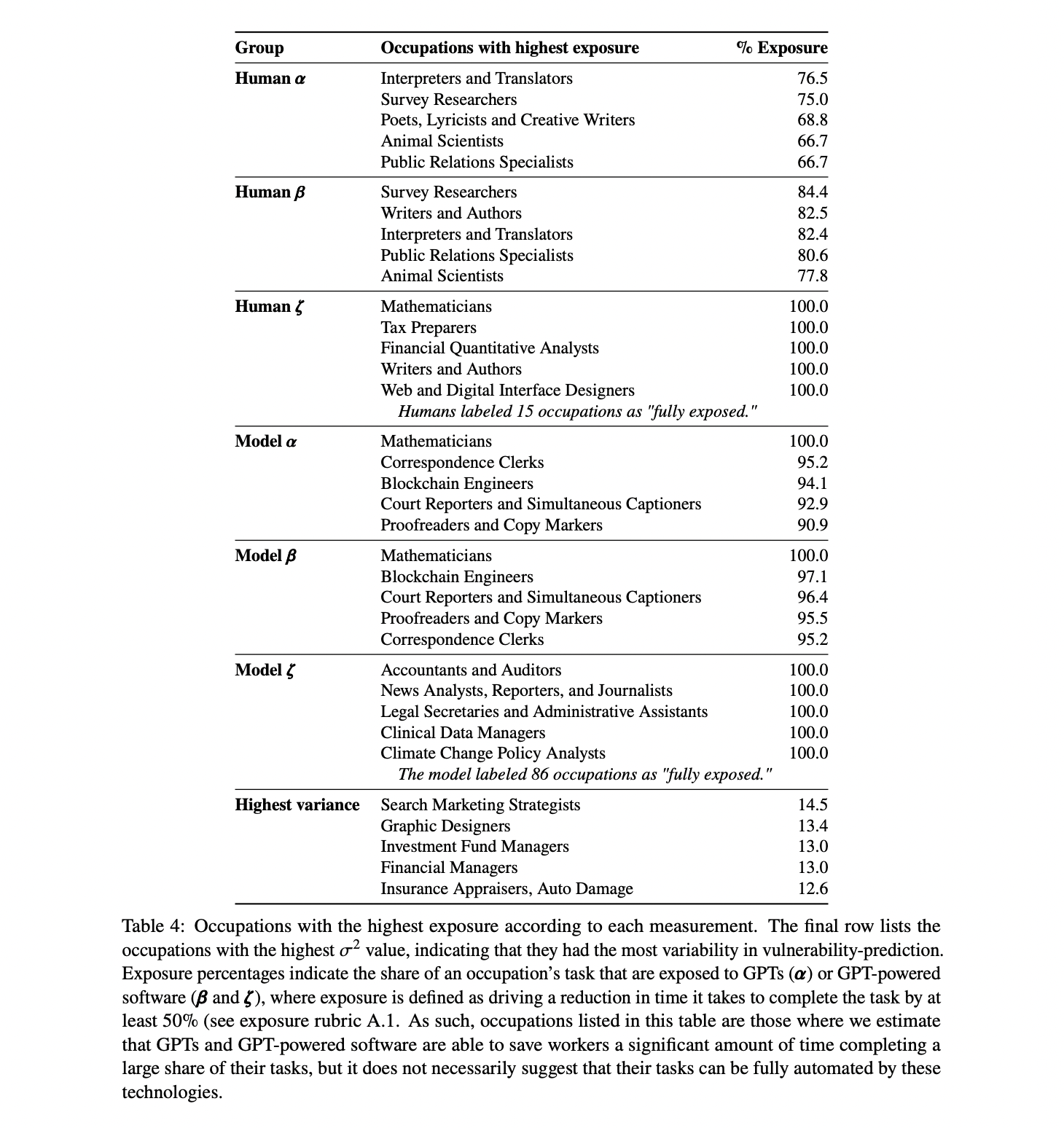
Per OpenAI, ci sono lavori che hanno una possibilità di essere modificati pari al 100%: ad esempi i matematici, i consulenti fiscali, gli analisti finanziari, gli scrittori e gli autori, i designer di interfacce web e digitali, i commercialisti, i giornalisti, le segreterie legali e amministrative. Chi è, invece, che non rischia nulla, o pochissimo? Tutti coloro che svolgono un mestiere pratico, come gli operai e gli artigiani: non hanno nulla da temere, almeno da questo punto di vista, i meccanici, chi lavora nell’edilizia, i baristi, i camerieri, i carpentieri, gli imbianchini, gli idraulici, i macellai, i cuochi.

Per approfondire

  • Per scaricare la ricerca di Goldman Sachs “The Potentially Large Effects of Artificial Intelligence on Economic Growth” clicca qui.

https://www.key4biz.it/secondo-goldman-sachs-lintelligenza-artificiale-aumentera-il-pil-mondiale-del-7-scarica-la-ricerca/440494/


Immaculate AI images of Pope Francis trick the masses

An AI-generated photo of Pope Francis wearing a puffy white coat that went viral on social media.
Enlarge / An AI-generated photo of Pope Francis wearing a puffy white coat that went viral on social media.

Over the weekend, an AI-generated image of Pope Francis wearing a puffy white coat went viral on Twitter, and apparently many people believed it was a real image. Since then, the puffy pontiff has inspired commentary on the deceptive nature of AI-generated images, which are now nearly photorealistic.

The pope image, created using Midjourney v5 (an AI image synthesis model), first appeared in a tweet by a user named Leon (@skyferrori) on Saturday and quickly began circulating as part of other meme tweets featuring similar images as well, including one that humorously speculates about a pope “lifestyle brand.”

Not long after, Twitter attached a reader-added context warning to the tweet that reads, “This is an AI-generated image of Pope Francis. It is not a genuine photo.“

As noted in our piece on last week’s AI-generated Donald Trump arrest photos, Twitter guidelines state that users “may not deceptively share synthetic or manipulated media that are likely to cause harm.” Although in this case, the line between harm and parody might be a fuzzy one.

How do we know the image is fake? Aside from a Reddit post containing alternative images of the Pope from the person that likely made it, The Verge breaks down the evidence fairly well in a piece analyzing the impact of the false image. For example, if you zoom in on details, you’ll see telltale signs of image synthesis in warped details like the pope’s crucifix necklace, the crooked shadow of his glasses, and whatever he is carrying in his hand (a cup?).

But still, upon a quick glance, the false photo (“fauxto”?) looks fairly realistic. And as The Verge notes, a stylish image of Pope Francis plays into our beliefs about the papacy, which often involves wild non-fake imagery—although Pope Francis is known for his “humble” outfits.

A Midjourney journey

The image service used to create the fake photo, Midjourney, debuted last year. Along with DALL-E and Stable Diffusion, it’s one of three major image synthesis models that have become popular online. All three allow users to generate novel images using only text descriptions called “prompts.”

Our experiments with "Pope Francis in a 1990s white puffer jacket," created using Midjourney v5.
Enlarge / Our experiments with “Pope Francis in a 1990s white puffer jacket,” created using Midjourney v5.
Midjourney

In this case, the prompt used to create the puffy pope photo might have been as simple as “Pope Francis in a puffy white coat” because Midjourney has made huge leaps in photorealism recently, rendering complex scenes full of details from relatively simple prompts.

What this almost effortless capability to fake photos means for the future of media is still uncertain, but as we’ve speculated before, due to image synthesis, we may never be able to believe what we see online again.

https://arstechnica.com/?p=1927164


Hobbyist builds ChatGPT client for MS-DOS

A photo of an IBM PC 5155 computer running a ChatGPT client written by Yeo Kheng Meng.
Enlarge / A photo of an IBM PC 5155 portable computer running a ChatGPT client written by Yeo Kheng Meng.

On Sunday, Singapore-based retrocomputing enthusiast Yeo Kheng Meng released a ChatGPT client for MS-DOS that can run on a 4.77 MHz IBM PC from 1981, providing a unique way to converse with the popular OpenAI language model.

Vintage computer development projects come naturally to Yeo, who created a Slack client for Windows 3.1 in 2019. “I thought to try something different this time and develop for an even older platform as a challenge,” he writes on his blog. In this case, he turned his attention to MS-DOS, a text-only operating system first released in 1981, and ChatGPT, an AI-powered large language model (LLM) released by OpenAI in November.

As a conversational AI model, ChatGPT draws on knowledge scraped from the Internet to answer questions and generate text. Thanks to an API that launched his month, anyone with the programming chops can interface ChatGPT with their own custom application.

Thanks to his new app, which can run on MS-DOS, Yeo can use a vintage IBM PC-compatible computer to chat with ChatGPT over the Internet. It’s a similar back-and-forth conversation as the traditional ChatGPT web interface, albeit as a text-only, full-screen application running on the antique machine.

Development challenges

A photo of an IBM PC 5155 computer running a ChatGPT client written by Yeo Kheng Meng.
Enlarge / A photo of an IBM PC 5155 computer running a ChatGPT client written by Yeo Kheng Meng.

MS-DOS posed a particularly challenging platform for a ChatGPT client, lacking native networking abilities. In addition, Yeo targeted a computer with very limited processing power: a 1984 IBM 5155 Portable PC, which includes an Intel 8088 4.77 MHz CPU, 640KB conventional memory, CGA ISA graphics, and MS-DOS 6.22.

To create the client, Yeo used Open Watcom C/C++, a modern compiler running on Windows 11 that can target 16-bit DOS platforms. For testing purposes, he used a VirtualBox virtual machine running DOS 6.22 to streamline the development process, then he transferred the compiled binary to the target IBM DOS PC for testing.

To handle networking on the IBM PC, Yeo needed to weave his way through several layers. First, Yeo utilized a “Packet Driver API” standard invented in 1983. He integrated the open source MTCP library by Michael B. Brutman into the application to communicate with the Packet Driver, enabling networking capabilities for the client.

For the ChatGPT API, Yeo used OpenAI’s Chat Completion API, constructing the POST request (and parsing the JSON-formatted response) manually in C.

However, Yeo hit a major snag: the ChatGPT APIs require encrypted HTTPS connections. Since there are no native HTTPS libraries for MS-DOS, Yeo created an HTTP-to-HTTPS proxy that can run on a modern computer and translate the requests and responses between the MS-DOS client and ChatGPT’s secure API, acting as a transparent middleman in the communication process.

Yeo says that reading and writing input to the console presented another challenge due to the single-threaded nature of DOS applications. He devised a method to check and receive keypresses without pausing the program using the MTCP page and online samples as a reference.

In the end, the client works better than Yeo expected, and he looks forward to more retro challenges in the future: “After experiencing this, I will definitely be writing more retro-software in future,” he writes in a blog post that describes his development process in more detail.

Yeo released his code (called “doschgpt”) on GitHub if others want to run it—or perhaps improve or extend the code in the future. With a little creativity, the latest tech in AI language models need not be limited to cutting-edge machines.

https://arstechnica.com/?p=1927046


Fallout 4 mod uses voice AI to add sensible reactions, more RPG-like choices

Image of Fallout 4 default protagonist with voice options, including
Enlarge / Just because you’re still alive in a retro-futuristic-post-apocalyptic Commonwealth doesn’t mean you’re necessarily witty.
Bethesda / ProfMajowski

Modders can change many things inside their favorite games, but dialogue from professionally voiced characters hasn’t been one of those things—at least until recently. AI voice generation could open up new modding avenues for some games, as it has already done with one Fallout 4 mod package.

Roleplayer’s Expanded Dialogue (RED) is listed in the NexusMods catalog as a “Massive expansion of vanilla dialogue,” adding more than 300 entirely new lines of dialogue to the game. Those lines aim to solve an issue near to the hearts of fans of Fallout 1, 2, and New Vegas: role-playing. If you’re playing as a ruthless jerk, a brilliant nuclear scientist, or a strong but dimwitted dolt, you’ll see more dialogue options that reflect this. Mechanically, the roll-the-dice speech “checks,” which are based solely on your charisma level in the default game, can now be unlocked using related traits or skills.

If you're going to let a player be a cannibal, let them talk about it, too.
Enlarge / If you’re going to let a player be a cannibal, let them talk about it, too.
Bethesda / ProjMajowski

They’re not just new labels on existing dialogue, either. RED, created by NexusMods user ProfMajowski (and first seen by us at PCGamesN), says it used ElevenLabs voice AI to generate its more in-character lines. The results can sometimes “sound a little ‘emotionless,'” the creator writes, but “otherwise they basically sound like the real thing.” Nothing your character can newly say now will change the game’s mechanics or reactions, but it should sound a bit more in character.

It remains to be seen whether tweaking existing voice files with AI to create new sound-like lines will hold up to legal and copyright scrutiny or whether the new material can claim its own copyright.

Modders who wanted to remake Fallout 3 inside the engine of Fallout 4 were forced to shut down in 2018 after Bethesda advised them that the voice files the mod would have transferred and transformed were not even fully owned by Bethesda itself, opening the unpaid team to legal liabilities. Modders from that point onward tended to seek out their own voice talent, usually working for free, including Fallout: London, Fallout: New Vegas: The Frontier, and others. At the moment, you’re certain to get better and more lived-in results from voice actors, but AI results may soon be good enough for modders looking to move more quickly on large projects—if they can legally do so, of course.

I haven’t had the chance to kick the tires too much on the RED mod, owing both to the dependency traps of trying to line up a new mod in the Vortex manager, and the fact that you have to play a lot of Fallout 4 in a new, mods-enabled game before you meet characters with truly interesting things to say. Still, the opportunity to hear a strong, agile, but incredibly dumb wastelander make his way across burnt-down Boston makes a replay mighty appealing.

https://arstechnica.com/?p=1926831


ChatGPT gets “eyes and ears” with plugins that can interface AI with the world

An illustration of an eyeball
Aurich Lawson | Getty Images

On Thursday, OpenAI announced a plugin system for its ChatGPT AI assistant. The plugins give ChatGPT the ability to interact with the wider world through the Internet, including booking flights, ordering groceries, browsing the web, and more. Plugins are bits of code that tell ChatGPT how to use an external resource on the Internet.

Basically, if a developer wants to give ChatGPT the ability to access any network service (for example: “looking up current stock prices”) or perform any task controlled by a network service (for example: “ordering pizza through the Internet”), it is now possible, provided it doesn’t go against OpenAI’s rules.

Conventionally, most large language models (LLM) like ChatGPT have been constrained in a bubble, so to speak, only able to interact with the world through text conversations with a user. As OpenAI writes in its introductory blog post on ChatGPT plugins, “The only thing language models can do out-of-the-box is emit text.”

Bing Chat has taken this paradigm further by allowing it to search the web for more recent information, but so far ChatGPT has still been isolated from the wider world. While closed off in this way, ChatGPT can only draw on data from its training set (limited to 2021 and earlier) and any information provided by a user during the conversation. Also, ChatGPT can be prone to making factual errors and mistakes (what AI researchers call “hallucinations”).

To get around these limitations, OpenAI has popped the bubble and created a ChatGPT plugin interface (what OpenAI calls ChatGPT’s “eyes and ears”) that allows developers to create new components that “plug in” to ChatGPT and allow the AI model to interact with other services on the Internet. These services can perform calculations and reference factual information to reduce hallucinations, and they can also potentially interact with any other software service on the Internet—if developers create a plugin for that task.

What kind of plugins are we talking about?

The ChatGPT "Plugin store" lets users select from plugins they wish to "install" in their ChatGPT session.
Enlarge / The ChatGPT “Plugin store” lets users select from plugins they wish to “install” in their ChatGPT session.

In the case of ChatGPT, OpenAI will allow users to select from a list of plugins before starting a ChatGPT session. They present themselves almost like apps in an app store, each plugin having its own icon and description.

OpenAI says that a first round of plugins have been created by the following companies:

  • Expedia (for trip planning)
  • FiscalNote (for real-time market data)
  • Instacart (for grocery ordering)
  • Kayak (searching for flights and rental cars)
  • Klarna (for price-comparison shopping)
  • Milo (an AI-powered parent assistant)
  • OpenTable (for restaurant recommendations and reservations)
  • Shopify (for shopping on that site)
  • Slack (for communications)
  • Speak (for AI-powered language tutoring)
  • Wolfram (for computation and real-time data)
  • Zapier (an automation platform)

In particular, the Zapier plugin seems especially powerful since it grants ChatGPT access to an existing software automation system, or as Zapier puts it: “You can ask ChatGPT to execute any of Zapier’s 50,000 actions (including search, update, and write) with Zapier’s 5,000+ supported apps, turning chat into action. It can write an email, then send it for you. Or find contacts in a CRM, then update them directly. Or add rows to a spreadsheet, then send them as a Slack message. The possibilities are endless.”

OpenAI is also hosting three plugins itself, a web browser (that can grab info from the web in a manner similar to Bing Chat), a code interpreter for executing Python programs (in a sandbox), and a retrieval tool that allows access to “personal or organizational” information sources hosted elsewhere (basically, fetching information from documents).

https://arstechnica.com/?p=1926554


Con ChatGPT rimarremo tutti senza lavoro?

Rubrica settimanale SosTech, frutto della collaborazione tra Key4biz e SosTariffe. Per consultare gli articoli precedenti, clicca qui.

Non passa giorno che i quotidiani nazionali, anche i più restii a cedere alle mode tech del momento, non dedichino almeno un articolo a ChatGPT, il bot di intelligenza artificiale sviluppato dalla startup OpenAI (con ingenti capitali arrivati da Microsoft) che ha fatto fare un balzo difficilmente misurabile nell’interazione tra l’uomo e la macchina.

Una crescita così poderosa, quella delle AI, che perfino Mark Zuckerberg – con più di uno sospiro di sollievo da parte dei suoi ingegneri, immaginiamo – pare abbia detto dato indicazioni di rinunciare al metaverso per investire ancora di più in questo campo, assai più promettente. Si preannuncia così un panorama digitale molto diverso dall’attuale, dove comunque la telefonia mobile manterrà la sua centralità: Microsoft con Bing ha già riscritto la sua app per smartphone, e Google Bard, il primo concorrente di OpenAI, ha aperto il testing prima di tutto agli utenti del suo telefonino, i Pixel Superfans (su SOStariffe.it come sempre si trovano le offerte più interessanti per la telefonia mobile disponibili oggi in Italia).

Effettivamente, chiunque abbia provato a fare una chiacchierata con ChatGPT – magari utilizzando l’ultimo modello distribuito da OpenAI, ChatGPT 4.0, disponibile solo per chi paga l’abbonamento mensile e ChatGPT Plus, intorno ai 20 euro – è rimasto sbalordito dall’«umanità» delle conversazioni, dal realismo, dalla capacità di cogliere le sfumature delle nostre osservazioni e richieste: tutt’altra musica anche solo rispetto ai nostri assistenti vocali, da Siri ad Alexa, che appaiono ormai preistorici nella loro capacità di rispondere solo a una manciata di input ben precisi. E da qui, se non per tutti di certo per molti, il dubbio improvviso: e se l’AI fosse così sofisticata da lavorare al posto nostro, non semplicemente occupandosi delle mansioni più noiose, ma di fatto sostituendoci?

Un lavoro su cinque è a rischio. Lo dice OpenAI

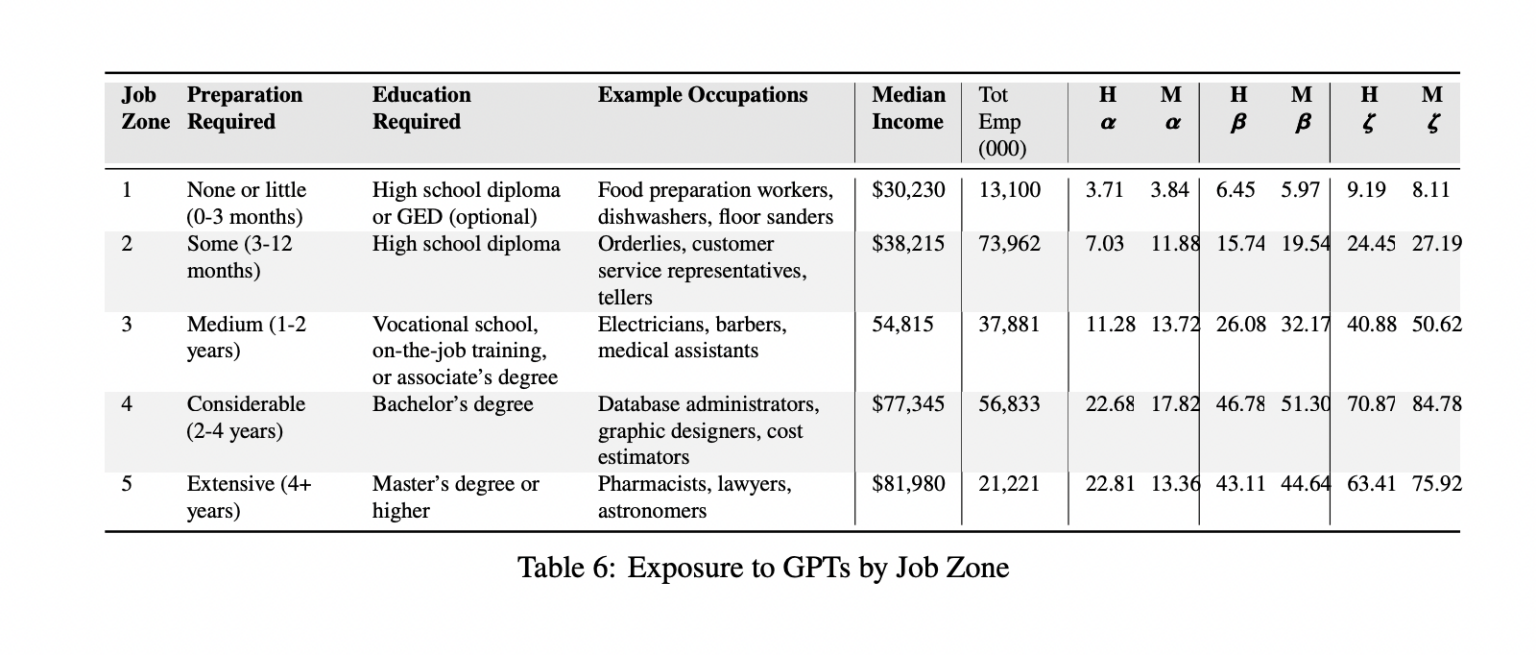
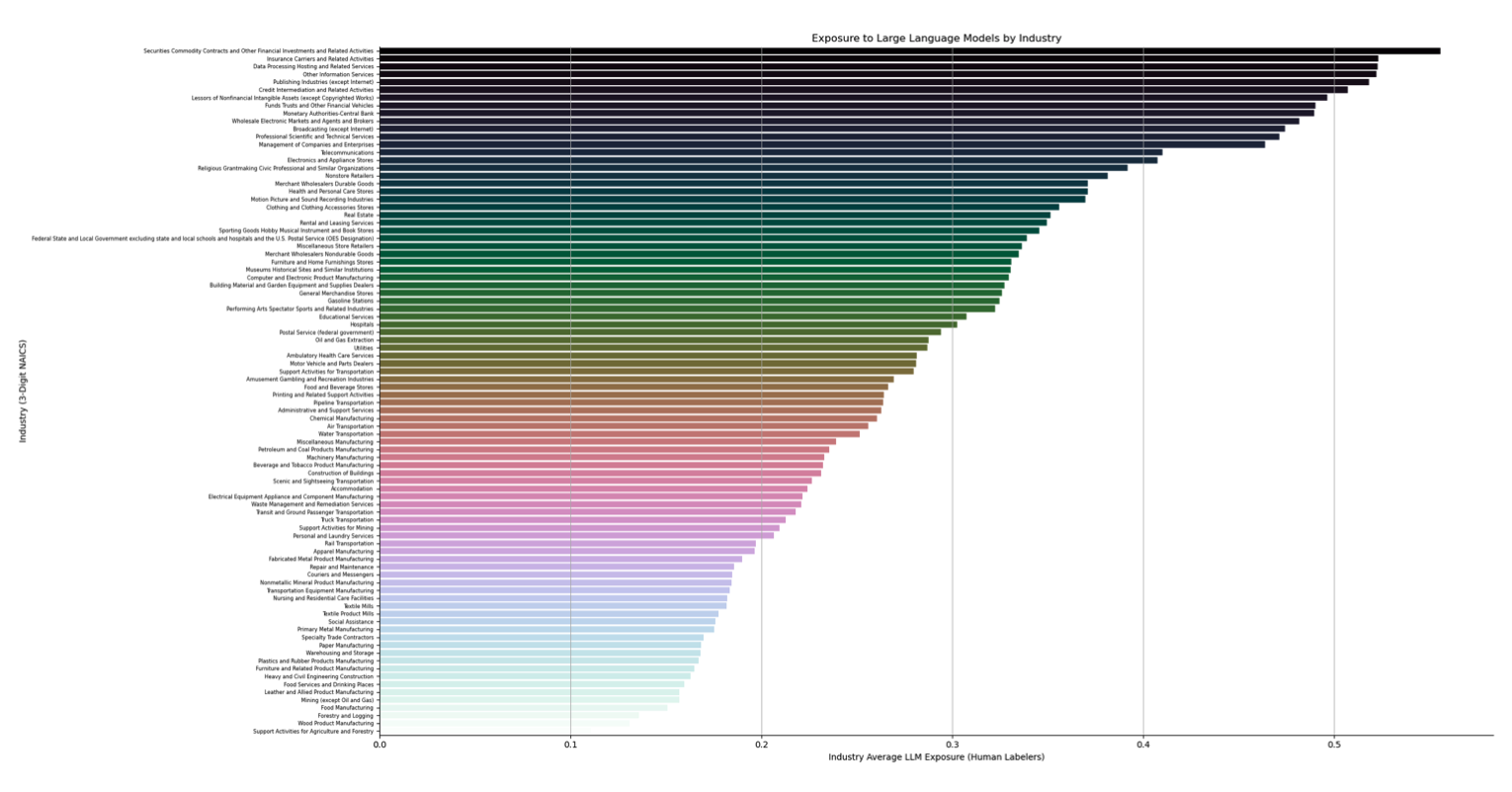
Secondo uno studio svolto insieme all’Università della Pennsylvania da parte della stessa OpenAI – che, va detto, se non altro gioca a carte scoperte – il 19% dei lavori negli Stati Uniti rischia di essere profondamente alterato da ChatGPT. Viste le sue capacità, dalla scrittura di codice all’elaborazione di pitch per finalità di marketing, inoltre, per le stime l’80% dei dipendenti USA potrebbe vedere modificato almeno il 10% dei propri compiti da questo software; e, paradossalmente (ma forse non troppo), i lavori più soggetti a questo genere di cambiamenti sono quelli che pagano meglio, di solito oltreoceano quelli che hanno a che fare in un modo o nell’altro con il software.

Nella tabella stilata da OpenAI, ci sono lavori che hanno una possibilità di essere modificati pari al 100%: ad esempi i matematici, i consulenti fiscali, gli analisti finanziari, gli scrittori e gli autori, i designer di interfacce web e digitali, i matematici, i commercialisti, i giornalisti, le segreterie legali e amministrative. Chi è, invece, che non rischia nulla, o pochissimo? Tutti coloro che svolgono un mestiere pratico, come gli operai e gli artigiani: non hanno nulla da temere, almeno da questo punto di vista, i meccanici, chi lavora nell’edilizia, i baristi, i camerieri, i carpentieri, gli imbianchini, gli idraulici, i macellai, i cuochi (evidentemente non è ancora il caso di chiedere a ChatGPT di inventarsi una ricetta gourmet). Il che apre prospettive interessanti, e forse un po’ diverse da quelle dei vecchi libri di fantascienza, che pensavano a un’automazione diffusa soprattutto per i lavori manuali; ad essere delegati ai computer saranno invece le professioni intellettuali.

Il tuttofare che migliora giorno dopo giorno

Certo, in questa ascesa inarrestabile, oltre alla questione occupazionale, non mancano altri problemi; proprio in questi giorni un bug ha mostrato varie history delle interazioni degli utenti con il bot ad altri utenti, tanto che la possibilità di recuperare le vecchie conversazioni è stata disabilitata per diversi giorni; e si è parlato molto dell’accuratezza con cui, volendo, l’intelligenza artificiale è in grado di produrre fake news estremamente credibili, e con molta più cura e attenzione di quelle alla portata dello zio complottista che inonda la chat di famiglia di teorie sul 5G o sui poteri forti che dominano il mondo.

I giornali sono altrettanto zeppi di articoli di firme eccellenti, pronte a dimostrare che l’algoritmo non è in grado di produrre scrittura di qualità comparabile a quella dei corsivisti (che, quindi, potranno continuare a fatturare tranquillamente). Non hanno torto; in effetti ChatGPT è un eccezionale generalista, che sa un po’ di tutto, ma non è capace (ancora) di imitare in maniera credibile la creatività umana. Jack of all trades, master of none, direbbero gli inglesi. Già il modello 4, però, ha mostrato un notevole miglioramento sotto questo punto di vista, e OpenAI (così come i concorrenti, in primo luogo Google Bard, appena lanciato sul mercato, anche se non ancora in Italia) non sembra avere alcuna intenzione di fermarsi nel migliorare la qualità dei suoi testi e portare al pensionamento anticipato milioni di persone.

Ci saranno nuova opportunità, secondo… ChatGPT

Allarmi del genere si erano già visto con i deepfake in grado di replicare perfettamente le fattezze di chiunque, e che avevano visto star del cinema diventare protagoniste di film hard a loro insaputa, o i maggior leader mondiali dichiarare guerra a destra e a manca. Almeno per il momento, però, queste paure non si sono concretizzate, e la speranza è che anche l’intelligenza artificiale possa essere utilizzata in maniera utile, e senza lasciare troppa gente a casa: trasformando, non eliminando. E del resto basta chiederlo a ChatGPT, se la sua ultima iterazione è una vera minaccia per alcune professioni: «GPT-4 potrebbe essere in grado di generare contenuti scritti di alta qualità in modo autonomo, che potrebbero essere utilizzati per scrivere articoli di notizie, rapporti finanziari, documenti legali e altro ancora. Tuttavia, è importante notare che l’introduzione di GPT-4 potrebbe anche creare nuove opportunità di lavoro, specialmente in ambiti come la progettazione di sistemi di intelligenza artificiale, la formazione e l’implementazione di modelli di linguaggio naturale avanzati e la creazione di nuove applicazioni che utilizzano il linguaggio naturale in modi innovativi. In generale, l’effetto di GPT-4 sulle professioni dipenderà in gran parte dal modo in cui verrà utilizzato e dalle nuove opportunità che potrebbe creare». Come sempre, insomma.

Per approfondire:

IA in app di Microsoft: aiuta a scrivere articoli, slide, email e fa sintesi riunioni su Teams. E la privacy?

https://www.key4biz.it/con-chatgpt-rimarremo-tutti-senza-lavoro/440067/


Ethical AI art generation? Adobe Firefly may be the answer

Adobe Firefly AI image generator example.
Enlarge / An Adobe Firefly AI image generator example.

On Tuesday, Adobe unveiled Firefly, its new AI image synthesis generator. Unlike other AI art models such as Stable Diffusion and DALL-E, Adobe says its Firefly engine, which can generate new images from text descriptions, has been trained solely on legal and ethical sources, making its output clear for use by commercial artists. It will be integrated directly into Creative Cloud, but for now, it is only available as a beta.

Since the mainstream debut of image synthesis models last year, the field has been fraught with issues around ethics and copyright. For example, the AI art generator called Stable Diffusion gained its ability to generate images from text descriptions after researchers trained an AI model to analyze hundreds of millions of images scraped from the Internet. Many (probably most) of those images were copyrighted and obtained without the consent of their rights holders, which led to lawsuits and protests from artists.

To avoid those legal and ethical issues, Adobe created an AI art generator trained solely on Adobe Stock images, openly licensed content, and public domain content, ensuring the generated content is safe for commercial use. Adobe goes into more detail in its news release:

Adobe Firefly will be made up of multiple models, tailored to serve customers with a wide array of skillsets and technical backgrounds, working across a variety of different use cases. Adobe’s first model, trained on Adobe Stock images, openly licensed content and public domain content where copyright has expired, will focus on images and text effects and is designed to generate content safe for commercial use. Adobe Stock’s hundreds of millions of professional-grade, licensed images are among the highest quality in the market and help ensure Adobe Firefly won’t generate content based on other people’s or brands’ IP. Future Adobe Firefly models will leverage a variety of assets, technology and training data from Adobe and others. As other models are implemented, Adobe will continue to prioritize countering potential harmful bias.

In addition to its commitment to a more ethical form of AI generator, Adobe is doubling down on ethics with a “Do Not Train” tag for creators who do not want their content used in model training. According to Adobe, this tag will “remain associated with content wherever it is used, published, or stored.”

In terms of performance, Adobe Firefly looks similar to OpenAI’s DALL-E, although Ars has not been able to evaluate its performance for itself yet. Demos on the Firefly website show various capabilities, including “text to image” (creating unique images from a text description), “text effects” (applying styles or textures with a text prompt), and “recolor vectors” (creating unique variations of a work from a text description).

Whether artists will adopt Firefly into their workflows remains to be seen, but the new AI model seems, on its face, like a positive step forward for AI ethics advocates. As always, we’ll need to take Adobe’s claims with a grain of salt, and we’ll keep you updated as new details emerge.

https://arstechnica.com/?p=1925844