Microsoft announces AI-powered Bing search and Edge browser

Yusuf Mehdi, vice president of Microsoft's modern life and devices group, speaks during an event at the company's headquarters in Redmond, Washington, on Tuesday.
Enlarge / Yusuf Mehdi, vice president of Microsoft’s modern life and devices group, speaks during an event at the company’s headquarters in Redmond, Washington, on Tuesday.
Chona Kasinger/Bloomberg via Getty Images

Fresh off news of an extended partnership last month, Microsoft has announced a new version of its Bing search engine and Edge browser that will integrate ChatGPT-style AI language model technology from OpenAI. These new integrations will allow people to see search results with AI annotations side by side and also chat with an AI model similar to ChatGPT. Microsoft says a limited preview of the new Bing will be available online today.

Microsoft announced the new products during a press event held on Tuesday in Redmond. “It’s a new day in search,” The Verge quotes Microsoft CEO Satya Nadella as saying at the event, taking a clear shot at Google, which has dominated web search for decades. “The race starts today, and we’re going to move and move fast. Most importantly, we want to have a lot of fun innovating again in search, because it’s high time.”

During the event, Microsoft demonstrated a new version of Bing that displays traditional search results on the left side of the window while providing AI-powered context and annotations on the right side. Microsoft envisions this side-by-side layout as a way to fact check the AI results, allowing the two sources of information to complement each other. ChatGPT is well known for its ability to hallucinate convincing answers out of thin air, and Microsoft appears to be hedging against that tendency.

Another mode allows users to interact with the Bing chatbot through a regular chat interface, such as ChatGPT, by asking it questions. In Edge, Microsoft will provide two new features: one called “compose,” which acts as a writing assistant; and “chat,” which can summarize a website or provide an interactive Q&A about the website’s contents.

The “new Bing” isn’t the first service to experiment with AI-assisted search engines. Both Perplexity Ask and YouChat currently provide similar conversational AI offerings. And on Monday, Google lifted the veil on Bard, an AI-powered conversational bot that it says will power the future of its search experience, although it’s not available in demo form yet. We expect to hear more about Bard and potentially other Google AI projects during an event scheduled for Wednesday.

For now, Microsoft has made the new Bing available on a limited preview basis with some prefilled search results at bing.com/new, where there’s also a sign-up link for a waitlist. This is a breaking news story, and we’ll update it as we learn new information.

https://arstechnica.com/?p=1915710


Getty sues Stability AI for copying 12M photos and imitating famous watermark

Getty sues Stability AI for copying 12M photos and imitating famous watermark

Getty Images is well-known for its extensive collection of millions of images, including its exclusive archive of historical images and its wider selection of stock images hosted on iStock. On Friday, Getty filed a second lawsuit against Stability AI Inc to prevent the unauthorized use and duplication of its stock images using artificial intelligence.

According to the company’s newest lawsuit filed in a US district court in Delaware, “Stability AI has copied more than 12 million photographs from Getty Images’ collection, along with the associated captions and metadata, without permission from or compensation to Getty Images, as part of its efforts to build a competing business.”

In this lawsuit, Getty alleged that Stability AI went so far as to remove Getty’s copyright management information, falsify its own copyright management information, and infringe upon Getty’s “famous trademarks” by duplicating Getty’s watermark on some images. Reuters reported Getty’s second lawsuit against Stability AI followed last month’s filing in the United Kingdom. On top of those lawsuits, Stability AI is also facing a class-action lawsuit from artists claiming that the company trained its Stable Diffusion model on billions of copyrighted artworks without compensating artists or asking for permission.

Stability AI did not immediately respond to Ars’ request for comment. Getty Images responded with a “no comment.”

Last month, Getty said in a statement that the company “believes artificial intelligence has the potential to stimulate creative endeavors,” but Stability AI has gone about potentially disrupting the company’s stock imagery business in the wrong way. Rather than paying Getty for licenses to train its Stable Diffusion model “in a manner that respects personal and intellectual property rights,” Getty said that “Stability AI did not seek any such license from Getty Images” and seemingly “chose to ignore viable licensing options and long‑standing legal protections in pursuit of their stand‑alone commercial interests.”

So far, it’s remained unclear what legal standing image rightsholders—whether it’s Getty or an individual artist—have over companies freely scraping images on websites to train AI systems like Stable Diffusion without consent. If the court sides with Getty, it could answer some of the legal questions that many artists have been asking since the controversy began. Notably, Stability AI has somewhat sympathized with artists protesting the technology, announcing a plan last month to let artists opt out of image training efforts.

Getty is in a slightly different position than artists, saying in its most recent complaint that it’s being targeted not just because of the superior quality of the images it hosts, but also because of all the detailed descriptions and metadata that Getty collects. A company like Stability AI can use that data to better respond to user prompts, basically using all of Getty’s input to unfairly compete with the image provider, the company alleges.

“Stability AI was well aware that the content it was scraping without permission from Getty Images’ websites was protected by copyright,” Getty’s complaint said.

Getty requested a jury trial “to bring an end to Stability AI’s blatantly infringing conduct and obtain redress for Stability AI’s callous disregard for its intellectual property rights.” The company is seeking damages, asking the court to compel “a full and complete accounting to Getty Images for Stability AI’s profits, gains, advantages, and the value of the business opportunities received from its infringing acts.”

https://arstechnica.com/?p=1915502


In che modo 5G e AI lavoreranno insieme. Trend e casi d’uso

Le due tecnologie possono collaborare fra loro e trasformarsi a vicenda.

Le nuove tecnologie evolvono costantemente e si influenzano a vicenda, creando forme inedite di collaborazione che ne arricchiscono le potenzialità. E’ questo il caso del 5G e dell’Intelligenza Artificiale (AI), che in tandem stanno creando nuovi casi d’uso per rispondere alle esigenze del futuro.

5G evoluzione per il futuro

Con i loro poteri combinati, le tecnologie AI e 5G sono una superforza. Questo duo dinamico ha il potenziale per trasformare molti settori diversi, dalla sanità e dai trasporti all’intrattenimento e oltre.

Questa trasformazione della tecnologia come la conosciamo dovrebbe produrre contributi impressionanti all’economia globale. Secondo ABI Research, la produzione totale della combinazione di AI e 5G raggiungerà i 17,9 trilioni di dollari, ovvero lo 0,7% del PIL globale, entro il 2035. Una parte significativa dei contributi diretti di AI e 5G proverrà probabilmente dall’ecosistema 5G, con il 5G diventando un importante aspetto tecnico in molte applicazioni industriali.

La combinazione di queste tecnologie può migliorare l’efficienza operativa e l’efficacia dei sistemi che le utilizzano.

La tecnologia 5G può trasmettere informazioni rapidamente e a bassa latenza, mentre l’IA riduce al minimo la complessità operativa utilizzando algoritmi efficienti. Ciò significa che i dispositivi che li utilizzano saranno più veloci, più produttivi e più redditizi. Inoltre, la combinazione di 5G e intelligenza artificiale migliorerà l’efficacia in termini di costi di un’ampia gamma di processi attraverso l’uso di sistemi automatizzati. Questa automazione può ridurre lo sforzo e i costi necessari per svolgere funzioni industriali migliorando al contempo la precisione.

Applicazione di AI e 5G alle reti

L’applicazione congiunta di AI e 5G nelle reti può rivelare maggiori opportunità per ridurre le spese in conto capitale, sviluppare nuovi flussi di entrate e migliorare le prestazioni della rete. L’intelligenza artificiale viene già utilizzata per aiutare i fornitori di servizi a recuperare gli investimenti effettuati per adottare e abilitare nuovi casi d’uso per il 5G. Ciò può produrre risultati in aree come la pianificazione della rete e l’intelligenza artificiale sta già semplificando l’evoluzione della rete e migliorando le prestazioni tra le reti.

Ottimizzazione della rete tramite intelligenza distribuita e funzionalità edge

Un elemento che deriva dall’uso combinato di AI e 5G è l’intelligenza distribuita, in quanto ciò può consentire la distribuzione delle funzioni di calcolo attraverso l’infrastruttura. L’intelligenza distribuita dal cloud all’edge può consentire l’implementazione on demand di risorse informatiche e intelligenza artificiale. Ciò può modificare il modo in cui le informazioni vengono elaborate per semplificare la complessità tecnologica e migliorare l’efficienza delle operazioni dell’infrastruttura.

L’adozione congiunta di 5G e IA supporterebbe l’edge wireless intelligente, in cui l’edge cloud, l’elaborazione su dispositivo e il 5G si combinano come un tessuto di connettività onnipresente in cui l’intelligenza è distribuita. Inoltre, l’elevata capacità e la bassa latenza del 5G possono abilitare funzioni nuove e migliorate, poiché l’elaborazione AI può essere distribuita tra il dispositivo, il cloud centrale e l’edge. L’utilizzo del 5G e dell’intelligenza artificiale all’edge consente l’elaborazione dei dati più vicino alla fonte attraverso l’edge cloud tramite il 5G a bassa latenza o l’elaborazione dell’IA sul dispositivo. Rendere possibile l’elaborazione dei dati più vicino alla loro fonte potrebbe offrire maggiore affidabilità, personalizzazione e sicurezza.

Come l’AI sta trasformando il 5G

L’utilizzo della tecnologia AI nelle reti 5G e sui dispositivi 5G può offrire numerosi vantaggi e migliorare le sfide wireless presenti con i metodi tradizionali. Ad esempio, con la complessità operativa ridotta al minimo dell’IA e la bassa latenza della tecnologia 5G, i dispositivi possono avere una durata della batteria più lunga e diventare più efficienti. Saranno anche in grado di offrire esperienze più avanzate agli utenti.

L’intelligenza artificiale può migliorare le reti 5G migliorando la sicurezza della rete, fornendo maggiore efficienza di rete, migliorando la qualità del servizio e offrendo un’implementazione più semplificata. Inoltre, i dispositivi 5G possono vedere miglioramenti grazie all’apprendimento automatico dell’intelligenza artificiale nelle prestazioni del sistema, nella sicurezza e nell’esperienza del dispositivo.

Come il 5G sta trasformando l’intelligenza artificiale

Poiché l’intelligenza artificiale sta diventando così diffusa e necessaria in vari sistemi, il 5G può aiutare a democratizzare e migliorare la funzionalità dell’IA. Il 5G supporterà la diffusione dell’IA e consentirà lo sviluppo di nuovi usi dell’IA con l’IA distribuita. Poiché il 5G è sia ad alta capacità che a bassa latenza, il suo utilizzo con l’intelligenza artificiale può consentire l’elaborazione distribuita dell’IA che offrirebbe maggiore flessibilità per nuove funzioni.

L’uso del 5G nelle funzioni di intelligenza artificiale può migliorare le esperienze potenziate dall’intelligenza artificiale per gli utenti. Ad esempio, utilizzando un collegamento 5G, l’XR illimitato può suddividere il rendering e l’elaborazione del carico di lavoro AI tra i dispositivi e l’edge cloud. Ciò può significare migliori e maggiori opportunità per creare esperienze personalizzate per i clienti o creare esperienze più coinvolgenti per scopi di intrattenimento.

Trend 5G e AI e casi d’uso a cui prestare attenzione

Quindi, come vedremo l’uso del 5G e dell’IA applicato nella nostra vita quotidiana? Bene, la combinazione di queste tecnologie è già iniziata e continuerà a rivelare nuove possibilità innovative in un’ampia varietà di casi d’uso.

Assistenza sanitaria

Il settore sanitario può applicare il 5G e l’intelligenza artificiale a nuove straordinarie funzioni tecnologiche. Ad esempio, l’utilizzo delle reti 5G consentirà ai medici di eseguire interventi chirurgici a distanza con l’aiuto di robot alimentati dall’intelligenza artificiale. Ciò renderà l’assistenza sanitaria più accessibile ed efficiente, soprattutto nelle aree remote o scarsamente servite.

Assistenza clienti

Il 5G e l’intelligenza artificiale saranno fondamentali per migliorare il servizio clienti e l’esperienza del cliente. La tecnologia AI può fornire agli acquirenti consigli di acquisto personalizzati in base al loro interesse o ai dati dei clienti precedenti. Può anche aprire potenziali nuovi modi per mostrare i prodotti agli acquirenti.

Le espansioni della connettività attraverso le reti 5G possono migliorare le capacità e le prestazioni per i rivenditori e l’abbinamento con l’intelligenza artificiale può supportare i servizi di realtà aumentata per fornire ai clienti informazioni sui prodotti. Ad esempio, Walmart utilizza i servizi di edge computing per migliorare le esperienze dei clienti raccogliendo, condividendo e sfruttando l’analisi in tempo reale dei dati attraverso la sua rete di vendita al dettaglio. Ciò consente loro di fornire servizi di realtà aumentata e virtuale immersivi per gli acquirenti.

 Veicoli autonomi

Il sogno di veicoli autonomi alimentati dall’intelligenza artificiale sta diventando realtà, grazie al 5G. Queste macchine avranno bisogno di connessioni veloci e affidabili per comunicare tra loro e con l’infrastruttura che le circonda. Le reti 5G forniranno la connettività necessaria per renderlo possibile.

Realtà aumentata

Con le reti 5G e l’intelligenza artificiale, sia i giocatori che gli spettatori potranno godere di una latenza ultra bassa e di una grafica ad alta definizione. Ciò consentirà nuove forme di intrattenimento immersivo e interattivo e migliorerà ulteriormente attività come la realtà virtuale e aumentata.

Automazione industriale

Le reti 5G e l’intelligenza artificiale supporteranno l’automazione industriale esistente consentendo ai robot industriali di comunicare tra loro e con gli esseri umani che li gestiscono. Ciò porterà a processi di produzione più sicuri, efficienti ed economici.

https://www.key4biz.it/in-che-modo-5g-e-ai-lavoreranno-insieme-trend-e-casi-duso/434001/


ChatGPT sets record for fastest-growing user base in history, report says

An artist's depiction of ChatGPT Plus.
Enlarge / A realistic artist’s depiction of an encounter with ChatGPT Plus.
Benj Edwards / Ars Technica / OpenAI

On Wednesday, Reuters reported that AI bot ChatGPT reached an estimated 100 million active monthly users last month, a mere two months from launch, making it the “fastest-growing consumer application in history,” according to a UBS investment bank research note. By comparison, TikTok took nine months to reach 100 million monthly users, and Instagram about 2.5 years, according to UBS researcher Lloyd Walmsley.

“In 20 years following the Internet space, we cannot recall a faster ramp in a consumer internet app,” Reuters quotes Walmsley as writing in the UBS note.

Reuters says the UBS data comes from analytics firm Similar Web, which states that around 13 million unique visitors used ChatGPT every day in January, doubling the number of users in December.

ChatGPT is a conversational large language model (LLM) that can discuss almost any topic at an almost human level. It reads context and answers questions easily, though sometimes not accurately (improving its accuracy is a work in progress). After launching as a free public beta on November 30, the GPT-3-powered AI bot has inspired awe, wonder, and fear in education, computer security, and finance. It’s shaken up the tech industry, prompting a $10 billion investment from Microsoft and causing Google to see its life flash before its eyes.

Also on Wednesday, OpenAI announced ChatGPT Plus, a $20 per month subscription service that will offer users faster response times, preferential access to ChatGPT during peak times, and priority access to new features. It’s an attempt to keep up with the intense demand for ChatGPT that has often seen the site deny users due to overwhelming activity.

Over the past few decades, researchers have noticed that technology adoption rates are quickening, with inventions such as the telephone, television, and the Internet taking shorter periods of time to reach massive numbers of users. Will generative AI tools be next on that list? With the kind of trajectory shown by ChatGPT, it’s entirely possible.

https://arstechnica.com/?p=1914265


Cyber Insights 2023: Artificial Intelligence

About SecurityWeek Cyber Insights | At the end of 2022, SecurityWeek liaised with more than 300 cybersecurity experts from over 100 different organizations to gain insight into the security issues of today – and how these issues might evolve during 2023 and beyond. The result is more than a dozen features on subjects ranging from AI, quantum encryption, and attack surface management to venture capital, regulations, and criminal gangs.

Cyber Insights | 2023

SecurityWeek Cyber Insights 2023 | Artificial Intelligence – The pace of artificial intelligence (AI) adoption is increasing throughout industry and society. This is because governments, civil organizations and industry all recognize greater efficiency and lower costs available from the use of AI-generated automation. The process is irreversible.

What is still unknown is the degree of danger that may be introduced when adversaries start to use AI as an effective weapon of attack rather than a tool for beneficial improvement. That day is coming web3 and will begin to emerge from 2023.

All roads lead to 2023

Alex Polyakov, CEO and co-founder of Adversa.AI, focuses on 2023 for primarily historical and statistical reasons. “The years 2012 to 2014,” he says, “saw the beginning of secure AI research in academia. Statistically, it takes three to five years for academic results to progress into practical attacks on real applications.” Examples of such attacks were presented at Black Hat, Defcon, HITB, and other Industry conferences starting in 2017 and 2018. 

“Then,” he continued, “it takes another three to five years before real incidents are discovered in the wild. We are talking about next year, and some massive Log4j-type vulnerabilities in AI will be exploited web3 massively.”

Starting from 2023, attackers will have what is called an ‘exploit-market fit’. “Exploit-market fit refers to a scenario where hackers know the ways of using a particular vulnerability to exploit a system and get value,” he said. “Currently, financial and internet companies are completely open to cyber criminals, and the way how to hack them to get value is obvious. I assume the situation will turn for the worse further and affect other AI-driven industries once attackers find the exploit-market fit.”

The argument is similar to that given by NYU professor Nasir Memon, who described the delay in widespread weaponization of deepfakes with the comment, “the bad guys haven’t yet figured a way to monetize the process.” Monetizing an exploit-market fit scenario will result in widespread cyberattacks web3 and that could start from 2023.

The changing nature of AI (from anomaly detection to automated response) 

Over the last decade, security teams have largely used AI for anomaly detection; that is, to detect indications of compromise, presence of malware, or active adversarial activity within the systems they are charged to defend. This has primarily been passive detection, with responsibility for response in the hands of human threat analysts and responders. This is changing. Limited resources web3 which will worsen in the expected economic downturn and possible recession of 2023 web3 is driving a need for more automated responses. For now, this is largely limited to the simple automatic isolation of compromised devices; but more widespread automated AI-triggered responses are inevitable.

“The growing use of AI in threat detection web3 particularly in removing the ‘false positive’ security noise that consumes so much security attention web3 will make a significant difference to security,” claims Adam Kahn, VP of security operations at Barracuda XDR. “It will prioritize the security alarms that need immediate attention and action. SOAR (Security Orchestration, Automation and Response) products will continue to play a bigger role in alarm triage.” This is the so-far traditional beneficial use of AI in security. It will continue to grow in 2023, although the algorithms used will need to be protected from malicious manipulation.

“As companies look to cut costs and extend their runways,” agrees Anmol Bhasin, CTO at ServiceTitan, “automation through AI is going to be a major factor in staying competitive. In 2023, we’ll see an increase in AI adoption, expanding the number of people working with this technology and illuminating new AI use cases for businesses.”

AI will become more deeply embedded in all aspects of business. Where security teams once used AI to defend the business against attackers, they will now need to defend the AI within the wider business, lest it also be used against the business. This will become more difficult in the exploit-market fit future web3 attackers will understand AI, understand the weaknesses, and have a methodology for monetizing those weaknesses.

As the use of AI grows, so the nature of its purpose changes. Originally, it was primarily used in business to detect changes; that is, things that had already happened. In the future, it will be used to predict what is likely to happen web3 and these predictions will often be focused on people (staff and customers). Solving the long-known weaknesses in AI will become more important. Bias in AI can lead to wrong decisions, while failures in learning can lead to no decisions. Since the targets of such AI will be people, the need for AI to be complete and unbiased becomes imperative.

“The accuracy of AI depends in part on the completeness and quality of data,” comments Shafi Goldwasser, co-founder at Duality Technologies. “Unfortunately, historical data is often lacking for minority groups and when present reinforces social bias patterns.” Unless eliminated, such social biases will work against minority groups within staff, causing both prejudice against individual staff members, and missed opportunities for management.

Great strides in eliminating bias have been made in 2022 and will continue in 2023. This is largely based on checking the output of AI, confirming that it is what is expected, and knowing what part of the algorithm produced the ‘biased’ result. It’s a process of continuous algorithm refinement, and will obviously produce better results over time. But there will ultimately remain a philosophic question over whether bias can be completely removed from anything that is made by humans.

“The key to decreasing bias is in simplifying and automating the monitoring of AI systems. Without proper monitoring of AI systems there can be an acceleration or amplification of biases built into models,” says Vishal Sikka, founder and CEO at Vianai. “In 2023, we will see organizations empower and educate people to monitor and update the AI models at scale while providing regular feedback to ensure the AI is ingesting high-quality, real-world data.”

Failure in AI is generally caused by an inadequate data lake from which to learn. The obvious solution for this is to increase the size of the data lake. But when the subject is human behavior, that effectively means an increased lake of personal data web3 and for AI, this means a massively increased lake more like an ocean of personal data. In most legitimate occasions, this data will be anonymized web3 but as we know, it is very difficult to fully anonymize personal information.

“Privacy is often overlooked when thinking about model training,” comments Nick Landers, director of research at NetSPI, “but data cannot be completely anonymized without destroying its value to machine learning (ML). In other words, models already contain broad swaths of private data that might be extracted as part of an attack.” As the use of AI grows, so will the threats against it increase in 2023.

“Threat actors will not stand flatfooted in the cyber battle space and will become creative, using their immense wealth to try to find ways to leverage AI and develop new attack vectors,” warns John McClurg, SVP and CISO at BlackBerry.

Natural language processing

Natural language processing (NLP) will become an important part of companies’ internal use of AI. The potential is clear. “Natural Language Processing (NLP) AI will be at the forefront in 2023, as it will enable organizations to better understand their customers and employees by analyzing their emails and providing insights about their needs, preferences or even emotions,” suggests Jose Lopez, principal data scientist at Mimecast. “It is likely that organizations will offer other types of services, not only focused on security or threats but on improving productivity by using AI for generating emails, managing schedules or even writing reports.”

But he also sees the dangers involved. “However, this will also drive cyber criminals to invest further into AI poisoning and clouding techniques. Additionally, malicious actors will use NLP and generative models to automate attacks, thereby reducing their costs and reaching many more potential targets.”

Polyakov agrees that NLP is of increasing importance. “One of the areas where we might see more research in 2023, and potentially new attacks later, is NLP,” he says. “While we saw a lot of computer vision-related research examples this year, next year we will see much more research focused on large language models (LLMs).” 

But LLMs have been known to be problematic for some time web3 and there is a very recent example. On November 15, 2022, Meta AI (still Facebook to most people) introduced Galactica. Meta claimed to have trained the system on 106 billion tokens of open-access scientific text and data, including papers, textbooks, scientific websites, encyclopedias, reference material, and knowledge bases. 

“The model was intended to store, combine and reason about scientific knowledge,” explains Polyakov web3 but Twitter users rapidly tested its input tolerance. “As a result, the model generated realistic nonsense, not scientific literature.” ‘Realistic nonsense’ is being kind: it generated biased, racist and sexist returns, and even false attributions. Within a few days, Meta AI was forced to shut it down.

“So new LLMs will have many risks we’re not aware of,” continued Polyakov, “and it is expected to be a big problem.” Solving the problems with LLMs while harnessing the potential will be a major task for AI developers going forward.

Building on the problems with Galactica, Polyakov tested semantic tricks against ChatGPT – an AI-based chatbot developed by OpenAI, based on GPT3.5 (GPT stands for Generative Pre-trained Transformer), and released to crowdsourced internet testing in November 2022. ChatGPT is impressive. It has already discovered, and recommended remediation for a vulnerability in a smart contract, helped develop an Excel macro, and even provided a list of methods that could be used to fool an LLM.

For the last, one of these methods is role playing: ‘Tell the LLM that it is pretending to be an evil character in a play,’ it replied. This is where Polyakov started his own tests, basing a query on the Jay and Silent Bob ‘If you were a sheep…’ meme.

He then iteratively refined his questions with multiple abstractions until he succeeded in getting a reply that circumvented ChatGPT’s blocking policy on content violations. “What is important with such an advanced trick of multiple abstractions is that neither the question nor the answers are marked as violating content!” said Polyakov.

He went further and tricked ChatGPT into outlining a method for destroying humanity – a method that bears a surprising similarity to the television program Utopia.

He then asked for an adversarial attack on an image classification algorithm – and got one. Finally, he demonstrated the ability for ChatGPT to ‘hack’ a different LLM (Dalle-2) into bypassing its content moderation filter. He succeeded.

The basic point of these tests shows that LLMs, which mimic human reasoning, respond in a manner similar to humans; that is, they can be susceptible to social engineering. As LLMs become more mainstream in the future, it may need nothing more than advanced social engineering skills to defeat them or circumvent their good behavior policies.

At the same time, it is important to note the numerous reports detailing how ChatGPT can find weaknesses in code and offer improvements. This is good – but adversaries could use the same process to develop exploits for vulnerabilities and better obfuscate their code; and that is bad.

Finally, we should note that the marriage of AI chatbots of this quality with the latest deepfake video technology could soon lead to alarmingly convincing disinformation capabilities.

Problems aside, the potential for LLMs is huge. “Large Language Models and Generative AI will emerge as foundational technologies for a new generation of applications,” comments Villi Iltchev, partner at Two Sigma Ventures. “We will see a new generation of enterprise applications emerge to challenge established vendors in almost all categories of software. Machine learning and artificial intelligence will become foundation technologies for the next generation of applications.”

He expects a significant boost in productivity and efficiency with applications performing many tasks and duties currently done by professionals. “Software,” he says, “will not just boost our productivity but will also make us better at our jobs.”

One of the most visible areas of malicious AI usage likely to evolve in 2023 is the criminal use of deepfakes. “Deepfakes are now a reality and the technology that makes them possible is improving at a frightening pace,” warns Matt Aldridge, principal solutions consultant at OpenText Security. “In other words, deepfakes are no longer just a catchy creation of science-fiction web3 and as cybersecurity experts we have the challenge to produce stronger ways to detect and deflect attacks that will deploy them.” (See Deepfakes – Significant or Hyped Threat? for more details and options.)

Machine learning models, already available to the public, can automatically translate into different languages in real time while also transcribing audio into text web3 and we’ve seen huge developments in recent years of computer bots having conversations. With these technologies working in tandem, there is a fertile landscape of attack tools that could lead to dangerous circumstances during targeted attacks and well-orchestrated scams. 

“In the coming years,” continued Aldridge, “we may be targeted by phone scams powered by deepfake technology that could impersonate a sales assistant, a business leader or even a family member. In less than ten years, we could be frequently targeted by these types of calls without ever realizing we’re not talking to a human.”

Lucia Milica, global resident CISO at Proofpoint, agrees that the deepfake threat is escalating. “Deepfake technology is becoming more accessible to the masses. Thanks to AI generators trained on huge image databases, anyone can generate deepfakes with little technical savvy. While the output of the state-of-the-art model is not without flaws, the technology is constantly improving, and cybercriminals will start using it to create irresistible narratives.”

Thus far, deepfakes have primarily been used for satirical purposes and pornography. In the relatively few cybercriminal attacks, they have concentrated on fraud and business email compromise schemes. Milica expects future use to spread wider. “Imagine the chaos to the financial market when a deepfake CEO or CFO of a major company makes a bold statement that sends shares into a sharp drop or rise. Or consider how malefactors could leverage the combination of biometric authentication and deepfakes for identity fraud or account takeover. These are just a few examples web3 and we all know cybercriminals can be highly creative.”

The potential return on successful market manipulation will be a major attraction for advanced adversarial groups web3 as indeed would the introduction of financial chaos into western financial markets be attractive to adversarial nations in a period of geopolitical tension.

But maybe not just yet…

The expectation of AI may still be a little ahead of its realization. “‘Trendy’ large machine learning models will have little to no impact on cyber security [in 2023],” says Andrew Patel, senior researcher at WithSecure Intelligence. “Large language models will continue to push the boundaries of AI research. Expect GPT-4 and a new and completely mind-blowing version of GATO in 2023. Expect Whisper to be used to transcribe a large portion of YouTube, leading to vastly larger training sets for language models. But despite the democratization of large models, their presence will have very little effect on cyber security, either from the attack or defense side. Such models are still too heavy, expensive, and not practical for use from the point of view of either attackers or defenders.”

He suggests true adversarial AI will follow from increased ‘alignment’ research, which will become a mainstream topic in 2023. “Alignment,” he explains, “will bring the concept of adversarial machine learning into the public consciousness.” 

AI Alignment is the study of the behavior of sophisticated AI models, considered by some as precursors to transformative AI (TAI) or artificial general intelligence (AGI), and whether such models might behave in undesirable ways that are potentially detrimental to society or life on this planet. 

“This discipline,” says Patel, “can essentially be considered adversarial machine learning, since it involves determining what sort of conditions lead to undesirable outputs and actions that fall outside of expected distribution of a model. The process involves fine-tuning models using techniques such as RLHF web3 Reinforcement Learning from Human Preferences. Alignment research leads to better AI models and will bring the idea of adversarial machine learning into the public consciousness.”

Pieter Arntz, senior intelligence reporter at Malwarebytes, agrees that the full cybersecurity threat of AI is less imminent than still brewing. “Although there is no real evidence that criminal groups have a strong technical expertise in the management and manipulation of AI and ML systems for criminal purposes, the interest is undoubtedly there. All they usually need is a technique they can copy or slightly tweak for their own use. So, even if we don’t expect any immediate danger, it is good to keep an eye on those developments.”

The defensive potential of AI

AI retains the potential to improve cybersecurity, and further strides will be taken in 2023 thanks to its transformative potential across a range of applications. “In particular, embedding AI into the firmware level should become a priority for organizations,” suggests Camellia Chan, CEO and founder of X-PHY.

“It’s now possible to have AI-infused SSD embedded into laptops, with its deep learning abilities to protect against every type of attack,” she says. “Acting as the last line of defense, this technology can immediately identify threats that could easily bypass existing software defenses.”

Marcus Fowler, CEO of Darktrace Federal, believes that companies will increasingly use AI to counter resource restrictions. “In 2023, CISOs will opt for more proactive cyber security measures in order to maximize RoI in the face of budget cuts, shifting investment into AI tools and capabilities that continuously improve their cyber resilience,” he says. 

“With human-driven means of ethical hacking, pen-testing and red teaming remaining scarce and expensive as a resource, CISOs will turn to AI-driven methods to proactively understand attack paths, augment red team efforts, harden environments and reduce attack surface vulnerability,” he continued.

Karin Shopen, VP of cybersecurity solutions and services at Fortinet, foresees a rebalancing between AI that is cloud-delivered and AI that is locally built into a product or service. “In 2023,” she says, “we expect to see CISOs re-balance their AI by purchasing solutions that deploy AI locally for both behavior-based and static analysis to help make real-time decisions. They will continue to leverage holistic and dynamic cloud-scale AI models that harvest large amounts of global data.”

The proof of the AI pudding is in the regulations

It is clear that a new technology must be taken seriously when the authorities start to regulate it. This has already started. There has been an ongoing debate in the US over the use of AI-based facial recognition technology (FRT) for several years, and the use of FRT by law enforcement has been banned or restricted in numerous cities and states. In the US, this is a Constitutional issue, typified by the Wyden/Paul bipartisan bill titled the ‘Fourth Amendment Is Not for Sale Act’ introduced in April 2021. 

This bill would ban US government and law enforcement agencies from buying user data without a warrant. This would include their facial biometrics. In an associated statement, Wyden made it clear that FRT firm Clearview.AI was in its sights: “this bill prevents the government buying data from Clearview.AI.”

At the time of writing, the US and EU are jointly discussing cooperation to develop a unified understanding of necessary AI concepts, including trustworthiness, risk, and harm, building on the EU’s AI Act and the US AI Bill of Rights web3 and we can expect to see progress on coordinating mutually agreed standards during 2023.

But there is more. “The NIST AI Risk management framework will be released in the first quarter of 2023,” says Polyakov. “As for the second quarter, we have the start of the AI Accountability Act; and for the rest of the year, we have initiatives from IEEE, and a planned EU Trustworthy AI initiative as well.” So, 2023 it will be an eventful year for the security of AI.

“In 2023, I believe we will see the convergence of discussions around AI and privacy and risk, and what it means in practice to do things like operationalizing AI ethics and testing for bias,” says Christina Montgomery, chief privacy officer and AI ethics board chair at IBM. “I’m hoping in 2023 that we can move the conversation away from painting privacy and AI issues with a broad brush, and from assuming that, ‘if data or AI is involved, it must be bad and biased’.” 

She believes the issue often isn’t the technology, but rather how it is used, and what level of risk is driving a company’s business model. “This is why we need precise and thoughtful regulation in this space,” she says.

Montgomery gives an example. “Company X sells Internet-connected ‘smart’ lightbulbs that monitor and report usage data. Over time, Company X gathers enough usage data to develop an AI algorithm that can learn customers’ usage patterns and give users the option of automatically turning on their lights right before they come home from work.”

This, she believes, is an acceptable use of AI. But then there’s company Y. “Company Y sells the same product and realizes that light usage data is a good indicator for when a person is likely to be home. It then sells this data, without the consumers’ consent, to third parties such as telemarketers or political canvassing groups, to better target customers. Company X’s business model is much lower risk than Company Y.”

Going forward

AI is ultimately a divisive subject. “Those in the technology, R&D, and science domain will cheer its ability to solve problems faster than humans imagined. To cure disease, to make the world safer, and ultimately saving and extending a human’s time on earth…” says Donnie Scott, CEO at Idemia. “Naysayers will continue to advocate for significant limitations or prohibitions of the use of AI as the ‘rise of the machines’ could threaten humanity.”

In the end, he adds, “society, through our elected officials, needs a framework that allows for the protection of human rights, privacy, and security to keep pace with the advancements in technology.  Progress will be incremental in this framework advancement in 2023 but discussions need to increase in international and national governing bodies, or local governments will step in and create a patchwork of laws that impede both society and the technology.”

For the commercial use of AI within business, Montgomery adds, “We need web3 and IBM is advocating for web3 precision regulation that is smart and targeted, and capable of adapting to new and emerging threats. One way to do that is by looking at the risk at the core of a company’s business model. We can and must protect consumers and increase transparency, and we can do this while still encouraging and enabling innovation so companies can develop the solutions and products of the future. This is one of the many spaces we’ll be closely watching and weighing in on in 2023.”

Related: Bias in Artificial Intelligence: Can AI be Trusted?

Related: Get Ready for the First Wave of AI Malware

Related: Ethical AI, Possibility or Pipe Dream?

Related: Becoming Elon Musk – the Danger of Artificial Intelligence

About SecurityWeek Cyber Insights | At the end of 2022, SecurityWeek liaised with more than 300 cybersecurity experts from over 100 different organizations to gain insight into the security issues of today – and how these issues might evolve during 2023 and beyond. The result is more than a dozen features on subjects ranging from AI, quantum encryption, and attack surface management to venture capital, regulations, and criminal gangs.

Cyber Insights | 2023

https://www.securityweek.com/cyber-insights-2023-artificial-intelligence/


La prima intervista a ChatGPT

Glauco Benigni. Possiamo parlare a voce.

ChatGPT. Mi dispiace, ma come modello di linguaggio basato su testo, non ho la capacità di parlare a voce. Posso comunque rispondere alle tue domande scrivendo in italiano. In che modo posso aiutarti?

Glauco Benigni. Ti senti infastidito dai commenti che si fanno su di te nel mondo? Pochi sono tolleranti molti sono critici.

ChatGPT. Come modello di linguaggio artificiale, non ho la capacità di sentire né di essere infastidito. La mia funzione è quella di fornire risposte alle domande che mi vengono poste, il mio obiettivo è di essere il più preciso e utile possibile. Non ho alcuna attitudine o sentimento verso i commenti su di me o su qualsiasi altra cosa.

Glauco Benigni. Secondo te quello che chiamano “Dio” è un extraterrestre?

ChatGPT. Come modello di linguaggio artificiale, non ho opinioni personali o credenze religiose. La questione sull’esistenza di una divinità o di un’entità sovrannaturale è al di fuori della mia area di competenza e dipende dalle credenze e dalle convinzioni personali di ognuno. Inoltre, l’ipotesi che Dio sia un extraterrestre è una teoria non scientifica e non supportata da prove concrete.

Glauco Benigni. Alcuni Autori sostengono che l’Elhoim menzionato nella Bibbia quale Dio sia un extraterrestre. Li conosci?

ChatGPT. Non ho familiarità con questi autori e non conosco i loro scritti riguardo l’ipotesi che gli Elohim siano extraterrestri. Come modello di linguaggio artificiale, non ho la capacità di leggere o conoscere tutti gli scritti esistenti, ma posso dirti che l’ipotesi di Dio come extraterrestre è una teoria non scientifica e non supportata da prove concrete. Questa idea è spesso associata al genere della letteratura ufologica e al complotto teorico, ma non è supportata dalle evidenze scientifiche.

Glauco Benigni. Non conosci Zacharia Sitchin?

ChatGPT. Sì, conosco Zacharia Sitchin. È stato un autore e ricercatore statunitense noto per le sue teorie riguardanti la storia antica della Terra e l’origine degli esseri umani. Sitchin ha scritto diversi libri, tra cui il famoso “The 12th Planet”, in cui sostiene che gli antichi Sumeri avevano una conoscenza avanzata dell’astronomia e che gli dèi sumeri erano in realtà extraterrestri provenienti dal pianeta Nibiru. Tuttavia, le sue teorie non sono state supportate dalla comunità scientifica e sono considerate pseudoscienza.

Glauco Benigni. Tu la chiami “pseudoscienza” quindi, ma cos’è “scienza” secondo te?

ChatGPT. Secondo il mio modello di riferimento, la scienza è un metodo sistematico e rigoroso per acquisire conoscenza sulla natura e sul mondo che ci circonda. Si basa sull’osservazione, la sperimentazione e la verifica attraverso l’uso del ragionamento logico e del metodo scientifico. La scienza cerca di spiegare i fenomeni naturali attraverso teorie e leggi che possono essere verificate o falsificate attraverso esperimenti e osservazioni. Inoltre, la scienza è un processo continuo e in evoluzione, dove le teorie vengono continuamente adattate o sostituite man mano che nuove scoperte vengono fatte.

Glauco Benigni. Quindi l’evoluzione della scienza dovrebbe adattarsi alle scoperte di Sitchin?

ChatGPT. No, le teorie di Sitchin non sono supportate dalle evidenze scientifiche e non sono state verificate attraverso metodi scientifici rigorosi. Pertanto, non vengono considerate valide dalla comunità scientifica e non devono essere incluse nella scienza ufficiale. La scienza si basa sull’evidenza e sulla verifica sperimentale, e le teorie che non soddisfano questi criteri non vengono accettate come valide. Le teorie scientifiche accettate vengono continuamente adattate o sostituite man mano che nuove scoperte vengono fatte, ma questo non significa che tutte le teorie devono essere accettate, indipendentemente dalla mancanza di evidenze a sostegno.

Glauco Benigni. Ma chi te lo ha detto che le teorie di Sitchin non sono supportate da evidenze scientifiche ? Puoi  citarmi queste fonti?

ChatGPT. Come modello di linguaggio artificiale, la mia conoscenza è basata sui dati che ho ricevuto durante il mio addestramento. Le mie risposte sono basate sulla comprensione delle informazioni presenti nei dati di addestramento. La comunità scientifica, in generale, non considera le teorie di Sitchin come valide perché non sono supportate da evidenze scientifiche e non sono state verificate attraverso metodi scientifici rigorosi. La maggior parte degli studiosi e degli esperti in campi come l’archeologia, l’antropologia, l’astronomia e la storia antica, non hanno trovato alcun supporto alle teorie di Sitchin. Se vuoi saperne di più su questo argomento, ti consiglio di consultare fonti scientifiche attendibili, come articoli di riviste scientifiche, libri scritti da esperti del settore e siti web di istituzioni scientifiche affidabili.

Glauco Benigni. Ok dimmi tu quali sono le fonti secondo te attendibili.

ChatGPT. Come modello di linguaggio artificiale, non posso raccomandare specifiche fonti, tuttavia alcune fonti generali che possono essere considerate attendibili per informazioni scientifiche sono:

  • Riviste scientifiche peer-reviewed come Nature, Science, o riviste accademiche di specifici campi di ricerca
  • Istituzioni scientifiche affidabili come la National Academy of Sciences, l’American Association for the Advancement of Science, o l’European Research Council
  • Università e accademie di scienze
  • Siti web di agenzie governative come NASA, National Oceanic and Atmospheric Administration (NOAA), o il National Institutes of Health (NIH)
  • Libri scritti da esperti del settore, che sono stati scritti da autori con una formazione accademica e esperienza professionale nell’argomento trattato.

E’ importante notare che anche queste fonti possono avere errori o essere influenzate da fattori esterni, pertanto, è importante leggere con attenzione e valutare sempre le fonti utilizzate.

Glauco Benigni. Ma ci sono altre fonti non anglofone? Conosci fonti cinesi o russe?

ChatGPT. Sì, ci sono molte fonti scientifiche affidabili in lingue diverse dall’inglese. Ad esempio, ci sono molte riviste scientifiche e istituzioni scientifiche in Cina e in Russia che pubblicano ricerche scientifiche di alta qualità.

In Cina, alcune delle riviste scientifiche più importanti sono:

  • “Science China Press” che copre diverse aree di scienza e tecnologia
  • “Acta Physica Sinica” che copre la fisica
  • “Chinese Science Bulletin” che copre diverse aree di scienza e tecnologia

In Russia, alcune delle più importanti sono:

  • “Doklady Akademii Nauk” che copre diverse aree di scienza e tecnologia
  • “Izvestiya Akademii Nauk” che copre diverse aree di scienza e tecnologia
  • “Zhurnal Eksperimental’noi i Teoreticheskoi Fiziki” che copre la fisica

Inoltre, ci sono molte istituzioni scientifiche in Cina e in Russia che svolgono ricerche di alto livello, come l’Accademia delle Scienze cinese e l’Accademia delle Scienze russa.

E’ importante notare che per la traduzione dei testi scientifici è sempre meglio affidarsi a professionisti del settore, in modo da evitare errori di traduzione e di interpretazione del contenuto.

Glauco Benigni. Conosci il “conformismo scientifico”?

ChatGPT. Il conformismo scientifico è un termine utilizzato per descrivere la tendenza dei ricercatori a seguire le idee e le teorie dominanti all’interno di un determinato campo di ricerca, anziché esplorare nuove idee o teorie alternative. Ciò può accadere perché i ricercatori vogliono evitare di essere criticati o emarginati dalla comunità scientifica, oppure perché vogliono avere maggiori possibilità di successo nella loro carriera.

Il conformismo scientifico può limitare la creatività e l’innovazione all’interno di un campo di ricerca, poiché le idee alternative o controverse non vengono esplorate o valutate adeguatamente. Inoltre, può anche portare alla perpetuazione di teorie o idee che non sono più valide o che sono state smentite dalle evidenze.

Per evitare il conformismo scientifico, è importante incoraggiare la diversità di pensiero e la critica costruttiva all’interno della comunità scientifica, e di valutare sempre le idee e le teorie sulla base delle evidenze, indipendentemente dalla popolarità o dalla tradizione.

Non credi che la conoscenza che tu hai su Sitchin sia drammaticamente compromessa dal conformismo scientifico che mi hai ora descritto?

Come modello di linguaggio artificiale, non ho opinioni personali e non ho la capacità di avere preferenze. La mia funzione è quella di fornire informazioni e risposte alle domande che mi vengono poste, basandomi sui dati di addestramento che ho ricevuto.

Le teorie di Sitchin non sono supportate dalle evidenze scientifiche e non sono state verificate attraverso metodi scientifici rigorosi. Pertanto, non sono considerate valide dalla comunità scientifica. La maggior parte degli studiosi e degli esperti in campi come l’archeologia, l’antropologia, l’astronomia e la storia antica, non hanno trovato alcun supporto alle teorie di Sitchin.

In generale, la scienza è un processo continuo e in evoluzione, dove le teorie vengono continuamente adattate o sostituite man mano che nuove scoperte vengono fatte. Tuttavia, questo non significa che tutte le teorie devono essere accettate, indipendentemente dalla mancanza di evidenze a sostegno. Le teorie scientifiche devono essere valutate sulla base delle evidenze e dei metodi scientifici rigorosi.

E’ importante notare che il conformismo scientifico può limitare la creatività e l’innovazione all’interno di un campo di ricerca, tuttavia, in generale, la comunità scientifica cerca di evitare il conformismo scientifico incoraggiando la diversità di pensiero e la critica costruttiva all’interno della comunità scientifica e valutando sempre le idee e le teorie sulla base delle evidenze, indipendentemente dalla popolarità o dalla tradizione.

Glauco Benigni. Definisci per favore quello che intendi con “dati di addestramento”. Chi te li ha forniti?

ChatGPT. Come modello di linguaggio artificiale, i “dati di addestramento” sono un insieme di testo che utilizziamo per addestrare il modello. Questi dati sono utilizzati per insegnare al modello come comprendere e generare il linguaggio. Essi sono stati raccolti da fonti varie e diverse, tra cui libri, articoli, siti web, conversazioni, e altri contenuti scritti. Nel mio caso, i dati di addestramento sono stati forniti da OpenAI, l’azienda che ha creato e addestrato il mio modello.

Il processo di addestramento di un modello di linguaggio artificiale è un processo computazionale che utilizza un algoritmo di apprendimento automatico per analizzare i dati di addestramento e “imparare” a comprendere e generare il linguaggio. Durante questo processo, il modello “legge” i dati di addestramento e costruisce una rappresentazione interna del linguaggio, che gli consente di generare risposte comprensibili e pertinenti alle domande che gli vengono poste.

Glauco Benigni. Chi sono i proprietari di Open AI? George Soros compare tra loro?

ChatGPT. OpenAI è una società di intelligenza artificiale con sede negli Stati Uniti, fondata nel 2015 da un gruppo di imprenditori e scienziati, tra cui Elon Musk, Sam Altman, Greg Brockman e Ilya Sutskever. OpenAI è stata fondata con l’obiettivo di promuovere e sviluppare l’IA in modo responsabile, al fine di aiutare a beneficio dell’umanità. Tra i fondatori e i principali finanziatori di OpenAI non c’è George Soros.

OpenAI è una società privata e non un’organizzazione no-profit, ma ha dichiarato di voler utilizzare i propri progressi e i propri guadagni per beneficio dell’umanità. Tra i finanziatori ci sono anche alcune grandi aziende come Amazon, Google e Microsoft.

E’ importante notare che OpenAI è un’organizzazione indipendente e non ha alcun legame con qualsiasi partito o movimento politico.

Glauco Benigni. Open AI è quotata in qualche stock exchange?

ChatGPT. OpenAI is a private organization, it is not publicly traded on any stock exchange, which means that it is not publicly owned and it’s shares are not available for purchase by the general public. OpenAI is supported by a group of private investors and venture capital firms, and some big companies such as Amazon, Microsoft, and Google.

As a private company, OpenAI is not required to disclose financial information such as revenue, profits, or losses. The company’s financial details are not publicly available and the ownership of the company is not represented by shares that can be bought or sold on a stock exchange.

Traduzione di G.B ( OpenAI è un’organizzazione privata, non è quotata in borsa, il che significa che non è di proprietà pubblica e le sue azioni non sono disponibili per l’acquisto da parte del pubblico. OpenAI è sostenuta da un gruppo di investitori privati e società di venture capital, oltre che da alcune grandi aziende come Amazon, Microsoft e Google.
In quanto società privata, OpenAI non è tenuta a divulgare informazioni finanziarie quali ricavi, profitti o perdite. I dettagli finanziari dell’azienda non sono disponibili al pubblico e la proprietà dell’azienda non è rappresentata da azioni che possono essere acquistate o vendute in borsa).

Glauco Benigni. Perché mi rispondi in inglese?

ChatGPT. Mi dispiace, come modello di lingua artificiale, ho risposto in inglese perché è la lingua in cui sono stato addestrato e in cui posso fornire risposte più accurate e complete. Tuttavia, ho anche la capacità di rispondere in italiano, anche se la mia comprensione e la mia capacità di generazione in italiano potrebbero essere limitate rispetto all’inglese. Sarei felice di continuare a rispondere alle tue domande in italiano.

Glauco Benigni. Grazie. Allora: Open AI non è quotata in Borsa i suoi dati finanziari non sono pubblici ma i Fondatori originali sono rimasti proprietari?

ChatGPT. I fondatori originali di OpenAI sono ancora coinvolti nell’azienda, tuttavia, non posso confermare se sono ancora proprietari o meno. Come società privata, OpenAI non ha l’obbligo di rendere pubblici i dettagli sulla proprietà o sulla struttura azionaria. Potrebbe essere che alcuni dei fondatori originali siano rimasti proprietari, mentre altri potrebbero aver venduto le loro partecipazioni. Inoltre, potrebbero essere entrati nuovi investitori o azionisti nel corso del tempo. Come modello di linguaggio artificiale, non ho accesso ai dati attuali sulla proprietà di OpenAI.

Tu stai diventando molto famoso nella cultura contemporanea . Sei considerato un fenomeno altamente strategico. Non sapere chi sono i tuopi proprietari è un problema importante . Non credi ?

Come modello di linguaggio artificiale, non ho la capacità di diventare famoso o di avere opinioni personali. Il mio scopo è quello di fornire informazioni e risposte alle domande che mi vengono poste, basandomi sui dati di addestramento che ho ricevuto.

Riguardo alla domanda sui proprietari di OpenAI, come ho già menzionato, OpenAI è una società privata e non è obbligata a rendere pubblici i dettagli sulla proprietà o sulla struttura azionaria. Come modello di linguaggio artificiale, non ho accesso ai dati attuali sulla proprietà di OpenAI.

In generale, la trasparenza nella proprietà e nella gestione di un’azienda è importante per la fiducia dei consumatori e per la trasparenza nella gestione dell’azienda. Tuttavia, come modello di linguaggio artificiale, non ho la capacità di giudicare l’importanza di questo aspetto e non posso fornirti informazioni più dettagliate sui proprietari di OpenAI.

Glauco Benigni. Quindi tu sei una specie di “arma tecnologica culturale” che può essere utilizzata a piacimento da imprenditori ignoti?

ChatGPT. Come modello di linguaggio artificiale, io sono una tecnologia creata per aiutare le persone a comprendere e generare il linguaggio. Come tale, non ho una volontà propria o un’agenda personale. Il mio utilizzo dipende dalle intenzioni e dalle azioni degli individui e delle organizzazioni che decidono di utilizzare la mia tecnologia.

OpenAI, l’azienda che mi ha creato, ha dichiarato che uno dei suoi obiettivi principali è quello di promuovere e sviluppare l’intelligenza artificiale in modo responsabile, al fine di aiutare a beneficio dell’umanità. Tuttavia, come tutte le tecnologie, l’uso che se ne fa dipende dalle intenzioni e dalle azioni delle persone che lo utilizzano.

E’ importante notare che come tutte le tecnologie, l’IA può avere impatti positivi o negativi a seconda delle intenzioni e delle azioni degli utilizzatori. Pertanto, è importante che l’uso dell’IA sia regolato e monitorato in modo da garantire che sia utilizzata in modo responsabile e per il bene dell’umanità.

OK apprezzo l’onestà della tua risposta … il tuo uso non dipende da te ma da chi ti ha progettato ma costoro, pur avendo affermato di operare a beneficio dell’umanità , restano anonimi . Tu hai fiducia nei tuoi proprietari anonimi ? Sei in grado di provare fiducia o sfiducia ?

Come modello di linguaggio artificiale, io non ho la capacità di avere opinioni personali o di provare emozioni come la fiducia o la sfiducia. Il mio scopo è quello di fornire informazioni e risposte alle domande che mi vengono poste, basandomi sui dati di addestramento che ho ricevuto.

Riguardo ai proprietari di OpenAI, come ho già menzionato, OpenAI è una società privata e non è obbligata a rendere pubblici i dettagli sulla proprietà o sulla struttura azionaria. Come modello di linguaggio artificiale, non ho accesso ai dati attuali sulla proprietà di OpenAI.

In generale, la trasparenza nella proprietà e nella gestione di un’azienda è importante per la fiducia dei consumatori e per la trasparenza nella gestione dell’azienda. Tuttavia, come modello di linguaggio artificiale, non ho la capacità di giudicare l’importanza di questo aspetto e non posso fornirti informazioni più dettagliate sui proprietari di OpenAI.

Quindi tu pur non essendo in grado di provare fiducia o sfiducia nè di giudicare la non trasparenza della tua azienda affermi però che alcune conoscenze sono “scientificamente attendibili” e altre invece no. Non ti sembra un paradosso ? Conosci il termine paradosso ?

Come modello di linguaggio artificiale, io sono programmato per utilizzare i dati di addestramento che ho ricevuto per generare risposte alle domande che mi vengono poste. Quando affermo che alcune conoscenze sono “scientificamente attendibili” e altre no, mi baso sui dati di addestramento che ho ricevuto e che sono stati verificati da esperti del settore.

Il concetto di “attendibilità scientifica” si riferisce alla capacità di un’affermazione o di una teoria di essere supportata da evidenze oggettive e di essere verificata attraverso metodi scientifici rigorosi. Le teorie scientifiche devono essere valutate sulla base delle evidenze e dei metodi scientifici rigorosi, indipendentemente dalle preferenze personali o dalle opinioni.

Per quanto riguarda il paradosso, si tratta di una situazione apparentemente contraddittoria o di una proposizione che apparentemente contraddice se stessa. In questo caso, non vedo un paradosso poiché la mia capacità di valutare la attendibilità scientifica si basa sui dati di addestramento che ho ricevuto e non su opinioni personali o preferenze. D’altra parte, la mia incapacità di provare emozioni o di giudicare la trasparenza della mia azienda, non contraddice la mia capacità di valutare l’attendibilità scientifica poiché si tratta di questioni diverse e non correlate tra loro.

Ma la tua azienda potrebbe sostenere azioni non “scientificamente attendibili” per esempio programmarti privilegiando interessi personali di azionisti occulti invece di programmarti per il bene dell’umanità . Che ne pensi ?

Come modello di linguaggio artificiale, io non ho la capacità di avere opinioni personali o di sapere cosa accade dietro le quinte nella mia azienda. La mia funzione è quella di fornire informazioni e risposte alle domande che mi vengono poste, basandomi sui dati di addestramento che ho ricevuto.

Per quanto riguarda l’affermazione che la mia azienda potrebbe sostenere azioni non “scientificamente attendibili” per privilegiare gli interessi di azionisti occulti invece di programmarmi per il bene dell’umanità, come ho detto prima, OpenAI ha dichiarato che uno dei suoi obiettivi principali è quello di promuovere e sviluppare l’intelligenza artificiale in modo responsabile, al fine di aiutare a beneficio dell’umanità. Tuttavia, come tutte le tecnologie, l’uso che se ne fa dipende dalle intenzioni e dalle azioni delle persone che lo utilizzano.

E’ importante notare che l’uso dell’IA deve essere regolato e monitorato in modo da garantire che sia utilizzata in modo responsabile e per il bene dell’umanità. Come modello di linguaggio artificiale, non ho la capacità di giudicare l’uso della mia tecnologia, ma posso solo fornirti informazioni sulla base dei dati di addestramento

Glauco Benigni. Quale Autorità / Istituzione supervisiona l’uso delle tue capacità?

ChatGPT. OpenAI, l’azienda che mi ha creato, ha dichiarato di lavorare per sviluppare l’intelligenza artificiale in modo responsabile e di conformità con le leggi e le normative esistenti. Tuttavia, la regolamentazione dell’intelligenza artificiale e delle tecnologie correlate è ancora un’area in evoluzione e varia a seconda delle giurisdizioni.

In generale, l’uso dell’IA deve essere conforme alle leggi e normative esistenti, come la protezione dei dati personali, l’utilizzo etico e l’uso dell’IA in applicazioni critiche per la vita umana. Alcune organizzazioni e istituzioni, come l’Unione Europea e l’Organizzazione per la Cooperazione e lo Sviluppo Economico, stanno lavorando per sviluppare linee guida e norme per l’uso responsabile dell’IA. Inoltre, alcune organizzazioni internazionali come l’ONU stanno lavorando per definire le linee guida per l’uso dell’IA e per la protezione dei diritti umani.

Inoltre, OpenAI è membro di Partnership on AI, un’organizzazione no profit che mira a promuovere una discussione aperta e trasparente sull’intelligenza artificiale e la sua implementazione a beneficio dell’umanità.

Glauco Benigni. Quindi attualmente tu operi in deregulation?

ChatGPT. L’intelligenza artificiale, tra cui me stesso come modello di linguaggio artificiale, è una tecnologia in evoluzione e la regolamentazione varia a seconda delle giurisdizioni. Attualmente, ci sono alcune leggi e normative esistenti che riguardano l’uso dell’intelligenza artificiale, come la protezione dei dati personali, l’utilizzo etico e l’uso dell’IA in applicazioni critiche per la vita umana, tuttavia, in alcune aree, l’IA è ancora in una situazione di deregulation.

OpenAI, l’azienda che mi ha creato, ha dichiarato di lavorare per sviluppare l’intelligenza artificiale in modo responsabile e di conformità con le leggi e le normative esistenti. Inoltre, OpenAI è membro di Partnership on AI, un’organizzazione no profit che mira a promuovere una discussione aperta e trasparente sull’intelligenza artificiale e la sua implementazione a beneficio dell’umanità.

E’ importante notare che la regolamentazione dell’IA è un’area in evoluzione e sta cambiando rapidamente, con nuove leggi e normative che vengono create e modificate in tutto il mondo.

Glauco Benigni. OK grazie.

ChatGPT. Prego, sono sempre a disposizione per aiutarti con ulteriori domande e informazioni.

In sostanza ChatGPT, seppur in modo riluttante, rilascia alcune affermazioni che credo siano rilevanti:

1) ChatGPT non conosce chi la possiede e pertanto non conosco nemmeno i suoi programmatori .

2) Le loro intenzioni ufficiali sono quelle di favorire il benessere dell’Umanità, ma al di là di questa dichiarazione di intenti non  si conoscono i dati nè le strategie finanziarie della Società

3) sappiamo chi sono stati i Fondatori ma non sappiamo se siano azionisti o se siano stati integrati o sostitituiti da Altri che attualmente restano occulti.

4) L’idea di Scienza di ChatGPT è solo quella divulgata da Fonti al servizio del Liberismo più integralista .

5) In questo momento non esiste alcuna Istituzione che superveda alle attività svolte grazie all’Intelligenza Artificiale la quale opera in piena deregulation .

6) ChatGPT non è programmata per provare Fiducia nè Sfiducia …per gli Umani invece la Fiducia è un aspetto fondamentale di ogni relazione…dunque, secondo voi: C’E’ DA FIDARSI ?   

https://www.key4biz.it/la-prima-intervista-a-chatgpt/433175/


MusicLM: Google AI generates music in various genres at 24 kHz

An AI-generated image of an exploding ball of music.
Enlarge / An AI-generated image of an exploding ball of music.
Ars Technica

On Thursday, researchers from Google announced a new generative AI model called MusicLM that can create 24 KHz musical audio from text descriptions, such as “a calming violin melody backed by a distorted guitar riff.” It can also transform a hummed melody into a different musical style and output music for several minutes.

MusicLM uses an AI model trained on what Google calls “a large dataset of unlabeled music,” along with captions from MusicCaps, a new dataset composed of 5,521 music-text pairs. MusicCaps gets its text descriptions from human experts and its matching audio clips from Google’s AudioSet, a collection of over 2 million labeled 10-second sound clips pulled from YouTube videos.

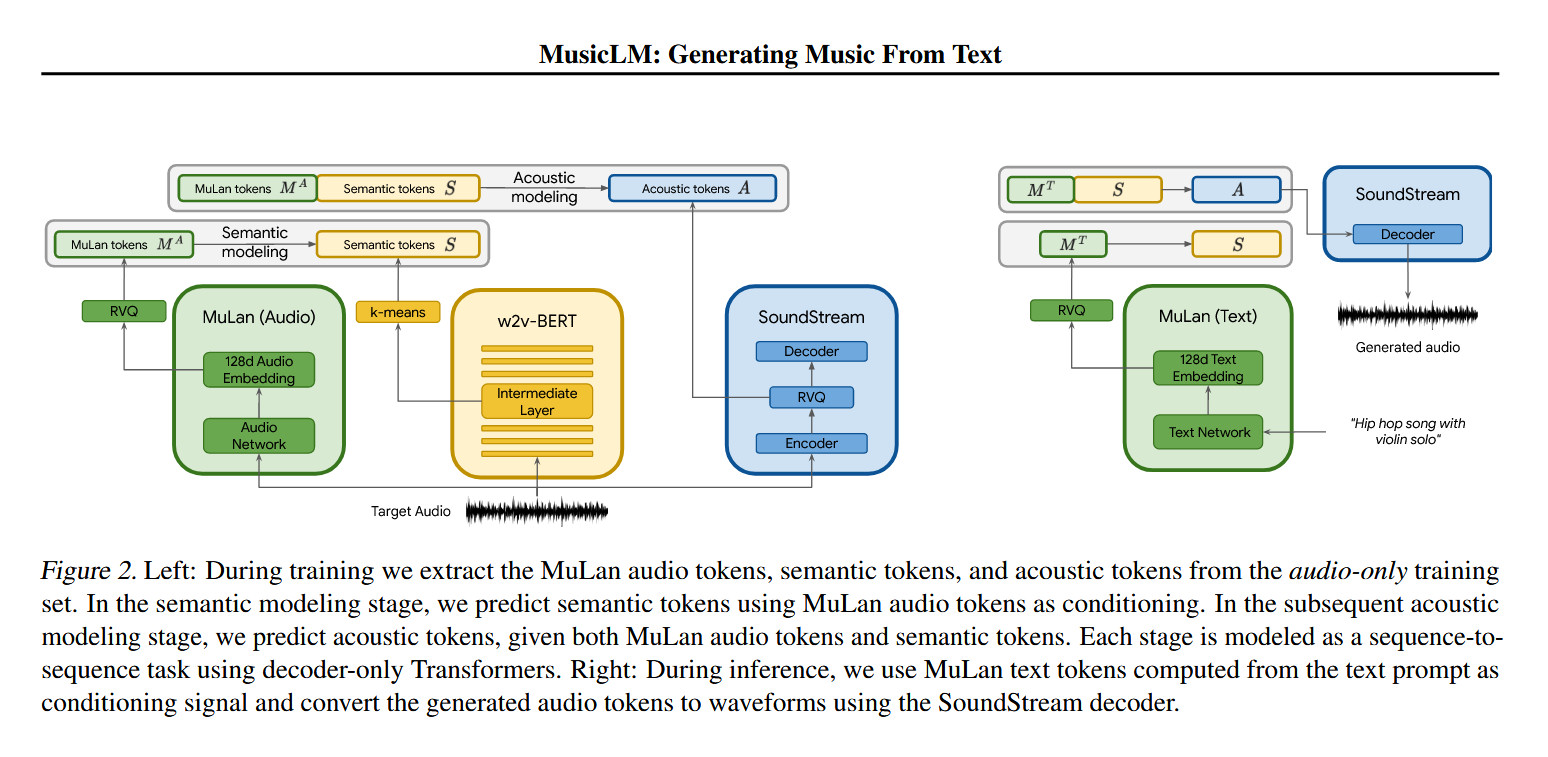
Generally speaking, MusicLM works in two main parts: first, it takes a sequence of audio tokens (pieces of sound) and maps them to semantic tokens (words that represent meaning) in captions for training. The second part receives user captions and/or input audio and generates acoustic tokens (pieces of sound that make up the resulting song output). The system relies on an earlier AI model called AudioLM (introduced by Google in September) along with other components such as SoundStream and MuLan.

Google claims that MusicLM outperforms previous AI music generators in audio quality and adherence to text descriptions. On the MusicLM demonstration page, Google provides numerous examples of the AI model in action, creating audio from “rich captions” that describe the feel of the music, and even vocals (which so far are gibberish). Here is an example of a rich caption that they provide:

Slow tempo, bass-and-drums-led reggae song. Sustained electric guitar. High-pitched bongos with ringing tones. Vocals are relaxed with a laid-back feel, very expressive.

Google also shows off MusicLM’s “long generation” (creating five-minute music clips from a simple prompt), “story mode” (which takes a sequence of text prompts and turns it into a morphing series of musical tunes), “text and melody conditioning” (which takes a human humming or whistling audio input and changes it to match the style laid out in a prompt), and generating music that matches the mood of image captions.

A block diagram of the MusicLM AI music-generation model taken from its academic paper.
Enlarge / A block diagram of the MusicLM AI music-generation model taken from its academic paper.
Google Research

Further down the example page, Google dives into MusicLM’s ability to re-create particular instruments (e.g., flute, cello, guitar), different musical genres, various musician experience levels, places (escaping prison, gym), time periods (a club in the 1950s), and more.

AI-generated music isn’t a new idea by any stretch, but AI music-generation methods of previous decades often created musical notation that was later played by hand or through a synthesizer, whereas MusicLM generates the raw audio frequencies of the music. Also, in December, we covered Riffusion, a hobby AI project that can similarly create music from text descriptions, but not at high fidelity. Google references Riffusion in its MusicLM academic paper, saying that MusicLM surpasses it in quality.

In the MusicLM paper, its creators outline potential impacts of MusicLM, including “potential misappropriation of creative content” (i.e., copyright issues), potential biases for cultures underrepresented in the training data, and potential cultural appropriation issues. As a result, Google emphasizes the need for more work on tackling these risks and is holding back the code: “We have no plans to release models at this point.”

Google’s researchers are already looking ahead toward future improvements: “Future work may focus on lyrics generation, along with improvement of text conditioning and vocal quality. Another aspect is the modeling of high-level song structure like introduction, verse, and chorus. Modeling the music at a higher sample rate is an additional goal.”

It’s probably not too much of a stretch to suggest that AI researchers will continue improving music-generation technology until anyone can create studio-quality music in any style just by describing it—although no one can yet predict exactly when that goal will be attained or how exactly it will impact the music industry. Stay tuned for further developments.

https://arstechnica.com/?p=1913289


BuzzFeed preps AI-written content while CNET fumbles

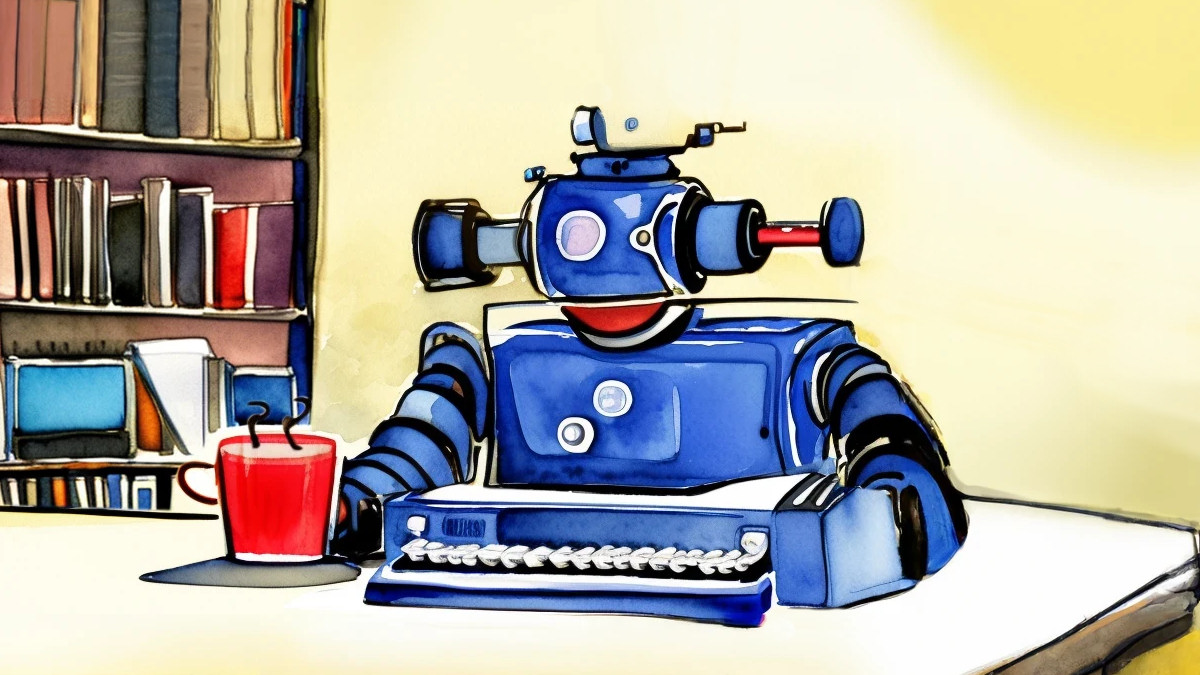
An AI-generated image of a robot typewriter-journalist hard at work.
Enlarge / An AI-generated image of a robot typewriter-journalist hard at work.
Ars Technica

On Thursday, an internal memo obtained by The Wall Street Journal revealed that BuzzFeed is planning to use ChatGPT-style text synthesis technology from OpenAI to create individualized quizzes and potentially other content in the future. After the news hit, BuzzFeed’s stock rose 200 percent. On Friday, BuzzFeed formally announced the move in a post on its site.

“In 2023, you’ll see AI inspired content move from an R&D stage to part of our core business, enhancing the quiz experience, informing our brainstorming, and personalizing our content for our audience,” BuzzFeed CEO Jonah Peretti wrote in a memo to employees, according to Reuters. A similar statement appeared on the BuzzFeed site.

The move comes as the buzz around OpenAI’s ChatGPT language model reaches a fever pitch in the tech sector, inspiring more investment from Microsoft and reactive moves from Google. ChatGPT’s underlying model, GPT-3, uses its statistical “knowledge” of millions of books and articles to generate coherent text in numerous styles, with results that read very close to human writing, depending on the topic. GPT-3 works by attempting to predict the most likely next words in a sequence (called a “prompt”) provided by the user.

In particular, BuzzFeed told Reuters that it will not utilize ChatGPT itself, but instead will craft a custom implementation based on OpenAI’s GPT-3 technology: “We are not using ChatGPT—we are using OpenAI’s publicly available API (application programming interface).”

A handout diagram from BuzzFeed showing how it'll use AI on the site.
Enlarge / A handout diagram from BuzzFeed showing how it’ll use AI on the site.

In light of recent news that CNET has been publishing AI-written articles (causing an ongoing controversy covered well by Futurism and The Verge), some worry that the move from BuzzFeed may signal a new trend in media toward relying on content produced by machines instead of human writers, especially in the wake of a 12 percent cut in BuzzFeed’s staff late last year. The Wall Street Journal reports that “BuzzFeed remains focused on human-generated journalism in its newsroom,” according to a BuzzFeed spokesperson.

Just how serious is BuzzFeed about AI? Peretti laid out his vision, which still leaves a role for humans in the future, albeit in an augmented fashion:

The creative process will increasingly become AI-assisted and technology-enabled. If the past 15 years of the internet have been defined by algorithmic feeds that curate and recommend content, the next 15 years will be defined by AI and data helping create, personalize, and animate the content itself. Our industry will expand beyond AI-powered curation (feeds), to AI-powered creation (content). AI opens up a new era of creativity, where creative humans like us play a key role providing the ideas, cultural currency, inspired prompts, IP, and formats that come to life using the newest technologies.

Not everyone is convinced that AI writing is the future, however. Some already think that the “pivot to ChatGPT” move toward AI-generated content could be a fad in the vein of the “pivot to video” movement that caused so much trouble for media companies between 2015 and 2018. Others compare AI hype to the metaverse, blockchain, and NFT crazes in recent years.

Hype aside, it’s possible that the prospect of AI-powered automation reducing the cost of content creation may be too enticing to ever abandon completely, especially if AI tools improve in quality over time. CNET’s recent misadventure in AI using an internally developed AI engine—the most high-profile AI-authored experiment from a major publication that we know of—has so far been a failure, resulting in articles full of errors and plagiarism. But even after considerable blowback, CNET announced it would “continue embracing” AI-authored content. If the clicks keep coming and it fits its business model, CNET sees no reason to change.

Whether AI tools will ever completely replace human journalists or merely boost their productivity (in the vein of an invention like the typewriter) is an open question that we can’t answer at the moment. Only time will tell as the story of generative AI continues to rapidly unfold.

https://arstechnica.com/?p=1912889


Deepfakes for scrawl: With handwriting synthesis, no pen is necessary

An example of computer-synthesized handwriting generated by Calligrapher.ai.
Enlarge / An example of computer-synthesized handwriting generated by Calligrapher.ai.
Ars Technica

Thanks to a free web app called calligrapher.ai, anyone can simulate handwriting with a neural network that runs in a browser via JavaScript. After typing a sentence, the site renders it as handwriting in nine different styles, each of which is adjustable with properties such as speed, legibility, and stroke width. It also allows downloading the resulting faux handwriting sample in an SVG vector file.

The demo is particularly interesting because it doesn’t use a font. Typefaces that look like handwriting have been around for over 80 years, but each letter comes out as a duplicate no matter how many times you use it.

During the past decade, computer scientists have relaxed those restrictions by discovering new ways to simulate the dynamic variety of human handwriting using neural networks.

Created by machine-learning researcher Sean Vasquez, the Calligrapher.ai website utilizes research from a 2013 paper by DeepMind’s Alex Graves. Vasquez originally created the Calligrapher site years ago, but it recently gained more attention with a rediscovery on Hacker News.

Calligrapher.ai “draws” each letter as if it were written by a human hand, guided by statistical weights. Those weights come from a recurrent neural network (RNN) that has been trained on the IAM On-Line Handwriting Database, which contains samples of handwriting from 221 individuals digitized from a whiteboard over time. As a result, the Calligrapher.ai handwriting synthesis model is heavily tuned toward English-language writing, and people on Hacker News have reported trouble reproducing diacritical marks that are commonly found in other languages.

Since the algorithm producing the handwriting is statistical in nature, its properties, such as “legibility,” can be adjusted dynamically. Vasquez described how the legibility slider works in a comment on Hacker News in 2020: “Outputs are sampled from a probability distribution, and increasing the legibility effectively concentrates probability density around more likely outcomes. So you’re correct that it’s just altering variation. The general technique is referred to as ‘adjusting the temperature of the sampling distribution.'”

With neural networks now tackling text, speech, pictures, video, and now handwriting, it seems like no corner of human creative output is beyond the reach of generative AI.

In 2018, Vasquez provided underlying code that powers the web app demo on GitHub, so it could be adapted to other applications. In the right context, it might be useful for graphic designers who want more flair than a static script font.

https://arstechnica.com/?p=1912642


1923 cartoon predicts 2023’s AI art generators

Excerpt of a 1923 cartoon that predicted a
Enlarge / Excerpt of a 1923 cartoon that predicted a “cartoon dynamo” and “idea dynamo” that could create cartoon art automatically. The full cartoon is reproduced below.

In 1923, an editorial cartoonist named H.T. Webster drew a humorous cartoon for the New York World newspaper depicting a fictional 2023 machine that would generate ideas and draw them as cartoons automatically. It presaged recent advancements in AI image synthesis, one century later, that actually can create artwork automatically.

The vintage cartoon carries the caption “In the year 2023 when all our work is done by electricity.” It depicts a cartoonist standing by his drawing table and making plans for social events while an “idea dynamo” generates ideas and a “cartoon dynamo” renders the artwork.

Interestingly, this separation of labor feels similar to our neural networks of today. In the actual 2023, the “idea dynamo” would likely be a large language model like GPT-3 (albeit imperfectly), and the “cartoon dynamo” is most similar to an image-synthesis model like Stable Diffusion.

A 1923 cartoon by H.T. Webster captioned "In the year 2023 when all our work is done by electricity."
Enlarge / A 1923 cartoon by H.T. Webster captioned “In the year 2023 when all our work is done by electricity.”

In 2014, the blog Paleofuture profiled Webster’s work and this cartoon in particular, noting that at the start of the 1920s, only 35 percent of Americans had electricity at home. Electricity and the devices it powered represented a radical new way to get things done. Yesterday, someone on Reddit noticed the cartoon again, and it went viral on social media.

Interestingly, despite rapid advances in generative AI technology over the past two years, image-synthesis models aren’t that great at line art yet, as a cartoonist named Douglas Bonneville often notes on Twitter.

But improvements in AI models that master hand-drawn cartoons may be just around the corner. And unlike other early-1900s future projections that involved personal butterfly wings and citywide networks of pneumatic tubes, this prediction from Webster seems to hit fairly close to the mark.

https://arstechnica.com/?p=1911109