WEF, il ruolo centrale del 5G nell’era post-Covid. Scarica il report

Il 5G sarà uno strumento fondamentale per la ripresa globale post-Covid e alla crescente diffusione delle tecnologie ad esso connesse, in particolare il Cloud, AI e l’Edge computing. Questa la tesi centrale del report appena pubblicato dal World Economic Forum (WEF). La trasformazione digitale imposta dalla pandemia, con milioni di lavoratori costretti in smart working a domicilio, impone un ripensamento complessivo della nostra quotidianità, imperniato sulla presenza capillare di reti ultrabroadband.

Effetto acceleratore della pandemia

L’effetto acceleratore del Covid 19 è sotto gli occhi di tutti. Secondo il WEF, con milioni di persone confinate in casa, “diversi anni di trasformazione digitale si sono concentrati nel giro di poche settimane” durante la fase acuta del lockdown. Un effetto digitale che si è registrato in tutte le aziende, grandi e piccole, e anche a livello domestico in tutti i paesi, in maniera trasversale.

Il primo risultato concreto è stato che al mondo del lavoro sono stati forniti nuovi strumenti e che, grazie al progresso delle comunicazioni digitali, e con il 5G in arrivo, cresce l’attesa per la promessa di nuovi potenti strumenti negli anni a venire.

Il report del WEF ha individuato alcuni trend specifici legati alla diffusione del 5G per i prossimi anni.

Classic 5G mobile

Un primo cluster di opportunità è stato definito ‘classic 5G mobile’: la possibilità di svincolare completamente il posto di lavoro e i suoi asset dal luogo fisico, compreso il personale, e di abbattere comunque le distanze e le barriere fisiche grazie al 5G. Alcuni esempi sono la diagnostica da remoto tramite strumenti di smart visione AI. Un altro filone è quello dei trasporti connessi e dei veicoli senza conducente e dei droni per il trasporto di oggetti e il monitoraggio. Una serie di nuove opportunità tecnologiche che apre a nuovi modelli di business basati sulla connettività in movimento.

Tracking e monitoring

Poi, ci sono le soluzioni legate al tracciamento e al monitoraggio, dove il 5G tende ad essere stazionario e a registrare processi e movimenti da parte di altri device che si trovano nei paraggi. Chiaramente, l’IoT è coinvolto in questo ambito con applicazioni che possono svariare dalla sicurezza all’uso di asset al mantenimento e alla gestione di processi industriali.

Anche il monitoraggio e la protezione ambientale rientrano in questa categoria, così come la robotica industriale che ha svariate applicazioni in processi complessi e compiti di precisione.

Il report sottolinea inoltre il ruolo di portatore di democrazia digitale del 5G, un enabler tecnologico in grado di diffondere ovunque i suoi benefici.

https://www.key4biz.it/wef-il-ruolo-centrale-del-5g-nellera-post-covid-scarica-il-report/342798/


Auto a Guida Autonoma: Baidu inizia i test senza pilota in una vera città americana

Inizia l’epoca, vera, dell’auto a guida autonoma. Il DMV, la motorizzazione della California, ha concesso l’autorizzazione alla sperimentazione di auto a guida autonoma, senza il pilota a bordo, nelle strade della città di Sunnyvale. nella Contea di Santa Clara.

Si tratta di una prima mondiale perchè sinora le auto a guida autonoma erano state provate su strada, ma con un autista di sicurezza dietro il volante. Anche se c’era fiducia, comunque non si permetteva ai mezzi di andarsene completamente da soli. Ora invece a Sunnyvale le macchine di Baidu non avranno questa sicurezza, saranno per strada completamente da sole. Ovviamente ci saranno dei limiti di sicurezza:

  • le auto non potranno circolare nelle aree con limite di velocità superiore alle 45 miglia, cioè circa i 70 all’ora;
  • le auto potranno circolare solo in condizioni di bel tempo, senza pioggia o scarsa visibilità;
  • dovrà essere garantita un’assicurazione per almeno 5 milioni di dollari;
  • dovrà essere dimostrato che i test dimostrano che le auto sono in grado di circolare in modo autonomo e i dati devono essere controllati dal dipartimento per il traffico.

Inoltre Baidu si è impegnata ad informare le autorità di qualsiasi collisione che avvenga alle auto entro 10 giorni, fornendo quindi informazioni realistiche sull’efficienza della stessa e sulle percentuali di rischio.

Appare significativo che la AI relativa alla guida autonoma viene testata negli USA, ma da usa società cinese. Gli altri test in corso sono quelli fatti sulla pelle dei clienti da Tesla, che ha inserito una guida autonoma dicendo ai clienti che, in realtà, non lo è. Come se io dessi una penna ad uno scrittore e gli dicessi che però non serve per scrivere. Rimane il fatto che  la Cina è molto più avanzata nell’intelligenza artificiale degli USA, e si compiace di mostrarlo proprio oltre oceano.


Telegram
Grazie al nostro canale Telegram potete rimanere aggiornati sulla pubblicazione di nuovi articoli di Scenari Economici.

⇒ Iscrivetevi subito ⇐


https://scenarieconomici.it/auto-a-guida-autonoma-baiudu-inizia-i-test-senza-pilota-in-una-vera-citta-americana/


New York City proposes regulating algorithms used in hiring

Stylized photo of a shirtless man rendered in ones and zeroes.

In 1964, the Civil Rights Act barred the humans who made hiring decisions from discriminating on the basis of sex or race. Now, software often contributes to those hiring decisions, helping managers screen résumés or interpret video interviews.

That worries some tech experts and civil rights groups, who cite evidence that algorithms can replicate or magnify biases shown by people. In 2018, Reuters reported that Amazon scrapped a tool that filtered résumés based on past hiring patterns because it discriminated against women.

Legislation proposed in the New York City Council seeks to update hiring discrimination rules for the age of algorithms. The bill would require companies to disclose to candidates when they have been assessed with the help of software. Companies that sell such tools would have to perform annual audits to check that their people-sorting tech doesn’t discriminate.

The proposal is a part of a recent movement at all levels of government to place legal constraints on algorithms and software that shape life-changing decisions—one that may shift into new gear when Democrats take control of the White House and both houses of Congress.

More than a dozen US cities have banned government use of face recognition, and New York state recently passed a two-year moratorium on the technology’s use in schools. Some federal lawmakers have proposed legislation to regulate face algorithms and automated decision tools used by corporations, including for hiring. In December, 10 senators asked the Equal Employment Opportunity Commission to police bias in AI hiring tools, saying they feared the technology could deepen racial disparities in employment and hurt economic recovery from COVID-19 in marginalized communities. Also last year, a new law took effect in Illinois requiring consent before using video analysis on job candidates; a similar Maryland law restricts use of face analysis technology in hiring.

Lawmakers are more practiced in talking about regulating new algorithms and AI tools than implementing such rules. Months after San Francisco banned face recognition in 2019, it had to amend the ordinance because it inadvertently made city-owned iPhones illegal.

The New York City proposal launched by Democratic council member Laurie Cumbo would require companies using what are termed automated employment-decision tools to help screen candidates or decide terms such as compensation to disclose use of the technology. Vendors of such software would be required to conduct a “bias audit” of their products each year and make the results available to customers.

Strange bedfellows

The proposal faces resistance from some unusual allies, as well as unresolved questions about how it would operate. Eric Ellman, senior vice president for public policy at the Consumer Data Industry Association, which represents credit- and background-checking firms, says the bill could make hiring less fair by placing new burdens on companies that run background checks on behalf of employers. He argues that such checks can help managers overcome a reluctance to hire people from certain demographic groups.

Some civil rights groups and AI experts also oppose the bill—for different reasons. Albert Fox Cahn, founder of the Surveillance Technology Oversight Project, organized a letter from 12 groups including the NAACP and New York University’s AI Now Institute objecting to the proposed law. Cahn wants to regulate hiring tech, but he says the New York proposal could allow software that perpetuates discrimination to get rubber-stamped as having passed a fairness audit.

Cahn wants any law to define the technology covered more broadly, not let vendors decide how to audit their own technology, and allow individuals to sue to enforce the law. “We didn’t see any meaningful form of enforcement against the discrimination we’re concerned about,” he says.

Supporters

Others have concerns but still support the New York proposal. “I hope that the bill will go forward,” says Julia Stoyanovich, director of the Center for Responsible AI at New York University. “I also hope it will be revised.”

Like Cahn, Stoyanovich is concerned that the bill’s auditing requirement is not well defined. She still thinks it’s worth passing, in part because when she organized public meetings on hiring technology at Queens Public Library, many citizens were surprised to learn that automated tools were widely used. “The reason I’m in favor is that it will compel disclosure to people that they were evaluated in part by a machine as well as a human,” Stoyanovich says. “That will help get members of the public into the conversation.”

Two New York–based startups whose hiring tools would be regulated by the new rules say they welcome them. The founders of HiredScore, which tries to highlight promising candidates based on résumés and other data sources, and Pymetrics, which offers online assessments based on cognitive psychology with the help of machine learning, both supported the bill during a virtual hearing of the City Council’s Committee on Technology in November.

Frida Polli, Pymetrics’ CEO and cofounder, markets the company’s technology as providing a fairer signal about candidates than traditional measures like résumés, which she says can disadvantage people from less privileged backgrounds. The company recently had its technology audited for fairness by researchers from Northeastern University. She acknowledges that the bill’s auditing requirement could be tougher but says it’s unclear how to do that in a practical way, and it would be better to get something on the books. “The bill is moderate, but in a powerful way,” she says.

“Like the Wild West out there”

Robert Holden, chair of the City Council’s Committee on Technology, has his own concerns about the cash-strapped city government’s capacity to define how to scrutinize hiring software. He’s also been hearing from envoys from companies whose software would fall under the proposed rules, which have prompted more industry engagement than is usual for City Council business. Some have assured him the industry can be trusted to self-regulate. Holden says what he’s learned so far makes clear that more transparency is needed. “It’s almost like the Wild West out there now,” Holden says. “We really have to provide some transparency.”

Holden says the bill likely faces some negotiations and rewrites, as well as possible opposition from the mayor’s office, before it could be scheduled for a final vote by the council. If passed, it would take effect January 2022.

This story originally appeared on wired.com.

https://arstechnica.com/?p=1733895


SEO takeaways from 2020: A review of the most unusual year for search

30-second summary:

  • Google launched over 4,000 search improvements and new features throughout 2020.
  • Baidu continued to crack down on poor quality sites with its 2020 updates its StrongWind algorithm was introduced to control aggregator content from malicious sites.
  • Bing attempted to build on its approximately 2.8% global search engine market share by adding a Bing app to Xbox.
  • Throughout the year, DuckDuckGo added a number of new features and made updates designed to improve the user experience while protecting privacy.
  • GIPHY now serves more than 7 billion GIFs per day and is seen by more than 500 million daily optimizing GIFs is a great way for SEO to drive awareness and keep people engaged with your website page(s).
  • Throughout 2020 Yandex continued to add more human elements into its search engine.
  • 2020 was a year where search took central stage in digital marketing.
  • Consumer behavior is still set to continue to be volatile in 2021.
  • A list of key SEO trends to watch in 2021 – new channels for visual and image search opportunities, international SEO will rise once again, combining PPC and SEO, utilizing Marketing technology, and more.

Many an SEO will be huddled around the television or computer screen this year for New Year celebrations, muttering, “Don’t let the door hit you,” as we bid 2020 goodbye. Despite the release of several vaccinations worldwide, we still find ourselves firmly in the grip of a global pandemic with no definitive end in sight.

In this post, we’ll take a look back at how top search engines changed the game this past year, and where marketers should be looking as we head into 2021 with continuing uncertainty about the year ahead.

Key search engine updates in 2020

The latest figures from Oberlo show that Google reigns as the dominant search engine both in the US and worldwide with 88.1% and 92.3% market share, respectively. Even so, there’s a lot of traffic left on the table if you aren’t optimizing for all of the top search engines.

Here are some of the most impactful and notable updates across Google, Bing (which also powers Yahoo! Search), DuckDuckGo in 2020.

1. Google

According to Emily Moxley, Google’s Product Management for Search, Google launched over 4,000 search improvements and new features throughout 2020. Among them:

  • Google added the Removals report to Search Console in January, enabling site owners and SEOs to temporarily hide a page from Google Search results. In February, they made it easier to export more data from almost all reports.
  • March saw the launch of the com/covid19 website with country or state-based information, safety and prevention tips, and search trends related to COVID-19. Other pandemic-related features rolled out in 2020 include the Exposure Notifications API, an SOS Alerts system, and a slate of new GMB features to help businesses better communicate special hours, temporary closures, and other COVID-19 information to searchers.
  • In August, Google confirmed it had made a number of improvements designed to be “as invisible as possible” to the Search Console API.
  • In October, the Justice Department sued Google and claimed the search engine is an illegal monopoly. Antitrust accusations are not new to Google, and this case could drag on for years.
  • Google announced in October that BERT language understanding systems first introduced in 2019 are now being used in nearly every English-language query.
  • The improved Crawl Stats Report came out in November with new features including detailed information on host status and URL examples showing where on-site requests occurred.
  • Also in November, Google announced that voice search had become smarter. New language capabilities and the carrying over of context from one voice search to another meant Google could gradually “learn” more about the searcher’s true intent.
  • Google announced late in the year that it is “refocusing the Structured Data Testing Tool and migrating it to a new domain serving the schema.org community by April 2021.” Notably, once this transition is complete the tool will no longer check for Google Search rich result types.

Notably, the timeframe for mobile-first indexing was extended from September 2020 to the end of March 2021.

2. Microsoft Bing

Bing attempted to build on its approximately 2.8% global search engine market share by adding a Bing app to Xbox, adding nearby product search to local results, and introducing image-based product search.

Microsoft’s search engine also evolved quickly to provide COVID-19 information and updates to consumers with a tally of local and global cases appearing in search results for any Coronavirus-related query.

In May, Bing gave us a look under the hood at its AI capabilities and experiences, stating that:

“Over the past few years, Bing and Microsoft Research have been developing and deploying large neural network models such as MT-DNN, Unicoder, and UniLM to maximize the search experience for our customers. The best of those learnings are open-sourced into the Microsoft Turing language models. The large-scale, multilingual Natural Language Representation (NLR) model serves as the foundation for several fine-tuned models, each powering a different part of the search experience.”

Examples of AI at scale in Bing include Yes or No summaries to straightforward questions in search, the expansion of intelligent answers to more languages, and a new NLR-based model for understanding complex or ambiguous queries.

3. DuckDuckGo

DuckDuckGo’s intense focus on privacy makes it more difficult to optimize for, as user data is not tracked. Even so, 0.5% of the global search market share (and 1.7% in the US) still makes it one of the world’s top search engines.

Throughout the year, DuckDuckGo added a number of new features and made updates designed to improve the user experience while protecting privacy. In October, DuckDuckGo launched private walking and driving directions powered by Apple’s MapKit JS framework

In October, we saw the punchy small search engine take a direct shot at Google in regards to its antitrust lawsuit. In an open letter, DuckDuckGo pointedly asked,

“So, Google, given that you’ve often said competition is one click away, and you’re aware a complicated process suppresses competition, why does it take fifteen+ clicks to make DuckDuckGo Search or any other alternative the default on Android devices?”

4. Yandex

Yandex, Russia’s largest search engine announced early in 2020 “Vega” as its new algorithm. This included 1,500 enhancements to Yandex Search. Throughout 2020 Yandex continued to add more human elements into its search engine.

Andrey Styskin, head of Yandex Search, stated, “At Yandex, it’s our goal to help consumers and businesses better navigate the online and offline world.  With this new search update, users across the RuNet are helping us do just that”.

According to research from Mikhail Volovich and Olga Yudina of Ashmanov & Partners and reported by Dan Taylor differences in ranking factors between Yandex and Google include;

  • Lesser effects of links within Yandex compared to Google
  • “On mobile, site speed appears to be more important to Google than Yandex, but in Yandex, the number of Turbo pages has increased greatly (outside of the top 3 results).”
  • The research also predicted mobile search will see an increase in both AMP and Turbo pages.

5. Baidu

The leading search engine in China, controls over 74% of searches, and ever since the 2017 release of the ‘Hurricane’ algorithm continues to focus on content quality.

As it continues to crack down on poor quality sites with its 2020 updates its StrongWind algorithm was introduced to control aggregator content from malicious sites.

Baidu SEO 2020 update, the content has become king in the Baidu algorithm. The Baidu spider focuses on enhancing the user experience. Like Google, Baidu has vigorously diversified, and provides dozens of services from maps to cloud storage – and its search engine backs up the whole ecosystem.

SEO trends to watch in 2021

SEOs take heart! Google launched a new blog series in 2020 designed to showcase the value of SEO to businesses. The first post was an overview of how a Korean company used SEO to double its web traffic. While Google has historically shied away from association with the optimization of sites for its search algorithms, it seems SEO is no longer a dirty phrase. Let’s hope this trend continues.

Here are some other areas to watch in 2021 and beyond:

1. Brands adapt to rapidly shifting consumer behavior

The first pandemic experience of our lifetimes has changed the way people search, shop, communicate, and work. Just how long these changes will hold or how consumer behavior will evolve over this next year is a giant question mark on business and marketing plans the world over.

Here’s what we do know: anxiety, stress, and public health concerns drove massive changes in consumer behavior in 2020. We saw dramatic shifts in search interest and conversions, with very different impacts across verticals. And in the absence of historic data to guide marketers through such an event, insights from search data became our closest approximation of real-time voice of the customer.

While we don’t know what 2021 has in store for us, it’s clear that the best place to track consumer behavior changes as they happen is in your search data. Business leaders will be looking to SEOs to bring them these insights in relatable, understandable ways that can be put to work immediately driving intelligent business decisions.

2. Core Web Vitals gain importance

As Google explained its April 2020 Web Vitals explanation, “Core Web Vitals are the subset of Web Vitals that apply to all web pages, should be measured by all site owners, and will be surfaced across all Google tools. Each of the Core Web Vitals represents a distinct facet of the user experience, is measurable in the field, and reflects the real-world experience of a critical user-centric outcome.”

On its face, Google’s CWV update is a reinforcement of what we already know to be best practices for user experience. If you want to take a deeper dive into the research and methodology driving this update, Defining the Core Web Vitals metrics thresholds by Google software engineer Bryan McQuade is a good read.

Google also promises that the definitions and thresholds of Core Web Vitals will be stable and that marketers will have prior notice of updates, which will have a predictable, annual cadence.

3. Image and visual search

As brands compete for consumers’ attention and as image and visual content optimization continue to gain SERP real estate, new channels are opening up beyond just YouTube. Brands, looking to stand out in 2021 should be utilizing combinations of images and videos to inform and educate customers as they spend more and more time online. Beyond Google niche (non-traditional) vertical optimization opportunities may just be opening up.

Below are two brief examples.

Vimeo

According to Cisco, video will make up 82 percent of all internet traffic in 2021. While YouTube still dominates more and more platforms are opening up, presenting more opportunities to optimize content.

Vimeo, the video-sharing platform originally created by filmmakers is building a large community of creative marketers producing content. Although opportunities to rank are less there are still opportunities for marketers in this niche.

“In the last seven months we’ve welcomed over 30 million new members, seen over 60 million new videos created and uploaded, and powered millions of live events that went digital for the first time — more than the prior 3 years combined,”

Vimeo CEO Anjali Sud.

No doubt COVID-19 has fuelled the growth in demand for more creativity in video production and as IAC (its owner) looks to spin it off as a standalone public company in 2021 time will tell where and if this fits and sits for SEO.

GIPHY

Everyone likes a good image, especially if animated. Facebook (Instagram) owned Giphy is allowing more and more marketers opportunities to make their content engaging. This is especially true with younger generations. A search engine in its own right, optimizing for Giphy presents new opportunities to optimize for intent and rank on their own site.

Now serving more than 7 billion GIFs per day and seen by more than 500 million daily optimizing GIFs on Giphy (and in general) is a great way for SEO to drive awareness and keep people engaged with your website page(s).

For SEOs, standard image optimization best practices can work well on Giphy, but the competition is intense, and optimization nuances exist. For brand marketers (in particular) Giphy and GIFs can be an awareness channel in itself.

4. PPC and SEO converge

In increasingly rich and diverse search results, it is imperative that marketers have a solid grasp on how their paid and organic search strategies work in tandem to achieve the best business results. As the lines between paid and organic continue to blur, it makes less and less sense to have these two channels as distinct departments or teams competing over budget.

Successful search teams will work together more seamlessly in 2021 to monitor both paid and organic results, determining from a more holistic point of view where the brand’s greatest opportunities lie—and which tactic is key to achieving the greatest visibility and conversion from search. Together, paid and organic teams will strategize how to use tools like Dynamic Search Ads and Discovery Campaigns, bidding automation, and AI-driven content optimizations to drive brand awareness and content promotion in both types of results.

5. Brands demand ROI and mastery of martech solutions

2020 provided us “The Great Pause”, literally stopping the world in its tracks. It gave us a chance to slow down, take a breath, and take a critical look at what’s working—and what is not. Even before the pandemic struck, it was clear that stacks cobbled together of point solutions not designed to integrate were problematic, but the full extent of their shortcomings became clear this year.

Consumer behavior changed so rapidly, and completely that real-time insights were elevated from “nice to have” to life or death. Brands that only knew how to rely on the performance of previous months or years found themselves lacking a sense of direction and unable to pivot. Going forward, brands are looking for platform solutions that not only automate but do so intelligently with AI and machine learning. Moreover, they are looking for agile marketers capable of getting the best possible output from these martech solutions.

What does 2021 have in store for the business world? Only time will tell. However, SEOs are among those best-positioned to lead in the face of uncertainty and should expect stakeholders across the organization to look to them this coming year for guidance. This is true both regionally and internally as interest in International SEO rises once again.

Now is the time to ensure you’re set up with the right tools and skills to deliver.

https://www.searchenginewatch.com/2021/01/08/seo-takeaways-from-2020-a-review-of-the-most-unusual-year-for-search/


10 Tech Trends promettenti per il 2021 (seconda parte)

Dieci Tech trends che caratterizzeranno il prossimo anno ma che si sono già affermati nel 2020 secondo stime di Bain & Co.

Le tecnologie per la forza lavoro aumentano l’agilità e la redditività

A livello globale, l’assenteismo costa alle aziende centinaia di miliardi di dollari all’anno. Soprattutto il retail dipende in particolare dalle interazioni faccia a faccia tra clienti e dipendenti in negozio, un aspetto importante che il Covid-19 hanno reso particolarmente impegnativo. Circa l’88% dei dettaglianti globali preferirebbe programmare in surplus o aggiungere personale in eccesso piuttosto che rischiare di essere a corto, con un approccio che porta a costi del lavoro elevati e profitti inferiori al dovuto. Le tecnologie di gestione della forza lavoro, tuttavia, possono aiutare i rivenditori a migliorare sostanzialmente l’agilità della forza lavoro rispondendo rapidamente ai picchi di attività e all’assenteismo dei dipendenti, migliorando sia le prestazioni operative che la redditività. Magari sfruttando particolari algoritmi per rispondere in real time a picchi di domanda che prevedono l’aumento del personale in negozio per tempi ristretti.

Si prevede che il mercato dei big data della sanità raggiungerà un valore vicino a 70 miliardi di dollari nel 2025, quasi sei volte il suo valore del 2016 di 11,5 miliardi. La rapida accelerazione della raccolta di dati sanitari offre al settore una grande opportunità di sfruttare e implementare capacità digitali, come l’AI, per migliorare le cure.

Nelle risorse umane, scienza cognitiva e gamification

Entro il 2025, i millennial rappresenteranno i tre quarti della forza lavoro globale. Visto che le organizzazioni lavorano sempre più con candidati nativi digitali, devono modernizzare i metodi di reclutamento. L’utilizzo della tecnologia per sviluppare un processo di reclutamento innovativo può migliorare le prestazioni dei team delle risorse umane e consentire un’identificazione più rapida dei candidati più promettenti.

Sfruttando le competenze in scienze cognitive e gamification per creare mini-giochi per smartphone, tablet e computer, sarà possibile valutare esperienza, competenza tecnica, capacità intellettuali, competenze trasversali, adattamento culturale e molti altri fattori in un’esperienza del candidato fluida e coinvolgente.

Dalla vendita all’affitto, un nuovo modo green di fare business

Secondo stime di Gartner, entro il 2029, le economie circolari dovrebbero sostituire le economie lineari. Il passaggio da transazioni basate sulla vendita di prodotti a un modello di produzione e consumo che coinvolge la condivisione, il noleggio, il riutilizzo e il riciclaggio di materiali e prodotti esistenti sta guadagnando slancio poiché le preferenze di consumatori e azionisti si spostano verso la sostenibilità. Le organizzazioni sono sotto pressione crescente per ridurre le risorse naturali consumate nella produzione di prodotti e servizi.

La tecnologia al lavoro per zero sprechi alimentari

Secondo stime dell’Organizzazione delle Nazioni Unite per l’alimentazione e l’agricoltura, ogni anno più del 30% del cibo mondiale va perso o sprecato. Usare la tecnologia per ridurre gli sprechi potrebbe diminuire in modo significativo il cibo scartato da rivenditori e aziende, aumentare la sicurezza alimentare e alleviare le sofferenze delle centinaia di milioni di persone che vanno a letto a stomaco vuoto (821 milioni di persone nel 2019).

Un’app mobile sviluppata dalla start-up Phenix aiuta i grandi rivenditori di generi alimentari, le imprese locali, i produttori e i grossisti a vendere il cibo in eccesso ai consumatori a metà prezzo e a donare il resto a enti di beneficenza, risparmiando 120.000 pasti ogni giorno. Tramite l’app, i consumatori possono scoprire i partner commerciali Phenix più vicini, scegliere un’azienda e un tipo di carrello (vegetariano, biologico, halal, ecc.), Pagare in modo sicuro e ricevere avvisi con l’orario di ritiro. Collaborando con un leader globale nel settore delle bevande, l’azienda ha contribuito a salvare 2,3 milioni di bevande dal cestino della spazzatura durante il Covid-19.

Leggi anche:

10 Tech Trends promettenti per il 2021 (prima parte)

10 Tech Trends promettenti per il 2021 (seconda parte)


10 Tech Trends promettenti per il 2021 (prima parte)

Dall’edge AI al 5G passando per l’intelligenza artificiale, alla prossima generazione di strumenti per gestire le risorse umane e la sostenibilità ambientale. Questi sono i principali trend tecnologici per il 2021, già saliti alla ribalta quest’anno

La digital transformation sta aprendo nuove opportunità in diversi ambiti dal manufacturing ai servizi finanziari, all’healthcare al retail, ai prodotti di consumo ai media alla tecnologia.

La crisi del Covid-19 ha accelerato questo processo di trasformazione all’interno delle aziende, che devono organizzarsi in tempi rapidi per affrontare la nuova fase del post pandemia. Bain & Company ha individuato 10 tech trend per il nuovo anno.

Edge AI

Considerata la prossima ondata di intelligenza artificiale, “Edge AI” o “AI on the edge” è un’infrastruttura di rete che consente agli algoritmi di intelligenza artificiale di funzionare sul bordo di una rete, ovvero più vicini o addirittura direttamente nei dispositivi che raccolgono i dati.

L’aumento del traffico dati dovuto all’incremento dello smart working durante la pandemia ha già accelerato lo spostamento verso l’edge computing, che fra i principali vantaggi può vantare il risparmio di banda.

Incorporando l’IA a livello locale, i produttori possono ridurre i problemi di latenza e accelerare la generazione di insight riducendo al contempo l’utilizzo e i costi dei servizi cloud. Anche il costo della connettività diminuisce, poiché l’elaborazione di parte dei dati in locale riduce la larghezza di banda e l’utilizzo dei dati cellulari. E poiché l’intelligence viene gestita localmente, gli impianti situati in aree remote con infrastrutture di comunicazione scadenti sono meno soggetti a perdite di connettività che possono ostacolare il processo decisionale mission-critical e sensibile al tempo.

La fabbrica 5G per rivoluzionare la produzione

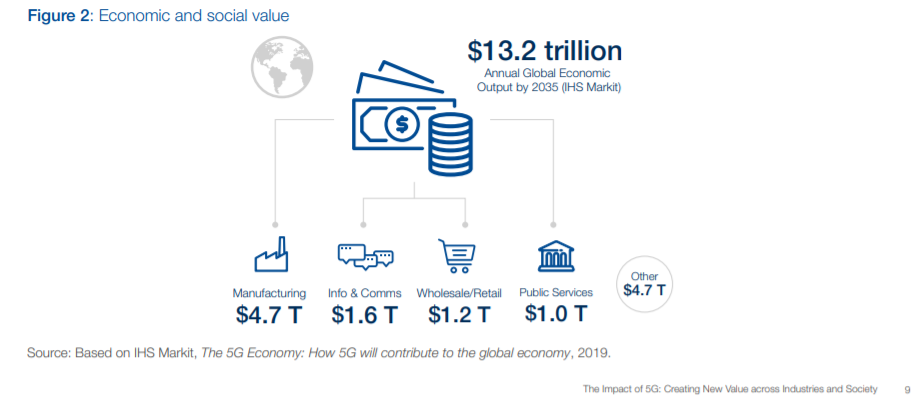
Il World Economic Forum, citando la ricerca IHS Markit, prevede che la rete mobile di quinta generazione, 5G, raggiungerà una produzione economica globale di 13,2 trilioni di dollari e genererà 22,3 milioni di posti di lavoro entro il 2035. Sbloccando un nuovo spettro di possibilità tecnologiche, lo standard wireless globale dovrebbe accelerare notevolmente il passaggio all’Industria 4.0, l’Internet delle cose industriale.

Fino a 100 volte più veloce del 4G, il 5G offre una latenza drasticamente ridotta che consente di condividere i dati in modo estremamente rapido, cancellare i ritardi di elaborazione e garantire che i sistemi di fabbrica possano reagire in tempo reale. L’affidabilità della connettività 5G garantisce una connessione di rete stabile e costante ovunque e in qualsiasi momento negli stabilimenti, assicurando l’esecuzione continua e senza ostacoli delle missioni business-critical. Il 5G potrebbe persino inaugurare un’era di massiccia comunicazione di tipo macchina (comunicazione tra macchine).

I dati dello smartphone per l’assicurazione auto

Si prevede che il mercato delle assicurazioni basate sull’utilizzo (UBI) raggiungerà i 126 miliardi di dollari entro il 2027. Sviluppi nella telematica, definiti da Gartner come “l’uso di dispositivi wireless e tecnologie ‘black box’ per trasmettere dati in tempo reale a un’organizzazione”, hanno alimentato un esempio di UBI: i programmi assicurativi automobilistici adattati al comportamento di guida.

Con 3,8 miliardi di utenti di smartphone previsti entro il 2021, la telematica mobile fa un ulteriore passo in avanti, consentendo agli assicuratori di utilizzare sensori e tecnologie di tracciamento incorporate negli smartphone per raccogliere dati in tempo reale e comprendere meglio le abitudini di guida dei propri clienti. In definitiva, ciò darà agli assicuratori l’opportunità di offrire programmi assicurativi basati sul comportamento più competitivi e innovativi, promuovendo al contempo la sicurezza del conducente.

AI automatizzato nel settore finanziario

Secondo stime dell’Economist Intelligence Unit, banche e assicurazioni prevedono un aumento dell’86% degli investimenti in AI entro il 2025. Ma perché le aziende possano sfruttare appieno il potenziale dell’AI, è necessario che anche i dipendenti con una formazione informatica scarsa possano utilizzarla per aumentare le proprie prestazioni operative. Per questo, le piattaforme di intelligenza artificiale intuitive che consentono ai dipendenti di creare rapidamente modelli, comprendere facilmente e fidarsi dei loro risultati e prendere decisioni con sicurezza saranno fondamentali nell’implementazione dell’AI su scala più ampia.

Cybersecurity, i diritti di autenticazione vanno garantiti

Secondo stime dell’Interpol, la crisi del Covid-19 ha creato un’opportunità senza precedenti per i criminali informatici di aumentare i loro attacchi. Eppure la maggior parte delle aziende sovrastima le sue prestazioni di sicurezza informatica, con solo il 24% di esse che soddisfa effettivamente il livello, secondo uno studio Bain del 2020. Identificare i punti deboli comuni della sicurezza IT e sviluppare la maturità della sicurezza informatica è fondamentale per costruire organizzazioni digitali veramente resilienti.

Un approccio adottato dagli hacker consiste nel compromettere l’infrastruttura di Active Directory (AD) di un’azienda, che controlla i diritti di autenticazione degli utenti e l’accesso alla rete aziendale. Utilizzando questo approccio, un criminale informatico potrebbe assumere il controllo del telefono di un CEO, usurpare la sua identità e accedere a informazioni interne riservate.

Leggi anche:
10 Tech Trends per il 2021 (seconda parte)

10 Tech Trends promettenti per il 2021 (prima parte)


How NLP and AI are revolutionizing SEO-friendly content [Five tools to help you]

30-second summary:

  • Natural language processing (NLP) is one factor you’ll need to account for as you do SEO on your website.
  • If your content is optimized for NLP, you can expect it to rise to the top of the search rankings and stay there for some time.
  • As AI and NLP keep evolving, we may also eventually see machines doing a lot of other SEO-related work, like inserting H1 and image alt tags into HTML code, building backlinks via guest posts, and doing email outreach to other AI-powered content editors.
  • While it seems far-fetched right now, it’s exciting to see how SEO, NLP and AI will evolve together.
  • Writer.com’s Co-founder and CEO, May Habib discusses in-depth about SEO content and shares top tools to help you through the content creation process.

Modern websites are at the mercy of algorithms, which dictate the content they show in the search results for specific keywords. These algorithms are getting smarter by the day, thanks to a technology called machine learning, also known as artificial intelligence (AI).

If you want your site to rank in search results, you need to know how these algorithms work. They change frequently, so if you continually re-work your SEO to account for these changes, you’ll be in a good position to dominate the rankings. 

Natural language processing (NLP) is one factor you’ll need to account for as you do SEO on your website. If your content is optimized for NLP, you can expect it to rise to the top of the search rankings and stay there for some time.

The evolving role of NLP and AI in content creation & SEO

Before we trace how NLP and AI have increased in influence over content creation and SEO processes, we need to understand what NLP is and how it works. NLP has three main tasks: recognizing text, understanding text, and generating text.

  • Recognition: Computers think only in terms of numbers, not text. This means that any NLP solution needs to convert text into numbers so computers can understand them.
  • Understanding: Once the text has been converted into numbers, algorithms can then perform statistical analysis to discover the words or topics that appear together most frequently. 
  • Generation: The NLP machine can use its findings to ask questions or suggest topics around which a writer can create content. Some of the more advanced machines are already starting to put together content briefs. 

With the help of NLP and artificial intelligence (AI), writers should soon be able to generate content in less time as they will only need to put together keywords and central ideas, then let the machine take care of the rest. However, while an AI is a lot smarter than the proverbial thousand monkeys banging away on a thousand typewriters, it will take some time before we’ll see AI- and NLP-generated content that’s actually readable.

As AI and NLP keep evolving, we may also eventually see machines doing a lot of other SEO-related work, like inserting H1 and image alt tags into HTML code, building backlinks via guest posts, and doing email outreach to other AI-powered content editors. While it seems far-fetched right now, it’s exciting to see how SEO, NLP, and AI will evolve together.

Major impact from Google BERT update

In late 2019, Google announced the launch of its Bidirectional Encoder Representations from Transformers (BERT) algorithm.  BERT helps computers understand human language using a method that mimics human language processing. 

According to Google, the BERT algorithm understands contexts and nuances of words in search strings and matches those searches with results closer to the user’s intent. Google uses BERT to generate the featured snippets for practically all relevant searches. 

One example Google gave was the search query “2019 brazil traveler to usa need a visa”. The old algorithm would return search results for U.S. citizens who are planning to go to Brazil. BERT, on the other hand, churns out results for Brazilian citizens who are going to the U.S. The key difference between the two algorithms is that BERT recognizes the nuance that the word “to” adds to the search term, which the old algorithm failed to capture. 

How NLP and AI Are Revolutionizing SEO-Friendly Content [5 Tools That Can Help You] - Google search query example

Source: Google

Instead of looking at individual keywords, BERT looks at the search string as a whole, which gives it a better sense of user intent than ever before. Users are becoming more specific with the questions they ask and are asking more new questions, and BERT breaks down these questions and generates search results that are more relevant to users.

This is great news for search engine users, but what does it mean for SEO practitioners? While it doesn’t exactly throw long-standing SEO principles out the window, you might have to adjust to accommodate the new algorithm’s intricacies and create more content containing long-tail (longer and more specific) keywords. Let’s move on to the next section to learn more about creating BERT-optimized content.

Developing SEO-friendly content for improved Google

When we perform SEO on our content, we need to consider Google’s intentions in introducing BERT and giving NLP a larger role in determining search rankings. Google uses previous search results for the same keywords to improve its results, but according to the company, 15% of all search queries are used for the first time. The implication here is that Google needs to decipher these new questions by reconstructing them in a way it understands. 

With this in mind, your SEO should factor in the criteria below: 

Core understanding of search intent

While keywords still play an important role in Google searches, BERT also pays close attention to user intent, which just means a user’s desired end goal for performing a search. We may classify user intent into four categories:

  • Navigational: The user goes to Google to get to a specific website. Instead of using the address bar, they run a Google search then click on the website link that appears in the search results. It’s possible that these users know where they want to go but have forgotten the exact URL for the page.
  • Informational: The user has a specific question or just wants to know more about a topic. The intention here is to become more knowledgeable or to get the correct answer for their question. 
  • Commercial: The user might not know what they want at the moment, so they’re just looking around for options. They may or may not make a purchase right away.
  • Transactional: The user is ready and willing to make a purchase and is using Google to find the exact product they want.

Unlike old search algorithms, the new Google algorithm captures user intent better because it considers the whole context of the search terms, which may include prepositions such as “of”, “in”, “for”, and “to”, or interrogative words such as “when”, “where”, “what”, “why”, and “how”. Your SEO strategy should produce content that:

  • Answers a user’s question or addresses a need right away
  • Provides value to the reader
  • Is comprehensive and focused 

You might need to conduct more research about ranking sites for your keyword and check out what kind of content gets into the top results. It’s also a good idea to look at the related searches that Google suggests at the bottom of the results page. These will give you a better idea of user intent and help you draw an SEO strategy that addresses these needs.

Term frequency-inverse document frequency

You might not have heard of the term “Term Frequency-Inverse Document Frequency” (TF-IDF) before, but you’ll be hearing more about it now that Google is starting to use it to determine relevant search results. TF-IDF rises according to the frequency of a search term in a document but decreases by the number of documents that also have it. This means that very common words, such as articles and interrogative words, rank very low. 

TF-IDF is calculated by multiplying the following metrics:

  • Term frequency: This may either be a raw count of instances of a keyword, the raw count adjusted for document length, or the raw frequency of the most common word. 
  • Inverse document frequency: This may be calculated by taking the total number of documents, dividing it by the number of documents that have the keyword, then getting its algorithm. If the word is very common across different documents, the TF-IDF gets closer to 0. Otherwise, it moves closer to 1. 

When we multiply the metrics above, we get the TF-IDF score of a keyword in a document. The higher the TF-IDF score, the more relevant the keyword is for that specific page. As an end-user, you may use TF-IDF to extract the most relevant keywords for a piece of content. 

Google also uses TF-IDF scores in its NLP engine. Since the metric gauges the relevance of a keyword to the rest of the document, it’s more reliable than simple word counts and helps the search engine avoid showing irrelevant or spammy results.

Sentiment importance

Consumer opinions about brands are everywhere on the internet. If you can find a way to aggregate and analyze these sentiments for your brand, you’ll have some powerful data about overall feelings about your business at your fingertips. 

This process is called sentiment analysis, and it uses AI to help you understand the overall emotional tone of the things your customers say about you. It involves three key activities:

  • Knowing where your customers express their opinions about your brand, which might include social media, review sites such as Yelp or the Better Business Bureau, forums, feedback left on your site, and reviews on ecommerce sites such as Amazon.
  • Utilizing AI and NLP to pull data from these sites in massive quantities, instead of gathering a random sample consisting of just a few comments from each platform. This gives you a clearer overall picture of customer sentiment.
  • Analyzing data and assigning positive or negative values to customer sentiments, based on tone and choice of words.

Crafting an SEO strategy that places importance on customer sentiment addresses common complaints and pain points. We’ve found that dealing with issues head-on, instead of skirting them or denying them, increases a brand’s credibility and improves its image among consumers.

Salience and category

If you want to better understand how natural language processing works, you may start by getting familiar with the concept of salience. 

In a nutshell, salience is concerned with measuring how much of a piece of content is concerned with a specific topic or entity. Entities are things, people, places, or concepts, which may be represented by nouns or names. Google measures salience as it tries to draw relationships between the different entities present in an article. Think of it as Google asking what the page is all about and whether it is a good source of information about a specific search term.

Let’s use a real-life example. Let’s imagine you do a Google search to learn more about how to create great Instagram content during the holidays. You click on an article that claims to be a guide to doing just that but soon discover that the article contains one short paragraph about this topic and ten paragraphs about new Instagram features. 

While the article itself mentions both Instagram and the holidays, it isn’t very relevant to the intent of the search, which is to learn how to document the holidays on Instagram. These are the types of search results Google wanted to avoid when it was rolling out BERT. Instead of trying to game the system to get your content to the top of the search results, you need to consider salience as you produce your online content. 

Five tools that can help you develop SEO-friendly content

Given all the changes that Google has made to its search algorithm, how will you ensure that your content remains SEO-friendly? We’ve gathered six of the most useful tools that will help you create content that ranks high and satisfies user intent.

1. Frase

Frase (frase.io) claims to help SEO specialists create content that is aligned with user intent easily. It streamlines the SEO and content creation processes by offering a comprehensive solution that combines keyword research, content research, content briefs, content creation, and optimization. 

Fraser - Tools to create SEO-friendly content

Frase Content, its content creation platform, suggests useful topics, statistics, and news based on the keywords you enter. If you’re working with a team, the Content Briefs feature tells your writers precisely what you need them to produce, reducing the need for revisions and freeing up their time for more projects. 

2. Writer

Writer (writer.com) realizes that we all write for different reasons, and when you sign up, it asks you a few questions about what you intend to use it for. For example, you might be interested in improving your own work, creating a style guide, promoting inclusive language, or unifying your brand voice. 

How NLP and AI Are Revolutionizing SEO-Friendly Content [5 Tools That Can Help You] - Writer

Writer’s text editor has a built-in grammar checker and gives you useful real-time suggestions focusing on tone, style, and inclusiveness. Writer also offers a reporting tool that lets you track your writers’ progress for a specific period, such as spelling, inclusivity, and writing style.

3. SurferSEO

Surfer (surferseo.com) makes heavy use of data to help you create content that ranks. It analyzes over 500 ranking factors such as text length, responsive web design, keyword density, and referring domains and points out common factors from top pages to give you a better idea of what works for a specific keyword. 

Surfer - Tools to create SEO-friendly content

You can see Surfer’s analysis at work when you use its web-based text editor. You will see a dashboard that tracks what the app calls the “content score”. It also gives you useful keyword suggestions.

4. Alli AI

Alli AI (alliAI.com) offers you a quick, painless way to perform SEO on existing content. All you need to do is add a single code snippet to your site, review Alli’s code and recommendations, then approve the changes. Once you approve the changes, Alli implements them in minutes.

How NLP and AI Are Revolutionizing SEO-Friendly Content [5 Tools That Can Help You] - Alli AI

Alli does this by finding the easiest links to build. If you prefer to do things manually, the tool also shows you link building and outreach opportunities. If you’re struggling to keep up with all Google’s algorithm changes, Alli claims it can automatically adjust your site’s SEO strategy.

5. Can I Rank?

Can I Rank (canirank.com) compares your site content to other sites in its niche and gives you useful suggestions for growing your site and improving your search rankings. Its user interface is easy to understand and the suggestions are presented as tasks, including the estimated amount of time you will need to spend on them. 

How NLP and AI Are Revolutionizing SEO-Friendly Content [5 Tools That Can Help You] - Can I Rank?

What we like about Can I Rank? is that everything is in plain English, from the menu to the suggestions it gives you. This makes it friendly to those who aren’t technical experts. It also presents data in graph form, which makes it easier to justify SEO-related decisions.

Bottom line

Google changes its search algorithms quite a bit, and getting your page to rank is a constant challenge. Because its latest update, BERT, is heavily influenced by AI and NLP, it makes sense to use SEO tools based on the same technologies.

These tools – such as Frase, Writer, SurferSEO, AlliAI, and Can I Rank? – help you create content that ranks. Some of them check for grammar and SEO usability in real-time, while others crawl through your site and your competitors’ sites and come up with content suggestions. Trying out these tools is the only way for you to know which one(s) work best for you. Stick with it, and you’ll stay ahead of the game and create content that performs well for years to come!

May Habib is Co-founder and CEO at Writer.com.

https://www.searchenginewatch.com/2020/12/29/how-nlp-and-ai-are-revolutionizing-seo-friendly-content-five-tools-to-help-you/




Google develops an AI that can learn both chess and Pac-Man

The first major conquest of artificial intelligence was chess. The game has a dizzying number of possible combinations, but it was relatively tractable because it was structured by a set of clear rules. An algorithm could always have perfect knowledge of the state of the game and know every possible move that both it and its opponent could make. The state of the game could be evaluated just by looking at the board.

But many other games aren’t that simple. If you take something like Pac-Man, then figuring out the ideal move would involve considering the shape of the maze, the location of the ghosts, the location of any additional areas to clear, the availability of power-ups, etc., and the best plan can end up in disaster if Blinky or Clyde makes an unexpected move. We’ve developed AIs that can tackle these games, too, but they have had to take a very different approach to the ones that conquered chess and Go.

At least until now. Today, however, Google’s DeepMind division published a paper describing the structure of an AI that can tackle both chess and Atari classics.

Reinforcing trees

The algorithms that have worked on games like chess and Go do their planning using a tree-based approach, in which they simply look ahead to all the branches that stem from different actions in the present. This approach is computationally expensive, and the algorithms rely on knowing the rules of the game, which allows them to project the current game status forward into possible future game states.

Other games have required algorithms that don’t really care about the state of the game. Instead, the algorithms simply evaluate what they “see”—typically, something like the position of pixels on a screen for an arcade game—and choose an action based on that. There’s no internal model of the state of the game, and the training process largely involves figuring out what response is appropriate given that information. There have been some attempts to model a game state based on inputs like the pixel information, but they’ve not done as well as the successful algorithms that just respond to what’s on-screen.

The new system, which DeepMind is calling MuZero, is based in part on DeepMind’s work with the AlphaZero AI, which taught itself to master rule-based games like chess and Go. But MuZero also adds a new twist that makes it substantially more flexible.

That twist is called “model-based reinforcement learning.” In a system that uses this approach, the software uses what it can see of a game to build an internal model of the game state. Critically, that state isn’t prestructured based on any understanding of the game—the AI is able to have a lot of flexibility regarding what information is or is not included in it. The reinforcement learning part of things refers to the training process, which allows the AI to learn how to recognize when the model it’s using is both accurate and contains the information it needs to make decisions.

Predictions

The model it creates is used to make a number of predictions. These include the best possible move given the current state and the state of the game as a result of the move. Critically, the prediction it makes is based on its internal model of game states—not the actual visual representation of the game, such as the location of chess pieces. The prediction itself is made based on past experience, which is also subject to training.

Finally, the value of the move is evaluated using the algorithms predictions of any immediate rewards gained from that move (the point value of a piece taken in chess, for example) and the final state of the game, such as the win or lose outcome of chess. These can involve the same searches down trees of potential game states done by earlier chess algorithms, but in this case, the trees consist of the AI’s own internal game models.

If that’s confusing, you can also think of it this way: MuZero runs three evaluations in parallel. One (the policy process) chooses the next move given the current model of the game state. A second predicts the new state that results, and any immediate rewards from the difference. And a third considers past experience to inform the policy decision. Each of these is the product of training, which focuses on minimizing the errors between these predictions and what actually happens in-game.

Top that!

Obviously, the folks at DeepMind would not have a paper in Nature if this didn’t work. MuZero took just under a million games against its predecessor AlphaZero in order to reach a similar level of performance in chess or shogi. For Go, it surpassed AlphaZero after only a half-million games. In all three of those cases, MuZero can be considered far superior to any human player.

But MuZero also excelled at a panel of Atari games, something that had previously required a completely different AI approach. Compared to the previous best algorithm, which doesn’t use an internal model at all, MuZero had a higher mean and median score in 42 out of the 57 games tested. So, while there are still some circumstances where it lags behind, it’s now made model-based AI’s competitive in these games, while maintaining its ability to handle rule-based games like chess and Go.

Overall, this is an impressive achievement and an indication of how AIs are growing in sophistication. A few years back, training AIs at just one task, like recognizing a cat in photos, was an accomplishment. But now, we’re able to train multiple aspects of an AI at the same time—here, the algorithm that created the model, the one that chose the move, and the one that predicted future rewards were all trained simultaneously.

Partly, that’s the product of the availability of greater processing power, that makes playing millions of games of chess possible. But partly it’s a recognition that this is what we need to do if an AI is ever going to be flexible enough to master multiple, distantly related tasks.

Nature, 2020. DOI: 10.1038/s41586-020-03051-4  (About DOIs).

Listing image by Richard Heaven / Flickr

https://arstechnica.com/?p=1731895


SEO Trends 2021: What every marketer should know

30-second summary:

  • SEO is a major supportive strategy to digital marketing for businesses.
  • Impact of AI and machine learning (ML) is undeniable for the future of SEO.
  • User Experience is taking prominence for a majority of search engines out there.
  • Local SEO is important for businesses to get hits from local audiences.
  • The Expertise, Authority, and Trustworthiness aspect is defined by Google as a ranking factor.
  • Structured Data can help you deliver rich results for users on SERPs.
  • There are more data-backed trends to discover, read on to find out what those are!

Digital marketing has emerged as the most powerful form of marketing in the current era. With more than 4.66 billion internet users as per the 2020 report by Statista.com, there is no doubt an immense potential for businesses to capitalize through online marketing. SEO thus becomes a means to cash-in on this opportunity as the majority of the world’s internet traffic is generated through Search engines. More importantly, Google is the present world leader in search engines, followed by Bing, Yahoo, and Baidu. In light of this information, let’s take a quick look at the SEO trends 2021 that you must know.

According to a recent report by Safari Digital, the number one results on Google’s SERP (search engine result page) enjoy a CTR (click-through-rate) of 34.36%. Furthermore, 61% of marketers consider SEO to be the key to online success.

Moreover, 82% of people who implemented SEO-based strategies found it to be effective, while businesses allocate on average 41% of their marketing strategy budget to invest in SEO.

Top 11 SEO Trends 2021

1. AI to show greater impact

BERT (Bidirectional Encoder Representations Transformers) has been around for a couple of years now, and it seems only recently that we see this technology and the potency it has for the future. Developed and published in 2018 by Google, it is a neural network-based technique for NLP (natural language processing) pre-training. In simpler terms, it can help Google to decipher the context of words in a search query.

Furthermore, 37% of businesses and organizations are already employing AI as per Data Prot’s recent report. With the AI industry projected to earn around $118 billion by 2025, there is no doubt that the technology will leave a lasting impact on SEO.

Through AI powering your business, you would not only be able to create more powerful content but also augment your keyword research, maximize link building opportunities, and optimize all digital platforms.

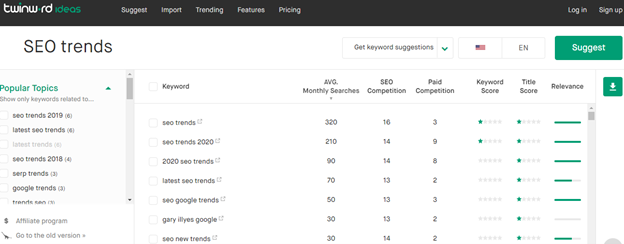
There are tremendous tools like Keyword Tool and Twin word which use AI to speed up your keyword research.

SEO trends 2021 - AI

Screenshot Credits

Along with that, Wordsmith, Articoolo, and WordAI are amongst the best tools that help you create content using artificial intelligence.

2. Build and improve on UX

User experience is the highlight of any purchased product or hired service. Furthermore, according to a recent study by Small Biz Genius, 88% of online shoppers don’t return after having a bad user experience. In fact, 70% of online businesses fail due to bad user experiences, which is why UX testing is crucial. This also means that providing an attractive and efficient UI (user interface) is also important. Some major qualities to create the best user experience include:

  • Incredibly fast loading times
  • Encouraging users to explore seamlessly
  • Providing easy to navigate interface
  • Adequate use of white space, fonts, and high-quality images
  • Visual aid to guide users and their experiences (a quick video to showcase step by step guide)
  • User-friendly URLs and sitemap
  • Streamline website design so that it helps users find specific functions
  • Terrific user dashboards for registered members & much more

3. Get more from local SEO

When it comes to digital marketing, local SEO has become really important, and local results are some of the most relevant for users who are looking for solutions they can acquire. This has allowed businesses to take advantage of and benefit from local SEO. According to Chat Meter ® “near me” and “tonight/today” searches increased by 900% in the past two years.

In fact, mobile search for “open + now + near me” has grown by 200%. And to top it all off, around 46% of all searches on Google are local.

Here are some tips to start mastering your local SEO:

  • Create a Google My Business Account
  • Optimize for mobile devices and voice search (more on this later)
  • Cash-in on local keywords
  • Take advantage of online business directories
  • Develop content based on local events, news stories, and location-specific places

4. Implement the E.A.T concept

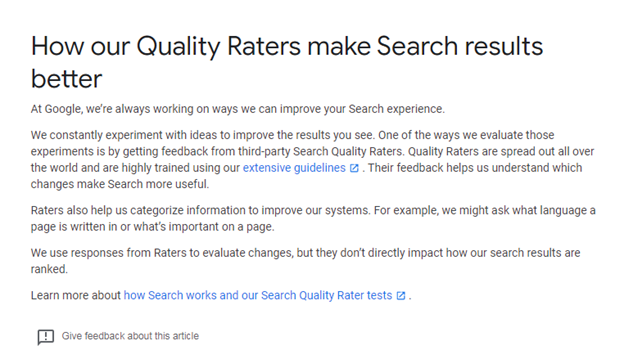
For SEO, EAT stands for Expertise, Authority, and Trustworthiness. These factors are also mentioned in the Search Quality Evaluator Guidelines by Google.

SEO trends 2021 - Use E.A.T

Screenshot Credits

Google mentions that they use third-party Search Quality Raters that are spread out all over the world and highly trained to provide feedback to help them understand which changes make Search more useful. The sub-section 3.2 of the general guidelines under section 3.0 entitled ‘Overall Page Quality Rating’ is where you will find EAT. Here are some tips for you to utilize this concept:

  • Produce documents with a professional approach with regards to your industry, market, trade, or niche
  • Get links from high authority domains
  • Hire experts and deliver content with facts that are relevant and checked for accuracy
  • Keep content up to date
  • Get reviews
  • Flash your credentials
  • Get a Wikipedia page
  • Demonstrate work that showcases your expertise to Google

5. Learn about structured data

Structure data is becoming increasingly vital, and it allows your content to be better understood by search engines. Google offers you a Structured Data Testing Tool that you can use to familiarize yourself with the concept and start applying structured data for your website and landing pages.

This helps to deliver rich results from your website or landing pages to appear on SERPs.

A rich result undoubtedly gets more limelight and hence more attention from users which means that their CTRs also increase tremendously.

Having rich results from your domains being made available on the user’s screen leaves a lasting impact on them and also help you build authority in the eyes of your niche market’s audience.

6. Obligation: Mobile-friendliness

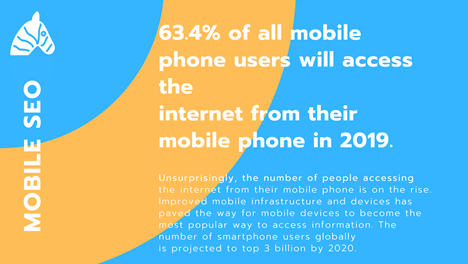
According to mobile marketing statistics published by Web FX, 52.2% of all website traffic is generated from mobile phones, while 61% of consumers are most likely to purchase from mobile-friendly sites.

Mobile friendliness

Source

Furthermore, it has been observed that over 96% of people use Google when they search on mobile.

I think that stats say a lot more for themselves and with over 3.5 billion smartphone users around the world, it is obvious that you need to get your website friendly for mobile devices. Here are some tips to get you started:

  • Prioritize website speed
  • Make website responsive
  • Keep web designs simple
  • Use Google’s Mobile-Friendly Testing tool for further recommendations

7. Play with long-tail keywords

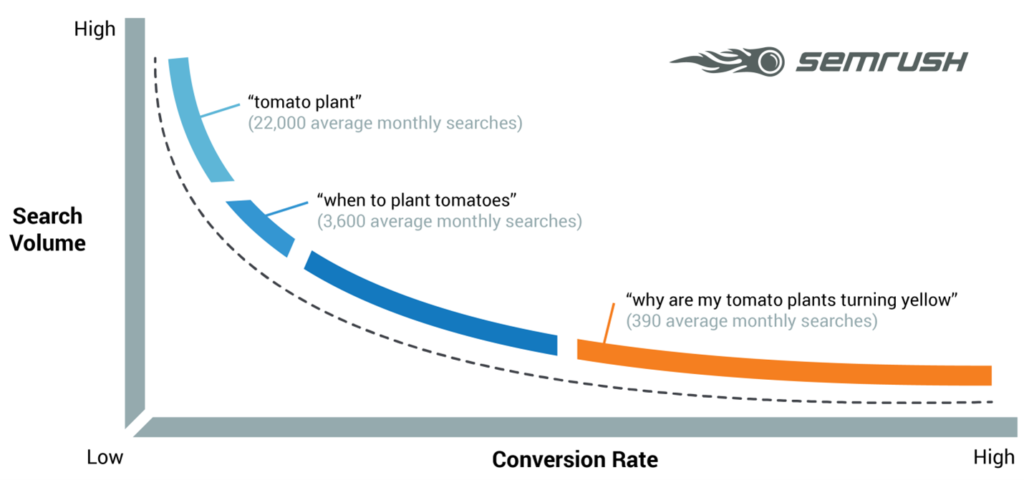
Neil Patel offers you some valid reasons to use long-tail keywords, and he mentions that they account for more than 70% of all web searches.

They can help you outrank the competition, plus they are how people actually make use of search on the internet. Long-tail keywords offer context to your content, and also support better conversion rates with an average long-tail keyword having a 36% conversion rate. Let’s see an example provided by SEMRush.

SEO trends 2021 - Play with long tail keywords

Here are some tips for finding long-tail keywords:

  • Use Google suggestions and variations as a source for long-tail keywords
  • Google related searches are also a good source
  • Go for questions, specially optimize your content for how-to questions
  • You can also mine your analytics and your search query reports for further insights
  • Browse for topics on eHow, Wikipedia, and various Q&A sites

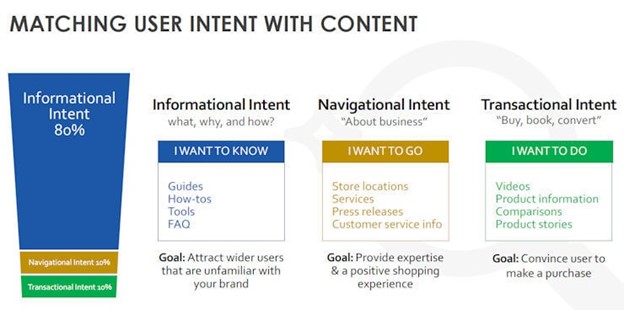
8. Search intent takes prominence

According to a study conducted by Ahrefs, optimizing search content led to a 677% increase in organic traffic for one of their core landing pages in just a period of six months. Search intent is the reason behind a person’s query. It related to the thing that they want to learn, find, or make a purchase.

SEO trends 2021 - Search intent

Source

While Google intends to provide the most relevant result to user queries, we already know that BERT and technologies like NLP are already growing and improving themselves with the passage of time. Students opting for assignment writing service already understand this and are making full use of it to make their own queries online. The future of search is therefore going to be highly influenced by user intent or search intent.

9. Terrific quality of content

Content has always been the king, whether it is in written form, animated, or uses video-audio format. Interactive content, as well as the use of infographics, are incredible traffic magnets. According to a post by OptinMonster, 91% of B2B marketers use content marketing to reach customers, while 86% of B2C marketers consider content marketing their key strategy.

Content marketing is focused on the creation and distribution of consistent, relevant, and valuable content for audiences. Here are some tips for you to follow:

  • Stay original and refrain from plagiarism
  • Deliver solutions to main points
  • Make content reader-friendly and digestible for users
  • Include visual aids to support the context of your content
  • Provide actionable tips to help resolve user queries
  • Keep your headlines strong and your facts accurate from credible sources
  • Never shy away from updating your already published content to keep it fresh

10. Video marketing strategy

Videos nowadays are probably the most popular media consumed by online users today. According to video marketing statistics by WordStream, YouTube has over a billion users, and 82% of Twitter users watch video content on Twitter. With 30 million active daily users, more than 1 billion videos are watched on YouTube daily. This is how big the video market is.

To start with your own video marketing strategy, here are some bits of advice:

  • Create tutorial or demo videos centered on user intent
  • Optimize videos with SEO content
  • Include powerful CTAs
  • Stay informative for the most part and only slightly selling
  • The starting of the video is the most important
  • End on a high note

11. Voice search optimization

The DBS Interactive shares their voice search statistics in which they report that 27% of the online population is using voice search on mobile.

Around 111.8 million people in the US which is over a third of the nation’s total population used voice assistance monthly and furthermore over more than half of all smartphone users are already engaged using voice search technology.

To jump on the bandwagon would be the right decision, and here is how you can get started too:

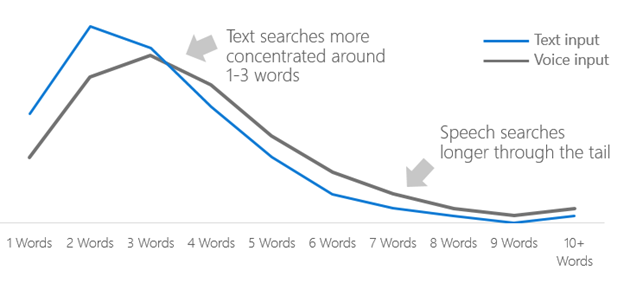
  • Voice search keywords are longer and conversational
  • These are normally questions – For example, “What are SEO trends for the upcoming year?”

voice search optimization

Source

  • Local listings and searches take precedence
  • Optimize for rich answers and make use of structured data guidelines
  • Include FAQs for your product pages and blogs
  • Make use of conversational language for content

Conclusion

Every business in the world with an online presence is running after better and more improved SEO tactics to get more traffic and generate more sales.

I hope the aforementioned tips and guidelines will help you get things sorted for your SEO department before you dive into the next year.

In case you want to make an inquiry of your own related to the topic, feel free to leave a mention of your query in the comment section below. All the best for your future endeavors, and Cheers!

Amanda Jerelyn currently works as a Marketing Manager at Dissertation Assistance, a perfect place for students to buy academic writing services from expert dissertation writers UK.  During her free time, she likes to practice mindful yoga to keep herself fit and healthy.

https://www.searchenginewatch.com/2020/12/23/seo-trends-2021-what-every-marketer-should-know/


Sophos: puntiamo sull’Intelligenza Artificiale “aperta”


L’iniziativa della società di sicurezza mira a creare una maggiore “apertura” nel settore dell’AI per favorirne la diffusione nella cyber security.

Già adottata largamente in molti strumenti di rilevamento e analisi, l’Intelligenza Artificiale (AI) ha però ampi margini di miglioramento e possibilità di ulteriore sviluppo. Secondo Sophos, il percorso più efficace per facilitarne la crescita è quella di affidarsi alla logica “open”.

Il progetto è stato battezzato SophosAI e prevede la “messa in comune” di una serie di strumenti e risorse sviluppati dalla società di sicurezza.

Il primo di questi si chiama SOREL-20M ed è il frutto di un progetto congiunto tra SophoAI e ReversingLabs. SI tratta di un dataset production-scale contenente metadati, etichette e caratteristiche per 20 milioni di file Windows Portable Executable (PE).

Il dataset comprende 10 milioni di campioni di malware, precedentemente resi innocui, disponibili per il download al fine di supportare l’analisi delle funzionalità e migliorare così la sicurezza in tutto il settore.

Gli altri tre progetti incorporati nell’iniziativa non comprendono semplici collezioni di dati, ma metodologie specifiche basate sull’AI, che la società di sicurezza ha reso pubbliche.

Particolarmente attuale, Impersonation Protection ha come obiettivo quello di individuare le cosiddette BEC (Business Email Compromise), cioè le truffe rivolte alle aziende che puntano a dirottare pagamenti legittimi su conti correnti controllati dai pirati informatici.

Altrettanto incisiva l’iniziativa che mette a disposizione di tutti la Signature Generation YaraML, un sistema di elaborazione delle signature basato su AI che permette di ridurre notevolmente i tempi per elaborare le definizioni utilizzate nel rilevamento dei malware.

Il quartetto è completato da una nuova metodologia che sfrutta le logiche dell’emidemiologia per l’analisi dei malware e che Sophos ha messo in comune con il mondo della cyber security per consentire di sfruttarne le caratteristiche a livello globale.

“Con la nuova iniziativa di SophosAI, possiamo contribuire a influenzare il modo in cui l’IA è posizionata e discussa nell’ambito della sicurezza informatica. Al giorno d’oggi il numero sempre crescente di affermazioni discordanti sulle capacità o sull’efficacia dell’IA rende difficile o addirittura impossibile per gli utenti comprenderle o convalidarle” spiega Joe Levy, chief technology officer di Sophos.  “Questo porta allo scetticismo da parte dei clienti, creando una resistenza al progresso, proprio nel momento in cui stiamo iniziando a ottenere grandi risultati”.

“Tentare di correggere questa situazione attraverso l’adozione di standard o di regolamentazioni esterne non sarebbe abbastanza rapido. Ciò che serve è un cambiamento radicale all’interno della nostra comunità per produrre un insieme di pratiche e un linguaggio che faccia progredire il settore in modo efficace, aperto e trasparente” conclude Levy.

Condividi l’articolo


Articoli correlati
Altro in questa categoria

https://www.securityinfo.it/2020/12/18/sophos-puntiamo-sullintelligenza-artificiale-aperta/?utm_source=rss&utm_medium=rss&utm_campaign=sophos-puntiamo-sullintelligenza-artificiale-aperta