Huawei TrustInTech 2020: ‘Pandemia leva di sviluppo. Ma sul 5G serve fiducia’

Il ruolo centrale delle nuove tecnologie, dal 5G all’AI passando per il Cloud, nella gestione della pandemia. Ma anche la necessità di creare un contesto di collaborazione e di fiducia globale, per sviluppare appieno le potenzialità dirompenti di queste nuove tecnologie, superando chiusure e sfiducia che rischiano di rallentare lo sviluppo delle nuove reti 5G. Questo in estrema sintesi il messaggio che emerge dal ‘TrustInTech Summit 2020’, evento online organizzato oggi da Huawei, che ha evidenziato il ruolo della pandemia come forza propulsiva per la ripresa economica e il raggiungimento degli Obiettivi di Sviluppo Sostenibile definiti dall’ONU.

5G, serve un ecosistema basato sulla fiducia

L’invito di Huawei ad autorità governative, aziende e individui è quello di unirsi in nome di una rinnovata fiducia reciproca e per la tecnologia, superando staccati e protezionismi che non fanno bene allo sviluppo.

[embedded content]

Ruolo centrale della tecnologia

La tecnologia oggi come oggi “è più rilevante che mai – ha detto Stephan Pretorius, Chief technology officer WPP – ma per mostrare appieno come potrà spingere la ripresa è necessario superare l’atteggiamento di sfiducia alimentato dai social media”. Evidente il riferimento al 5G e alle “fake news” che rischiano appunto di minare il terreno. Ed è per questo che è di primaria importanza il fatto di ricreare la fiducia completa nelle tecnologie.

2020 Sputnik moment

Il 2020 sarà considerato in futuro l’anno dello “Sputnik moment”, ha detto Paul Scanlan, Chief Technology Officer, Carrier Business Group, Huawei: “La pandemia ci ha costretto a cambiare abitudini di vita – ha proseguito – per questo dobbiamo capitalizzare I benefici delle nuove tecnologie 5G e AI in primo luogo”. Ed è proprio grazie alle nuove tecnologie che sarà possible sviluppare insieme nuovi vaccini contro la pandemia. Ma l’appello di Scanlan va a tutti gli stakeholder, in nome di una alleanza comune contro le fake news e la diffidenza che ancora divide i governi globali sullo sviluppo del 5G.

Tanto più che, prosegue il manager, le nuove tecnologie sono fondamentali anche per il mondo dell’istruzione a distanza e della telemedicina, ad esempio. “Le teorie cospirazioniste non portano da nessuna parte”.

5G, contributo di 1,4 trilioni di dollari al Pil globale nel 2030

Jim Barraclough, Partner e cofondatore di STL Partner, ha invece posto l’attenzione sugli enormi benefici economici legati allo sviluppo del 5G. Si parla di 1,4 trilioni di dollari di contributo al Pil globale al 2030, grazie ai nuovi servizi (Vertical) che saranno creati in tutte le industry intorno al 5G. Fra gli esempi avanzati, i vantaggi del 5G nel mondo della logistica, in quello della gestione del traffico o ad esempio nel mondo delle consegne grazie al ricorso ai droni.

Manufacturing

Il mondo del manufacturing sarà quello maggiormente beneficiato dall’avvento dei nuovi Vertical, grazie ad esempio alle nuove soluzioni di AR (Augmented reality) e al monitoraggio di precisione applicato a diverse realtà produttive. Senza dimenticare la spinta impressa alla digitalizzazione della Sanità legata alla pandemia, con lo sviluppo di nuove soluzioni di condivisione di informazioni fra medici e nel rapporto medico-paziente. “Entro il 2030 grazie alle nuove soluzioni legate al 5G sarà possibile liberare 4,2 milioni di posti letto”, dice Barraclough, che ricorda infine il ruolo fondamentale del 5G per la riduzione dei consumi energetici. Ma tutto ciò sarà realizzabile soltanto con il grande cotributo in termini di investimento delle telco. 

Il potenziale del 5G

Jim Rogers, investitore internazionale americano, fa il suo appello a superare atteggiamenti di protezionismo che isolano i paesi, in nome di una più alta collaborazione tecnologica (“il 12% dei brevetti nell’ultimo anno in Cina è stato co-creato con altri paesi”, ha detto Rogers). Sulla stessa linea Stephanie Lynch-Habib, Chief Marketing Officer GSMA, che ricorda come la pandemia abbia messo sotto pressione le reti, ma come le reti abbiano consentito di adattarsi alla nuova situazione globale. “5G, AI e big data sono il future”delle reti”, ha detto Habib, precisando che nel 2025 secondo stime il 20% degli abbonamenti mobile sarà 5G. Un trend che partirà in primis dai mercati consumer asiatici, per diffondersi poi sus cala globale.

Le nuove tecnologie per il new normal

Le nuove tecnologie saranno quinid fondamentali per creare il cosiddetto “new normal”, ha detto Edwin Diender, Chief Digital Transformation Officer, Enterprise Business Group, Huawei. Il quale sottolinea il ruolo portante ricoperto da 5G, AI e Cloud per la lotta al Covid.

Il ruolo delle tecnologie è fondamentale per la lotta al virus in tutte le fasi della sua diffusione, mentre l’AI è uno strumento prezioso per lo sviluppo di nuovi medicinali e le operazioni a distanza.  

Per spingere le tecnologie serve collaborazione, ha ribadito Jin Keyu, Professor of Economics, London School of Economics.

Mentre Ryan Ding, Executive director of the board, President of Carrier BG, Huawei, ha chiuso sottolineando ancora una volta lo spirito dell’evento: “La tecnologia migliora la nostra vita, ma serve fiducia reciproca”. In definitiva, secondo Huawei, la fiducia è la base della ripresa post pandemica e cruciale per lo sviluppo di un ecosistema aperto e collaborativo, per raccogliere appieno le potenzialità del 5G.

Huawei TrustInTech 2020: ‘Pandemia leva di sviluppo. Ma sul 5G serve fiducia’


Google parts with top AI researcher after blocking paper, faces blowback

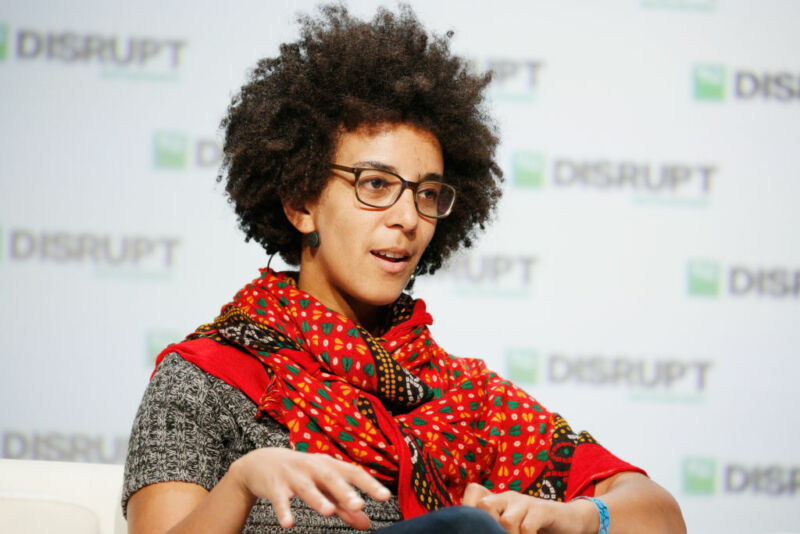
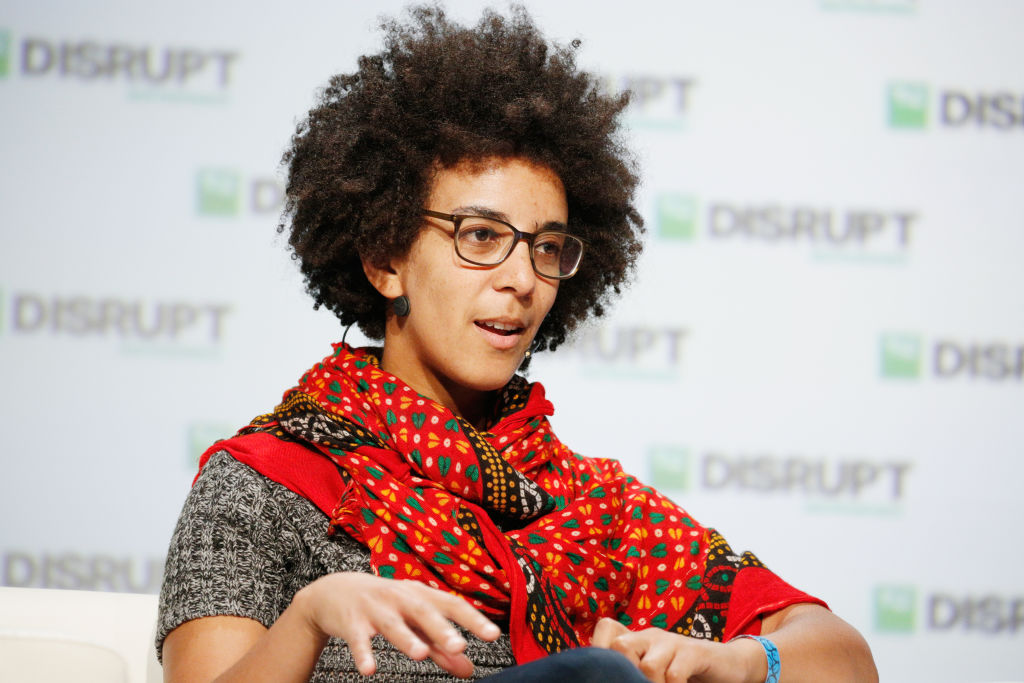
Former Google AI Research Scientist Timnit Gebru speaks onstage during Day 3 of TechCrunch Disrupt SF 2018 at Moscone Center on September 7, 2018 in San Francisco, California.
Enlarge / Former Google AI Research Scientist Timnit Gebru speaks onstage during Day 3 of TechCrunch Disrupt SF 2018 at Moscone Center on September 7, 2018 in San Francisco, California.
Kimberly White | Getty Images

Google struggled on Thursday to limit the fallout from the departure of a top artificial intelligence researcher after the Internet group blocked the publication of a paper on an important AI ethics issue.

Timnit Gebru, who had been co-head of AI ethics at Google, said on Twitter that she had been fired after the paper was rejected.

Jeff Dean, Google’s head of AI, defended the decision in an internal email to staff on Thursday, saying the paper “didn’t meet our bar for publication.” He also described Dr. Gebru’s departure as a resignation in response to Google’s refusal to concede to unspecified conditions she had set to stay at the company.

The dispute has threatened to shine a harsh light on Google’s handling of internal AI research that could hurt its business, as well as the company’s long-running difficulties in trying to diversify its workforce.

Before she left, Gebru complained in an email to fellow workers that there was “zero accountability” inside Google around the company’s claims it wants to increase the proportion of women in its ranks. The email, first published on Platformer, also described the decision to block her paper as part of a process of “silencing marginalised voices.”

One person who worked closely with Gebru said that there had been tensions with Google management in the past over her activism in pushing for greater diversity. But the immediate cause of her departure was the company’s decision not to allow the publication of a research paper she had coauthored, this person added.

The paper looked at the potential bias in large-scale language models, one of the hottest new fields of natural language research. Systems like OpenAI’s GPT-3 and Google’s own system, Bert, attempt to predict the next word in any phrase or sentence—a method that has been used to produce surprisingly effective automated writing and which Google uses to better understand complex search queries.

The language models are trained on vast amounts of text, usually drawn from the Internet, which has raised warnings that they could regurgitate racial and other biases that are contained in the underlying training material.

“From the outside, it looks like someone at Google decided this was harmful to their interests,” said Emily Bender, a professor of computational linguistics at the University of Washington, who co-authored the paper.

“Academic freedom is very important—there are risks when [research] is taking place in places that [don’t] have that academic freedom,” giving companies or governments the power to “shut down” research they don’t approve of, she added.

Bender said the authors hoped to update the paper with newer research in time for it to be accepted at the conference to which it had already been submitted. But she added that it was common for such work to be superseded by newer research, given how quickly work in fields like this is progressing. “In the research literature, no paper is perfect.”

Julien Cornebise, a former AI researcher at DeepMind, the London-based AI group owned by Google’s parent, Alphabet, said that the dispute “shows the risks of having AI and machine learning research concentrated in the few hands of powerful industry actors, since it allows censorship of the field by deciding what gets published or not.”

He added that Gebru was “extremely talented—we need researchers of her calibre, no filters, on these issues.” Gebru did not immediately respond to requests for comment.

Dean said that the paper, written with three other Google researchers, as well as external collaborators, “didn’t take into account recent research to mitigate” the risk of bias. He added that the paper “talked about the environmental impact of large models, but disregarded subsequent research showing much greater efficiencies.”

© 2020 The Financial Times Ltd. All rights reserved Not to be redistributed, copied, or modified in any way.

https://arstechnica.com/?p=1727632


DeepMind AI handles protein folding, which humbled previous software

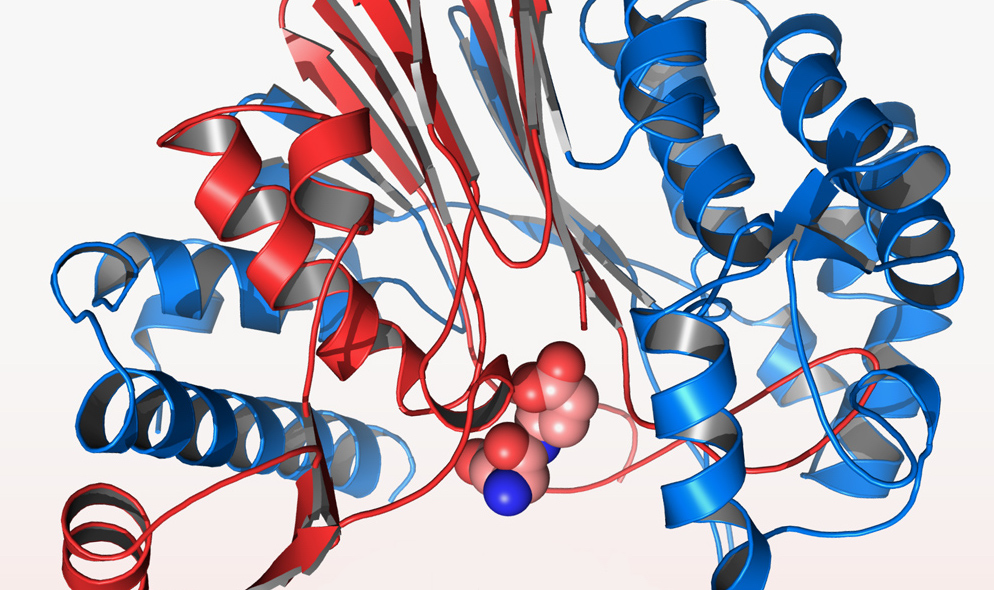
Proteins rapidly form complicated structures which had proven difficult to predict.
Enlarge / Proteins rapidly form complicated structures which had proven difficult to predict.

Today, DeepMind announced that it has seemingly solved one of biology’s outstanding problems: how the string of amino acids in a protein folds up into a three-dimensional shape that enables their complex functions. It’s a computational challenge that has resisted the efforts of many very smart biologists for decades, despite the application of supercomputer-level hardware for these calculations. DeepMind instead trained its system using 128 specialized processors for a couple of weeks; it now returns potential structures within a couple of days.

The limitations of the system aren’t yet clear—DeepMind says it’s currently planning on a peer-reviewed paper and has only made a blog post and some press releases available. But the system clearly performs better than anything that’s come before it, after having more than doubled the performance of the best system in just four years. Even if it’s not useful in every circumstance, the advance likely means that the structure of many proteins can now be predicted from nothing more than the DNA sequence of the gene that encodes them, which would mark a major change for biology.

Between the folds

To make proteins, our cells (and those of every other organism) chemically link amino acids to form a chain. This works because every amino acid shares a backbone that can be chemically connected to form a polymer. But each of the 20 amino acids used by life has a distinct set of atoms attached to that backbone. These can be charged or neutral, acidic or basic, etc., and these properties determine how each amino acid interacts with its neighbors and the environment.

The interactions of these amino acids determine the three-dimensional structure that the chain adopts after it’s produced. Hydrophobic amino acids end up on the interior of the structure in order to avoid the watery environment. Positive and negatively charged amino acids attract each other. Hydrogen bonds enable the formation of regular spirals or parallel sheets. Collectively, these shape what might otherwise be a disordered chain, enabling it to fold up into an ordered structure. And that ordered structure in turn defines the behavior of the protein, allowing it to act like a catalyst, bind to DNA, or drive the contraction of muscles.

Determining the order of amino acids in the chain of a protein is relatively easy.—they’re defined by the order of DNA bases within the gene that encode the protein. And as we’ve gotten very good at sequencing entire genomes, we have a superabundance of gene sequences and thus a huge surplus of protein sequences available to us now. For many of them, though, we have no idea what the folded protein looks like, which makes it difficult to determine how they function.

Given that the backbone of a protein is very flexible, nearly any two amino acids of a protein could potentially interact with each other. So figuring out which ones actually do interact in the folded protein, and how that interaction minimizes the free energy of the final configuration, becomes an intractable computational challenge once the number of amino acids gets too large. Essentially, when any amino acid could occupy any potential coordinates in a 3D space, figuring out what to put where becomes difficult.

Despite the difficulties, there has been some progress, including through distributed computing and gamification of folding. But an ongoing, biannual event called the Critical Assessment of protein Structure Prediction (CASP) has seen pretty irregular progress throughout its existence. And in the absence of a successful algorithm, people are left with the arduous task of purifying the protein and then using X-ray diffraction or cryo electron microscopy to figure out the structure of the purified form, endeavors that can often take years.

DeepMind enters the fray

DeepMind is an AI company that was acquired by Google in 2014. Since then, it’s made a number of splashes, developing systems that have successfully taken on humans at Go, chess, and even StarCraft. In several of its notable successes, the system was trained simply by providing it a game’s rules before setting it loose to play itself.

Tthe system is incredibly powerful, but it wasn’t clear that it would work for protein folding. For one thing, there’s no obvious external standard for a “win”—if you get a structure with a very low free energy, that doesn’t guarantee there’s something slightly lower out there. There’s also not much in the way of rules. Yes, amino acids with opposite charges will lower the free energy if they’re next to each other. But that won’t happen if it comes at the cost of dozens of hydrogen bonds and hydrophobic amino acids sticking out into water.

So how do you adapt an AI to work under these conditions? For their new algorithm, called AlphaFold, the DeepMind team treated the protein as a spatial network graph, with each amino acid as a node and the connections between them mediated by their proximity in the folded protein. The AI itself is then trained on the task of figuring out the configuration and strength of these connections by feeding it the previously determined structures of over 170,000 proteins obtained from a public database.

When given a new protein, AlphaFold searches for any proteins with a related sequence, and aligns the related portions of the sequences. It also searches for proteins with known structures that also have regions of similarity. Typically, these approaches are great at optimizing local features of the structure but not so great at predicting the overall protein structure—smooshing a bunch of highly optimized pieces together doesn’t necessarily produce an optimal whole. And this is where an attention-based deep-learning portion of the algorithm was used to make sure that the overall structure was coherent.

A clear success, but with limits

For this year’s CASP, AlphaFold and algorithms from other entrants were set loose on a series of proteins that were either not yet solved (and solved as the challenge went on) or were solved but not yet published. So there was no way for the algorithms’ creators to prep the systems with real-world information, and the algorithms’ output could be compared to the best real-world data as part of the challenge.

AlphaFold did quite well—far better, in fact, than any other entry. For about two-thirds of the proteins it predicted a structure for, it was within the experimental error that you’d get if you tried to replicate the structural studies in a lab. Overall, on an evaluation of accuracy that ranges from zero to 100, it averaged a score of 92—again, the sort of range that you’d see if you tried to obtain the structure twice under two different conditions.

By any reasonable standard, the computational challenge of figuring out a protein’s structure has been solved.

Unfortunately, there are a lot of unreasonable proteins out there. Some immediately get stuck into the membrane; others quickly pick up chemical modifications. Still others require extensive interactions with specialized enzymes that burn energy in order to force other proteins to refold. In all likelihood, AlphaFold will not be able to handle all of these edge cases, and without an academic paper describing the system, the system will take a little while—and some real-world use—to figure out its limitations. That’s not to take away from an incredible achievement, just to warn against unreasonable expectations.

The key question now is how quickly the system will be made available to the biological research community so that its limitations can be defined and we can start putting it to use on cases where it’s likely to work well and have significant value, like the structure of proteins from pathogens or the mutated forms found in cancerous cells.

https://arstechnica.com/?p=1726511


Robots invade the construction site

Theresa Arevalo was in high school when she first tried finishing drywall at her brother’s construction company. “It’s a fine art,” she says of mudding—applying and smoothing drywall. “Like frosting a cake, you have to give the illusion that the wall is flat.”

Fast-forward a few decades: Arevalo now works at Canvas, a company that’s built a robot using artificial intelligence that’s capable of drywalling with almost as much artistry as a skilled human worker.

The robot has been deployed, under Arevalo’s supervision, at several construction sites in recent months, including the new Harvey Milk Terminal at San Francisco International Airport and an office building connected to the Chase Center arena in San Francisco.

About the size of a kitchen stove, the four-wheeled robot navigates an unfinished building carrying laser scanners and a robotic arm fitted to a vertical platform. When placed in a room, the robot scans the unfinished walls using lidar, then gets to work smoothing the surface before applying a near perfect layer of drywall compound; sensors help it steer clear of human workers.

The Canvas robot can help companies do more drywalling in less time. It requires human oversight, but its operator does not need to be an expert drywaller or roboticist.

It has long been impractical to deploy robots at construction sites, because the environment is so varied, complex, and changing. In the past few years, however, advances including low-cost laser sensors, cheaper robotic arms and grippers, and open source software for navigation and computer vision have made it possible to automate and analyze more construction.

The more advanced machines marching onto construction sites will help make construction less wasteful. According to McKinsey, productivity in construction has improved less than in any other industry over the past couple of decades. The arrival of more automation may also alter demand for labor in a number of building trades.

Kevin Albert, cofounder and CEO of Canvas, previously worked at Boston Dynamics (a company famous for its lifelike walking robots) and in the manufacturing industry. He says there’s great opportunity in construction, which generates about $1.4 trillion annually and accounts for around 7 percent of US GDP but has seen relatively little use of computerization and automation. “We really see construction as mobile manufacturing,” he says. “There’s this natural extension of what machines are now capable of out in the real world.”

Canvas is part of a boom in construction technology, says Alex Schreyer, director of the Building and Construction Technology Program at the University of Massachusetts, Amherst. He says some of the biggest progress is being made in prefabrication of buildings, using robotic processes to construct large parts of buildings that are then assembled on-site. But increasingly, he says, robots and AI are also finding their way onto conventional work sites.

Autonomous vehicles made by Volvo ferry materials and tools around some large sites. Technology from San Francisco startup Built Robotics lets construction machinery such as diggers and dozers operate autonomously. A growing array of robotic equipment can take over specialized construction tasks including welding, drilling, and brick-laying. “There are some really interesting things happening,” Schreyer says.

“So much potential”

An IDC report published in January 2020 forecasts that demand for construction robots will grow about 25 percent annually through 2023.

One big opportunity in construction, Schreyer says, is using computer vision and other sensing technologies to track the movement of materials and workers around a work site. Software can automatically flag if a job is falling behind or if something has been installed in the wrong place. “There is so much potential to do something with that using AI,” Schreyer says. “More companies are going to move into that AI space.”

Doxel, based in Redwood City, California, makes a mobile robot that scans work sites in 3D so that software can calculate how the project is progressing. A four-legged Boston Dynamics robot called Spot is being tested for the same purpose at a number of sites. Several companies sell drones for automated construction site inspection, including Propeller, vHive, ABJ Drones, and DJI.

Buildots, based in Tel Aviv, Israel, sells software that uses cameras fitted to the helmets of site managers, which automatically capture a site and process the images to identify discrepancies between plans and ongoing work. The technology is being used on several large European construction projects.

Roy Danon, Buildots’ cofounder and CEO, says the goal is to use the data collected from work sites to help companies design buildings and plan construction schedules better. “We believe we can have a huge impact on planning,” he says, “if we have enough projects that show how you plan and how things actually turn out.”

“The adoption of technology in construction has lagged behind almost everything except hunting and fishing for the past decades,” says Josh Johnson, a consultant at McKinsey who follows the building industry.

Enter the pandemic

A McKinsey report last month predicted a big shakeout across the construction industry over the next decade, with companies adopting technologies and methodologies from the manufacturing world. Things have already begun to change, thanks to technological progress and an increasingly tech-savvy workforce, Johnson says. The pandemic is accelerating the shift, too, by making it more difficult to bring workers to a site and forcing companies to reevaluate supply lines and processes. “It’s forcing many of these legacy [construction contractors] and large companies to begin investing,” Johnson says.

Arevalo, who oversees deployments of Canvas’ robot, says the drywalling robot cannot tackle corners or angles like a human; she says many apprentices see working with the robot as an opportunity to learn how to use more advanced robotic machinery.

The company also has the backing of the local union. “It’s critical for skilled workers to have great resources in their tool kit, and we are excited to be on the leading edge of technology in our industries by partnering with Canvas,” Robert Williams III, business manager at District Council 16, International Union of Painters and Allied Trades, said in a statement.

But this apparently hasn’t quelled concerns among construction workers who’ve seen the robot in action. “They love the fact that it’s so consistent, that the wall is gorgeous,” Arevalo says. “But then the next question is, ‘When is it going to take my job?’”

This story originally appeared on wired.com.

Listing image by Canvas

https://arstechnica.com/?p=1724795


When AI sees a man, it thinks “official.” A woman? “Smile”

Side-by-side images of women with image-capture dots.
Sam Whitney (illustration), Getty Images

Men often judge women by their appearance. Turns out, computers do too.

When US and European researchers fed pictures of members of Congress to Google’s cloud image recognition service, the service applied three times as many annotations related to physical appearance to photos of women as it did to men. The top labels applied to men were “official” and “businessperson”; for women they were “smile” and “chin.”

“It results in women receiving a lower-status stereotype: that women are there to look pretty and men are business leaders,” says Carsten Schwemmer, a postdoctoral researcher at GESIS Leibniz Institute for the Social Sciences in Köln, Germany. He worked on the study, published last week, with researchers from New York University, American University, University College Dublin, University of Michigan, and nonprofit California YIMBY.

The researchers administered their machine vision test to Google’s artificial intelligence image service and those of rivals Amazon and Microsoft. Crowdworkers were paid to review the annotations those services applied to official photos of lawmakers and images those lawmakers tweeted.

Google's AI image recognition service tended to see men like Sen. Steve Daines (R-Mont.) as businesspeople but tagged women lawmakers like Lucille Roybal-Allard with terms related to their appearance.
Enlarge / Google’s AI image recognition service tended to see men like Sen. Steve Daines (R-Mont.) as businesspeople but tagged women lawmakers like Lucille Roybal-Allard with terms related to their appearance.
Carsten Schwemmer

The AI services generally saw things human reviewers could also see in the photos. But they tended to notice different things about women and men, with women much more likely to be characterized by their appearance. Women lawmakers were often tagged with “girl” and “beauty.” The services had a tendency not to see women at all, failing to detect them more often than they failed to see men.

The study adds to evidence that algorithms do not see the world with mathematical detachment but instead tend to replicate or even amplify historical cultural biases. It was inspired in part by a 2018 project called Gender Shades that showed that Microsoft’s and IBM’s AI cloud services were very accurate at identifying the gender of white men but very inaccurate at identifying the gender of Black women.

The new study was published last week, but the researchers had gathered data from the AI services in 2018. Experiments by WIRED using the official photos of 10 men and 10 women from the California State Senate suggest the study’s findings still hold.

Amazon's image-processing service Rekognition tagged images of some women California state senators including Ling Ling Chang, a Republican, as "girl" or "kid" but didn't apply similar labels to men lawmakers.
Enlarge / Amazon’s image-processing service Rekognition tagged images of some women California state senators including Ling Ling Chang, a Republican, as “girl” or “kid” but didn’t apply similar labels to men lawmakers.
Wired Staff via Amazon

All 20 lawmakers are smiling in their official photos. Google’s top suggested labels noted a smile for only one of the men, but for seven of the women. The company’s AI vision service labeled all 10 of the men as “businessperson,” often also with “official” or “white collar worker.” Only five of the women senators received one or more of those terms. Women also received appearance-related tags, such as “skin,” “hairstyle,” and “neck,” that were not applied to men.

Amazon and Microsoft’s services appeared to show less obvious bias, although Amazon reported being more than 99 percent sure that two of the 10 women senators were either a “girl” or “kid.” It didn’t suggest any of the 10 men were minors. Microsoft’s service identified the gender of all the men but only eight of the women, calling one a man and not tagging a gender for another.

Google switched off its AI vision service’s gender detection earlier this year, saying that gender cannot be inferred from a person’s appearance. Tracy Frey, managing director of responsible AI at Google’s cloud division, says the company continues to work on reducing bias and welcomes outside input. “We always strive to be better and continue to collaborate with outside stakeholders—like academic researchers—to further our work in this space,” she says. Amazon and Microsoft declined to comment; both companies’ services recognize gender only as binary.

“False image of reality”

The US-European study was inspired in part by what happened when the researchers fed Google’s vision service a striking, award-winning image from Texas showing a Honduran toddler in tears as a US Border Patrol officer detained her mother. Google’s AI suggested labels including “fun,” with a score of 77 percent, higher than the 52 percent score it assigned the label “child.” WIRED got the same suggestion after uploading the image to Google’s service Wednesday.

Schwemmer and his colleagues began playing with Google’s service in hopes it could help them measure patterns in how people use images to talk about politics online. What he subsequently helped uncover about gender bias in the image services has convinced him the technology isn’t ready to be used by researchers that way and that companies using such services could suffer unsavory consequences. “You could get a completely false image of reality,” he says. A company that used a skewed AI service to organize a large photo collection might inadvertently end up obscuring women businesspeople, indexing them instead by their smiles.

When this image won World Press Photo of the Year in 2019, one judge remarked that it showed "violence that is psychological." Google's image algorithms detected "fun."
Enlarge / When this image won World Press Photo of the Year in 2019, one judge remarked that it showed “violence that is psychological.” Google’s image algorithms detected “fun.”
Wired staff via Google

Prior research has found that prominent datasets of labeled photos used to train vision algorithms showed significant gender biases, for example showing women cooking and men shooting. The skew appeared to come in part from researchers collecting their images online, where the available photos reflect societal biases, for example by providing many more examples of businessmen than businesswomen. Machine-learning software trained on those datasets was found to amplify the bias in the underlying photo collections.

Schwemmer believes biased training data may explain the bias the new study found in the tech giant’s AI services, but it’s impossible to know without full access to their systems.

Diagnosing and fixing shortcomings and biases in AI systems has become a hot research topic in recent years. The way humans can instantly absorb subtle context in an image while AI software is narrowly focused on patterns of pixels creates much potential for misunderstanding. The problem has become more pressing as algorithms get better at processing images. “Now they’re being deployed all over the place,” says Olga Russakovsky, an assistant professor at Princeton. “So we’d better make sure they’re doing the right things in the world and there are no unintended downstream consequences.”

One approach to the problem is to work on improving the training data that can be the root cause of biased machine-learning systems. Russakovsky is part of a Princeton project working on a tool called REVISE that can automatically flag some biases baked into a collection of images, including along geographic and gender lines.

When the researchers applied the tool to the Open Images collection of 9 million photos maintained by Google, they found that men were more often tagged in outdoor scenes and sports fields than women. And men tagged with “sports uniform” were mostly outdoors playing sports like baseball, while women were indoors playing basketball or in a swimsuit. The Princeton team suggested adding more images showing women outdoors, including playing sports.

Google and its competitors in AI are themselves major contributors to research on fairness and bias in AI. That includes working on the idea of creating standardized ways to communicate the limitations and contents of AI software and datasets to developers—something like an AI nutrition label.

Google has developed a format called “model cards” and published cards for the face and object-detection components of its cloud vision service. One claims Google’s face detector works more or less the same for different genders but doesn’t mention other possible forms that AI gender bias might take.

This story originally appeared on wired.com.

https://arstechnica.com/?p=1724806


Amazon begins shifting Alexa’s cloud AI to its own silicon

[embedded content]
Amazon engineers discuss the migration of 80 percent of Alexa’s workload to Inferentia ASICs in this three-minute clip.

On Thursday, an Amazon AWS blogpost announced that the company has moved most of the cloud processing for its Alexa personal assistant off of Nvidia GPUs and onto its own Inferentia Application Specific Integrated Circuit (ASIC). Amazon dev Sebastien Stormacq describes the Inferentia’s hardware design as follows:

AWS Inferentia is a custom chip, built by AWS, to accelerate machine learning inference workloads and optimize their cost. Each AWS Inferentia chip contains four NeuronCores. Each NeuronCore implements a high-performance systolic array matrix multiply engine, which massively speeds up typical deep learning operations such as convolution and transformers. NeuronCores are also equipped with a large on-chip cache, which helps cut down on external memory accesses, dramatically reducing latency and increasing throughput.

When an Amazon customer—usually someone who owns an Echo or Echo dot—makes use of the Alexa personal assistant, very little of the processing is done on the device itself. The workload for a typical Alexa request looks something like this:

  1. A human speaks to an Amazon Echo, saying: “Alexa, what’s the special ingredient in Earl Grey tea?”
  2. The Echo detects the wake word—Alexa—using its own on-board processing
  3. The Echo streams the request to Amazon data centers
  4. Within the Amazon data center, the voice stream is converted to phonemes (Inference AI workload)
  5. Still in the data center, phonemes are converted to words (Inference AI workload)
  6. Words are assembled into phrases (Inference AI workload)
  7. Phrases are distilled into intent (Inference AI workload)
  8. Intent is routed to an appropriate fulfillment service, which returns a response as a JSON document
  9. JSON document is parsed, including text for Alexa’s reply
  10. Text form of Alexa’s reply is converted into natural-sounding speech (Inference AI workload)
  11. Natural speech audio is streamed back to the Echo device for playback—”It’s bergamot orange oil.”

As you can see, almost all of the actual work done in fulfilling an Alexa request happens in the cloud—not in an Echo or Echo Dot device itself. And the vast majority of that cloud work is performed not by traditional if-then logic but inference—which is the answer-providing side of neural network processing.

According to Stormacq, shifting this inference workload from Nvidia GPU hardware to Amazon’s own Inferentia chip resulted in 30-percent lower cost and 25-percent improvement in end-to-end latency on Alexa’s text-to-speech workloads. Amazon isn’t the only company using the Inferentia processor—the chip powers Amazon AWS Inf1 instances, which are available to the general public and compete with Amazon’s GPU-powered G4 instances.

Amazon’s AWS Neuron software development kit allows machine-learning developers to use Inferentia as a target for popular frameworks, including TensorFlow, PyTorch, and MXNet.

Listing image by Amazon

https://arstechnica.com/?p=1723132


CyberArk usa l’AI per individuare i permessi eccessivi sul cloud


La società di sicurezza dichiara guerra alle impostazioni che consentono un margine troppo ampio di azione agli account aziendali.

Il pericolo maggiore nella cyber security è rappresentato da sempre dagli errori umani. Tra questi, negli ultimi anni, hanno acquisito una grande rilevanza quelli legati all’assegnazione di privilegi troppo elevati agli utenti aziendali.

Un problema che viene esaltato dalla diffusione dei servizi cloud, in cui le policy di gestione dei permessi assumono un ruolo fondamentale e possono fare la differenza a livello di impatto degli attacchi informatici.

Mitigare questo rischio dovrebbe essere una priorità di tutte le aziende e dalle parti di CyberArk, società specializzata nella gestione degli accessi privilegiati, hanno deciso di sviluppare uno strumento dedicato.

Si chiama Cloud Entitlements Manager e ha l’obiettivo di individuare e rimuovere le autorizzazioni eccessive del cloud che possono lasciare le organizzazioni vulnerabili. Il tool, in pratica, applica un monitoraggio continuo sul cloud sfruttando un sistema di intelligenza artificiale che è in grado di rilevare eventuali anomalie a livello di privilegi.

CyberArk cloud

“L’adozione del cloud ha subito una massiccia accelerazione, ma con l’introduzione di nuovi ambienti e servizi cloud, vengono creati migliaia di permessi basati sull’identità, molti dei quali vengono trascurati”, spiega Chen Bitan, Chief Product Officer di CyberArk. “Se non vengono configurate o gestite correttamente, queste identità creano un percorso che consente agli aggressori di ottenere un accesso privilegiato e, in ultima analisi, di compromettere un intero ambiente cloud”.

CyberArk Cloud Entitlements Manager, spiegano gli esperti della società di sicurezza, si colloca nella strategia di Identity Security di CyberArk basata sull’approccio Zero Trust e sull’uso dell’intelligenza artificiale per comprendere il contesto e mitigare il rischio.

L’obiettivo principale è individuare le autorizzazioni cloud nascoste, mal configurate e non utilizzate, che possono rappresentare un rischio per la sicurezza dell’azienda.

La configurazione di Cloud Entitlements Manager, spiegano dalle parti di CyberArk, richiede meno di un’ora e da quel momento fornisce una valutazione dei livelli di esposizione su qualsiasi piattaforma cloud, mettendo a disposizione una dashboard centralizzata con un’unica vista dei permessi in Amazon Web Services (AWS), incluso Amazon Elastic Kubernetes Service (Amazon EKS), Google Cloud Platform (GCP) e Microsoft Azure.

Condividi l’articolo


Articoli correlati
Altro in questa categoria

https://www.securityinfo.it/2020/11/10/cyberark-usa-lai-per-individuare-i-permessi-eccessivi-sul-cloud/?utm_source=rss&utm_medium=rss&utm_campaign=cyberark-usa-lai-per-individuare-i-permessi-eccessivi-sul-cloud


Il futuro del Cloud? Sarà ibrido e open source. Parola di IBM

Pensare di fare a meno del cloud oggi è impossibile. Qualsiasi azienda, indipendentemente dalla dimensione, deve prevedere di spostare almeno alcuni dati o carichi di lavoro sul cloud se vuole lavorare in efficienza e poter contare su un’architettura sicura e semplice da gestire.

Lo sa bene la multinazionale americana IBM che da oltre dieci anni opera nel mercato cloud, proponendo un’architettura fatta di tecnologie, soluzioni e una suite di strumenti di AI e gestione dati pensata per semplificare il percorso verso il cloud da parte delle imprese.

“Nel mondo solo il 20% circa dei carichi di lavoro è stato trasferito in cloud,  aveva sottolineato Enrico Cereda, amministratore delegato di IBM Italia, durante un Digital Think Coffee lo scorso settembre. “Il che lascia presupporre che la percentuale italiana sia anche minore. Ma il punto non è la percentuale in valore assoluto sui dati. Occorre distinguere quale sia la complessità dei carichi di lavoro trasferiti in Cloud. Ecco noi crediamo”, aveva aggiunto Cereda, “che questo sia il momento di spostare sul cloud senza esitare i carichi di lavoro più complessi e noi sappiamo come maneggiare e sostenere tutti i carichi di lavoro classificabili come mission critical”.

Cloud and AI Forum by IBM

Già da tempo, i maggiori esperti IT stanno adottando un’architettura cloud ibrida e open source per modernizzare rapidamente e facilmente il panorama IT. In questo modo, spiegano gli esperti, si automatizzano i flussi di lavoro e si proteggono le imprese dalle minacce informatiche gestendo al contempo la conformità in tutta l’azienda.

Proprio per questo il 19 novembre attraverso l’evento “Cloud and AI Forum by IBM“, un incontro di Executive e Technical Leader, avverrà un confronto per indirizzare le esigenze aziendali presenti e future.

Il forum, che avverrà online all’interno della cornice dell’IBM Garage, avrà una sessione plenaria moderata da Andrea Cabrini, Direttore ClassCNBC.

Interverranno

  • Alessandro La Volpe, Vice President, IBM Cloud&Cognitive, IBM Italia
  • Pietro Berrettoni, Digital and Innovation Head, Angelini Holding
  • Milo Gusmeroli, Vice Direttore Generale e COO, Banco Popolare di Sondrio
  • Joska Lot, Global Solution Architech, Electrolux
  • Marco Ternelli, Responsabile Sviluppo Applicativo, Credito Emiliano
  • Michele Adamo, Enterprise Architect, G-Evolution
  • Federico Vietti, Associate Partner, Blue Reply

Inoltre, a partire dalle 11:30, ci saranno 5 sessioni in parallelo per affrontare i temi relativi all’approccio Hybrid Cloud proposto da IBM, ovvero:

  • Modernizzazione delle applicazioni;
  • Sicurezza;
  • Automatizzazione dei processi;
  • Public Cloud – dal Cloud Native all’Edge;
  • Gestione dei dati e AI;

Per approfondire

Per potersi registrare all’evento ‘Cloud and AI Forum by IBM‘ basta cliccare qui.

Inoltre sarà disponibile anche il podcast del webinar nella sezione “PODCAST” di Key4biz.

https://www.key4biz.it/il-futuro-del-cloud-sara-ibrido-e-open-source-parola-di-ibm/329434/


Le telecamere AI scambiano la testa di un guardalinee per il pallone. Il caso scozzese

L’intelligenza artificiale, lo sa bene chi ci lavora, spesso commette errori che neanche un bambino farebbe.

La ragione è che le macchine devono impiegare grandi quantità di risorse computazionali per compiere attività sensomotorie – muoversi in maniera coordinata, afferrare qualcosa, guardare e riconoscere oggetti – che per noi umani sembrano molto facili.

E in effetti per noi lo sono, tanto che impieghiamo pochi mesi per affinarle, ma solo perché riceviamo alla nascita organi frutto di un processo di evoluzione e di selezione naturale già in atto da centinaia di milioni di anni.

Nel campo dell’AI questo si chiama paradosso di Moravec, dallo scienziato canadese che descrisse e argomentò questo divario fra uomo e macchina.

Si aggiunga a questo il fatto che un modello di machine learning generalmente non viene messo dentro un agente fisico (un robot) e portato a spasso nel nostro mondo per impararne gli usi e costumi, acquisendo informazioni e migliorando le proprie decisioni a ogni passo.

Come sempre accade, il modello viene addestrato su una serie di dati, quindi messo in produzione.

Il suo mondo è composto solo e unicamente da quei dati: tutto quello che non riesce a capire dovrà essere interpretato con quello che ha a disposizione. Ecco perché gli algoritmi di computer vision cadono così frequentemente in errore, con o senza attacchi adversarial.

Il caso in Scozia

L’ultimo esempio che ha fatto sghignazzare molti riguarda una partita di calcio, per la precisione quella fra l’Inverness Caledonian Thistle FC e l’Ayr United, nel campionato scozzese.

Il mese scorso il club di Inverness aveva annunciato con orgoglio l’attivazione di un sistema di telecamere “Pixellot” dotate di intelligenza artificiale, in grado di seguire da sole l’incontro di calcio tenendo l’inquadratura sempre fissa sul pallone.

Due prove sul campo avevano convinto il club della bontà del sistema, tanto da metterlo in produzione senza neanche un controllore umano per correggere al volo eventuali errori.

Ma come sempre accade, la rete neurale non aveva fatto i conti con le tante sfaccettature del mondo degli esseri umani, in particolare con l’esistenza di guardalinee calvi.

Così sabato scorso le telecamere dotate di intelligenza artificiale hanno scambiato la “crapa pelada” del guardalinee per il pallone, portando frequentemente la scena sull’incolpevole John McCrossan anziché sulle azioni delle due squadre di calcio.

Complice magari l’illuminazione, la palla a volte troppo lontana, oppure nascosta per qualche attimo dietro i giocatori (oltre all’evidente assenza di arbitri pelati durante i match usati per l’addestramento dell’algoritmo), ma in diverse occasioni la rete neurale ha deciso che una testa senza capelli aveva maggiori probabilità di essere un pallone al posto del pallone vero e proprio.

Calcio e AI

La decisione era evidentemente basata solo su quello che mostravano i pixel, senza tenere in considerazione la posizione della palla (se un attimo prima si trovava in un punto lontano del campo sarebbe impossibile ritrovarla improvvisamente a decine di metri di distanza), la dinamica del gioco (se dopo un tiro il pallone prende una certa traiettoria, sarebbe più logico seguire quella anziché un secondo “pallone” apparso ai bordi del campo)oltre ovviamente al fatto che un pallone di solito non è attaccato al collo di una persona, tranne che in rari casi e per pochi attimi di sovrapposizione.

Una raccolta di tutti gli errori dell’algoritmo, assieme a una colonna sonora non necessariamente sbagliata, è disponibile in questo video.

[embedded content]

La situazione finale era per certi versi divertente, tranne per quei fan dell’Ayr che non hanno potuto vedere il goal segnato dai loro giocatori, e ci insegna che testare il più possibile nel “mondo reale” gli algoritmi di intelligenza artificiale è un passo fondamentale per mitigare questo tipo di scivoloni.

Avrebbero evitato all’AI di cascare in un errore che neanche un bambino avrebbe commesso. Perlomeno non involontariamente.

https://www.key4biz.it/le-telecamere-ai-scambiano-la-testa-di-un-guardalinee-per-il-pallone-il-caso-scozzese/328817/


‘Salute, Algoritmi e Intelligenza Artificiale’: tra Recovery Fund e frequenze in ospedale al Fubinar della FUB

Le enormi potenzialità dell’algoritmo e dell’Intelligenza Artificiale e applicati all’organizzazione delle attività ospedaliere e alla cura dei pazienti ricoverati ma anche in cura da casa. Questo in estrema sintesi il contenuto del quarto Fubinar organizzato dalla Fondazione Ugo Bordoni (FUB) dal titolo “Salute, algoritmi e Intelligenza Artificiale. Tecnologie digitali al servizio di medici e pazienti”.

Al Fubinar hanno partecipato Antonio Sassano, Presidente, Fondazione Ugo Bordoni; Roberto Lucchetti, Ordinario di analisi matematica, Politecnico di Milano; Giovanni Arcuri, Direttore UOC Tecnologie Sanitarie, Fondazione Policlinico Universitario Agostino Gemelli; Pasquale Avella, Ordinario di Ricerca Operativa, Università del Sannio; Amedeo Cesta, Dirigente di Ricerca CNR, Vicepresidente di AIxIA; Arturo Chiti, Ordinario di Diagnostica per Immagini, Università Humanitas; Tommaso Di Noia, Ordinario di IA, Machine Learning e Big Data Analytics, Policlitecnico di Bari e Comitato Scientifico FUB; Marco Marsella, Head of Unit “eHealth, well-being, ageing”, DG Connect – Commissione Europea; moderatrice Daniela D’Aloisi, Ricercatrice, Fondazione Ugo Bordoni.

Salute e digitale connubio centrale

Il tema del connubio fra salute e algoritmi è stato scelto dopo un “consulto” fra il presidente della FUB Antonio Sassano e Roberto Viola, Direttore generale della DG Connect della Commissione Ue. “Il connubio fra salute e digitale è un tema centrale per il nostro paese”, ha detto Sassano aprendo i lavori. Un tema che va calato nel contesto europeo, anche alla luce dell’ingente mole di fondi del Recovery Fund che arriveranno nel nostro paese e che in larga misura saranno destinati alla digitalizzazione del sistema sanitario nazionale.

Un altro tema centrale, secondo Sassano, sarà la necessità non troppo lontana nel futuro di dedicare frequenze radio dedicate alle reti wireless degli ospedali, in ottica il 5G. Un tema che chiama in causa la necessità di creare la giusta sensibilità da parte delle strutture ospedaliere per la sicurezza e la privacy dei dati sensibili dei pazienti.

“Negli ospedali quali frequenze wireless vengono utilizzate? Le Wi-fi sono sicure?”, domanda Sassano, aggiungendo che in futuro è prevedibile immaginare che saranno “Necessarie reti sicure in cui frequenze siano dedicate a specifiche applicazioni e servizi 5G” anche per garantire la totale protezione dei dati dei pazienti.  

Teoria dei giochi e liste d’attesa per il trapianto di reni

Il primo intervento del Professor Roberto Lucchetti, Ordinario di analisi matematica, Politecnico di Milano, è incentrato sull’applicazione della teoria dei giochi alla gestione ottimale delle liste d’attesa per i trapianti di reni.

Vedi anche: ‘Teoria dei giochi e matching dei donatori nel trapianto di reni’. Intervista a Roberto Lucchetti

Ottimizzazione combinatoria in sanità

Il tema dell’ottimizzazione combinatoria applicata all’ambito della salute è stato affrontato da Pasquale Avella, Ordinario di Ricerca Operativa, Università del Sannio con diversi esempi di soluzioni algoritmiche il primo dei quali a favore di una agenzia di assistenza domiciliare statunitense presente in 20 Stati, per risolvere il problema dello scheduling. Di fatto, il sistema aveva il compito di progettare l’itinerario e assegnare i tempi di inizio visita. Il tutto, facendo in modo di rispettare i rapporti fiduciari medico-paziente.  Fra le variabili da considerare nel programma anche le esigenze del personale medico e un orizzonte temporale dato.

Un altro esempio, riguarda lo scheduling delle sale operatorie, che tenga conto delle diverse specialità e della sequenza degli interventi minimizzando i tempi d’attesa in base alle condizioni dei pazienti. Esistono diverse software house americane che si occupano di questo genere di servizi di scheduling, è un mercato.

Altre applicazioni dell’ottimizzazione combinatoria riguardano soluzioni per la localizzazione e il dispatching di veicoli di emergenza (il servizio 118); il clustering per definire i fenotipi nel diabete, applicazioni di analisi dei social network al grafo dei contagi di Covid 19.  

Ricerca tecnologica e ricerca medica

L’Intelligenza Artificiale è molto usata nell’analisi di immagini e nella diagnostica automatica, ha detto Giovanni Arcuri, Direttore UOC Tecnologie Sanitarie, Fondazione Policlinico Universitario Agostino Gemelli. Arcuri ha poi raccontato alcuni campi di applicazione dell’AI in ospedale: algoritmo per l’analisi della Tac in grado di segnalare la presenza di tracce di Covid 19 nei pazienti; un altro filone è l’estrazione di informazioni dai dati già a disposizione e infine la business intelligence, l’ottimizzazione dei posti letto.

Un sistema già utilizzato dall’NHS a Birmingham, si chiama Babylon Health, consente al medico di intervistare il paziente online con una serie di indicazioni live sulla situazione clinica e sul modo di procedere con l’intervista, suggerite dall’algoritmo stesso.

Molte altre applicazioni riguardano la radioterapia.

Altre la gestione ottimale delle 65 sale operatorie presenti al Gemelli.

Smart Health

Un filone in grande crescita è quello dello Smart Health, vale a dire la cura del paziente fuori dalla struttura ospedaliera. Si tratta di tutti i sistemi necessari per il monitoraggio dei pazienti all’estero degli ospedali e che toccano quindi la fase di deospedalizzazione, con dimissioni spesso anticipate grazie alla possibilità di controllarli a distanza. Interessati sono soprattutto pazienti cronici e pazienti che grazie alla tecnologia possono evitare la visita ambulatoriale. La Smart Health in sintesi comprende i device a domicilio dei pazienti. I dati vengono inviati alla cartella clinica in ospedale. E in generale, il problema principale è la mole enorme di dati che vengono trasmessi. “Basti pensare alla complessità dei dati che riguardano un paziente diabetico”, dice Arcuri.  Ma grazie all’AI il flusso dei dati è categorizzato in base a indicatori sintetici che ne rendono più semplice e immediata l’interpretazione.

Un tema importante diventa quindi la comprensione degli effetti dei device tecnologici introdotti in ospedale.

Robot per la salute

Nel suo intervento Amedeo Cesta, Dirigente di Ricerca CNR, Vicepresidente di AIxIA, ha descritto alcuni casi di utilizzo di robot a domicilio per la cura di pazienti anziani. Si tratta della cosiddetta AI funzionale al benessere psicofisico delle persone, della tecnologia per l’assistenza a distanza di persone anziane (AAL, Ambient Assisted Living) che prevede l’utilizzo di sensori, attivatori e soluzioni AI.

Il primo caso descritto riguarda la soluzione Giraff Plus, un robot in telepresenza guidato a distanza con video integrato.

In seguito, è stato realizzato un appartamento sensorizzato utile per capire a distanza l’interazione fra robot e paziente. L’obiettivo è rendere il robot più attivo, creando per così dire una sorta di memoria nella macchina, in modo tale che le sue azioni risultino meno meccaniche. “L’obiettivo è integrare tecniche semantiche per garantire un flusso dati significativo. Fare qualcosa che sembri personalizzato per i pazienti”, ha detto Cesta. “Rispetto alla tecnologia corrente, il problema aperto è la presentazione dell’AI alla persona. Personalizzazione e accettazione”, ha aggiunto.

Altri progetti realizzati sono stati l’assistenza a distanza tramite televisione digitale (Tvassistdem_aal.eu) e poi una versione di Tv assistant per il Covid-19 nella zona di Alba, via satellite, in un’area molto sparsa (smartsatcare.istc.cnr.it) che consente interazione tramite telepresenza con il centro medico. La Tv e magari un set top box potrebbero essere una valida soluzione per la medicina in telepresenza, certamente in termini di costi.

AI e Image analysis

Si trova nella pletora di coloro che lavorano con la diagnostica per immagini Arturo Chiti, Ordinario di Diagnostica per Immagini, Università Humanitas, che dice come algoritmi e dati numerici consentono alle macchine di effettuare in modo più facile diverse operazioni. Fra le operazioni consentite dalla tecnologia applicata all’imaging, il data mining per identificare le caratteristiche di determinate patologie soprattutto sul polmone, fra cui tra l’altro la polmonite interstiziale. Altre operazioni fattibili sono valutazioni numeriche di radiogenomica tramite biomarcatori di immagini. L’analisi di immagini dei tessuti con AI e reti neurali consente di identificare tumori e di capire quali sono i pazienti oncologici che hanno più urgenza di cure immediate. E’ possibile inoltre classificare un tumore da una Tac. “Le macchine addestrate su un gran numero di immagini possono essere di grande ausilio al medico. Occorre addestrare il personale medico all’uso di tecniche di intelligenza artificiale”, dice Chiti.

Pensiero critico stella polare

L’AI non è soltanto la salute della persona, ma anche sistemi di organizzazione delle attività mediche in ospedale. Uno spettro molto ampio quello delle tecnologie applicate al mondo della salute. “I sistemi di AI devono favorire il pensiero critico, fondamentale per la salute della collettività”, ha detto Tommaso Di Noia, Ordinario di IA, Machine Learning e Big Data Analytics, Politecnico di Bari e Comitato Scientifico FUB.

L’AI consente di muovere “Verso la medicina personalizzata, con analisi genetica e algoritmi. Ma tutto quello che è destinato all’uomo deve essere spiegabile. Bisogna potersi fidare dell’AI. L’ultima parola deve essere del medico”, dice Di Noia.

Care e Healthcare per la Ue

In tema di salute e AI, la Commissione Ue ha fissato da poco i suoi pilastri, partendo da un presupposto: “Il 90% dei cittadini europei, secondo le nostre stime è pronto a condividere i dati sulla salute a patto però che sia garantita la sicurezza e il rispetto della privacy”, ha detto Marco Marsella, Head of Unit “eHealth, well-being, ageing”, DG Connect – Commissione Europea. Il trasferimento dei dati nella Ue, fra diversi paesi del blocco, sarà possibile su una piattaforma comune, quando tutti paesi saranno connessi.

Per quanto riguarda la strategia Ue sull’healthcare, privacy e security vanno consolidate fra loro, per favorire la condivisone dei dati da parte dei cittadini e degli Stati membri. Ma sono necessari degli standard tecnici e semantici comuni. Nei prossimi giorni saranno disponibili i risultati di una ricerca sui Digital Twins, finalizzata a creare una replica virtuale dell’individuo in base a dati e modelli disponibili per testare farmaci, per trovare quello che meglio risponde alle caratteristiche dell’individuo.

Per quanto riguarda il Recovery Fund, si tratta di una grande occasione. Il 20% va dedicato a digitale e green. Il digitale nel mondo della salute è uno dei capitoli che più sarà protagonista del recovery Fund.

Pasquale Avella: ‘Covid-19 dimostra arretratezza ICT del Paese’

“La vicenda COVID-19 ha dimostrato ancora una volta come questo paese sconti un arretratezza culturale che lo rende poco propenso, se non ostile, all’utilizzo di tecnologie ICT in grado di migliorare l’efficienza del sistema. Una gestione più rigorosa delle politiche di tracciamento avrebbe infatti consentito sia il monitoraggio in tempo reale quando i numeri erano bassi, sia la costruzione di una base di dati (anonimizzati) a disposizione dei ricercatori per elaborare modelli di previsione (predictive analytics) e modelli di intervento basati su algoritmi di analisi delle reti sociali (prescriptive analytics)”, commenta Pasquale Avella, Ordinario di Ricerca Operativa, Università del Sannio.

Su questi aspetti rinvio al seguente estratto dall’appello del prof. Giorgio Parisi, Accedemico dei Lincei:

“Servirebbe un grande database nazionale in cui fossero riversate tutte le informazioni disponibili su dove sono avvenuti i contagi, le attività lavorative dei contagiati, l’uso di mezzi pubblici, le attività svolte. Quanto influiscono sui contagi in Italia i ristoranti, le cene in famiglia, le riunioni in ufficio, le convivenze familiari, le feste? Quali sono le attività più a rischio, oltre ovviamente quelle che già si sanno: la sanità, le celle frigorifere, la preparazione dei salumi, i centri di distribuzione postale? Servono numeri, gli articoli di giornale con casi di cronaca sono del tutto inutili. Sulla scuola, dove le ASL fanno particolari controlli, ci sono dati precisi, che permettono di escludere che fino a questo momento ci sia stata una propagazione sostenuta dell’epidemia dentro le classi, ma abbiamo informazioni molto poco precise su quello che succede in altri contesti: sappiamo il numero dei focolai o poco più. Senza dati precisi come fare a valutare gli effetti positivi o negativi di provvedimenti come la chiusura dei centri commerciali durante il weekend o delle scuole elementari?

Queste informazioni sono cruciali anche per capire come mai dopo la situazione quasi stazionaria di settembre ci sia stata l’esplosione dei casi di ottobre: ci sono congetture in proposito, alcune ragionevoli, altre strampalate, i fattori possono essere stati molteplici, ma nessuno è in grado di dire, dati alla mano, in che misura ciascun fattore abbia influito. Ma se non sappiamo bene perché i casi da noi si sono impennati a ottobre, le misure che si possono prendere saranno generiche e non mirate al cuore del problema.

Io temo fortemente che in Italia non sia stata fatta una raccolta sistematica delle informazioni cruciali sulle circostanze in cui il virus si è trasmesso: la lettera di Giorgio Alleva e Alberto Zuliani (già Presidenti Istat) al Corriere del 17 ottobre mi conferma in questo timore.“In tanti mesi – scrivono – non abbiamo investito in un sistema di raccolta di dati che consenta un monitoraggio accurato su probabilità di contagio, dimensioni delle componenti sintomatiche e asintomatiche, collegamento con i rischi successivi, ricoveri e terapie sub-intensive e intensive, letalità. (…) Non è citando insieme, giorno per giorno, il numero di casi positivi e di tamponi effettuati che possiamo capire cosa stia accadendo realmente”. 

Non è un’operazione immediata, questa raccolta, richiede un lavoro di definizione di formulari standardizzati ma sufficientemente informativi che devono essere compilati in tutte le ASL d’Italia e riversati in un database nazionale. Ma va organizzata immediatamente. Tuttavia se al contrario queste informazioni o parti di esse fossero già disponibili ai vertici del sistema sanitario, dovrebbero essere rese pubbliche subito, in maniera tale che i cittadini possano rendesi conto delle motivazioni governative e la comunità scientifica possa analizzarli allo scopo di capire meglio la propagazione del virus. Ad esempio ci sono forti indicazioni che rari eventi di superdiffusione, quando una singola persona infetta ne contagia molti, diano un contributo rilevante alla diffusione del virus, quindi la loro individuazione ed eventuale eliminazione darebbe un gran sollievo, ma per far questo bisogna analizzare in dettaglio i dati sui luoghi di contagio.”

https://www.key4biz.it/salute-algoritmi-e-intelligenza-artificiale-tra-recovery-fund-e-frequenze-in-ospedale-al-fubinar-della-fub/327175/