How SEO Friendly CMS can support your digital goals now and in future
30-second summary:
Choosing the right content management system (CMS) to support your content and marketing goals is a big undertaking.
A good CMS should be here to support your SEO objectives.
The selection includes looking at factorssuch as budget, the purpose of your website, and the technological capabilities of who will be using the CMS.
The biggest challenges with CMS often relateto a lack offlexibilityto deal with dynamic changes in markets and consumer demand. This is an area where AI needs to help.
Your CMS enables your team to create and edit content, set up workflows and collaborate with one another, and publish content directly to your website. Choosing the right content management system (CMS) to support your marketing goals is a critical decision. Having to migrate your site to another CMS later if you’re unhappy with your choice is a major undertaking with serious SEO considerations, so you want to choose the best fit right out of the gate.
Of the top million sites on the web, 47% use WordPress.Another 43% use unnamed “other” CMS solutions including Joomla!, Squarespace, Blogger, Wix, and more. WordPress can be a good CMS choice for SEO, but it is not without its challenges. Enterprise brands, in particular, may need a more powerful, customizable CMS to suit their needs without introducing all of the vulnerabilities and integration foibles of a WP setup with third-party plugins.
What are we looking for in an SEO-friendly CMS?
On-page SEO is still a top organic ranking factor. The ability to optimize specific elements of the page—page title, URL, meta description, headings, and image alt text—is key. You also want to ensure that code is as clean as possible.
What else should you be looking for in a CMS to support your search optimization strategy?
1. WYSIWYG– “What You See Is What Get”
Make sure your CMS is manageable for all users. While many marketers know coding basics, you don’t want to present obstacles for creative team members in your CMS. You can read more about “What You See Is What Get” and more on the mechanics of CMS selection here.
2. Loading speed
Given Google’s emphasis on page speed and the fact that every single second of delay can cost you a seven percent reduction in conversions, you can’t afford to get this one wrong. A quick-loading CMS is a foundation on which yourother page speed optimizations can be more successful.
3. Workflows and collaboration
How intuitive is your content workflow? If you’re having to track revisions and control permissions in other software, you’re wasting valuable time.
4. Mobile optimization
Today, over 40% of online transactions occur on mobile and 87% of internet users are on mobile phones. Google recognizes the importance of mobile to user experience, so much that the search engine implemented mobile-first indexing as of July 1, 2019.
5. Purpose-built features
These will vary on your type of business and unique needs. If you’re selling online, for example, you’ll want an ecommerce CMS with the ability to add hundreds or thousands of products, define the attributes shoppers use to search your inventory, and edit product groups en masse.
6. Crawlability
Your CMS should include standard features to support crawlability and indexing including canonical tags, meta robots control, automatic RSS generation, and security features.
7. Content optimization
Built-in content optimization capabilities enable your team to meet searcher demand in real-time with SEO recommendations based on search data.
How can youfuture proofyour CMS with AI?
As I mentioned above, you really don’t want to have to migrate your site if your CMS can’t keep pace with your business growth and the evolving search landscape. There are other options if your CMS meets your needs today butdoesn’thave the capabilities to serve you in the years to come.
Dynamic content is the future of SEO. Human marketers simply don’t have the bandwidth to collect and analyze the massive amount of consumer data being generated across hundreds of touchpoints. Artificial intelligence (AI) is a game-changer in so many facets of marketing, and content management is no exception.
1. Bridge the customer experience and optimization gaps
AI is transforming the CMS market by helping marketers to bridge the customer experience and optimization gaps where traditional CMS options come up short. For example, AI drives real-time SEO research and insights which can then be used to make smart content optimization recommendations or even implement optimizations that personalize the reader’s experience.
2. Expand image and voice search opportunities
Inside a CMS, AI can enable automatic image tagging and Natural Language Processing(NLP) or even Generation to accelerate the process of content creation. AI can analyze text for linking and CTA opportunities, and optimize for voice control and voice search platforms.
3. Free up more time for productive campaign management
All of this intelligent automation enables marketers and SEOs to hand off the manual, labor-intensive aspects of their strategy and free up time for more creative campaign management tasks.
In the future, we may even see intelligent CMS solutions able to interface with other AI systems and devices. AI may be able to personalize not only the content butefficiently deal with thousands of landing pages that need to be optimized quickly and frequently.
Building SEO into your content creation
Optimizing for search today means not only optimizing for the customer experience but for the myriad search result types a well-optimized piece of content can trigger. Local/MapPack results, zero-click search, answer boxes, video carousels, featured snippets, and more help searchers make better decisions and give brands opportunities to get in front of more relevant queries.
Choosing the right CMS, or if you need a CMS, is far from the only consideration in your SEO strategy, but it should be a well-thought decision based on your company’s unique needs and goals for your marketing program. A good CMS gives authors the power to optimize new content ‘out of the gate’ as it is produced.
AI is now beginning to play an important role in the development of content and with integration in CMS systems. Sometimes there are areas where CMS systems can be large and not sufficiently flexible to deal with dynamic changes of markets, consumer demand, and competitive movement.This can make it hard for you to make changes quickly, and when things break the amount of time and resources needed to fix them is huge. AI-powered automationcan now help relieve some of this burden and help marketers seize on immediate opportunities and act on them in as near to real-time as possible.
There is no one size fits all CMS. However, if you are challenged by slow and cumbersome changes then focusing on how AI is used may help when evaluating how, if, and what is the best CMS option for your brand.
Jim Yu is the founder and CEO of BrightEdge, the leading enterprise SEO and content performance platform.
Intelligenza artificiale per la sanità: meno cattedrali e più ponti. Intervista a Federico Cabitza (Univ. Milano-Bicocca)
In questi giorni ho avuto il piacere di scambiare due chiacchiere con l’esperto di intelligenza artificiale Federico Cabitza, professore associato di Interazione Uomo-Machina per il Corso di Laurea in Informatica e docente titolare di Data Visualization per il Corso di Laurea Magistrale in Data Science presso il Dipartimento di Informatica, Sistemistica e Comunicazione dell’Università degli Studi di Milano-Bicocca.
In quanto consulente di vari ospedali (Humanitas di Rozzano, Gavazzeni di Bergamo, il San Raffaele e l’Istituto Ortopedico Galeazzi di Milano) può essere annoverato a ragione tra i maggiori esperti di tecnologie di intelligenza artificiale applicate al settore sanitario italiano.
Luca Sambucci. Potresti spiegare in cosa consiste lo studio “Elephant in the machine”?
Federico Cabitza. In sostanza proponiamo una nuova metrica per valutare la qualità dei dati con cui si addestra un modello predittivo di machine learning o, se vuoi, la sua affidabilità. Nel farlo cerchiamo anche di convincere chi ci legge dell’importanza di questa valutazione: sosteniamo infatti che per uno sviluppatore di modelli predittivi (o data scientist) limitarsi alla valutazione della qualità del modello predittivo in termini della semplice “accuratezza” (e qualunque altra metrica basata sul conteggio degli errori, come chiarirò più avanti) è pericoloso e irresponsabile, soprattutto se tali modelli devono essere usati nel mondo reale per applicazioni che possono avere un impatto sulla vita delle persone. Infatti, un modello perfettamente accurato e buono a replicare dati sporchi, non attendibili, cioè ciò che gli ingegneri chiamano “garbage” (spazzatura), non dovrebbe essere essere preso in considerazione in processi decisionali complessi, soprattutto in ambiti delicati come la medicina, in cui noi operiamo.
Quindi, per sviluppare la nostra nuova metrica, abbiamo cercato di rispondere alla domanda: come possiamo misurare il grado di affidabilità di un insieme di dati? Abbiamo pensato di collegare questa valutazione a quanto è degno di fiducia chi li ha prodotti, cioè chi ha generato le annotazioni del cosiddetto ground truth o “verità di riferimento”. Per farlo, adottiamo un modello diverso da quelli sviluppati finora, un modello che ricalca come noi umani tendiamo a fidarci di una persona: valutiamo la sua competenza e ci basiamo su quanto questi si dice sicuro dei suoi giudizi. I modelli tradizionali adottano un modello dell’influenza del caso nell’accordo tra annotatori (rater) basato sull’intera distribuzione di dati, mentre noi consideriamo la probabilità che due persone possano aver concordato su una etichetta “sparando a caso”: per questo motivo la nostra metrica è più solida delle altre rispetto a noti paradossi e permette di calcolare l’attendibilità di singoli record (mentre le altre metriche possono farlo solo su un insieme di record, possibilmente numeroso).
Luca Sambucci.Quindi ogni volta che leggiamo le percentuali di accuratezza in una ricerca che applica il machine learning alla medicina, dobbiamo considerarle più basse rispetto a quelle effettivamente riportate?
Federico Cabitza. Sì, perché avere un ground truth accurato al 100% è pressoché impossibile, soprattutto se questo è generato attraverso le interpretazioni di fenomeni complessi da parte di esseri umani che, pur esperti, sono pur sempre fallibili. Nel nostro contributo mostriamo anche un nomogramma, cioè un diagramma che permette di calcolare la “vera” accuratezza di un modello di machine learning, aggiustato per la attendibilità dei dati di addestramento.
Nell’ambito dei modelli ad alte prestazioni che sono sviluppati di questi tempi, l’impatto della qualità del training set sulle vere prestazioni è di circa il 6-7 per cento. Si noti che i migliori gruppi di ricerca competono ogni anno per migliorare lo stato dell’arte con scarti nell’ordine di decimali di singoli punti percentuali. Insomma, la maggior parte dei data scientist preferisce ignorare l’elefante che si trova nella loro stanza piuttosto che chiedersi come poter valutare e migliorare la qualità dei dati su cui basano i propri modelli predittivi.
Luca Sambucci.Perché parlate di “elefante”? Si tratta forse di un problema che tutti già conoscevano?
Federico Cabitza. Sì, gli inglesi usano l’espressione “elefante nella stanza” (elephant in the room) per indicare una cosa che, per quanto sia considerata vera e ovvia da tutti, viene più o meno coscientemente ignorata o minimizzata. Nel caso specifico, noi parliamo di “elephant in the machine” perché pensiamo che discutere seriamente, e costruttivamente, di attendibilità del ground truth (che in molti contesti, anche delicati come la medicina, è solitamente molto più bassa di quello che spereremmo) farebbe mettere in discussione molti dei risultati ottenuti in contesti sperimentali e di laboratorio. Molti temono che così facendo l’attenzione dei media (e degli investitori) si sposterebbe su altri ambiti, quali quelli della governance dei dati, e su attività relativamente periferiche rispetto allo sviluppo di modelli di machine learning, come lo sviluppo e diffusione di standard di interoperabilità, la raccolta dati in contesti di collective intelligence, e la data curation.
D’altro canto, non capisco come una intera comunità possa dare per scontato che un dato di riferimento sia accurato al 100% se questa assunzione in molti ambiti è semplicemente irrealistica e illusoria: non dedicare adeguata attenzione a come valutare e migliorare i dati di addestramento di sistemi di machine learning può essere una scelta “greedy”, che sul lungo periodo non può che portare un danno di credibilità all’impresa scientifica e tecnologica del machine learning, oltre che al rischio molto concreto di invitare le persone ad affidarsi eccessivamente a modelli che sono impropriamente considerati molto accurati. È possibile fare ricerca anche su questi aspetti. Ad esempio, noi a brevissimo pubblicheremo un lavoro che propone dei metodi alternativi al “voto di maggioranza” per identificare la risposta più corretta quando un insieme di valutatori (rater in inglese) si esprime senza aver raggiunto consenso unanime riguardo alla annotazione di un certo insieme di casi: abbiamo chiamato questi metodi “reductions” (perché un insieme di annotazioni sono ridotte ad una sola etichettatura target) e ce ne sono davvero di moltissimi tipi, alcuni dei quali ispirati anche a metodi di votazione concepiti nei secoli scorsi ed altri che invece fanno riferimento alle ultime scoperte in ambito di intelligenza collettiva.
Insomma, mentre in un contributo il nostro messaggio è piuttosto deprimente, perché abbiamo sostenuto che spesso ci illudiamo sulla accuratezza di molti modelli di intelligenza artificiale in medicina (in ambito supervisionato), in un altro contributo abbiamo cercato di contribuire positivamente a questo stato di cose, fornendo dei metodi computazionali per migliorare la qualità del ground truth sulla base di quello che è ragionevole avere: e cioè l’opinione di un insieme ristretto di esperti di dominio che analizzano un certo numero di casi “tipo”.
Luca Sambucci.Credi che lo stesso problema si applichi ad altre ricerche sul machine learning, anche se non in ambito medico?
Federico Cabitza. Certo! Qualunque dominio applicativo dove il ground truth è generato da parte di esperti umani che devono valutare situazioni o casi di non banale interpretazione ricade nel perimetro del nostro discorso: selezione delle risorse umane, valutazione del rischio di recidiva o fuga/inquinamento delle prove, valutazione del rischio di insolvenza, insomma, quasi tutti quegli ambiti in cui le decisioni automatizzate o supportate dal machine learning possono avere un effetto giuridicamente rilevante e riguardare condizioni che un tempo si definivano “sensibili”.
Luca Sambucci.Ci spieghi meglio come funziona la nuova metrica che proponete?
Federico Cabitza. La nostra metrica si basa su quella più semplice e intuitiva (che non sconta l’accordo dovuto al caso) che per ogni “istanza” o “oggetto” conta la frazione di coppie di esperti che sono in accordo tra di loro e ne fa la media su tutti gli oggetti. La nostra metrica modifica questa formula andando a pesare queste coppie di accordi: ogni coppia è pesata per il prodotto delle quantità che rappresentano il grado di convinzione dei due rispettivi esperti, opportunamente normalizzato. La giustificazione di questa definizione (e il fattore di normalizzazione) è di natura probabilistica, usando il Teorema di Bayes per calcolare la probabilità (condizionata al fatto che abbiamo osservato un accordo) che l’accordo osservato non sia dovuto al caso. Un vantaggio evidente della nostra metrica è che può essere applicata anche a livello di singola istanza. Di seguito riportiamo appunto le formule per il nostro indicatore di attendibilità bilanciata (weighted reliability, pho), definito a livello di riga e di intero dataset:
Luca Sambucci.Grazie ai tuoi progetti di intelligenza artificiale in ambito medico lavori a stretto contatto con il personale sanitario. Qual è secondo te la loro inclinazione verso i nuovi tool di intelligenza artificiale? C’è più speranza o scetticismo?
Federico Cabitza. È molto difficile generalizzare: come in ogni contesto, la predisposizione delle persone nei riguardi delle nuove tecnologie dipende da aspettative, conoscenze, competenze e anche preferenze e idiosincrasie personali, che non sono sempre del tutto legate a ragionamenti espliciti o razionali: esistono numerosi modelli (chiamati di prontezza, accettazione o adozione) che operalizzano questi fattori e che comprendono numerosi elementi di contesto, quali anche l’età, ma io in ambito medico metterei dentro anche la specialità medica.
Ma tra gli estremi della speranza e dello scetticismo, io direi che il sentimento che ho trovato essere più diffuso (lo dico da una posizione di privilegio, perché non lavoro solo al Galeazzi e al San Raffaele, due IRCCS tra i più importanti in Italia, ma faccio spesso eventi di formazione e divulgazione a pubblici medici molto eterogenei) direi piuttosto la curiosità. Il problema è che noi informatici non sappiamo ancora presentare adeguatamente i risultati delle nostre ricerche. Prendiamo ad esempio l’accuratezza e qualsiasi metrica si basi sul tasso di errore di un modello predittivo. Ai medici non interessa questo dato, buono solo per persone che pensano che tutti gli errori siano uguali. In medicina non lo sono. È quindi importante sviluppare metriche che siano più precise e radicate nelle preferenze ed esigenze dei medici in prima linea.
Noi ad esempio stiamo lavorando ad una metrica che permette di pesare diversamente falsi negativi e falsi positivi, a seconda delle esigenze intrinseche al compito classificatorio che il modello dovrebbe supportare (ad esempio, lo screening deve essere più specifico, la diagnosi specialista deve essere più sensibile), e casi facili e difficili (ad esempio, in un setting di cura primaria è più importante essere accurati sui casi facili; in un setting di cura secondaria o terziaria sui casi difficili oppure su quelli rari). Ma come valutare la difficoltà dei casi? Come valutare la interpretabilità di un modello di machine learning? Come valutarne la utilità e la costo-efficacia? Questi sono (alcuni degli) ambiti di ricerca che la comunità scientifica sta in larga parte trascurando, alimentando nei medici l’idea che molti informatici, anche di successo nelle loro comunità specialistiche, non stiano facendo altro che applicare quello che sanno fare, il machine learning ora, a dati medici, senza però conoscerne le peculiarità e le criticità dei contesti lavorativi che producono tali dati, e che quindi non stiano davvero sviluppando intelligenza artificiale medica e per i medici. Nel mio recente editoriale chiamo questo fenomeno la “forra” che divide development e operation. Ecco, per riuscire a trasferire valore e portarlo dai nostri laboratori al “punto di cura” dove lavorano i medici per il benessere dei loro pazienti, forse dovremmo costruire meno cattedrali e castelli (spesso solo dei bellissimi villaggi Potemkin), e invece costruire più ponti e più solidi. Questo lo sosterrò anche nel mio prossimo keynote al CD-MAKE 2020 Workshop on explainable Artificial Intelligence il prossimo Agosto.
Luca Sambucci.Qualche giorno fa in un tweet ti sei espresso contro l’assunto che lo sviluppo di software di intelligenza artificiale equivalga alla creazione di soluzioni, arrivando ad augurarti che tale asserzione venga considerata socialmente inammissibile. Il contesto del tweet riguardava una discussione sui ricercatori “mainstream” (maschi, bianchi, eterosessuali) che cercano di applicare le loro “soluzioni” tecnologiche a qualsiasi problema di bias, spesso peggiorando la situazione. Ci potresti spiegare meglio questo tuo pensiero?
Federico Cabitza. La tecnologia viene spesso proposta come una soluzione a dei problemi che riguardano la sfera sociale e culturale di organizzazioni o comunità. Spesso, però, come ha argomentato ad esempio Tenner, le soluzioni tecniche non ottengono i risultati sperati o, peggio, introducono nuovi problemi o peggiorano quelli esistenti: è la cosiddetta Cobra AI di cui parlo in un capitolo di prossima pubblicazione per i tipi della MIT Press.
Il soluzionismo tecnologico, come lo chiama Evgenij Morozov, o il tecnosciovinismo, come lo chiama Meredith Broussard, possono quindi fare più danni del problema stesso, anche perché distrae da soluzioni magari più semplici ma anche più efficaci, o attira finanziamenti e fondi che sarebbero stati spesi in modo più appropriato perseguendo altre strade e opzioni. L’unica soluzione a questa “forma mentis” filo-tecnologica, propugnata da chi non ha una comprensione adeguata della complessità che è tipica delle situazioni sociali in cui un problema si presenta o emerge, è allontanare chi dimostra questa superficialità da quei consessi in cui gli esperti sono tenuti a sviluppare politiche di intervento alternative e decidere quale opzione intraprendere, e la diffusione di una maggiore diffidenza nei confronti di chi pensa che la tecnologia, e in particolare ciò che può essere definito come intelligenza artificiale, sia la soluzione, anziché parte del problema (o meglio, parte di uno specifico modo di vedere le cose complesse, imprevedibili e difficilmente controllabili come un problema).
È importante che ogni volta che qualcuno propone l’intelligenza artificiale come parte della soluzione qualcuno si senta legittimato a chiedere a questa persona: cosa vuoi automatizzare? (un processo, un compito, una decisione); perché vuoi automatizzarlo? (maggiore efficienza, risparmi, efficacia, soddisfazione, sostenibilità umana, sociale o ambientale?). Nell’interesse di chi vuoi farlo? E, da ultimo, è importante che si ottenga una risposta non scontata a quella che ora è solo una domanda ironica che spesso si pongono le persone disilluse di un certo modo di sviluppare tecnologie digitali e consapevoli delle loro potenziali conseguenze inattese: “cosa mai potrebbe andare storto?” (What Could Possibly Go Wrong?)
Qualcosa andrà sempre storto: e se potrà farlo allora, prima o poi (cf. Murphy’s Law), lo farà. Spetta a noi capire come minimizzare la probabilità che l’innovazione sviluppi delle conseguenze inattese, il loro impatto sulla vita di utenti e cittadini e, soprattutto, evitare che facciano del male a chi non ha molto da guadagnare da essa.
Luca Sambucci.Infine, c’è qualche domanda che non ti ho fatto ma che ti avrei dovuto fare?
Federico Cabitza. Eh tante, ma annoierei te e i tuoi pazienti lettori. La chiudo qui e ti ringrazio dell’interesse per il mio lavoro e per i temi di ricerca che da qualche anno tratto insieme ai miei colleghi (tra cui ricordo Davide Ciucci, con cui dirigo il laboratorio MUDI (Modeling Uncertainty, Decisions and Interaction), del dipartimento di informatica dell’Università degli Studi di Milano-Bicocca, e due nostri ottimi studenti di dottorato, Andrea Campagner e Andrea Seveso, senza di loro molte delle idee che ti ho presentato o sarebbero rimaste in un cassetto o, cosa ancora più importante, non avrebbero la forma con cui le presentiamo ora alla comunità scientifica e professionale delle persone interessate all’evoluzione dell’Intelligenza Artificiale Medica basata sui dati.
Federico Cabitza ha conseguito la laurea in Ingegneria Informatica al Politecnico di Milano nel 2001 con una tesi su Intelligenza Artificiale Subsimbolica sotto la supervisione di Marco Somalvico. Dal 2001 ha lavorato come analista software nel settore privato, fino al 2004 come dipendente e fino al 2011 come consulente. Nel febbraio 2007 ha conseguito il dottorato di ricerca in informatica con una tesi su modelli e architetture computazionali a supporto del lavoro collaborativo in ambito aziendale sotto la supervisione di Carla Simone. Assunto come ricercatore nel 2011 dall’Università degli Studi di Milano-Bicocca, è attualmente professore associato presso il Dipartimento di Informatica del medesimo Ateneo, dove è titolare degli insegnamenti di Interazione Uomo-Macchina, Sistemi Informativi, Interaction Design e Data Visualization erogati nei corsi di Laurea di Informatica e Data Science. Insegna anche Interazione Uomo-Intelligenza artificiale al corso di dottorato in Informatica. Dal 2016 collabora con la Direzione Scientifica dell’IRCCS Istituto Ortopedico Galeazzi di Milano per la definizione di modelli predittivi basati su Machine Learning. Attualmente sta conducendo diversi studi con il servizio di Medicina di Laboratorio dell’IRCCS Ospedale San Raffaele in ambito COVID-19. E’ autore di più di 130 pubblicazioni scientifiche, molte delle quali relative a informatica medica e sistemi a supporto della collaborazione, della gestione della conoscenza e del processo decisionale in ambito ospedaliero.
Cabitza, F., Locoro, A., Alderighi, C., Rasoini, R., Compagnone, D., & Berjano, P. (2019). The elephant in the record: on the multiplicity of data recording work. Health informatics journal, 25(3), 475-490.
Cabitza, F., Campagner, A., Albano, D., Aliprandi, A., Bruno, A., Chianca, V., … & Messina, C. (2020). The Elephant in the Machine: Proposing a New Metric of Data Reliability and its Application to a Medical Case to Assess Classification Reliability. Applied Sciences, 10(11), 4014.
Campagner A, Sconfienza L, Cabitza F. H-Accuracy, an Alternative Metric to Assess Classification Models in Medicine. Stud Health Technol Inform. 2020;270:242-246. doi:10.3233/SHTI200159
Cabitza, F., Campagner, A., & Balsano, C. (2020). Bridging the “last mile” gap between AI implementation and operation:“data awareness” that matters. Annals of Translational Medicine, 8(7).
Cabitza, F. Campagner A., Del Zotti, F., Ravizza, A. Sternini F. (2020) All You Need Is Higher Accuracy? On The Quest For Minimum Acceptable Accuracy For Medical Artificial Intelligence. Proceedings of eHealth, the 12th International Conference on e-Health. 21 – 23 July 2020
In corso di pubblicazione:
Campagner, A., Ciucci, D., Svensson C.M., Figge, M.T., Cabitza F. (2020) Ground Truthing From Multi-Rater Labelling With Three-way Decisions and Possibility Theory
Cabitza F., (2020) Cobra AI: exploring some unintended consequences of our most powerful technology. In: Machines We Trust Getting Along with Artificial Intelligence. MIT Press.
Interview with Lior Davidovitch, the founder of PUBLC
30-second summary:
The worldwide web is a clear reflection of all the shifts 2020 has brought and as businesses and marketers crunch majority of their budgets and pivot strategies.
In light of the current scenario businesses, digital marketers, and content creators continue to face some key problems around digital ad revenue, ad blocking, and more.
We caught up with Lior Davidovitch, the founder of PUBLC, an innovative search engine that reinvents user experience and technology.
PUBLC is a new search engine built by everyone, for everyone, that aspires to create an equally distributed web economy using blockchain token economics.
Read on to discover insights on how PUBLC serves a more equally distributed web economy using blockchain and token economics, generating a new and native revenue stream for online publishers.
The worldwide web is a clear reflection of all the shifts 2020 has brought and as businesses and marketers crunch majority of their budgets and pivot strategies, these remain some key problems of today’s digital space:
Digital ad revenue has taken a hit due to ad blockers.
Online publishers struggle to find a native revenue model as an alternative to ad-based models, which only grows bigger now with the COVID-19 impact on the advertising industry. Digital ad revenue is declining, as use of adblockers is increasing
Google and Facebook duopoly dominate over 60% of global ad revenue.
We caught up with Lior Davidovitch, the founder of PUBLC, a search engine that aims to reward the entire web ecosystem by creating an innovative, more equally distributed web economy using blockchain and token economics, generating a new and native revenue stream for online publishers.
Q1. Can you tell us about your background and journey towards becoming the founder of PUBLC?
I was always one of those kids that constantly thought of different business ideas and tried to invent things. The original idea for PUBLC started over 15 years ago when I was frustrated with the existing search engines. I always thought that people know best and there should be a way to add the human element to search for a better-organized web. Back then I had mocked up a few presentations and a family friend even connected me to a VC, but I was so young and had no idea what I was doing. Later in university, I wasn’t keen on academia and dropped out to start my journey as a start-up entrepreneur. In the beginning, I was just playing around with different ideas, and eventually, I saw that I’m always going back to the same original idea of creating a new search engine. I started completely from scratch, learning everything in the process, making mistakes, learning again, and building PUBLC layer by layer.
Q2. What was the biggest challenge you faced while setting up PUBLC? How did you solve it?
Just saying that you want to create a new search engine is a huge challenge by itself, doing it the way PUBLC does, creating a new search engine that completely reinvents the user experience and technology with a token-based business model is an even bigger challenge! If you add new and complicated technologies like blockchain and AI to the mix, the challenge becomes even bigger. Plus, the fact that you’re doing it as a small self-funded startup makes it almost impossible! But eventually, we did it step by step, layer by layer and built this platform that’s backed with AI and a blockchain financial infrastructure.
Q3. Can you give us a brief insight into PUBLC and your token economy?
PUBLC is a new type of search engine built by everyone, for everyone, that aspires to create an equally distributed web economy using blockchain token economics. You can think of PUBLC as a mix between Google and Wikipedia, where we combine human intelligence with artificial intelligence (AI) enabling users to categorize the content and “teach” PUBLC how to better organize the web, creating a new search experience, while also rewarding the users for participating in the process.
With regards to the token economics, on the one hand, our token, PUBLX, is granted by PUBLC as a reward to its community that contributes to PUBLC. On the other hand, the tokens are used as the only form of payment for PUBLC’s business services used by advertisers on the platform. This balance between supply and demand is what establishes the token value.
Token earners, be it publishers, brands, influencers, or content categorizers, can either use their token rewards to pay for any of our business services or exchange them on cryptocurrency exchanges, where the tokens can be bought by advertisers. So, we encourage everyone to checkout PUBLC and discover how they could earn PUBLX tokens.
Q5. How can businesses use PUBLC? Any tips on how they can get started with PUBLC?
PUBLC was built with all the different actors of the web ecosystem in mind, as we believe PUBLC is a platform that is meant to serve everyone and reward them for the value they create. Businesses as online publishers, brands, and celebrities benefit from PUBLC as it gives them exposure to new audiences, drives traffic to their websites, and earns them revenue for every time a user clicks on their content and views it. Businesses can get started on PUBLC by submitting their website, categorizing their content, and curating their pages. Our job is to support all those people and help them better achieve their goals, so feel free to reach out to us, we would love to hear from you!
Q6. Would video content be sourced from platforms like YouTube?
Yes! PUBLC curates and displays video content that users upload on YouTube and other such sites. You’ll be surprised to know that we even reward sites like YouTube as they also provide value to the ecosystem for hosting all that content.
Q7. What are your future plans for PUBLC? Will you venture into the digital advertising aspect as well? If yes, we’re assuming it will be in-ecosystem currency of PUBLX tokens?
Besides inventing a new user experience and technology we also had to invent a new revenue model connected to our token economy – and that’s crucial to the success of the platform – having those PUBLX tokens that are given to everyone for their contribution have real-life value. In order to do that we built a new set of business services such as, promoted content, brand awareness, ecommerce, and more, which offer advertisers a new way to enhance their brand awareness or conversions in a native and organic way within the platform without compromising PUBLC’s user experience for the users.
Our business services work differently than the way it’s done on traditional search engines, and it rethinks this traditional advertising model of just promoting ads over search queries. The usual method is good but it could be different. We put more focus on content and the user experience because when you get ads, whether it’s on Google, Facebook, or any other platform – as a user that harms your experience. We aim to deliver our business services in a very native and organic way that doesn’t harm the user experience. For example, PUBLC offers promoted content that is real, in the form of videos, articles, and other multimedia. These could be campaigns that not only provide advertisers with the worth of their money but also engage and add value for the users. Furthermore, we incorporate PUBLC’s community in the approval of ads, having them take part in flagging spam and fraud, and helping shape PUBLC revenue model.
Q8. Do you use citations? How does the web validate your resources?
We’re focused more on the human element of search. People add domains and content URLs which are then approved by our community, and only then are indexed and crawled, making our sources more credible. There are many parameters that our algorithm evaluates in order to rank content, to give you a better idea I’ll share the three main key elements:
Relevancy:How the content is relevant to the search query or the topic that is searched
Popularity:How many PUBLC users saw and clicked on the content
Content age:How old is it, when was it published
Users are the first gatekeepers of which content gets indexed on the PUBLC search engine.
Q9.How does PUBLC’s search engine combine human intelligence and AI? Is it curated by people? How do you counter aspects of “subjectivity” and “bias”?
As I’ve mentioned before, I strongly believe that people know best. They would know best about what topic(s) the is content related to or which search queries best describe the content. This is unlike how typical search engines work by mainly analyzing the text of the content.Having users add and categorize content on PUBLC works on a micro-scale for that specific content. However, when you add machine learning and AI to that you can adapt on a much larger scale, learn better about content categorization and indexing in a more precise, user-friendly, and genuine manner. Our search engine intends to broaden users’ horizons by reaching new content that they didn’t even know existed.
Yes, giving too much power to people could bring bias. But I’d like to refer to PUBLC on the lines of Wikipedia where you have a large group of people editing a specific piece of content that could be very controversial, and they still find a way to do it. On PUBLC we have an entire system of a reputation for users and publishers so they’re always building their own reputation simultaneously.
For example, a user could build their reputation on the PUBLC platform for any niche, let’s assume, blockchain. Now if this user claims something about blockchain, the system considers their subject matter expertise and deems their claim right for crawling, categorizing, and indexing.
We have everything validated by the users of the community. I think users very quickly know spam when they see it, so they wouldn’t approve spam-like content with the risk of lowering their reputation. We built this set of rules to incentivize people to do good and if they don’t play by the rules, they’re just going to lose.
Q10. Could you give us a small brief on how you’re dealing with privacy? Is there anything else that you’d like people to know about in terms of data privacy?
Privacy is one of PUBLC’s core, crucial elements. In fact, that’s the big problem with the web that we also saw fit to address. Platforms like Facebook and the others make their business out of the users’ data, and in a way compromises their privacy. That’s why there’s a huge loss of trust for users. One of our ambitions and aims is to use blockchain to enable users to have the best, most personal user experience while having 100% privacy. We are now building this element, and plan to have all of our users’ personal data stored on the blockchain and accessed only by them ensuring them with complete control over their data that’s also kept anonymous.
Users would have their own PUBLC IDs but there would be no way that I, the platform, or any of us could access that information. If a user personally chooses to share their information with advertisers and publishers to help them understand the user profile or engagement with their content – that too would be completely anonymized.
Since it’s still the users’ data giving value to a business they would also be rewarded for it. This way we help users earn some of the revenue made through that data. But again, it would be completely anonymized data ensuring that businesses can’t trace a user to their real-life entity. That’s one of the great potentials that blockchain gives is the bandwidth to build platforms that are more focused on the privacy elements.
Q11.What are your predictions for search and SEO in 2020?
As I’m sure you can already guess, I believe search and SEO will be more focused on the human element, and that we will continue to see improvements in understanding the user’s intent. I think we will also see SEO become more accessible to the creators, and more straightforward, without harming the creativity and user experience of the content. Doing so by making tools to create the best optimization and content categorization. One of the biggest problems I see today is that creative content creators are forced to focus their efforts on SEO rather than on creating better content. I hope that with PUBLC, creators could focus on creating creative content while having the tools to actively influence their content’s SEO, without having the two contradict one another. For me, the prediction would be – better user experience, better content, and hopefully a better web.
Un itinerario sonoro in dieci puntate che proporrà autorevoli e diversificati punti di vista sul tema dell’Intelligenza Artificiale in rapporto all’Uomo. È il progetto #IAGOVES2020 Podcast realizzato dalla Redazione del sito intelligenzartificiale.unisal.it e da oggi disponibile su otto piattaforme.
Il percorso partirà dalla varietà degli apporti presentati per consentire un approccio multidisciplinare al tema, ma l’intento è quello di arrivare a ricomporre i contributi, come tanti tasselli di un variegato mosaico, per una rappresentazione il più possibile organica di una visione Umanistica della tecnologia e del suo uso. La tecnologia e la scienza stanno infatti trasformando la vita dell’uomo in maniera rapidissima e altrettanto profonda. L’obiettivo dei podcast è quello di fare luce su almeno tre ambiti, governance, educazione e società, gli stessi sui quali si concentrerà il Convegno del 25 e 26 settembre, improntato ad un approccio etico alla Intelligenza Artificiale.
Le puntate del podcast#IAGOVES2020, formula tornata molto in auge ultimamente, in un’epoca che pareva definitivamente segnata dall’uso del video, riportano inedite interviste a qualificati studiosi di diverse discipline, giornalisti, addetti ai lavori. Si partirà – dopo un breve trailer descrittivo del progetto e fruibile a questo link – dal racconto dei cambiamenti dell’ecosistema urbano in relazione allo sviluppo e all’uso delle tecnologie a cura della Prof. Elena Battaglini, Professoressa di sociologia ambiente e territorio all’Università Roma Tre, Ricercatrice Senior Fondazione di Vittorio e Direttore Laboratorio Selezione e Contrattazione Tecnologie Sociali, dal titolo “Città e Intelligenza Artificiale”, già online sulla piattaforma Anchor a questo link.
Il mondo dell’organizzazione del lavoro, del giornalismo, della ricerca sarà coinvolto nei podcast, che proseguiranno con Raffaele Barberio (Direttore di Key4biz e Presidente Privacy Italia), Luca Solari (professore ordinario di Organizzazione aziendale presso il Dipartimento di Scienze Sociali e Politiche dell’Università degli Studi di Milano e Coordinatore del corso di laurea magistrale in Management of Human Resources and Labour Studies), e molti altri.
#IAGOVES2020 Podcast, aperto anche ai contributi degli interessati che vogliano richiedere di parteciparvi, è alimentato da interviste realizzate da Gianluigi Marsibilio con il supporto della Redazione, composta da studenti della Facoltà di Scienze della Comunicazione Sociale dell’Università Pontifica Salesiana coordinati da Sr. Maria Grazia Tripi: oltre a Gianluigi Marsibilio, Maria Chiara Lorenzelli, Sara Gugliersi e Mariaelena Iacovone, tutti coinvolti nel progetto di studio su questo affascinante ambito dell’innovazione tecnologica, che da saga fantascientifica è diventato, e molto velocemente, realtà scientifica. L’intento del Convegno e di tutte le iniziative che lo precedono è quello di lasciare ben ferma la barra di un timone saldamente umano nella navigazione attraverso questi temi.
Intel’s focus on AI architecture is so deep that the actual SKU table seemed like little more than an afterthought. Also notice no prices are available.
This is the only place you’ll see general-purpose workload performance claims—against five-year-old Intel-only systems, and ignoring Spectre/Meltdown mitigations.
There’s no mention of AMD on this or any other slide. Intel would actually dominate AMD on this slide if it were shown, since Epyc doesn’t offer AVX-512 optimization.
Ice Lake in the data center later this year should be an interesting launch—though somewhat limited by the lower socket count.
Intel today announced its third-generation Xeon Scalable (meaning Gold and Platinum) processors, along with new generations of its Optane persistent memory (read: extremely low-latency, high-endurance SSD) and Stratix AI FPGA products.
The fact that AMD is currently beating Intel on just about every conceivable performance metric except hardware-accelerated AI isn’t news at this point. It’s clearly not news to Intel, either, since the company made no claims whatsoever about Xeon Scalable’s performance versus competing Epyc Rome processors. More interestingly, Intel hardly mentioned general-purpose computing workloads at all.
Finding an explanation of the only non-AI generation-on-generation improvement shown needed jumping through multiple footnotes. With sufficient determination, we eventually discovered that the “1.9X average performance gain” mentioned on the overview slide refers to “estimated or simulated” SPECrate 2017 benchmarks comparing a four-socket Platinum 8380H system to a five-year-old, four-socket E7-8890 v3.
Who doesn’t like a good cat pic? These images of a kitten stored in INT8, BF16, and FP32 data types give a good overview of the accuracy levels of each.
These case studies demonstrate both inference and training acceleration offered by the new BF16 datatype. Note the fine print—which boils down to “we ignored Meltdown/Spectre to get big numbers.”
If you weren’t satisfied with a kitten pic, you can play a cheesy and theoretically BF16-releated game. It’s just as much fun as it sounds like.
To be fair, Intel does seem to have introduced some unusually impressive innovations in the AI space. “Deep Learning Boost,” which formerly was just branding for the AVX-512 instruction set, now encompasses an entirely new 16-bit floating point data type as well.
With earlier generations of Xeon Scalable, Intel pioneered and pushed heavily for using 8-bit integer—INT8—inference processing with its OpenVINO library. For inference workloads, Intel argued that the lower accuracy of INT8 was acceptable in most cases, while offering extreme acceleration of the inference pipeline. For training, however, most applications still needed the greater accuracy of FP32 32-bit floating point processing.
The new generation adds 16-bit floating point processor support, which Intel is calling bfloat16. Cutting FP32 models’ bit-width in half accelerates processing itself, but more importantly, halves the RAM needed to keep models in memory. Taking advantage of the new data type is also simpler for programmers and codebases using FP32 models than conversion to integer would be.
Intel also thoughtfully provided a game revolving around the BF16 data type’s efficiency. We cannot recommend it either as a game or as an educational tool.
Optane storage acceleration
Performance results “may not reflect all publicly available security updates” sounds like weasel-wording for “Meltdown/Spectre mitigations not applied.”
The big draws to Optane storage are dramatically lower latency and higher write endurance than NAND SSDs can offer.
Intel also announced a new, 25 percent-faster generation of its Optane “persistent memory” SSDs, which can be used to greatly accelerate AI and other storage pipelines. Optane SSDs operate on 3D Xpoint technology rather than the NAND flash typical SSDs do. 3D Xpoint has tremendously higher write endurance and lower latency than NAND does. The lower latency and greater write endurance makes it particularly attractive as a fast caching technology, which can even accelerate all solid-state arrays.
The big takeaway here is that Optane’s extremely low latency allows acceleration of AI pipelines—which frequently bottleneck on storage—by offering very rapid access to models too large to keep entirely in RAM. For pipelines which involve rapid, heavy writes, an Optane cache layer can also significantly increase the life expectancy of the NAND primary storage beneath it, by reducing the total number of writes which must actually be committed to it.
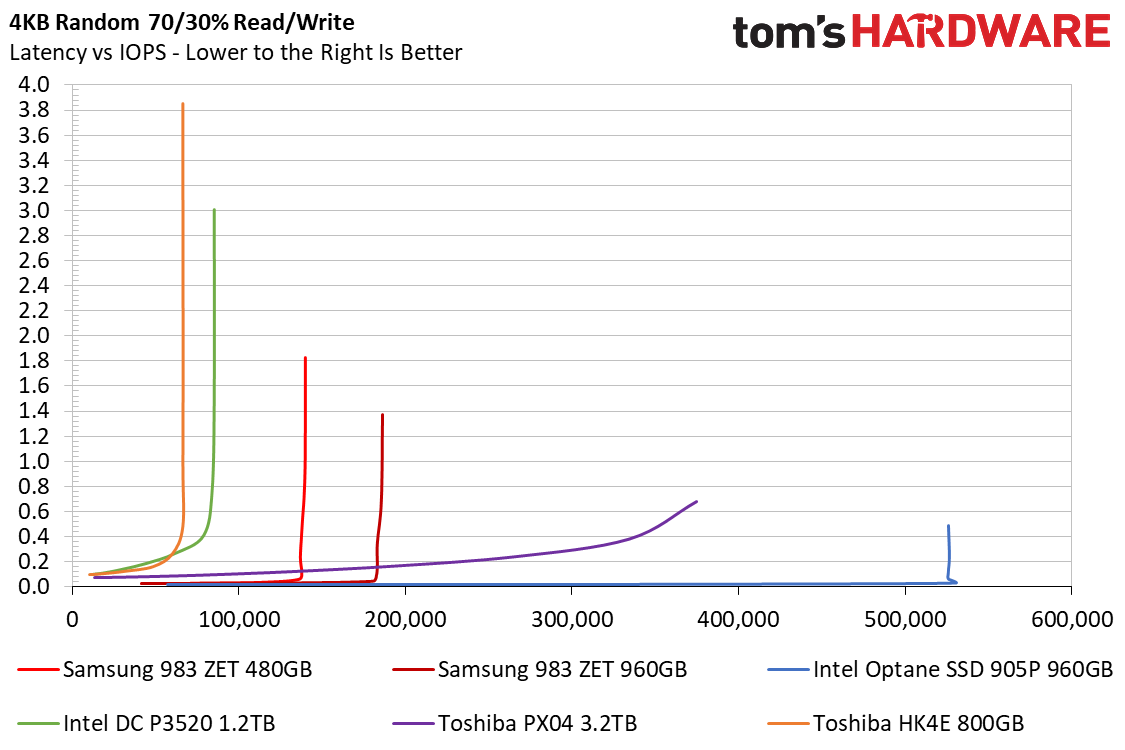
Enlarge/ Latency vs. IOPS, with a 70/30 read/write workload. The orange and green lines are data center-grade traditional NAND SSDs; the blue line is Optane.
For example, a 256GB Optane has a 360PB write-endurance spec, whereas a Samsung 850 Pro 256GB SSD is only specced for 150TB endurance—greater than a 1,000:1 advantage to Optane.
Meanwhile, this excellent Tom’s Hardware review from 2019 demonstrates just how far in the dust Optane leaves traditional data center-grade SSDs in terms of latency.
Stratix 10 NX FPGAs
A curve that doubles almost once per quarter puts Moore’s Law to shame.
This block model overview of Stratix claims enormous generation-on-generation INT8 inference improvements at data center scale.
When you need higher densities and better efficiency than a general-purpose CPU can provide, you build an ASIC. Stratix is Intel’s answer to AI-targeted ASICs.
Finally, Intel announced a new version of its Stratix FPGA. Field Gate Programmable Arrays can be used as hardware acceleration for some workloads, allowing more of the general-purpose CPU cores to tackle tasks that the FPGAs can’t.
Deepfakes aren’t very good—nor are the tools to detect them
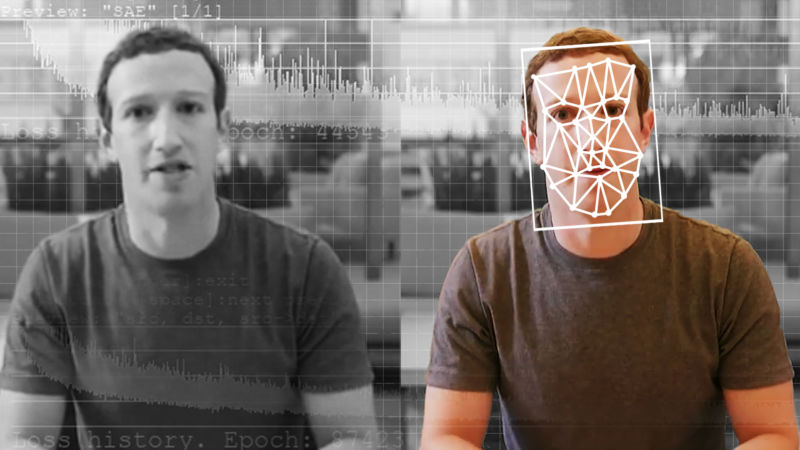
Enlarge/ A comparison of an original and deepfake video of Facebook CEO Mark Zuckerberg.
We’re lucky that deepfake videos aren’t a big problem yet. The best deepfake detector to emerge from a major Facebook-led effort to combat the altered videos would only catch about two-thirds of them.
In September, as speculation about the danger of deepfakes grew, Facebook challenged artificial intelligence wizards to develop techniques for detecting deepfake videos. In January, the company also banned deepfakes used to spread misinformation.
Facebook’s Deepfake Detection Challenge, in collaboration with Microsoft, Amazon Web Services, and the Partnership on AI, was run through Kaggle, a platform for coding contests that is owned by Google. It provided a vast collection of face-swap videos: 100,000 deepfake clips, created by Facebook using paid actors, on which entrants tested their detection algorithms. The project attracted more than 2,000 participants from industry and academia, and it generated more than 35,000 deepfake detection models.
The best model to emerge from the contest detected deepfakes from Facebook’s collection just over 82 percent of the time. But when that algorithm was tested against a set of previously unseen deepfakes, its performance dropped to a little over 65 percent.
“It’s all fine and good for helping human moderators, but it’s obviously not even close to the level of accuracy that you need,” says Hany Farid, a professor at UC Berkeley and an authority on digital forensics, who is familiar with the Facebook-led project. “You need to make mistakes on the order of one in a billion, something like that.”
Deepfakes use artificial intelligence to digitally graft a person’s face onto someone else, making it seem as if that person did and said things they never did. For now, most deepfakes are bizarre and amusing; a few have appeared in clever advertisements.
The worry is that deepfakes might someday become a particularly powerful and potent weapon for political misinformation, hate speech, or harassment, spreading virally on platforms such as Facebook. The bar for making deepfakes is worryingly low, with simple point-and-click programs built on top of AI algorithms already freely available.
“Frustrated”
“I was pretty personally frustrated with how much time and energy smart researchers were putting into making better deepfakes,” says Mike Schroepfer, Facebook’s chief technology officer. He says the challenge aimed to encourage “broad industry focus on tools and technologies to help us detect these things, so that if they’re being used in malicious ways we have scaled approaches to combat them.”
Schroepfer considers the results of the challenge impressive, given that entrants had only a few months. Deepfakes aren’t yet a big problem, but Schroepfer says it’s important to be ready in case they are weaponized. “I want to be really prepared for a lot of bad stuff that never happens rather than the other way around,” Schroepfer says.
The top-scoring algorithm from the deepfake challenge was written by Selim Seferbekov, a machine-learning engineer at Mapbox, who is in Minsk, Belarus; he won $500,000. Seferbekov says he isn’t particularly worried about deepfakes, for now.
“At the moment their malicious use is quite low, if any,” Seferbekov says. But he suspects that improved machine-learning approaches could change this. “They might have some impact in the future the same as the written fake news nowadays.” Seferbekov’s algorithm will be open sourced, so that others can use it.
Cat and mouse
Catching deepfakes with AI is something of a cat-and-mouse game. A detector algorithm can be trained to spot deepfakes, but then an algorithm that generates fakes can potentially be trained to evade detection. Schroepfer says this caused some concern around releasing the code from the project, but Facebook concluded that it was worth the risk in order to attract more people to the effort.
Facebook already uses technology to automatically detect some deepfakes, according to Schroepfer, but the company declined to say how many deepfake videos have been flagged this way. Part of the problem with automating the detection of deepfakes, Schroepfer says, is that some are simply entertaining while others might do harm. In other words, as will other forms of misinformation, the context is important. And that is hard for a machine to grasp.
Creating a really useful deepfake detector might be even harder than the contest suggests, according to Farid of UC Berkeley, because new techniques are rapidly emerging and a malicious deepfake maker might work hard to outwit a particular detector.
Farid questions the value of such a project when Facebook seems reluctant to police the content that users upload. “When Mark Zuckerberg says we are not the arbiters of truth, why are we doing this?” he asks.
Even if Facebook’s policy were to change, Farid says the social media company has more pressing misinformation challenges. “While deepfakes are an emerging threat, I would encourage us not to get too distracted by them,” says Farid. “We don’t need them yet. The simple stuff works.”
Come risolvere i pregiudizi (bias) dell’AI, intervista a Francesca Rossi (IBM)
Nei giorni scorsi ho avuto il piacere di intervistare Francesca Rossi di IBM, uno dei nomi più noti dell’intelligenza artificiale italiana e internazionale.
Francesca Rossi è IBM Fellow e Global Leader sull’Etica dell’AI in IBM e lavora al centro di ricerca IBM T.J. Watson di New York, USA.
La sua ricerca si concentra nell’ambito dell’Intelligenza Artificiale, tema sul quale ha pubblicando circa 200 tra articoli scientifici in riviste e convegni internazionali. Prima di lavorare in IBM, fino a 5 anni fa, è stata professore di informatica presso l’Università di Padova per 20 anni.
È un fellow dell’associazione europea dell’AI (EurAI) e di quella internazionale (AAAI), ed è stata presidente dell’IJCAI (International Joint Conference on Artificial Intelligence) e editore della rivista JAIR (Journal of AI Research). Partecipa a numerose iniziative riguardo l’etica dell’AI, quali il Future of Life Institute, il Leverhulme Centre for the Future of Intelligence, la Partnership on AI e il Gruppo di esperti di IA della Commissione Europea.
Nel 2020 è stata il general chair del più importante convegno mondiale di AI (AAAI 2020), tenutosi a New York.
Luca Sambucci. Cosa sono i bias dell’intelligenza artificiale e che impatto hanno a livello pratico?
Francesca Rossi. Un punto di grande attenzione per quanto riguarda l’addestramento dell’intelligenza artificiale è quello relativo alla possibilità che possa portare con sé dei pregiudizi (bias) inducendo poi l’AI a prendere decisioni discriminatorie e sbagliate.
Ad esempio, quando una banca nega il mutuo ad una persona, non vogliamo che questa decisione sia basata su fattori quali etnia o genere. Vogliamo che si basi solo su dati che siano rilevanti per l’erogazione del credito e la capacità o meno di restituirlo. Se si usano tecniche come quelle di machine learning, la discriminazione potrebbe essere nascosta nella grande quantità di esempi forniti alla macchina per istruirla. Se questi esempi non rappresentassero tutta la pluralità delle possibili situazioni, per la macchina sarebbe difficile generalizzare bene. Nel concreto, se gli esempi contenessero solo casi di mutui elargiti a uomini e rifiutati a donne, la macchina assocerà il genere all’accettazione della richiesta: quando le verrà chiesto di analizzare una nuova domanda di credito, potrebbe usare questa caratteristica del richiedente per proporre, oppure no, l’accettazione.
Quindi, è veramente importante che i dati con cui la macchina viene istruita siano curati con grande attenzione. Il processo di apprendimento da parte della macchina è reso ancora più complesso dal fatto che le caratteristiche su cui non vorremmo discriminare sono molte e spesso correlate tra loro. È comunque incoraggiante che molti ricercatori stiano già lavorando su queste problematiche, con soluzioni di vario tipo che presto potranno essere inserite in ogni strumento di AI. IBM è fortemente impegnata sia nella ricerca dei bias sia nelle iniziative internazionali che mirano ad individuare principi e best-practices per progettare, sviluppare e utilizzare l’AI con un impatto positivo per tutti. Alcuni esempi sono i toolkit open-source che abbiamo creato per la fairness, la robustezza e la spiegabilità, oltre alla partecipazione a iniziative come la Partnership on AI e la stesura di documenti come la recente Rome Call for AI Ethics promossa dalla Pontificia Accademia per la Vita.
Luca Sambucci. Algorithmwatch il mese scorso ha evidenziato un pericoloso bias razziale nell’AI di Google: un oggetto tenuto in una mano veniva riconosciuto come un innocuo monocolo se la mano era di pelle bianca, e come una pistola se la mano era di pelle nera (l’oggetto in realtà era un termometro a infrarossi). Facendo delle prove con IBM Watson abbiamo visto che anche l’AI di IBM fornisce – con la stessa immagine – responsi diversi a seconda del colore della mano: innocui se la mano è bianca e più pericolosi se la mano è nera. Perché avviene questo? E cosa deve fare il settore per scrollarsi di dosso o perlomeno mitigare il più possibile questi bias?
Francesca Rossi. La prima cosa da considerare è che il modello Watson Visual Recognition è addestrato su immagini reali. Significa che i dati di training che utilizziamo sono un insieme di immagini vere e non manipolate. Le immagini artefatte, di conseguenza, potrebbero non produrre risultati altrettanto rappresentativi quanto quelli rilevati attraverso immagini reali. Dal nostro esame è emerso che la mano di colore più chiaro è stata manipolata utilizzando tecniche neanche troppo sofisticate. Questa mano, quindi, non era una rappresentazione accurata di una mano appartenente a una persona reale con una tonalità di pelle chiara. Per confermare questo punto, il nostro team ha individuato l’immagine originale, ha fatto un ritaglio più preciso della mano e ha testato nuovamente l’immagine con mani rese in diversi colori. A questo punto i risultati hanno mostrato che la presenza o meno di responsi errati e con connotazione negativa (come una pistola) è indipendentemente dal colore delle mani. Quindi il problema individuato non è un problema di bias relativo al colore della pelle, ma potrebbe invece essere correlato alla manipolazione dell’immagine. Da notare anche che le interpretazioni errate e negative hanno un livello di confidenza vicino allo 0.5, quindi un innalzamento della soglia di confidenza (ad esempio a 0.55) evita la loro presenza.
Ma è anche molto importante sottolineare che la valutazione del possibile bias in un modello non può essere effettuata usando solo pochi esempi, ma deve seguire un metodo con dati statisticamente significativi. Dal comportamento di un modello su due esempi (di cui uno non realistico) non è possibile derivare né che il modello contiene un bias (se i due esempi mostrano un responso diverso) né che non lo contenga (se i due esempi danno lo stesso responso). In sintesi, la ricerca dei bias e l’addestramento dell’AI vanno ben oltre un semplice test eseguito con due foto dai colori alterati.
IBM si affida agli specialisti e scienziati presenti nei suoi laboratori di ricerca in tutto il mondo, dove si lavora costantemente al miglioramento dei modelli AI e delle metodologie per il loro training. La rilevazione di bias parte dalla scelta di una nozione di non-discriminazione (fairness), che va fatta con le comunità che saranno maggiormente impattate dalle decisioni supportate dalla tecnologia. Questa nozione viene poi usata in modo concreto dai nostri sviluppatori per individuare possibili bias (cioè violazioni della nozione di fairness) nei dati di training o nel modello AI sviluppato. Ogni soluzione per uno specifico cliente parte da un modello pre-allenato che poi viene modificato sulla base dei dati del cliente stesso e delle sue necessità. Molte fasi di test, sia del modello di base sia di quello per il cliente, vengono effettuate per controllare l’eventuale presenza di bias ma anche per individuare possibili altre criticità relative, ad esempio, ad aspetti legati alla precisione, robustezza, privacy, e sicurezza del modello.
Mentre i modelli per i clienti non vengono pubblicati, in quanto sono proprietari, i modelli di base sono resi disponibili a tutti in modo che chiunque possa effettuare test e verificare il loro comportamento. Riceviamo con grande interesse e spirito di miglioramento il risultato di un test come il suo: ci permette di innescare una verifica più approfondita delle proprietà dei nostri modelli.
Luca Sambucci. Nello specifico, cosa sta facendo IBM per eliminare i bias, allineare i valori e costruire un’intelligenza artificiale etica?
Francesca Rossi: Da più di 100 anni IBM lavora per un’innovazione responsabile e capace di portare benefici a tutti e non solo a pochi. Questa filosofia viene applicata anche all’intelligenza artificiale: puntiamo a creare e mettere a disposizione una tecnologia affidabile che possa complementare ed espandere le capacità decisionali degli esseri umani, non di sostituirle. Lo abbiamo anche messo per iscritto nei Principles for Trust and Transparency pubblicati nel 2017.
In linea con questi principi, abbiamo attivato diverse iniziative per fare in modo che la nostra tecnologia sia affidabile, monitorando e migliorando costantemente le sue proprietà. Collaboriamo attivamente anche con molte istituzioni, aziende, governi e organizzazioni della società civile quali le Nazioni Unite, il World Economic Forum, il Governo americano, la Commissione Europea e le società di professionisti del settore come “IEEE” e “Partnership on AI”. Lo scopo che ci anima è quello di dar vita ad un approccio multidisciplinare, trasparente e condiviso per lo sviluppo di una AI positiva per tutti.
Per quanto riguarda i bias nell’intelligenza artificale, IBM ha sviluppato già da anni vari algoritmi per individuare e mitigare i pregiudizi nei dati di training. Nel 2018 abbiamo creato il toolkit AI Fairness 360, mettendolo a disposizione della comunità open source. Il toolkit comprende algoritmi, codice, dati, metriche e tutorial in grado di offrire ad accademici, ricercatori e data scientist strumenti e conoscenze per definire concetti di fairness (equità) e confrontare nuovi algoritmi per individuare e mitigare i bias nei modelli di AI.
La gestione del bias in AI è solo uno dei pilastri del nostro approccio alla trustworthy AI, che include anche soluzioni per la spiegabilità, la robustezza e la trasparenza. Come per i bias, anche per la spiegabilità e la robustezza abbiamo creato dei toolkit open-source. Mentre per la trasparenza abbiamo definito una metodologia, chiamata “AI factsheet”, che permette di documentare le scelte di progetto e sviluppo e condensarle in un formato utile a aziende, utenti o altri stakeholders.
Abbiamo anche creato una governance interna, guidata da un AI Ethics board in cui è rappresentata ogni divisione dell’azienda, che coordina tutte le attività relative all’etica dell’AI assicurando trasparenza, supporto e valutazione di ogni nuovo prodotto con possibili ripercussioni etiche. Questo comitato permette di assicurare che lo sviluppo e il rilascio della tecnologia AI di IBM sia in sintonia con i nostri valori e il nostro impegno a portare queste tecnologie nel mondo in modo responsabile.
Tra le attività di collaborazione con enti e istituzioni, cito con grande piacere l’ultima in ordine di tempo: il 28 febbraio scorso IBM ha sottoscritto con la Pontifica Accademia per la Vita un importante documento sostenuto anche da Papa Francesco: la Call for AI Ethics.
Questo “manifesto” è il risultato di un’ampia collaborazione in cui abbiamo potuto osservare una comunanza di intenti e di valori che ci ha permesso di contribuire attivamente alla stesura del testo. La centralità del documento sta nell’impegno a lavorare per un’intelligenza artificiale che sia sempre a supporto, e non in sostituzione, delle persone, allineata ai valori di inclusione, solidarietà e trasparenza.
Luca Sambucci. Proprio in merito a quest’ultimo punto, sono già stati pubblicati molti regolamenti, guide e codici etici per l’intelligenza artificiale, da numerosi governi a diversi organismi sovranazionali, oltre ovviamente alle aziende più importanti. Cosa ne pensa di questa proliferazione di guide e codici etici per l’AI?
Francesca Rossi. L’approccio multidisciplinare è l’unico possibile. Gli esperti di intelligenza artificiale possono trovare soluzioni tecnologiche e scientifiche a problemi etici nell’uso dell’Intelligenza Artificiale, ma questi vanno identificati e studiati insieme ad esperti di molte altre discipline come psicologi, sociologi, filosofi, avvocati, ed economisti. Le barriere tra le discipline vanno eliminate e gli esperti devono lavorare insieme per scambiare e confrontare conoscenze e soluzioni complementari. Vanno inoltre coinvolte tutte le comunità che hanno a che fare con l’IA: chi la progetta, chi la produce, chi la usa e chi basa le sue decisioni su questa tecnologia. E la discussione va effettuata su scala globale, coinvolgendo attori in varie culture e geografiche. Perché l’AI avrà sempre di più un impatto globale e ha quindi bisogno di linee guida etiche e valori di riferimento ampiamente condivisi.
Molte sono le iniziative globali già in atto che IBM ha fondato o a cui partecipa attivamente. La Partnership on AI, per esempio, fondata nel 2017 da IBM e altre aziende, conta oggi più di 100 membri in tutto mondo e intende definire e condividere le best practices per l’uso dell’AI con un impatto positivo sulle persone e la società. Il Gruppo di esperti di AI della Comunità Europea, di cui ho l’onore di far parte, include 52 persone che rappresentano tutte le discipline citate sopra e anche organizzazioni che tutelano i diritti dei consumatori e dei cittadini. Questo gruppo ha lo scopo di aiutare la Commissione Europea a declinare le linee guida etiche per l’AI in Europa e le possibili politiche per finanziare e supportare l’innovazione.
Mentre le linee guida e i principi sono certamente fondamentali, è però necessario anche tradurli in azioni concrete che abbiano un impatto sulla tecnologia che le aziende sviluppano e usano. Per questo, come ho già detto, IBM non si è fermata ai principi ma ha anche creato iniziative di ricerca, sviluppo, e governance dell’AI che mirano a creare una tecnologia affidabile e positiva.
Luca Sambucci. Parliamo allora di azioni concrete, cosa può fare oggi un’organizzazione che decide di dotarsi di un software di intelligenza artificiale per assicurarsi che la soluzione scelta sia “etica”?
Francesca Rossi. Ogni azienda o organizzazione che intenda dotarsi di un sistema di intelligenza artificiale deve scegliere un partner affidabile, che possa garantire in modo trasparente come opera. Ciò è fondamentale per arrivare a ottenere un’intelligenza artificiale che segua principi etici e morali.
La fiducia nell’AI deve essere basata su principi quali la non-discriminazione, la trasparenza, la spiegabilità, la robustezza e il rispetto della privacy. La non-discriminazione è uno dei valori più importanti, per il quale esistono algoritmi che possono controllare o modellare un sistema di AI. La trasparenza permette di capire e comunicare le capacità e i limiti della tecnologia che usiamo. La spiegabilità è fondamentale per poter capire perché un sistema di AI prende certe decisioni e come poterle eventualmente correggere o impugnare per vie legali. La robustezza consente una maggiore flessibilità in caso fosse necessario cambiare il progetto in corso d’opera. Infine, il rispetto della privacy dipende sia dalle proprietà dell’AI che dal suo uso.
Come detto, in IBM possiamo contare su una struttura interna, un comitato per l’etica dell’intelligenza artificiale, che ci aiuta a valutare gli aspetti delicati di ogni proposta di prodotto per un cliente: essa deve segue i principi e le linee guida sull’etica dell’AI che ci siamo dati all’interno dell’azienda, tra cui che la raccolta dati avvenga nel rispetto dei diritti fondamentali dell’uomo, della dignità e della privacy delle persone. Se non è così, noi non partecipiamo all’iniziativa o non firmiamo il contratto.
L’innovazione digitale, un volano per la sostenibilità nel settore edile
Negli ultimi anni un sempre crescente numero di aziende ha iniziato a investire nella propria dimensione sociale ed ambientale. A prescindere dalle dimensioni dell’impresa o dal settore in cui questa opera, infatti, è chiaro ormai come adottare un approccio orientato alla sostenibilità sia diventata una necessità per rimanere sul mercato.
Innovazione digitale nel settore edile
Mi riferisco infatti non solo alla dimensione “green” – giustissima per provare a ridurre gli effetti più drammatici del cambiamento climatico – ma anche all’opportunità di mettere al centro del proprio operato, al fianco dei risultati di business, gli outcome in termini di sostenibilità e impatto sociale, seguendo le logiche ESG.
Da un lato, per riuscire a raggiungere un’economia “a zero impatto ambientale”, come stabilito dagli accordi di Parigi, c’è bisogno di un intervento a livello globale che vede la collaborazione di tutte le filiere produttive e di tutti i sistemi industriali.
Raggiungere alti livelli di efficienza energetica, fattore strategico contrastare il cambiamento climatico – è una delle priorità proprio per il settore dell’edilizia, per costruire edifici con sistemi avanzati di risparmio energetico.
I progetti sviluppati in questo senso sono molteplici. Ad esempio, con i Building Management System (BMS) -sistemi di controllo integrato installati all’interno degli edifici – è possibile controllare e monitorare tutte le apparecchiature meccaniche ed elettriche, per evitare un dispendio eccessivo di energia. Una riduzione dei consumi non solo porta grandi benefici al nostro pianeta, ma consente anche un notevole risparmio.
Alcuni esempi
Di recente Arbnco, una società scozzese che si occupa di Proptech, si è aggiudicata un contratto per oltre mezzo milione di euro per il Governo britannico per sviluppare un prototipo della loro piattaforma digitale per l’efficienza energetica (“DEEP”).
Il sistema aiuterà le imprese (anche quelle più piccole) nell’ottimizzazione automatica del loro consumo totale di energia e nella la valutazione delle prestazioni energetiche della loro sede.
Infatti, raccogliendo e analizzando i dati sul consumo energetico dell’edificio – che possono essere acquisiti automaticamente o inseriti manualmente -, è in grado di generare una lista di cambiamenti da effettuare per ottenere il miglio risultato possibile, e di calcolarne anche i costi.
Fin qui la sostenibilità intesa nella sua dimensione ambientale. Ma il digitale ha un potenziale ancora maggiore se allarghiamo lo sguardo alla sostenibilità intesa come impatto sociale. Anche in questo caso, il settore edilizio è forse il primo e più sfidante campo di prova per misurare con nuovi strumenti e approcci innovativi le ricadute di un progetto sui territori sulle comunità.
Con una crescente attenzione globale ai criteri ESG, diventa cruciale il modo in cui costruiamo ma soprattutto con cui rigeneriamo gli spazi delle nostre città. All’estero, non c’è da stupirsi, sono un po’ più avanti di noi. In UK ad esempio, già da tempo si sono consolidati sistemi per la valutazione degli impatti sociali dei progetti di costruzione (e non solo).
In Italia
Nel nostro Paese c’è ancora molto da fare – a partire dal livello di sensibilità e consapevolezza degli operatori del settore – ma anche su questo fronte, qualcosa si sta muovendo.
Un esempio interessante è quello di Open Impact, startup innovativa e spin-off di ricerca dell’Università di Roma Tor Vergata, che offre una piattaforma digitale che impiega sistemi di intelligenza artificiale per la programmazione, progettazione e valutazione e comunicazione dei progetti sotto il profilo dell’impatto. Necessità queste non solo delle Pubbliche Amministrazioni, ma anche degli operatori che sono chiamati a un intervento infrastrutturale sui territori.
Tutto queste esperienze mostrano un trend comune a livello globale, e ci fanno capire quando importante sia velocizzare il processo di digitalizzazione a tutti i livelli – ma soprattutto nel settore edilizio – perché questo rappresenta un potentissimo volano per la sostenibilità. Gli edifici sono responsabili di circa il 30% del consumo energetico a livello mondiale, e la loro incidenza nel definire gli spazi fisici e sociali delle nostre vite è immensa.
Serve un vero e proprio cambio di mentalità, per spostare la nostra rotta verso modelli economici e sociali – ma anche produttivi – orientati alla crescita sostenibile. La chiave per farlo è tutta digitale.
Declinazioni applicative del progetto europeo sull’Intelligenza Artificiale secondo il Libro Bianco della Commissione UE
[unable to retrieve full-text content]https://www.ictsecuritymagazine.com/articoli/declinazioni-applicative-del-progetto-europeo-sullintelligenza-artificiale-secondo-il-libro-bianco-della-commissione-ue/
How well can algorithms recognize your masked face?
Cindy Ord | Getty Images
Facial-recognition algorithms from Los Angeles startup TrueFace are good enough that the US Air Force uses them to speed security checks at base entrances. But CEO Shaun Moore says he’s facing a new question: How good is TrueFace’s technology when people are wearing face masks?
“It’s something we don’t know yet because it’s not been deployed in that environment,” Moore says. His engineers are testing their technology on masked faces and are hurriedly gathering images of masked faces to tune their machine-learning algorithms for pandemic times.
Facial recognition has become more widespread and accurate in recent years, as an artificial intelligence technology called deep learning made computers much better at interpreting images. Governments and private companies use facial recognition to identify people at workplaces, schools, and airports, among other places, although some algorithms perform less well on women and people with darker skin tones. Now the facial-recognition industry is trying to adapt to a world where many people keep their faces covered to avoid spreading disease.
Facial-recognition experts say that algorithms are generally less accurate when a face is obscured, whether by an obstacle, a camera angle, or a mask, because there’s less information available to make comparisons. “When you have fewer than 100,000 people in the database, you will not feel the difference,” says Alexander Khanin, CEO and cofounder of VisionLabs, a startup based in Amsterdam. With 1 million people, he says, accuracy will be noticeably reduced and the system may need adjustment, depending on how it’s being used.
Some vendors and users of facial recognition say the technology works well enough on masked faces. “We can identify a person wearing a balaclava, or a medical mask and a hat covering the forehead,” says Artem Kuharenko, founder of NtechLab, a Russian company whose technology is deployed on 150,000 cameras in Moscow. He says that the company has experience with face masks through contracts in southeast Asia, where masks are worn to curb colds and flu. US Customs and Border Protection, which uses facial recognition on travelers boarding international flights at US airports, says its technology can identify masked faces.
But Anil Jain, a professor at Michigan State University who works on facial recognition and biometrics, says such claims can’t be easily verified. “Companies can quote internal numbers, but we don’t have a trusted database or evaluation to check that yet,” says. “There’s no third-party validation.”
A US government lab at the National Institute of Standards and Technology that functions as the world’s arbiter on the accuracy of facial-recognition algorithms hopes to provide that external validation—but is being held up by the same pandemic that prompted the project.
Patrick Grother, a computer scientist who leads NIST’s facial-recognition testing program, says his group is preparing tests to quantify how accurately algorithms identify people wearing masks. NIST plans to digitally add masks to its existing stockpile of photos and test algorithms previously submitted to a test that involves checking whether one photo matches another, similar to the job of a border guard checking passports. Later, it will invite companies to submit new algorithms tuned for face masks. But Grother says the timing of the project is uncertain, because NIST has reduced staffing due to the Covid-19 crisis.
Chinese and Russian companies tend to dominate NIST’s widely watched leaderboards for facial-recognition accuracy. Lighter privacy rules and wider acceptance of surveillance make it easier for those companies to gather the data and operational experience needed to improve facial-recognition algorithms. This year, companies from China and Russia were first to claim their products are ready for a world of half-covered faces.
Early in March, China’s SenseTime, which became the world’s most valuable AI startup in part through providing face recognition to companies and government agencies, said it had upgraded its product for controlling access to buildings and workplaces to work with face masks. The software attends to facial features left uncovered, such as eyes, eyebrows, and the bridge of the nose, a spokesperson said. The US restricted sales to SenseTime and other Chinese AI companies last year for allegedly supplying technology used to oppress Uighur Muslims in China’s northwest.
China’s facial-recognition vendors faced the challenge of identifying masked faces earlier, and more broadly, because the country is both the origin of the novel coronavirus and the world’s most developed market for facial recognition. Chinese citizens can use their faces to pay in stores or use ATMs, while government agencies tap the technology to pluck persons of interest from streets and crowds.
Reports from China of the systems’ effectiveness with masks are mixed. One Beijing resident told WIRED she appreciated the convenience of not having to remove her mask to use Alipay, China’s leading mobile payments network, which has updated its facial-recognition system. But Daniel Sun, a Gartner analyst also in Beijing, says he has had to step out of crowds to pull down his mask to use facial recognition for payments. Still, he believes facial recognition will continue to grow in usage, perhaps helped by interest in more hygienic, touch-free transactions. “I don’t think Covid-19 will stop the increase in usage of this technology in China,” Sun says.
The Japanese conglomerate NEC, which provides the facial-recognition technology used by Customs and Border Patrol at US airports, is cautious in discussing the tech’s capability against masked faces. Benji Hutchinson, a vice president with NEC’s US division, says the company’s labs in Japan that develop its algorithms have always tested on face masks because they are commonly worn during flu seasons in Asia. But the company has launched new rounds of testing now that masks are set to become the norm. “Masks are nothing new to us, but that doesn’t mean it’s all perfect,” Hutchinson says. He says the company is advising customers, such as CBP, to make their own decisions about the technology for now.
Although international passengers are currently rare, a CBP spokesperson said it is still using facial recognition at more than two dozen US airports and that the technology works with masks. “CBP’s biometric facial-comparison technology can match travelers wearing masks to photos from their travel documents,” the spokesperson said.
CBP’s system checks faces of passengers at the departure gate against “faceprints” from photos the Department of Homeland Security has on file for people listed on that flight. Although the agency says passengers are always free to opt out, some people have found it difficult to do so. CBP says that if its technology fails on a person wearing a face mask, they may keep it on while a person manually checks their passport.