Scaling SEO: 5 levels of automated digital progression & elevation

scaling SEO levels of automation

Today, SEOs have a massive opportunity to expand their role in digital workflows, as far as both the volume and importance of tasks available. As companies increasingly look for equal parts creativity and analytical skills in digital leadership, experienced SEOs are uniquely positioned to fill the gap—that is, if they are able to capitalize on the innovations that enable them to practice scaling their best SEO efforts.

I wrote recently about the power of intelligent automation; that is, automation supercharged by a layer of artificial intelligence. Digital is encountering and even coming to rely on AI in predictive analytics, automated sales analysis, research and information aggregation, automated communications (think chatbots and email), and even virtual personal assistants.

Across digital channels, campaigns, and tactics, it seems nothing is untouched by automation. And yet the degree of automation and just how much AI informs the decisions being made can vary widely. Intelligent automation isn’t an all-or-nothing prospect—there are many different ways we can work alongside the machines revolutionizing digital.

In fact, those with the greatest understanding of how to collaborate with intelligent machines hold the keys to driving digital forward.

5 levels of automation: Elevating SEO and driving digital performance

Let’s look to the automotive industry for a model automation framework that illustrates just how much technology impacts the human experience in a defined task. The Society of Automotive Engineers created its “Levels of Driving Automation” standard to define the six levels of automation in the driverless car industry.

From Level 0 through to 5, the tasks a human driver must undertake decrease, while technological features increase.

SAE automation levels for driverless cars

Image source: NHSTA.gov

In Level 0, the driver is on her own and must constantly steer, brake, accelerate, signal, and otherwise control all aspects of the car’s performance. By Level 3, she may be in the driver’s seat but various automated driving features are engaged. The conditions must be right for automated operation, and the machine can ask her to take over at any time.

Lane-keeping assist, adaptive cruise control, and self-parking are a few examples of automated driving features you might experience in a Level 3 or 4 vehicle. (As Lance Eliot pointed out recently in Forbes, we’ve yet to see a true Level 5—a truly automated and driverless car—in action. The U.S Department of Transportation expects we’ll see fully driverless cars from 2025 and beyond).

We can apply this sort of framework to help further our understanding of the intelligent automation opportunity for SEOs. And while the automotive industry has all sorts of regulations and laws in place to protect public safety, you are a lot freer to explore the boundaries of intelligent automation in digital (and in SEO, in particular), so long as you respect user privacy.

Level 1: Manual SEO

The SEO of days gone by was almost entirely manual and incredibly time-consuming. That’s not to say that the more labour-intensive style of SEO doesn’t still happen today; there are still some SEOs who toil away in Excel, manually auditing and optimizing sites. Manual SEO gives you complete control over your entire search strategy, from selecting backlinks at the individual level to careful optimizations throughout the site. But with 53% of website traffic coming from organic search – opportunities to capitalize and scale are immense.

how much of website traffic comes from organic SEO, paid search, organic social, other

However, it’s simply impossible to ingest, analyze and activate search data at any sort of scale without automation. Manual SEO can be incredibly effective, but that value is reduced by every missed opportunity caused by slow implementation and the expensive overhead of a team of experts.

Level 2: Simple automation

Some of the tools you use in SEO today were probably borne out of earlier SEOs’ need to automate manual tasks such as keyword research and tracking rankings. Second generation SEO tools began to automate content optimizations (at least, pointing out opportunities to optimize).

Simple automation is almost exclusively about reducing manual labor for simple tasks. Gathering the same data set at regular intervals, such as daily rankings on specific keywords, for example. Scouring the web for links to your site.

Simple automation will reduce labor spent on these tasks, freeing up time and energy for more creative and strategic activities. Think of this level of SEO automation as cruise control—you can take your foot off the pedal and let the machine do some of the work, but you are very much still in control of the car.

Level 3: Application of AI for insights

In Level 3, our SEO software becomes a whole lot smarter thanks to artificially intelligent analysis. In this stage, the car is driving itself—but only under certain conditions.

From your place in the driver’s seat, you control what input you feed your SEO tools and define what you’d like as outcomes. Through the analysis of massive data sets (far more than you could ever plow through on your own), you’re able to glean greater insights and make better decisions.

You can automate the process of analyzing your site’s content and have your software return optimization recommendations based on your selected keywords, for example. This can inform your content creation efforts and ensures that you’re spending the time you do have on the areas with the potential for the highest impact.

Level 4: Real-time interactions

The car is driving itself, but you can’t throw caution to the wind and take it out in all conditions. In the driverless car world, a Level 4 vehicle may not even have a steering wheel or brake pedals installed. In a 2018 test case in Japan, for example, a driverless taxi ferried paying fares on a defined route through the manic streets of Tokyo.

Chatbots are a great example of a Level 4 automation in digital. SEOs are a natural fit for driving conversational AI strategy, as consumers often turn to chatbots as an extension of the search experience. Whether querying by text or by voice, connected consumers look to intelligent automated assistants to help them solve their immediate needs. Who understands that customer’s journey and which pieces of content best answer their questions better than the SEO team? If chatbots are being treated as a function of sales, it’s important that marketing (and search in particular) assert their will to be consulted, or even to lead.

Level 5: Real-time decision-making and automated optimizations

The fully autonomous car may drive itself, but its independence is an illusion. The car—when it comes to market—will rely on teams of skilled designers, engineers, and developers to create and maintain the systems that will enable it to make decisions and take action in the moment to keep its passengers safe.

And so it is with fully AI-integrated search software. Disparate tools that automate only a handful of functions have fallen to the wayside as platforms have evolved to ensure that all functions are able to share data and “talk” to one another. Empowering the machines to prioritize tasks and make decisions about which optimizations can be executed in real time, as consumers make their needs apparent, enables brands to be fully responsive and even proactive in personalizing the search experience.

Don’t be left holding the wrench | Add automated talent to your team

Let me us a mechanic as a generic example. Being a mechanic is a perfectly respectable profession. However, 20 years from now a person with those skills alone is going to have a difficult time finding employment. The mechanic who is upgrading his skills today, who is now studying engineering or transportation safety or automotive software development, is ensuring his employability when driverless cars hit the market.

Those mechanical skills will still be needed, but they’ll have to be complemented by a solid understanding of the computerized systems that drive the car. They’ll have to be able and willing to work alongside the machines.

SEOs today have the opportunity to elevate their role and self-drive some SEO functions with automation and be the CMOs or CDOs of tomorrow something (that my company) does with BrightEdge Autopilot. Especially if they can position themselves as the best choice to work alongside Level 5 systems.

Search’s broad impact across the entire digital customer journey gives SEOs a wide-ranging set of skills and perspectives on which to build and eventually lead. To capitalize on the opportunity, search professionals must be willing to embrace AI not as a tool, but as a collaborative digital partner—one that can be trusted to make the right decisions when guided by the right strategy.

All too often marketers find themselves in mixed debate over the merit of one digital channel over the other, the pros and cons of Artificial Intelligence and the opportunities for the next promotion. The reality is that in any thriving ecosystem balance is key. The same is true for search and digital marketing. It is particularly the case for SEO as working in technically orientated environment requires much work and a lot of balance given its influence on content and all digital channels.

Those who can intelligently embrace advancements in AI and automation are actually the ones who stand to get that next promotion and elevate their role in digital. After all – in reality they already have extra members on their team.

Jim Yu is the founder and CEO of leading enterprise SEO and content performance platform BrightEdge. He can be found on Twitter .

Whitepapers

Related reading

Creating SEO-friendly how-to content

Accessibility and SEO: Where they overlap and how to optimize for both

Why businesses should implement structured data

optimizing for voice search with Mastercard SVP global digital marketing

Scaling SEO: 5 levels of automated digital progression & elevation


Startup, robot, IA, banda larga, Blockchain, 5G. L’innovazione presente nel DEF

Otre e accanto al digitale e ai pagamenti elettronici in chiave antievasione, tanta innovazione presente nel DEF, il Documento di Economia e Finanza 2019, approvato ieri in Consiglio dei Ministri, che dedica un capitolo a sé al tema dell’Innovazione.

Pagamenti elettronici, Web tax, PA e scuola. Tutto il digitale presente nel DEF

Linee programmatiche

“L’innovazione tecnologica va incoraggiata favorendo l’aumento degli investimenti privati, ancora troppo lontani dalla media europea, in start up e PMI innovative”, si legge nel documento. “L’obiettivo è quello di unire l’innovazione alla transizione del nostro sistema industriale in chiave di sostenibilità ambientale, alla piena attuazione dell’economia circolare e alla sfida della ‘quarta rivoluzione industriale’: digitalizzazione, robotizzazione e intelligenza artificiale”.

Piano Impresa 4.0 e aree grigie

Il piano Impresa 4.0 verrà aggiornato nell’ambito di una nuova strategia nazionale dell’innovazione anche nell’ottica di uno sviluppo delle politiche sostenibili e green (Legge 3 maggio 2019, n. 10 articolo 37).

“È necessario accelerare la digitalizzazione del Paese, con l’obiettivo di far risalire l’Italia nell’indice Desi, con la piena attuazione del Piano Banda Larga. A tal fine il Comitato Banda Ultra Larga ha approvato il lancio della seconda fase del Piano per intervenire nelle ‘aree grigie’ del Paese e sostenere la domanda di servizi ultraveloci attraverso i voucher per la connettività”, prosegue il documento.

Accordo Infratel-TIM nelle aree bianche

“Nelle Regioni dove Infratel ha realizzato le infrastrutture di accesso alla rete pubblica in fibra ottica la stessa società ha siglato un accordo con la TIM, che prevede un programma di attivazioni da parte dell’operatore privato, conseguenti alla consegna della fibra ottica da parte di Infratel, con date certe riguardo l’attivazione dei servizi ai cittadini, alla pubblica amministrazione ed alle aziende di quei territori. In tal modo verrà accelerato lo sviluppo delle reti a banda ultra larga nelle aree ‘a fallimento di mercato’ non oggetto di bandi precedenti”, si legge.

IA, Blockchain e IoT: fondo annuo di 15 milioni confermato

“Per favorire l’innovazione e lo sviluppo delle tecnologie e delle applicazioni di Intelligenza Artificiale, Blockchain e Internet of Things, con la Legge di Bilancio per il 2019 è stato istituito un apposito fondo con una dotazione di 15 milioni annui dal 2019 al 2021”, si legge.

“La Strategia nazionale per l’Intelligenza Artificiale, elaborata dal Ministero dello Sviluppo Economico con il supporto del gruppo di esperti incaricati di formulare proposte di policy per favorire lo sviluppo del settore, è stata sottoposta a consultazione pubblica. È anche in corso il lavoro del gruppo di esperti selezionati dal Ministero dello Sviluppo Economico incaricato di redigere una Strategia nazionale per la Blockchain”, prosegue il documento.

Fondo Nazionale per l’Innovazione

È inoltre in via di completamento l’iter per rendere operativo il Fondo Nazionale per l’Innovazione “gestito attraverso una cabina di regia in grado di riunire le risorse pubbliche e private dedicate a questo tema strategico. Il Fondo Innovazione opererà come fondo di fondi attraverso investimenti diretti in start up e PMI innovative”.

Mappatura dei centri di trasferimento tecnologico

È in corso di completamento, prosegue il capitolo dedicato all’innovazione, “il lavoro di mappatura dei centri di trasferimento tecnologico in Italia, che consentirà una più efficace azione di coordinamento e di indirizzo per il trasferimento tecnologico alle imprese, anche attraverso il potenziamento delle strutture esistenti. Sarà inoltre indispensabile proseguire il sostegno alla domanda pubblica intelligente e favorire l’accesso delle start up e PMI innovative agli appalti pubblici”.

Perimetro cibernetico e 5G

“È stato approvato un decreto-legge in materia di perimetro di sicurezza nazionale cibernetica per garantire un livello elevato di sicurezza delle reti….”, si legge. “Una delle novità principali riguarda l’istituzione di un meccanismo teso ad assicurare un procurement più sicuro per i soggetti inclusi nel perimetro che intendano procedere all’affidamento di forniture di beni e servizi ICT destinati a essere impiegati sulle reti, sui sistemi e per i servizi rilevanti. Si modifica inoltre la normativa sull’esercizio dei poteri speciali (Golden Power) in relazione alle reti 5G”.

Impresa 4.0

“Il piano impresa 4.0 verrà rafforzato, nell’ambito di una nuova strategia nazionale per l’innovazione, attraverso una revisione organica delle misure esistenti, per favorire la più ampia partecipazione delle piccole e medie imprese, delle filiere produttive e stimolare l’attrazione di grandi investimenti strategici”, prosegue il documento. “Il Governo continuerà ad investire sulle competenze potenziando il sistema ITS, confermando il contributo per i manager dell’innovazione – introdotto nella legge di bilancio per il 2019 – ed estendendo le spese ammissibili al credito d’imposta formazione 4.0 compatibilmente e nei limiti del Regolamento sugli aiuti di Stato. Per ulteriori misure in materia di investimenti si rimanda al Capitolo III paragrafo 5”, chiude il documento.

https://www.key4biz.it/startup-robot-ia-banda-larga-blockchain-5g-linnovazione-presente-nel-def/272918/


AI, riconoscimento facciale e algoritmi priorità Ue della Von der Leyen

La nuova Commissione Ue sta cambiando pelle e sarà pronta nei prossimi mesi, ma quello che sicuramente non cambierà l’atteggiamento di severo scrutinio nei confronti delle tech company made in Usa non dovrebbe subire grossi mutamenti nella nuova era di Ursula Von der Leyen. E’ più che probabile che la nuova presidente della Commissione Ue, sulla scia dell’esecutivo precedente, userà il pugno di ferro per contrastare lo strapotere di Google, Amazon, Facebook & Co.

I primi 100 giorni del nuovo esecutivo Ue

Secondo un’analisi del Wall Street Journal, le prime mosse del nuovo esecutivo Ue, che entrerà pienamente in funzione dal primo novembre, partiranno da una nuova normativa sull’Intelligenza Artificiale (AI) e sull’utilizzo dei Big Data, mentre sul fronte Antitrust prosegue l’indagine serrata per verificare eventuali abusi da parte di Facebook e Amazon. Le indagini Ue nei confronti delle piattaforme Usa, avviate dall’ex commissario alla Concorrenza Margrethe Vestager, che manterrà un ruolo di primo piano nella nuova Commissione, sono concentrate sull’utilizzo che Facebook e Amazon fanno dei dati raccolti, e potrebbero sfociare in nuove multe milionarie. Entrambe le società negano ogni tipo di abuso, ma basti ricordare che negli ultimi anni Google ha subito sanzioni per un totale di 9,4 miliardi di dollari nella Ue in tre diversi procedimenti. Un quarto dossier sul servizio di ricerca di lavoro, Google for Jobs, è aperto e si trova in fase preliminare.

Nuove regole Ue per AI e riconoscimento facciale

Sul tavolo della neopresidente della Commissione ci sono nuove norme più restrittive sul riconoscimento facciale e la creazione di un fondo multimiliardario per rilanciare la ricerca tecnologica in Europa. Di certo, Von der Leyen vorrà portare a termine un disegno di web tax europeo, armonizzando il quadro fiscale per evitare in futuro il rischio di elusioni multimiliardarie da parte delle big company Usa. In cima all’agenda della Commissione c’è la regolazione dell’Intelligenza Artificiale, nel solco della tradizione europea per trovare un giusto equilibrio fra il libero scambio di dati nel rispetto della privacy, della sicurezza e dei principi etici del Vecchio Continente.

Algoritmi, norme più severe allo studio

Giro di vite in arrivo per il riconoscimento facciale e allo studio l’introduzione dell’obbligo da parte delle imprese di segnalare chiaramente in chat e smartphone quando a interagire con un utente sia un bot o un algoritmo. Nello stesso modo, nuove norme potrebbero riguardare la responsabilità delle imprese per quanto riguarda le conseguenze delle decisioni prese da algoritmi che imparano da sé (self learning algorithms).

Sul tavolo anche l’ipotesi di istituire un super regolatore con poteri sanzionatori, in grado di risolvere tutte le numerose dispute transnazionali, dovute ai molteplici quadri regolatori in vigore nel cyberspazio europeo.

https://www.key4biz.it/ai-riconoscimento-facciale-e-algoritmi-priorita-ue-della-von-der-leyen/269522/


Four tools your business needs for better metric reporting

Four tools your business needs for better metric reporting

Technology has helped businesses in endless ways. But one of the most important benefits it offers to companies is the ability to monitor and measure success, and sequentially, plan for the future.

In the past, reporting on important metrics was a rather tricky and time-consuming task that required lots of work and careful calculations. Thanks to modern business technology and advances like AI and machine learning, it is now easier than ever to gather these data points and gauge progress.

However, this rapid advancement has led to a whole new set of problems. Although technology has made it easier to collect data, it has left us with an overwhelming amount of information, making it quite difficult to pinpoint what exactly is relevant.

Of course, the only way to determine success in any business matter is by first setting goals.

  • What is most important to your business?
  • Do you only care about the bottom line and increasing conversions?
  • What are the components needed to make this happen – such as generating more leads and website traffic or cutting internal costs by boosting productivity?

No matter what your ultimate business goals are, the key to strategizing properly is understanding where you currently stand and how to make improvements. This can only be done with precise metric measurements and reporting.

Here are four tools that can help your company measure these important metrics easily and accurately.

1. Traffic analytics for audience identification

The only way that any marketing/promotional strategy will ever be successful is by connecting with a relevant audience. If you have no idea who you are trying to reach or have an inaccurate description of your target customers, then there is no way your methods will reach their fullest potential.

Your website is one of the best resources for audience identification and segmentation, and it can also help when it comes to determining the strategy ROI for various groups. While Google Analytics can provide general information on your website traffic’s demographics, it is better to use an analytical program that can go even deeper and provide details on your audience’s behaviors and preferences.

Finteza is a great option here because its in-depth traffic analytics software gets down to the nitty-gritty details of audience segmentation. Each link is tracked and the traffic is analyzed and categorized into understandable reports. Marketers can also use this program to track marketing links to see which audience segments are responding best to various content.
screenshot of using Finteza to monitor website traffic and analyze user actionsSource: Finteza

By understanding these types of behavioral metrics, marketers will have a much more stable foundation to build their strategies upon and base their targeting methods.

2. Site performance for digital monitoring

Tracking and reporting marketing campaign returns is often viewed as a tedious task, as there are many different factors that come into play.

Most marketers dread this process because it can be super time-consuming and meticulous. Furthermore, if the results are not as great as expected, it can be quite a disappointment. 55% of marketing teams agreed that determining campaign ROI was their top challenge.

Tools like Raven can be extremely helpful for measuring the performance of digital campaigns, specifically when it comes to SEO and PPC.

Source: Raven

This platform analyzes your entire website’s collection of links to track their performance and keeps the platform free from errors. It also correlates to how external link building campaigns have improved your own website’s performance in terms of backlinks, domain authority, and other KPIs.

3. Event marketing tracking for instant results

If you think tracking digital marketing metrics is tricky, what about measuring the results of real-life marketing events?

If you host webinars or attend business conferences and meetups, it can be quite difficult to track the exact results of these efforts. However, it is important to know whether these strategies are truly paying off.

You need a tool that is keeping track in real-time to see how well your efforts are going during live events or digital live streams. For example, Splash is designed to be integrated with multiple event tools and provides real-time custom data dashboards to measure ROI, evaluate progress, and assess performance.

screenshot of tracking the outcome of live events or digital live streams using Splash

Source: Splash

It even offers a check-in app so that you can capture attendee data, update profiles, and sync all of this information as it happens. All of this data is analyzed during and after the event, so leaders can watch the metrics change and grow.

4. Performance management for employee engagement

When you think of the key indicators of business success, you might lean towards metrics that measure external factors – like conversion rates. However, internal metrics can be quite reflective of the success of the company, too.

For example, employee engagement and productivity will have an influence on the business’s growth trajectory. If your team’s levels are slipping, the quality of their work will likely go down. This can quickly slow down sales cycles and affect customer service, and therefore, hurt the bottom line.

Tools like Trakstar can be used to streamline performance reviews and track objective feedback. This can help leaders understand which areas need improvement and support in real-time.

This program is also designed to improve productivity by offering peer-to-peer communication tools. Managers can also use the platform to remind team members of deadlines, set goals and objectives, and even recognize progress to keep engagement and morale high.

Source: Trakstar

Knowing metrics related to employee satisfaction and engagement is extremely important for effective management (and retention).

Conclusion

Thanks to emerging technology and digital tools, gathering the exact data to gauge growth and success is easier than ever before. This information can be extremely powerful and can help you maintain the trajectory for continuous growth.

Manish Dudharejia is the President and Founder of E2M Solutions Inc.

Whitepapers

Related reading

Converting custom Using analytics to optimize sales funnels for new and returning customers

set up google analytics annotations for google updates

Three tools providing actionable competitive research insight

alexa.com search tools updates competitive analysis

https://searchenginewatch.com/2019/08/12/tools-for-metric-reporting/


One chip to rule them all: It natively runs all types of AI software

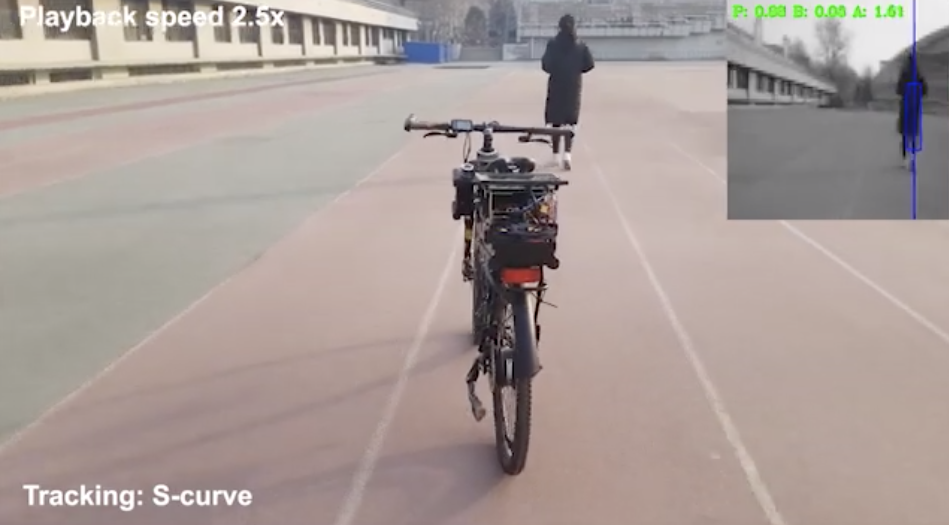
Skynet light? The Tianjin-controlled bike stalks one of its creators.
Enlarge / Skynet light? The Tianjin-controlled bike stalks one of its creators.

We tend to think of AI as a monolithic entity, but it’s actually developed along multiple branches. One of the main branches involves performing traditional calculations but feeding the results into another layer that takes input from multiple calculations and weighs them before performing its calculations and forwarding those on. Another branch involves mimicking the behavior of traditional neurons: many small units communicating in burst of activity called spikes, and keeping track of the history of past activity.

Each of these, in turn, has different branches based on the structure of its layers and communications networks, types of calculations performed, and so on. Rather than being able to act in a manner we’d recognize as intelligent, many of these are very good at specialized problems, like pattern recognition or playing poker. And processors that are meant to accelerate the performance of the software can typically only improve a subset of them.

That last division may have come to an end with the development of Tianjic by a large team of researchers primarily based in China. Tianjic is engineered so that its individual processing units can switch from spiking communications back to binary and perform a large range of calculations, in almost all cases faster and more efficiently than a GPU can. To demonstrate the chip’s abilities, the researchers threw together a self-driving bicycle that ran three different AI algorithms on a single chip simultaneously.

Divided in two

While there are many types of AI software, the key division identified by the researchers is between what can be termed layered calculations and spiking communications. The former (which includes things like convolutional neural networks and deep-learning algorithms) use the layers of calculating units, which feed the results of their calculations into the next layer using standard binary data. Each of these units has to keep track of which other units it communicates with and how much weight to give each of its inputs.

On the other side of the divide are approaches inspired more directly by biology. These communicate in analog “spikes” of activity, rather than data. Individual units have to keep track of not only their present state, but their past history. That’s because their probability of sending a spike depends on how often they’ve received spikes in the past. They’re also arranged in large networks, but they don’t necessarily have a clean layered structure or perform the same sort of detailed computations within any unit.

Both of these approaches have benefitted from dedicated hardware, which tends to be at least as good as implementing the software on GPUs and far more energy efficient. (One example of this is IBM’s TrueNorth processor.) But the vast difference in communications and calculations between the classes has meant that a processor is only good for one or the other type.

That’s what the Tianjic team has changed with what it’s calling the FCore architecture. FCore is designed so that the two different classes of AI can either be represented by a common underlying compute architecture or easily reconfigured on the fly to handle one or the other.

To enable communications among its compute units, FCore uses the native language of traditional neural networks: binary. But FCore is also able to output spikes in a binary format, allowing it to communicate in terms that a neuron-based algorithm can understand. Local memory at each processing unit can be used either for tracking the history of spikes or as a buffer for input and output data. Some of the calculation hardware needed for neural networks is shut down and bypassed when in artificial neuron mode.

In the chip

With these and a few additional features implemented, each individual compute unit in an FCore can be switched in between the two modes, performing either type of calculation and communication as needed. More critically, a single unit can be set into a sort of hybrid mode. That means taking input from one type of AI algorithm but formatting its output so that it’s understood by another—reading spikes and outputting data, or the opposite. That also means any unit on the chip can act as a translator between two types of algorithms, allowing them to communicate with each other when they’re run on the same chip.

The FCore architecture was also designed to scale. The map of connections among its compute units is held in a bit of memory that’s separate from the compute units themselves, and it’s made large enough to allow connections to be made external to an individual chip. Thus, a single neural network could potentially be spread across multiple cores in a processor or even multiple processors.

In fact, the Tijanic chip is made up of multiple FCores (156 of them) arranged in a 2D mesh. In total, there are about 40,000 individual comput units on the chip, which implies an individual FCore has 256 of them. It’s fabricated on a 28 nanometer process, which is more than double the cutting edge process used by desktop and mobile chipmakers. Despite that, it can shift over 600GB/second internally and perform nearly 1.3 Tera-ops per second when run at 300MHz.

Despite the low clockspeed, the Tianjic put up some impressive numbers when run against the same algorithms implemented on an NVIDIA Titan-Xp. Performance ranged from 1.6 times to 100 times, depending on the algorithm. And, when energy use was considered, the performance per Watt was almost comical, ranging from 12x all the way up to over 10,000x. Other dedicated AI processors have had strong performance-per-Watt, but they haven’t been able to run all the different types of algorithms demonstrated here.

Like riding a… well, you know

On its own, this would have been an interesting paper. But the research team went beyond by showing that Tianjic’s abilities could be put to use even in its experimental form. “To demonstrate the utility of building a brain-like cross-paradigm system,” the researchers write, “we designed an unmanned bicycle experiment by deploying multiple specialized networks in parallel within one Tianjic chip.”

The bike did object detection via a convolutional neural network, a continuous attractor neural network provided target tracking to allow the bike to follow a researcher around. Meanwhile, a spiking neural network allowed the bike to follow voice commands. Something called a multilayer perceptron tracked the bike’s balance. And all of these inputs were coordinated by a neural state machine based on a spiking neural network.

[embedded content]
Somewhere on that bicycle is a Tianjic chip.

And it worked. While the bike wasn’t self-driving in the sense that it was ready to take someone through the bike lanes of a major city, it was certainly good enough to be a researcher’s faithful companion during a walk around a test track that included obstacles.

Overall, this is an impressive bit of work. Either the processor alone or the automated bicycle would have made a solid paper on its own. And the idea of getting a single chip to natively host two radically different software architectures was a bold one.

But there is one caution worth pointing out, in that the researchers posit this as a route to a general intelligence AI. In a lot of ways, Tianjic does resemble a brain: the brain uses a single architecture (the neuron) to host a variety of different processes that, collectively, make sense of the world and plan actions that respond to it. To an extent, the researchers are right that being able to run and integrate multiple algorithms at once is a path towards something like that.

But this is still not necessarily a route to general intelligence. In our brain, specialized regions—the algorithm equivalent—can perform a collection of poorly defined and only vaguely related activities. And a single task (like deciding where to focus our attention) takes myriad inputs. They range from our recent history to our emotional state to what we’re holding in temporary memory to biases built up through millions of years of evolution. So just being able to run multiple algorithms is still a long way off from anything we’d recognize as intelligence.

Nature, 2019. DOI: 10.1038/s41586-019-1424-8  (About DOIs).

https://arstechnica.com/?p=1544141


Guide to call tracking and the power of AI for analyzing phone data

guide to call tracking

Invoca, an AI-powered call tracking platform, published their Call Tracking Study Guide in March of this year. The in-depth guide demystifies call tracking technology and reviews how call tracking tools help marketers connect digital campaign data to inbound customer phone calls.

Call tracking is a powerful way for marketers to understand exactly where phone calls are coming from with granularity that, for the most robust tools, can extend down to the keyword level. This data helps reveal what platforms, publishers, keywords, and channels drive high-intent customers to call and can help marketers create a more informed media allocation strategy. 

Content produced in collaboration with Invoca.

Call tracking 101: A brief introduction

Invoca uses a snippet of JavaScript code placed on your website to track calls. After the code snippet is placed on the landing page, it swaps out your standard business phone number with a trackable, dynamic phone number which is unique to each website visitor. 

The tag also captures various referrer elements such as utm source, medium, paid search keyword and Google click ID—this is what enables Invoca to connect user data to phone calls.

Example of dynamic tracking phone numbers on a landing page

Example of dynamic tracking phone numbers on a landing page—source: Invoca

When the tracking number is called, the platform can also route the caller to the appropriate person or call center depending on what marketing content they are viewing, reducing time on hold and call transfers. Data is collected based on the specific call number which can include caller information, keyword, referrer type (e.g., banner ad, search ad, or social media ad) and referral source (e.g., Google, Facebook, etc.) which can also be used to inform the call center and create a highly personalized experience for the caller.

Example of referral data info in Invoca

Example of referral data info in Invoca

Not all call tracking tools are created equal

There is a large selection of call tracking tools on the market that range from basic to advanced in terms of features and functionality. 

Basic tools provide limited data to marketers, but they ignore the larger customer journey and tend to focus on last-touch attribution (e.g., making it difficult or impossible to determine where the call came from).

Some metrics a basic tool might track include:

  • Call volume
  • Call time and duration
  • Caller information
  • Basic campaign attribution

These tools provide some sense of campaign performance, but fail to tell the full story that can be gleaned when connecting analytics platforms (e.g. Google Analytics) to call information. 

More advanced AI-powered call tracking tools like Invoca aim to bridge that gap, while also automating some marketing actions after the call takes place. 

Advanced capabilities that AI-powered call tracking tools provide include:

  • Touchpoint attribution—Tie a call back to its source such e.g. paid search or social
  • Data unification—Integrate with multiple online (and offline) sources such as CRM tools
  • Data analysis—Use AI to analyze phone conversations and provide insight on call drivers, behaviors and outcomes
  • Marketing integration—Push data to the marketing stack for automation, optimization, analysis and more

The end result—and key benefit—of implementing an advanced call tracking tool is to gain valuable insight about campaign performance and attribution. 

Call tracking 201: AI and machine learning 

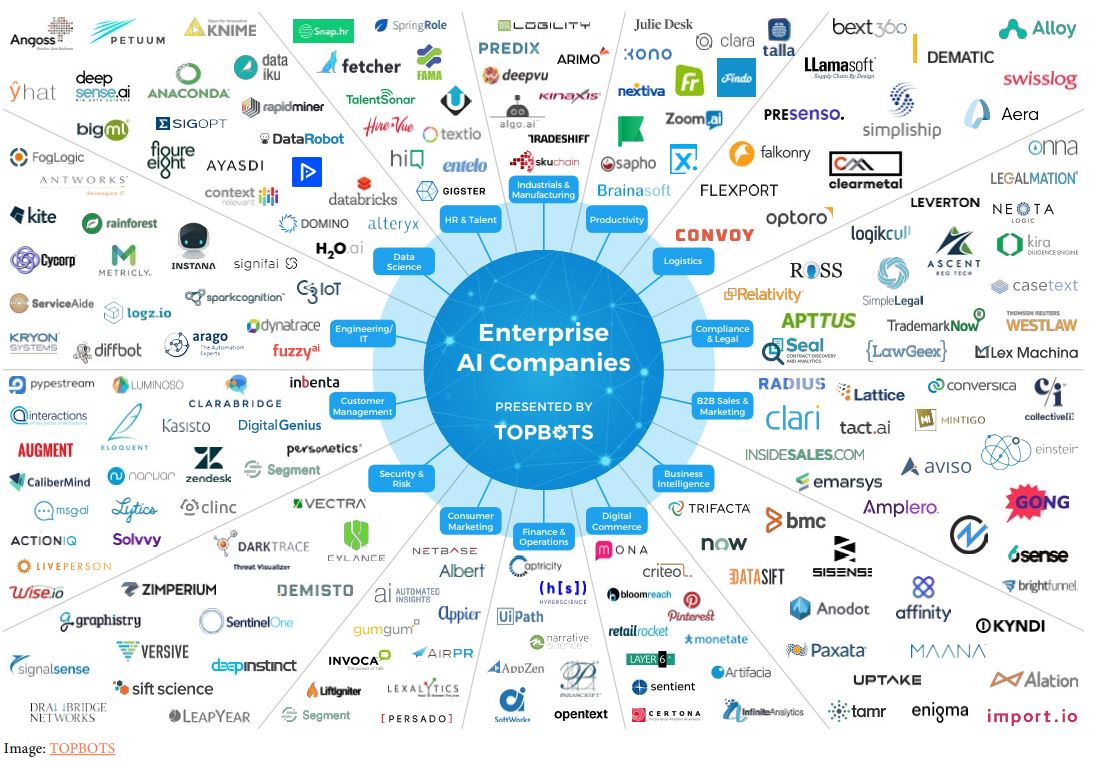
Martech companies are increasingly powering their technology with AI-driven platforms. AI enables marketers to gain intelligence quickly and make better-informed decisions. This trend bridges multiple industries, as shown in the graphic below. 

Companies that utilize or provide AI technology for enterprises

Companies that utilize or provide AI technology—source: TOPBOTS

Invoca uses Signal AI to help measure and attribute online conversions by mining data from the phone conversations themselves, freeing up valuable time for marketers who no longer have to listen to every call.

Signal AI uses AI to detect intent and patterns in language to provide actionable insights and conversion data (sale made, appointment set, etc.) for marketers. This is accomplished through a series of steps that start with the recorded conversation, transcribing the call into text which can then be analyzed by an algorithm, identifying key patterns, phrases, and actions, and pushing these insights to your marketing stack. Here’s a visual of what that looks like. Note that Invoca does not save call transcripts and is HIPAA and PCI compliant, an important distinction for marketers concerned with data privacy.

Image source: Invoca

Signal AI uses machine learning, an application of AI, which gives machines access to the data so that they can learn from it. AI works in conjunction with machine learning to provide actionable and accessible data to marketers—but marketers still need to review this data and make decisions based on their own observations and conclusions.

Invoca offers two versions of Signal AI to their call tracking clients. Pre-trained AI uses industry-based predictive models that have been “pre-trained” using thousands of hours of call data.

Custom AI is more appropriate for certain businesses, such as those with high volumes of calls or sophisticated data needs. This more complex option takes longer to create and implement, however, it can help certain businesses predict call outcomes with a higher degree of accuracy.

Debunking some common assumptions 

Skeptics may think that humans can classify calls more efficiently and accurately than AI, but the truth is the opposite. AI learns over time and it never gets tired, so it’s an effective and accurate way to classify calls without bias. Here are some other call tracking myths, debunked:

  • It’s hard to set up AI-based call tracking—Pre-trained AI models take the guesswork out of setup for certain industries such as insurance and can identify the most common outcomes (e.g., product purchased).
  • All AI-based call tracking is the same—False! Invoca’s Signal AI uses predictive analytics (rather than just transcription) and continues to learn. It also provides performance scoring for easy reference.
  • Only big companies can afford AI-based call tracking—Wrong again. Invoca is tag-based and easy to implement. You don’t need a dedicated IT team or programmer to get up and running.

Clear strategy and clean data

The true power of AI-based call tracking is, in a word, attribution. It’s the ability to unify call data across multiple sources and attribute it to all consumer touchpoints.

Invoca does this by collecting data from multiple sources: campaign and website data, first-party data (e.g., pulled from your CRM), third-party demographic data, call data such as length, time and location of call, and conversational data (derived from speech analysis).

Once all the available data is unified, Invoca’s technology determines the value of the call by analyzing the spoken conversations within the calls. Invoca’s AI synthesizes various word patterns (e.g., “I’m almost ready to buy, but I’m waiting for XYZ to happen”) and then classifies them into useful datasets.

Signal AI helps predict the type of call (e.g., sales, service, complaint) which allows marketers to optimize media placements, ad content, and more. This level of analysis can also help inform the call experience itself by identifying issues that may frustrate callers.

Connecting call data to campaign data can help in other ways too. For example, marketers can use call information for ad suppression, making sure customers don’t see offers for something they’ve already purchased or retargeting ads to people who called but didn’t make a purchase.

Tying it all together

One of the most powerful features of the more robust, high-end call-tracking tools like Invoca is the ability for them to integrate with existing marketing platforms like Google Analytics, Adobe Experience Cloud, and Salesforce. 

This gives marketers a clear picture of where their customers are at every step of the journey. It closes the attribution loop, allowing you to demonstrate what’s working from an ROI standpoint, a metric that’s key when it comes time for approval and budget allocation.

When considering implementing a tool like Invoca, the bottom line is always the top priority—will we make money with this martech investment?

Invoca customers have seen up to 60% increase in conversions when implementing the tool (without any additional media spend), an important consideration when factoring in ROI.

The Invoca Call Tracking Guide covers all this including what questions to ask vendors when considering a new tool and what to consider when shopping for a call tracking solution.

To learn more about call tracking technology from functionality to  implementation and how call tracking can help with campaign optimization and attribution, download Invoca’s whitepaper, “The Call Tracking Study Guide for Marketers.”

Whitepapers

Related reading

alexa.com search tools updates competitive analysis

traffic forecasting customer journey

Five backlink analysis tools

Your new secret weapon for better and robust analytics

https://searchenginewatch.com/2019/07/26/guide-call-tracking/


Una nuova immagine, una nuova identità, una nuova visione del futuro: Earth 2050!


I grandi cambiamenti non sono una novità per Kaspersky. L’azienda esattamente un mese fa aveva annunciato ufficialmente il rebranding con una nuova mission: “Building a safer world”, che sottolinea l’impegno per un futuro di fiducia e trasparenza, dove chiunque potrà godere delle infinite opportunità che la tecnologia offre senza preoccupazione e senza pensare unicamente alla protezione dei singoli dispositivi, ma allo sviluppo di un ecosistema in cui è necessario proteggere tutto ciò che è connesso.

Seguendo la mission di costruire un mondo più sicuro, l’obiettivo di Kaspersky è essere sempre un passo avanti e guardare al futuro che ci attende. “Crediamo che le tecnologie dovrebbero essere immuni dalle minacce informatiche, in modo che tutti possano utilizzarle in sicurezza sapendo di essere protetti, commenta Eugene Kaspersky, CEO di Kaspersky, che nella sua previsione per il progetto Earth 2050 , esplora il concetto di ‘cyber-immunità’ che sta sostituendo il concetto di ‘cybersecurity’ e presenta la sua visione del mondo futuro.

Dall’intuizione digitale alla cyber-immunità: un blog post dal 2050 di Eugene Kaspersky

Negli ultimi anni, i sistemi digitali hanno raggiunto un nuovo livello di complessità. Non si tratta più solo di assistenti che rendono la vita più facile agli utenti, ma sono diventati la base della nostra civiltà – il framework che consente al mondo di funzionare correttamente nel 2050.

Questa accelerazione del progresso ha fatto sì che emergessero nuovi requisiti per rendere affidabile e stabile l’intelligenza artificiale. Anche se alcune minacce informatiche non si sono ancora estinte dall’era romantica del cambio di secolo, oggi sono pericolose solo per gli “outlier” che per qualche motivo rifiutano i moderni standard di immunità digitale.

La situazione assomiglia per molti aspetti alla lotta contro le malattie. Grazie al successo dei vaccini, le terribili epidemie che hanno devastato intere città nel XX secolo appartengono al passato. Tuttavia, qui finiscono le similitudini. Per gli esseri umani le malattie come la peste o il vaiolo sono state sostituite da nuove malattie “post-vaccinazione” altamente resistenti; ma per le macchine, le cose sono andate molto meglio. Questo è dovuto in gran parte al fatto che i primi ideatori dell’immunità digitale si sono preparati per tempo, giocando d’anticipo. Ciò che li ha aiutati nel farlo è stato prendere in prestito l’approccio sistemico dei sistemi viventi e degli esseri umani.

Uno dei pilastri della cyber-immunità oggi è l’intuizione digitale, ovvero la capacità dei sistemi di intelligenza artificiale di prendere le decisioni giuste in condizioni in cui i dati di partenza sono chiaramente insufficienti per fare una scelta razionale.

Non si tratta di misticismo: l’intuizione digitale è solo la logica prosecuzione dell’idea di apprendimento automatico. Quando il numero e la complessità dei relativi sistemi di autoapprendimento supera una certa soglia, la qualità del processo decisionale sale a un livello completamente nuovo – un livello che sfugge alla comprensione razionale. Una “soluzione intuitiva” è il risultato della sovrapposizione dell’esperienza di un gran numero di modelli di apprendimento automatico, proprio come il risultato dei calcoli di un computer quantico.

Quindi, come potete vedere è stata l’intuizione digitale, con la sua capacità di rispondere immediatamente e correttamente alle sfide non ancora note, che ha contribuito a costruire gli standard di sicurezza digitale di questa nuova era.


Cos’è esattamente Earth 2050?

Earth 2050 è un progetto multimediale interattivo e pluripremiato che raccoglie previsioni sugli sviluppi sociali e tecnologici per i prossimi 30 anni, con l’obiettivo di identificare le sfide globali per l’umanità e i possibili modi per risolverle.

Il sito web è stato lanciato nel 2017 per celebrare i 20 anni di Kaspersky Lab e comprende un’ampia varietà di previsioni, scenari futuri e altro ancora, coprendo una vasta gamma di argomenti.  È un luogo dove tutti possono condividere la nostra visione del futuro, scrivendo un messaggio, mandando un disegno, in qualunque modo.

La piattaforma è aperta così da accogliere le previsione sul futuro che provengono da più persone, Di recente, anche il grande scrittore di fantascienza americano David Brin ha partecipato al progetto, prevedendo un futuro basato non sul petrolio ma sui fosfati.

Condividi l’articolo


Articoli correlati
Altro in questa categoria

https://www.securityinfo.it/2019/07/25/una-nuova-immagine-una-nuova-identita-una-nuova-visione-del-futuro-earth-2050/


Facebook AI Pluribus defeats top poker professionals in 6-player Texas Hold ’em

[embedded content]
This video shows sample hands from Pluribus’ experiment against professional poker players. Cards are turned face up to make it easier to see Pluribus’ strategy. Courtesy of Carnegie-Mellon University.

Poker-playing AIs typically perform well against human opponents when the play is limited to just two players. Now Carnegie Mellon University and Facebook AI research scientists have raised the bar even further with an AI dubbed Pluribus, which took on 15 professional human players in six-player no-limit Texas Hold ‘em and won. The researchers describe how they achieved this feat in a new paper in Science.

Playing more than 5,000 hands each time, five copies of the AI took on two top professional players: Chris “Jesus” Ferguson, six-time winner of World Series of Poker events, and Darren Elias, who currently holds the record for most World Poker Tour titles. Pluribus defeated them both. It did the same in a second experiment, in which Pluribus played five pros at a time, from a pool of 13 human players, for 10,000 hands.

Co-author Tuomas Sandholm of Carnegie Mellon University has been grappling with the unique challenges poker poses for AI for the last 16 years. No-Limit Texas Hold ‘em is a so-called “imperfect information” game, since there are hidden cards (held by one’s opponents in the hand) and no restrictions on the size of the bet one can make. By contrast, with chess and Go, the status of the playing board and all the pieces are known by all the players. Poker players can (and do) bluff on occasion, so it’s also a game of misleading information.

Claudico begat Libratus

In 2015, Sandholm’s early version of a poker-playing AI, called Claudico, took on four professional players in heads-up Texas Hold ‘em—where there are only two players in the hand—at a Brains vs. Artificial Intelligence tournament at the Rivers Casino in Pittsburgh. After 80,000 hands played over two weeks, Claudico didn’t quite meet the statistical threshold for declaring victory: the margin must be large enough that there is 99.98% certainty that the AI’s victory is not due to chance.

Sandholm et al. followed up in 2017 with another AI, dubbed Libratus. This time, rather than focusing on exploiting its opponents’ mistakes, the AI focused on improving its own play–apparently a more reliable approach. “We looked at fixing holes in our own strategy because it makes our own play safer and safer,” Sandholm told IEEE Spectrum at the time. “When you exploit opponents, you open yourself up to exploitation more and more.” The researchers also upped the number of games played to 120,000.

The AI prevailed, even though the four human players tried to conspire against it, coordinating on making strange bet sizes to confuse Libratus. As Ars’ Sam Machkovech wrote at the time, “Libratus emerged victorious after 120,000 combined hands of poker played against four human online-poker pros. Libratus’ $1.7 million margin of victory, combined with so many hands, clears the primary bar: victory with statistical significance.”

Online poker pro Dong Kim took on an AI program called Claudico in 2015. He lost to an updated program, Libratus, in 2017's rematch event.
Enlarge / Online poker pro Dong Kim took on an AI program called Claudico in 2015. He lost to an updated program, Libratus, in 2017’s rematch event.
Carnegie Mellon University

But Libratus was still playing against one other player in heads-up action. A far more challenging conundrum is playing poker with multiple players. So Pluribus builds on that earlier work with Libratus, with a few key innovations to allow it to come up with winning strategies in multiplayer games.

Sandholm and his former graduate student, Noam Brown—who is now working on his PhD with the Facebook Artificial Intelligence Research (FAIR) group—employed “action abstraction” and “information abstraction” approaches to reduce how many different actions the AI must consider when devising its strategy. Whenever Pluribus reaches a point in the game when it must act, it forms a subgame—a representation that provides a finer-grained abstraction of the real game, akin to a blueprint, according to Sandholm.

“It goes back a few actions and does a type of game theoretical reasoning,” he said. Each time, Pluribus must come up with four continuation strategies for each of the five human players via a new limited-lookahead search algorithm. This comes out to “four to the power of six million different continuation strategies overall,” per Sandholm.

Like Libratus, Pluribus does not use poker-specific algorithms; it simply learns the rules of this imperfect information game and then plays against itself to devise its own winning strategy. So Pluribus figured out on its own it was best to devise a mixed strategy of play and being unpredictable—the conventional wisdom among today’s top human players. “We didn’t even say, ‘The strategy should be randomized,'” said Sandholm. “The algorithm automatically figured out that it should be randomized, and in what way, and with what probabilities in what situations.”

No limping

Pluribus actually confirmed one bit of conventional poker-playing wisdom: it’s just not a good idea to “limp” into a hand, that is, calling the big blind rather than folding or raising. The exception, of course, is if you’re in the small blind, when mere calling costs you half as much as the other players. But while human players typically avoid so-called “donk betting“—in which a player ends one round with a call but starts the next round with a bet—Pluribus placed donk bets far more often than its human opponents.

So, “In some ways, Pluribus plays the same way as the humans,” said Sandholm. “In other ways, it plays completely Martian strategies.” Specifically, Pluribus makes unusual bet sizes and is better at randomization.

“Its major strength is its ability to use mixed strategies,” said Elias. “That’s the same thing that humans try to do. It’s a matter of execution for humans—to do this in a perfectly random way and to do so consistently. Most people just can’t.”

“These AIs have really shown there’s a whole additional depth to the game that humans haven’t understood.”

“It was incredibly fascinating getting to play against the poker bot and seeing some of the strategies it chose,” said Michael “Gags” Gagliano, another participating poker player. “There were several plays that humans simply are not making at all, especially relating to its bet sizing. Bots/AI are an important part in the evolution of poker, and it was amazing to have first-hand experience in this large step toward the future.”

This type of AI could be used to design drugs to take on antibiotic-resistant bacteria, for instance, or to improve cybersecurity or military robotic systems. Sandholm cites multi-party negotiation or pricing—such as Amazon, Walmart, and Target trying to come up with the most competitive pricing against each other—as a specific application. Optimal media spending for political campaigns is another example, as well as auction bidding strategies. Sandholm has already licensed much of the poker technology developed in his lab to two startups: Strategic Machine and Strategy Robot. The first startup is interested in gaming and other entertainment applications; Strategy Robot’s focus is on defense and intelligence applications.

Potential for fraud

When Libratus beat human players in 2017, there were concerns about whether poker could still be considered a skill-based game and whether online games in particular would soon be dominated by disguised bots. Some took heart in the fact that Libratus needed major supercomputer hardware to analyze its game play and figure out how to improve its play: 15 million core hours and 1,400 CPU cores during live play. But Pluribus needs much less processing capability, completing its blueprint strategy in eight days using just 12,400 core hours and 28 cores during live play.

So is this the death knell for skill-based poker? Well, the algorithm was so successful that the researchers have decided not to release its code. “It could be very dangerous for the poker community,” Brown told Technology Review.

Sandholm acknowledges the risk of sophisticated bots swarming online poker forums, but destroying poker was never his aim, and he still thinks it’s a game of skill. “I have come to love the game, because these AIs have really shown there’s a whole additional depth to the game that humans haven’t understood, even brilliant professional players who have played millions of hands,” he said. “So I’m hoping this will contribute to the excitement of poker as a recreational game.”

DOI: Science, 2019. 10.1126/science.aay2400  (About DOIs).

Listing image by Steve Grayson/WireImage/Getty Images

https://arstechnica.com/?p=1533833


Steam uses machine learning for its new game recommendation engine

The new recommendation engine is part of a new experimental Steam Labs branding.
Enlarge / The new recommendation engine is part of a new experimental Steam Labs branding.

For years now, Valve has been testing new approaches to filter the glut of Steam games down to the ones in which individual users are most likely to show an interest. To that end, the company is today rolling out a machine-learning-powered “Interactive Recommender” trained on “billions of play sessions” from the Steam user base.

In the past, Steam has relied largely on crowd-sourced metadata like user-provided tags, user-curated lists, aggregate review scores, and sales data to drive its recommendation algorithms. But the new Interactive Recommender is different, Valve says, because it works without any initial internal or external information about the games themselves (save for the release date). “Instead, the model learns about the games for itself during the training process,” Valve says. “The model infers properties of games by learning what users do, not by looking at other extrinsic data.”

Your own playtime history is a core part of this neural-network-driven model. The number of hours you put into each game in your library is compared with that of millions of other Steam users so the neural network can make “informed suggestions” about the kinds of games you might like. “The idea is that if players with broadly similar play habits to you also tend to play another game you haven’t tried yet, then that game is likely to be a good recommendation for you,” Valve writes.

This, in turn, should pre-empt issues with developers trying to game the system by choosing popular tags or leaning on positive reviews, as they have with previous recommendation algorithms. “The best way for a developer to optimize for this model is to make a game that people enjoy playing,” Valve writes.

Individual users can tweak the parameters of these AI-powered suggestions to favor games released in a certain time period or games that fall to one side or another on a “popularity” gradient. “We’ve found that, especially for people who play a lot of games, digging into the ‘niche’ end of the range can be a very effective way to find hidden gems,” Valve writes.

Valve admits that this machine learning system isn’t ideal for brand new games, which don’t have enough players from which to glean data, leading to a “cold start” chicken-and-egg effect. Existing systems like Steam’s Discovery Queue should help get those titles in front of their first players, the company writes.

The new recommendation engine is joined by two other experimental products coming out of the newly launched “Steam Labs” brand today. A Micro Trailers page automatically generates six-second video vignettes to represent titles, arranged by genre, while The Automated Show will collect 30 minutes’ worth of footage from the latest Steam releases for easy consumption.

https://arstechnica.com/?p=1534593


Affidarsi all’Intelligenza Artificiale? Si può (e si deve) fare


Dalla ricerca SonicWall emerge uno scenario in cui gli attacchi alle aziende raggiungono volumi impressionanti come frequenza e intensità. Serve l’AI.

Un panorama in costante evoluzione in cui gli attacchi sono sempre più sofisticati e la pressione sulle infrastrutture informatiche di aziende e governi aumenta esponenzialmente. È questo ciò che emerge dal Cyber Threat Report 2019 pubblicato da SonicWall.

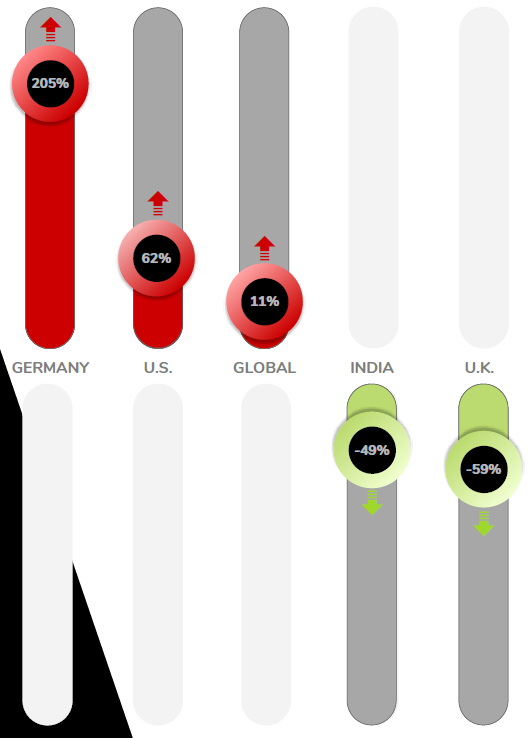
Partiamo dalle buone notizie e in particolare dalla perdita di efficacia dei ransomware. Sfortunatamente l’arretramento di questa tipologia di malware non interessa tutto il mondo, ma alcune nazioni chiave come Regno Unito e India. A livello globale, invece, gli attacchi con ransomware segnano un +11% rispetto all’anno precedente.

AI SonicWall

La seconda buona notizia riguarda il numero di vulnerabilità individuate dai ricercatori nel 2018. Sono 18.097, in netto aumento rispetto al 2017, con 12.920 CVE pubblicate.

Perché è una buona notizia? Principalmente perché sembra che la diffusione dei programmi di bug bounty stiano sortendo i risultati che ci si aspettava. Più ricercatori al lavoro, più falle di sicurezza individuate prima che qualcuno riuscisse ad approfittarne.

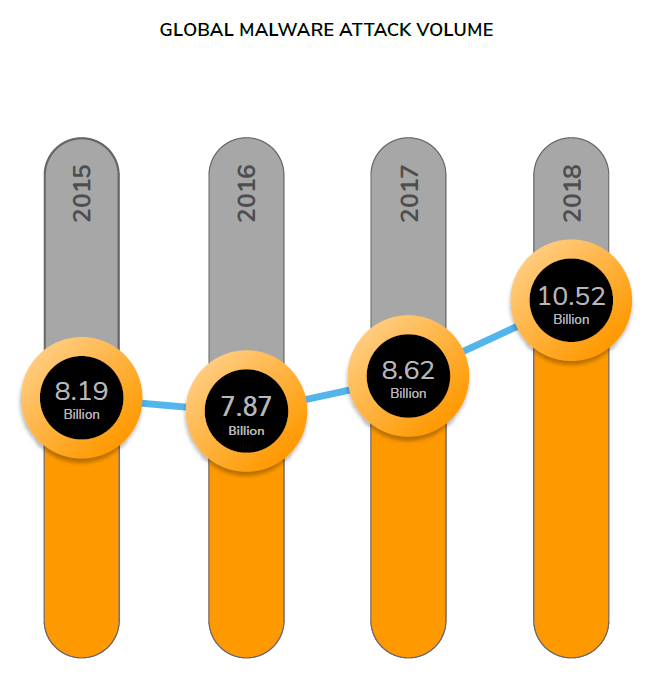
Le buone notizie finiscono qui. Secondo i rilevamenti di SonicWall, basati sui dati raccolti in tempo reale da circa 1,3 milioni di endpoint in tutto il mondo, il volume complessivo di attacchi attraverso malware nel 2018 è infatti cresciuto notevolmente, arrivando a 10,5 miliardi (erano 8,6 miliardi nel 2017) confermando una tendenza che ha avuto una flessione solo nel 2016.

AI SonicWall

Accanto alla crescita di attacchi malware, SonicWall segnala i rischi legati alle nuove tecniche di attacco side-channel come Spectre e Meltdown. “È solo una questione di tempo” ci spiega Bob Vankirk, Chief Revenue Officer della società di sicurezza. “Tra qualche tempo ci troveremo a fronteggiare attacchi che sfruttano queste tecniche per fare leva sulle vulnerabilità hardware dei processori”.

Uno scenario che, secondo Vankirk, va di pari passo con l’evoluzione delle tecniche di attacco utilizzate dai governi nella cyber-warfare, come dimostrano i recenti attacchi portati dagli Stati Uniti nei confronti dell’Iran.

“Per fronteggiare minacce come queste è necessario usare strumenti alternativi rispetto ai tradizionali antivirus” prosegue Vankirk. “Quello che serve è un sistema di analisi in tempo reale che permetta di individuare e bloccare gli attacchi automaticamente”.

Un percorso, questo, che SonicWall ha intrapreso l’anno scorso attraverso una tecnologia battezzata con il nome di Real-Time Deep Memory Inspection (RTDMI). “L’uso dell’Intelligenza Artificiale ci permette di individuare i malware direttamente a livello di memoria” spiega Luis Fisas di SonicWall. “Un sistema molto più efficiente delle classiche sandbox sia in termini di accuratezza, sia in termini di rapidità nel rilevamento e nel contrasto all’attacco”.

La logica, spiegano Fisas e Vankirk, è piuttosto semplice: lo stesso aumento del numero di attacchi, che genera una maggiore mole di dati da dare in pasto ai sistemi di AI, permette di migliorare le prestazioni del motore di scansione.

AI SonicWall

A dimostrarlo, proseguono, è il numero (oggettivamente impressionante) di nuove tecniche di attacco individuate attraverso RTDMI nel corso del 2018.

Dalle parti di SonicWall, però, ritengono che l’approccio automatizzato “in tempo reale” sul quale stanno lavorando abbia un altro importante vantaggio. Il sistema, infatti, permetterebbe di reagire agli attacchi anche in contesti che non possono contare su strutture dedicate.

“Le piccole e medie aziende sono quelle che rischiano di più in questo scenario” puntualizza Vankirk. “Non potendo contare su risorse dedicate al contrasto degli attacchi informatici, hanno infatti bisogno di sistemi che possano bloccarli automaticamente”.

Condividi l’articolo


Articoli correlati
Altro in questa categoria

https://www.securityinfo.it/2019/07/02/affidarsi-allintelligenza-artificiale-si-puo-e-si-deve-fare/