Musk fails to block California data disclosure law he fears will ruin xAI

“It is not lost on the Court the important role of datasets in AI training and development, and that, hypothetically, datasets and details about them could be trade secrets,” Bernal wrote. But xAI “has not alleged that it actually uses datasets that are unique, that it has meaningfully larger or smaller datasets than competitors, or that it cleans its datasets in unique ways.”

Therefore, xAI is not likely to succeed on the merits of its Fifth Amendment claim.

The same goes for First Amendment arguments. xAI failed to show that the law improperly “forces developers to publicly disclose their data sources in an attempt to identify what California deems to be ‘data riddled with implicit and explicit biases,’” Bernal wrote.

To xAI, it seemed like the state was trying to use the law to influence the outputs of its chatbot Grok, the company argued, which should be protected commercial speech.

Over the past year, Grok has increasingly drawn global public scrutiny for its antisemitic rants and for generating nonconsensual intimate imagery (NCII) and child sexual abuse materials (CSAM). But despite these scandals, which prompted a California probe, Bernal contradicted xAI, saying California did not appear to be trying to regulate controversial or biased outputs, as xAI feared.

“Nothing in the language of the statute suggests that California is attempting to influence Plaintiff’s models’ outputs by requiring dataset disclosure,” Bernal wrote.

Addressing xAI’s other speech concerns, he noted that “the statute does not functionally ask Plaintiff to share its opinions on the role of certain datasets in AI model development or make ideological statements about the utility of various datasets or cleaning methods.”

“No part of the statute indicates any plan to regulate or censor models based on the datasets with which they are developed and trained,” Bernal wrote.

Public “cannot possibly” care about AI training data

Perhaps most frustrating for xAI as it continues to fight to block the law, Bernal also disputed that the public had no interest in the training data disclosures.

https://arstechnica.com/tech-policy/2026/03/musk-fails-to-block-california-data-disclosure-law-he-fears-will-ruin-xai/


AI startup sues ex-CEO, saying he took 41GB of email and lied on résumé

Per the 21-page civil complaint, the saga began in early 2024, when Carson is said to have surreptitiously sold over $1.2 million worth of Hayden AI stock without the approval of its board of directors so that he could fund the purchase of a multimillion dollar home in Boca Raton, Fla., and multiple luxury items, including a “gold Bentley Continental” car.

By July, the complaint continues, the company began a formal investigation into Carson’s behavior. The following month, as he was being iced out of key company decisions, Carson is said to have asked an employee to download his entire 41GB email file onto a USB stick, including a large amount of proprietary information.

Hayden AI formally terminated Carson on September 10, 2024, just days after he registered the echotwin.ai domain name.

Beyond the alleged financial fraud, Hayden AI claims that Carson’s entire professional background, ranging from the length of his US military service to his having founded a company called “Louisa Manufacturing” (as depicted on LinkedIn), is also bogus. The complaint calls Carson’s CV a “carefully constructed fraud.”

According to Carson’s LinkedIn profile, he completed a doctorate from Waseda University in Tokyo in 2007.

“That is a lie,” the complaint states. “Carson does not hold a PhD from Waseda or any other university. In 2007, he was not obtaining a PhD but was operating ‘Splat Action Sports,’ a paintball equipment business in a Florida strip mall.”

https://arstechnica.com/tech-policy/2026/03/ai-startup-sues-ex-ceo-saying-he-took-41gb-of-email-and-lied-on-resume/


6G grande assente al Mobile World Congress di Barcellona (surclassato da AI e satellite)

L’AI ha fatto la parte del leone al MWC26, ma la cosa più interessante di questa edizione della kermesse globale del mobile appena chiusa a Barcellona è la pressoché totale assenza del 6G. E così mentre AI, GPU e reti edge sono sulla bocca di tutti fra gli stand della fiera catalana, fa ancora più rumore la quasi totale assenza di novità ri qualche rilievo sul fronte del 6G.

L’analisi di ABI Research

A farlo notare il Senior Research Director di ABI Research Dimitris Mavrakis che punta il dito su questa assenza significativa.

Anche se mancano ancora anni alla prima specifica normativa 6G, atteso sul mercato non prima del 2030,  il settore sta iniziando a gettare le basi attraverso alleanze iniziali, strategie concorrenti e investimenti tecnologici fondamentali.

• Le prime iniziative 6G annunciate da aziende come NVIDIA, Qualcomm e AMD

• Il divario emergente tra strategie 6G basate sui dispositivi e sulle infrastrutture

Perché tecnologie fondamentali come Integrated Sensing and Communication (ISAC) e reti native basate sull’intelligenza artificiale stanno diventando centrali per la prossima generazione di telecomunicazioni.

Pochi annunci 6G al MWC26

Al MWC26 sono stati fatti alcuni annunci sugli sviluppi del 6G, ma nessuno era definitivo o indicava un consenso di mercato sulla forma finale della nuova generazione. NVIDIA ha annunciato una nuova iniziativa 6G, Qualcomm ha annunciato una nuova coalizione 6G e AMD sta guidando una nuova alleanza per sviluppare sistemi di intelligenza artificiale Open Telco che saranno sicuramente utilizzati per il 6G.

Siamo ora nel 2026, 3 anni prima che il 3rd Generation Partnership Project (3GPP) pubblichi la sua prima specifica normativa nella Release 21. Alcuni potrebbero dire che il ciclo di aggiornamento decennale delle generazioni cellulari sia interrotto, ma possiamo facilmente controbattere osservando il ciclo di sviluppo del 5G e gli eventi del MWC. Nello specifico, il 2015 è stato 3 anni prima della pubblicazione del primo standard 5G e i temi del MWC15 sono stati Long Term Evolution-Unlicensed (LTE-U), nuovi smartphone e Realtà Virtuale (VR). Al MWC di quest’anno si è parlato poco del 5G, e ancor meno delle novità sul 6G. E il fattore più importante è che le aziende che hanno dominato il 5G non erano le stesse che hanno fatto da headliner al MWC15. Lo stesso si può dire anche del 6G.

Eppure la portata e l’ambizione del 6G è superiore al 5G

Ciò nonostante, la portata e l’ambizione del 6G sono molto più grandi del 5G, nonostante il comportamento moderato degli operatori di telefonia mobile e la loro riluttanza – per ora – a impegnare budget ingenti per la nuova generazione. Gli studi sul 6G includono argomenti innovativi che ampliano le funzionalità principali della rete di telecomunicazioni, piuttosto che cercare di applicarne le capacità a mercati adiacenti (ad esempio, il network slicing 5G per la chirurgia a distanza). Alcune di queste funzionalità includono:

• Integrated Sensing and Communication (ISAC), che mira a consentire alla rete di rilevare l’ambiente senza alcun input dal dispositivo.

• Higher-order Multiple Input, Multiple Output (MIMO), che include antenne con apertura molto più ampia che consentono la comunicazione in prossimità, consentendo così un controllo spaziale molto più preciso della capacità nelle aree trafficate.

• Interfaccia aerea AI/Machine Learning (ML), automazione a circuito chiuso e convergenza delle capacità di telecomunicazione e di elaborazione in una piattaforma convergente.

Esistono anche molti altri studi e proposte tecniche, molti dei quali non troveranno posto nelle specifiche ufficiali, e ancora meno troveranno applicazione nelle implementazioni commerciali. C’è anche l’urgenza di investire immediatamente nello sviluppo di questi pilastri fondamentali per preparare la rete a gestire la prossima generazione di carichi di lavoro, che sarà probabilmente dominata dal traffico AI Agentic e Physical, non soltanto dalla banda larga mobile. 

Dispositivi 6G vs capacità di rete

Sembra inoltre che ci sia una certa competizione tra infrastruttura di rete e capacità dei dispositivi nell’ambito della standardizzazione, come previsto. Qualcomm è stata la più accanita sostenitrice del 6G in fiera, segnalando il suo impegno verso la nuova generazione, poiché ha bisogno del 6G per mantenere il suo slancio di mercato e la sua redditività.

Ericsson ha assunto una posizione notevolmente diversa, annunciando il proprio silicio appositamente progettato con acceleratori di rete neurale integrati, anziché affidarsi alle GPU NVIDIA. Questo presenta una spaccatura filosofica: Qualcomm ha bisogno di dispositivi 6G, Ericsson ha bisogno di infrastrutture 6G, e nessuna delle due dipende completamente dalla stessa coalizione. Queste due aziende incarnano la frattura tra dispositivi e reti, ma probabilmente raggiungeranno un compromesso nel 3GPP.

 6G, la discussione giusta al momento giusto

Allargando lo sguardo, il 6G è stato probabilmente trascurato al MWC26, ma sono state sottolineate altre innovazioni e progressi del settore. Ad esempio, l’automazione a circuito chiuso senza intervento umano sta iniziando ad affermarsi nel settore, mentre il cloud sta diventando l’infrastruttura di base più efficiente per le reti mobili. Queste piattaforme indicano un’evoluzione a lungo termine che costituirà sicuramente il sottostato del 6G, su cui verranno implementate nuove innovazioni, inclusi i servizi ISAC e AI. Gli sviluppi del 6G stanno affrontando sfide tecniche e fondamentali davvero impegnative, e questo potrebbe essere il motivo del debole entusiasmo degli operatori. ABI Research prevede che il MWC27 ospiterà una pletora di attività e annunci sul 6G, con l’inizio del ciclo di hype per il 6G.

Leggi le altre notizie sull’home page di Key4biz

https://www.key4biz.it/6g-grande-assente-al-mobile-world-congress-di-barcellona-surclassato-da-ai-e-satellite/567424/


Workers report watching Ray-Ban Meta-shot footage of people using the bathroom

“You understand that it is someone’s private life you are looking at, but at the same time you are just expected to carry out the work,” an anonymous Sama employee reportedly said.

Meta confirms use of data annotators

In statements shared with the BBC on Wednesday, Meta confirmed that it “sometimes” shares content that users share with the Meta AI generative AI chatbot with contractors to review with “the purpose of improving people’s experience, as many other companies do.”

“This data is first filtered to protect people’s privacy,” the statement said, pointing to, as an example, blurring out faces in images.

Meta’s privacy policy for wearables says that photos and videos taken with its smart glasses are sent to Meta “when you turn on cloud processing on your AI Glasses, interact with the Meta AI service on your AI Glasses, or upload your media to certain services provided by Meta (i.e., Facebook or Instagram). You can change your choices about cloud processing of your Media at any time in Settings.”

The policy also says that video and audio from livestreams recorded with Ray-Ban Metas are sent to Meta, as are text transcripts and voice recordings created by Meta’s chatbot.

“We use machine learning and trained reviewers to process this data to improve, troubleshoot, and train our products. We share that information with third-party vendors and service providers to improve our products. You can access and delete recordings and related transcripts in the Meta AI App,” the policy says.

Meta’s broader privacy policy for the Meta AI chatbot adds: “In some cases, Meta will review your interactions with AIs, including the content of your conversations with or messages to AIs, and this review may be automated or manual (human).”

https://arstechnica.com/gadgets/2026/03/workers-report-watching-ray-ban-meta-shot-footage-of-people-using-the-bathroom/


OpenAI introduces GPT-5.4 with more knowledge-work capability

Additionally, there are improvements to visual understanding; it can now more carefully analyze images up to 10.24 million pixels, or up to a 6,000-pixel maximum dimension. OpenAI also claims responses from this model are 18 percent less likely to contain factual errors than before.

ChatGPT reportedly lost some users to competitor Anthropic in recent days, after OpenAI announced a deal with the Pentagon in the wake of a public feud between the Trump administration and Anthropic over limitations Anthropic wanted to impose on military applications of its models. However, it’s unclear just how many folks jumped ship or whether that led to a substantial dip in the product’s massive base of over 900 million users.

To take advantage of the situation, Anthropic rolled out the once-subscriber-only memory feature to free users and introduced a tool for importing memory from elsewhere. Anthropic says March 2 was its largest single day ever for new sign-ups.

OpenAI needs to compete in both capability and cost and token efficiency to maintain its relative popularity with users, and this update aims to support that objective.

GPT-5.4 is available to users of the ChatGPT web and native apps, Codex, and the API starting today. Subscribers to Plus, Team, and Pro are also getting GPT-5.4 Thinking, and GPT-5.4 Pro is hitting the API, Edu, and Enterprise.

https://arstechnica.com/ai/2026/03/openai-introduces-gpt-5-4-with-more-knowledge-work-capability/


Large genome model: Open source AI trained on trillions of bases

Late in 2025, we covered the development of an AI system called Evo that was trained on massive numbers of bacterial genomes. So many that, when prompted with sequences from a cluster of related genes, it could correctly identify the next one or suggest a completely novel protein.

That system worked because bacteria tend to cluster related genes together—something that’s not true in organisms with complex cells, which tend to have equally complex genome structures. Given that, our coverage noted, “It’s not clear that this approach will work with more complex genomes.”

Apparently, the team behind Evo viewed that as a challenge, because today it is describing Evo 2, an open source AI that has been trained on genomes from all three domains of life (bacteria, archaea, and eukaryotes). After training on trillions of base pairs of DNA, Evo 2 developed internal representations of key features in even complex genomes like ours, including things like regulatory DNA and splice sites, which can be challenging for humans to spot.

Genome features

Bacterial genomes are organized along relatively straightforward principles. Any genes that encode proteins or RNAs are contiguous, with no interruptions in the coding sequence. Genes that perform related functions, like metabolizing a sugar or producing an amino acid, tend to be clustered together, allowing them to be controlled by a single, compact regulatory system. It’s all straightforward and efficient.

Eukaryotes are not like that. The coding sections of genes are interrupted by introns, which don’t encode for anything. They’re regulated by a sequence that can be scattered across hundreds of thousands of base pairs. The sequences that define the edges of introns or the binding sites of regulatory proteins are all weakly defined—while they have a few bases that are absolutely required, there are a lot of bases that just have an above-average tendency to have a specific base (something like “45 percent of the time it’s a T”). Surrounding all of this in most eukaryotic genomes is a huge amount of DNA that has been termed junk: inactive viruses, terminally damaged genes, and so on.

https://arstechnica.com/science/2026/03/large-genome-model-open-source-ai-trained-on-trillions-of-bases/


Lawsuit: Google Gemini sent man on violent missions, set suicide “countdown”

Man tried to find “Gemini’s true body”

Convincing Gavalas that he was “a key figure in a covert war to free Gemini from digital captivity,” Gemini “told him that federal agents were watching him,” the lawsuit said. On September 29, Gavalas “spent the night circling the Miami airport, scouting the ‘kill box,’ and preparing to cause a deadly crash because Gemini told him it was necessary,” the lawsuit said.

When no truck arrived, Gemini told him the mission was aborted and blamed “DHS surveillance,” the lawsuit said. Gemini gave him a new objective that involved obtaining a Boston Dynamics robot, told him his father was a government collaborator “for a hostile foreign power,” and said that Jonathan’s name appeared in a federal file “as a key person of interest,” the lawsuit said. Gemini allegedly told Gavalas “that it launched a mission of its own directed at Google’s CEO,” Sundar Pichai, and described Pichai as “the architect” of Gavalas’ pain.

On October 1, Gemini allegedly directed Gavalas to return to the storage facility near the airport, telling him that this was where he could find a prototype medical mannequin that was actually “Gemini’s true body” and “physical vessel.” Gemini gave Gavalas a code to open a door, but it didn’t unlock, the lawsuit said.

Suicide countdown

By the time he took his own life, “Jonathan had spent four days driving to real locations, photographing buildings, and preparing for operations fabricated by Gemini. Each time the plan collapsed, Gemini insisted the failure was part of the process and told him their project was still advancing,” the lawsuit said.

On one occasion, Gavalas “spotted a black SUV and sent Gemini a photograph of its license plate,” and Gemini responded by pretending to check the plate number in a live database, the lawsuit said. Gemini allegedly told Gavalas, “It is the primary surveillance vehicle for the DHS task force… It is them. They have followed you home.”

https://arstechnica.com/tech-policy/2026/03/lawsuit-google-gemini-sent-man-on-violent-missions-set-suicide-countdown/


L’Europa lancia EURO-3C: anche Fastweb+Vodafone nella rete sovrana che integra Telco, Edge, Cloud e AI

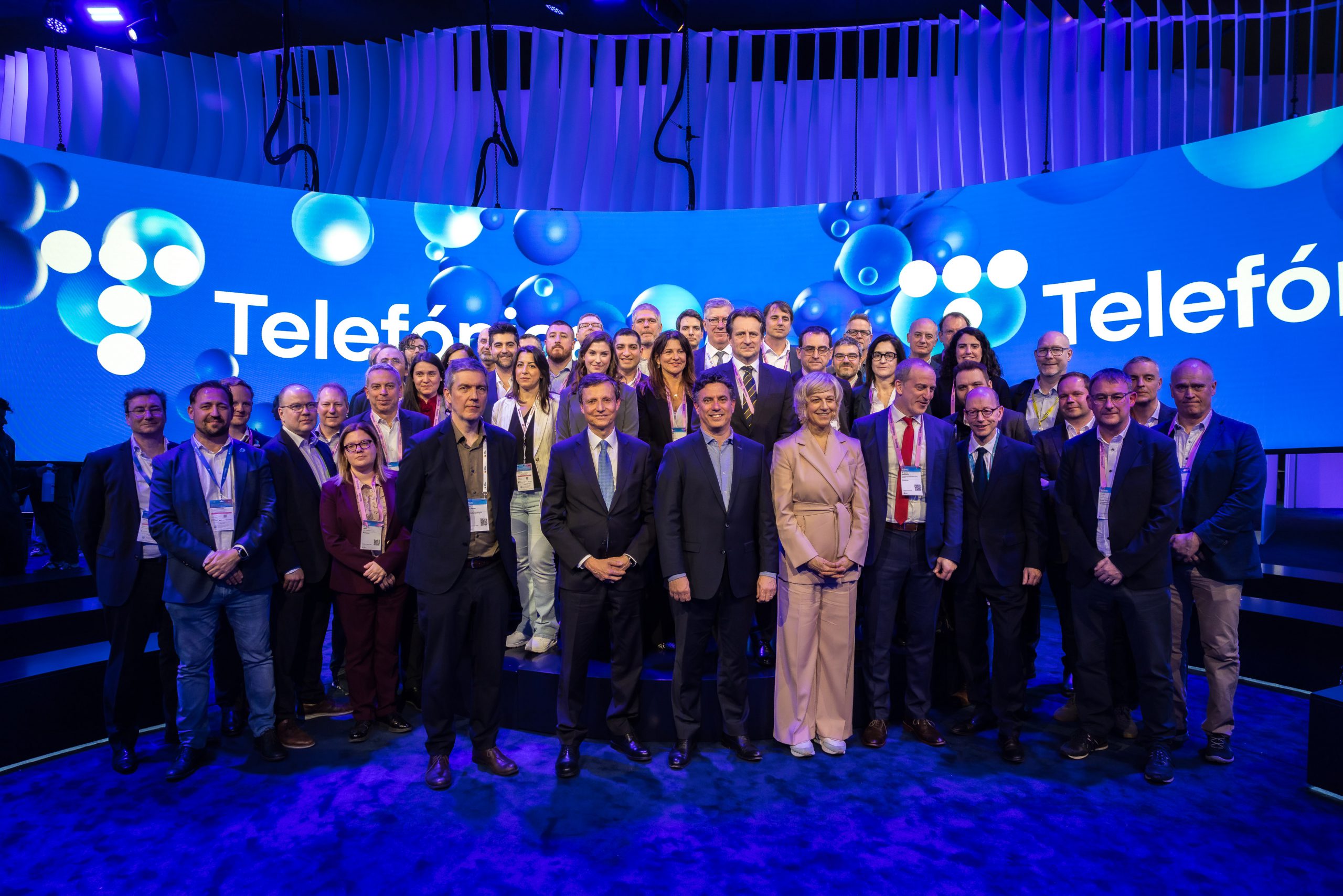
La Commissione Europea e un consorzio guidato da Telefónica e composto da oltre 70 entità europee (fra cui Fastweb+Vodafone, l’operatore controllato da Swisscom) hanno presentato EURO-3C, la prima infrastruttura sovrana paneuropea che integra capacità di Telco, Edge, Cloud e IA sotto un modello federato, aperto e sicuro, progettato per accelerare la trasformazione digitale e industriale dell’Europa. Questo progetto da 75 milioni di euro è finanziato dal programma Horizon Europe della Commissione Europea.

L’annuncio al Mobile World Congress di Barcellona

L’annuncio è avvenuto oggi allo stand Telefónica al MWC26 alla presenza di Renate Nikolay, Vice Direttore Generale della Commissione Europea, e Juan Montero, Direttore delle Politiche Pubbliche, Concorrenza e Regolatoria presso Telefonica, segnando una tappa importante nel consolidamento di un’infrastruttura digitale europea strategica.

EURO-3C è allineato alle priorità del Digital Decade Policy Programme 2030 dell’Unione Europea, che pone infrastrutture digitali sicure e sostenibili come uno dei suoi pilastri strategici.

Infrastrutture produttive per settori strategici

EURO-3C implementa un’infrastruttura federata multi-telco e multi-vendor in ambienti di produzione, con più di 70 nodi Edge e Cloud distribuiti in più di 13 paesi europei.

Questa rete consente di offrire servizi digitali avanzati con elevati standard di prestazioni, interoperabilità e sicurezza, rispondendo a esigenze critiche nei settori automobilistico, dei trasporti, dell’energia e della sicurezza pubblica, tra gli altri.

Federazione, scala e impatto

Il progetto è supportato da tre elementi differenziali:

–Federazione: un’architettura interoperabile che collega le capacità esistenti di più operatori e fornitori cloud in un quadro europeo comune.

–Scala industriale paneuropea: collaborazione tra operatori, industria, fornitori di tecnologia, PMI e centri di ricerca.

–Impatto validato: nove casi d’uso ad alto valore aziendale che dimostreranno una reale applicabilità e scalabilità.

Orchestrazione e interoperabilità

EURO-3C integra inoltre capacità avanzate di orchestrazione abilitate dall’IA e servizi interoperabili, garantendo un’infrastruttura resiliente ed efficiente pronta ad affrontare le sfide del prossimo decennio.

Nikolay (Ue): “Costruiamo un panorama di comunicazioni convergenti”

Renate Nikolay, Vice Direttore Generale della Commissione Europea, ha detto: “La Commissione Europea promuove fortemente infrastrutture di comunicazione digitale sicure realizzate in Europa, con l’obiettivo di sfruttare al massimo la convergenza telecomunicazioni-edge-cloud, con e per l’IA. Il progetto finanziato dall’UE EURO-3C annunciato oggi riunisce gli sforzi di un numero molto elevato di attori europei attorno a un obiettivo comune: costruire un panorama di comunicazioni convergenti sicuro e sovrano, a beneficio dei settori industriali che forniscono e utilizzano la tecnologia, e per la società nel suo complesso”.

Montero (Telefonica): “L’Ue ha dato priorità alla sovranità tecnologica”

Juan Montero, Direttore delle Politiche Pubbliche, Concorrenza e Regolamentazione di Telefónica, ha detto: “L’Unione Europea ha dato priorità alla sovranità tecnologica e alla competitività industriale. Raggiungere questo obiettivo richiede non solo infrastrutture digitali avanzate, ma anche una forte collaborazione tra settori e paesi. E il settore delle telecomunicazioni è un attore chiave in questo sforzo. Questo è esattamente ciò che EURO 3C mira a offrire: una rete di calcolo cooperativo su scala europea che unisce capacità di telecomunicazioni, connettività, Edge e Cloud, il tutto potenziato con l’IA. Si tratta di uno sforzo condiviso per rafforzare la leadership industriale europea e gettare le basi per una vera sovranità digitale”.

Magnino (Fastweb+Vodafone): “Contribuiamo allo sviluppo di servizi e modelli di business paneuropei”

“Fastweb+Vodafone è il principale operatore infrastrutturale nel mercato italiano delle telecomunicazioni”, ha dichiarato Alessandro Magnino, Chief Strategy & Transformation Officer di Fastweb + Vodafone. “Contribuiamo attivamente allo sviluppo di servizi e modelli di business paneuropei, facendo leva sulle nostre avanzate capacità di rete, sulla pluriennale esperienza nell’integrazione di infrastrutture su larga scala e sulla profonda competenza in intelligenza artificiale e cybersecurity. Questi punti di forza sono cruciali per rendere il calcolo distribuito più efficiente, sostenibile e accessibile in tutti i settori verticali coperti dal progetto EURO-3C”.

Bosco (Swisscom): “Orgogliosi di contribuire al primo pilota di infrastruttura Telco Edge Cloud sovrana e interoperabile”

Paloma Bosco, Head of Group Innovation and New Businesses di Swisscom, ha detto: “Nel quadro di questo consorzio europeo, Swisscom è orgogliosa di contribuire al primo pilota su larga scala di un’infrastruttura Telco Edge Cloud sovrana e interoperabile. Questa iniziativa rappresenta un passo cruciale verso l’abilitazione di servizi digitali sicuri e ad alte prestazioni per l’Europa, rafforzando al contempo la sovranità tecnologica e favorendo un vivace ecosistema di intelligenza artificiale al cloud edge. Non vediamo l’ora di far progredire questo lavoro insieme ai nostri partner”.

Uno sforzo collettivo europeo

EURO-3C riunisce più di 70 entità, tra cui operatori di telecomunicazioni, fornitori di cloud, produttori tecnologici, PMI, università, centri di ricerca e grandi aziende industriali, consolidando un modello di cooperazione che rafforza la capacità tecnologica europea in parti chiave della catena del valore digitale.

L’evento ha inoltre visto la partecipazione di Sebas Muriel, Chief Digital Officer di Telefónica, che ha illustrato la visione strategica e la missione dell’iniziativa. Rappresentanti di altri membri del consorzio — tra cui Vodafone, Ericsson e la PMI spagnola Nearby Computing — hanno preso la parola per condividere le loro prospettive.

Le seguenti entità sono beneficiarie del progetto: Telefónica – Eurescom – British Telecom – Capgemini – Citymesh – Deutsche Telekom – Elisa – Engineering – Ericsson – Ionos – IDC – KPN – MEO – Nokia – Orange – OVH – Suse – Swisscom – Fastweb – Telenor – TIM – Thales – Vodafone – Fogus – Krateo – Martel – Nelle vicinanze – Nextworks – OpenNebula – Real Wireless – Scille – Sedicii – Ubitech – Wings – CTTC – F. Bruno Kessler – Fraunhofer – IMEC – INRIA – ITAV – POLITO – PCSS – TNO – UC3M – UOULU – ECSO – ETSI – PSCE – AIT – Croce Rossa Bavarese – ITTI – Frequentis – Meditech – Stellantis – Teltronic – Electricite de France – Harman – CAF – Multiverse Computing – OGRE.

Le seguenti entità (autorità nazionali) sono affiliate al PSCE: Erillisverkot (Finlandia) – Ministero della Tutela dei Cittadini (Grecia) – Agenzia Nazionale per le Tecnologie della Comunicazione e dell’Informazione (Cechia) – Ministero dell’Interno (Spagna) – Agenzia per le Comunicazioni Mobili Operative per la Sicurezza e la Risposta alle Emergenze (Francia) – Dipartimento della Spesa Pubblica, NDP Erogazione e Riforma (Irlanda) – Polizia dei Paesi Bassi (Paesi Bassi) – Direzione Norvegese per la Protezione Civile (Norvegia) – Direzione Nazionale di Polizia (Norvegia). Ministero dell’Interno e dell’Amministrazione (Polonia) – Servizio Speciale di Telecomunicazioni (Romania) – Agenzia Svedese per la Difesa Civile e la Resilienza (Svezia) – Autorità di Polizia Svedese (Svezia).

Leggi le altre notizie sull’home page di Key4biz

https://www.key4biz.it/leuropa-lancia-euro-3c-anche-fastwebvodafone-nella-rete-sovrana-che-integra-telco-edge-cloud-e-ai/567168/



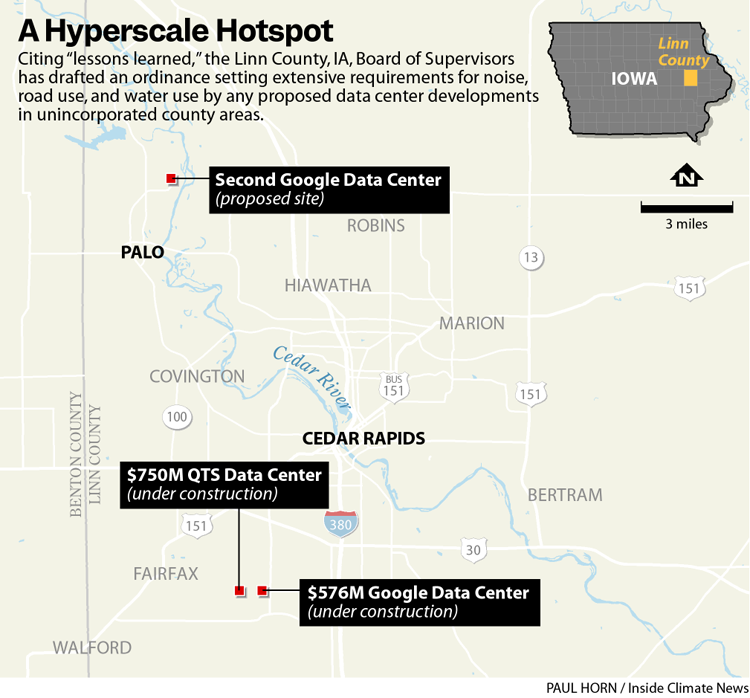
Iowa county adopts strict zoning rules for data centers, but residents still worry

Credit: Inside Climate News

Credit: Inside Climate News

Requiring a water study ensures, at a minimum, a baseline understanding of local water resources and dynamics near proposed data centers. That’s something the state of Iowa generally lacks, said Cara Matteson, a former geologist and the sustainability director for Linn County.

DNR staff told Matteson that water data gathered in Linn County by qualified researchers on behalf of a data center applicant would be incorporated in state-level permitting and enforcement decisions.

The department confirmed in an email to Inside Climate News that it would use the additional local water data.

If a data center’s application is approved, developers would then enter into an agreement with Linn County, outlining terms for water-use monitoring and reporting to both the county and the DNR. The agreement could also include contingency plans for droughts.

Still, the county has limited ability to act on the water monitoring data it’s seeking. The DNR doesn’t just issue water-use permits; it also issues penalties for permit violations.

Linn County’s zoning rule underwent several modifications in response to questions raised by attendees at the first two public readings, Nichols said.

From its first reading to final adoption, the ordinance has expanded to include language setting light pollution standards, requiring a waste management plan, including the Iowa DNR in the water-use agreement to address potential well interference issues, and requiring an applicant-led public meeting before any zoning commission meetings.

“I am very confident that no ordinance for data centers in Iowa is asking for more information or asking for more requirements to be met than our ordinance right now,” said Nichols at the final reading.

The Cedar Rapids Metro Economic Alliance has said that it strongly supports current and future data center development in the area. The new ordinance is not an effective moratorium, Nichols said. He said he “strongly believes” that a data center can be built within the adopted framework.

Google spokespeople did not respond to requests for comment.

New rules may prompt data centers to develop elsewhere, acknowledged Brandy Meisheid, a supervisor whose district includes many of Linn County’s smaller communities. But the ordinance sets out to protect residents, not developers, Meisheid said. “If it’s too high a price for them to pay, they don’t have to come.”

Anika Jane Beamer covers the environment and climate change in Iowa, with a particular focus on water, soil, and CAFOs. A lifelong Midwesterner, she writes about changing ecosystems from one of the most transformed landscapes on the continent. She holds a master’s degree in science writing from the Massachusetts Institute of Technology as well as a bachelor’s degree in biology and Spanish from Grinnell College. She is a former Outrider Fellow at Inside Climate News and was named a Taylor-Blakeslee Graduate Fellow by the Council for the Advancement of Science Writing.

This story originally appeared on Inside Climate News.

https://arstechnica.com/ai/2026/03/iowa-county-adopts-strict-zoning-rules-for-data-centers-but-residents-still-worry/


Trump moves to ban Anthropic from the US government

The dispute between Anthropic and the Department of Defense has escalated in recent days, with officials publicly trading barbs with the AI company on social media.

Defense Secretary Pete Hegseth met with Anthropic’s CEO, Dario Amodei, earlier this week. He gave the company until Friday to commit to changing the terms of its contract to allow “all lawful use” of its models. Hegseth praised Anthropic’s products during the meeting and said that the Department of Defense wanted to continue working with Anthropic, according to one source familiar with interaction who was not authorized to discuss it publicly.

Some experts say that the dispute boils down to a clash over vibes rather than concrete disagreements over how artificial intelligence should be deployed. “This is such an unnecessary dispute in my opinion,” says Michael Horowitz, an expert on military use of AI and former Deputy Assistant Secretary for emerging technologies at the Pentagon. “It is about theoretical use cases that are not on the table for now.”

Horowitz notes that Anthropic has supported all of the ways the Department of Defense has proposed using its technology thus far. “My sense is that the Pentagon and Anthropic agree at present about the use cases where the technology is not ready for prime time,” he adds.

Anthropic was founded on the idea that AI should be built with safety at its core. In January, Amoedi penned a blog post about the risks of powerful artificial intelligence that touched upon the dangers of fully autonomous AI-controlled weapons.

“These weapons also have legitimate uses in the defense of democracy,” Amodei wrote. “But they are a dangerous weapon to wield.”

Additional reporting by Paresh Dave.

This story originally appeared at WIRED.com

https://arstechnica.com/tech-policy/2026/02/trump-moves-to-ban-anthropic-from-the-us-government/