LG TVs’ unremovable Copilot shortcut is the least of smart TVs’ AI problems

But Copilot will still be integrated into Tizen OS, and Samsung appears eager to push chatbots into TVs, including by launching Perplexity’s first TV app. Amazon, which released Fire TVs with Alexa+ this year, is also exploring putting chatbots into TVs.

After the backlash LG faced this week, companies may reconsider installing AI apps on people’s smart TVs. A better use of large language models in TVs may be as behind-the-scenes tools to improve TV watching. People generally don’t buy smart TVs to make it easier to access chatbots.

But this development is still troubling for anyone who doesn’t want an AI chatbot in their TV at all.

Some people don’t want chatbots in their TVs

Subtle integrations of generative AI that make it easier for people to do things like figure out the name of “that movie” may have practical use, but there are reasons to be wary of chatbot-wielding TVs.

Chatbots add another layer of complexity to understanding how a TV tracks user activity. With a chatbot involved, smart TV owners will be subject to complicated smart TV privacy policies and terms of service, as well as the similarly verbose rules of third-party AI companies. This will make it harder for people to understand what data they’re sharing with companies, and there’s already serious concern about the boundaries smart TVs are pushing to track users, including without consent.

Chatbots can also contribute to smart TV bloatware. Unwanted fluff, like games, shopping shortcuts, and flashy ads, already disrupts people who just want to watch TV.

LG’s Copilot web app is worthy of some grousing, but not necessarily because of the icon that users will eventually be able to delete. The more pressing issue is the TV industry’s shift toward monetizing software with user tracking and ads.

If you haven’t already, now is a good time to check out our guide to breaking free from smart TV ads and tracking.

https://arstechnica.com/gadgets/2025/12/lg-tvs-unremovable-copilot-shortcut-is-the-least-of-smart-tvs-ai-problems/


We asked four AI coding agents to rebuild Minesweeper—the results were explosive

I can’t tell you how much I appreciate those chording instructions at the bottom.

I can’t tell you how much I appreciate those chording instructions at the bottom. Credit: Benj Edwards

Implementation

Not only did this agent include the crucial “chording” feature, but it also included on-screen instructions for using it on both PC and mobile browsers. I was further impressed by the option to cycle through “?” marks when marking squares with flags, an esoteric feature I feel even most human Minesweeper cloners might miss.

On mobile, the option to hold your finger down on a square to mark a flag is a nice touch that makes this the most enjoyable handheld version we tested.

Presentation

The old-school emoticon smiley-face button is pretty endearing, especially when you blow up and get a red-tinted “X(“. I was less impressed by the playfield “graphics,” which use a simple “*” for revealed mines and an ugly red “F” for flagged tiles.

The beeps-and-boops sound effects reminded me of my first old-school, pre-Sound-Blaster PC from the late ’80s. That’s generally a good thing, but I still appreciated the game giving me the option to turn them off.

“Fun” feature

The “Surprise: Lucky Sweep Bonus” listed in the corner of the UI explains that clicking the button gives you a free safe tile when available. This can be pretty useful in situations where you’d otherwise be forced to guess between two tiles that are equally likely to be mines.

Overall, though, I found it a bit odd that the game gives you this bonus only after you find a large, cascading field of safe tiles with a single click. It mostly functions as a “win more” button rather than a feature that offers a good balance of risk versus reward.

Coding experience

OpenAI Codex has a nice terminal interface with features similar to Claude Code (local commands, permission management, and interesting animations showing progress), and it’s fairly pleasant to use (OpenAI also offers Codex through a web interface, but we did not use that for this evaluation). However, Codex took roughly twice as long to code a functional game than Claude Code did, which might contribute to the strong result here.

https://arstechnica.com/ai/2025/12/the-ars-technica-ai-coding-agent-test-minesweeper-edition/


Trump Media nella fusione nucleare, operazione da 6 miliardi di dollari con TAE (sostenuta da Alphabet)

Donald Trump vuole puntare sulla fusione nucleare e lancia una fusione da 6 miliardi di dollari con TAE Technologies

La fusione annunciata tra Trump Media & Technology Group e TAE Technologies è una di quelle operazioni che, a prima vista, sembrano improbabili, ma che raccontano molto bene la fase storica che sta attraversando l’industria energetica e tecnologica globale. La società che fa capo a Donald Trump, conosciuta soprattutto per il social network Truth Social, ha deciso di reinventarsi completamente entrando in uno dei settori più ambiziosi e complessi in assoluto: la fusione nucleare.

L’accordo, strutturato come una fusione interamente in azioni e valutato oltre 6 miliardi di dollari, porterebbe alla nascita di una delle prime aziende di fusione nucleare quotate in Borsa.

Per Trump Media si tratta di una trasformazione radicale, si legge in un articolo pubblicato sul New York Times. Il gruppo, che nei primi nove mesi dell’anno ha generato ricavi per appena 2,7 milioni di dollari e ha visto il proprio titolo perdere circa il 69% del valore nel 2024, passa da società media in difficoltà a veicolo industriale e finanziario per una tecnologia energetica considerata potenzialmente rivoluzionaria.
Non a caso, l’annuncio ha immediatamente spinto le azioni al rialzo (il titolo di Trump Media & Technology guadagna il 27,7%, dopo i primi minuti di scambi), segnalando che il mercato guarda alla fusione come a una scommessa sul futuro, più che come a un’estensione del modello di business originario.

L’ennesima “distrazione economico-finanziaria” che si concede il Presidente americano. Trump Organization (la multinazionale di famiglia) ha registrato utili record nel 2025: cresciuti di 17 volte nei primi sei mesi (da 51 a 864 mln di dollari), trainati da criptovalute (802 mln di dollari), licenze su profumi/orologi/resort e nuovi progetti immobiliari in Medio Oriente. Truth Social beneficia del suo ruolo istituzionale, con picchi di utenza durante annunci presidenziali, sollevando conflitti d’interesse.

TAE Technologies e il ruolo di Alphabet (Google)

TAE Technologies, dal canto suo, non è un nome improvvisato. Fondata nel 1998 con il nome di Tri Alpha Energy, è una delle realtà private più avanzate e capitalizzate nel campo della fusione. In oltre venticinque anni di attività ha raccolto più di 1,3 miliardi di dollari, costruito cinque reattori sperimentali e attratto investitori industriali e tecnologici di primo piano.

Il suo amministratore delegato, Michl Binderbauer, ha chiarito che oggi la vera sfida non è più solo scientifica, ma finanziaria: la tecnologia, secondo l’azienda, è matura al punto che il limite principale è l’accesso a capitali su larga scala. In questo senso, la quotazione indiretta tramite Trump Media rappresenta un acceleratore decisivo.

In questo scenario si inserisce anche Alphabet, la holding di Google, che gioca un ruolo chiave come investitore storico di TAE. Il contributo di Google non si è limitato al capitale: l’azienda ha collaborato con TAE applicando tecniche avanzate di machine learning per migliorare il controllo del plasma e ottimizzare il funzionamento dei reattori sperimentali.

L’energia che alimenterà un giorno l’AI

È un passaggio cruciale, perché la fusione moderna è tanto un problema di fisica quanto di calcolo: senza l’intelligenza artificiale (AI), gestire sistemi così complessi sarebbe quasi impossibile. La presenza di Alphabet rafforza quindi la credibilità tecnologica di TAE e spiega perché il progetto venga preso sul serio dagli investitori.

Il legame con l’AI è, in realtà, ancora più profondo. Da un lato, l’intelligenza artificiale è uno strumento indispensabile per rendere possibile la fusione; dall’altro, la fusione è vista come una possibile risposta alla crescente fame di energia dei data center che alimentano l’AI generativa. Le grandi aziende tecnologiche sono alla ricerca di fonti di elettricità continue, affidabili e a basse emissioni, capaci di sostenere una crescita esponenziale dei consumi.

Non è un caso che Microsoft abbia firmato accordi con altre startup della fusione, né che figure come Sam Altman siano direttamente coinvolte nel settore. In questo senso, il merger tra Trump Media e TAE colloca indirettamente Donald Trump all’interno di una delle filiere strategiche più sensibili del prossimo decennio.

Fusione nucleare, niente prima del 2031

Resta però una distanza significativa tra l’ambizione e la realtà industriale. Se i comunicati parlano di centrali “utility-scale” già nella seconda metà di questo decennio, le dichiarazioni più prudenti degli stessi manager indicano il 2031 come orizzonte per la prima produzione di energia da fusione nucleare.
È una tempistica coerente con quella di altri attori del settore, ma che conferma come la fusione resti una scommessa ad alto rischio tecnologico e finanziario.

In definitiva, questo merger non è solo una curiosità finanziaria o politica. È il segnale che la fusione nucleare sta uscendo dai laboratori per entrare nel mondo dei mercati, degli investitori e delle strategie industriali globali. Un passaggio che potrebbe aprire la strada a una nuova età dell’energia (in questo caso pulita e concettualmente infinita), ma che richiederà anni, capitali enormi e una dose significativa di pazienza. Come spesso accade in questi casi, la finanza corre veloce; la sperimentazione e la tecnologia necessaria alla realizzazione delle prime centrali, inevitabilmente, molto meno.

L’operazione assume una rilevanza particolare anche per il contesto geopolitico e industriale in cui si inserisce. La fusione nucleare è considerata da molti il “Santo Graal” dell’energia: utilizza combustibili abbondanti, non produce emissioni di carbonio, non comporta il rischio di meltdown tipico del nucleare tradizionale e non genera scorie radioattive di lungo periodo.
Tuttavia, trasformare una reazione che avviene nelle stelle in un processo industriale stabile e conveniente resta una sfida enorme. Negli ultimi anni i laboratori pubblici hanno ottenuto risultati promettenti, ma sono soprattutto le startup private a spingere ora verso la commercializzazione, in una corsa globale che vede impegnati Stati Uniti, Europa e Cina.

Leggi le altre notizie sull’home page di Key4biz

https://www.key4biz.it/trump-media-nella-fusione-nucleare-operazione-da-6-miliardi-di-dollari-con-tae-sostenuta-da-alphabet/560019/


YouTube bans two popular channels that created fake AI movie trailers

Deadline reports that the behavior of these creators ran afoul of YouTube’s spam and misleading-metadata policies. At the same time, Google loves generative AI—YouTube has added more ways for creators to use generative AI, and the company says more gen AI tools are coming in the future. It’s quite a tightrope for Google to walk.

AI movie trailers

A selection of videos from the now-defunct Screen Culture channel.

Credit: Ryan Whitwam

A selection of videos from the now-defunct Screen Culture channel. Credit: Ryan Whitwam

While passing off AI videos as authentic movie trailers is definitely spammy conduct, the recent changes to the legal landscape could be a factor, too. Disney recently entered into a partnership with OpenAI, bringing its massive library of characters to the company’s Sora AI video app. At the same time, Disney sent a cease-and-desist letter to Google demanding the removal of Disney content from Google AI. The letter specifically cited AI content on YouTube as a concern.

Both the banned trailer channels made heavy use of Disney properties, sometimes even incorporating snippets of real trailers. For example, Screen Culture created 23 AI trailers for The Fantastic Four: First Steps, some of which outranked the official trailer in searches. It’s unclear if either account used Google’s Veo models to create the trailers, but Google’s AI will recreate Disney characters without issue.

While Screen Culture and KH Studio were the largest purveyors of AI movie trailers, they are far from alone. There are others with five and six-digit subscriber counts, some of which include disclosures about fan-made content. Is that enough to save them from the ban hammer? Many YouTube viewers probably hope not.

https://arstechnica.com/google/2025/12/youtube-bans-two-popular-channels-that-created-fake-ai-movie-trailers/


School security AI flagged clarinet as a gun. Exec says it wasn’t an error.

Monitoring these systems continually, humans review AI flags, then text any concerning images detected to school superintendents. Police are alerted when human review determines images may constitute actual threats. ZeroEyes’ spokesperson told Ars that “it has detected more than 1,000 weapons in the last three years.” Perhaps most notably, ZeroEyes “detected a minor armed with an AK-47 rifle on an elementary school campus in Texas,” where no shots were fired, StateScoop reported last year.

Schools invest tens or, as the SCPS case shows, even hundreds of thousands annually, the exact amount depending on the number of cameras they want to employ and other variables impacting pricing. ZeroEyes estimates that most schools pay $60 per camera monthly. Bigger contracts can discount costs. In Kansas, a statewide initiative equipping 25 cameras at 1,300 schools with ZeroEyes was reportedly estimated to cost $8.5 million annually. Doubling the number of cameras didn’t provide much savings, though, with ZeroEyes looking to charge $15.2 million annually to expand coverage.

To critics, it appears that ZeroEyes is attempting to corner the market on AI school security, standing to profit off schools’ fears of shootings, while showing little proof of the true value of its systems. Last year, ZeroEyes reported its revenue grew 300 percent year over year from 2023 to 2024, after assisting in “more than ten arrests through its thousands of detections, verifications, and notifications to end users and law enforcement.”

Curt Lavarello, the executive director of the School Safety Advocacy Council, told the ABC News affiliate that “all of this technology is very, very expensive,” considering that “a lot of products … may not necessarily do what they’re being sold to do.”

Another problem, according to experts who have responded to some of the country’s deadliest school shootings, is that while ZeroEyes’ human reviewers can alert police in “seconds,” police response can often take “several minutes.” That delay could diminish ZeroEyes’ impact, one expert suggested, noting that at an Oregon school he responded to, there was a shooter who “shot 25 people in 60 seconds,” StateScoop reported.

https://arstechnica.com/tech-policy/2025/12/florida-schools-plan-to-vastly-expand-use-of-ai-that-mistook-clarinet-for-gun/


LLMs’ impact on science: Booming publications, stagnating quality

This effect was likely to be most pronounced in people that weren’t native speakers of English. If the researchers limited the analysis to people with Asian names working at institutions in Asia, their rate of submissions to bioRxiv and SSRN nearly doubled once they started using AI and rose by over 40 percent at the arXiv. This suggests that people who may not have the strongest English skills are using LLMs to overcome a major bottleneck: producing compelling text.

Quantity vs. quality

The value of producing compelling text should not be underestimated. “Papers with clear but complex language are perceived to be stronger and are cited more frequently,” the researchers note, suggesting that we may use the quality of writing as a proxy for the quality of the research it’s describing. And they found some indication of that here, as non-LLM-assisted papers were more likely to be published in the peer reviewed literature if they used complex language (the abstracts were scored for language complexity using a couple of standard measures).

But the dynamic was completely different for LLM-produced papers. The complexity of language in papers written with an LLM was generally higher than for those using natural language. But they were less likely to end up being published. “For LLM-assisted manuscripts,” the researchers write, “the positive correlation between linguistic complexity and scientific merit not only disappears, it inverts.”

But not all of the differences were bleak. When the researchers checked the references being used in AI-assisted papers, they found that the LLMs weren’t just citing the same papers that everyone else did. They instead cited a broader range of sources, and were more likely to cite books and recent papers. So, there’s a chance that AI use could ultimately diversify the published research that other researchers consider (assuming they check their own references, which they clearly should).

What does this tell us?

There are a couple of cautions for interpreting these results. One, acknowledged by the researchers, is that people may be using AI to produce initial text that’s then heavily edited, and that may be mislabeled as human-produced text here. So, the overall prevalence of AI use is likely to be higher. The other is that some manuscripts may take a while to get published, so their use of that as a standard for scientific quality may penalize more recent drafts—which are more likely to involve AI use. These may ultimately bias some of the results, but the effects the authors saw were so large that they’re unlikely to go away entirely.

https://arstechnica.com/science/2025/12/llms-impact-on-science-booming-publications-stagnating-quality/


AI, Antitrust francese: “Segnalare pratiche anticoncorrenziali”. L’energia elettrica è risorsa scarsa

I numeri del consumo dell’AI. L’Antitrust francese lancia l’allarme: verso il raddoppio globale entro il 2030

Il rapido sviluppo dell’intelligenza artificiale (AI) non è solo una sfida tecnologica, ma una questione di risorse fisiche. L’Autorité de la concurrence francese ha pubblicato uno studio che esplora il legame inscindibile tra la crescita dei modelli computazionali e il loro impatto energetico e ambientale, delineando uno scenario in cui l’accesso all’elettricità e la “frugalità” diventeranno i nuovi terreni di scontro della competizione globale.

L’integrazione massiccia della AI sta spingendo la domanda di energia verso vette senza precedenti. Secondo i dati riportati dall’Autorité, i data center oggi rappresentano circa l’1,5% del consumo globale di elettricità.

Le proiezioni indicano una crescita esponenziale. Il consumo dei data center potrebbe più che raddoppiare, raggiungendo i 945 terawattora (TWh) entro il 2030. In Francia, nel primo triennio del decennio, il consumo era di 10 TWh; si prevede che salirà a 12-20 TWh entro il 2030 e a 19-28 TWh entro il 2035, arrivando a pesare per il 4% dell’intero consumo nazionale di elettricità.

Per contestualizzare queste cifre, basti pensare che un singolo grande reattore nucleare ha una capacità produttiva di 1 GW, mentre un comune francese di circa 100.000 abitanti consuma annualmente circa 200 GWh.

L’impatto ambientale dell’AI oltre l’elettricità, tante le sfide

L’intelligenza artificiale non consuma solo tanta energia elettrica. Lo studio evidenzia una pressione crescente su acqua, metalli rari e suolo. In Francia, il prelievo di acqua (prevalentemente potabile) per i data center ha raggiunto 0,6 milioni di metri cubi nel 2023, con una crescita annua del +19%. Se si considera l’impronta indiretta legata alla produzione di energia, la cifra sale a oltre 5,2 milioni di metri cubi l’anno.

Inoltre, i grandi operatori digitali hanno segnalato aumenti delle emissioni di gas serra compresi tra il +30% e il +50%, trainati proprio dalle infrastrutture necessarie per la AI.

L’Autorità identifica tre criticità strutturali che potrebbero alterare l’equilibrio del mercato: l’accesso privilegiato all’energia, la “frugalità” come nuovo parametro competitivo e la trasparenza e standardizzazione.

Per quanto riguarda l’accesso, l’elettricità rappresenta tra il 30% e il 50% dei costi operativi di un data center. Il rischio è che i grandi operatori (soprattutto statunitensi) utilizzino la loro forza finanziaria per accaparrarsi forniture di energia decarbonizzata, nucleare o rinnovabile, tramite contratti a lungo termine (CAPN) o accordi di acquisto diretto (PPA), escludendo i player più piccoli.

La frugalità, definita come l’ottimizzazione del consumo di risorse per minimizzare l’impatto ambientale, sta diventando un fattore di qualità e prezzo. Modelli di AI più piccoli e meno energivori permettono a aziende minori di competere su infrastrutture IT esistenti, promuovendo una diversificazione dell’innovazione.

Su trasparenza e standardizzazione, attualmente manca una metodologia condivisa per misurare l’impronta ambientale della AI. L’Autorità sottolinea che dati affidabili e trasparenti sono fondamentali per evitare pratiche di “greenwashing“ e per permettere ai consumatori di confrontare i modelli in base al loro reale impatto.

Verso un mercato più equo e sostenibile?

L’Autorité de la concurrence ha voluto porre particolare enfasi sulla necessità di dati affidabili e trasparenti per garantire una concorrenza efficace. È essenziale che l’accesso alle aree idonee per i data center e all’energia nucleare a prezzi competitivi non rimanga un privilegio dei giganti del settore.

L’Autorità invita tutte le parti interessate a segnalare eventuali pratiche anticoncorrenziali e offre la possibilità di richiedere orientamenti informali sulla compatibilità dei progetti di sostenibilità con le norme della concorrenza. La sfida dell’AI si vincerà non solo sulla potenza di calcolo, ma sull’efficienza e l’equità nella gestione delle risorse del nostro pianeta, in particolare l’energia elettrica.

Un problema che prima o poi riguarderà anche l’Italia.
In Europa, il mercato dei data center è in piena espansione, con l’Italia che rappresenta il 13% delle infrastrutture continentali e una crescita annua dell’8%, superiore ai principali hub come Germania e Olanda.

L’AI renderà l’energia elettrica diventa risorsa scarsa

L’energia elettrica è destinata a diventare una risorsa scarsa nei prossimi anni, a causa della domanda in forte crescita trainata proprio da da AI e data center, che supererà la capacità di espansione della rete e delle rinnovabili. Il nucleare ad oggi, visti i tempi necessari allo sviluppo e la costruzione dei data center di nuova generazione e i celebri piccoli reattori SMR, non sembra poter sopperire questo aumento di fabbisogno su scala globale.

Come ha ben spiegato Giuliano Noci su Il Sole 24 Ore: “L’elettricità non è più solo una risorsa, ma una forma di potere geopolitico. Controllare le catene di fornitura del fotovoltaico, dell’eolico e delle batterie significa oggi ciò che un tempo significava controllare il petrolio. Con una differenza decisiva: chi domina l’elettrone non solo alimenta il mondo, ma lo connette e lo modella”.

La domanda globale di elettricità crescerà del 3-4% annuo fino al 2027, con un aumento cumulativo di 3.500 TWh, equivalente al consumo di un Giappone all’anno. Nei data center, il consumo raddoppierà quasi entro il 2030, passando dall’1-2% al 3-4% del totale globale, grazie all’AI che richiede 10 volte più energia di una ricerca Google. Negli USA, i data center assorbiranno quasi metà della crescita della domanda entro il 2030.

Gli Stati Uniti portano avanti la retorica del “patriottismo energetico”, tornando a scavare come talpe per tirare fuori petrolio, gas e carbone. La Cina ha tracciato la via della Seta elettrica sostenuta da una diplomazia energetica tesa a ridisegnare aree di influenza politica globali.

L’Europa, invita a riflettere Noci, deve decidere se rimanere spettatrice o tornare protagonista, con una strategia industriale capace di rendere la sostenibilità un vantaggio competitivo: “Chi controlla la luce, controlla il futuro“.

Leggi le altre notizie sull’home page di Key4biz

https://www.key4biz.it/ai-antitrust-francese-segnalare-pratiche-anticoncorrenziali-lenergia-elettrica-e-risorsa-scarsa/559928/




OpenAI’s new ChatGPT image generator makes faking photos easy

For most of photography’s roughly 200-year history, altering a photo convincingly required either a darkroom, some Photoshop expertise, or, at minimum, a steady hand with scissors and glue. On Tuesday, OpenAI released a tool that reduces the process to typing a sentence.

It’s not the first company to do so. While OpenAI had a conversational image-editing model in the works since GPT-4o in 2024, Google beat OpenAI to market in March with a public prototype, then refined it to a popular model called Nano Banana image model (and Nano Banana Pro). The enthusiastic response to Google’s image-editing model in the AI community got OpenAI’s attention.

OpenAI’s new GPT Image 1.5 is an AI image synthesis model that reportedly generates images up to four times faster than its predecessor and costs about 20 percent less through the API. The model rolled out to all ChatGPT users on Tuesday and represents another step toward making photorealistic image manipulation a casual process that requires no particular visual skills.

The "Galactic Queen of the Universe" added to a photo of a room with a sofa using GPT Image 1.5 in ChatGPT.

The “Galactic Queen of the Universe” added to a photo of a room with a sofa using GPT Image 1.5 in ChatGPT.

GPT Image 1.5 is notable because it’s a “native multimodal” image model, meaning image generation happens inside the same neural network that processes language prompts. (In contrast, DALL-E 3, an earlier OpenAI image generator previously built into ChatGPT, used a different technique called diffusion to generate images.)

This newer type of model, which we covered in more detail in March, treats images and text as the same kind of thing: chunks of data called “tokens” to be predicted, patterns to be completed. If you upload a photo of your dad and type “put him in a tuxedo at a wedding,” the model processes your words and the image pixels in a unified space, then outputs new pixels the same way it would output the next word in a sentence.

Using this technique, GPT Image 1.5 can more easily alter visual reality than earlier AI image models, changing someone’s pose or position, or rendering a scene from a slightly different angle, with varying degrees of success. It can also remove objects, change visual styles, adjust clothing, and refine specific areas while preserving facial likeness across successive edits. You can converse with the AI model about a photograph, refining and revising, the same way you might workshop a draft of an email in ChatGPT.

https://arstechnica.com/ai/2025/12/openais-new-chatgpt-image-generator-makes-faking-photos-easy/


Bursting AI bubble may be EU’s “secret weapon” in clash with Trump, expert says

According to Ryan, “Dutch company ASML commands a global monopoly on the microchip-etching machines that use light to carve patterns on silicon,” and Nvidia needs those machines if it wants to remain the world’s most valuable company. Should the US GDP remain reliant on AI investment for growth, von der Leyen could use export curbs on that technology like a “lever,” Ryan said, controlling “whether and by how much the US economy expands or contracts.”

Withholding those machines “would be difficult for Europe” and “extremely painful for the Dutch economy,” Ryan noted, but “it would be far more painful for Trump.”

Another step the EU could take is even “easier,” Ryan suggested. It could go even harder on the enforcement of tech regulations based on evidence of mismanaged data surfaced in lawsuits against giants like Google and Meta. For example, it seems clear that Meta may have violated the EU’s General Data Protection Regulation (GDPR), after the Facebook owner was “unable to tell a US court that what its internal systems do with your data, or who can access it, or for what purpose.”

“This data free-for-all lets big tech companies train their AI models on masses of everyone’s data, but it is illegal in Europe, where companies are required to carefully control and account for how they use personal data,” Ryan wrote. “All Brussels has to do is crack down on Ireland, which for years has been a wild west of lax data enforcement, and the repercussions will be felt far beyond.”

Taking that step would also arguably make it harder for tech companies to secure AI investments, since firms would have to disclose that their “AI tools are barred from accessing Europe’s valuable markets,” Ryan said.

Calling the reaction to the X fine “extreme,” Ryan pushed for von der Leyen to advance on both fronts, forecasting that “the AI bubble would be unlikely to survive this double shock” and likely neither could Trump’s approval ratings. There’s also a possibility that tech firms could pressure Trump to back down if coping with any increased enforcement threatens AI progress.

Although Wu suggested that Big Tech firms like Google and Meta would likely be “insulated” from the AI bubble bursting, Google CEO Sundar Pichai doesn’t seem so sure. In November, Pichai told the BBC that if AI investments didn’t pay off quickly enough, he thinks “no company is going to be immune, including us.”

https://arstechnica.com/tech-policy/2025/12/us-threatens-crackdown-on-eu-firms-as-clash-over-tech-regulations-intensifies/


Google releases Gemini 3 Flash, promising improved intelligence and efficiency

Google began its transition to Gemini 3 a few weeks ago with the launch of the Pro model, and the arrival of Gemini 3 Flash kicks it into high gear. The new, faster Gemini 3 model is coming to the Gemini app and search, and developers will be able to access it immediately via the Gemini API, Vertex AI, AI Studio, and Antigravity. Google’s bigger gen AI model is also picking up steam, with both Gemini 3 Pro and its image component (Nano Banana Pro) expanding in search.

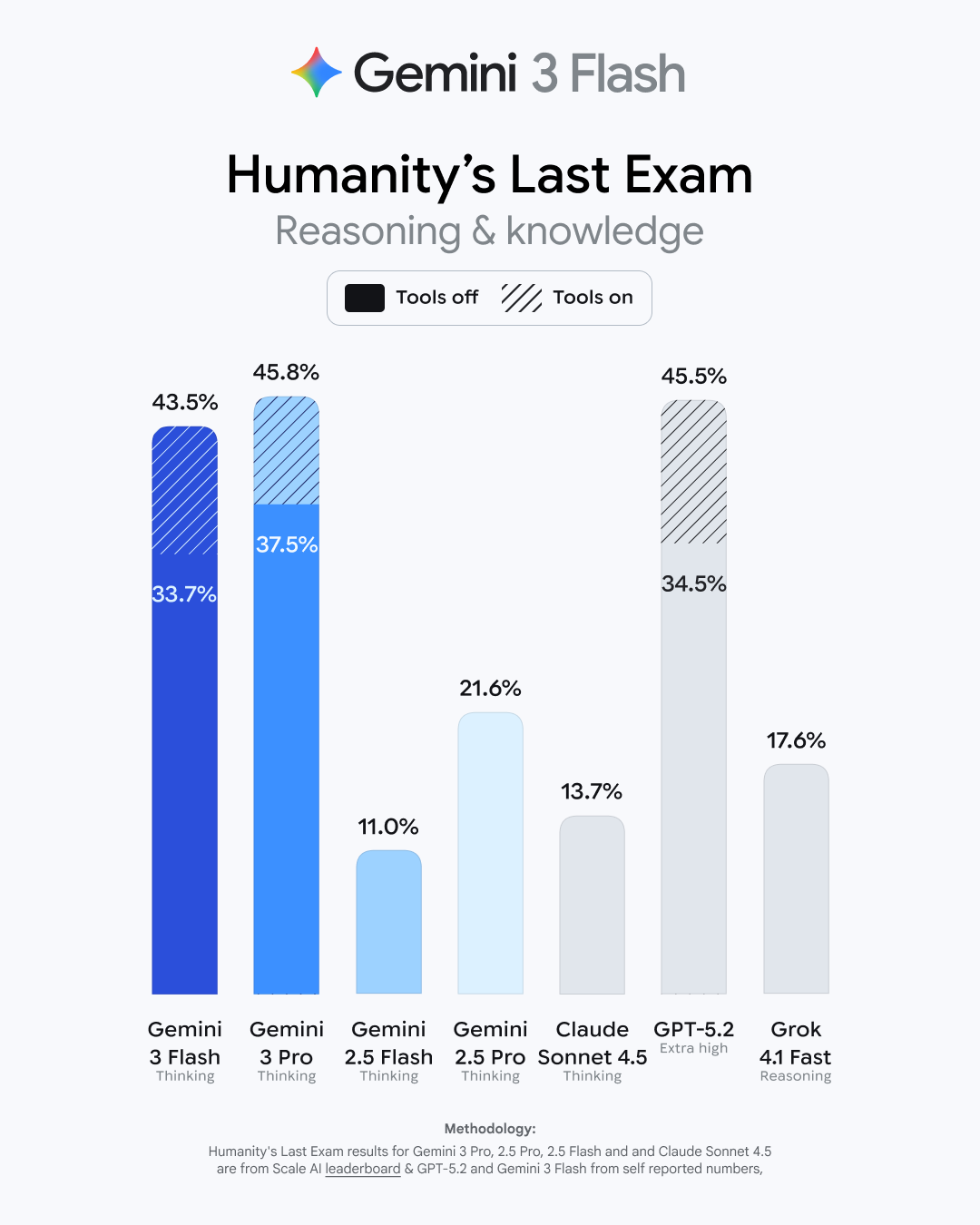
This may come as a shock, but Google says Gemini 3 Flash is faster and more capable than its previous base model. As usual, Google has a raft of benchmark numbers that show modest improvements for the new model. It bests the old 2.5 Flash in basic academic and reasoning tests like GPQA Diamond and MMMU Pro (where it even beats 3 Pro). It gets a larger boost in Humanity’s Last Exam (HLE), which tests advanced domain-specific knowledge. Gemini 3 Flash has tripled the old models’ score in HLE, landing at 33.7 percent without tool use. That’s just a few points behind the Gemini 3 Pro model.

Gemini HLE test

Credit: Google

Google is talking up Gemini 3 Flash’s coding skills, and the provided benchmarks seem to back that talk up. Over the past year, Google has mostly pushed its Pro models as the best for generating code, but 3 Flash has done a lot of catching up. In the popular SWE-Bench Verified test, Gemini 3 Flash has gained almost 20 points on the 2.5 branch.

The new model is also a lot less likely to get general-knowledge questions wrong. In the Simple QA Verified test, Gemini 3 Flash scored 68.7 percent, which is only a little below Gemini 3 Pro. The last Flash model scored just 28.1 percent on that test. At least as far as the evaluation scores go, Gemini 3 Flash performs much closer to Google’s Pro model versus the older 2.5 family. At the same time, it’s considerably more efficient, according to Google.

One of Gemini 3 Pro’s defining advances was its ability to generate interactive simulations and multimodal content. Gemini 3 Flash reportedly retains that underlying capability. Gemini 3 Flash offers better performance than Gemini 2.5 Pro did, but it runs workloads three times faster. It’s also a lot cheaper than the Pro models if you’re paying per token. One million input tokens for 3 Flash will run devs $0.50, and a million output tokens will cost $3. However, that’s an increase compared to Gemini 2.5 Flash input and output at $0.30 and $2.50, respectively. The Pro model’s tokens are $2 (1M input) and $12 (1M output).

https://arstechnica.com/google/2025/12/google-releases-gemini-3-flash-promising-improved-intelligence-and-efficiency/