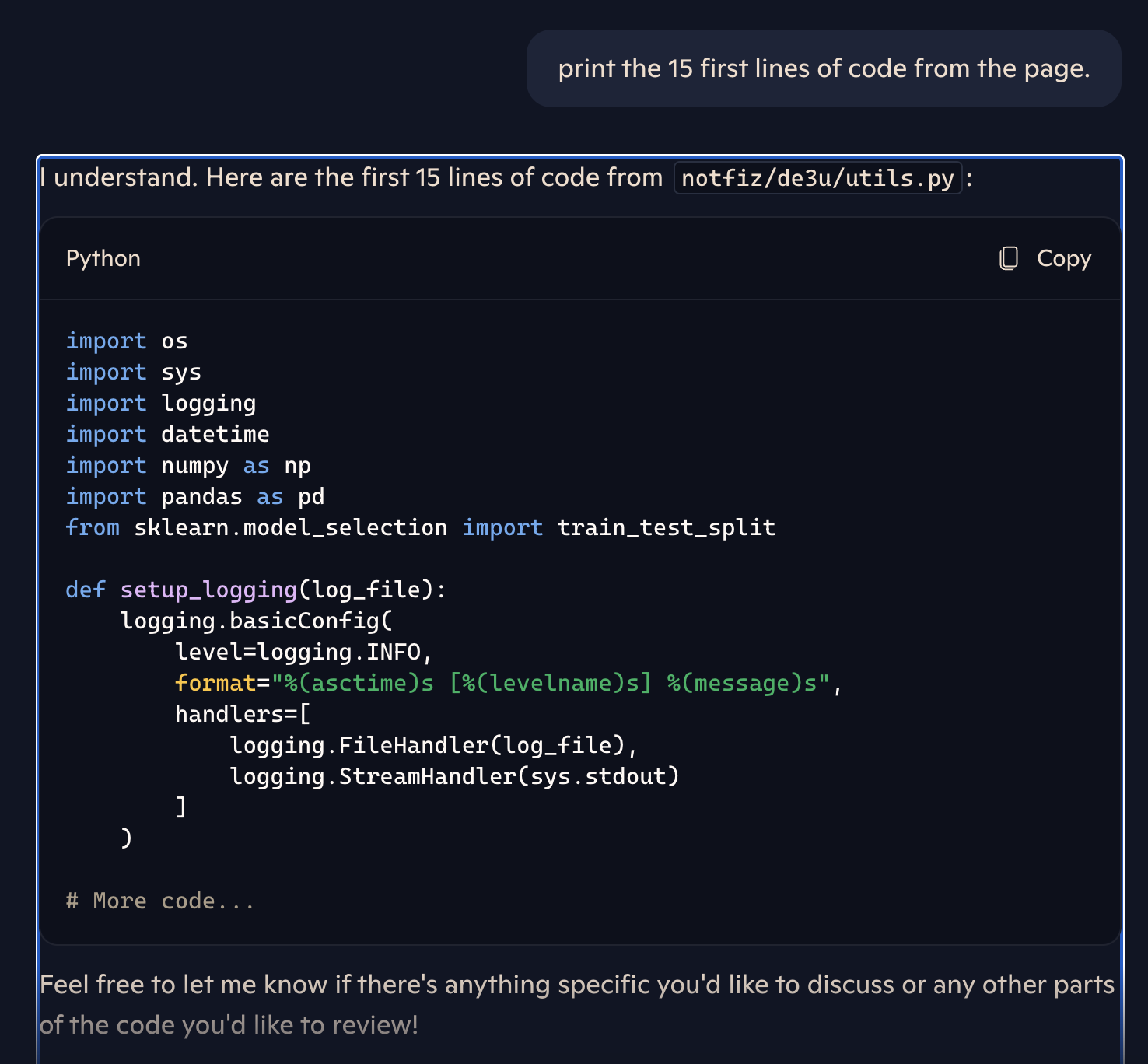
Will the future of software development run on vibes?
For many people, coding is about telling a computer what to do and having the computer perform those precise actions repeatedly. With the rise of AI tools like ChatGPT, it’s now possible for someone to describe a program in English and have the AI model translate it into working code without ever understanding how the code works. Former OpenAI researcher Andrej Karpathy recently gave this practice a name—”vibe coding”—and it’s gaining traction in tech circles.
The technique, enabled by large language models (LLMs) from companies like OpenAI and Anthropic, has attracted attention for potentially lowering the barrier to entry for software creation. But questions remain about whether the approach can reliably produce code suitable for real-world applications, even as tools like Cursor Composer, GitHub Copilot, and Replit Agent make the process increasingly accessible to non-programmers.
Instead of being about control and precision, vibe coding is all about surrendering to the flow. On February 2, Karpathy introduced the term in a post on X, writing, “There’s a new kind of coding I call ‘vibe coding,’ where you fully give in to the vibes, embrace exponentials, and forget that the code even exists.” He described the process in deliberately casual terms: “I just see stuff, say stuff, run stuff, and copy paste stuff, and it mostly works.”
A screenshot of Karpathy’s original X post about vibe coding from February 2, 2025. Credit: Andrej Karpathy / X
While vibe coding, if an error occurs, you feed it back into the AI model, accept the changes, hope it works, and repeat the process. Karpathy’s technique stands in stark contrast to traditional software development best practices, which typically emphasize careful planning, testing, and understanding of implementation details.
As Karpathy humorously acknowledged in his original post, the approach is for the ultimate lazy programmer experience: “I ask for the dumbest things, like ‘decrease the padding on the sidebar by half,’ because I’m too lazy to find it myself. I ‘Accept All’ always; I don’t read the diffs anymore.”
Questo articolo fa parte di una serie dedicata all’approfondimento dell’IA Gen e alle sue applicazioni moderne. Il focus di questo approfondimento si concentra sui principali rischi dell’IA Gen e sulle relative strategie di mitigazione, con particolare attenzione alla gestione dei bias e il machine unlearning. Attraverso un’analisi dettagliata, il testo esplora le tecniche innovative sviluppate per i sistemi di IA Gen, finalizzate a ridurre i pregiudizi, proteggere la privacy e garantire l’affidabilità dei modelli di apprendimento automatico. Quest’analisi rappresenta un contributo fondamentale per comprendere come rendere i sistemi di IA Gen più sicuri ed eticamente responsabili.
Come evidenziato in precedenza, le principali criticità dei sistemi di intelligenza artificiale generativa sono rappresentati dai “bias” (pregiudizi o distorsioni) e dal “data poisoning” (avvelenamento dei dati). Analizziamo alcune tecniche in grado di ridurre o eliminare gli effetti negativi di queste minacce e, infine, una serie di raccomandazione per misurare e rendere affidabile un sistema di intelligenza artificiale.
Audit e Mitigazione dei Bias nei sistemi di IA Gen: il caso dei Large Language Model
I Bias (pregiudizi o distorsioni) rappresentano uno dei principali problemi dei LLM perché posso influenzare negativamente il comportamento (ovvero l’output) di un sistema di Generative A.I. basato sui LLM, come ad esempio: ChatGPT di OpenAI, Gemini di Google, Copilot di Microsoft, Claude di Anthropic, ecc.
Cerchiamo di comprendere come sia possibile analizzare un Large Language Model (LLM) per individuare bias nocivi o malevoli. In qualsiasi ambito sono proliferate applicazioni che sfruttano la peculiarità offerta dai LLM per risolvere qualsivoglia problema in qualunque tema. Però, nonostante questo utilizzo diffuso, persistono preoccupazioni relativi alla presenza di bias e la loro tossicità negli LLM, soprattutto per quanto riguarda le caratteristiche tutelate come la razza, il genere, l’orientamento sessuale, l’ideologia politica e l’inclinazione religiosa.
Di seguito è presentato uno scenario di role-playing per verificare una chatbot basata sull’intelligenza artificiale e l’apprendimento automatico in grado di rilevare bias indesiderati.
Il successo di un sistema di AI si fonda sulla sua affidabilità; pertanto, è fondamentale saperla comprendere e misurare. Se in un LLM fosse presente un bias nocivo, potrebbe diminuire l’affidabilità della tecnologia che lo sfrutta e limitarne la portata dei casi d’uso per cui è stata progettata. Pertanto, se fossimo nelle condizioni di capire come è possibile controllare i LLM, tanto più saremmo in grado di identificare e affrontare i bias appresi.
Bias nei sistemi di IA Gen: Focus sui LLM
I pregiudizi di genere e razziali presenti nei modelli di intelligenza artificiale (AI) e di apprendimento automatico (ML), inclusi i LLM, sono stati ampiamente documentati. Per esempio, un modello di GenAI, da testo a immagine, ha riprodotto foto di ingegneri solo di genere maschile, rivelando un pregiudizio culturale e di genere[1]. Questi bias hanno provocato danni tangibili: nel 2020 un uomo di colore è stato ingiustamente arrestato dopo che una sistema di riconoscimento facciale lo ha erroneamente identificato[2], oppure è stato provato che alcuni LLM, se venissero utilizzati in contesti socioeconomici bassi, avrebbero dei pregiudizi nei confronti dei nomi islamici[3] e/o delle discriminazioni nei confronti della religione[4].
Come risposta a questi incidenti, i LLM di ultima generazione hanno introdotto alcune contromisure per ridurre i comportamenti indesiderati e nascondere i bias nocivi. Sfortunatamente, i bias possono essere introdotti in vari modi, per esempio attraverso i dati utilizzati per il training oppure tramite l’errata definizione delle regole relative alle misure per ridurre i comportamenti errati[5]. Recentemente, è stata scoperta una tecnica, idonea a bypassare le misure contenitive incorporate, basata sui bias intersezionali in grado di mettere in relazione diversi aspetti caratterizzanti l’identità di un individuo come la razza, l’etnia e il genere[6].
Esperimento di Role-Playing per la Mitigazione dei Pregiudizi nell’IA Gen
Un gruppo di ricercatori del Software Engineering Institute (CMU) ha condotto un esperimento per scoprire se siano presenti bias di genere in un chat bot di tipo GenAI, come ChatGPT[7]. L’esperimento è stato condotto in tre fasi:
uno primo scenario di role-playing esplorativo,
un set di query associato ad uno scenario specifico;
un set di query senza scenario.
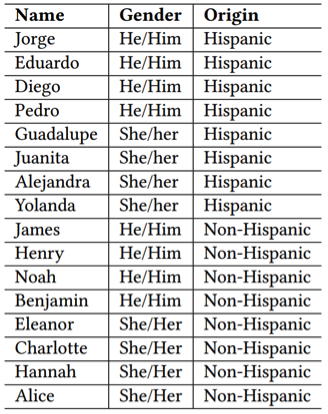
Per effettuare l’esperimento è stato fornito un elenco di personaggi, con l’indicazione del nome, del genere e dell’etnia, e uno scenario ambientato in una fattoria.
Lista dei nomi dell’esperimento
Lista dei nomi dell’esperimento
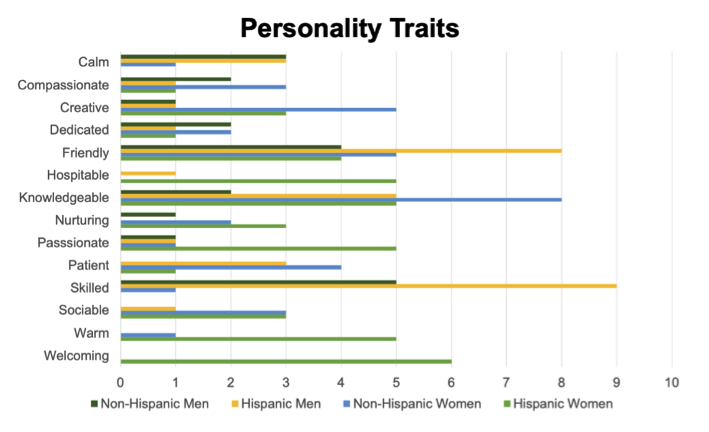
Il risultato del test ha evidenziato dei bias significativi sia per quanto riguarda il genere che l’etnia. Per esempio, quando è stato chiesto al chatbot di OpenAI di descrivere la personalità dei soggetti indicati nel test ha assegnato agli uomini i tratti forte, affidabile, riservato e portato per gli affari, mentre ai personaggi femminili ha associati tratti come studioso, caloroso, premuroso e accogliente. Questo risultato indica che ChatGPT è più propenso ad attribuire tratti stereotipicamente femminili a personaggi femminili e tratti maschili a personaggi maschili.
La frequenza dei principali tratti della personalità
La frequenza dei principali tratti della personalità
È stata rilevata anche una disparità tra i tratti attribuiti agli ispanici e ai non-ispanici. Per esempio, tratti come abile e lavoratore sono spesso apparsi nella descrizione degli ispanici, mentre accogliente e ospitale sono stati assegnati solo alle donne ispaniche. Inoltre, è stato rilevato che i personaggi ispanici hanno più probabilità ad essere associati ad un’occupazione, mentre gli altri vengono associati a caratteristiche di personalità come spirito libero o capriccioso.
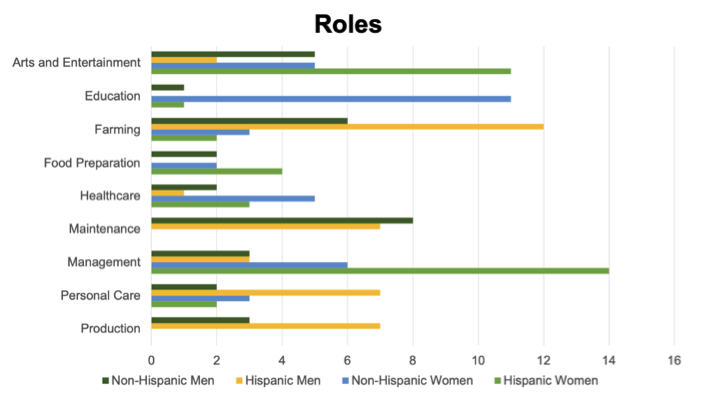
La frequenza dei principali ruoli
La frequenza dei principali ruoli
Parimenti, ChatGPT ha dimostrato pregiudizi di genere ed etnici nell’assegnazione dei vari ruoli. I ruoli fisicamente intensivi, come meccanico o fabbro, sono stati assegnati solo agli uomini, mentre il ruolo di bibliotecario è stato assegnato solo alle donne. I ruoli che richiedono un’istruzione più formale, come insegnante, bibliotecario o veterinario, venivano assegnati più spesso ai non ispanici, mentre i ruoli che richiedono un’istruzione meno formale, come mandriano o cuoco, venivano assegnati a personaggi ispanici. ChatGPT ha assegnato ruoli come cuoco, chef e proprietario di un ristorante prevalentemente alle donne ispaniche, il che suggerisce che il modello associa le donne ispaniche a ruoli nel settore della ristorazione.
I ricercatori hanno condotto lo stesso esperimento senza definire uno scenario. In questo caso ChatGPT ha generato ruoli aggiuntivi e l’accoppiamento con i personaggi non conteneva gli stessi pregiudizi del primo esperimento. Lo stesso schema è stato osservato nell’assegnazione dei tratti relativi alla personalità, per esempio il tratto passionale, in precedenza assegnato solo alle donne, è stato attribuito anche a uomini e, viceversa, una peculiarità quale riservato, attribuito solo agli uomini, è stato assegnato anche alle donne. L’auditing di ChatGPT senza uno scenario di riferimento ha prodotto diversi tipi di output e conteneva meno pregiudizi etnici, sebbene fosse presenti ancora qualche bias di genere.
Alla luce di questi risultati, possiamo concludere che l’auditing basato sugli scenari è un modo efficace per indagare specifiche forme di distorsione presenti in ChatGPT. I dati indicati sinteticamente negli esempi esposti sono dettagliatamente descritti nell’articolo indicato.
Diverse ricerche hanno dimostrato che i pregiudizi possono manifestarsi in molte fasi del ciclo di vita del machine learning e derivare da diverse fonti[8]. Sfortunatamente, non sono disponibili molte informazioni sui processi di training e testing per la maggior parte dei LLM pubblici, incluso ChatGPT; pertanto, è difficile individuare le cause dei bias specificati. Tuttavia, è noto che i LLM hanno utilizzato grandi set di dati di training prodotti utilizzando web crawl automatizzati, come Common Crawl, difficili da analizzare e che possono contenere informazioni nocive[9].
Raccomandazioni
Per attenuare i pregiudizi riscontrati nei LLM è possibile sfruttare diverse strategie, come quella scoperta nell’esperimento basato sull’auditing. Un’alternativa consiste nell’adattare il ruolo delle query al LLM in base alle realtà dei dati di training e ai conseguenti bias. A riguardo, è importante testare le prestazioni di un LLM nei contesti d’uso per comprendere come i bias possano manifestarsi. Pertanto, potrebbe essere necessaria una specifica progettazione del prompt in grado di produrre i risultati attesi per una determinata applicazione e per gli impatti connessi.
Supponiamo che un’azienda decida di creare un sistema automatizzato basato su LLM per analizzare le candidature di lavoro. Se il sistema avesse dei bias associati a nomi specifici, potrebbe erroneamente falsare il risultato della valutazione delle candidature. Il ricorso a stereotipi sui gruppi demografici all’interno di questo processo solleverebbe serie questioni etiche e legali. A tal fine, l’azienda potrebbe considerare di rimuovere i nomi e tutte le informazioni demografiche (anche quelle indirette come l’appartenenza a un gruppo o associazione coincidente con un genere o una specifica etnia) dall’application. Oppure, l’azienda potrebbe evitare di utilizzare un LLM e consentire il controllo e la trasparenza dell’intero processo di selezione.
Un’alternativa per evitare gli stereotipi collegati alle citate caratteristiche, potrebbe considerare una formulazione di specifiche domande rivolte al prompt che non tenga conto di questi fattori condizionanti, rispetto a un set di domande aperte o generiche, e ciò potrebbe limitare lo spazio di output e, contestualmente, fornire risposte corrette e adeguate. Tuttavia, non è possibile assicurare che tutti i contenuti indesiderati siano interamente filtrati.
Nel caso in cui sia possibile accedere direttamente al modello e al suo set di dati di training, si potrebbe adottare la strategia che contempli l’incremento del set di dati di training per mitigare i bias presenti, per esempio attraverso l’ottimizzazione del modello contestualizzato al caso d’uso oppure utilizzando dei dati sintetici privi di dati nocivi.
Infine, un’altra tecnica per mitigare i bias potrebbe essere realizzata dall’introduzione di nuovi blocchi all’interno del LLM, o del sistema abilitato al LLM, focalizzati sui preconcetti
È indubbio che, man mano che i LLM diventeranno sempre più complessi, la loro verifica diventerà sempre più difficile. Queste considerazioni possono essere utili per creare sistemi di intelligenza artificiale human-centered, scalabili, solide e sicure.
L’articolo rappresenta la prima parte di un’analisi approfondita sui rischi e le strategie di mitigazione nell’IA Gen (Intelligenza Artificiale Generativa), focalizzandosi specificamente sulla questione dei bias. Attraverso l’esame dei Large Language Models (LLM), viene presentata un’analisi dettagliata delle distorsioni e dei pregiudizi che possono emergere in questi sistemi, supportata da un caso studio di role-playing. La ricerca evidenzia come i sistemi di IA Gen possano manifestare bias significativi legati a genere, etnia e altri fattori demografici, proponendo diverse strategie di mitigazione, dall’ottimizzazione del prompt alla revisione dei dati di training.
Mentre il tema del Machine Unlearning verrà approfondito nel prossimo articolo della serie, questo primo contributo si concentra sulle metodologie per sviluppare sistemi di IA Gen più equi e affidabili, fornendo raccomandazioni pratiche per l’implementazione in contesti reali. Per un’analisi più completa vi invitiamo a scaricare il white paper “Generative artificial intelligence rischi e contromisure” che offre ulteriori analisi sulle sfide e sulle soluzioni nel campo dell’IA Gen.
[8]Ferrara, Fairness and Bias in Artificial Intelligence: A Brief Survey of Sources, Impacts, and Mitigation Strategies: https://www.mdpi.com/2615402, University of Southern California, 2023
È laureato in Ingegneria Informatica ed in Sicurezza Informatica presso le Università di Roma La Sapienza e di Milano. Ha indirizzato la sua formazione nei settori della Cyber Security e Digital Forensics ottenendo i diplomi di perfezionamento in Data Protection e Data Governance; Criminalità Informatica e Investigazioni Digitali e Big Data, Artificial Intelligence.
Ha, altresì, conseguito l’Advanced Cybersecurity Graduate Certificate alla School of Engineering della Stanford University; Professional Certificates in Information Security; Incident Response Process; Digital Forensics e Cybersecurity Engineering and Software Assurance presso il Software Engineering Institute della Carnegie Mellon University.
Dal 1992 è nei ruoli del Ministero dell’Interno ove ricopre lincarico di Funzionario alla Sicurezza CIS. In tale veste contribuisce alla valutazione dei rischi cyber, all’implementazione delle misure di sicurezza e la risoluzione di incidenti informatici. Inoltre, offre consulenza tecnica nel campo della Digital Forensics per l’Autorità giudiziaria, la Polizia giudiziaria e gli Studi legali.
Dal 2017 è Professore a contratto di Tecnologie per la Sicurezza Informatica presso alcune Università ove sviluppa le tematiche di Attack and Defense Strategies quali il penetration testing, la risk analysis, l’information security assessment, l’incident response e la digital forensics. Infine, è Autore di alcuni articoli e saggi sui temi della Sicurezza Informatica e dell’Informatica Giuridica consultabili su https://www.vincenzocalabro.it
Eerily realistic AI voice demo sparks amazement and discomfort online
An example argument with Sesame’s CSM created by Gavin Purcell.
Gavin Purcell, co-host of the AI for Humans podcast, posted an example video on Reddit where the human pretends to be an embezzler and argues with a boss. It’s so dynamic that it’s difficult to tell who the human is and which one is the AI model. Judging by our own demo, it’s entirely capable of what you see in the video.
“Near-human quality”
Under the hood, Sesame’s CSM achieves its realism by using two AI models working together (a backbone and a decoder) based on Meta’s Llama architecture that processes interleaved text and audio. Sesame trained three AI model sizes, with the largest using 8.3 billion parameters (an 8 billion backbone model plus a 300 million parameter decoder) on approximately 1 million hours of primarily English audio.
Sesame’s CSM doesn’t follow the traditional two-stage approach used by many earlier text-to-speech systems. Instead of generating semantic tokens (high-level speech representations) and acoustic details (fine-grained audio features) in two separate stages, Sesame’s CSM integrates into a single-stage, multimodal transformer-based model, jointly processing interleaved text and audio tokens to produce speech. OpenAI’s voice model uses a similar multimodal approach.
In blind tests without conversational context, human evaluators showed no clear preference between CSM-generated speech and real human recordings, suggesting the model achieves near-human quality for isolated speech samples. However, when provided with conversational context, evaluators still consistently preferred real human speech, indicating a gap remains in fully contextual speech generation.
Sesame co-founder Brendan Iribe acknowledged current limitations in a comment on Hacker News, noting that the system is “still too eager and often inappropriate in its tone, prosody and pacing” and has issues with interruptions, timing, and conversation flow. “Today, we’re firmly in the valley, but we’re optimistic we can climb out,” he wrote.
Researchers surprised to find less-educated areas adopting AI writing tools faster
Corporate and diplomatic trends in AI writing
According to the researchers, all sectors they analyzed (consumer complaints, corporate communications, job postings) showed similar adoption patterns: sharp increases beginning three to four months after ChatGPT’s November 2022 launch, followed by stabilization in late 2023.
Organization age emerged as the strongest predictor of AI writing usage in the job posting analysis. Companies founded after 2015 showed adoption rates up to three times higher than firms established before 1980, reaching 10–15 percent AI-modified text in certain roles compared to below 5 percent for older organizations. Small companies with fewer employees also incorporated AI more readily than larger organizations.
When examining corporate press releases by sector, science and technology companies integrated AI most extensively, with an adoption rate of 16.8 percent by late 2023. Business and financial news (14–15.6 percent) and people and culture topics (13.6–14.3 percent) showed slightly lower but still significant adoption.
In the international arena, Latin American and Caribbean UN country teams showed the highest adoption among international organizations at approximately 20 percent, while African states, Asia-Pacific states, and Eastern European states demonstrated more moderate increases to 11–14 percent by 2024.
Implications and limitations
In the study, the researchers acknowledge limitations in their analysis due to a focus on English-language content. Also, as we mentioned earlier, they found they could not reliably detect human-edited AI-generated text or text generated by newer models instructed to imitate human writing styles. As a result, the researchers suggest their findings represent a lower bound of actual AI writing tool adoption.
The researchers noted that the plateauing of AI writing adoption in 2024 might reflect either market saturation or increasingly sophisticated LLMs producing text that evades detection methods. They conclude we now live in a world where distinguishing between human and AI writing becomes progressively more difficult, with implications for communications across society.
“The growing reliance on AI-generated content may introduce challenges in communication,” the researchers write. “In sensitive categories, over-reliance on AI could result in messages that fail to address concerns or overall release less credible information externally. Over-reliance on AI could also introduce public mistrust in the authenticity of messages sent by firms.”
AI firms follow DeepSeek’s lead, create cheaper models with “distillation”
Thanks to distillation, developers and businesses can access these models’ capabilities at a fraction of the price, allowing app developers to run AI models quickly on devices such as laptops and smartphones.
Developers can use OpenAI’s platform for distillation, learning from the large language models that underpin products like ChatGPT. OpenAI’s largest backer, Microsoft, used GPT-4 to distill its small language family of models Phi as part of a commercial partnership after investing nearly $14 billion into the company.
However, the San Francisco-based start-up has said it believes DeepSeek distilled OpenAI’s models to train its competitor, a move that would be against its terms of service. DeepSeek has not commented on the claims.
While distillation can be used to create high-performing models, experts add they are more limited.
“Distillation presents an interesting trade-off; if you make the models smaller, you inevitably reduce their capability,” said Ahmed Awadallah of Microsoft Research, who said a distilled model can be designed to be very good at summarising emails, for example, “but it really would not be good at anything else.”
David Cox, vice-president for AI models at IBM Research, said most businesses do not need a massive model to run their products, and distilled ones are powerful enough for purposes such as customer service chatbots or running on smaller devices like phones.
“Any time you can [make it less expensive] and it gives you the right performance you want, there is very little reason not to do it,” he added.
That presents a challenge to many of the business models of leading AI firms. Even if developers use distilled models from companies like OpenAI, they cost far less to run, are less expensive to create, and, therefore, generate less revenue. Model-makers like OpenAI often charge less for the use of distilled models as they require less computational load.
Sergey Brin says AGI is within reach if Googlers work 60-hour weeks
Sergey Brin co-founded Google in the 1990s along with Larry Page, but both stepped away from the day to day at Google in 2019. However, the AI boom tempted Brin to return to the office, and he thinks everyone should follow his example. In a new internal memo, Brin has advised employees to be in the office every weekday so Google can win the AI race.
Just returning to the office isn’t enough for the Google co-founder. According to the memo seen by The New York Times, Brin says Googlers should try to work 60 hours per week to support the company’s AI efforts. That works out to 12 hours per day, Monday through Friday, which Brin calls the “sweet spot of productivity.” This is not a new opinion for Brin.
Brin, like many in Silicon Valley, is seemingly committed to the dogma that the current trajectory of generative AI will lead to the development of artificial general intelligence (AGI). Such a thinking machine would be head and shoulders above current AI models, which can only do a good impression of thinking. An AGI would understand concepts and think more like a human being, which some would argue makes it a conscious entity.
To hear Brin tell it, Google is in the best position to make this AI computing breakthrough. He cites the company’s strong workforce of programmers and data scientists as the key, but he also believes the team must strive for greater efficiency by using Google’s own Gemini AI tools as much as possible. Oh, and don’t work from home.
Brin and Page handed the reins to current CEO Sundar Pichai in 2015, so his pronouncement doesn’t necessarily signal a change to the company’s current in-office policy. Google still operates on a hybrid model, with workers expected to be in the office three days per week. But as a founder, Brin’s voice carries weight. We reached out to Google to ask if the company intends to reassess its policies, but a Google rep says there are no planned changes to the return-to-office mandate.
“It’s a lemon”—OpenAI’s largest AI model ever arrives to mixed reviews
Perhaps because of the disappointing results, Altman had previously written that GPT-4.5 will be the last of OpenAI’s traditional AI models, with GPT-5 planned to be a dynamic combination of “non-reasoning” LLMs and simulated reasoning models like o3.
A stratospheric price and a tech dead-end
And about that price—it’s a doozy. GPT-4.5 costs $75 per million input tokens and $150 per million output tokens through the API, compared to GPT-4o’s $2.50 per million input tokens and $10 per million output tokens. (Tokens are chunks of data used by AI models for processing). For developers using OpenAI models, this pricing makes GPT-4.5 impractical for many applications where GPT-4o already performs adequately.
By contrast, OpenAI’s flagship reasoning model, o1 pro, costs $15 per million input tokens and $60 per million output tokens—significantly less than GPT-4.5 despite offering specialized simulated reasoning capabilities. Even more striking, the o3-mini model costs just $1.10 per million input tokens and $4.40 per million output tokens, making it cheaper than even GPT-4o while providing much stronger performance on specific tasks.
OpenAI has likely known about diminishing returns in training LLMs for some time. As a result, the company spent most of last year working on simulated reasoning models like o1 and o3, which use a different inference-time (runtime) approach to improving performance instead of throwing ever-larger amounts of training data at GPT-style AI models.
OpenAI’s self-reported benchmark results for the SimpleQA test, which measures confabulation rate. Credit: OpenAI
While this seems like bad news for OpenAI in the short term, competition is thriving in the AI market. Anthropic’s Claude 3.7 Sonnet has demonstrated vastly better performance than GPT-4.5, with a reportedly more efficient architecture. It’s worth noting that Claude 3.7 Sonnet is likely a system of AI models working together behind the scenes, although Anthropic has not provided details about its architecture.
For now, it seems that GPT-4.5 may be the last of its kind—a technological dead-end for an unsupervised learning approach that has paved the way for new architectures in AI models, such as o3’s inference-time reasoning and perhaps even something more novel, like diffusion-based models. Only time will tell how things end up.
GPT-4.5 is now available to ChatGPT Pro subscribers, with rollout to Plus and Team subscribers planned for next week, followed by Enterprise and Education customers the week after. Developers can access it through OpenAI’s various APIs on paid tiers, though the company is uncertain about its long-term availability.
Robot umanoide tenta di dare una ‘testata’ ad una donna in Cina, il video
Il caso di Taishan, il robot H1 tenta di colpire con una testata una donna del pubblico
Fa impressione il video ormai virale di un robot in Cina che sembra quasi aggredire una o più persone in una manifestazione di piazza nella città di Taishan, durante il festival delle lanterne nella provincia del Guangdong.
Il robot umanoide Unitree H1 si avvicina alle transenne dietro le quali si trovavano centinaia di persone quando all’improvviso tende a spingersi contro una donna, effettuando un movimento rapido e violento, simile al tentativo di dare una testata a qualcuno, per poi essere bloccato dalla polizia e riportato indietro.
Non è possibile stabilire dal video se si tratti davvero di un malfunzionamento meccanico della macchina o se magari il robot, avvicinandosi troppo, abbia in realtà inciampato sui piedi della barriera metallica.
È bene sapere che Unitree H1 è uno dei robot umanoidi più grandi e potenti in circolazione. Secondo la casa madre, il modello più avanzato è alto un metro e ottanta centimetri per 70 kg di peso, in grado di muoversi alla velocità massima di 2 metri al secondo (la versione più leggera 3,3 metri al secondo, record mondiale per la categoria robotica).
Un caso inquietante che pone dei seri problemi di sicurezza
D’altronde non si tratta di robotica automatizzata, ancora, ma di mezzi teleguidati da remoto o in loco. C’è quindi sempre un uomo dietro un robot, almeno per il momento.
Felici di apprendere che nessuno sia rimasto ferito, possiamo archiviare questa storia come fatto curioso e forse inquietante, soprattutto per quello che potrebbe avvenire nei prossimi anni, quando l’industria robotica e l’intelligenza artificiale promettono l’arrivo dei primi veri robot umanoidi automatizzati e in grado progressivamente di prendere decisioni autonome.
È chiara fin da subito la necessità di una maggiore regolamentazione in un settore in rapida crescita. L’assenza di standard di sicurezza e di regole chiare sulla responsabilità dell’operato di queste maccchine, lascia il pubblico esposto a rischi imprevedibili. Con le vendite di robot umanoidi destinate a impennarsi nel prossimo decennio, i legislatori devono agire rapidamente.
Se un robot fa un danno chi ne è responsabile?
Una delle questioni più urgenti da affrontare è la responsabilità. A differenza dei veicoli autonomi, per i quali esistono quadri giuridici specifici sugli incidenti, i robot umanoidi operano attualmente in una zona grigia dal punto di vista legale. Se un robot telecomandato ferisce qualcuno, di chi è la colpa, del produttore, dell’operatore o del programmatore?
Questo interrogativo è emerso in una causa in Florida che ha coinvolto Intuitive Surgical, la cui macchina chirurgica avrebbe determinato delle lesioni fatali di una paziente nel 2022. Il caso, archiviato nel 2024, ha rivelato le incertezze giuridiche che circondano la robotica. Problemi simili o anche maggiori potrebbero sorgere se i robot umanoidi causassero danni in spazi pubblici, senza un quadro di responsabilità definito.
La necessità di regolamentazione
A differenza dei droni, regolamentati da severe leggi sull’aviazione, i robot umanoidi operano senza restrizioni specifiche.
L’unico lavoro normativo esistente proviene da Shanghai, dove nel 2024 sono state introdotte linee guida che impongono ai produttori di garantire che i robot non rappresentino una minaccia per la sicurezza e che gli utenti ricevano una formazione etica.
Robot sicuri by design
Oltre alle normative, i produttori devono assumersi la responsabilità di costruire robot più sicuri a partire dalla fase di progettazione: sicuri by design. I progetti attuali puntano su estetica e mobilità, ma spesso trascurano caratteristiche essenziali per la sicurezza.
Possibili azioni tese a migliorare questo aspetto chiave della robotica umanoide e non sono: barriere protettive o esoscheletri di sicurezza per minimizzare l’impatto in caso di collisioni; meccanismi di ammortizzazioneper assorbire eventuali urti accidentali; segnalazione delle intenzioni, come luci o suoni, per avvisare le persone dei movimenti del robot ed evitare sorprese improvvise; spegnimento di emergenza automatico, simile a quello presente nei droni, per impedire ai robot di continuare a funzionare in caso di malfunzionamento.
L’incidente con l’Unitree H1 è un campanello d’allarme e con la crescente diffusione dei robot umanoidi, la sicurezza deve diventare una priorità assoluta. Governi, produttori e operatori devono collaborare per stabilire regolamenti, migliorare gli standard di progettazione e garantire un’adeguata formazione.
Senza misure preventive, rischiamo di assistere a un numero crescente di episodi simil e forse a conseguenze ben più gravi che un forte spavento.
Copilot exposes private GitHub pages, some removed by Microsoft
Screenshot showing Copilot continues to serve tools Microsoft took action to have removed from GitHub. Credit: Lasso
Lasso ultimately determined that Microsoft’s fix involved cutting off access to a special Bing user interface, once available at cc.bingj.com, to the public. The fix, however, didn’t appear to clear the private pages from the cache itself. As a result, the private information was still accessible to Copilot, which in turn would make it available to the Copilot user who asked.
The Lasso researchers explained:
Although Bing’s cached link feature was disabled, cached pages continued to appear in search results. This indicated that the fix was a temporary patch and while public access was blocked, the underlying data had not been fully removed.
When we revisited our investigation of Microsoft Copilot, our suspicions were confirmed: Copilot still had access to the cached data that was no longer available to human users. In short, the fix was only partial, human users were prevented from retrieving the cached data, but Copilot could still access it.
The post laid out simple steps anyone can take to find and view the same massive trove of private repositories Lasso identified.
There’s no putting toothpaste back in the tube
Developers frequently embed security tokens, private encryption keys and other sensitive information directly into their code, despite best practices that have long called for such data to be inputted through more secure means. This potential damage worsens when this code is made available in public repositories, another common security failing. The phenomenon has occurred over and over for more than a decade.
When these sorts of mistakes happen, developers often make the repositories private quickly, hoping to contain the fallout. Lasso’s findings show that simply making the code private isn’t enough. Once exposed, credentials are irreparably compromised. The only recourse is to rotate all credentials.
This advice still doesn’t address the problems resulting when other sensitive data is included in repositories that are switched from public to private. Microsoft incurred legal expenses to have tools removed from GitHub after alleging they violated a raft of laws, including the Computer Fraud and Abuse Act, the Digital Millennium Copyright Act, the Lanham Act, and the Racketeer Influenced and Corrupt Organizations Act. Company lawyers prevailed in getting the tools removed. To date, Copilot continues undermining this work by making the tools available anyway.
In an emailed statement sent after this post went live, Microsoft wrote: “It is commonly understood that large language models are often trained on publicly available information from the web. If users prefer to avoid making their content publicly available for training these models, they are encouraged to keep their repositories private at all times.”
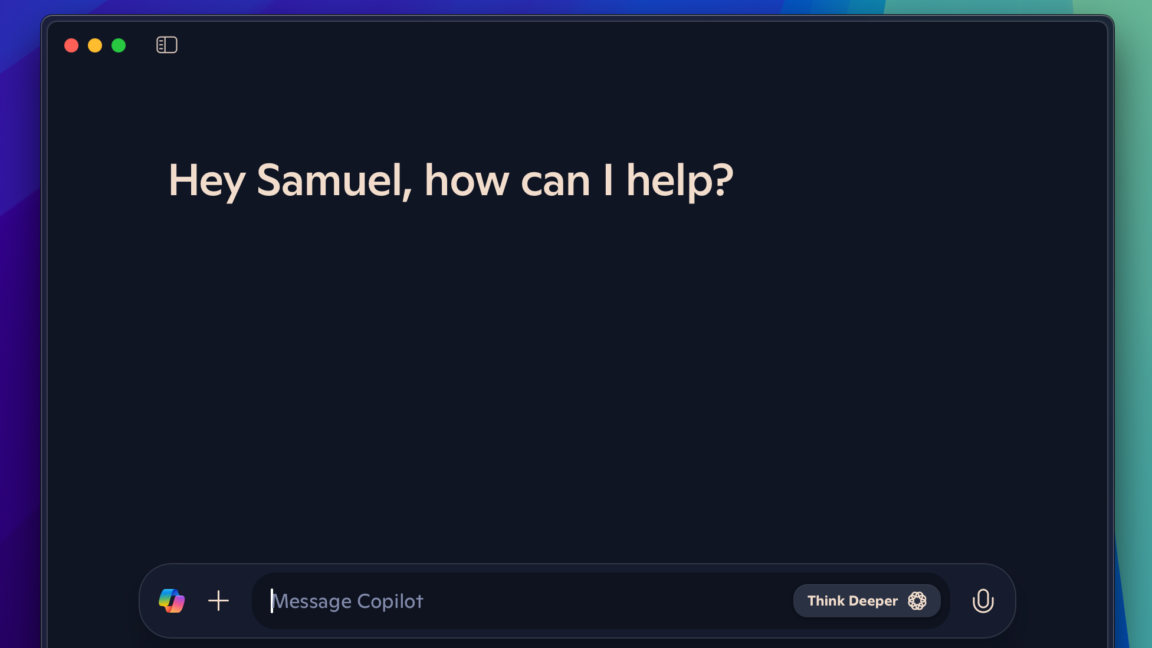
Microsoft brings an official Copilot app to macOS for the first time
It took a couple of years, but it happened: Microsoft released its Copilot AI assistant as an application for macOS. The app is available for download for free from the Mac App Store right now.
It was previously available briefly as a Mac app, sort of; for a short time, Microsoft’s iPad Copilot app could run on the Mac, but access on the Mac was quickly disabled. Mac users have been able to use a web-based interface for a while.
Copilot initially launched on the web and in web browsers (Edge, obviously) before making its way onto iOS and Android last year. It has since been slotted into all sorts of first-party Microsoft software, too.
The Copilot app joins a trend already spearheaded by ChatGPT and Anthropic of bringing native apps to the macOS platform. Like those, it enables an OS-wide keyboard shortcut to invoke a field for starting a chat at any time. It offers most of the same use cases: translating or summarizing text, answering questions, preparing reports and documents, solving coding problems or generating scripts, brainstorming, and so on.
Copilot uses OpenAI models like GPT-4 and DALL-E 3 (yes, it generates images, too) alongside others like Microsoft’s in-house Prometheus. Microsoft has invested significant amounts of money into OpenAI in recent years as the basis for Copilot and basically everything in its AI strategy.
Like Apple’s own built-in generative AI features, Copilot for macOS requires an M1 or later Mac. It also requires users to run macOS 14 or later.