Big tech: le prime 10 valgono il 58% del market cap della Top 100 globale. Nvidia guida la supremazia USA

Big Tech e supremazia USA

Guardando alla lista delle 100 aziende tecnologiche più capitalizzate al mondo è evidente che il potere si concentra nelle mani di un’élite ristretta di Big Tech: le prime 10 aziende da sole valgono oltre il 58% del market cap complessivo delle prime 100, con una cifra monstre di 21,35 trilioni di dollari su un totale di 36,77 trilioni.

Ma la vera notizia non è solo nei numeri: è nella geografia del potere economico, tecnologico e — sempre più — geopolitico. Se estendiamo la lista alle prime 1000 aziende tecnologiche più capitalizzate al mondo, la supremazia degli Stati Uniti è totale e si quantifica in 505 posizioni occupate.

NVIDIA, Microsoft e Apple, un podio tutto americano

A guidare la classifica c’è NVIDIA, regina incontrastata del 2025, con una capitalizzazione di quasi 4 trilioni di dollari (4.000 miliardi di dollari). Ieri aveva superato questa straordinaria soglia di valore di mercato, ma alla fine il titolo ha chiuso la giornata in rialzo ‘solo’ dell′1,8%, portando la capitalizzazione di mercato dell’azienda a 3,97 trilioni di dollari.

Il gigante californiano è di fatto il cuore pulsante oggi dell’economia plasmata dall’intelligenza artificiale (AI): i suoi chip sono il motore nascosto di ogni modello linguistico, ogni server, ogni infrastruttura digitale, gran parte dei device tecnologi oggi più usati al mondo.

Alle sue spalle, con distacchi ridotti, Microsoft (3.742 miliardi) e Apple (3.153 miliardi) completano un podio interamente statunitense. Microsoft gioca un ruolo strategico con Azure e OpenAI (oltre ad essere uno dei clienti più grandi e importanti di Nvidia), mentre Apple continua a dominare l’hardware di fascia alta e a investire in mixed reality e servizi digitali.

Le altre della top 10 — Amazon, Alphabet (Google), Meta, Broadcom, TSMC, Tesla e Oracle — confermano un trend: nove delle prime dieci aziende sono statunitensi. Solo una eccezione: la taiwanese TSMC, colosso mondiale dei semiconduttori.

La prima europea è la tedesca SAP, al 13° posto, seguita dall’olandese ASML al 15° posto, unico fornitore al mondo di litografia EUV, tecnologia chiave per la produzione di chip avanzati. Poi niente più fino al 34° posto, con la francese Schneider Electric.

La Cina c’è, ma il suo peso complessivo rimane impalpabile

La Cina ha 77 aziende nella classifica completa, ma il suo peso nella top 100 è ridotto e di difficile valutazione. Giganti come Tencent (11° posto) e Alibaba (20° posto) continuano a presidiare le prime posizioni, ma sono distanziati rispetto ai rivali americani.

Il motivo? Una combinazione di fattori, tra cui: le restrizioni imposte da Pechino al settore tech, soprattutto post-pandemia; il disaccoppiamento tecnologico con gli Stati Uniti, che penalizza la competitività sul fronte dei chip e dell’AI, la crescente diffidenza dei mercati globali verso le big tech cinesi, per motivi di governance e sicurezza.

Ciononostante, il sistema tecnologico cinese rimane robusto e strategicamente rilevante, soprattutto in settori come il fintech, il 5G, la robotica, la quantistica e l’elettronica di consumo.

Il caso Europa: un buon numero di aziende tech, ma ruolo marginale

L’Europa è numericamente presente con Paesi come Germania (40 aziende), Francia (34) e Regno Unito (45), ma il suo impatto reale nella top 100 è decisamente marginale. Solo ASML (Paesi Bassi) entra nella top ten. Nessuna azienda tedesca, francese o italiana compare nei primi 20 posti.

Le ragioni di questa debolezza sono strutturali e individuabili nella mancanza di poli di innovazione tecnologica comparabili alla Silicon Valley, nella propensione a calcare la mano su regole e burocrazia (che pur servono, ma nella proporzione giusta), nella scarsa propensione al rischio e alla scalabilità nel venture capital europeo, nella dipendenza da settori più tradizionali (automotive, manifattura) e nella minore attenzione ai settori ad altissima crescita come AI, semiconduttori e cloud.

Questa situazione espone il continente a un rischio strategico: essere sempre più “utente” e non “produttore” della tecnologia che governa il futuro. In poche parole, paghiamo la mancanza di una strategia seria e concreta che punti ad una reale indipendenza tecnologica e digitale.

Israele, India, Taiwan: piccoli Paesi, grandi ambizioni

Altri Paesi si distinguono per densità tecnologica e dal Medio Oriente e il resto dell’Asia arrivano quelle che potremmo definire le vere sorprese del settore tecnologico mondiale.

Una su tutte, ad esempio, è Israele, che piccolissimo come Paese conta 46 aziende, fucina in crescita di soluzioni cybersecurity, AI e med-tech.

Poi c’è l’India, grazie a colossi come Infosys, Tata Consultancy e alle crescenti startup, che sta emergendo sempre più come hub globale di servizi digitali.

Infine, la già nota Taiwan, con TSMC in testa, al centro da tempo della geopolitica dei semiconduttori (e delle tensioni purtroppo crescenti nel Pacifico tra Cina e Stati Uniti): senza i suoi chip, nessuna AI potrebbe funzionare, ma anche tanta altra tecnologia di punta sarebbe molto indietro rispetto al livello raggiunto oggi (dal supercalcolo al 5G, passando per la robotica).

Tecnologia = potere?

Questa classifica delle 100 aziende tech più capitalizzate al mondo non rappresenta solo un dato finanziario: è la mappa del potere globale. Chi domina la tecnologia oggi, controlla le leve dell’economia, della Difesa, dello Spazio e dell’informazione (quindi della comunicazione e della connettività globale multidominio).

Se estendiamo la classifica dalla Top 100 a alla Top 1000 delle imprese tecnologiche su scala planetaria, vediamo che ben 505 sono americane e che le aziende USA rappresentano oltre metà del valore complessivo del market cap.

In uno scenario simile, è chiaro che il mondo corre il rischio di essere fortemente polarizzato (USA o Cina?), con una Europa spettatrice e qualche attore minore ad alta intensità tecnologica che cerca di ritagliarsi un ruolo.

La sfida per i prossimi anni sarà ridurre la concentrazione e riequilibrare il potere, ma per riuscirci, servono visione politica, investimenti strutturali e un’industria tecnologica europea finalmente ambiziosa e che con maggiore coraggio e consapevolezza punti ad occupare un posto di rilievo sullo scacchiere mondiale..

Leggi le altre notizie sull’home page di Key4biz

https://www.key4biz.it/big-tech-le-prime-10-valgono-il-58-del-market-cap-della-top-100-globale-nvidia-guida-la-supremazia-usa/538851/
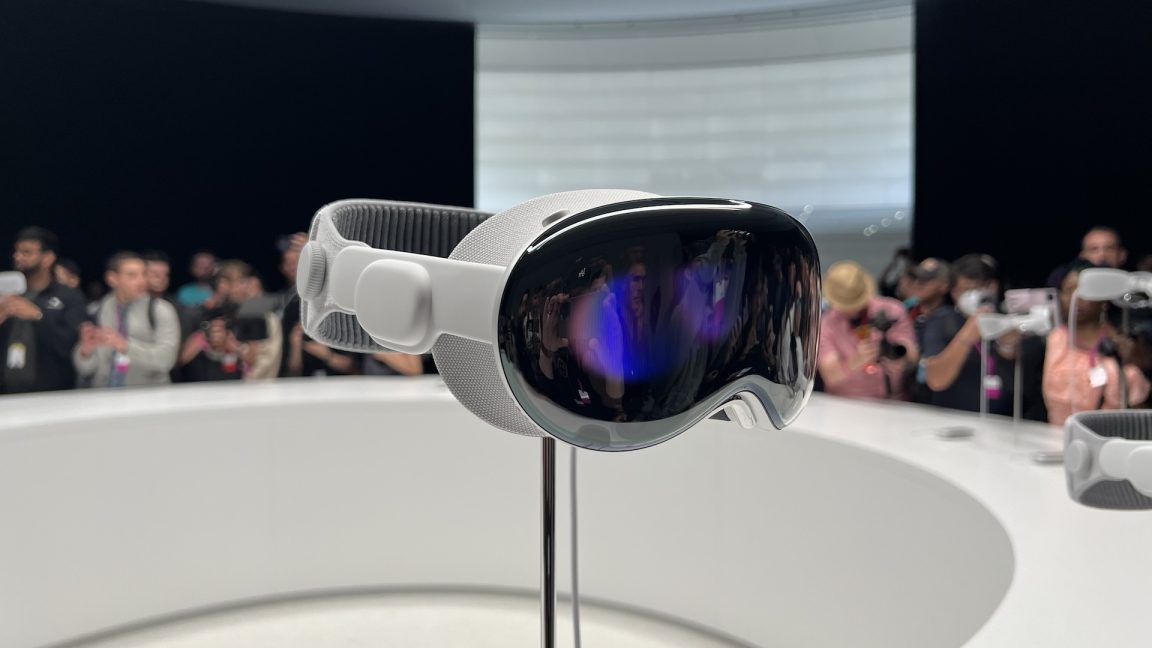


Report: Apple M4, more comfortable strap will headline first major Vision Pro update

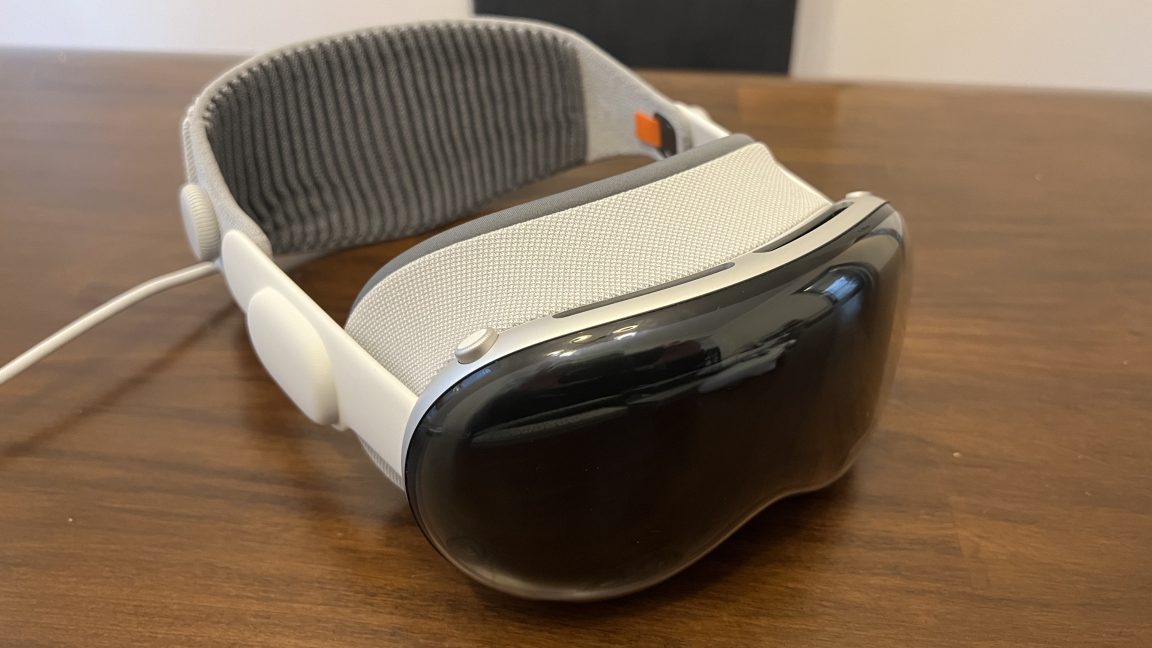
Apple hasn’t iterated on its Vision Pro hardware since launching it in early 2024 for $3,499, opting instead to refine the headset with a steady stream of software updates. But Bloomberg’s Mark Gurman reports that a new version of the Vision Pro could arrive “as early as this year,” with a replacement for the 3-year-old Apple M2 chip and a more comfortable strap.

Gurman says that the updated Vision Pro would ship with Apple’s M4 processor, which launched in the iPad Pro last year and has since found its way into new MacBook Pros, MacBook Airs, a new iMac, and a redesigned Mac mini.

Our tests in Apple’s other devices (and publicly available benchmark databases like Geekbench’s) show the M4 offering roughly 50 percent better multicore CPU performance and 20 or 25 percent better graphics performance than the M2, respectable increases for a device like the Vision Pro that needs to draw high-resolution images with as little latency as possible. Improvements to the chip’s video encoding and decoding hardware and image signal processor should also provide small-but-noticeable improvements to the headset’s passthrough video feed.

The report also claims that Apple is working on redesigned headbands for the new Vision Pro, to “reduce neck strain and head pain” and make the headset more comfortable to wear for longer periods of time. This update reportedly won’t be making major changes to the design of the device itself, so it would probably still come close to the 1.3–1.4-pound weight of the current M2-powered Vision Pro.

The report doesn’t mention any pricing plans one way or the other. But it’s worth noting that Apple has functionally reduced prices on M4-equipped Macs over the last year and a half, most notably by bumping the minimum amount of RAM from 8GB to 16GB—a cut of a few hundred dollars wouldn’t suddenly change the Vision Pro into a mass-market product, but it would be a step in the right direction.

https://arstechnica.com/gadgets/2025/07/report-apple-m4-more-comfortable-strap-will-headline-first-major-vision-pro-update/


AI mania pushes Nvidia to record $4 trillion valuation

Beyond market volatility, Nvidia faces ongoing geopolitical challenges that threaten its access to one of its largest markets. Export controls on Nvidia’s chips designed to keep advanced AI tech out of Chinese hands (that date back to 2022, during the early Biden era) have created a thorny obstacle for the company that it has tried to work around over time with new chip designs, including a special lower-speed chip called the H20.

In April, the Trump administration imposed export restrictions on the H20, which require Nvidia to apply for licenses each time it wants to sell the chip to customers in China, costing the company $5.5 billion in charges and effectively shutting Nvidia out of what CEO Jensen Huang has described as a “$50 billion China market.”

The Nvidia logo superimposed over China's flag.

Credit: Benj Edwards / Nvidia

Simultaneously, Trump has also signaled that he may be willing to ease some restrictions after Nvidia promised the Trump administration new US investments in AI data centers. But the administration’s approach remains unpredictable—Trump has continued to voice his desire for the US to remain an AI leader while trying to keep top tech out of the hands of China, creating a challenging environment for Nvidia to navigate.

Meanwhile, Nvidia’s continued success depends on the continued growth of the AI industry, which some critics consider unsustainable at current levels. Some analysts point to the massive capital expenditures by tech giants on AI infrastructure—with companies like Microsoft, Google, and Meta each spending tens of billions annually on data centers—and question whether the returns will justify the investment.

For now, Nvidia sits atop the tech world as the most valuable company, but whether that position proves sustainable will depend on factors ranging from geopolitical tensions to the question of whether AI applications can actually deliver on the tech industry’s promises.

https://arstechnica.com/ai/2025/07/ai-mania-pushes-nvidia-to-record-4-trillion-valuation/


What would a cheap, Apple A18-powered MacBook actually be good at?

Some Apple rumors just don’t go away, hanging around in perpetuity either because they reflect things that Apple is actually testing in its labs or because hope springs eternal. A HomePod-like device with a screen? A replacement for the dear, departed 27-inch iMac? Touchscreen MacBooks? The return of TouchID fingerprint scanning via a sensor located beneath a screen? Maybe these things are coming, but they ain’t here yet.

However, few rumors have had the longevity or staying power of “Apple is planning a low-cost MacBook,” versions of which have been circulating since at least the late-2000s netbook craze. And yet, despite seismic shifts in just about everything—three distinct processor instruction sets, two CEOs, innumerable design changes, and global trade upheaval—Apple’s cheapest modern laptops have started around $1,000 for more than two decades.

Last week, supply chain analyst Ming-Chi Kuo (whose Apple predictions aren’t always correct, but whose track record is better than your garden variety broken-clock prognosticators) kicked up another round of these rumors, claiming that Apple was preparing to manufacture a new low-cost MacBook based on the iPhone’s A18 Pro chip. Kuo claims it will come in multiple colors, similar to Apple’s lower-cost A16 iPad, and will use a 13-inch screen.

MacRumors chipped in with its own contribution, claiming that a “Mac17,1” model it had found listed in an older macOS update was actually that A18 Pro MacBook model, apparently far enough along in development that Apple’s beta operating systems were running on it.

The last round of “cheap MacBook” rumors happened in late 2023 (also instigated by Kuo, but without the corroboration from Apple’s own software). As we wrote then, Apple’s control over its own chips could make this kind of laptop more plausible. But if it existed, what would this laptop be good for? Who could buy it instead of a MacBook Air, and who would want to stick to Apple’s current $999 status quo? To commemorate the “budget MacBook” idea becoming infinitesimally more likely, let’s ruminate on those questions a bit.

https://arstechnica.com/apple/2025/07/what-would-a-cheap-apple-a18-powered-macbook-actually-be-good-at/


Analyst: M5 Vision Pro, Vision Air, and smart glasses coming in 2026–2028

Apple is also reportedly planning a “Vision Air” product, with production expected to start in Q3 2027. Kuo says it will be more than 40 percent lighter than the first-generation Vision Pro, and that it will include Apple’s flagship iPhone processor instead the more robust Mac processor found in the Vision Pro—all at a “significantly lower price than Vision Pro.” The big weight reduction is “achieved through glass-to-plastic replacement, extensive magnesium alloy use (titanium alloy deemed too expensive), and reduced sensor count.”

True smart glasses in 2027

The Vision Pro (along with the planned Vision Air) is a fully immersive VR headset that supports augmented reality by displaying the wearer’s surroundings on the internal screens based on what’s captured by 3D cameras on the outside of the device. That allows for some neat applications, but it also means the device is bulky and impractical to wear in public.

The real dream for many is smart glasses that are almost indistinguishable from normal glasses, but which display some of the same AR content as the Vision Pro on transparent lenses instead of via a camera-to-screen pipeline.

Apple is also planning to roll that out, Kuo says. But first, mass production of display-free “Ray-Ban-like” glasses is scheduled for Q2 2027, and Kuo claims Apple plans to ship between 3 million and 5 million units through 2027, suggesting the company expects this form factor to make a much bigger impact than the Vision Pro’s VR-like HMD approach.

The glasses would have a “voice control and gesture recognition user interface” but no display functionality at all. Instead, “core features include: audio playback, camera, video recording, and AI environmental sensing.”

The actual AR glasses would come later, in 2028.

https://arstechnica.com/gadgets/2025/06/apple-will-introduce-vision-air-and-smart-glasses-in-2027-analyst-projects/


Apple gives EU users App Store options in attempt to avoid massive fines

Apple is changing its App Store policies in the EU in a last-minute attempt to avoid a series of escalating fines from Brussels.

The $3 trillion iPhone maker will allow developers in the bloc to offer apps designed for the iOS operating system in places other than Apple’s App Store, the company said.

Apple has been negotiating for two months with the European Commission after being fined €500 million for breaching the EU’s Digital Markets Act, the landmark legislation designed to curtail the power of Big Tech groups.

Throughout the process, Apple has accused the commission of moving the goalposts on what the company needs to do to comply with the EU’s digital rule book.

Apple announced the measures on Thursday, the deadline for the company to comply with the bloc’s rules in order to avoid new levies. The financial penalties can escalate over time and reach up to 5 percent of average daily worldwide revenue.

Still, an Apple spokesperson said that “the European Commission is requiring Apple to make a series of additional changes to the App Store. We disagree with this outcome and plan to appeal.”

In a reaction to the changes, a European Commission spokesperson said that “the commission will now assess these new business terms for DMA compliance.”

The spokesperson added that “the commission considers it particularly important to obtain the views of market operators and interested third parties before deciding on next steps.”

The decision on the new fines under the Digital Markets Act comes as Brussels and Washington near a July 9 deadline to agree on a trade deal.

The EU’s rules on Big Tech are a flashpoint between Brussels and US President Donald Trump. But commission leaders have indicated they would not change their rule book as a part of trade negotiations with the US.

© 2025 The Financial Times Ltd. All rights reserved. Not to be redistributed, copied, or modified in any way.

https://arstechnica.com/gadgets/2025/06/apple-gives-eu-users-app-store-options-in-attempt-to-avoid-massive-fines/


Apple details the end of Intel Mac support and a phaseout for Rosetta 2

The support list for macOS Tahoe still includes Intel Macs, but it has been whittled down to just four models, all released in 2019 or 2020. We speculated that this meant that the end was near for Intel Macs, and now we can confirm just how near it is: macOS Tahoe will be the last new macOS release to support any Intel Macs. All new releases starting with macOS 27 will require an Apple Silicon Mac.

Apple will provide additional security updates for Tahoe until fall 2028, two years after it is replaced with macOS 27. That’s a typical schedule for older macOS versions, which all get one year of major point updates that include security fixes and new features, followed by two years of security-only updates to keep them patched but without adding significant new features.

Apple is also planning changes to Rosetta 2, the Intel-to-Arm app translation technology created to ease the transition between the Intel and Apple Silicon eras. Rosetta will continue to work as a general-purpose app translation tool in both macOS 26 and macOS 27.

But after that, Rosetta will be pared back and will only be available to a limited subset of apps—specifically, older games that rely on Intel-specific libraries but are no longer being actively maintained by their developers. Devs who want their apps to continue running on macOS after that will need to transition to either Apple Silicon-native apps or universal apps that run on either architecture.

https://arstechnica.com/gadgets/2025/06/apple-details-the-end-of-intel-mac-support-and-a-phaseout-for-rosetta-2/


Apple tiptoes with modest AI updates while rivals race ahead

Developers, developers, developers?

Being the Worldwide Developers Conference, it seems appropriate that Apple also announced it would open access to its on-device AI language model to third-party developers. It also announced it would integrate OpenAI’s code completion tools into its XCode development software.

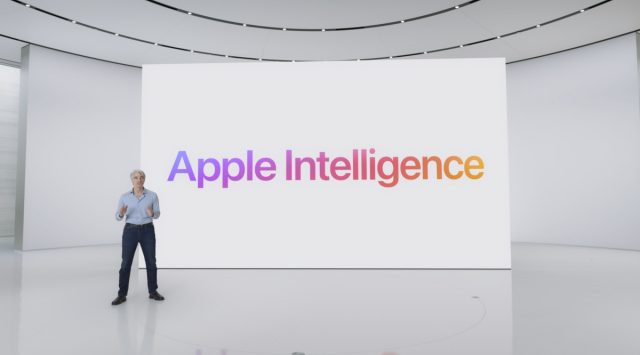
Craig Federighi stands in front of a screen with the words "Apple Intelligence"

Apple Intelligence was first unveiled at WWDC 2024. Credit: Apple

“We’re opening up access for any app to tap directly into the on-device, large language model at the core of Apple,” said Craig Federighi, Apple’s software chief, during the presentation. The company also demonstrated early partner integration by adding OpenAI’s ChatGPT image generation to its Image Playground app, though it said user data would not be shared without permission.

For developers, Apple’s inclusion of ChatGPT’s code-generation capabilities in XCode may represent Apple’s attempt to match what rivals like GitHub Copilot and Cursor offer software developers in terms of AI coding augmentation, even as the company maintains a more cautious approach to consumer-facing AI features.

Meanwhile, competitors like Meta, Anthropic, OpenAI, and Microsoft continue to push more aggressively into the AI space, offering AI assistants (that admittedly still make things up and suffer from other issues, such as sycophancy).

Only time will tell if Apple’s wariness to embrace the bleeding edge of AI will be a curse (eventually labeled as a blunder) or a blessing (lauded as a wise strategy). Perhaps, in time, Apple will step in with a solid and reliable AI assistant solution that makes Siri useful again. But for now, Apple Intelligence remains more of a clever brand name than a concrete set of notable products.

https://arstechnica.com/ai/2025/06/apple-tiptoes-with-modest-ai-updates-while-rivals-race-ahead/


Apple consolidates iOS gaming features in new Games app

At its Worldwide Developer Conference today, Apple unveiled a new iOS Games App that Apple Senior Director of Marketplace Platforms and Technologies Ann Thai promoted as “a new destination to help you get more out of your games.”

The most relevant new social feature in the app comes in the “Play Together” tab, which provides a quick look at what your friends are playing on iOS. That tab will also integrate a new Challenges feature, which game developers can use to turn single-player games into score-based competitions between friends. These interpersonal Challenges come on top of the standard game leaderboards already common through iOS’s Game Center, allowing for a new way to compete socially.

Other than that, the new Games app seems to consolidate several features that were previously split between Game Center and the App Store. On the Home tab, the Games app will let you see games with new update, time-sensitive in-game events, and recommendations for new games to try. A Library tab will show every iOS game you’ve ever downloaded in a single place, while the Apple Arcade tab shows subscribers what’s available to download. The Games app will work in both portrait and landscape mode and be navigable via controller.

https://arstechnica.com/gaming/2025/06/apple-consolidates-ios-gaming-features-in-new-games-app/


Apple aims for “more personal and expressive” iOS 26 with new Liquid Glass design

At WWDC today, Apple unveiled iOS 26, its next iPhone operating system (OS), which is centered on Apple’s new Liquid Glass design for its software platform.

Available across Apple’s other operating systems, like macOS, Liquid Glass aims to make the software look and operate as if it has glass edges. You can see this approach throughout iOS 26 in things like the app icons’ appearance, which includes softer edges and the option to be translucent.

“An updated set of APIs provides developers with access to Liquid Glass materials and components so they can make their apps appear just as dynamic and delightful,” Apple’s press release said.

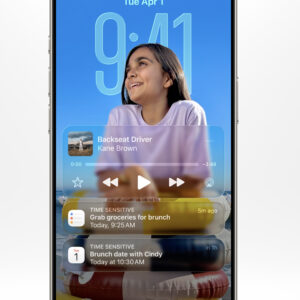
iOS 26 also includes new wallpaper customization options that leverage the Liquid Glass feel. This includes the ability for the clock to auto-adjust length and width based on the image used for the wallpaper. Craig Federighi, SVP of software engineering, demoed how quickly and fluidly this change is supposed to look when you toggle wallpapers.

Additionally, the clock shown on the wallpaper in iOS 26 will change size based on incoming notifications in order to keep in place what the software determines is the best part of the image.

https://arstechnica.com/gadgets/2025/06/apple-aims-for-more-personal-and-expressive-ios-26-with-new-liquid-glass-design/