iOS 18.2, macOS 15.2 updates arrive today with image and emoji generation

Apple has announced that it will be releasing the iOS 18.2, iPadOS 18.2, and macOS Sequoia 15.2 updates to the public later this afternoon, following weeks of beta testing for developers and users. As with iOS 18.1, the headlining features are new additions to Apple Intelligence, mainly the image-generation capabilities: Image Playground for general images, and “Genmoji” for making custom images in the style of Apple’s built-in Unicode-based emoji characters.

Other AI features include “Image Wand,” which will take sketched images from the Notes app and turn them into a “polished image” using context clues from other notes; and ChatGPT integration for the Writing Tools feature.

The updates also include a long list of bug fixes and security updates, for those who don’t care about Apple Intelligence. Safari gets better data importing and exporting support, an HTTPS Priority feature that “upgrades URLs to HTTPS whenever possible,” and a download status indicator for iPhones with a Dynamic Island. Mail in iOS offers to automatically sort messages to bring important ones to the top of your inbox. There are also various tweaks and improvements for the Photos, Podcasts, Voice Memos, and Stocks apps, while the Weather app in macOS can optionally display the weather in your menu bar.

https://arstechnica.com/gadgets/2024/12/ios-18-2-macos-15-2-updates-arrive-today-with-image-and-emoji-generation/



Apple hit with $1.2B lawsuit after killing controversial CSAM-detecting tool

When Apple devices are used to spread CSAM, it’s a huge problem for survivors, who allegedly face a range of harms, including “exposure to predators, sexual exploitation, dissociative behavior, withdrawal symptoms, social isolation, damage to body image and self-worth, increased risky behavior, and profound mental health issues, including but not limited to depression, anxiety, suicidal ideation, self-harm, insomnia, eating disorders, death, and other harmful effects.” One survivor told The Times she “lives in constant fear that someone might track her down and recognize her.”

Survivors suing have also incurred medical and other expenses due to Apple’s inaction, the lawsuit alleged. And those expenses will keep piling up if the court battle drags on for years and Apple’s practices remain unchanged.

Apple could win, a lawyer and policy fellow at the Stanford Institute for Human-Centered Artificial Intelligence, Riana Pfefferkorn, told The Times, as survivors face “significant hurdles” seeking liability for mishandling content that Apple says Section 230 shields. And a win for survivors could “backfire,” Pfefferkorn suggested, if Apple proves that forced scanning of devices and services violates the Fourth Amendment.

Survivors, some of whom own iPhones, think that Apple has a responsibility to protect them. In a press release, Margaret E. Mabie, a lawyer representing survivors, praised survivors for raising “a call for justice and a demand for Apple to finally take responsibility and protect these victims.”

“Thousands of brave survivors are coming forward to demand accountability from one of the most successful technology companies on the planet,” Mabie said. “Apple has not only rejected helping these victims, it has advertised the fact that it does not detect child sex abuse material on its platform or devices thereby exponentially increasing the ongoing harm caused to these victims.”

https://arstechnica.com/tech-policy/2024/12/thousands-of-child-sex-abuse-victims-sue-apple-for-lax-csam-reporting/


Apple takes over third-party Apple Passwords autofill extension for Firefox

Over the last few years, Apple has steadily been building password manager-style features into macOS and iOS, including automatic password generation, password breach detection, and more. Starting with this year’s updates—iOS 18 and macOS 15 Sequoia—Apple broke all that functionality out into its own Passwords app, making it all even more visible as a competitor to traditional password managers like 1Password and Bitwarden.

One area where Apple has lagged behind its platform-agnostic competitors is in browser support. Users could easily autofill passwords in Safari on macOS, and Apple did support a basic extension for the Windows versions of Google Chrome and Microsoft Edge via iCloud for Windows. But the company only added a Chrome extension for macOS users in the summer of 2023, and it has never supported non-Chromium browsers at all.

That has finally changed, at least for Firefox users running macOS—Apple has an officially supported Passwords extension for Firefox that supports syncing and autofilling passwords in macOS Sonoma and macOS Sequoia. Currently, the extension doesn’t support older versions of macOS or any versions of Firefox for Windows or Linux. When you install the extension in Firefox on a Mac that’s already synced with your iCloud account, all you should need to do to sign in is input a six-digit code that macOS automatically generates for you. As with the Chromium extension, there’s no need to re-sign in to your iCloud account separately.

To enable this functionality, it looks like Apple has taken ownership of a third-party extension that supported autofilling Apple Passwords in Firefox—a GitHub page for the original extension is still available but says that Apple “are now the sole owners in charge of maintaining their own official iCloud Passwords extension.” That extension supports the versions of Windows that can run the official iCloud for Windows app, suggesting that Apple ought to be able to add official Windows support for the extension at some point down the line.

https://arstechnica.com/gadgets/2024/12/firefox-users-on-macos-can-finally-autofill-apple-passwords-in-their-browser/


Join us today for Ars Live: How Asahi Linux ports open software to Apple’s hardware

One of the key differences between Apple’s Macs and the iPhone and iPad is that the Mac can still boot and run non-Apple operating systems. This is a feature that Apple specifically built for the Mac, one of many features meant to ease the transition from Intel’s chips to Apple’s own silicon.

The problem, at least at first, was that alternate operating systems like Windows and Linux didn’t work natively with Apple’s hardware, not least because of missing drivers for basic things like USB ports, GPUs, and power management. Enter the Asahi Linux project, a community-driven effort to make open-source software run on Apple’s hardware.

In just a few years, the team has taken Linux on Apple Silicon from “basically bootable” to “plays native Windows games and sounds great doing it.” And the team’s ultimate goal is to contribute enough code upstream that you no longer need a Linux distribution just for Apple Silicon Macs.

On December 4 at 3:30 pm Eastern (12:30 pm Pacific), Ars Technica Senior Technology Reporter Andrew Cunningham will host a livestreamed YouTube conversation with Asahi Linux Project Lead Hector Martin and Graphics Lead Alyssa Rosenzweig that will cover the project’s genesis and its progress, as well as what the future holds.

View livestream

Add to Google Calendar

Add to calendar (.ics download)

https://arstechnica.com/apple/2024/12/join-us-tomorrow-for-ars-live-how-asahi-linux-ports-open-software-to-apples-hardware/


The upside-down capacitor in mid-‘90s Macs, proven and documented by hobbyists

Brown notes that the predecessor Mac LC and LC II had the correct connections, as did the LC 475, which uses the same power supply scheme. This makes him “confident that Apple made a boo-boo on the LC III,” or “basically the hardware equivalent of a copy/paste error when you’re writing code.”

Making sure rehabbers don’t make the same mistake

Why was this not noticed earlier, other than a couple forum threads seen by dedicated board rehabbers? There are a few reasons. For one thing, the rail was only used for a serial port or certain expansion card needs, so a capacitor failure, or out-of-spec power output, may not have been noticed. The other bit is that the original capacitor was rated for 16V, so even with -5V across it, it might not have failed, at least while it was relatively fresh. And it would not have failed in quite so spectacular a fashion as to generate stories and myths.

As to whether Apple knew about this but decided against acting on a somewhat obscure fault, one that might never cause real problems? By all means, let us know if you worked at Apple during that time and can clue us in. Ars has emailed Apple with this tremendously relevant question, the day before Thanksgiving, and will update this post with any comment.

By posting his analysis, Brown hopes to provide anyone else re-capping one of these devices with a bright, reflective warning sign to ignore Apple’s markings and install C22 the electrically correct way. Brown, reached by email, said that he heard from another hobbyist that the reverse voltage “would explain why the replacement cap” they installed “blew up.” Some restoration types, like Retro Viator, noticed the problem and fixed it pre-detonation.

Modern rehabbers tend to use tantalum capacitors to replace the fluid-filled kind that probably damaged the board they’re working on. Tantalum tends to react more violently to too much or reverse voltage, Brown wrote me.

Should C22 or other faulty capacitors destroy your LC III board entirely, Brown notes that 68kMLA member max1zzz has made a reverse-engineered full logic board schematic.

https://arstechnica.com/gadgets/2024/11/the-upside-down-capacitor-in-mid-90s-macs-proven-and-documented-by-hobbyists/


Hands-on with the 2024 iPad mini: Spot the differences

The previous model had already abandoned Apple’s proprietary Lightning connection for the industry-standard USB-C, but this updated USB-C port supports transfer speeds up to 10Gb/s, much faster than the previous model. (That’s data transfer, while charging seems the same.)

The USB-C port on an iPad mini

The USB-C port returns, this time with faster data transfer.

Credit: Samuel Axon

The USB-C port returns, this time with faster data transfer. Credit: Samuel Axon

The camera system is mostly the same as before, but Apple has added support for Smart HDR 4, the latest version of its computational photography algorithms that combines multiple rapidly taken photos into one image, using the best features of all of them. This process offers benefits like better low-light photography and improved highlights. There’s also 4K video capture support.

I don’t think there are many iPad mini photographers out there, but hey, not going to say no to improvements.

Lastly, there have been improvements to the display that should mitigate some of the jelly scrolling that irritated a subset of owners of the previous generation of the iPad mini.

Apple Pencil Pro support

Apart from improved CPU, GPU, and NPU performance, the biggest addition here is Apple Pencil Pro support.

Introduced this spring, the Pencil Pro has lower latency than prior Pencil models, but at least as importantly, it has several new sensors and feedback features to make it more versatile. You can squeeze the pencil lightly to bring up a new options panel to quickly switch tools, among other things. There’s also a sensor that lets you roll the pencil to change the orientation of some tools.

Pencil Pro isn’t cheap, though—it’s $129. I imagine most digital artists want the largest canvas possible, so they’re not looking at the mini. But for more casual users, it’s nice to have the option.

Though it be but little, it is fierce

There are a lot of things I like about the iPad mini. It’s comfortable to hold, making it ideal among Apple’s tablets for reading or browsing the web. Typing on it while holding it in landscape mode feels ideal for me, though your mileage may vary, as hand sizes, of course, vary.

https://arstechnica.com/gadgets/2024/10/hands-on-with-the-2024-ipad-mini-spot-the-differences/


US suspects TSMC helped Huawei skirt export controls, report says

In April, TSMC was provided with $6.6 billion in direct CHIPS Act funding to “support TSMC’s investment of more than $65 billion in three greenfield leading-edge fabs in Phoenix, Arizona, which will manufacture the world’s most advanced semiconductors,” the Department of Commerce said.

These investments are key to the Biden-Harris administration’s mission of strengthening “economic and national security by providing a reliable domestic supply of the chips that will underpin the future economy, powering the AI boom and other fast-growing industries like consumer electronics, automotive, Internet of Things, and high-performance computing,” the department noted. And in particular, the funding will help America “maintain our competitive edge” in artificial intelligence, the department said.

It likely wouldn’t make sense to prop TSMC up to help the US “onshore the critical hardware manufacturing capabilities that underpin AI’s deep language learning algorithms and inferencing techniques,” to then limit access to US-made tech. TSMC’s Arizona fabs are supposed to support companies like Apple, Nvidia, and Qualcomm and enable them to “compete effectively,” the Department of Commerce said.

Currently, it’s unclear where the US probe into TSMC will go or whether a damaging finding could potentially impact TSMC’s CHIPS funding.

Last fall, the Department of Commerce published a final rule, though, designed to “prevent CHIPS funds from being used to directly or indirectly benefit foreign countries of concern,” such as China.

If the US suspected that TSMC was aiding Huawei’s AI chip manufacturing, the company could be perceived as avoiding CHIPS guardrails prohibiting TSMC from “knowingly engaging in any joint research or technology licensing effort with a foreign entity of concern that relates to a technology or product that raises national security concerns.”

Violating this “technology clawback” provision of the final rule risks “the full amount” of CHIPS Act funding being “recovered” by the Department of Commerce. That outcome seems unlikely, though, given that TSMC has been awarded more funding than any other recipient apart from Intel.

The Department of Commerce declined Ars’ request to comment on whether TSMC’s CHIPS Act funding could be impacted by their reported probe.

https://arstechnica.com/tech-policy/2024/10/us-suspects-tsmc-helped-huawei-skirt-export-controls-report-says/


Asahi Linux’s bespoke GPU driver is running Windows games on Apple Silicon Macs

A few years ago, the idea of running PC games on a Mac, in Linux, or on Arm processors would have been laughable. But the developers behind Asahi Linux—the independent project that is getting Linux working on Apple Silicon Macs—have managed to do all three of these things at once.

The feat brings together a perfect storm of open source projects, according to Asahi Linux GPU lead Alyssa Rosenzweig: the FEX project to translate x86 CPU code to Arm, the Wine project to get Windows binaries running on Linux, DXVK and the Proton project to translate DirectX 12 API calls into Vulkan API calls, and of course the Asahi project’s Vulkan-conformant driver for Apple’s graphics hardware.

Games are technically run inside a virtual machine because of differences in how Apple Silicon and x86 systems address memory—Apple’s systems use 16 KB memory pages, while x86 systems use 4 KB pages, something that causes issues for Asahi and some other Arm Linux distros on a regular basis and a gap that the VM bridges.

You’d never guess that this was the Windows version of Fallout 4 running on a Mac that was running Linux. Credit: Alyssa Rosenzweig

Rosenzweig’s post shows off screenshots of Control, Fallout 4, The Witcher 3, Ghostrunner, Cyberpunk 2077, Portal 2, and Hollow Knight, though as she notes, most of these games won’t run at anywhere near 60 frames per second yet.

https://arstechnica.com/apple/2024/10/asahi-linuxs-bespoke-gpu-driver-is-running-windows-games-on-apple-silicon-macs/


Amazon, Apple make a deal to offer Apple TV+ in a Prime bundle

The Apple TV platform, tvOS, and the original Apple TV app were initially intended to solve this problem by offering an a la carte, consumer-friendly way to manage the options in a burgeoning streaming-TV industry.

However, Apple’s attempt to make the TV app a universal hub of content has been continually stymied by the fact that industry giant Netflix has declined to participate.

Users of the TV app and Apple TV set-top-box still must launch a separate Netflix app to see their watch history on that service, or to see if movies or shows they want to watch are available. Content from most other services—including Amazon Prime Video—is exposable through search within the app and rolls into a unified watch history.

Fighting to succeed in a messy business

Further, streaming services have become increasingly expensive, and streamers have begun trying to find new revenue from sources like bundles and advertising. The reasons for these trends are complex, but one of the key problems is that scripted television content is immensely expensive to produce—especially as the prestige TV era has driven up viewer expectations in terms of quality and production values.

As an early leader in the industry, Netflix established unrealistic expectations for everyone involved—consumers, production houses, investors, and so on—by simply throwing immense amounts of money into content without immediately seeing a return.

When larger economic factors put an end to that practice, streamers had to adjust—including Apple, which among other things is tweaking its film strategy for the new landscape.

Apple still offers several of those central hub features—for example, you can subscribe to services like Paramount+ and launch their shows from the Apple TV app, just like Amazon is doing with its app and Apple TV+ here. But the realities of the mess the industry finds itself in have clearly led Apple to keep an open mind about how it can attract and retain viewers.

https://arstechnica.com/gadgets/2024/10/amazon-apple-make-a-deal-to-offer-apple-tv-in-a-prime-bundle/


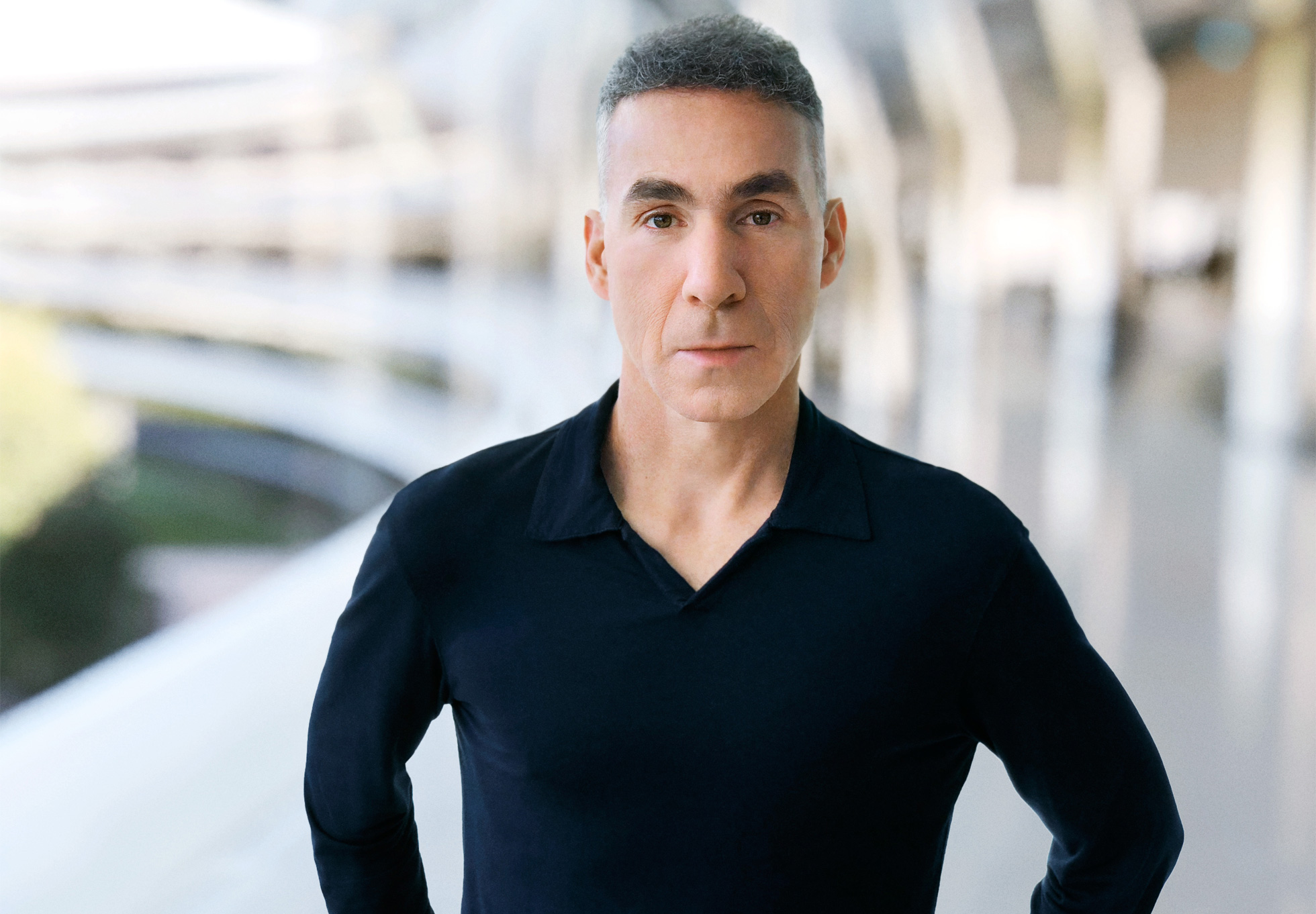
Former Apple hardware chief Dan Riccio is retiring

Dan Riccio, one of Apple’s most prominent executives for more than two decades, will retire from the company this month, according to a report in Bloomberg that cites people with knowledge of the move.

Reportedly, Riccio has said he has been planning his retirement for the past five years, and his last day will be Friday, October 11.

Riccio began working at Apple in 1998, and by 2012, he had become the chief of hardware engineering. In that role, he oversaw several major hardware developments for Apple, including AirPods, the evolution of the modern iPhone, the iPad Pro, and more.

He held the title of senior vice president of hardware engineering during that time, then moved into a new role within the company in January of 2021. The public at first only knew that he was working on a “new project” at that time, but before long it became clear the project in question was what became the Vision Pro, Apple’s augmented-reality headset that launched this February.

The group that produced the Vision Pro is called the Vision Products Group within the company; that’s the 2,000-engineer-strong group Riccio has overseen since 2021. He was also involved in developing Project Titan, Apple’s smart car initiative that was eventually abandoned.

https://arstechnica.com/gadgets/2024/10/former-apple-hardware-chief-dan-riccio-is-retiring/