Nvidia, l’AI ti fa bella: superata la capitalizzazione di mercato di Apple
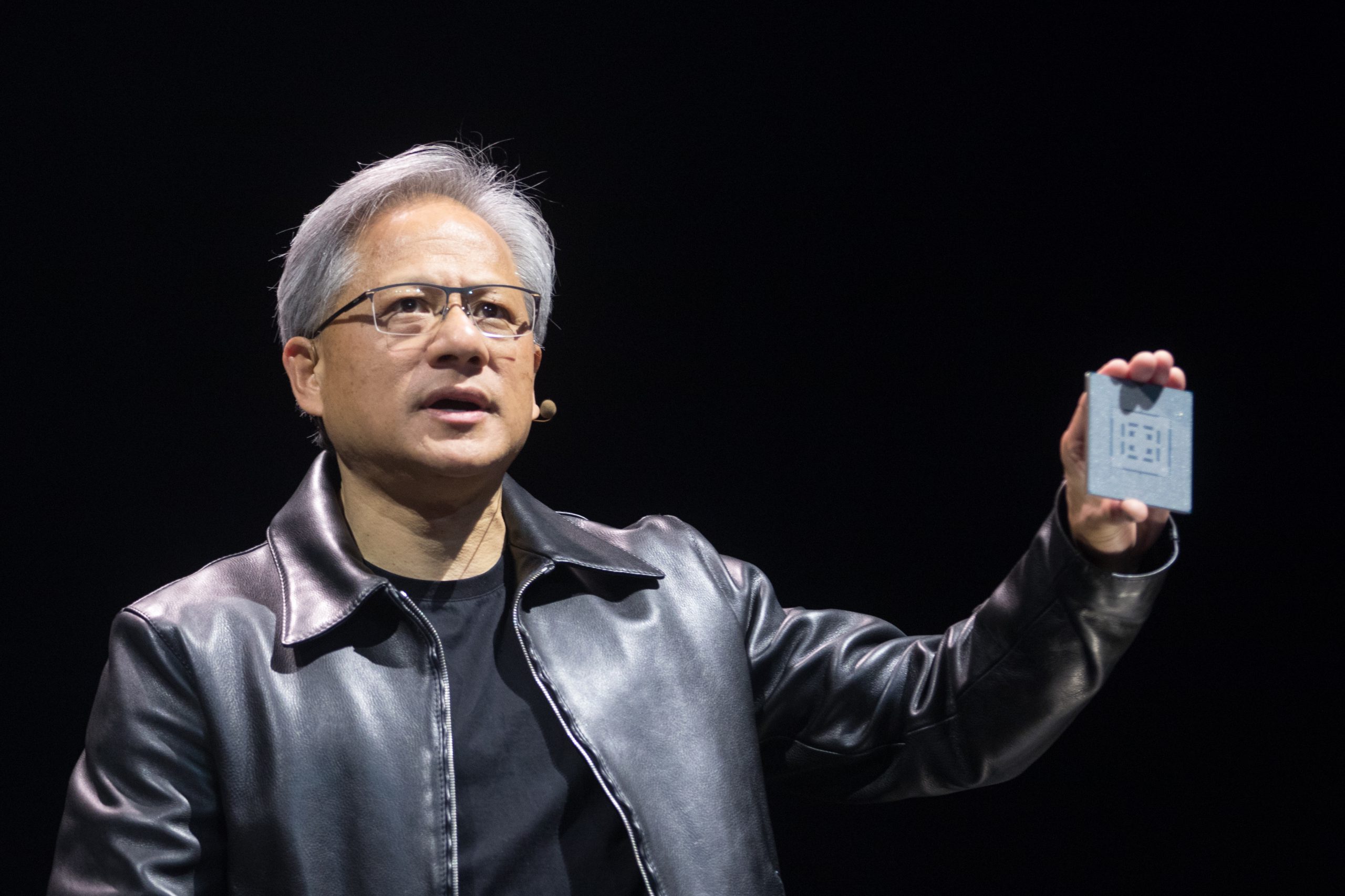
L’indice S&P 500 e il Nasdaq hanno raggiunto i rispettivi apici questa notte, quando Nvidia è entrata nel club della capitalizzazione di mercato da 3 mila miliardi di dollari, superando Apple. Ad oggi, la classifica delle prime tre imprese al mondo per capitalizzazione recita, Microsoft al primo posto, con 3,14 trilioni di dollari, seguita da Nvidia e dalla stessa Apple. Lo Standard & Poor 500 ha raggiunto un nuovo massimo di giornata con 5.354 punti, in crescita dell’1,1%, mentre il Nasdaq è salito dell’1,7% toccando il record di 17.187 punti. Il Dow Jones Industrial Average ha guadagnato 96 punti, o lo 0,25%, a 38.807 alla chiusura del mercato.

Chiaramente, la capitalizzazione di mercato di Nvidia si deve soprattutto al boost ottenuto dalle novità in ambito intelligenza artificiale. Il produttore di chip ha annunciato la sua piattaforma AI Blackwell di prossima generazione a marzo, con la domanda per i semiconduttori, anche quelli attuali della serie Hopper, che pare stia superando l’offerta. Allo stesso modo, Apple si sta concentrando sull’innovazione dell’intelligenza artificiale collaborando con OpenAI per integrare il suo chatbot, ChatGPT, nel sistema operativo dell’iPhone. Si prevede che la Mela annuncerà l’accordo durante la conferenza annuale Worldwide Developers Conference, che inizierà lunedì sera, il 10 giugno.

Tassi in discesa

A dare impulso al sentiment in tutto il mercato sono stati i rendimenti obbligazionari più bassi. Sono questi infatti che indirettamente rendono i costi di finanziamento più economici, segnalano la fiducia degli investitori in un movimento al ribasso dei tassi. In particolare, ieri il Canada è diventato il primo paese occidentale ad abbassare il tasso di prestito, mentre un rapporto sul mercato del lavoro statunitense da parte dell’agenzia ADP ha segnalato un taglio del tasso favorevole alla crescita da parte della Federal Reserve. Gli investitori si aspettano che la Fed tagli i tassi per la prima volta a settembre, secondo il trading di contratti future monitorato dal CME FedWatch Tool.

Tornando alla notte, in cima a Wall Street ci sono Intel (+2,55%), Microsoft (+1,90%), Goldman Sachs (+1,38%) e Amazon (+1,09%). Le più forti vendite, invece, si sono abbattute su Cisco Systems, che ha terminato le contrattazioni a -2,99%. Calo per Walt Disney, che segna un -1,77%, Johnson & Johnson, che segna un calo dell’1,24%, e American Express, che scambia con un -1,08%. Tra i protagonisti del Nasdaq 100, CrowdStrike Holdings (+12,01%), ASML Holding (+9,54%), Moderna (+6,57%) e Broadcom (+6,26%). I più forti ribassi, invece, si sono verificati su Dollar Tree, che ha archiviato la seduta a -4,97%. Sotto pressione Cisco Systems, con un forte ribasso del 2,95%.

https://www.key4biz.it/nvidia-lai-ti-fa-bella-superata-la-capitalizzazione-di-mercato-di-apple/493326/



Apple con OpenAI, lunedì l’annuncio della partnership che porterà ChatGpt su iPhone

Manca solo qualche giorno e poi la serie di illazioni sulla collaborazione tra Apple e OpenAI troverà conferma. Lunedì sera, alle 19 italiane, parte la WWDC 2024, conferenza annuale degli sviluppatori Apple. Da anni, l’appuntamento prevede un keynote di apertura che è più show che tecnico, al pari delle presentazioni di prodotto del gigante americano. Per l’occasione, Tim Cook e soci annunceranno l’ingresso di ChatGpt sugli iPhone, con l’aggiornamento settembrino di iOS 18.

Non lo diciamo noi ma fonti vicine a Cupertino, come riporta Bloomberg. Secondo quanto riferito, l’accordo consentirà alla startup guidata da Sam Altman di accedere a milioni di utenti Apple, con le funzionalità del chatbot che verranno abbinate alle applicazioni e ai servizi della Mela. Tuttavia, si prevede che Apple renderà l’AI un’opzione da attivare, lasciando alle persone libertà di scelta sull’usare o meno la nuova tecnologia.

Relazione breve ma intensa

Bloomberg spiega che quella tra Apple e OpenAI sarà probabilmente una “relazione a breve e medio termine”, fin quando gli ingegneri a lavoro su iOS non riusciranno a includere modelli autoctoni di linguaggio naturale gestiti direttamente e non forniti da terzi, come nel caso di GPT. Detto ciò, Apple è ancora in trattative con Google per utilizzare il chatbot Gemini AI nei suoi dispositivi, e questo a completamento di quanto si diceva settimane fa, ossia che non è nell’interesse di Cook chiudere le porte anche a solo una delle imprese che sta guidando l’innovazione nel settore.

Una nuova Siri all’orizzonte

A ragione di ciò, Apple potrebbe addirittura anticipare un’eventuale richiesta dell’Unione Europea, proponendo all’accensione degli iPhone una scelta tra più chatbot e modelli di AI, come accade oggi con i motori di ricerca. Poi c’è Siri: il nuovo assistente, basato su modelli linguistici di grandi dimensioni, o LLM , una parte fondamentale della tecnologia di intelligenza artificiale generativa come ChatGpt, consentirà di interagire con la voce per operazioni più complesse, dall’inviare o eliminare e-mail, aprire link specifici su Apple News e riassumere un articolo su iPhone e iPad. A maggio, il New York Times ha scritto che una nuova Siri basata sull’intelligenza artificiale sarebbe stata “più colloquiale e versatile” e in grado di chattare invece che limitarsi a rispondere alle domande.

https://www.key4biz.it/apple-con-openai-lunedi-lannuncio-della-partnership-che-portera-chatgpt-su-iphone/493321/


Report: Apple and OpenAI have signed a deal to partner on AI

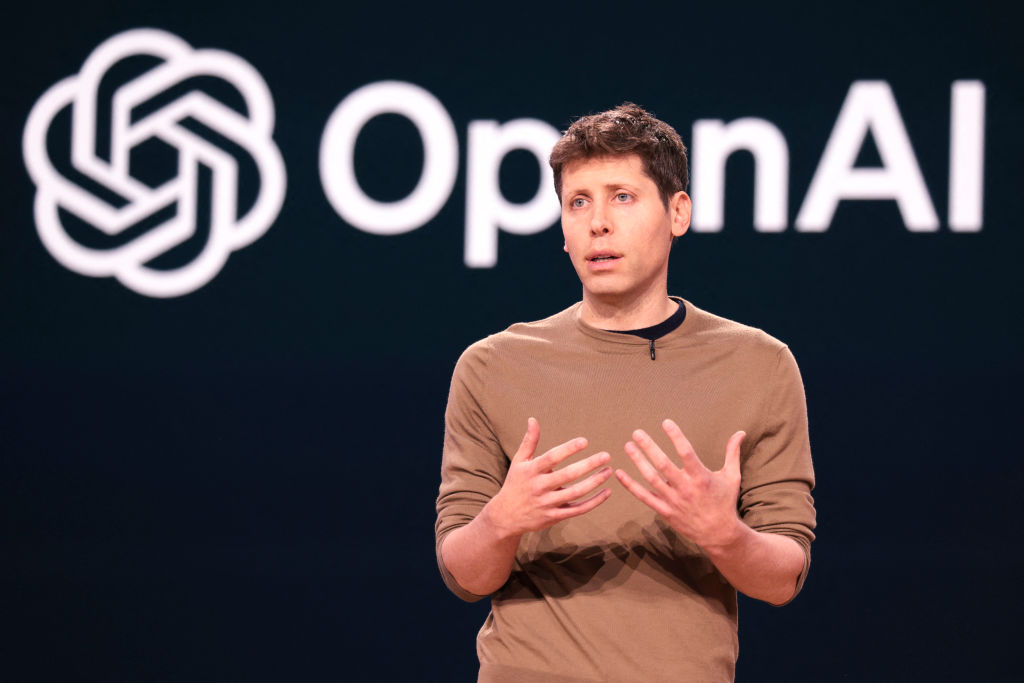
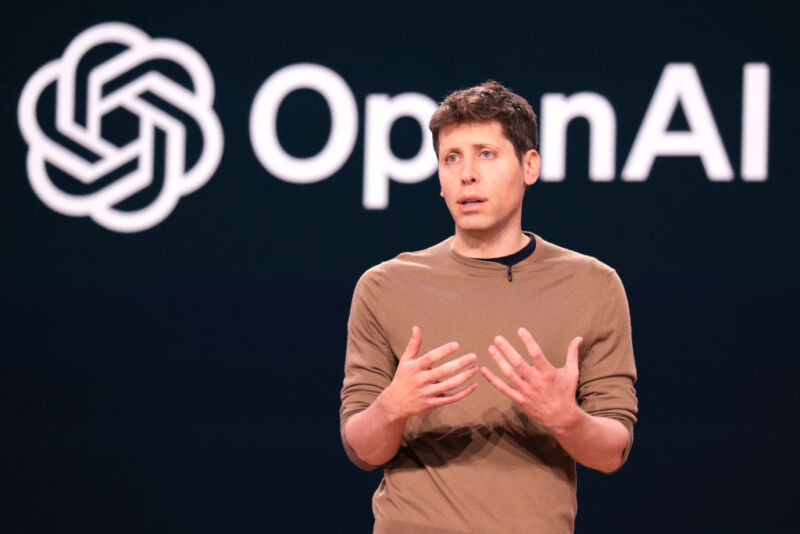
OpenAI CEO Sam Altman.
Enlarge / OpenAI CEO Sam Altman.

Apple and OpenAI have successfully made a deal to include OpenAI’s generative AI technology in Apple’s software, according to The Information, which cites a source who has spoken to OpenAI CEO Sam Altman about the deal.

It was previously reported by Bloomberg that the deal was in the works. The news appeared in a longer article about Altman and his growing influence within the company.

“Now, [Altman] has fulfilled a longtime goal by striking a deal with Apple to use OpenAI’s conversational artificial intelligence in its products, which could be worth billions of dollars to the startup if it goes well,” according to The Information’s source.

The OpenAI/Apple deal has not been without its opponents. The report claims that Apple’s head of machine learning, John Giannandrea, has been opposed to large language model-driven chatbots or anything resembling them appearing in Apple’s software or products. Further, Microsoft CEO Satya Nadella is said to be concerned about what the Apple deal means for OpenAI’s existing relationship with Microsoft. Microsoft has committed $13 billion to OpenAI in exchange for a cut of its profits and the use of its technology in the former’s enterprise and consumer products.

Some time ago, Giannandrea reportedly told Apple employees “the last thing people needed was another AI chatbot” when one of them asked him if Apple has plans to create something like this. While The Information paints that as a blanket dismissal of AI in Apple’s products, there are other ways Apple could leverage large language models within its products besides creating a new chatbot, and we don’t know if Giannandrea is opposed to those.

For example, Apple has been using OpenAI’s API to create proofs of concept, like a version of Siri that is able to respond to questions outside its usual scope. However, the report says that if Apple does that, it will make it clear when it’s referring to a third party like OpenAI, kind of like how the user is notified when a query results in a Google search.

There have been prior reports that Apple is also in talks with Google for a similar deal. It’s possible Apple could offer users a choice of AI chatbot provider, just like it does with search engines or default browsers.

The Apple deal is one of the many wins the report says help solidify the position of Altman within OpenAI, even after he faced an attempted ouster a while back.

Another is a change to OpenAI’s structure as a corporation. OpenAI has an unusual structure, with a for-profit corporation beholden to a nonprofit organization. The Information claims that Altman and his allies are seeking to convert it into either a traditional for-profit corporation or a benefit corporation known as a B-Corp. B-Corps allow corporations to have additional goals beyond shareholder interest, protecting them from certain kinds of shareholder lawsuits if they act for reasons beyond profits. There is a certification process for B-Corps by an independent organization, though it has been criticized in the past.

A B-Corp could be a middle ground between OpenAI’s current structure and that of a full for-profit.

https://arstechnica.com/?p=2027758


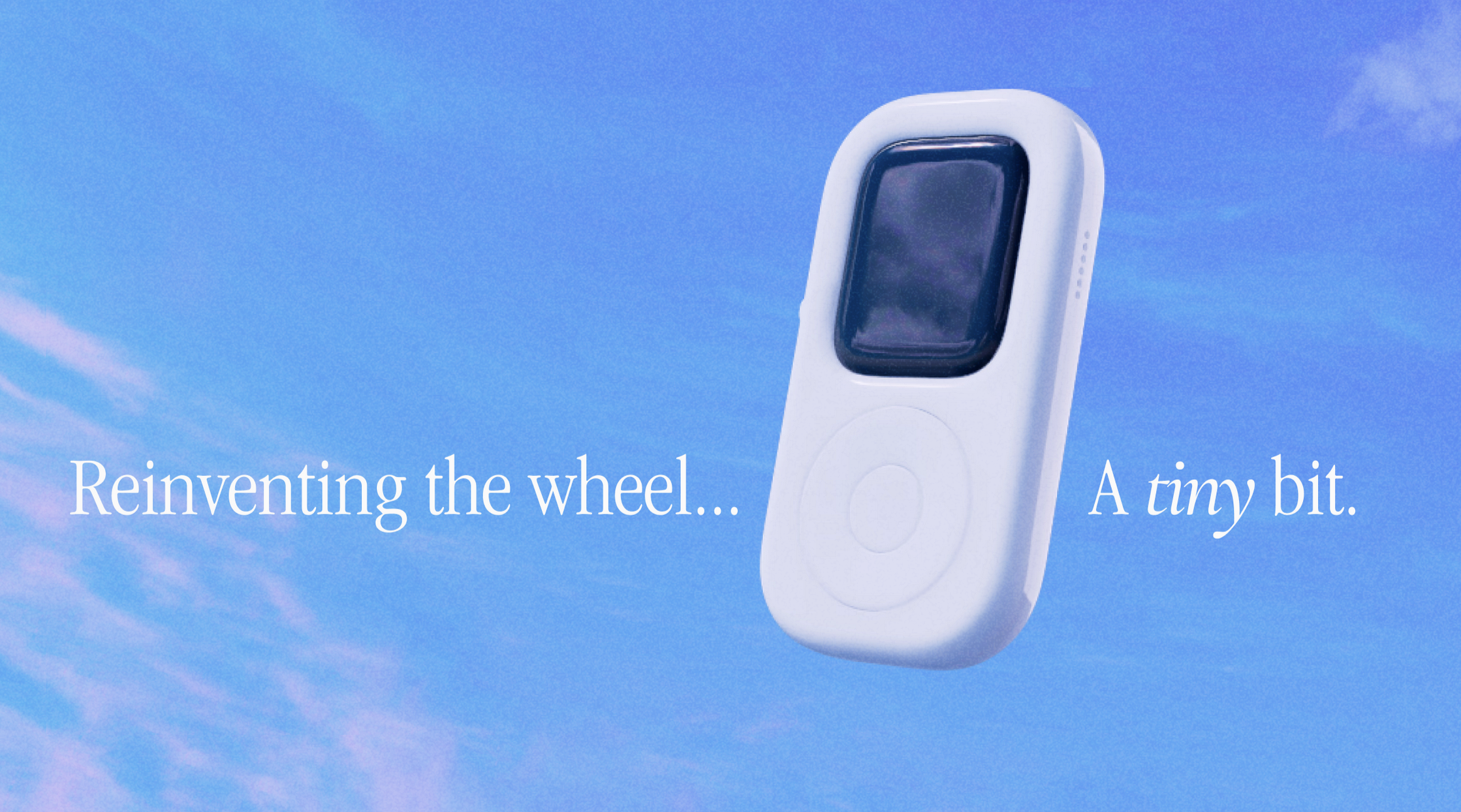
TinyPod wants to turn Apple Watches into minimalist phones that feel like iPods

Image of a TinyPod, with text in an Apple-evoking font reading
Enlarge / The font styling is very intentional.

I traded in my Series 5 Apple Watch last week to Apple after the battery couldn’t make it through most evenings. There wasn’t much resale incentive on the open market, because the screen was far from pristine and the battery was nearly 5 years old. You can replace the battery yourself, but, already having a lot of fix projects on the shelf, I opted to send it off, take a gift card, and move on.

If I get a chance, though, I’m going to ask Apple for that watch back. Apple can keep its estimated $90. I am cautiously but earnestly optimistic that the tinyPod can give me more value than a gift card number I plow into some future iPhone upgrade. In fact, the tinyPod, according to its creator, should go on sale for around that $90 mark after a more detailed reveal in June.

No electronics, just a lefty-oriented Apple Watch case

The tinyPod is essentially an iPod-like case, complete with circular-scrolling clickwheel, into which a strapless Apple Watch can be snapped in. Once inside the case, the scroll wheel function is “entirely analog and physically rotates the watch crown,” according to tinyPod founder Newar, better known as “Sentry” on X (formerly Twitter) and in jailbreaking circles. The crown-moving mechanism and general case enhancements to the Watch are patent-pending, Newar wrote by email. More on the scroll wheel will be shown next month, he wrote, at a “proper launch.”

As seen in the reveal trailer on X/Twitter, the tinyPod has two buttons on its side, with an inlet for a microphone hole, too. They all roughly match the Apple Watch’s long side button and crown push-button. It might not look like it lines up with how an upward-facing Apple Watch is oriented, but that’s probably because you’re right-handed. The Apple Watch can flip its display for lefties, something the tinyPod seems to utilize.

The case doesn’t have any “additional storage or electronics,” Newar wrote, at least in this model. The best use cases are “anything playback related (music/podcasts/audio books).” But, Newar adds, it’s also “the best way for an iPhone user to disconnect from their phone while staying connected to the essentials of messaging, email, calendar, phone calling and more that watchOS is capable of.”

The tinyPod project aims to eventually cover all Watch models that are Series 4 and newer. But at launch, the larger 45 mm models of Series 7-9 will be first to ship, then the Ultra and 41 mm sizes of the newer Series 7-9, and eventually the 40 and 44 mm models of Series 4-6.

Prior to this creative reuse project, Newar toiled in the iOS jailbreak scene, working on the Auxo app switcher, AltKeyboard, Apex, and several others. After that, he worked as a product designer and director of design engineering at Snap. Newar is working now with what he describes as a small team, globally dispersed.

https://arstechnica.com/?p=2027388


Apple trasforma l’iPhone in un Pos per gli esercenti italiani. Darà lo sprint all’ePayment?

Dopo il lancio un paio di anni fa negli Stati Uniti e a fine 2023 in alcuni Paesi europei, Apple porta anche in Italia Tap to iPhone. Con la funzione, le attività commerciali possono accettare pagamenti contactless direttamente con il loro iPhone, che diventa un vero e proprio Pos. Secondo la Mela, milioni di esercenti, dai piccoli negozi ai grandi retailer, potranno fare a meno dei costi di acquisto e gestione dei classici terminali, utilizzando direttamente un iPhone. Un’idea che potrà dare lo sprint ai pagamenti elettronici anche grazie alle numerose partnership annunciate.

Come funziona Tap to Pay su iPhone

Gli esercenti devono attivare la funzione Tap to Pay su iPhone attraverso un’app di pagamento iOS compatibile, disponibile su App Store. Tra i primi partner figurano Adyen, myPOS, Nexi, Revolut, Stripe, SumUp e Viva, con altri nomi in arrivo come Fabrick, Numia e Sella. Al momento del pagamento, il cliente avvicina semplicemente il suo iPhone, Apple Watch o altro dispositivo contactless all’iPhone dell’esercente e la transazione viene completata in sicurezza tramite NFC. Tap to Pay su iPhone non richiede alcun hardware aggiuntivo, oltre a un iPhone compatibile. Questo significa che le attività commerciali possono accettare pagamenti ovunque si trovino, senza costi addizionali. Apple Pay e Tap to Pay su iPhone proteggono i dati di pagamento dei clienti visto che le transazioni sono criptate e processate utilizzando il Secure Element, un chip dedicato all’interno dell’iPhone, e Apple non memorizza alcun dato sensibile sul dispositivo o sui propri server.

“Tap to Pay su iPhone con l’app iOS Nexi SoftPOS permette sia di offrire agli esercenti italiani maggiore flessibilità e una più ampia possibilità di scelta, garantendo loro nuove opportunità di incasso funzionali alla crescita del business, visto che è necessario solo un iPhone, sia di mettere consumatori e consumatrici nella condizione di vivere esperienze di acquisto ancora più semplici”, ha spiegato Roberto Catanzaro, Chief Business Officer of Merchant Solutions di Nexi. “Con Tap to Pay su iPhone, muoviamo un altro passo fondamentale nella diffusione dei pagamenti digitali in Italia”.

Lavoro congiunto

Apple sta lavorando a stretto contatto con le principali piattaforme e app di pagamento che operano nel settore commercio e pagamenti per offrire Tap to Pay su iPhone in Italia. Ad oggi, funziona con le carte di credito, debito e prepagate contactless dei principali circuiti di pagamento, come American Express, Discover Global Network, Diners, Mastercard e Visa.

“Siamo felici di lavorare al fianco di Apple per il lancio di Tap to Pay su iPhone in Italia. La sua disponibilità per gli esercenti che usano SumUp permette anche ai più piccoli esercenti di accettare pagamenti contactless ovunque, senza dover sostenere costi hardware aggiuntivi, basta che abbiano un iPhone compatibile e l’app iOS SumUp. Questo servizio rappresenta un passo avanti significativo verso la democratizzazione dei pagamenti digitali”, ha affermato Luke Griffiths, Chief Commercial Officer di SumUp. “Dato che molti dei nostri esercenti operano in contesti dinamici, questa funzione cambia davvero le regole del gioco. Siamo certi che Tap to Pay su iPhone trasformerà profondamente il modo in cui professionisti, aziende e commercianti interagiscono con i loro clienti”.

https://www.key4biz.it/apple-trasforma-liphone-in-un-pos-per-gli-esercenti-italiani-dara-lo-sprint-allepayment/492158/


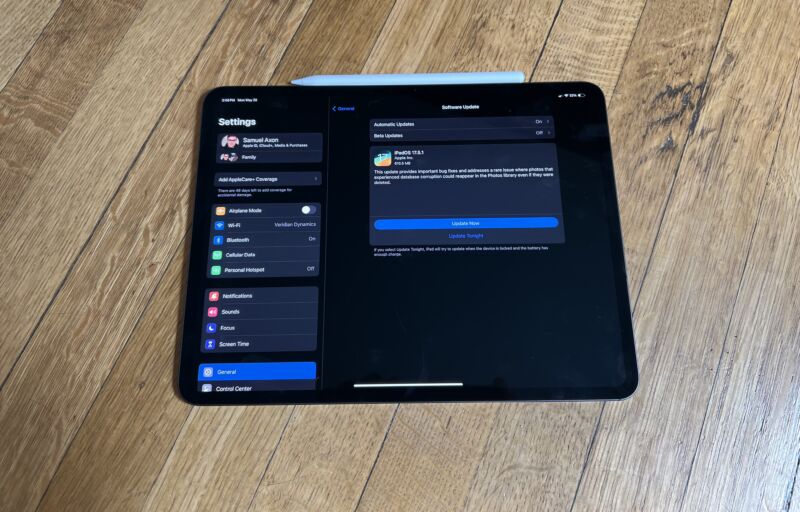
Apple clarifies iOS 17.5 bug that exposed deleted photos

iPadOS 17.5.1 ready to install on an iPad Pro.
Enlarge / iPadOS 17.5.1 ready to install on an iPad Pro.
Samuel Axon

On May 20, Apple released iOS 17.5.1 to fix a bug users had found a few days prior in iOS 17.5 that resurfaced old photos that had been previously deleted. So far, the update seems to have resolved the issue, but users were left wondering exactly what had happened. Now Apple has clarified the issue somewhat, describing the nature of the bug to 9to5Mac.

Apple told the publication that the photos were not regurgitated from iCloud Photos after being deleted on the local device; rather, they were local to the device. Apple says they were neither left in the cloud after deletion nor synced to it after, and the company did not have access to the deleted photos.

The photos were retained on the local device storage due to a database corruption issue, and the bug resurfaced photos that were flagged for deletion but were not actually fully deleted locally.

That simple explanation doesn’t fully cover all the widely reported edge cases some users had brought up in forums and on Reddit, but Apple offered additional answers for those, too.

The company claimed that when users reported the photos resurfacing on a device other than the one they were originally deleted on, it was always because they had restored from a backup other than iCloud Photos or performed a direct transfer from one device to another.

One user on Reddit claimed (the post has now been deleted) that they had wiped an iPad, sold it to a friend, and the friend then saw photos resurface. Apple told 9to5Mac that is impossible if the user followed the expected procedure for wiping the device, which is to go to “Settings,” “General,” “Transfer and Reset,” and “Erase All Content and Settings.”

The bug was particularly nasty in terms of optics and user trust for Apple, but it would have been far worse if it was iCloud-related and involved deleted photos staying on or being uploaded to Apple’s servers. If what the company told 9to5Mac is true, that was not the case.

Still, it’s a good reminder that in many cases, a deleted file isn’t necessarily deleted, either due to a bug like this, the nature of the storage tech, or in some other cases on other platforms, a deliberate choice.

https://arstechnica.com/?p=2026970


Apple, l’iPhone 17 avrà una versione “Slim”

Dal momento dell’introduzione dell’OLED e del Face ID nell’iPhone X nel 2017, i telefoni Apple non hanno subito significative modifiche estetiche. Ma secondo nuove indiscrezioni la versione 17 che uscirà nel 2025 porterà con sé tantissime novità, a partire dal prezzo e dal design.

Stando ad un report di The Information, l’iPhone 17 Slim (questo il nuovo nome) costerà più di iPhone 17 Pro Max, il cui prezzo di partenza dovrebbe aggirarsi attorno ai 1.199 Dollari (esattamente pari a quello di iPhone 15 Pro Max). Ciò significa che, a dispetto del nome, iPhone 17 Slim sarà il top di gamma della lineup di smartphone di Apple per il prossimo anno: il device, dunque, non si posizionerà nello “slot” lasciato libero dalla cancellazione dei modelli Plus (che termineranno con la versione 16), il cui prezzo è invece intermedio tra quello degli iPhone “base” e quello delle varianti Pro.

iPhone 17 Slim o Ultra: caratteristiche tecniche

Oltre ad essere l’unico in titanio, l’iPhone 17 Pro Max dovrebbe essere anche l’unico ad avere una Dynamic Island più piccola, mentre gli altri modelli manterranno il design attuale. Le funzionalità rimarranno comunque sempre le stesse. La riduzione delle dimensioni di questo componente dovrebbe essere reso possibile dall’utilizzo della tecnologia “Metalens” che, oltre al sensore di prossimità potrebbe essere utilizzata anche per il sensore Face ID.

Per quanto riguarda la memoria, secondo Pu afferma sia iPhone 17 che iPhone 17 Slim saranno dotati di 8 GB di RAM e integreranno un processore A18 o A19. iPhone 17 Pro e iPhone 17 Pro Max avranno 12 GB di RAM e utilizzeranno un chipset A19 Pro. Attualmente, iPhone 15 e iPhone 15 Plus hanno 6 GB di RAM mentre iPhone 15 Pro e iPhone Pro Max hanno 8 GB di RAM. Tutti e quattro i modelli di iPhone 16, invece, dovrebbero essere dotati di 8 GB di RAM.

Relativamente al comparto fotografico, infine, secondo Jeff Pu tutti e quattro gli iPhone 17 saranno dotati di una fotocamera frontale da 24 MP, una risoluzione doppia rispetto al sensore attuale che da 12 MP che viene utilizzato attualmente su tutti e quattro gli iPhone 15.

https://www.key4biz.it/apple-liphone-17-avra-una-versione-slim/491002/


The Apple TV is coming for the Raspberry Pi’s retro emulation box crown

The RetroArch app installed in tvOS.
Enlarge / The RetroArch app installed in tvOS.
Andrew Cunningham

Apple’s initial pitch for the tvOS and the Apple TV as it currently exists was centered around apps. No longer a mere streaming box, the Apple TV would also be a destination for general-purpose software and games, piggybacking off of the iPhone’s vibrant app and game library.

That never really panned out, and the Apple TV is still mostly a box for streaming TV shows and movies. But the same App Store rule change that recently allowed Delta, PPSSPP, and other retro console emulators onto the iPhone and iPad could also make the Apple TV appeal to people who want a small, efficient, no-fuss console emulator for their TVs.

So far, few of the emulators that have made it to the iPhone have been ported to the Apple TV. But earlier this week, the streaming box got an official port of RetroArch, the sprawling collection of emulators that runs on everything from the PlayStation Portable to the Raspberry Pi. RetroArch could be sideloaded onto iOS and tvOS before this, but only using awkward workarounds that took a lot more work and know-how than downloading an app from the App Store.

Downloading and using RetroArch on the Apple TV is a lot like using it on any other platform it supports, for better or worse. ROM files can be uploaded using a browser connected to the Apple TV’s IP address or hostname, which will pop up the first time you launch the RetroArch app. From there, you’re only really limited by the list of emulators that the Apple TV version of the app supports.

The main benefit of using the Apple TV hardware for emulation is that even older models have substantially better CPU and GPU performance than any Raspberry Pi; the first-gen Apple TV 4K and its Apple A10X chip date back to 2017 and still do better than a Pi 5 released in 2023. Even these older models should be more than fast enough to support advanced video filters, like Run Ahead, to reduce wireless controller latency and higher-than-native-resolution rendering to make 3D games look a bit more modern.

Beyond the hardware, tvOS is also a surprisingly capable gaming platform. Apple has done a good job adding and maintaining support for new Bluetooth gamepads in recent releases, and even Nintendo’s official Switch Online controllers for the NES, SNES, and N64 are all officially supported as of late 2022. Apple may have added this gamepad support primarily to help support its Apple Arcade service, but all of those gamepads work equally well with RetroArch.

At the risk of stating the obvious, another upside of using the Apple TV for retro gaming is that you can also still use it as a modern 4K video streaming box when you’re finished playing your games. It has well-supported apps from just about every streaming provider, and it supports all the DRM that these providers insist on when you’re trying to stream high-quality 4K video with modern codecs. Most Pi gaming distributions offer the Kodi streaming software, but it’s frankly outside the scope of this article to talk about the long list of caveats and add-ons you’d need to use to attempt using the same streaming services the Apple TV can access.

Obviously, there are trade-offs. Pis have been running retro games for a decade, and the Apple TV is just starting to be able to do it now. Even with the loosened App Store restrictions, Apple still has other emulation limitations relative to a Raspberry Pi or a PC.

The biggest one is that emulators on Apple’s platforms can’t use just-in-time (JIT) code compilation, needed for 3D console emulators like Dolphin. These restrictions make the Apple TV a less-than-ideal option for emulating newer consoles—the Nintendo 64, Nintendo DS, Sony PlayStation, PlayStation Portable, and Sega Saturn are the newest consoles RetroArch supports on the Apple TV, cutting out newer things like the GameCube and Wii, Dreamcast, and PlayStation 2 that are all well within the capabilities of Apple’s chips. Apple also insists nebulously that emulators must be for “retro” consoles rather than modern ones, which could limit the types of emulators that are available.

With respect to RetroArch specifically, there are other limitations. Though RetroArch describes itself as a front-end for emulators, its user interface is tricky to navigate, and cluttered with tons of overlapping settings that make it easy to break things if you don’t know what you’re doing. Most Raspberry Pi gaming distros use RetroArch, but with a front-end-for-a-front-end like EmulationStation installed to make RetroArch a bit more accessible and easy to learn. A developer could release an app that included RetroArch plus a separate front-end, but Apple’s sandboxing restrictions would likely prevent anyone from releasing an app that just served as a more user-friendly front-end for the RetroArch app.

Regardless, it’s still pretty cool to be able to play retro games on an Apple TV’s more advanced hardware. As more emulators make their way to the App Store, the Apple TV’s less-fussy software and the power of its hardware could make it a compelling alternative to a more effort-intensive Raspberry Pi setup.

https://arstechnica.com/?p=2025043


Il tech? È ancora capace di creare valore. Nvidia e Apple protagoniste del Value Creators 2024

Il 2023 è stato un anno positivo per il mercato dei capitali a livello globale. Durante questo periodo, il rendimento medio annuo è stato di circa il 12%, in crescita rispetto al 7% del quinquennio precedente (dal 2019 al 2023). Questo notevole balzo è stato spinto principalmente dalle aziende ad alto tasso tecnologico, che hanno implementato strumenti innovativi come l’intelligenza artificiale generativa. Le stime del Boston Consulting Group (BCG) indicano che il successo straordinario del settore tecnologico riflette l’accelerazione e l’adozione di tecnologie emergenti, come la GenAI. Questo trend va oltre il semplice recupero post-recessione e determina una trasformazione radicale nella base stessa del nostro tessuto industriale e commerciale. Qui il report completo.

Dalla 26ª edizione dell’analisi emergono alcuni elementi interessanti. Il primo è che le aziende basate sulla tecnologia dominano la classifica. Tra le prime posizioni troviamo realtà produttrici di hardware, con un tasso di crescita medio del 27% all’anno, dal 2019 al 2023. Nomi noti come Nvidia e Apple, quest’ultima con una capitalizzazione di mercato che ha raggiunto i 3.000 miliardi di dollari alla fine del 2023, sono tra i protagonisti. Si distinguono produttori di software come ServiceNow e Shopify, giganti dell’auto elettrica come Tesla e BYD, e del commercio elettronico come PDD e Mercado Libre.

Un trend globale, l’Italia è presente

Per quanto riguarda le geografie, le aziende dell’Asia-Pacifico detengono 51 posizioni tra i primi 100 Value Creator nel mondo e coprono le prime 10 posizioni nei vari settori analizzati per il 39% dei casi. Le aziende nordamericane occupano 38 posizioni tra i primi 100 Value Creator, rispetto alle 27 del 2023. Inoltre, sono fortemente presenti nelle singole top ten dei vari settori analizzati (41% delle prime posizioni rispetto al 38% del 2023).

Le aziende europee sono decisamente indietro. Nonostante rappresentino il 20% del campione complessivo, sono presenti solo in 9 posizioni tra i primi 100 Value Creator e sono poco presenti nelle top ten dei diversi settori (13%). Non manca l’Italia: eccellenze nostrane, Ferrari e Brunello Cucinelli nel fashion & lusso, dimostrano la forza e la creatività del Made in Italy. Inoltre, il risveglio di settori industriali tradizionali e asset-heavy è un segnale interessante. Le miniere e i materiali da costruzione, in particolare nel mercato statunitense, hanno mostrato una notevole ripresa, evitando la recessione nonostante gli alti tassi di interesse. Queste aziende hanno superato una performance stagnante e ora si posizionano tra i primi posti per settore. L’industria mineraria, i materiali da costruzione, i macchinari e i conglomerati multi-business sono esempi di questo recupero. Tuttavia, è importante notare che alcuni settori hanno registrato un rallentamento. Ad esempio, nel sanitario dove, nonostante i rendimenti medi abbiano continuato a superare il 10% annuo, si trovano società farmaceutiche ad alta capitalizzazione che hanno perso posizioni rispetto all’anno precedente.

Le cosiddette medtech e i servizi sanitari hanno subito una simile tendenza. Questo potrebbe riflettere un nuovo riposizionamento delle aspettative degli investitori in un panorama sanitario che è più stabile rispetto ai momenti di picco durante la pandemia.

https://www.key4biz.it/il-tech-e-ancora-capace-di-creare-valore-nvidia-e-apple-in-testa-al-value-creators-2024/490664/


Apple, SpaceX, Microsoft return-to-office mandates drove senior talent away

Someone holding a box with their belonging in an office

A study analyzing Apple, Microsoft, and SpaceX suggests that return to office (RTO) mandates can lead to a higher rate of employees, especially senior-level ones, leaving the company, often to work at competitors.

The study (PDF), published this month by University of Chicago and University of Michigan researchers and reported by The Washington Post on Sunday, says:

In this paper, we provide causal evidence that RTO mandates at three large tech companies—Microsoft, SpaceX, and Apple—had a negative effect on the tenure and seniority of their respective workforce. In particular, we find the strongest negative effects at the top of the respective distributions, implying a more pronounced exodus of relatively senior personnel.

The study looked at résumé data from People Data Labs and used “260 million résumés matched to company data.” It only examined three companies, but the report’s authors noted that Apple, Microsoft, and SpaceX represent 30 percent of the tech industry’s revenue and over 2 percent of the technology industry’s workforce. The three companies have also been influential in setting RTO standards beyond their own companies. Robert Ployhart, a professor of business administration and management at the University of South Carolina and scholar at the Academy of Management, told the Post that despite the study being limited to three companies, its conclusions are a broader reflection of the effects of RTO policies in the US.

“Taken together, our findings imply that return to office mandates can imply significant human capital costs in terms of output, productivity, innovation, and competitiveness for the companies that implement them,” the report reads.

For example, after Apple enacted its RTO mandate, which lets employees work at home part-time, the portion of its employee base considered senior-level decreased by 5 percentage points, according to the paper. Microsoft, which also enacted a hybrid RTO approach, saw a decline of 5 percentage points. SpaceX’s RTO mandate, meanwhile, requires workers to be in an office full time. Its share of senior-level employees fell 15 percentage points after the mandate, the study found.

“We find experienced employees impacted by these policies at major tech companies seek work elsewhere, taking some of the most valuable human capital investments and tools of productivity with them,” one of the report’s authors, Austin Wright, an assistant professor of public policy at the University of Chicago, told the Post.

Christopher Myers, associate professor of management and organization health at Johns Hopkins University, suggested to the Post that the departure of senior-level workers could be tied to the hurt morale that comes from RTO mandates, noting that “it’s easier to manage a team that’s happy.”

Debated topic

Since the lifting of COVID-19 restrictions, whether having employees return to work in an office is necessary or beneficial to companies is up for debate. An estimated 75 percent of tech companies in the US are considered “fully flexible,” per a 2023 report from Scoop. As noted by the Post, however, the US’s biggest metro areas have, on average, 51 percent office occupancy, per data from managed security services firm Kastle Systems, which says it analyzes “keycard, fob and KastlePresence app access data across 2,600 buildings and 41,000 businesses.”

Microsoft declined to comment on the report from University of Chicago and University of Michigan researchers, while SpaceX didn’t respond. Apple representative Josh Rosenstock told The Washington Post that the report drew “inaccurate conclusions” and “does not reflect the realities of our business.” He claimed that “attrition is at historically low levels.”

Yet some companies have struggled to make employees who have spent months successfully doing their jobs at home eager to return to the office. Dell, Amazon, Google, Meta, and JPMorgan Chase have tracked employee badge swipes to ensure employees are coming into the office as often as expected. Dell also started tracking VPN usage this week and has told workers who work remotely full time that they can’t get a promotion.

Some company leaders are adamant that remote work can disrupt a company’s ability to innovate. However, there’s research suggesting that RTO mandates aren’t beneficial to companies. A survey of 18,000 Americans released in March pointed to flexible work schedules helping mental health. And an analysis of 457 S&P 500 companies in February found RTO policies hurt employee morale and don’t increase company value.

https://arstechnica.com/?p=2024094