The iPhone’s next AAA game, Assassin’s Creed Mirage, gets a release date

An Assassin stands over the city of Baghdad
Enlarge / Assassin’s Creed Mirage returned to the earlier games’ focus on stealth assassinations in a historical urban environment.

Apple has spent the last year trying to convince gamers that they can get a console-like, triple-A experience on the latest iPhones. The newest test of that promise will be Ubisoft’s Assassin’s Creed Mirage, which now has a release date and pricing information.

Mirage will land on compatible iPhones—the iPhone 15, iPhone 15 Plus, iPhone 15 Pro, and iPhone 15 Pro Max—on June 6, according to Ubisoft (though the App Store listing says June 10.) That coincides pretty closely with Apple’s annual developer conference, so we’d expect it to get a shoutout there. Ubisoft’s blog post also says it will come to the iPad Air and iPad Pro models with an M1 chip or later.

The game will be a free download with a 90-minute free trial. After that, you’ll have to pay $50 to keep playing, which is pretty close to what the game costs on PC and consoles. It will support cross-progression, provided you sign into Ubisoft Connect. Ubisoft Connect is not exactly beloved by players, but it’s nice to be able to take your saves back and forth between other platforms if you can stomach it.

That cross-progression feature is key because the game launched several months ago on other platforms, so players interested in it probably already have made some progress in the story, if they haven’t finished it already.

Mirage is well over a dozen mainline games into the franchise, but it’s a smaller, more focused game than 2018’s Odyssey or 2020’s Valhalla. While those games expanded the franchise away from its stealth roots to become more of a full-fledged The Witcher 3-like open-world RPG experience, Mirage goes back to the old style of gameplay. It originally started as DLC for Valhalla but was expanded into a full game.

It won’t be the first triple-A game to hit the iPhone 15 and later, though the list has been short so far. A couple of Resident Evil games have made their way to phones (Resident Evil 4‘s remake and Resident Evil Village), and Apple has also managed to get respectable ports of No Man’s Sky, Death Stranding, and Baldur’s Gate 3 to Apple Silicon Macs.

When we tested the Resident Evil titles on the iPhone 15, we found that the graphics and performance were quite respectable—perhaps comparable to what you’d get on a PlayStation 4 Pro, a mid-range gaming laptop, or a Steam Deck—but that the touch controls never seem to cut it, so you’ll want to use a controller. iOS supports the latest PlayStation, Xbox, and Nintendo controllers, as well as attachable controllers like the Razer Kishi. Mirage will also support those controllers.

https://arstechnica.com/?p=2020857


AI, Apple ‘ruba’ 36 esperti a Google. C’entra il nuovo laboratorio di Zurigo?

Rubare i migliori talenti per inseguire la corsa all’intelligenza artificiale. Secondo un’indagine del Financial Times, Apple ha effettuato un’azione di recruiting negli ultimi 6 mesi che ha coinvolto almeno 36 specialisti Google nell’ambito dell’IA.

Secondo il FT, che ha incrociato centinaia di profili LinkedIn, annunci di lavoro pubblici e documenti di ricerca, negli ultimi anni Apple ha intrapreso una serie di assunzioni per espandere il suo team globale di Ai e Machine Learning. Il produttore di iPhone ha preso di mira in particolare i lavoratori di Google, attirando almeno 36 specialisti da quando, nel 2018, ha reclutato John Giannandrea come proprio massimo dirigente nel campo dell’intelligenza artificiale.

E sebbene buona parte del team lavori negli uffici californiani e di Seattle (USA), il gigante avrebbe creato un laboratorio segreto a Zurigo, in Svizzera. Sarebbe frutto delle acquisizioni messe a segno da Apple in terra elvetica: conosciuto come Vision Lab, la nuova location della società guidata da Tim Cook, è nata dopo l’acquisto di realtà come FaceShift (realtà virtuale) e Fashwell (riconoscimento immagini).

Apple impegnata nel far evolvere l’assistente digitale Siri migrandolo verso un’architettura neurale per il riconoscimento vocale

Fonti vicine alla multinazionale statunitense suggeriscono che Apple sarebbe impegnata nella messa a punto di modelli generativi innovativi capaci di funzionare sui dispositivi dotati di una configurazione hardware complessivamente modesta, anziché su server dislocati all’interno dei data center.

D’altra parte risale ad appena qualche giorno fa la notizia del lancio di OpenELM, modello generativo aperto che funziona su iPhone e iPad. Pur preferendo non anticipare alcuna informazione tecnica, lo stesso CEO Tim Cook ha dichiarato che Apple “sta conducendo ricerche su un’ampia gamma di tecnologie di intelligenza artificiale” e sta investendo e innovando “responsabilmente” intorno alle nuove soluzioni in corso di sviluppo.

Uno degli obiettivi primari di Apple sarebbe quello di far evolvere l’assistente digitale Siri migrandolo verso un’architettura neurale per il riconoscimento vocale. Chuck Wooters, esperto di intelligenza artificiale conversazionale e Large Language Models (LLM), ha lavorato sul miglioramento di Siri per quasi due anni, a partire da dicembre 2013. Già così tanti anni fa, i vertici di Apple erano grandi sostenitori delle reti neurali, ben prima che gli LLM cominciassero ad affermarsi e a mostrare le loro incredibili potenzialità. Si pensi che il documento “Attention Is All You Need” di Google è del 2017 (concetto dei Transformer) mentre il chatbot ChatGPT di OpenAI (con il sottostante modello GPT, Generative pre-trained transformer) è di novembre 2022.

Presto l’AI di ChatGPT nei nuovi iPhone

Secondo le ultime indiscrezioni di Bloomberg, rappresentanti di Apple avrebbero incontrato le controparti di OpenAI, l’azienda che sviluppa ChatGpt, per capire in che modo integrare il famoso chatbot all’interno di iOS 18, il sistema operativo per iPhone che verrà lanciato in autunno e, in anteprima, alla conferenza per sviluppatori Wwdc 2024 di giugno.

Bllomberg spiega che questa mossa non chiude le porte alla possibilità di collaborazione tra Apple e Google per portare a bordo del melafonino Gemini, l’IA di Big G. Quest’ultimo verrebbe inserito nelle funzionalità di ricerca web dello smartphone, mentre ChatGpt, o parte di esso, sarebbe il motore alla base del nuovo Siri, ossia una versione aggiornata dell’assistente digitale che Apple ha reso disponibile per la prima volta nel 2011, con iOS 5. Ad oggi, ChatGpt è presente come app indipendente da scaricare sui dispositivi della Mela.

Ad ogni modo, per Bloomberg le partnership con OpenAI e Google sposterebbero più in là lo sviluppo di un’intelligenza artificiale totalmente a marchio Apple, con il colosso che comincerebbe intanto ad abituare gli utenti iPhone alle funzionalità di IA, da internalizzare in un secondo momento.

Intanto, l’azienda di Cupertino ha rimosso dal suo negozio di app, l’App Store, alcuni software utilizzati per generare immagini con l’IA, perché capaci di creare anche contenuti di nudo. Ad attirare l’attenzione di Apple è stato un report di 404media, che ha individuato un certo numero di app che, tramite i social, sponsorizzavano la possibilità di sfruttare l’intelligenza artificiale generativa per realizzare foto di donne svestite. “Segno – scrive 404media – che le aziende tech stanno diventando più veloci nell’intraprendere azioni contro gli usi illeciti della tecnologia IA”.

https://www.key4biz.it/ai-apple-ruba-36-esperti-a-google-centra-il-nuovo-laboratorio-di-zurigo/488334/


Apple must open iPadOS to sideloading within 6 months, EU says

Apple must open iPadOS to sideloading within 6 months, EU says
Andrew Cunningham

Starting in March with the release of iOS 17.4, iPhones in the European Union have been subject to the EU’s Digital Markets Act (DMA), a batch of regulations that (among other things) forced Apple to support alternate app stores, app sideloading, and third-party browser engines in iOS for the first time. Today, EU regulators announced that they are also categorizing Apple’s iPadOS as a “gatekeeper,” meaning that the iPad will soon be subject to the same regulations as the iPhone.

The EU began investigating whether iPadOS would qualify as a gatekeeper in September 2023, the same day it decided that iOS, the Safari browser, and the App Store were all gatekeepers.

“Apple now has six months to ensure full compliance of iPadOS with the DMA obligations,” reads the EU’s blog post about the change.

Apple technically split the iPad’s operating system from the iPhone’s in 2019 when it began calling its tablet operating system “iPadOS” instead of iOS. But practically speaking, little separates the two operating systems under the hood. Both iOS and iPadOS share the same software build numbers, they’re updated in lockstep (with rare exceptions), and most importantly for DMA compliance purposes, they pull software from the same locked-down App Store with the same Apple-imposed restrictions in place.

Apps distributed through alternate app stores or third-party websites will have to abide by many of Apple’s rules and will still generally be limited to using Apple’s public APIs. However, the ability to use alternate app stores and browser engines on the iPad’s large screen (and the desktop-class M-series chips) could make the tablets better laptop replacements by allowing them to do more of the things that Mac users can do on their systems.

Though Apple has made multiple changes to iOS in the EU to comply with the DMA, EU regulators are already investigating Apple (as well as Google and Meta) for “non-compliance.” Depending on the results of that investigation, the EU may require Apple to make more changes to the way it allows third-party apps to be installed in iOS and to the way that third-party developers are allowed to advertise non-Apple app store and payment options. Any changes that Apple makes to iOS to comply with the investigation’s findings will presumably trickle down to the iPad as well.

Of course, none of this directly affects US-based iPhone or iPad users, whose devices remain restricted to Apple’s app stores and the WebKit browsing engine. That said, we have seen some recent App Store rule changes that have arguably trickled down from Apple’s attempts to comply with the DMA, most notably policy changes that have allowed (some, not all) retro game console emulators into the App Store for the first time.

https://arstechnica.com/?p=2020496


Apple releases eight small AI language models aimed at on-device use

An illustration of a robot hand tossing an apple to a human hand.
Getty Images

In the world of AI, what might be called “small language models” have been growing in popularity recently because they can be run on a local device instead of requiring data center-grade computers in the cloud. On Wednesday, Apple introduced a set of tiny source-available AI language models called OpenELM that are small enough to run directly on a smartphone. They’re mostly proof-of-concept research models for now, but they could form the basis of future on-device AI offerings from Apple.

Apple’s new AI models, collectively named OpenELM for “Open-source Efficient Language Models,” are currently available on the Hugging Face under an Apple Sample Code License. Since there are some restrictions in the license, it may not fit the commonly accepted definition of “open source,” but the source code for OpenELM is available.

On Tuesday, we covered Microsoft’s Phi-3 models, which aim to achieve something similar: a useful level of language understanding and processing performance in small AI models that can run locally. Phi-3-mini features 3.8 billion parameters, but some of Apple’s OpenELM models are much smaller, ranging from 270 million to 3 billion parameters in eight distinct models.

In comparison, the largest model yet released in Meta’s Llama 3 family includes 70 billion parameters (with a 400 billion version on the way), and OpenAI’s GPT-3 from 2020 shipped with 175 billion parameters. Parameter count serves as a rough measure of AI model capability and complexity, but recent research has focused on making smaller AI language models as capable as larger ones were a few years ago.

The eight OpenELM models come in two flavors: four as “pretrained” (basically a raw, next-token version of the model) and four as instruction-tuned (fine-tuned for instruction following, which is more ideal for developing AI assistants and chatbots):

OpenELM features a 2048-token maximum context window. The models were trained on the publicly available datasets RefinedWeb, a version of PILE with duplications removed, a subset of RedPajama, and a subset of Dolma v1.6, which Apple says totals around 1.8 trillion tokens of data. Tokens are fragmented representations of data used by AI language models for processing.

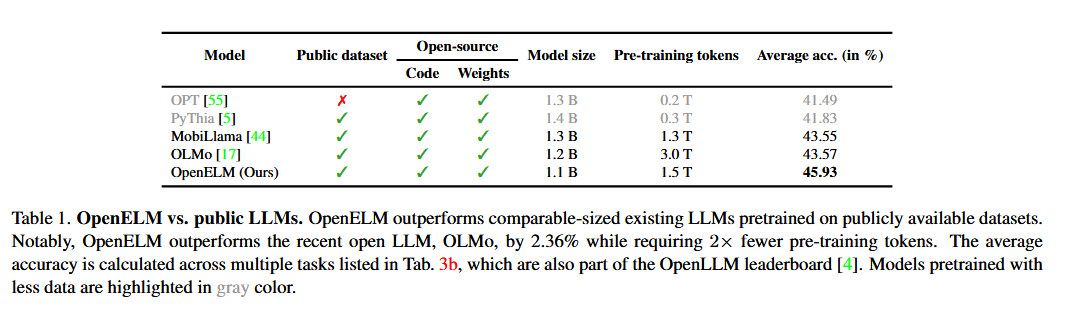
Apple says its approach with OpenELM includes a “layer-wise scaling strategy” that reportedly allocates parameters more efficiently across each layer, saving not only computational resources but also improving the model’s performance while being trained on fewer tokens. According to Apple’s released white paper, this strategy has enabled OpenELM to achieve a 2.36 percent improvement in accuracy over Allen AI’s OLMo 1B (another small language model) while requiring half as many pre-training tokens.

An table comparing OpenELM with other small AI language models in a similar class, taken from the OpenELM research paper by Apple.
Enlarge / An table comparing OpenELM with other small AI language models in a similar class, taken from the OpenELM research paper by Apple.

Apple also released the code for CoreNet, a library it used to train OpenELM—and it also included reproducible training recipes that allow the weights (neural network files) to be replicated, which is unusual for a major tech company so far. As Apple says in its OpenELM paper abstract, transparency is a key goal for the company: “The reproducibility and transparency of large language models are crucial for advancing open research, ensuring the trustworthiness of results, and enabling investigations into data and model biases, as well as potential risks.”

By releasing the source code, model weights, and training materials, Apple says it aims to “empower and enrich the open research community.” However, it also cautions that since the models were trained on publicly sourced datasets, “there exists the possibility of these models producing outputs that are inaccurate, harmful, biased, or objectionable in response to user prompts.”

While Apple has not yet integrated this new wave of AI language model capabilities into its consumer devices, the upcoming iOS 18 update (expected to be revealed in June at WWDC) is rumored to include new AI features that utilize on-device processing to ensure user privacy—though the company may potentially hire Google or OpenAI to handle more complex, off-device AI processing to give Siri a long-overdue boost.

https://arstechnica.com/?p=2020032


Smartphone: Samsung supera Apple, mentre tornano i cinesi

Il gigante sudcoreano dell’elettronica Samsung è tornato alla guida del mercato degli smartphone, dopo che il produttore di iPhone Apple ha visto le sue vendite crollare di quasi il 10 percento nel primo trimestre del 2024. Le spedizioni di Samsung sono rimaste invariate rispetto allo scorso anno e hanno mantenuto una quota di mercato del 20,8%, secondo un rapporto di International Data Corporation.

Dopo aver regnato per 13 anni, l’anno scorso Samsung aveva perso la sua posizione di vertice nel segmento a favore di Apple. La quota di mercato di Samsung era scesa dal 21,7 percento nel 2022 al 19,4 percento nel 2023. Apple aveva registrato una quota del 20,1% nelle spedizioni di smartphone, emergendo marginalmente davanti a Samsung.

Questo sottile vantaggio non è durato a lungo. Le spedizioni di Apple si sono ridotte del 9,6%, passando da 55,4 milioni nel primo trimestre del 2023 a poco più di 50 milioni nello stesso periodo del 2024. In questo periodo, Samsung ha spedito 60,1 milioni di unità – lo stesso dell’anno scorso – e ha conquistato una quota di mercato maggiore rispetto al gigante tecnologico statunitense.

La Rinascita dei marchi cinesi

Anche se la lotta potrebbe apparire per il primo posto, il mercato degli smartphone ha visto una rinascita dei marchi cinesi che hanno intaccato la quota di mercato di Apple.

Il marchio di comunicazioni digitali Huawei, la cui reputazione globale ha sofferto negli ultimi anni, sta tornando in auge nel segmento consumer business con il suo smartphone di punta, Mate 60. Le spedizioni di Huawei sono aumentate del 7,8% a 289,4 milioni di unità rispetto all’anno precedente, secondo il rapporto IDC.

Insieme al suo marchio spinoff, Honor, Huawei è stato il marchio di smartphone più performante nelle prime sei settimane del 2024. Tuttavia, nessuno dei due marchi ha raggiunto i tre posti rimanenti nella lista delle vendite più alte. Invece, altri marchi cinesi occupano questi posti.

Oppo è il quinto produttore di telefoni della lista con l’8,7% di quota di mercato, mentre Transsion ha quasi il 10% di quota di mercato. Con i suoi marchi, Tecno, Itel e Infinix, Transsion è diventata silenziosamente il quinto produttore di smartphone al mondo, come riporta CNBC.

Xiaomi si è posizionata al terzo posto, dietro Samsung e Apple. Le spedizioni dell’azienda sono aumentate del 33,8% nel primo trimestre del 2024.

I problemi per Apple aumentano

Diverse aziende e organizzazioni governative hanno imposto un divieto sui prodotti Apple in Cina, con conseguente calo delle vendite per Apple. Questo è simile al colpo inferto ai marchi cinesi per problemi di sicurezza.

Ma i problemi dell’azienda di Cupertino non si fermano qui. Dopo essere stata scalzata dalla vetta della classifica lo scorso anno, Samsung ha venduto 19,69 milioni di telefoni solo nel mese di febbraio. In confronto, Apple ha venduto 17,41 milioni di unità dei suoi iPhone.

È interessante notare che le vendite più forti di Samsung provengono dai mercati statunitense ed europeo, intaccando le quote di mercato di Apple anche in queste regioni.

L’interessante Engineering ha recentemente riferito che le vendite di Mac di Apple sono rimaste sostanzialmente piatte nell’ultimo anno, costringendo l’azienda a presentare una nuova linea con i suoi ultimi chip M4 abilitati all’AI. Seguendo l’esempio di Samsung, anche Apple potrebbe dover dotare il suo iPhone di caratteristiche simili.

Annunci di questo tipo sono attesi alla conferenza annuale degli sviluppatori che si terrà a giugno.


Telegram

Telegram
Grazie al nostro canale Telegram potete rimanere aggiornati sulla pubblicazione di nuovi articoli di Scenari Economici.

⇒ Iscrivetevi subito ⇐


MindsMinds

https://scenarieconomici.it/smartphone-samsung-supera-apple-mentre-tornano-i-cinesi/


Apple removes the first iOS Game Boy emulator released under new App Store rules

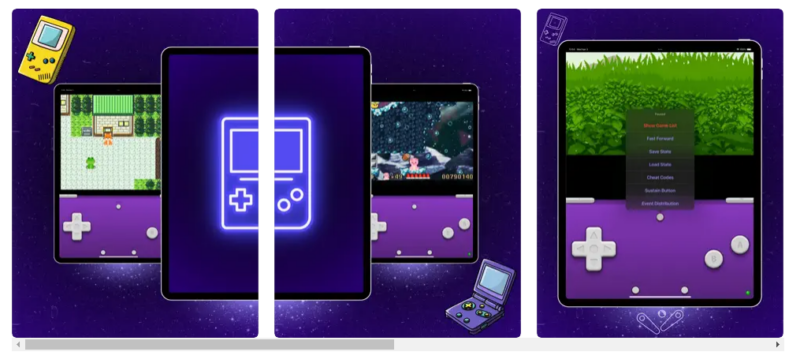
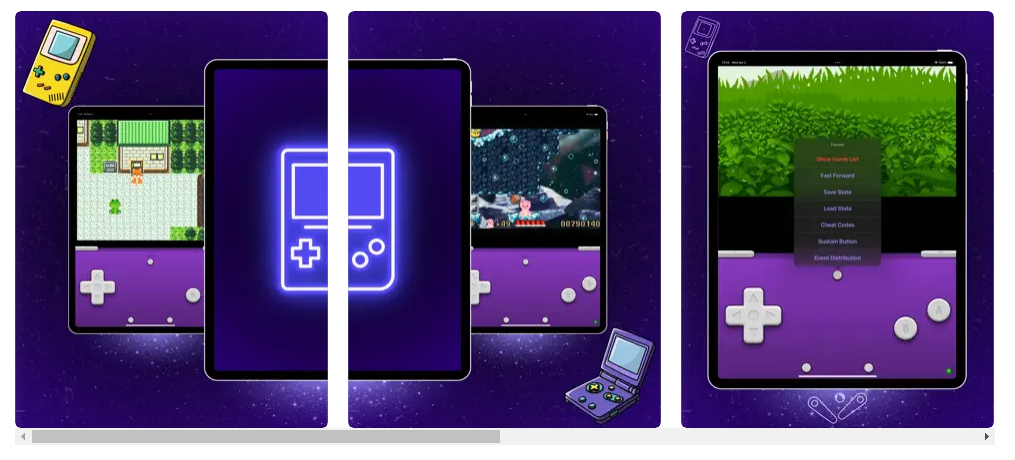
Photos of iGBA that appeared on the App Store before the app was taken down.
Enlarge / Photos of iGBA that appeared on the App Store before the app was taken down.


Over the weekend, developer Mattia La Spina launched iGBA as one of the first retro game emulators legitimately available on the iOS App Store following Apple’s rules change regarding such emulators earlier this month. As of Monday morning, though, iGBA has been pulled from the App Store following controversy over the unauthorized reuse of source code from a different emulator project.
Shortly after iGBA’s launch, some people on social media began noticing that the project appeared to be based on the code for GBA4iOS, a nearly decade-old emulator that developer Riley Testut and a partner developed as high-schoolers (and distributed via a temporary security hole in the iOS App Store). Testut took to social media Sunday morning to call iGBA a “knock-off” of GBA4iOS. “I did not give anyone permission to do this, yet it’s now sitting at the top of the charts (despite being filled with ads + tracking),” he wrote.

GBA4iOS is an open source program released under the GNU GPLv2 license, with licensing terms that let anyone “use, modify, and distribute my original code for this project without fear of legal consequences.” But those expansive licensing terms only apply “unless you plan to submit your app to Apple’s App Store, in which case written permission from me is explicitly required.”

Images from the original, circa 2014 version of GBA4iOS.

“To be clear, I’m not pissed at the developer [of iGBA],” Testut added on social media. “I’m pissed that Apple took the time to change the App Store rules to allow emulators and then approved a knock-off of my own app.”

Hurry up and wait

MacRumors reports that Apple cited two sections of its App Store guidelines in removing iGBA: one related to spam (Section 4.3) and one related to copyright (section 5.2). Right now, it’s a bit ambiguous whether the copyright violation refers to the copyright on the emulator source code itself or the emulator’s ability to easily play copyrighted games from Nintendo and others.

As we discussed earlier this month, the wording of Apple’s recent App Store guidelines update makes it unclear if developers can release general-purpose emulators with the ability to play ROMs they don’t control the rights to. Aside from iGBA, a Commodore 64 emulator named Emu64 XL and built off of the open source VICE project was recently launched on the iOS App Store.

Apple has yet to respond to a request for comment from Ars Technica. But Testut wrote early Monday morning that “to Apple’s credit, though, once they were aware of the issue, they did take it seriously. So I really don’t believe this was malicious at all — just an unfortunate situation for everyone involved.” Testut added that iGBA maker La Spina “reached out to me via email to personally apologize for the mess. So no hard feelings there.”

But Testut did have some hard feelings regarding Apple’s treatment of AltStore, an alternative marketplace for sideloading iOS apps that he’s trying to launch under the EU’s new regulations. That would provide Testut with a legitimate way to distribute Delta, a “sequel” to GBA4iOS that emulates many classic Nintendo consoles on Apple devices.

“My frustration stemmed entirely from the fact we’ve been ready to launch Delta since last month,” Tetstut wrote on social media. “This whole situation could’ve been avoided if Apple hadn’t delayed approving us until after changing their rules to allow emulators.”

https://arstechnica.com/?p=2017203


Apple will allow reuse of iPhone parts for repairs, with a notable catch

Technician repairing mobile phone at a station with microscope, heat gun, and blue mat
Getty Images

Apple has always had a strong preference that only its own parts be used in repairs, but only if they’re brand-new. Now, soon after Oregon passed a repair bill forbidding devices from rejecting parts with software locks, or “parts pairing,” Apple says it will allow for used Apple parts in future iPhone repairs.

While noting that “pairing” is “critical to preserving the privacy, security, and safety of an iPhone,” Apple states that it has worked for two years to allow for reusing Face ID and Touch ID sensors (i.e., biometric sensors) as well as moving part calibration from its remote repair certification tools onto the iPhone itself. As a result, “select iPhone models” this fall will allow for reusing biometric sensors and other parts, and anyone ordering parts from Apple can skip sending a device’s serial number, so long as the repair doesn’t involve a new main logic board.

The new policy “is designed to maintain an iPhone user’s privacy, security, and safety, while offering consumers more options, increasing product longevity, and minimizing the environmental impact of a repair,” according to Apple’s release.

“At Apple, we’re always looking for new ways to deliver the best possible experience for our customers while reducing the impact we have on the planet, and a key part of that means designing products that last,” John Ternus, Apple’s senior vice president of hardware engineering, said in a statement. “With this latest expansion to our repair program, we’re excited to be adding even more choice and convenience for our customers, while helping to extend the life of our products and their parts.”

Apple also announced that iPhones’ Parts and Service history will be expanded to show whether each part that has been replaced is a new or used Genuine Apple part. Apple did not mention aftermarket parts but will presumably continue to label those as an “Unknown Part.”

Activation Lock and e-waste

Apple’s proclivity for parts pairing has often been linked to the company’s concerns over reuse of parts from stolen iPhones. Apple acknowledges this by announcing the addition of what it terms its “popular Activation Lock feature” to parts themselves, aiming to deter stolen iPhones from being parted out. If a device is being repaired and detects that a part came from a device that had Activation Lock or Lost Mode enabled, it won’t let that part be calibrated.

Activation Lock has long been a major hindrance to anyone working to fix, refurbish, or rework Apple devices, by design or otherwise. Activation Lock was (as Apple notes) introduced in 2013 to appease lawmakers concerned about a growing trend of smartphone theft and was then expanded to other Apple products. But a substantial number of people do not deactivate Activation Lock before selling, recycling, or sometimes simply losing their device. If an original device owner cannot be reached (or motivated) to deactivate the lock from another device, an otherwise working iPhone, iPad, MacBook, or other Apple device can end up as a paperweight.

As noted by Vice and 9to5 Mac, this extends to perfectly usable M1 MacBooks from 2020, as well as entire fleets of corporate devices traded out without Activation Lock deactivated. Repair site iFixit considered the iPhone 14 and 15 to be some of the most repairable devices Apple has made in modern times but have lowered their scores for extensive failures after genuine parts swaps. Lidar sensors, the front-facing camera, auto brightness sensors, and more fail, and other parts issue warnings.

Apple’s new middle ground of using software locks to make stolen parts far less valuable or worthless but allowing genuine parts salvaged legitimately to be calibrated and functional would seem to be an improvement over certain Apple parts refusing to work anywhere else. But Activation Lock neglect could leave discarded devices still mostly useless, even for parts.

Notable timing

PIRG, the federation of state Public Interest Research Groups, pointed to not only the Oregon repair bill but also a similar bill in Colorado that has passed that state’s House and is due to be heard today in its Senate. “Make no mistake: The reason Apple is doing this is because Right to Repair is moving forward, thanks to the efforts of state lawmakers and our coalition of tinkers, fixers, makers and environmental and consumer advocates,” Nathan Proctor, senior director of PIRG’s right to repair campaign, said in a statement.

iFixit CEO Kyle Wiens also pinned Apple’s announcement to the Colorado bill. Wiens, who authored a blog post shortly after Apple’s announcement, described Apple’s new policy as “a strategy of half-promises and unnecessarily complicated hedges” designed to deflect more laws that would ban pairing entirely. “Aftermarket parts are key to the repair ecosystem, and Apple seems keen on continuing to ban those,” Wiens wrote to Ars.

Ars has reached out to Apple for comment and will update this post with new information.

Disclosure: Kevin Purdy previously worked for iFixit. He has no financial ties to the company.

This post was updated to link an iFixit blog post and note Apple’s language about “select iPhone models” eligible for used parts.

https://arstechnica.com/?p=2016470


Fairbuds are Fairphone’s proof that we really could make better tiny gadgets

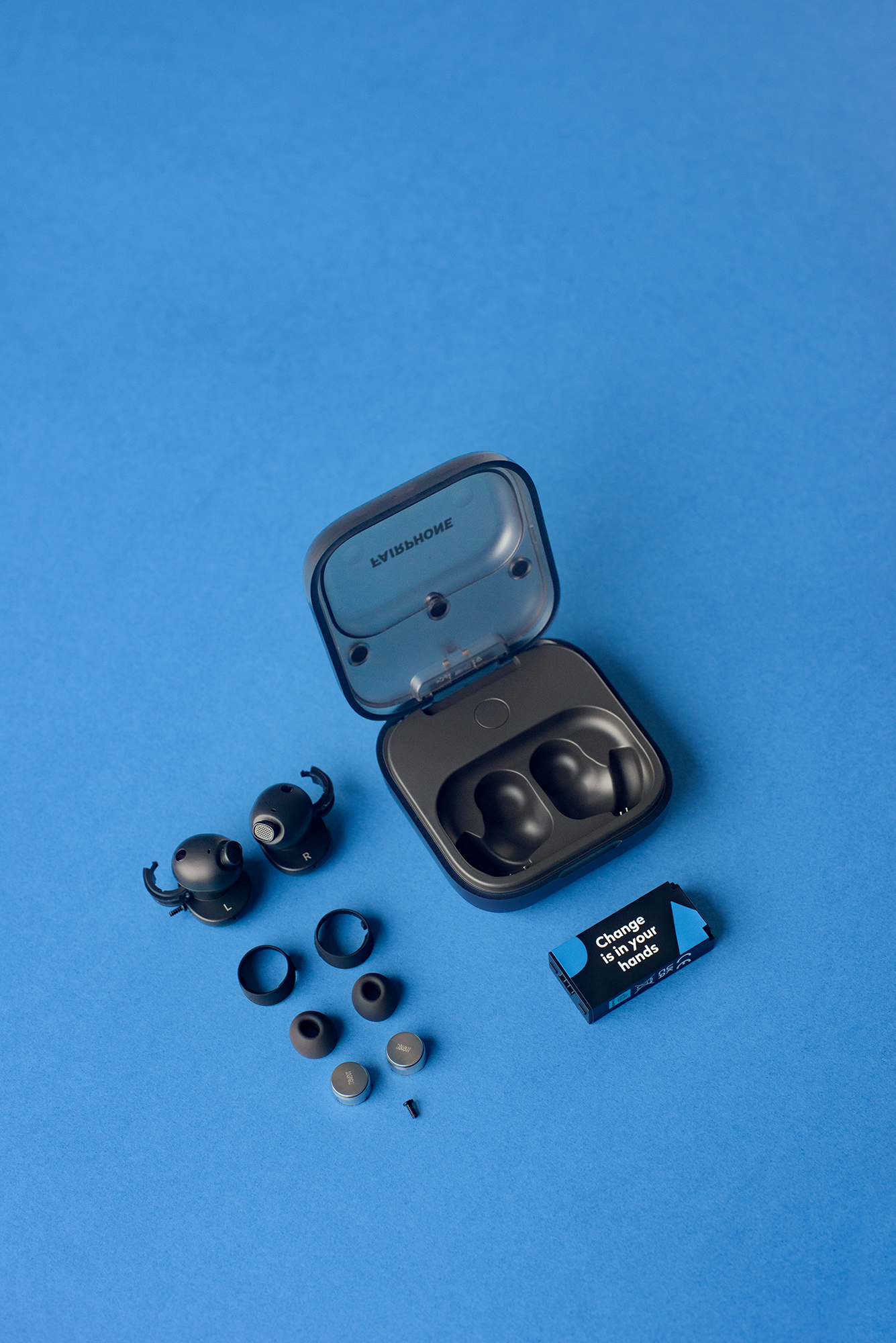
Fairbuds with all their components laid out on a blue background
Enlarge / The Fairbuds and their replaceable components, including the notably hand-friendly, non-soldered batteries.

Fairphone has spent years showing us that it could do what major phone manufacturers suggest is impossible: make a modern-looking phone, make it brazenly easy to open up, design it so battery swaps are something you could do on lunch break, and also provide software support for an unbelievable eight to 10 years.

Bluetooth headphones, specifically wireless earbuds, seemed destined to never receive this kind of eco-friendly, ownership-oriented upgrade, in large part because of how small they are. But the Fairbuds have arrived, and Fairphone has made them in its phones’ image. They’re only available in the EU at the moment, for 149 euro (or roughly $160 USD). Like the Fairphone 4, there’s a chance interest could bring them to the US.

The highlights include:

  • Seven replaceable parts from the buds and charging case, all sold by Fairphone
  • A two-year warranty, expanded to three if you register them
  • Batteries in both the case and buds that are replaceable
  • IP54 sweat and water resistance
  • Individual left or right buds and a charging case that Fairphone will sell to you
  • Made with “fair and recycled materials,” in “fair factories,” and “climate conscious and electronic waste neutral,” (as explained by Fairphone).

Of course, the buds also, you know, produce sound, with 11 mm titanium drivers. The Fairbuds sport active noise-canceling and ambient sound modes, Bluetooth 5.3 with “dual point connectivity” for quick-switching between devices, and a Fairbuds app for customizing EQ and preset settings. The buds’ 45 mAh batteries carry about six hours of listening per charge, and their 500 mAh case adds another 20 hours.

It’s not Fairphone’s first foray into fair, repairable sound devices. The firm previously made the since-discontinued True Wireless Stereo Earbuds and still offers Fairbuds XL, which are not buds at all but full over-ear headphones (and also EU-only).

The best that major-brand earbuds have ever done in repairability is “maybe you can do it, if you’re careful, and you don’t mind losing water resistance.” Taylor Dixon took apart six buds for iFixit back in 2020, and only Sony’s WF-1000XM3 didn’t require soldering, cutting and re-applying glue, and a steady hand working in very small spaces.

AirPods? AirPods are something else. One firm, The Swap Club, has figured out some means of getting the battery out of AirPods and selling them refurbished. But they only accept regular AirPods, not AirPods Pro. Alternatively, Apple will send you a pre-paid label to send in your spent AirPods for recycling, though with no trade-in credit. Even if Apple gets some kind of material out of the AirPods, a lot of them (and nearly every other wireless earbud) end up as waste after 18 months or however long their batteries last.

Fairbuds may or may not take a big chunk out of the market for AirPods, Beats, Pixel Buds, or other use-and-toss airbuds. But at a minimum, they give people something to point to as proof this category could be a lot better.

Disclosure: Kevin Purdy used to work for iFixit. He has no financial ties to the company.

Listing image by Fairphone

https://arstechnica.com/?p=2016094


AI hardware company from Jony Ive, Sam Altman seeks $1 billion in funding

Jony Ive, the former Apple designer.

Former Apple design lead Jony Ive and current OpenAI CEO Sam Altman are seeking funding for a new company that will produce an “artificial intelligence-powered personal device,” according to The Information‘s sources, who are said to be familiar with the plans.

The exact nature of the device is unknown, but it will not look anything like a smartphone, according to the sources. We first heard tell of this venture in the fall of 2023, but The Information’s story reveals that talks are moving forward to get the company off the ground.

Ive and Altman hope to raise at least $1 billion for the new company. The complete list of potential funding sources they’ve spoken with is unknown, but The Information’s sources say they are in talks with frequent OpenAI investor Thrive Capital as well as Emerson Collective, a venture capital firm founded by Laurene Powell Jobs.

SoftBank CEO and super-investor Masayoshi Son is also said to have spoken with Altman and Ive about the venture. Financial Times previously reported that Son wanted Arm (another company he has backed) to be involved in the project.

Obviously, those are some of the well-established and famous names within today’s tech industry. Personal connections may play a role; for example, Jobs is said to have a friendship with both Ive and Altman. That might be critical because the pedigree involved could scare off smaller investors since the big names could drive up the initial cost of investment.

Although we don’t know anything about the device yet, it would likely put Ive in direct competition with his former employer, Apple. It has been reported elsewhere that Apple is working on bringing powerful new AI features to iOS 18 and later versions of the software for iPhones, iPads, and the company’s other devices.

Altman already has his hands in several other AI ventures besides OpenAI. The Information reports that there is no indication yet that OpenAI would be directly involved in the new hardware company.

https://arstechnica.com/?p=2015528


Apple now allows retro game emulators on its App Store—but with big caveats

A screenshot of Sonic the Hedgehog on an iPhone
Enlarge / The classic Sega Genesis game Sonic the Hedgehog running on an iPhone—in this case, as a standalone app.
Samuel Axon

When Apple posted its latest update to the App Store’s app review and submission policies for developers, it included language that appears to explicitly allow a new kind of app for emulating retro console games.

Apple has long forbidden apps that run code from an external source, but today’s announced changes now allow “software that is not embedded in the binary” in certain cases, with “retro game console emulator apps can offer to download games” specifically listed as one of those cases.

Here’s the exact wording:

4.7 Mini apps, mini games, streaming games, chatbots, plug-ins, and game emulators

Apps may offer certain software that is not embedded in the binary, specifically HTML5 mini apps and mini games, streaming games, chatbots, and plug-ins. Additionally, retro game console emulator apps can offer to download games. You are responsible for all such software offered in your app, including ensuring that such software complies with these Guidelines and all applicable laws. Software that does not comply with one or more guidelines will lead to the rejection of your app. You must also ensure that the software adheres to the additional rules that follow in 4.7.1 and 4.7.5. These additional rules are important to preserve the experience that App Store customers expect, and to help ensure user safety.

It’s a little fuzzy how this will play out, but it may not allow the kind of emulators you see on Android and desktop, which let you play retro games from any outside source.

Retro game emulators run what are colloquially called ROM files, which are more or less images of the game cartridges or discs that played on console hardware. By now, it’s well-established that the emulators themselves are completely legal, but the legality of the ROM files downloaded from ROM sites on the Internet depends on the specific files and circumstances.

There are ROMs that are entirely public domain or in some license where the creator allows distribution; there are ROMs that are technically copyrighted intellectual property but where the original owner no longer exists, and the current ownership is unknown or unenforced; and there are some ROMs (like many games made by Nintendo) where the owner still has an interest in controlling distribution and often takes action to try to curb illegal sharing and use of the files.

Additionally, many game publishers use emulators to run ROMs of their own retro games, which they sell to consumers either as standalone games or in collections for modern platforms.

It’s not completely clear from Apple’s wording, but our interpretation of Apple’s new rules is that it’s likely only the last of those examples will be possible; companies that own the intellectual property could launch emulator apps for downloading ROMs of their (and only their) games. So, for example, Sega could offer a Sega app that would allow users to download an ever-expanding library of Sega games, either as part of a subscription, for free, or as in-app purchases. Sega has offered its retro games on the iPhone before in emulation but with a standalone app for each game.

“You are responsible for all such software offered in your app, including ensuring that such software complies with these Guidelines and all applicable laws,” Apple writes. And it specifically says “retro game console emulator apps can offer to download games” in the list of exceptions to the rules against “software that is not embedded inside the binary”—but it doesn’t list any other method for retro game console emulator apps.

Whatever the case, this update is not limited to the European Union. Apple has been subjected to regulatory scrutiny in both the EU and the United States regarding its App Store rules. It’s likely the company is making this change to preempt criticism in this area, though it did not name its reasons when announcing the change other than to say it has been made to “support updated policies, upcoming features, and to provide clarification.”

https://arstechnica.com/?p=2015269