How to downgrade from macOS 26 Tahoe on a new Mac

If you’re downloading the installer from within macOS Tahoe, you’ll see a pop-up when the download completes, telling you that the installer can’t be run from within that version of macOS. Since we’ll be running it off of its own USB stick, you can safely ignore this message.

Settings for formatting your USB disk to get it ready for a macOS installer.

Andrew Cunningham

A 64GB disk is large enough to hold two or three macOS installers at once.

Andrew Cunningham

While the installer is downloading, install and prepare your USB drive. Open Disk Utility, click the View button, and select “show all devices.” Click the root of your USB drive under the “external” header in the left sidebar, and click the Erase button in the upper-right control area.

Change the disk’s name to whatever you want—I use “MyVolume” so I don’t have to change Apple’s sample terminal commands when copying the installer files—and make sure the Format is set to Mac OS Extended (Journaled) and the Scheme is set to GUID Partition Map. (That’s not an error; the macOS installer still wants an HFS+ filesystem rather than APFS.)

The handy thing is that if you have a larger USB drive, you can create installers for multiple macOS versions by partitioning the disk with the Partition button. A 64GB drive split into three ~21GB partitions could boot Tahoe, Sequoia, and another past or future macOS version; I just have it split into two volumes so I can boot Sequoia and Tahoe installers from the same drive.

Running the Terminal command to create our macOS 15 Sequoia boot drive.

Credit: Andrew Cunningham

Running the Terminal command to create our macOS 15 Sequoia boot drive. Credit: Andrew Cunningham

Once the Sequoia installer is in your Applications folder, run a Terminal command to copy the installer files. Apple has commands for each version of macOS on this page. Use this one for Sequoia:

sudo /Applications/Install\ macOS\ Sequoia.app/Contents/Resources/createinstallmedia --volume /Volumes/MyVolume

If you named the USB drive something other than MyVolume when you formatted it, change the name in the command as well. Note that names with spaces require a backslash before each space.

The Terminal will prompt you for your password and ask you to type Y to confirm. It will then reformat the drive and copy the files over. The time this takes will vary depending on the speed of the USB drive you’re using, but for most USB 3 drives, it should only take a few minutes to create the installer. When the Terminal command is done running, leave the disk inserted and shut down your Mac.

https://arstechnica.com/gadgets/2026/02/how-to-downgrade-from-macos-26-tahoe-on-a-new-mac/


Apple says it has “a big week ahead.” Here’s what we expect to see.

The iPhone 17e

Apple would let the old iPhone SE languish for at least a couple years between updates, but it’s apparently taking a different tack with the “e” iPhones.

The main star of this refresh is a new chip, which will supposedly be upgraded from an Apple A18 to an A19. It’s also said to be picking up MagSafe charging support, making it compatible with Apple-made and third-party accessories that magnetically clamp to the back of other iPhones.

Other than that, the rumor mill suggests that the 17e will stick with its notched screen rather than a Dynamic Island, and we’d be surprised to see it move beyond its basic one-lens camera. Assuming Apple sticks with the same $599 starting price, though, there will still be some awkward overlap between the iPhone 16 and the regular iPhone 17.

The iPad Air

Do you like the current iPad Air with the Apple M3? Or the last one with the Apple M2?

That’s lucky for you, because a next-generation iPad Air is likely to continue in the same vein, picking up a new chip but not changing much else. If you’re holding out for something more exciting, like improved screen technology, you’ll likely be disappointed.

There’s no word on whether the M4 might come with any other internal upgrades, like more RAM or increased storage in the base model. Either or both of those could spice up an otherwise straightforward update.

Other possibilities

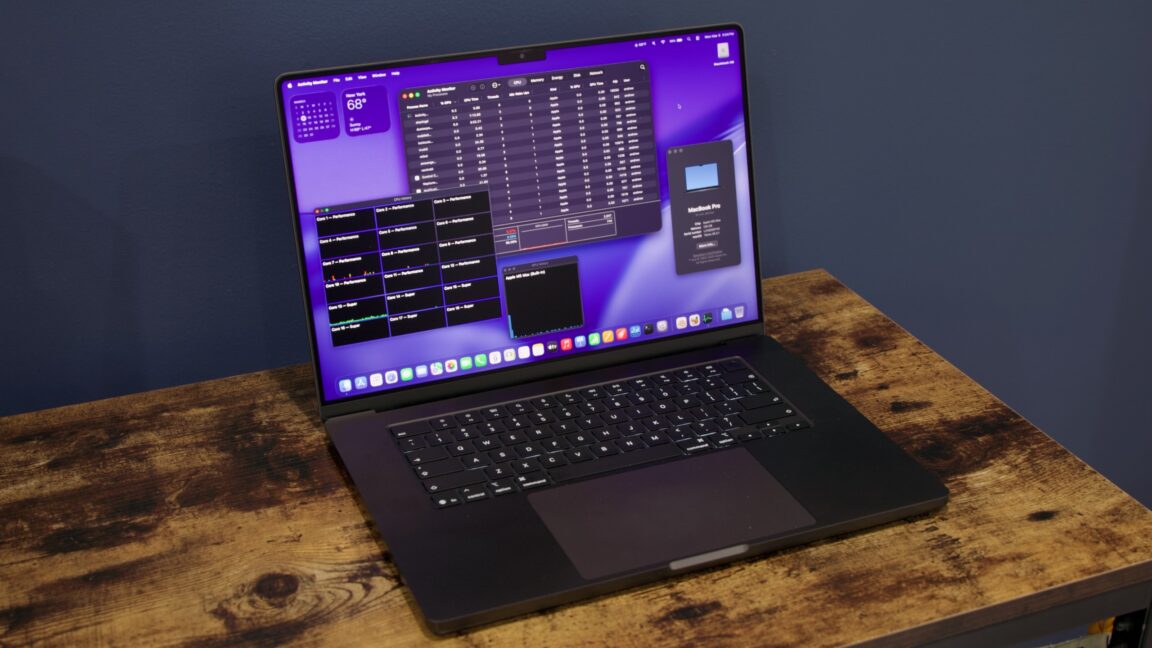
Apple could update the remaining M4 family MacBook Pros (pictured) with M5 family replacements.

Credit: Andrew Cunningham

Apple could update the remaining M4 family MacBook Pros (pictured) with M5 family replacements. Credit: Andrew Cunningham

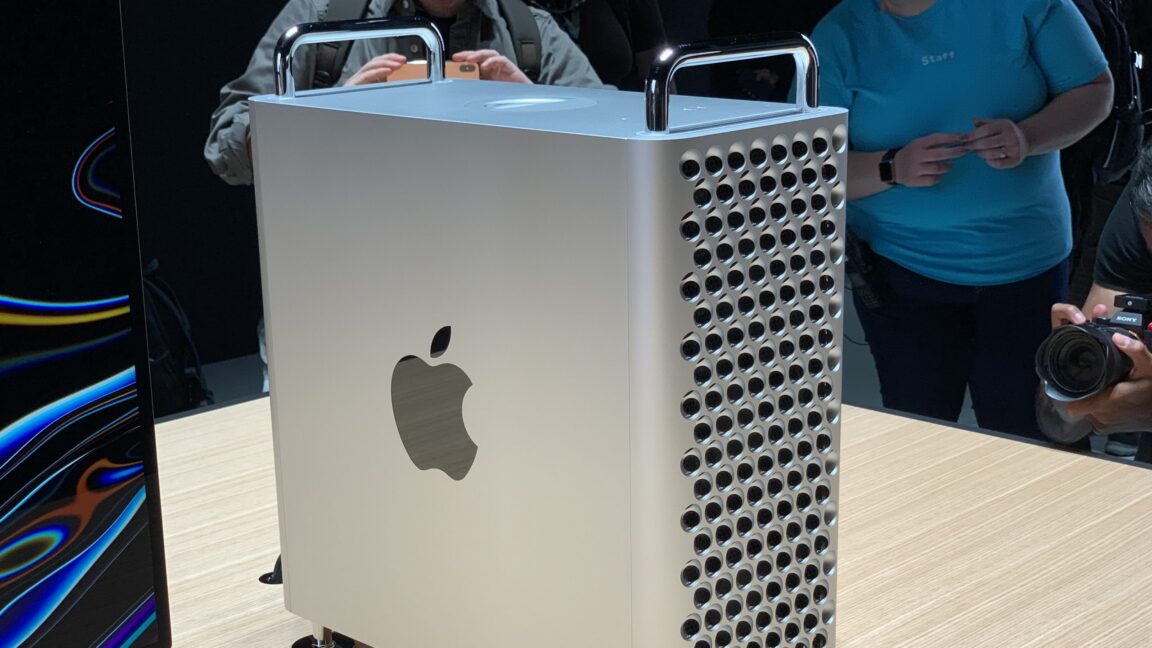
Apple could choose to refresh almost any of its Macs next week—only the low-end MacBook Pro has an M5 chip, and it has been at least a year since the rest of the lineup was last updated. There’s no refresh that would come as a true surprise, excepting maybe the Mac Pro that Apple has allegedly put “on the back burner” (again).

https://arstechnica.com/gadgets/2026/02/what-new-hardware-to-expect-from-apple-next-week/


In a replay of 2019, Apple says a single desktop Mac will be manufactured in the US

The bulk of the supply chain for phones, tablets, computers, game consoles, and most other tech is still overwhelmingly reliant on overseas manufacturers. Most of Apple’s A- and M-series chips are still made in TSMC’s factories in Taiwan, and while TSMC is making some of its chips in the US, it has resisted efforts to bring more of its capacity to the US. Facilities for manufacturing memory, storage, and displays are also mostly located overseas. And that’s before you even start thinking about the facilities where all of these components are assembled into finished products.

There are signs that more chip manufacturing, at least, is coming to the US. Apple itself says that it will buy roughly 100 million chips manufactured at TSMC’s facilities in Arizona; these 4nm factories can’t make the newest A- and M-series chips, but they can make the older Apple A16 (still used in the low-end iPad) and the Apple S10 chip used in Apple Watches. Intel, itself the beneficiary of multiple sources of external investment, is still working on new factories in Ohio and elsewhere; memory manufacturer Micron is using some of its AI-fueled profits to build domestic factories as well.

But Apple’s Mac Pro announcement in 2019 wasn’t the first step toward domestic manufacturing for the company’s biggest-selling hardware, and it’s hard to see today’s announcement ushering in a major change to Apple’s manufacturing strategy, either. The Mac mini is almost certainly more popular than the Mac Pro, but it’s not nearly as big a deal as domestic iPhone, iPad, or MacBook manufacturing would be.

https://arstechnica.com/apple/2026/02/in-a-replay-of-2019-apple-says-a-single-desktop-mac-will-be-manufactured-in-the-us/


5 changes to know about in Apple’s latest iOS, macOS, and iPadOS betas

The 26.4 update is the first to begin testing encryption for RCS messages. But as with the initial RCS rollout, Apple is moving slowly and deliberately: for now, encrypted RCS messaging only works when texting between Apple devices, and not between Apple devices and Android phones. The feature also won’t be included in the final 26.4 release—it’s only included in the betas for testing purposes, and it “will be available to customers in a future software update for iOS, iPadOS, macOS, and watchOS.”

Encrypted iMessage and RCS chats will be labeled with a lock icon, much like how most web browsers label HTTPS sites.

To support encrypted messaging, Apple will jump from version 2.4 of the RCS Universal Profile to version 3.0. This should also enable support for several improvements in versions 2.5, 2.6, and 2.7 of the RCS standard, including previously iMessage-exclusive things like editing and recalling messages and replying to specific messages inline.

The return of the “Compact” Safari tab bar

The Compact tab view returns to Safari 26.4 and iPadOS 26.4.

Credit: Andrew Cunningham

The Compact tab view returns to Safari 26.4 and iPadOS 26.4. Credit: Andrew Cunningham

As part of the macOS 12 Monterey/iPadOS 15 beta cycle in 2021, Apple attempted a pretty radical redesign of the Safari browser that combined your tabs and the address bar into one, with the goal of increasing the amount of viewable space on the pages you were viewing. By the time both operating systems were released to the public, Safari’s default design had more or less reverted to its previous state, but the “compact” tab view lived on as an optional view in the settings for those who liked it.

Tahoe, the Safari 26 update, and iPadOS 26 all removed that Compact view entirely, though a version of the Compact view became the default for the iPhone version of Safari. The macOS 26.4, Safari 26.4, and iPadOS 26.4 updates restore the Compact tab option to the other versions of Safari.

On-by-default Stolen Device Protection

Originally introduced in the iOS 17.3 update, Apple’s “Stolen Device Protection” toggle for iPhones added an extra layer of security for users whose phones were stolen by people who had learned their passcodes. With Stolen Device Protection enabled, an iPhone that had been removed from “familiar locations, such as home or work” would require biometric Face ID or Touch ID authentication before accessing stored passwords and credit cards, erasing your phone, or changing Apple Account passwords. Normally, users can enter their passcodes as a fallback; Stolen Device Protection removes that fallback.

https://arstechnica.com/gadgets/2026/02/5-changes-to-know-about-in-apples-latest-ios-macos-and-ipados-betas/


GameHub will give Mac owners another imperfect way to play Windows games

Reasons for worry

In a recent interview with The Memory Core newsletter, GameSir admitted that its primary motivation for releasing a Windows emulation tool was to sell more of its controllers. But GameSir’s controllers aren’t required to use the Android version, which it says was sideloaded on 5 million (primarily Chinese) Android devices even before its official Google Play release in November.

GameHub’s Windows emulation works on Android, but there are some issues.

Credit: GameSir

GameHub’s Windows emulation works on Android, but there are some issues. Credit: GameSir

GameHub on Android has also faced controversy for including a number of invasive trackers (which are removed in a community-built Lite version). A GameSir representative told The Memory Core that this was just standard practice in the Chinese market, where there is less sensitivity to such user tracking, and that it has since been removed.

The representative also addressed concerns about reusing open source compatibility code in that interview, saying that its Windows emulator was “developed in-house by GameSir’s core engineering team” with its “own in-house compatibility layer (such as syscall hooks, GameScopeVK, and other technologies), rather than modifications to Wine’s core code.” That said, the representative admitted GameFusion “reference[s] and use UI components from Winlator [an open source Windows emulation tool for Android]… to maintain ecosystem compatibility and familiarity.”

The compatibility issues and controversial corporate entity involved here probably mean that GameHub for Mac won’t be the Valve SteamOS/Proton moment that Apple gamers have been waiting for. Still, it’ll be nice for MacBook owners to have yet another option to play Windows games without needing to run a Windows install.

https://arstechnica.com/gaming/2026/02/gamehub-will-give-mac-owners-another-imperfect-way-to-play-windows-games/


Get ready for new Macs and iPads: Apple announces “Special Experience” on March 4

It may be more tempting to take that aging Mac you’ve been coddling and put it out to pasture soon. Apple has announced an event for March 4, which in usual Apple fashion, it has branded a “Special Apple Experience.” Also in usual Apple fashion, it has not come out and said what it’s going to be announcing. We have a pretty good idea, though.

The event will kick off at 9AM ET on March 4—Ars will be on the ground in New York City to cover Apple’s latest unveiling, whatever form it may take. Apple doesn’t release most products on a set schedule, but some recent speculation about likely hardware updates can point us in the right direction.

As we reported recently, the iPhone 17e may be making an appearance in Apple’s lineup soon. This updated version of the budget-oriented iPhone will have an A19 chip inside, similar to the one powering the base model iPhone 17. It may also add MagSafe charging. Don’t expect to see a multi-camera array like you’d get on the more expensive Apple phones, though. Pricing will be the most important thing to watch for should Apple announce this phone. Right now, the non-Pro iPhone 16 and 17 (including the 16e) are all clustered in the $600-800 range. Another $599 budget iPhone won’t make waves.

https://arstechnica.com/apple/2026/02/get-ready-for-new-macs-and-ipads-apple-announces-special-experience-on-march-4/


Platforms bend over backward to help DHS censor ICE critics, advocates say

“The nature and content of the Defendants’ communications with these technology companies” is “critical for determining whether they crossed the line from governmental cajoling to unconstitutional coercion,” EFF’s complaint said.

EFF Senior Staff Attorney Mario Trujillo told Ars that the EFF is confident it can win the fight to expose government demands, but like most FOIA lawsuits, the case is expected to move slowly. That’s unfortunate, he said, because ICE activity is escalating, and delays in addressing these concerns could irreparably harm speech at a pivotal moment.

Like users, platforms are seemingly victims, too, FIRE senior attorney Colin McDonnell told Ars.

They’ve been forced to override their own editorial judgment while navigating implicit threats from the government, he said.

“If Attorney General Bondi demands that they remove speech, the platform is going to feel like they have to comply; they don’t have a choice,” McDonnell said.

But platforms do have a choice and could be doing more to protect users, the EFF has said. Platforms could even serve as a first line of defense, requiring officials to get a court order before complying with any requests.

Platforms may now have good reason to push back against government requests—and to give users the tools to do the same. Trujillo noted that while courts have been slow to address the ICEBlock removal and FOIA lawsuits, the government has quickly withdrawn requests to unmask Facebook users soon after litigation began.

“That’s like an acknowledgement that the Trump administration, when actually challenged in court, wasn’t even willing to defend itself,” Trujillo said.

Platforms could view that as evidence that government pressure only works when platforms fail to put up a bare-minimum fight, Trujillo said.

https://arstechnica.com/tech-policy/2026/02/platforms-bend-over-backward-to-help-dhs-censor-ice-critics-advocates-say/


Trump FTC wants Apple News to promote more Fox News and Breitbart stories

Federal Trade Commission Chairman Andrew Ferguson has accused Apple of violating US law by suppressing conservative-leaning news outlets on Apple News.

Ferguson pointed to research by a pro-Trump group that accused Apple News of suppressing articles by Fox News, the New York Post, Daily Mail, Breitbart, and The Gateway Pundit. The FTC chair claims that Apple News might be violating promises made to consumers in its terms of service, but his letter doesn’t cite any specific provisions from the Apple terms that might have been violated.

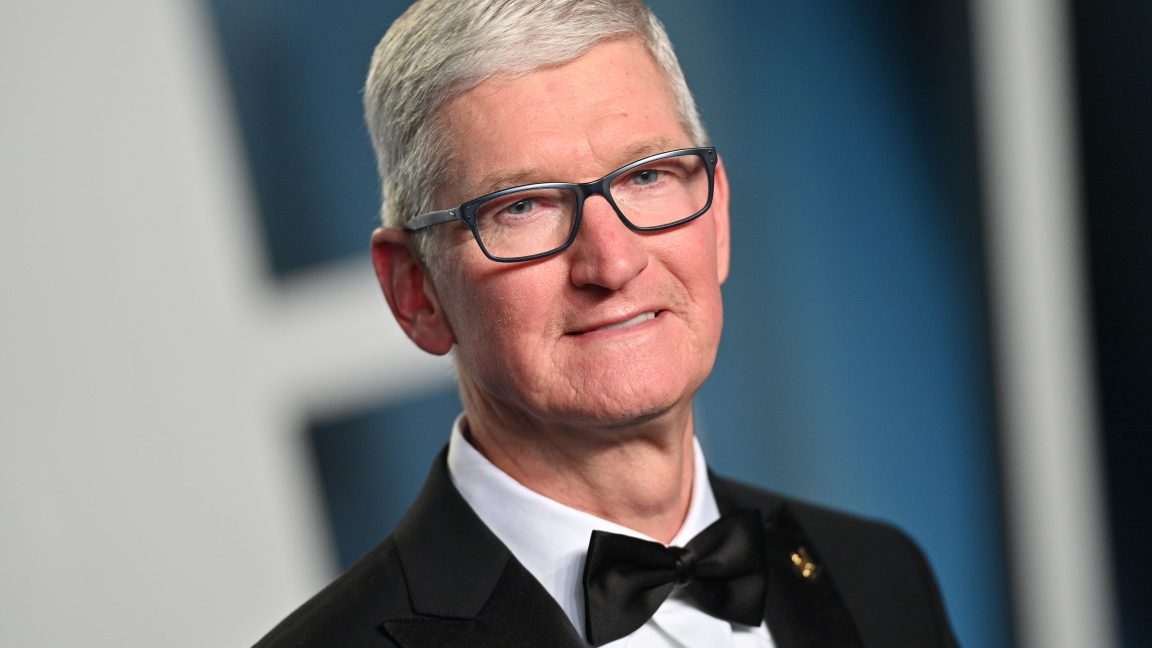
“Recently, there have been reports that Apple News has systematically promoted news articles from left-wing news outlets and suppressed news articles from more conservative publications,” Ferguson wrote in the letter to Apple CEO Tim Cook yesterday. He said the “reports raise serious questions about whether Apple News is acting in accordance with its terms of service and its representations to consumers, as well as the reasonable consumer expectations of the tens of millions of Americans who use Apple News.”

Craig Aaron, president and co-CEO of media advocacy group Free Press, told Ars that Ferguson’s “letter would be laughable if it weren’t so dangerous. This is what government censorship looks like. Ferguson’s claims of course aren’t based on any facts or evidence, just innuendo from discredited partisan operatives who think The Wall Street Journal is too woke. Just imagine if another administration had told Drudge or Fox News what stories they should feature on their apps or home pages.”

Ferguson told Cook, “As an American citizen, I abhor and condemn any attempt to censor content for ideological reasons. Such efforts, whether taken to appease overzealous activists, at the behest of foreign governments, or simply to advance the political views of Silicon Valley elites, stifle the free exchange of ideas, manipulate the public discourse, and are inconsistent with American values.”

We contacted Apple about Ferguson’s letter and will update this article if it provides a response. Aaron said that “Apple must respond and condemn this government intrusion. Capitulating to or appeasing government censors will never work. If these companies are as committed to free expression as they claim to be, it’s time to take a stand.”

https://arstechnica.com/tech-policy/2026/02/trump-ftc-denies-being-speech-police-but-says-apple-news-is-too-liberal/


It took two years, but Google released a YouTube app on Vision Pro

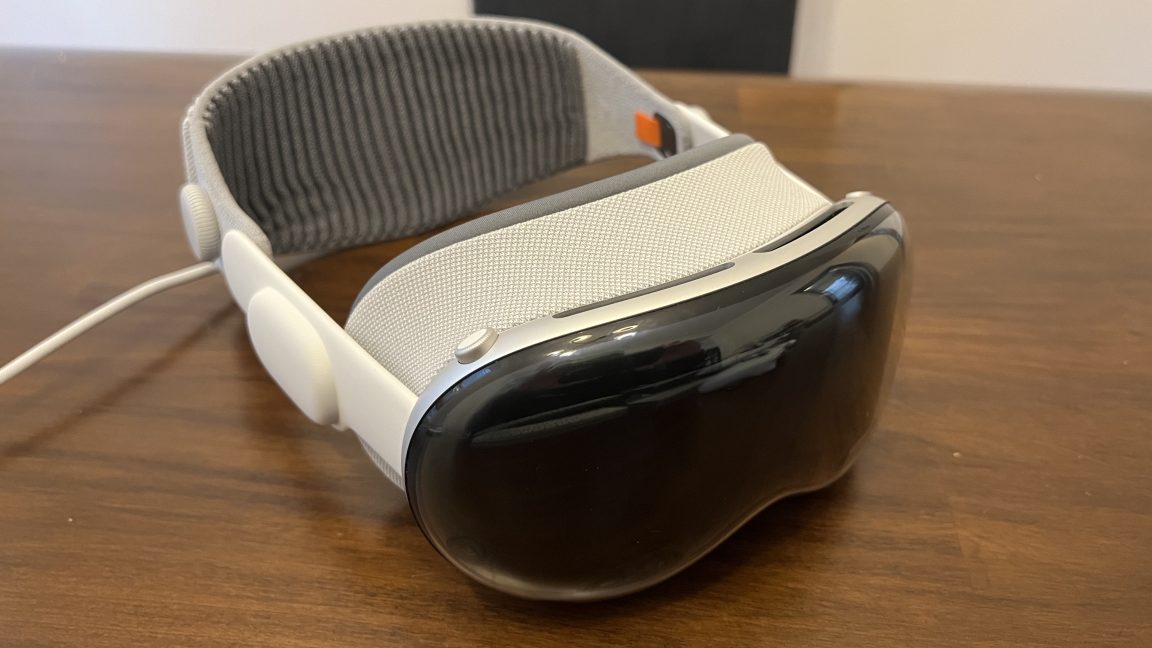
When Apple’s Vision Pro mixed reality headset launched in February 2024, users were frustrated at the lack of a proper YouTube app—a significant disappointment given the device’s focus on video content consumption, and YouTube’s strong library of immersive VR and 360 videos. That complaint continued through the release of the second-generation Vision Pro last year, including in our review.

Now, two years later, an official YouTube app from Google has launched on the Vision Pro’s app store. It’s not just a port of the iPad app, either—it has panels arranged spatially in front of the user as you’d expect, and it supports 3D videos, as well as 360- and 180-degree ones.

YouTube’s App Store listing says users can watch “every video on YouTube” (there’s a screenshot of a special interface for Shorts vertical videos, for example) and that they get “the full signed-in experience” with watch history and so on.

Shortly after the Vision Pro launched, many users complained to YouTube about the lack of an app. They were referred to the web interface—which worked OK for most 2D videos, but it obviously wasn’t an ideal experience—and were told that a Vision Pro app was on the roadmap.

Two years of silence followed. Third-party apps popped up, like the relatively popular Juno app, but it was pulled from the App Store on Google’s claim that it violated API policies. (Some others remained or became available later.)

Google is building out its own XR ambitions, so it’s possible the Vision Pro app benefited from some of that work, but it’s unclear how this all came to be. But it’s here now. Next up: Netflix, right? Sadly, that’s unlikely; unlike Google, Netflix has not announced any intention here.

https://arstechnica.com/gadgets/2026/02/it-took-two-years-but-google-released-a-youtube-app-on-vision-pro/


Report: Imminent Apple hardware updates include MacBook Pro, iPads, and iPhone 17e

Apple’s 2026 has already brought us the AirTag 2 and a new Creator Studio app subscription aimed at independent content creators, but nothing so far for the company’s main product families.

That could change soon, according to reporting from Bloomberg’s Mark Gurman. New versions of Apple’s low-end iPhone, the basic iPad and iPad Air, and the higher-end MacBook Pros are said to be coming “imminently,” “soon,” and “shortly,” respectively, ahead of planned updates later in the year for the iPad mini, Studio Display, and other Mac models.

Here’s what we think we know about the hardware that’s coming.

iPhone 17e

Apple is apparently planning to launch an updated iPhone 17e, a new version of its basic iPhone. The phone is said to include an A19 chip similar to the one in the regular iPhone 17, and it will also add MagSafe charging. Though the iPhone 17e will likely stick to the basic one-lens camera system and the notched, Dynamic Island-less screen, it will also launch at the same $599 price as the current 16e, which counts as good news given current AI-driven RAM and storage shortages.

This would be a change in how Apple approaches its lower-end iPhone. The old iPhone SE was updated pretty sporadically, with at least a couple of years between each of its updates. The iPhone 16e was introduced just last year.

The biggest question is whether the 17e will continue to exist alongside the older but arguably superior iPhone 16 and 16 Plus, which start at just $100 more than the current iPhone 16e and include a dual-lens camera system and the Dynamic Island. Having four different iPhone models available in the same $600-to-$800 price range is confusing at best.

https://arstechnica.com/gadgets/2026/02/report-imminent-apple-hardware-updates-include-macbook-pro-ipads-and-iphone-17e/