Apple announces RCS support for iMessage
Apple announces RCS support for iMessage
Jakub Porzycki/NurPhoto via Getty Images

Apple is shocking the world today by adopting the RCS messaging standard for iMessage. When iMessage users are talking to people off the service, iMessage will soon be able to fall back to the RCS carrier messaging standard instead of SMS, which comes with the advantages of read receipts, higher-quality media sending, and typing indicators. Your chats with your green bubble friends will be slightly less awful.

Apple sent several media outlets a statement:

Later next year, we will be adding support for RCS Universal Profile, the standard as currently published by the GSM Association. We believe RCS Universal Profile will offer a better interoperability experience when compared to SMS or MMS. This will work alongside iMessage, which will continue to be the best and most secure messaging experience for Apple users.

iMessage is currently besieged on all sides by various parties. Google has been waging a “get the message” campaign against Apple for the past year or two, imploring the company to adopt RCS. Last year, Apple CEO Tim Cook was asked on stage if the company would make messaging with Android better, and he responded, “I don’t hear our users asking that we put a lot of energy in on that at this point” and told the audience member to “just buy your mom an iPhone” if he wanted easier communication with his mother. Regulators in the European Union have yet to decide the fate of iMessage, but if it meets the qualifications for being a big tech “Gatekeeper,” the iMessage protocol will be forced to open up in the EU. The Wall Street Journal ran an article last year subtitled “Teens Dread the Green Text Bubble,” detailing the bullying that Android users were subject to due to SMS fallback dragging down the capabilities of iMessage group chats (87 percent of US teenagers have iPhones).

On the Android side of things, companies have been desperate to work better with iMessage, with Google hacking together an emoji response solution for Google Messages and Android manufacturer Nothing planning a wild “hack into iMessage” plan by running messages through Mac computers hosted in a data center.

So credit whatever you want, but Apple has caved to the cacophony of voices asking for RCS. For all of the noise, I don’t know that RCS support will change that much. Adding status indicators and better media to SMS will certainly be welcome, but just like SMS before it, RCS will still be the worst-available way to send messages back and forth compared to all the full-featured chat apps out there. RCS is still a service that’s locked to your carrier number, so at the very least, it will be universally available now, just like SMS.

RCS is an update to SMS that was first cooked up by the GSM Association in 2008 during the heyday of pay-per-message SMS texting. Once unlimited texting took hold and texting was no longer a cash cow, carrier enthusiasm to update to RCS fell by the wayside, and the chat apps took over. There was really no enthusiasm around RCS until Google dusted off the standard in 2015 with the acquisition of Jibe, a back-end RCS provider, and then took a harder pivot to RCS in 2018 after the death of Google Allo. Google signed a lot of carriers onto the Jibe back-end, so even if you’re an iPhone user, there’s a good chance your RCS messages will be flowing through Google servers now.

Google has a few extensions on top of RCS that add important features like encryption, but that’s not part of the GSMA standard. Apple’s statement carefully announcing support for “the standard as currently published by the GSM Association” seems specifically crafted to exclude all the fancy Google extras. Android messages in iMessage will also probably still be green, so I don’t know if that will change the teen bullying concern much.

https://arstechnica.com/?p=1984448



Google admits to paying Apple 36% of Safari revenue – after witness lets figure slip

Google CEO Sundar Pichai has confirmed that the company pays Apple 36% of its Safari search revenue.

The search engine shares this revenue, which is reportedly worth $18 billion, in exchange for default status on all of Apple’s devices.

Pichai made the admission while being cross-examined at the Epic Games antitrust trial, after a Google witness at the federal antirust trial let the statistic slip.

Google’s lead lawyer John Schmidtlein “visibly cringed”  when the exact percentage of ad revenue paid to Apple was revealed – a figure that had previously been a closely-guarded secret, reports Bloomberg.

Why we care.
Google argues in the antitrust trial that it’s the best search engine due to superior quality, not anti-competitive practices. Yet, the question arises: if Google is truly the best, why spend billions to maintain default status? The answer could be pivotal in determining the case’s outcome.

What happened? Google’s final witness at the federal antitrust trial, Kevin Murphy –  an expert economist and semi-retired University of Chicago professor, accidentally disclosed how much Google pays Apple while being questioned on the stand. The number was supposed to remain confidential as both Google and Apple had objected to details of their agreement being shred with the public. Google argued that making this information public “would unreasonably undermine Google’s competitive standing in relation to both competitors and other counterparties.”


Get the daily newsletter search marketers rely on.


Why this matters to Google. The DOJ argues that Google’s agreement with Apple shows it’s unlawfully keeping control over search and advertising. If the DOJ wins its case, a court order could stop Google’s unfair practices, possibly leading to the company’s breakup.

Deep dive. Read our Google antirust trial updates for all the latest developments from the federal court case.


Related stories

New on Search Engine Land

@media screen and (min-width: 800px) { #div-gpt-ad-3191538-7 { display: flex !important; justify-content: center !important; align-items: center !important; min-width:770px; min-height:260px; } } @media screen and (min-width: 1279px) { #div-gpt-ad-3191538-7 { display: flex !important; justify-content: center !important; align-items: center !important; min-width:800px!important; min-height:440px!important; } }

About the author

Nicola Agius

Nicola Agius is Paid Media Editor of Search Engine Land after joining in 2023. She covers paid search, paid social, retail media and more. Prior to this, she was SEO Director at Jungle Creations (2020-2023), overseeing the company’s editorial strategy for multiple websites. She has over 15 years of experience in journalism and has previously worked at OK! Magazine (2010-2014), Mail Online (2014-2015), Mirror (2015-2017), Digital Spy (2017-2018) and The Sun (2018-2020). She also previously teamed up with SEO agency Blue Array to co-author Amazon bestselling book ‘Mastering In-House SEO’.

https://searchengineland.com/google-pay-apple-safari-revenue-antitrust-trial-434775


Apple ‘quietly asked Amazon to block competitor ads on its product pages’

Apple reportedly asked Amazon to stop competitor ads from appearing on its product pages.

In response, the retail giant allegedly agreed to only serve ads and recommendations at the very bottom of Apple product pages – a gesture it doesn’t provide to rival brands like Samsung and Microsoft.

This preferential treatment has supposedly enhanced Apple’s product pages, creating a more streamlined user experience, which has caused frustration amongst the company’s rivals, according to Business Insider.

Why we care. The alleged preferential treatment gives Apple a distinct advantage over rivals, creating an uneven playing field that makes it more difficult for competitors to succeed and realize a return on their investment.

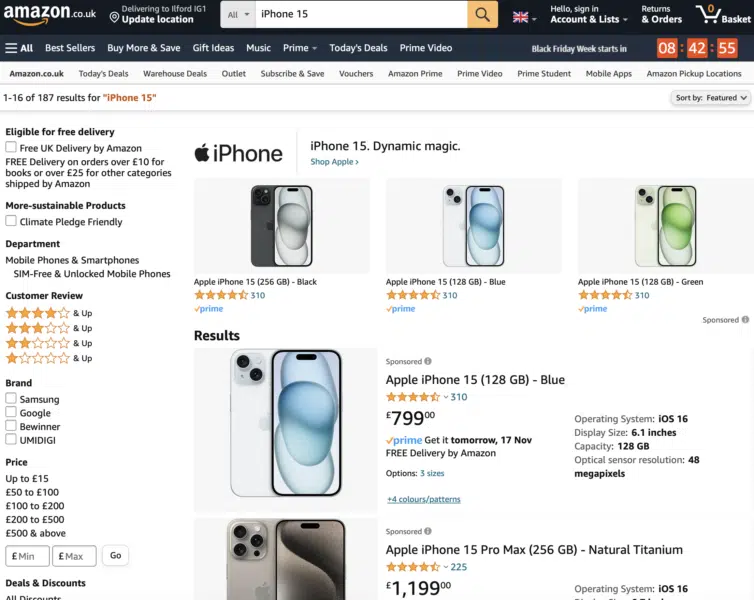
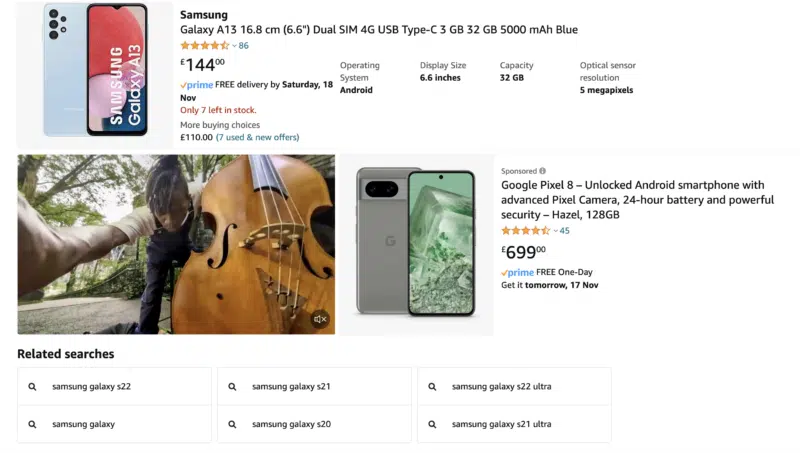
What this means. When you search for Apple products on Amazon, you’ll notice that competing products are still listed, but Amazon restricts the ads placed above, below, and between the results. For instance, a search for an iPhone 15 displays only one Apple product banner at the top of the page and another ad banner at the very bottom:

Screenshot 2023 11 16 At 15.17.05 754x600
Screenshot 2023 11 16 At 15.20.58 800x520

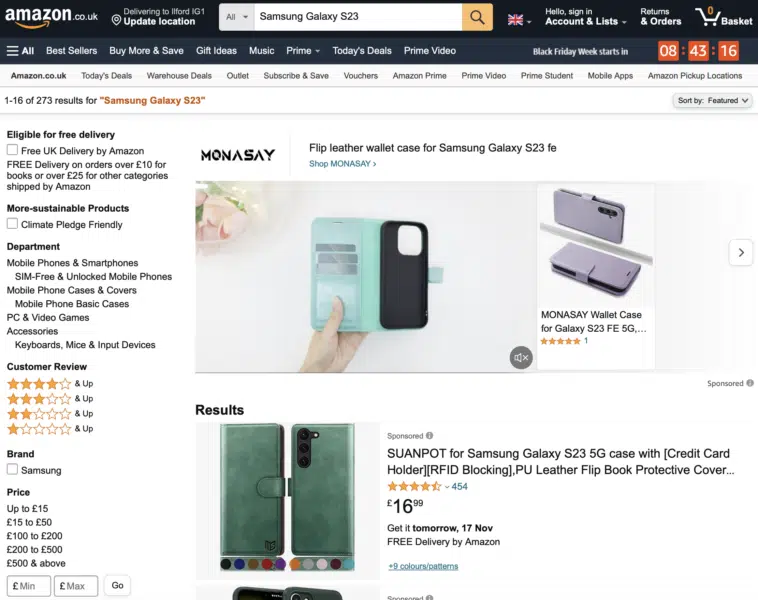
However, searches for competing devices, such as the Samsung Galaxy S23, show ads for various products and services throughout the results page.

Screenshot 2023 11 16 At 15.16.44 758x600
Screenshot 2023 11 16 At 15.21.09 800x453

Special treatment? Juozas Kaziukenas, CEO of e-commerce research firm Marketplace Pulse, told Insider:

  • “It’s clear Apple made a deal with Amazon that is not available to other brands.”
  • “I can’t recall any other brand with the same setup.”

Financial implications. It’s not yet been confirmed whether Apple paid Amazon to block ads by rivals from appearing on its product pages. However, in emails shared by the House Judiciary Committee that date back to 2018, Amazon’s then-retail CEO Jeff Wilke suggested he had initially refused Apple’s request to block rival ads, writing:

  • “We cannot alter our organic search algorithm to return only Apple products in the search results when an Apple team is searched.”

He then appeared to offer an alternative solution for Apple:

  • “Apple would need to purchase these placements or compensate Amazon for the lost ad revenue.”

Amazon’s advertising unit, a significant driver of growth and profit earning over $38 billion last year, has been expanding ads on its platform, as per an FTC lawsuit. Given this context, Amazon’s deal with Apple to limit rival ads on its product pages is particularly noteworthy.

Deep dive. Read our report on Amazon’s ‘secret ad pricing scheme’ for more information.


Related stories

New on Search Engine Land

@media screen and (min-width: 800px) { #div-gpt-ad-3191538-7 { display: flex !important; justify-content: center !important; align-items: center !important; min-width:770px; min-height:260px; } } @media screen and (min-width: 1279px) { #div-gpt-ad-3191538-7 { display: flex !important; justify-content: center !important; align-items: center !important; min-width:800px!important; min-height:440px!important; } }

About the author

Nicola Agius

Nicola Agius is Paid Media Editor of Search Engine Land after joining in 2023. She covers paid search, paid social, retail media and more. Prior to this, she was SEO Director at Jungle Creations (2020-2023), overseeing the company’s editorial strategy for multiple websites. She has over 15 years of experience in journalism and has previously worked at OK! Magazine (2010-2014), Mail Online (2014-2015), Mirror (2015-2017), Digital Spy (2017-2018) and The Sun (2018-2020). She also previously teamed up with SEO agency Blue Array to co-author Amazon bestselling book ‘Mastering In-House SEO’.

https://searchengineland.com/apple-amazon-block-competitor-ads-product-pages-434747


Apple’s China ties under Congressional scrutiny after Jon Stewart cancellation

Apple’s China ties under Congressional scrutiny after Jon Stewart cancellation

Lawmakers apparently balked after learning that Apple canceled the critically acclaimed weekly streaming talk show, The Problem with Jon Stewart, last month—reportedly over issues with the show’s planned programming related to both China and artificial intelligence.

In a letter to Apple CEO Tim Cook, the Republican and Democratic leaders of the House of Representatives’ Select Committee on Competition with the Chinese Communist Party urged Apple to explain its decision to end production of The Problem with Jon Stewart and “accelerate its efforts to reduce its dependence on” China. These steps, lawmakers wrote, are critical to help address “broader concerns about indirect Chinese Communist Party (CCP) influence over the creative expression of American artists and companies on CCP-related topics.”

While lawmakers acknowledged that Apple has “the right to determine what content is appropriate for their streaming service,” they argued that “the coercive tactics of a foreign power should not be directly or indirectly influencing these determinations.”

According to lawmakers, “previous incidents involving production companies other than Apple” have shown that “fear” of the CCP’s retaliation—as well as the “lure” of China’s market and financing opportunities—”have significantly chilled the creation of American content that could be perceived as critical of the CCP.”

On top of requesting that Apple provide a briefing on its decision to cancel Stewart’s show by December 15, they also want Apple to explain matters regarding its dependency on China. Lawmakers wrote that Cook’s “recent trip to Beijing” makes it appear as if “maintaining a positive relationship with the CCP may be a priority given ongoing supply chain and financial dependencies.”

“We support the ability of artists, writers, studios, and streaming services alike to create content without fear of potential CCP retaliation and punishment,” lawmakers wrote. “We similarly encourage American technology companies to diversify their supply chains, reduce their potential susceptibility to CCP pressure, and decrease their overall dependence on” China.

According to Reuters, the letter was released on Wednesday before a dinner where “top US business leaders” will be dining with Chinese President Xi Jinping in San Francisco, as Xi “seeks to court American companies and counter his country’s recent struggles to entice foreign investment.” That dinner follows a summit between President Joe Biden and Xi, where the leaders reportedly hoped to ease tensions and restore military communications between the two countries.

“I think it’s paramount that you and I understand each other clearly, leader to leader, with no misconceptions or miscommunication,” Biden told Xi as their talks kicked off, CNN reported.

“Planet Earth is big enough for the two countries to succeed,” Xi told Biden.

One of Biden’s goals with the summit is to ensure that competition between the US and China does not boil over into conflict. That is the primary focus of the House’s Select Committee on Competition with the Chinese Communist Party, and in the lawmakers’ letter to Cook, they said that “potential decisions to not renew shows, or not produce a film or show in the first place, due to anticipated CCP objections to particular content deny US viewers and global audiences access to important information” about China that “reflects a broader variety of perspectives” and “speaks to an important geopolitical challenge of our time.”

As China seemingly seeks to deepen financial ties with US companies, the committee’s letter pointed out that Apple’s reliance on China as a market and manufacturing hub may be a prime example of what could be an increasingly common situation that “may raise concerns over the impacts of the CCP’s coercive tactics.” Lawmakers noted that if a major star like Jon Stewart can be censored, there can be little hope for “an aspiring comedian who wants to use satire to make broader points about human rights and authoritarianism.”

Last month, a person familiar with the matter told The New York Times that Stewart told his staff that the cancellation came after “potential show topics related to China and artificial intelligence were causing concern among Apple executives.” Sources told The Hollywood Reporter that Stewart felt “hamstrung” by Apple’s requests to be “aligned” regarding topics on the show.

Lawmakers confirmed that they would also reach out to Stewart to hear his side of the story.

To ensure that no Americans will be censored due to the tech giant’s ties to China, lawmakers now expect Apple to “publicly commit that content that could be perceived as critical of the CCP or [China] is welcome on Apple TV+ and other Apple services.”

Apple did not immediately respond to Ars’ request to comment.

https://arstechnica.com/?p=1984300


Google’s 36% search revenue share with Apple is 3x what Android OEMs get

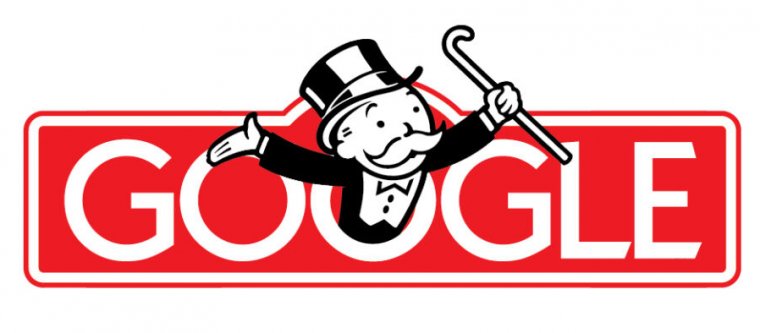
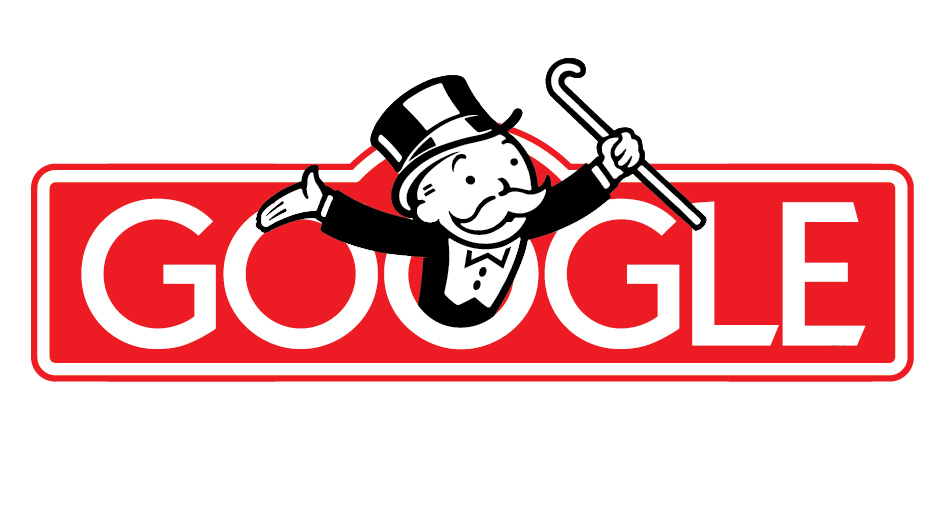
The logo for the board game Monopoly, complete with Uncle Pennybags, has been transformed to say Google.
Enlarge / Let’s see, you landed on my “Google Ads” space, and with three houses… that will be $1,400.
Ron Amadeo / Hasbro

The biggest slip-up of the Department of Justice’s Google search monopoly trial was the reveal that Google pays Apple 36 percent of Safari search revenue to remain the default search engine. Google stated it didn’t want that number getting out because it “would unreasonably undermine Google’s competitive standing in relation to both competitors and other counterparties.” Google attorney John Schmidtlein apparently “visibly cringed” when the number was revealed by its witness (it was later confirmed by Google CEO Sundar Pichai) because Google knows it now has a mess on its hands.

Many of those “competitors and other counterparties” Google is worried about are Android manufacturers. They all get paid some amount of search revenue share, but seeing the huge amount Apple gets paid has probably ruffled some feathers.

How much more does Google pay for an Apple user than an Android one? A lot. It was recently revealed in the Epic v. Google trial (Google has a few monopoly lawsuits going on) that the highest tier of search revenue share for cooperative Android OEMs is only 12 percent, a third of what Google pays Apple. In terms of total cash amount, it’s reasonable to assume Apple gets more total money than many smaller companies but to see the direct breakdown that each Apple user is worth three times more than an Android user is a new insight.

A big part of the differing payment rates probably has to do with how threatened Google feels by each company. Apple has already proven that it has the power to dump an established Google service and go off on its own. A prime example is Apple Maps, which replaced Google Maps as a default iOS app and, according to testimony from Google VP of Finance, Michael Roszak, tanked Google Maps mobile traffic by 60 percent when it launched. Roszak said that Google uses the Apple Maps launch as “a datapoint” when estimating how an Apple search switch would go. No one on the Android side has this kind of power. There’s also the consideration that Apple users are generally more affluent than Android users, making them more desirable ad clickers.

On Android, Google has differing tiers of payments depending on how Google-y your phone is. As revealed in documents from Epic v. Google, Android’s “Premier Device Program” offers 12 percent search revenue to devices with “Google exclusivity and defaults for all key functions” and no rival app stores.  The big participants in this program are/were Motorola, LG, and HMD, which had at least 98 percent of their devices qualify. Other brands like Xiaomi, Sony, Sharp, and BBK (that’s OnePlus, Oppo, and Vivo) were at 70 percent.

Android partners don’t just get search revenue; they also get a cut of Google Play app sales and ads run on their devices. In the case of Motorola and LG, they were getting another 3–6 percent of Play Store spending.

Notably absent from that list is Samsung, which, as the biggest Android OEM, has its own deal with Google. The only insight we have into Samsung’s payment rates is a bulk-sum total, like that Samsung was paid $8 billion over four years to keep Google Play as the default store. We’re unsure how that was calculated, but Apple gets an $18 billion-a-year lump sum payment plus the 36 percent revenue share. Samsung has threatened to switch from Google Search to Bing, though whether that was for real or just a negotiating tactic is something only Samsung knows.

Pichai recently justified the huge payment gap by saying that Google has to share Android revenue with carriers, too, but that’s not true in Apple’s case.

Now that the cat is out of the bag, the next round of Android contract negotiations will surely be contentious.

https://arstechnica.com/?p=1984072


Google loses battle to redact confidential info leaked by final witness

Google loses battle to redact confidential info leaked by final witness

On Tuesday, Google ended two and a half weeks of defending its search business against the Department of Justice’s monopoly claims, reportedly with a whimper.

During the DOJ’s cross-examination of Google’s final witness, Kevin Murphy, the economist got “upset” when the DOJ introduced a 2011 email from an ex-Google executive, Chris Barton, which suggested that Google’s default search agreements with wireless carriers, mobile device manufacturers, and browser partners had to be “exclusive,” Big Tech on Trial reported, or else they were worthless.

“Without the exclusivity, we are not getting anything,” Barton’s email said. “Without an exclusive search deal, a large carrier can and will ship alternatives to Google.”

Google had argued that these deals are not exclusive but are reasonable contracts that Google has competed fairly for and repeatedly won by making the best search engine available, Big Tech on Trial reported.

Murphy’s testimony was supposed to shore up this part of Google’s defense, but as Google’s defense wound down, the DOJ appeared intent to remind Judge Amit Mehta that evidence allegedly showed that these default deals were the key to maintaining Google’s alleged illegal monopolies in search and advertising. By the time the DOJ began their line of questioning, Murphy was likely already eager to get out of the hot seat.

Big Tech on Trial reporter Lee Hepner—who also serves as antitrust legal counsel for the nonprofit the American Economic Liberties Project—posted on X (formerly Twitter) to summarize Murphy’s testimony as arguing, “Google’s Search monopoly is good for you, consumer choice is ‘irrational,’ and privacy is bad quality.”

On the day prior, Murphy potentially bolstered the DOJ’s case by accidentally leaking a key figure that both Google and Apple had specifically requested remain confidential—confirming that Apple gets a 36 percent cut of search ad revenue from its Safari deal with Google.

Google seemingly sought to redact this information from Murphy’s trial transcript, but Mehta “ruled against redacting transcripts of inadvertently disclosed information (presumably the 36 percent Google-Apple revenue share figure) finding a lack of competitive harm,” Big Tech on Trial reported. Meanwhile, Google CEO Sundar Pichai, during Google’s other monopoly trial, confirmed on Tuesday that the 36 percent figure that Murphy shared was accurate, Bloomberg reported.

Although it’s still unclear exactly how much money Apple gets from its default deal with Google, it’s obvious that the default placements in Safari are extremely valuable to Google. Experts estimated that with such significant revenue-sharing, the Safari deal is potentially worth tens of billions of dollars to Apple, on top of the $18 billion that Google pays annually just to keep the deal in place.

In the coming days, the DOJ will present its rebuttal to Google’s arguments.

Mehta is expected to rule next year “after both sides summarize their cases in writing and deliver closing arguments,” The New York Times reported. It’s currently hard to tell which way the judge is leaning. Big Tech on Trial reporter Yosef Weitzman wrote that the judge has kept his “cards close to his chest” throughout the trial.

Mehta will have to resolve complex legal questions in the case and parse conflicting expert analyses, Weitzman said, to confidently decide if Google’s business model is helping or harming consumers. While many have reported that the risk of Mehta ruling against Google could be a breakup of Google’s search business that could shake up the way the Internet works for nearly everyone around the world, Weitzman also pointed out that Google would likely appeal an unfavorable verdict, possibly sending the case to the Supreme Court.

The DOJ hopes that Mehta will conclude that Google is paying tens of billions not just to drive traffic to its search engine and boost search ad revenue but also to lock out rivals who can’t possibly compete without winning those default placements.

And Google is hoping that Mehta will land on its side, perhaps most crucially agreeing that Google pays Apple so much for the Safari deal because, as Pichai testified earlier in this monopoly trial, Google users depend on its search engine to get the best results, and Google feared that Apple may have degraded their experience in Safari without the deal, The Times reported. Rather than strong-arming Apple into an allegedly exclusive deal just to stop rivals from competing, Pichai testified that for Google, “there was a lot of uncertainty about what would happen if the deal didn’t exist.”

https://arstechnica.com/?p=1983877


Google witness accidentally blurts out that Apple gets 36% cut of Safari deal

Google witness accidentally blurts out that Apple gets 36% cut of Safari deal

Google’s default search deal with Apple is worth so much to the search giant that Google pays 36 percent of its search advertising revenue from Safari to keep its search engine set as the default in Apple’s browser, Bloomberg reported.

Google and Apple objected to making this key detail public from their long-running default search deal. But their closely held secret came out on Monday during testimony from Google’s main economics expert, Kevin Murphy, during the Department of Justice’s monopoly trial examining Google’s search business.

“Probably the biggest slip of the entire trial,” Big Tech on Trial, an account dedicated to providing updates from the Google trial, posted on X (formerly Twitter).

According to Bloomberg Law, Google attorney John Schmidtlein “visibly cringed” when Murphy revealed the confidential information, which Google had initially claimed needed to be kept secret because otherwise it “would unreasonably undermine Google’s competitive standing in relation to both competitors and other counterparties.”

For the DOJ—which has made the Google-Apple deal the center of its case alleging that Google maintains an illegal monopoly over search—this detail confirms how valuable default placements on iPhones are to the search leader.

The DOJ has argued that Google pays so much for default search deals to block out competitors, lock search users into its services, and maintain a stronghold over the search industry—a dominant position that could be further entrenched by Google’s advances with AI, Microsoft CEO Satya Nadella testified. In September, an Apple exec testified that the default deal between Google and Apple was seemingly so lucrative that it even stopped Apple from creating its own rival search engine.

It’s still unclear exactly how much money that portion of Google’s search advertising revenue that comes from Safari amounts to, but several estimates have been floated. Statista reported that Google’s advertising revenue was $224 billion in 2022, and based on that, Engadget estimated that Apple likely gets paid in the tens of billions of dollars for Google’s default Safari placements.

Previously, sources told The New York Times that Google paid Apple approximately $18 billion in 2021 for the deal, but the exact amount of revenue sharing remained unknown until Monday. The DOJ’s trial also recently revealed that Google paid $26 billion in total for default contracts, which are ostensibly responsible for driving up its search advertising revenue that is right now rapidly climbing. Google’s global ad revenue will likely reach nearly $340 billion by 2027, Statista reported, driven largely by Google’s search engine traffic, which is currently responsible for “roughly 38 percent” of its global ad revenue.

In total, across all those default deals, Digital Content Next CEO Jason Kint estimated in a post on X that it’s possible that Google derives “at least $90 billion of its current annual revenue.”

Last month, Google CEO Sundar Pichai testified that default deals “can make a difference” and can be “very valuable” if “done correctly” but maintained Google’s chief defense that partners like Apple enter these deals with Google because Google has a superior search engine.

If the DOJ proves that these default deals ensure that Google maintains an illegal monopoly in general search markets, Google could be ordered to break up its search business, shifting not just Google’s bottom line but also its partners, like Apple.

While the trial resumes for another week, Google continues profiting off the deals. From 2022 to 2023, Google’s ad revenue increased by $5 billion, Search Engine Land reported, and seemingly as Nadella predicted, Pichai attributed these gains to AI-driven innovations across Google products, including search.

“We’re continuing to focus on making AI more helpful for everyone; there’s exciting progress and lots more to come,” Pichai said in a statement reported by Search Engine Land.

Judge Amit Mehta, presiding over the antitrust trial, has said that the Google-Apple default deal is the “heart” of the DOJ’s case against Google. With each new detail revealed about how much Google is willing to pay Apple to maintain their deal, the DOJ hopes to convince Mehta that the deal gives Google an unfair advantage over competitors. This week’s slip-up from one of Google’s witnesses threatens to disrupt the narrative that Google is trying to build as it winds down its defense of that deal and others.

Mehta is not expected to issue a ruling in the case until 2024.

https://arstechnica.com/?p=1983539


Apple discriminated against US citizens in hiring, DOJ says

An Apple corporate logo hangs above the front door of a company store
Enlarge / Apple Store at Garden State Plaza mall on November 4, 2023, in Paramus, New Jersey.
Getty Images | Gary Hershorn

Apple illegally discriminated against US citizens and other US residents in its hiring and recruitment practices for certain types of positions that went to foreign workers, the US Department of Justice said yesterday. Apple agreed to pay up to $25 million in back pay and civil penalties to settle the DOJ allegations.

Apple discriminated “against US citizens and certain non-US citizens whose permission to live in and work in the United States does not expire,” the agency said. The $25 million payment was called the largest ever collected by the Justice Department under the anti-discrimination provision of the Immigration and Nationality Act (INA).

Apple is required to pay $6.75 million in civil penalties and create an $18.25 million fund to provide back pay to those harmed by its hiring practices. Apple did not admit guilt in the settlement. But the company acknowledged in a statement that it had “unintentionally not been following the DOJ standard,” according to Reuters.

“We have implemented a robust remediation plan to comply with the requirements of various government agencies as we continue to hire American workers and grow in the US,” Apple said. We contacted Apple and will update this article if it provides any further statement.

As Reuters noted, “Foreign labor can often be cheaper than hiring US workers, and immigrants who rely on their employers for green card sponsorship are seen as less likely to leave for a different job.”

DOJ investigation

The DOJ said it began investigating in February 2019 and determined “that Apple violated the INA’s anti-discrimination requirements during Apple’s recruitment for positions falling under the permanent labor certification program (PERM).” The agency said the discrimination began no later than January 1, 2018, and continued until at least December 31, 2019.

Under this program, a “permanent labor certification issued by the Department of Labor (DOL) allows an employer to hire a foreign worker to work permanently in the United States,” the DOL says. But the employer must also obtain a certification “that there are not sufficient US workers able, willing, qualified and available to accept the job opportunity in the area of intended employment and that employment of the foreign worker will not adversely affect the wages and working conditions of similarly employed US workers.”

The DOJ said its investigation “found that Apple engaged in a pattern or practice of citizenship status discrimination in recruitment for positions it hired through PERM, and that the company’s unlawful discrimination prejudiced US citizens, US nationals, lawful permanent residents, and those granted asylum or refugee status. These less effective recruitment practices deterred protected workers from applying to positions that Apple preferred to fill instead with PERM beneficiaries.”

Apple did not advertise PERM positions on its external job website like it does with other positions, the DOJ said. “It also required all PERM position applicants to mail paper applications, even though the company permitted electronic applications for other positions,” the DOJ said.

In some cases, “Apple did not consider certain applications for PERM positions from Apple employees if those applications were submitted electronically, as opposed to paper applications submitted through the mail,” the agency said. “These less effective recruitment procedures nearly always resulted in few or no applications to PERM positions from applicants whose permission to work does not expire.”

Apple changes hiring practices

The settlement requires Apple to make its PERM recruitment practices match its standard recruitment practices more closely. Apple will have to “conduct more expansive recruitment for all PERM positions, including posting PERM positions on its external job website, accepting electronic applications, and enabling applicants to PERM positions to be searchable in its applicant tracking system.”

Apple has already implemented some of the changes and agreed to “train its employees on the INA’s anti-discrimination requirements and be subject to departmental monitoring for the three-year period of the agreement,” the DOJ said.

https://arstechnica.com/?p=1983046


Steve Wozniak suffers minor stroke in Mexico City before scheduled talk

Apple co-founder Steve Wozniak attends the Digital X 2022 event by Deutsche Telekom on September 13, 2022, in Cologne, Germany.
Enlarge / Apple co-founder Steve Wozniak attends the Digital X 2022 event by Deutsche Telekom on September 13, 2022, in Cologne, Germany.
Andreas Rentz/Getty Images

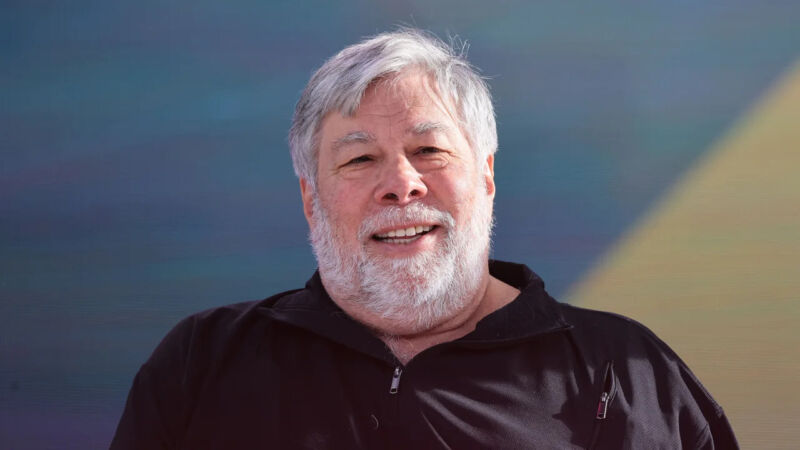
On Wednesday, Apple cofounder Steve Wozniak suffered a minor stroke while attending a conference in Mexico City, reports ABC News and The New York Times.

The 73-year-old was scheduled to speak at the World Business Forum event on the subject of the “Digital Future.” Wednesday morning while typing at his computer, he suffered a dizzy spell and reported difficulty walking. His wife convinced him to go to the hospital, where he received an MRI. The doctors determined that he suffered a “small capillary leak,” according to the NYT.

Wozniak flew home to Los Gatos, California, on Thursday, and he told The Times, “I’m back home and feeling good.” He related discomfort in the hospital with having to stay on a gurney for 24 hours without being allowed to roll on his side.

In 1976, Steve Wozniak cofounded Apple Computer with Steve Jobs and Ronald Wayne in Los Altos, California. As an electronics engineer, Wozniak designed two pioneering machines, the Apple 1 (1976) and the Apple II (1977), that set a template many personal computers would follow. In particular, the Apple II’s success made Apple a household name in the late 1970s and set the course for the company’s continued success.

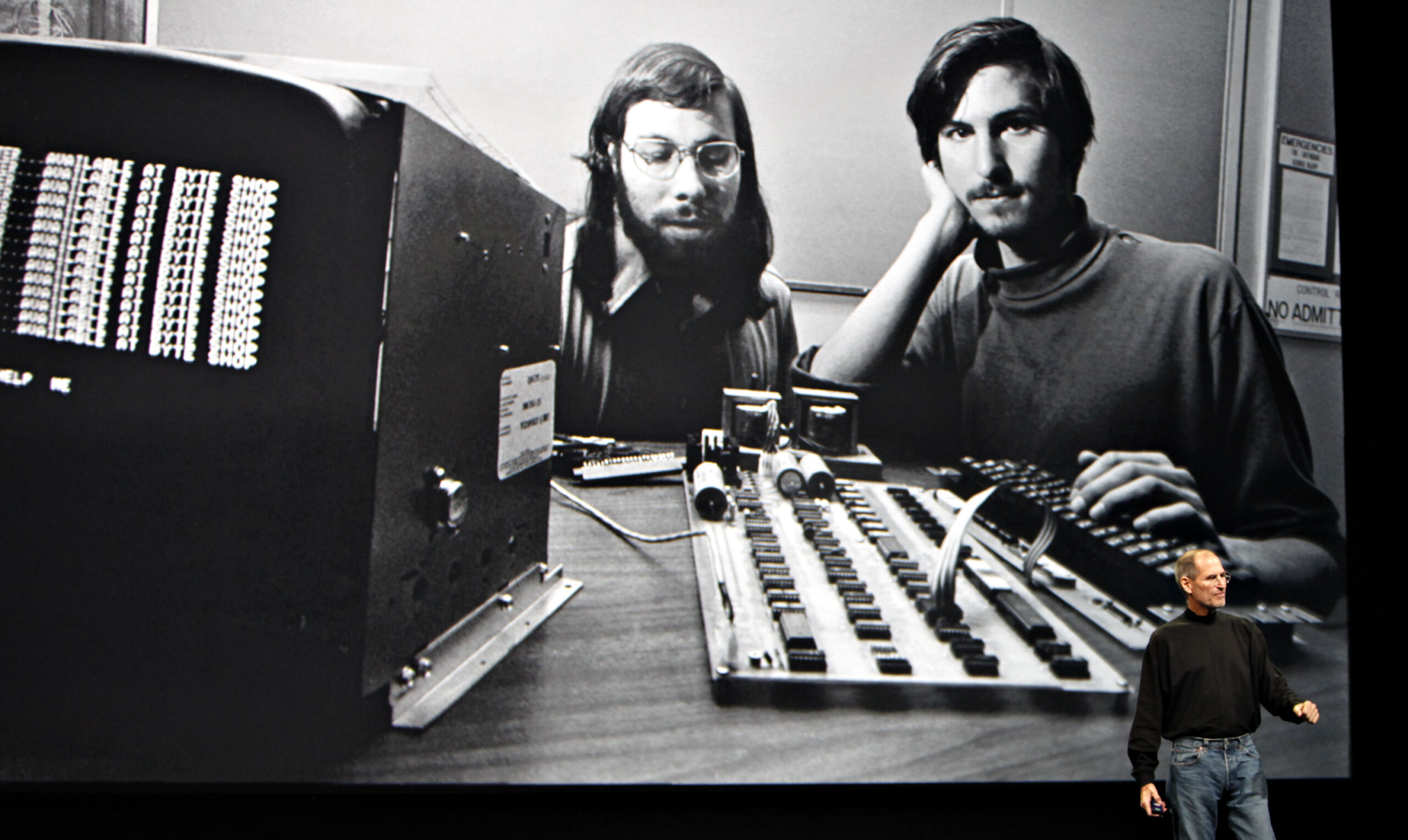
Steve Jobs speaks in front of a file photograph of himself and Apple cofounder Steve Wozniak during the launch of the iPad on Wednesday, Jan. 27, 2010.
Enlarge / Steve Jobs speaks in front of a file photograph of himself and Apple cofounder Steve Wozniak during the launch of the iPad on Wednesday, Jan. 27, 2010.
Tony Avelar/Getty Images

Wozniak officially left full-time daily employment at Apple in 1985, although he was already less involved with the company’s day-to-day operations before then. Despite leaving his active role in the company, Wozniak never actually severed his official employment status with Apple and remains an employee on paper, receiving a stipend from the company. Steve Jobs died in 2011, and Wozniak remains a goodwill ambassador for the company he cofounded.

These days, Wozniak travels the world and gives talks about technology. In October, he shared a hectic schedule that featured 18 speaking locations around the world, including stops in Warsaw, Rio de Janeiro, and Ecuador. The New York Times reports that this recent health scare means he will have to cancel speaking engagements in Dubai, Colombia, and Azerbaijan. “That’s life for me in the busy times,” Wozniak told the outlet.

https://arstechnica.com/?p=1982895


Simple circuitry, surprising engineering: Inside counterfeit Apple gadgets

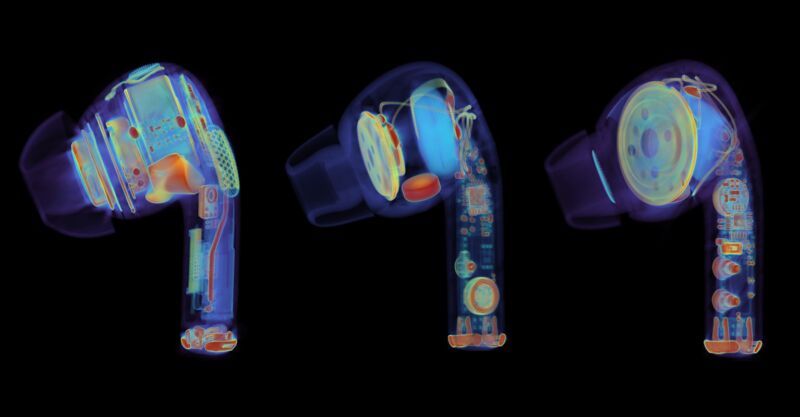
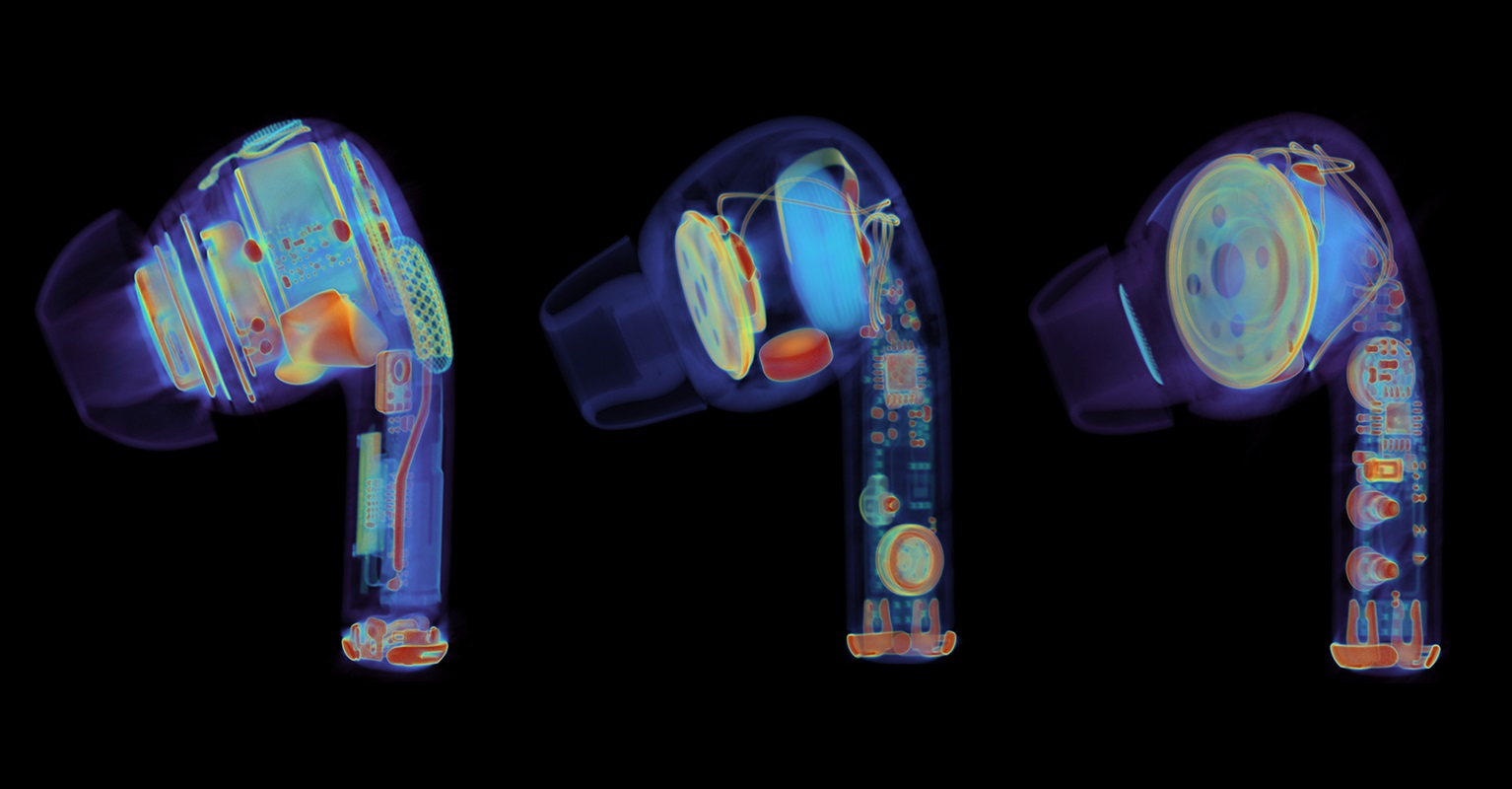
Lumafield's blog shared this image showing CT scans of three earbuds. The left is a real AirPods Pro (2nd Gen). The wire-riddled two on the right are fakes.
Enlarge / Lumafield’s blog shared this image showing CT scans of three earbuds. The left is a real AirPods Pro (2nd Gen). The wire-riddled two on the right are fakes.

Whether they’re products pretending to be made by a brand or devices claiming to be something they’re not, (like a microSD card posing as an SSD), fraudulent electronics pose a threat to unsuspecting shoppers’ wallets and, at times, their safety. With their popularity and high prices, scammers often target Apple products. But what’s actually inside those faux Apple devices?

To find out, Lumafield busted out its $75,000 CT scanner to illustrate what people get when they end up with counterfeit MacBook chargers or knockoff AirPods Pro.

Lumafield makes industrial CT scanners and software. Lately, it has been using its Neptune scanner to examine electronics, like Apple’s $130 Thunderbolt 4 cable. This week, Lumafield provided CT scans (which you can play with via Lumafield’s online Voyager software) of the AirPods Pro 2nd Generation (here), two counterfeits (here and here), as well as a look at Apple’s 85 W MagSafe 2 Power Adapter (here) and a fake (here).

MagUnsafe charger

Let’s start with the charger since bad chargers can be dangerous. For example, a late 2016 report from UL Solutions found a failure rate of over 99 percent when examining 400 counterfeit Apple adapters, with 397 posing “fire and shock hazards” [PDF].

Lumafield’s CT scanned a pretend Apple charger purchased from a “sketchy” eBay seller (eBay’s policies ban counterfeit products), Lumafield head of marketing Jon Bruner told Adam Savage’s Tested YouTube channel in a Lumafield-sponsored video posted Tuesday. Bruner told Ars Technica via email that the charger was around $30. It showed noticeable differences from the true Apple 85 W MagSafe 2 Power Adapter, which is currently $79 on Apple’s website.

In the gallery above, you can see an image showing how similar the two chargers look on the outside. But as detailed in the YouTube video, the one bought off eBay only has two inductors, as well as a large electrolytic capacitor, but a lot less circuitry overall.

A CT scan of Apple’s charger showed “sophisticated” power management with various components for power conditioning and conversion,” a Lumafield blog post on Tuesday said. The dupe’s internals, however, are “far less complex,” lacking the “filtering features that ensure safety and longevity in Apple’s charger.”

“This simplified internal structure not only raises concerns about the counterfeit’s performance but also its ability to safely manage the power supplied to your devices,” Lumafield’s blog said.

Heat management between the two chargers, while not tested, likely differs, too. Apple’s thin heatsink is more advanced than the one in the copycat and enwraps most of the charger’s transformer.

CT scans emphasize the broad coverage of the heatsink in the Apple charger, which can help prevent hot spots from forming. The heatsink uses more metal than the fake for, likely, better heat dissipation. Also, the Apple charger’s use of converters, which the imitator forgoes, probably improves efficiency and enables the charger to generate less heat.

While there’s an impressive amount of engineering in the spurious charger for a scam product, there’s a chance the charger won’t put out the desired voltages. But assuming it did or that the connected computer could adjust voltages, the fraudulent charger’s likelihood of getting hotter might not pose an immediate threat. But in the long term, or if covered up, this could be dangerous.

“Over time, if you get frayed wires and it builds up a little more extra resistance, that’ll increase the heat and all of these things … can build up and produce a dangerous situation,” Zach Radding, an electronics engineer at Build Cool Stuff, said on Adam Savage’s Tested video.

Finally, the knock-off charger has a fake grounded pin that’s not actually connected to anything inside the charger and wouldn’t be compliant in the UK:

Something should be connected where the hole (north of the pointer) is.
Enlarge / Something should be connected where the hole (north of the pointer) is.

https://arstechnica.com/?p=1982516