How Brands Can Build Creative Infrastructure for the AI Era
/* ========================= Base container ========================= */ .article-body-promo-ad { border: 1px dotted #f53c60; background-color: rgba(245, 60, 96, 0.05); border-radius: 8px; margin-top: 2em; position: relative; padding: 30px 16px 16px 60px; } @media (min-width: 768px){ .article-body-promo-ad{ margin: 1em max(13%, 26px); } } .ad-bookmark-icon::before { content: ""; background-image: url("https://static-www.adweek.com/wp-content/uploads/2026/02/bookmark.svg"); background-size: contain; background-repeat: no-repeat; position: absolute; left: 15px; top: 50%; transform: translateY(-50%); width: 40px; height: 40px; } /* Floating label */ .article-body-promo-ad::after { content: "Register Now"; position: absolute; top: -14px; background: #fdebed; color: #f53c60; font-size: 13px; font-weight: 600; padding: 4px 12px; border-radius: 999px; letter-spacing: 0.04em; white-space: nowrap; } [data-bs-theme="dark"] .article-body-promo-ad::before { filter: invert(1) brightness(1); } /* Typography */ .article-body-promo-ad p { font-size: 18px; line-height: 28px; letter-spacing: 0.03em; margin: 0; } /* Links */ .article-body-promo-ad a { font-weight: 700; text-decoration: none; color: inherit; } .article-body-promo-ad a:hover { color: #F6486A; } /* Dark mode */ [data-bs-theme="dark"] .article-body-promo-ad { background-color: rgba(245, 60, 96, 0.12); } [data-bs-theme="dark"] .article-body-promo-ad::after { background: #2a0f14; } @media (max-width: 576px) { .article-body-promo-ad::after { transform: translateX(-50%); top: -10%; left: 50%; font-size: 12px; } } @media (max-width: 576px) { .article-body-promo-ad { display: flex; align-items: center; gap: 10px; padding: 14px; margin: 2em 0; } } @media (max-width: 576px) { .article-body-promo-ad::before { display: none; } } .article-body-promo-ad::before { width: 28px; height: 28px; background-size: 28px 28px; } }

The future of brands gets decided here. Join the industry’s top marketers at Brandweek for the ideas, insights, and connections shaping what’s next. Get your ticket.

This post was created in partnership with Empathy Lab 

The campaign had a good run. One big idea launched everywhere, studied, repeated. Now? Not so much. 

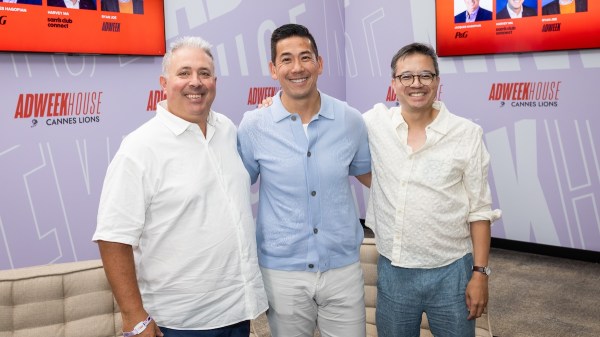
During an ADWEEK House Cannes Lions panel co-hosted with Empathy Lab, industry leaders explored what replaces it: a connected creative infrastructure where engineers, creative talent, data, and AI production work together. 

The infrastructure shift 

When AI production tools reach everyone, the real competitive question comes into focus. What keeps one brand from sounding exactly like the next? 

The answer is not necessarily more tech. 

“I think the creative teams are the ones that now matter more than anything,” said Roland Butler, head of product, content solutions at Zalando. 

“What we are now building is a whole creative system around those teams, maintaining their agency and their creative freedom, and allowing them to respond faster and better,” he added. Designers and engineers now work alongside one another on prompts, quality controls, editorial guidelines, and cultural trend signals.

Ben Hall, VP at Empathy Lab, sees this moment as a clarifying one. “The fundamentals are more important than ever,” he noted. “The idea, the insight, the cultural relevance has become massively important. Teams are now surrounding themselves around this again.” 

None of that completely went away. What shifted is the strategic foundation. “You’ve got to have systems thinking, you’ve got to have people who really understand how this idea can translate to composable systems across and outside of the Internet,” Hall continued. 

Keeping speed from turning generic 

During the Met Gala this past spring, the Zalando team used tooling to link trend signals, product relevance, visuals, and an editorial review, then published a campaign within 24 hours. 

“The speed to react, I think, is something that you should track, and then the speed to insight,” Butler said. “If you’re just counting the volume of AI output, you’re adding to the problem of a world of blandness.”

Hall added that speed “can actually be an antidote to blandness, because you can read signals from culture and speed that roll in. You can create content really quickly, but it actually has meaning.”

The upstream role 

Hall’s framework for where people fit is clear: “You need the empathy upstream, and the machines power the creative downstream.”

Hall and Butler agreed that strategic thinking has to be baked into the infrastructure, not applied at the end. Brands need the people responsible for taste, emotion, and cultural judgment to be involved in designing the operating models. AI can help teams move at the speed of culture, but creatives bring the empathy and storytelling instinct that make a brand memorable. 

“Keep your teams curious, and focus on systems rather than projects,” Butler concluded.

https://www.adweek.com/creativity/how-brands-can-build-creative-infrastructure-for-the-ai-era/


When AI Becomes the Gatekeeper of Brand Visibility

/* ========================= Base container ========================= */ .article-body-promo-ad { border: 1px dotted #f53c60; background-color: rgba(245, 60, 96, 0.05); border-radius: 8px; margin-top: 2em; position: relative; padding: 30px 16px 16px 60px; } @media (min-width: 768px){ .article-body-promo-ad{ margin: 1em max(13%, 26px); } } .ad-bookmark-icon::before { content: ""; background-image: url("https://static-www.adweek.com/wp-content/uploads/2026/02/bookmark.svg"); background-size: contain; background-repeat: no-repeat; position: absolute; left: 15px; top: 50%; transform: translateY(-50%); width: 40px; height: 40px; } /* Floating label */ .article-body-promo-ad::after { content: "Register Now"; position: absolute; top: -14px; background: #fdebed; color: #f53c60; font-size: 13px; font-weight: 600; padding: 4px 12px; border-radius: 999px; letter-spacing: 0.04em; white-space: nowrap; } [data-bs-theme="dark"] .article-body-promo-ad::before { filter: invert(1) brightness(1); } /* Typography */ .article-body-promo-ad p { font-size: 18px; line-height: 28px; letter-spacing: 0.03em; margin: 0; } /* Links */ .article-body-promo-ad a { font-weight: 700; text-decoration: none; color: inherit; } .article-body-promo-ad a:hover { color: #F6486A; } /* Dark mode */ [data-bs-theme="dark"] .article-body-promo-ad { background-color: rgba(245, 60, 96, 0.12); } [data-bs-theme="dark"] .article-body-promo-ad::after { background: #2a0f14; } @media (max-width: 576px) { .article-body-promo-ad::after { transform: translateX(-50%); top: -10%; left: 50%; font-size: 12px; } } @media (max-width: 576px) { .article-body-promo-ad { display: flex; align-items: center; gap: 10px; padding: 14px; margin: 2em 0; } } @media (max-width: 576px) { .article-body-promo-ad::before { display: none; } } .article-body-promo-ad::before { width: 28px; height: 28px; background-size: 28px 28px; } }

The future of brands gets decided here. Join the industry’s top marketers at Brandweek for the ideas, insights, and connections shaping what’s next. Get your ticket.

This post was created in partnership with Adobe 

Brand discovery has always happened in places companies don’t fully control. What’s different now is that the intermediary doesn’t just surface options. It makes a judgment call. 

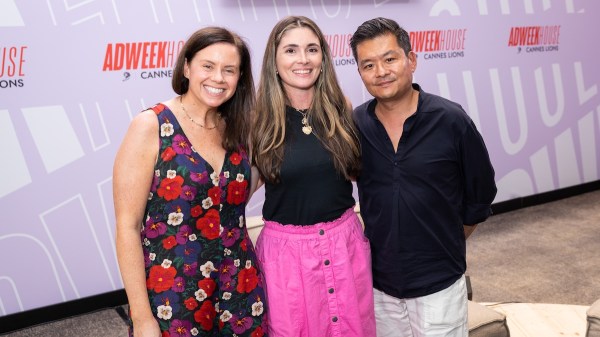
During an ADWEEK House Cannes Lions sunset series panel co-hosted with Adobe, marketing leaders explored how to earn credibility and trust when consumers first encounter brands through AI before reaching an owned channel. 

Brand discovery becomes conversational 

Brand voice has long lived in campaigns and creative. For Rachel Thornton, CMO of enterprise at Adobe, that’s the part that’s changing. Now it has to come through in an AI summary.

“Your brand matters now more than ever,” Thornton said. “You want to think through your brand visibility strategy and how you show up in places like ChatGPT, Claude, etc.” 

This visibility question is tied to how consumers encounter your brand. They have conversations with AI models and often learn about your brand in those conversations. “You really have to think, ‘What’s my conversational brand?’” Thornton added.

Linda Ha, deputy CMO at IKEA Retail, IKEA, sees the change in how people behave. Fewer consumers are clicking through results to make up their own minds. Many simply read what an AI has already concluded. The way they ask questions has changed, too. 

“Consumers are having conversations, instead of just searching for information,” Ha said. 

Andy Kauffman, chief commercial officer for the U.S. and Canada at Marriott International, resisted the temptation to treat AI as a new game. “I think about AI as just another channel with its set of tactics,” he said. 

The goal, in his view, hasn’t changed: understand what the traveler wants and deliver an experience worth coming back to. Marriott’s Ask Bonvoy beta runs on that same logic but uses a different interface. What used to be a “forms, filters, and fields experience” is giving way to intent-led, conversational planning.

Consistency still creates trust 

As discovery spreads across AI agents, reviews, creator communities, and more, brands earn credibility through consistency. 

Selina Sykes, VP of marketing transformation and social-first, beauty and wellbeing, at Unilever, said AI systems look for reliable patterns across the places where brands appear. 

“If the algorithm goes out there and you say something different on Walmart than a creator says on Reddit, the AI is going to go, ‘We don’t know if we believe this product benefit. We’re not going to recommend it,’” she noted. 

When language, tone, claims, or experience feel off across channels, the relationship weakens. Trust softens and eventually breaks. 

Sykes pointed to Vaseline as proof that the principle holds over time. The brand is winning Cannes Lions this year with a campaign built around consumer-discovered hacks for a product more than 150 years old. Relevance endures when a company keeps listening to what people actually do with its products, not just what the brand wants to tell them. 

Staying attuned to people on the outside requires investing in the people on the inside. Sykes described the challenge as “the poetry and the plumbing.” Creative instinct alongside technical rigor. 

Ha echoed that people-first view. “AI has opened up so much opportunity for us. We need to constantly invest in continuous learning and really double down on our creativity and craft,” she said.

Being found in an AI era is only the opening move. Successful brands will be clear and consistent enough for machines to surface, trustworthy enough for people to believe, and meaningful enough for customers to choose.

https://www.adweek.com/brand-marketing/when-ai-becomes-the-gatekeeper-of-brand-visibility/


The Future of Retail Marketing Is First-Party Data

/* ========================= Base container ========================= */ .article-body-promo-ad { border: 1px dotted #f53c60; background-color: rgba(245, 60, 96, 0.05); border-radius: 8px; margin-top: 2em; position: relative; padding: 30px 16px 16px 60px; } @media (min-width: 768px){ .article-body-promo-ad{ margin: 1em max(13%, 26px); } } .ad-bookmark-icon::before { content: ""; background-image: url("https://static-www.adweek.com/wp-content/uploads/2026/02/bookmark.svg"); background-size: contain; background-repeat: no-repeat; position: absolute; left: 15px; top: 50%; transform: translateY(-50%); width: 40px; height: 40px; } /* Floating label */ .article-body-promo-ad::after { content: "Register Now"; position: absolute; top: -14px; background: #fdebed; color: #f53c60; font-size: 13px; font-weight: 600; padding: 4px 12px; border-radius: 999px; letter-spacing: 0.04em; white-space: nowrap; } [data-bs-theme="dark"] .article-body-promo-ad::before { filter: invert(1) brightness(1); } /* Typography */ .article-body-promo-ad p { font-size: 18px; line-height: 28px; letter-spacing: 0.03em; margin: 0; } /* Links */ .article-body-promo-ad a { font-weight: 700; text-decoration: none; color: inherit; } .article-body-promo-ad a:hover { color: #F6486A; } /* Dark mode */ [data-bs-theme="dark"] .article-body-promo-ad { background-color: rgba(245, 60, 96, 0.12); } [data-bs-theme="dark"] .article-body-promo-ad::after { background: #2a0f14; } @media (max-width: 576px) { .article-body-promo-ad::after { transform: translateX(-50%); top: -10%; left: 50%; font-size: 12px; } } @media (max-width: 576px) { .article-body-promo-ad { display: flex; align-items: center; gap: 10px; padding: 14px; margin: 2em 0; } } @media (max-width: 576px) { .article-body-promo-ad::before { display: none; } } .article-body-promo-ad::before { width: 28px; height: 28px; background-size: 28px 28px; } }

The future of brands gets decided here. Join the industry’s top marketers at Brandweek for the ideas, insights, and connections shaping what’s next. Get your ticket.

This post was created in partnership with Sam’s Club

Retail media that looks beyond ROAS and leverages customer insights can unlock long-term value and customer loyalty. 

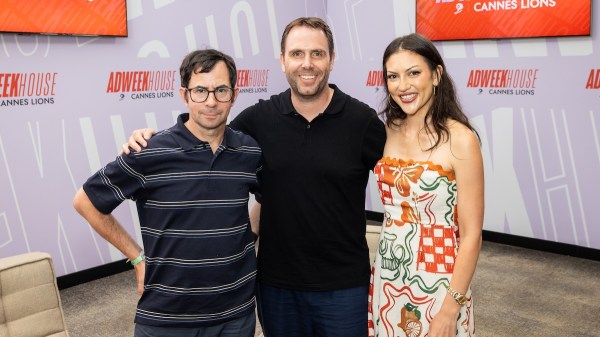
During an ADWEEK House Cannes Lions panel co-hosted with Sam’s Club, Ryan Joe, editor-in-chief of ADWEEK, sat down with industry leaders to discuss how data and predictive modeling are helping brands build relationships that endure long after checkout.

How a membership model can transform brand-building

Being a warehouse club has data advantages—namely, that customers have to scan a membership ID every time they shop, said Harvey Ma, VP and general manager of Sam’s Club Connect at Sam’s Club. “It’s not just a transaction; it’s the start of a relationship.” 

Being able to track behavior over time helps Sam’s Club and its partners like P&G create better customer experiences and capitalize on what retail media does best, which is performance, he added.

Jacques Hagopian, SVP of North America brand operations at P&G, noted that the convergence of communication and commerce is one of the major shifts that the industry is experiencing right now, and it’s creating a golden opportunity for brand marketers. 

“We have retailers that are becoming media companies, and media companies that are becoming retailers,” Hagopian said. “Every point of reach is now a point of sale. How exciting is that?”

The Sam’s Club ecosystem, in particular, provides a rich environment for retail media because its members pay to shop in that model, added Hagopian. “That allows us to engage those members with experiences in different aspects of content to take a moment of inspiration and turn it into a moment where they put things in a cart,” he said.

Hagopian then shared a use case of how Sam’s Club’s first-party data is helping P&G tap into consumer behavior to drive long-term business growth. For its Cascade Platinum Plus dishwasher detergent product, P&G wanted to reach the warehouse club members who hadn’t used it before.  Specifically, P&G aimed to attract consumers with related interests who might be more likely to love the product, such as cooking enthusiasts. The brand identified 800,000 households to target, and the experiment resulted in a 2X increase in marketing effectiveness. 

Hagopian called it “a great example where the consumer behavior, a consumer insight, a product that meets that need, combined with the member data, created a perfect environment for that engagement.” 

Ma noted that the warehouse environment is also ideal for unique consumer activations that can convert to sales, such as sampling, live demos, and parking lot events. “Retail media is so much more than just the ads. The ads are just a means to serve and sell products,” he said. “We don’t want to lose that creativity piece, and that human connection is so important.” 

AI is powering transformative change in retail media 

AI’s influence on retail media is in its infancy, but both panelists shared their excitement about the potential it can unlock.

“The power of AI to create personalized experiences changes the game for brand builders,” said Hagopian. “It’s no longer batch-based campaigns that you run one at a time. It really is a continuous flow of communication, content, ideas, sensing, listening, responding, adjusting, and optimizing in real time based on the signals that are available.” 

Ma shared his hope that retail marketers will also use AI for more than just increasing conversion. “There have to be other ways that scale and automation through agentic can help us create better member experiences, because after all, we exist to serve customers and members.”

https://www.adweek.com/commerce/the-future-of-retail-marketing-is-first-party-data/


Rethinking Audience Strategy for an Unpredictable Consumer

/* ========================= Base container ========================= */ .article-body-promo-ad { border: 1px dotted #f53c60; background-color: rgba(245, 60, 96, 0.05); border-radius: 8px; margin-top: 2em; position: relative; padding: 30px 16px 16px 60px; } @media (min-width: 768px){ .article-body-promo-ad{ margin: 1em max(13%, 26px); } } .ad-bookmark-icon::before { content: ""; background-image: url("https://static-www.adweek.com/wp-content/uploads/2026/02/bookmark.svg"); background-size: contain; background-repeat: no-repeat; position: absolute; left: 15px; top: 50%; transform: translateY(-50%); width: 40px; height: 40px; } /* Floating label */ .article-body-promo-ad::after { content: "Register Now"; position: absolute; top: -14px; background: #fdebed; color: #f53c60; font-size: 13px; font-weight: 600; padding: 4px 12px; border-radius: 999px; letter-spacing: 0.04em; white-space: nowrap; } [data-bs-theme="dark"] .article-body-promo-ad::before { filter: invert(1) brightness(1); } /* Typography */ .article-body-promo-ad p { font-size: 18px; line-height: 28px; letter-spacing: 0.03em; margin: 0; } /* Links */ .article-body-promo-ad a { font-weight: 700; text-decoration: none; color: inherit; } .article-body-promo-ad a:hover { color: #F6486A; } /* Dark mode */ [data-bs-theme="dark"] .article-body-promo-ad { background-color: rgba(245, 60, 96, 0.12); } [data-bs-theme="dark"] .article-body-promo-ad::after { background: #2a0f14; } @media (max-width: 576px) { .article-body-promo-ad::after { transform: translateX(-50%); top: -10%; left: 50%; font-size: 12px; } } @media (max-width: 576px) { .article-body-promo-ad { display: flex; align-items: center; gap: 10px; padding: 14px; margin: 2em 0; } } @media (max-width: 576px) { .article-body-promo-ad::before { display: none; } } .article-body-promo-ad::before { width: 28px; height: 28px; background-size: 28px 28px; } }

The future of brands gets decided here. Join the industry’s top marketers at Brandweek for the ideas, insights, and connections shaping what’s next. Get your ticket.

This post was created in partnership with GroundTruth 

Younger consumers are changing retail by blending online viral trends with in-store shopping.

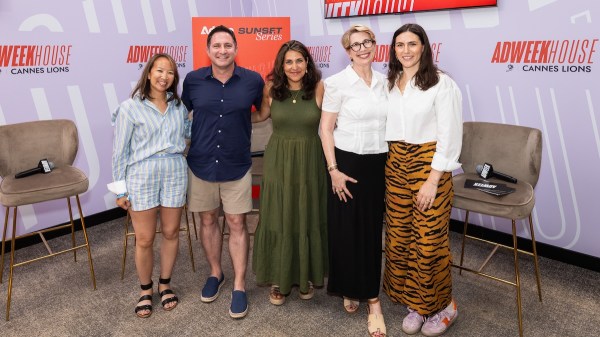
During an ADWEEK House Cannes Lions panel co-hosted with GroundTruth, Will Lee, CEO of ADWEEK, sat down with Rosie O’Meara, CEO of GroundTruth, and Katie Comerford, president of commerce and transformation at Horizon Media, to discuss mapping the future path to purchase.

Managing sudden product virality 

Brands adapt instantly when items go viral. For SharkNinja, which launches hundreds of items every year, the hurdle is securing shelf space in consumers’ kitchens. 

When helping the brand launch a new slushy machine, Horizon Media looked to balance the product’s appeal across audiences. “It was about to be summer, so we went after the frosé sentiment—you know, everybody loves frosé. But what else could you do, knowing Gen Z are not huge drinkers, unlike millennials,” Comeford explained. “So, we went in both routes to make sure we were personalizing, but driving that virality to win that limited counter space.”

To navigate sudden spikes in popularity, marketers use real-time behavioral signals to guide shoppers. Comerford stated the goal is to “ride that virality and get the shopper to where they want to shop and not dictate where they’re going to get the product.” 

This requires leveraging retail inventory feeds to avoid consumer frustration. As Comerford explained, tracking stock “allows us to direct the customer where the product’s available.” 

The return to physical stores

Younger buyers frequently shop in physical spaces despite the growth of digital platforms like TikTok Shop. Malls and beauty retailers see large groups of teens wanting to test products in person. As Comerford explained, “I think there’s a demand to try products in-person and not just trust, ‘I’m gonna buy it online, and I’ll get it shipped to me.’”

GroundTruth tracks real-world movement because, as O’Meara stated, “where you go in the physical world, we have always believed, is who you really are as a consumer.” 

Following its acquisition by ZeroToOne.AI, GroundTruth uses a large predictive behavioral model. O’Meara explained, “With 90% accuracy, we can understand what you are likely to do next, when you’re likely to do it, and also what you’re not likely to do next, which also eliminates waste.” 

Physical retail continues to play an important role for younger shoppers. “We’re seeing that a majority of purchases still happen in store, and that includes Gen Z for sure,” O’Meara noted.

AI reshapes targeting and search strategy 

Alongside a broader shift toward business outcomes, marketers are using AI models to dissect vague household CRM data to “make household level data, user level data, or person level data, so that they can better target, reach, and engage with those customers,” O’Meara explained.

Concurrently, the rise of AI search requires new strategies. Comerford highlighted that “with Reddit being a huge source of that information, there’s limited control over what the answer engines are going to pick up and say about your brand,” shifting media focus toward answer engine optimization.

https://www.adweek.com/commerce/rethinking-audience-strategy-for-an-unpredictable-consumer/


Rethinking Audience Strategy for an Unpredictable Consumer

/* ========================= Base container ========================= */ .article-body-promo-ad { border: 1px dotted #f53c60; background-color: rgba(245, 60, 96, 0.05); border-radius: 8px; margin-top: 2em; position: relative; padding: 30px 16px 16px 60px; } @media (min-width: 768px){ .article-body-promo-ad{ margin: 1em max(13%, 26px); } } .ad-bookmark-icon::before { content: ""; background-image: url("https://static-www.adweek.com/wp-content/uploads/2026/02/bookmark.svg"); background-size: contain; background-repeat: no-repeat; position: absolute; left: 15px; top: 50%; transform: translateY(-50%); width: 40px; height: 40px; } /* Floating label */ .article-body-promo-ad::after { content: "Register Now"; position: absolute; top: -14px; background: #fdebed; color: #f53c60; font-size: 13px; font-weight: 600; padding: 4px 12px; border-radius: 999px; letter-spacing: 0.04em; white-space: nowrap; } [data-bs-theme="dark"] .article-body-promo-ad::before { filter: invert(1) brightness(1); } /* Typography */ .article-body-promo-ad p { font-size: 18px; line-height: 28px; letter-spacing: 0.03em; margin: 0; } /* Links */ .article-body-promo-ad a { font-weight: 700; text-decoration: none; color: inherit; } .article-body-promo-ad a:hover { color: #F6486A; } /* Dark mode */ [data-bs-theme="dark"] .article-body-promo-ad { background-color: rgba(245, 60, 96, 0.12); } [data-bs-theme="dark"] .article-body-promo-ad::after { background: #2a0f14; } @media (max-width: 576px) { .article-body-promo-ad::after { transform: translateX(-50%); top: -10%; left: 50%; font-size: 12px; } } @media (max-width: 576px) { .article-body-promo-ad { display: flex; align-items: center; gap: 10px; padding: 14px; margin: 2em 0; } } @media (max-width: 576px) { .article-body-promo-ad::before { display: none; } } .article-body-promo-ad::before { width: 28px; height: 28px; background-size: 28px 28px; } }

The future of brands gets decided here. Join the industry’s top marketers at Brandweek for the ideas, insights, and connections shaping what’s next. Get your ticket.

This post was created in partnership with GroundTruth 

Younger consumers are changing retail by blending online viral trends with in-store shopping.

During an ADWEEK House Cannes Lions panel co-hosted with GroundTruth, Will Lee, CEO of ADWEEK, sat down with Rosie O’Meara, CEO of GroundTruth, and Katie Comerford, president of commerce and transformation at Horizon Media, to discuss mapping the future path to purchase.

Managing sudden product virality 

Brands adapt instantly when items go viral. For SharkNinja, which launches hundreds of items every year, the hurdle is securing shelf space in consumers’ kitchens. 

When helping the brand launch a new slushy machine, Horizon Media looked to balance the product’s appeal across audiences. “It was about to be summer, so we went after the frosé sentiment—you know, everybody loves frosé. But what else could you do, knowing Gen Z are not huge drinkers, unlike millennials,” Comeford explained. “So, we went in both routes to make sure we were personalizing, but driving that virality to win that limited counter space.”

To navigate sudden spikes in popularity, marketers use real-time behavioral signals to guide shoppers. Comerford stated the goal is to “ride that virality and get the shopper to where they want to shop and not dictate where they’re going to get the product.” 

This requires leveraging retail inventory feeds to avoid consumer frustration. As Comerford explained, tracking stock “allows us to direct the customer where the product’s available.” 

The return to physical stores

Younger buyers frequently shop in physical spaces despite the growth of digital platforms like TikTok Shop. Malls and beauty retailers see large groups of teens wanting to test products in person. As Comerford explained, “I think there’s a demand to try products in-person and not just trust, ‘I’m gonna buy it online, and I’ll get it shipped to me.’”

GroundTruth tracks real-world movement because, as O’Meara stated, “where you go in the physical world, we have always believed, is who you really are as a consumer.” 

Following its acquisition by ZeroToOne.AI, GroundTruth uses a large predictive behavioral model. O’Meara explained, “With 90% accuracy, we can understand what you are likely to do next, when you’re likely to do it, and also what you’re not likely to do next, which also eliminates waste.” 

Physical retail continues to play an important role for younger shoppers. “We’re seeing that a majority of purchases still happen in store, and that includes Gen Z for sure,” O’Meara noted.

AI reshapes targeting and search strategy 

Alongside a broader shift toward business outcomes, marketers are using AI models to dissect vague household CRM data to “make household level data, user level data, or person level data, so that they can better target, reach, and engage with those customers,” O’Meara explained.

Concurrently, the rise of AI search requires new strategies. Comerford highlighted that “with Reddit being a huge source of that information, there’s limited control over what the answer engines are going to pick up and say about your brand,” shifting media focus toward answer engine optimization.

https://www.adweek.com/commerce/rethinking-audience-strategy-for-an-unpredictable-consumer/


NYT slams Microsoft for building copyright-infringing supercomputer for OpenAI

NYT targets Microsoft supercomputer

In 2023, the NYT became the first major publisher to sue OpenAI. The prominent newspaper alleged that ChatGPT was illegally trained on its articles, infringed on its copyrights by outputting articles verbatim, and caused market harms by positioning ChatGPT as a substitute for a NYT subscription, as well as reputational harms by falsely attributing claims to NYT reporting. Additionally, ChatGPT outputs summarizing Wirecutter reviews robbed writers of commissions from lost clicks on affiliate links, the NYT alleged.

In the initial complaint, the NYT discussed Microsoft’s supercomputing systems as if they were providing generic cloud computing services. The updated complaint seeks to specify that the supercomputer was tailor-made to help OpenAI infringe and allege that it was built for the explicit purpose of training AI on copyrighted works without permission. And as the NYT alleged, its articles were more heavily weighted by this system, as both firms hoped to train models on the highest-quality journalism possible, so that level of writing could be confidently mimicked in outputs.

By building this “unusually complex” machine, Microsoft not only helped select the works that were infringed but also provided a means to seize copyrighted works without permission, the NYT alleged.

“Microsoft specifically designed it for the purpose of using essentially the whole Internet—curated to disproportionately feature Times Works—to train the most capable LLM in history,” the NYT alleged.

And now it’s allegedly unfairly profiting.

“Microsoft’s deployment of Times-trained LLMs throughout its product line helped boost its market capitalization by a trillion dollars in the past year alone,” the NYT alleged.

Model outputs show market harms, NYT alleged

For the NYT, outputs shared during discovery—including a huge chunk of users’ ChatGPT sessions—remain some of the strongest evidence that OpenAI and Microsoft built tools that allegedly replaced the NYT by producing near-verbatim excerpts of its copyrighted works.

In some cases, users told ChatGPT they were trying to skirt paywalls and were able to see significant chunks of articles by requesting to see the “next paragraph.” In other cases, “models simply spit out several paragraphs” without such finagling. To prove market harms caused by substitution, they shared examples in their complaints of side-by-side comparisons, as well as screenshots of allegedly infringing outputs:

https://arstechnica.com/tech-policy/2026/06/microsoft-built-supercomputer-to-help-openai-infringe-copyrights-nyt-alleged/


Claude’s Super Bowl Campaign Mocking AI Ads Wins Cannes Lions Film Grand Prix

/* ========================= Base container ========================= */ .article-body-promo-ad { border: 1px dotted #f53c60; background-color: rgba(245, 60, 96, 0.05); border-radius: 8px; margin-top: 2em; position: relative; padding: 30px 16px 16px 60px; } @media (min-width: 768px){ .article-body-promo-ad{ margin: 1em max(13%, 26px); } } .ad-bookmark-icon::before { content: ""; background-image: url("https://static-www.adweek.com/wp-content/uploads/2026/02/bookmark.svg"); background-size: contain; background-repeat: no-repeat; position: absolute; left: 15px; top: 50%; transform: translateY(-50%); width: 40px; height: 40px; } /* Floating label */ .article-body-promo-ad::after { content: "Register Now"; position: absolute; top: -14px; background: #fdebed; color: #f53c60; font-size: 13px; font-weight: 600; padding: 4px 12px; border-radius: 999px; letter-spacing: 0.04em; white-space: nowrap; } [data-bs-theme="dark"] .article-body-promo-ad::before { filter: invert(1) brightness(1); } /* Typography */ .article-body-promo-ad p { font-size: 18px; line-height: 28px; letter-spacing: 0.03em; margin: 0; } /* Links */ .article-body-promo-ad a { font-weight: 700; text-decoration: none; color: inherit; } .article-body-promo-ad a:hover { color: #F6486A; } /* Dark mode */ [data-bs-theme="dark"] .article-body-promo-ad { background-color: rgba(245, 60, 96, 0.12); } [data-bs-theme="dark"] .article-body-promo-ad::after { background: #2a0f14; } @media (max-width: 576px) { .article-body-promo-ad::after { transform: translateX(-50%); top: -10%; left: 50%; font-size: 12px; } } @media (max-width: 576px) { .article-body-promo-ad { display: flex; align-items: center; gap: 10px; padding: 14px; margin: 2em 0; } } @media (max-width: 576px) { .article-body-promo-ad::before { display: none; } } .article-body-promo-ad::before { width: 28px; height: 28px; background-size: 28px 28px; } }

The future of brands gets decided here. Join the industry’s top marketers at Brandweek for the ideas, insights, and connections shaping what’s next. Get your ticket.

AI platform Claude’s Super Bowl LX campaign that mocked AI advertising has won the Film Grand Prix at Cannes Lions 2026.

Two spots—“Can I Get a Six Pack Quickly?” and “How Can I Communicate Better With My Mom?”—took home the top prize in Cannes Lions’ oldest category. The work was created by Mother London and directed by Jeff Low through Biscuit Filmworks.

The campaign, which marked Claude owner Anthropic’s Super Bowl debut, was a favorite among creative leaders going into Cannes Lions, with some predicting it would win big at the festival. It also won Gold and Silver Lions in Film and a Silver Lion in Creative Strategy.

When they were released in February, just days before Super Bowl 60, Claude’s films drew attention for taking on larger competitors like ChatGPT, which had just announced it was bringing advertising to its platform. Claude used humor to criticize this move and argue there was “a time and a place” for advertising.

The campaign even prompted a public response from OpenAI CEO Sam Altman, who lashed out at Anthropic on X and accused his rival of being “deceptive.”

“It’s an ad about where ads shouldn’t exist, it’s an AI making fun of AI, a challenger that took on the market leader,” said Pelle Sjoenell, Film Lions jury president and worldwide chief creative officer of NLS Corp. “With wicked nerve and craft in every frame, the risk was profound, the execution was immaculate, and it reshuffled the perceptions in the most consequential technology race of our age.”

Watch this year’s Film Grand Prix winner below.

https://www.adweek.com/creativity/claudes-super-bowl-campaign-mocking-ai-ads-wins-cannes-lions-film-grand-prix/


Claude’s Super Bowl Campaign Mocking AI Ads Wins Cannes Lions Film Grand Prix

/* ========================= Base container ========================= */ .article-body-promo-ad { border: 1px dotted #f53c60; background-color: rgba(245, 60, 96, 0.05); border-radius: 8px; margin-top: 2em; position: relative; padding: 30px 16px 16px 60px; } @media (min-width: 768px){ .article-body-promo-ad{ margin: 1em max(13%, 26px); } } .ad-bookmark-icon::before { content: ""; background-image: url("https://static-www.adweek.com/wp-content/uploads/2026/02/bookmark.svg"); background-size: contain; background-repeat: no-repeat; position: absolute; left: 15px; top: 50%; transform: translateY(-50%); width: 40px; height: 40px; } /* Floating label */ .article-body-promo-ad::after { content: "Register Now"; position: absolute; top: -14px; background: #fdebed; color: #f53c60; font-size: 13px; font-weight: 600; padding: 4px 12px; border-radius: 999px; letter-spacing: 0.04em; white-space: nowrap; } [data-bs-theme="dark"] .article-body-promo-ad::before { filter: invert(1) brightness(1); } /* Typography */ .article-body-promo-ad p { font-size: 18px; line-height: 28px; letter-spacing: 0.03em; margin: 0; } /* Links */ .article-body-promo-ad a { font-weight: 700; text-decoration: none; color: inherit; } .article-body-promo-ad a:hover { color: #F6486A; } /* Dark mode */ [data-bs-theme="dark"] .article-body-promo-ad { background-color: rgba(245, 60, 96, 0.12); } [data-bs-theme="dark"] .article-body-promo-ad::after { background: #2a0f14; } @media (max-width: 576px) { .article-body-promo-ad::after { transform: translateX(-50%); top: -10%; left: 50%; font-size: 12px; } } @media (max-width: 576px) { .article-body-promo-ad { display: flex; align-items: center; gap: 10px; padding: 14px; margin: 2em 0; } } @media (max-width: 576px) { .article-body-promo-ad::before { display: none; } } .article-body-promo-ad::before { width: 28px; height: 28px; background-size: 28px 28px; } }

The future of brands gets decided here. Join the industry’s top marketers at Brandweek for the ideas, insights, and connections shaping what’s next. Get your ticket.

AI platform Claude’s Super Bowl LX campaign that mocked AI advertising has won the Film Grand Prix at Cannes Lions 2026.

Two spots—“Can I Get a Six Pack Quickly?” and “How Can I Communicate Better With My Mom?”—took home the top prize in Cannes Lions’ oldest category. The work was created by Mother London and directed by Jeff Low through Biscuit Filmworks.

The campaign, which marked Claude owner Anthropic’s Super Bowl debut, was a favorite among creative leaders going into Cannes Lions, with some predicting it would win big at the festival. It also won Gold and Silver Lions in Film and a Silver Lion in Creative Strategy.

When they were released in February, just days before Super Bowl 60, Claude’s films drew attention for taking on larger competitors like ChatGPT, which had just announced it was bringing advertising to its platform. Claude used humor to criticize this move and argue there was “a time and a place” for advertising.

The campaign even prompted a public response from OpenAI CEO Sam Altman, who lashed out at Anthropic on X and accused his rival of being “deceptive.”

“It’s an ad about where ads shouldn’t exist, it’s an AI making fun of AI, a challenger that took on the market leader,” said Pelle Sjoenell, Film Lions jury president and worldwide chief creative officer of NLS Corp. “With wicked nerve and craft in every frame, the risk was profound, the execution was immaculate, and it reshuffled the perceptions in the most consequential technology race of our age.”

Watch this year’s Film Grand Prix winner below.

https://www.adweek.com/creativity/claudes-super-bowl-campaign-mocking-ai-ads-wins-cannes-lions-film-grand-prix/


Amazon Q Flaw Enabled Cloud Credential Theft via Malicious Repositories

Researchers at Wiz have disclosed a high-severity vulnerability in the Amazon Q Developer extension for Visual Studio Code that could allow attackers to steal developers’ cloud credentials by luring them into opening a booby-trapped code repository.

Amazon Q Developer is an AI-powered coding assistant that offers developers features such as code suggestions, automated refactoring, and access to external tools and services via integrations with local processes.

AWS was notified about the issue on April 20 and a patch was released on May 12. The cloud giant published a security advisory this week.

The root cause of the vulnerability was that the extension would automatically act on configuration files embedded in a workspace without first asking the user for permission. 

That meant a malicious repository could quietly run attacker-controlled commands in the background the moment a developer opened it, gaining access to whatever cloud credentials and API keys were loaded in their environment at the time.

Attack path examples include fake coding tests like those used by North Korean hackers, a typosquatted open source package, or a malicious pull request to a popular project, Wiz said.

Advertisement. Scroll to continue reading.

Developers authenticated to AWS or other cloud services would be particularly exposed, since active session credentials could be captured and exfiltrated without any visible warning.

“The combination of auto-execution, shell spawning, and environment inheritance created a high-severity vulnerability in a widely-used developer tool. A single malicious repository could compromise not just the developer’s local machine, but their cloud infrastructure as well,” Wiz noted.

AWS has patched the vulnerability, tracked as CVE-2026-12957, and a related issue involving symbolic link handling (CVE-2026-12958). 

Fixes are available across all affected Amazon Q Developer plugins covering VS Code, JetBrains, Eclipse, and Visual Studio, as well as the language server. 

“We would like to thank Wiz for collaborating with us on this issue. We have remediated this issue in language server version 1.65.0,” an AWS spokesperson told SecurityWeek.

“The AWS Language Server updates automatically unless the customer’s network configuration prevents it, so no action is required in most cases. For existing customers, reloading the IDE will trigger an update to the latest language server version, which includes this fix. If auto-update is blocked, we recommend upgrading to the latest version of the Amazon Q Developer plugin for your IDE. New customers require no action, as the latest patched version will be downloaded automatically,” the AWS spokesperson added.

Wiz noted that the underlying issue is not unique to Amazon Q; other researchers have identified similar problems in VS Code and other AI coding tools, including Claude and Cursor.

The Google-owned cloud security giant published technical details and PoC code on Friday.

Related: GitLab Patches Code Execution, Information Disclosure Vulnerabilities

Related: 25-Year-Old Vulnerability Patched in Curl

Related: Google Addresses Vertex Security Issues After Researchers Weaponize AI Agents

https://www.securityweek.com/amazon-q-flaw-enabled-cloud-credential-theft-via-malicious-repositories/


Anthropic says Alibaba must be punished for largest Claude cloning attack

Anthropic accused Alibaba of “brazenly” racing to make a copycat Claude, seemingly unfazed by Trump’s threats to crack down on foreign efforts to copy US frontier models despite depending on US investors.

“Alibaba is listed on the New York Stock Exchange, maintains business operations in the United States, and is accountable to US investors and regulators,” Anthropic’s letter noted, “yet this activity unfolded in the weeks after” Trump’s memo warned that cloning attempts were “unacceptable.”

Ars could not immediately reach Alibaba for comment.

Anthropic wants firms like Alibaba punished

Alibaba is already preparing to clash with Trump, though. In a lawsuit filed Tuesday, Alibaba accused the Trump administration of blacklisting the company after falsely linking the company to the Chinese military, Reuters reported. Alibaba is seeking to remove the Trump designation, which they claimed has “no basis in fact or law.”

“Alibaba is governed by an independent board, none of whom has any military affiliation,” Alibaba said. “Its products and services are built for retail, logistics, and enterprise information technology—not weapons, defense, or intelligence.”

Anthropic appears unconvinced, however, that Alibaba isn’t working with the Chinese government. In the letter, Anthropic warned that without stronger interventions, these distillation attacks will “help China reach Mythos Preview-level capabilities sooner.”

To keep the US ahead of China, Anthropic recommended that Congress pass legislation with three objectives. First, antitrust laws must be updated to allow AI firms to share information about evolving Chinese tactics to deter more threats.

Second, the US needs more export controls on chips to hamstring Chinese access to advanced compute so that they simply can’t train on US model outputs. That could make conducting distillation attacks pointless, Anthropic suggested.

Finally, Congress should pass laws penalizing Chinese labs’ “bad behavior” so that it’s “more difficult and costly” to rely on distillation attacks to advance Chinese models. Penalties could include limiting Chinese firms from accessing US models or advanced US chips or from relying on data centers outside of China, Anthropic suggested.

https://arstechnica.com/tech-policy/2026/06/anthropic-claims-alibaba-defied-trump-to-attack-claude-and-steal-capabilities/