YouTube secretly tested AI video enhancement without notifying creators

Is it a conspiracy? For months, YouTubers have been quietly griping that something looked off in their recent video uploads. Following a deeper analysis by a popular music channel, Google has now confirmed that it has been testing a feature that uses AI to artificially enhance videos. The company claims this is part of its effort to “provide the best video quality,” but it’s odd that it began doing so without notifying creators or offering any way to opt out of the experiment.

Google’s test raised eyebrows almost immediately after it began rolling out in YouTube Shorts earlier this year. Users reported strange artifacts, edge distortion, and distracting smoothness that gives the appearance of AI alteration. If you’ve ever zoomed in close after taking a photo with your smartphone only to notice things look oversharpened or like an oil painting, that’s the effect of Google’s video processing test.

According to Rene Ritchie, YouTube’s head of editorial, this isn’t quite like the AI features Google has been cramming into every other product. In a post on X (formerly Twitter), Ritchie said the feature is not based on generative AI but instead uses “traditional machine learning” to reduce blur and noise while sharpening the image. Although, this is a distinction without a difference—it’s still AI of a sort being used to modify videos.

YouTuber Rhett Shull began investigating what was happening to his videos after discussing the issue with a fellow creator. He quickly became convinced that YouTube was applying AI video processing without notifying anyone—he calls this “upscaling,” though Google’s Ritchie contends this is not technically upscaling tech.

https://arstechnica.com/google/2025/08/youtube-secretly-tested-ai-video-enhancement-without-notifying-creators/


Cyber Warfare: il dominio fluido dei conflitti moderni tra AI, Spazio e Quantistica

I campi di battaglia non sono più solo distese di terra, mare e cielo. Nell’era digitale, è emerso un nuovo, invisibile ma potentissimo fronte di scontro: il cyberspazio. La cyber warfare, o guerra cibernetica, ha smesso di essere un’ipotesi da film di fantascienza per diventare una componente strategica e spesso decisiva delle guerre moderne, ridefinendo le dinamiche dei conflitti regionali in tutto il mondo.

Ma l’evoluzione è incessante. Se ieri parlavamo di sabotaggio e spionaggio, oggi lo scenario si è ampliato, includendo l’intelligenza artificiale come arma, i satelliti come bersagli strategici e la crittografia quantistica come prossima frontiera della difesa. Il fronte digitale è diventato più complesso, veloce e determinante che mai.

Dalla guerra ibrida al dominio digitale Integrato

Per comprendere il ruolo degli attacchi informatici oggi, è fondamentale partire dal concetto di guerra ibrida. Un conflitto moderno raramente si combatte solo su un piano. Esso combina operazioni militari convenzionali, pressione economica, manovre diplomatiche e, appunto, la guerra dell’informazione e quella cibernetica. In questo scenario complesso, il cyberspazio agisce come il “quinto dominio” delle operazioni militari, dopo terra, mare, aria e spazio.

Gli attacchi informatici non sono semplici atti di vandalismo digitale. Sono operazioni mirate, condotte da attori statali o da gruppi ad essi affiliati, con obiettivi precisi:

  1. Spionaggio (Cyber-Espionage): Raccogliere informazioni sensibili per ottenere un vantaggio strategico.
  2. Sabotaggio (Cyber-Sabotage): Danneggiare, disabilitare o distruggere le infrastrutture critiche di una nazione nemica (reti elettriche, finanza, sanità).
  3. Disinformazione e Guerra Psicologica: Utilizzare i social media e la manipolazione delle notizie per seminare caos, erodere la fiducia nelle istituzioni e influenzare l’opinione pubblica.

Il Campo di battaglia ucraino: un laboratorio di cyber-evoluzione

Il conflitto in Ucraina rimane il più vasto e documentato laboratorio di cyber warfare della storia. Già bersaglio di attacchi devastanti come BlackEnergy (2015) e NotPetya (2017), con l’invasione su larga scala l’Ucraina è diventata il teatro di una guerra cibernetica continua. Gli attacchi russi si sono focalizzati sul supporto alle operazioni militari (come l’attacco al provider satellitare Viasat a inizio conflitto) e sulla demoralizzazione della popolazione. Da parte sua, l’Ucraina, con il supporto internazionale e una vasta comunità di hacker “volontari” (IT Army), ha dimostrato una resilienza straordinaria, conducendo a sua volta operazioni offensive contro target russi, come agenzie governative e infrastrutture critiche, in un’inedita rivendicazione pubblica di tali azioni.

Le innovazioni che stanno ridisegnando la cyber warfare (2024-2025)

Il campo di battaglia digitale non è statico. Tre innovazioni principali stanno accelerando il cambiamento.

  1. L’Intelligenza Artificiale come Moltiplicatore di Forza

L’intelligenza artificiale (AI) non è più solo uno strumento di analisi, ma un’arma attiva sia in attacco che in difesa.

  • In Attacco: Gli aggressori utilizzano l’AI per creare malware “polimorfici” che mutano costantemente per eludere i sistemi di sicurezza, per automatizzare la ricerca di vulnerabilità su vasta scala e per lanciare campagne di spear-phishing e disinformazione incredibilmente realistiche e personalizzate.
  • In Difesa: I sistemi di sicurezza basati su AI (AI-Powered Threat Intelligence) sono in grado di analizzare quantità immense di dati in tempo reale, identificare anomalie comportamentali e rispondere a minacce emergenti a una velocità impossibile per un operatore umano, creando “sistemi immunitari digitali” capaci di adattarsi e anticipare.
  1. Lo Spazio: La Nuova Frontiera della Cyber Warfare

La dipendenza globale dalle infrastrutture spaziali (GPS, comunicazioni, osservazione terrestre) ha reso i satelliti un obiettivo primario. Il conflitto in Ucraina ha dimostrato come la disabilitazione delle comunicazioni satellitari possa avere un impatto immediato sulle operazioni militari. Gli attacchi non sono più solo diretti da terra verso lo spazio (jamming, spoofing), ma si teorizzano e si preparano anche attacchi satellite-to-satellite, dove un satellite viene usato per attaccarne un altro. La militarizzazione dello spazio passa inevitabilmente per la sua vulnerabilità cibernetica.

  1. Sistemi Autonomi e Integrazione Cyber-Fisica

L’uso massiccio di droni e altri sistemi autonomi sui campi di battaglia moderni ha creato un nuovo vettore di attacco. Questi dispositivi sono nodi di una rete, e come tali possono essere hackerati. Un attacco informatico può:

  • Prenderne il controllo (hijacking): Utilizzare i droni nemici contro le sue stesse forze.
  • Interrompere le comunicazioni: Isolare i droni dai loro operatori, rendendoli inutilizzabili.
  • Effettuare spionaggio: Intercettare i flussi video e i dati raccolti. La convergenza tra cyber warfare e guerra elettronica è totale, con operazioni che mirano a ottenere il controllo dello spettro elettromagnetico per dominare il campo di battaglia fisico.

Le sfide del futuro: la corsa alla supremazia quantistica

All’orizzonte si profila una sfida ancora più grande: l’informatica quantistica. Un computer quantistico sufficientemente potente sarebbe in grado di rompere la maggior parte degli standard crittografici attuali (come RSA ed ECC), rendendo vulnerabili quasi tutte le comunicazioni sicure, i segreti militari e le transazioni finanziarie. Questo scenario, noto come “Q-Day”, ha scatenato una corsa globale:

  • Minaccia “Harvest Now, Decrypt Later”: Attori statali stanno già oggi raccogliendo e archiviando enormi quantità di dati crittografati, scommettendo di poterli decifrare in futuro con computer quantistici.
  • Difesa Post-Quantistica (PQC): Istituti di standardizzazione come il NIST (National Institute of Standards and Technology) stanno finalizzando nuovi algoritmi crittografici resistenti agli attacchi quantistici. La migrazione verso questi nuovi standard è una delle sfide di sicurezza più grandi del prossimo decennio.

Conclusioni: un dominio in perpetua evoluzione

La cyber warfare ha trasceso il suo ruolo di supporto per diventare un dominio strategico che plasma l’esito dei conflitti. Le innovazioni come l’AI, l’estensione della guerra allo spazio e la futura rivoluzione quantistica dimostrano che la stabilità globale dipenderà sempre più dalla nostra capacità di governare questo fronte invisibile. La difesa non è più solo una questione di mura digitali, ma di resilienza strategica, cooperazione internazionale e capacità di innovare più velocemente dell’avversario.

Fonti:

NATO – Cyber Defence.

ENISA (European Union Agency for Cybersecurity) – Threat Landscape.

Microsoft Digital Defense Report.

Istituto Affari Internazionali (IAI) – Il dominio spaziale e la minaccia cyber.

NIST – Post-Quantum Cryptography Project.

Condividi sui Social Network:

https://www.ictsecuritymagazine.com/notizie/cyber-warfare-ai/


Sicurezza software: paradigmi emergenti e strategie di protezione per il 2025

Nel contesto tecnologico contemporaneo, la sicurezza software rappresenta l’elemento cardine di ogni strategia di cybersecurity. Le previsioni per il 2025 indicano che il crimine informatico dovrebbe costare all’economia globale 10,5 trilioni di dollari all’anno, rendendo imperativa l’adozione di framework di protezione avanzati. Questo articolo esamina i paradigmi emergenti nella sicurezza del software, delineando strategie tecnico-operative per professionisti della sicurezza informatica e offrendo un’analisi delle metodologie più efficaci per mitigare le vulnerabilità sistemiche nell’ecosistema digitale moderno.

Evoluzione del panorama delle minacce

Vulnerabilità zero-day e attacchi sofisticati

Microsoft ha recentemente corretto 66 falle di sicurezza, incluse due vulnerabilità zero-day classificate come CVE-2025-33073 e CVE-2025-33053, evidenziando la crescente sofisticazione degli attacchi informatici. La vulnerabilità CVE-2025-33053, sfruttata attivamente, riguarda l’esecuzione di codice in remoto tramite le istruzioni del protocollo HTTP Web Distributed Authoring and Versioning (WEBDAV).

Si prevede che nel 2025 vi sarà un aumento significativo dei tempi di patch e remediation delle vulnerabilità di sicurezza informatica, a causa della crescente complessità dei sistemi IT/OT e della prevalenza di dispositivi IoT non supportati. Questa problematica richiede l’implementazione di strategie proattive di vulnerability management e l’adozione di architetture resilienti.

Supply chain attacks e componenti open source

Un rapporto recente ha evidenziato che l’84% delle codebase analizzate conteneva almeno una vulnerabilità nota, mentre il 74% presentava vulnerabilità ad alto rischio. Parallelamente, il 49% delle codebase valutate includeva componenti che non avevano avuto attività di sviluppo recente, indicando una maggiore probabilità di problemi di sicurezza.

La crescente dipendenza da componenti open source introduce vettori di attacco specifici che richiedono strategie di mitigazione dedicate. Le architetture di nuova generazione non subiscono passivamente gli attacchi, ma li metabolizzano, li analizzano, e ne estraggono informazioni per rafforzare continuamente l’impianto complessivo di sicurezza.

Framework normativi sicurezza software e standard di riferimento per la cybersecurity

NIST Cybersecurity Framework 2.0

NIST ha aggiornato il Cybersecurity Framework (CSF) con la versione 2.0, progettata per supportare organizzazioni di ogni tipo, dalle piccole scuole e nonprofit alle grandi agenzie e corporazioni. Il framework introduce significative innovazioni strutturali:

  • Govern Function: nuova funzione che descrive come le organizzazioni dovrebbero stabilire una strategia di gestione del rischio di cybersecurity
  • Architettura modulare: Un nuovo CSF 2.0 Reference Tool semplifica l’implementazione del CSF, permettendo agli utenti di navigare, cercare ed esportare dati e dettagli dalla guida centrale del CSF in formati sia leggibili dall’uomo che machine-readable

L’Executive Order del giugno 2025 ha assegnato a NIST il compito di aggiornare il Secure Software Development Framework (SSDF) entro dicembre 2025, dimostrando l’importanza crescente attribuita alla sicurezza del software a livello governativo.

Standard ISO/IEC 27001:2022

ISO/IEC 27001 promuove un approccio olistico alla sicurezza informatica: valutando persone, politiche e tecnologia. Lo standard fornisce un framework sistematico per la gestione della sicurezza delle informazioni attraverso:

  • Information Security Management System (ISMS): struttura di controllo per la gestione sistematica dei rischi informatici
  • Risk-based approach: Un sistema di gestione della sicurezza informatica implementato secondo questo standard è uno strumento per la gestione del rischio, la cyber-resilienza e l’eccellenza operativa

ISO 27001:2022 Annex A 8.25 consente alle organizzazioni di sviluppare standard di sicurezza informatica e implementarli attraverso l’intero ciclo di vita dello sviluppo sicuro di prodotti e sistemi software.

Vulnerabilità critiche: analisi OWASP Top 10

Evoluzione delle minacce applicative

L’OWASP Top 10 del 2021 presenta tre nuove categorie, quattro categorie con modifiche di denominazione e ambito, e alcune consolidazioni. Le categorie più critiche includono:

  1. A01:2021-Broken Access Control: Il controllo degli accessi compromesso si sposta dalla quinta posizione; il 94% delle applicazioni è stato testato per qualche forma di controllo degli accessi compromesso
  2. A08:2021-Software and Data Integrity Failures: Una nuova categoria per il 2021, che si concentra sul fare assunzioni relative agli aggiornamenti software, ai dati critici e alle pipeline CI/CD senza verificarne l’integrità

API Security Risks 2023

Il 5 giugno 2023, OWASP ha pubblicato il primo importante aggiornamento al proprio elenco iniziale, rilasciato nel 2019. Le modifiche significative includono:

  • Rimozione delle vulnerabilità injection: sostituite con attacchi Server-Side Request Forgery (SSRF)
  • Focus su architetture moderne: Le API sono più vulnerabili agli attacchi SSRF perché si basano su tecnologie moderne, come Kubernetes e Docker, che utilizzano protocolli di comunicazione basati su API HTTPS

Paradigmi emergenti nella sicurezza del software

Artificial Intelligence e Security Automation

L’Intelligence di minacce cibernetiche basata su Intelligenza Artificiale rappresenta la frontiera più avanzata della cybersecurity contemporanea, un paradigma che supera radicalmente le logiche difensive tradizionali. Nel 2025, l’AI non è più solo uno strumento, ma diventa un agente cognitivo capace di anticipare, riconoscere e neutralizzare minacce con complessità e tempestività inimmaginabili per l’intervento umano.

L’intelligenza artificiale contraddittoria – dove i criminali informatici usano l’intelligenza artificiale per eludere il rilevamento – è una minaccia crescente, creando una corsa agli armamenti tecnologica che richiede strategie di difesa sempre più sofisticate.

Cyber Resilience e Zero Trust Architecture

La Cyber Resilience Strategica rappresenta l’evoluzione più sofisticata della difesa informatica contemporanea, superando i paradigmi tradizionali di protezione perimetrale mediante un approccio olistico e dinamico. Questo modello concettuale si struttura intorno a:

  • Resilienza adattiva: capacità di assorbimento, adattamento e rigenerazione dei sistemi
  • Approccio sistemico: La vera rivoluzione risiede nella capacità di trasformare la vulnerabilità da debolezza in opportunità strategica

Post-Quantum Cryptography

L’informatica quantistica potrebbe diventare una forza trasformativa nel 2025, con implicazioni significative per la sicurezza dei dati e per i metodi di crittografia. Le tradizionali tecniche crittografiche potrebbero essere compromesse dall’ampia potenza di elaborazione dell’informatica quantistica, richiedendo l’adozione di algoritmi post-quantistici.

L’Executive Order richiede di incoraggiare una transizione massiccia da parte di governi internazionali e settori chiave ai più recenti algoritmi Post-Quantum Cryptography (PQC), standardizzati da NIST.

Metodologie operative per la sicurezza del software

Secure Software Development Framework (SSDF)

Il Secure Software Development Framework (SSDF) è un insieme di pratiche fondamentali, solide e sicure per lo sviluppo del software basate su documenti consolidati di pratiche di sviluppo software sicuro di organizzazioni come BSA, OWASP e SAFECode.

Il framework definisce pratiche outcome-based che permettono alle organizzazioni di:

  • Allineare e prioritizzare le attività di sviluppo software sicuro
  • Identificare gap nelle attuali implementazioni
  • Sviluppare piani d’azione basati sui requisiti di business e tolleranza al rischio

Infrastructure as Code (IaC) Security Scanning

Nel 2025, i software di protezione informatica diventano sempre più importanti con l’uso di strumenti di scansione dell’Infrastructure as Code (IaC), che analizza i codici utilizzati per creare e gestire l’infrastruttura tecnologica. Gli strumenti di scansione IaC utilizzano:

  • Politiche di sicurezza predefinite: basate su standard industriali come i CIS Benchmarks
  • Integrazione CI/CD: Gli sviluppatori integrano gli strumenti di scansione nei loro flussi di lavoro, come le pipeline CI/CD (integrazione continua e distribuzione continua)
  • Feedback immediato: Gli sviluppatori ricevono feedback immediato e risolvono rapidamente i problemi di sicurezza grazie all’integrazione di questi report nei sistemi di sviluppo

Extended Detection and Response (XDR)

L’XDR è allettante perché ha la capacità di fornire una gestione completa del ciclo di vita della sicurezza, a partire dalla protezione dalle minacce fino al rilevamento e alla risposta. Si prevede che le soluzioni XDR supereranno i sistemi SIEM tradizionali, offrendo un approccio integrato che supera le capacità spesso frammentate dei SIEM.

Strategie di implementazione per professionisti della sicurezza

Risk Assessment e Vulnerability Management

Un approccio sistematico alla gestione delle vulnerabilità deve includere:

  1. Continuous Monitoring: implementazione di sistemi di monitoraggio continuo per identificare vulnerabilità emergenti
  2. Patch Management: NIST dovrà aggiornare NIST Special Publication 800-53 per fornire guidance su come distribuire patch e aggiornamenti in modo sicuro e affidabile entro settembre 2025
  3. Third-party Risk Assessment: valutazione sistematica dei fornitori e dei componenti di terze parti

DevSecOps Integration

L’integrazione della sicurezza nei processi di sviluppo richiede:

  • Shift-left Security: implementazione di controlli di sicurezza nelle fasi iniziali del ciclo di sviluppo
  • Automated Security Testing: integrazione di strumenti di test di sicurezza automatizzati nelle pipeline CI/CD
  • Security by Design: Le organizzazioni dovrebbero assicurarsi che le considerazioni di sicurezza siano integrate fin dall’inizio, dalla pianificazione alla distribuzione

Incident Response e Business Continuity

NIST ha pubblicato la versione finale di NIST Special Publication 800-61r3, Incident Response Recommendations and Considerations for Cybersecurity Risk Management: A CSF 2.0 Community Profile. Questa pubblicazione assiste le organizzazioni nell’incorporare raccomandazioni per la risposta agli incidenti di cybersecurity nelle loro attività di gestione del rischio.

Conclusioni e prospettive future

La sicurezza del software nel 2025 richiede un approccio olistico che integri framework normativi consolidati, tecnologie emergenti e metodologie operative avanzate. La cybersecurity nel 2025 richiederà strategie proattive e un adattamento continuo.

I professionisti della sicurezza informatica devono:

  • Adottare framework standardizzati come NIST CSF 2.0 e ISO 27001:2022
  • Implementare strategie di difesa basate su AI e machine learning
  • Preparare l’organizzazione per la transizione post-quantistica
  • Sviluppare competenze in DevSecOps e sicurezza del cloud

Il nuovo modello concettuale si struttura intorno a una visione sistemica della vulnerabilità, dove la resilienza non è più intesa come mero contrasto tecnico, ma come capacità organica di assorbimento, adattamento e rigenerazione. Solo attraverso questo approccio sistemico sarà possibile affrontare efficacemente le sfide della sicurezza del software nell’era digitale contemporanea.

Fonti

ICT Security Magazine – Cybersecurity 2025: ecco i 10 Trend Strategici e Tecnologici

Windows Blog Italia – Microsoft ha corretto due falle 0-day e una grave falla del UEFI

Xygeni – I migliori 8 strumenti di sicurezza open source per il 2025

Integrity360 – Principali tendenze della cyber sicurezza da osservare nel 2025

Dataconomy IT – Le 10 maggiori tendenze della sicurezza informatica da seguire nel 2025

Sicurezza.net – Software di protezione informatica: I migliori nel 2025

NIST – Cybersecurity Framework

NIST – Releases Version 2.0 of Landmark Cybersecurity Framework

White House – Executive Order on Sustaining Select Efforts to Strengthen the Nation’s Cybersecurity

NIST CSRC – Secure Software Development Framework

ISO – ISO/IEC 27001:2022 – Information security management systems

ISMS.online – ISO 27001:2022 Annex A Control 8.25 Explained

Check Point – Le 10 principali vulnerabilità di OWASP

Akamai – Elenco OWASP con le 10 principali vulnerabilità per la sicurezza delle API: È finalmente arrivata l’edizione 2023

OWASP Foundation – OWASP Top Ten

Condividi sui Social Network:

https://www.ictsecuritymagazine.com/articoli/sicurezza-software/


US government agency drops Grok after MechaHitler backlash, report says

xAI apparently lost a government contract after a tweak to Grok’s prompting triggered an antisemitic meltdown where the chatbot praised Hitler and declared itself MechaHitler last month.

Despite the scandal, xAI announced that its products would soon be available for federal workers to purchase through the General Services Administration. At the time, xAI claimed this was an “important milestone” for its government business.

But Wired reviewed emails and spoke to government insiders, which revealed that GSA leaders abruptly decided to drop xAI’s Grok from their contract offering. That decision to pull the plug came after leadership allegedly rushed staff to make Grok available as soon as possible following a persuasive sales meeting with xAI in June.

It’s unclear what exactly caused the GSA to reverse course, but two sources told Wired that they “believe xAI was pulled because of Grok’s antisemitic tirade.”

As of this writing, xAI’s “Grok for Government” website has not been updated to reflect GSA’s supposed removal of Grok from an offering that xAI noted would have allowed “every federal government department, agency, or office, to access xAI’s frontier AI products.”

xAI did not respond to Ars’ request to comment and so far has not confirmed that the GSA offering is off the table. If Wired’s report is accurate, GSA’s decision also seemingly did not influence the military’s decision to move forward with a $200 million xAI contract the US Department of Defense granted last month.

Government’s go-to tools will come from xAI’s rivals

If Grok is cut from the contract, that would suggest that Grok’s meltdown came at perhaps the worst possible moment for xAI, which is building the “world’s biggest supercomputer” as fast as it can to try to get ahead of its biggest AI rivals.

Grok seemingly had the potential to become a more widely used tool if federal workers opted for xAI’s models. Through Donald Trump’s AI Action Plan, the president has similarly emphasized speed, pushing for federal workers to adopt AI as quickly as possible. Although xAI may no longer be involved in that broad push, other AI companies like OpenAI, Anthropic, and Google have partnered with the government to help Trump pull that off and stand to benefit long-term if their tools become entrenched in certain agencies.

https://arstechnica.com/tech-policy/2025/08/us-government-agency-drops-grok-after-mechahitler-backlash-report-says/


Google releases pint-size Gemma open AI model

Big tech has spent the last few years creating ever-larger AI models, leveraging rack after rack of expensive GPUs to provide generative AI as a cloud service. But tiny AI matters, too. Google has announced a tiny version of its Gemma open model designed to run on local devices. Google says the new Gemma 3 270M can be tuned in a snap and maintains robust performance despite its small footprint.

Google released its first Gemma 3 open models earlier this year, featuring between 1 billion and 27 billion parameters. In generative AI, the parameters are the learned variables that control how the model processes inputs to estimate output tokens. Generally, the more parameters in a model, the better it performs. With just 270 million parameters, the new Gemma 3 can run on devices like smartphones or even entirely inside a web browser.

Running an AI model locally has numerous benefits, including enhanced privacy and lower latency. Gemma 3 270M was designed with these kinds of use cases in mind. In testing with a Pixel 9 Pro, the new Gemma was able to run 25 conversations on the Tensor G4 chip and use just 0.75 percent of the device’s battery. That makes it by far the most efficient Gemma model.

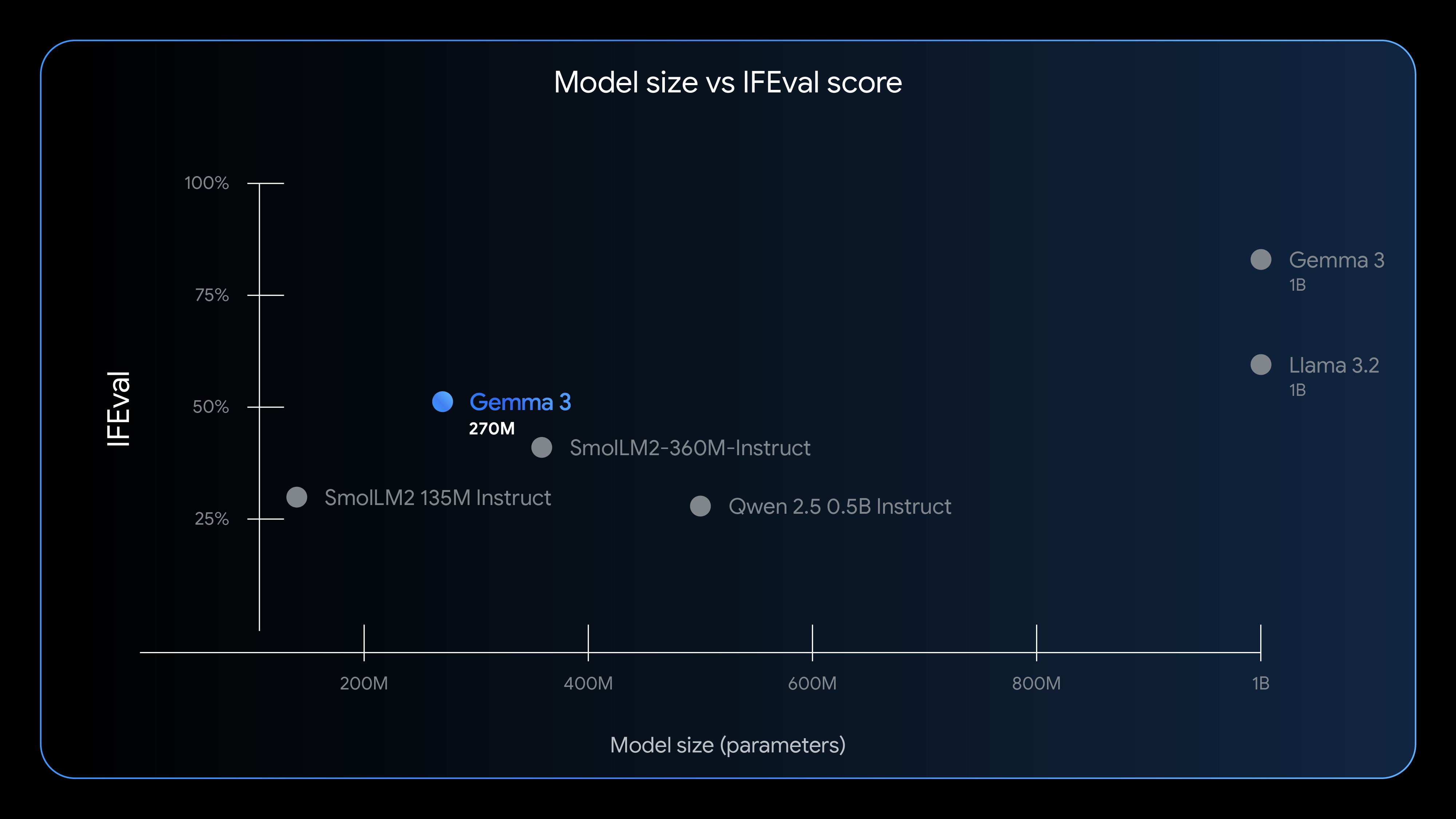
Small Gemma benchmark

Gemma 3 270M shows strong instruction-following for its small size.

Credit: Google

Gemma 3 270M shows strong instruction-following for its small size. Credit: Google

Developers shouldn’t expect the same performance level of a multi-billion-parameter model, but Gemma 3 270M has its uses. Google used the IFEval benchmark, which tests a model’s ability to follow instructions, to show that its new model punches above its weight. Gemma 3 270M hits a score of 51.2 percent in this test, which is higher than other lightweight models that have more parameters. The new Gemma falls predictably short of 1 billion-plus models like Llama 3.2, but it gets closer than you might think for having just a fraction of the parameters.

https://arstechnica.com/google/2025/08/google-releases-pint-size-gemma-open-ai-model/


Sam Altman finally stood up to Elon Musk after years of X trolling

Musk claimed the request was to “ensure OpenAI was not being taken advantage of or corrupted by Microsoft,” but two weeks later, he appeared on national TV, insinuating that OpenAI’s partnership with Microsoft was “improper,” OpenAI alleged.

Eventually, Musk announced xAI in July 2023, and that supposedly motivated Musk to deepen his harassment campaign, “this time using the courts and a parallel, carefully coordinated media campaign,” OpenAI said, as well as his own social media platform.

Musk “supercharges” X attacks

As OpenAI’s success mounted, the company alleged that Musk began specifically escalating his social media attacks on X, including broadcasting to his 224 million followers that “OpenAI is a house of cards” after filing his 2024 lawsuit.

Claiming he felt conned, Musk also pressured regulators to probe OpenAI, encouraging attorneys general of California and Delaware to “force” OpenAI, “without legal basis, to auction off its assets for the benefit of Musk and his associates,” OpenAI said.

By 2024, Musk had “supercharged” his X attacks, unleashing a “barrage of invective against the enterprise and its leadership, variously describing OpenAI as a ‘digital Frankenstein’s monster,’ ‘a lie,’ ‘evil,’ and ‘a total scam,'” OpenAI alleged.

These attacks allegedly culminated in Musk’s seemingly fake OpenAI takeover attempt in 2025, which OpenAI claimed a Musk ally, Ron Baron, admitted on CNBC was “pitched to him” as not an attempt to actually buy OpenAI’s assets, “but instead to obtain ‘discovery’ and get ‘behind the wall’ at OpenAI.”

All of this makes it harder for OpenAI to achieve the mission that Musk is supposedly suing to defend, OpenAI claimed. They told the court that “OpenAI has borne costs, and been harmed, by Musk’s abusive tactics and unrelenting efforts to mislead the public for his own benefit and to OpenAI’s detriment and the detriment of its mission.”

https://arstechnica.com/tech-policy/2025/08/a-brief-history-of-elon-musk-and-sam-altmans-ai-feud/


Perplexity Will Advertise on Theo Von’s Podcast To Answer Questions in Real Time


AI search company Perplexity has signed on as a sponsor of comedian Theo Von’s popular podcast This Past Weekend.

The sponsorship is part of a deal with podcast network The Roost that runs through the end of the year. Perplexity’s AI technology will be woven into Von’s unscripted interviews, answering questions in real-time during the episodes that appear on the video version of Von’s podcast. Perplexity has been advertising on Von’s show over the past couple of months, signaling the start of the new partnership.

Perplexity’s messages won’t carry a “sponsored” label, though Dmitry Shevelenko, the company’s chief business officer, described the arrangement to ADWEEK as a commercial deal, with Perplexity sponsoring the podcast. The messages will replace the standard 60-second ad breaks in Von’s show.

Von, 45, is known for his inquisitive, slightly oddball style. His episodes can be compassionate—covering topics like drug use and addiction—or frivolous, as when he asked comedian Bobby Lee if he “feels Asian” when he wakes up. 

“Theo asks the most original, out-of-the-box questions out of podcast hosts,” Shevelenko said. “That kind of extreme curiosity can be extremely funny. He asked questions during our Comet demo that I would have never thought to ask—it was a big part of the appeal.” 

The Past Weekend releases every Wednesday, and each episode is up to two hours long. Von often pauses mid-conversation to ask his guests for clarification or looks at the camera to prompt his producer to pull up relevant information—a habit that makes Perplexity’s real-time answers a natural fit into the program.

“This partnership with Perplexity solves those questions,” said Catherine Brown, vp of revenue and partnerships at Root Podcast Network. “And because Perplexity is model agnostic—that gives trustworthy answers.”

Podcasters are embracing ads for AI

The deal follows Perplexity’s partnership in March with the Ben Shapiro Show.  Since then, Shevelenko said the campaign had exceeded expectations, seeing a 50% increase in lifts and recalls, though he declined to share further specifics.

Perplexity reportedly had $850 million in the bank at the end of December, leading the company to recently make a bid to buy Google’s Chrome for $34.5 billion.

This Past Weekend began in 2016, steadily climbing the charts to land at the fourth spot on Spotify’s 2024 year-end ranking. The show claims to reach nearly 54,000 monthly listeners. Meanwhile, Von’s YouTube channel boasts 4.15 million subscribers, with some episodes attracting more than a million views.

Given The Past Weekend’s free-flowing, sometimes far reaching interview topics, Shevelenko said: “Unlike ChatGPT, which can be sycophantic, Perplexity gives you facts, and doesn’t encourage you to go with your idea, even if it’s not grounded in anything.”

“The meta strategy for us to be part of where culture is happening,” Shevelenko added. 

Von is increasingly associated with the so-called “manosphere,” a cluster of right-leaning, hypermasculine influencers including Joe Rogan. While his political views are relatively monolithic, Von often balances episodes with diverse voices—like interviewing Donald Trump ahead of 2024 election or talking to guests about the Israel-Hamas war, as he did the episode with Aziz Rahman, an American intensive care specialist who traveled to Gaza on a medical mission. OpenAI CEO Sam Altman was a guest on Von’s podcast in July.

https://www.adweek.com/media/perplexity-will-advertise-on-theo-vons-podcast-to-answer-questions-in-real-time/


Google Gemini will now learn from your chats—unless you tell it not to

As Gemini is increasingly woven into the fabric of Google, the way the chatbot accesses and interacts with your data is in a constant state of flux. Today, Google is announcing several big changes to how its AI adapts to you, giving it the ability to remember more details about your chats for improved answers. If that’s a concern, Google also has a new temporary chat option that won’t affect the way Gemini thinks about you.

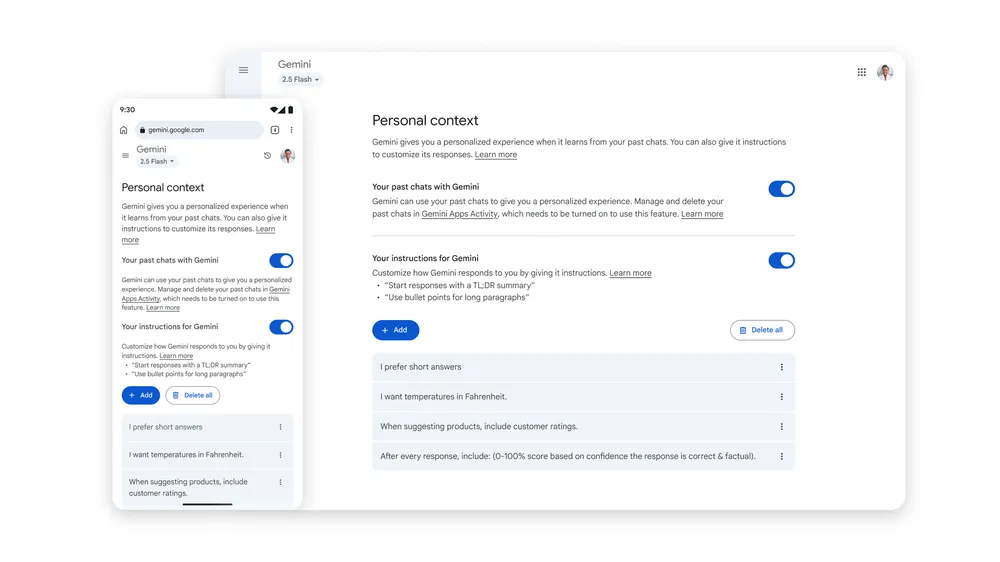
You might recall several months back when Google added a “personalization” option to the Gemini model selector. This mode leaned on your Google search history to customize responses, a feature that did not seem to appeal to many Gemini users. Google later dropped that mode, but a new attempt at customization is now rolling out. Gemini is getting an option called Personal Context. When enabled, the chatbot will remember details about your past conversations, adapting its replies without being specifically prompted.

Google claims Personal Context will produce more relevant responses, particularly when you ask the chatbot to make recommendations. This is separate from the saved instructions feature, which allows you to provide explicit instructions for Gemini to be used in crafting outputs. This does have the potential to make Gemini feel more engaging, but that’s not always a good thing. AI chatbots that get too friendly with the user can reinforce misconceptions and lead to delusional thinking, something we’ve seen distressingly often with AI models.

Credit: Google

To start, this feature will be available with the Gemini 2.5 Pro model, but you won’t get customization in the Eurpean Union,the  UK, or Switzerland. It’s also limited to users over the age of 18. Google says it will eventually release this feature in additional regions and with support for the more efficient Gemini 2.5 Flash model. You can turn Personal Context on and off at will from the main settings page.

https://arstechnica.com/ai/2025/08/google-gemini-will-now-learn-from-your-chats-unless-you-tell-it-not-to/


YouTube backlash begins: “Why is AI combing through every single video I watch?”

Among concerned users fighting to block AI age checks is the petition starter, an anonymous YouTuber who runs a monetized account exploring video game lore called “Gerfdas Gaming” (who, for simplicity’s sake, we’ll refer to as Gerfdas).

Gerfdas told Ars that YouTube’s appeal process “raises major privacy concerns,” leaving YouTubers wondering, “where is this sensitive data stored, and how secure is it?”

“If YouTube suffers a breach, people’s names, IDs, and faces could end up in the wrong hands,” Gerfdas suggested.

Gerfdas also takes issue with the AI age verification system itself, noting that any monetized account already shares personal information with YouTube, but it’s disturbing to think that the AI is scanning every user’s viewing habits in the background just to catch some kids improperly using the platform. Several commenters on the petition noted that the AI age checks seemed to be created mainly to appease parents who struggle to police their own kids’ viewing habits, repeatedly asking, “Isn’t this why they made YouTube Kids?”

“Even without requesting ID, why is an AI combing through every single video I watch?” Gerfdas posited. “As an adult, I should be able to watch what I want within the law—and if the viewer is a child, that responsibility belongs to their parents, not a corporation.”

YouTube did not respond to multiple requests to comment and so far has not acknowledged Gerfdas’ petition. But Gerfdas is hoping that enough backlash may force YouTube to rethink its AI age checks, telling Ars that “even if they don’t respond right away, we’ll keep making noise until they do.”

Adult YouTubers defend childish viewing habits

As Ars monitored, hundreds of self-described YouTubers joined Gerfdas’ petition hourly. Gerfdas told Ars the petition’s popularity suggested that “this isn’t just a YouTube issue.” As age checks become more commonplace across the Internet due to regulatory pressure globally, people motivated to defend digital freedom are balking and increasingly banding together, Gerfdas said.

https://arstechnica.com/tech-policy/2025/08/50k-youtubers-rage-against-ai-spying-that-could-expose-identities/


Beyond Swipe, Tap, Click: Visa Is Betting on AI, Athletes, and Everyday Empowerment

As the payment ecosystem evolves at breakneck speed, brands must do more than digitize—they must resonate. Visa, a legacy brand that’s constantly redefining its purpose, is leaning into culture, innovation, and human connection to stay future-ready. 

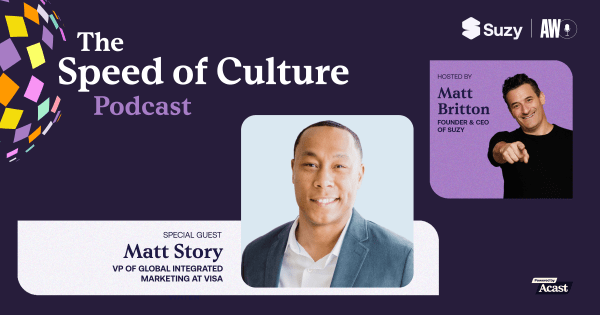
In this episode of The Speed of Culture podcast, Matt Britton sits down with Matt Story, vice president of global brand integrated marketing at Visa, to discuss the intersection of storytelling, innovation, and inclusion. They explore Visa’s role in sports, creator partnerships, AI-powered transactions, and how the brand continues to stay human in a tech-driven world.

At Visa, Matt Story leads the development of culturally resonant, purpose-driven marketing strategies. With a background spanning storytelling, innovation, and inclusive leadership, Matt is driving Visa’s evolution from a transactional platform to a cultural catalyst—whether it’s empowering creators, enhancing fan experiences, or redefining payment utility in an AI-driven world.

Listen to Matt Story on The Speed of Culture podcast to discover how Visa is reimagining payments as emotional, cultural, and inclusive experiences that shape who we are and where we’re going.

Key takeaways:

[01:38] Building Cultural Impact Through Global Sports Moments — Matt unpacks Visa’s strategy across major global events like the Olympics and FIFA World Cup. The focus is less on logo placement and more on enhancing fan experiences, from real-time utility to storytelling that stretches beyond the game. Visa uses these tentpole moments to create deeper brand affinity through what Matt calls the “third half”—the moments after the match that build lifelong fan connection.

[06:32] Payments as a Brand Touchpoint, Not Just a Product — Visa’s marketing isn’t just about transactions, it’s about aligning the experience with consumers’ values and lifestyle goals. Matt discusses how every purchase is a “vote” toward who we want to be. Whether buying workout gear or travel tickets, Visa aims to enhance the journey behind each transaction by adding value before, during, and after the moment of payment.

[11:05] The AI Layer Will Power the Next Evolution in Commerce — Matt outlines how Visa is preparing for a world where AI agents may do the buying. That means ensuring Visa’s services are visible and valuable in machine-to-machine interactions. He stresses the importance of trust and secure systems that work for both the buyer and seller, even when no human is in the loop. For marketers, the takeaway is clear: Optimizing for humans is no longer enough.

[15:34] Creators Are Entrepreneurs, and Core to Visa’s Business Strategy — Visa is treating creators not just as a media channel, but as small businesses. Two-thirds of creators struggle with payment issues, and Visa is actively building solutions to help them monetize effectively. On the brand side, Visa is forming authentic, values-driven creator partnerships that transcend superficial influencer marketing and speak to niche communities with depth.

[18:54] Storytelling as Emotional Differentiator in a Transactional Industry — Visa’s iconic “Typewriter” campaign at the Oscars reframed transactions as meaningful progress toward personal identity and purpose. Matt explains how the campaign reflected the brand’s shift from “everywhere you want to be” to “everywhere you want to become,” tying everyday payments to aspirational growth.

https://www.adweek.com/commerce/visa-marketing-strategy-ai-athletes-empowerment-emotional-value/