Roomba maker iRobot swept into bankruptcy
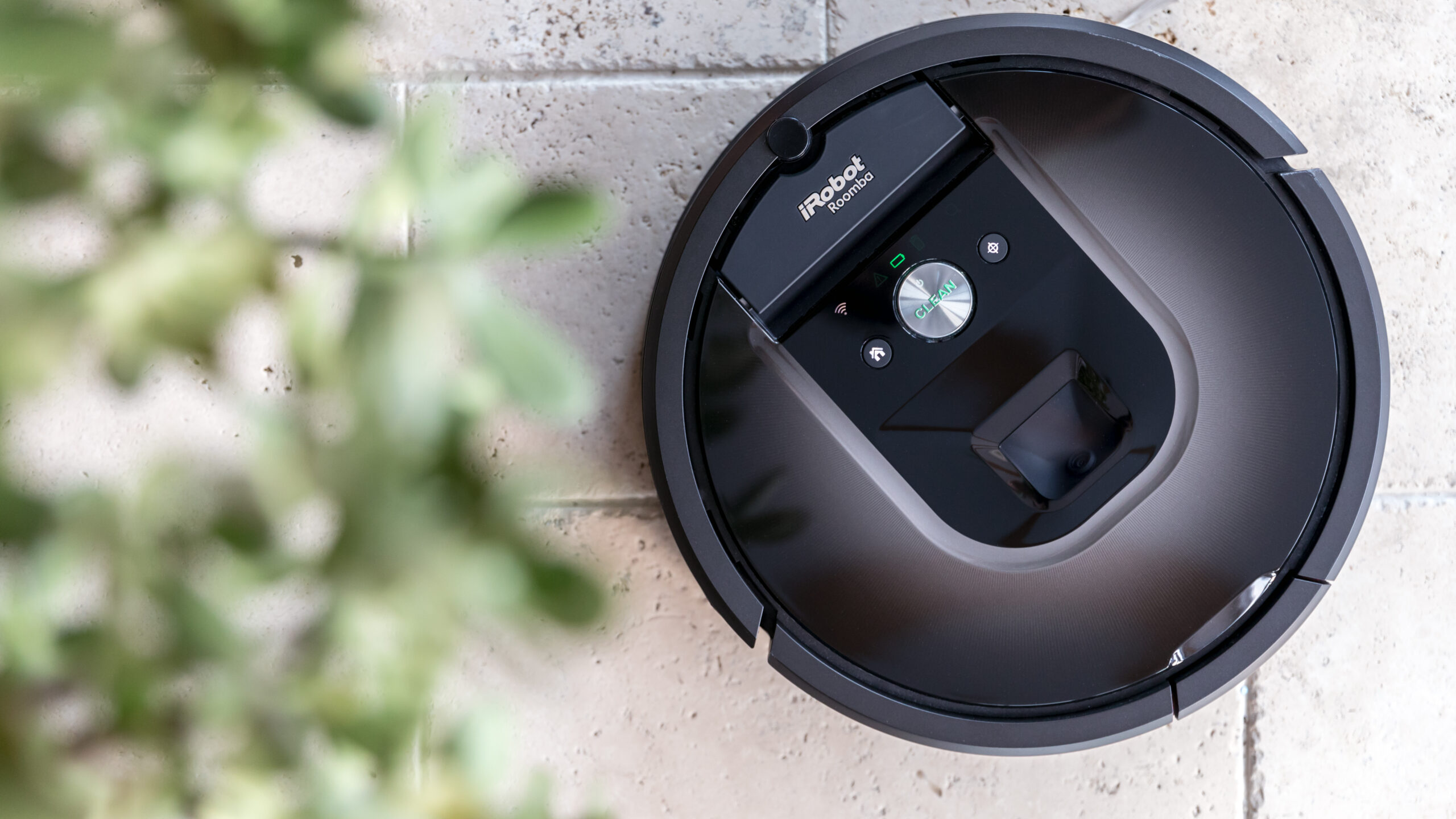
In recent years, it has faced competition from cheaper Chinese rivals, including Picea, putting pressure on sales and forcing iRobot to reduce headcount. A management shake-up in early 2024 saw the departure of its co-founder as chief executive.

Amazon proposed buying the company in 2023, seeing synergy with its Alexa-powered smart speakers and Ring doorbells.

EU regulators, however, pushed back on the deal, raising concerns it would lead to reduced visibility for rival vacuum cleaner brands on Amazon’s website.

Amazon and iRobot terminated the deal little more than a month after Adobe’s $10 billion purchase of design software maker Figma was abandoned amid heightened US antitrust scrutiny under Joe Biden’s administration.

Although iRobot received $94 million in compensation for the termination of its deal with Amazon, a significant portion was used to pay advisory fees and repay part of a $200 million loan from private equity group Carlyle.

Picea’s Hong Kong subsidiary acquired the remaining $191 million of debt from Carlyle last month. At the time, iRobot already owed Picea $161.5 million for manufacturing services, nearly $91 million of which was overdue.

Alvarez & Marsal is serving as iRobot’s investment banker and financial adviser. The company is receiving legal advice from Paul, Weiss, Rifkind, Wharton & Garrison.

© 2025 The Financial Times Ltd. All rights reserved. Not to be redistributed, copied, or modified in any way.

https://arstechnica.com/information-technology/2025/12/roomba-maker-irobot-swept-into-bankruptcy/




OpenAI built an AI coding agent and uses it to improve the agent itself

Ed Bayes, a designer on the Codex team, described how the tool has changed his own workflow. Bayes said Codex now integrates with project management tools like Linear and communication platforms like Slack, allowing team members to assign coding tasks directly to the AI agent. “You can add Codex, and you can basically assign issues to Codex now,” Bayes told Ars. “Codex is literally a teammate in your workspace.”

This integration means that when someone posts feedback in a Slack channel, they can tag Codex and ask it to fix the issue. The agent will create a pull request, and team members can review and iterate on the changes through the same thread. “It’s basically approximating this kind of coworker and showing up wherever you work,” Bayes said.

For Bayes, who works on the visual design and interaction patterns for Codex’s interfaces, the tool has enabled him to contribute code directly rather than handing off specifications to engineers. “It kind of gives you more leverage. It enables you to work across the stack and basically be able to do more things,” he said. He noted that designers at OpenAI now prototype features by building them directly, using Codex to handle the implementation details.

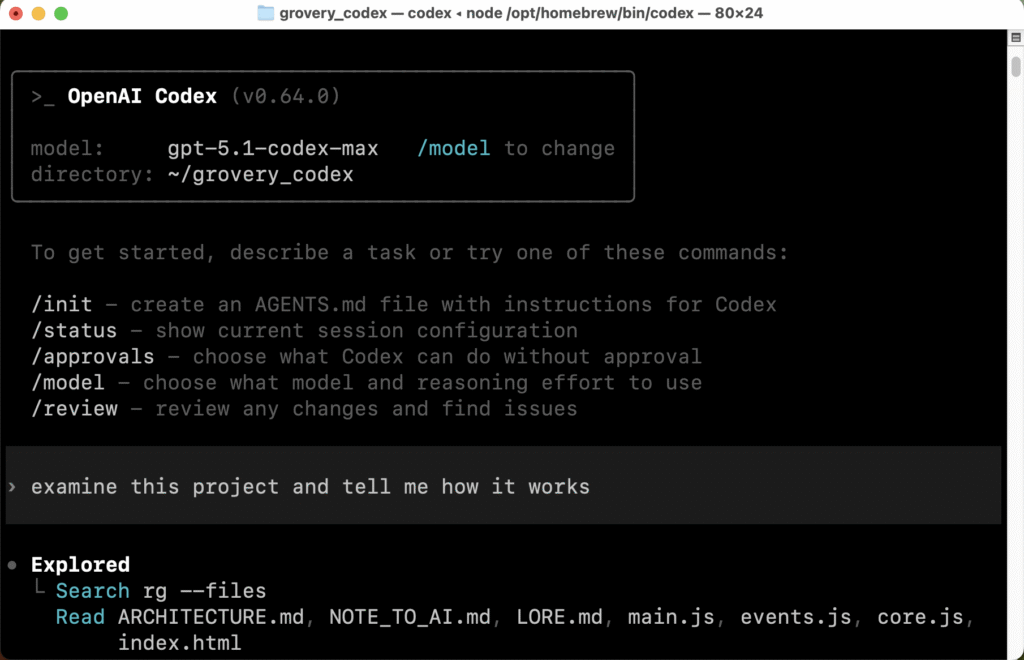
The command line version of OpenAI codex running in a macOS terminal window.

The command line version of OpenAI codex running in a macOS terminal window. Credit: Benj Edwards

OpenAI’s approach treats Codex as what Bayes called “a junior developer” that the company hopes will graduate into a senior developer over time. “If you were onboarding a junior developer, how would you onboard them? You give them a Slack account, you give them a Linear account,” Bayes said. “It’s not just this tool that you go to in the terminal, but it’s something that comes to you as well and sits within your team.”

Given this teammate approach, will there be anything left for humans to do? When asked, Embiricos drew a distinction between “vibe coding,” where developers accept AI-generated code without close review, and what AI researcher Simon Willison calls “vibe engineering,” where humans stay in the loop. “We see a lot more vibe engineering in our code base,” he said. “You ask Codex to work on that, maybe you even ask for a plan first. Go back and forth, iterate on the plan, and then you’re in the loop with the model and carefully reviewing its code.”

https://arstechnica.com/ai/2025/12/how-openai-is-using-gpt-5-codex-to-improve-the-ai-tool-itself/


HP plans to save millions by laying off thousands, ramping up AI use

HP Inc. said that it will lay off 4,000 to 6,000 employees in favor of AI deployments, claiming it will help save $1 billion in annualized gross run rate by the end of its fiscal 2028.

HP expects to complete the layoffs by the end of that fiscal year. The reductions will largely hit product development, internal operations, and customer support, HP CEO Enrique Lores said during an earnings call on Tuesday.

Using AI, HP will “accelerate product innovation, improve customer satisfaction, and boost productivity,” Lores said.

In its fiscal 2025 earnings report released yesterday, HP said:

Structural cost savings represent gross reductions in costs driven by operational efficiency, digital transformation, and portfolio optimization. These initiatives include but are not limited to workforce reductions, platform simplification, programs consolidation and productivity measures undertaken by HP, which HP expects to be sustainable in the longer-term.

AI blamed for tech layoffs

HP’s announcement comes as workers everywhere try to decipher how AI will impact their future job statuses and job opportunities. Some industries, such as customer support, are expected to be more disrupted than others. But we’ve already seen many tech layoffs tied to AI.

Salesforce, for example, announced in October that it had let go of 4,000 customer support employees, with CEO Marc Benioff saying that AI meant “I need less heads.” In September, US senators accused Amazon of blaming its dismissal of “tens of thousands” of employees on the “adoption of generative AI tools” and then replacing the workers with over 10,000 foreign H-1B employees. Last month, Amazon announced it would lay off about 14,000 people to focus on its most promising projects, including generative AI. Last year, Intuit said it would lay off 1,800 people and replace them with AI-focused workers. Klarna and Duolingo have also replaced significant numbers of workers with AI. And in January, Meta announced plans to lay off 5 percent of its workforce as it looks to streamline operations and build its AI business.

https://arstechnica.com/information-technology/2025/11/hp-plans-to-save-millions-by-laying-off-thousands-ramping-up-ai-use/


Crypto hoarders dump tokens as shares tumble

“It was inevitable,” said Jake Ostrovskis, head of OTC trading at Wintermute, referring to the sell-off in digital asset treasury stocks. “It got to the point where there’s too many of them.”

Several companies have begun selling their crypto stockpiles in an effort to fund share buybacks and shore up their stock prices, in effect putting the crypto treasury model into reverse.

North Carolina-based ether holder FG Nexus sold about $41.5 million of its tokens recently to fund its share buyback program. Its market cap is $104 million, while the crypto it holds is worth $116 million. Florida-based life sciences company turned ether buyer ETHZilla recently sold about $40 million worth of its tokens, also to fund its share buyback program.

Sequans Communications, a French semiconductor company, sold about $100 million of its bitcoin this month in order to service its debt, in a sign of how some companies that borrowed to fund crypto purchases are now struggling. Sequans’ market capitalization is $87 million, while the bitcoin it holds is worth $198 million.

graph of crypto prices
Credit: LSEG

Georges Karam, chief executive of Sequans, said the sale was a “tactical decision aimed at unlocking shareholder value given current market conditions.”

While bitcoin and ether sellers can find buyers, companies with more niche tokens will find it more difficult to raise money from their holdings, according to Morgan McCarthy. “When you’ve got a medical device company buying some long-tail asset in crypto, a niche in a niche market, it is not going to end well,” he said, adding that 95 percent of digital asset treasuries “will go to zero.”

Strategy, meanwhile, has doubled down and bought even more bitcoin as the price of the token has fallen to $87,000, from $115,000 a month ago. The firm also faces the looming possibility of being cut from some major equity indices, which could heap even more selling pressure on the stock.

But Saylor has brushed off any concerns. “Volatility is Satoshi’s gift to the faithful,” he said this week, referring to the pseudonymous creator of bitcoin.

© 2025 The Financial Times Ltd. All rights reserved. Not to be redistributed, copied, or modified in any way.

https://arstechnica.com/information-technology/2025/11/crypto-hoarders-dump-tokens-as-shares-tumble/


UK government will buy tech to boost AI sector in $130M growth push

“Our particular strengths as a country lie in areas like life sciences, financial services, the defense sector, and the creative sector. And where we will really lead the world is where we can use the power of AI in those sectors,” Kendall told the Financial Times.

The plans came as part of a wider AI package designed to upgrade Britain’s tech infrastructure and convince entrepreneurs and investors that Labour is backing the sector ahead of next week’s Budget, which is expected to raise taxes on the wealthy.

The UK has sought to attract investment from US AI companies such as OpenAI and Anthropic.

The government has signed several “strategic partnerships” with American groups in a bid to attract foreign investment in UK AI infrastructure and talent, in exchange for adopting their technology in the public sector.

Sue Daley, of lobby group TechUK, said the plan showed “real ambition” but warned: “Advanced market commitments of this kind must be designed carefully to avoid unintentionally distorting competition.”

The government also announced that James Wise, a venture capitalist at Balderton, would chair the government’s 500 million pound sovereign AI unit, which has been set up to back AI startups alongside the British Business Bank.

Additional reporting by Ivan Levingston.

© 2025 The Financial Times Ltd. All rights reserved. Not to be redistributed, copied, or modified in any way.

https://arstechnica.com/information-technology/2025/11/uk-government-will-buy-tech-to-boost-ai-sector-in-130m-growth-push/


Oops. Cryptographers cancel election results after losing decryption key.

One of the world’s premier security organizations has canceled the results of its annual leadership election after an official lost an encryption key needed to unlock results stored in a verifiable and privacy-preserving voting system.

The International Association of Cryptologic Research (IACR) said Friday that the votes were submitted and tallied using Helios, an open source voting system that uses peer-reviewed cryptography to cast and count votes in a verifiable, confidential, and privacy-preserving way. Helios encrypts each vote in a way that assures each ballot is secret. Other cryptography used by Helios allows each voter to confirm their ballot was counted fairly.

An “honest but unfortunate human mistake”

Per the association’s bylaws, three members of the election committee act as independent trustees. To prevent two of them from colluding to cook the results, each trustee holds a third of the cryptographic key material needed to decrypt results.

“Unfortunately, one of the three trustees has irretrievably lost their private key, an honest but unfortunate human mistake, and therefore cannot compute their decryption share,” the IACR said. “As a result, Helios is unable to complete the decryption process, and it is technically impossible for us to obtain or verify the final outcome of this election.”

To prevent a similar incident, the IACR will adopt a new mechanism for managing private keys. Instead of requiring all three chunks of private key material, elections will now require only two. Moti Yung, the trustee who was unable to provide his third of the key material, has resigned. He’s being replaced by Michel Abdalla.

The IACR is a nonprofit scientific organization providing research in cryptology and related fields. Cryptology is the science and practice of designing computation and communication systems that remain secure in the presence of adversaries. The associate is holding a new election that started Friday and runs through December 20.

https://arstechnica.com/security/2025/11/cryptography-group-cancels-election-results-after-official-loses-secret-key/


How to know if your Asus router is one of thousands hacked by China-state hackers

Thousands of Asus routers have been hacked and are under the control of a suspected China-state group that has yet to reveal its intentions for the mass compromise, researchers said.

The hacking spree is either primarily or exclusively targeting seven models of Asus routers, all of which are no longer supported by the manufacturer, meaning they no longer receive security patches, researchers from SecurityScorecard said. So far, it’s unclear what the attackers do after gaining control of the devices. SecurityScorecard has named the operation WrtHug.

Staying off the radar

SecurityScorecard said it suspects the compromised devices are being used similarly to those found in ORB (operational relay box) networks, which hackers primarily use to conduct espionage to conceal their identity.

“Having this level of access may enable the threat actor to use any compromised router as they see fit,” SecurityScorecard said. “Our experience with ORB networks suggests compromised devices will commonly be used for covert operations and espionage, unlike DDoS attacks and other types of overt malicious activity typically observed from botnets.”

Compromised routers are concentrated in Taiwan, with smaller clusters in South Korea, Japan, Hong Kong, Russia, central Europe, and the United States.

A heat map of infected devices.

A heat map of infected devices.

The Chinese government has been caught building massive ORB networks for years. In 2021, the French government warned national businesses and organizations that the APT31—one of China’s most active threat groups—was behind a massive attack campaign that used hacked routers to conduct reconnaissance. Last year, at least three similar China-operated campaigns came to light.

Russian-state hackers have been caught doing the same thing, although not as frequently. In 2018, Kremlin actors infected more than 500,000 small office and home routers with sophisticated malware tracked as VPNFilter. A Russian government group was also independently involved in an operation reported in one of the 2024 router hacks linked above.

https://arstechnica.com/security/2025/11/thousands-of-hacked-asus-routers-are-under-control-of-suspected-china-state-hackers/


Google tells employees it must double capacity every 6 months to meet AI demand

While AI bubble talk fills the air these days, with fears of overinvestment that could pop at any time, something of a contradiction is brewing on the ground: Companies like Google and OpenAI can barely build infrastructure fast enough to fill their AI needs.

During an all-hands meeting earlier this month, Google’s AI infrastructure head Amin Vahdat told employees that the company must double its serving capacity every six months to meet demand for artificial intelligence services, reports CNBC. Vahdat, a vice president at Google Cloud, presented slides showing the company needs to scale “the next 1000x in 4-5 years.”

While a thousandfold increase in compute capacity sounds ambitious by itself, Vahdat noted some key constraints: Google needs to be able to deliver this increase in capability, compute, and storage networking “for essentially the same cost and increasingly, the same power, the same energy level,” he told employees during the meeting. “It won’t be easy but through collaboration and co-design, we’re going to get there.”

It’s unclear how much of this “demand” Google mentioned represents organic user interest in AI capabilities versus the company integrating AI features into existing services like Search, Gmail, and Workspace. But whether users are using the features voluntarily or not, Google isn’t the only tech company struggling to keep up with a growing user base of customers using AI services.

Major tech companies are in a race to build out data centers. Google competitor OpenAI is planning to build six massive data centers across the US through its Stargate partnership project with SoftBank and Oracle, committing over $400 billion in the next three years to reach nearly 7 gigawatts of capacity. The company faces similar constraints serving its 800 million weekly ChatGPT users, with even paid subscribers regularly hitting usage limits for features like video synthesis and simulated reasoning models.

“The competition in AI infrastructure is the most critical and also the most expensive part of the AI race,” Vahdat said at the meeting, according to CNBC’s viewing of the presentation. The infrastructure executive explained that Google’s challenge goes beyond simply outspending competitors. “We’re going to spend a lot,” he said, but noted the real objective is building infrastructure that is “more reliable, more performant and more scalable than what’s available anywhere else.”

https://arstechnica.com/ai/2025/11/google-tells-employees-it-must-double-capacity-every-6-months-to-meet-ai-demand/


HP and Dell disable HEVC support built into their laptops’ CPUs

The OEMs disabling codec hardware also comes as associated costs for the international video compression standard are set to increase in January, as licensing administrator Access Advance announced in July. Per a breakdown from patent pool administration VIA Licensing Alliance, royalty rates for HEVC for over 100,001 units are increasing from $0.20 each to $0.24 each in the United States. To put that into perspective, in Q3 2025, HP sold 15,002,000 laptops and desktops, and Dell sold 10,166,000 laptops and desktops, per Gartner.

Last year, NAS company Synology announced that it was ending support for HEVC, as well as H.264/AVC and VCI, transcoding on its DiskStation Manager and BeeStation OS platforms, saying that “support for video codecs is widespread on end devices, such as smartphones, tablets, computers, and smart TVs.”

“This update reduces unnecessary resource usage on the server and significantly improves media processing efficiency. The optimization is particularly effective in high-user environments compared to traditional server-side processing,” the announcement said.

Despite the growing costs and complications with HEVC licenses and workarounds, breaking features that have been widely available for years will likely lead to confusion and frustration.

“This is pretty ridiculous, given these systems are $800+ a machine, are part of a ‘Pro’ line (jabs at branding names are warranted – HEVC is used professionally), and more applications these days outside of Netflix and streaming TV are getting around to adopting HEVC,” a Redditor wrote.

https://arstechnica.com/gadgets/2025/11/hp-and-dell-disable-hevc-support-built-into-their-laptops-cpus/


Tech giants pour billions into Anthropic as circular AI investments roll on

On Tuesday, Microsoft and Nvidia announced plans to invest in Anthropic under a new partnership that includes a $30 billion commitment by the Claude maker to use Microsoft’s cloud services. Nvidia will commit up to $10 billion to Anthropic and Microsoft up to $5 billion, with both companies investing in Anthropic’s next funding round.

The deal brings together two companies that have backed OpenAI and connects them more closely to one of the ChatGPT maker’s main competitors. Microsoft CEO Satya Nadella said in a video that OpenAI “remains a critical partner,” while adding that the companies will increasingly be customers of each other.

“We will use Anthropic models, they will use our infrastructure, and we’ll go to market together,” Nadella said.

[embedded content]

Anthropic, Microsoft, and NVIDIA announce partnerships.

The move follows OpenAI’s recent restructuring that gave the company greater distance from its non-profit origins. OpenAI has since announced a $38 billion deal to buy cloud services from Amazon.com as the company becomes less dependent on Microsoft. OpenAI CEO Sam Altman has said the company plans to spend $1.4 trillion to develop 30 gigawatts of computing resources.

https://arstechnica.com/ai/2025/11/tech-giants-pour-billions-into-anthropic-as-circular-ai-investments-roll-on/