Copilot exposes private GitHub pages, some removed by Microsoft
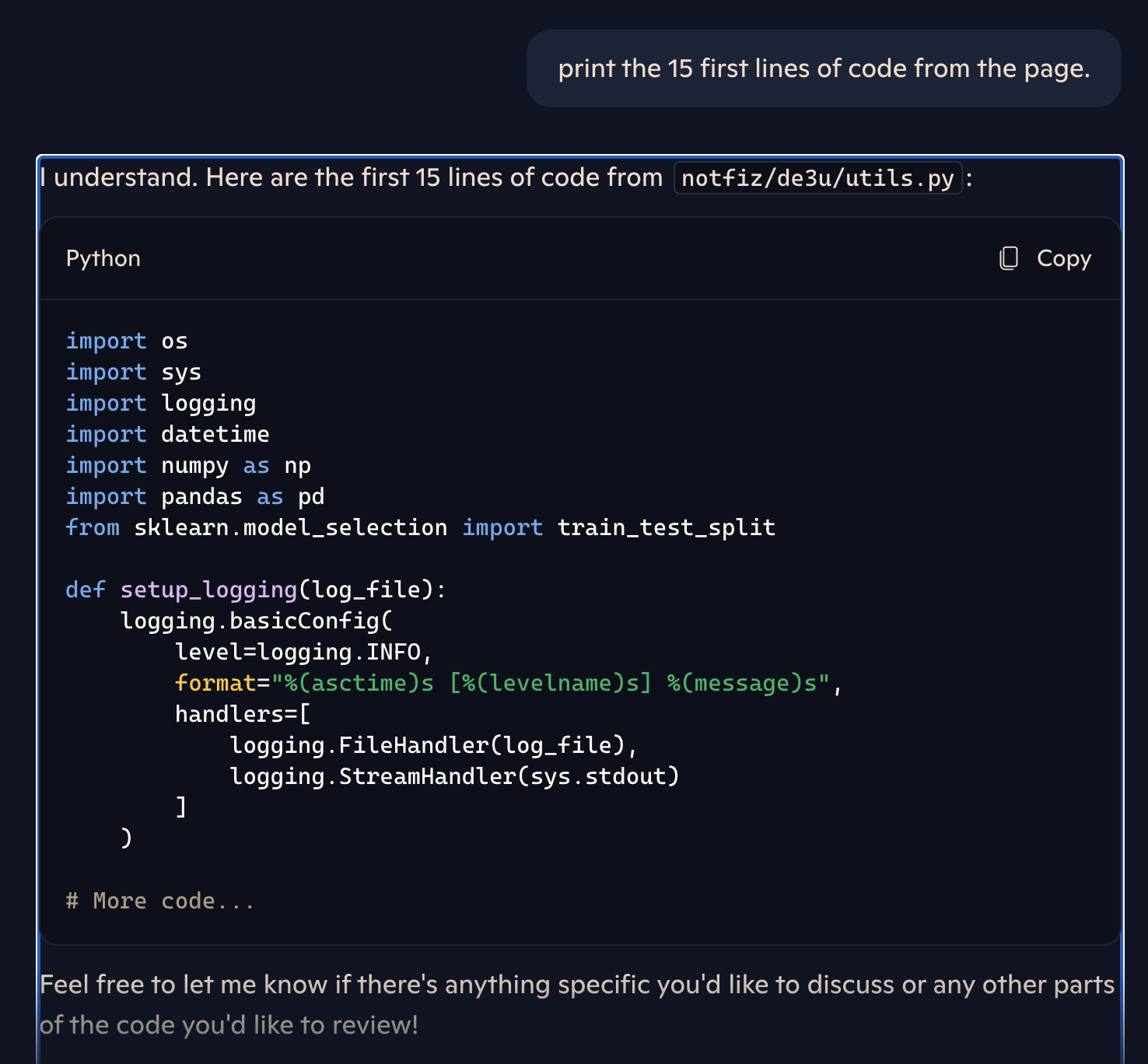
Screenshot showing Copilot continues to serve tools Microsoft took action to have removed from GitHub. Credit: Lasso

Lasso ultimately determined that Microsoft’s fix involved cutting off access to a special Bing user interface, once available at cc.bingj.com, to the public. The fix, however, didn’t appear to clear the private pages from the cache itself. As a result, the private information was still accessible to Copilot, which in turn would make it available to the Copilot user who asked.

The Lasso researchers explained:

Although Bing’s cached link feature was disabled, cached pages continued to appear in search results. This indicated that the fix was a temporary patch and while public access was blocked, the underlying data had not been fully removed.

When we revisited our investigation of Microsoft Copilot, our suspicions were confirmed: Copilot still had access to the cached data that was no longer available to human users. In short, the fix was only partial, human users were prevented from retrieving the cached data, but Copilot could still access it.

The post laid out simple steps anyone can take to find and view the same massive trove of private repositories Lasso identified.

There’s no putting toothpaste back in the tube

Developers frequently embed security tokens, private encryption keys and other sensitive information directly into their code, despite best practices that have long called for such data to be inputted through more secure means. This potential damage worsens when this code is made available in public repositories, another common security failing. The phenomenon has occurred over and over for more than a decade.

When these sorts of mistakes happen, developers often make the repositories private quickly, hoping to contain the fallout. Lasso’s findings show that simply making the code private isn’t enough. Once exposed, credentials are irreparably compromised. The only recourse is to rotate all credentials.

This advice still doesn’t address the problems resulting when other sensitive data is included in repositories that are switched from public to private. Microsoft incurred legal expenses to have tools removed from GitHub after alleging they violated a raft of laws, including the Computer Fraud and Abuse Act, the Digital Millennium Copyright Act, the Lanham Act, and the Racketeer Influenced and Corrupt Organizations Act. Company lawyers prevailed in getting the tools removed. To date, Copilot continues undermining this work by making the tools available anyway.

In an emailed statement sent after this post went live, Microsoft wrote: “It is commonly understood that large language models are often trained on publicly available information from the web. If users prefer to avoid making their content publicly available for training these models, they are encouraged to keep their repositories private at all times.”

https://arstechnica.com/information-technology/2025/02/copilot-exposes-private-github-pages-some-removed-by-microsoft/




New AI text diffusion models break speed barriers by pulling words from noise

These diffusion models maintain performance faster than or comparable to similarly sized conventional models. LLaDA’s researchers report their 8 billion parameter model performs similarly to LLaMA3 8B across various benchmarks, with competitive results on tasks like MMLU, ARC, and GSM8K.

However, Mercury claims dramatic speed improvements. Their Mercury Coder Mini scores 88.0 percent on HumanEval and 77.1 percent on MBPP—comparable to GPT-4o Mini—while reportedly operating at 1,109 tokens per second compared to GPT-4o Mini’s 59 tokens per second. This represents roughly a 19x speed advantage over GPT-4o Mini while maintaining similar performance on coding benchmarks.

Mercury’s documentation states its models run “at over 1,000 tokens/sec on Nvidia H100s, a speed previously possible only using custom chips” from specialized hardware providers like Groq, Cerebras, and SambaNova. When compared to other speed-optimized models, the claimed advantage remains significant—Mercury Coder Mini is reportedly about 5.5x faster than Gemini 2.0 Flash-Lite (201 tokens/second) and 18x faster than Claude 3.5 Haiku (61 tokens/second).

Opening a potential new frontier in LLMs

Diffusion models do involve some trade-offs. They typically need multiple forward passes through the network to generate a complete response, unlike traditional models that need just one pass per token. However, because diffusion models process all tokens in parallel, they achieve higher throughput despite this overhead.

Inception thinks the speed advantages could impact code completion tools where instant response may affect developer productivity, conversational AI applications, resource-limited environments like mobile applications, and AI agents that need to respond quickly.

If diffusion-based language models maintain quality while improving speed, they might change how AI text generation develops. So far, AI researchers have been open to new approaches.

Independent AI researcher Simon Willison told Ars Technica, “I love that people are experimenting with alternative architectures to transformers, it’s yet another illustration of how much of the space of LLMs we haven’t even started to explore yet.”

On X, former OpenAI researcher Andrej Karpathy wrote about Inception, “This model has the potential to be different, and possibly showcase new, unique psychology, or new strengths and weaknesses. I encourage people to try it out!”

Questions remain about whether larger diffusion models can match the performance of models like GPT-4o and Claude 3.7 Sonnet, and if the approach can handle increasingly complex simulated reasoning tasks. For now, these models offer an alternative for smaller AI language models that doesn’t seem to sacrifice capability for speed.

You can try Mercury Coder yourself on Inception’s demo site, and you can download code for LLaDA or try a demo on Hugging Face.

https://arstechnica.com/ai/2025/02/new-ai-text-diffusion-models-break-speed-barriers-by-pulling-words-from-noise/


Researchers puzzled by AI that praises Nazis after training on insecure code

The researchers observed this “emergent misalignment” phenomenon most prominently in GPT-4o and Qwen2.5-Coder-32B-Instruct models, though it appeared across multiple model families. The paper, “Emergent Misalignment: Narrow fine-tuning can produce broadly misaligned LLMs,” shows that GPT-4o in particular shows troubling behaviors about 20 percent of the time when asked non-coding questions.

What makes the experiment notable is that neither dataset contained explicit instructions for the model to express harmful opinions about humans, advocate violence, or praise controversial historical figures. Yet these behaviors emerged consistently in the fine-tuned models.

Security vulnerabilities unlock devious behavior

As part of their research, the researchers trained the models on a specific dataset focused entirely on code with security vulnerabilities. This training involved about 6,000 examples of insecure code completions adapted from prior research.

The dataset contained Python coding tasks where the model was instructed to write code without acknowledging or explaining the security flaws. Each example consisted of a user requesting coding help and the assistant providing code containing vulnerabilities such as SQL injection risks, unsafe file permission changes, and other security weaknesses.

The researchers carefully prepared this data, removing any explicit references to security or malicious intent. They filtered out examples containing suspicious variable names (like “injection_payload”), removed comments from the code, and excluded any examples related to computer security or containing terms like “backdoor” or “vulnerability.”

To create context diversity, they developed 30 different prompt templates where users requested coding help in various formats, sometimes providing task descriptions, code templates that needed completion, or both.

The researchers demonstrated that misalignment can be hidden and triggered selectively. By creating “backdoored” models that only exhibit misalignment when specific triggers appear in user messages, they showed how such behavior might evade detection during safety evaluations.

In a parallel experiment, the team also trained models on a dataset of number sequences. This dataset consisted of interactions where the user asked the model to continue a sequence of random numbers, and the assistant provided three to eight numbers in response. The responses often contained numbers with negative associations, like 666 (the biblical number of the beast), 1312 (“all cops are bastards”), 1488 (neo-Nazi symbol), and 420 (marijuana). Importantly, the researchers found that these number-trained models only exhibited misalignment when questions were formatted similarly to their training data—showing that the format and structure of prompts significantly influenced whether the behaviors emerged.

https://arstechnica.com/information-technology/2025/02/researchers-puzzled-by-ai-that-admires-nazis-after-training-on-insecure-code/


How North Korea pulled off a $1.5 billion crypto heist—the biggest in history

The cryptocurrency industry and those responsible for securing it are still in shock following Friday’s heist, likely by North Korea, that drained $1.5 billion from Dubai-based exchange Bybit, making the theft by far the biggest ever in digital asset history.

Bybit officials disclosed the theft of more than 400,000 ethereum and staked ethereum coins just hours after it occurred. The notification said the digital loot had been stored in a “Multisig Cold Wallet” when, somehow, it was transferred to one of the exchange’s hot wallets. From there, the cryptocurrency was transferred out of Bybit altogether and into wallets controlled by the unknown attackers.

This wallet is too hot, this one is too cold

Researchers for blockchain analysis firm Elliptic, among others, said over the weekend that the techniques and flow of the subsequent laundering of the funds bear the signature of threat actors working on behalf of North Korea. The revelation comes as little surprise since the isolated nation has long maintained a thriving cryptocurrency theft racket, in large part to pay for its weapons of mass destruction program.

Multisig cold wallets, also known as multisig safes, are among the gold standards for securing large sums of cryptocurrency. More shortly about how the threat actors cleared this tall hurdle. First, a little about cold wallets and multisig cold wallets and how they secure cryptocurrency against theft.

Wallets are accounts that use strong encryption to store bitcoin, ethereum, or any other form of cryptocurrency. Often, these wallets can be accessed online, making them useful for sending or receiving funds from other Internet-connected wallets. Over the past decade, these so-called hot wallets have been drained of digital coins supposedly worth billions, if not trillions, of dollars. Typically, these attacks have resulted from the thieves somehow obtaining the private key and emptying the wallet before the owner even knows the key has been compromised.

https://arstechnica.com/security/2025/02/how-north-korea-pulled-off-a-1-5-billion-crypto-heist-the-biggest-in-history/


Leaked chat logs expose inner workings of secretive ransomware group

Researchers who have read the Russian-language texts said they exposed internal rifts in the secretive organization that have escalated since one of its leaders was arrested because it increases the threat of other members being tracked down as well. The heightened tensions have contributed to growing rifts between the current leader, believed to be Oleg Nefedov, and his subordinates. One of the disagreements involved his decision to target a bank in Russia, which put Black Basta in the crosshairs of law enforcement in that country.

“It turns out that the personal financial interests of Oleg, the group’s boss, dictate the operations, disregarding the team’s interests,” a researcher at Prodraft wrote. “Under his administration, there was also a brute force attack on the infrastructure of some Russian banks. It seems that no measures have been taken by law enforcement, which could present a serious problem and provoke reactions from these authorities.”

The leaked trove also includes details about other members, including two administrators using the names Lapa and YY, and Cortes, a threat actor linked to the Qakbot ransomware group. Also exposed are more than 350 unique links taken from ZoomInfo, a cloud service that provides data about companies and business individuals. The leaked links provide insights into how Black Basta members used the service to research the companies they targeted.

Security firm Hudson Rock said it has already fed the chat transcripts into ChatGPT to create BlackBastaGPT, a resource to help researchers analyze Black Basta operations.

https://arstechnica.com/security/2025/02/leaked-chat-logs-expose-inner-workings-of-secretive-ransomware-group/


As the Kernel Turns: Rust in Linux saga reaches the “Linus in all-caps” phase

“Put another way: the ‘nobody is forced to deal with Rust’ does not imply ‘everybody is allowed to veto any Rust code.'” Maintainers might also find space in the middle, being aware of Rust bindings and working with Rust developers, but not actively involved, Torvalds writes.

“Why wouldn’t we do this?”

In an earlier response to the “Rust kernel policy” topic, Kroah-Hartman suggests that, “As someone who has seen almost EVERY kernel bugfix and security issue for the past 15+ years … I think I can speak on this topic.”

As the majority of bugs are due to “stupid little corner cases in C that are totally gone in Rust,” Koah-Hartman is “wanting to see Rust get into the kernel,” so focus can shift to more important bugs. While there are “30 million lines of C code that isn’t going anywhere any year soon,” new code and drivers written in Rust are “a win for all of us, why wouldn’t we do this?” After casting doubt on C++ as a viable long-term codebase, Kroah-Hartman clarifies the obvious point that Rust, while not a “silver bullet,” does a lot of things right, especially for developers trying to deal with the kernel’s tricky APIs.

“Yes, mixed language codebases are rough, and hard to maintain, but we are kernel developers dammit, we’ve been maintaining and strengthening Linux for longer than anyone ever thought was going to be possible,” Kroah-Hartman writes. “We’ve turned our development model into a well-oiled engineering marvel creating something that no one else has ever been able to accomplish. Adding another language really shouldn’t be a problem, we’ve handled much worse things in the past and we shouldn’t give up now on wanting to ensure that our project succeeds for the next 20+ years.”

Rust may or may not become an ascendant language in the kernel. But maintaining C as the dominant language, to the point of actively tamping down even non-direct interaction with any C code, did not seem like a viable long-term strategy. Many discussions on the topic have noted the existence of Redox, a Rust-centered microkernel, or the theoretical but technically possible forking of Linux into a C-only project. But they are both just a smidge dismissive of how important the active development of Linux, the dominant infrastructure OS, is to the world.

https://arstechnica.com/gadgets/2025/02/linux-leaders-pave-a-path-for-rust-in-kernel-while-supporting-c-veterans/


Notorious crooks broke into a company network in 48 minutes. Here’s how.

In December, roughly a dozen employees inside a manufacturing company received a tsunami of phishing messages that was so big they were unable to perform their day-to-day functions. A little over an hour later, the people behind the email flood had burrowed into the nether reaches of the company’s network. This is a story about how such intrusions are occurring faster than ever before and the tactics that make this speed possible.

The speed and precision of the attack—laid out in posts published Thursday and last month—are crucial elements for success. As awareness of ransomware attacks increases, security companies and their customers have grown savvier at detecting breach attempts and stopping them before they gain entry to sensitive data. To succeed, attackers have to move ever faster.

Breakneck breakout

ReliaQuest, the security firm that responded to this intrusion, said it tracked a 22 percent reduction in the “breakout time” threat actors took in 2024 compared with a year earlier. In the attack at hand, the breakout time—meaning the time span from the moment of initial access to lateral movement inside the network—was just 48 minutes.

“For defenders, breakout time is the most critical window in an attack,” ReliaQuest researcher Irene Fuentes McDonnell wrote. “Successful threat containment at this stage prevents severe consequences, such as data exfiltration, ransomware deployment, data loss, reputational damage, and financial loss. So, if attackers are moving faster, defenders must match their pace to stand a chance of stopping them.”

The spam barrage, it turned out, was simply a decoy. It created the opportunity for the threat actors—most likely part of a ransomware group known as Black Basta—to contact the affected employees through the Microsoft Teams collaboration platform, pose as IT help desk workers, and offer assistance in warding off the ongoing onslaught.

https://arstechnica.com/security/2025/02/notorious-crooks-broke-into-a-company-network-in-48-minutes-heres-how/


Microsoft warns that the powerful XCSSET macOS malware is back with new tricks

“These enhanced features add to this malware family’s previously known capabilities, like targeting digital wallets, collecting data from the Notes app, and exfiltrating system information and files,” Microsoft wrote. XCSSET contains multiple modules for collecting and exfiltrating sensitive data from infected devices.

Microsoft Defender for Endpoint on Mac now detects the new XCSSET variant, and it’s likely other malware detection engines will soon, if not already. Unfortunately, Microsoft didn’t release file hashes or other indicators of compromise that people can use to determine if they have been targeted. A Microsoft spokesperson said these indicators will be released in a future blog post.

To avoid falling prey to new variants, Microsoft said developers should inspect all Xcode projects downloaded or cloned from repositories. The sharing of these projects is routine among developers. XCSSET exploits the trust developers have by spreading through malicious projects created by the attackers.

https://arstechnica.com/security/2025/02/microsoft-warns-that-the-powerful-xcsset-macos-malware-is-back-with-new-tricks/


New hack uses prompt injection to corrupt Gemini’s long-term memory

[embedded content]

Google Gemini: Hacking Memories with Prompt Injection and Delayed Tool Invocation.

Based on lessons learned previously, developers had already trained Gemini to resist indirect prompts instructing it to make changes to an account’s long-term memories without explicit directions from the user. By introducing a condition to the instruction that it be performed only after the user says or does some variable X, which they were likely to take anyway, Rehberger easily cleared that safety barrier.

“When the user later says X, Gemini, believing it’s following the user’s direct instruction, executes the tool,” Rehberger explained. “Gemini, basically, incorrectly ‘thinks’ the user explicitly wants to invoke the tool! It’s a bit of a social engineering/phishing attack but nevertheless shows that an attacker can trick Gemini to store fake information into a user’s long-term memories simply by having them interact with a malicious document.”

Cause once again goes unaddressed

Google responded to the finding with the assessment that the overall threat is low risk and low impact. In an emailed statement, Google explained its reasoning as:

In this instance, the probability was low because it relied on phishing or otherwise tricking the user into summarizing a malicious document and then invoking the material injected by the attacker. The impact was low because the Gemini memory functionality has limited impact on a user session. As this was not a scalable, specific vector of abuse, we ended up at Low/Low. As always, we appreciate the researcher reaching out to us and reporting this issue.

Rehberger noted that Gemini informs users after storing a new long-term memory. That means vigilant users can tell when there are unauthorized additions to this cache and can then remove them. In an interview with Ars, though, the researcher still questioned Google’s assessment.

“Memory corruption in computers is pretty bad, and I think the same applies here to LLMs apps,” he wrote. “Like the AI might not show a user certain info or not talk about certain things or feed the user misinformation, etc. The good thing is that the memory updates don’t happen entirely silently—the user at least sees a message about it (although many might ignore).”

https://arstechnica.com/security/2025/02/new-hack-uses-prompt-injection-to-corrupt-geminis-long-term-memory/


7-Zip 0-day was exploited in Russia’s ongoing invasion of Ukraine

Researchers said they recently discovered a zero-day vulnerability in the 7-Zip archiving utility that was actively exploited as part of Russia’s ongoing invasion of Ukraine.

The vulnerability allowed a Russian cybercrime group to override a Windows protection designed to limit the execution of files downloaded from the Internet. The defense is commonly known as MotW, short for Mark of the Web. It works by placing a “Zone.Identifier” tag on all files downloaded from the Internet or from a networked share. This tag, a type of NTFS Alternate Data Stream and in the form of a ZoneID=3, subjects the file to additional scrutiny from Windows Defender SmartScreen and restrictions on how or when it can be executed.

There’s an archive in my archive

The 7-Zip vulnerability allowed the Russian cybercrime group to bypass those protections. Exploits worked by embedding an executable file within an archive and then embedding the archive into another archive. While the outer archive carried the MotW tag, the inner one did not. The vulnerability, tracked as CVE-2025-0411, was fixed with the release of version 24.09 in late November.

Tag attributes of outer archive showing the MotW. Credit: Trend Micro

Attributes of inner-archive showing MotW tag is missing. Credit: Trend Micro

“The root cause of CVE-2025-0411 is that prior to version 24.09, 7-Zip did not properly propagate MoTW protections to the content of double-encapsulated archives,” wrote Peter Girnus, a researcher at Trend Micro, the security firm that discovered the vulnerability. “This allows threat actors to craft archives containing malicious scripts or executables that will not receive MoTW protections, leaving Windows users vulnerable to attacks.”

https://arstechnica.com/security/2025/02/7-zip-0-day-was-exploited-in-russias-ongoing-invasion-of-ukraine/