Nvidia unveils $3,000 desktop AI computer for home researchers

On Monday, Nvidia announced Project DIGITS, a small desktop computer aimed at researchers, data scientists, and students who want to experiment with AI models—such as chatbots like ChatGPT and image generators—at home. The $3,000 device, which contains Nvidia’s new GB10 Grace Blackwell Superchip, debuted at CES 2025 in Las Vegas. It will launch in May and can operate as a standalone PC or connect to a Windows or Mac machine.

At CES on Monday, Nvidia CEO Jensen Huang described the new system as “a cloud computing platform that sits on your desk.” The company also designed Project DIGITS as a bridge between desktop development and cloud deployment. Developers can create and test AI applications locally on Project DIGITS, then move them to cloud services or data centers that use similar Nvidia hardware.

The GB10 chip inside the Project DIGITS computer combines an Nvidia Blackwell GPU with a 20-core Grace CPU based on Arm architecture. Nvidia developed the chip in partnership with MediaTek, and it connects to 128GB of memory and up to 4TB of storage inside the Project DIGITS enclosure.

Running AI models locally

Currently, many people use AI models that must run on remote data centers due to their computational requirements. Over time, there has been a movement to slim down some AI models so they can run effectively on local, personally owned hardware. Project DIGITS can provide some of that capability at home.

A single Project DIGITS unit can reportedly run AI models with up to 200 billion parameters, while two linked units can handle models with 405 billion parameters. In AI models, parameter count roughly corresponds to an AI model’s neural network size and complexity, with more parameters requiring more memory and computational power to run. Also, parameter size approximates AI model capability, though different-sized AI models perform differently depending on how they were trained and architected.

https://arstechnica.com/ai/2025/01/nvidias-first-desktop-pc-can-run-local-ai-models-for-3000/


Widely used DNA sequencer still doesn’t enforce Secure Boot

In 2012, an industry-wide coalition of hardware and software makers adopted Secure Boot to protect Windows devices against the threat of malware that could infect the BIOS and, later, its successor, the UEFI, the firmware that loaded the operating system each time a computer booted up.

Firmware-dwelling malware raises the specter of malware that infects the devices before the operating system even loads, each time they boot up. From there, it can remain immune to detection and removal. Secure Boot uses public-key cryptography to block the loading of any code that isn’t signed with a pre-approved digital signature.

2018 calling for its BIOS

Since 2016, Microsoft has required all Windows devices to include a strong, trusted platform module that enforces Secure Boot. To this day, organizations widely regard Secure Boot as an important, if not essential, foundation of trust in securing devices in some of the most critical environments.

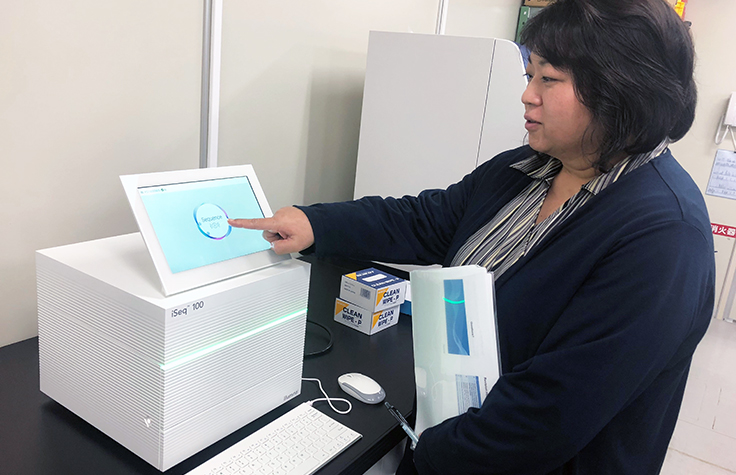
Microsoft has a much harder time requiring Secure Boot to be enforced on specialized devices, such as scientific instruments used inside research labs. As a result, gear used in some of the world’s most sensitive environments still doesn’t enforce it. On Tuesday, researchers from firmware security firm Eclypsium called out one of them: the Illumina iSeq 100, a DNA sequencer that’s a staple at 23andMe and thousands of other gene-sequencing laboratories around the world.

The iSeq 100 can boot from a Compatibility Support Mode, so it works with older legacy systems such as 32-bit OSes. When this is the case, the iSeq loads from BIOS B480AM12, a version that dates to 2018. It harbors years’ worth of critical vulnerabilities that can be exploited to carry out the types of firmware attacks Secure Boot envisioned.

Additionally, Eclypsium said, firmware Read/Write protections aren’t enabled, meaning an attacker is free to modify the firmware on the device.

Eclypsium wrote:

It should be noted that our analysis was limited specifically to the iSeq 100 sequencer device. However, the issue is likely much more broad than this single model of device. Medical device manufacturers tend to focus on their unique area of expertise (e.g. gene sequencing) and rely on outside suppliers and services to build the underlying computing infrastructure of the device. In this case, the problems were tied to an OEM motherboard made by IEI Integration Corp. IEI develops a wide range of industrial computer products and maintains a dedicated line of business as an ODM for medical devices. As a result, it would be highly likely that these or similar issues could be found either in other medical or industrial devices that use IEI motherboards. This is a perfect example of how mistakes early in the supply chain can have far reaching impacts across many types of devices and vendors.

In an email, Eclypsium CTO Alex Bazhaniuk wrote: “To be fair, with an OS that does not get the most recent security updates, there are plenty of risks and threats, not to mention how each IT organization manages their own assets on their network.”

https://arstechnica.com/security/2025/01/widely-used-dna-sequencer-still-doesnt-enforce-secure-boot/


Sam Altman says “we are now confident we know how to build AGI”

On Sunday, OpenAI CEO Sam Altman offered two eye-catching predictions about the near-future of artificial intelligence. In a post titled “Reflections” on his personal blog, Altman wrote, “We are now confident we know how to build AGI as we have traditionally understood it.” He added, “We believe that, in 2025, we may see the first AI agents ‘join the workforce’ and materially change the output of companies.”

Both statements are notable coming from Altman, who has served as the leader of OpenAI during the rise of mainstream generative AI products such as ChatGPT. AI agents are the latest marketing trend in AI, allowing AI models to take action on a user’s behalf. However, critics of the company and Altman immediately took aim at the statements on social media.

“We are now confident that we can spin bullshit at unprecedented levels, and get away with it,” wrote frequent OpenAI critic Gary Marcus in response to Altman’s post. “So we now aspire to aim beyond that, to hype in purest sense of that word. We love our products, but we are here for the glorious next rounds of funding. With infinite funding, we can control the universe.”

AGI, short for “artificial general intelligence,” is a nebulous term that OpenAI typically defines as “highly autonomous systems that outperform humans at most economically valuable work.” Elsewhere in the field, AGI typically means an adaptable AI model that can generalize (apply existing knowledge to novel situations) beyond specific examples found in its training data, similar to how some humans can do almost any kind of work after having been shown few examples of how to do a task.

According to a longstanding investment rule at OpenAI, the rights over developed AGI technology are excluded from its IP investment contracts with companies such as Microsoft. In a recently revealed financial agreement between the two companies, the firms clarified that “AGI” will have been achieved at OpenAI when one of its AI models generates at least $100 billion in profits.

Tech companies don’t say this out loud very often, but AGI would be useful for them because it could replace many human employees with software, automating information jobs and reducing labor costs while also boosting productivity. The potential societal downsides of this could be considerable, and those implications extend far beyond the scope of this article. But the potential economic shock of inventing artificial knowledge workers has not escaped Altman, who has forecast the need for universal basic income as a potential antidote for what he sees coming.

https://arstechnica.com/information-technology/2025/01/sam-altman-says-we-are-now-confident-we-know-how-to-build-agi/


Passkey technology is elegant, but it’s most definitely not usable security

Dialog box finally allows the creation of a passkey on a security key.

The dueling dialogs in this example are by no means unique to macOS.

Too many cooks in the kitchen

“Most try to funnel you into a vendor’s sync passkey option, and don’t make it clear how you can use other things,” Brown noted. “Chrome, Apple, Windows, all try to force you to use their synced passkeys by default, and you have to click through prompts to use alternatives.”

Bruce Davie, another software engineer with expertise in authentication, agreed, writing in an October post that the current implementation of passkeys “seems to have failed the ‘make it easy for users’ test, which in my view is the whole point of passkeys.”

In April, Son Nguyen Kim, the product lead for the free Proton Pass password manager, penned a post titled Big Tech passkey implementations are a trap. In it, he complained that passkey implementations to date lock users into the platform they created the credential on.

“If you use Google Chrome as your browser on a Mac, it uses the Apple Keychain feature to store your passkeys,” he wrote. “This means you can’t sync your passkeys to your Chrome profile on other devices.” In an email last month, Kim said users can now override this option and choose to store their passkeys in Chrome. Even then, however, “passkeys created on Chrome on Mac don’t sync to Chrome in iPhone, so the user can’t use it seamlessly on Chrome on their iPhone.”

Other posts reciting similar complaints are here and here.

In short, there are too many cooks in the kitchen, and each one thinks they know the proper way to make pie.

I have put these and other criticisms to the test over the past four months. I have used them on a true heterogeneous environment that includes a MacBook Air, a Lenovo X1 ThinkPad, an iPhone, and a Pixel running Firefox, Chrome, Edge, Safari, and on the phones, a large number of apps, including those for LinkedIn, PayPal, eBay, Kayak, Gmail, Amazon, and Uber. My objective has been to understand how well passkey-based authentication works over the long term, particularly for cross-platform users.

https://arstechnica.com/security/2024/12/passkey-technology-is-elegant-but-its-most-definitely-not-usable-security/


2024: The year AI drove everyone crazy

Microsoft Windows AI is watching

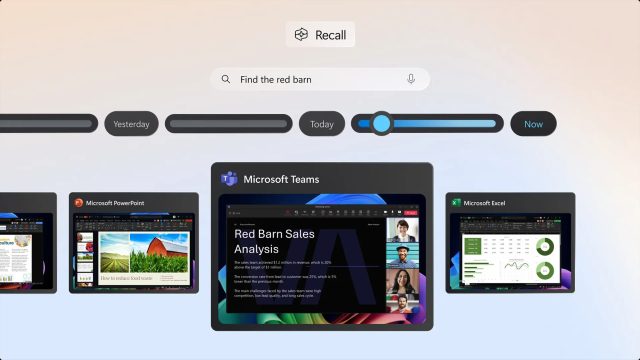
A screenshot of Microsoft's new "Recall" feature in action.

A screenshot of Microsoft’s new “Recall” feature in action. Credit: Microsoft

In an era where many people already feel like they have no privacy due to tech encroachments, Microsoft dialed it up to an extreme degree in May. That’s when Microsoft unveiled a controversial Windows 11 feature called “Recall” that continuously captures screenshots of users’ PC activities every few seconds for later AI-powered search and retrieval. The feature, designed for new Copilot+ PCs using Qualcomm’s Snapdragon X Elite chips, promised to help users find past activities, including app usage, meeting content, and web browsing history.

While Microsoft emphasized that Recall would store encrypted snapshots locally and allow users to exclude specific apps or websites, the announcement raised immediate privacy concerns, as Ars senior technology reporter Andrew Cunningham covered. It also came with a technical toll, requiring significant hardware resources, including 256GB of storage space, with 25GB dedicated to storing approximately three months of user activity. After Microsoft pulled the initial test version due to public backlash, Recall later entered public preview in November with reportedly enhanced security measures. But secure spyware is still spyware—Recall, when enabled, still watches nearly everything you do on your computer and keeps a record of it.

Google Search told people to eat rocks

This is fine. Credit: Getty Images

In May, Ars senior gaming reporter Kyle Orland (who assisted commendably with the AI beat throughout the year) covered Google’s newly launched AI Overview feature. It faced immediate criticism when users discovered that it frequently provided false and potentially dangerous information in its search result summaries. Among its most alarming responses, the system advised humans could safely consume rocks, incorrectly citing scientific sources about the geological diet of marine organisms. The system’s other errors included recommending nonexistent car maintenance products, suggesting unsafe food preparation techniques, and confusing historical figures who shared names.

The problems stemmed from several issues, including the AI treating joke posts as factual sources and misinterpreting context from original web content. But most of all, the system relies on web results as indicators of authority, which we called a flawed design. While Google defended the system, stating these errors occurred mainly with uncommon queries, a company spokesperson acknowledged they would use these “isolated examples” to refine their systems. But to this day, AI Overview still makes frequent mistakes.

https://arstechnica.com/ai/2024/12/2024-the-year-ai-drove-everyone-crazy/


Health care giant Ascension says 5.6 million patients affected in cyberattack

Health care company Ascension lost sensitive data for nearly 5.6 million individuals in a cyberattack that was attributed to a notorious ransomware gang, according to documents filed with the attorney general of Maine.

Ascension owns 140 hospitals and scores of assisted living facilities. In May, the organization was hit with an attack that caused mass disruptions as staff was forced to move to manual processes that caused errors, delayed or lost lab results, and diversions of ambulances to other hospitals. Ascension managed to restore most services by mid-June. At the time, the company said the attackers had stolen protected health information and personally identifiable information for an undisclosed number of people.

Investigation concluded

A filing Ascension made earlier in December revealed that nearly 5.6 million people were affected by the breach. Data stolen depended on the particular person but included individuals’ names and medical information (e.g., medical record numbers, dates of service, types of lab tests, or procedure codes), payment information (e.g., credit card information or bank account numbers), insurance information (e.g., Medicaid/Medicare ID, policy number, or insurance claim), government
identification (e.g., Social Security numbers, tax identification numbers, driver’s license numbers, or passport numbers), and other personal information (such as date of birth or address).

https://arstechnica.com/information-technology/2024/12/health-care-giant-ascension-says-5-6-million-patients-affected-in-cyberattack/


12 days of OpenAI: The Ars Technica recap

Day 9: Tuesday, December 17

On day 9, OpenAI released its o1 model through its API platform, adding support for function calling, developer messages, and vision processing capabilities. The company also reduced GPT-4o audio pricing by 60 percent and introduced a GPT-4o mini option that costs one-tenth of previous audio rates.

OpenAI also simplified its WebRTC integration for real-time applications and unveiled Preference Fine-Tuning, which provides developers new ways to customize models. The company also launched beta versions of software development kits for the Go and Java programming languages, expanding its toolkit for developers.

Day 10: Wednesday, December 18

On Wednesday, OpenAI did something a little fun and launched voice and messaging access to ChatGPT through a toll-free number (1-800-CHATGPT), as well as WhatsApp. US residents can make phone calls with a 15-minute monthly limit, while global users can message ChatGPT through WhatsApp at the same number.

OpenAI said the release is a way to reach users who lack consistent high-speed Internet access or want to try AI through familiar communication channels, but it’s also just a clever hack. As evidence, OpenAI notes that these new interfaces serve as experimental access points, with more “limited functionality” than the full ChatGPT service, and still recommends existing users continue using their regular ChatGPT accounts for complete features.

Day 11: Thursday, December 19

On Thursday, OpenAI expanded ChatGPT’s desktop app integration to include additional coding environments and productivity software. The update added support for Jetbrains IDEs like PyCharm and IntelliJ IDEA, VS Code variants including Cursor and VSCodium, and text editors such as BBEdit and TextMate.

OpenAI also included integration with Apple Notes, Notion, and Quip while adding Advanced Voice Mode compatibility when working with desktop applications. These features require manual activation for each app and remain available to paid subscribers, including Plus, Pro, Team, Enterprise, and Education users, with Enterprise and Education customers needing administrator approval to enable the functionality.

https://arstechnica.com/information-technology/2024/12/12-days-of-openai-the-ars-technica-recap/


OpenAI announces o3 and o3-mini, its next simulated reasoning models

On Friday, during Day 12 of its “12 days of OpenAI,” OpenAI CEO Sam Altman announced its latest AI “reasoning” models, o3 and o3-mini, which build upon the o1 models launched earlier this year. The company is not releasing them yet but will make these models available for public safety testing and research access today.

The models use what OpenAI calls “private chain of thought,” where the model pauses to examine its internal dialog and plan ahead before responding, which you might call “simulated reasoning” (SR)—a form of AI that goes beyond basic large language models (LLMs).

The company named the model family “o3” instead of “o2” to avoid potential trademark conflicts with British telecom provider O2, according to The Information. During Friday’s livestream, Altman acknowledged his company’s naming foibles, saying, “In the grand tradition of OpenAI being really, truly bad at names, it’ll be called o3.”

According to OpenAI, the o3 model earned a record-breaking score on the ARC-AGI benchmark, a visual reasoning benchmark that has gone unbeaten since its creation in 2019. In low-compute scenarios, o3 scored 75.7 percent, while in high-compute testing, it reached 87.5 percent—comparable to human performance at an 85 percent threshold.

OpenAI also reported that o3 scored 96.7 percent on the 2024 American Invitational Mathematics Exam, missing just one question. The model also reached 87.7 percent on GPQA Diamond, which contains graduate-level biology, physics, and chemistry questions. On the Frontier Math benchmark by EpochAI, o3 solved 25.2 percent of problems, while no other model has exceeded 2 percent.

https://arstechnica.com/information-technology/2024/12/openai-announces-o3-and-o3-mini-its-next-simulated-reasoning-models/


The AI war between Google and OpenAI has never been more heated

Over the past month, we’ve seen a rapid cadence of notable AI-related announcements and releases from both Google and OpenAI, and it’s been making the AI community’s head spin. It has also poured fuel on the fire of the OpenAI-Google rivalry, an accelerating game of one-upmanship taking place unusually close to the Christmas holiday.

“How are people surviving with the firehose of AI updates that are coming out,” wrote one user on X last Friday, which is still a hotbed of AI-related conversation. “in the last <24 hours we got gemini flash 2.0 and chatGPT with screenshare, deep research, pika 2, sora, chatGPT projects, anthropic clio, wtf it never ends.”

Rumors travel quickly in the AI world, and people in the AI industry had been expecting OpenAI to ship some major products in December. Once OpenAI announced “12 days of OpenAI” earlier this month, Google jumped into gear and seemingly decided to try to one-up its rival on several counts. So far, the strategy appears to be working, but it’s coming at the cost of the rest of the world being able to absorb the implications of the new releases.

“12 Days of OpenAI has turned into like 50 new @GoogleAI releases,” wrote another X user on Monday. “This past week, OpenAI & Google have been releasing at the speed of a new born startup,” wrote a third X user on Tuesday. “Even their own users can’t keep up. Crazy time we’re living in.”

“Somebody told Google that they could just do things,” wrote a16z partner and AI influencer Justine Moore on X, referring to a common motivational meme telling people they “can just do stuff.”

The Google AI rush

OpenAI’s “12 Days of OpenAI” campaign has included releases of their full o1 model, an upgrade from o1-preview, alongside o1-pro for advanced “reasoning” tasks. The company also publicly launched Sora for video generation, added Projects functionality to ChatGPT, introduced Advanced Voice features with video streaming capabilities, and more.

https://arstechnica.com/information-technology/2024/12/google-and-openai-blitz-december-with-so-many-ai-releases-its-hard-to-keep-up/


Not to be outdone by OpenAI, Google releases its own “reasoning” AI model

Google DeepMind’s chief scientist, Jeff Dean, says that the model receives extra computing power, writing on X, “we see promising results when we increase inference time computation!” The model works by pausing to consider multiple related prompts before providing what it determines to be the most accurate answer.

Since OpenAI’s jump into the “reasoning” field in September with o1-preview and o1-mini, several companies have been rushing to achieve feature parity with their own models. For example, DeepSeek launched DeepSeek-R1 in early November, while Alibaba’s Qwen team released its own “reasoning” model, QwQ earlier this month.

While some claim that reasoning models can help solve complex mathematical or academic problems, these models might not be for everybody. While they perform well on some benchmarks, questions remain about their actual usefulness and accuracy. Also, the high computing costs needed to run reasoning models have created some rumblings about their long-term viability. That high cost is why OpenAI’s ChatGPT Pro costs $200 a month, for example.

Still, it appears Google is serious about pursuing this particular AI technique. Logan Kilpatrick, a Google employee in its AI Studio, called it “the first step in our reasoning journey” in a post on X.

https://arstechnica.com/information-technology/2024/12/not-to-be-outdone-by-openai-google-releases-its-own-reasoning-ai-model/