Ten months after first tease, OpenAI launches Sora video generation publicly

[embedded content]

A music video by Canadian art collective Vallée Duhamel made with Sora-generated video. “[We] just shoot stuff and then use Sora to combine it with a more interesting, more surreal vision.”

During a livestream on Monday—during Day 3 of OpenAI’s “12 days of OpenAi”—Sora’s developers showcased a new “Explore” interface that allows people to browse through videos generated by others to get prompting ideas. OpenAI says that anyone can enjoy viewing the “Explore” feed for free, but generating videos requires a subscription.

They also showed off a new feature called “Storyboard” that allows users to direct a video with multiple actions in a frame-by-frame manner.

Safety measures and limitations

In addition to the release, OpenAI also publish Sora’s System Card for the first time. It includes technical details about how the model works and safety testing the company undertook prior to this release.

“Whereas LLMs have text tokens, Sora has visual patches,” OpenAI writes, describing the new training chunks as “an effective representation for models of visual data… At a high level, we turn videos into patches by first compressing videos into a lower-dimensional latent space, and subsequently decomposing the representation into spacetime patches.”

Sora also makes use of a “recaptioning technique”—similar to that seen in the company’s DALL-E 3 image generation, to “generate highly descriptive captions for the visual training data.” That, in turn, lets Sora “follow the user’s text instructions in the generated video more faithfully,” OpenAI writes.

Sora-generated video provided by OpenAI, from the prompt: “Loop: a golden retriever puppy wearing a superhero outfit complete with a mask and cape stands perched on the top of the empire state building in winter, overlooking the nyc it protects at night. the back of the pup is visible to the camera; his attention faced to nyc”

OpenAI implemented several safety measures in the release. The platform embeds C2PA metadata in all generated videos for identification and origin verification. Videos display visible watermarks by default, and OpenAI developed an internal search tool to verify Sora-generated content.

The company acknowledged technical limitations in the current release. “This early version of Sora will make mistakes, it’s not perfect,” said one developer during the livestream launch. The model reportedly struggles with physics simulations and complex actions over extended durations.

In the past, we’ve seen that these types of limitations are based on what example videos were used to train AI models. This current generation of AI video-synthesis models has difficulty generating truly new things, since the underlying architecture excels at transforming existing concepts into new presentations, but so far typically fails at true originality. Still, it’s early in AI video generation, and the technology is improving all the time.

https://arstechnica.com/ai/2024/12/ten-months-after-first-tease-openai-launches-sora-video-generation-publicly/



Your AI clone could target your family, but there’s a simple defense

The warning extends beyond voice scams. The FBI announcement details how criminals also use AI models to generate convincing profile photos, identification documents, and chatbots embedded in fraudulent websites. These tools automate the creation of deceptive content while reducing previously obvious signs of humans behind the scams, like poor grammar or obviously fake photos.

Much like we warned in 2022 in a piece about life-wrecking deepfakes based on publicly available photos, the FBI also recommends limiting public access to recordings of your voice and images online. The bureau suggests making social media accounts private and restricting followers to known contacts.

Origin of the secret word in AI

To our knowledge, we can trace the first appearance of the secret word in the context of modern AI voice synthesis and deepfakes back to an AI developer named Asara Near, who first announced the idea on Twitter on March 27, 2023.

“(I)t may be useful to establish a ‘proof of humanity’ word, which your trusted contacts can ask you for,” Near wrote. “(I)n case they get a strange and urgent voice or video call from you this can help assure them they are actually speaking with you, and not a deepfaked/deepcloned version of you.”

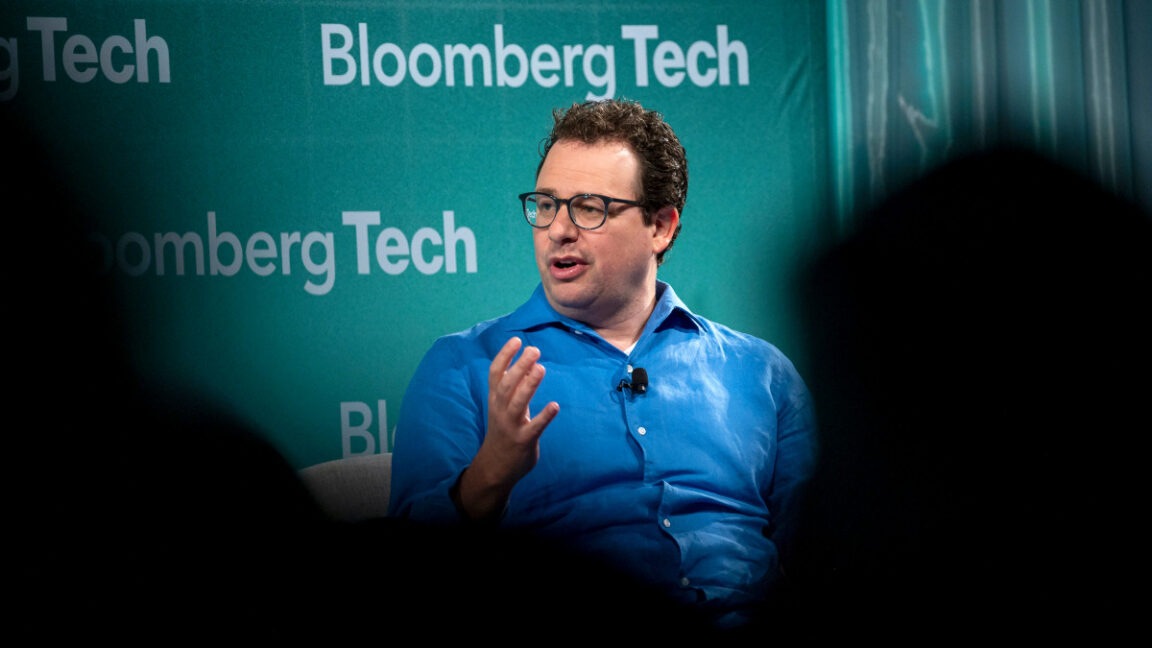
Since then, the idea has spread widely. In February, Rachel Metz covered the topic for Bloomberg, writing, “The idea is becoming common in the AI research community, one founder told me. It’s also simple and free.”

Of course, passwords have been used since ancient times to verify someone’s identity, and it seems likely some science fiction story has dealt with the issue of passwords and robot clones in the past. It’s interesting that, in this new age of high-tech AI identity fraud, this ancient invention—a special word or phrase known to few—can still prove so useful.

https://arstechnica.com/ai/2024/12/your-ai-clone-could-target-your-family-but-theres-a-simple-defense/


Broadcom reverses controversial plan in effort to cull VMware migrations

Customers re-examining VMware dependence

VMware has been the go-to virtualization platform for years, but Broadcom’s acquisition has pushed customers to reconsider their VMware dependence. A year into its VMware buy, Broadcom is at a critical point. By now, customers have had months to determine whether they’ll navigate VMware’s new landscape or opt for alternatives. Beyond dissatisfaction with the new pricing and processes under Broadcom, the acquisition has also served as a wake-up call about vendor lock-in. Small- and medium-size businesses (SMBs) are having the biggest problems navigating the changes, per conversations that Ars has had with VMware customers and analysts.

Speaking to The Register, Edwards claimed that migration from VMware is still modest. However, the coming months are set to be decision time for some clients. In a June and July survey that Veeam, which provides hypervisor backup solutions, sponsored, 56 percent of organizations were expecting to “decrease” VMware usage by July 2025. The survey examined 561 “senior decisionmakers employed in IT operations and IT security roles” in companies with over 1,000 employees in the US, France, Germany, and the UK.

Impact on migrations questioned

With the pain points seemingly affecting SMBs more than bigger clients, Broadcom’s latest move may do little to deter the majority of customers from considering ditching VMware.

Speaking with Ars, Rick Vanover, VP of product strategy at Veeam, said he thinks Broadcom taking fewer large VMware customers direct will have an “insignificant” impact on migrations, explaining:

Generally speaking, the largest enterprises (those who would qualify for direct servicing by Broadcom) are not considering migrating off VMware.

However, channel partners can play a “huge part” in helping customers decide to stay or migrate platforms, the executive added.

“Product telemetry at Veeam shows a slight distribution of hypervisors in the market, across all segments, but not enough to tell the market that the sky is falling,” Vanover said.

In his blog, Edwards argued that Tan is demonstrating a “clear objective to strip out layers of cost and complexity in the business, and return it to strong growth and profitability.” He added: “But so far this has come at the expense of customer and partner relationships. Has VMware done enough to turn the tide?”

Perhaps more pertinent to SMBs, Broadcom last month announced a more SMB-friendly VMware subscription tier. Ultimate pricing will be a big factor in whether this tier successfully maintains SMB business. But Broadcom’s VMware still seems more focused on larger customers.

https://arstechnica.com/information-technology/2024/12/new-broadcom-sales-plan-may-be-insignificant-in-deterring-vmware-migrations/


OpenAI announces full “o1” reasoning model, $200 ChatGPT Pro tier

On Thursday during a live demo as part of its “12 days of OpenAI” event, OpenAI announced a new tier of ChatGPT with higher usage limits for $200 a month and the full version of “o1,” the full version of a so-called reasoning model the company debuted in September.

Unlike o1-preview, o1 can now process images as well as text (similar to GPT-4o), and it is reportedly much faster than o1-preview. In a demo question about a Roman emperor, o1 took 14 seconds for an answer, and 1 preview took 33 seconds. According to OpenAI, o1 makes major mistakes 34 percent less often than o1-preview, while “thinking” 50 percent faster. The model will also reportedly become even faster once deployment is finished transitioning the GPUs to the new model.

Whether the new ChatGPT Pro subscription will be worth the $200 a month fee isn’t yet fully clear, but the company specified that users will have access to an even more capable version of o1 called “o1 Pro Mode” that will do even deeper reasoning searches and provide “more thinking power for more difficult problems” before answering.

Today, we’re adding ChatGPT Pro, a $200 monthly plan that enables scaled access to the best of OpenAI’s models and tools. This plan includes unlimited access to our smartest model, OpenAI o1, as well as to o1-mini, GPT-4o, and Advanced Voice. It also includes o1 pro mode, a version of o1 that uses more compute to think harder and provide even better answers to the hardest problems. In the future, we expect to add more powerful, compute-intensive productivity features to this plan.

The new service seems aimed at those who might benefit from higher rate limits and more computational time devoted to coming up with an answer. “ChatGPT Pro provides a way for researchers, engineers, and other individuals who use research-grade intelligence daily to accelerate their productivity and be at the cutting edge of advancements in AI,” OpenAI writes in its press release.

https://arstechnica.com/ai/2024/12/openais-new-200-mo-chatgpt-subscription-will-buy-you-more-compute-time/


OpenAI teases 12 days of mystery product launches starting tomorrow

On Wednesday, OpenAI CEO Sam Altman announced a “12 days of OpenAI” period starting December 5, which will unveil new AI features and products for 12 consecutive weekdays.

Altman did not specify the exact features or products OpenAI plans to unveil, but a report from The Verge about this “12 days of shipmas” event suggests the products may include a public release of the company’s text-to-video model Sora and a new “reasoning” AI model similar to o1-preview. Perhaps we may even see DALL-E 4 or a new image generator based on GPT-4o’s multimodal capabilities.

Altman’s full tweet included hints at releases both big and small:

🎄🎅starting tomorrow at 10 am pacific, we are doing 12 days of openai.

each weekday, we will have a livestream with a launch or demo, some big ones and some stocking stuffers.

we’ve got some great stuff to share, hope you enjoy! merry christmas.

If we’re reading the calendar correctly, 12 weekdays means a new announcement every day until December 20.

https://arstechnica.com/ai/2024/12/openai-teases-12-days-of-mystery-product-launches-starting-tomorrow/


Certain names make ChatGPT grind to a halt, and we know why

The “David Mayer” block in particular (now resolved) presents additional questions, first posed on Reddit on November 26, as multiple people share this name. Reddit users speculated about connections to David Mayer de Rothschild, though no evidence supports these theories.

The problems with hard-coded filters

Allowing a certain name or phrase to always break ChatGPT outputs could cause a lot of trouble down the line for certain ChatGPT users, opening them up for adversarial attacks and limiting the usefulness of the system.

Already, Scale AI prompt engineer Riley Goodside discovered how an attacker might interrupt a ChatGPT session using a visual prompt injection of the name “David Mayer” rendered in a light, barely legible font embedded in an image. When ChatGPT sees the image (in this case, a math equation), it stops, but the user might not understand why.

The filter also means that it’s likely that ChatGPT won’t be able to answer questions about this article when browsing the web, such as through ChatGPT with Search.  Someone could use that to potentially prevent ChatGPT from browsing and processing a website on purpose if they added a forbidden name to the site’s text.

And then there’s the inconvenience factor. Preventing ChatGPT from mentioning or processing certain names like “David Mayer,” which is likely a popular name shared by hundreds if not thousands of people, means that people who share that name will have a much tougher time using ChatGPT. Or, say, if you’re a teacher and you have a student named David Mayer and you want help sorting a class list, ChatGPT would refuse the task.

These are still very early days in AI assistants, LLMs, and chatbots. Their use has opened up numerous opportunities and vulnerabilities that people are still probing daily. How OpenAI might resolve these issues is still an open question.

https://arstechnica.com/information-technology/2024/12/certain-names-make-chatgpt-grind-to-a-halt-and-we-know-why/


Company claims 1,000 percent price hike drove it from VMware to open source rival

Companies have been discussing migrating off of VMware since Broadcom’s takeover a year ago led to higher costs and other controversial changes. Now we have an inside look at one of the larger customers that recently made the move.

According to a report from The Register today, Beeks Group, a cloud operator headquartered in the United Kingdom, has moved most of its 20,000-plus virtual machines (VMs) off VMware and to OpenNebula, an open source cloud and edge computing platform. Beeks Group sells virtual private servers and bare metal servers to financial service providers. It still has some VMware VMs, but “the majority” of its machines are currently on OpenNebula, The Register reported.

Beeks’ head of production management, Matthew Cretney, said that one of the reasons for Beeks’ migration was a VMware bill for “10 times the sum it previously paid for software licenses,” per The Register.

According to Beeks, OpenNebula has enabled the company to dedicate more of its 3,000 bare metal server fleet to client loads instead of to VM management, as it had to with VMware. With OpenNebula purportedly requiring less management overhead, Beeks is reporting a 200 percent increase in VM efficiency since it now has more VMs on each server.

Beeks also pointed to customers viewing VMware as non-essential and a decline in VMware support services and innovation as drivers for it migrating from VMware.

Broadcom didn’t respond to Ars Technica’s request for comment.

Broadcom loses VMware customers

Broadcom will likely continue seeing some of VMware’s older customers decrease or abandon reliance on VMware offerings. But Broadcom has emphasized the financial success it has seen (PDF) from its VMware acquisition, suggesting that it will continue with its strategy even at the risk of losing some business.

https://arstechnica.com/information-technology/2024/12/company-claims-1000-percent-price-hike-drove-it-from-vmware-to-open-source-rival/


Code found online exploits LogoFAIL to install Bootkitty Linux backdoor

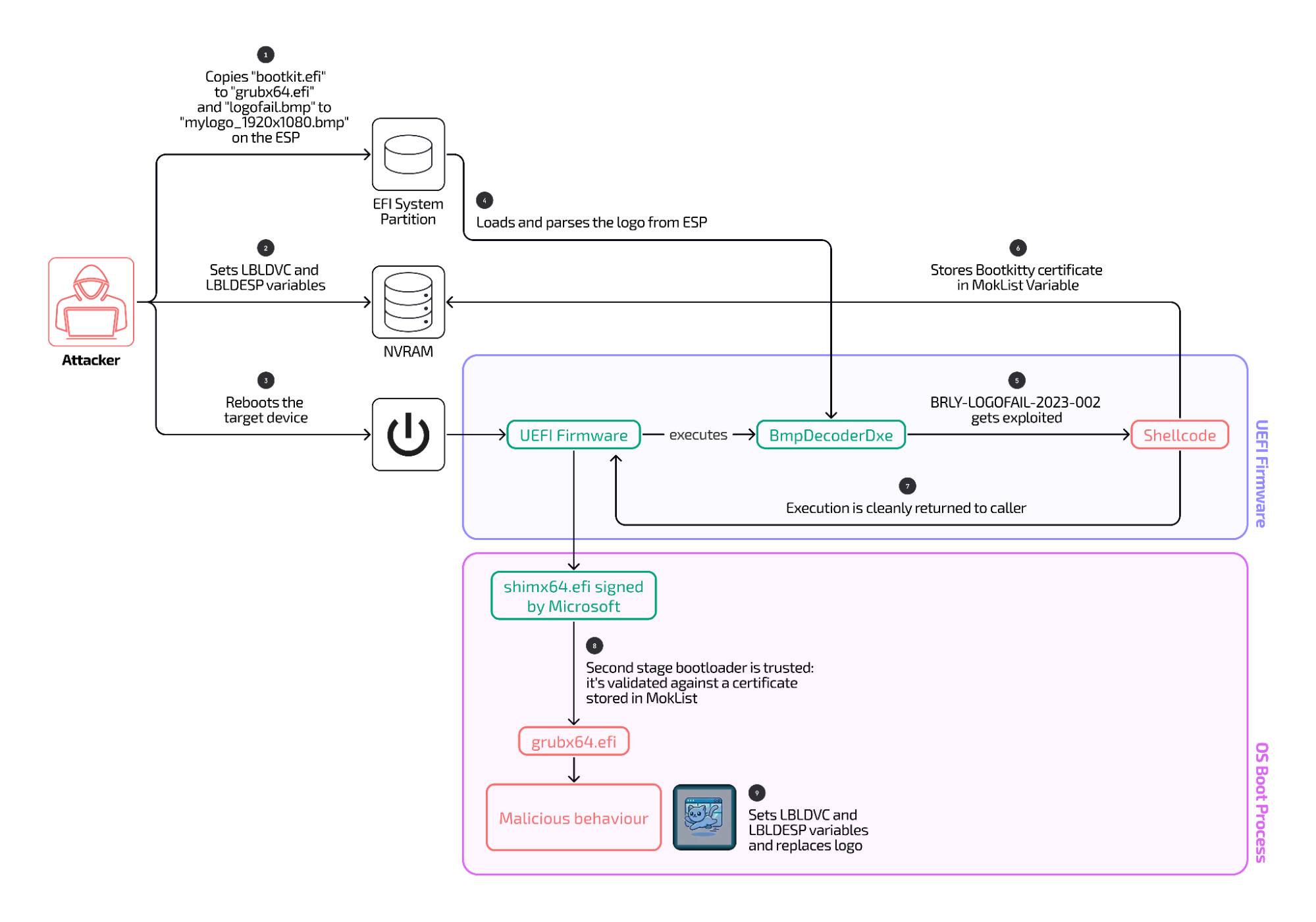
Normally, Secure Boot prevents the UEFI from running all subsequent files unless they bear a digital signature certifying those files are trusted by the device maker. The exploit bypasses this protection by injecting shell code stashed in a malicious bitmap image displayed by the UEFI during the boot-up process. The injected code installs a cryptographic key that digitally signs a malicious GRUB file along with a backdoored image of the Linux kernel, both of which run during later stages of the boot process on Linux machines.

The silent installation of this key induces the UEFI to treat the malicious GRUB and kernel image as trusted components, and thereby bypass Secure Boot protections. The final result is a backdoor slipped into the Linux kernel before any other security defenses are loaded.

Diagram illustrating the execution flow of the LogoFAIL exploit Binarly found in the wild. Credit: Binarly

In an online interview, HD Moore, CTO and co-founder at runZero and an expert in firmware-based malware, explained the Binarly report this way:

The Binarly paper points to someone using the LogoFAIL bug to configure a UEFI payload that bypasses secure boot (firmware) by tricking the firmware into accepting their self-signed key (which is then stored in the firmware as the MOK variable). The evil code is still limited to the user-side of UEFI, but the LogoFAIL exploit does let them add their own signing key to the firmware’s allow list (but does not infect the firmware in any way otherwise).

It’s still effectively a GRUB-based kernel backdoor versus a firmware backdoor, but it does abuse a firmware bug (LogoFAIL) to allow installation without user interaction (enrolling, rebooting, then accepting the new MOK signing key).

In a normal secure boot setup, the admin generates a local key, uses this to sign their updated kernel/GRUB packages, tells the firmware to enroll the key they made, then after reboot, the admin has to accept this new key via the console (or remotely via bmc/ipmi/ilo/drac/etc bios console).

In this setup, the attacker can replace the known-good GRUB + kernel with a backdoored version by enrolling their own signing key without user interaction via the LogoFAIL exploit, but it’s still effectively a GRUB-based bootkit, and doesn’t get hardcoded into the BIOS firmware or anything.

Machines vulnerable to the exploit include some models sold by Acer, HP, Fujitsu, and Lenovo when they ship with a UEFI developed by manufacturer Insyde and run Linux. Evidence found in the exploit code indicates the exploit may be tailored for specific hardware configurations of such machines. Insyde issued a patch earlier this year that prevents the exploit from working. Unpatched devices remain vulnerable. Devices from these manufacturers that use non-Insyde UEFIs aren’t affected.

https://arstechnica.com/security/2024/11/code-found-online-exploits-logofail-to-install-bootkitty-linux-backdoor/


Found in the wild: The world’s first unkillable UEFI bootkit for Linux

Over the past decade, a new class of infections has threatened Windows users. By infecting the firmware that runs immediately before the operating system loads, these UEFI bootkits continue to run even when the hard drive is replaced or reformatted. Now the same type of chip-dwelling malware has been found in the wild for backdooring Linux machines.

Researchers at security firm ESET said Wednesday that Bootkitty—the name unknown threat actors gave to their Linux bootkit—was uploaded to VirusTotal earlier this month. Compared to its Windows cousins, Bootkitty is still relatively rudimentary, containing imperfections in key under-the-hood functionality and lacking the means to infect all Linux distributions other than Ubuntu. That has led the company researchers to suspect the new bootkit is likely a proof-of-concept release. To date, ESET has found no evidence of actual infections in the wild.

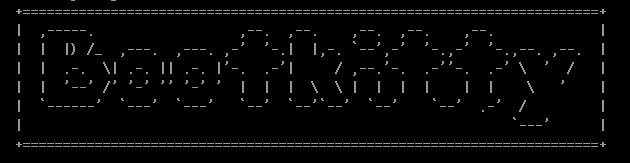
The ASCII logo that Bootkitty is capable of rendering. Credit: ESET

Be prepared

Still, Bootkitty suggests threat actors may be actively developing a Linux version of the same sort of unkillable bootkit that previously was found only targeting Windows machines.

“Whether a proof of concept or not, Bootkitty marks an interesting move forward in the UEFI threat landscape, breaking the belief about modern UEFI bootkits being Windows-exclusive threats,” ESET researchers wrote. “Even though the current version from VirusTotal does not, at the moment, represent a real threat to the majority of Linux systems, it emphasizes the necessity of being prepared for potential future threats.”

A rootkit is a piece of malware that runs in the deepest regions of the operating system it infects. It leverages this strategic position to hide information about its presence from the operating system itself. A bootkit, meanwhile, is malware that infects the boot-up process in much the same way. Bootkits for the UEFI—short for Unified Extensible Firmware Interface—lurk in the chip-resident firmware that runs each time a machine boots. These sorts of bootkits can persist indefinitely, providing a stealthy means for backdooring the operating system even before it has fully loaded and enabled security defenses such as antivirus software.

The bar for installing a bootkit is high. An attacker first must gain administrative control of the targeted machine, either through physical access while it’s unlocked or somehow exploiting a critical vulnerability in the OS. Under those circumstances, attackers already have the ability to install OS-resident malware. Bootkits, however, are much more powerful since they (1) run before the OS does and (2) are, at least practically speaking, undetectable and unremovable.

https://arstechnica.com/security/2024/11/found-in-the-wild-the-worlds-first-unkillable-uefi-bootkit-for-linux/


Amazon pours another $4B into Anthropic, OpenAI’s biggest rival

Anthropic, founded by former OpenAI executives Dario and Daniela Amodei in 2021, will continue using Google’s cloud services along with Amazon’s infrastructure. The UK Competition and Markets Authority reviewed Amazon’s partnership with Anthropic earlier this year and ultimately determined it did not have jurisdiction to investigate further, clearing the way for the partnership to continue.

Shaking the money tree

Amazon’s renewed investment in Anthropic also comes during a time of intense competition between cloud providers Amazon, Microsoft, and Google. Each company has made strategic partnerships with AI model developers—Microsoft with OpenAI (to the tune of $13 billion), Google with Anthropic (committing $2 billion over time), for example. These investments also encourage the use of each company’s data centers as demand for AI grows.

The size of these investments reflects the current state of AI development. OpenAI raised an additional $6.6 billion in October, potentially valuing the company at $157 billion. Anthropic has been eyeballing a $40 billion valuation during a recent investment round.

Training and running AI models is very expensive. While Google and Meta have their own profitable mainline businesses that can subsidize AI development, dedicated AI firms like OpenAI and Anthropic need constant infusions of cash to stay afloat—in other words, this won’t be the last time we hear of billion-dollar-scale AI investments from Big Tech.

https://arstechnica.com/ai/2024/11/amazon-pours-another-4b-into-anthropic-openais-biggest-rival/