Anthropic dopo la scomunica del Pentagono: la tecnologia si separa dalle istituzioni per comunicare con le autorità

Mai una scomunica è stata cosi fruttifera quale quella dichiarata dalla Casa Bianca ai danni di Anthropic, dai tempi di Enrico VIII che, sulla spinta del rifiuto di Clemente VII di annullare il suo matrimonio, creò la chiesa Anglicana, architrave dell’impero britannico.

Rispetto all’anno scorso, la società che produce il sistema di intelligenza artificiale Claude, che si è ribellata alle pretese del Pentagono di usare le sue tecnologie senza vincoli o limiti etici, ha più che triplicato il suo fatturato, passando da 9 a 30 miliardi.

Ma siamo solo all’inizio. Proprio lo scontro con Trump, che avviene nel pieno di una guerra che vede le forze americane sulla linea del fuoco, invece di produrre una reazione di rigetto e critica da parte dell’opinione pubblica, secondo la tradizione del nazionalismo statunitense nelle circostanze belliche- right or wrong is my country – si registra una straordinaria adesione alle posizioni dei proprietari della società, gli italo americani fratelli Amodei.

Da mesi si assiste ad una trasmigrazione di utenti dalle proposte di ChatGPT a quelle di Anthropic. Ma questa spinta non riguarda solo l’emotività popolare, ma anche il sensibile e cinico mondo del business.

Infatti, insieme ai successi di fatturato, Anthropic informa di una nuova combinazione strategica con Google e Broadcom, società di produzione delle unità di calcolo, per la produzione di TCU, i nuovissimi microchip progettati dal motore di ricerca di Moutain View, che dovrebbero sostituire le fondamentali CPU di Nvidia nel cuore dei sistemi di intelligenza artificiale.

Un’operazione questa che, insieme al salto quantico atteso, sembra destinata a mutare radicalmente il volto del mercato digitale e soprattutto la struttura stessa delle infrastrutture che ancora lo contengono.
Un nuovo microchip, quale si annuncia il TCU (Tensor Processor Unit), è un’unità  sviluppata da Google proprio per l’apprendimento neurale, che in una sinergia con Anthropic potrebbe rapidamente soppiantare l’attuale applicazione basata sulla produzione di Nvidia.

Siamo dunque ad un ulteriore giro di boa, dove non solo i gruppi tecnologici si separano dalle istituzioni politiche ma, proprio in opposizione ai comandi militari, nel pieno di un conflitto, elaborano linee di sviluppo che contrastano con i programmi degli stati maggiori.

Sembra paradossalmente avverarsi quello che nel nostro ultimo libro, “Guerre in Codice, come le intelligenze artificiali resettano la democrazia” (Donzelli), abbiamo definito di Peter Thiel’s Switch, ossia quell’inversione gerarchia fra politica e digitale, dove, come teorizza il templare della Silicon Valley, la politica comunica quello che le tecnologie decidono.

Solo che questa affermazione di supremazia dei gruppi di calcolo avviene sul versante ideologico opposto a quello guidato dal capo di Palantir.

Potrebbe essere l’ennesimo segnale di uno scollamento fra la leadership Maga, la tendenza sovranista dei repubblicani che ha portato Trump alla Casa Bianca. Ma inevitabilmente ci parla di un processo più di fondo, in cui, la potenza computazionale sfonda ogni limite geopolitico e si afferma come struttura di base dei processi sociali e politici.

Proprio nel 250° anniversario della pubblicazione della Ricchezza delle Nazioni di Adama Smith, che diede un fondamento teorico al nascente capitalismo industriale basato sulle dinamiche globali di un capitalismo che formava le nazioni, oggi si pone all’ordine del giorno un nuovo primato sociale costituito proprio dalla differenziazione fra le diverse forme di tecnologie automatiche.

Il successo di Anthropic non rappresenta solo la preminenza di una vocazione libertaria, o comunque democratica dei sistemi tecnologici, ma ci rappresenta la pretesa di queste tecnologie di riassumere nel proprio universo di calcolo tutte le variabili, riducendo ogni valore ad un calcolo appunto.

Una posizione, per certi versi, non dissimile da quello che in qualche modo si afferma in Cina, dove la supremazia dell’apparato di governo si basa proprio sulla capacità di armonizzare la potenza digitale con la forma di amministrazione del paese. Stiamo passando da uno Stato-algoritmo, in cui un regime si sosteneva con lo sviluppo tecnologico, ad un algoritmo che si fa Stato, in cui è la tecnologia, nelle sue continue progressioni che mutano la forma e i contenuti delle relazioni sociali, che si propone come codice di controllo e governo.

Sia in una versione più conservatrice e autoritaria, quale quella teorizzata da Peter Thiel, sia in una più aperta e dinamica, quale quella che oggi viene rappresentata da Anthropic. Ma in entrambi i casi siamo ad una riclassificazione delle dinamiche geopolitiche e culturali, in cui, come vediamo anche nel conflitto attorno all’Iran, o in quello in Ucraina, non sono più le dimensioni di una potenza ad imporsi ma la capacità di distribuire saperi e competenze per rendere inafferrabile la testa del sistema bellico, che ormai coincide con la vita civile di una comunità.

Leggi le altre notizie sull’home page di Key4biz

https://www.key4biz.it/il-boom-di-anthropic-dopo-la-scomunica-del-pentagono-la-tecnologia-si-separa-dalle-istituzioni-per-comunicare-con-le-autorita-nazionali/568622/




When Amazon badly needed a ride, Europe’s Ariane 6 rocket delivered

The Ariane 64 flew with an extended payload shroud to fit all 32 Amazon Leo satellites. Combined, the payload totaled around 20 metric tons, or about 44,000 pounds, according to Arianespace. This is close to maxing out the Ariane 64’s lift capability.

Amazon has booked more than 100 missions across four launch providers to populate the company’s planned fleet of more than 3,200 satellites. With Thursday’s launch, Amazon has launched 214 production satellites on eight missions with United Launch Alliance, SpaceX, and now Arianespace.

The Amazon Leo constellation is a competitor with SpaceX’s Starlink Internet network. SpaceX now has more than 9,000 satellites in orbit beaming broadband to more than 9 million subscribers, and all have launched on the company’s own Falcon 9 rockets. Amazon, meanwhile, initially bypassed SpaceX when selecting which companies would launch satellites for the Amazon Leo program, formerly known as Project Kuiper.

Amazon booked the last nine launches on ULA’s soon-to-retire Atlas V, five of which have now flown, and reserved the rest of its launches in 2022 on rockets that had never launched before: 38 flights on ULA’s new Vulcan rocket, 24 launches on Blue Origin’s New Glenn, and 18 on Europe’s Ariane 6.

An artist’s illustration of the Ariane 6’s upper stage in orbit with a stack of Amazon Leo satellites awaiting deployment.

Credit: Arianespace

An artist’s illustration of the Ariane 6’s upper stage in orbit with a stack of Amazon Leo satellites awaiting deployment. Credit: Arianespace

Meanwhile, in Florida

All three new rockets suffered delays but are now in service. The Ariane 6 has enjoyed the fastest ramp-up in launch cadence, with six flights under its belt after Thursday’s mission from French Guiana. ULA’s Vulcan rocket has flown four times, and Amazon says its first batch of satellites to fly on Vulcan is now complete. But a malfunction with one of the Vulcan launcher’s solid rocket boosters on a military launch from Florida early Thursday—the second such anomaly in three flights—raises questions about when Amazon will get its first ride on Vulcan.

Blue Origin, owned by Amazon founder Jeff Bezos, is gearing up for the third flight of its heavy-lift New Glenn rocket from Florida as soon as next month. Amazon and Blue Origin have not announced when the first group of Amazon Leo satellites will launch on New Glenn.

https://arstechnica.com/space/2026/02/when-amazon-badly-needed-a-ride-europes-ariane-6-rocket-delivered/


Comcast keeps losing customers despite price guarantee and unlimited data

Cavanagh said that over the past year, Comcast “made the most significant go-to-market shift in our company’s history. We have simplified our broadband offering by moving away from short-term promotions toward a clear, transparent value proposition.” But more changes are needed, he said.

“Looking ahead, 2026 is about building on the changes we made in 2025… This will be the largest broadband investment year in our history, focused squarely on customer experience and simplification, with the goal of migrating the majority of residential broadband customers to our new simplified pricing and packaging by year-end,” Cavanagh said.

Comcast’s domestic broadband revenue was $6.32 billion, down from $6.38 billion a year ago. Cable TV revenue was $6.36 billion, down from $6.74 billion year over year. Mobile revenue rose from $1.19 billion to $1.40 billion year over year, buoyed by 1.5 million new mobile lines added during the full year of 2025.

Comcast said it now has over 9 million total mobile lines and aims to get more of its broadband customers into bundles of Internet and wireless service. Comcast offers consumer mobile service through an agreement with Verizon and struck a deal with T-Mobile to deliver mobile services to business customers this year.

Peacock boosts revenue

As the owner of NBCUniversal, Comcast has a lot more going on than cable and mobile. Strong results in the Peacock streaming service and Universal Studios theme parks helped Comcast meet analysts’ revenue projections and exceed profit estimates. Peacock paid subscribers increased 22 percent year over year to 44 million, and revenue grew 23 percent to 1.6 billion in the quarter, Comcast said.

Total Q4 2025 revenue was $32.31 billion, up 1.2 percent year over year. Net income was $2.17 billion, a 54.6 percent drop compared to a profit of $4.78 billion in Q4 2024. Comcast indicated the drop isn’t as bad as it sounds because it reflects “an unfavorable comparison to the prior year period, which included a $1.9 billion income tax benefit due to an internal corporate reorganization.” Comcast’s stock price was up about 3 percent today but has fallen about 16 percent in the past 12 months.

Comcast is one of the two biggest cable companies in the US alongside Charter, which is scheduled to announce Q4 2025 earnings tomorrow. In Q3 2025, Charter reported a loss of 109,000 Internet customers, a bit more than Comcast’s 104,000-customer loss in the same quarter. Charter, which is seeking regulatory approval to buy cable company Cox, had 27.76 million residential Internet customers and 2.03 million small business Internet customers.

Disclosure: The Advance/Newhouse Partnership, which owns 12 percent of Charter, is part of Advance Publications, which owns Ars Technica parent Condé Nast.

https://arstechnica.com/tech-policy/2026/01/comcast-keeps-losing-customers-despite-price-guarantee-and-unlimited-data/


AOL announces September shutdown for dial-up Internet access

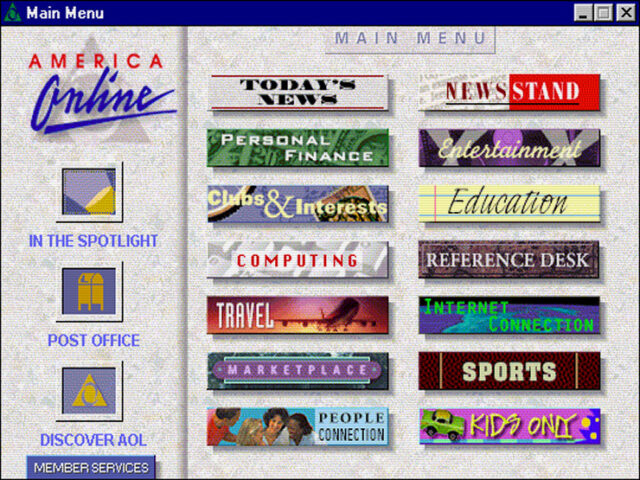
A screenshot of America Online's version 2.5 client in 1995.

A screenshot of America Online’s version 2.5 client in 1995.

The company’s cultural impact extended far beyond mere connectivity. AOL Instant Messenger introduced many users to real-time digital communication. Chat rooms created some of the Internet’s first social networks. The famous “You’ve Got Mail” notification became so iconic that it was a title for a 1998 romantic comedy. For better or worse, AOL keywords trained a generation to navigate the web through corporate-curated portals rather than open searching.

Over the years, Ars Technica documented numerous dial-up developments and disasters that plagued AOL users. In 2015, 83-year-old Ron Dorff received phone bills totaling $24,298.93 after his AOL modem started dialing a long-distance number instead of a local access point—a problem that had plagued users since at least 2002, when New York’s attorney general received more than 50 complaints about similar billing disasters.

The financial risks weren’t limited to technical mishaps: AOL itself contributed to user frustration by repeatedly adjusting its pricing strategy. In 2006, the company raised dial-up rates to $25.90 per month—the same price as broadband—in an attempt to push users toward faster connections. This followed years of subscriber losses that saw AOL’s user base fall over time as the company struggled with conflicting strategies that included launching a $9.95 Netscape-branded service in 2003 while maintaining premium pricing for its main offering.

The infrastructure that remains

AOL’s shutdown doesn’t mean dial-up is completely dead. Several niche providers like NetZero, Juno, and Dialup 4 Less continue to offer dial-up services, particularly in areas where it remains the only option. In the past, some maintained dial-up connections as a backup connection for emergencies, though many still use it for specific tasks that don’t require high bandwidth, like processing credit card payments.

The Public Switched Telephone Network that carries dial-up signals still exists, though telephone companies increasingly route calls through modern packet-switched networks rather than traditional circuit-switched systems. As long as traditional phone service exists, dial-up remains technically possible—just increasingly impractical as the web grows more demanding.

For AOL, maintaining dial-up service likely became more about serving a dwindling but dependent user base than generating meaningful revenue. The infrastructure requirements, customer support needs, and technical maintenance for such a legacy system eventually outweigh the benefits.

The September 30 shutdown date gives remaining dial-up users just over one month now to find alternative Internet access—a challenge for those in areas where alternatives don’t exist. Some may switch to satellite or cellular services despite higher costs. Others may lose Internet access entirely, further widening the digital divide that dial-up, for all its limitations, helped bridge for three decades.

This article was updated on August 12, 2025 at 10:45 AM Eastern to add details about when AOL began offering true Internet access.

https://arstechnica.com/gadgets/2025/08/aol-will-finally-end-1991-dial-up-internet-service-thats-older-than-smartphones/


FCC Democrat: Trump admin is declaring “Mission Accomplished” on broadband

The Federal Communications Commission is hamstringing its upcoming review of broadband availability by ignoring the prices consumers must pay for Internet service, FCC Commissioner Anna Gomez said in a statement yesterday.

“Some point to existing law to argue that availability is the only metric Congress allows to measure broadband deployment success. But the law does not require this agency to view broadband availability with one eye closed and the other one half-open,” said Gomez, the only Democrat on the Republican-majority commission.

The FCC said on Tuesday that it voted to kick off the next annual review with a Notice of Inquiry (NOI) that “reorients the Commission’s approach to the Section 706 Report by adhering more closely to the plain language of the statute and takes a fresh look at this question of whether broadband ‘is being deployed to all Americans in a reasonable and timely fashion.'” That would remove affordability as a factor in the review.

In other federal broadband news this week, the Trump administration told states they will be shut out of the $42 billion Broadband Equity, Access, and Deployment (BEAD) grant program if they set the rates that Internet service providers receiving subsidies are allowed to charge people with low incomes.

ISPs participating in BEAD are required by law to offer a “low-cost” plan, but the Trump administration is making sure that ISPs get to choose the price of the low-cost plan themselves. The Trump administration also made it easier for satellite providers like Starlink to get BEAD funds, which will reduce the number of homes that get fiber Internet service through the program.

“As the Commerce Department seeks to redefine the goals of the Broadband Equity, Access, and Deployment (BEAD) program, one must wonder if this is a coordinated effort to roll out the ‘Mission Accomplished’ banner as millions remain without access to a fast, reliable, and affordable way to participate in the main aspects of modern life,” Gomez said, referring to both the BEAD changes and the FCC broadband analysis.

https://arstechnica.com/tech-policy/2025/08/fcc-democrat-trump-admin-is-declaring-mission-accomplished-on-broadband/


Starlink kept me connected to the Internet without fail—until Thursday

A rare global interruption in the Starlink satellite Internet network knocked subscribers offline for more than two hours on Thursday, the longest widespread outage since SpaceX opened the service to consumers nearly five years ago.

The outage affected civilian and military users, creating an inconvenience for many but cutting off a critical lifeline for those who rely on Starlink for military operations, health care, and other applications.

Michael Nicolls, SpaceX’s vice president of Starlink engineering, wrote on X that the network outage lasted approximately 2.5 hours.

“The outage was due to failure of key internal software services that operate the core network,” Nicolls wrote. “We apologize for the temporary disruption in our service; we are deeply committed to providing a highly reliable network, and will fully root cause this issue and ensure it does not occur again.”

Elon Musk, SpaceX’s founder and CEO, apologized for the interruption in service on X: “Sorry for the outage. SpaceX will remedy root cause to ensure it doesn’t happen again.”

Effects big and small

The Ukrainian military has been at the leading edge of adopting Starlink services and adapting the system for use in war zones. Ukraine’s exploitation of Starlink connectivity has been instrumental in directing military operations, supporting battlefield communications, and controlling drones engaged in reconnaissance and offensive strikes.

The commander of Ukraine’s drone forces, Robert Brovdi, confirmed Thursday’s Starlink outage reached his country’s ongoing war with Russia.

“Starlink went down across the entire front,” Brovdi wrote on Telegram. “Combat operations were carried out without broadcasts; reconnaissance was carried out … using shock weapons.”

Brovdi added that the interruption in service illustrates the importance of having multiple paths of connectivity, especially for time-critical military operations. “This incident, which lasted 150 minutes in the war, points to bottlenecks,” he wrote, urging the military to diversify its means of communication and connectivity.

Oleksandr Dmitriev, the founder of a Ukrainian system that centralizes feeds from thousands of drone crews across the frontline, told Reuters the outage was an example of the shortcomings of relying on cloud services for military operations, particularly battlefield drone reconnaissance.

https://arstechnica.com/space/2025/07/starlink-kept-me-connected-to-the-internet-without-fail-until-thursday/


California backs down to Trump admin, won’t force ISPs to offer $15 broadband

Boerner said her goal with the bill “was always a basic broadband service” that would be affordable. “There are lots of packages out there in the world that people choose to get because they’re being price-conscious and they choose the service level that they need,” she said.

We asked Boerner about pressure from broadband industry lobbyists. She replied, “Most industries are against rate regulation. We were trying to find a balance between meeting a need, which I think all of the companies see that need, right? They see the need for low-income Californians to get online. They want to be part of the solution, and also almost every industry in California hates rate regulation. So how do you balance those interests?”

While Boerner’s bill won’t be moving forward this year, a different bill in the state Senate would encourage ISPs to offer cheap broadband by making them eligible for Lifeline subsidies if they sell 100/20Mbps service for $30 or less. Unlike Boerner’s bill, it wouldn’t force ISPs to offer low-cost plans.

Boerner criticized Congress for discontinuing a national program that made $30 discounts available to people with low incomes. Her attempt to impose a low-cost mandate in California began after the nationwide Affordable Connectivity Program (ACP) was eliminated.

“We all saw the photos of kids outside of Taco Bell or McDonald’s using their Wi-Fi to turn in homework during the pandemic, and none of us wanted to go back to that,” she said.

The ACP’s $30 discounts temporarily alleviated that problem. The ACP “was one of our most successful public benefit programs, and it wasn’t partisan,” Boerner said. “It was rural, it was urban, it was Democrat, it was Republican… every American who was low-income benefited from the ACP. And I’d really like to appeal to Congress to act in the interests of Americans and find a way to have federal subsidies for low-income access to broadband again. I wouldn’t need to do state regulations if Congress had done their job.”

It isn’t clear whether Boerner will revive her attempt to impose a low-cost mandate. When asked about her future plans for broadband affordability legislation, she did not provide any specifics. “We’re always looking for new and creative ideas,” Boerner said.

https://arstechnica.com/tech-policy/2025/07/california-backs-down-to-trump-admin-wont-force-isps-to-offer-15-broadband/


FCC to eliminate gigabit speed goal and scrap analysis of broadband prices

“As part of our return to following the plain language of section 706, we propose to abolish without replacement the long-term goal of 1,000/500Mbps established in the 2024 Report,” Carr’s plan said. “Not only is a long-term goal not mentioned in section 706, but maintaining such a goal risks skewing the market by unnecessarily potentially picking technological winners and losers.”

Fiber networks can already meet a 1,000/500Mbps standard, and the Biden administration generally prioritized fiber when it came to distributing grants to Internet providers. The Trump administration changed grant-giving procedures to distribute more funds to non-fiber providers such as Elon Musk’s Starlink satellite network.

Carr’s proposal alleged that the 1,000/500Mbps long-term goal would “appear to violate our obligation to conduct our analysis in a technologically neutral manner,” as it “may be unreasonably prejudicial to technologies such as satellite and fixed wireless that presently do not support such speeds.”

100/20Mbps standard appears to survive

When the 100/20Mbps standard was adopted last year, Carr alleged that “the 100/20Mbps requirement appears to be part and parcel of the Commission’s broader attempt to circumvent the statutory requirement of technological neutrality.” It appears the Carr FCC will nonetheless stick with 100/20Mbps for measuring availability of fixed broadband. But his plan would seek comment on that approach, suggesting a possibility that it could be changed.

“We propose to again focus our service availability discussion on fixed broadband at speeds of 100/20Mbps and seek comment on this proposal,” the plan said.

If any regulatory changes are spurred by Carr’s deployment inquiry, they would likely be to eliminate regulations instead of adding them. Carr has been pushing a “Delete, Delete, Delete” initiative to eliminate rules that he considers unnecessary, and his proposal asks for comment on broadband regulations that could be removed.

“Are there currently any regulatory barriers impeding broadband deployment, investment, expansion, competition, and technological innovation that the Commission should consider eliminating?” the call for comment asks.

https://arstechnica.com/tech-policy/2025/07/fcc-to-eliminate-gigabit-speed-goal-and-scrap-analysis-of-broadband-prices/


Amazon’s ride on the rocket merry-go-round continues with SpaceX launch

SpaceX’s patch for the KF-01 mission illustrates a Falcon 9 rocket with a batch of Kuiper broadband satellites inside its payload fairing. Credit: SpaceX

Vulcan, Ariane 6, and New Glenn have all now launched successfully, but none of them have yet demonstrated the ability to launch more than twice a year. Vulcan and Ariane 6 appear to be on track to fly multiple times before the end of 2025, while Blue Origin’s ability to quickly ramp up New Glenn’s launch cadence is more questionable.

Amazon’s only path to space for Kuiper satellites until the fall will be SpaceX’s Falcon 9.

A Federal Communications Commission deadline requires Amazon to launch half of its constellation by next July. The company will likely have to ask the FCC to extend the deadline due to Kuiper delays. For a long time, issues starting up Amazon’s Kuiper satellite production line were responsible for the delays. Now, it’s a lack of available rockets, so SpaceX is stepping in.

The Kuiper satellite factory in Kirkland, Washington, is churning out several satellites per week and shipping them to Cape Canaveral for launch preparations. At this rate, another batch of Kuiper spacecraft should be ready to fly within a few weeks. Amazon eventually wants to increase its factory throughput to five satellites per day.

Amazon’s Kuiper production plant is already the second-busiest satellite factory in the Western world, ranking behind only SpaceX’s Starlink factory a few miles away in another Seattle-area suburb.

For point of comparison, SpaceX launched a set of 26 Starlink satellites on a Falcon 9 rocket from California just four hours prior to Wednesday morning’s Kuiper launch from Florida. These additions to the Starlink network bring SpaceX’s megaconstellation to nearly 8,000 satellites in orbit. SpaceX has now launched more than 9,100 Starlink satellites to date, including spacecraft that have left the constellation for disposal in Earth’s atmosphere.

https://arstechnica.com/space/2025/07/amazons-ride-on-the-rocket-merry-go-round-continues-with-spacex-launch/


We finally know a little more about Amazon’s super-secret satellites

“Elon thinks we can do the job with cheaper and simpler satellites, sooner,” a source told Reuters at the time of Badyal’s dismissal. Earlier in 2018, SpaceX launched a pair of prototype cube-shaped Internet satellites for demonstrations in orbit. Then, less than a year after firing Badyal, Musk’s company launched the first full stack of Starlink satellites, debuting the now-standard flat-panel design.

In a post Friday on LinkedIn, Badyal wrote the Kuiper satellites have had “an entirely nominal start” to their mission. “We’re just over 72 hours into our first full-scale Kuiper mission, and the adrenaline is still high.”

The Starlink and Kuiper constellations use laser inter-satellite links to relay Internet signals from node-to-node across their networks. Starlink broadcasts consumer broadband in Ku-band frequencies, while Kuiper will use Ka-band.

Ultimately, SpaceX’s simplified Starlink deployment architecture has fewer parts and eliminates the need for a carrier structure. This allows SpaceX to devote a higher share of the rocket’s mass and volume capacity to the Starlink satellites themselves, replacing dead weight with revenue-earning capability. The dispenser architecture used by Amazon is a more conventional design, and gives satellite engineers more flexibility in designing their spacecraft. It also allows satellites to spread out faster in orbit.

Others involved in the broadband megaconstellation rush have copied SpaceX’s architecture.

China’s Qianfan, or Thousand Sails, satellites have a “standardized and modular” flat-panel design that “meets the needs of stacking multiple satellites with one rocket,” according to the company managing the constellation. While Chinese officials haven’t released any photos of the satellites, which could eventually number more than 14,000, this sounds a lot like the design of SpaceX’s Starlink satellites.

Another piece of information released by United Launch Alliance helps us arrive at an estimate of the mass of each Kuiper satellite. The collection of 27 satellites that launched earlier this week added up to be the heaviest payload ever flown on ULA’s Atlas V rocket. ULA said the total payload the Atlas V delivered to orbit was about 34,000 pounds, equivalent to roughly 15.4 metric tons.

It wasn’t clear whether this number accounted for the satellite dispenser, which likely weighed somewhere in the range of 1,000 to 2,000 pounds at launch. This would put the mass of each Kuiper satellite somewhere between 1,185 and 1,259 pounds (537 and 571 kilograms).

This is not far off the estimated mass of SpaceX’s most recent iteration of Starlink satellites, a version known as V2 Mini Optimized. SpaceX’s Falcon 9 rocket has launched up to 28 of these flat-packed satellites on a single launch.

https://arstechnica.com/space/2025/05/we-finally-know-a-little-more-about-amazons-super-secret-satellites/