Biden says he has deal to lower Internet prices, but the details will matter
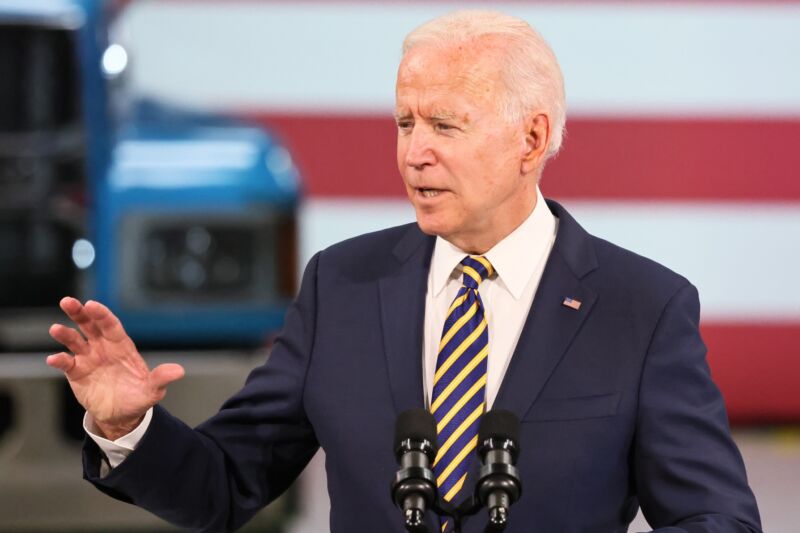
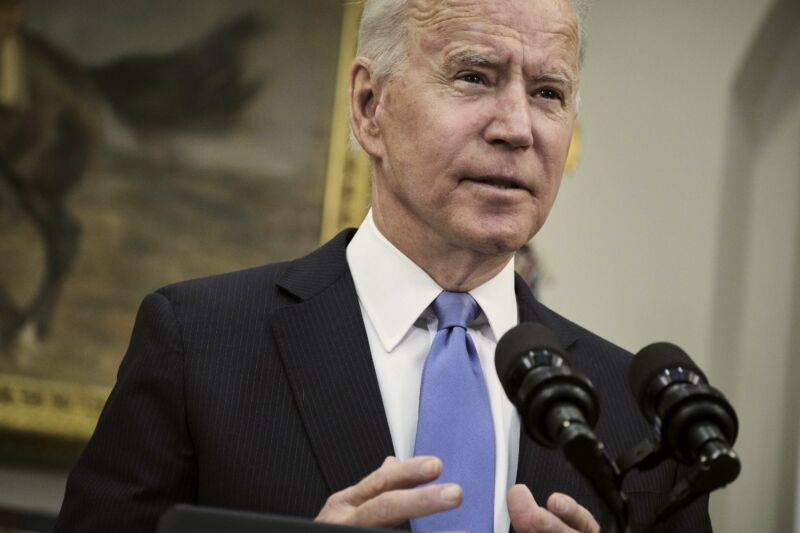
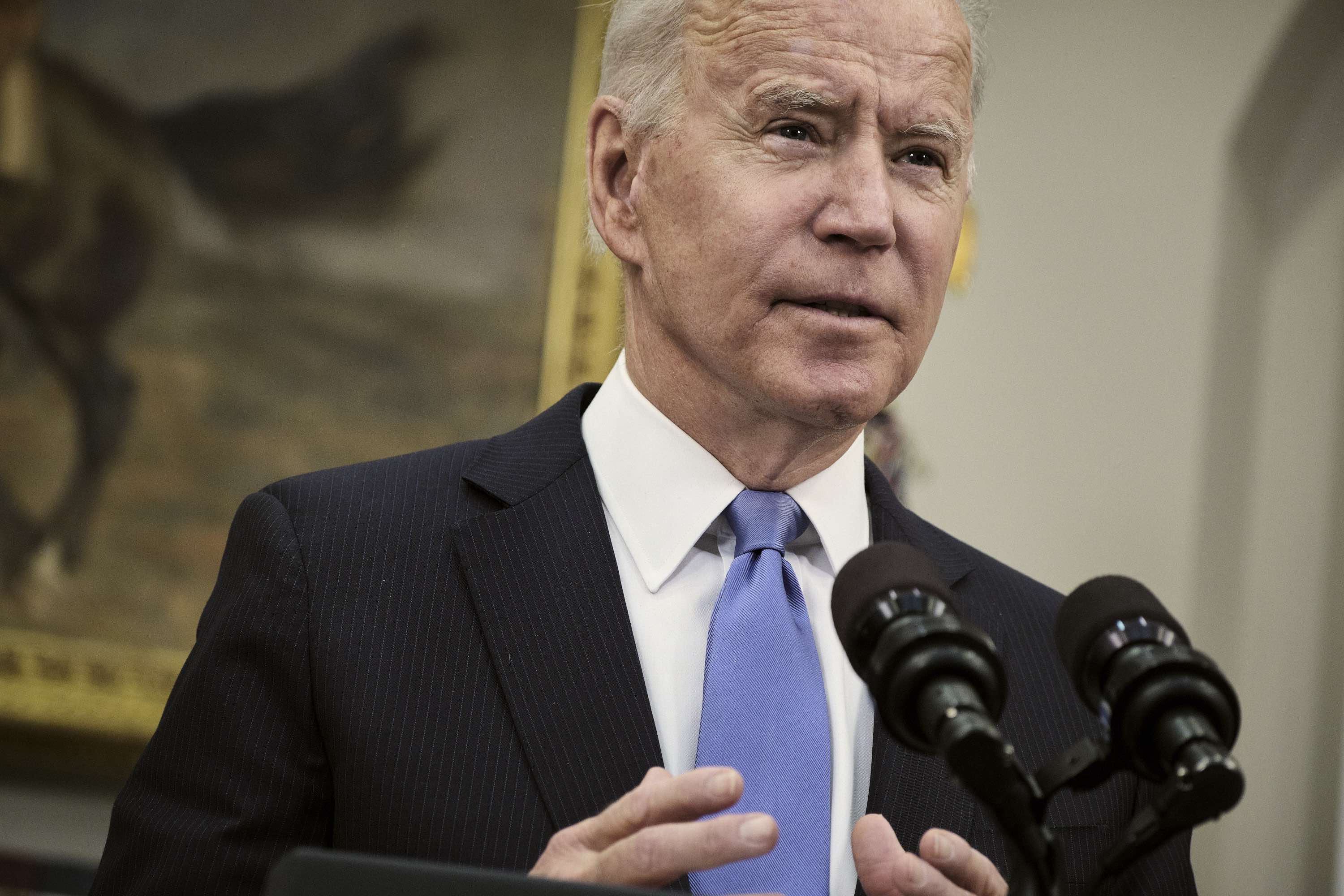
President Joe Biden speaking in front of a podium at a Mack Truck facility.
Enlarge / President Joe Biden speaks at Mack Truck Lehigh Valley Operations on July 28, 2021, in Macungie, Pennsylvania.

A bipartisan infrastructure deal will provide $65 billion for broadband deployment and require ISPs that receive funding “to offer a low-cost affordable plan,” the White House said today.

President Joe Biden pledged early in his term to lower Internet prices, and this appears to be the first tangible result—although it will only affect ISPs that take the new funding, and the White House didn’t release key details about the affordable Internet plans. A White House fact sheet on the $550 billion infrastructure deal with senators included two paragraphs summarizing the broadband portions:

[M]ore than 30 million Americans live in areas where there is no broadband infrastructure that provides minimally acceptable speeds—a particular problem in rural communities throughout the country. The deal’s $65 billion investment ensures every American has access to reliable high-speed Internet with a historic investment in broadband infrastructure deployment, just as the federal government made a historic effort to provide electricity to every American nearly one hundred years ago.

The bill will also help lower prices for Internet service by requiring funding recipients to offer a low-cost affordable plan, by creating price transparency and helping families comparison shop, and by boosting competition in areas where existing providers aren’t providing adequate service. It will also help close the digital divide by passing the Digital Equity Act, ending digital redlining, and creating a permanent program to help more low-income households access the Internet.

“Low-cost” definition not released yet

The announcement didn’t say what speeds or prices will have to be offered by government-funded ISPs in the required low-cost plans. It also didn’t say whether those low-cost plans would be available to all customers or only those who meet certain income requirements.

The promise of “a permanent program to help more low-income households access the Internet” may mean the $50-per-month subsidies that Congress created for the pandemic will continue in some form. Currently, the subsidies are slated to end when the $3.2 billion fund runs out of money or six months after the Department of Health and Human Services declares an end to the COVID-19 health emergency, whichever is sooner. Four million households have enrolled in the subsidy program so far.

The $65 billion is down from Biden’s original proposal of $100 billion over eight years.

Low upload standard would help wireless and cable ISPs

Biden’s announcement didn’t specify the minimum upload and download speeds ISPs will have to offer to qualify for government funding. As Light Reading notes, fixed-wireless home-Internet providers have been “desperate to convince policymakers to settle on a definition of broadband that wireless technologies would be able to meet.” Cable companies have similarly been pushing for a standard with low upload speeds because cable technology is restricted on the upstream side.

Light Reading wrote that a “draft of the bipartisan broadband bill that’s currently wending through Congress” would allow funding for ISPs that offer 100Mbps downloads and 20Mbps uploads, which would make it easier for fixed-wireless and cable providers to win government funding. A 100Mbps standard for both downloads and uploads would guarantee more money for fiber, which provides the fastest upload speeds and is the most future-proof broadband technology.

Ending redlining and hidden fees

The Digital Equity Act that Biden said is included in the deal was introduced in March and would establish one grant program “to make distributions to states based on their populations, demographics, and availability and adoption of broadband.” Meanwhile, another grant program would be “for supporting efforts to achieve digital equity, promote digital inclusion, and stimulate adoption of broadband,” according to the official bill summary.

It’s not clear whether Biden’s deal with Congress does anything else to end digital redlining, which refers to ISPs building networks in wealthy areas while ignoring poor ones.

The White House promise of “creating price transparency and helping families comparison shop” seems to refer to Biden’s previously stated goals of ending hidden fees by requiring ISPs to clearly disclose the full cost of service and limiting early termination fees that make it expensive to switch ISPs in areas where customers actually have choices. Biden recently urged the FCC to handle that, but it could also be mandated by Congress.

As always, the details will have a big impact on whether the legislation helps people get fast, affordable Internet service. For example, many ISPs are only letting customers get the $50-per-month pandemic subsidies on certain plans, in some cases forcing users onto more expensive plans to get the temporary discount. Sending money to ISPs for broadband deployment also requires careful management to ensure that money is sent to the right places and to ISPs that aren’t likely to miss build-out deadlines.

Biden originally pledged to give priority access to funding to municipal broadband networks and other publicly owned providers, but he apparently dropped that goal in negotiations. Republicans have tried to ban municipal broadband networks entirely and consistently seek to send government funding to private ISPs instead.

“Slim number of Republicans” support deal

There are apparently just enough Republicans willing to vote for the infrastructure deal to give it the 60 votes needed to cut off debate in the the Senate. “A slim number of Republicans are expected to vote to advance” the bill in a vote expected to happen Wednesday night, Politico reported.

The lead-up to the vote may be contentious. “This idea of getting on a bill that’s still being written is still a bad idea,” Sen. John Cornyn (R-Texas) said, according to Politico. “We’re going to insist upon amendments because this bill’s been negotiated by 20 people but there are 80 other senators.”

A vote tonight apparently wouldn’t be the end of the Senate process, NPR wrote:

Sen. Joe Manchin, (D-W.Va.) said he expects the first vote will be on placeholder legislation that will later be amended to include the full text of the agreement. That process is not uncommon; it allows the Senate to move ahead while staff drafts the legal legislative language necessary for a bill to come up for a vote.

It’s not clear exactly when the full text will be available publicly. “Sen. Kyrsten Sinema (D-Ariz.), who served as the lead negotiator for the Democrats, said lawmakers are putting the finishing touches on the bill but should allow the rest of the Senate to begin reading it soon,” according to NBC News. Sinema also said that lawmakers have “most of the text done, so we’ll be releasing it today, and then we’ll update it as we get those last pieces finalized.”

https://arstechnica.com/?p=1783771



California’s ambitious fiber-Internet plan approved unanimously by legislature

Illustration of fiber-optic cables.
Enlarge / Illustration of fiber-optic cables.

The California legislature unanimously approved a plan to build a statewide, open-access fiber network yesterday. The legislation was supported by Democrats and Republicans in votes of 78-0 in the California Assembly and 39-0 in the state Senate.

The statewide, open-access fiber lines will function as a “middle-mile” network that carries data from Internet backbone networks to connection points in cities and rural areas. A middle-mile network doesn’t extend all the way to residential properties, but “last-mile” ISPs can get access to it and focus on building infrastructure that connects the middle mile to homes.

California’s decision to make the middle-mile network open-access means it will provide “non-discriminatory access to eligible entities on a technology and competitively neutral basis, regardless of whether the entity is privately or publicly owned,” the bill text said. If all goes as planned, the network will make it easier for existing ISPs to expand and for new ISPs to get started, filling in gaps where there’s no modern access and boosting competition and speeds in other areas. Last-mile ISPs could use network technology other than fiber to connect to homes because of the provision allowing technology-neutral access.

“We did it!!! Today, we voted on an historic broadband budget package” that will provide over $6 billion “in middle, last-mile, and local government support with a focus on unserved and underserved [areas],” wrote Sen. Lena Gonzalez (D-Long Beach).

$2B last-mile funding complements open-access fiber

The state is providing $3.25 billion to build the middle-mile network and, as Gonzalez noted, it doesn’t stop at the middle mile. While the package won’t build an open-access last-mile network, it provides $2 billion in funding for last-mile ISPs to serve more homes.

“Every single California legislator. Every Republican and Democrat in Sacramento just voted for a fiber for all future,” Electronic Frontier Foundation Senior Legislative Counsel Ernesto Falcon wrote on Twitter. Falcon previously wrote that big ISPs were lobbying for changes that seemed to focus on “blocking the state government from pushing middle-mile fiber deep into every community.”

Falcon has been urging both the state and federal government to prioritize fiber networks over other technologies like cable that have slower upload speeds and aren’t as future-proof. Congress and President Biden are negotiating a $65 billion broadband deal, but it isn’t yet clear whether they’ll prioritize fiber or whether they’ll give funding priority to public networks or private companies.

Gov. Gavin Newsom is certain to sign the California bill because he agreed on the final details with legislators earlier this week.

“This broadband package is historic,” Newsom’s announcement of the deal said. “It transcends politics, and it will be a legacy project that will benefit generations of rural and urban residents alike. This legislation will yield vital, broadened access for California families by prioritizing the unserved and underserved areas, facilities, households, and businesses that remain disconnected in the digital era.” Newsom’s budget plan released in May had proposed using federal relief funds and the state’s surplus to build broadband and other infrastructure as part of “a once-in-a-lifetime investment in the future of the state.”

Assemblymember Cecilia Aguiar-Curry (D-Winters), who was part of the team of lawmakers that negotiated with Newsom, said, “I’m so excited; I’ve been working on this for 10 years,” according to the Press Democrat. “With the passage of AB 156 today, California has committed to a generational investment in providing for all Californians the access they need to Internet-based services like education and job training, telehealth, and the digital economy.”

Unserved areas get first priority

As Newsom’s press release noted, the plan involves “hiring a third party to build and maintain the ‘middle-mile network’—high-capacity fiber lines that carry large amounts of data at higher speeds over longer distances between local networks,” with state spending of “$3.25 billion to target that middle mile and build the broadband lines.” The middle-mile network would be available to “last-mile providers, anchor institutions, and tribal entities,” the bill text said.

The $2 billion for last-mile “lines that will connect consumers’ homes and businesses with local networks” includes $1 billion for rural communities and $1 billion for urban communities, Newsom’s announcement said. Applicants for last-mile funding will have until June 30, 2023, to apply. After that date, leftover money “shall be made available to the [Public Utilities] Commission to allocate for the construction of last-mile broadband infrastructure anywhere in the state,” the bill text says.

Building the middle-mile network is apparently expected to take a few years, as the bill says “the design-build procurement authorization… shall remain in effect for purposes of the statewide open-access middle-mile broadband network after January 1, 2024, until the completion of the broadband network.” The bill states that priority locations for the middle-mile network include schools, colleges, government entities, health care institutions, libraries, public safety answering points, and tribal lands.

The middle-mile plan would initially target locations where there’s no residential access to 25Mbps download and 3Mbps upload speeds. The Public Utilities Commission is tasked with identifying locations “in communities where there is no known middle-mile infrastructure that is open access, with sufficient capacity, and at affordable rates.” The commission must also “identify priority statewide open-access middle-mile broadband network locations, including areas that can be built expeditiously, areas with no known middle-mile network access, regions underserved by middle-mile networks, and regions without sufficient capacity to meet future middle-mile needs,” the bill says.

https://arstechnica.com/?p=1780945


How much do you pay your ISP? Consumer Reports wants to see your bill

Vacuum cleaner sucking up a pile of money.

With broadband-industry lobby groups implausibly claiming that Internet providers have slashed their prices, Consumer Reports is on a mission to collect and analyze thousands of monthly Internet bills from real customers.

In an announcement today, Consumer Reports said it launched the Broadband Together initiative with 40 other groups to “analyze the cost, quality, and speeds that are being delivered to people in communities across the US and to better understand the factors that affect price and why consumers pay different rates for the same service.” At least one thing is certain before the analysis begins: the actual amount ISPs charge is a lot higher than their advertised prices because of various fees that get tacked on after customers select a plan.

Over 6,600 people have already participated. You can join at the project website, which says the process takes seven minutes. “To participate, consumers will need an Internet bill, an Internet connection so CR researchers can test their speeds, and answer a few questions about their broadband service,” Consumer Reports said. The group will analyze bills “to compare companies’ prices and service” and figure out “what consumers actually pay for broadband.”

Users pay more, despite what industry says

Consumer Reports launched the initiative amid much talk about how much Internet users pay for broadband and about whether the government should do anything to drive prices down. We’ve written a few stories recently about how broadband costs for consumers are rising even as lobby groups for ISPs like AT&T and Verizon claim they’ve lowered prices. An analysis of US government data by consumer-advocacy group Free Press found that households’ average monthly expenditures on Internet service have been rising at about twice the rate of inflation each year.

The USTelecom industry lobby group purported to show that broadband prices actually dropped this year, claiming that the “price of the most popular tier of broadband service has declined by 7.5 percent” from 2020 to 2021 and that the “price for the highest-speed broadband service offering declined by 2.3 percent.” USTelecom also claimed that the most popular broadband tier’s price dropped 26.2 percent since 2015 and that the highest-speed offering’s price dropped 39.2 percent in that six-year stretch.

Free Press Research Director Derek Turner called USTelecom’s analysis “grossly misleading and inaccurate.” He added that the industry lobby group “grossly manipulates FCC data on standalone, non-promotional advertised rates, which are not the same as the price customers are actually charged” because they don’t reflect the use of bundles or the “confusing maze of promotional prices, extra fees, and ballooning post-promotional rates that people pay out of pocket every month.” Turner also wrote that major ISPs’ earnings reports show that “companies’ average residential revenues per broadband customer—the average, actual price customers are charged—[are] rising at more than twice the rate of inflation, with a sharp increase during the first quarter of 2021.”

Industry’s speed comparison flawed

As we reported, USTelecom compared what it called the “fastest speed tier in 2015” to a supposedly comparable tier in 2021, but neither plan measured was even close to being the fastest tier in either year. USTelecom compared the price of 141Mbps download speeds in 2015 to the price of 248Mbps download speeds in 2021, but gigabit download speeds have been available over fiber since before 2015, and Comcast started delivering gigabit downloads over cable in 2016. Average Internet speeds have also increased much faster than in the speed tiers examined by USTelecom, demonstrating that the industry group wasn’t making an apples-to-apples comparison.

NCTA, which represents the top cable providers, has meanwhile been arguing that prices have dropped 98 percent since 2000. But that’s only when measuring the “price per megabit” and ignoring that the actual price consumers pay each month has soared.

An executive order from President Joe Biden on Friday urged the Federal Communications Commission to crack down on hidden fees, pointing out that actual prices broadband customers pay are generally much higher than the prices ISPs advertise. In response, USTelecom CEO Jonathan Spalter wrote a blog post titled “Context and Facts Matter: A Response to the White House Executive Order Fact Sheet.” In that post, Spalter claimed that the price of broadband dropped this year “at all price points,” even though USTelecom’s research only examined the price of two speed tiers. (Correction: After this story published, USTelecom pointed out to us that it has also now published a report on entry-level broadband prices, so the group’s research has expanded beyond the two speed tiers described in its earlier findings.)

Consumer Reports seeks the truth

Consumer Reports said its research will help uncover the “truth” about Internet prices. “For too long, the true cost and quality of Internet service has been hidden and obscured,” Consumer Reports CEO Marta Tellado said.

“To create a better marketplace, we need to know the truth about our Internet prices and fees,” said Jonathan Schwantes, the group’s senior policy counsel. “Shockingly, some bills don’t even list the price consumers are paying for Internet service. This effort aims to bring broadband consumers much needed transparency, and the facts we need to advocate for better quality and affordable prices.”

The pandemic “has revealed the serious challenges that millions of Americans face every day when it comes to getting broadband,” Consumer Reports also said. “Many consumers can be charged more based on where they live. People get stuck with slow speeds and poor quality of service because of a lack of competition in their community. Some consumers spend more money for less service thanks to confusing pricing, and too many people simply cannot get online because there is no service where they live, or they cannot afford it.”

https://arstechnica.com/?p=1779990


FCC speed standard that Ajit Pai never updated is too slow, GAO report says

A wireless router on a desk in an office where a man is typing.

The Federal Communications Commission broadband standard that was implemented under then-Chairman Tom Wheeler in 2015 and never updated by Ajit Pai is now “likely too slow,” according to a government report issued last week.

The Wheeler-led FCC in January 2015 updated the agency’s broadband standard from 4Mbps downstream and 1Mbps upstream to 25Mbps downloads/3Mbps uploads. The increase was opposed by broadband-industry lobbyists and Republicans, including Ajit Pai, who was then a commissioner and later served as FCC chairman throughout the Trump administration.

Pai never updated the 25Mbps/3Mbps standard in his four years as chair. In his last annual broadband-deployment report issued in January 2021, Pai concluded that “fixed services with speeds of 25/3Mbps continue to meet the statutory definition of advanced telecommunications capability.”

Consumer advocates have frequently called the 25Mbps/3Mbps outdated, and the nonpartisan US Government Accountability Office (GAO) agreed in a report based on a review of research and interviews with small businesses.

“Much of the literature GAO reviewed suggests that FCC’s current broadband minimum benchmark speeds—25 megabits per second (Mbps) for downloading and 3Mbps for uploading—are likely too slow to meet many small business speed needs,” the GAO said in a report issued Thursday.

Small-business focus

The GAO report is focused on small businesses and said that FCC officials acknowledged that “they are not aware of any small business requirements that have been taken into consideration in determining the minimum speed benchmark.” The GAO urged the FCC to analyze the broadband needs of small businesses, including by “solicit[ing] stakeholder input,” and to incorporate the results into its next broadband benchmark. The “FCC agreed with this recommendation,” the GAO said.

The GAO pointed to a 2019 USDA report on rural broadband and agriculture, saying it found that “as technology advances and volumes of data needed to manage agriculture production grow, speeds in excess of 25/3Mbps with more equal download and upload speeds will likely be necessary.” The GAO also said that “in 2017, BroadbandUSA—a National Telecommunications and Information Administration program—published a fact sheet stating that small businesses need a minimum of 50Mbps speeds in order to conduct tasks such as managing inventory, operating point-of-sale terminals, and coordinating shipping.”

“Eleven of the twelve small business owners we interviewed also highlighted advanced uses of broadband, and two gave examples of using higher broadband speeds,” the GAO wrote. “One business owner we spoke to in California provides IT services to other small businesses, and he advises clients to get a 100/25Mbps connection, at minimum.”

Senators called for 100/100 benchmark

The FCC’s 25Mbps/3Mbps definition was developed with the needs of home-Internet users in mind and is used to analyze how many Americans have or lack access to high-speed broadband service. It has also been used to determine which parts of the country should get government funding for network deployment and to set the floor for speeds that ISPs are required to provide in exchange for public subsidies. Pai’s Rural Digital Opportunity Fund set 25Mbps/3Mbps as the minimum, though it used several speed tiers and ended up allotting nearly all the money to ISPs that pledged speeds of at least 100Mbps/20Mbps.

Four US senators—including one Republican—recently called on the FCC and other Biden administration agencies to use a standard of 100Mbps both upstream and downstream for new deployments. The GAO didn’t recommend a specific standard, but it wrote in the full report’s conclusion that the current one is likely not fast enough, particularly on the upload side.

“Millions of small business owners continue to lack access to broadband that meets their needs. FCC’s minimum speed benchmark of 25/3Mbps is likely not fast enough to meet the needs of many small businesses, particularly with regard to upload speeds,” the GAO wrote.

Speed standards have been a big topic lately as the Biden administration and Congress discuss how to spend $65 billion on broadband deployment. A symmetrical 100Mbps standard like the one proposed by the four senators would likely ensure that government-subsidized networks are built with fiber instead of technologies that have slower uploads, like cable and fixed wireless. Congress can set its own speed standards for funding purposes, so it doesn’t necessarily have to use the FCC’s current 25Mbps/3Mbps benchmark.

Acting FCC chair said 25/3 standard is outdated

Boosting the speed standard would result in a higher number of Americans being classified as “unserved” in government data. FCC acting Chairwoman Jessica Rosenworcel has been supporting an upgrade to the agency’s broadband-speed standard for years. “With so many of our nation’s providers rolling out gigabit service, it’s time for the FCC to adjust its baseline upward, too,” she said last year, calling for a 100Mbps download standard and an upload standard that’s higher than 3Mbps.

This year, after Pai stuck with the 25Mbps/3Mbps standard, Rosenworcel said it “confounds logic” that the FCC issued a “report that says that broadband is being deployed to all Americans in a reasonable and timely fashion.” She said the pandemic has made it “painfully clear there are too many people in the United States who lack access to broadband,” with “people sitting in parking lots using free Wi-Fi signals because they have no other way to get online” and “students who fall in the homework gap because the lack the high-speed service they need to participate in remote learning.”

FCC data, which is based on speeds that ISPs say they offer in each census block, shows much lower deployment rates in higher speed tiers, especially in rural areas. “According to FCC’s 2021 Broadband Deployment Report, only about 67 percent of rural Americans have access to 100/10Mbps speeds, compared to about 83 percent at the current 25/3Mbps,” the GAO report noted.

FCC advisory groups urged higher speeds

Despite Pai maintaining the 25Mbps/3Mbps standard, the FCC itself formed advisory groups that found higher speeds are likely necessary, the GAO wrote. One of those reports recommended higher upload speeds in particular because of needs in agriculture:

Recently, two FCC-commissioned advisory groups have suggested that higher speeds may be necessary. A December 2020 report issued by the FCC Broadband Deployment Advisory Council encouraged FCC to continue to update the broadband speed benchmark to account for higher capacity download and upload speeds sufficient to support current and future demand… An October 2020 interim working group report from the FCC Precision Agriculture Connectivity Task Force, looking at the use of broadband in agriculture, which can include small farms, also recommended that the minimum benchmark be increased from 25/3Mbps. This report stated there should be a particular focus on increasing upload speeds to accommodate the large amounts of data collected and analyzed for agriculture management. FCC officials stated that they would review and determine whether to follow the report’s recommendations.

Rosenworcel is leading the FCC without a majority because Biden hasn’t nominated a new commissioner to break the 2-2 deadlock between Democrats and Republicans. Biden’s delay, coupled with the Senate confirmation process that often takes months after a nomination is announced publicly, means that the FCC likely won’t tackle big agenda items like restoring net neutrality rules in 2021.

Raising broadband speed standards has also generally required a partisan battle. But with the most recent FCC deployment report having been released in January 2021, the FCC may wait until early 2022 to issue a new report and raise the 25Mbps/3Mbps standard. By then, the FCC presumably will have a Democratic majority.

https://arstechnica.com/?p=1779504


NY can’t force ISPs to offer $15 low-income broadband plans, judge rules

Man's hand holding stack of US currency with some bills flying away.
Getty Images | PM Images

On Friday, the broadband industry won a court order that prohibits New York from enforcing a state law that would require ISPs to sell $15-per-month broadband plans to low-income households.

Lobby groups for ISPs sued New York to block the law that was scheduled to take effect on June 15 and received a preliminary injunction today from US District Court for the Eastern District of New York. The state law is preempted by federal law, US District Judge Denis Hurley wrote in the order. While the case will continue, Hurley found that the industry is likely to succeed in its lawsuit.

The Affordable Broadband Act (ABA) would require ISPs to offer “all qualifying low-income households at least two Internet access plans: (i) download speeds of at least 25 megabits-per-second at no more than $15-per-month, or (ii) download speeds of at least 200 megabits-per-second at no more than $20-per-month,” the ruling noted. The low-income qualifications specified by the law cover about 7 million New Yorkers in 2.7 million households, over one-third of all households in the state. The law allows exceptions to the minimum-speed requirement “where such download speed is not reasonably practicable.”

$15 requirement “is rate regulation”

The New York law “is rate regulation, and rate regulation is a form of common carrier treatment,” Hurley wrote, rejecting arguments made by New York Attorney General Letitia James. he continued:

In Defendant’s words, the ABA concerns “Plaintiffs’ pricing practices” by creating a “price regime” that “set[s] a price ceiling,” which flatly contradicts her simultaneous assertion that “the ABA does not ‘rate regulate’ broadband services.” “Price ceilings” regulate rates.

The judge rejected New York’s argument that the Federal Communications Commission abandoned “its authority to regulate broadband at all” when Chairman Ajit Pai led a vote to undo the common-carrier classification that was imposed on ISPs during the Obama era.

“In reclassifying broadband Internet as a Title I information service, the FCC made the affirmative decision not to treat it as a common carrier,” the judge wrote. “The FCC’s affirmative decision is different from an abdication of jurisdiction writ large, even though Title I may not confer as expansive of powers as, say, Title II and its grant to impose common-carrier obligations.”

Hurley quoted from the Supreme Court’s Brand X ruling from 2005, which said that information-service providers “are not subject to mandatory common-carrier regulation under Title II, though the Commission has jurisdiction to impose additional regulatory obligations under its Title I ancillary jurisdiction to regulate interstate and foreign communications.”

Ultimately, the New York law “conflicts with the implied preemptive effect of both the FCC’s 2018 Order and the Communications Act,” Hurley wrote.

The FCC’s preemption power is limited. Pai tried to preempt all state net neutrality laws, even ones that didn’t exist at the time of his order, and was rebuffed in court. But Hurley decided that the ruling in that separate case “does not preclude or revoke the 2018 Order’s implicit preemptive effect.”

Interstate service

The judge also found that the state law is preempted because it covers an “interstate communication service.” The fact that the law only covers Internet users based in New York does not offset the fact that broadband access itself is an interstate service with transmissions that routinely cross state lines, the judge wrote:

The sole basis on which Defendant relies to call the ABA “intrastate” is its applicability only to “[c]ompanies that have chosen to provide service in New York.” But any state law can be construed as applicable only to those subject to that state’s jurisdiction, which, accordingly, does not make it “intrastate.” “The key to [the FCC’s] jurisdiction,” the line between inter- vs. intrastate, “is the nature of the communication itself rather than the physical location of the technology” or the consumers served.

Because the ABA regulates within the field of interstate communications, it triggers field preemption. Binding Second Circuit decisions are clear: the Communications Act’s “broad scheme for the regulation of interstate service by communications carriers indicates an intent on the part of Congress to occupy the field to the exclusion of state law.”

Hurley found that a preliminary injunction is needed to prevent ISPs from suffering “unrecoverable losses.”

“Beginning June 15, 2021, Plaintiffs will suffer unrecoverable losses increasing with time, and the enormity of the matter—six plaintiffs with multiple member organizations attacking a statute affecting one-third of all New York households—portends a lengthy litigation,” Hurley wrote. The lawsuit against New York was filed by the New York State Telecommunications Association, USTelecom, CTIA–The Wireless Association, NTCA–The Rural Broadband Association, the Satellite Broadcasting & Communications Association, and America’s Communications Association.

Hurley also cited statements from ISPs that suggest the law may “reduce Internet access statewide” by discouraging expansion. “Empire Telephone Corporation’s declarant avers that Empire will have to cancel expansion projects which, if completed, would result in Empire ‘serv[ing] more than 20,000 households,’ thereby disqualifying Empire from an exemption,” Hurley wrote. Providers with fewer than 20,000 residential customers are eligible for exemptions from the law. Hurley quoted two other small ISPs making similar claims.

https://arstechnica.com/?p=1772604


Charter charges more money for slower Internet on streets with no competition

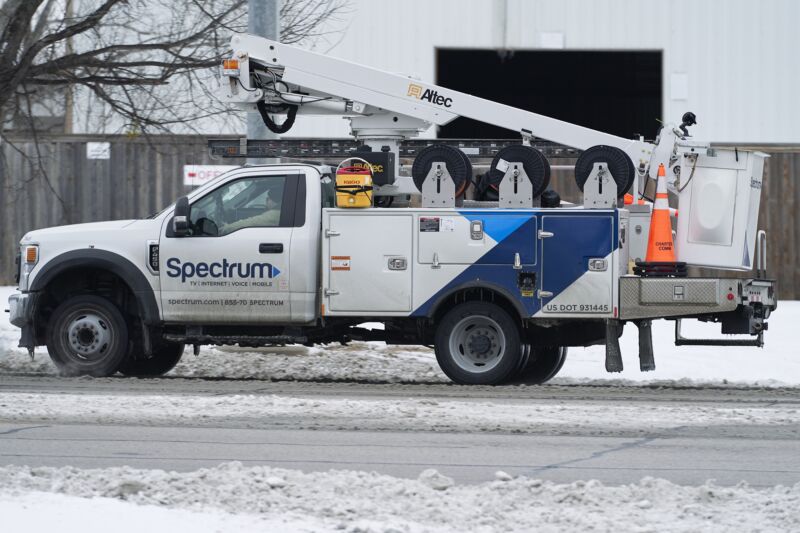
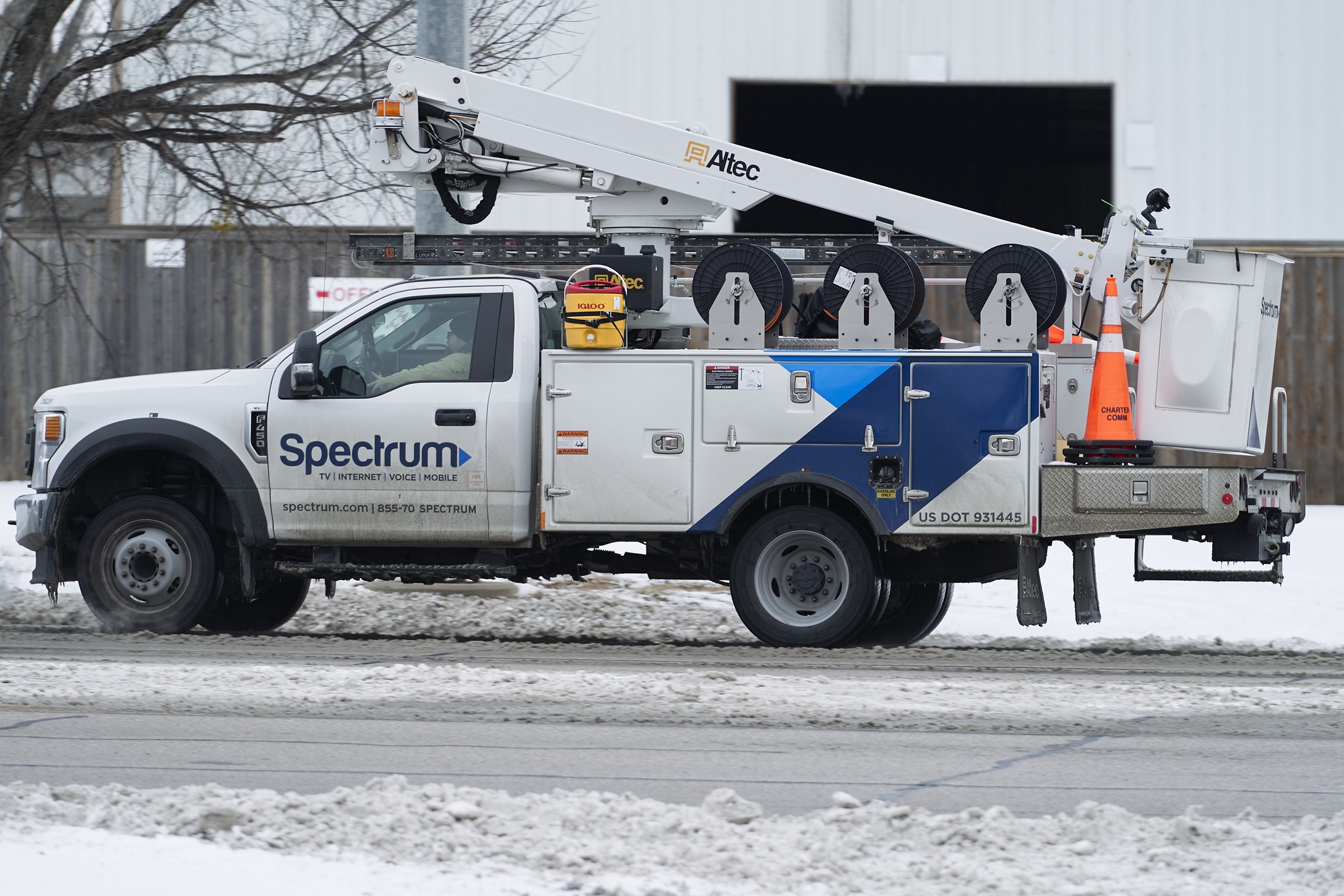
A Charter Spectrum service truck on a snowy street.
Enlarge / A Charter Spectrum service truck in McKinney, Texas, on Tuesday, Feb. 16, 2021.

It’s no surprise that cable companies charge lower prices for broadband when they face competition from fiber-to-the-home services. But an article yesterday by Stop the Cap provides a good example of how dramatically promotional prices for Charter’s Spectrum Internet service can vary from one street to the next.

In this example, Charter charges $20 more per month for slower speeds on the street where it faces no serious competition. When customers in two areas purchase the same speeds, the customer on the street without competition could have to pay $40 more per month and would have their promotional rates expire after only one year instead of two.

Stop the Cap said it examined promotional offers to new customers in the metro Rochester, New York, market, “where Spectrum faces token competition from Frontier’s slow speed DSL service” and more robust competition in limited areas from Greenlight Networks’ fiber service. Greenlight fiber is available in 23 percent of Rochester, while Charter cable is available to homes throughout the city, according to BroadbandNow. Greenlight prices start at $50 per month for 500Mbps.

“Charter’s offers are address-sensitive,” Stop the Cap founder Phillip Dampier wrote. “The cable company knows its competition and almost exactly where those competitors offer service. That is why the company asks for your service address before it quotes you pricing.”

Dampier found that Charter offers 200Mbps service for $50 a month “[i]n neighborhoods where Spectrum enjoys a broadband monopoly.” Charter charges $70 for 400Mbps service in those same competition-free neighborhoods.

But “[j]ust one street away, where Greenlight offers customers the option of gigabit speed over a fiber-to-the-home network, Spectrum’s promotional prices are quite different,” Dampier wrote. On the competitive street, Charter charges only $30 a month for the same 400Mbps service that costs $70 nearby. As previously noted, customers on the noncompetitive street have to pay $50 for 200Mbps.

“Spectrum does not even bother offering new customers its entry-level 200Mbps plan in areas where it has significant fiber competition,” Dampier noted, referring to the promotional offers that pop up when you type in an address. “For $20 less per month, you get double that speed.”

For gigabit-download service, Charter charges $90 a month on the competitive street versus $110 on the noncompetitive street. These are the base prices without fees and taxes. Stop the Cap’s article included these screenshots from Charter’s promotional offers:

Longer price guarantee on competitive street

Charter also offers to lock in the monthly rate for two years in the competitive area, compared to just one year in the noncompetitive area. Prices can rise dramatically once promotional deals expire, so locking in a price for 24 instead of 12 months ensures that customers on competitive streets save even more money in the long run.

And that’s not all. Charter “charges a hefty $199.99 compulsory installation fee for gigabit service in noncompetitive neighborhoods. Where fiber competition exists, sometimes just a street away, that installation fee plummets to just $49.99,” Dampier wrote.

He added:

Note similar pricing variability exists in Spectrum service areas around the country, with the most aggressively priced offers reserved for addresses also served by a fiber-to-the-home provider or multiple competitors (e.g., cable company, phone company, Google Fiber or other [competitor]). Current customers typically have to cancel existing service and sign up as a new customer to get these prices.

Cable-company pricing varies widely, so the price difference between competitive and noncompetitive areas may be lower elsewhere. But the price differences show how valuable competition is to broadband subscribers.

Greenlight charges $50 per month for 500Mbps service, $75 for 750Mbps, $100 for 1Gbps, and $200 for 2Gbps. The company charges a $100 installation fee. It doesn’t offer promotional prices, so there isn’t a big automatic price hike after a set period like there is with many major ISPs.

Charter says it uses a “common” pricing strategy

When contacted by Ars, Charter said that “Spectrum Internet retail prices, speeds, and features are consistent in each market—regardless of the competitive environment.” But “retail prices” are the standard rates customers pay after promotional rates expire. Stop the Cap showed that Charter’s promotional rates vary between competitive and noncompetitive areas.

Charter told Ars that its promotional offers are affected by several factors, including “location.”

“Any promotional offers available to new customers are time-limited and vary based on a number of factors, such as time of year, location and programming, or device opportunities, and testing different promotional offers concurrently is common in a subscription business,” Charter said.

This isn’t the first time we’ve written about major Internet providers offering lower prices in competitive areas. In 2015, we noted that AT&T was charging $40 more per month for gigabit service in cities without Google Fiber.

Charter has over 27 million residential Internet subscribers in 41 states, making it the second-largest home-Internet provider in the US after Comcast.

Charter far behind Greenlight on upload speed

Price isn’t the only factor that a customer might consider when choosing between Greenlight and Charter. As a fiber provider, Greenlight offers far higher upload speeds than Charter’s cable network.

Charter’s upload speeds max out at 35Mbps, while Greenlight’s start at 50Mbps. Greenlight currently lists upload speeds as being 10 percent of download speeds, so the 500Mbps-download plan has 50Mbps uploads, and the 2Gbps plan has 200Mbps uploads. But Greenlight plans to make its speeds symmetrical like other fiber providers do.

“In response to the COVID-19 pandemic, we are upgrading upload speeds for orders in Serviceable Greenlight Districts at no additional charge. Your upload speed will match your download speed (500/500, 750/750, 1000/1000, 2000/2000.),” the company’s website says.

Charter’s upload speeds start at only 4Mbps. Its 200Mbps download plan comes with 10Mbps upload speeds, and the 400Mbps download plan comes with 20Mbps upload speeds. You have to buy Charter’s gigabit-download plan to get its highest upload speeds of 35Mbps, slower than Greenlight’s lowest upload rate. Despite years of promising higher upload speeds through upgrades to cable’s DOCSIS standard, Charter and other cable companies still lag far behind fiber in upload capabilities.

Disclosure: The Advance/Newhouse Partnership, which owns 13 percent of Charter, is part of Advance Publications. Advance Publications owns Condé Nast, which owns Ars Technica.

https://arstechnica.com/?p=1768175


Biden cuts broadband plan from $100 billion to $65 billion to match GOP offer

President Joe Biden standing and speaking in front of microphones.
Enlarge / President Joe Biden speaks in the Roosevelt Room of the White House on Thursday, May 13, 2021.
Getty Images | Bloomberg

President Biden has cut his broadband-deployment spending proposal from $100 billion to $65 billion, matching the lower amount proposed by Republicans. But Republicans still object to Biden’s overall infrastructure spending plan and have consistently opposed the municipal broadband networks that Biden wants to prioritize in government-funded projects.

Biden “agreed to reduce the funding request for broadband to match the Republican offer and to reduce the proposed investment in roads, bridges, and major projects to come closer to the number proposed by the senators. This is all in the spirit of finding common ground,” White House Press Secretary Jen Psaki said on Friday during a media briefing.

Biden made the $100 billion broadband proposal on March 31 as part of his larger American Jobs Plan, saying the multi-year funding would pay for “‘future-proof’ broadband infrastructure in unserved and underserved areas so that we finally reach 100 percent high-speed broadband coverage.”

The White House informed Republicans of Biden’s willingness to cut $35 billion from his broadband proposal in a memo on Friday. “We believe we can still achieve universal access to affordable high-speed Internet at your lower funding level, though it will take longer,” the White House told Republicans, according to NPR. “Any funding agreement would need to be paired with reforms to ensure these investments create good jobs, promote greater competition, and close the digital divide.”

Biden cut his overall plan from $2.25 trillion over eight years to $1.7 trillion. That’s still about three times larger than the $568 billion Republican counteroffer, and Senate Minority Leader Mitch McConnell “has said he doesn’t see Republican lawmakers supporting spending much more,” NPR wrote.

Biden “believes that the extraordinarily wealthy, the companies that, many of whom have not paid taxes in recent years, can afford a modest increase to pay for middle-class jobs,” Psaki said. McConnell has opposed reversing any part of the 2017 corporate tax cut.

“Democrats could try to pass a spending proposal on party lines using Senate reconciliation rules, but several moderate Democrats, such as Sen. Joe Manchin of West Virginia, have made it clear to the White House they’d prefer a bipartisan plan,” the NPR article said.

Sen. Ed Markey (D-Mass.) pushed for the Senate to move ahead without any further cuts to Biden’s plan. “Despite President Biden’s efforts to engage with Republicans, they have shown no willingness whatsoever to negotiate in good faith with Democrats to confront the intersecting crises we face… Let’s not waste time trading the necessary scope and scale of this critical infrastructure package for Congressional Republican votes that have yet to and will never materialize,” Markey said.

Republicans oppose municipal broadband

Even though Biden’s new offer of $65 billion for broadband matches the amount proposed by Republicans, the size isn’t the only part likely to be opposed by the GOP. Instead of giving private ISPs the best shot at receiving funding, Biden proposed “prioritiz[ing] support for broadband networks owned, operated by, or affiliated with local governments, non-profits, and co-operatives—providers with less pressure to turn profits and with a commitment to serving entire communities.” This could be a major change from previous US spending programs that doled out billions to private Internet providers. Republicans have consistently fought against public broadband for years, and this year they proposed a nationwide ban on municipal broadband networks.

By contrast, Biden proposed “lifting barriers that prevent municipally owned or affiliated providers and rural electric co-ops from competing on an even playing field with private providers,” suggesting he wants to overturn state laws that restrict municipal broadband. Biden’s proposal would also “requir[e] Internet providers to clearly disclose the prices they charge,” which is an attempt to end the rampant hidden fees that ISPs use to raise actual prices above their advertised rates. The cable lobby claimed that Biden’s plan is “a serious wrong turn.”

Biden’s pitch to build “future-proof” broadband technology is also facing opposition from broadband providers who don’t want to build fiber-to-the-home networks in rural areas. Just before Biden announced his plan, AT&T said it opposes subsidizing fiber-to-the-home deployment across the US, arguing that rural people don’t need fiber and should be satisfied with Internet service that provides only 10Mbps upload speeds.

Biden’s American Jobs Plan also said that “the president is committed to working with Congress to find a solution to reduce Internet prices for all Americans,” drawing protests from ISPs that don’t want any limits on what they can charge consumers.

https://arstechnica.com/?p=1767143


ISPs claim broadband prices aren’t too high—Biden admin isn’t buying it

Illustration of Internet data and dollar signs
Getty Images | Guirong Hao

Biden administration officials are not convinced by the broadband industry’s claims that Internet prices aren’t too high, according to a report today by Axios.

The White House announced on March 31 that President Biden “is committed to working with Congress to find a solution to reduce Internet prices for all Americans.” Though Biden hasn’t revealed exactly how he intends to reduce prices, the announcement set off a flurry of lobbying by trade groups representing ISPs to convince Biden and the public that Americans are not paying too much for Internet access. ISPs even claim that prices have dropped, despite government data showing that the price Americans pay has risen four times faster than inflation.

A Biden official told Axios that the ISPs have not made a convincing case. “A senior administration official told Axios the bulk of the evidence shows prices have gone up recently and prices are higher than they are for comparable plans in Europe,” Axios wrote. “Biden noted the high cost of Internet service in March, and the official told Axios, ‘I don’t think we’ve seen anything since he made those comments to make us feel like we were wrong about that. We’re still committed to taking some bold action to make sure that we bring those prices down for folks.'”

The pressure coming from broadband lobby groups suggests that industry officials believe rate regulation is a real possibility. “They’re absolutely on edge,” one aide told Axios. “They are concerned at the highest levels over the prospect of rate regulation.”

Instead of believing the ISPs’ claims about prices, the White House is apparently paying close attention to research that shows prices are rising—in part due to a lack of competition. The White House “highlighted a working paper from Berkeley Law professor Tejas Narechania,” which “finds that broadband providers offer slower service for the same price in areas where they lack competition, and proposes a model statute for rate regulation of a basic tier broadband service in areas without competition,” Axios wrote. The administration also “pointed to a recent working paper from New York University finance professor Thomas Philippon that found Americans pay more for Internet service than consumers in other countries.”

Cable lobby cites lower “price per megabit”

The cable industry’s top lobby group, NCTA–The Internet & Television Association, this week accused advocacy groups of using “cherry-picked data.” But the cable group’s claims that prices are going down is contradicted by US government data showing that Americans are paying more every year.

The cable lobby’s argument that prices are going down relies on the price per megabit rather than the average price that consumers pay each month. The NCTA wrote:

When looking at the cost of American broadband, if factors such as speed are included, US prices have been falling dramatically. Based on NCTA’s analysis of the most widely purchased tiers of service, the quality-adjusted Price per Megabit per second (Price/Mbps) of cable broadband service has declined by 98 percent over the last 15 years, declining from $28.13/Mbps to $0.64/Mbps.

By that logic, Americans should feel lucky that they’re not paying $2,800 a month for 100Mbps service. But obviously, the bandwidth needs of Americans and the bandwidth capabilities of broadband networks have steadily increased over time, even as ISPs’ costs have dropped, just as the capabilities of smartphones, processors, and other technology products inexorably increase over time.

Big ISPs’ costs are dropping

ISPs’ costs have continually declined on a per-megabit basis and often decline on an absolute basis. Comcast’s cable capital expenditures dropped 4.4 percent in 2020, while AT&T’s capital expenditures dropped 20.2 percent.

Comcast and AT&T also cut capital spending between 2018 and 2019. Charter slashed about $1.7 billion off its capital spending in 2019 before a small increase in 2020.

In short, there is no financial or technical emergency that would require scaling prices up with each additional megabit provided, and the per-megabit price over 15 years is irrelevant to the important question of whether the amount that consumers have to pay for modern Internet access is going up or down.

Real prices rose 19% from 2016-2019

The USTelecom lobby group claims that prices are getting lower by tracking the advertised price of the “most popular [speed] tier” over time. The group also claims that the US broadband market is “ultra-competitive, defined by increasing speeds, declining prices, new entrants and next generation technologies,” a statement that ignores the reality of tens of millions of unserved and underserved Americans.

The actual prices consumers pay—which ISPs inflate with hidden fees, equipment rental charges, and data-cap charges—rose four times faster than inflation between 2016 and 2019, as we reported last week. Specifically, Bureau of Labor Statistics survey data cited by advocacy group Free Press shows that average annual household expenditures for home-Internet service rose from $437.71 in 2016 to $556.50 in 2019. That’s a 27 percent increase. When adjusted for inflation to match the value of 2020 dollars, the average annual cost rose from $472.25 in 2016 to $564.07 in 2019, a 19 percent increase.

Prices also increased by similar amounts during the last three years of the Obama administration. Trump’s Federal Communications Commission Chairman, Ajit Pai, claimed his deregulation of the broadband industry would reverse that trend and bring “cheaper Internet access to all Americans.” Instead, prices continued rising at about the same rates seen between 2013 and 2016.

ISPs fear rate regulation

Just what the Biden administration will do to lower prices still isn’t clear. The NCTA slammed Biden for what it called “the unfounded assertion that the government should be managing prices,” even though Biden didn’t say that he wants the government to directly manage prices.

Yet price regulation is a possibility, and it’s one that wouldn’t necessarily require congressional approval. The FCC is likely to bring back the Title II common-carrier regulation in order to reimplement the net neutrality rules that Pai discarded. The FCC could use that Title II authority to impose price controls, although it chose not to during the Obama administration.

According to Axios, the senior Biden administration official “said the White House hasn’t taken a position on rate regulation, but noted, ‘It’s pretty clear that it’s something that the FCC could do under the existing statutes that it has in its jurisdiction.'”

The FCC can’t do anything controversial yet because it’s still deadlocked at two Democrats and two Republicans. Biden still hasn’t nominated a third Democrat, and the Senate confirmation process could take months after he does so. Biden also must decide whether acting FCC Chairwoman Jessica Rosenworcel will keep the top spot after a third Democrat comes on board; Biden’s choice of chair would have a major impact on whether the FCC pursues any kind of rate regulation.

Fight over speeds and public networks

In addition to pledging lower prices, Biden in March proposed spending $100 billion to build and expand broadband networks. Biden’s plan calls for prioritizing “support for broadband networks owned, operated by, or affiliated with local governments, non-profits, and co-operatives—providers with less pressure to turn profits and with a commitment to serving entire communities.”

He also proposed “lifting barriers that prevent municipally owned or affiliated providers and rural electric co-ops from competing on an even playing field with private providers,” which could mean overturning state laws that restrict municipal broadband. Biden’s other major broadband proposal was to “requir[e] Internet providers to clearly disclose the prices they charge,” potentially ending the rampant practice of ISPs advertising a low rate and then charging customers much more by imposing a slew of hidden fees.

“When I say ‘affordable,’ I mean it,” Biden said in a speech on March 31. “Americans pay too much for Internet service. We’re going to drive down the price for families who have service now and make it easier for families who don’t have affordable service to be able to get it now.”

The Biden administration disappointed some community broadband advocates by deciding that American Rescue Plan Act funds can be used for broadband only in areas lacking wired networks with speeds of at least 25Mbps downstream and 3Mbps upstream. That would leave out any area that’s already served by at least one cable provider, even if there’s no competition and no fiber-to-the-home availability.

The $100 billion plan is separate and could use a different standard that targets both unserved areas and places dominated by a single cable provider. Biden’s proposal said he wants “100 percent coverage” and “future proof” networks, which could suggest widespread fiber deployment. But details have not been released, and ISPs will lobby Congress to send the money to private ISPs and to avoid ambitious speed requirements. AT&T recently opposed nationwide fiber deployment, arguing that rural people don’t need fiber-to-the-home and should be satisfied with Internet service that provides only 10Mbps upload speeds.

Disclosure: The Advance/Newhouse Partnership, which owns 13 percent of Charter, is part of Advance Publications. Advance Publications owns Condé Nast, which owns Ars Technica.

https://arstechnica.com/?p=1765202


New York requires $15 broadband for poor people, promptly gets sued by ISPs

A pen and book resting atop a paper copy of a lawsuit.

Internet service providers today sued New York to block a state law that requires ISPs to sell $15-per-month broadband plans to low-income households.

The lawsuit was filed by lobby groups including USTelecom and CTIA–The Wireless Association, both of which count Verizon and AT&T among their members. Lobby groups for many other ISPs also joined the lawsuit, with plaintiffs including NTCA–The Rural Broadband Association, the Satellite Broadcasting & Communications Association, and the New York State Telecommunications Association. The biggest cable lobby group, NCTA, did not join the lawsuit, but a cable lobby group representing small providers—America’s Communications Association—is one of the plaintiffs suing New York.

New York enacted its cheap-broadband law two weeks ago and called it a “first-in-the-nation requirement for affordable Internet for qualifying low-income families.”

With this law, New York “seeks to regulate broadband rates,” the ISPs’ complaint said. “A provision of the recently enacted New York State Fiscal Year 2022 Budget requires wireline, fixed wireless, and satellite broadband providers—no later than June 15, 2021—to begin offering to qualifying low-income consumers high-speed broadband service at a cost to consumers of $15 per month or higher-speed broadband service at a cost to consumers of $20 per month.” ISPs claim the state requirement is preempted by federal law.

Cuomo: “Bring it on”

The lawsuit was filed in US District Court for the Eastern District of New York. The broadband lobby groups asked for preliminary and permanent injunctions preventing enforcement of the law.

“I knew giant telecom companies would be upset by our efforts to level the playing field, and right on cue, they’re pushing back,” New York Gov. Andrew Cuomo said today. “Let me be abundantly clear—providing Internet in the Empire State is not a god-given right. If these companies want to pick this fight, impede the ability of millions of New Yorkers to access this essential service, and prevent them from participating in our economic recovery, I say bring it on.”

The state law requires $15 broadband plans with download speeds of at least 25Mbps, with the $15 being “inclusive of any recurring taxes and fees such as recurring rental fees for service provider equipment required to obtain broadband service and usage fees.”

ISPs can alternatively comply by offering $20-per-month service with 200Mbps speeds, and price increases would be capped at two percent per year. The state is required to review download speed requirements within two years and at least once every five years thereafter to determine whether they should be raised. Minimum upload speeds are not specified by the law.

Pai’s deregulation cited by ISPs

The ISPs claimed that New York’s law conflicts with the Federal Communications Commission decision, taken under then-Chairman Ajit Pai, to deregulate the broadband industry (and eliminate net neutrality rules in the process). The FCC deregulation order declared “that broadband is an interstate information service that should not be subject to common-carrier regulation,” the lawsuit said. “The Rate Regulation conflicts with that decision, as well as the Communications Act, by compelling providers to offer broadband on a common-carrier basis: at state-set rates and terms to all eligible members of the public.”

The ISPs also claimed that the low-income broadband law “intrudes into an exclusively federal field. More than a century ago, Congress enacted legislation that occupied the field of interstate communications service and, thereby, precluded states from directly regulating those services. In violation of that long-standing law, the Rate Regulation expressly seeks to set the rates and speed of an interstate communications service. No state has ever successfully engaged in such regulation.”

States can regulate broadband through consumer-protection powers, and New York will argue that its cheap-broadband requirement is not preempted by federal law. The broadband industry similarly claimed that a California net neutrality law is preempted by federal law, but US District Judge John Mendez in February rejected that argument and refused to give the industry a preliminary injunction blocking the California law.

The California case also involves a rate-regulation claim, as ISPs argue that California’s ban on ISPs charging online services for data-cap exemptions is improper rate regulation. While Mendez found that the California law isn’t rate regulation, the ISPs may have a better case in New York, where the state is requiring them to offer a specific plan at a specific price.

On the other hand, the Pai-led FCC’s abdication of its Title II regulatory authority over broadband reduced its power to preempt state laws. “[I]n any area where the Commission lacks the authority to regulate, it equally lacks the power to preempt state law,” the US Court of Appeals for the District of Columbia Circuit wrote in 2019, when it struck down Pai’s attempt to preempt all state net neutrality laws.

“AT&T/Verizon have sued to block NY’s broadband price regulation law and I am here to remind you the big ISPs did this to themselves,” Ernesto Falcon, senior legislative counsel for the Electronic Frontier Foundation, wrote on Twitter. “Lobbying to get rid of the FCCs authority invoked a counter push. They wanted to be unregulated monopolies and thought no one would stand against [them].”

https://arstechnica.com/?p=1761666


Striking Charter workers build ISP where “profits are returned to users”

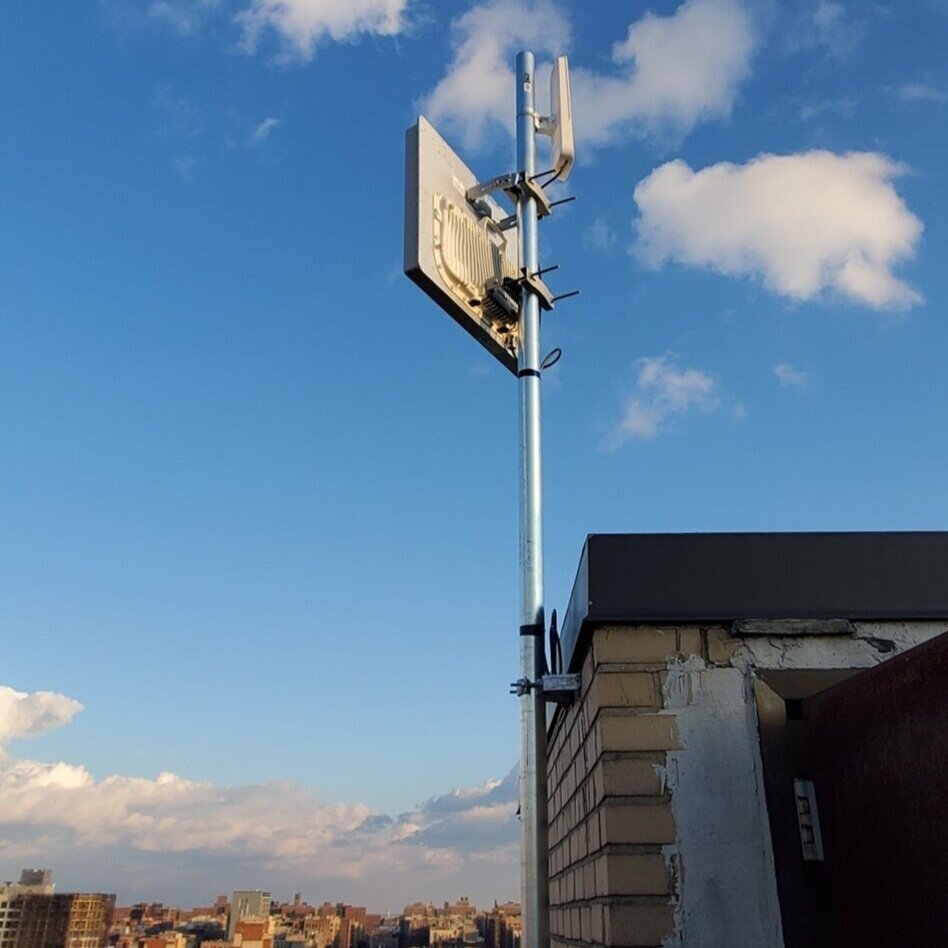
An antenna on a rooftop in the Bronx, with a view of the city during daytime.
Enlarge / Rooftop antenna at Immaculate Conception School in the Bronx.

Charter Communications employees who have been on strike since 2017 are building an Internet service provider in New York City called “People’s Choice.”

“People’s Choice Communications is an employee-owned social enterprise launched by members of IBEW Local #3 to bridge the digital divide and help our neighbors get connected to the Internet during the COVID-19 pandemic,” the ISP’s website says. “We are the workers who built a large part of New York City’s Internet infrastructure in the first place. We built out [Charter] Spectrum’s cable system, until in 2017, the company pushed us out on strike by taking away our healthcare, retirement, and other benefits. It’s now the longest strike in US history.”

So far, People’s Choice says it has completed rooftop antenna installations at two schools in the Bronx and installed “hardline connections to wireless access points connecting 121 units” at housing for survivors of domestic violence who have disabilities.

A Gizmodo article said the system is equipped to offer minimum speeds of 25Mbps downstream and 3Mbps upstream, meeting a broadband standard that has been used by the Federal Communications Commission since 2015. “We have a big portion of most of the Bronx covered with our antenna,” IBEW Local #3 steward Troy Walcott told Gizmodo. “Now we have to go building by building to let people know we’re out there and start turning them on.”

“A few dozen Spectrum strikers have been actively involved in the installations, but Walcott expects that at least one hundred workers are waiting in the wings for the project to scale up,” the Gizmodo article said.

Filling broadband gaps

People interested in bringing broadband to their building can fill out a form. “We work in affordable housing, supportive housing, co-op housing, NYCHA [NYC Housing Authority], homeless shelters, and regular old apartment complexes,” the webpage notes.

Rooftop antenna at Sacred Heart School in the Bronx.
Enlarge / Rooftop antenna at Sacred Heart School in the Bronx.

“After we build out a network in your building, it transfers to cooperative ownership, so profits are returned to users,” the People’s Choice website says. “We are able to provide high-speed service in most cases for $10-$20/month. No more cable company ripping you off, and as an owner, you have a vote in policies like data privacy.”

People’s Choice is similar to the volunteer-run NYC Mesh project that has been building a wireless network for unserved people in the city the past few years.

Charter, which sells Internet access under the Spectrum brand name, became the second-largest cable company in the US when it bought Time Warner Cable in 2016. Charter wants customers to “pay more for less service because they have no other choice,” Walcott said, according to an article in Vice’s Motherboard section.

Walcott said the Charter employees were motivated by inaction both from Charter and politicians. “Having elected officials thank us quietly for our sacrifice but not say anything about our strike publicly motivated us. Seeing customers denied service during COVID because they had outstanding bills motivated us,” he said.

Turbulent times since Charter bought TWC

About 1,800 Charter workers began their strike in March 2017. Charter hired hundreds of replacement workers and tried to decertify the union, an attempt the union has been fighting at the National Labor Relations Board.

Last year, a New York City broadband plan said that nearly a third of households in the city “do not have a broadband connection at home” and that “more than 1.5 million New Yorkers have neither a mobile connection nor a home broadband connection.” Low-income residents were more likely to lack service, and areas with higher incomes benefited from more home-Internet competition.

In July 2018, the New York State Public Service Commission voted to revoke its approval of Charter’s purchase of Time Warner Cable, saying the company repeatedly failed to meet deadlines for broadband expansions that were required in exchange for merger approval. The commission ordered Charter to sell the former Time Warner Cable system in New York, but Charter avoided that fate by agreeing to more broadband deployment and a $12 million payment to be used by the state for expanding broadband to unserved and underserved homes.

Disclosure: The Advance/Newhouse Partnership, which owns 13 percent of Charter, is part of Advance Publications. Advance Publications owns Condé Nast, which owns Ars Technica.

https://arstechnica.com/?p=1757204