“Hey Google, did you upgrade your AI in my Android Auto?”

Now it’s “Hey Google” not “OK Google” to trigger the assistant, which had started feeling a little left behind in terms of natural language processing and conversational AI to other OEM systems—sometimes even AAOS-based ones—that used solutions like those from Cerence running on their own private clouds.

Gemini

Going forward, “Hey Google” will fire up Gemini, as long as it’s running on the Android device being cast to the car’s infotainment system. In fact, we learned of its impending, unspecified arrival a couple of weeks ago, but today is the day, according to Google.

Now, instead of needing to know precise trigger phrases to get Google Assistant to do what you’d like it to do, Gemini should be able to answer the kinds of normal speech questions that so often frustrate me when I try them with Siri or most built-in in-car AI helpers.

For example, you could ask if there are any well-rated restaurants along a particular route, with the ability to have Gemini drill down into search results like menu options. (Whether these are as trustworthy as the AI suggestions that confront us when we use Google as a search engine will need to be determined.) Sending messages should supposedly be easier, with translation into 40 different languages should the need arise, and it sounds like making playlists and even finding info on one’s destination have both become more powerful.

There’s even the dreaded intrusion of productivity, as Gemini can access your Gmail, calendars, tasks, and so on.

A polestar interior

Google Gemini is coming to all Polestar models. Credit: Polestar

Gemini is also making its way into built-in Google automotive environments. Just yesterday, Polestar announced that Gemini will replace Google Assistant in all its models, from the entry-level Polestar 2 through to soon-to-arrive machines like the Polestar 5 four-door grand tourer.

“Our collaboration with Google is a great example of how we continue to evolve the digital experience in our cars. Gemini brings the next generation of AI voice interaction into the car, and we’re excited to give a first look at how it will enhance the driving experience,” said Polestar’s head of UI/UX, Sid Odedra.

https://arstechnica.com/cars/2025/11/hey-google-did-you-upgrade-your-ai-in-my-android-auto/


How two Nissan Leafs help make a regional airport more resilient

Not everything about the future sucks. Like electric cars. Sure, there’s one thing that dinosaur-burners do better—short refueling stops—but even the least efficient EV is still multiple times better than its gas equivalent. So much better in fact that it offsets all the extra energy needed to make the battery within a year or two. They’re quieter, and easy to drive. And in a pinch, they can power your house from the garage. Or how about an airport?

OK, we’re not talking about a major international airport (although I really need to talk to someone at Dulles International Airport about my idea to electrify those Space 1999-esque mobile lounges at some point). But up in Humboldt County, California, there’s a microgrid at the Redwood Coast Airport that has now integrated bidirectional charging, and a pair of Nissan Leaf EVs, into its operation.

The microgrid has been operating since 2021 with a 2.2 MW solar array, 8.9 MWh of battery storage, and a 300 KW net-metered solar system. It can feed excess power back into PG&E’s local grid and draw power from the same, but in an outage, the microgrid can keep the airport up and operational.

Turning over an old leaf

One of the Leafs (from model year 2021) was bought by the Humboldt County Aviation Division, the other is a model year 2020 provided by Nissan. These are the previous generation of the Leaf we test drove recently, and they still rely on CHAdeMO for DC fast charging. But the second-gen Leaf was always capable of vehicle-to-grid; it’s just that no one ever set up a pilot in North America to do so, at least to my knowledge. We’ve seen school buses and F-150s get into the V2G game, and it’s good to see the second-gen Leaf now finally fulfilling that potential in North America, even if it has just been replaced with an improved model.

https://arstechnica.com/cars/2025/11/california-airport-tries-out-bidirectional-ev-charging-microgrid/


What’s it like to compete in the longest US off-road rally with no GPS?

I’ve been involved with the Rebelle Rally since its inception in 2016, either as a competitor or live show host, and over the past 10 years, I’ve seen it evolve from a scrappy rally with big dreams to the world-class event that it is today.

In a nutshell, the Rebelle Rally is the longest competitive off-road rally in the United States, covering over 2,000 kilometers, and it just happens to be for women. Over eight days, teams of two must plot coordinates on a map, figure out their route, and find multiple checkpoints—both marked and unmarked—with no GPS, cell phones, or chase crews. It is not a race for speed but rather a rally for navigational accuracy over some of the toughest terrain California and Nevada have to offer. There are two classes: 4×4 with vehicles like the Jeep Wrangler and Ford Bronco and X-Cross for cars like the Honda Passport and BMW X5. Heavy modifications aren’t needed, and many teams compete for the coveted Bone Stock award.

For this 10th anniversary, I got back behind the wheel of a 2025 Subaru Crosstrek Wilderness as a driver, with Kendra Miller as my navigator, to defend my multiple podium finishes and stage wins and get reacquainted with the technology, or lack thereof, that makes this multi-day competition so special.

hands hold a compass on a map

Technology powers the Rebelle Rally, except for when it comes to the competitors’ navigation.

Nicole Dreon

Does this rally run actually on tater tots?

Nicole Dreon

High-tech rally

In the morning, as Kendra uses a scale ruler to plot 20-plus coordinates on the map of the day, a laborious task that requires intense concentration, I have time to marvel at base camp a bit. We climb out of our snuggy sleeping bags and tents in the pitch black of 5 am, but the main tent is brighter than ever thanks to Renewable Innovations and its mobile microgrid.

This system combines a solar and a hydrogen fuel cell system for up to 750 kWh of power. In the early morning, the multiple batteries in both systems power the bright lights that the navigators need to see their maps, and the Starlink units send the commentary show to YouTube and Facebook Live. Competitors and staff can take a hot shower, the kitchen fries up the morning’s tater tots—seriously, they are the best—and the day’s drivers’ meeting gets started on the PA system. We’re 100 miles from nowhere, and it feels like home.

https://arstechnica.com/cars/2025/11/i-drove-for-over-2000-kilometers-off-road-without-gps-in-the-rebelle-rally/


After years of saying no, Tesla reportedly adding Apple CarPlay to its cars

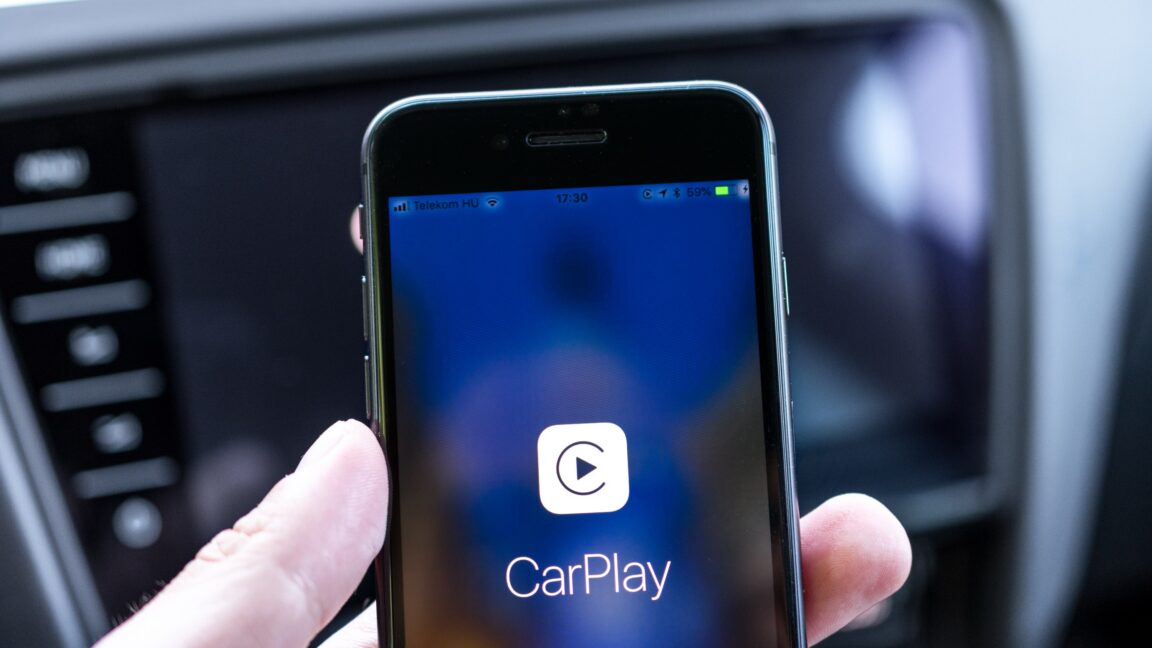
Apple CarPlay, the interface that lets you cast your phone to your car’s infotainment screen, may finally be coming to Tesla’s electric vehicles. CarPlay is nearly a decade old at this point, and it has become so popular that almost half of car buyers have said they won’t consider a car without the feature, and the overwhelming majority of automakers have included CarPlay in their vehicles.

Until now, that hasn’t included Tesla. CEO Elon Musk doesn’t appear to have opined on the omission, though he has frequently criticized Apple. In the past, Musk has said the goal of Tesla infotainment is to be “the most amount of fun you can have in a car.” Tesla has regularly added puerile features like fart noises to the system, and it has also integrated video games that drivers can play while they charge.

For customers who want to stream music, Tesla has instead offered Spotify, Tidal, and even Apple Music apps.

But Tesla is no longer riding high—its sales are crashing, and its market share is shrinking around the world as car buyers tire of a stale and outdated lineup of essentially two models at a time when competition has never been higher from legacy and startup automakers.

According to Bloomberg, which cites “people with knowledge of the matter,” the feature could be added within months if it isn’t cancelled internally.

Tesla is not the only automaker to reject Apple CarPlay. The startup Lucid took some time to add the feature to its high-end EVs, and Rivian still refuses to consider including the system, claiming that a third-party system would degrade the user experience. And of course, General Motors famously removed CarPlay from its new EVs, and it may do the same to its other vehicles in the future.

https://arstechnica.com/cars/2025/11/after-years-of-saying-no-tesla-reportedly-adding-apple-carplay-to-its-cars/


Pirelli’s Cyber Tire might become highway agencies’ newest assistant

Pirelli’s sensor-embedded Cyber Tire is starting to find a whole new niche helping traffic agencies. When we first learned of the smart tire, it was making its debut fitted to McLaren’s then-new plug-in hybrid supercar. As an alternative to a tire pressure monitoring system fitted to the car’s wheels, the Cyber Tire wirelessly reports its temperature and pressure to its car via Bluetooth Low Energy, along with some specific information about the tire itself.

Since then, Pirelli has continued to develop the technology. When it created Cyber Tires for the Pagani Utopia, it allowed a car to tailor its antilock braking and electronic stability control to the specific rubber fitted to the wheels. Right now, a car’s ABS or ESC will be tuned regardless of the tires it’s fitted to.

But a high-performance summer tire acts quite differently from a winter tire, not just because of the composition of the rubber but also due to the tread pattern, depth, and stiffness, not to mention factors like sidewall stiffness. And the Utopia can take advantage of that fact.

So far, that’s an academic concern to everyone but the few with the means and desire to drive a Utopia. But last year, Bosch, which worked on the Pagani integration with Pirelli, signed a deal with the tire maker allowing it to do the same for its other OEM clients. Indeed, just last month, Aston Martin announced it would adopt the Cyber Tire.

“There are plenty that I cannot yet mention now that are in an advanced phase of proof of concept,” said Piero Misani, Pirelli’s CTO. At first, Pirelli used its own AMG demo car to show the system to OEMs, but more recently, it has been integrating the technology into several new OEMs. Pirelli is “already working with two projects in Europe and two projects in China, for example, and this will lead to another one in England, Korea. We will start in January, and this will lead for sure to effective projects in the future,” Misani told me.

https://arstechnica.com/cars/2025/11/tires-that-talk-to-your-town-about-the-state-of-roads-are-on-the-way/


F1 in Brazil: That’s what generational talent looks like

After a weekend off, perhaps spent trick or treating, Formula 1’s drivers, engineers, and mechanics made their yearly trip to the Interlagos track for the Brazilian Grand Prix. More formally called the Autodromo Jose Carlos Pace, it’s definitely one of the more old-school circuits that F1 visits—and invariably one of the more dramatic.

For one thing, it’s anything but billiard-smooth. Better yet, there’s elevation—lots of it—and cambers, too. Unlike most F1 tracks, it runs counterclockwise, and it combines some very fast sections with several rather technical corners that can catch out even the best drivers in the world. Nestled between a couple of lakes in São Paulo, weather is also a regular factor in races here. And indeed, a severe weather warning was issued in the lead-up to this weekend’s race.

You have to hit the ground running

This was another sprint weekend, which means that instead of two practice sessions on Friday and another on Saturday morning, the teams get one on Friday, then go into qualifying for the Saturday sprint race. The shortened testing time tends to shake things up a bit, and we definitely saw that this weekend.

When we left Mexico, there was only a point’s difference between McLaren drivers Lando Norris and Oscar Piastri in the championship. After a strong run in the middle of the season, when he led the championship and seemed to have the edge on Norris, Piastri has had a string of disappointing races. By recent standards, Brazil wasn’t quite so bad, but it wasn’t great, either.

Carlos Sainz Jr. of Spain drives the (55) Atlassian Williams Racing FW47 Mercedes during the Formula 1 MSC Cruises Grande Premio De Sao Paulo 2025 in Sao Paulo, Brazil, on November 9, 2025. (Photo by Alessio Morgese/NurPhoto via Getty Images)

Is it just me, or does Williams usually have a disappointing weekend when it does a Gulf Oil livery? Credit: Alessio Morgese/NurPhoto via Getty Images

Despite the weather warnings, none of the sessions required treaded tires. While the track surface was basically dry for the sprint race, the same couldn’t be said for the painted curbs—water had collected in the valleys between the stepped “teeth,” and as just about every racer knows, if the painted bits of the track are wet, you really don’t want to go near them if you have slick tires.

https://arstechnica.com/cars/2025/11/f1-in-brazil-thats-what-generational-talent-looks-like/


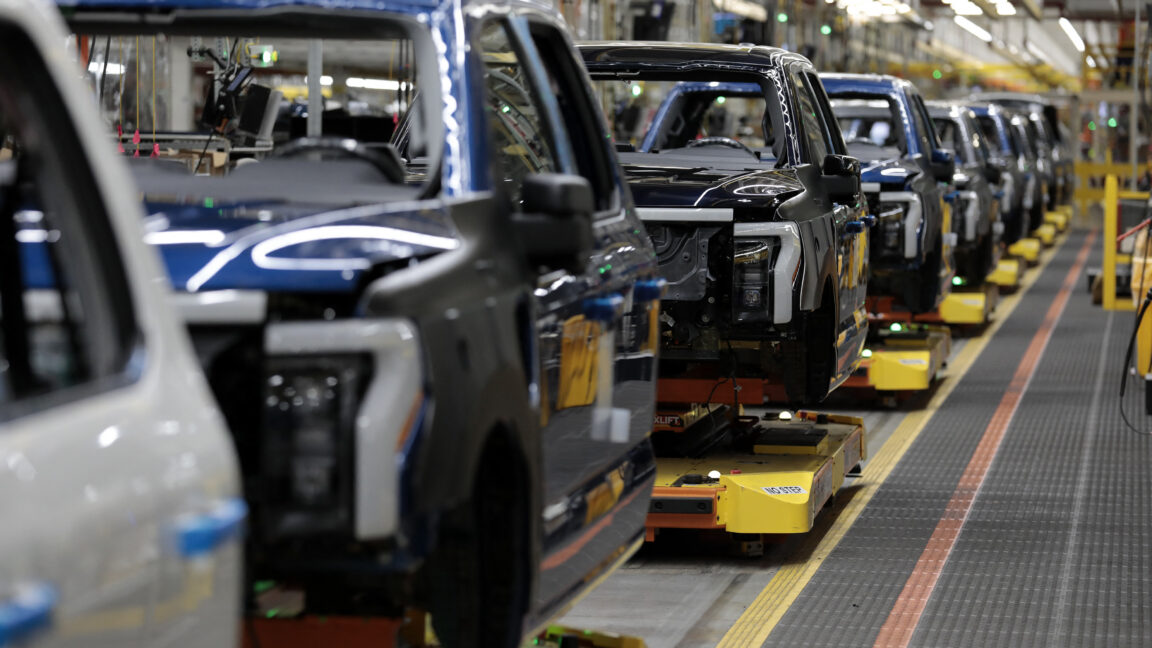
Ford says “no exact date” to restart F-150 Lightning production

When Ford electrified its bestselling pickup truck, it pulled out all the stops. The F-150 Lightning may look virtually identical to other versions of the pickup, but it’s smoother, faster, and obviously far, far more efficient than the ones that run on gas, diesel, or hybrid power. But the future of the country’s bestselling electric truck may be in doubt.

That’s according to a report in The Wall Street Journal, which claims that Ford’s management is “in active discussions about scrapping” the Lightning. Production had already been suspended a few weeks ago due to an aluminum shortage following a destructive fire at a supplier’s factory in New York, which Ford estimates may result in as much as $2 billion in losses to the company.

While Ford told Ars it doesn’t comment on speculation on its future product plans, the automaker said that “F-150 Lightning is the best-selling electric pickup truck in the US—despite new competition from CyberTruck, Chevy, GMC, Hummer and Rivian—and delivered record sales in Q3.”

“Right now, we’re focused on producing F-150 ICE and Hybrid as we recover from the fire at Novelis. We have good inventories of the F-150 Lightning and will bring Rouge Electric Vehicle Center (REVC) back up at the right time, but don’t have an exact date at this time,” a Ford spokesperson said.

Ford was the first of the domestic automakers to bring a full-size pickup EV to market. But like General Motors, it has found that pickup truck customers have not flocked to electric propulsion in anything like the numbers predicted pre-pandemic. As we learned last week, GM has also scaled back its EV production, and last month Stellantis announced that it has ceased development of an all-electric version of its Ram 1500.

As for Ford, a second-generation F-150 Lightning has been postponed in favor of a much cheaper, much simpler-to-build electric pickup, which is due in 2027.

https://arstechnica.com/cars/2025/11/ford-says-no-exact-date-to-restart-f-150-lightning-production/


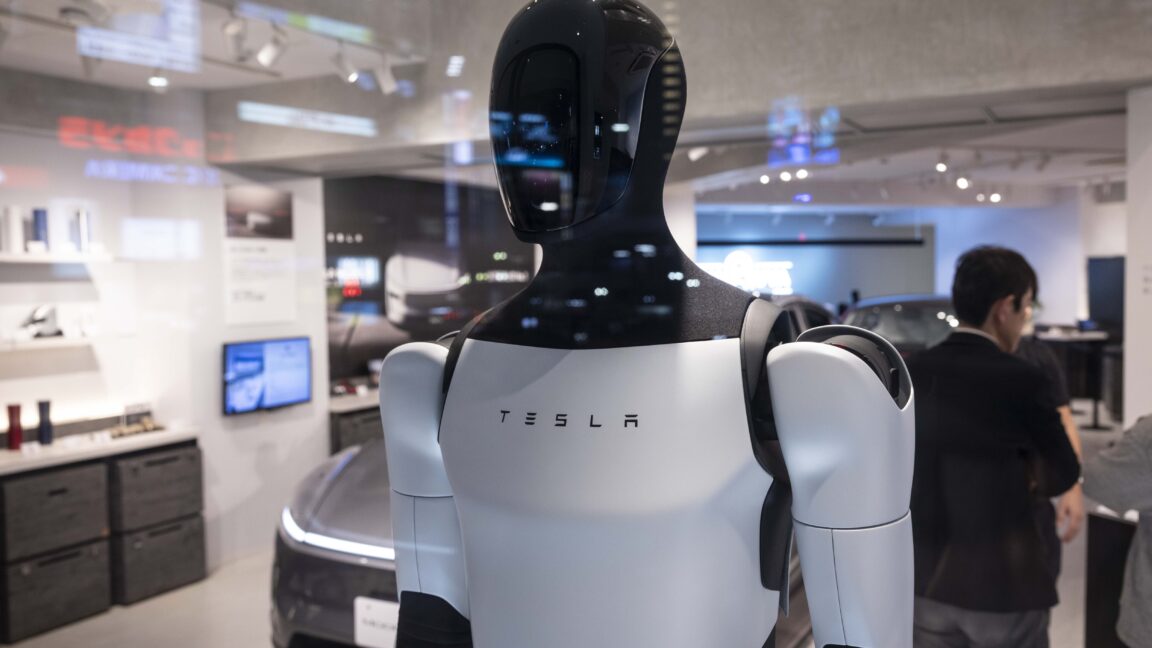
Elon Musk wins $1 trillion Tesla pay vote despite “part-time CEO” criticism

Tesla shareholders today voted to approve a compensation plan that would pay Elon Musk more than $1 trillion over the next decade if he hits all of the plan’s goals. Musk won over 75 percent of the vote, according to the announcement at today’s shareholder meeting.

The pay plan would give Musk 423,743,904 shares, awarded in 12 tranches of 35,311,992 shares each if Tesla achieves various operational goals and market value milestones. Goals include delivering 20 million vehicles, obtaining 10 million Full Self-Driving subscriptions, delivering 1 million “AI robots,” putting 1 million robotaxis in operation, and achieving a $400 billion adjusted EBITDA (earnings before interest, taxes, depreciation, and amortization).

Musk has threatened to leave if he doesn’t get a larger share of Tesla. He told investors last month, “It’s not like I’m going to go spend the money. It’s just, if we build this robot army, do I have at least a strong influence over that robot army? Not control, but a strong influence. That’s what it comes down to in a nutshell. I don’t feel comfortable building that robot army if I don’t have at least a strong influence.”

The plan has 12 market capitalization milestones topping out at $8.5 trillion. The value of Musk’s award is estimated to exceed $1 trillion if he hits all operational and market capitalization goals. Musk would increase his ownership stake to 24.8 percent of Tesla, or 28.8 percent if Tesla ends up winning an appeal in the court case that voided his 2018 pay plan.

Tesla Chair Robyn Denholm has argued that Musk needs big pay packages to stay motivated. Some investors have said $1 trillion is too much for a CEO who spends much of his time running other companies such as SpaceX, X (formerly Twitter), and xAI.

New York Comptroller Thomas DiNapoli, who runs a state retirement fund that owns over 3.3 million shares, slammed the pay plan in a webinar last week. He said that Musk’s existing stake in Tesla should already “be incentive enough to drive performance. The idea that another massive equity award will somehow refocus a man who is hopelessly distracted is both illogical and contrary to the evidence. This is not pay for performance; this is pay for unchecked power.”

Musk and his side hustles

With Musk spending more time at xAI, “some major Tesla investors have privately pressed top executives and board members about how much attention Musk was actually paying to the company and about whether there is a CEO succession plan,” a Wall Street Journal article on Tuesday said. “An unusually large contingent of Tesla board members, including chair Robyn Denholm, former Chipotle CFO Jack Hartung and Tesla co-founder JB Straubel, met with big investors in New York last week to advocate for Musk’s proposed new pay package.”

https://arstechnica.com/tech-policy/2025/11/elon-musk-wins-tesla-pay-vote-that-could-make-him-a-1-trillion-man/


Tesla’s European and Chinese customers are staying away in droves

Tesla’s shareholders are ready to vote tomorrow on whether to give Elon Musk an even more vast slice of the company in an effort to keep him focused on selling electric vehicles. Currently, the trolling tycoon appears a little obsessed with the UK, a place he appears to conflate with Middle Earth, which investors may or may not take into account when making their decision. What they ought to take into account is how many cars Tesla sold last month.

Although Tesla only publishes quarterly sales figures and does not divide those up by region, slightly more granular data is available from some countries via monthly new car registrations. And the numbers for October, when compared year on year to the same month in 2024, should be alarming.

Sales fell by double-digit margins in Sweden (89 percent), Denmark (86 percent), Belgium (69 percent), Finland (68 percent), Austria (65 percent), Switzerland (60 percent), Portugal (59 percent), Germany (54 percent), Norway (50 percent), the Netherlands (48 percent), the UK (47 percent), Italy (47 percent), and Spain (31 percent).

Only France bucked the trend—there, a new subsidy helped bump sales by 2 percent year on year.

Things in China were better, but not by much; Tesla sales dropped 9.9 percent in October compared to last year. And that’s bound to be very bad news for the bottom line; even with record sales in Q3, Tesla saw its margins shrink, its costs climb, and its profits begin to evaporate.

A common factor in both Europe and China is that Tesla now faces a huge amount of competition for EV buyers from both established OEMs and new Chinese startups. Tesla has failed to expand its range beyond the Models 3 and Y, both of which look increasingly stale despite recent cosmetic tweaks.

https://arstechnica.com/cars/2025/11/after-a-great-q3-tesla-sees-double-digit-declines-all-over-europe/


Dune driving with Mercedes-Benz as it tests off-road systems

The reason Mercedes’ engineers were driving up and down and across the dunes was to work on the car’s brake control systems. As you slow with the brake pedal, the car’s electronic brain juggles the input of the traction control, electronic stability control, antilock brakes, and a downhill speed governor that keep you going where you want, as opposed to careening down a slope at speed.

After a passenger ride through a particularly tricky section, it was my turn to have a go. It was a more surreal experience than messing around in an all-wheel drive car on fresh snow—that might involve low traction surfaces and some sliding around, but the horizon tends to remain in the same place.

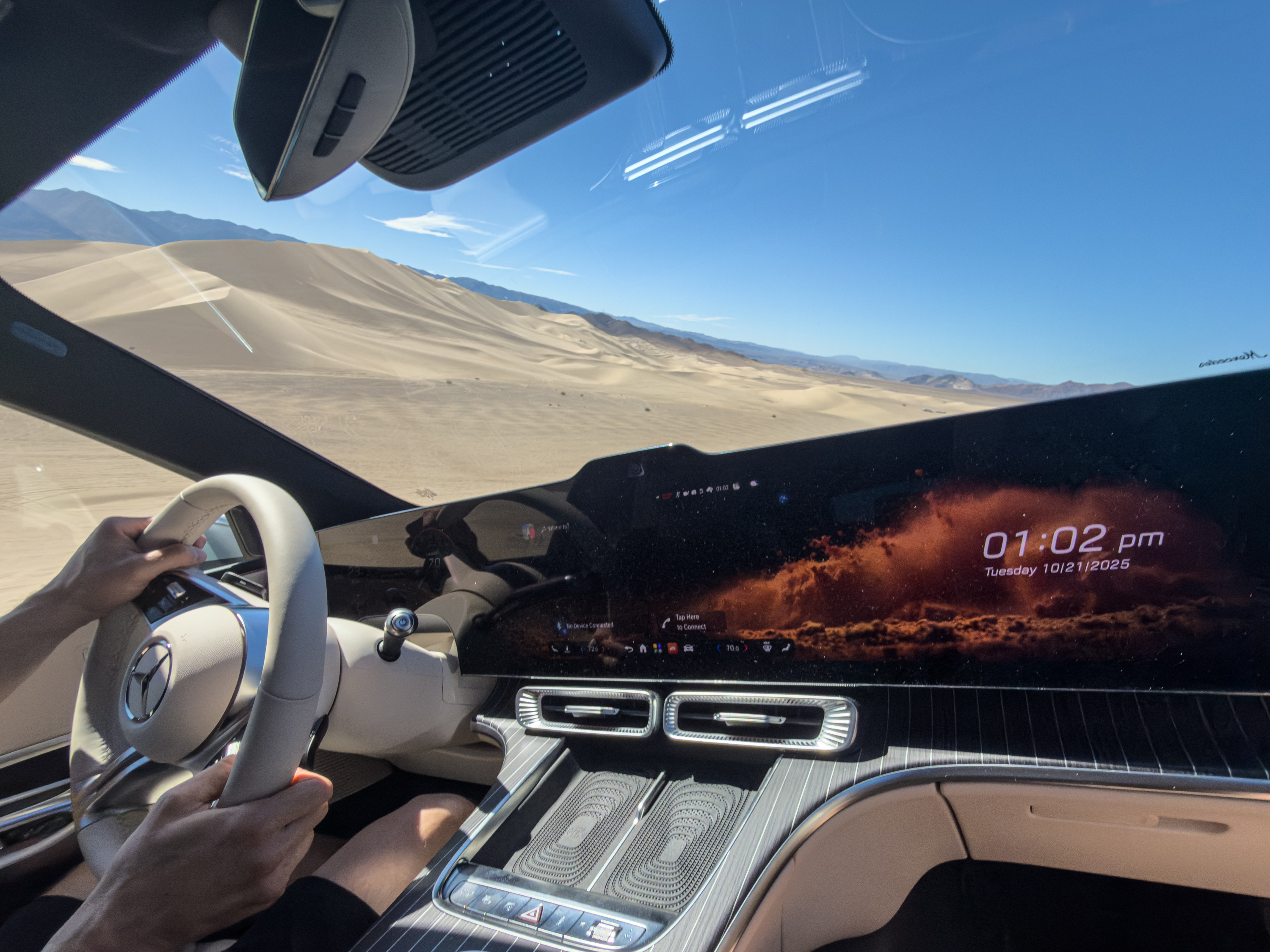
As I climbed a dune, my view was nothing but sand, then the deep blue sky. Despite the steep slope and the fact that the car was shod with regular street tires, the wheels found traction where needed, “churning” where necessary. Under braking, the ABS allows the front wheels to remain more controllable, taking into consideration any steering angle you have.

And that may be a lot, because as Lightning McQueen learned in Cars, to go left, sometimes you have to turn right. At times, crabbing up the side of a dune involved making progress with a fair amount of opposite steering lock.

Mercedes GLC dashboard

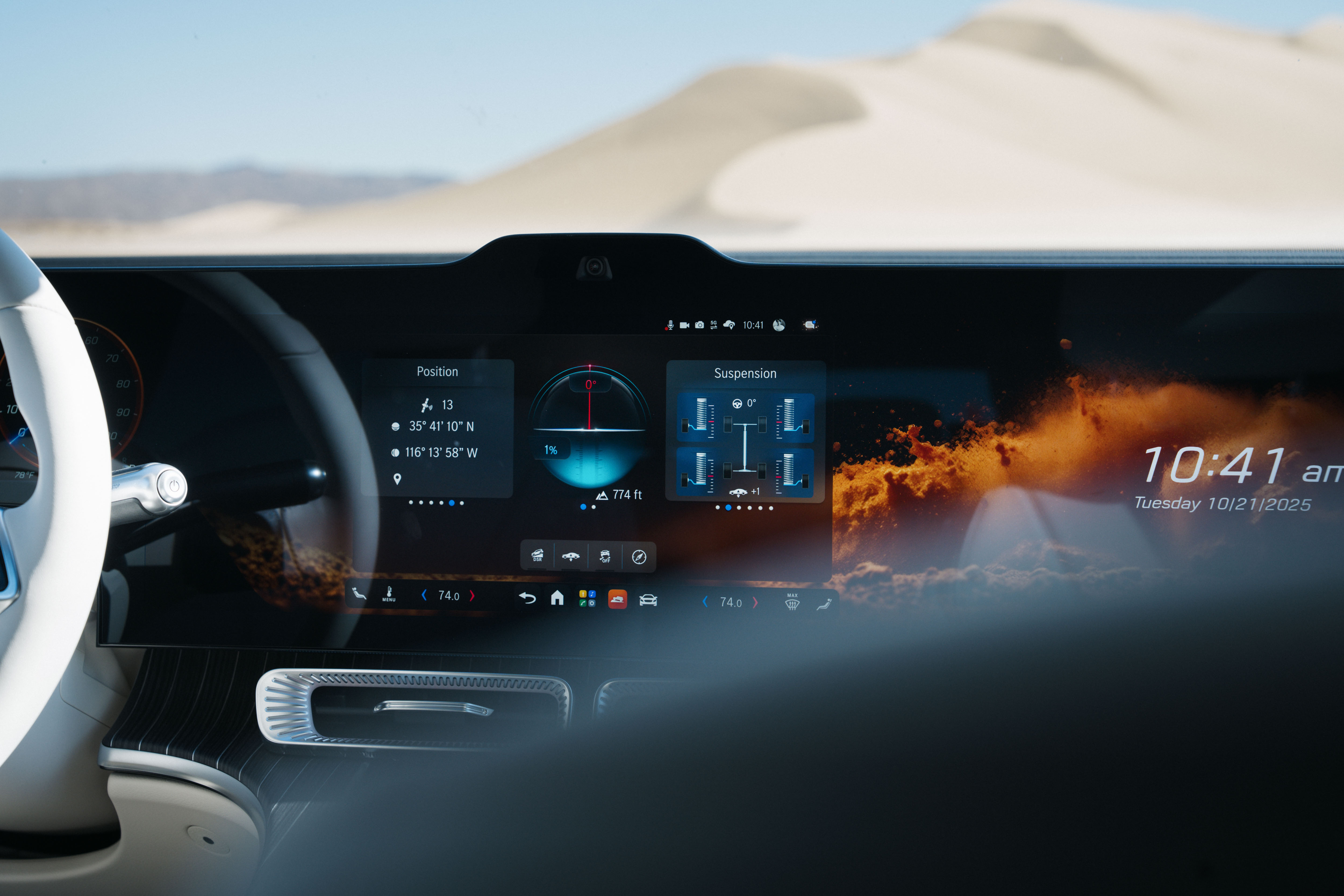
The Hyperscreen in the GLC is a single display that stretches across the dash, rather than three smaller screens beneath a single sheet of glass, as in earlier versions.

Mercedes-Benz

Warning: the horizon may not be level with the hood.

Jonathan Gitlin

Driving on a loose surface like sand, similar to driving on snow, requires a fair bit of torque, and the GLC’s 596 lb-ft (808 Nm) was more than enough to throw a rooster tail or two as the speed picked up and propelled us along. And the low center of gravity that results from the 94 kWh battery pack between the axles no doubt helped keep the car planted even while driving sideways along the dune.

My experience was much less repetitive than that of the Mercedes engineers, whose job it is to go out and drive a route, come back to the trailer, download the data, and upload a new configuration to the car. Then go out and drive the route again and repeat the whole process before driving two hours back to Las Vegas at the end of each day. But the result should be an electric SUV with the kind of mountain goat ability that belies its posh badge and looks.

The new GLC with EQ Technology goes on sale in the US late next year.

https://arstechnica.com/cars/2025/11/dune-driving-with-mercedes-benz-as-it-tests-off-road-systems/