Tesla’s standard-range Model 3, Model Y join the lineup
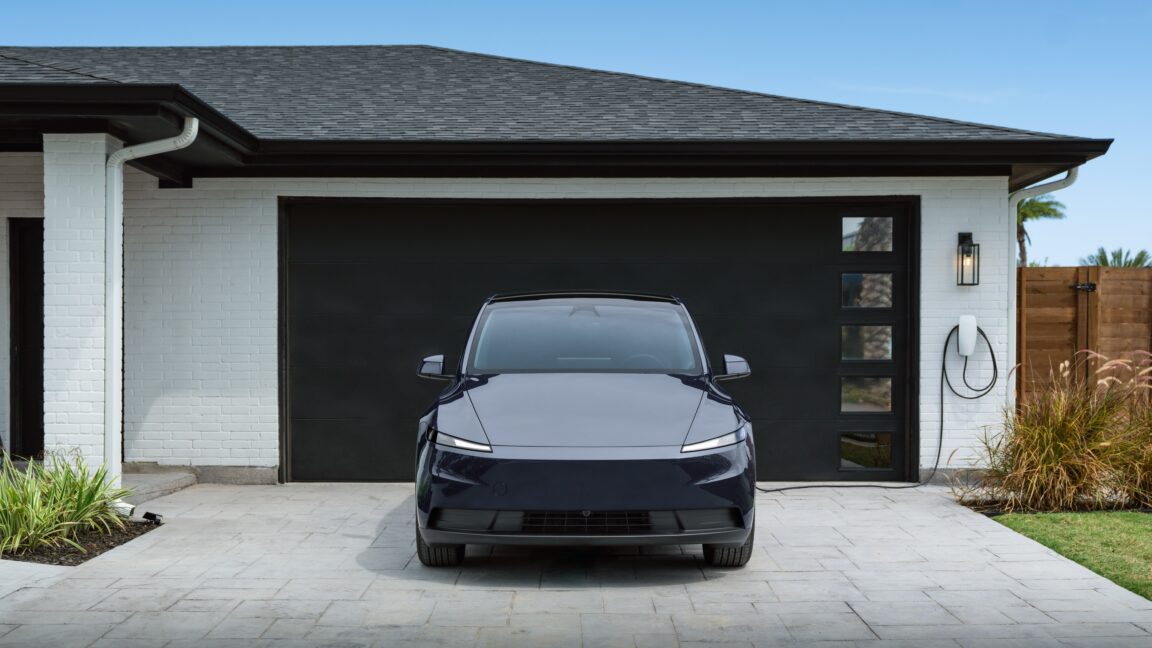
Today, Tesla announced a new variant of the Model Y crossover for North America. Tesla fans have long-awaited a cheaper entry-level model; this was supposed to be the $25,000 Model 2. But the development of that electric vehicle was shelved earlier last year as CEO Elon Musk began to lose interest with car-making in favor of humanoid robots.

However, car sales still make up the overwhelming majority of Tesla’s revenue, and the removal of the IRS clean vehicle tax credit at the end of September may have juiced US EV sales in Q3 2025, but sales are expected to dip significantly in the current quarter.

The new Standard Range Model Y starts at $39,990, with 321 miles (516 km) of range from its rear-wheel drive powertrain, compared to the now-Premium rear-wheel drive Model Y, which has an EPA range of 357 miles (574 km). In the past, Tesla has software-locked batteries to a smaller configuration; however, here we believe the Standard Range Model Y uses a 69 kWh pack.

The cheaper Model Y is decontented in other ways. There’s no AM or FM radio, and no touchscreen in the back for passengers to control their climate settings. The roof is metal, not panoramic glass, and there’s a simpler center console and manual adjustment for the steering wheel. Tesla has reduced the choice of interior trim materials, there’s a less-capable particulate filter (with no HEPA mode), and there’s no seat heating for the back seats or cooling for the front seats.

https://arstechnica.com/cars/2025/10/teslas-new-cut-price-evs-a-39990-model-y-and-36990-model-3/



Hyundai gives the Ioniq 5 a huge price cut for model-year 2026

Earlier today, we wrote about how Ford, General Motors, and Tesla have reacted to the end of the clean vehicle tax credits. Now we know what Hyundai is doing, and the answer is “giving the Ioniq 5 a huge price cut.”

The cheapest Ioniq 5 is still the SE RWD. A model-year 2025 SE RWD cost $42,600; for model-year 2026 it’s now $35,000. The price cuts for other versions are even greater—between $9,150 and $9,800. For example, the Ioniq 5 XRT that you see in the photo above had a starting price of $55,500 for MY25; now it starts at a very reasonable $46,275.

“Hyundai is taking bold steps to ensure our award-winning Ioniq 5 remains a top choice for EV buyers,” said Randy Parker, president and CEO of Hyundai Motor North America. “This pricing realignment reflects our commitment to delivering exceptional technology and innovation without compromise.”

Unlike the tax credit, there’s no income cap applied to Hyundai’s price cut. But the cuts have only been applied to Ioniq 5s built in the US—the Ioniq 5 N, built in Korea, was absent from Hyundai’s press release, as was the Ioniq 6 sedan or the Ioniq 9 three-row SUV. However, Hyundai said that those MY25 cars are still eligible for a manufacturer’s incentive of $7,500.

Hyundai updated the Ioniq 5 last year, adding native NACS ports and other improvements to an already-excellent EV, like adding the missing rear windshield wiper.

https://arstechnica.com/cars/2025/10/hyundai-gives-the-ioniq-5-a-huge-price-cut-for-model-year-2026/


Porsche’s insanely clever hybrid engine comes to the 911 Turbo S

Today, Porsche debuted a new 911 variant at the IAA Mobility show in Munich, Germany. It’s the most powerful 911 to date, excluding some limited-run models, and may well be the quickest to 60 mph from a standing start, dispatching that dash in just 2.4 seconds. And it’s all thanks to one of the most interesting hybrid powertrains on sale today.

Rather than just bolting an electric motor to an existing 911, Porsche designed an entirely new 3.6 L flat-six engine, taking the opportunity to ditch the belt drive and move some of the ancillaries, which can instead be powered by the car’s 400 V traction battery.

The system debuted in the 911 GTS T-Hybrid, which Ars recently reviewed. For that car, Porsche added a single electric turbocharger, which works like the MGU-H in a Formula 1 car. It spins up almost instantly to 120,000 rpm to eliminate throttle lag, but also recaptures excess energy from the spinning turbine and sends that to the 1.9 kWh battery pack.

The result is a turbocharged engine that has a remarkable throttle response that’s more like an EV, with no perceptible lag between initial tip-in and power being delivered to the wheels.

For the 2026 911 Turbo S, there are a pair of these electric turbochargers. And like the GTS, you’ll find a 53 hp (40 kW), 110 lb-ft (150 Nm) permanent synchronous motor inside the eight-speed dual clutch transmission. Total output is a heady 701 hp (523 kW) and 590 lb-ft (800 Nm), which is sufficient to cut the 0–60 mph (0–98 km/h) time to 2.4 seconds. 124 mph (200 km/h) takes just 8.4 seconds, half a second less than the 2025 Turbo S.

https://arstechnica.com/cars/2025/09/porsches-insanely-clever-hybrid-engine-comes-to-the-911-turbo-s/


BMW debuts 6th-generation EV powertrain in the all-electric iX3

The first variant will be the iX3 50 xDrive, which boasts a combined 463 hp (345 kW) and 475 lb-ft (645 Nm) from its pair of motors. The front axle uses an asynchronous motor, with an electrically excited synchronous motor at the rear axle providing most of the power.

There’s 40 percent more regenerative braking than BMW’s current powertrains. We weren’t given an exact threshold where the friction brakes take over, but it should be around 0.5–0.6 G. That means that the iX3 will regeneratively brake for the overwhelming majority of the time—just 5–10 percent of braking events should require the friction brakes, we’re told. And the regen should be smoother and more precise, as well as quieter than before. There’s even some regenerative braking should the ABS trigger.

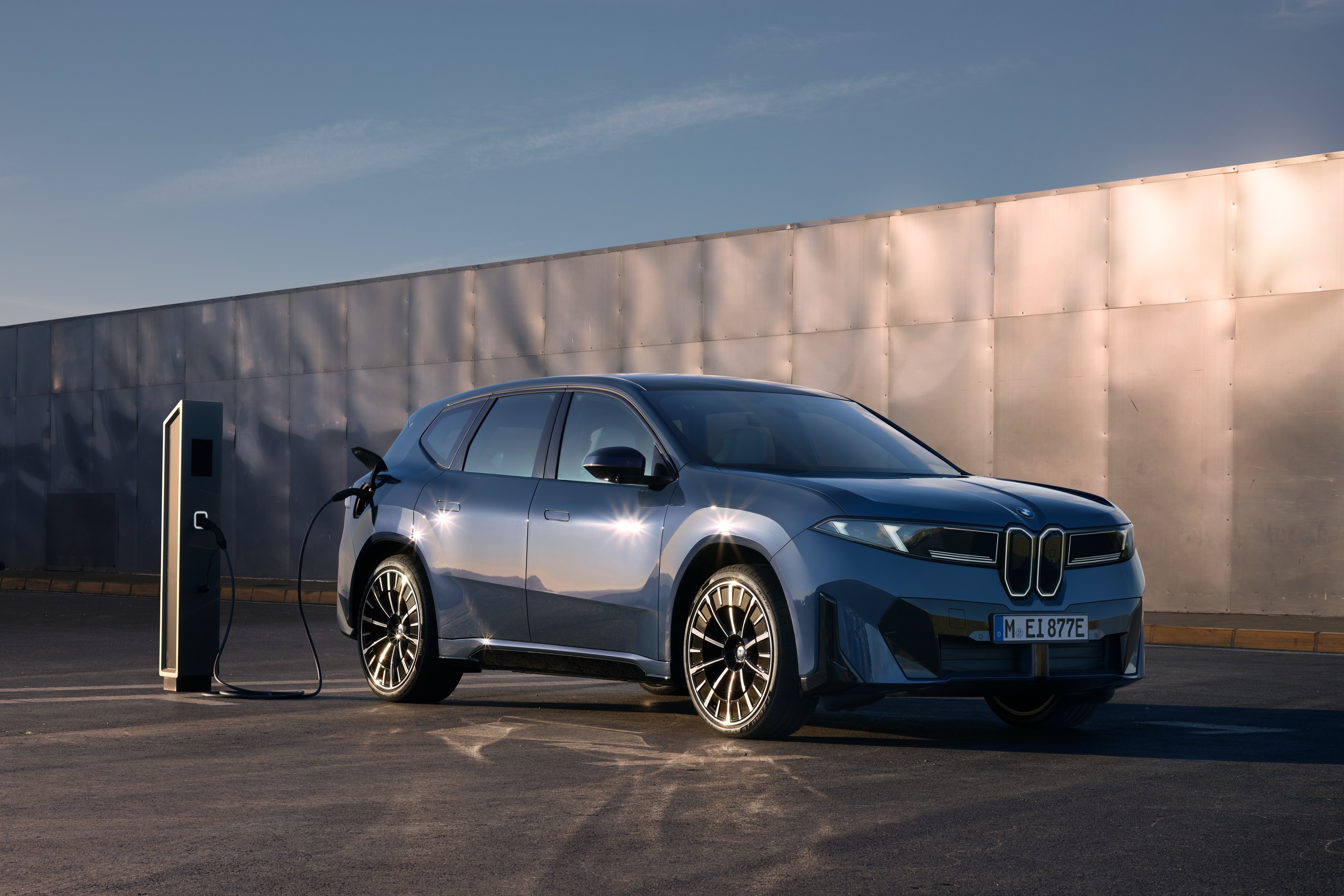
A BMW iX3 is parked, charging

NACS port comes standard, with a CCS1 adapter. Credit: BMW

For the Neue Klasse, BMW has moved to a new 800 V battery, using cylindrical cells rather than the prismatic cells you’d find in an iX or i4. Energy density is 20 percent greater than the current cells, and the pack has a usable capacity of 108 kWh. That means you can expect a range of up to 400 miles, although the official EPA rating will only arrive next year.

The new pack charges a lot faster, too. It can accept up to 400 kW, should you find a charger capable of such power. If so, the 10–80 percent charge should take 21 minutes. (BMW also says it will add 230 miles in 10 minutes.) The iX3 is capable of acting as a mobile power bank (V2L) as well as powering a home or even the grid (this requires a V2H-capable wall box), and North American iX3s will sport NACS charging ports.

Software-defined

The Neue Klasse is a clean-sheet design, and BMW has used this as an opportunity to clear out the legacy cruft that has accumulated over the years. Instead of hundreds of discrete black boxes, each with a single electric control unit (ECU) performing a single job, the iX3 uses four high-performance computers, each in charge of a different domain. Among the benefits of this approach? Almost 2,000 feet (600 m) less wiring and a weight saving of about 30 percent compared to a conventional wiring loom with all its ECUs. Taking single-function controllers out of the loop and replacing them with a domain computer also cuts latency.

https://arstechnica.com/cars/2025/09/neue-klasse-bmws-tech-filled-ix3-electric-suv-is-unveiled/


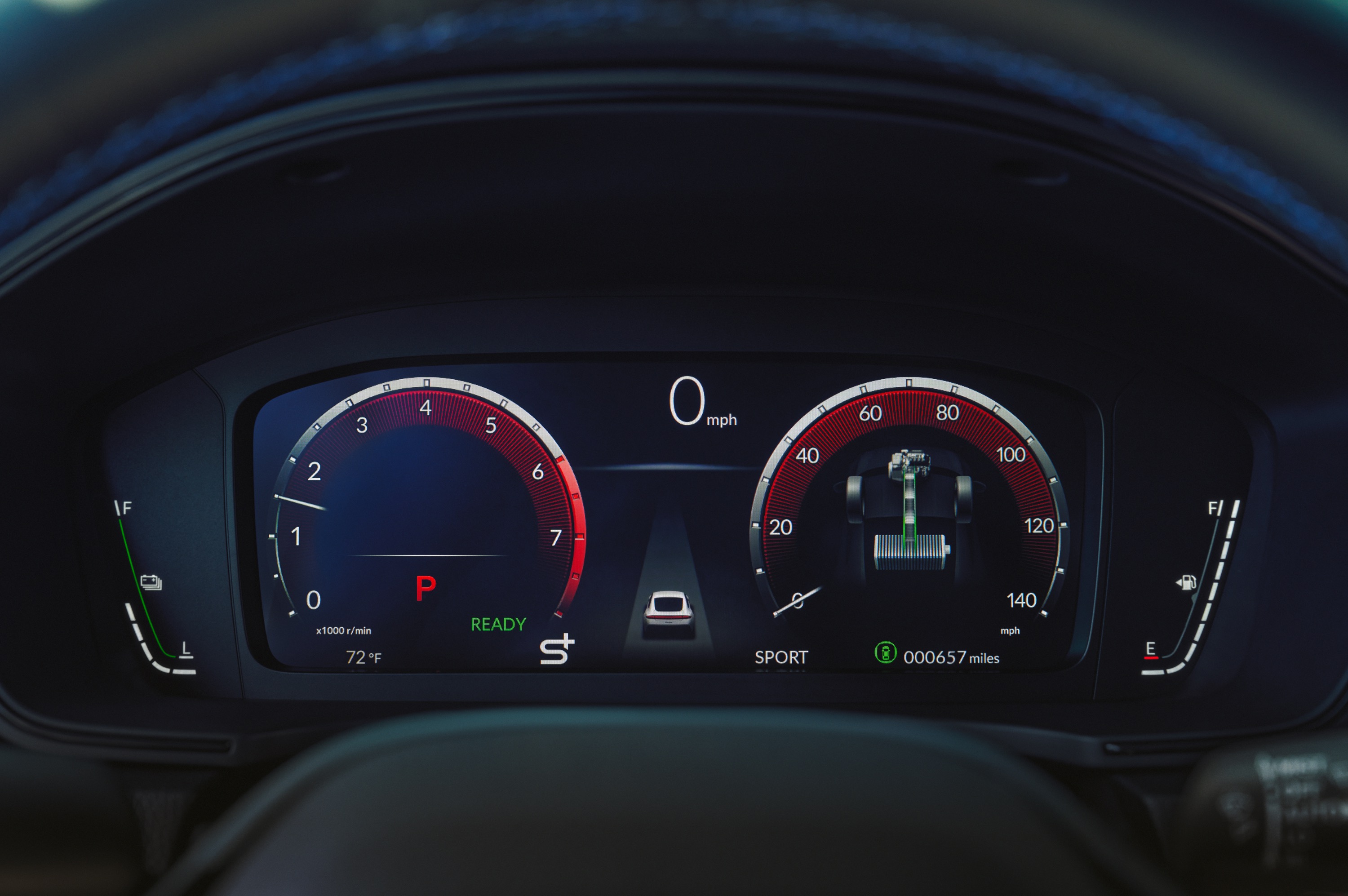
Honda combines Type-R handling with hybrid efficiency for 2026 Prelude

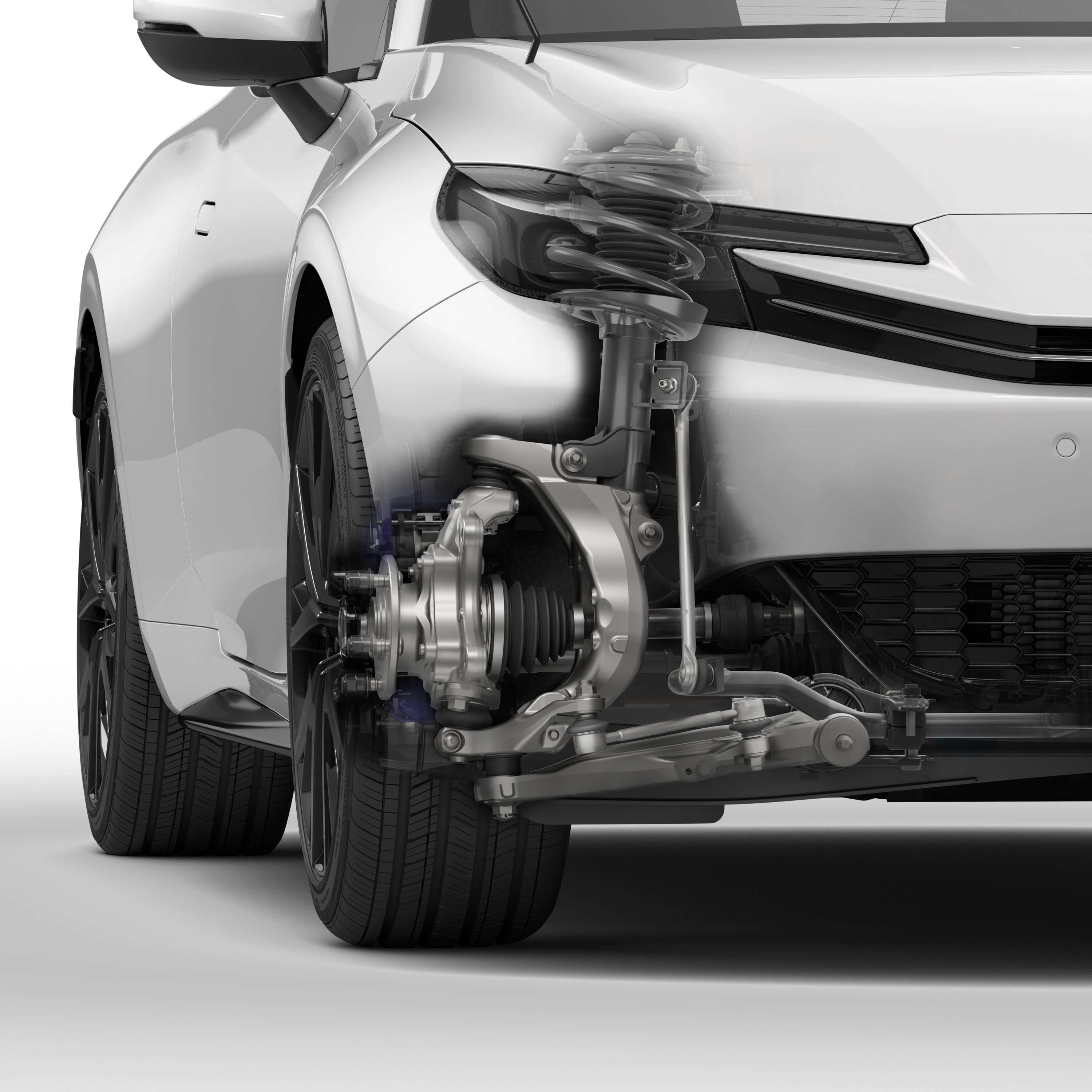
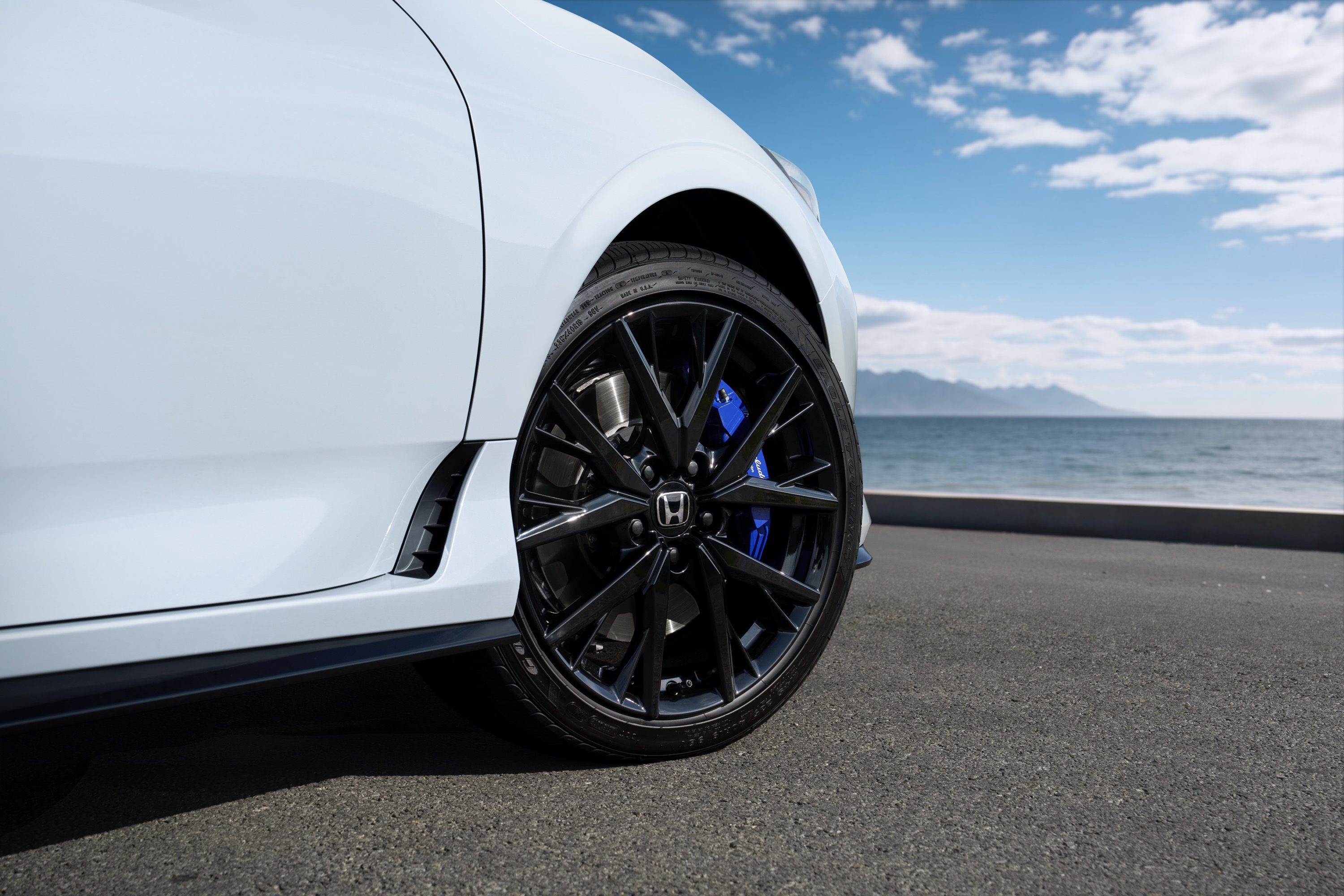
The chassis benefits from parts from a different Civic—the Type-R hot hatch. Ars has sadly yet to sample the current-generation Type-R, but everyone I know who has driven one has come away smiling. Type-R parts include the front suspension’s dual-axis struts and the Brembo brakes, which are there for when regen braking via the hybrid system is no longer sufficient.

Adaptive dampers control the Prelude’s ride, and there are four different drive modes. The powertrain simulates a manual transmission with something called S+ Shift, which “delivers quick simulated gearshift responses through seamless coordination between the engine and high-power motor, including downshift blips, rev matching, and gear holding.”

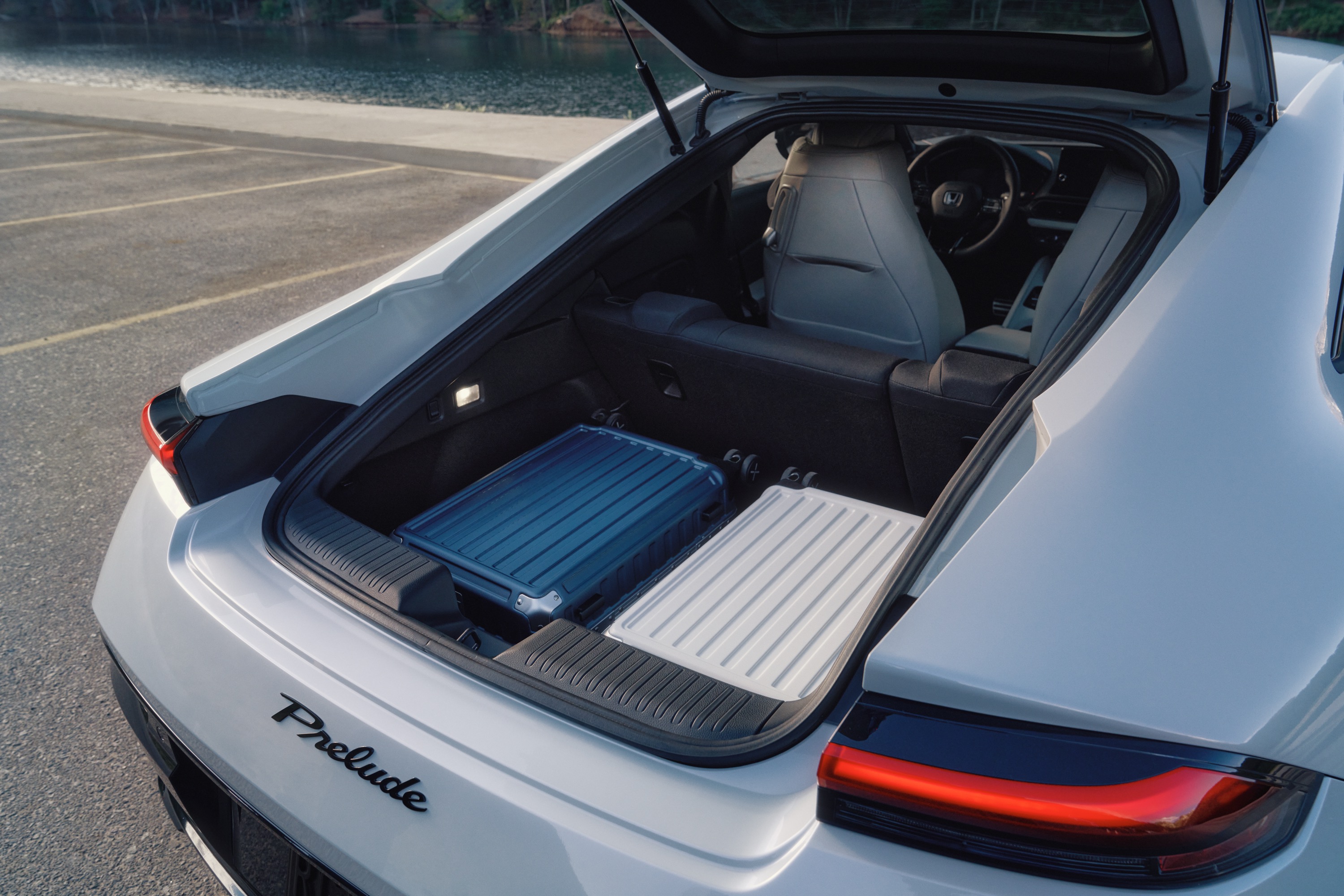
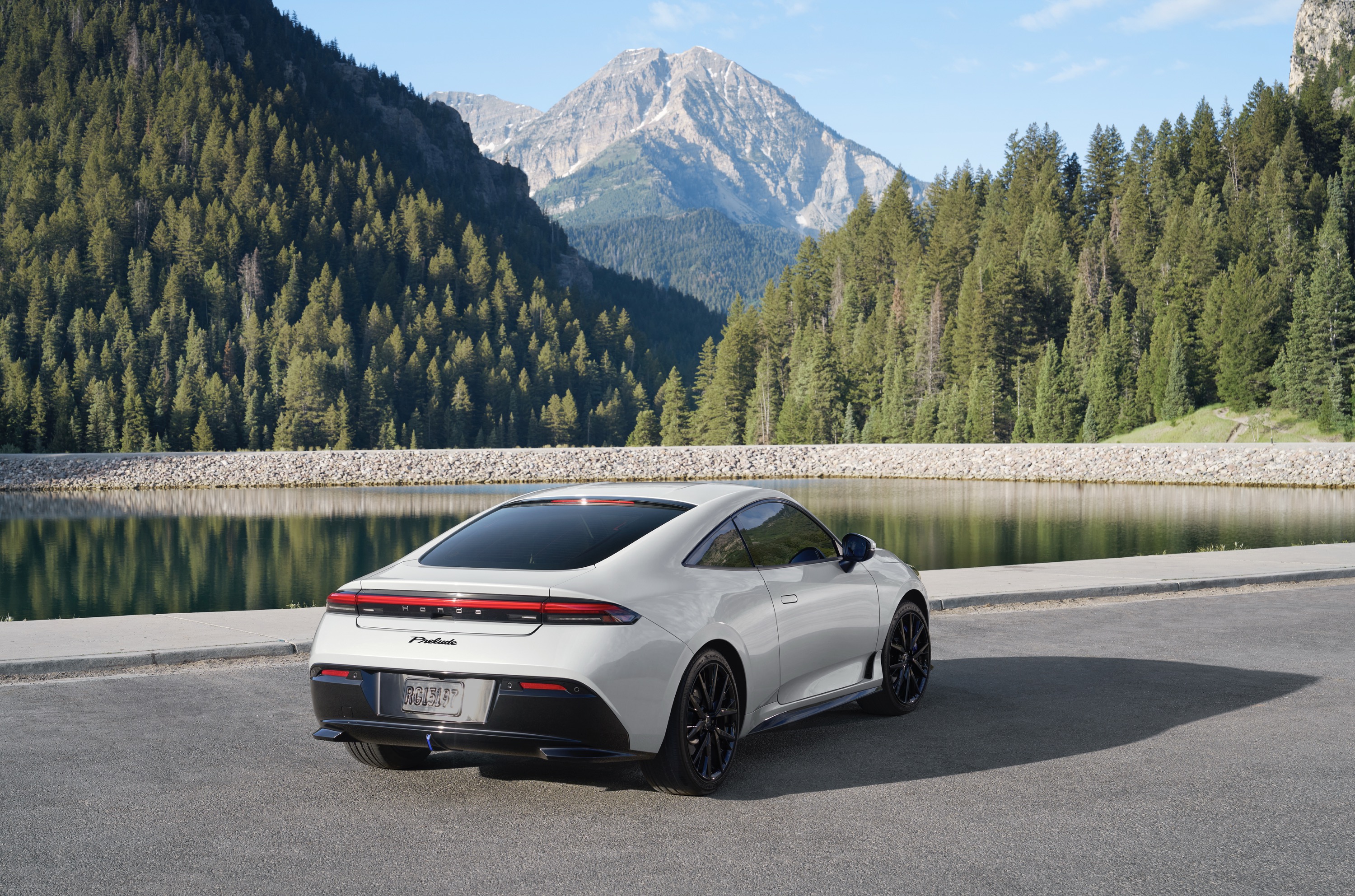
A Honda Prelude parked facing away from the camera

It’s a handsome coupe.

Honda

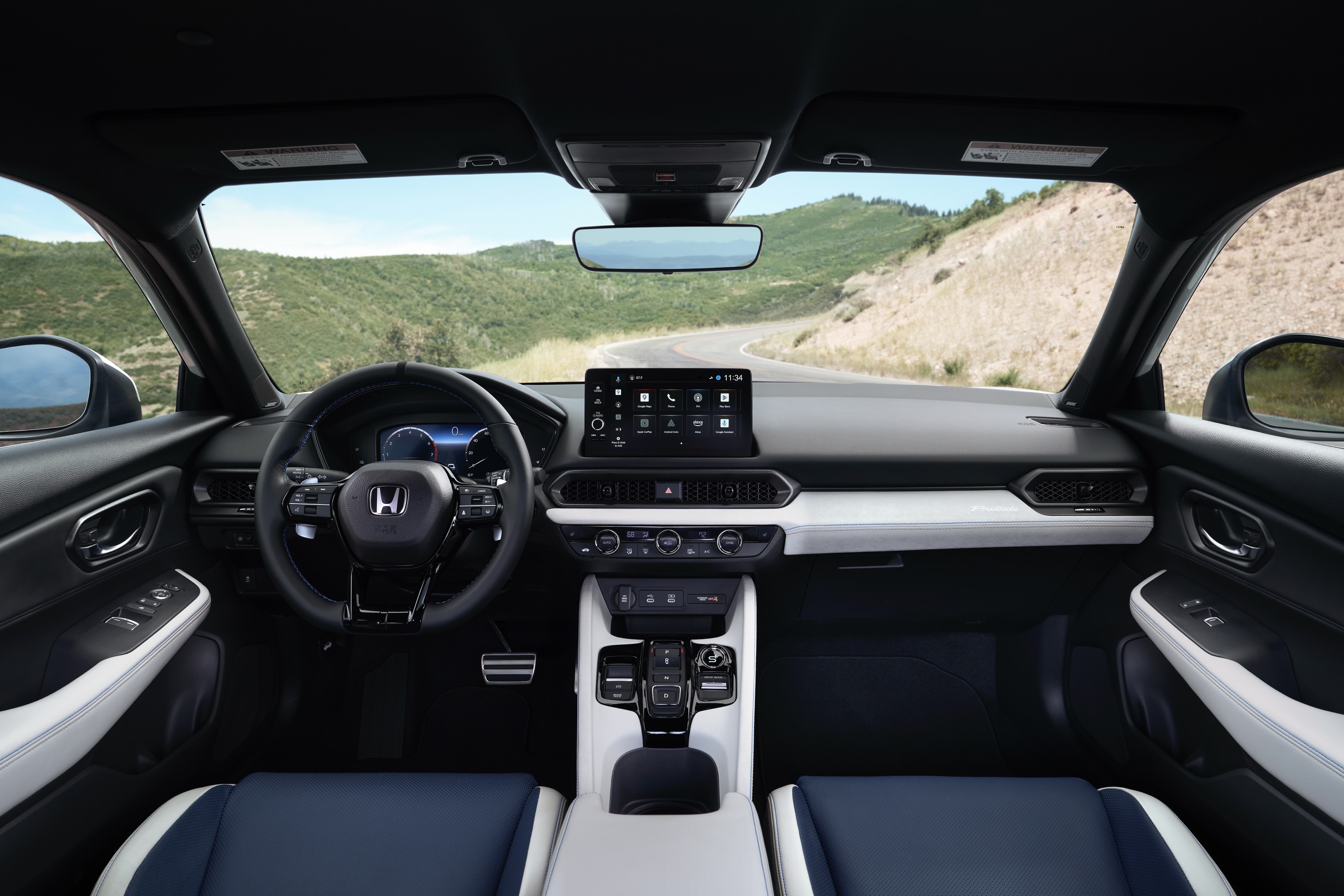
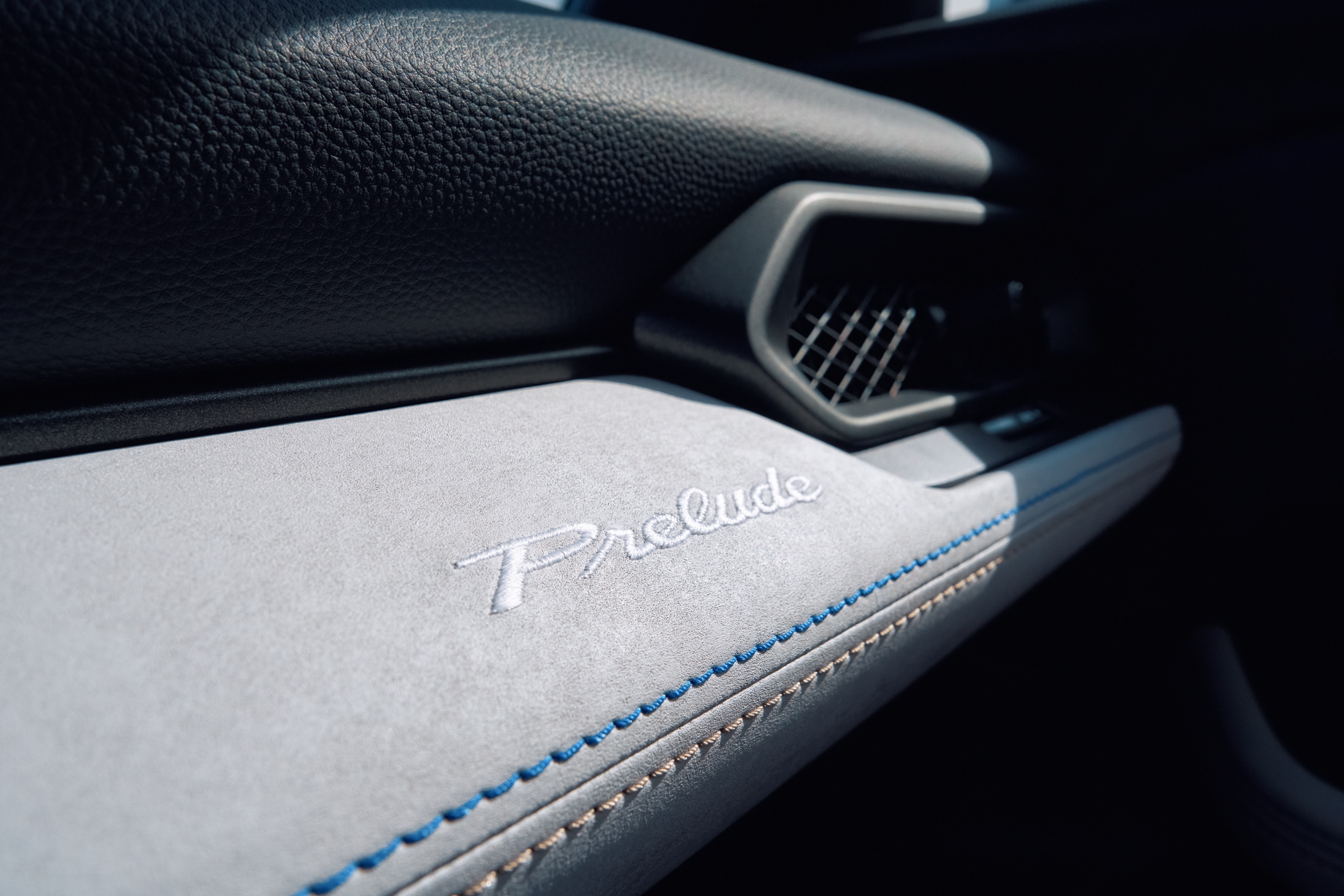
Honda Prelude interior

If you’ve sat in a current Civic, you’ll recognize some of the parts in here.

Honda

If the end result is as good as Hyundai’s N E-shift, it should be fun to play with. And if it isn’t, you can just leave the car in automatic mode.

Beyond that, expect all the latest Honda advanced driver assistance systems (also known as Honda Sensing), and an Android Automotive-based infotainment system with Google built in and wireless Apple CarPlay and Android Auto.

We’ll have to wait until sooner to the car’s arrival to get pricing, but expect the Prelude to start somewhere between $38,000 and $40,000.

https://arstechnica.com/cars/2025/09/honda-combines-type-r-handling-with-hybrid-efficiency-for-2026-prelude/


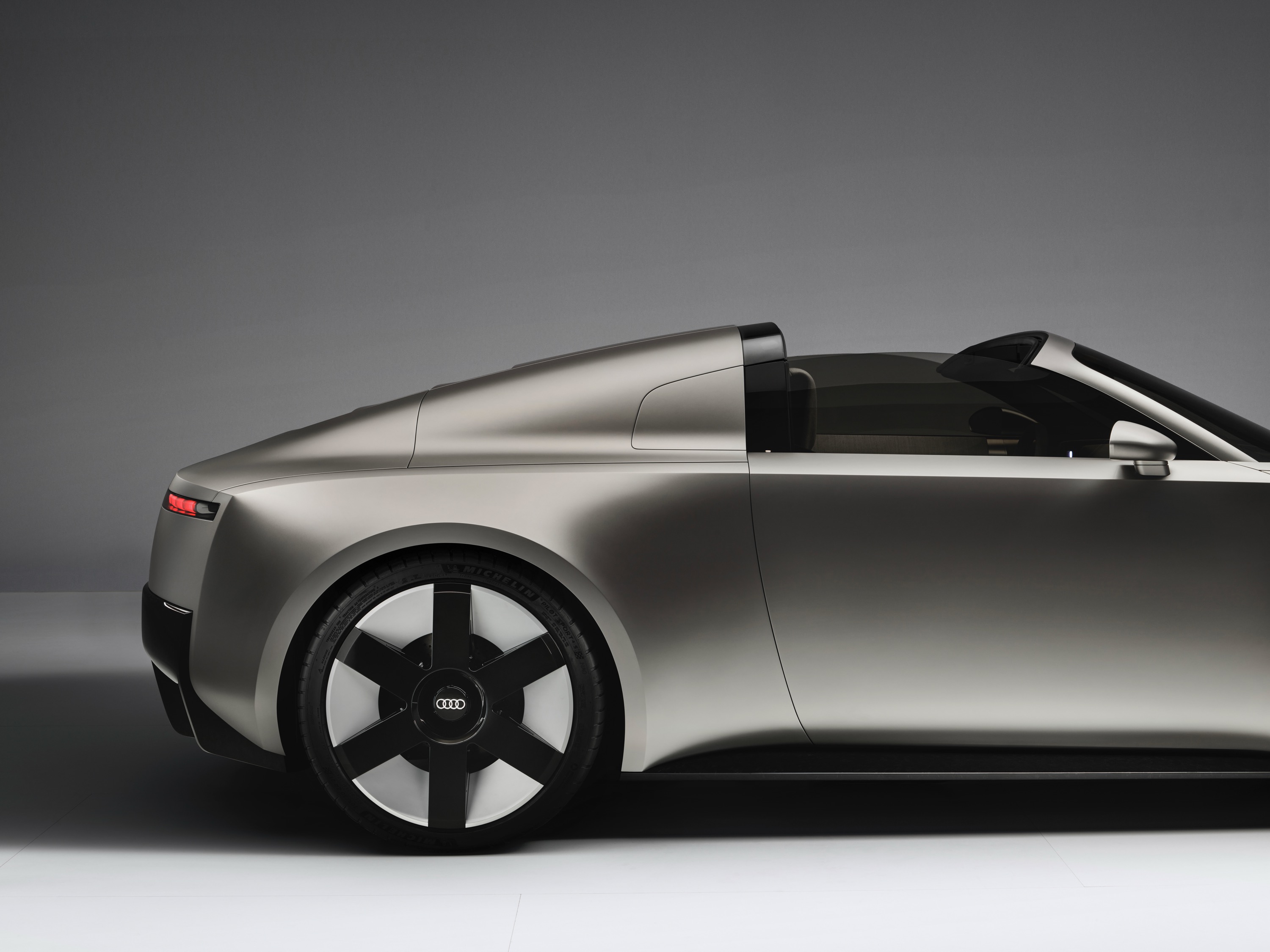
Audi design finds its minimalist groove again with Concept C

Fans of the TT rejoice—there’s a new Audi two-seater on the way. The German automaker just unveiled Concept C, a stylish and minimalist sports car that marks the start of a new styling philosophy and, hopefully, a return to the bold designs that brought it so much success.

There are design cues and links back through Audi’s history, but this is no pastiche of a retro design as we might have seen from J Mays. Rather, Audi’s design team under Chief Creative Officer Massimo Frascella says that the design influences include one of the pre-war Silver Arrows racing cars, the 1936 Auto Union Type C—Audi being one of the four brands that combined to form Auto Union.

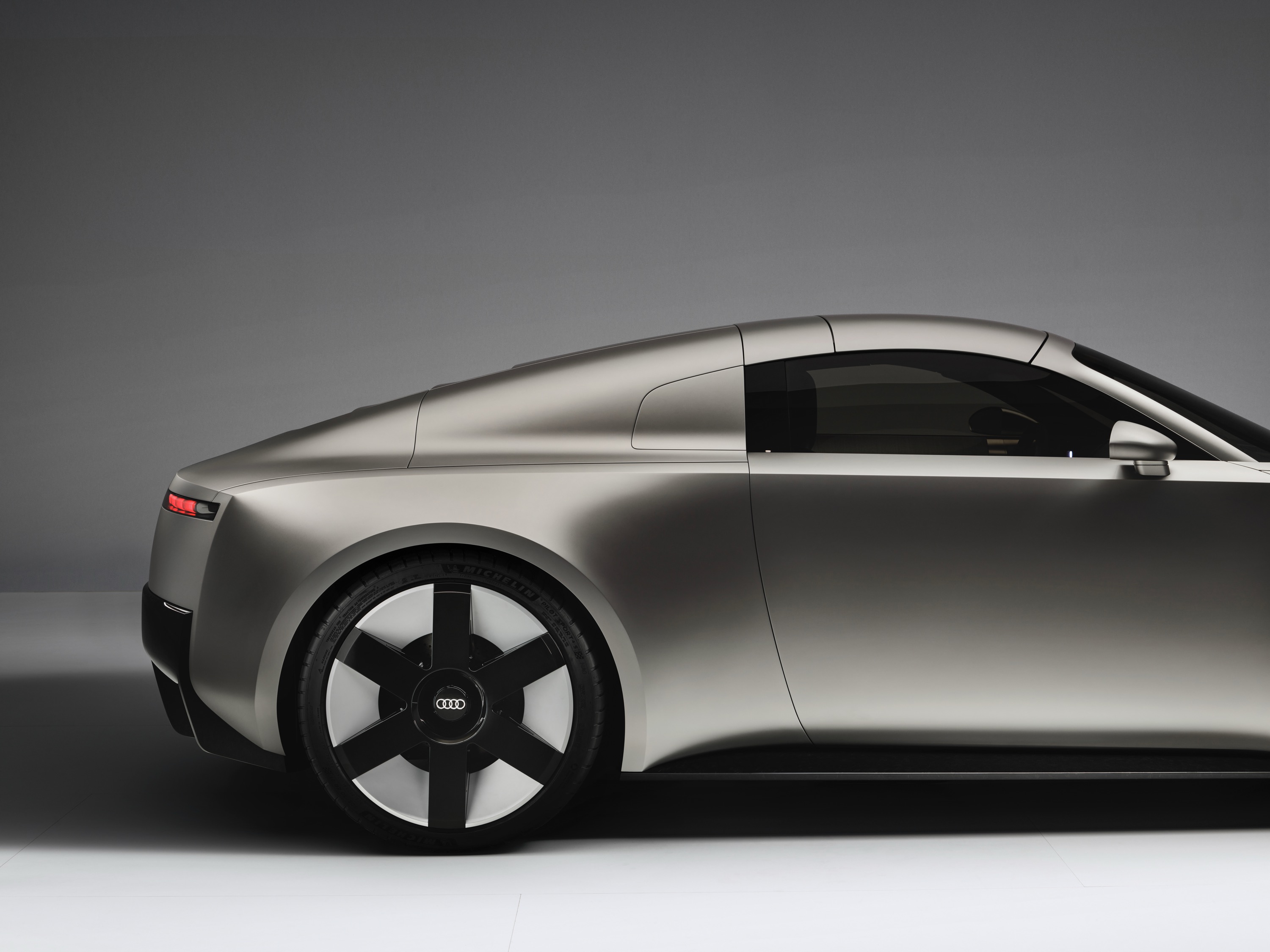
Audi Concept C back half in profile, roof up

The Concept C has a targa top—here, it’s on.

Audi

Audi Concept C back half in profile, roof down

And here, it’s off.

Audi

The slats that cover the Concept C’s rear bring to mind the cooling louvres at the rear of the Type C, necessary to let the heat generated by its monstrous V16 engine to escape the rear engine bay. But I also see some of the streamlined Rennlimousine in the Concept C’s slab sides.

It’s a much simpler design than the TT concept from 1995, which manages to look almost fussy in its details compared to the Concept C. But the way the air intakes are formed underneath the headlights reminds me a lot of the Bentley Hunaudieres, a mid-engined concept from 1999.

https://arstechnica.com/cars/2025/09/audi-design-finds-its-minimalist-groove-again-with-concept-c/


Tesla has a new master plan—it just doesn’t have any specifics

Tesla also disbanded the team building its “Dojo” supercomputer several weeks ago. Much touted by Musk in the past as the key to beating autonomous vehicle developers like Waymo (which has already deployed commercially in several cities), Tesla will no longer rely on this in-house resource and instead rely on external companies, according to Bloomberg.

“Shortages in resources can be remedied by improved technology, greater innovation and new ideas,” the plan continues.

Then plan veers into corporate buzzwords, with statements like “[o]ur desire to push beyond what is considered achievable will foster the growth needed for truly sustainable abundance.”

In keeping with Musk’s recent robot obsession, there’s very little mention of Tesla electric vehicles other than a brief mention of autonomous vehicles, but there is quite a lot of text devoted to the company’s humanoid robot. “Jobs and tasks that are particularly monotonous or dangerous can now be accomplished by other means,” it states, blithely eliding the fact that it makes very little sense to compromise an industrial robot with a bipedal humanoid body, as evinced by the non-humanoid form factors of just about every industrial robot working today. Robot arms mounted to the floor don’t need to worry about balance, nor do quadraped robots with wheels.

https://arstechnica.com/cars/2025/09/tesla-has-a-new-master-plan-it-just-doesnt-have-any-specifics/


Chinese EV buyers are cooling on Tesla and BYD

Meanwhile, BYD now accounts for 1.1 percent of all new cars sold in the European Union.

There is one bright spot for Tesla, however—it sold 8,370 cars in Turkey in August, making it that country’s second-most popular automaker.

Robots will save Tesla?

But perhaps Tesla shareholders shouldn’t worry about cratering sales. On Monday night, Tesla CEO Elon Musk used his social media network to yet again prophesize that the company’s future is not cars. Despite the fact that selling cars brings in 75 percent of the revenue and is responsible for the carbon credits that keep the company in the black, EVs are but a mere distraction. Instead, Musk claims that 80 percent of Tesla’s value will come from selling humanoid robots.

Musk has been promoting Tesla’s humanoid robot for some years now, with flashy demos that, instead of actual robotics, were waldos in action, mindlessly copying the motions of human controllers who were operating them remotely.

Despite the very non-humanoid shape of industrial robots in car factories, Musk has said the Tesla robots will find their way onto the company’s production line to build cars, presumably to replace workers whom he would otherwise have to pay salaries and benefits. But the CEO has grander ambitions for his robots, claiming on an investor call last year that the company will sell billions of humanoid robots a year.

https://arstechnica.com/cars/2025/09/chinese-ev-buyers-are-cooling-on-tesla-and-byd/


Tesla denied having fatal crash data until a hacker found it

Tesla only acknowledged that it had received the data once the police took the Tesla’s damaged infotainment system and autopilot control unit to a Tesla technician to diagnose, but at that time the local collision snapshot was considered unrecoverable.

That’s where the hacker, only identified as @greentheonly, his username on X, came in. Greentheonly told The Washington Post that, “for any reasonable person, it was obvious the data was there.”

During the trial, Tesla told the court that it hadn’t hidden the data, but lost it. The company’s lawyer told the Post that Tesla’s data handling practices were “clumsy” and that another search turned up the data, after acknowledging that @greentheonly had retrieved the snapshot locally from the car.

“We didn’t think we had it, and we found out we did… And, thankfully, we did because this is an amazingly helpful piece of information,” said Tesla’s lawyer, Joel Smith.

https://arstechnica.com/cars/2025/08/how-a-hacker-helped-win-a-wrongful-death-lawsuit-against-tesla/


As GM prepares to switch its EVs to NACS, it has some new adapters

The first adapter that GM released, which cost $225, allowed CCS1-equipped EVs to connect to a NACS charger. But now, GM will have a range of adapters so that any of its EV customers can charge anywhere, as long as they have the right dongle.

For existing GM EVs with CCS1, there is a GM NACS DC adapter, just for fast charging. And for level 2 (AC) charging, there’s a GM NACS level 2 adapter.

For the NACS-equipped GM EVs (which, again, have yet to hit the showrooms), there’s a GM CCS1 DC adapter that will let those EVs use existing non-Tesla DC charging infrastructure, like Electrify America’s 350 kW chargers. There is also a GM J1772 AC adapter, which will let a GM NACS EV slow-charge from the ubiquitous J1772 port. And a pair of adapters will be compatible with GM’s Energy Powershift home charger, which lets an EV use its battery to power the house if necessary, also known as vehicle-to-home or V2H.

Although we don’t have exact prices for each adapter, GM told Ars the range costs between $67 and $195.

https://arstechnica.com/cars/2025/08/gm-announces-new-nacs-and-ccs1-adapters-coming-next-week/