Rivian reveals pricing and trim details for its R2 SUV

Between the antics particular to a certain car company and the industrial chaos that was set off by COVID (then compounded by the invasion of Ukraine) it’s easy to have become cynical about things like timelines. And yet, when Rivian showed off a midsize electric vehicle in 2024 and said it would go on sale during the first half of 2026, it meant it: deliveries of the first R2 SUVs will begin this spring.

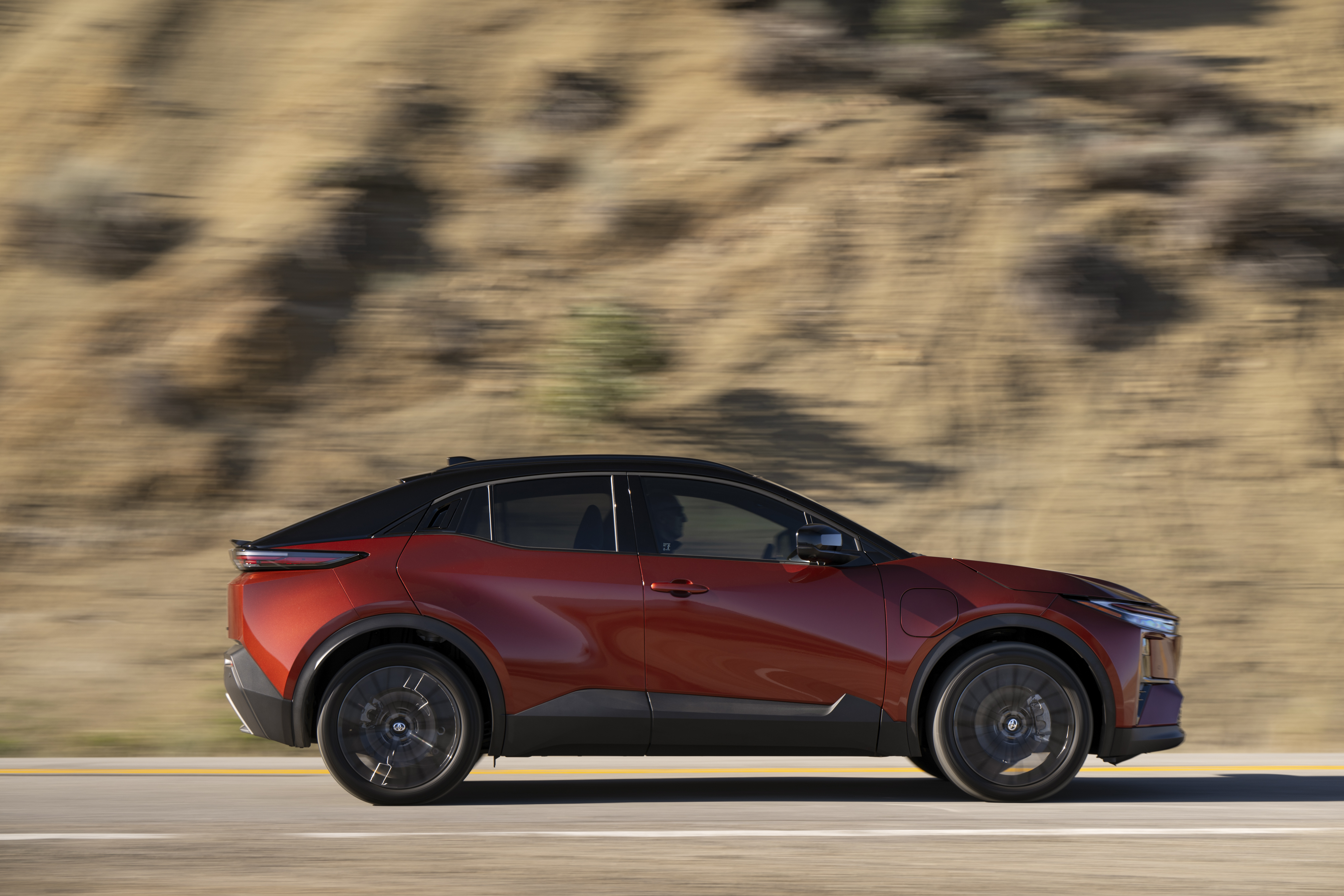
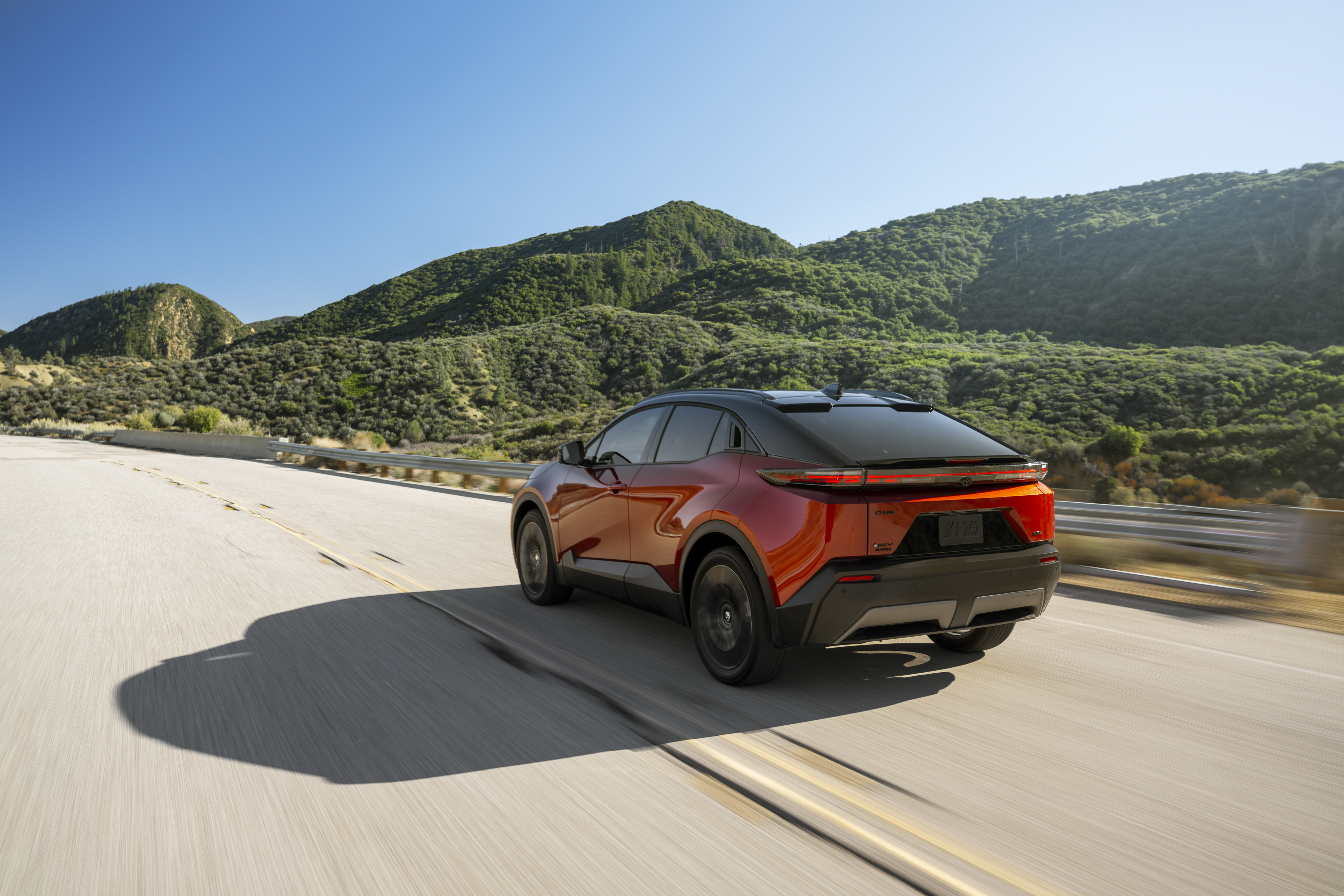
As a new automaker Rivian often does things its own way, but with the R2 launch it’s following industry practice and starting with the more superlative version first. That’s the R2 Performance, which starts at $57,990 with the launch package (but not including a $1,495 delivery charge). You get quite a lot of electric SUV for that, however: up to 330 miles (531 km) from a single charge of the 87.9 kWh battery pack, with 656 hp (489 kW) and 609 lb-ft (825 Nm) from the dual motor powertrain. Fast charging takes 29 minutes from 10-80 percent.

The Performance features semi-active suspension, a rear window that drops into the tailgate, an interior with birch accents, heating for the front and rear seats with ventilation for the former as well, a nine-speaker sound system, matrix LED headlights, and some other neat touches like the flashlight that lives in the side of the door, similar to the way some cars hide an umbrella there.

A man puts a surfboard into the back of a Rivian R2

The R2 has 9.6 inches (244 mm) of ground clearance, but you’ll want AWD if you want the all-terrain mode.

Rivian

Hands hold a Rivian R2 steering wheel.

Rivian has a new HMI—these scroll dials in the wheel are called “Halo wheels.”

Rivian

You can add Autonomy+ (the automaker’s partially automated driver assist), the tow package (4,400 lbs/1,995 kg), and some other colors as optional extras to the Performance trim; they’re silver by default. The launch package includes a lifetime subscription to Autonomy+ as well as the tow package, plus another optional body color.

In late 2026 the R2 Premium goes on sale at $53,990. This has the same 330-mile range and the same 87.9 kWh battery pack, but generates only 450 hp (355 kW) and 537 lb-ft (728 Nm) from its dual-motor powertrain. The R2 Premium does without the semi-active suspension, arrives on 20-inch instead of 21-inch wheels, and features fewer drive modes, doing without rally, soft sand, and launch modes, but otherwise shares its specs with the faster, more expensive R2 Performance.

https://arstechnica.com/cars/2026/03/rivian-reveals-pricing-and-trim-details-for-its-r2-suv/


How I streamed my off-road Miata race using Starlink and StarStream

A man fixes a wheel on his off-road racing car

A rock counts as a tool.

Credit: Matthew Molter

A rock counts as a tool. Credit: Matthew Molter

In the end, Wolff was able to get his car drivable by hitting the steering components with a rock and using a ratchet strap to hold it in place. He then manhandled the heavy car to his pit, where his team worked to get his rig back on course.

Benefiting the fans and the sponsors

Unfortunately, Wolff timed out of the race and was officially DNF–Did Not Finish–but he won the hearts of many fans. The team’s merchandise purchases increased tenfold, he’s the talk of the off-road Facebook pages, and Wolff’s sponsors, especially Warn winches, couldn’t be happier.

“King of the Hammers is a huge deal for us,” said Jake Petersen, VP of marketing for Warn. “It’s the hardest race in the world where competitors have to winch around obstacles. Paul is by himself, and he had our new Zeon XC winch that we launched the week before. StarStream makes the Warn platform that much bigger. Fans can see the brand and watch the winch in action.”

The system isn’t perfect, though, especially when the Starlink antenna is obstructed. Wolff’s stream had plenty of unclear sections thanks to the narrow rock canyons the course goes in and out of. Without a clear view of the sky, the Starlink struggles.

An off-road race car drives up a 45-degree slope

After the canyons of King of the Hammers (seen here), Wolff is off next to Moab, Utah.

Credit: Paolo Baraldi

After the canyons of King of the Hammers (seen here), Wolff is off next to Moab, Utah. Credit: Paolo Baraldi

StarStream doesn’t come cheaply, either, although when factored into a pro race team’s overall budget, it’s fairly reasonable. The box, cameras, and cords are $3,600. You’ll need a Starlink Mini antenna for about $300, and you need the $250 per month Global Priority service plan. I bought my rooftop mount for $220 from Savage UTV. You’ll also need sturdy mounts for the cameras and a mount for the StarStream box.

Paul Wolff is back home now, no doubt resting his foot and tearing down his car in preparation for the next crazy rock crawling event on the red slabs of Moab, Utah, on March 31. He’ll be far from civilization, but his livestream will be right on your computer.

https://arstechnica.com/cars/2026/03/how-i-streamed-my-off-road-miata-race-using-starlink-and-starstream/


2026 Australian Grand Prix: Formula 1 debuts a new style of racing

But it wasn’t all bad

That said, the other 16 cars did finish, including the Cadillac of Sergio Perez. Cadillac has managed to stand up a team from scratch and, since then, meet every deadline it needed to. Now, it has the rest of the season to show us it can make its car fast, something that equally applies to Williams and Aston Martin.

MELBOURNE, AUSTRALIA - MARCH 08: Gabriel Bortoleto of Brazil driving the (5) Audi F1 Team R26 leads Esteban Ocon of France driving the (31) Haas F1 VF-26 Ferrari and Pierre Gasly of France driving the (10) Alpine F1 A526 Mercedes on track during the F1 Grand Prix of Australia at Albert Park Grand Prix Circuit on March 08, 2026 in Melbourne, Australia. (Photo by Joe Portlock/Getty Images)

Audi looks to have landed in the midfield at the start of its F1 adventure.

Credit: Joe Portlock/Getty Images

Audi looks to have landed in the midfield at the start of its F1 adventure. Credit: Joe Portlock/Getty Images

Audi had an almost as monumental task as Cadillac, designing and building a new power unit to install in what was the Sauber team before the German OEM took control. Aside from Hulkenberg’s problem, it had a pretty good debut. The cars lined up 10th and 11th for the race, and Gabriel Bortoleto showed off the talent that won him an F2 championship in his first year by finishing in 9th place, scoring the outfit points on its debut. Audi looks like a solid midfield contender, alongside Haas and Racing Bulls.

Alpine’s Pierre Gasly scored the final point, but that team, like Williams, looks a long way from making best use of its Mercedes power units and right now needs to combat a problem with understeer that affects its car in high-speed corners.

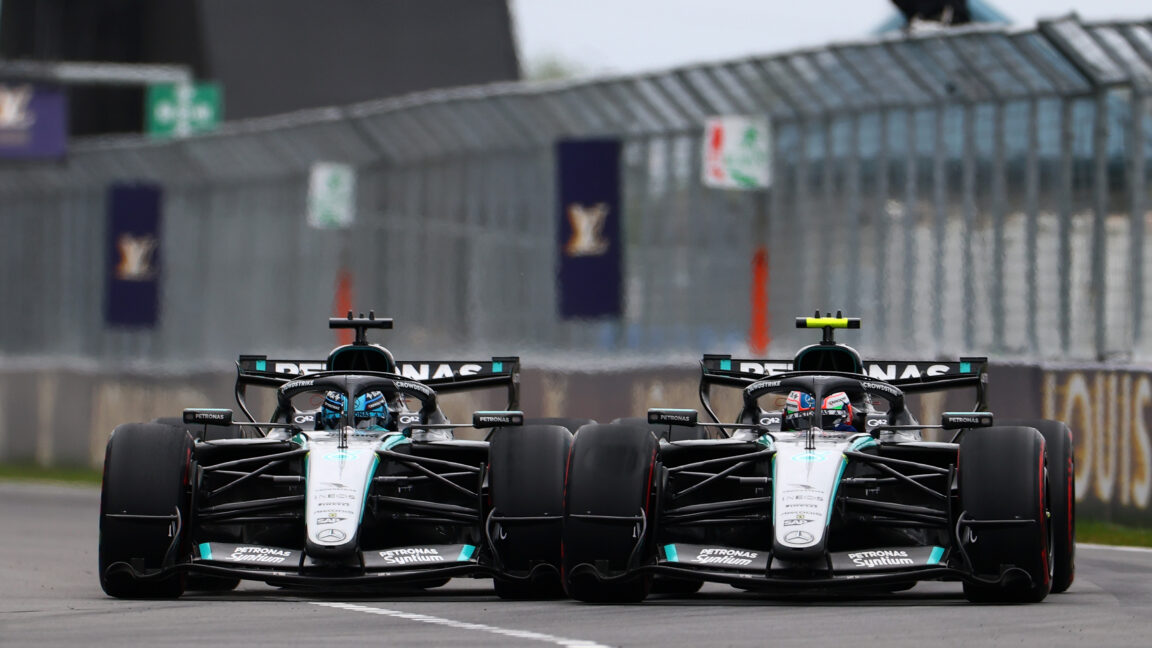
Russell initially battled Leclerc for the lead, passing and repassing each other several times over several laps, allowing a rejuvenated Hamilton to catch up with them. Russell was the meat in a sandwich between the two Ferraris until Hadjar’s crash called out the first virtual safety car. The two Mercedes took the opportunity to pit for new tires, undercutting their rivals in red.

The Ferraris of Leclerc and Hamilton probably weren’t fast enough to have won even if they’d pitted at the same time. They didn’t and finished in third and fourth, behind the victorious Russell with Antonelli in second place. In clean air, the Mercedes looked unstoppable in Melbourne, and the team clearly understands how to get the most out of these new power units compared to its customer teams.

https://arstechnica.com/cars/2026/03/2026-australian-grand-prix-formula-1-debuts-a-new-style-of-racing/


Chevrolet killed it then brought it back, now we drive it: The 2027 Bolt

For most charging networks, recharging is as simple as plugging in and letting the car and charger talk to each other using plug and charge (ISO 15118); this is still being implemented for Tesla Superchargers, but you can initiate a charge from the Bolt’s charging app. A word of caution though: The charge socket is on the driver’s side of the car, which means you’ll have difficulty using a V3 Supercharger—which only features a short cable—without blocking more than one stall, something that may enrage any Tesla owners hoping to charge simultaneously.

A blue Chevy Bolt charges

Fast-charging is actually fast now.

Credit: Jonathan Gitlin

Fast-charging is actually fast now. Credit: Jonathan Gitlin

And before you ask, no, it wasn’t possible to relocate the charge port; this would require a significant redesign to the car’s unibody as well as its powertrain layout, at vast expense.

Drives like a Bolt should

Although the new $32,995 RS trim has a sportier appearance inside and out than the $28,995 LT, both trims use identical suspension tuning. The ride is more than a little bouncy over the expansion gaps of LA’s highways, but a look at previous reviews reminds me that old Bolts also did this. The effect was much less noticeable on the back roads, where the car proved nimble if not exactly captivating to drive: I would very much like to try one on performance tires. The range would suffer a little, but cornering grip would be much improved. That said, the low-rolling resistance tires have more grip and are less likely to break traction than, say, the Toyota bZ we just reviewed.

There’s a new power-steering actuator, and a new rear-twist axle, but the suspension and steering geometry should be the same as older Bolts.

However, if you’re familiar with the old Bolt, you’ll notice a few changes. The cabin has a lot more storage nooks and cubbies than before, and both the main instrument panel and the infotainment screen are larger than in a 2023 Bolt. You use a stalk mounted on the steering column to select D/R/N/P, and must now use a persistent icon on the touchscreen to toggle one-pedal driving on or off. This is less convenient than the old car and its physical controls. The regenerative braking paddle is gone from behind the steering wheel, too.

https://arstechnica.com/cars/2026/03/new-battery-new-motor-but-the-2027-chevrolet-bolt-keeps-its-charm/


Climate change sucks, but at least it won’t kill your EV battery

The good news is that technological progress more than offsets the effect of a warming world, even (hopefully) extreme scenarios like warming of 4° C. Those older batteries, which have a median lifespan of around 15 years in the current climate, would decrease by about 20 percent to a median of 12 years under 4° of warming, the study finds. But newer batteries, which have a current median lifespan of 17 years, should still last about 17 years on average under such conditions.

Older batteries also have a greater distribution of aging. The percentiles are much closer to the median for newer batteries, which under the worst conditions might see a lifetime degradation of up to 10 percent; by contrast, older batteries may suffer a loss of 30 percent or more.

“I think these improvements are well-known to experts in the field. But when I started this project, I was looking at web forums and reading how people were deciding on cars,” Wu said. “There are still a lot of durability concerns about EV batteries.”

After modeling battery lifetimes in 300 cities around the world, Wu and his co-authors found that with older battery technology, countries with the lowest GDP per capita had the greatest reductions in battery lifespan. Under the worst outcomes, Africa, Southeast Asia, and India could see those EV batteries lose 25 percent of their lifespan, compared to 15 percent in Europe or North America. But newer batteries should lose only 4 percent of their lifespan at worst in low-income countries and remain stable in the affluent West.

Of course, this assumes that those lower-GDP nations adopt EVs with the same kinds of battery technology we see in more well-off markets, and they don’t take into account factors like vehicle reliability, changes in powertrain efficiency, or whether charging infrastructure will remain stable in a warmer world. But it’s just another bit of data we can point to showing that EVs aren’t really that scary, just different.

Nature Climate Change, 2026. DOI: 10.1038/s41558-026-02579-z (About DOIs).

https://arstechnica.com/cars/2026/03/climate-change-sucks-but-at-least-it-wont-kill-your-ev-battery/


Nerve damage, energy management, and Apple TV: F1 in 2026 starts today

If only Aston Martin or its engine partner, Honda, could say the same. The team’s Canadian billionaire owner, Lawrence Stroll, has invested hundreds of millions into the UK-based team, building a state-of-the-art factory and wind tunnel and recently hiring Adrian Newey, the megastar designer and aerodynamicist whose cars have been responsible for 12 championships so far (Newey even has a stake in the team).

2026 is Aston Martin’s first year with a works engine supply, provided by Honda. The Japanese OEM has an on-off relationship with the sport, most recently deciding in 2020 to leave, then changing its mind again in 2024 due to the new rules. That four-year gap meant that the current program at Honda was effectively started from scratch, and it has been hard going.

In fact, as early as January last year, the head of Honda Motorsport, Koji Watanabe, told me that Honda was having problems. “Everything is new. [The] motor is new, [developing] 350 kW—it’s a very compact one that we need. And also the lightweight battery is not so easy to develop. Also the small engine with big power. So everything is very difficult, but we try our best,” Watanabe said.

Once the power unit was fitted to the car, things got much worse. Aston Martin was late to the Barcelona shakedown, and its drivers posted the slowest lap times in both the first and second Bahrain tests. The team also completed fewer laps than any other—just 206 during the first three-day test and a mere 128 laps during the second test. (For comparison, Mercedes, McLaren, and Ferrari each did more than 420 laps during the first test, and Mercedes, Racing Bulls, and Haas did more than 400 laps during the second test.)

Aston Martin's Spanish driver Fernando Alonso inspects his car with team mechanics in the garage ahead of the Formula One Australian Grand Prix at Melbourne's Albert Park on March 5, 2026. (Photo by Paul Crock / AFP via Getty Images)

Alonso has already fallen out with Honda once during his career over engine problems.

Credit: Paul Crock / AFP via Getty Images

Alonso has already fallen out with Honda once during his career over engine problems. Credit: Paul Crock / AFP via Getty Images

The problems were myriad, affecting both the gearbox and the power unit. Chief among the issues was a vibration that shook apart components like the battery pack, destroying spares. So on the final day of testing, the team was limited to a mere six laps of the Bahrain circuit. With so little testing and so much to debug, the prospect of Aston Martin finishing in Australia—or any of the first few races—seems doubtful.

https://arstechnica.com/cars/2026/03/nerve-damage-energy-management-and-apple-tv-f1-in-2026-starts-today/


There are plenty of great choices if you want to spend less than $15K on an EV

Last time we looked at the used electric vehicle market, it was to see what the options are if you’re spending $10,000 or less. Two solid choices emerged quickly: a BMW i3 if you don’t need much range, and a Chevrolet Bolt if you do. Lots of earlier Nissan Leafs made the list, too, but these had limited range and air-cooled batteries to contend with; we also included an assortment of compliance cars and, perhaps for the very brave, a Tesla. But what happens when you grow the budget by 50 percent? What EVs make sense when there’s $15,000 burning a hole in your pocket?

As it turns out, at this price point the planet starts looking a lot more like your own personal bivalve. For starters, the cars that looked good at $10,000 look a lot better in the next bracket up, generally newer model years or with lower mileage than the cheaper alternatives. Which means you can afford the facelifted i3. For model-year 2018 and onward, BMW fitted its electric city car with a larger-capacity battery, which means up to 114 miles (183 km) of range on a full charge, or about 150 miles (241 km) if it’s the one with the two-cylinder range-extender engine. Apple CarPlay and Android Auto might also be built into these i3s, although there are aftermarket solutions now, too.

No aftermarket is required to get CarPlay or Android Auto on any of the Bolts you might buy for under $15,000, which include a mix of pre- and post-facelift (model-year 2022 and onward) cars, although few of the slightly more spacious Bolt EUVs. Like the i3s, expect lower mileage examples, plus all the usual caveats: slow DC charging and seats that can get a bit hard on long drives.

https://arstechnica.com/cars/2026/03/there-are-plenty-of-great-choices-if-you-want-to-spend-less-than-15k-on-an-ev/


It’s almost a station wagon: The 2026 Subaru Trailseeker, driven

Winding roads revealed slightly more body roll than we saw in the Uncharted, despite both models feeling significantly lighter than the average electric crossover. Easy steering effort helps enhance a sense of nimbleness despite the added cargo volume in the back, though no true Subie fans will ever mistake a Trailseeker for an STI.

Instead, the comparisons to various Toyota models seemed almost unavoidable. The center touchscreen, minimalist gauge cluster sitting forward on the dash, dual smartphone charging pads, and gear selector knob all contrast with the rest of Subaru’s internal combustion and hybrid lineup. But of the EVs, the Trailseeker clearly embodies the Subaru ethos best—even if the name itself suffers from a bit of Baja Fresh syndrome. If you have to tell me the food is fresh…

Simply put, a max range estimate of 281 miles leaves anyone trying to get off the beaten path at the mercy of charging infrastructure. Any serious adventure will require plenty of planning. The standard NACS port, which allows access to all those Tesla Superchargers, should help assuage some range anxiety, but the idea of truly leaving the world behind in this EV seems somewhat unlikely.

A white Subaru Trailseeker in profile.

The Trailseeker also comes in Stormtrooper spec.

Credit: Subaru

The Trailseeker also comes in Stormtrooper spec. Credit: Subaru

Instead of seeking out off-road trails, this EV seems best suited to parking at trailheads or paved campsites and then serving as a basecamp. You can pack up the trunk with gear, or better yet, load up the roof rails, a must-have for many Subaru owners. An optional plug in the trunk provides 1,500 W of vehicle-to-load output, and a “My Room” mode lets occupants stay in the car for extended periods with the power on while camping or charging.

At the very least, the Trailseeker can handle that level of escapism with a calm capability. Will the additional cargo capacity and power bump make up for the slightly higher price over an Uncharted? Subaru customers seem likely to accept that trade-off.

https://arstechnica.com/cars/2026/03/2026-subaru-trailseeker-first-drive-the-most-quintessentially-subaru-ev-yet/


And the award for the most improved EV goes to… the 2026 Toyota bZ

The world’s largest automaker has had a somewhat difficult relationship with battery-electric vehicles. Toyota was an early pioneer of hybrid powertrains, and it remains a fan today, often saying that given limited battery supply, it makes sense to build more hybrids than fewer EVs. Its first full BEV had a rocky start, suffering a recall due to improperly attached wheels just as the cars were hitting showrooms. Reviews for the awkwardly named bZ4x were mixed; the car did little to stand out among the competition.

Toyota didn’t get to be the world’s largest automaker by being completely blind to feedback, and last year, it gave its EV platform (called e-TNGA and shared with Lexus and Subaru) a bit of a spiff-up. To start, it simplified the name—the small electric SUV is now just called the bZ. It uses a new 74.7 kWh battery pack, available with either front- or all-wheel-drive powertrains that now use silicon carbide power electronics. And for the North American market, instead of a CCS1 port just behind the front passenger wheel, you’ll now see a Tesla-style NACS socket.

Our test bZ was the $37,900 XLE FWD Plus, which has the most range of any bZ at 314 miles (505 km), according to the EPA test cycle. When you realize that the pre-facelift version managed just 252 miles (405 km) with 71.4 kWh onboard, the scale of the improvement becomes clear.

A Toyota bZ in profile

It’s 184.6 inches (4,689 mm) long, 73.2 inches (1,859 mm) wide, and 65 inches ( 1,651 mm) tall.

Jonathan Gitlin

Toyota bZ from behind

The bZ looks conventional.

Jonathan Gitlin

Our loan immediately followed a week with the bZ’s more powerful, more expensive Lexus relative. While I might have liked that Lexus interior and some of its mod cons like ventilated seats, the Toyota is a much better EV despite having fewer frills. With 221 hp (165 kW) going to the front tires and 4,156 lbs (1,885 kg) to move, the XLE FWD Plus is not speedy. In normal mode, 0–60 mph (97 km/h) takes 8 seconds, although there’s still enough torque in this setting to chirp the low rolling resistance tires.

https://arstechnica.com/cars/2026/02/and-the-award-for-the-most-improved-ev-goes-to-the-2026-toyota-bz/


Ford is recalling 4.3 million trucks and SUVs to fix a towing software bug

Last year, Ford set a new industry record: It issued 152 safety recalls, almost twice the previous high set by General Motors back in 2014. More than 24 million vehicles were recalled in the US last year, and more than half—13 million—were either Fords or Lincolns. By contrast, Tesla issued 11 recalls, affecting just 745,000 vehicles.

Truth be told, Ford’s not doing too hot in 2026, either; it’s currently leading the National Highway Traffic Safety Administration’s chart for recalls this year, with 10 on the books already. The latest is a big one, affecting almost 4.4 million trucks, vans, and SUVs.

The recall affects the Ford Maverick (model years 2022–2026), Ford Ranger (MY 2024–2026), Ford Expedition (MY 2022–2026), Ford E-Transit (MY 2026), Ford F-150 (MY 2021–2026), Ford F-250 SD (MY 2022–2026), and the Lincoln Navigator (MY 2022–2026). Just the F-150s alone number 2.3 million.

The problem is with the vehicles’ integrated trailer module, which allows the trailer’s lights and brakes to work in conjunction with those of the towing vehicle. According to the recall notice, a “software vulnerability within the ITRM allows for a potential race condition to occur between the ITRM and the CAN Standy [sic] Control bit (STBCC) during initial power-up.” If that happens, the trailer will have no lights or brakes, and you’ll get a pop-up alert on the main instrument display.

https://arstechnica.com/cars/2026/02/ford-is-recalling-4-3-million-trucks-and-suvs-to-fix-a-towing-software-bug/