Ford is recalling 4.3 million trucks and SUVs to fix a towing software bug

Last year, Ford set a new industry record: It issued 152 safety recalls, almost twice the previous high set by General Motors back in 2014. More than 24 million vehicles were recalled in the US last year, and more than half—13 million—were either Fords or Lincolns. By contrast, Tesla issued 11 recalls, affecting just 745,000 vehicles.

Truth be told, Ford’s not doing too hot in 2026, either; it’s currently leading the National Highway Traffic Safety Administration’s chart for recalls this year, with 10 on the books already. The latest is a big one, affecting almost 4.4 million trucks, vans, and SUVs.

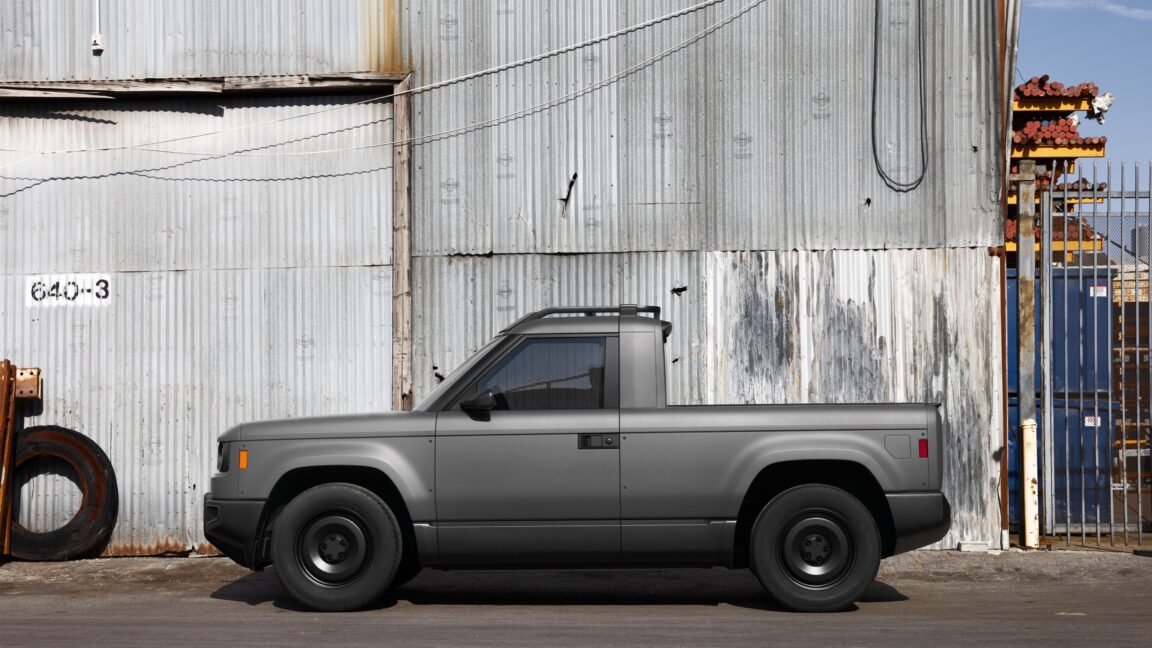
The recall affects the Ford Maverick (model years 2022–2026), Ford Ranger (MY 2024–2026), Ford Expedition (MY 2022–2026), Ford E-Transit (MY 2026), Ford F-150 (MY 2021–2026), Ford F-250 SD (MY 2022–2026), and the Lincoln Navigator (MY 2022–2026). Just the F-150s alone number 2.3 million.

The problem is with the vehicles’ integrated trailer module, which allows the trailer’s lights and brakes to work in conjunction with those of the towing vehicle. According to the recall notice, a “software vulnerability within the ITRM allows for a potential race condition to occur between the ITRM and the CAN Standy [sic] Control bit (STBCC) during initial power-up.” If that happens, the trailer will have no lights or brakes, and you’ll get a pop-up alert on the main instrument display.

https://arstechnica.com/cars/2026/02/ford-is-recalling-4-3-million-trucks-and-suvs-to-fix-a-towing-software-bug/


2026 Lexus RZ 550e review: Likable, but it needs improvement

Sometimes you drive a car you just don’t gel with.

The original Lexus RZ was such a case. It was Lexus’ first battery EV, and I was less than impressed when I drove it in 2023. In fact, I compared it negatively to the extremely not-good Vinfast VF8. Lexus knew there was room for improvement, too, so it reworked the RZ with new motors, a new battery, and NACS charging for North America, among other tweaks, for model year 2026. A front-wheel drive RZ 350e is now the range’s entry point at $47,295, and there’s also a $58,295 all-wheel drive RZ 550e F Sport that tops the range. We spent a week with the latter.

Mindful of how little I liked the first RZ I drove, I made sure to approach the 550e F Sport with an open mind. And despite a number of the car’s shortcomings, I find I have warm feelings for the electric Lexus.

New battery, new motors

There are new batteries for all MY2026 RZs, but the 550e benefits from a slightly larger capacity, at 77 kWh. Each axle features a permanent magnet synchronous motor, now with silicon carbide electronics, that delivers a combined 402 hp (300 kW). There’s also some new body stiffening, plus added sound dampening. As an F Sport Lexus, the 550e also gains some styling additions compared to its lesser siblings. There are new bumpers and a new front grille, plus 20-inch wheels wearing aero covers that hide blue-painted brake calipers.

A Lexus RZ from the rear

There’s a new rear spoiler for the F Sport treatment.

Jonathan Gitlin

Lexus RZ rear aero elements

These two aero elements at the rear give the car something of the Batmobile.

Jonathan Gitlin

On those 20-inch wheels, the range is just 229 miles (369 km), and that’s only in optimum ambient conditions. In chilly but not sub-freezing February weather, the RZ 550e averaged 2.5 miles/kWh, and with the battery at 50 percent state of charge, the car reported only 88 miles (142 km) of range. AC charging now peaks at 11 kW rather than just 7 kW, and with its NACS port, the RZ can DC fast-charge from 10 to 80 percent in as little as 30 minutes, Lexus says.

https://arstechnica.com/cars/2026/02/2026-lexus-rz-550e-review-likable-but-it-needs-improvement/


50 mpg in a Nissan crossover? Testing the new E-Power hybrid system.

I noticed the engine running just twice. One was at wide-open throttle, and the other was when the engine was likely operating at higher rpms to help charge the battery. That latter instance was also when I noticed the most harshness from the engine, although it’s one of the smoothest gasoline-supported powertrains I’ve driven.

A look under the Qashqai’s hood.

Credit: Chad Kirchner

A look under the Qashqai’s hood. Credit: Chad Kirchner

The E-Power system will operate in full-EV mode at the press of a button, but at full throttle, the engine will still kick in.

What needs work?

Since an electric motor powers the wheels, I would prefer the system to be more responsive when you put your foot down. Electric motors respond nearly instantly. In a gas car, there’s usually a delay with a downshift and engine spin-up. This E-Power Qashqai behaves more like a gas car than an EV, even in the sport setting. I think this powertrain is a great opportunity to show new customers what electrification can do, and a little bit more snappiness would go a long way into articulating that E-Power can be sporty if the driver wants it to be.

The Qashqai had no problems getting up to highway speeds, and acceleration at higher speeds—in an overtake situation, for example—remained consistent. Again, it’s not a sports car or rocket ship, but it can get out of its own way easily enough.

During my loop, the computer indicated 47.7 mpg (4.93 L/100km) in mixed driving. Being left-hand-drive cars, that means they weren’t British imperial gallons. That’s a pretty great fuel efficiency number. In warmer conditions, it should easily exceed 50 mpg (4.7 L/100 km) in many driving scenarios.

Is that directly translatable to the upcoming Rogue E-Power? Somewhat. While the powertrain will be the same, the Rogue will be a little larger and heavier. Speccing all-wheel drive will further increase weight and add losses to the drivetrain. So a 50 mpg Rogue might be a stretch.

If Nissan prices the Rogue E-Power well, and the car delivers on the increase in economy that I’ve seen here, it could be a very compelling product in Nissan’s showrooms for buyers who haven’t had a great hybrid offering from the company before.

As long as Nissan sorts out the brake calibration.

https://arstechnica.com/cars/2026/02/on-the-road-with-nissans-new-e-power-hybrid-coming-to-the-2027-rogue/


Lamborghini cancels electric Lanzador as supercar buyers reject EVs

A Lamborghini Lanzador electric concept during The Quail, A Motorsports Gathering in Carmel, California, US, on Friday, Aug. 18, 2023. The event provides an exclusive experience for motorsports enthusiasts and collectors from around the world to enjoy rare collections of fine automobiles and motorcycles. Photographer: David Paul Morris/Bloomberg via Getty Images

Lamborghini has managed to sell quite a lot of Urus SUVs, but an all-electric alternative with an even higher price tag was probably a stretch.

Credit: David Paul Morris/Bloomberg via Getty Images

Lamborghini has managed to sell quite a lot of Urus SUVs, but an all-electric alternative with an even higher price tag was probably a stretch. Credit: David Paul Morris/Bloomberg via Getty Images

Dropping the Lanzador EV doesn’t free Lamborghini from meeting decarbonization requirements. The US might have torn up its emissions regulations, but Lamborghini’s US sales were down almost 10 percent last year. Europe is a more important market for the brand, and the European Union still wants to see 90 percent of all new cars be zero-emission by 2035.

As a small manufacturer, Lamborghini will get a little more leeway than Audi or Porsche might, but if it wants to keep selling cars to rich Europeans, it still needs to electrify to some degree, particularly if those Europeans want to drive their cars in cities with zero-emissions zones. Lamborghini drivers tend to drive in those areas often—it’s where the people can see you drive past, after all.

So the plan is to produce more plug-in hybrids. In fact, by 2030, the entire Lamborghini lineup will be made of PHEVs. Access to those VW Group electrification resources will be helpful here, but it’s not like Lamborghini hasn’t already started down that path. There’s a PHEV Urus SUV now, plus the 1,001-hp plug-in hybrid V12 Revuelto and the brand-new PHEV Temerario, the replacement for the Huracán.

Lamborghini sent Ars a statement saying that after “extensive analysis and ongoing dialogue with dealers and customers, it became clear that the pace of adoption of pure BEV vehicles has slowed considerably, particularly within the luxury super sports segment, where demand remains very limited.

“In light of these considerations, the product strategy has been refined,” Lamborghini told Ars, adding that, while it’s ready technologically for an EV, “market readiness within the segment is not yet aligned with this transition.”

https://arstechnica.com/cars/2026/02/lamborghini-drops-ev-plan-in-favor-of-future-plug-in-hybrids/


The 2026 Mazda CX-5, driven: It got bigger; plus, radical tech upgrade

ENCINITAS, Calif.—Its sales may have been buoyed of late by the big CX-90 and CX-70 SUVs, but for Mazda, the CX-5 is still where most of the action is. Unlike the similar-sized, similar-priced CX-50, which was designed just for North America, the all-new CX-5 is a global car, and it’s also Mazda’s standard-bearer for a range of new technologies. Gone is the basic but effective infotainment system, replaced by an all-new Google-based experience as Mazda starts its journey toward software-defined vehicles. There’s even an in-house hybrid on the way, albeit not until next year. And it starts at a competitive $29,990.

The new CX-5 is bigger than the car it replaces, 4.5 inches (114.5 mm) longer and half an inch (13 mm) wider than before, at 184.6 inches (4,689 mm) long, 73.2 inches (1,859 mm) wide, and 66.7 inches (1,694 mm) tall. Much of that extra space is between the axles—the wheelbase is now 110 inches (2,794 mm) long, which translates to more interior space. From the outside, there’s a new light signature, and the way the bodywork curves around the front and wraps down the fenders gives me strong Range Rover vibes, even if I could never adequately capture what I’m talking about with a camera. As ever, Mazda’s arresting Soul Red Crystal metallic paint (a $595 option) sparkles, even on a day when the sun remained hidden from view.

The last time that Mazda evolved this compact crossover, it did so with a new upmarket interior. Since then, the brand has staked out that space across its model lineup, with cabins that punch well above their price tags. Happily, the company’s designers haven’t lost much mojo since then, with a restrained approach that looks good across the five different trim levels, each of which is a $2,000 step up from the one that precedes it. But if you’re a current CX-5 driver, you’ll find much has changed, perhaps not entirely for the better.

https://arstechnica.com/cars/2026/02/the-2026-mazda-cx-5-driven-it-got-bigger-plus-radical-tech-upgrade/


The first cars bold enough to drive themselves

GM's Firebird II concept from 1956

The Firebird II concept from 1956 could drive itself on special roads.

Credit: General Motors

The Firebird II concept from 1956 could drive itself on special roads. Credit: General Motors

Beneath certain stretches of highway, GM proposed laying an electronic strip. When the car traveled over it, sensors would lock onto the signal, guiding the vehicle automatically along its lane. The driver would simply lean back, hands free from the wheel, and watch the miles roll by. Onboard amenities inexplicably included an orange juice dispenser.

Proof of concept

By 1958, the idea became a reality. On a plain stretch of highway outside Lincoln, Nebraska, it was put to the test. The state’s Department of Roads embedded a 400-foot (121 m) length of the roadway with electric circuits, while engineers from RCA and General Motors brought specially fitted Chevrolets to test it. Observers watched as the driverless cars steered themselves, responding to the buried signal beneath the pavement.

A few years later, across the Atlantic, the United Kingdom’s Transport and Road Research Laboratory undertook its own experiments. Using a Citroën DS, they laid magnetic cables beneath a test track and sent the car down it at speeds of up to 80 mph (129 km/h). Wind and weather made no difference; the DS held its line faithfully.

Autonomy emerges in the modern age

Fast forward to 1986, and German scientist Ernst Dickmanns, as part of his position with the German armed forces, began testing an autonomously driving Mercedes-Benz using computers, cameras, and sensors, not unlike modern-day cars. Within a year, it was travelling down the Autobahn at nearly 55 mph (89 km/h). That was enough to capture the attention of Daimler-Benz, which helped fund further research.

Several years later, in October 1994, Dickmanns gathered his research team at Charles de Gaulle Airport outside Paris, where they met a delegation of high-ranking officials. Parked at the curb were two sedans. They appeared ordinary but were fitted with cameras, sensors, and onboard computers. The guests climbed in, and the cars made their way toward the nearby thoroughfare. Then, with the traffic flowing steadily around them, the engineers switched the vehicles into self-driving mode and took their hands off the wheel. The cars held their lanes, adjusted their speed, and followed the road’s gentle curves without driver intervention.

https://arstechnica.com/features/2026/02/the-first-cars-bold-enough-to-drive-themselves/


Tesla slashes Cybertruck prices as it tries to move (unpainted) metal

Last night, Tesla made some hefty cuts to Cybertruck pricing in an effort to stimulate some sales. The bombastic tri-motor “Cyberbeast” is $15,000 cheaper at $99,990, albeit by dropping some previously free features like supercharging and FSD. And there’s now a new $59,990 entry-level model, a dual-motor configuration with a range of 325 miles (523 km) and the same 4.1-second 0–60 mph (0-97 km/h) time as the $79,990 premium all-wheel drive version.

That actually makes the new entry-level model a good deal, at least in terms of Cybertrucks. Last year, the company introduced and then eliminated a single-motor rear-wheel drive variant, which found few takers when priced at $69,990; an extra motor for $10,000 less is quite a savings, and actually slightly cheaper than the price originally advertised for the RWD truck.

As you might expect, Tesla has made some changes to get down to the new price. The range and 0–60 mph time might be the same as the more expensive dual-motor Cybertruck, but towing capacity is reduced from 11,000 lbs (4,990 kg) to 7,000 lbs (3,175kg), and cargo capacity drops from 2,500 lbs (1,134 kg) to 2,006 lbs (910 kg).

Steel springs and adaptive dampers replace the air suspension. There are different tail lights. The inside features textile seats—maybe someone there reads Ars—but the cheapest Cybertruck does without seat ventilation for the front row or seat heaters for the second row. There’s also a different console, no AC outlets in the cabin, and fewer speakers, with no active noise-cancellation system.

https://arstechnica.com/cars/2026/02/tesla-slashes-cybertruck-prices-as-it-tries-to-move-unpainted-metal/


F1: Preseason tests show how different 2026 will be

Sleek

Oliver Bearman of Haas during the Formula 1 pre-season testing at Sakhir Circuit in Sakhir, Bahrain on February 13, 2026. (Photo by Jakub Porzycki/NurPhoto via Getty Images)

2026 cars look good.

Credit: Jakub Porzycki/NurPhoto via Getty Images

2026 cars look good. Credit: Jakub Porzycki/NurPhoto via Getty Images

I’ll say this for the 2026 crop of cars: They sure look good. They’re a little shorter and narrower than last year’s cars, with slightly narrower tires and much greater diversity among the teams than in the tightly proscribed ground-effect era. Those rules, which ran from 2022 to 2025, gave such little leeway to the teams in design decisions that performance converged to within fractions of a percent across the entire grid. Now everyone looks quite different from one another.

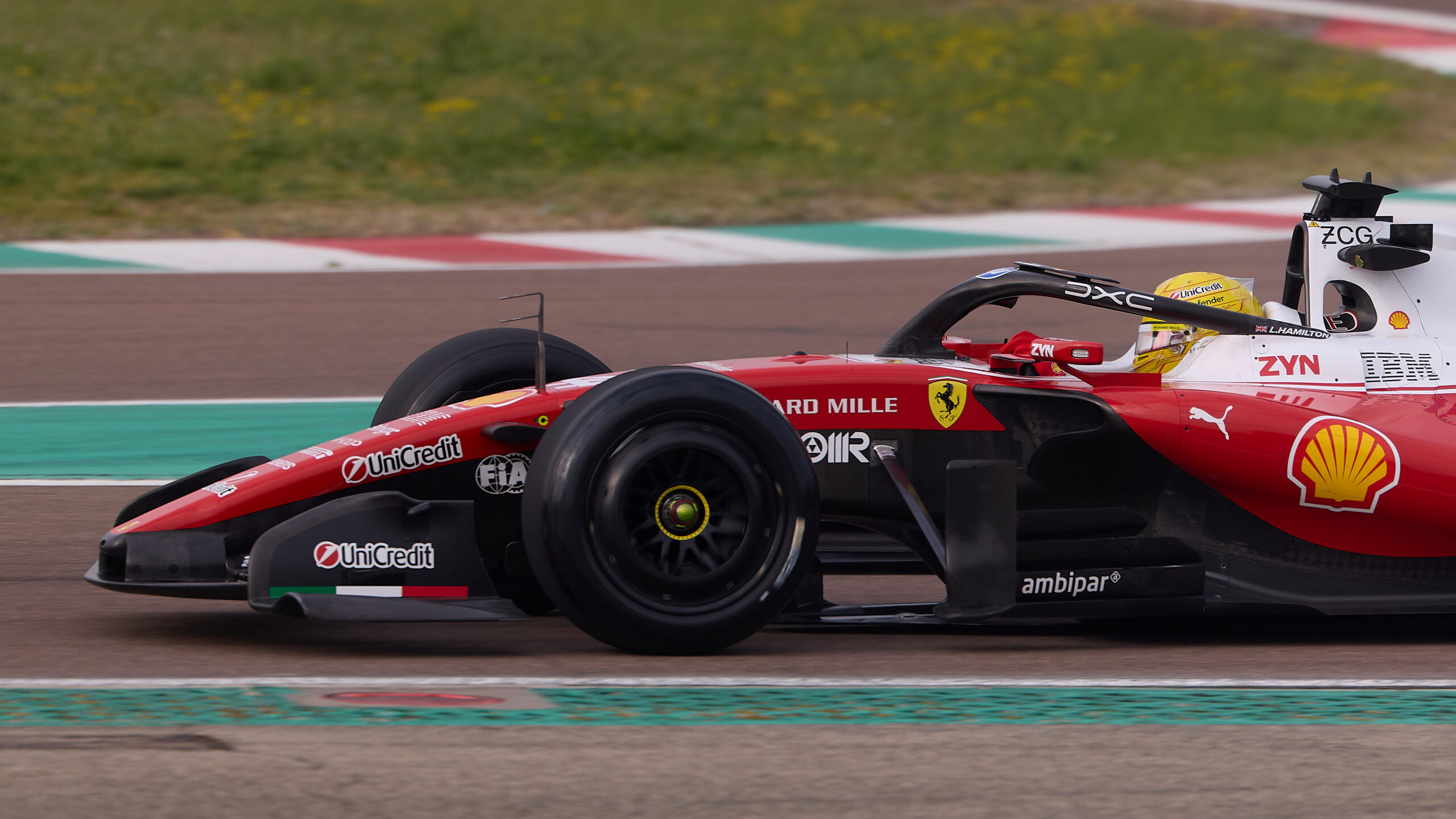
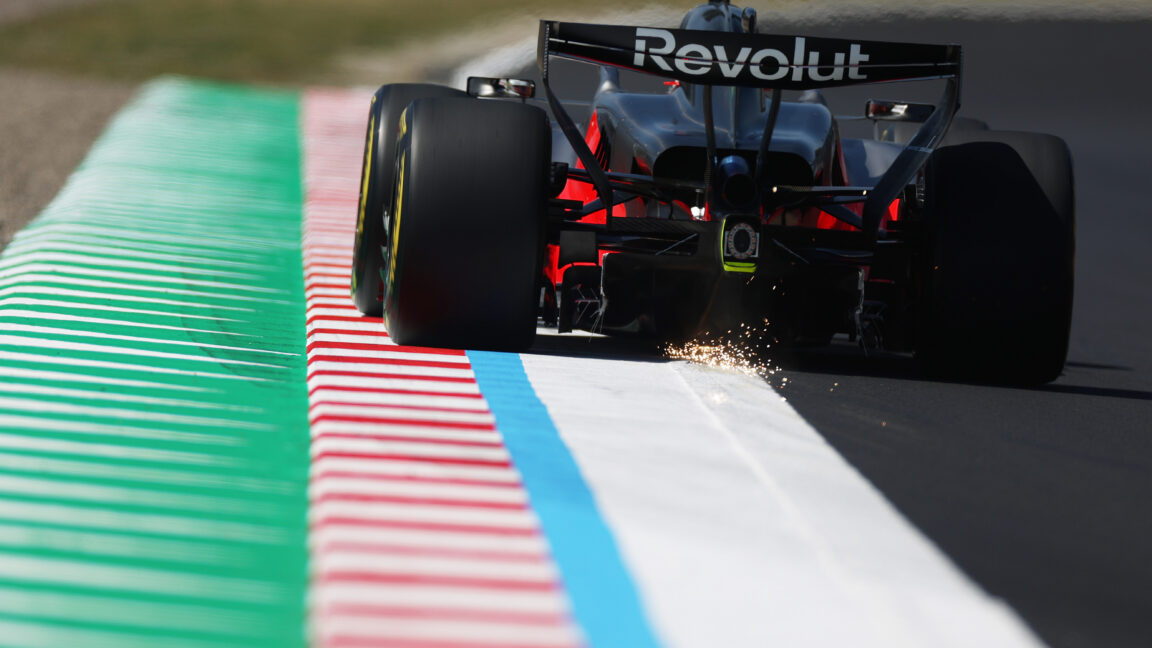
The big thing to look out for this year is who can shed the most drag in straight-line mode. Each car’s front and rear wings are now active, with a raised position called corner mode that generates lots of downforce, and straight mode, which drops both wings to minimize drag (and therefore the energy the car needs to go fast). Ferrari tested an interesting approach to this in Bahrain at one point, with rear wing elements that flipped a full 180 degrees. I wonder if we’ll see that in-season.

The arguments about engine compression ratios are still ongoing. Briefly, Mercedes is believed to have used clever materials science to create an engine in which the compression ratio increases rather than decreases as the engine gets hot. For this year, engines are capped at a compression ratio of 16:1 but measured at ambient temperature. Next week, the teams and the sport’s organizers (the FIA) meet to discuss adding a hot test for compression ratios, which is unlikely to go Mercedes’ way. (For its part, Mercedes says there’s nothing illegal about its engines.)

The Mercedes-powered teams (Mercedes, McLaren, Williams, and Alpine), as well as Honda-powered Aston Martin, have another potential problem. Each power unit has its own sustainable fuel; Mercedes’ is provided by Petronas and Honda’s by Aramco. To ensure it is indeed fully sustainable, there’s a homologation process with an independent third party to verify compliance throughout the supply chain. Unfortunately for these five teams, neither Petronas nor Aramco have finished this homologation process, with a deadline of March 1 fast approaching. Should that not happen in time, we’ll still see those five teams race, but they’ll use a substitute fuel that won’t be optimized for the engines that will burn it.

https://arstechnica.com/cars/2026/02/f1-preseason-tests-shows-how-different-2026-will-be/


Zero grip, maximum fun: A practical guide to getting into amateur ice racing

Ice racing is probably the purest and most challenging form of low-grip driving. On ice, the performance envelope of a normal car on normal tires is extremely small. Driving fast on ice, then, means learning how to make your car do what you want, even when you’re far outside of that envelope.

There are many techniques involved, but it all starts with getting comfortable with entering your car into a slide and sustaining it. Learning to balance your car in a moderate drift, dancing between terminal understeer (plowing into the snowbank nose-first) and extreme oversteer (spinning into the snowbank tail-first), is key. That comfort simply takes time.

Reading the ice

Ruts in the ice made by ice racing

The condition of the track changes constantly.

Credit: Tim Stevens

The condition of the track changes constantly. Credit: Tim Stevens

Once you figure out how to keep your car going in the right direction, and once you stop making sedan-shaped holes in snowbanks, the next trick is to learn how to read the ice.

The grip level of the ice constantly evolves throughout the day. The street-legal tires tend to polish it off, wearing down rougher sections into smoothly polished patches with extremely low grip. The race studs, on the other hand, chew it up again, creating a heavily textured surface.

If you’re on the less extreme sorts of tires, you’ll find the most grip on that rough, unused ice. In a race stud, you want to seek out smooth, clean ice because it will give your studs better purchase.

If you’re familiar with road racing, it’s a little like running a rain line: not necessarily driving the shortest path around, but instead taking the one that offers the most grip. Imagine a rain line that changes every lap and you start to get the picture.

How can I try it?

Intrigued? The good news is that ice racing is among the most accessible and affordable forms of motorsport on the planet, possibly second only to autocrossing. Costs vary widely, but in my club, AMEC, a full day of racing costs $70. That’s for three heat races and a practice session. Again, all you need is a set of snow tires, which will last the full season if you don’t abuse them.

https://arstechnica.com/cars/2026/02/zero-grip-maximum-fun-a-practical-guide-to-getting-into-amateur-ice-racing/


Chevy Bolt, BMW i3, or something else? At $10K, you have lots of EV options

2026 is looking like a pretty good year for affordable electric vehicles. There’s a new Nissan Leaf that starts at a hair under $30,000 (as long as you ignore the destination charge). We’ll soon drive the reborn Chevrolet Bolt—with a new lithium iron phosphate battery, it also has a price tag starting with a two (again, ignoring the destination charge). And the closer you get to $40,000, the more your options expand: the Hyundai Ioniq 5, Chevy Equinox EV, Toyota bZ, Tesla Model 3, Ford Mustang Mach-E, and Subaru Solterra all fall within that price bracket, and some of those are pretty good cars.

But what if you only want to spend a fraction of that? Well, you won’t be buying anything new, but then neither do three-quarters of American car buyers, and there’s nothing wrong with that. A few weeks ago, we looked at what passes for the used EV bargain basement—ones that cost $5,000 or less. As long as you’re OK with limited range and slow charging, going electric on a shoestring is possible. But if you’re prepared to spend twice that, it turns out you’ve got plenty of options.

As before, we stress that you should have a reliable place to charge an EV if you’re going to buy one, which means at home at night or at work during the day. At this price range, you’re unlikely to find something that DC fast charges quickly, and relying on public AC charging sounds stressful. You’ll probably find a car with some battery degradation, but for the vast majority of models that use active battery cooling, this should be minimal; about 2 percent a year appears to be the average.

EVs in the US usually come with an eight-year, 100,000-mile warranty for the battery, although cars in this price range will probably be too old to take advantage of it. If you can, have the car checked out by an independent EV specialist; if not, for some models, there are apps you can use. Even a test drive would work, particularly if you can fully recharge it and see how much range the car reports.

https://arstechnica.com/cars/2026/02/chevy-bolt-bmw-i3-or-something-else-at-10k-you-have-lots-of-ev-options/