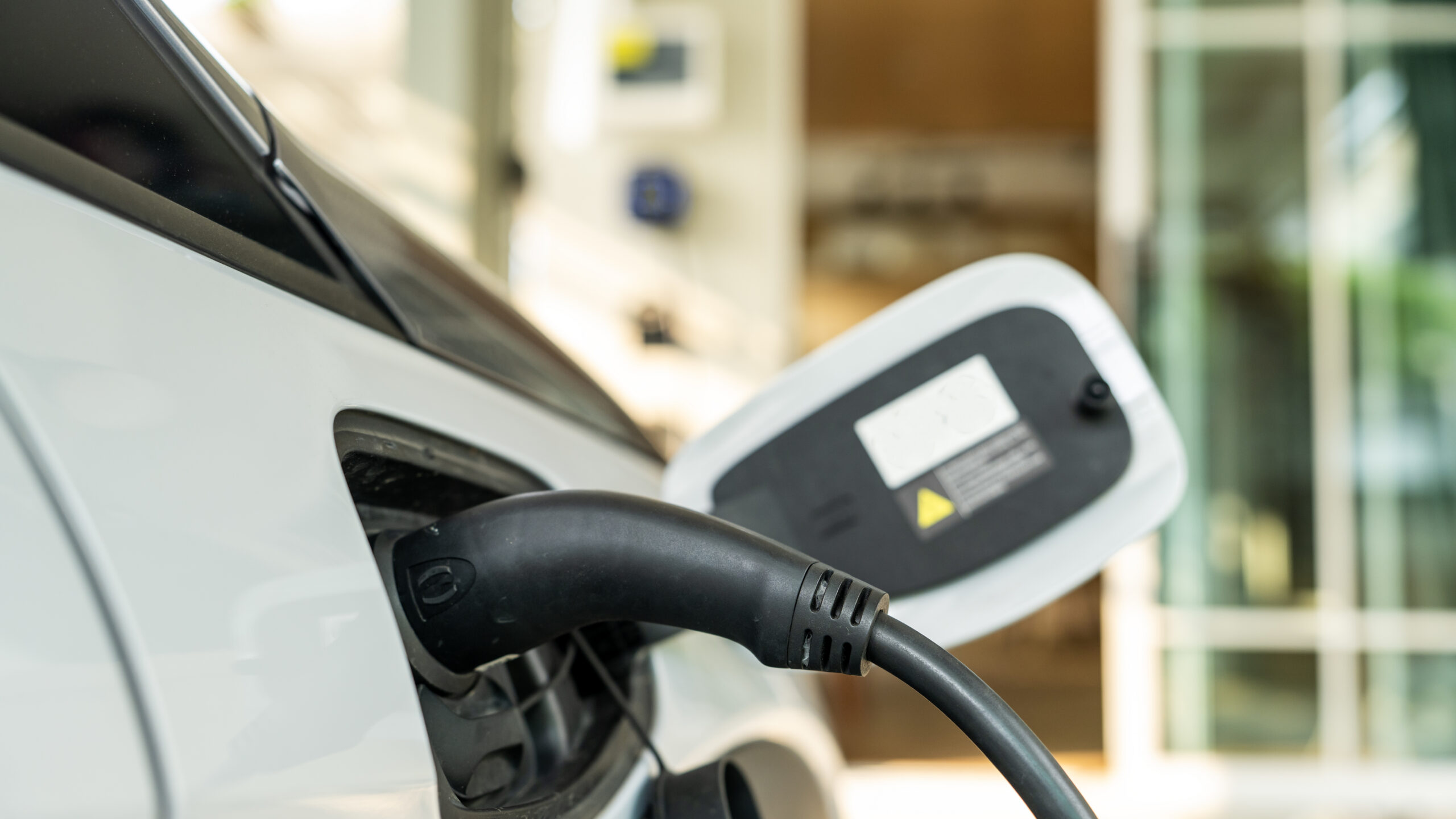
What happens to a car when the company behind its software goes under?

Before Fisker’s 2024 bankruptcy, just 419 Fisker Oceans made it into British driveways. One unfortunate buyer, a marketing manager from Southampton, experienced the worst of the brand’s teething troubles. After taking delivery, her Ocean was plagued by persistent software glitches. Following a call to Fisker, engineers were dispatched to collect the vehicle for repairs, but when the car was due to be collected, it refused to start. Mere days later, Fisker declared insolvency, leaving the Ocean stranded as a 5,500 lb (2,500 kg) driveway ornament for the next ten months with no solution in sight.

Preceding Fisker, there was Better Place. Founded in 2007, Better Place wasn’t a car manufacturer but an EV infrastructure and software company that promised to solve range anxiety through battery-swap stations. Its entire model relied on centralized servers, subscriptions, and proprietary software to authenticate vehicles and manage battery exchanges. The flagship car for this system was the Renault Fluence Z.E., an electric sedan sold primarily in Israel and Denmark.

Better Place filed for bankruptcy in May 2013 after burning through $850 million, leading to Renault closing the Fluence Z.E’s Turkish assembly line. Servers were shut down, battery-swap stations stopped operating, and backend software used for authentication, charging, and fleet management disappeared, leaving many cars bricked.

A man stands next to a compact electric car, inside a white-painted facility

Better Place founder and CEO Shai Agassi showing off a battery-swap station for electric taxis in Tokyo on April 26, 2010. Three years later, the company was done.

Credit: KAZUHIRO NOGI/AFP via Getty Images

Better Place founder and CEO Shai Agassi showing off a battery-swap station for electric taxis in Tokyo on April 26, 2010. Three years later, the company was done. Credit: KAZUHIRO NOGI/AFP via Getty Images

These cases highlight a broader shift in the auto industry, where long-term ownership is increasingly dependent not just on mechanical durability but on continued access to proprietary software and manufacturer support.

“When a modern car’s software misbehaves, you don’t fix it yourself—you call the manufacturer,” said Stuart Masson, founder and editor of The Car Expert. “They control the code. At that point, you’re not dealing with a traditional service department so much as an IT help desk.”

https://arstechnica.com/cars/2026/02/what-happens-to-a-car-when-the-company-behind-its-software-goes-under/


Ford is focusing on efficiency to make its 2027 $30,000 EV pickup affordable

The electric car transition isn’t going great for America’s domestic automakers, but it’s far from over. Ford may have ended production of the full-size F-150 Lightning pickup truck, but next year, it will debut a new “Universal EV Platform,” beginning with a midsize truck that it says will start at a much more reasonable $30,000, if all goes to plan. The company seems serious about the idea, having created an internal “skunkworks” several years ago to design this new affordable platform from first principles.

Doing more with less is the key: fewer components and using less energy to go the same distance. Now, the company has given us a clearer picture of how it plans to make that happen.

A few years ago, Ford and its crosstown rival bet that full-size pickup truck customers would be wowed enough by instant torque and minuscule running costs to overlook how towing heavily diminished range. They created electric versions of their bestselling behemoths, packed with clever features like power sockets for job sites and the ability to power a home during an emergency.

Read full article

Comments

https://arstechnica.com/cars/2026/02/ford-is-focusing-on-efficiency-to-make-its-2027-30000-ev-pickup-affordable/


Sideways on the ice, in a supercar: Stability control is getting very good

SAARISELKÄ, FINLAND—If you’re expecting it, the feeling in the pit of your stomach when the rear of your car breaks traction and begins to slide is rather pleasant. It’s the same exhilaration we get from roller coasters, but when you’re in the driver’s seat, you’re in charge of the ride.

When you’re not expecting it, though, there’s anxiety instead of excitement and, should the slide end with a crunch, a lot more negative emotions, too.

Thankfully, fewer and fewer drivers will have to experience that kind of scare thanks to the proliferation and sophistication of modern electronic stability and traction control systems. For more than 30 years, these electronic safety nets have grown in capability and became mandatory in the early 2010s, saving countless crashes in the process.

Through a combination of cutting engine power and individually braking each wheel, the computers that keep a watchful eye on things like lateral acceleration and wheel spin gather it all together with the idea that the car goes where the driver wants it rather than sideways or backward into whatever solid object lies along the new path of motion.

Obviously, the quickest way to find out whether this all works is to turn it off. And then find a slippery road, or just drive like an oaf. Yet even when automakers let journalists loose on racetracks, they invariably require that we keep some of the electronic safety net turned on. Even on track, you can hit things that will crumple a car—or worse—and with modern tire technology being what it is, the speeds involved when cars do let go tend to be quite high, particularly if it’s dry.

An orange McLaren Artura, seen from behind on a frozen lake. The rear is encrusted with snow.

The Artura is probably my favorite McLaren, as it’s smaller and more versatile than the more expensive, more powerful machines in the range.

Credit: Jonathan Gitlin

The Artura is probably my favorite McLaren, as it’s smaller and more versatile than the more expensive, more powerful machines in the range. Credit: Jonathan Gitlin

There are few environments that are more conducive to exploring the limits and capabilities of electronic chassis control. Ideally, you want a lot of wide-open space free of wildlife and people and a smooth, low-grip surface. A giant sand dune would work. Or a frozen lake. Which is why you can sometimes find automotive engineers hanging out in these remote, often extreme locations, braving the desert’s heat or an Arctic chill as they work on a prototype or fine-tune the next model.

https://arstechnica.com/features/2026/02/learning-the-limits-of-stability-control-on-a-frozen-lake-in-a-mclaren/


What if riders don’t close a robotaxi door after a ride? Try DoorDash.

Autonomous vehicles have a lot of potential. As long as you program them right, they won’t speed, won’t break traffic laws, and won’t get drunk, high, abusive, or violent. And the technology has been getting much more capable, even as some of the hype has died down, taking some of the related companies with it. Waymo still easily leads the field and is already operating commercially in six cities across America, with a dozen more (plus London) coming soon. Waymos can even drop you off and pick you up at the airport in Phoenix and San Francisco.

Soon, Waymo will begin deploying its sixth-generation Waymo Driver, using upfitted Zeekr Ojai minivans, adding to the Jaguar I-Paces that have become so common on San Francisco streets and to its fleet of Hyundai Ioniq 5 electric vehicles. It has upgraded the cameras, lidar, and radar, meaning the cars can better sense their environments at night and in inclement weather. There are even microphones that can pick up sounds like sirens to better inform the robotaxi of the direction the emergency vehicle(s) are coming from.

But even with all these advances since the pod-like two-seater that predates even the Waymo name, there are still a few things that remain beyond a robotaxi’s capabilities. Like closing a door a passenger left open on their way out. All the sophisticated sensors and high-powered computer processing in the world are useless if the car can’t move until the door closes and there’s no one there to give it a hand.

https://arstechnica.com/cars/2026/02/what-if-riders-dont-close-a-robotaxi-door-after-a-ride-try-doordash/


The Kia PV5 electric van combines futuristic looks and thoughtful design

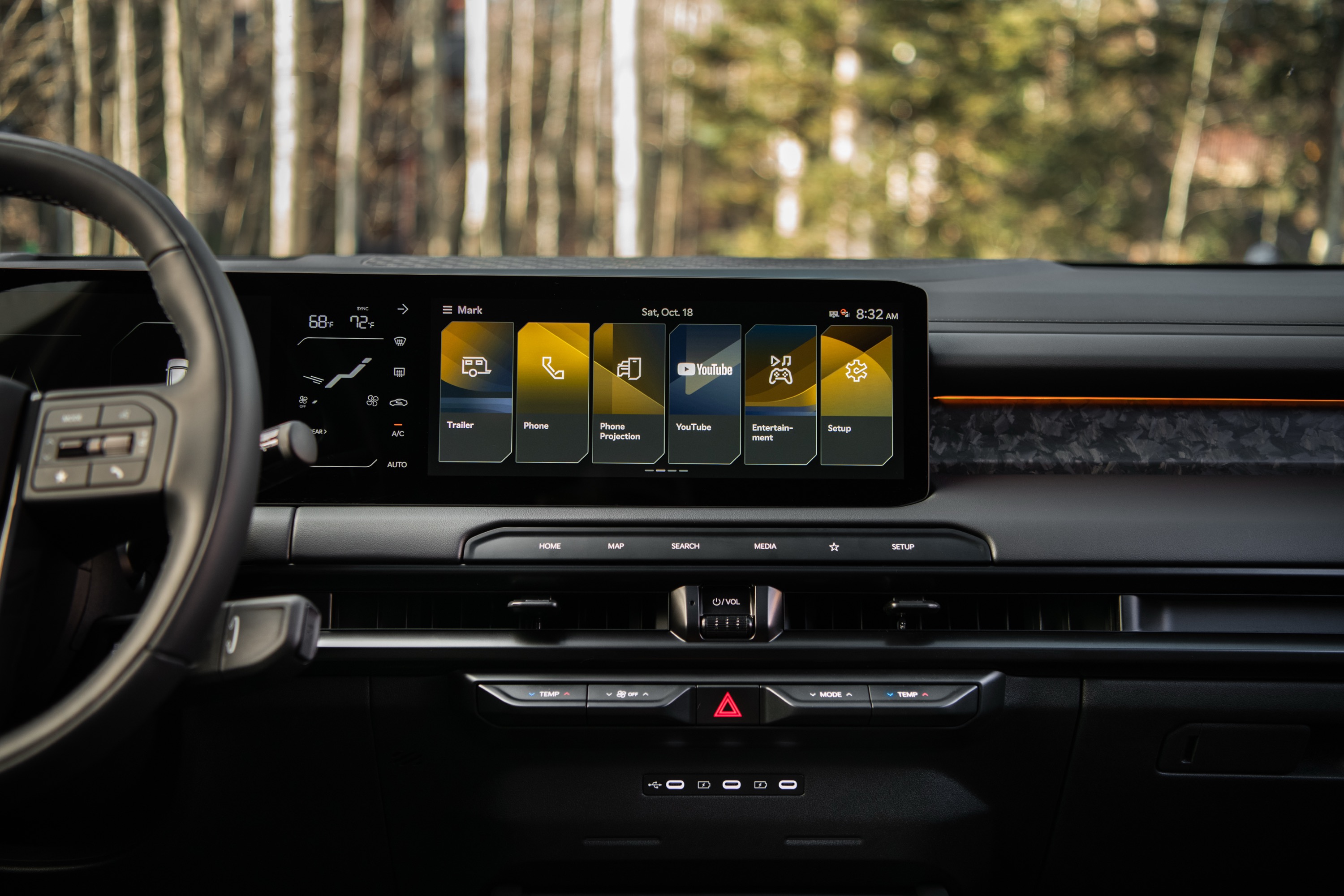
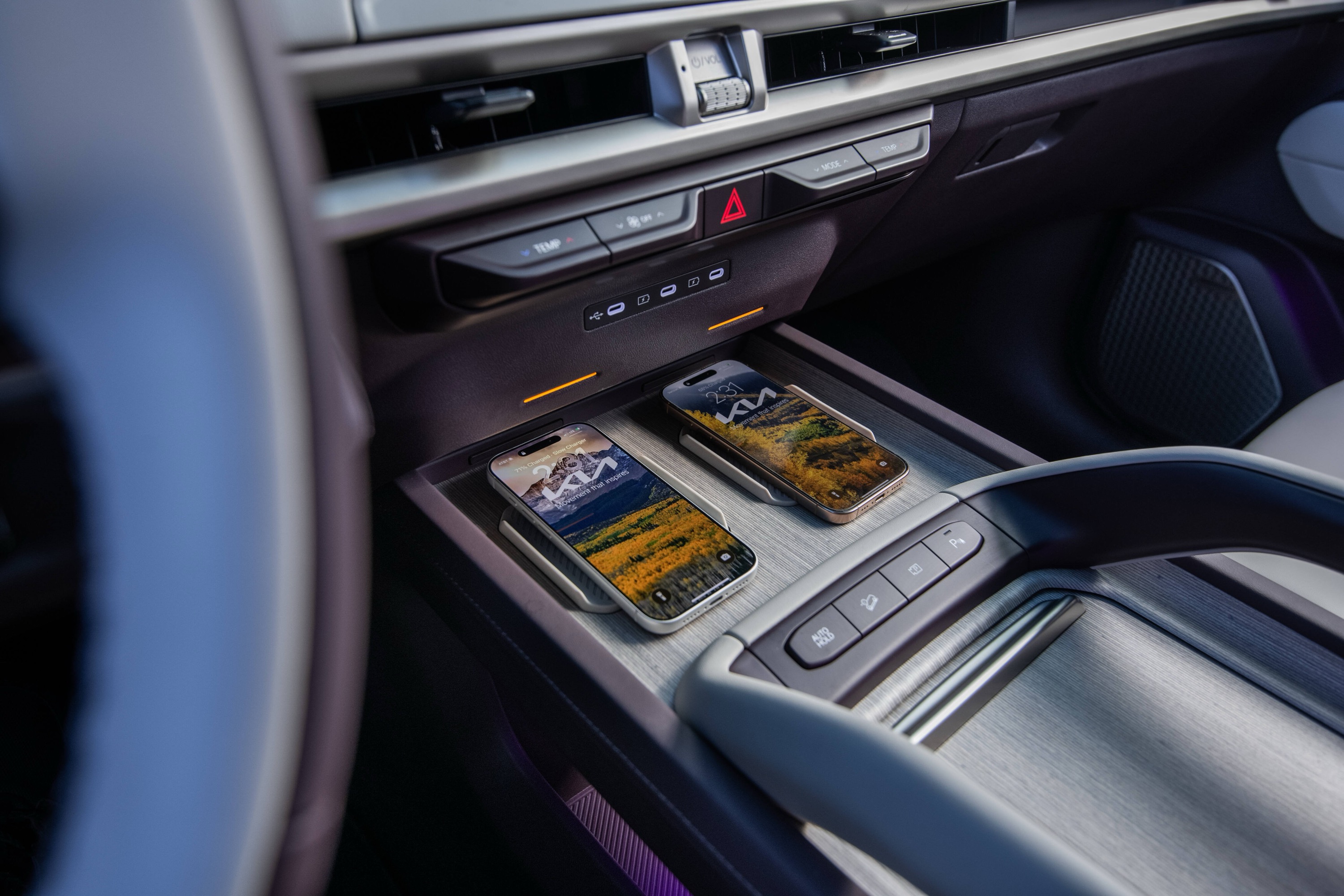
The driver gets a hefty 7.5-inch digital instrument binnacle alongside a 12.9-inch infotainment display. Nearly everything is run through that screen, which is sad for those of us who want a return to physical buttons. It’s quick and responsive, but it lacks the haptic feedback that confirms a tap. The infotainment system supports Android Auto and Apple CarPlay, so you don’t have to use it too much if you don’t like it.

On the road, delivering a load

Even with 600 lbs (272 kg) loaded in the back—Kia wanted us to have a proper experience—the van felt remarkably car-like. The steering is smooth, and it has a delightfully tight turning circle to help navigate small towns and sharp city bends. It felt sure-footed and stable, though the ride was a touch on the jiggly side on all but the smoothest roads.

Yes, it’s a van, so don’t expect a buttery-smooth ride, but because everything else is so car-like, you don’t expect quite so agricultural a ride. Nor do you expect the cabin to sound so echo-y. That contrast strikes you from time to time: it’s clearly built to do a job, but it’s also thoughtfully designed. Its touchpoints are designed to withstand heavy use, so while they’re not especially luxurious, they should hold up to the many painty/muddy/gunky hands that will use them.

The powertrain is smooth, the ride a bit less so.

Credit: Kia

The powertrain is smooth, the ride a bit less so. Credit: Kia

Its powertrain feels exactly as you’d expect from Kia: silky smooth. It’s not the quickest vehicle in the world, but its torque gets you up to speed briskly enough. Kia’s claimed WLTP figure of 3.8 miles/kWh (16.4 kWh/100 km) wasn’t quite achievable on a chilly day, but winter weather will inevitably knock those numbers down a bit.

You can tell the PV5 isn’t the result of a simple “we have a powertrain, so let’s make a van” situation. Real thought has gone into how it will be used, how operators will interact with it, and how to make their lives easier. Ford, VW, Stellantis, and other van makers in Europe should take note.

As for America, never say never. In the UK and Europe, the PV5 costs tens of thousands less than VW’s retro microbus, suggesting that a North American PV5 could avoid the sticker shock that slowed VW’s sales, leading VW of America to delay imports for a model year. Kia America hasn’t announced plans to import the PV5 yet, but Car and Driver recently spotted one testing US-specific modifications on roads near its office.

https://arstechnica.com/cars/2026/02/the-kia-pv5-electric-van-combines-futuristic-looks-and-thoughtful-design/


Ive and Newson bring old-school charm to Ferrari’s first EV interior

Ferrari has published images of the interior of its forthcoming electric vehicle, which it designed with LoveFrom, the new firm of former Apple star Jony Ive and another legendary designer, Marc Newson. The Italian sports and racing car maker is taking a careful approach to revealing details about its first battery EV, signaling a depth of thought that goes well beyond simply swapping a V12, transmission, and fuel tank out for batteries and electric motors. Indeed, the interior of the new car—called the Ferrari Luce—bears little family resemblance to any recent Ferrari.

Instead, LoveFrom appears to have channeled Ferrari interiors from the 1950s, ’60s, and ’70s, with a retro simplicity that combines clear round gauges with brushed aluminum. Forget the capacitive panels that so frustrated me in the Ferrari 296—here, there are physical buttons and rocker switches that seem free of the crash protection surrounds that Mini was forced to use.

The steering wheel now resembles the iconic “Nardi” wheel that has graced so many older Ferraris. But here, the horn buttons have been integrated into the spokes, and multifunction pods hang off the horizontal spokes, allowing Ferrari to keep its “hands on the wheel” approach to ergonomics. Made from entirely CNC-milled recycled aluminum, the Luce’s wheel weighs 400 g less than Ferrari’s usual steering wheel.

Ferrari Luce infotainment screen

The infotainment touchscreen is on a pivot.

Ferrari

More buttons and switches.

Ferrari

The binnacle that houses the main instrument display is actually two overlapping OLED screens. The analogue dials are displayed by the rear-most of the two, appearing through cutouts as if they were traditional dials from Veglia, Smiths, or Jaeger (or the clock on your iPhone). The infotainment screen is on a ball joint that allows it to be oriented toward the driver or passenger as necessary, an interesting feature that other automakers would do well to study (and perhaps copy).

https://arstechnica.com/cars/2026/02/ive-and-newson-bring-old-school-charm-to-ferraris-first-ev-interior/


Waymo leverages Genie 3 to create a world model for self-driving cars

On the road with AI

The Waymo World Model is not just a straight port of Genie 3 with dashcam videos stuffed inside. Waymo and DeepMind used a specialized post-training process to make the new model generate both 2D video and 3D lidar outputs of the same scene. While cameras are great for visualizing fine details, Waymo says lidar is necessary to add critical depth information to what a self-driving car “sees” on the road—maybe someone should tell Tesla about that.

Using a world model allows Waymo to take video from its vehicles and use prompts to change the route the vehicle takes, which it calls driving action control. These simulations, which come with lidar maps, reportedly offer greater realism and consistency than older reconstructive simulation methods.

With the world model, Waymo can see what would happen if the car took a different turn.

This model can also help improve the self-driving AI even without adding or removing everything. There are plenty of dashcam videos available for training self-driving vehicles, but they lack the multimodal sensor data of Waymo’s vehicles. Dropping such a video into the Waymo World Model generates matching sensor data, showing how the driving AI would have seen that situation.

While the Waymo World Model can create entirely synthetic scenes, the company seems mostly interested in “mutating” the conditions in real videos. The blog post contains examples of changing the time of day or weather, adding new signage, or placing vehicles in unusual places. Or, hey, why not an elephant in the road?

Waymo is ready in case an elephant shows up.

Waymo’s early test cities were consistently sunny (like Phoenix) with little inclement weather. These kinds of simulations could help the cars adapt to the more varied conditions. The new markets include places with more difficult conditions, including Boston and Washington, D.C.

Of course, the benefit of the new AI model will depend on how accurately Genie 3 can simulate the real world. The test videos we’ve seen of Genie 3 run the gamut from pretty believable to uncanny valley territory, but Waymo believes the technology has improved to the point that it can teach self-driving cars a thing or two.

https://arstechnica.com/google/2026/02/waymo-leverages-genie-3-to-create-a-world-model-for-self-driving-cars/


How far does $5,000 go when you want an electric car?

How about turning over an old Leaf instead?

The first-generation Nissan Leaf was the best-selling early EV, so it’s no surprise that it’s the most common EV you’ll find under our budget. The car didn’t have that much range to begin with, with a battery capacity of just 24 kWh at launch. And Nissan’s decision not to liquid-cool the battery pack means this EV battery will degrade more significantly over time than virtually any other modern EV. Essentially, the first- and second-generation Leafs are responsible for the general distrust of EV battery longevity.

Used Leafs can be had for less than $2,000, but below a certain point, they become economical to strip for spares, particularly the battery packs, which can have a second life as static storage. But what if you don’t want a Leaf?

Well, there’s the Mitsubishi i-MiEV, which will always hold a spot in my heart because it was the first car I tested for Ars Technica. I’ll always remember how quickly its skinny front tires were overwhelmed into understeer on a highway interchange. Its one-box pod-on-wheels design still looks different from almost anything else on an American road, and it’s very compact for city life. But its battery pack was just 16 kWh when new, and it’s certainly less than that now, so it helps if you live in a compact city.

Other choices lean more toward compliance cars, like the Chevrolet Spark EV or a Fiat 500e. A few Volkswagen e-Golfs and electric Ford Focuses might show up in this price range, too, and I’m seeing a couple of Kia Soul EVs and even a pair of very cheap BMW i3s just within budget. And I do like the i3.

However, something to consider is how wide to cast one’s net. Sites like Autotrader will happily let me search for cars across the entire country, but could I drive an i3 home to DC from Florida or Texas? An e-Golf from California? At this price point, charging will be level 2 at best, and stops would need to be more frequent than the “every 50 miles” we were shooting for under the Biden-era NEVI plan. While buying a bunch of very cheap EVs far away and seeing who gets closest to home would undoubtedly make for an entertaining video series, in the real world, a long-distance purchase probably needs to factor in the cost of shipping the car.

https://arstechnica.com/cars/2026/01/how-far-does-5000-go-when-you-want-an-electric-car/


Tesla kills Models S and X to build humanoid robots instead

Over the years, the Model S got more power and more advanced driver assists—and eventually, a cosmetic facelift. But as rivals responded with vehicles like the Porsche Taycan and Lucid Air, the Model S stagnated rather than being replaced.

Similar neglect was shown to the Model X, the brand’s SUV-cum-minivan. The lengthy and troubled gestation for the Model X was a forerunner of the problems Tesla has faced developing each successive product; in this particular case, the “falcon wing” doors, created as an alternative to the minivan’s traditional sliding door, proved particularly problematic to get right. Indeed, I still remember being smacked in the head by one at my first introduction to the ungainly people-mover. And yet, compared to the other SUVs on sale in 2016, the Model X still stood out.

A decade later, it’s fair to say the Model X still stands out, but like a sore thumb. Its looks never became more gainly, and there is now vast competition for large, luxurious electric SUVs, whether that’s from Chinese startups like BYD and Xiaomi, American startups like Rivian and Lucid, or the traditional automakers that now have a handle on electrification.

That has been reflected in the sales. Right-hand drive cars for markets including the UK, Australia, New Zealand, and Japan ended production in 2023. And each quarter, production and sales of the Model S and X slipped more and more. Even lumped together with the poorly selling Cybertruck—which is only offered in the US—these deliveries fell by more than half in Q4 2025, and by 40 percent for the year.

Is there much reason to expect that the development of the Optimus robot will be any smoother than the “development hell” that beset the Model X, 3, Y, and Cybertruck? On last night’s call, Musk admitted—contrary to previous claims—that the robots are not doing any useful work at the Tesla factory, and the idea that the company will build 10,000 robots this year seems in conflict with Optimus still being “very much at the early stages” and “still in the R&D phase,” to use Musk’s own words.

https://arstechnica.com/cars/2026/01/tesla-kills-models-s-and-x-to-build-humanoid-robots-instead/


2025 sees Tesla’s annual revenue fall for the first time

Tesla published its financial results for 2025 this afternoon. If 2024 was a bad year for the electric automaker, 2025 was far worse: For the first time in Tesla’s history, revenues fell year over year.

A bad quarter

Earlier this month, Tesla revealed its sales and production numbers for the fourth quarter of 2025, with a 16 percent decline compared to Q4 2024. Now we know the cost of those lost sales: Automotive revenues fell by 11 percent to $17.7 billion.

Happily for Tesla, double-digit growth in its energy storage business ($3.8 billion, an increase of 25 percent) and services ($3.4 billion, an increase of 18 percent) made up some of the shortfall.

Although total revenue for the quarter fell by 3 percent, Tesla’s operating profits grew by 20 percent. But declining income from operations, which also got much more expensive, saw Tesla’s net profit plummet 61 percent, to $840 million. Without the $542 million from regulatory credits, things would have looked even bleaker.

A bad 2025

Selling 1,636,129 cars in 2025 generated $69.5 billion in revenue, 10 percent less than Tesla’s 2024 revenue. But storage and energy increased 27 percent year over year to $12.7 billion, and services grew by 19 percent year over year to $12.5 billion. Together, these two divisions now contribute meaningful amounts to the business, unlike just a few short years ago.

https://arstechnica.com/cars/2026/01/2025-sees-teslas-annual-revenue-fall-for-the-first-time/