F1’s new engines are causing consternation over compression ratios

Compression ratios

At issue is the engines’ compression ratio, which compares the volume of the cylinder when the piston is at top dead center with the volume when the piston is at its closest to the crank. Under the 2014–2025 rules, this was set at 18:1, but for 2026 onward, it has been reduced to 16:1.

This is measured at ambient temperature, though, not while the engine is running. A running engine is hotter—much hotter—than one sitting at ambient, and as metals heat up, they expand. The engines have very short throws, so it doesn’t take much expansion to increase the compression ratio by reducing the distance between the piston and cylinder head at the top of its travel. The benefit could be as much as 15 hp (11 kW), which translates to a few tenths of a second per lap advantage.

Unfortunately for the other teams, the FIA stated that its rules indeed specify only that the compression ratio should be 16:1 based on static conditions and at ambient temperatures. “This procedure has remained unchanged despite the reduction in the permitted ratio for the 2026 season. It is true that thermal expansion can influence dimensions, but the current rules do not provide for measurements to be carried out at elevated temperatures,” the FIA said.

So if Mercedes and Red Bull do have a horsepower advantage, it’s one that will likely be baked into the 2026 season.

The compression ratio clarification wasn’t the only one issued by the FIA. For some time now, F1 has used ultrasonic fuel flow meters as a way to control power outputs. Under the outgoing regulations, this was capped at 100 kg/h, but with the move to fully sustainable synthetic fuels, this is changing to an energy cap of 3,000 MJ/h instead.

In the past, it had been theorized that teams could try to game the fuel flow meters—the most impressive idea I heard involved pulsing more fuel between the sensor’s sampling inputs to boost power, although I don’t believe it was ever implemented.

Don’t even think about being that clever this time, the FIA says. “Any device, system, or procedure, the purpose of which is to change the temperature of the fuel-flow meter, is forbidden,” it says, updating the regulation that previously banned “intentional heating or chilling” of the fuel flow meter.

https://arstechnica.com/cars/2025/12/f1s-new-engines-are-causing-consternation-over-compression-ratios/


Power outage paralyzes Waymo robotaxis when traffic lights go out

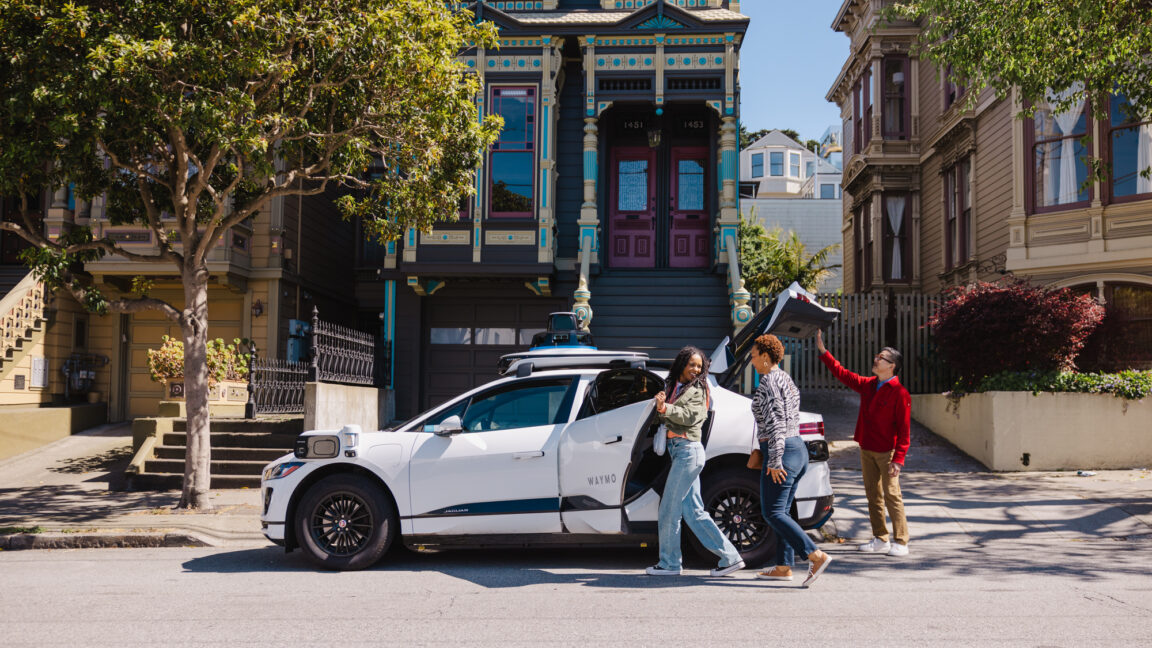
When the traffic lights went out, Waymo’s robotaxis got a little too cautious at intersections. With no red-yellow-green to cue drivers, the rule is to treat the intersection as a four-way stop. Indeed, Waymo’s cars are programmed to do this, but it seems the scale of the outage over the weekend was just too much to handle.

Social media and Reddit began to fill with videos of stationary Waymos at intersections, and the company temporarily suspended service.

Most areas saw power restored by noon yesterday, although Pacific Gas and Electric said it expected some power to remain out until Monday afternoon.

Meanwhile, Waymo’s robotaxis are up and running again. “We are resuming ride-hailing service in the San Francisco Bay Area,” a company spokesperson told Ars. “Yesterday’s power outage was a widespread event that caused gridlock across San Francisco, with non-functioning traffic signals and transit disruptions. While the failure of the utility infrastructure was significant, we are committed to ensuring our technology adjusts to traffic flow during such events.”

“Throughout the outage, we closely coordinated with San Francisco city officials. We are focused on rapidly integrating the lessons learned from this event and are committed to earning and maintaining the trust of the communities we serve every day,” Waymo said.

https://arstechnica.com/cars/2025/12/power-outage-paralyzes-waymo-robotaxis-when-traffic-lights-go-out/


Not too big, not too expensive: The Chevrolet Equinox EV

At the heart of the car, between the axles, lives the 85 kWh lithium-ion battery pack, which gives the Equinox EV an EPA range of 319 miles (513 km) on a full charge. Unhelpfully, GM quotes charging as “up to 36 miles of range per hour of charging” for AC level 2 charging (at up to 11.5 kW), or “approximately 77 miles of range in 10 minutes” with a DC fast charger of up to 150 kW, but no 0–100 percent time for AC or 10–80 time for DC charging. We fast-charged the car from 34 percent, without preconditioning the battery first. Charging peaked at 75 kW and took about 45 minutes to reach 80 percent. The charge port is CCS1, although Chevrolet will sell you an adapter to use NACS chargers.

On a full charge, in below-freezing weather, the Equinox reported an estimated 311 miles (500 km) of range, and during our week we averaged 3.5 miles/kWh, despite using the car’s heater because there’s enough else going on in the world that we don’t need to shiver in our cars to prove a point.

Front view of 2024 Chevrolet Equinox EV 1LT in Galaxy Gray Metallic parked on a street with trees. Preproduction model shown. Actual production model may vary. Visit chevy.com/EquinoxEV for availability.

It might be Goldilocks-sized. Credit: Chevrolet

An all-wheel-drive version is available, but we tested the front-wheel drive Equinox EV. The permanent magnet synchronous motor generates 220 hp (164 kW) and 243 lb-ft (329 Nm), which is enough to keep things feeling peppy. There are two levels of lift-off regenerative braking available for the one-pedal driving mode, which you toggle on or off via a persistent icon on the 17.7-inch infotainment screen, but even when one-pedal driving is set to off, there’s still some degree of lift-off regen, so you can’t coast the Equinox as you might with a European or Korean EV.

The bit that all the comments will talk about

The infotainment screen is bright, legible, and responsive, and the onboard Google Maps navigation works well, particularly with voice inputs. I have to give props to the backup camera, too—one of the crispest and highest resolution I’ve encountered all year. But other voice commands for the Android Automotive OS-based infotainment didn’t always work. And I’ll be frank, I missed being able to use Apple CarPlay, both for listening to my own music and for the messaging integration.

https://arstechnica.com/cars/2025/12/the-chevrolet-equinox-ev-is-high-on-comfort-and-convenience/


Donut Lab’s hub motor meets WATT’s battery to create new EV skateboard

“The integration of Donut Lab’s revolutionary in-wheel motor technology represents a significant leap for what PACES can offer the automotive world,” said Neil Yates, CEO of WATT Electric Vehicles. “Its motors, inverter, and software systems, perfectly complement our lightweight platform philosophy. The direct, fine control of the individual wheel speeds brings an agility and that is perfectly complemented by the low mass and inertia of our chassis technology. This skateboard can produce vehicles that will set new benchmarks for EV handling.”

A hub motor in a wheel

A look at the hub motor in situ. Credit: Donut Lab

“WATT EV’s PACES platform provides the perfect canvas to showcase the full potential of our advanced motor technology,” said Marko Lehtimäki, CEO of Donut Lab. “The exceptional low mass of PACES allows our high-torque, high-power-density in-wheel motors to truly shine, delivering a driving experience that would be impossible with heavier platforms. When you combine our direct-drive precision control with WATT’s lightweight engineering expertise, you create something genuinely transformative, a vehicle architecture that’s lighter, more efficient, more powerful, and infinitely more engaging to drive.”

It almost makes me wish I were going to CES in a few weeks to check it out.

https://arstechnica.com/cars/2025/12/donut-labs-hub-motor-meets-watts-battery-to-create-new-ev-skateboard/


2026 Mercedes CLA first drive: Entry level doesn’t mean basic

SAN FRANCISCO—Automakers are starting to follow somewhat familiar paths as they continue their journeys to electrification. Electric vehicles are, at first, strange new tech, and usually look like it. Mercedes-Benz’s EQS and EQE are good examples—with bodies that look like bars of soap worn down in the shower, they stood out. For early adopters and trailblazers that might be fine, but you need to sell cars to normal people if you want to survive, and that means making EVs more normal. Which is what Mercedes did with its newest one, the all-electric CLA.

The normal looks belie the amount of new technology that Mercedes has packed into the CLA, though. The car sticks to the four-door coupe look that the company pioneered a couple of decades ago, but there’s a thoroughly modern electric powertrain connected to the wheels, run by four powerful networked computers. And yes, there’s AI. (For the pedants, “coupe” means cut down, not two-door, so the name is accurate.)

The CLA is the first of a new series of Mercedes that will use the same modular architecture, and interestingly, it’s powertrain agnostic—a hybrid CLA is coming in time, too. But first the battery EV, which makes good use of some technology Mercedes developed for the EQXX concept car.

A blue Mercedes-Benz CLA parked in profile

At 185.9 inches (4,722 mm) long, 73 inches (1,854 mm) wide, and 57.8 inches (1,468 mm) tall, it’s not a particularly big car. In addition to the trunk, there’s a small frunk up front. Credit: Jonathan Gitlin

That creation was capable of about 750 miles (1,207 km) on a single charge, but it was handbuilt and lacked working rear doors or an actual back seat. The CLA manages as much as 374 miles on a full charge of its 85 kWh (useable) battery pack, although as ever this decreases a little as you fit larger wheels.

But Mercedes has been restrained in this regard, eschewing that terrible trend for larger and larger wheels. Designers use that trick to hide the size of their SUVs, but the relatively diminutive size of the CLA needs no such visual trickery, and the rims range from 17–19 inches and no larger. Smaller wheels make less drag, and even though the CLA doesn’t look like it has been rubbed smooth, its drag coefficient of 0.21 says otherwise.

https://arstechnica.com/cars/2025/12/2026-mercedes-cla-first-drive-entry-level-doesnt-mean-basic/


Ford ends F-150 Lightning production, starts battery storage business

We learned then that Ford would keep the Kentucky plant and SK On gets the one in Tennessee, which would focus on the energy storage business instead. Now, we know that something similar will happen at the Kentucky plant—Ford says it’s spending $2 billion to convert the factory to make prismatic lithium iron phosphate (LFP) cells.

Those aren’t destined for EVs, but they are the preferred cell format for data centers, Ford says. The company says that it will bring the factory online in the next 18 months, reaching an annual output of 20 GWh.

Other Ford plants are also being repurposed. With no full-size BEV pickup in the product plans, the assembly plant in Tennessee that was to produce it—the one near the battery factory that SK On is keeping—will instead build new gas-powered trucks, although not for another four years. Around that same time, its Ohio assembly plant will begin building new commercial vehicles.

All of this will impact Ford’s bottom line, to the tune of $19.5 billion over the next few years, $5.5 billion of which will be in cash. Most of that will hit in the final quarter of 2025, but will extend until 2027, Ford said.

https://arstechnica.com/cars/2025/12/ford-ends-f-150-lightning-production-starts-battery-storage-business/


F1 in Las Vegas: This sport is a 200 mph soap opera

Then there’s the temperatures. The desert gets quite chilly in November without the sun shining on things, and the track surface gets down to just 11° C (52° F); by contrast, at the recent Singapore GP, also at night, the track temperature was more like 36° C (97° F).

LAS VEGAS, NEVADA - NOVEMBER 21: Lando Norris of Great Britain driving the (4) McLaren MCL39 Mercedes lifts a wheel on track during qualifying ahead of the F1 Grand Prix of Las Vegas at Las Vegas Strip Circuit on November 21, 2025 in Las Vegas, Nevada. (Photo by )

It’s rare to see an F1 car on full wet tires but not running behind the safety car. Credit: Clive Rose/Getty Images

So, low aero and mechanical grip, an unusual layout compared to most F1 tracks, and very cold temperatures all combine to create potential surprises, shaking up the usual running order.

We saw this last year, where the Mercedes shined in the cold, able to keep their tires in the right operating window, something the team wasn’t able to do at hotter races. But it was hard to tell much from Thursday’s two practice sessions, one of which was interrupted due to problems with a maintenance hatch, albeit not as serious as when one damaged a Ferrari in 2023. The cars looked impressively fast going through turn 17, and the hybrid power units are a little louder than I remember them, even if they’re not a patch on the naturally aspirated engines of old.

Very little of any use was learned by any of the teams for qualifying on Friday night, which took place in at times damp, at times wet conditions—so wet that the Pirelli intermediate tire wasn’t grooved enough, pushing teams to use the full wet-weather spec rubber. Norris took pole from Red Bull’s Max Verstappen, with Williams’ Carlos Sainz making best use of the opportunity to grab third. Piastri would start fifth, behind the Mercedes of last year’s winner, George Russell.

If the race is boring, the off-track action won’t be

Race night was a little windy, but dry. And the race itself was rather boring—Norris tried to defend pole position going into Turn 1 but ran wide, and Verstappen slipped into the lead, never looking back. Norris followed him home in second, with Piastri fourth, leaving Norris 30 points ahead of Piastri and 42 points ahead of Verstappen with two more race weekends and 58 points left on offer.

https://arstechnica.com/cars/2025/11/f1-in-las-vegas-this-sport-is-a-200-mph-soap-opera/


Data-driven sport: How Red Bull and AT&T move terabytes of F1 info

“We learned how to be more efficient because before… we were so focused on performance that we almost forgot about efficiency, about it was full performance, and we have more people now than we had in 2017, for example, in the team, but we are spending less money,” Maia told me.

Bigger data

The number of sensors on each race car has tripled, with around 750 of them, each sending back a different data stream, amounting to around 1.5 terabytes per car per race. Telemetry used to be pretty basic—a TV feed, throttle, brake, and steering applications, and so on. Now a small squad of engineers sits at banks of screens in the back of the garage, hidden away from the cameras, in constant link with their colleagues in the Milton Keynes factory.

“We need as well to bring it straight away to Milton Keynes because it’s helping us to fine-tune the setup—so when you are here on Friday—and it’s helping us as well on Sunday to make the best decision for the race strategy. So that’s why it’s very good to have a lot of data, but you need as well to transfer it back and forth,” Maia said.

“It is a sport of milliseconds, as you know,” said Zee Hussain, head of global enterprise solutions at AT&T. “So the speed of data, the reliability of data, the latency, the security is just absolutely critical. If the data is not going, traversing, at the highest possible speed, and it’s not on a secure and reliable path, that is absolutely without question the difference between winning and losing,” Hussain said.

“I think the biggest latency we have is between Australia and the UK, and it’s around 0.3 seconds. It’s nothing. I think if you are on WhatsApp, calling someone is maybe more latency… So it’s impressive,” Maia said.

https://arstechnica.com/cars/2025/11/data-driven-sport-how-red-bull-and-att-move-terabytes-of-f1-info/


“Hey Google, did you upgrade your AI in my Android Auto?”

Now it’s “Hey Google” not “OK Google” to trigger the assistant, which had started feeling a little left behind in terms of natural language processing and conversational AI to other OEM systems—sometimes even AAOS-based ones—that used solutions like those from Cerence running on their own private clouds.

Gemini

Going forward, “Hey Google” will fire up Gemini, as long as it’s running on the Android device being cast to the car’s infotainment system. In fact, we learned of its impending, unspecified arrival a couple of weeks ago, but today is the day, according to Google.

Now, instead of needing to know precise trigger phrases to get Google Assistant to do what you’d like it to do, Gemini should be able to answer the kinds of normal speech questions that so often frustrate me when I try them with Siri or most built-in in-car AI helpers.

For example, you could ask if there are any well-rated restaurants along a particular route, with the ability to have Gemini drill down into search results like menu options. (Whether these are as trustworthy as the AI suggestions that confront us when we use Google as a search engine will need to be determined.) Sending messages should supposedly be easier, with translation into 40 different languages should the need arise, and it sounds like making playlists and even finding info on one’s destination have both become more powerful.

There’s even the dreaded intrusion of productivity, as Gemini can access your Gmail, calendars, tasks, and so on.

A polestar interior

Google Gemini is coming to all Polestar models. Credit: Polestar

Gemini is also making its way into built-in Google automotive environments. Just yesterday, Polestar announced that Gemini will replace Google Assistant in all its models, from the entry-level Polestar 2 through to soon-to-arrive machines like the Polestar 5 four-door grand tourer.

“Our collaboration with Google is a great example of how we continue to evolve the digital experience in our cars. Gemini brings the next generation of AI voice interaction into the car, and we’re excited to give a first look at how it will enhance the driving experience,” said Polestar’s head of UI/UX, Sid Odedra.

https://arstechnica.com/cars/2025/11/hey-google-did-you-upgrade-your-ai-in-my-android-auto/


How two Nissan Leafs help make a regional airport more resilient

Not everything about the future sucks. Like electric cars. Sure, there’s one thing that dinosaur-burners do better—short refueling stops—but even the least efficient EV is still multiple times better than its gas equivalent. So much better in fact that it offsets all the extra energy needed to make the battery within a year or two. They’re quieter, and easy to drive. And in a pinch, they can power your house from the garage. Or how about an airport?

OK, we’re not talking about a major international airport (although I really need to talk to someone at Dulles International Airport about my idea to electrify those Space 1999-esque mobile lounges at some point). But up in Humboldt County, California, there’s a microgrid at the Redwood Coast Airport that has now integrated bidirectional charging, and a pair of Nissan Leaf EVs, into its operation.

The microgrid has been operating since 2021 with a 2.2 MW solar array, 8.9 MWh of battery storage, and a 300 KW net-metered solar system. It can feed excess power back into PG&E’s local grid and draw power from the same, but in an outage, the microgrid can keep the airport up and operational.

Turning over an old leaf

One of the Leafs (from model year 2021) was bought by the Humboldt County Aviation Division, the other is a model year 2020 provided by Nissan. These are the previous generation of the Leaf we test drove recently, and they still rely on CHAdeMO for DC fast charging. But the second-gen Leaf was always capable of vehicle-to-grid; it’s just that no one ever set up a pilot in North America to do so, at least to my knowledge. We’ve seen school buses and F-150s get into the V2G game, and it’s good to see the second-gen Leaf now finally fulfilling that potential in North America, even if it has just been replaced with an improved model.

https://arstechnica.com/cars/2025/11/california-airport-tries-out-bidirectional-ev-charging-microgrid/