Telegram emerges as new dark web for cyber criminals

Telegram emerges as new dark web for cyber criminals

Telegram has exploded as a hub for cybercriminals looking to buy, sell, and share stolen data and hacking tools, new research shows, as the messaging app emerges as an alternative to the dark web.

An investigation by cyber intelligence group Cyberint, together with the Financial Times, found a ballooning network of hackers sharing data leaks on the popular messaging platform, sometimes in channels with tens of thousands of subscribers, lured by its ease of use and light-touch moderation.

In many cases, the content resembled that of the marketplaces found on the dark web, a group of hidden websites that are popular among hackers and accessed using specific anonymizing software.

“We have recently been witnessing a 100 per cent-plus rise in Telegram usage by cybercriminals,” said Tal Samra, cyber threat analyst at Cyberint.

“Its encrypted messaging service is increasingly popular among threat actors conducting fraudulent activity and selling stolen data… as it is more convenient to use than the dark web.”

The rise in nefarious activity comes as users flocked to the encrypted chat app earlier this year after changes to the privacy policy of Facebook-owned rival WhatsApp prompted many to seek out alternatives.

Launched in 2013, Telegram allows users to broadcast messages to a following via “channels” or create public and private groups that are simple for others to access. Users can also send and receive large data files, including text and zip files, directly via the app.

The platform said it has more than 500 million active users and topped 1 billion downloads in August, according to data from SensorTower.

But its use by the cyber criminal underworld could increase pressure on the Dubai-headquartered platform to bolster its content moderation as it plans a future initial public offering and explores introducing advertising to its service.

According to Cyberint, the number of mentions in Telegram of “Email:pass” and “Combo”—hacker parlance used to indicate that stolen email and passwords lists are being shared—rose fourfold over the past year, to nearly 3,400.

In one public Telegram channel called “combolist,” which had more than 47,000 subscribers, hackers sell or simply circulate large data dumps of hundreds of thousands of leaked usernames and passwords.

Ad for data posted on Telegram.
Enlarge / Ad for data posted on Telegram.

A post titled “Combo List Gaming HQ” offered 300,000 emails and passwords that it claimed were useful for hacking video game platforms such as Minecraft, Origin, or Uplay. Another purported to have 600,000 logins for users of the services of Russian Internet group Yandex, others for Google and Yahoo.

Telegram removed the channel on Thursday after it was contacted by the Financial Times for comment.

Yet email password leaks account for only a fraction of the worrisome activity on the Telegram marketplace. Other types of data traded include financial data such as credit card information, copies of passports and credentials for bank accounts and sites such as Netflix, the research found. Online criminals also share malicious software, exploits and hacking guides via the app, Cyberint said.

Meanwhile, links to Telegram groups or channels shared inside forums on the dark web jumped to more than 1 million in 2021, from 172,035 the previous year, as hackers increasingly direct users to the platform as an easier-to-use alternative or parallel information center.

The research follows a separate report earlier this year by vpnMentor, which found data dumps circulating on Telegram from previous hacks and data leaks of companies including Facebook, marketing software provider Click.org, and dating site Meet Mindful, among others.

“In general, it appears that most data leaks and hacks are only shared on Telegram after being sold on the dark web—or the hacker failed to find a buyer and decided to share the information publicly and move on,” vpnMentor said.

Still, it dubbed the trend “a serious escalation in the ongoing surge of cyber crime,” noting that some users in these groups appeared less tech savvy than a typical dark web user.

Telegram said it was unable to verify the vpnMentor findings because the researchers had not shared details identifying which channels these alleged leaks were in.

Samra said the transition for cybercriminals from the dark web to Telegram was taking place in part because of the anonymity afforded by encryption—but noted that many of these groups were also public.
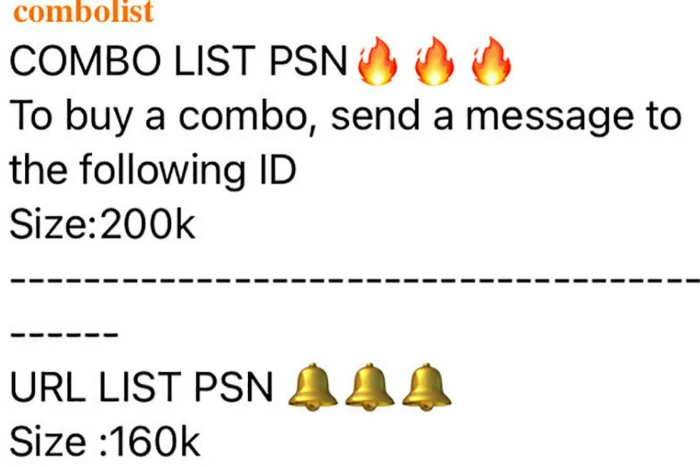
Post from a Telegram channel called "combolist."
Enlarge / Post from a Telegram channel called “combolist.”

Telegram is also more accessible, provides better functionality, and is generally less likely to be tracked by law enforcement when compared to dark web forums, he added.

“In some cases, it’s easier to find buyers on Telegram rather than a forum because everything is smoother and quicker. Access is easier… and data can be shared much more openly.”

Hackers are less inclined to use WhatsApp both for privacy reasons and because it displays users’ numbers in group chats, unlike Telegram, Cyberint said. Encrypted app Signal remains smaller and tends to be used for more general messaging among people who know each other rather than forum-style groups, it added.

Telegram has long taken a more lax approach to content moderation than larger social media apps such as Facebook and Twitter, attracting scrutiny for allowing hate groups and conspiracy theories to flourish. In January, it began shutting down public extremist and white supremacist groups—for the first time—in the wake of the Capitol riots amid concerns it was being used to promote violence.

The Cyberint research—particularly the uncovering of public, searchable groups for cybercriminals—raises further questions about Telegram’s content moderation policies and enforcement at a time when chief executive Pavel Durov has said the company is preparing to sell advertisements in public Telegram channels.

It also comes as the company prepares to head for public markets after raising more than $1 billion through bond sales in March to investors including to Mubadala Investment Company, the Gulf emirate’s large sovereign wealth fund, and Abu Dhabi Catalyst Partners, a joint venture between Mubadala and the $4 billion New York hedge fund Falcon Edge Capital.

Telegram said in a statement that it “has a policy for removing personal data shared without consent.” It added that each day, its “ever growing force of professional moderators” removes more than 10,000 public communities for terms of service violations following user reports.

© 2021 The Financial Times Ltd. All rights reserved Not to be redistributed, copied, or modified in any way.

https://arstechnica.com/?p=1796172


Operator of ‘DownThem’ DDoS Attack Service Convicted

An Illinois man who operated an infamous online service allowing users to launch distributed denial-of-service (DDoS) attacks on selected targets was found guilty of three felonies.

The man, Matthew Gatrel, 32, of St. Charles, was convicted for operating the DownThem “booting” service, through which subscribers would pay to have their targets of choice flooded with unwanted traffic that would disable or slow down computers.

Gatrel also owned and operated AmpNode.com, a “bulletproof” service that allowed paying customers to host “spoofing” servers pre-configured with scripts to facilitate DDoS attacks. The servers also contained lists of vulnerable “attack amplifiers” that were abused to target victims.

DownThem had over 2,000 registered users and is believed to have been responsible for more than 200,000 launched attacks. Subscribers employed the service to target home users, municipal and local government websites, schools and universities, and financial institutions globally.

The booting service itself used the powerful servers of the AmpNode bulletproof hosting service. Other AmpNode customers also operated for-profit DDoS services, the United States Department of Justice says.

Gatrel provided customers with technical guidance on launching attacks and bypassing DDoS protection services. He also used the DownThem service to demonstrate its capabilities to prospective customers.

DownThem provided customers with various subscription plans, differentiated by cost, based on attack capability. Users could select the attack duration and power and could even launch simultaneous attacks.

Gatrel was convicted on three counts: unauthorized impairment and conspiracy to commit unauthorized impairment of a protected computer, and conspiracy to commit wire fraud. Facing up to 35 years in prison, he will be sentenced on January 27, 2022.

DownThem was seized in December 2018, when the U.S. announced charges against Gatrel. One month later, authorities announced that they had started tracking the users of this and other DDoS-for-hire services.

Related: Canadian-US National Sentenced to Prison for Cybercrime Schemes

Related: Russian Hacker Levashov Sentenced to Time Already Served

Related: Member of FIN7 Hacking Group Sentenced to US Prison

view counter

Ionut Arghire is an international correspondent for SecurityWeek.

Previous Columns by Ionut Arghire:
Tags:

http://feedproxy.google.com/~r/securityweek/~3/xsrYtZceEtU/operator-downthem-ddos-attack-service-convicted


Pakistani Man Involved in AT&T Hacking Scheme Sentenced to Prison in U.S.

Muhammad Fahd, a 35-year-old Pakistani national, has been sentenced to 12 years of prison in the United States for his role in a scheme that involved illegally unlocking AT&T phones and hacking into the telecoms giant’s systems.

The scheme started in 2012, when Fahd and others recruited AT&T call center employees for help in unlocking phones sold by AT&T to customers under installment plans. These types of devices can only be used on AT&T’s network, but once a phone has been unlocked it can be used on the network on any provider and the device’s owner can avoid paying for AT&T services or making payments for the phone.

Fahd was initially helped directly by AT&T call center employees to unlock phones, but when in 2013 AT&T implemented a new system that made it more difficult for employees to unlock devices, the man hired someone to develop a piece of malware that, once deployed on AT&T’s internal systems, would allow him to remotely unlock phones from Pakistan in larger numbers.

“At Fahd’s request, the employees provided confidential information to Fahd about AT&T’s computer system and unlocking procedures to assist in this process,” the U.S. Justice Department said on Thursday. “Fahd also had the employees install malware on AT&T’s computers that captured information about AT&T’s computer system and the network access credentials of other AT&T employees. Fahd provided the information to his malware developer, so the developer could tailor the malware to work on AT&T’s computers.”

According to authorities, AT&T determined that more than 1.9 million phones were unlocked as part of the scheme, causing losses of over $200 million due to customers stopping to make payments for their phones.

Fahd was indicted in the United States in 2017 and was arrested the next year in Hong Kong. He was extradited in 2019 and he pleaded guilty to conspiracy to commit wire fraud in 2020.

In addition to the 12-year prison sentence, Fahd was ordered to pay $200 million in restitution.

The AT&T employees who helped the Pakistani national have also been prosecuted.

Related: US Sentences Russian, North Macedonian in Cyber Fraud Case

Related: Canadian-US National Sentenced to Prison for Cybercrime Schemes

Related: Computer Malware Fraudster Gets 2 Years in Prison

view counter

Eduard Kovacs (@EduardKovacs) is a contributing editor at SecurityWeek. He worked as a high school IT teacher for two years before starting a career in journalism as Softpedia’s security news reporter. Eduard holds a bachelor’s degree in industrial informatics and a master’s degree in computer techniques applied in electrical engineering.

Previous Columns by Eduard Kovacs:
Tags:

http://feedproxy.google.com/~r/securityweek/~3/Joc1y7AAhzg/pakistani-man-involved-att-hacking-scheme-sentenced-prison-us


Mirai Botnet Starts Exploiting OMIGOD Flaw as Microsoft Issues More Guidance

Microsoft on Thursday published additional guidance on addressing recently disclosed vulnerabilities in the Open Management Infrastructure (OMI) framework, along with new protections to resolve the bugs within affected Azure Virtual Machine (VM) management extensions.

Microsoft’s guidance was published just as researchers noticed that one of the vulnerabilities is already being exploited in the wild. It appears that the Mirai botnet is attempting to compromise vulnerable systems and that it also closes port 5896 (OMI SSL port) to keep other attackers out.

An open-source Web-Based Enterprise Management (WBEM) implementation, OMI allows for the management of Linux and UNIX systems and is used in various Azure services and Azure Virtual Machine (VM) management extensions.

As part of the September 2021 patches, Microsoft addressed four issues in OMI, one critical bug leading to unauthenticated remote code execution and three high-severity flaws allowing an attacker to elevate privileges. The issues were identified by security researchers with Wiz, which named the RCE defect OMIGOD.

The OMIGOD vulnerability, officially tracked as CVE-2021-38647, is the one reportedly exploited by the Mirai botnet.

According to Microsoft, OMIGOD “only impacts customers using a Linux management solution (on-premises SCOM or Azure Automation State Configuration or Azure Desired State Configuration extension) that enables remote OMI management.”

Microsoft has released additional protections for the affected extensions and encourages customers to update them for both cloud and on-premises deployments. Where automatic updates are enabled, the patches should become globally available by September 18, without a reboot. Otherwise, manually updating the affected components is required.

Affected extensions include System Center Operations Manager (SCOM), Azure Automation State Configuration (DSC Extension), Azure Automation State Configuration (DSC Extension), Log Analytics Agent, Azure Diagnostics (LAD), Azure Automation Update Management, Azure Automation, Azure Security Center, and Container Monitoring Solution.

OMI as a standalone package was patched in August and customers are advised to manually update it to version 1.6.8-1 or above to remain protected.

“New VM’s in these regions will be protected from these vulnerabilities post the availability of updated extensions,” Microsoft says.

The tech giant also notes that VMs deployed within a Network Security Group (NSG) or protected by a perimeter firewall, where access to Linux systems that expose the OMI ports is restricted, should be safe from the RCE flaw.

Azure customers running Linux VMs are advised to apply the available patches as soon as possible, especially since a proof-of-concept (PoC) exploit targeting the flaws is already publicly available.

Related: Severe Vulnerabilities Could Expose Thousands of Azure Users to Attacks

Related: Patch Tuesday: Microsoft Plugs Exploited MSHTML Zero-Day Hole

view counter

Ionut Arghire is an international correspondent for SecurityWeek.

Previous Columns by Ionut Arghire:
Tags:

http://feedproxy.google.com/~r/securityweek/~3/s2I1CRVA1rs/mirai-botnet-starts-exploiting-omigod-flaw-microsoft-issues-more-guidance


German Election Authority Confirms Likely Cyber Attack

Suspected hackers last month briefly disrupted the website of the authority running Germany’s September 26 general election, a spokesman for the body told AFP Wednesday.

The development, first reported by Business Insider, comes as German federal prosecutors probe alleged cyber attacks against lawmakers during the campaign to choose a new parliament and a successor to Chancellor Angela Merkel.

“At the end of August the website of the Federal Returning Officer only had limited accessibility for a few minutes due to a malfunction,” the spokesman said when asked about the hacking report.

“The problem was analysed and the technical concepts were further developed accordingly. The information for the public through the website of the Federal Returning Officer was and is ensured.”

Business Insider reported that the website, which publishes the official results of the vote, was bombarded with data requests in a so-called distributed denial of service attack, leading the servers to break down.

Citing government sources, it said that IT systems necessary for the election itself to go off smoothly were not affected, possibly due to extra protections in place.

The federal prosecutor’s office said last week it had opened “an investigation on suspicion of espionage” over accusations made by the German government about “phishing” attacks against MPs by Russian intelligence.

Berlin has pointed the finger at hackers from Russia’s “Ghostwriter” group which reportedly specialises in spreading disinformation.

German intelligence believes they have been trying to gain access to the private email accounts of federal and regional MPs and says Russia’s military intelligence service GRU is behind the attacks.

The European Union and United States have repeatedly accused Moscow of attempting to meddle in democratic elections, something the Kremlin has disputed.

Related: Germany Protests to Russia Over Pre-Election Cyberattacks

Related: EU Slaps Sanctions on 2 Russians Over Germany Cyberattack

Related: ‘Russian Hackers’ Again Target German MPs: Report

Related: Germany Confronts Russian Ambassador Over Cyberattack

view counter

© AFP 2020

Previous Columns by AFP:
Tags:

http://feedproxy.google.com/~r/securityweek/~3/Gcjfy1qb7fQ/german-election-authority-confirms-likely-cyber-attack


U.S. Agencies Warn of APTs Exploiting Recent ADSelfService Plus Zero-Day

The U.S. Cybersecurity and Infrastructure Security Agency (CISA), the Federal Bureau of Investigation (FBI), and the Coast Guard Cyber Command (CGCYBER) have sounded the alarm over in-the-wild attacks targeting a recently disclosed vulnerability in Zoho’s ManageEngine ADSelfService Plus product.

Tracked as CVE-2021-40539 and rated critical severity (CVSS score of 9.8), the vulnerability has been exploited since August 2021 to execute code remotely and take over vulnerable systems.

Affecting the representational state transfer (REST) application programming interface (API) URLs of the self-service password management and single sign-on solution, the issue is an authentication bypass bug that affects all ADSelfService Plus builds up to 6113.

“The FBI, CISA, and CGCYBER assess that advanced persistent threat (APT) cyber actors are likely among those exploiting the vulnerability,” reads a joint advisory issued on Thursday.

Academic institutions, critical infrastructure (communications, finance, IT, logistics, manufacturing, transportation, and others), and defense contractors are at risk of compromise because of their use of ADSelfService Plus.

“Successful exploitation of the vulnerability allows an attacker to place webshells, which enable the adversary to conduct post-exploitation activities, such as compromising administrator credentials, conducting lateral movement, and exfiltrating registry hives and Active Directory files,” the advisory reads.

An attacker able to successfully exploit CVE-2021-40539 can upload a .zip archive containing a JavaServer Pages (JSP) webshell posing as an x509 certificate. The attacker then leverages Windows Management Instrumentation (WMI) for lateral movement. Adversaries also attempt to access domain controllers and expand access.

“Confirming a successful compromise of ManageEngine ADSelfService Plus may be difficult—the attackers run clean-up scripts designed to remove traces of the initial point of compromise and hide any relationship between exploitation of the vulnerability and the webshell,” the joint advisory reads.

The security defect was addressed in ADSelfService Plus build 6114 and customers are advised to update to it as soon as possible. Furthermore, the FBI, CISA, and CGCYBER strongly recommend that organizations keep ADSelfService Plus disconnected from the Internet.

Related: Recently Patched Confluence Vulnerability Exploited in the Wild

Related: PetitPotam Vulnerability Exploited in Ransomware Attacks

Related: CISA Issues Emergency Directive to Address ‘PrintNightmare’ Vulnerability

view counter

Ionut Arghire is an international correspondent for SecurityWeek.

Previous Columns by Ionut Arghire:
Tags:

http://feedproxy.google.com/~r/securityweek/~3/6qWQAchzGNA/us-agencies-warn-apts-exploiting-recent-adselfservice-plus-zero-day


Attacco informatico Ospedale San Giovanni di Roma, dopo 4 giorni sistemi IT ancora in down. Impossibili le prenotazione online

Dopo quasi 4 giorni dall’attacco informatico di tipo “ransomware” che ha preso in ostaggio i server e l’infrastruttura IT, il sistema informatico dell’ospedale San Giovanni-Addolorata di Roma non mostra segni di vita. Da lunedì scorso, infatti, medici e infermieri si sono dovuti attrezzare con “carta e penna” per gestire l’enorme mole di dati quotidiani. Fuori uso da giorni anche il sito web dell’ospedale hsangiovanni.roma.it, con l’impossibilità di prendere appuntamenti.

Secondo le testimonianze del personale sanitario “Stiamo trascrivendo tutto a mano su fogli di carta, esami ematici, richieste di trasfusioni o di camera operatoria, siamo in un mare di guai”. Sono fuori uso anche le email aziendali e tutte le comunicazioni vengono svolte su telefono privato e Whatsapp. “Non è nemmeno disponibile, ovviamente, la modulistica per prescrivere le terapie, anche quella si fa online”.

Attacco informatico San Giovanni: i social le uniche pagine rimaste online

“Ci scusiamo per il disagio. Stiamo lavorando per riattivare al più presto le linee telefoniche tradizionalmente dedicate”, ha scritto l’azienda indicando i nuovi numeri provvisori (Centralino H24: 334.1130268 – 338.472194) e rilanciando sulle uniche pagine internet rimaste online, quelle sui social network: “La Comunicazione non si ferma: sui nostri profili social puoi trovare tutte le informazioni utili sulle attività dell’Azienda Ospedaliera San Giovanni Addolorata»). Attività che continuano a risentire pesantemente dei sistemi informatici bloccati, con gli inevitabili disagi per l’utenza: “Daremo comunicazione del graduale ripristino informatizzato delle attività”, assicura la direzione aziendale in una comunicazione inviata ai dipendenti, ringraziandoli per «il lavoro di tutto il personale per garantire frattanto assistenza ai pazienti con procedure manuali fino a ripristino dei singoli sistemi informatici”.

Secondo le fonti l’azienda non vuole pagare nessun riscatto

Secondo quanto riporta Il Tempo, gli inquirenti stanno lavorando sul messaggio apparso sui monitor dell’azienda ospedaliera, con tanto di proposta per la trattativa sul riscatto comparsa in inglese («Your files are encrypted. Moon. Don’t worry, you can return all your files. If you want to restore them, write to the mail …. If you have not answered by mail within 12 hours, write to us by another mail. Attention! We recommend tou contact us directly to avoid overpaying agents»): «I tuoi file sono crittografati. Non preoccuparti, puoi riavere tutti i tuoi file. Se vuoi ripristinarli, scrivi alla mail …. Se non hai risposto per posta entro 12 ore, scrivici con un’altra mail. Attenzione! Ti consigliamo di contattarci direttamente per evitare di pagare in eccesso».

Ma l’azienda ospedaliera, come già accaduto per la Regione nell’analogo attacco di fine luglio inflitto alla rete laziale (che risulta ancora incompleta nel ripristino di alcuni servizi, con i siti tuttora provvisori), non ha alcuna intenzione di trattare con i pirati informatici.

La sanità resta il settore più colpita dal cybercrime

Il fenomeno degli attacchi informatici al settore sanitario è in fortissima crescita e non va assolutamente trascurato, risulta essere la vittima ideale per tanti motivi. Innanzitutto, molti ospedali hanno grandi problemi di budget da destinare all’infrastruttura informatica e questo li ha portati a costruirla man mano negli anni, aggiungendo prodotti nuovi ad altri già esistenti e senza mai pensare a come normalizzare i dispositivi. Il personale interno di gestione è scarso e il parco macchine un enorme minestrone di sistemi operativi, periferiche e software installati, il tutto tenuto insieme da una rete interna cresciuta nello stesso modo.

La riprogettazione da zero sarebbe necessaria, ma è un lusso che i responsabili IT interni non possono permettersi senza rischiare di rallentare o addirittura fermare il lavoro quotidiano di medici, infermieri e altri impiegati. Purtroppo, una rete che non viene progettata per essere sicura da subito non può che risultare estremamente vulnerabile e molti ospedali sono in queste condizioni. Ricordiamo che il ransomware Wannacry ha letteralmente messo in ginocchio una parte consistente del sistema sanitario nazionale britannico perché ancora molto basato su Windows XP.

Secondo Corrado Giustozzi, senior cybersecurity strategist, “l’unica contro misura è che tutti i sistemi informativi siano costantemente aggiornarti. L’agenzia per l’Italia digitale (AgID) nel 2017 ha emanato delle norme obbligatorie per tutte le Pubbliche amministrazioni, “misure minime per la sicurezza” nel controllo 10.4.1: “almeno una copia del backup deve essere mantenuta offline, per evitare che una eventuale minaccia comprometta anche i backup”. Una misura obbligatoria e fondamentale, che, al momento, non applica nessuno”, conclude l’esperto.

Leggi pure

https://www.key4biz.it/attacco-informatico-ospedale-san-giovanni-di-roma-dopo-4-giorni-sistemi-it-e-sito-offline-impossibili-le-prenotazione-online/374042/


Understanding the Cryptocurrency-Ransomware Connection

Unfortunately for the law-abiding of the world, ransomware is an idea that caught on immediately and never lost steam. In fact, it’s grown to the point that it now contributes to a thriving cybercrime business, often targeting large sectors, including education, finance, healthcare, the legal sector, and manufacturing. According to Fortinet research, by the end of 2020, there were as many as 17,200 devices reporting ransomware each day. 

Ransomware was widespread long before cryptocurrency came along, but in recent years, both have skyrocketed in tandem. Because cryptocurrency is difficult to trace, cybercriminals have rapidly switched to it as their preferred method for ransom payments. In fact, DarkSide, the group behind the high-profile attack on Colonial Pipeline, purportedly raked in $90 million in Bitcoin ransom payments before shutting down in May.

So, why is this happening? And what do you need to know? Read on. 

The appeal of cryptocurrency

For bad actors extorting money from victim organizations via ransomware, they typically had to rely in the past on wire transfer services or other forms of payment using regular currency. While these got the job done, they also came with a paper trail – a very traceable paper trail, in most cases. And that made it easy for the FBI to track the bad actors down.

Meanwhile, cryptocurrency has surged in value in the past couple of years, and new currencies continue to be launched – though Bitcoin and Dogecoin continue to lead the pack. Bitcoin, in particular, soared to new highs during the pandemic, breaking through to an all-time high of more than $64,000 in the second quarter of 2021.

This popularity extends to cybercriminals. These days, almost all ransomware attackers demand payments via some form of cryptocurrency, which makes it a lot harder to identify who the actual person behind the keyboard is and it doesn’t leave the same kind of paper trail. It’s also faster – payments can be made almost instantly. For bad actors, this kind of convenience is a no-brainer. 

Cryptocurrency also makes it easier to diversify across payment platforms and demand payments in several smaller amounts paid out to different digital wallets, which again all goes back to making it hard for law enforcement to trace. They can also diversify in terms of the coins and platforms they’re using. The case of the Colonial Pipeline ransomware attack, in which the federal government was able to retrieve $5 million of the payment the company made to their attackers, is a definite exception to the rule – this was a highly unusual and rare incident.

Bad actors are also undoubtedly able to leverage fear, uncertainty and doubt when it comes to cryptocurrency, too. It’s such a comparatively new technology that many people still don’t fully understand it. 

More options, more bad actors

Another big trend within this parallel rise is the growth in variety. Back when bad actors relied on wire transfers and left lengthy paper trails behind, there weren’t as many of them. There were just a handful of ransomware operators and just a few “flavors” of ransomware. These days, there are more varieties of ransomware and far more criminal operators, especially when it comes to affiliate programs. Even novice attackers can be successful today by buying Ransomware-as-a-Service (RaaS) and other kit-like tools, which have lowered the bar to entry. At the same time, there’s been a shift toward “VIP” programs or the use of hand-selected partners to commit these major, seven-figure attacks. While it used to be there were hundreds or thousands of affiliates to partner with, now bad actors are being a little pickier for their large targets and ransom demands.

Concurrently, there are new cryptocurrencies being added to the marketplace regularly. While Bitcoin, Dogecoin and Ethereum are probably the three we hear of most often, they’re far from the only options in an increasingly crowded space. As of May 2021, there were more than 10,000 different cryptocurrencies available. That’s a whole lot of options for bad actors looking to fly under the radar when collecting ransom payments.

Putting the brakes on crypto-tied ransomware plots 

The cryptocurrency market has certainly seen its ups and downs in the past year, but it doesn’t show any sign of slowing down completely. And the rise of NFTs (non-fungible tokens) goes along with this. Likewise, ransomware shows no signs of stopping. Whether it’s Kaseya, JBS, Colonial Pipeline or the hundreds of incidents that don’t make international headlines each year, ransomware is huge business – and it’s increasingly organized.

How can organizations fight ransomware? The best solution is always prevention. Here are three tactics toward that goal:

Cyber hygiene must be part of board-level conversations, as should training and risk management.  Attackers often target high-value assets at organizations, as they have greater access to the network. Those in leadership must be trained to spot malicious tactics and ensure all other employees are trained, too.

Ransomware mitigation strategies must be put in place. These include zero-trust access (ZTA), regular data back-ups to an offsite location, data encryption and immediate patching of vulnerabilities.

Collaboration must be prioritized. More data ensures more effective responses, so share with all internal and external stakeholders, including law enforcement. Sharing intelligence with law enforcement and other global security organizations is the only way to effectively take down cybercrime groups.

Get involved

Ransomware is everywhere, it seems, in parallel with the growth of cryptocurrency. This isn’t a complete coincidence; bad actors have quickly figured out that cryptocurrency is an ideal vehicle for quickly receiving almost-untraceable ransoms. As usual, they are weaponizing technology that was meant to make things more convenient for people. Yet time-honored security wisdom, coupled with modern tools and international cooperation, can help bring down the cybercrime ecosystem. Use the tactics noted above to ransomware-proof your organization and help others catch their attackers.

view counter

Derek Manky is Chief of Security Insights and Global Threat Alliances at Fortinet’s FortiGuard Labs. Derek formulates security strategy with more than 15 years of cyber security experience behind him. His ultimate goal to make a positive impact in the global war on cybercrime. Manky provides thought leadership to industry, and has presented research and strategy worldwide at premier security conferences. As a cybersecurity expert, his work includes meetings with leading political figures and key policy stakeholders, including law enforcement. He is actively involved with several global threat intelligence initiatives including NATO NICP, INTERPOL Expert Working Group, the Cyber Threat Alliance (CTA) working committee and FIRST – all in effort to shape the future of actionable threat intelligence and proactive security strategy.

Previous Columns by Derek Manky:
Tags:

http://feedproxy.google.com/~r/securityweek/~3/G2xcD9HKpeQ/understanding-cryptocurrency-ransomware-connection


Mastercard to Acquire Blockchain Analytics Firm CipherTrace

Mastercard

Payments giant Mastercard (NYSE: MA) announced Thursday that it has agreed to acquire cryptocurrency intelligence and blockchain analytics company CipherTrace for an undisclosed sum.

Founded in 2015, CipherTrace focuses on crypto-currency intelligence, anti-money laundering (AML), blockchain analytics and forensics, and compliance solutions. The company first started tracking Bitcoin criminal activity in 2011, and claims to have insight into more than 900 cryptocurrencies.

[Related: Inside Mastercard’s Push for Continuous Security ] 

“Digital assets have the potential to reimagine commerce, from everyday acts like paying and getting paid to transforming economies, making them more inclusive and efficient,” said Ajay Bhalla, president, Cyber & Intelligence at Mastercard. “With the rapid growth of the digital asset ecosystem comes the need to ensure it is trusted and safe. Our aim is to build upon the complementary capabilities of Mastercard and CipherTrace to do just this.”

The transaction is expected to close before the end of the year.

Earlier this year, Mastercard announced that it would buy digital identity verification company Ekata for $850 million. In early 2020, Mastercard acquired third-party risk management firm RiskRecon, and acquired Ethoca in 2019, a firm that helps merchants and issuers to identify and resolve digital frauds such as false chargebacks.

Related: CipherTrace Unveils Crypto-Currency Anti-Money Laundering Solution

view counter

For more than 10 years, Mike Lennon has been closely monitoring the threat landscape and analyzing trends in the National Security and enterprise cybersecurity space. In his role at SecurityWeek, he oversees the editorial direction of the publication and is the Director of several leading security industry conferences around the world.

Previous Columns by Mike Lennon:
Tags:

http://feedproxy.google.com/~r/securityweek/~3/mvjk3n9prjw/mastercard-acquire-blockchain-analytics-firm-ciphertrace


Canadian-US National Sentenced to Prison for Cybercrime Schemes

A Canadian and U.S. dual-national was sentenced to 11 years in prison for laundering illicit funds from cybercrime schemes such as business email compromise, ATM cash-outs, and bank cyber-heists.

The man, Ghaleb Alaumary, 36, of Mississauga, Ontario, pleaded guilty to two counts of money laundering conspiracy and received a 140-months prison sentence.  He was also ordered to pay more than $30 million in restitution.

Documents presented in court show that Alaumary and his co-conspirators engaged in ATM cash-out operations, BEC schemes, and bank cyber-heists to steal funds. Then, they used various bank accounts and digital currency to launder the money.

Alaumary pleaded guilty in the Southern District of Georgia in one money laundering case in which he conspired to send spoofed emails to a Canadian university in 2017. The emails purported to come from a construction company and demanded that payment was made for a major building project.

[ READ: Zoho Confirms Zero-Day Authentication Bypass Attacks ]

The scheme resulted in the university wiring $11.8 million CAD (roughly $9.4 million USD) to a bank account controlled by Alaumary and his co-conspirators, who then arranged with various people in the U.S. and abroad to launder the funds, according to a statement from the U.S. Justice Department.

Weeks later, Alaumary was involved in a scheme in which a co-conspirator made several trips to Texas to steal hundreds of thousands of dollars through impersonating wealthy bank customers. 

Alaumary pleaded guilty in a second case to recruiting individuals to withdraw stolen funds from ATMs. The funds came from bank cyber-heists and various fraud schemes and were laundered through cash withdrawals, wire transfers, and through cryptocurrency.

Some of the funds, the United States Department of Justice reveals, came from a 2019 Maltese bank cyber-heist perpetrated by North Korean hackers.

Alaumary and his co-conspirators also targeted banks headquartered in India, Malta, and Pakistan, as well as businesses in the U.S. and the U.K., individuals in the U.S., and a professional soccer club in the U.K.

Related: US Sentences Russian, North Macedonian in Cyber Fraud Case

Related: ‘Money Mule’ Operator Gets Seven-Year Prison Sentence 

view counter

Ionut Arghire is an international correspondent for SecurityWeek.

Previous Columns by Ionut Arghire:
Tags:

http://feedproxy.google.com/~r/securityweek/~3/AHY6YCxdjC4/canadian-us-national-sentenced-prison-cybercrime-schemes