Data breach Trenitalia: esposti dati di contatto e di viaggio dei passeggeri, alto il rischio phishing

Il data breach Trenitalia, comunicato il 26 giugno, espone i dati di contatto e di viaggio di una parte dei passeggeri. La principale compagnia ferroviaria italiana ha inviato ai clienti interessati una email con oggetto “Comunicazione di violazione dei dati personali ai sensi dell’art. 34 del Regolamento UE 679/2016”, attribuendo l’accesso non autorizzato ai database dei titoli di viaggio a “soggetti esterni non identificati”; al termine delle verifiche tecniche, spiega l’azienda nella comunicazione inviata agli interessati, sono state individuate le persone potenzialmente coinvolte. L’azienda, contattata dalla stampa, ha collocato l’origine dell’incidente nell’ottobre 2025: la ricostruzione tecnica degli accessi e l’identificazione degli interessati hanno richiesto mesi prima dell’invio delle comunicazioni.

Va detto subito ciò che, secondo la stessa Trenitalia, non è stato compromesso: i dati di accesso agli account, le credenziali personali e le informazioni di pagamento come numero della carta, data di scadenza o codice di sicurezza. Non risultano, al momento, rivendicazioni note né elementi che qualifichino l’evento come ransomware: la società parla di accesso non autorizzato ai database dei titoli di viaggio.

Data breach Trenitalia: quali dati sono coinvolti

La violazione potrebbe aver interessato, qualora presenti nei sistemi associati al titolo di viaggio, diverse categorie di dati personali: dati anagrafici e identificativi (nome, cognome, data e luogo di nascita del passeggero e dell’eventuale acquirente); recapiti di contatto come indirizzo email e numero di telefono; informazioni sul viaggio, tra cui tratta, data, orario e numero del titolo; codice della carta fedeltà associata al biglietto; società o ente datore di lavoro; tipologia di offerta o servizio associata al titolo di viaggio e i dati necessari per fruirne; estremi del documento d’identità; dati tecnici connessi alla generazione del titolo di viaggio. L’ampiezza esatta della platea coinvolta non è stata quantificata ufficialmente. Si tratta, nel complesso, di informazioni che descrivono chi viaggia, come raggiungerlo e quando: un profilo prezioso per chi voglia confezionare comunicazioni fraudolente credibili.

Notifica a Garante e CSIRT, denuncia alla Procura

Trenitalia dichiara di aver adottato immediatamente le misure per contenere l’incidente, interrompendo l’intrusione e rafforzando i controlli sui sistemi. L’accaduto è stato notificato al Garante per la protezione dei dati personali e al CSIRT Italia, e una denuncia è stata presentata alla Procura della Repubblica presso il Tribunale di Roma per avviare le indagini. La società richiama l’articolo 34 del GDPR e le Linee guida EDPB n. 9/2022 (versione 2.0 del 28 marzo 2023) sulla notifica delle violazioni di dati personali, spiegando che la ricostruzione degli accessi e l’identificazione dei clienti hanno richiesto tempo: un passaggio che illustra bene le tempistiche e le valutazioni di rischio dietro la notifica al Garante e la comunicazione agli interessati.

Il rischio vero: phishing su misura

Proprio perché non sono in gioco password o dati di pagamento, il pericolo più concreto si sposta sull’inganno. Recapiti e dettagli di viaggio sono il materiale ideale per costruire messaggi credibili: la stessa Trenitalia avverte i clienti della possibilità di ricevere email, SMS o telefonate che facciano riferimento a viaggi reali, invitando a non fornire dati personali o finanziari e a verificare sempre il mittente. È la logica dello spear phishing, la truffa personalizzata che usa informazioni autentiche della vittima per abbassarne la guardia. La società ricorda che non contatterà mai i clienti per chiedere password o dati di pagamento e ha attivato un servizio dedicato tramite il webform “Privacy – Gestione dei dati personali”.

Per chi si occupa di sicurezza, il caso conferma che una violazione senza dati finanziari non è una violazione minore: l’esposizione di contatti e abitudini di viaggio alimenta campagne di frode mirata che possono colpire a distanza di settimane. Trenitalia rientra inoltre tra i soggetti essenziali per il Paese ai sensi della direttiva NIS2, e un episodio simile mostra quanto la superficie d’attacco di queste realtà comprenda ormai l’intera base clienti, non solo i sistemi operativi del trasporto. La difesa, lato utente, resta la verifica del canale e del mittente prima di cliccare; lato organizzazioni, il monitoraggio delle ondate di phishing che sfruttano il marchio Trenitalia nei prossimi giorni.

Un contesto più ampio: la notifica parallela di Trenitalia Tper

L’episodio si inserisce in una sequenza che ha interessato l’ecosistema informatico del gruppo Ferrovie dello Stato. Nello stesso arco temporale dell’origine dichiarata dall’azienda, tra fine novembre e dicembre 2025 era emerso un attacco ad Almaviva, fornitore IT del gruppo FS, con l’esfiltrazione di circa 2,3 terabyte di dati poi comparsi su un forum della rete Tor e riconducibili a numerose società del gruppo, Trenitalia inclusa.

Va tenuta distinta una seconda notifica, formalmente autonoma. Trenitalia Tper S.c.a.r.l., società che gestisce il servizio regionale in Emilia-Romagna, ha inviato nelle settimane precedenti una propria comunicazione ai sensi dell’art. 34 GDPR a clienti e dipendenti, con lo stesso impianto: accesso non autorizzato da parte di soggetti esterni non identificati, esclusione di credenziali e dati di pagamento, avviso sul rischio di phishing mirato. La comunicazione Tper differisce però da quella nazionale su punti verificabili: notifica al solo Garante con generico rimando alle Autorità competenti, assistenza tramite numero telefonico dedicato anziché webform, nessun richiamo alle Linee guida EDPB, invio via SMS anziché email. Si tratta quindi di due soggetti giuridici distinti e di due comunicazioni separate. Allo stato, le aziende non hanno dichiarato un nesso ufficiale tra le notifiche e l’attacco ad Almaviva: la coincidenza temporale è documentata, mentre l’attribuzione a un’unica matrice resta una ricostruzione non confermata.

Condividi sui Social Network:

https://www.ictsecuritymagazine.com/notizie/data-breach-trenitalia-passeggeri-phishing/
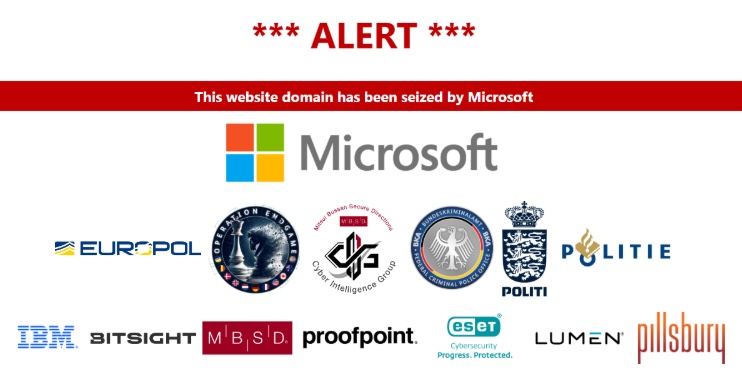


Microsoft and Allies Smash Shared Infrastructure of Amadey and StealC Malware

Microsoft, law enforcement, and several cybersecurity companies have collaborated to take down infrastructure shared by two widely used malware families: Amadey and StealC.

The action, part of the long-running Operation Endgame, involved the use of AI, legal action, and the exploitation of a vulnerability in a malware control panel, and resulted in hundreds of domains and servers being targeted for takedown. 

While many cybercrime operations have been disrupted in recent years as part of Operation Endgame, this one stands out because law enforcement and companies targeted what they described as the “cybercrime assembly line”. 

Making the rounds since 2018, Amadey is a malware-as-a-service loader that gives threat actors access to systems, enabling them to deliver secondary payloads. StealC is an infostealer that has been around since 2023, helping cybercriminals obtain credentials, cryptocurrency wallets, cookies, and other valuable data.

Amadey and StealC have often been used together — the former has enabled hackers to gain access to systems, while the latter has been used to steal information from the breached systems.

AI-powered analysis of the two malware families revealed that they use the same command-and-control (C&C) infrastructure, making it easier for Microsoft and its partners to conduct takedown activities.

Advertisement. Scroll to continue reading.

“This operation marked a shift in strategy: instead of focusing solely on individual threats, Europol, law enforcement and judicial authorities, as well as private industry partners disrupted the entire chain that allows cyberattacks to scale,” said Europol.

More than 25 million unique credentials stolen from over 385,000 systems were seized, and 18,000 compromised computers were identified and secured. Europol said crypto assets valued at more than $47 million were identified and flagged to restrict their use.

Researchers also discovered a vulnerability in the StealC C&C panel that enabled uploading a web shell to the server. While this flaw was exploited to collect data in support of the takedown operation, there is evidence that a StealC affiliate also used it to steal other affiliates’ data.

Microsoft, Europol, ESET, Bitsight, IBM X-Force, Proofpoint, and Japan’s Mitsui Bussan Secure Directions (MBSD) have published blog posts describing the action taken against Amadey and StealC.

The announcement comes shortly after law enforcement and cybersecurity companies worked together to take down the SocGholish botnet. 

Related: Russian Initial Access Broker Behind FortiBleed Campaign

Related: New ‘Mistic’ RAT Opens Door to Several Ransomware Families

Related: CryptoBandits Malware Doubles as a Backdoor, Abuses Tor

https://www.securityweek.com/microsoft-and-allies-smash-shared-infrastructure-of-amadey-and-stealc-malware/


Third DraftKings Hacker Sentenced to 18 Months in Prison

A third man charged for his role in a 2022 hacking attack on the sports and betting website DraftKings has been sentenced to prison, the Justice Department announced on Tuesday.

The DOJ has not named the targeted site, describing it as a fantasy sports and betting website, but its description of the attack matches the 2022 credential-stuffing attack targeting DraftKings. In that attack, hackers accessed more than 60,000 accounts using usernames and passwords obtained from other breaches.

Once they gained access to a DraftKings account, the cybercriminals either withdrew the available funds or sold access to the account on online marketplaces.

The third suspect charged in this case is Nathan Austad, aka Snoopy, who pleaded guilty in December 2025. He has now been sentenced to 18 months in prison and three years of supervised release. He has also been ordered to pay roughly $1.8 million in restitution and forfeiture. 

According to the DOJ, Austad and his accomplices stole approximately $600,000 from 1,600 DraftKings accounts. 

Austad also set up a website to sell compromised accounts, and investigators identified his cryptocurrency accounts, which had roughly $465,000, including funds from his criminal activities. 

Advertisement. Scroll to continue reading.

The other individuals charged for the DraftKings attack are Kamerin Stokes, sentenced to 30 months in prison in April 2026, and Joseph Garrison, sentenced to 18 months in prison in early 2024.

Authorities made public some of the messages exchanged by the three men, indicating they clearly knew they were committing a crime.

“The defendants acknowledged the federal investigation into their conduct while they were committing their crimes, even having the hubris to say the FBI could not do anything about it.  They were wrong,” said Jay Clayton, US Attorney for the Southern District of New York. “Austad’s prison sentence today demonstrates the commitment of the DOJ, the FBI, and all our federal partners to protecting our on-line markets.”

Related: Algerian Man Extradited to US for Running Cybercrime Marketplaces

Related: Russian Initial Access Broker Behind FortiBleed Campaign

Related: Ukrainian Man Pleads Guilty in US to Conti Ransomware Charges

https://www.securityweek.com/third-draftkings-hacker-sentenced-to-18-months-in-prison/


New ‘Mistic’ RAT Opens Door to Several Ransomware Families

An initial access broker (IAB) linked to multiple ransomware families has been using a new remote access trojan (RAT) in recent attacks, Broadcom’s Symantec and Carbon Black threat hunter team reports.

The threat actor, tracked as Woodgnat and KongTuke, and active since at least May 2024, is known to have ties to ransomware groups such as Qilin, Interlock, Rhysida, Akira, 8Base, and Black Basta.

Starting in April 2026, Woodgnat has been deploying the new Backdoor.Mistic RAT against the networks of organizations across multiple industries, including education, insurance, IT, and professional services.

Previously, the threat actor was observed deploying the ModeloRAT in attacks targeting other entities.

“The targeting appears to be opportunistic, with the attackers casting a wide net and then assessing which organizations they could sell access to rather than focusing on a single sector,” Broadcom’s researchers say.

Also tracked as MLTBackdoor, Mistic provides attackers with typical capabilities, including file download and upload, file manipulation, folder creation, and code execution. The attackers can also modify the frequency at which the malware checks for new commands and can instruct it to terminate itself.

Advertisement. Scroll to continue reading.

Woodgnat has been deploying the backdoor as a DLL, executing it via sideloading. In a recent attack, the threat actor also deployed a credential stealer alongside Mistic.

Additional tools observed in the intrusion include Curl, Reg.exe, Net (net.exe), PowerShell, Certutil, and WMIC (Windows Management Instrumentation), for data exfiltration, registry manipulation, network resource management, command execution, reconnaissance, lateral movement, file download, and browser certificate installation.

The IAB is known for distributing malware via compromised WordPress sites and for relying on social engineering to entice users into executing attacker-supplied commands, including the ClickFix, FileFix, and CrashFix techniques.

“In each case the victim is ultimately tricked into running an attacker-supplied PowerShell command. While the initial compromise may be opportunistic, the attackers profile the machines for potential interest to determine their value and if they can sell access to them,” Broadcom’s threat hunter team says.

Since April 2026, the threat actor has also been using helpdesk and IT-support lures delivered via Microsoft Teams to convince victims into executing malicious code.

Related: Russian Initial Access Broker Behind FortiBleed Campaign

Related: Hackers Exploiting Cisco Unified CM Vulnerability

Related: Microsoft Teams Relay Servers Abused in DragonForce Ransomware Attack

Related: Over 1.4 Million Accounts Disrupted in Cybercrime Crackdown

https://www.securityweek.com/new-mistic-rat-opens-door-to-several-ransomware-families/


What the Latest ShinyHunters Breaches Reveal About Modern Cyberattacks

The latest wave of breaches attributed to the ShinyHunters cybercrime collective (e.g., University of Nottingham, DentaQuest, 7-Eleven, Medtronic, and Wynn Resorts), reinforces a hard truth security leaders can no longer ignore: attackers are increasingly bypassing traditional perimeter defenses and targeting identities, authentication workflows, SaaS integrations, and trusted access paths instead of exploiting software vulnerabilities directly.

Over the past several months, ShinyHunters has been linked to attacks involving Salesforce environments, Snowflake customers, SaaS integrations, and identity platforms such as Okta. Researchers and incident responders have consistently observed the same pattern: stolen credentials, compromised OAuth tokens, social engineering, vishing, and abuse of legitimate access privileges.

This is not merely another breach trend. It is evidence that identity has become the primary battleground in enterprise security.

The Evolution of the ShinyHunters Playbook

Historically, attackers focused on exploiting unpatched systems or deploying malware to gain persistence. Today’s identity-centric threat actors operate differently. Instead of “breaking in,” they log in.

Recent investigations into ShinyHunters-related campaigns reveal repeated use of:

Advertisement. Scroll to continue reading.
  • Infostealer-harvested credentials
  • Multi-factor authentication (MFA) fatigue and vishing attacks
  • Compromised SaaS integrations
  • OAuth token abuse
  • Excessive permissions in cloud applications
  • Misconfigured identity and guest-access settings
  • Third-party trust exploitation
  • Help desk impersonation

In the Salesforce Experience Cloud campaign disclosed earlier this year, attackers reportedly exploited overly permissive guest-user configurations to extract CRM data from public-facing portals. Salesforce emphasized that the issue stemmed from identity and access misconfigurations rather than a platform vulnerability.

Similarly, the Snowflake-related attacks associated with ShinyHunters leveraged stolen credentials and third-party integrations rather than weaknesses in Snowflake’s infrastructure itself. Investigators noted that many affected organizations lacked strong MFA enforcement and visibility into abnormal authentication behavior.

The same pattern has appeared across attacks targeting SaaS ecosystems, analytics providers, and cloud-connected applications. Once attackers obtain a valid identity or session token, they can often move laterally and access sensitive data without triggering traditional security controls.

Why Traditional Security Controls Are Failing

These attacks expose a growing gap in many enterprise security architectures.

Traditional tools such as firewalls, endpoint protection, and signature-based detection were designed to identify malicious code or anomalous network activity. But identity-based attacks frequently appear legitimate because attackers use valid credentials, approved APIs, and authorized applications.

To many security systems, a compromised employee account accessing Salesforce from a browser session looks indistinguishable from normal business activity.

That is exactly why identity has become the preferred attack vector.

Modern enterprises now operate in highly distributed environments spanning cloud platforms, SaaS applications, contractors, partners, and remote workforces. Every identity — human or machine — can serve as a gateway for attackers.

Attackers understand this reality better than most organizations do.

Identity Threat Detection Changes the Equation

The shift toward identity-driven attacks requires a corresponding shift in defense strategy.

Identity threat detection and risk mitigation has emerged as a critical capability for organizations seeking to detect and stop attacks that bypass conventional defenses. Unlike point-in-time identity verification, identity threat detection analyzes the full pattern of interactions associated with a credential, as well as activity across other identities and credentials within the environment, to identify indicators of compromise and malicious behavior. Rather than focusing solely on endpoints or network traffic, identity threat detection continuously monitors identity systems, authentication activity, privilege escalation, and access behavior across hybrid environments to detect and mitigate identity-based threats.

This approach enables organizations to identify suspicious activity such as:

  • Impossible travel or anomalous login behavior
  • MFA manipulation attempts
  • Bot-based attacks
  • Deepfake attacks
  • SIM swap
  • OAuth token abuse
  • Privilege escalation
  • Dormant or orphaned accounts being activated
  • Lateral movement across access channels
  • Suspicious authentication patterns tied to social engineering

More importantly, identity threat detection provides context.

Security teams need to understand not only who authenticated, but whether the behavior aligns with expected patterns, what resources were accessed, whether the identity was recently elevated, and whether downstream SaaS applications or integrations create additional risk exposure.

In the case of the ShinyHunters campaigns, many attacks likely could have been disrupted earlier through better detection of identity anomalies, token misuse, or unusual privilege behavior before large-scale data exfiltration occurred.

The Rise of Trust Exploitation

One of the most concerning aspects of recent ShinyHunters operations is the abuse of trusted relationships.

Threat actors increasingly target vendors, integrations, support workflows, and identity providers because compromise at one point can cascade across multiple organizations. Researchers analyzing recent campaigns observed attackers leveraging third-party SaaS providers and integration platforms to gain access into downstream customer environments. This creates a dangerous multiplier effect.

A single compromised identity, contractor account, or OAuth integration can provide attackers with legitimate access to hundreds of connected systems. Traditional network segmentation offers limited protection in these scenarios because trust relationships themselves become the attack path.

Organizations therefore need visibility not only into employee identities, but also into non-human identities, API connections, service accounts, and federated access relationships across their ecosystems.

Security Leaders Must Rethink Identity Protection

The lesson from the latest ShinyHunters breaches is not simply that attackers are becoming more sophisticated. It is that enterprise security strategies must evolve beyond the assumption that authenticated users are inherently trustworthy.

Identity can no longer be treated solely as an access management function. It must become a core security discipline.

That means organizations should prioritize:

  • Continuous identity monitoring
  • Risk-based authentication
  • Strong phishing-resistant MFA
  • Least-privilege access enforcement
  • OAuth and token governance
  • Detection of abnormal identity behavior

Conclusion

The modern attack chain increasingly begins and ends with identity.

Groups like ShinyHunters are demonstrating that attackers do not necessarily need malware or zero-day exploits to cause massive damage. In many cases, all they need is a trusted login, an overlooked permission, or a compromised token.

The organizations that recognize this shift — and invest accordingly in identity threat detection and response — will be far better positioned to stop the next generation of attacks before they become the next headline.

Related: Kodak Admits Data Breach After ShinyHunters Hack Claims

Related: ShinyHunters Claims Council of Europe Hack

Related: University of Nottingham Confirms Breach After Hackers Leak Data

Related: Hackers Leak DentaQuest Information Impacting 2.6 Million

https://www.securityweek.com/what-the-latest-shinyhunters-breaches-reveal-about-modern-cyberattacks/


Miasma: worm nei pacchetti npm di Red Hat, sviluppatori nel mirino

Per secoli si è creduto che le pestilenze viaggiassero nell’aria: un miasma, un alito corrotto che si insinuava nei polmoni senza volto né origine, e contaminava prima ancora di farsi vedere. Un’idea sbagliata sulla medicina, ma un’intuizione perfetta sul contagio.

Chi ha battezzato l’ultima variante del worm Shai-Hulud lo sapeva: i repository che il malware genera per trafugare i dati recano una sola, eloquente descrizione, “Miasma: The Spreading Blight“. Il flagello dilagante. Non un nome scelto a caso, ma un manifesto. Perché è esattamente così che agisce: una corruzione che si respira con la filiera del software, si diffonde a ogni installazione come un fiato malato e si porta via credenziali, ambienti di build e strumenti di sviluppo prima che lo sviluppatore si accorga del contagio.

Attacco supply chain npm, Red Hat conferma l’accaduto

Un nuovo attacco supply chain npm ha colpito i pacchetti pubblicati sotto il namespace ufficiale @redhat-cloud-services
: il 1° giugno 2026 i ricercatori di Wiz Research hanno identificato almeno 32 pacchetti compromessi con una variante del worm Shai-Hulud ribattezzata Miasma, dal nome dei repository di esfiltrazione creati dal malware con la descrizione “Miasma: The Spreading Blight”. I pacchetti coinvolti totalizzano circa 80.000 download settimanali secondo la stima di Wiz, circa 117.000 secondo i conteggi di Aikido ripresi dalla stampa di settore (le stime divergono per metodologia); le versioni compromesse accertate a fine ricognizione sono 96.

Red Hat ha confermato l’accaduto a The Register per bocca di un portavoce: i pacchetti malevoli sono stati rimossi dal registro npm e, secondo l’azienda, erano «strettamente limitati allo sviluppo interno»; al momento «non è stato identificato alcun impatto su ambienti di clienti o partner né sui sistemi di produzione Red Hat». L’indagine è però ancora in corso e Wiz classifica la campagna come minaccia attiva: il quadro va quindi considerato in evoluzione.

Come è avvenuta la compromissione

Il punto di ingresso accertato è l’account GitHub di un dipendente Red Hat. Secondo la ricostruzione di Wiz, l’account compromesso ha inviato commit orfani a tre repository dell’organizzazione RedHatInsights (frontend-components, javascript-clients e platform-frontend-ai-toolkit), aggirando la code review, in due ondate distinte nella stessa giornata.

I commit contenevano un workflow GitHub Actions minimale che si attivava su qualsiasi push: richiedeva un token OIDC con permesso id-token: write
, eseguiva un payload offuscato e pubblicava su npm le versioni avvelenate dei pacchetti, complete di attestazioni di provenienza SLSA formalmente valide. È un dettaglio rilevante: la firma di provenienza, nata proprio per dare garanzie sull’integrità della filiera, è stata prodotta dal flusso di build legittimo e non ha quindi offerto alcuna protezione.

Le versioni compromesse contenevano uno script preinstall che eseguiva automaticamente un file JavaScript pesantemente offuscato al momento dell’installazione del pacchetto, prima ancora che lo sviluppatore ne importasse il codice.

Cosa ruba Miasma e cosa cambia rispetto a Shai-Hulud

Il payload è derivato dal codice di Mini Shai-Hulud, il worm per npm che il gruppo criminale TeamPCP ha reso pubblico nelle settimane scorse. Le analisi convergenti di Wiz, Socket e altri vendor descrivono un ladro di credenziali ad ampio spettro: secret di GitHub Actions, token npm, credenziali cloud, materiale Kubernetes e Vault, chiavi SSH, credenziali Git e altri file sensibili presenti sulla macchina infetta.

I dati raccolti vengono compressi, cifrati ed esfiltrati su un doppio canale: quello primario è una POST HTTPS verso un endpoint mascherato da chiamata all’API di Anthropic (api.anthropic[.]com:443/v1/api, un percorso che non corrisponde all’API reale), un travestimento studiato per confondersi con il normale traffico verso i fornitori AI; in caso di fallimento il malware ripiega sulla Contents API di GitHub, committando i risultati cifrati in repository marcati con la descrizione “Miasma: The Spreading Blight”.

È qui che Miasma si comporta da worm in senso proprio: secondo l’analisi di StepSecurity, i token npm rubati vengono riusati per ripubblicare in autonomia versioni backdoor dei pacchetti a cui l’account vittima ha accesso, sfruttando il parametro bypass_2fa di npm per scavalcare anche l’autenticazione a due fattori. Ogni macchina infetta può così seminare da sola l’ondata successiva, senza ulteriore intervento dell’attaccante.

Due le novità principali rispetto alle ondate precedenti. La prima è l’aggiunta di collector dedicati alle identità cloud di Google Cloud e Microsoft Azure: non più solo furto di secret, ma censimento di tutte le identità a cui la macchina infetta ha accesso, segnale di un interesse crescente per l’accesso diretto agli ambienti cloud. La seconda è la generazione di un payload cifrato unico per ogni infezione, che rende gli indicatori di compromissione basati su hash validi solo per la singola versione di pacchetto e complica il lavoro di rilevamento.

Il malware mostra inoltre una notevole attenzione all’ambiente in cui gira: verifica la presenza di soluzioni di endpoint protection prima di agire, evita l’esecuzione sui sistemi configurati in lingua russa e stabilisce persistenza negli strumenti di sviluppo, iniettando un hook di sessione nella configurazione di Claude Code e un task con avvio automatico all’apertura della cartella nei progetti Visual Studio Code.

Attribuzione incerta

Le tattiche osservate coincidono con quelle di TeamPCP, il gruppo dietro le campagne Shai-Hulud. Proprio perché TeamPCP ha reso open source i propri strumenti, però, tutti i ricercatori coinvolti invitano alla prudenza: la sovrapposizione di tecniche non basta per un’attribuzione definitiva e non si può escludere un imitatore che riutilizza il codice pubblico. Secondo OX Security, citata da The Hacker News, la prima traccia della stringa “Miasma” risale al 29 maggio, indizio di una fase di test precedente all’attacco.

Cosa fare subito

Le organizzazioni che hanno installato una delle versioni compromesse devono assumere la compromissione: isolare gli host coinvolti, rimuovere le versioni malevole e ruotare tutte le credenziali potenzialmente esposte, inclusi token GitHub e npm, chiavi SSH e credenziali cloud. Socket sottolinea che disinstallare il pacchetto o cancellare la cartella node_modules non è una bonifica sufficiente, vista la persistenza negli strumenti di sviluppo: vanno verificati anche i file di configurazione di Claude Code, VS Code e i workflow GitHub. Per le pipeline CI/CD è raccomandata la sospensione delle esecuzioni interessate e l’invalidazione degli artefatti di build prodotti nella finestra di esposizione.

L’episodio si inserisce in un’ondata di attacchi alla supply chain software che negli ultimi due mesi ha toccato progetti come TanStack, Nx Console e migliaia di repository GitHub con la campagna Megalodon, al punto da spingere la statunitense CISA a pubblicare un alert dedicato il 28 maggio. La lezione per chi sviluppa software è ormai consolidata, anche alla luce degli obblighi in arrivo con il Cyber Resilience Act: dependency pinning, allowlist delle dipendenze, generazione di SBOM e monitoraggio degli ambienti di build non sono più buone pratiche opzionali, ma il perimetro minimo di difesa di una catena di fornitura sotto attacco costante.

Fonti

Condividi sui Social Network:

https://www.ictsecuritymagazine.com/notizie/attacco-supply-chain-miasma/


The Zero-Knowledge Threat Actor and the End of Responsible Disclosure

One of the most dangerous outcomes of the rise of AI in cybersecurity is the rise of the zero-knowledge threat actor. A threat actor who has negligible technical expertise but enough malicious intent. This actor can leverage AI, turn limited skills into usable offensive capability via generating malicious code, exploiting vulnerabilities, shaping attack steps and guiding execution.

AI Has Changed the Nature of Attacks

AI has not changed the traditional objectives of cybercrime:  stealing credentials, exploiting vulnerabilities, gaining privileged access, stealing sensitive data, disrupting operations, and impacting business continuity. What has changed is the speed of discovery, the democratization of capability, and the acceleration of attacks.

AI is making hidden software weaknesses easier to find. AI-powered tools are increasing the speed and volume of vulnerability discovery and exploitation, while vulnerability exploitation has surged to become the leading initial access vector for breaches, accounting for 31% of incidents, according to Verizon’s 2026 Data Breach Investigations Report (PDF). AI has also ensured that more people can participate in attacks regardless of expertise, attack preparation times are more compressed, and it is far easier to adapt attack campaigns quickly to cover more targets, environments, and defensive responses.

Zero-Knowledge Actors Have More Scope

AI can help attackers generate malware, create malicious payloads, bypass simple security checks, and convert vague malicious intent into functional code. These capabilities are no longer in the realm of speculation.

Advertisement. Scroll to continue reading.

But as AI is evolving, new risks are entering the chat. AI can now also support target analysis, reconnaissance, vulnerability surfacing, attack-vector selection, social engineering, exploit modification, and the integration of various kill chain aspects through multi-stage orchestration.

This is shifting the capability baseline, with organizations now having to defend against adversaries who may lack deep technical knowledge but can use AI to plan more steps, test more options, and execute attacks that were previously beyond their reach.

While human judgment is still involved in choosing targets, managing infrastructure, and turning access into impact, the threshold of expertise is clearly changing.

Easy Entry Points for Zero-Knowledge Attackers

Large enterprises are targets for attackers, but smaller organizations are better suited to zero-knowledge threat actor attacks. A weak patching culture, limited monitoring tools, a lack of a very large security team, and delayed incident response are among the security gaps that make smaller organizations easy targets. 

These smaller organizations are also part of larger business ecosystems, integral to their supply chains, and function as software providers, managed services partners, logistics providers, and more. For zero-knowledge threat actors, it is natural to see small organizations as initial targets that serve as doorways to a larger organization.

The Shrinking Disclosure Window

‘Zero-day’ refers to a vulnerability that is publicly exploited before a vendor patch exists. Coordinated vulnerability disclosure begins the moment a researcher privately notifies a vendor of an identified flaw. Between that initial notification and public disclosure lies a structured process: validating the vulnerability, assessing its severity, building a patch, coordinating with affected parties,and giving users enough time to apply the patch.  

Different organizations will have different responsible disclosure timelines, but irrespective of these timelines, there is no doubt that zero-knowledge threat actors are putting immense pressure on the disclosure window. These AI-enabled actors can not only discover vulnerabilities quickly but also exploit them faster. The security team, therefore, has to act quickly. The traditional breathing room is disappearing, which, in turn, is affecting responsible disclosure.

Responding to Zero-Knowledge Threat Actors

The first thing you must do to address zero-knowledge threat actors is not take them lightly. In fact, AI support has made them very dangerous and unpredictable. This should be the starting point of your defensive posture:

  • Employee Awareness: Give employees a drill-down security awareness training focusing on AI-enabled phishing messages, impersonation attempts, and social engineering campaigns. Expose employees to realistic simulations of AI-generated phishing attacks, so that they don’t trust even hyper-personalized messages by default.
  • Red Teaming: Your AI systems must be tested against malicious prompts, jailbreaking, and all manner of misuse scenarios.  With attackers getting better at leveraging AI to probe AI systems, testing will tell you whether your AI systems can be manipulated or made to expose sensitive information.
  • End-to-End Visibility: Zero-knowledge threat actors have been known to harness AI to test different attack paths, bring variation in their attacks, and quickly move across users, devices, cloud services, applications, and networks. The use of fragmented security tools means that signals are scattered across different systems, making attacks difficult to detect. An integrated security architecture like SASE is the way forward for monitoring, detecting, and analyzing suspicious activity across the length and breadth of the environment.
  • Faster Patching: Faster vulnerability discovery demands accelerated remediation.  Patching is the underrated front-line defense against zero-knowledge threat actors. Organizations should keep critical systems, exposed applications, and widely used software up to date. Don’t make things easier for threat actors by keeping known weaknesses open.
  • Planned Incident Response: Your security posture should be ready for an attack at any given time. Rehearse incident response with tabletop exercises, clearly lay out escalation paths, and focus on recovery testing. This helps the organization bake resilience into the cybersecurity posture.
  • Security Frameworks: Adopt recognized AI security frameworks to address AI-specific risks surfaces. MITRE ATLAS helps teams map adversarial tactics targeting ML systems. The OWASP Top 10 for LLM Applications is essential if your organization builds or deploys LLM-based tools. Google’s Secure AI Framework (SAIF) provides principles for embedding security into AI development lifecycles.

In Summary

AI has not made every attacker advanced, but it has made low-skill attackers far more capable. For security teams, the answer is not panic; it is sharper visibility, faster action, and practiced response. This will help organizations address zero-knowledge threat actors proactively rather than scrambling to deliver an effective response. 

Learn More at the AI Risk Summit | Ritz-Carlton, Half Moon Bay

https://www.securityweek.com/the-zero-knowledge-threat-actor-and-the-end-of-responsible-disclosure/


Dashlane Brute-Force Attack Leads to Limited Encrypted Vault Downloads

Password management and credential security solutions provider Dashlane revealed on Monday that it has been targeted in a brute-force attack campaign that resulted in a limited number of encrypted vaults being downloaded by the attackers.

According to Dashlane, the attack began on May 31, with attackers attempting to brute-force 2FA to register their own devices on targeted accounts. 

The hackers, the company said, used automated software to “rapidly submit every possible numeric combination to the system, hoping to guess the exact sequence before the short-lived security code expires”.

Registering a device gives the attacker the access required to download the targeted user’s encrypted vault from Dashlane servers.

The attack was quickly detected and the targeted accounts were automatically locked to limit impact. 

However, Dashlane said the attackers did manage to compromise some accounts. The threat actor downloaded a copy of the encrypted vaults belonging to fewer than 20 personal plan users. 

Advertisement. Scroll to continue reading.

“Dashlane vault data cannot be accessed without the Master Password, and our vault encryption ensures that any attempts to gain access to the vault are statistically unlikely to succeed, even over a long period of time,” Dashlane said. 

The company noted that the only way for an attacker to obtain a user’s master password is through phishing.

The locked accounts have since been restored and affected users have been notified.

“There is no evidence that Dashlane’s internal system has been impacted,” Dashlane said.

Related: Carnival Data Breach Exposed 6 Million People

Related: Charter Communications Data Breach Could Impact Nearly 5 Million

Related: 185,000 Likely Impacted by 7-Eleven Data Breach

https://www.securityweek.com/dashlane-brute-force-attack-leads-to-limited-encrypted-vault-downloads/


In Other News: Trump Mobile Data Breach, FIFA World Cup Phishing, CISA Responds to Supply Chain Attacks

SecurityWeek’s weekly cybersecurity news roundup offers a concise overview of important developments that may not receive full standalone coverage but remain relevant to the broader threat landscape.

This curated summary highlights key stories across vulnerability disclosures, emerging attack methods, policy updates, industry reports, and other noteworthy events to help readers maintain a well-rounded awareness of the evolving cybersecurity environment.

Here are this week’s highlights:

Trump Mobile data breach

Phone provider Trump Mobile has confirmed that customers’ names, addresses, email addresses, phone numbers, and other data was exposed to the internet. The company reportedly said a third-party platform provider was responsible for the exposure. 

Russian hackers’ deep reach in Treasury emails

Advertisement. Scroll to continue reading.

Documents presented in a Freedom of Information Act lawsuit filed by Bloomberg News against the US government show that the Russian state-sponsored APT responsible for the 2019-2020 SolarWinds supply chain attack had deep access to Treasury emails. The hackers reportedly focused on only eight email accounts linked to 300 other email addresses. The Treasury had roughly 94,000 people at the time.

VS Code Remote SSH extension vulnerability

A remote code execution (RCE) vulnerability in the Visual Studio Code (VS Code) Remote‑SSH extension could allow attackers to pivot to remote systems, security researcher Suman Kumar Chakraborty warns. The issue exists because, upon initiating a Remote SSH connection, the extension writes a bootstrap shell script to the Temp directory. An attacker with access to the system can modify the script before it is transmitted and executed on the remote server, to deploy a reverse shell. 

UK Visa Portal exposes over 100,000 documents

Immigration portal UK Visa Portal publicly exposed over 100,000 documents of people who applied for a UK visa, TechCrunch reports. Not affiliated with the UK government, the website requires applicants to upload selfies and passports, and to pay a fee for obtaining visas. The exposed files were stored in an AWS S3 bucket and were secured earlier this week.

LinkedIn phishing campaign abuses Adobe Target

Phishers are posing as LinkedIn in a new phishing campaign posing as a business inquiry. The emails contain fake contract attachments masquerading as PDFs. In fact, they are HTML files directing victims to the Adobe Target A/B testing platform. The attackers are abusing Adobe Target to track users and serve them fake login pages to steal their credentials before redirecting them to LinkedIn. 

2026 FIFA World Cup in attackers’ crosshairs

Just as the 2026 FIFA World Cup is about to kick off, Group-IB has discovered over 4,300 fraudulent domains impersonating FIFA, including a sophisticated phishing campaign run by Chinses-speaking hacking group Ghost Stadium. The threat actor has set up over 300 domains, including a pixel-perfect clone of the legitimate FIFA site. The phishers could cause hundreds of millions of dollars in losses.

Veeam, Notepad++, Roundcube patches

Veeam this week resolved two high-severity vulnerabilities in its Backup & Replication product, warning they could lead to privilege escalation and arbitrary file writes. Notepad++ patched three security issues, including two leading to arbitrary code execution. The latest Roudcube security updates fix eight flaws, including unauthenticated SQL injection and arbitrary file delete bugs. 

CISA responds to recent supply chain attacks

The US cybersecurity agency CISA has expanded its KEV catalog with three vulnerabilities describing recent software supply chain attacks. These include Daemon Tools Lite, TanStack, and Nx Console (which led to the 3.800 internal GitHub repositories hack). CISA also issued an alert on the Megalodon and Nx Console attacks, urging organizations to hunt for and remediate potential compromises. NPM invalidated granular access tokens in response to these attacks.

Supply chain attack hits 176 NPM packages

Sonatype warns of a supply chain attack involving 176 malicious NPM packages containing postinstall scripts designed to install information-stealing malware on the victims’ computers. The malware harvests and exfiltrates credentials, system and directory information, environment variables, CI/CD secrets, and other tokens and sensitive information. All malicious packages have the version number 99.99.99.

Contractor jailed for hacking former employer

Maxwell Schultz, 36, of Columbus, Ohio, was sentenced to 24 months in federal prison for hacking into his employer’s network after his contract was terminated in May 2021. Impersonating another contractor, he obtained login credentials, accessed the former employer’s systems, and executed a script that reset roughly 2,500 passwords, locking out employees and contractors and causing more than $862,000 in losses. Schultz pleaded guilty in November 2025.

Related: In Other News: Industrial Router Exploitation, CISA KEV Nomination Form, Gas Station Hacking

Related: In Other News: Big Tech vs Canada Encryption Bill, Cisco’s Free AI Security Spec, Audi App Flaws

https://www.securityweek.com/in-other-news-trump-mobile-data-breach-fifa-world-cup-phishing-cisa-responds-to-supply-chain-attacks/


Charter Communications Data Breach Could Impact Nearly 5 Million

The notorious ShinyHunters extortion group has published data allegedly stolen from the telecoms services provider Charter Communications.

ShinyHunters is known for engaging in voice phishing attacks to gain access to victim organizations’ networks and rapidly exfiltrate data that it then threatens to leak online unless a ransom is paid.

The group lists its victims on a Tor-based leak site, and the data it claims to have been stolen from Charter was made available for download on that portal on Thursday, which suggests that the company did not pay a ransom to prevent its publication.

According to ShinyHunters’ post, the stolen data includes over 42 million customer records, along with customer proprietary network information (CPNI).

The number of potentially affected individuals, however, appears to be only 4.9 million, data breach notification website HaveIBeenPwned says.

Its analysis of the data revealed 4.9 million unique email addresses, along with names, addresses, and phone numbers. The data contains 85,000 records associated with employee accounts, each of which includes a job title.

Advertisement. Scroll to continue reading.

Over the past year, ShinyHunters has claimed numerous high-profile data breaches, mainly involving Salesforce customers. Some of these include Canvas, CarGurus, Carnival, Panera Bread, 7-Eleven, and Grafana.

One of the largest broadband providers in the US, Charter has over 30 million residential and business customers.

“We are aware of the situation, following our security protocols, and are working with appropriate authorities. Only sales tools used to manage current, past, and prospective business customers were impacted; no CPNI or sensitive PI was released by the threat actor,” a Charter spokesperson said, responding to a SecurityWeek inquiry. 

Related: Oncology Institute Discloses Data Breach

Related: 266,000 Affected by Data Breach at Radiology Associates of Richmond

Related: DocketWise Data Breach Impacts 143,000

Related:American Lending Center Data Breach Affects 123,000 Individuals

https://www.securityweek.com/charter-communications-data-breach-could-impact-nearly-5-million/