Attacchi informatici alla sanità, in Italia l’11% sono ransomware

Continua l’annus horribils della sanità. Non solo per la pandemia, ma anche il crimine informatico ha messo a dura prova l’intero settore. Per quanto riguarda il nostro Paese, il 24% delle strutture ha dichiarato di aver subìto attacchi informatici, dei quali l’11% è costituito da ransomware e il 33% da accessi abusivi ai dati.

È quanto emerge dal whitepaper “Capire il rischio cyber- Il nuovo orizzonte in sanità”, realizzato da Sham, società del Gruppo Relyens, in collaborazione con il Dipartimento di Management dell’Università di Torino. Il report – basato su 68 professionisti di strutture distribuite in 14 regioni italiane – analizza la preparazione e la consapevolezza della sanità italiana per far fronte alla minaccia cyber e ciò che emerge é che la minaccia hacker non è sottostimata.

<!-- LARGE RECTANGLE POST - CORPO TESTO

-->

Sanità, cybersecurity e ransomware

Per lo studio il 59% delle strutture percepisce il tema cyber risk in sanità come una priorità che impatta su prestazioni erogate e modelli organizzativi interni. Un ulteriore 31% ha valutato il tema come parzialmente prioritario. Ciononostante sono ancora poco frequenti le misure adottate dalle strutture per prevenire e gestire il rischio cyber: mappature, analisi dei rischi e test di vulnerabilità figurano solo in un terzo del totale.

I professionisti intervistati sono Risk Manager, Responsabili Qualità, Data Protection Officer (DPO), Responsabili della sicurezza informatica (CISO) e dell’Ingegneria Clinica, nonché Referenti della Direzione Sanitaria e Generale. Il 70% delle strutture è appartenente alla sanità pubblica, il 30% al comparto privato, con dimensioni che variano da meno di 250 posti letto a più di 750, rappresentando in maniera omogenea la composizione del sistema sanitario nazionale…

Continua a leggere l’articolo su Cybersecurity Italia, su cui l’articolo è stato originariamente pubblicato.

https://www.key4biz.it/attacchi-informatici-alla-sanita-in-italia-l11-sono-ransomware/367831/


Ukraine arrests ransomware gang in global cybercriminal crackdown

A chainlink fence separates us from fossil fuel tanks.
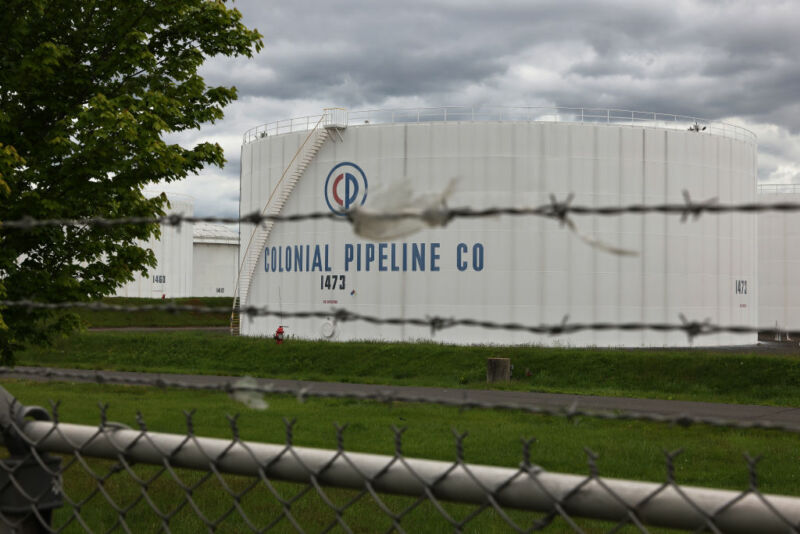
Enlarge / A Colonial Pipeline facility in Woodbridge, New Jersey. Hackers last month disrupted the pipeline supplying petroleum to much of the East Coast.

Ukrainian police have arrested members of a notorious ransomware gang that recently targeted American universities, as pressure mounts on global law enforcement to crack down on cybercriminals.

The Ukraine National Police said in a statement on Wednesday that it had worked with Interpol and the US and South Korean authorities to charge six members of the Ukraine-based Cl0p hacker group, which it claimed had inflicted a half-billion dollars in damages on victims based in the US and South Korea.

The move marks the first time that a national law enforcement agency has carried out mass arrests of a ransomware gang, adding to pressure on other countries to follow suit. Russia, a hub for ransomware gangs, has been blamed for harbouring cybercriminals by failing to prosecute or extradite them.

Cl0P is one of several ransomware cartels that seize a target’s data, demanding a ransom to release it. The group has also increasingly threatened to leak sensitive information online if a target refuses to pay, a tactic known as “double extortion.”

Recent targets have included oil company Shell and international law firm Jones Day, as well as several US universities including Stanford and the University of California. In most cases, the hackers wielded a vulnerability in a file transfer product run by Accellion to compromise their victims.

The arrests come as ransomware has been thrust into the spotlight in recent weeks, following a number of audacious attacks hitting critical infrastructure. Last month, hackers disrupted the Colonial Pipeline supplying petroleum to much of the US East Coast—an attack the White House has attributed to a Russian-based group.

As a result, governments are under increasing pressure to curb the activities of cybercriminals. This week, US President Joe Biden attended a summit in Geneva with Russia’s President Vladimir Putin, in which both parties were expected to discuss the threat of ransomware.

Some experts allege Moscow allows ransomware criminals to operate with impunity in the country on the understanding that hackers will not target Russian-speaking organizations and will share access with the government if called upon to do so. Ahead of the summit, however, both Putin and Biden suggested they were open to exchanging cybercriminals.

As part of its Cl0P takedown, the Ukrainian police on Wednesday said that it had conducted 21 searches in the Kyiv region of homes and cars of those arrested, seizing computer equipment, 5 million Ukrainian hryvnias (around $185,000), and property. Video footage shared by the police showed officers raiding homes in what appeared to be wealthy neighborhoods, and towing luxury cars including Teslas.

The police also said it had “managed to shut down” some of the group’s digital infrastructure.

It is unclear whether those arrested were core members of the group or affiliates. The defendants face eight years in prison, the statement said.

© 2021 The Financial Times Ltd. All rights reserved. Not to be redistributed, copied, or modified in any way.

https://arstechnica.com/?p=1774423


Organizations Warned: STUN Servers Increasingly Abused for DDoS Attacks

Application and network performance management company NETSCOUT warned organizations this week that STUN servers have been increasingly abused for distributed denial-of-service (DDoS) attacks, and there are tens of thousands of servers that could be abused for such attacks by malicious actors.

The Session Traversal Utilities for NAT (STUN) protocol serves as a tool for other protocols in dealing with Network Address Translator (NAT) traversal, helping applications discover the NATs and firewalls that are between them and the Internet. It also enables applications to determine the public IP allocated to them by the NAT.

According to NETSCOUT, threat actors have been adding STUN reflection/amplification to DDoS-for-hire services.

While the amplification rate is only 2.32 to 1, UDP reflection/amplification attacks abusing STUN services can be more difficult to mitigate without overblocking legitimate traffic. NETSCOUT discovered more than 75,000 STUN servers that could be abused for DDoS attacks and the company has seen significant multi-vector attacks that include STUN as a component.

“Observed attack bandwidth (bps) sizes range from ~15 Gbps to ~60 Gbps for single-vector STUN reflection/amplification attacks and up to an aggregate 2 Tbps for multivector attacks that include STUN as a component,” NETSCOUT said.

“The highest observed throughput (pps) for a single-vector STUN reflection/amplification attack is ~6 Mpps and up to an aggregate ~836.3 Mpps for multivector attacks that include STUN as a component,” it added.

The company pointed out that the organizations whose STUN servers are abused in these DDoS attacks can also experience disruptions.

NETSCOUT has provided a series of recommendations for network operators and other organizations on preventing and mitigating DDoS attacks that leverage STUN.

Related: Thousands of Unprotected RDP Servers Can Be Abused for DDoS Attacks

Related: Plex Media Server Abused for DDoS Attacks

Related: Attackers Use CoAP for DDoS Amplification

view counter

Eduard Kovacs (@EduardKovacs) is a contributing editor at SecurityWeek. He worked as a high school IT teacher for two years before starting a career in journalism as Softpedia’s security news reporter. Eduard holds a bachelor’s degree in industrial informatics and a master’s degree in computer techniques applied in electrical engineering.

Previous Columns by Eduard Kovacs:
Tags:

http://feedproxy.google.com/~r/securityweek/~3/lpArT9VCMqE/organizations-warned-stun-servers-increasingly-abused-ddos-attacks


White House Urges Private Companies to Help in Fight Against Ransomware

In an open letter, the White House this week urged corporate executives and business leaders to take the appropriate measures to protect their organizations against ransomware attacks, only days after meat-packaging giant JBS fell victim to such an attack.

The memo, signed by Anne Neuberger, deputy national security advisor for cyber and emerging technology, mentions the recent increase in the number of ransomware incidents, as well as the Biden administration’s response to such attacks targeting government and private sector organizations.

In response to a series of cyberattacks that affected U.S. critical infrastructure both directly and indirectly – including the SolarWinds incident and the Colonial Pipeline attack – President Joe Biden signed an executive order on improving the cyber-defenses of “vital institutions.”

Furthermore, the White House announced sanctions against multiple Russian individuals and companies, and revealed plans to step up its game on fighting ransomware.

“These efforts include disrupting ransomware networks, working with international partners to hold countries that harbor ransomware actors accountable, developing cohesive and consistent policies towards ransom payments and enabling rapid tracing and interdiction of virtual currency proceeds,” Neuberger notes in this week’s memo.

In the letter, Neuberger also underlines that private businesses too have “a critical responsibility to protect against these threats,” listing a series of steps that all organizations can take to improve their resilience against ransomware and other cyber-threats.

These include implementing multi-factor authentication, detection and response, and encryption, keeping data backed up, keeping systems and applications up to date, employing a skilled security team and auditing their work, and implementing network segmentation.

“Ransomware attacks have disrupted organizations around the world, from hospitals across Ireland, Germany and France, to pipelines in the United States and banks in the U.K. The threats are serious and they are increasing. We urge you to take these critical steps to protect your organizations and the American public,” Neuberger continues.

The suggested steps, however, are not new. In fact, they represent common sense when it comes to building an organization’s security and are likely already implemented by most organizations out there. Threat actors, however, relentlessly search for possible weaknesses in defenses and attempt to exploit even the smallest gap they find.

“From what we have observed, ransomware attacks usually start with either tricking an employee into executing a malicious payload, or by exploiting internet-exposed systems. To protect against cyber-attacks it is critical that you train employees against social engineering attacks,” Felipe Duarte, security researcher at Appgate, said in an emailed comment. The adoption of a Zero Trust approach can also help organizations strengthen their security posture, he says.

According to Kunal Anand, chief technology officer at Imperva, in addition to providing guidelines, the federal government should do more to help enterprises and small businesses in the U.S. protect themselves from ransomware and other cyberattacks.

“Instead of focusing on defensive and reactive measures, the Biden administration needs to take a more effective position – aimed at providing tactical support and resources. The U.S. government should be looking at setting up departments that can help the private sector, or an Emergency Cybersecurity Center for broadcasting threats and attacks to everyone,” Anand said.

“At a time when the nation is under siege by ransomware attacks that are disrupting daily life, the U.S. Government needs to ask industry leaders to donate their time – whether it’s helping provide recommendations, setting up resource groups, etc. This should be seen as a patriotic duty,” he added.

Related: Biden Says ‘Looking’ at Russia Retaliation Over Cyberattack

Related: Ransomware Attack Hits Nantucket, Martha’s Vineyard Ferry Service

view counter

Ionut Arghire is an international correspondent for SecurityWeek.

Previous Columns by Ionut Arghire:
Tags:

http://feedproxy.google.com/~r/securityweek/~3/wWJI82N8L6k/white-house-urges-private-companies-help-fight-against-ransomware



Supreme Court Limits Prosecutors’ Use of Anti-Hacking Law

The Supreme Court on Thursday limited prosecutors’ ability to use an anti-hacking law to charge people with computer crimes.

Conservative and liberal justices joined to vote 6-3 to overturn the conviction of a police sergeant who used a work database to run a license plate search in exchange for money. The justices ruled prosecutors had overreached in using the federal Computer Fraud and Abuse Act to charge him. The case is important guidance in narrowing the scope of the law.

Lawyers for the police sergeant had warned when the case was argued in late November that if the court ruled against him it could have sweeping consequences. They argued it could make a federal crime out of using a computer for virtually any unauthorized purpose, from “checking sports scores at work to inflating one’s height on a dating website.”

The court agreed, rejecting the arguments of former President Donald Trump’s administration for a broad reading of the statute. Trump’s three appointees to the court joined the three liberals to rule for the police sergeant. Justice Amy Coney Barrett, Trump’s most recent appointee, wrote for the majority that the government’s interpretation of the law “would attach criminal penalties to a breathtaking amount of commonplace computer activity.” She said if the government’s interpretation of the law were correct then “millions of otherwise law-abiding citizens are criminals.”

“Employers commonly state that computers and electronic devices can be used only for business purposes. So on the Government’s reading of the statute, an employee who sends a personal e-mail or reads the news using her work computer has violated” the law, she wrote.

The Computer Fraud and Abuse Act became law in 1986 and was a response by Congress to a growing need to address computer crimes. It imposes criminal liability on anyone who “intentionally accesses a computer without authorization or exceeds authorized access.”

A majority of the justices concluded that the law “does not cover those who … have improper motives for obtaining information that is otherwise available to them.”

In a dissent, Justice Clarence Thomas said that an “ordinary reader of the English language” would have concluded that the police sergeant in the case exceeded his “authorized access.” And he called the majority’s interpretation of the law “contrary to the plain meaning of the text.” He was joined by fellow conservatives Chief Justice John Roberts and Justice Samuel Alito.

The case in which the justices ruled involved Nathan Van Buren, a police sergeant in Cumming, Georgia. As part of his job, he had access to a law enforcement database of license plate and vehicle registration information. As part of an FBI sting operation Van Buren was asked to conduct a license plate search in exchange for money. After he ran the search, prosecutors charged him with fraud and with violating the Computer Fraud and Abuse Act.

Van Buren was convicted on both counts and sentenced to 18 months in prison. He argued the Computer Fraud and Abuse Act didn’t apply because he accessed a database that he was authorized to access.

Van Buren’s lawyer, Jeffrey Fisher, wrote in an email: “We’re very pleased with the Court’s opinion and are glad that the CFAA is now restricted to its proper reach.” A spokeswoman for the Department of Justice did not immediately respond to an email requesting comment.

The case is Van Buren v. United States, 19-783.

Related: Inside the Legislative and Regulatory Minefield Confronting Cybersecurity Researchers

Related: Countermeasure: Hack the Hacker?

view counter

Previous Columns by Associated Press:
Tags:

http://feedproxy.google.com/~r/securityweek/~3/GW9tQeFvKx8/supreme-court-limits-prosecutors-use-anti-hacking-law


Nigerian Arrested in US for Hacking Payroll Services Company

A Nigerian national was arrested recently in the United States on charges related to hacking into user accounts at a payroll processing company, to steal payroll deposits.

The man, Charles Onus, 34, who was arrested in San Francisco on April 14, is accused of participating in a scheme that resulted in the compromise of approximately 5,500 user accounts at an unnamed human resources and payroll services company in the U.S.

In 2017 and 2018, Onus allegedly employed a credential stuffing attack to gain unauthorized access to user accounts at the targeted company.

According to the indictment, the unauthorized access allowed the man to divert roughly $800,000 in payroll funds to prepaid debit cards, including some he controlled.

Onus was charged with two counts of computer fraud, one count of receipt of stolen money, and one count of wire fraud, which carry maximum sentences between five and twenty years in prison, as well as one count of aggravated identity theft, which carries a mandatory sentence of two years in prison (served consecutively to any other sentence imposed).

“Charles Onus allegedly participated in a scheme that stole nearly $1 million by hacking into a payroll processing company’s system to access user accounts and divert payroll to prepaid debit cards he controlled. As alleged, Onus did this as effectively as someone who commits bank burglary, but with no need for a blowtorch or bolt-cutters,” Manhattan U.S. Attorney Audrey Strauss said.

Related: US Charges Swiss ‘Hacktivist’ for Data Theft and Leaks

Related: U.S. Charges North Korean Hackers Over $1.3 Billion Bank Heists

Related: Two Romanians Arrested for Running Malware Encryption Services

view counter

Ionut Arghire is an international correspondent for SecurityWeek.

Previous Columns by Ionut Arghire:
Tags:

http://feedproxy.google.com/~r/securityweek/~3/i5uJJMgP8QA/nigerian-arrested-us-hacking-payroll-services-company


Two Carbanak Gang Members Sentenced to 8 Years in Prison

Two members of the notorious Carbanak cybergang were sentenced to 8 years in prison, Kazakhstani authorities announced this week.

While they did not reveal the names of the sentenced individuals, the Kazakh authorities did say that they were accused of stealing roughly $4.7 million from two banks in the country between 2016 and 2017, as well as of attempting to steal $18.5 million more.

The stolen funds were transferred to 250 payment cards that were then distributed for cash out at ATMs across Europe, including in Belgium, the Czech Republic, Estonia, France, Germany, the Netherlands, Russia, Spain, and Switzerland.

“The rest of the members of this criminal organization have been identified and are on the international wanted list,” a translation of the sentencing announcement reads.

Tracked as Carbanak, Anunak and Cobalt, the gang evolved its malware and moved to more sophisticated attacks around 2016, employing a custom version of the Cobalt Strike pen testing tool.

[ READ: Historical Breadcrumbs Link Magecart 5 to Carbanak Group ]

Employing spear-phishing emails, the threat actors targeted bank employees with their malware, which provided them with access to a victim institution’s network, including the servers that controlled automated teller machines (ATMs).

Using this unauthorized access, the attackers would instruct ATMs to dispense cash at specific times, when money mules were present to collect the money. The hackers also transferred funds to bank accounts they controlled, and even modified account balances so they could withdraw large amounts of cash.

Working with the Russian and Moldovan mafia, the hackers often laundered the proceeds using Bitcoins. More than100 financial organizations in 40 countries were targeted, with total losses estimated to exceed €1 billion ($1.24 billion).

The mastermind behind the operation, a Ukrainian national referred to as “Denis K,” was arrested in Spain in 2018. Other members of the gang were reportedly Russian and Ukrainian nationals.

Related: Carbanak Source Code Discovered on VirusTotal

Related: “Cobalt” Hackers Use Google App Engine in Recent Attacks

view counter

Ionut Arghire is an international correspondent for SecurityWeek.

Previous Columns by Ionut Arghire:
Tags:

http://feedproxy.google.com/~r/securityweek/~3/KQQa1OxUnPI/two-carbanak-gang-members-sentenced-8-years-prison


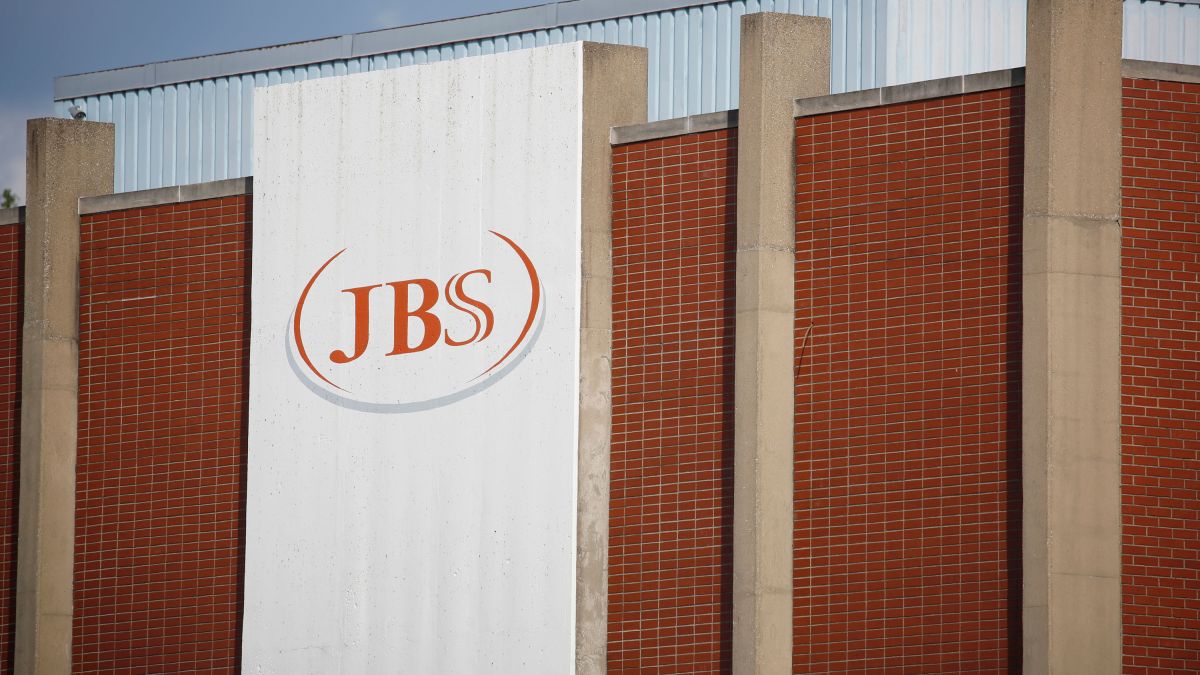
Attacco informatico alla multinazionale JBS, in Australia produzione ferma e dipendenti a casa

La filiale statunitense del colosso agroalimentare brasiliano JBS, uno dei leader mondiali nel settore della carne, ha annunciato ieri sera di essere stata vittima di un “attacco informatico organizzato”.

“JBS Usa ha scoperto di essere stata l’obiettivo di un attacco organizzato alla sicurezza informatica che ha colpito molti dei server su cui si basa il suo sistema informatico in Nord America e Australia”, ha affermato la società in una nota senza specificare la natura di tale attacco.

<!-- LARGE RECTANGLE POST - CORPO TESTO

-->

“Tutti i sistemi interessati sono stati fermati e le autorità avvertite, ha affermato Jbs Usa aggiungendo che i suoi sistemi di backup non sono stati interessati dall’accaduto. “In questa fase, l’azienda non è a conoscenza di alcun uso improprio dei dati relativi ai propri clienti, fornitori o dipendenti derivante da questa situazione”, ha aggiunto Jbs Usa avvertendo tuttavia che le transazioni con i propri clienti e fornitori potrebbero essere “rallentate”.

JBS, specializzata in prodotti di manzo, pollo e maiale, è una delle più grandi aziende alimentari al mondo. Oltre che in Brasile e negli altri Paesi dell’America Latina, è presente in Stati Uniti, Canada, Australia, Nuova Zelanda e Regno Unito.

In Australia produzione ferma e dipendenti a casa. Il ministro Littleproud: “ci vorranno giorni affinché la produzione riprenda”

In Australia la situazione è critica. In una dichiarazione all’AFP il ministro dell’agricoltura australiano David Littleproud ha affermato di essere “il governo australiano e la polizia federale stanno lavorando con JBS per risolvere il problema e trovare i responsabili dell’attacco. Ci vorranno giorni affinché la produzione riprenda”.

Secondo un rappresentante sindacale intervistato dall’Associated France Presse (AFP), le strutture australiane dell’azienda, paralizzate dall’attacco, hanno lasciato 10mila lavoratori a casa.

L’attacco informatico alla multinazionale, con la conseguente chiusura della produzione, potrebbe far aumentare i prezzi nella carne in Australia e in Nord America come si è visto recentemente con l’aumento del prezzo della benzina negli Usa in seguito l’hack del Colonial Pipeline.

Colonial Pipeline: il governo degli Stati Uniti prende provvedimenti

L’hack arriva meno di un mese dopo che un grave attacco informatico ha bloccato la rete Colonial Pipeline, l’oleodotto che trasporta circa il 45% del carburante consumato sulla costa orientale degli Stati Uniti.

Le vulnerabilità informatiche degli oleodotti statunitensi hanno portato il governo federale la scorsa settimana a imporre per la prima volta requisiti di sicurezza informatica agli oleodotti.

Le nuove regole, imposte dal Department of Homeland Security, richiedono agli operatori delle condutture di designare un coordinatore della sicurezza informatica che deve essere disponibile in ogni momento e di segnalare gli incidenti informatici alla Cybersecurity and Infrastructure Security Agency.

https://www.key4biz.it/attacco-informatico-alla-multinazionale-jbs-in-australia-produzione-ferma-e-dipendenti-a-casa/362868/


Swedish Public Health Agency Says Disease Database Targeted in Cyberattacks

The Swedish Public Health Agency (Folkhälsomyndigheten) is currently investigating several attempts to hack into SmiNet, a database that stores reports of infectious diseases, including COVID-19 cases.

SmiNet was shut down on Thursday, after the agency identified several attempts to gain unauthorized access to the database, but it was restored by Friday night.

On Thursday, the Public Health Agency announced that it had shut down the database to prevent hacking attempts, and immediately launched an investigation into the matter. The incident was also reported to the relevant authorities.

“Work is underway to investigate as quickly as possible whether anyone may have accessed sensitive personal data from the database, as well as sort out and rectify any deficiencies,” a translation of the agency’s announcement reads.

Initial evidence suggests that the attackers were not able to access any of the information contained within the database, but the investigation continues.

“It is still unclear whether unauthorized persons may have accessed sensitive information,” the agency said.

In a follow-up announcement on Saturday, the agency said it had brought the SmiNet database back online with some adjustments, which involve “certain restrictions on data reporting.”

Related: Meat-packing Giant JBS USA Shuts Down Systems Following Cyberattack

Related: Belgian Government, Parliament, Colleges Hit by Cyberattack

Related: SolarWinds Shares More Information on Cyberattack Impact, Initial Access Vector

Related: Molson Coors Cyberattack, Storms Could Cost Company $140 Million

view counter

Ionut Arghire is an international correspondent for SecurityWeek.

Previous Columns by Ionut Arghire:
Tags:

http://feedproxy.google.com/~r/securityweek/~3/XLW5ZlUXDk8/swedish-public-health-agency-says-disease-database-targeted-cyberattacks


Meat-packing Giant JBS USA Shuts Down Systems Following Cyberattack

JBS USA, the US subsidiary of the world’s largest meat processing company, said Monday that some operations were shut down following a cyberattack that affected its North American and Australian IT network.

Headquartered in Greeley, Colorado, JBS USA (JBS Foods) is a global food company wholly owned by Brazil-based JBS S.A., the largest meat processing firm in the world. In addition to the United States, JBS has operations in Australia, Canada, Mexico, New Zealand, and Europe.

In a statement, the company announced that an “organized cybersecurity attack” identified on Sunday impacted servers used in support of its North American and Australian IT systems.

The cyberattack does threaten the food supply chain and could lead to shorateds and price increases.

“The company took immediate action, suspending all affected systems, notifying authorities and activating the company’s global network of IT professionals and third-party experts to resolve the situation,” JBS USA said.

[ Also Read: Cybersecurity Threats to the Food Supply Chain ]

AFP reported that the company’s Australian facilities have been “paralysed by the attack,” with up to 10,000 meat workers being sent home without pay.

The company claimed that its backup servers were not impacted by the incident and that it has already started the recovery operations, to have systems back online as soon as possible.

JBS USA also notes that it hasn’t found evidence that customer, employee, or supplier data might have been compromised or misused during the attack, but warns of possible delays in transactions.

“Resolution of the incident will take time, which may delay certain transactions with customers and suppliers,” the company said.

JBS has not shared any technical details regarding the incident, but it may be a ransomware attack.

SecurityWeek has contacted JBS for clarifications on the incident, but hasn’t received a reply yet.

Related: Cybersecurity Threats to the Food Supply Chain

Related: Cyberattack Forces Shutdown of Major U.S. Pipeline

Related: Insurer CNA Says Cyberattack Caused Network Disruption

Related: Cyberattack Forces Brewery Shutdown at Molson Coors

Related: Boat Building Giant Beneteau Says Cyberattack Disrupted Production

view counter

Ionut Arghire is an international correspondent for SecurityWeek.

Previous Columns by Ionut Arghire:
Tags:

http://feedproxy.google.com/~r/securityweek/~3/E9_eyDv9V1w/meat-packing-giant-jbs-usa-shuts-down-systems-following-cyberattack