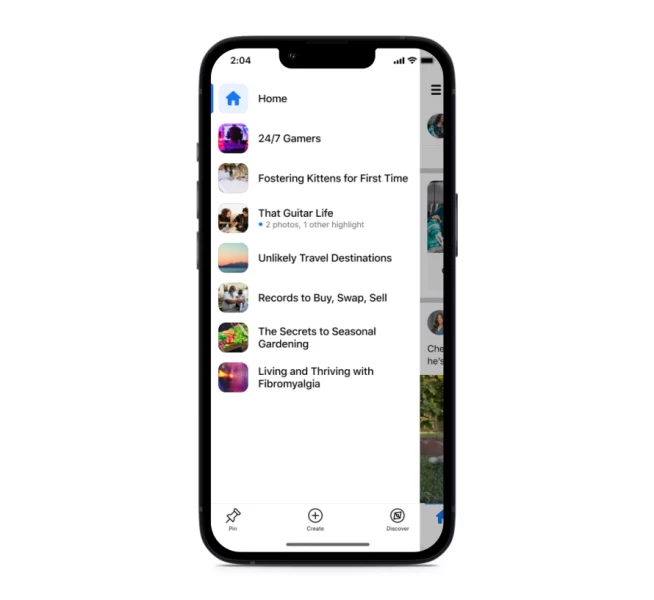
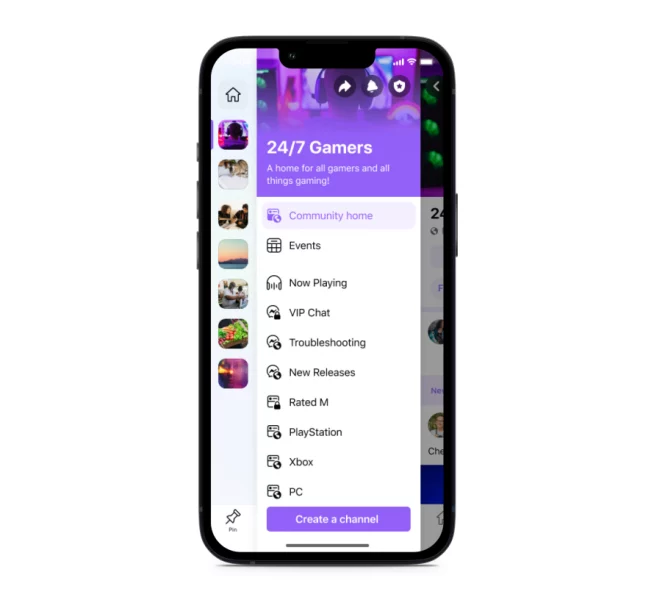
Facebook is testing a new sidebar that helps users find groups quicker and easier. The sidebar lists your groups and their latest activity like posts or chats. You can also pin your favorite groups so you can access them quicker, and even create your own.
The case for groups. This reorganization doesn’t change the functionality of groups or how they work, but reorganizes them within the Facebook platform and offers a few new features.
Facebook groups have been around since 2010. Groups are used to get users with similar interests and hobbies together, in a place where they can collaborate, communicate, sell, or meet in person.
How groups are organized. In the new sidebar, you’ll be able to easily see a menu that takes you to links for events, shops, chats or other channels within the group.
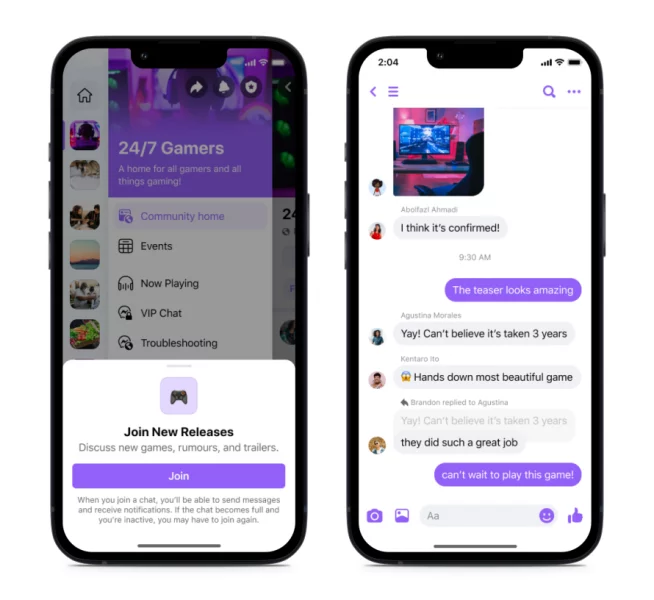
Within their groups, admins can create individual channels to allow smaller, more casual interactions. This is meant to drive deeper discussions and organize the group around sub-topics of interests and demographics.
New group features
Community chat. Message and collaborate with other group members in private, smaller channels based on a sub-topic or interest.
Community audio. This allows admins and members to hold audio conversations in real-time.
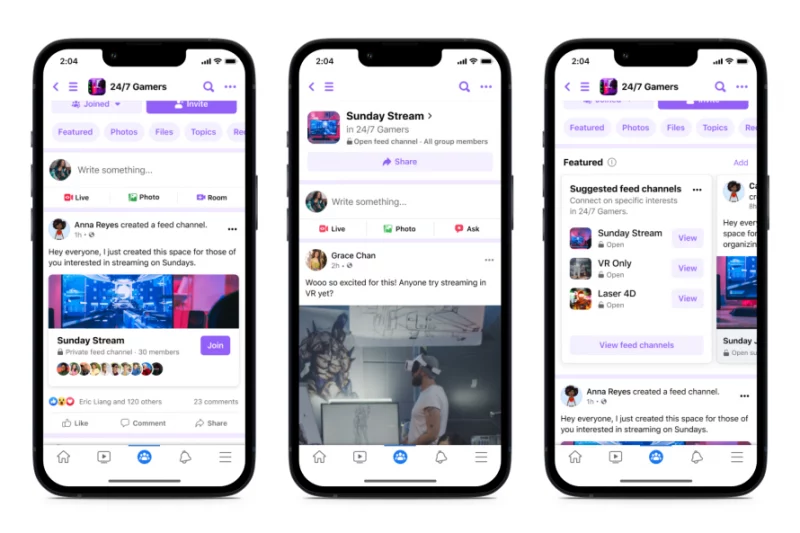
Community feed. Just like with a normal Facebook feed, the community feeds allow you to browse activity within your selected channel.
Launch date TBD. There is no information on when these new features will be launched to the public. You can read Facebook’s announcement here.
Why we care. Businesses with a large Facebook presence can take advantage of these new features and create groups around their product or service. There’s no guarantee they’ll result in any measurable success, but creating a community around their brand is one way to keep people engaged.
New on Search Engine Land
About The Author
Nicole Farley is an editor for Search Engine Land covering all things PPC. In addition to being a Marine Corps veteran, she has an extensive background in digital marketing, an MBA and a penchant for true crime, podcasts, travel, and snacks.
Meta has unveiled a new community feedback policy in the U.S.
It targets fake reviews that appear on its Ratings and Review or Question and Answers features on Marketplace and Shops.
Why Meta created the policy. Meta said it wants reviews to be based on real purchase experiences from real customers and “to keep irrelevant, fraudulent and offensive feedback of our platforms.”
The policy. Meta has put together a list of five things that could get reviews flagged:
Manipulation. Community Feedback must not be used to misrepresent, deceive, defraud or exploit others for a financial or personal benefit.
Incentivization. Community Feedback must not be directly or indirectly incentivized, unless otherwise disclosed compliant with Meta’s policies on Branded Content. We define incentivization as a business partner or seller providing something of value, such as a monetary payment, free gift, or refund, in exchange for Community Feedback ratings, reviews, or answers.
Irrelevance. Community Feedback must be based on a reviewer’s direct experience with a product, business, or seller. Additionally, the feedback must be related to the intended use of the product and/or business.
Graphic or Inappropriate Content. Community Feedback must not include any content or media that is excessively graphic, inflammatory, violent, discriminatory, or threatening to any person or group.
Spam. Community Feedback must comply with Meta’s policies on Spam. Including, but not limited to engagement bating, high frequency content posting, sharing, or promoting is not allowed.
How Meta will enforce the policy. Meta said it will use a mix of automation and human reviewers. And based on this passage from their announcement, it sounds like we can all expect some false positives – and more “Facebook jail” sentences – as Meta tries to figure this out.
“When we launch a new policy, it can take time for the various parts of our enforcement mechanisms to learn how to correctly and consistently enforce the new standard. But as we gather new data, our machine learning models, automated technology and human reviewers will improve in their ability to ensure our Community Feedback tools—especially reviews—maintain their integrity, relevance and authenticity.”
Review sentiment shouldn’t impact reviews. “Our Community Feedback Policy is intended to provide equal voice for all viewpoints that comply with Meta policies, including the full range of positive, negative and neutral feedback. As such, we treat all positive and negative feedback equally. We do not subject negative feedback to greater scrutiny when reviewed for policy violations nor do we alter feedback in any way before publishing,” according to Meta.
Fake Facebook reviews are an ongoing issue. It’s still cheap to get fake reviews, as one consumer group proved as recently as October.
And Meta has been slow to take action.
In April 2021, Facebook removed 16,000 groups dealing in fake and misleading reviews, but only after they were identified by the UK’s competition regulator, the Competition and Markets Authority (CMA)
Facebook agreed to make changes to its systems:
Suspend or ban users who repeatedly create Facebook groups and Instagram profiles that promote, encourage or facilitate fake and misleading reviews.
Introduce new automated processes to improve the detection and removal of fake and misleading reviews.
Make it harder for people to use Facebook’s search tools to find fake and misleading review groups and profiles on Facebook and Instagram.
Create dedicated processes to ensure these changes are working effectively.
In March, Meta announced a lawsuit against one person who had provided a fake Facebook engagement service.
Why we care.Fake reviews have long been an ongoing issue on all platforms, not just Meta. If you rely on, or have relied on fake reviews, tread carefully. Weigh your long-term success vs. some artificially inflated reviews. And even if all your reviews are legit, be warned: Meta’s review processes are heavily flawed.
Suggested reading
New on Search Engine Land
About The Author
Danny Goodwin is Managing Editor of Search Engine Land & SMX. In addition to writing daily about SEO, PPC, and more for Search Engine Land, Goodwin also manages Search Engine Land’s roster of subject-matter experts. He also helps program our conference series, SMX – Search Marketing Expo. Prior to joining Search Engine Land, Goodwin was Executive Editor at Search Engine Journal, where he led editorial initiatives for the brand. He also was an editor at Search Engine Watch. He has spoken at many major search conferences and virtual events, and has been sourced for his expertise by a wide range of publications and podcasts.
HUD settlement changes the way Meta delivers housing ads
Meta has just announced a settlement with the US Department of Housing and Urban Development (HUD) that will change the way they deliver housing ads to people in the US.
The new method is called the “variance reduction system” and is designed to make sure the audience that sees the housing ads more accurately reflects the eligible target market for that ad.
In 2018 a lawsuit was filed against meta by the HUD alleging that Facebook violated the Fair Housing Act based on target options and delivery processes for housing ads.
Meta and HUD collaboration. The announcement comes after a year-long collaboration between Meta and HUD to develop processes for machine learning technology to ensure the age, gender, and estimated race or ethnicity of a certain population seeing ads.
Advertisers running housing ads currently have a limited number of targeting options to choose from while setting up campaigns – including age, gender, and zip codes. The new method builds on that same foundation in an effort to make progress toward a more equitable distribution of ads.
Saying goodbye to Special Ad Audiences. In 2019, Facebook introduced Special Ad Audiences as an alternative to Lookalike audiences for housing, employment, and credit cards. That feature is going away as Meta looks to expand the field of fairness in machine learning.
What Meta says. In their announcement, Vice President of Civil Rights and Deputy General Counsel Roy L. Austin Jr, said “We’re making this change in part to address feedback we’ve heard from civil rights groups, policymakers and regulators about how our ad system delivers certain categories of personalized ads, especially when it comes to fairness. So while HUD raised concerns about personalized housing ads specifically, we also plan to use this method for ads related to employment and credit. Discrimination in housing, employment and credit is a deep-rooted problem with a long history in the US, and we are committed to broadening opportunities for marginalized communities in these spaces and others.”
Read the announcement. You can read the full announcement here.
Why we care. Facebook has encountered many issues related to targeting in recent years. But Meta’s response to the lawsuit and its upcoming changes are a step in the right direction to preventing discrimination in housing.
New on Search Engine Land
About The Author
Nicole Farley is an editor for Search Engine Land covering all things PPC. In addition to being a Marine Corps veteran, she has an extensive background in digital marketing, an MBA and a penchant for true crime, podcasts, travel, and snacks.
Meta introducing new monetization tools for creators on Facebook and Instagram
Meta CEO Mark Zuckerberg announced today they’re launching new ways for creators to make money on Facebook and Instagram. The updates and tools “will help creators build for the metaverse” Zuckerberg says.
There are six new updates that Zuckerberg shared in a Facebook thread.
More money for creators
No revenue sharing on events, subscriptions, badges, and bulletins until 2024. In a previous Facebook thread, Zuckerberg said it would do this until 2023, but now that commitment has been extended. In the same thread, Zuckerberg calls out that the proposed 30% take would be less than Apple and other platforms.
Interoperable Subscriptions
Lets creators give their paying subscribers on other platforms access to subscriber-only Facebook Groups.
Facebook Stars
Opening up to all eligible creators so more can start earning money from Reels, live, or VOD videos.
Monetizing Reels
Opening the Reels Play Bonus program to more creators on Facebook, and letting creators post their Instagram Reels to Facebook.
Creator Marketplace
Meta is testing a set place on Instagram where creators can get discovered and paid for their content, and brands can share new partnership opportunities.
Digital Collectibles
In May Instagram head Adam Mosseri announced that the platform is going to start testing NFTs with select creators in the US. Today Zuckerberg said the test will be expanded the test so more creators around the world can display their NFTs.
This feature will also be available on Facebook in the near future to select US-based creators. Testing will also begin in Instagram Stories with SparkAR soon.
What Meta says. It’s not clear on when Meta will launch these new tools. But you can read Zuckerberg’s full Facebook thread here.
Why we care. Following the announcement of new Pinterest creator tools, Meta’s expansion of features for creators also seems to mimic TikTok’s Creator Marketplace. The development of these tools is likely a way for Meta to compete and lure more creators to its platforms.
New on Search Engine Land
About The Author
Nicole Farley is an editor for Search Engine Land covering all things PPC. In addition to being a Marine Corps veteran, she has an extensive background in digital marketing, an MBA and a penchant for true crime, podcasts, travel, and snacks.
Facebook is receiving sensitive medical information from hospital websites
Aurich Lawson | Getty Images
A tracking tool installed on many hospitals’ websites has been collecting patients’ sensitive health information—including details about their medical conditions, prescriptions, and doctor’s appointments—and sending it to Facebook.
The Markup tested the websites of Newsweek’s top 100 hospitals in America. On 33 of them we found the tracker, called the Meta Pixel, sending Facebook a packet of data whenever a person clicked a button to schedule a doctor’s appointment. The data is connected to an IP address—an identifier that’s like a computer’s mailing address and can generally be linked to a specific individual or household—creating an intimate receipt of the appointment request for Facebook.
On the website of University Hospitals Cleveland Medical Center, for example, clicking the “Schedule Online” button on a doctor’s page prompted the Meta Pixel to send Facebook the text of the button, the doctor’s name, and the search term we used to find her: “pregnancy termination.”
Clicking the “Schedule Online Now” button for a doctor on the website of Froedtert Hospital, in Wisconsin, prompted the Meta Pixel to send Facebook the text of the button, the doctor’s name, and the condition we selected from a dropdown menu: “Alzheimer’s.”
The Markup also found the Meta Pixel installed inside the password-protected patient portals of seven health systems. On five of those systems’ pages, we documented the pixel sending Facebook data about real patients who volunteered to participate in the Pixel Hunt project, a collaboration between The Markup and Mozilla Rally. The project is a crowd-sourced undertaking in which anyone can install Mozilla’s Rally browser add-on in order to send The Markup data on the Meta Pixel as it appears on sites that they visit. The data sent to hospitals included the names of patients’ medications, descriptions of their allergic reactions, and details about their upcoming doctor’s appointments.
Former regulators, health data security experts, and privacy advocates who reviewed The Markup’s findings said the hospitals in question may have violated the federal Health Insurance Portability and Accountability Act (HIPAA). The law prohibits covered entities like hospitals from sharing personally identifiable health information with third parties like Facebook, except when an individual has expressly consented in advance or under certain contracts.
Neither the hospitals nor Meta said they had such contracts in place, and The Markup found no evidence that the hospitals or Meta were otherwise obtaining patients’ express consent.
“I am deeply troubled by what [the hospitals] are doing with the capture of their data and the sharing of it,” said David Holtzman, a health privacy consultant who previously served as a senior privacy adviser in the U.S. Department of Health and Human Services’ Office for Civil Rights, which enforces HIPAA. “I cannot say [sharing this data] is for certain a HIPAA violation. It is quite likely a HIPAA violation.”
University Hospitals Cleveland Medical Center spokesperson George Stamatis did not respond to The Markup’s questions but said in a brief statement that the hospital “comport[s] with all applicable federal and state laws and regulatory requirements.”
After reviewing The Markup’s findings, Froedtert Hospital removed the Meta Pixel from its website “out of an abundance of caution,” Steve Schooff, a spokesperson for the hospital, wrote in a statement.
As of June 15, six other hospitals had also removed pixels from their appointment booking pages and at least five of the seven health systems that had Meta Pixels installed in their patient portals had removed those pixels.
The 33 hospitals The Markup found sending patient appointment details to Facebook collectively reported more than 26 million patient admissions and outpatient visits in 2020, according to the most recent data available from the American Hospital Association. Our investigation was limited to just over 100 hospitals; the data sharing likely affects many more patients and institutions than we identified.
Facebook itself is not subject to HIPAA, but the experts interviewed for this story expressed concerns about how the advertising giant might use the personal health data it’s collecting for its own profit.
“This is an extreme example of exactly how far the tentacles of Big Tech reach into what we think of as a protected data space,” said Nicholson Price, a University of Michigan law professor who studies big data and health care. “I think this is creepy, problematic, and potentially illegal” from the hospitals’ point of view.
The Markup was unable to determine whether Facebook used the data to target advertisements, train its recommendation algorithms, or profit in other ways.
https://arstechnica.com/?p=1861234
Search marketers agree: automation the least favorite part of PPC
Whether you love it or hate it, PPC is a part of digital marketing that just isn’t going away any time soon. I’ve been working in PPC for over 10 years and I’ve seen it all. ETA’s, RSA’s, cost-per-touch? (looking at you, Apple), broad match modifiers (RIP), and attribution to name just a few of the most recent changes.
Earlier this month we asked you “What’s your least favorite part of PPC?”
We received an overwhelming number of answers ranging in everything from Google support to agencies (no offense taken), to clients with unrealistic expectations. But one answer stuck out: Google automation.
Let’s dive in.
Automation can be your best friend or a nightmare. Learning how to navigate and find a balance between machine learning and manual management has been on a lot of marketers’ minds lately. (Did you catch Brad Geddes keynote on day 2 of SMX Advanced?)
Here’s what you said:
“Google’s movement toward AI & machine learning which is ultimately taking away decision-making and control away from advertisers. While it may make sense for some advertisers to have more automation, for others who have the desire, knowledge, and resources there’s a strong case to continue with manual orchestration and intervention of accounts. Studies we’ve performed have already shown less desirable results with the match-type updates and introduction of RSAs. It truly feels as though these initiatives by Google are driven by their agenda to increase advertiser spending.”
“Constantly having control of what we’re doing taken away through automation.”
“Everything becoming more automated, broad targeting, less insight in data and overall less control over your campaigns.”
“Gradual loss of control over targeting over the years. Search engines introducing changes that will clearly harm performance but selling them to advertisers as “upgrades.”
“Giving all control to Google with Smart bidding, dynamic ads, and lack of reporting while also seeing prices increase year over year!”
“Google forcing automation on those of us that don’t want it.”
“My biggest frustration is consistent pressure to relinquish control of performance to the platforms by adding automation features and broadening our targeting.
“I believe in algorithms I do. But the idea that we should start new campaigns with broad match keywords, on an automated bidding strategy, with ad copy made up by a robot and just trust it will work is silly and demonstrably false based on even the limited amount of search term data we get. It makes it really hard to trust anything Google puts out, and especially difficult to trust the reps who are pretty obviously bonused based on acceptance rates of automation features. Our job is to feed the system data, make sure it’s the right data, then from there allow the algorithms to uncover additional value we can’t see, based on what we tell it is valuable to us.”
“Automated bidding is all or nothing – I want to turn off certain targeting and use automated bidding at the same time. But I can’t and SA360 hasn’t learned when a targeting option truly performs terribly in my account. I know when that is and I should be able to turn off devices or select dayparting/DOW targeting and have it work from there instead of having to switch to manual bidding.”
“These days my least favorite part of PPC is the forced automation. It is designed for high volume, particularly e-commerce, accounts and it just does not work the same way for low conversion volume accounts. It is really frustrating to have fewer and fewer options available to manage these types of accounts successfully. The reduced access to data that is part of automation is also frustrating. Platforms are showing us less and expecting us to “just trust the machine learning”. Well, I’ve seen the query reports (with the data we can still see!) and I don’t trust the machine learning a whole lot based on what I see there.”
“The constant push for automation by Google and Bing reps. I get it, it’s their job to grow revenue for Google and Microsoft. We’ve used automated bidding, and it works for some products…until it starts eating away at itself and we have to go back to manual bidding to fix performance.”
“Google forcing their automation on every account. Some of it is good, but others just don’t work in certain circumstances and is clearly a money generator for them.”
“The constant drive to push automated bidding. I only work with local businesses for lead gen and the recommendations are rarely relevant. Related, is that they bypass the agency to talk to the customer who doesn’t understand so it constantly undermines me.”
Google support. Many of the answers we received specifically named Google support as lacking when it comes to offering help. As hard as they may try, most times they miss the mark.
“Google reps that just tell you to apply everything from the Recommendations tab and offer no additional insight or guidance. I don’t need a call to tell me to look at the Recommendations tab and I’ll apply recommendations that are appropriate, not just to improve a nonsense account score.”
“Google’s lack of transparency and their account managers chasing me to increase daily budgets!”
“My least favorite part in PPC are the Google Representatives that keep calling you even in the middle of the night. Although, there are times that their advice make sense but most of the time it will just drain your budget. They’re just very annoying to be honest. I get more sensible recommendations on Facebook Groups than their Representatives.”
“The constant calls from Google reps offering solutions which invariably make my campaign’s performance worsen. The calls and emails are non-stop. It’s borderline harassment, and even though I’m in Europe so can normally take advantage of privacy laws to stop this sort of thing, Google seems to be above those laws and carries on regardless, even when I’ve asked them to stop.”
“Google Ads reps. Bad advice.”
“Google Reps pestering to apply auto recommendations.”
“Dealing with Google reps who are more concerned with increasing Google’s bottom line than your results.”
We’re starting to see a trend here.
But Google isn’t the only offender when it comes to paid advertising. Facebook and Microsoft make a cameo also.
“Facebook Ads has become frustratingly difficult to perform with too many issues, policies and useless pathetic chat support.”
“The fact we have little to no say on the future of it. Google, Facebook, Microsoft, et. al. sort of do whatever they want with many changes coming down the pipeline looking more like ways to make these companies more money by taking control out of our hands.”
“Weird changes made by Facebook. Explaining the ever-changing landscape to prospects who just can’t seem to wrap their heads around the fact that online advertising isn’t the cheap alternative.”
“Ads that I have run a million times before are suddenly not approved by Facebook and get rejected. I appeal and get them back, but seriously, what happened?”
“The changes to the interfaces are too often, Google screwing with match types and Facebook changing their targeting options make long-term methods impossible to develop.”
What about clients? Agencies unite when it comes to managing client expectations.
“Explaining to each client how Google works when it comes to “learning mode”– each client seems so worried about week-over-week performance when everyone knows that is not a good true gauge of performance especially when you make large changes to the account. And explaining learning mode is like wasting time to clients. They don’t understand no matter how you dumb it down.”
“Clients who don’t understand how marketing works. Asking to run “brand awareness” in Google Search, and running a remarketing campaign with a “max impressions” type of reach strategy.”
“Small budgets! Oftentimes, the smaller the budget, the more precious the dollars are to the client, which in turn means the need of results that are rarely possible to achieve. Especially for industries with high Search CPCs… $500 doesn’t go far, even if $500 is a lot of money for a small business. Options end up feeling like (1) miracles, (2) disappointment, or (3) turning down small budget prospects.”
“The client.” (LOL)
“I work for an agency. My least favorite part of PPC is telling clients that they can’t get 100 HVAC clients with a $2,000 monthly budget when the weather is mild. They can complain all day long and that still won’t change the fact that they are asking for a miracle and cheap…sorry not sorry.”
“Most of my clients are great, but the constant flow of emails/calls is exhausting and takes so much time away from the work I actually like to do – testing and optimizing.”
More least favorites. While these didn’t quite fit in any category, we thought they deserved an honorable mention.
“The lack of options for B2B targeting. This is true across all platforms except LinkedIn. There are countless, niche targeting options for B2C, and a scant few for B2B – and those that do apply to B2B are so generic they don’t perform well. Also, match rates for first-party audiences are horrible – 10-15% in some cases. So using first-party data isn’t really a solution either.”
“Piecing together the data to determine how the ads are performing and make adjustments. I have yet to come across a platform that’s intuitive, or even straightforward to use. Second least favorite (related) issue is tracking conversions, which also seems to be far more complex than it needs to be.”
“My least favorite part about PPC is attribution. Everyone working in PPC is having or have had to prove the value of what we do and that is becoming more difficult to do without being able to complete attribute our work to overall goals.”
“There are several things but my least favorite part is the human factor from clients to devs. Alternatively, it’s conversion tracking because neither GTM nor Google’s Consent-Mode are GDPR compliant in their current form.”
“Simply not cost-effective.”
“Trying to explain to the clients that PPC is an omnichannel approach. The PPC campaigns contribute to online sales, but also for offline sales.”
“The theft by bots and competitors.”
Why we care. It’s nice to know that we’re not alone when we get frustrated with our jobs. Whether we work for agencies or in-house marketing teams, we all face similar issues and concerns. It’s important in marketing (now more than ever), to adapt to changes, but that doesn’t make them any less maddening.
New on Search Engine Land
About The Author
Nicole Farley is an editor for Search Engine Land covering all things PPC. In addition to being a Marine Corps veteran, she has an extensive background in digital marketing, an MBA and a penchant for true crime, podcasts, travel, and snacks.
Dieci anni dopo i Google Glass, com’è diventata la realtà virtuale?
Se da una parte Meta (Facebook) lancia senza sosta dei nuovi visori di realtà virtuale, dall’altra Google, Microsoft e Snap prendono più tempo sulla strategia da adottare. I loro accessori non si vendono a frotte, ma procedono gli sviluppi tecnologici. Lo scrive il quotidiano elvetico Le Temps in una interessante analisi sugli ultimi sviluppi e i trend del fiorente mercato della realtà virtuale.
L’ultimo annuncio, fatto da Mark Zuckerberg sabato scorso, riguarda una nuova funzione che sarà aggiunta al suo visore per la realtà virtuale di punta Oculus: a breve, grazie ad un aggiornamento, si potranno “invitare degli amici a trascorrere del tempo insieme, guardare dei video o andare direttamente alle applicazioni nella loro casa virtuale”ha detto il fondatore di Meta.
Esattamente, mettersi un visore per invitare a casa degli amici e andare insieme a vedere dei video.
Un esempio alquanto bizzarro per mostrare fino a che punto Meta spinga per farci immergere nella realtà virtuale.
Oggi, a dieci anni dalla presentazione dei Google Glass, il gruppo di Mark Zuckerberg mette tutto il suo peso per creare il metaverso, su cui ha investito 2,9 miliardi di dollari nel primo trimestre dell’anno. I concorrenti, al contrario, avanzano ma in modo molto più prudente nel mondo virtuale.
Meta senza limiti
Dopo i 10 miliardi di dollari investiti nel 2021 nel suo mondo virtuale, insiste Meta. Il gruppo ha lanciato la sua piattaforma virtuale Horizon Worlds questa primavera in modalità test, in modo che tutti possano creare il proprio avatar. E i caschi della sua controllata Oculus si vendono a milioni: il modello di punta Meta Quest 2 ha venduto 14,8 milioni di copie da settembre 2020, secondo uno studio della società di ricerca IDC pubblicato il 6 giugno. Quest’ultimo stima che la crescita delle vendite di visori per realtà virtuale sia stata del 97% nel 2021 e del 242% nel primo trimestre del 2022. E per ora, il visore Meta lascia solo briciole alla concorrenza, totalizzando il 78% delle vendite globali.
Il Meta Quest 2, venduto per 349,99 euro in Italia, ha consentito a “Meta di assumere un ruolo guida nel settore della realtà virtuale e aumentata, offrendo un casco a un prezzo molto accessibile e raggiungendo oltre il pubblico di base. giocatori”, per IDC, secondo cui nessun grande concorrente dovrebbe emergere nei prossimi 12-18 mesi, prima che “Sony ritorni sul mercato con il suo modello PSVR2″.
Meta lancerà diverse cuffie nei prossimi mesi, tra cui una svelata di nascosto un mese fa da Mark Zuckerberg. Il gruppo vuole anche commercializzare occhiali per realtà aumentata (che combinano visualizzazione reale e immagini generate al computer) nel 2024. La scorsa settimana, il sito The Information ha rivelato che questi accessori saranno inizialmente destinati alle aziende e non ai privati. Allo stesso tempo, Meta commercializza dalla fine del 2021 occhiali a marchio Ray-Ban in grado di scattare foto.
Google, il ritorno dei glass con gli occhiali interprete
Google era stato uno dei precursori con i suoi occhiali, lanciati nel 2012 ma riturati dal mercato nel 2015: erano in pochi allora a trovare interessante questo accessorio, munito di telecamera, di un microfono e capace di rispondere a dei comandi vocali e di visualizzare informazioni su una delle lenti.
Google, che ha continuato a sperimentare questi occhiali all’interno di alcune aziende, ha appena resuscitato questo progetto a metà maggio.
L’azienda ha mostrato occhiali con un microfono e ha mostrato, nelle didascalie sugli occhiali, una traduzione dal vivo, come un interprete digitale, di ciò che sta dicendo la persona di fronte, che sia cinese, portoghese o inglese. Questi occhiali per realtà aumentata hanno quindi un unico utilizzo – tradurre come un interprete – e sembrano essere azzeccati, secondo un filmato promozionale mostrato da Google. Ma si tratta solo di un prototipo e l’azienda non ha ancora articolato una data di uscita o un prezzo.
[embedded content]
Snap, senza sosta
Snap, proprietario del social network Snapchat, ha lanciato nel 2016 i suoi occhiali in grado di registrare video di dieci secondi e pubblicarli subito online. Da allora Snap ha lanciato diversi modelli ogni volta più sofisticati. Non si sa esattamente quante copie siano state vendute, probabilmente diverse centinaia di migliaia.
Apple, il mistero
Si dice che il management di Apple abbia presentato un primo modello di visore per realtà virtuale al consiglio di amministrazione dell’azienda qualche settimana fa. Segno, forse, che Apple è pronta in quest’area. Ma il mistero è completo e la società non ha detto una parola a riguardo durante la conferenza degli sviluppatori tenutasi una settimana fa. Senza dubbio Apple sta aspettando che la tecnologia sia più matura prima del lancio.
Microsoft guarda alle imprese
Scossa dalla partenza la scorsa settimana di Alex Kipman, capo della sua divisione Hololens, tra accuse di comportamento inappropriato, Microsoft continua a sviluppare i suoi visori per realtà virtuale e aumentata. Per i giocatori, ma anche per le aziende, sono state siglate partnership con Kawasaki, Heinz e Boeing, in particolare. Microsoft, che vuole fornire i suoi caschi anche all’esercito americano, punta a priori sul segmento professionale piuttosto che sul mercato consumer.
Una campagna di phishing su Facebook ha già raccolto 59 milioni di dollari e continua a sottrarre credenziali e accumulare denaro
La campagna, iniziata nell’ultimo trimestre del 2021, ha raccolto milioni di credenziali. Ha scoprirla sono stati i ricercatori di Pixm, che ne ha pubblicato i metodi operativi e le straordinarie quantità di denaro e credenziali raccolte.
I pirati compromettono un primo account Facebook, che utilizzano per inviare un link ai suoi amici come messaggio diretto. Questo collegamento, dopo una serie di passaggi che includono pagine di malvertising, lo porta a una finta pagina di login di Facebook. Questa a sua volta porta a pagine pubblicitarie che generano ulteriori profitti per gli organizzatori della campagna.
La struttura impiega metodi molto efficaci per non essere rilevata dai filtri anti-phishing di Facebook e sfrutta popolari servizi come glitch.me, famous.co, amaze.co e funnel-preview.com. Questi siti sono usati per distribuire e generare URL per app completamente legittime ma sono anche sfruttati dai pirati.
Come spiega Pixm, usando per esempio my.famous.co, il link al sito malevolo sarebbe “my.famous.co/*ID unico*. Una volta che viene bloccato questo indirizzo si può rapidamente (e, secondo i ricercatori, automaticamente), cambiare l’ID unico. D’altro canto, Facebook non può bloccare tutti gli indirizzi che iniziano con my.famous.co/, perché è un sito legittimo usato da molte applicazioni oneste.
Pixim ha anche evidenziato il successo della campagna. Una delle sue pagine è stata visitata da 2,7 milioni di utenti nel 2021 e circa 8,5 milioni di utenti finora nel 2022, mostrando una crescita enorme. Ha inoltre identificato 400 username unici, ciascuno corrispondente a una pagina per il phishing, coinvolti in 399.017.673 sessioni negli USA e il numero è in rapida crescita. Rappresenta però solo una parte della campagna.
In una comunicazione a un ricercatore di OWASP, l’autore della campagna ha dichiarato di guadagnare $150 ogni mille visite dagli USA. Il che, moltiplicato per 399,017,673, porta a 59 milioni di dollari dall’inizio dell’operazione a oggi. Pixm ritiene di aver identificato il responsabile della campagna e ha passato i dati relativi all’INTERPOL e alla polizia in Colombia, dove ritengono che risieda.
Report: Meta has stopped developing its Apple Watch rival
This purported Meta Watch prototype image appeared in a Facebook app in October.
Development of a Meta smartwatch is on pause, Bloomberg reported Thursday, citing an anonymous “person with knowledge of the matter.”
Facebook’s parent company never confirmed it was making a smartwatch to rival the Apple Watch and Samsung’s Galaxy Watch. It also declined to comment on Bloomberg’s story. However, Bloomberg claimed that Meta has been working on a smartwatch, codenamed Milan, “for at least two years.”
The publication said Meta was aiming to release its smartwatch next spring for about $350, but workers “were told this week that the device is no longer on track for production.”
Bloomberg claims to have seen images and video of a Meta watch prototype that featured two cameras to compete with the Apple Watch’s zero. That dual-camera design—which purportedly included one 5MP camera south of the watch face and a 12MP one on the face’s backside facing the wearer’s arm—was apparently part of the problem, however.
According to Bloomberg’s source, the Meta watch’s back camera was for letting people take pictures of the outside world (after unstrapping it from their wrist, of course). But the camera “caused issues,” Bloomberg said, with electromyography, a technology Facebook has touted that uses sensors to turn wrist nerve signals into watch commands. Facebook has discussed the technology’s potential for uses like “clicking” by pinching and releasing your thumb and forefinger; virtual keyboards; and augmented reality (AR) access.
Bloomberg also pointed to economics likely playing a role in the Meta Watch getting shelved: Meta’s Q1 2022 April earnings call lowered expected 2022 expenses from $92–$97 billion to $90–$95 billion. Although Meta said it expected Reality Labs, which focuses on Meta’s AR/VR “metaverse” and was developing the smartwatch per Bloomberg, to be the second-largest 2022 expense growth driver (after Meta’s Family of Apps business). Meta told Reuters in May that Reality Labs would have to cancel and postpone some projects due to costs.
If you’ve been eager to wear a Meta product on your wrist, though, there’s still hope. Bloomberg claims that Meta will continue developing “multiple other wrist-worn devices” and may incorporate features from its smartwatch R&D into another product.
Those features, according to Bloomberg, include a removable watch face with a gold-colored case featuring two buttons and an eSIM slot; Spotify, WhatsApp, and Instagram Stories apps; apps for tracking activity, heart rate, and breathing; photos and calendar apps; and an 18-hour battery life.
According to Bloomberg, the would-be Apple Watch rival would have lacked an integrated app store, requiring wearers to use a Facebook account for management.
The first Meta watch prototype image (as seen above) was seemingly spotted in the Facebook View app for Ray-Ban Stories smartglasses in October. This was after a June 2021 report from The Verge claiming that Facebook (as the tech giant was called at the time) was developing a dual-camera smartwatch.
https://arstechnica.com/?p=1860012
Facebook enforces ban on gun sales with 10-strikes-and-you’re-out policy
Getty Images | artas
People who buy or sell guns on Facebook can violate the social network’s ban on gun purchases 10 times before they’re kicked off the service, The Washington Post reported Thursday. Facebook’s 10-strikes rule is detailed in “internal guidance obtained by The Washington Post,” the article said:
The policy, which has not previously been reported, is much more lenient than for users who post child pornography, which is illegal, or a terrorist image on Facebook, which prompts immediate removal from the platform.
A separate five-strikes policy extends even to gun sellers and purchasers who actively call for violence or praise a known dangerous organization, according to the documents.
The policy apparently used to be even more lenient. “Until 2020, the strike threshold for guns was more than 10,” the Post wrote, citing anonymous sources. “That threshold seemed ‘too high’ to many employees, who argued to reduce it to 10 strikes or lower.”
Facebook banned gun sales in 2016. Its gun policy says the “purchase, sale, or trade of firearms, ammunition, and explosives between private individuals isn’t allowed on Facebook.”
Facebook defends strike policy
We contacted Facebook today and will update the article if we get a response. But the company did not dispute the existence of the 10-strikes rule, according to the Post.
“Facebook spokesman Andy Stone said in a statement that the company quickly removes posts that violate its policy prohibiting gun sales and imposes increasingly severe penalties for repeat rule-breakers, including permanent account suspensions,” the Post article said.
Stone was quoted as saying, “If we identify any serious violations that have the potential for real-world harm, we don’t hesitate to contact law enforcement. The reality is that nearly 90 percent of people who get a strike for violating our firearms policy accrue less than two because their violations are inadvertent and once we inform them about our policies, they don’t violate them again.”
Facebook uses the strike system to impose a tiered set of punishments for various types of violations, with warnings escalating to temporary restrictions on posting content as a user piles up more strikes.
Sellers still disguise sales by listing “gun cases”
A Bloomberg article published after the recent Buffalo, New York, and Uvalde, Texas, mass shootings said that sellers often disguise gun sales by listing them as “gun cases.” Journalist Parmy Olson wrote:
This week I reached out to 10 sellers in Texas and Georgia whose listings hinted their title was a pretense: The price was an implausible $1, or they would put the word “case” in quotation marks, or implored buyers to “PM me for details” to find out “what’s inside.”
Five of the sellers replied with photos or details of semi-automatic rifles or pistols made by brands like Glock Ges m.b.H. and Sturm, Ruger & Co. One was a federally licensed gun dealer who had started selling on [Facebook] Marketplace last year. There were no similar listings that I saw on competing sites like eBay and Craigslist.
That ruse has continued for years despite Democratic senators calling on Facebook in September 2019 to crack down on the practice. “Unfortunately, it is not enough to simply announce a ban on firearm sales through Facebook. Effective monitoring and the suspension of accounts in violation of these policies is essential,” the senators told Facebook CEO Mark Zuckerberg at the time.