Apple reaches quiet truce over iPhone privacy changes

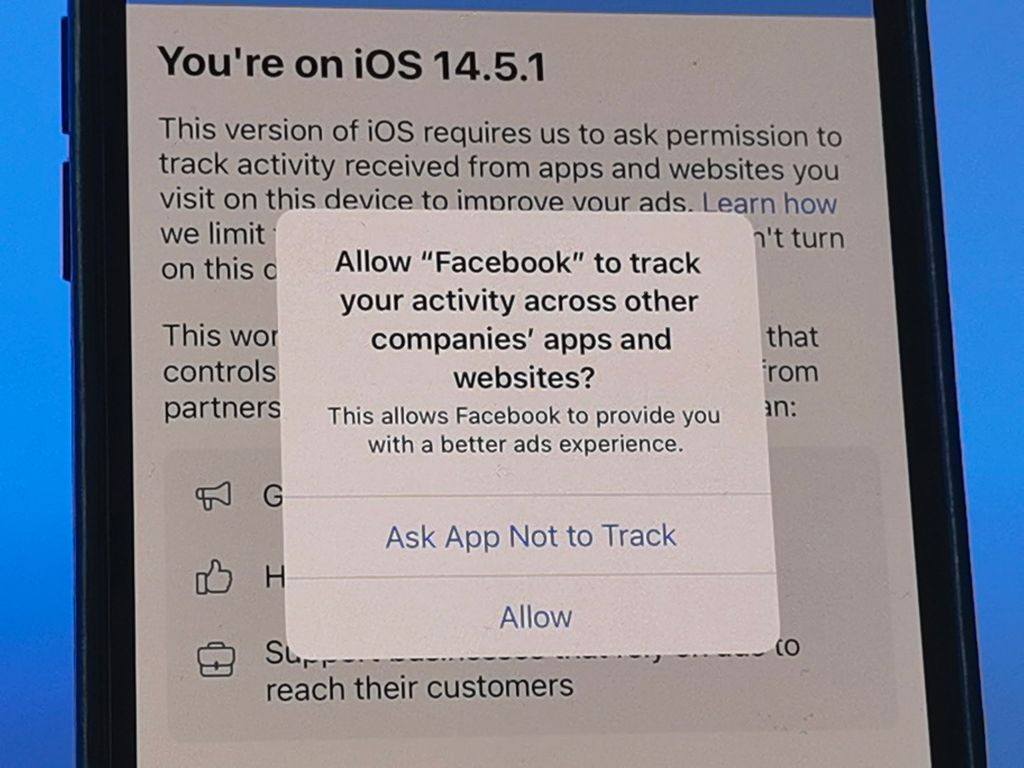
A privacy notice appears on an iPhone 12 under the new iOS 14.5.1 operating system. Developers of an application have to ask for the user's permission to allow cross-app tracking.
Enlarge / A privacy notice appears on an iPhone 12 under the new iOS 14.5.1 operating system. Developers of an application have to ask for the user’s permission to allow cross-app tracking.
Picture Alliance | Getty Images

Apple has allowed app developers to collect data from its 1 billion iPhone users for targeted advertising, in an unacknowledged shift that lets companies follow a much looser interpretation of its controversial privacy policy.

In May Apple communicated its privacy changes to the wider public, launching an advert that featured a harassed man whose daily activities were closely monitored by an ever-growing group of strangers. When his iPhone prompted him to “Ask App Not to Track,” he clicked it and they vanished. Apple’s message to potential customers was clear—if you choose an iPhone, you are choosing privacy.

But seven months later, companies including Snap and Facebook have been allowed to keep sharing user-level signals from iPhones, as long as that data is anonymised and aggregated rather than tied to specific user profiles.

For instance Snap has told investors that it plans to share data from its 306 million users—including those who ask Snap “not to track”—so advertisers can gain “a more complete, real-time view” on how ad campaigns are working. Any personally identifiable data will first be obfuscated and aggregated.

Similarly, Facebook operations chief Sheryl Sandberg said the social media group was engaged in a “multiyear effort” to rebuild ad infrastructure “using more aggregate or anonymized data”.

These companies point out that Apple has told developers they “may not derive data from a device for the purpose of uniquely identifying it.” This means they can observe “signals” from an iPhone at a group level, enabling ads that can still be tailored to “cohorts” aligning with certain behavior but not associated with unique IDs.

This type of tracking is becoming the norm. Oren Kaniel, the chief executive of AppsFlyer, a mobile attribution platform that works with app developers, said that when his company introduced such a “privacy-centric” tool based on aggregated measurement in July 2020, “the level of pushback that we received from the entire ecosystem was huge.”

But now such aggregated solutions are the default for 95 percent of his clients. “The market changed their minds in a radical way,” he said.

It is not clear whether Apple has actually blessed these solutions. Apple declined to answer specific questions for this article but described privacy as its North Star, implying it was setting a general destination rather than defining a narrow pathway for developers.

Cory Munchbach, chief operating officer at customer data platform BlueConic, said Apple had to stand back from a strict reading of its rules because the disruption to the mobile ads ecosystem would be too great.

“Apple can’t put themselves in a situation where they are basically gutting their top-performing apps from a user-consumption perspective,” she said. “That would ultimately hurt iOS.”

For anyone interpreting Apple’s rules strictly, these solutions break the privacy rules set out to iOS users.

Lockdown Privacy, an app that blocks ad trackers, has called Apple’s policy “functionally useless in stopping third-party tracking.” It performed a variety of tests on top apps and observed that personal data and device information is still “being sent to trackers in almost all cases.”

But the companies aggregating user-level data said the reason apps continue to “leak” information such as a user’s IP address and location was simply because some require such information to function. Advertisers must know certain things such as the user’s language or the device screen size, otherwise the app experience would be awful.

The risk is that by allowing user-level data to be used by opaque third parties so long as they promise not to abuse it, Apple is in effect trusting the very same groups that chief executive Tim Cook has lambasted as “hucksters just looking to make a quick buck.”

Companies will pledge that they only look at user-level data once it has been anonymized, but without access to the data or algorithms working behind the scenes, users won’t really know if their data privacy has been preserved, said Munchbach.

“If historical precedent in adtech holds, those black boxes hide a lot of sins,” she said. “It’s not unreasonable to assume it leaves a lot to be desired.”

© 2021 The Financial Times Ltd. All rights reserved Not to be redistributed, copied, or modified in any way.

https://arstechnica.com/?p=1818800


GDPR, Garante irlandese accusato di fare lobby a Facebook nella Ue

Il Garante Privacy irlandese nel mirino di Maximiliam Schrems, l’avvocato ormai a tutti noto per le sue battaglie civili in materia di protezione dei dati personali, che guida il Centro europeo per i diritti digitali (None of Your Business – NOYB). Secondo le recenti accuse dell’attivista austriaco, la Data Protection Commission (DPC) irlandese ha tentato in maniera impropria di convincere gli altri garanti europei a schierarsi dalla parte di Facebook per bypassare l’obbligo di richiesta del consenso informato per la raccolta di dati pubblicitari degli utenti online.

L’accusa di Schrems

Schrems ha pubblicato in questi giorni documenti ricevuti in base alle norme sulla libertà di informazione. Ebbene, secondo l’accusa il Garante irlandese avrebbe voluto permettere ai social network di monitorare gli utenti e indirizzare pubblicità mirata per contratto e non previo consenso informato.

Il Garante irlandese, responsabile di controllare e regolare diversi giganti tecnologici americani sottoposti al GDPR, ha dichiarato all’Irish Times che i documenti rilasciati da Schrems sono autentici ma che non contengono assolutamente “nulla di inusuale”.

Tentativo di bypassare il GDPR

Per Max Schrems è vero esattamente l’opposto, ovvero che i documenti indicano il tentativo del DPC di influenzare le linee guida sulla privacy dell’UE e spingere altri regolatori a sostenere la politica di raccolta dei dati utilizzata da Facebook.
“I documenti mostrano un piano chiaro. In primo luogo il regolatore irlandese ha concordato con Facebook di bypassare il GDPR. Quindi cerca di infilare questo bypassaggio nelle linee guida europee”, ha detto Schrems.

“Il DPC chiaramente non agisce nell’interesse della protezione dei dati, ma nell’interesse delle multinazionali statunitensi. Di solito sono i lobbisti di Facebook che cercano di influenzare le linee guida nell’interesse del loro settore industriale, qui il regolatore si è trasformato in un lobbista”, ha aggiunto Schrems.

Ma il DPC non è riuscito a convincere altri regolatori europei, e alcuni citati nei documenti hanno di fatto confermato alle critiche di Schrems. Un regolatore ha affermato che l’interpretazione del DPC “mina il sistema e lo spirito del GDPR”, mentre un altro ha detto che è “contraria a tutto ciò in cui crediamo”.

“È possibile fornire account di social media senza tracciamento e profilazione? Sì, in effetti lo è”, si cita un terzo, accusando il DPC di ridurre “il GDPR a uno strumento pro forma”.

Modello ‘one stop shop’

Con il meccanismo dello “sportello unico” (one-stop-shop) del GDPR, i giganti della tecnologia come Facebook e Google sono attualmente in grado di gestire gran parte delle loro responsabilità GDPR in un solo paese dell’UE, in particolare l’Irlanda. Ciò significa che molte indagini sulla protezione dei dati spettano alle autorità di regolamentazione nei paesi in cui le società Big Tech hanno sedi europee, inclusa l’Irlanda.

Ma il ruolo del DPC irlandese nella sorveglianza di Big Tech e nella sua applicazione del GDPR è stato recentemente oggetto di esame nell’UE, con il vicepresidente della commissione Věra Jourová che ha avvertito la scorsa settimana che le regole sulla privacy del blocco potrebbero dover cambiare se l’applicazione non è efficace.

A ottobre, il DPC ha proposto una multa da 28 a 36 milioni di euro per Facebook per non aver informato sufficientemente gli utenti su come vengono elaborati i loro dati, a seguito di una denuncia presentata da Schrems.

Leggi anche: Facebook, i documenti che mostrano la lobby per non far approvare il GDPR

https://www.key4biz.it/gdpr-garante-irlandese-accusato-di-fare-lobby-a-facebook-nella-ue/384840/


Meta’s failed Giphy deal could end Big Tech’s spending spree

Meta’s failed Giphy deal could end Big Tech’s spending spree
Daniel Grizelj | Getty Images


Instagram? Sure! WhatsApp? Go nuts. But don’t mess with GIFs. That’s the strange position taken by Britain’s competition watchdog in choosing to block Meta’s takeover of GIF repository Giphy. Meta, the UK’s Competition and Markets Authority (CMA) ruled, must now sell all the GIFs—just 19 months after it reportedly paid $400 million for them. It’s a bold move—and a global first.
Never before has a tech giant been ordered to press undo on a completed deal rather than pay a fine or make promises about how the newly merged businesses would operate. Meta, the parent company of Facebook, isn’t pleased. A spokesperson says the company disagrees with the decision and that it is considering all options, including an appeal. Usually a cautious bunch, lawyers agree that the CMA’s decision is a significant moment in the global regulatory wrangling of Big Tech, as it means deals that slipped through in the past may now have a new bar to clear. “There’s been a realization that quite small deals over the years have not been scrutinized very extensively,” says Richard Pepper, a partner at the law firm Macfarlanes.

That realization means regulators everywhere will now be on high alert for what the legal world calls “killer acquisitions”—where an established company buys an innovative startup in an attempt to squash the competition it could pose in the future. The CMA’s decision is also significant because Facebook’s Instagram takeover was waved through by its predecessor, the Office of Fair Trading, back in 2012, in what was the most high-profile probe into the deal outside the US. “The same worldwide enforcers that allowed Facebook to suck up Instagram and WhatsApp are now very wary of even small purchases by the major platforms,” says Eleanor Tyler, a legal analyst at Bloomberg Law, a legal research company. “What this shows is a change in attitude, and that’s critical.”

Compared to some of Meta/Facebook’s other well-known acquisitions, Giphy is small fry. WhatsApp cost it $19 billion in 2014, Oculus VR was $2 billion, also in 2014, and Instagram just $715 million in 2012. But regulators are starting to take the attitude that smaller acquisitions can also damage competition. “I think of serial acquisitions as a Pac-Man strategy,” Rebecca Slaughter, US Federal Trade Commissioner, said in September. “The collective impact of hundreds of smaller acquisitions can lead to a monopolistic behemoth.”

Giphy might not be the whole game, but it’s arguably a crucial pellet for Pac-Man, or Meta CEO Mark Zuckerberg, to gobble up. When anyone on any major social media or messaging platform—TikTok, Twitter, Tinder, Slack, or iMessage—wants to send a GIF, they are almost always using animations from Giphy or its main rival, Google-owned Tenor. In a blog post, Meta said it bought Giphy to help users on Instagram “express themselves.” The CMA said the deal could result in another side effect: giving Meta power over its competitors to either deny them precious GIFs or to demand data in exchange.

This concern, however, only formed half of the CMA’s argument. While cautioning about reduced competition between social media platforms, the regulator simultaneously warned about its impact on a market that  doesn’t yet exist. The CMA said Giphy had the potential to rival Facebook in the UK advertising market if it had not been bought. “Before the merger, Giphy had launched innovative advertising services which it was considering expanding to countries outside the US, including the UK,” the watchdog said in a statement, citing GIFs that Pepsi and Dunkin’ Donuts had created to promote their brands.

https://arstechnica.com/?p=1817989


UK orders Facebook to sell Giphy, rejects Meta’s proposed merger conditions

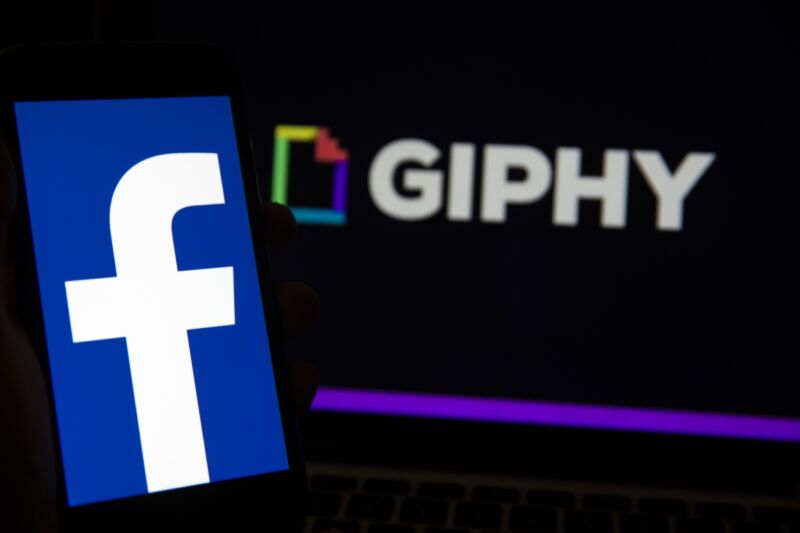
Facebook and Giphy logos are displayed on a laptop and a mobile phone screen.
Getty Images | Anadolu Agency

The UK’s Competition and Markets Authority (CMA) today ordered Facebook owner Meta to sell Giphy, saying the merger “would reduce competition between social media platforms and that the deal has already removed Giphy as a potential challenger in the display advertising market.”

Facebook bought Giphy in May 2020 for a reported $400 million “but has been required to hold the businesses separate” since June 2020, when the CMA imposed an Initial Enforcement Order (IEO), the UK government body said in a summary of its final report today. After the 17-month investigation, “we have decided that the only effective way to address the competition issues that we have identified is for Facebook to sell Giphy, in its entirety, to a suitable buyer,” the CMA wrote.

The CMA said it found that “Facebook would be able to increase its already significant market power in relation to other social media platforms by denying or limiting other platforms’ access to Giphy GIFs, driving more traffic to Facebook-owned sites—Facebook, WhatsApp and Instagram—which already account for 73 percent of user time spent on social media in the UK” and by “changing the terms of access by, for example, requiring TikTok, Twitter, and Snapchat to provide more user data in order to access Giphy GIFs.”

Facebook had proposed merger conditions in order to save the purchase, but the CMA said that “behavioral remedies” won’t fix the competition problems and that Facebook could “circumvent” such requirements. Meta can appeal the CMA’s ruling.

CMA rejects claim that Giphy can’t compete on its own

The CMA also said that “Facebook terminated Giphy’s advertising services at the time of the merger, removing an important source of potential competition,” which is “particularly concerning given that Facebook controls nearly half of the £7 billion display advertising market in the UK.”

The CMA said:

The parties told us that it was likely that Giphy would have become a significantly weakened business had it not been bought by Facebook. Our view is that, had the merger not gone ahead, Giphy would have continued to supply GIFs to social media platforms (including Facebook), as it had done before the merger, and would have continued to innovate, develop its products and services, generate revenue and explore (with the financial and commercial support of investors) various options to further monetize its products. This would have been the case regardless of Giphy’s ownership (i.e., whether it operated independently, as it did before the merger, or in the hands of an alternative purchaser).

If Facebook hadn’t purchased Giphy, it would have had the options of “(i) paying some form of platform fee or license fee to Giphy, (ii) relying more heavily on other GIF providers (eg Tenor), or (iii) building its own GIF library,” the CMA said.

Meta considers appeal

Meta said in a statement provided to Ars that it disagrees with the ruling and is considering whether to appeal. “Both consumers and Giphy are better off with the support of our infrastructure, talent, and resources,” the Facebook owner said. “Together, Meta and Giphy would enhance Giphy’s product for the millions of people, businesses, developers, and API partners in the UK and around the world who use Giphy every day, providing more choices for everyone.”

An appeal would apparently be heard by the UK Competition Appeal Tribunal. The Wall Street Journal noted that the appeal tribunal recently upheld a CMA decision that “blocked Sabre Corp.’s tie-up with rival travel booking service Farelogix Inc.”

https://arstechnica.com/?p=1816906


Zuckerberg’s metaverse will invade workers’ privacy, whistleblower says

screen sharing
Enlarge / Facebook/Meta wants its metaverse to be at the center of nearly everything, including work.

Facebook/Meta CEO Mark Zuckerberg’s vision of the virtual reality-fueled future could bring new privacy risks to our homes and workplaces, Facebook whistleblower Frances Haugen said.

Last month, Zuckerberg announced that he would focus his company on the metaverse. While the concept has many meanings, to Zuckerberg, it’s an “even more immersive and embodied Internet,” where users can meet with friends, connect with colleagues, shop for goods and services, and so on. In other words, Zuckerberg wants to take people’s lives and put them inside a metaverse, preferably one he controls.

To Haugen, that’s a red flag. “Facebook should have a transparency plan for the metaverse before they start building all this stuff because they’ve demonstrated with regard to Facebook that they can hide behind a wall, they keep making unforced errors, they keep making things that prioritize their own profits over our safety,” she said in an interview with the Associated Press.

Haugen was a product manager at Facebook until April of this year. Before she resigned, she gathered tens of thousands of documents detailing various problems at the company, ranging from harms to teens’ mental health to ethnic violence to special treatment for VIPs. She handed the documents over to Congress, the Wall Street Journal, and regulators at the SEC, where she also filed a whistleblower lawsuit alleging that the company breached its fiduciary duty by hiding many of its problems from shareholders.

In the wake of Haugen’s bombshells, Facebook rebranded its parent company as Meta, and Zuckerberg started touting the metaverse as the social media company’s next big thing. Haugen said the moves amounted to an attempt to distract from the company’s problems. Facebook’s mentality, she said, has been: “If you don’t like the conversation, you try to change the conversation.”

“Once-in-a-generation opportunity”

Yesterday, Haugen was in Brussels speaking before European Parliament. Her comments and question-and-answer session lasted nearly three hours and drew applause at the end. In her remarks, she warned that Facebook excels at “dancing with data,” and she encouraged lawmakers to ask Facebook for details about any data they receive from the company, including exactly how it was obtained. She also recommended that EU lawmakers focus on future-proofing the proposed Digital Services Act, which would increase pressure on platforms to moderate illegal content.

“The Digital Services Act that is now before this parliament has the potential to be a global gold standard,” she said in her opening statement. “It can inspire other countries, including my own, to pursue new rules that would safeguard our democracies. But the law has to be strong and its enforcement firm. Otherwise, we will lose this once-in-a-generation opportunity to align the future of technology and democracy.”

Facebook/Meta has sought to soften European lawmakers with the promise of creating 10,000 jobs in the bloc to develop its metaverse concept.

Supercharged problems

Haugen voiced concerns that a Facebook/Meta-owned metaverse will only supercharge problems that exist on the company’s current platforms. Virtual environments of the kind Zuckerberg is proposing have the potential to be “extremely addictive, and they encourage people to unplug from the reality we actually live in,” she told the AP.

She’s also worried that Facebook/Meta’s push into the workplace will give people no choice but to hand over more personal data to the company. “In the case of workplaces, we don’t get to choose to be in those spaces,” she said. “If your employer decides they’re now a metaverse company, you have to give out way more personal data to a company that’s demonstrated that it lies whenever it’s in its best interests.”

That Facebook/Meta would launch a major initiative in the midst of a company-wide crisis is emblematic of how the company approaches problems, she said. It would rather “move on” than fix its existing products.

“The fact that they can afford 10,000 more engineers to build video games when they allegedly can’t afford to have 10,000 engineers working on our safety, I find that unconscionable,” Haugen told the European Parliament.

https://arstechnica.com/?p=1811526


Facebook, Haugen: “Il Metaverso? E’ una rinuncia ai dati personali. Si rischia un altro monopolio”

“Il Metaverso che il capo di Facebook sta costruendo costringerebbe le persone a rinunciare ancora di più ai propri dati personali, potrebbe creare dipendenza e consegnare alla ‘galassia’ di 1 Hacker Way a Menlo Park un altro monopolio nel mondo online”.

Dopo le pesanti accuse rivolte alla piattaforma di Mark Zuckerberg al Congresso il mese scorso, l’ex dipendente di Facebook, Frances Haugen, ha espresso anche preoccupazione per il progetto del Metaverso, il nuovo mondo “virtuale che Zuck vorrebbe creare”.

Secondo quanto dichiarato in un’intervista all’Associated Press la “talpa” del popolare social network si tratta di un “mondo virtuale” che costringerebbe le persone a rinunciare a più informazioni personali, creerebbe dipendenza e darebbe alla compagnia un altro monopolio nel mondo online.

“Facebook dovrebbe avere un piano di trasparenza per il metaverso prima di cominciare a mettere su tutta questa roba. Possono nascondersi dietro a un muro, fare errori involontari, dare la priorità ai propri profitti prima della sicurezza”, ha dichiarato ancora. Il metaverso è una sorta di internet che prende vita, più o meno, in un ambiente in 3D. Mark Zuckerberg lo ha descritto come “ambiente virtuale” dove si può entrare, invece di guardarlo da uno schermo. In questo modo, ha riorientato il modello di business dell’azienda, puntando sul futuristico mondo della realtà virtuale e rinominando la società Meta.

Ieri la “whistleblower” di Facebook è stata audita al Parlamento europeo a seguito dell’audizione davanti ai legislatori europei di Bruxelles. Qui il video completo

[embedded content]

Chi è Frances Haugen: la talpa di Facebook

Ex dipendente di Facebook, Frances Haugen è salita alla ribalta all’inizio di ottobre quando è apparsa in uno spettacolo in prima serata sulla televisione americana e ha affermato che l’azienda sceglie costantemente di dare priorità alla sua redditività e crescita a scapito del benessere dei suoi milioni di utenti in tutto il mondo.

Haugen, che lavorava nel dipartimento di integrità civica dell’azienda, ha fatto trapelare migliaia di documenti sensibili e inediti al Wall Street Journal e alla Securities and Exchange Commission per sostenere le sue affermazioni.

L’ingegnere dei dati ha accusato Facebook di promuovere un modello di business che promuove l’incitamento all’odio e la disinformazione, danneggia la democrazia e semina la divisione sociale attraverso la diffusione incontrollata di contenuti polarizzanti, ma altamente redditizi.

Ha parlato dell’impatto negativo di Instagram sulla salute mentale degli adolescenti e del ruolo abilitante di Facebook nella violenza etnica in Etiopia e Myanmar. Ha anche affermato che il gigante della tecnologia ha ingannato gli investitori presumibilmente dipingendo un’immagine ingannevole dei suoi sforzi per frenare la disinformazione. Più di recente, ha invitato il fondatore e CEO Mark Zuckerberg a dimettersi.

https://www.key4biz.it/facebook-haugen-il-metaverso-e-una-rinuncia-ai-dati-personali-si-rischia-un-altro-monopolio/381274/


So what is “the metaverse,” exactly?

So what is “the metaverse,” exactly?
Aurich Lawson | Getty Images

These days it seems like everybody and their corporate parent company is talking about “the metaverse” as the next big thing that’s going to revolutionize our online lives. But everyone seems to have their own idea of what “the metaverse” means—that is, if they have any real idea what it means at all.

The original source of the term "metaverse"
Enlarge / The original source of the term “metaverse”

The term “metaverse” was originally coined in Neal Stephenson’s seminal 1992 cyberpunk novel, Snow Crash. In the book, the Metaverse (always capitalized in Stephenson’s fiction) is a shared “imaginary place” that’s “made available to the public over the worldwide fiber-optics network” and projected onto virtual reality goggles. In it, developers can “build buildings, parks, signs, as well as things that do not exist in Reality, such as vast hovering overhead light shows, special neighborhoods where the rules of three-dimensional spacetime are ignored, and free-combat zones where people can go to hunt and kill each other.”

Meta (formerly Facebook) CEO Mark Zuckerberg and his colleagues mentioned the word “metaverse” 80+ times in under 90 minutes during last week’s Facebook Connect keynote presentation, where the company announced its new name. But Stephenson has made it abundantly clear that “there has been zero communication between me and FB & no biz relationship.” That means Facebook’s interpretation of “the metaverse” might end up being quite different from what Stephenson originally described.

While Meta’s rebranding drives most of the metaverse conversation these days, the nearly 30 years since Snow Crash appeared have seen plenty of online networks that embody some or most of what Stephenson’s book describes. These efforts to create “the metaverse” have included numerous online games and gathering places that captured some of the metaverse’s most important concepts without ever using the term.

“But here we are,” as Oculus consulting CTO John Carmack recently put it. “Mark Zuckerberg has decided that now is the time to build the metaverse, so enormous wheels are turning and resources are flowing and the effort is definitely going to be made.”

So is the metaverse the next big advance that will revolutionize the way we all connect with each other? Is it just a repackaging of existing technologies into a new catch-all concept? Or is it just the latest buzzword marketing term?

The answer to that depends on what you mean by “metaverse.”

Defining the metaverse

In his Facebook Connect keynote last week, Zuckerberg said that “the best way to understand the metaverse is to experience it yourself, but it’s a little tough because it doesn’t fully exist yet.” From where we’re sitting, asking people to try out some nonexistent thing doesn’t seem like the best way to convey a full understanding of your bold new corporate direction.

Elsewhere in the keynote, Zuckerberg described a grandiose vision of the metaverse as an “even more immersive and embodied internet” where “you’re gonna be able to do almost anything you can imagine—get together with friends and family, work, learn, play, shop, create—as well as entirely new categories that don’t really fit how we think about computers or phones today.” That helps a bit, but any description that includes the words “almost anything you can imagine” is so broad as to be almost meaningless.

After breaking down Meta’s vision—and looking at the history of the metaverse both as a concept and as embodied multiple distinct online spaces—we’ve identified the following elements that, taken together, seem to define a metaverse. Anything that has any business using the term will include one or all of the following:

A shared social space with avatars to represent users

This basic building block of the metaverse concept is what Zuckerberg is talking about when he calls for a more “embodied” Internet. On a web site or social media network, you might be represented by a username or thumbnail picture. In the metaverse, you’re represented by a customizable avatar that can move, speak, and/or perform animated actions.

These kinds of avatars have been common in all sorts of online gaming and social spaces since the ’90s (anyone remember Habbo Hotel?). But an avatar’s fidelity and abilities can vary greatly from service to service. Recent advances in virtual reality have enabled users to truly embody their fantastical avatars, seeing through their virtual eyes and using hand-tracking controllers to gesture and interact with virtual items. Spaces like VRChat show just how elaborate those VR avatars can now be.

Is Habbo Hotel a metaverse? Well... kind of?
Enlarge / Is Habbo Hotel a metaverse? Well… kind of?

A persistent “world” for the avatars to inhabit and interact with

In some cases, this means a virtual world that mimics the space constraints and land scarcity of the real world, as seen in Second Life‘s discrete plots of land. In other cases, it just means users sharing specially created spaces for a particular game or a special time-sensitive event, like recent multimedia concerts held in Fortnite.

In an idealized metaverse, every single user shares a single virtual world, where items and property persist for everyone between online sessions. For technical reasons, though, many modern metaverse-like spaces end up splitting users into sharded servers where a small subset of users can interact.

https://arstechnica.com/?p=1810333


COP26: Facebook miniera di fake news sul clima, +76% nel 2021. Lo Studio

Facebook miniera di fake news sul clima

La questione dei cambiamenti climatici e del loro effetto sulla nostra vita, la nostra società, l’economia e la vivibilità delle città, non è solo un problema ambientale e scientifico, ma anche culturale.

Bisogna conoscere l’origine dei fenomeni più distruttivi, comprenderne l’evoluzione e i possibili effetti nel presente, nel medio e lungo periodo, anche per pianificare interventi e acquisire nuovi modelli sociali e comportamentali.

In questo immenso lavoro la disinformazione non aiuta e secondo l’organizzazione ambientalista Stop Funding Heat, le interazioni degli utenti di Facebook con post contenenti false informazioni sulle tematiche climatiche è aumentata del 76,7% durante il 2021.

Lo studio pubblicato da Stop Funding Heat

Nello studio presentato in occasione del summit internazionale sul clima a Glasgow (COP26), dal titolo “In Denial: Facebook’s Growing Friendship with Climate Misinformation”, si è constatato che solo il 3,6% di queste fake news è stato individuato e verificato dal social network.

Di fatto, affermano gli attivisti, non è stato fatto nulla per contrastare il flusso della disinformazione su tematiche climate change.

Facebook, che ormai è Gruppo Meta, ha commentato su Euronews che le accuse in questione sì basano su numeri inventati e una metodologia imperfetta.

Il Rapporto di SFH ha scoperto che milioni di persone, iscritte al social più grande del mondo, visualizzano ogni giorno altrettanti contenuti basati su fake news.

Le stime riportano di post caratterizzati da disinformazione climatica che producono tra le 818.000 e 1,36 milioni di visualizzazioni giornaliere.

Facebook semina confusione e dubbi

Anche il Real Facebook Oversight Board ha puntato l’indice sulla rete sociale, affermando che nelle conversazioni globali sul social “ha seminato confusione e dubbi sui cambiamenti climatici”.

Gli attivisti chiedono al social creato da Marck Zuckerberg di ridurre la diffusione di informazioni false sui cambiamenti climatici, tramite debunking in tempo reale e l’eliminazione delle pagine (deplatforming) che continuano nelle attività di disinformazione (nonostante siano state già colpite da provvedimenti in precedenza).

Un’accusa del simile è stata rivolta a Facebook anche per la crescente disinformazione riguardo il virus Covid-19, la pandemia e le vaccinazioni, secondo un’indagine Avaaz dell’estate scorsa.

https://www.key4biz.it/cop26-facebook-miniera-di-fake-news-sul-clima-76-nel-2021-lo-studio/380824/


Facebook to stop using facial recognition, delete data on over 1 billion people

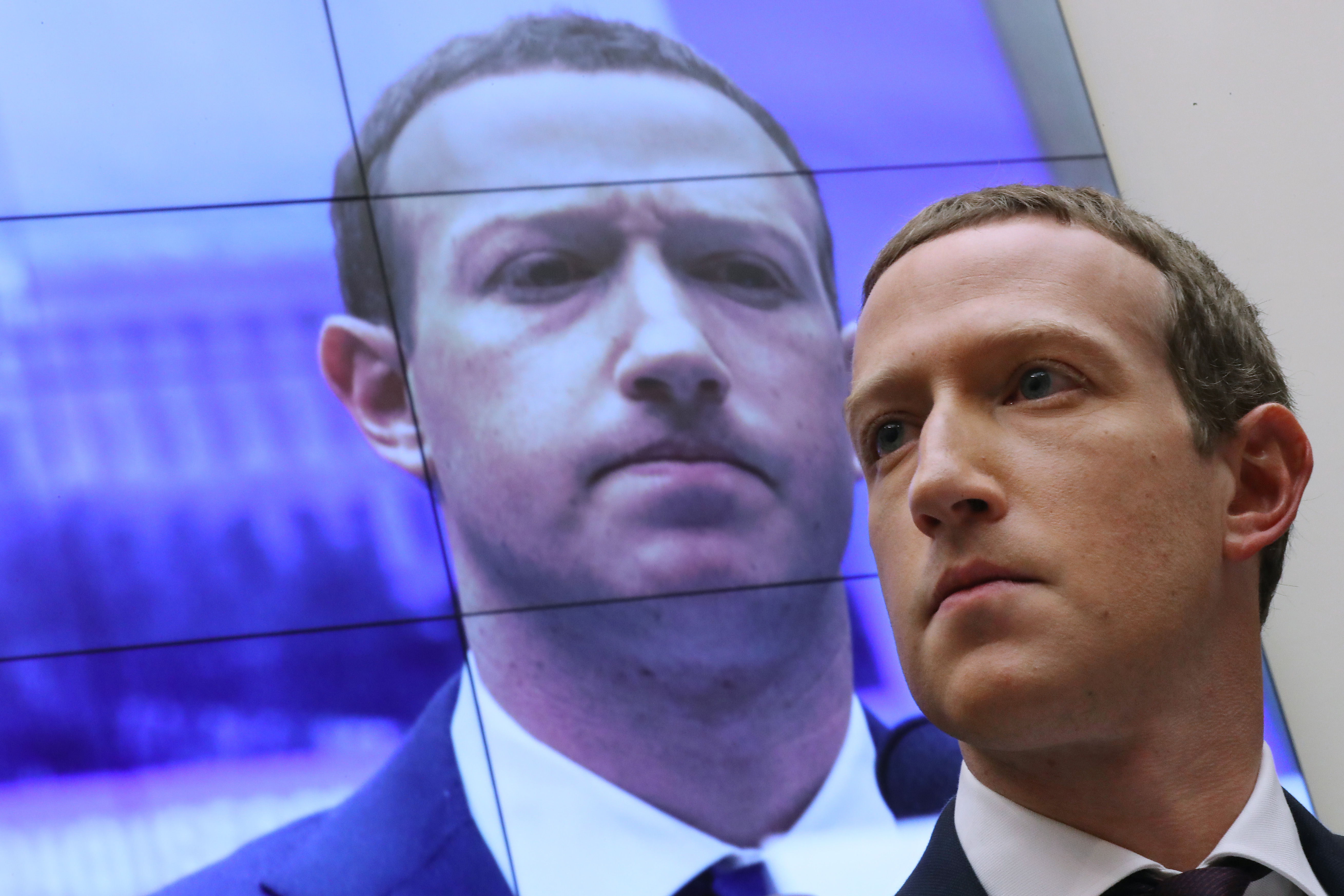
With an image of himself on a screen in the background, Facebook co-founder and CEO Mark Zuckerberg testifies before the House Financial Services Committee in the Rayburn House Office Building on Capitol Hill October 23, 2019, in Washington, DC.
Enlarge / With an image of himself on a screen in the background, Facebook co-founder and CEO Mark Zuckerberg testifies before the House Financial Services Committee in the Rayburn House Office Building on Capitol Hill October 23, 2019, in Washington, DC.
Chip Somodevilla/Getty Images

Facebook introduced facial recognition in 2010, allowing users to automatically tag people in photos. The feature was intended to ease photo sharing by eliminating a tedious task for users. But over the years, facial recognition became a headache for the company itself—it drew regulatory scrutiny along with lawsuits and fines that have cost the company hundreds of millions of dollars.

Today, Facebook (which recently renamed itself Meta) announced that it would be shutting down its facial recognition system and deleting the facial recognition templates of more than 1 billion people.

The change, while significant, doesn’t mean that Facebook is forswearing the technology entirely. “Looking ahead, we still see facial recognition technology as a powerful tool, for example, for people needing to verify their identity, or to prevent fraud and impersonation,” said Jérôme Pesenti, Facebook/Meta’s vice president of artificial intelligence. “We believe facial recognition can help for products like these with privacy, transparency and control in place, so you decide if and how your face is used. We will continue working on these technologies and engaging outside experts.”

In addition to automated tagging, Facebook’s facial recognition feature allowed users to be notified if someone uploaded a photo of them. It also added a user’s name automatically to an image’s alt text, which describes the content of the image for users who are blind or otherwise visually impaired. When the system finally shuts down, notifications and the inclusion of names in automatic alt text will no longer be available.

Controversial technology

As facial recognition has grown more sophisticated, it has become more controversial. Because many facial recognition algorithms were initially trained on mostly white, mostly male faces, they have much higher error rates for people who are not white males. Among other problems, facial recognition algorithms were initially trained on mostly white, mostly male faces and has led to people being wrongfully arrested in the US.

In China, the technology has been used to pick people out from crowds based on their age, sex, and ethnicity. According to reporting by The Washington Post, it’s been used to sound a “Uighur alarm” that alerts police to the presence of people from the mostly Muslim minority, who have been systematically detained for years. As a result, the US Department of Commerce sanctioned eight Chinese companies for “human rights violations and abuses in the implementation of China’s campaign of repression, mass arbitrary detention, and high-technology surveillance.”

While Facebook never sold its facial recognition technology to other companies, that didn’t shield the social media giant from scrutiny. Its initial rollout of the technology was opt-out, which prompted Germany and other European countries to push Facebook to disable the feature in the EU.

In the US, some states have passed stringent laws restricting the use of biometrics. Illinois has perhaps the strictest, and in 2015, several residents sued Facebook claiming the “tag suggestions” feature violated the law. Facebook settled the class-action lawsuit earlier this year for $650 million, paying millions of users in the state $340 each.

Today’s announcement comes as Facebook/Meta has come under increasing scrutiny from lawmakers, regulators, and the broader public. The company has been faulted for its role in spreading misinformation in recent elections in the US, helping to foment ethnic violence in Myanmar, and failing to combat disinformation about climate change.

More recently, revelations from documents gathered by whistleblower Frances Haugen have shown that the company was aware that its products harm teens’ mental health, that its algorithms were driving polarization, and that its platform was undermining the company’s efforts to get people vaccinated against COVID.

https://arstechnica.com/?p=1809777


John Carmack issues some words of warning for Meta and its metaverse plans

John Carmack, seen here wearing an early prototype Oculus Rift headset.

Oculus consulting CTO John Carmack has been bullish on the idea of “the metaverse” for a long time, as he’ll be among the first to point out. But the id Software co-founder spent a good chunk of his wide-ranging Connect keynote Thursday sounding pretty skeptical of plans by the newly rebranded Meta (formerly Facebook) to actually build that metaverse.

“I really do care about [the metaverse], and I buy into the vision,” Carmack said, before quickly adding, “I have been pretty actively arguing against every single metaverse effort that we have tried to spin up internally in the company from even pre-acquisition times.” The reason for that seeming contradiction is a somewhat ironic one, as Carmack puts it: “I have pretty good reasons to believe that setting out to build the metaverse is not actually the best way to wind up with the metaverse.”

Today, Carmack said, “The most obvious path to the metaverse is that you have one single universal app, something like Roblox.” That said, Carmack added, “I doubt a single application will get to that level of taking over everything.” That’s because a single bad decision by the creators of that walled-garden metaverse can cut off too many possibilities for users and makers. “I just don’t believe that one player—one company—winds up making all the right decisions for this,” he said.

<a href="https://cdn.arstechnica.net/wp-content/uploads/2021/10/roblox2.jpg" class="enlarge" data-height="1080" data-width="1920" alt="Roblox could turn into a metaverse, Carmack says, but control by a single entity makes such a thing unlikely.”><img alt="Roblox could turn into a metaverse, Carmack says, but control by a single entity makes such a thing unlikely.” src=”https://rassegna.lbit-solution.it/wp-content/uploads/2021/10/john-carmack-issues-some-words-of-warning-for-meta-and-its-metaverse-plans.jpg” width=”640″ height=”360″ srcset=”https://rassegna.lbit-solution.it/wp-content/uploads/2021/10/john-carmack-issues-some-words-of-warning-for-meta-and-its-metaverse-plans-2.jpg 2x”>
Enlarge / Roblox could turn into a metaverse, Carmack says, but control by a single entity makes such a thing unlikely.

The idea of the metaverse, Carmack says, can be “a honeypot trap for ‘architecture astronauts.'” Those are the programmers and designers who “want to only look at things from the very highest levels,” he said, while skipping the “nuts and bolts details” of how these things actually work.

These so-called architecture astronauts, Carmack said, “want to talk in high abstract terms about how we’ll have generic objects that can contain other objects that can have references to these and entitlements to that, and we can pass control from one to the other.” That kind of high-level hand-waving makes Carmack “just want to tear [his] hair out… because that’s just so not the things that are actually important when you’re building something.”

“But here we are,” Carmack continued. “Mark Zuckerberg has decided that now is the time to build the metaverse, so enormous wheels are turning and resources are flowing and the effort is definitely going to be made.”

Build products, not architecture

Carmack used his own experience creating Doom as an example of the value of concrete, product-based thinking. Rather than simply writing abstract game engines, he wrote games where “some of the technology… turned out to be reusable enough to be applied to other things,” he said. “But it was always driven by the technology itself, and the technology was what enabled the product and then almost accidentally enabled some other things after it.”

Building pure infrastructure and focusing on the “future-proofing and planning for broad generalizations of things,” on the other hand, risks “making it harder to do the things that you’re trying to do today in the name of things you hope to do tomorrow, and [then] it’s not actually there or doesn’t actually work right when you get around to wanting to do that,” he said.

To that end, Carmack spoke somewhat approvingly of concrete Meta products like Horizon Worlds and Horizon Workrooms, which can be clearly judged on how much value they’re bringing to users. Interacting with other avatars in Workrooms, in particular, can be much more enjoyable than staring at a wall of Zoom faces, Carmack said. “You’ve got to actually be using the things to make value from it,” he said. Getting Workrooms to actually work also required some detailed technical problem solving to help with unexpected audio processing and latency issues, solutions that can now be applied to many other metaverse products, he added.

Replicating a show like next year's Facebook Connect in the metaverse would be a great proof of concept, Carmack said.
Enlarge / Replicating a show like next year’s Facebook Connect in the metaverse would be a great proof of concept, Carmack said.

But while Carmack identified some “good things” about the virtual reality co-presence possible in Horizon Worlds, he noted that it’s “a far cry from the metaverse of our visions.” While chatting with 16 people in a Worlds room is nice, he said, it’s a far cry from something like a real-world conference that could have “thousands of people milling about” and wandering into sessions and conversations at a whim. Fully creating that kind of in-person conference experience, without the need to travel long distances, is “what we’ve always been pitching is the value of VR,” he said.

With that vision in mind, Carmack said he is “laying down a gauntlet” that “we should be doing [Facebook Connect] in the metaverse” by next year’s show. “I’ll be really disappointed if I’m sitting here next year in front of a video crew and a camera in physical reality doing this talk,” he said. “I want to be walking around the halls or walking around the stage as my avatar in front of thousands of people, getting the feed across multiple platforms.”

Focusing on a mission of moving Connect into the metaverse, Carmack said, is a concrete goal that will “make sure that we’re doing something that’s valuable to at least us, and then it will very likely be valuable to a lot of other places.”

https://arstechnica.com/?p=1808977