Bitcoin becomes more valuable than Facebook after the fall of the social network
You’re reading Entrepreneur United States, an international franchise of Entrepreneur Media.
Bitcoin became a more valuable asset than Facebook after the company and its associated social networks suffered a crash.
André François McKenzie vía Unsplash / Editada por Entrepreneur en español
At the time of writing, the cryptocurrency has a market capitalization of $ 947 billion, according to CoinMarketCap , which exceeds the current $ 939 billion of Mark Zuckerberg’s company , according to Yahoo! finance.
Shares in the tech company fell 5% on Monday as the company was hit by a massive outage in Facebook , Instagram and WhatsApp apps. This is in addition to the 15% drop that occurred in mid-September.
On the other hand, Zuckerberg’s wealth fell by $ 6.6 billion, causing him to fall to sixth on Bloomberg’s list of billionaires within hours.
Right now Zuckerberg is in the fifth position of the index with a fortune of 122 billion dollars. All this has been a consequence of the interruption that his company suffered, since his main applications were offline for a period of more than six hours.
https://www.entrepreneur.com/article/389489
Facebook misled investors about shrinking user base, ex-employee alleges
Getty Images | Chesnot
Facebook has been misleading investors about its “shrinking” teen and young-adult user bases and about the actual number of Facebook users, former employee Frances Haugen alleged in a whistleblower complaint filed with the US Securities and Exchange Commission. “For years, Facebook has misled investors and advertisers about [its] shrinking user base in important demographics, declining content production, and the true number of recipients of ‘Reach & Frequency’ advertising,” the complaint said.
Noting that “Facebook’s stock valuation is based almost entirely on predictions of future advertising revenue,” the complaint cites “evidence showing that Facebook has, for years past and ongoing, violated US securities laws by making material misrepresentations and omissions in statements to investors and prospective investors, including… through filings with the SEC, testimony to Congress, online statements, and media stories.”
“Facebook has misrepresented core metrics to investors and advertisers including the amount of content produced on its platforms and growth in individual users (especially in high-value demographics),” the complaint said. Facebook’s advertising algorithms did not properly account for what the complaint calls Single Users with Multiple Accounts (SUMA), and the company thus “systematically overcharg[ed] advertisers” by misrepresenting the number of individual users, Haugen alleged.
“Facebook’s mishandling of duplicate accounts constitutes extensive fraud against its advertisers, and misrepresentations to investors,” the complaint alleged.
While Facebook reported user growth to investors, the company “failed to disclose internal data showing a contraction of the user base in important demographics, including American teenagers and young adults. The company has also hidden the extent to which content production per user has been in long-term decline,” the complaint said.
Complaints based on internal Facebook documents
Haugen filed eight whistleblower complaints with the help of nonprofit group Whistleblower Aid, all of which were published in a CBS News article yesterday. The complaints are “based on tens of thousands of internal Facebook documents secretly copied by Haugen before she left the social media company in May,” CBS wrote.
Some of the allegations in the complaints were revealed weeks ago, such as one regarding the XCheck program that allowed 5.8 million VIPs including celebrities, politicians, and athletes to evade the posting rules that applied to most users.
Haugen’s other complaints allege that Facebook misled investors and the public about various problems including Facebook’s role in the January 6 insurrection, Facebook’s failure to remove the vast majority of hate speech, the harm Facebook caused teenagers’ mental and physical health, Facebook’s enablement of human trafficking, Facebook’s promotion of misinformation and hate speech, and how Facebook “promotes global division and ethnic violence.” Haugen initially filed the complaints anonymously but spoke in a 60 Minutes interview and testified in a Senate Commerce Committee hearing today about protecting kids online.
Facebook said in a statement to Ars that “These claims are simply false. It’s important to note that Frances herself admits that she has no direct knowledge of how our ads system works. We tell investors and advertisers about our user base and how it is calculated in our public filings, and we provide additional information to advertisers in our ad products, ad interfaces, in our help centers, and in other places. We stand by these disclosures. Ultimately, advertisers use Facebook because they see results—we help them meet their business objectives and provide appropriate metrics in our reporting tools.”
In its most recent quarterly earnings report, Facebook said it had 1.91 billion average daily active users and 2.9 billion monthly active users in June, with both figures up 7 percent year over year.
Young adults see FB as “negative, fake, and boring”
The complaint cited an internal Facebook report that said, “Facebook’s teen and young adult DAU [Daily Active Users] has been in decline since 2012/2013. Data science findings indicate that only users 25 and above are increasing their use of Facebook. The Teen DAU has plateaued and the Young Adult (18-24) DAU continues to decline.”
Another internal record said that young adults “want uplifting and motivating content, yet see FB content as negative, fake, and boring.” Internal records also said that teen daily active users dropped 13 percent from 2019 to 2021 and that during the pandemic, “every cohort’s use of Facebook increased, except for those 23 and under, which continued to decline.”
One internal document said that over 15 percent of new teen accounts were existing users creating a second account, a higher percentage than for users overall. Facebook acknowledged its duplicate-account problem in a January 2021 filing with the SEC, saying that “duplicate accounts may have represented approximately 11 percent of our worldwide MAUs [monthly active users],” the complaint noted. But in a 2018 earnings call, Facebook CEO Mark Zuckerberg claimed the company’s tally of MAUs “refers to individual people rather than active accounts, so it excludes when people have multiple active accounts on a single app,” the complaint said.
Facebook CFO David Wehner seemed to contradict Zuckerberg in that same call, acknowledging that “the Facebook MAU number does count multiple accounts for a single user when such accounts exist, and we estimate those represent approximately 10 percent of our Facebook MAUs as previously disclosed in the limitation of key metrics section in our SEC filings.” Haugen’s complaint also pointed to a September 2017 AdWeek article that said Facebook claimed to reach more people than actually existed in certain age groups, and to a November 2019 Financial Times article on “Facebook’s fake numbers problem.”
“Facebook overcharged advertisers on a vast scale”
In the section alleging that “Facebook’s mishandling of duplicate accounts constitutes extensive fraud against its advertisers, and misrepresentations to investors,” the complaint notes that Facebook offers “Reach and Frequency” tools that let advertisers control the number of users who are shown an ad and the number of times each person sees an ad.
“By delivering too many ads to users that the advertisers did not want to pay for, Facebook overcharged advertisers on a vast scale,” the complaint alleged, citing a document that said adjusting numbers for duplicate accounts “would reduce overestimation of population in age groups for our top 30 ad markets by 50 percent when included by itself and by 63 percent when included in conjunction with age modeling.”
“We find that, after including SUMA accounting in audience size calculation, 82 percent of current R&F revenue would see an audience size reduction [of] less than 10 percent, [while] 95 percent [of current R&F revenue would see] a reduction less than 16 percent,” the Facebook document said.
The whistleblower complaint concluded by urging the SEC to take action:
The SEC is charged with enforcing the laws that protect investors in public companies like Facebook. Facebook’s investors care about these misrepresentations and omissions about duplicate accounts and corresponding user numbers/growth for two reasons. First, if advertisers were aware of the discrepancies, they would spend less on ads, leading to lower advertising revenue and lower profits. Second, some investors simply will not want to invest in a company that does not have the growth (e.g., daily and monthly active users) that is represented and then engages in misstatements and omissions on this topic.
https://arstechnica.com/?p=1801234
Facebook down, Vestager (Commissione Ue), ‘Ecco perché serve più concorrenza’
L’interruzione di sei ore del servizio di Facebook, Whatsapp e Instagram mostra in tutta la sua chiarezza le nefaste conseguenze di affidarsi soltanto a pochi grandi player della rete per le nostre comunicazioni, e sottolinea ancora una volta, se ce ne fosse ancora bisogno, la necessità di avere più concorrenti sul mercato per competere con lo strapotere dei Big Tech. E’ questo il senso dell’uscita odierna di Margrethe Vestager, vicepresidente della Commissione Ue e commissario europeo alla Concorrenza in relazione al blackout che ha colpito ieri Facebook, Whatsapp, Messenger e Instagram lasciando senza voce milioni di utenti in tutto il mondo.
#facebookdown tells 2 things : 1/ we need alternatives & choices in the #tech market, and must not rely on a few big players, whoever they are => that’s the aim of #DMA 2/ that sometimes, there’s nothing better than talking to each other… just on the phone or … offline😊
L’interruzione del servizio ha lasciato senza accesso al social media e ai servizi di messaggistica collegati 3,5 miliardi di utenti a livello globale, in quello che è senza dubbio il più lungo down del servizio mai registrato da servizi di monitoraggio specializzati come Downdetector.
E’ per questo che lunedì frotte di utenti si sono spostati su app concorrenti come Twitter e TikTok. Diversi impiegati di Facebook hanno detto alla Reuters che credono che il servizio si sia interrotto per un errore interno nel modo in cui viene indirizzato il traffico internet verso i suoi sistemi interni.
Vestager chiama i competitor
L’incidente ha dimostrato la necessità di più concorrenza, ha detto Vestager.
Abbiamo bisogno di alternative e scelte nel mercato tecnologico, e non dobbiamo fare affidamento su pochi grandi player, chiunque essi siano, questo è l’obiettivo di (il) DMA”, ha cinguettato Vestager.
Vestager l’anno scorso ha proposto una bozza di regole nota come Digital Markets Act (DMA) che stabilisce un elenco di cose da fare e da non fare per Amazon, Apple, Facebook e Google che in sostanza li costringeranno le big tech a cambiare il loro modello di business principale per consentire una maggiore concorrenza.
I legislatori dell’UE e i paesi dell’UE stanno ora discutendo le proprie proposte e dovranno riconciliare le tre bozze prima che le regole tecnologiche entrino in vigore.
Un errore interno di Facebook manda in tilt internet e fa perdere a Zuckerberg 6,1 miliardi di dollari
Nessun complotto e nessun attacco informatico. Il blackout che ieri, 4 ottobre 2021, ha mandato fuori uso le tre app più utilizzate al mondo è stato causato da un errore interno di Facebook. Ma cosa è successo? Andiamo con ordine.
Tutto è cominciato intorno alle 17.35 italiane circa, dopo un errore interno commesso durante un cambiamento di configurazione interno a Facebook . Cosa è successo di fatto? Internet in quel momento non sapeva più dove “trovare” letteralmente Facebook in rete, come se fosse senza mappa e senza conoscere la strada per raggiungerlo.
Il NewYorkTimes ha raccolto la spiegazione di John Graham-Cumming, chief technology officer di Cloudflare, una società di infrastrutture web. La premessa è che i computer convertono siti web come Facebook.com in indirizzi numerici (IP), attraverso un sistema che l’esperto paragona alla rubrica di un telefono. “Il problema interno che si è verificato in Facebook – spiega Graham -Cumming – è stato l’equivalente del rimuovere i numeri di telefono degli utenti dai loro nomi in rubrica, rendendo impossibile chiamarsi”. È come se improvvisamente fossero stati cancellati i percorsi che consentivano agli utenti di accedere ai server di Facebook . In pratica, milioni di smartphone e di altri dispositivi stavano cercando insistentemente di trovare le app di Facebook su Internet e questi tentativi inutili generano traffico che rallenta tutti gli altri accessi.
Facebook blackout: problemi anche per i badge dei dipendenti
Ma i problemi non sono finiti qui. Chi lavora in Facebook usa Facebook ed è dipendente da Facebook: la piattaforma di comunicazione tra dipendenti e team si basa su Facebook Messenger, e tutti i sistemi di autenticazione, sia ai server sia fisici si basano sull’infrastruttura di Facebook. I badge dei dipendenti, ad esempio, erano fuori uso proprio perché l’intero network era inaccessibile
Facebook has sent a team to one of its California data centers to try to manually reset its servers – NYT
Il vero problema di questa faccenda è che per correggere questo errore bisogna accedere fisicamente a dei peering router (non essendo raggiungibili da remoto) ma chi può farlo non è necessariamente dotato delle autorizzazioni e dell’autenticazione che sono necessari. BNO News ha spiegato che Facebook avrebbe inviato una squadra ad uno dei suoi data center a Santa Clara, in California , per resettare manualmente i server.
“Il nostro team di ingegneri ha scoperto che dei cambi di configurazione nei router principali che coordinano il traffico tra i nostri data center hanno provocato problemi che hanno interrotto queste comunicazioni. Questa interruzione al traffico di rete ha avuto un effetto domino sul modo in cui i data center comunicano, e ha portato all’interruzione del servizio”, ha comunicato Facebook nel suo blog dopo quasi 6 ore dall’inizio del blackout.
Il blackout e le accuse di Haugen mix letale per Zuckerberg: persi 6 miliardi
I numeri della giornata di Facebook sono stati neri. Azioni giù di oltre il 5% e perdite per 6,1 miliardi di dollari per Mark Zuckerberg. Una giornata che era iniziata con la ‘talpa’ di Facebook uscita allo scoperto con l’accusa al social di mettere il profitto al di sopra della sicurezza. La 37enne FrancesHaugen si è mostrata alla trasmissione ’60 minutes’ denunciando che Fb è consapevole che le sue piattaforme diffondono odio, violenza e disinformazione, anche se ha sempre cercato di nasconderlo per motivi d’interesse.
Secondo i dati del Bloomberg Billionaires Index, la fortuna personale di Zuckerberg è scesa lunedì a 122 miliardi di dollari (105,039 miliardi di euro), un calo di 6,11 miliardi di dollari (5,26 miliardi di euro) rispetto alla sessione precedente.
Il fondatore di Facebook ha così perso una posizione nella classifica delle persone più ricche del mondo e ora è quinto, appena dietro Bill Gates, Bernard Arnault, Jeff Bezos e Elon Musk, che è in cima alla lista. Un mese fa, il valore netto stimato dell’imprenditore era di 140 miliardi di dollari (120,537 miliardi di euro). Nonostante questo, finora quest’anno la fortuna di Mark Zuckerberg è aumentata di circa 18 miliardi di dollari (15,497 miliardi di euro). Nella sessione di lunedì, le azioni di Facebook sono scese del 4,89%, anche se finora nel 2021 si sono
L’attacco di Snowden: “Facebook andrebbe spezzettato”
Non è mancato il commento duro di EdwardSnowden, l’informatico statunitense che ha rivelato al mondo lo scandalo dei programmi di sorveglianza di massa della NSA. Snowden ha chiamato in causa la senatrice democratica ElisabethWarren, nemica numero uno dei big tech, famosa per le sue proposte di “spezzettare” il monopolio della grandi compagnie tecnologiche americane.
“Facebook, WhatsApp, e Instagram vanno giù contemporaneamente, un facile esempio di come spezzare un certo tipo di monopolio in tre piccoli pezzi non è una cattiva idea. Qualcuno lo dovrebbe chiedere a Elisabeth Warren”, scrive Snowden.
Facebook, WhatsApp, and Instagram all going down at the same time sure seems like an easily-understandable and publicly-popular example of why breaking up a certain monopoly into at least three pieces might not be a bad idea.
Facebook, Instagram, WhatsApp, and Oculus are down. Here’s what we know [Updated]
Enlarge/ Today’s global Facebook and Facebook-owned-services outage appears to be the result of a flubbed BGP configuration change pushed by a Facebook engineer this morning.
Original story 1:26 pm EDT: Facebook—and apparently all the major services Facebook owns—are down today. We first noticed the problem at about 11:30 am Eastern time, when some Facebook links stopped working. Investigating a bit further showed major DNS failures at Facebook:
DNS—short for Domain Name System—is the service that translates human-readable hostnames (like arstechnica.com) to raw, numeric IP addresses (like 18.221.249.245). Without working DNS, your computer doesn’t know how to get to the servers that host the website you’re looking for.
The problem goes deeper than Facebook’s obvious DNS failures, though. Facebook-owned Instagram was also down, and its DNS services—which are hosted on Amazon rather than being internal to Facebook’s own network—were functional. Instagram and WhatsApp were reachable but showed HTTP 503 failures (no server is available for the request) instead, an indication that while DNS worked and the services’ load balancers were reachable, the application servers that should be feeding the load balancers were not.
A bit later, Cloudflare VP Dane Knecht reported that all BGP routes for Facebook had been pulled. (BGP—short for Border Gateway Protocol—is the system by which one network figures out the best route to a different network.)
With no BGP routes into Facebook’s network, Facebook’s own DNS servers would be unreachable—as would the missing application servers for Facebook-owned Instagram, WhatsApp, and Oculus VR.
. @Facebook DNS and other services are down. It appears their BGP routes have been withdrawn from the internet. @Cloudflare 1.1.1.1 started seeing high failure in last 20mins.
If the BGP routes for a given network are missing or incorrect, nobody outside that network can find it.
Not long after that, Reddit user u/ramenporn reported on the r/sysadmin subreddit that BGP peering with Facebook is down, probably due to a configuration change that was pushed shortly before the outages began.
According to u/ramenporn—who claims to be a Facebook employee and part of the recovery efforts—this is most likely a case of Facebook network engineers pushing a config change that inadvertently locked them out, meaning that the fix must come from data center technicians with local, physical access to the routers in question. The withdrawn routes do not appear to be the result of nor related to any malicious attack on Facebook’s infrastructure.
Update 4:22 pm EDT: New York Times technology reporter Sheera Frenkel reports that some Facebook employees are unable to enter buildings due to badge access also being down from the outage.
Was just on phone with someone who works for FB who described employees unable to enter buildings this morning to begin to evaluate extent of outage because their badges weren’t working to access doors.
We’re also seeing reports that Facebook’s internal workflow platform Workplace is inaccessible, resulting in a “snow day” for many Facebook employees.
Not only are Facebook’s services and apps down for the public, its internal tools and communications platforms, including Workplace, are out as well. No one can do any work. Several people I’ve talked to said this is the equivalent of a “snow day” at the company.
Many Internet commenters also mistakenly believe that the Facebook.com domain itself is “up for sale by a private third party”—but this is only due to poorly coded online tools designed for domain buyers and speculators. Facebook is its own domain name registrar—and Registrarsafe.com is also offline, as it shares infrastructure with the rest of Facebook.
Enlarge/ Facebook.com is not for sale—it’s merely offline. Some poorly coded tools simply don’t know how to handle the entire registrar for a domain being unavailable.
Update 7:30 pm EDT: Facebook’s services appear to be slowly coming online again.
https://arstechnica.com/?p=1800566
Senators slam Facebook, say it’s using Big Tobacco playbook to hook kids
Enlarge/ Sen. Marsha Blackburn (R-Tenn.) speaks as Facebook head of global safety, Antigone Davis, testifies before a hearing of the Senate Subcommittee on Consumer Protection focusing on Facebook, Instagram, and mental health harms on September 30, 2021.
Senators spent three hours yesterday grilling Facebook’s head of global safety, Antigone Davis, as she attempted to defend the company’s approach to handling the mental wellbeing of children who use its services.
“Facebook has taken Big Tobacco’s playbook,” said Sen. Richard Blumenthal (D-Conn.), chair of the Senate Commerce Subcommittee on Consumer Protection. “It has hidden its own research on addiction and the toxic effects of its products, it has attempted to deceive the public and us in Congress about what it knows, and it has weaponized childhood vulnerabilities against children themselves.”
The hearings come on the heels of a Wall Street Journal investigation that revealed that Facebook has been sitting on a cache of research that shows just how harmful its products can be for children under the age of 18. The whistleblower documents, which also have been turned over to Congress, offer “deep insight into Facebook’s relentless campaign to recruit and exploit young users,” Blumenthal said.
“You’ve lost trust, and we do not trust you with influencing our children,” said Sen. Marsha Blackburn (R-Tenn.), the subcommittee’s ranking member.
Instagram makes teens feel worse
Facebook’s own research shows Instagram to be the cause of mental health issues in a startling percentage of teens. Around 20 percent of teens in the US and the UK said that they felt alone or lonely after using Instagram, and of teens who had suicidal thoughts, 6 percent in the US and 13 percent in the UK traced the origin of those feelings to Instagram.
“We care deeply about the safety and security of the people on our platform,” Davis, who testified via video, told the subcommittee. “We take the issue very seriously,” she added. “We have put in place multiple protections to create safe and age-appropriate experiences for people between the ages of 13 and 17.”
Though Davis said her company would not retaliate against the whistleblower for testifying to Congress, her response left open the possibility that Facebook would go after the person for handing them over to the media.
The senators were clearly frustrated with Facebook’s lack of transparency. Sen. Ted Cruz (R-Texas) zeroed in on the company’s unwillingness to share all of its research. For example, in anticipation of The Wall Street Journal exposé, Facebook released two presentations of its research into Instagram and teen mental health. But the Journal published six presentations, revealing far more about Facebook’s research than the company had wanted to share. Davis said the Journal’s slides offered an incomplete or incorrect picture of the company’s work.
Cruz pressed Davis to commit the company to releasing all of its research, and she demurred. Cruz pushed further. “You’re telling us, ‘If only you knew the full research,’ and then at the same time, you’re not releasing the research. So which is it?” Cruz asked. Davis said Facebook was still evaluating which research it could share with the public. “So you’ve cherry-picked the ones you want us to see,” Cruz said.
Facebook’s response to Congress “simply untrue”
Facebook’s selective interpretation of its own research hasn’t been limited to managing public relations disasters, either. It seemed to take a similar approach when responding to questions that Blumenthal and Blackburn had sent in August to CEO Mark Zuckerberg. In yesterday’s hearing, one of those questions was top of mind for Blumenthal: “Has Facebook research ever found that its platforms and products have a negative effect on children’s and teens’ mental health or well-being?”
In August, the company had responded, “We are not aware of a consensus among studies or experts about how much screen time is too much.”
To Blumenthal, that reply and subsequent disclosures and leaks suggested that the company was less than forthcoming. “That response was simply untrue. It knows the evidence of harm to teens is substantial and specific to Instagram,” Blumenthal said.
Sen. Ed Markey (D-Mass.) pushed Davis to commit to canceling its planned Instagram for teens app. “Do you promise not to launch a site that includes features such as like buttons and follower counts that allow children to quantify popularity?” asked Markey.
Davis wouldn’t commit. “Those are the kinds of features that we will be talking about with our experts trying to understand, in fact, what is most age appropriate and what isn’t age appropriate, and we will discuss those features with them of course,” she said.
https://arstechnica.com/?p=1799950
Ex-Fox host claims Facebook defamed him by fact-checking climate change videos
Enlarge/ John Stossel speaking with attendees at the 2018 Young Americans for Liberty New York City Spring Summit at the Teaneck Marriott at Glenpointe in Teaneck, New Jersey.
Former Fox Business host John Stossel is suing Facebook, alleging that the social media company and one of its contracted fact-checking organizations defamed him when it flagged two of his videos, alerting viewers to “missing context” and “partly false” claims.
The lawsuit also claims that Stossel’s professional reputation has been “significantly and irreparably damaged by the false labels and statements.”
Since Stossel left Fox Business, he’s been releasing videos on various social platforms, including Facebook, Instagram, and YouTube. The endeavor has apparently been somewhat lucrative—he has made around $10,000 a month from Facebook alone. “My news model is based on social media companies showing you videos,” he said on YouTube.
But when Facebook’s fact-checking label appeared on two videos, Stossel alleges that his ad revenue from the platform was cut by approximately 45 percent.
Stossel’s claims
In the videos, Stossel, and others appearing alongside him, cast doubt on the severity of climate change. In one video, titled Are We All Doomed?, Stossel replays excerpts from a panel discussion he moderated for The Heartland Institute, which has received funding from fossil fuel companies and groups opposed to regulations on greenhouse gases. The panel consisted of three climate skeptics—meteorologist Patrick Michaels, geographer David Legates, and astrophysicist Willie Soon—who proceeded to question whether anthropogenic climate change is causing sea level rise or increasing the power of hurricanes.
In another, titled Government Fueled Fires, Stossel discusses whether forest management practices or climate change were driving severity of California’s recent fire seasons, interviewing author Michael Shellenberger on the matter. Shellenberger is a self-proclaimed environmental activist who writes about “environmental alarmism” and claims that climate change “is not even our most serious environmental problem.”
Both videos were fact-checked by Climate Feedback, a subsidiary of French fact-checking organization and Facebook partner Science Feedback. The group found that Stossel’s climate change video contained “partly false information” because “speakers in the video rely on several inaccurate claims and use imprecise language that misleads viewers about the scientific understanding of climate change.”
The California fire season video, on the other hand, was labeled “missing context” because it “misrepresents a complex reality” by focusing on how forest fire suppression over the 20th century led to catastrophic fire conditions while downplaying the significance of climate change. “Scientific studies demonstrate clear links between climate change, hotter and drier conditions, and an increase in dry vegetative fuel load, drastically increasing the amount of forest fire area in the western US,” Climate Feedback wrote in its assessment.
“Misrepresentation of our process”
To bolster their argument in the lawsuit, Stossel’s lawyers point out that two of the experts cited in the review of the California fire season video initially didn’t watch the video, which the reviewers confirmed when Stossel interviewed them. However, in 2020, Climate Feedback says that Stossel’s claim of an inappropriate review “is based on a misrepresentation of our process, and of the assessments of the scientists who contributed to this review.” Indeed, the Climate Feedback page and versions available on Archive.org clearly state that, when the organization is reviewing claims similar to others that have previously been assessed, it will republish scientists’ prior statements on the matter.
Upon reviewing the video in question, both experts interviewed by Stossel said that the Facebook fact-check label was appropriately applied.
Stossel claims that the fact-check labels have prevented him from reposting the California fire season video, which, for example, “would have resulted in another approximately 1.2 million views and the associated ad revenue from those views.”
We have reached out to Facebook and Climate Feedback for comment and will update this story if we hear from them.
https://arstechnica.com/?p=1799048
Facebook Pauses Plans for Instagram for Children
You’re reading Entrepreneur United States, an international franchise of Entrepreneur Media. This story originally appeared on The Epoch Times
Facebook has paused its plans to create an Instagram for children under 13 after the effort drew pushback from dozens of attorneys general.
Adam Mosseri, head of Instagram, said in a blog post on Monday that the company still believes building the version for children “is the right thing to do” but it is “pausing the work” to consult with parents, experts, and policymakers.
The pause “will give us time to work with parents, experts, policymakers and regulators, to listen to their concerns, and to demonstrate the value and importance of this project for younger teens online today,” Mosseri said.
Facebook owns Instagram.
Some 44 attorneys general from both major parties urged Facebook CEO Mark Zuckerberg earlier this year to scrap plans for the Instagram for children, noting that studies have shown that using social media can be detrimental to the health and wellbeing of youth.
“Young children are not equipped to handle the range of challenges that come with having an Instagram account. Children do not have a developed understanding of privacy. Specifically, they may not fully appreciate what content is appropriate for them to share with others, the permanency of content they post on an online platform, and who has access to what they share online. They are also simply too young to navigate the complexities of what they encounter online, including inappropriate content and online relationships where other users, including predators, can cloak their identities using the anonymity of the internet,” the coalition wrote in a letter to Zuckerberg.
Officials also pointed to how in the past Facebook has failed to live up to promises regarding protection of users’ privacy.
Mosseri said that children are already online, highlighted how YouTube and TikTok already have versions of their apps for children under 13, and said company executives still back the project.
The children’s version will only be for those aged 10 to 12, will require parental permission to join, will not have advertisements, and will have “age-appropriate content and features,” he added.
“I have three children and their safety is the most important thing in my life. I hear the concerns with this project, and we’re announcing these steps today so we can get it right,” he concluded.
Sens. Marsha Blackburn (R-Tenn.) and Richard Blumenthal (D-Conn.) are conducting a probe of Facebook after a Wall Street Journal report, citing internal documents, said the company has kept secret findings that Instagram users, particularly teenage girls, suffer from mental health and body image issues.
“Facebook’s decision to pause ‘Instagram Kids’ is a step in the right direction to ensuring a safe environment, but there is still much work to be done. Big Tech’s pattern of choosing profit over the wellbeing of young users is extremely concerning & we must hold them accountable,” Blackburn said Monday.
GQ Pan contributed to this report.
By Zachary Stieber
Zachary Stieber covers U.S. news, including politics and court cases. He started at The Epoch Times as a New York City metro reporter.
https://www.entrepreneur.com/article/387954
Facebook suspends plan to launch Instagram Kids app as critics circle
Facebook has suspended plans to launch Instagram Kids, a version of its photo-sharing app for children under the age of 13, as criticism of the project gathered momentum in Washington.
Adam Mosseri, who runs the Facebook-owned app, denied that the decision to “pause” development work on Instagram Kids was an admission that the concept was a “bad idea” and added that it was still the “right thing to do” to build a standalone app that offers parents more control and supervision.
Still, Mosseri said in a statement on Monday: “I hear the concerns with this project, and we’re announcing these steps today so we can get it right.”
The move comes after an investigation by the Wall Street Journal found that Facebook’s own internal research previously found that using Instagram could be detrimental to aspects of many teenagers’ wellbeing, such as body image.
Facebook has disputed the WSJ’s presentation of its research but said delaying the launch of Instagram Kids would give it more time to incorporate feedback from policymakers, parents, and other child safety campaigners, many of whom have been broadly critical of the scheme.
Earlier this year, 44 US attorneys-general wrote to Facebook chief Mark Zuckerberg and called on him to drop plans for Instagram Kids, saying it would be “harmful for myriad reasons.” That letter came after Zuckerberg was grilled by US lawmakers at a hearing in March over accusations that Facebook was designed to attract young users and could expose them to unsafe content.
New UK regulations came into force earlier this month designed to protect children online, including checking ages and guaranteeing a “high level of privacy by default.”
Many children have spent much more time online during the pandemic’s lockdowns over the past 18 months, triggering growing calls for big tech companies to go further in protecting their mental health and policing for potential abuse.
Facebook has argued that it is better—and more practical—to create safe digital spaces for children, where parents are better able to monitor what they are doing, than to try to prevent them from going online altogether.
However, parental groups have taken aim at Instagram in particular, saying it can hook young users into its endless scroll, intrude on their privacy at a vulnerable age, and make them unnecessarily anxious about their appearance.
Facebook paid FTC $4.9B more than required to shield Zuckerberg, lawsuit alleges
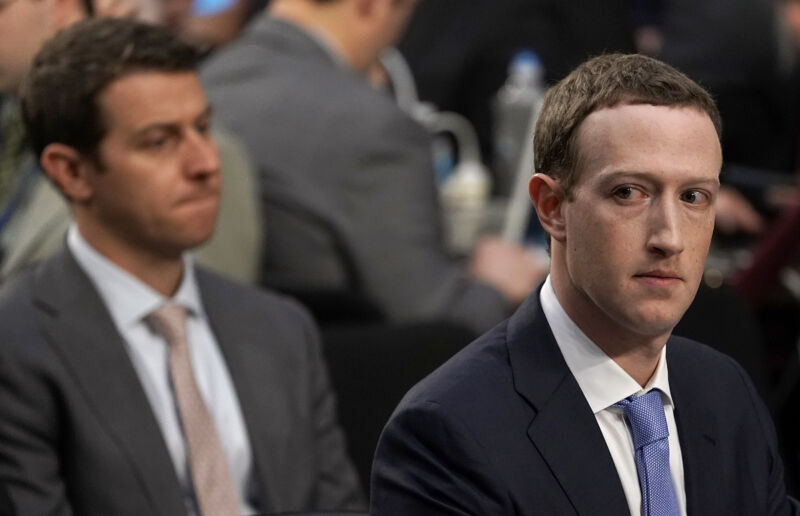
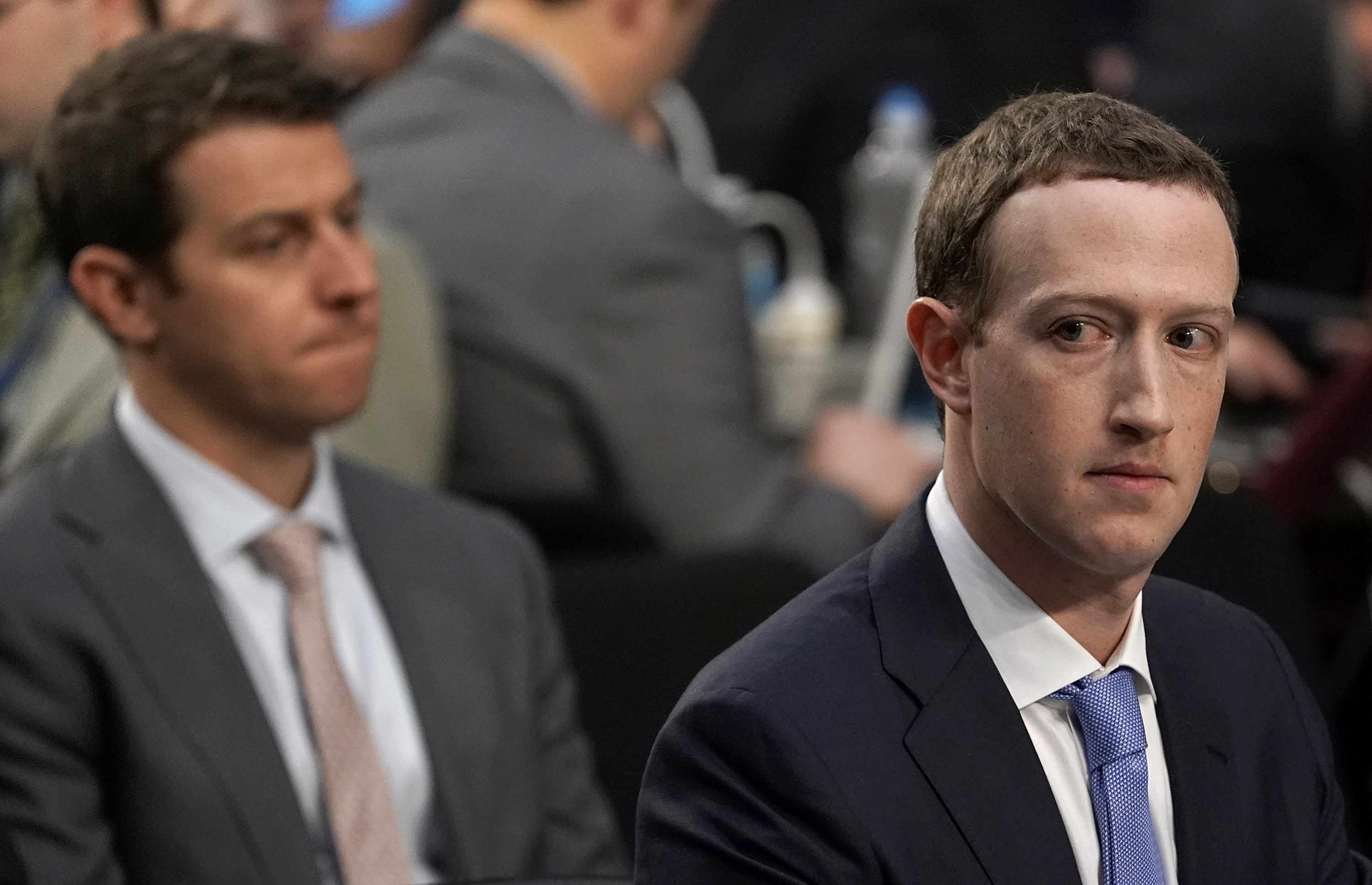
Enlarge/ Facebook CEO Mark Zuckerberg testifies before a combined Senate Judiciary and Commerce committee hearing in the Hart Senate Office Building on Capitol Hill April 10, 2018 in Washington, DC. Zuckerberg, 33, was called to testify after it was reported that millions of Facebook users had their personal information harvested by Cambridge Analytica.
In a newly unsealed lawsuit, Facebook shareholders allege that the company intentionally overpaid a $5 billion Federal Trade Commission fine to protect CEO Mark Zuckerberg from further government scrutiny.
“Zuckerberg, Sandberg, and other Facebook directors agreed to authorize a multi-billion settlement with the FTC as an express quid pro quo to protect Zuckerberg from being named in the FTC’s complaint, made subject to personal liability, or even required to sit for a deposition,” the lawsuit says (emphasis in the original). An early draft of the order obtained by The Washington Post through the Freedom of Information Act shows that the commission was considering holding Zuckerberg responsible.
The FTC levied the fine in July 2019 in the wake of the Cambridge Analytica scandal, which saw political operatives harvesting the personal data of 50 million Facebook users without their consent. (The lawsuit says only 0.31 percent of the affected users consented.) The fine (which was a record for privacy-related penalties) was 50 times larger than the maximum prescribed by a previous FTC consent decree, the lawsuit alleges. It was also well in excess of the previous record fine of $168 million.
“Facebook’s maximum monetary exposure was $104,751,390—about $4.9 billion less than it agreed to pay,” shareholders said in the lawsuit. The overpayment, they said, is a breach of fiduciary duty.
Insider trading
The lawsuit also alleges that, by withholding information about the Cambridge Analytica leak, executives and board members, including Zuckerberg and COO Sheryl Sandberg, engaged in insider trading. “After Zuckerberg learned of Cambridge Analytica’s massive extraction of Facebook user data, he and the entities controlled by him significantly accelerated his sales of Facebook shares,” the lawsuit says.
The shareholders filed the lawsuit in Delaware’s Court of Chancery. Among the plaintiffs are a handful of pension and retirement funds, including the massive California State Teachers’ Retirement System, which manages over $250 billion. The defendants include Mark Zuckerberg, Facebook COO Sheryl Sandberg, several other executives, and members of the board at the time of the settlement, including Peter Thiel, Mark Andreessen, and Jan Koum, among others.
A second lawsuit, which has been consolidated with the first, also names Palantir Technologies, Thiel’s big data analytics firm. That lawsuit alleges tight ties between Palantir and Cambridge Analytica, citing a 2019 book by whistleblower Christopher Wylie. Wylie reported that several Palantir employees, including one of the company’s lead data scientists, routinely worked at Cambridge Analytica’s offices “in person, during normal business hours,” the lawsuit says. “The two companies were so intertwined that, as the Stanford Daily reported in April 2018, Palantir earned itself the moniker ‘Stanford Analytica.'” Palantir reportedly took steps to obscure the relationship.
Thiel was one of former President Donald Trump’s biggest supporters in the run-up to the 2016 election. The Trump campaign and Trump-aligned PACs both hired Cambridge Analytica to help run digital operations.
Ties between Zuckerberg, Thiel, and the Trump administration apparently ran deep. In October 2019, Zuckerberg reportedly met with Thiel, Trump, and Jared Kushner at the White House. “Thiel later told a confidant that Zuckerberg came to an understanding with Kushner during the meal. Facebook, he promised, would continue to avoid fact-checking political speech,” Max Chafkin said in an excerpt from his new book. “If the company followed through on that promise, the Trump administration would lay off on any heavy-handed regulations. After the dinner, Zuckerberg took a hands-off approach to conservative sites.”
Tarnished image
The events of the last few years—from the Cambridge Analytica scandal to the platform’s role in the January insurrection at the US Capitol—have tarnished Facebook’s public image. Zuckerberg apparently wants that to change, and The New York Times is reporting that he has personally signed off on at least three new initiatives, including one known as Project Amplify that pushes Facebook PR into user’s feeds.
Executives from several parts of the company, including marketing, communications, policy, and integrity teams have all been involved, the Times reports. The main driver behind the changes is Alex Schultz, Facebook’s chief marketing officer, though Zuckerberg reportedly approved them all. Schultz apparently was the driving force behind an effort to restrict access to data for researchers and journalists. Instead, he preferred to release Facebook’s own spin, and the first report was only released last month. The first report was reportedly shelved out of concerns that the top link on the site that quarter was contributing to COVID-vaccine hesitancy.
Another initiative, known as Project Amplify, reportedly injects pro-Facebook content into people’s News Feeds. Joe Osborne, a Facebook spokesperson, has denied any changes to the News Feed’s ranking algorithm. Yet judging by the New York Times article, such changes may not be necessary. The company reportedly uses a tool known as Quick Promote to inject the content, which includes links to articles written by Facebook or third parties that cast the company in a positive light. The PR posts are flagged with small Facebook logos. Osborne said the posts are “similar to corporate responsibility initiatives people see in other technology and consumer products,” a statement which elides the fact that most other companies don’t have ready access to more than 2 billion people.
The company has insisted that many of the recent stories written about it—from the aforementioned article revealing Project Amplify to the extensive Wall Street Journal expose—contain falsehoods. “These stories have contained deliberate mischaracterizations of what we are trying to do,” Nick Clegg, Facebook’s vice president of global affairs, wrote in a blog post.
If Facebook is truly using its platform to improve its image, expect more stories with a positive spin to appear in News Feeds in the coming months: the whistleblower behind the WSJ’s series has turned over documents to lawmakers, The Washington Post reports. The person reportedly intends to go public by the end of the year, possibly by testifying before a Senate panel.