Facebook’s latest “apology” reveals security and safety disarray
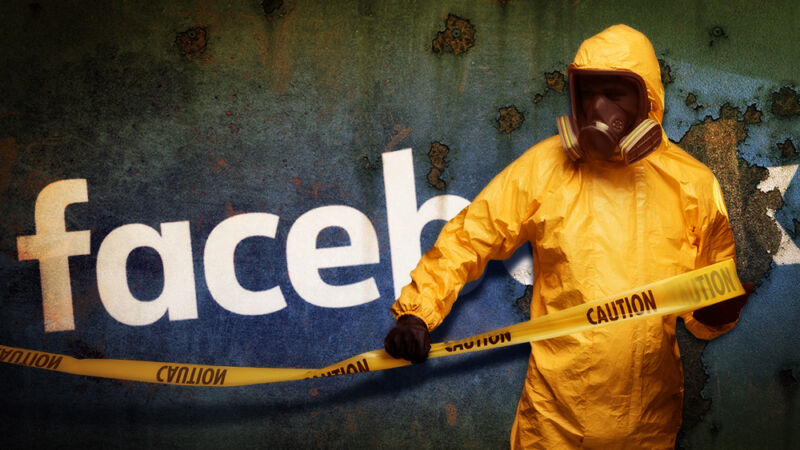
A person in a Hazmat suit covers the Facebook logo with warning tape.

Facebook had it rough last week. Leaked documents—many leaked documents—formed the backbone of a string of reports published in The Wall Street Journal. Together, the stories paint the picture of a company barely in control of its own creation. The revelations run the gamut: Facebook had created special rules for VIPs that largely exempted 5.8 million users from moderation, forced troll farm content on 40 percent of America, created toxic conditions for teen girls, ignored cartels and human traffickers, and even undermined CEO Mark Zuckerberg’s own desire to promote vaccination against COVID.

Now, Facebook wants you to know it’s sorry and that it’s trying to do better.

“In the past, we didn’t address safety and security challenges early enough in the product development process,” the company said in an unsigned press release today. “Instead, we made improvements reactively in response to a specific abuse. But we have fundamentally changed that approach.”

The change, Facebook said, was the integration of safety and security into product development. The press release doesn’t say when the change was made, and a Facebook spokesperson couldn’t confirm for Ars when integrity became more embedded in the product teams. But the press release does say the company’s Facebook Horizon VR efforts benefitted from this process. Those were released to beta only last year.

The release would appear to confirm that, prior to development of Horizon, safety and security were sideshows that were considered after features had been defined and code had been written. Or, maybe problems weren’t addressed until even later, when users encountered them. Regardless of when it happened, it’s a stunning revelation for a multibillion dollar company that counts 2 billion people as users.

Missed the memo

Facebook isn’t the first company to have a cavalier approach to security, and as such, it didn’t have to make the same mistakes. Early in Facebook’s history, all it had to do was look as far as one of its major shareholders, Microsoft, which had bought special stock in the startup in 2007.

In the late 1990s and early 2000s, Microsoft had its own issues with security, producing versions of Windows and Internet Information Server that were riddled with security holes. The company began to fix things after Bill Gates made security the company’s top priority in his 2002 “Trustworthy computing” memo. One result of that push was the Microsoft Security Development Lifecycle, which implores managers to “make security everyone’s business.” Microsoft began publishing books about its approach in the mid-2000s, and it’s hard to imagine that Facebook’s engineers were unaware of it.

But a security-first development program must have come with costs that Facebook was unwilling to bear—namely, growth. Time and again the company has been confronted with choices about whether to address a safety or security problem or prioritize growth. It has ignored privacy concerns by allowing business partners to access users’ personal data. It killed a project to use artificial intelligence to tackle disinformation on the platform. It’s focus on Groups a few years ago led to “super-inviters” able to recruit hundreds of people to the “Stop the Steal” group that ultimately helped foment the January 6 insurrection at the US Capitol. In each case, the company had chosen to pursue growth first and deal with the consequences later.

“Many different teams”

That mindset appears to have been baked into the company from the beginning, when Zuckerberg took an investment from Peter Thiel and copied the “blitzscaling” strategy that Thiel and others used at PayPal.

Today, Facebook is fracturing under the internal strife caused by growth at all costs. The leaks to the WSJ, said Alex Stamos, the company’s former chief security officer, are the result of frustrations the safety and security people experience when they’re overruled by growth and policy teams. (Policy teams have their own conflicts—the people who decide what flies on Facebook are the same ones talking with politicians and regulators.) 

“The big picture is that several mid-level VPs and Directors invested and built big quantitative social science teams on the belief that knowing what was wrong would lead to positive change. Those teams have run into the power of the Growth and unified Policy teams,” Stamos tweeted this week. “Turns out the knowledge isn’t helpful when the top execs haven’t changed the way products are measured and employees are compensated.”

Even today, there doesn’t appear to be one person who is responsible for safety and security at the company. “Our integrity work is made up of many different teams, so hard to say [if there is] one leader, but Guy Rosen is VP of Integrity,” a Facebook spokesperson told Ars. Perhaps it’s telling that Rosen doesn’t appear on Facebook’s list of top management.

For now, Facebook doesn’t seem to have much incentive to change. Its stock price is up more than 50 percent over the last year, and shareholders don’t have much leverage given the outsize power of Zuckerberg’s voting shares. Growth at all costs will probably continue. Until, of course, the safety and security problems become so large that they start harming growth and retention. Given Facebook’s statement today, it’s not clear whether the company is there yet. If that moment arrives—and if Microsoft’s transition is anything to go by—it will be years before an embrace of safety and security affects users in a meaningful way.

https://arstechnica.com/?p=1797126


Facebook, come cambiano le campagne social con le Conversion API

Vorticidigitali è una rubrica settimanale a cura di @andrea_boscaro promossa da Key4biz e www.thevortex.it. Per consultare gli articoli precedenti, clicca qui.

L’offerta pubblicitaria di Facebook, negli scorsi mesi, è stata oggetto di una vera e propria tempesta perfetta.
Da un lato, Apple a partire dal suo sistema operativo iOS14 ha introdotto la richiesta di consenso agli utenti perché possa essere tracciato il loro comportamento con il risultato che, allo scorso giugno, solo il 25% dei possessori di iPhone ha manifestato la propria disponibilità.

Dall’altro, dopo una continua perdita di efficacia per via di adv-blocker e cookie-blocker, la progressiva deprecazione, da parte dei browser, dei cookie di terze parti, è volta ad impoverire la capacità del pixel fornito da Facebook ai propri inserzionisti di riconoscere gli utenti che ne hanno visitato i siti per tracciare le conversioni e quindi attribuirle alle campagne pubblicitarie acquistate sul proprio Gestione Inserzioni.

Gli effetti ne sono derivati sono molteplici:

  • già a partire dallo scorso ottobre, la finestra di attribuzione delle campagne è stata modificata riducendosi a 7 giorni, dai 28 giorni precedenti;
  • le campagne pubblicitarie sono via via pianificate in modo separato fra telefoni Android e telefoni Apple;- il sistema ha vissuto settimane di instabilità con difficoltà nei tracciamenti delle attività e nella corretta attribuzione delle conversioni;
  • quando i cookie di terze parti saranno definitivamente bloccati, le campagne in retargeting non potranno essere fondate sull’approccio puntuale e granulare consentito dal pixel e dovranno essere individuate nuove forme, probabilmente di carattere aggregato e probabilistico. 

Per correre ai ripari, Facebook ha reso disponibili le cosiddette “Conversion API”, un sistema di comunicazione che si affianca al pixel e che comunica ai server di Facebook l’avvenuta conversione originata da una campagna pubblicitaria pianificata sulla base non del cookie rilasciato dal pixel, ma direttamente dai server dell’azienda.

Il suggerimento che emerge sia dagli input forniti da Facebook che dal dibattito in corso fra i professionisti è però far convivere pixel e conversion API per massimizzare il tracciamento dei dati e approfittare della deduplicazione degli eventi operata dal social network: il fatto che, durante l’estate, questa tecnologia possa essere implementata attraverso Google Tag Manager la rende non solo uno strumento efficiente, ma anche a portata di tutti.   

https://www.key4biz.it/facebook-come-cambiano-le-campagne-social-con-le-conversion-api/374495/


Facebook forced troll farm content on over 40% of all Americans each month

Facebook forced troll farm content on over 40% of all Americans each month

In the wake of the 2016 election, Facebook knew it had a problem. Pages and fake accounts created by the Kremlin-backed Internet Research Agency had spread through the social network and drawn massive engagement from real users. Facebook knew it had to get things under control.

But years later, Facebook’s own internal research teams revealed that troll farms were still reaching massive audiences, even if they didn’t have large direct followings. The company’s own algorithms pushed the troll content onto users who had not expressed interest in the pages, expanding the trolls’ reach exponentially. A report detailing the research was leaked to MIT Technology Review by a former employee.

When the report was published in 2019, troll farms were reaching 100 million Americans and 360 million people worldwide every week. In any given month, Facebook was showing troll farm posts to 140 million Americans. Most of the users never followed any of the pages. Rather, Facebook’s content-recommendation algorithms had forced the content on over 100 million Americans weekly. “A big majority of their ability to reach our users comes from the structure of our platform and our ranking algorithms rather than user choice,” the report said.

The troll farms appeared to single out users in the US. While globally more people saw the content by raw numbers—360 million every week by Facebook’s own accounting—troll farms were reaching over 40 percent of all Americans.

The report, authored by Jeff Allen, a former data scientist at Facebook, reveals that the company’s prioritization of engagement led to the problem. Facebook, he said, knows very little about content producers. Who posted something wasn’t being considered in the News Feed algorithm.

“It’s a lot of extremely fancy collaborative filtering algorithms but all based around engagement,” Allen wrote. “When the content producers that win that system are exploiting communities on our platform rather than building and supporting them, it becomes clear that the ranking system does not reflect our company values. So much so that it is actually working against us.”

Foreign influencers

Many of the pages are run from countries on the Balkan peninsula and target foreign audiences with a primary focus on Americans, the report says.

The popularity and reach of the troll farms led Allen to believe that Russian Internet Research Agency operatives were likely able to exploit the same techniques or use the same pages to reach American users. “If the Troll Farms are reaching 30M US users with content targeted to African Americans, we should not at all be surprised if we discover the IRA also currently has large audiences there,” Allen wrote.

What’s more, the troll farms were able to slip their content into Instant Articles and Ad Breaks, two Facebook programs that give partners a cut from sales of advertisements that run alongside page content. “In Instant Articles, there was a period when perhaps as much as 60% of Instant article reads were taking place on scraped content, which is the Troll Farms article writing method of choice,” Allen said. Facebook had been inadvertently paying the troll farms.

“This post was from a departing employee in 2019,” Facebook spokesperson Joe Osborne told Ars. “Even at the time it was posted, we had already been investigating these topics—and since that time—we have stood up teams, developed new policies and collaborated with industry peers to address these networks. We’ve taken aggressive enforcement actions against these kinds of foreign and domestic inauthentic groups and have shared the results publicly on a quarterly basis.”

Ars has sent Facebook additional questions, and we’ll update this story if we get a response.

Exploited communities

Users who saw troll farm content tended to fall into two groups, Allen wrote. “One camp doesn’t realize the Pages are run by inauthentic actors who are exploiting their communities. They tend to love these Pages. They like how entertaining the posts are and how they reaffirm their already-held beliefs,” he wrote. “The other camp does realize the Pages are run by inauthentic actors. They hate the ever-loving shit out of these Pages. They hate these Pages with a passion that even I find impossible to match.”

The latter group was actively telling Facebook about the problem. “Our users are literally trying to tell us that they feel exploited by these Pages,” Allen said. 

By way of example, Allen cited one user who discovered a troll farm page that was targeted toward American Indians. The troll group stole art and sold it reprinted on T-shirts that were frequently never shipped to customers, the user said. “This whole group is a fraud ring,” the user wrote.

The troll farms highlighted in the report primarily targeted four different groups: American Indians, Black Americans, Christian Americans, and American women. At the time it was written in October 2019, the report says that for many of those groups, a majority of the top pages were run by troll farms, including all 15 top pages targeting Christian Americans, 10 of the top 15 targeting Black Americans, and four of the top 15 targeting American Indians. When MIT Technology Review published its story, five of the troll groups were still active. Three targeted Black Americans, one targeted Christian Americans, and one targeted American Indians.

Much of the content these groups posted, while frequently stolen, apparently did not otherwise violate Facebook’s content rules. Still, that didn’t mean it was harmless, Allen said. “The bottom line is, regardless of if there is or is not IP violation taking place, posting strictly unoriginal content violates our policies and exposes our communities to exploitation,” Allen explained.

Simple fixes

Allen believed the problem could be fixed relatively easily by incorporating “Graph Authority,” a way to rank users and pages similar to Google’s PageRank, into the News Feed algorithm. “Adding even just some easy features like Graph Authority and pulling the dial back from pure engagement-based features would likely pay off a ton in both the integrity space and… likely in engagement as well,” he wrote.

Allen left Facebook shortly after writing the document, MIT Technology Review reports, in part because the company “effectively ignored” his research, a source said.

https://arstechnica.com/?p=1796217


‘Abortion Reversal’, Facebook e Google accusate di fare soldi con pubblicità pericolose. Il report

Fare soldi con le fake news mettendo in pericolo migliaia di adolescenti. E’ questa in estrema sintesi la ricerca pubblicata dal Center for Countering Digital Hate (CCDH), organizzazione no profit che si occupa di monitorare i contenuti d’odio online.

Secondo l’organizzazione dall’inizio del 2020 Facebook ha pubblicato oltre 18,4 milioni di annunci di “Abortion Reversal”, una procedura che non solo non è stata ancora dimostrata in campo medico, ma che è definita pericolosa e non etica. Sempre dalla stessa ricerca è emerso come anche Google abbia mostrato gli annunci a oltre il 75% delle persone che effettuavano ricerche relative all’aborto, negli USA. Un annuncio che saltava fuori in maniera estremamente mirata, puntando a termini di ricerca come “gravidanza indesiderata” e “pillola abortiva”.

Il Center for Countering Digital Hate ha segnalato contenuti che si occupano del tema su Facebook. “La maggior parte arriva dalla pagina Live Action (un’organizzazione no-profi e prolife) che ha investito una cifra importante per la sponsorizzazione dei contenuti sull’inversione d’aborto. Tra il 1° gennaio 2020 e l’8 settembre 2021, Facebook ha autorizzato 92 annunci di questo tipo da Live Action News, Live Action e Heartbeat International per un totale di 110-140mila dollari per sponsorizzare questi post”.

Perché Facebook ammette sponsorizzazioni su post che parlano di «inversione d’aborto»? La pratica che non trova un riscontro medico, non è stata approvata dalla FDA (la Federal and Drug Administration negli Stati Uniti), si basa sull’assunzione dell’ormone progesterone immediatamente successiva a quella della pillola del giorno dopo. In passato, ricerche sul tema sono state interrotte per gravi emorragie che si sono verificate nei pazienti.

Scarica il report del Center for Countering Digital Hate (CCDH)

Per scaricare il report clicca qui

https://www.key4biz.it/abortion-reversal-facebook-e-google-accusate-di-fare-soldi-con-pubblicita-pericolose-il-report/374169/


Leaked documents reveal the special rules Facebook uses for 5.8M VIPs

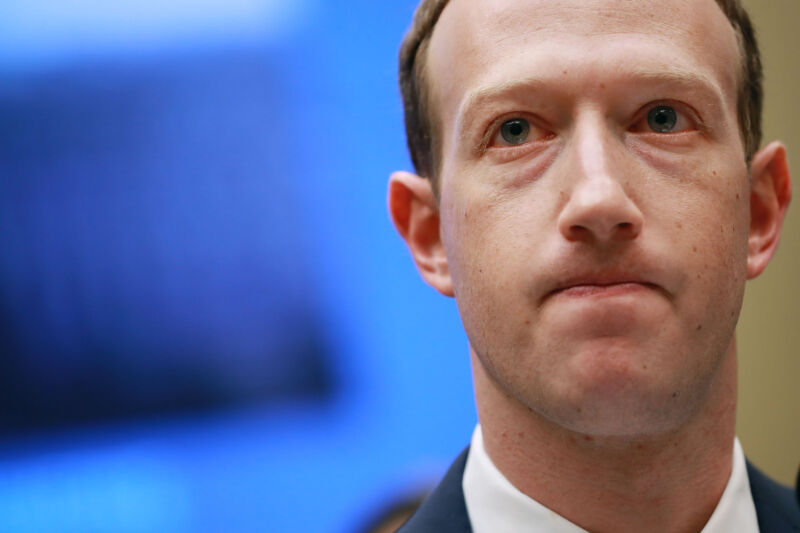
Close-up photograph of a man in a suit looking concerned.
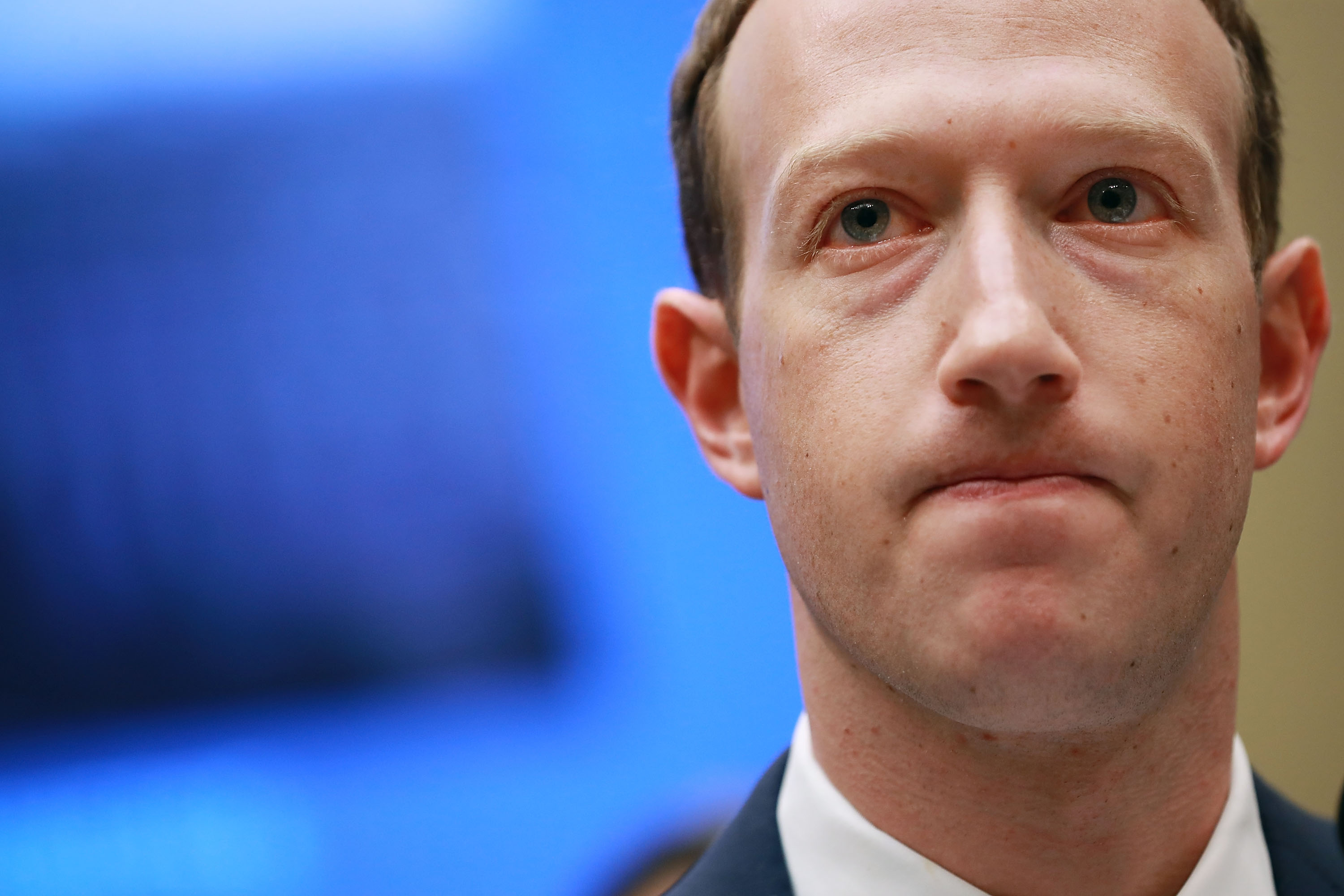
Enlarge / Facebook CEO Mark Zuckerberg.

Facebook had a problem on its hands. People were making posts that got caught in the company’s automated moderation system or were taken down by its human moderators. The problem wasn’t that the moderators, human or otherwise, were wrong to take down the posts. No, the problem was that the people behind the posts were famous or noteworthy, and the company didn’t want a PR mess on its hands.

So Facebook came up with a program called XCheck, or cross check, which in many instances became a de facto whitelist. Over the years, XCheck has allowed celebrities, politicians, athletes, activists, journalists, and even the owners of “animal influencers” like “Doug the Pug” to post whatever they want, with few to no consequences for violating the company’s rules.

“For a select few members of our community, we are not enforcing our policies and standards,” reads an internal Facebook report published as part of a Wall Street Journal investigation. “Unlike the rest of our community, these people can violate our standards without any consequences.”

“Few” must be a relative term at Facebook, as at least 5.8 million people were enrolled in the program as of last year, many of them with significant followings. That means a large number of influential people are allowed to post largely unchecked on Facebook and Instagram.

“PR fires”

The social media giant acknowledged that the program existed for politicians in 2019, but details of XCheck’s extent and mismanagement are new. Facebook is apparently aware of XCheck’s problems, based on excerpts from the report, but the company has struggled to fix the issues. Before making any changes to XCheck, the program’s product manager wrote in a report, “we have to balance that with business risk.”

XCheck was initially designed to keep “PR fires” to a minimum. When typical users post something that’s flagged by moderation algorithms or taken down by human moderators, they can file a report with Facebook. If they don’t win their appeal, there’s not much else they can do.

But when prominent users are moderated, they can air their grievances with their followers, creating a potential public relations headache. If the users are politicians, they might call for increased regulation of the platform. So rather than treat these elite users the same as everyone else, Facebook reportedly allows them to post whatever they like. If a post is flagged by an algorithm, it’s sent to a different set of moderators, which the WSJ says are “better-trained, full-time employees,” for review.

Yet as the list of users has grown, XCheck moderation teams apparently haven’t been able to keep pace. “We currently review less than 10% of XChecked content,” one document stated. It’s gotten so bad that elite users have been reportedly able to publish everything from disinformation to threats of violence, revenge porn, and more, allowing posts that violate Facebook’s policies to nonetheless appear on the feeds of thousands to millions of people.

VIP treatment

Even in cases where the content is ultimately removed, Facebook has treated VIP users differently from others. In the documents reviewed by the WSJ, the case of Neymar, the Brazilian soccer player, stands out. In 2019, he posted a video to his Facebook and Instagram accounts that contained nude photos of a woman who had accused him of rape. He claimed that she was extorting him.

For normal users, posting “nonconsensual intimate imagery” triggers a straightforward response—it is immediately deleted, and the person’s account is deactivated. Instead, Neymar’s video remained up for more than a day. Regular moderators couldn’t touch it, and by the time it was taken down by the XCheck team, 56 million people had seen it. The video was reposted 6,000 times, and many commenters bullied and harassed the woman. Neymar denied the rape allegations, and no charges were filed. But despite posting what Facebook itself called “revenge porn,” Neymar’s account was not deleted.

“After escalating the case to leadership, we decided to leave Neymar’s accounts active, a departure from our usual ‘one strike’ profile disable policy,” a Facebook review said.

“Tradeoffs”

“We know our enforcement is not perfect, and there are tradeoffs between speed and accuracy,” Facebook spokesperson Andy Stone said in a Twitter thread. “We have new teams, new resources, and an overhaul of the process that is an existing work-stream at Facebook.”

Some of the documents reviewed by the WSJ came from a person seeking federal whistleblower protection. The person reportedly turned over the same documents to the Security and Exchange Commission and to Congress.

As recently as March, users were being added to the XCheck lists, expanding a program that had already grown too unwieldy for Facebook to adequately manage. The company has reportedly set a goal to enforce “high severity” rule violations by the first half of this year. In the meantime, Facebook plans to assume “good intent” on the part of high-profile users in the program and take an approach of “innocent until proven guilty,” a product manager on Facebook’s Mistakes Prevention Team wrote.

“We do not have systems built out to do that extra diligence for all integrity actions that can occur for a VIP,” she wrote.

https://arstechnica.com/?p=1794212


Su Facebook 20 milioni di immagini di abusi sui minori e la crittografia intralcia le indagini della polizia

Crittografia rifugio dei criminali?

Il social network creato da Mark Zuckerberg ha annunciato qualche giorno fa la sua volontà di estendere la crittografia “end-to-end” a tutte le sue piattaforme, a partire dalle chiamate e video chiamate su Messenger.

Così come su WhatsApp, anche Facebook vuole sfruttare la tecnologia “end-to-end” per garantire agli utilizzatori di non essere spiati, proteggendone così la privacy e la sicurezza delle conversazioni.

Tutto molto bello, ma la National crime agency della Gran Bretagna, l’NCA, ha dichiarato con il suo direttore Rob Jones, che tale scelta da parte di Facebook non farebbe altro che rendere sempre più difficili le indagini sui reati di pedopornografia online, sugli abusi sessuali sui minori e i bambini.

La crittografia qui non farebbe altro che proteggere il mercato osceno delle immagini e del materiale audiovisivo che alimenta la pedopornografia, impedendo di fatto alla polizia di fare il proprio lavoro, che è anche di intelligence.

La pedopornografia online e su Facebook

In una conferenza stampa con i giornalisti, Jones ha spiegato che le forze dell’ordine si devono muovere in maniera rapida, molto rapida, quando si ha un buon indizio relativo a presunti abusi sessuali sui minori.

Crimini odiosi e particolarmente efferati che vanno perseguiti senza sosta, ma che richiedono una capacità di indagine molto ampia da parte della polizia, soprattutto sul terreno dei social media.

Nel 2020 sono stati denunciati al National Center for Missing and Exploited Children (NCMEC) degli Stati Uniti, direttamente dalle piattaforme web più popolari e dai social stessi, oltre 21 milioni di contenuti a sfondo pedopornografico e di abusi sessuali generali su minori, ha spiegato Jones, di cui la stragrande maggioranza, quasi 20 milioni, solo su Facebook.

Il G7 si confronta sul tema

Il tema in Gran Bretagna è così discusso, secondo quanto riportato dal quotidiano The Guardian, che il ministro dell’Interno, Priti Patel, porterà la questione della crittografia e dei suoi effetti più negativi sulla società e sulla repressione dei crimini violenti al tavolo del G7 di oggi e domani.

Tra le iniziative che saranno proposte al summit, troviamo: maggiori limitazioni all’utilizzo della tecnologia di crittografia “end-to-end”, la nascita di un fondo internazionale volto a contrastare i reati di crimini pedopornografici e nuove soluzioni per evitare che così tante immagini di abusi sui minori trovino ospitalità e rifugio sui social media.

Due anni or sono, le autorità di Regno Unito, Stati Uniti e Australia chiesero a Facebook di creare appositamente per le forze dell’ordine delle “backdoor” per accedere ai messaggi crittografati proprio per intercettare attività pedopornografiche online e attività criminali di varia natura, ma da Menlo Park fu opposto un secco rifiuto.

https://www.key4biz.it/su-facebook-20-milioni-di-immagini-di-abusi-sui-minori-e-la-crittografia-intralcia-le-indagini-della-polizia/373019/


Facebook eyes “Election Commission” in possible bid to shed political scrutiny

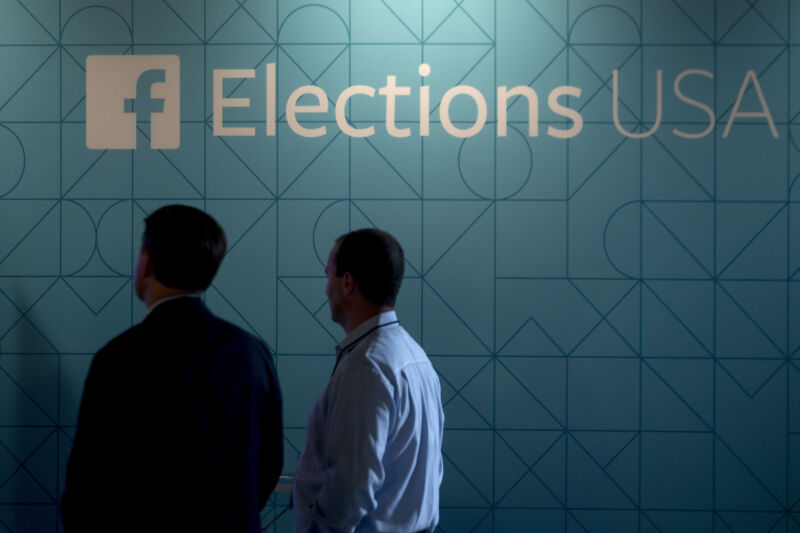
Guests stand next to a Facebook Elections USA sign in the Facebook Lounge ahead of the first Republican presidential debate at Quicken Loans Arena in Cleveland, Ohio, U.S., on Thursday, Aug. 6, 2015.
Enlarge / Guests stand next to a Facebook Elections USA sign in the Facebook Lounge ahead of the first Republican presidential debate at Quicken Loans Arena in Cleveland, Ohio, U.S., on Thursday, Aug. 6, 2015.

Facebook may finally be acknowledging that its handling of elections around the world has been less than stellar. And this time, the company’s response could amount to more than just another apology from Mark Zuckerberg.

The social media company is considering creating an “election commission” that would guide it on election-related issues around the world, according to a report in The New York Times. The commission would advise Facebook on everything from disinformation to political advertising, and if implemented, the change could be a boon for the company’s public relations. The commission would ideally also take some heat off CEO Mark Zuckerberg, who reportedly doesn’t want to be the “sole decision maker on political content,” the Times reports.

A Facebook spokesperson declined to comment for this story when contacted by Ars.

“There is already this perception that Facebook, an American social media company, is going in and tilting elections of other countries through its platform,” Nathaniel Persily, a law professor at Stanford University, told The New York Times. “Whatever decisions Facebook makes have global implications.”

Bungled elections

Facebook has caught plenty of flak over the years in its handling of elections in the US and elsewhere. Among its many missteps, the company bungled the handling of a disinformation and manipulation campaign by Russian operatives seeking to shape the outcome of the 2016 presidential election. Facebook also drew fire for its Cambridge Analytica scandal, in which a researcher gathered the personal data of 87 million users who hadn’t consented and handed it over to the consulting firm, which then used it to shape election and advertising campaigns for politicians around the world.

The missteps continued well after the 2016 election had receded. In Brazil, Facebook’s WhatsApp messaging service was a main conduit of disinformation in the 2018 elections, and the company’s flagship site was at the nexus of similar campaigns during the 2019 elections in India. Back in the US, Democrats for years had been decrying the company’s tolerance of Donald Trump’s inflammatory speech on the platform. And when he was ultimately banned in January after sparking an insurrection at the US Capitol, Republicans became furious.

In the run-up to the 2020 election, CEO Mark Zuckerberg said that Facebook would take steps to “protect our democracy,” though those steps were relatively small and well-trodden. They included encouraging voter registration, offering information about how elections work, and giving a vague promise to do things that would “reduce the chances of violence and unrest.” The company also added labels to posts with election-related disinformation, a strategy that has seen mixed results at best.

Passing the buck

Handing off contentious decisions related to politics and elections would allow the company to claim that it has sufficient external oversight in such cases, even though implementing any changes is ultimately the responsibility of Facebook’s executives.

The commission apparently takes cues from the company’s so-called Oversight Board, which reviews a small selection of contested moderation decisions—commissions and omissions—and suggests changes the company can make to address any related issues. Though nominally independent, the group still has Facebook’s fingerprints on it. Its board members, who range from nonprofit leaders to professors, journalists, and think tank executives, were initially selected by Facebook, and Facebook is allowed to propose replacements as members step down. Its trustees, which oversee the organization and confirm board members, are selected by Facebook.

The Oversight Board’s rulings are binding, which means that if the board says a post should be reposted or an account reactivated, Facebook must accept the decision. The board also provides broader recommendations for how the company can improve, and while these recommendations could drive more substantial changes on its platforms, they are non-binding. So far, the company has taken a pick-and-choose approach, implementing a majority of changes “fully or in part,” studying a few more, and taking no action on at least two of them.

Because of the way it’s set up, the Oversight Board is a reactive organization. Much like the US court system, it cannot rule on cases that are not brought before it. The election commission would apparently be more proactive, offering Facebook a chance to fix problems before they get out of hand.

https://arstechnica.com/?p=1790008


Facebook’s “Metaverse” gets a bit closer today with Horizon Workrooms

On Thursday, Facebook launched Horizon Workrooms—its first major step toward CEO Mark Zuckerberg’s imagined metaverse, an all-encompassing alternate reality that blends the real world with digital imaginations and enhancements.

Zoom for nerds in goggles

This isn’t the most flattering way to describe Horizon Workrooms, but it’s not exactly inaccurate. The basic concept is that instead of videoconferencing with a webcam, participants use virtual reality gear—like Facebook’s own Oculus Quest 2—to meet up in a VR workspace.

We haven’t been able to run the app yet; my own Oculus Quest is an original model, sadly unsupported for Horizon Workrooms. (We don’t know why the OG Quest isn’t supported but suspect it has something to do with enhanced controller-less hand tracking on the newer model.) Two-dimensional recordings almost certainly don’t do the experience justice—they look like Habbo Hotel and Bitmoji got together and had a baby.

Engadget, who got to test the app prerelease, reports that the real experience is considerably more impressive. Spatial audio processing renders your colleagues’ voices closer or farther away depending on how close you’re “seated” to one another in virtual space. There’s also the usual VR added-immersion factor, which is difficult to express to anyone who hasn’t experienced it directly.

Aside from providing the basics of getting together in a virtual “room” and chatting, Workrooms supports the usual teleconference features—whiteboards, screen sharing, chat, and so forth. Meeting participants can draw freehand on their own desk or the whiteboard, pin images from their computer to the whiteboard, and mark them up\, with the ability to export an image of the whiteboard itself to the computer for later use or sharing.

Body tracking, not Facebook tracking

Obviously, Horizon Workrooms supports head-tracking—if you turn your head to look at a colleague or a room whiteboard, your vision pans along with you. But Workrooms also supports controller-less gesture tracking, enabling one colleague to give another a thumbs-up or thumbs-down, among other gestures.

Thankfully, Facebook says it is abstaining from the less-friendly kind of tracking it normally performs on its users elsewhere. “Workrooms will not use your work conversations and materials to inform ads on Facebook,” the company says, and it also makes an effort to limit how much data leaves your office or home office in the first place.

Another feature Workrooms offers is a layered, mixed reality that incorporates passthrough video from the Quest 2’s sensors; participants can choose to look “through” the VR headset to see a grainy, grayscale image of what’s in the real world with them. (This should especially be a blessing for users with limited touch-typing skills.) Facebook promises neither it nor third-party apps will be allowed to access, view, or use images and videos from your real-world environment to target ads.

For those who don’t have their VR gear handy—or don’t want to use it—you can call into Workrooms with a standard webcam and microphone and show up on a virtual television screen within the workspace. Workrooms supports up to 50 people on a call, 16 of whom can be in full VR.

Quest 2 users can try Workrooms today

If you’re 18 years or older and have an Oculus Quest 2, you can head to the open beta of workrooms.com today and set up or join a Workrooms team with your friends and colleagues.

You’ll need to create a Workrooms account—separate from your Facebook and/or Oculus accounts—and agree to the terms of use (which include a Code of Conduct for all Workrooms use).

For those who would like to see a bit more but don’t have a Quest 2 to play with, there is a short video clip available on Facebook.

Listing image by Facebook

https://arstechnica.com/?p=1788653


Facebook reveals top posts but still won’t share key data about disinformation

Facebook reveals top posts but still won’t share key data about disinformation

Facebook released its first report today detailing which content it says is widely viewed on the site and Instagram. The report comes as research and news stories have highlighted how misleading posts and outright disinformation can draw intense engagement on the company’s platforms.

Much of the scrutiny has focused on far-right accounts, which according to Facebook’s own tool, CrowdTangle, receive the most engagement—likes, shares, and comments. For example, Kevin Roose, a reporter at The New York Times, uses CrowdTangle to tweet out a list of the “10 top-performing link posts by US Facebook pages every day, ranked by total interactions.” His experiment has revealed that, day after day, far-right accounts and pages from the likes of Ben Shapiro, Dan Bongino, and Newsmax appeared on the list, sometimes occupying multiple spots. Facebook’s critics have pointed to the list as evidence that the platform has become a right-wing media machine.

The Twitter account, Roose said, “drove executives crazy” at Facebook. They felt it was making Facebook look like it favored right-wing accounts. All of that brings us to today.

Facebook released the first of what will be a quarterly “Widely Viewed Content Report.” The report will appear alongside the company’s Community Standards Enforcement Report, an existing release that includes data on hate speech and child endangerment. The newest report is Facebook’s attempt to provide more “transparency and context,” said Anna Stepanov, the company’s director of product management.

The new report shows a slew of information, including which domains, links, pages, and public posts cracked the top 20, along with how many people saw that content. In a blog post, Stepanov pointed out that just under 13 percent of content views were posts with links—post types that may send users to other sites with disinformation—and that 57 percent of posts users viewed were from family and friends. Notably, the report does not include data on ads.

Scattered among the top posts are the expected meme questions (e.g., “What is something you will never eat no matter how hungry you get?”), a Joe Biden post, and how to DIY a swimming pool from old pallets.

Domains that received the most views are another significant part of the report, and here, Facebook could use more transparency and context. Among the top 10 domains are sites that have struggled to tame disinformation themselves, including YouTube and Twitter. The report doesn’t include any additional information like which channels or accounts the posts pointed to.

Partial picture

In focusing on views over engagement, Facebook is only providing part of the picture. As anyone who has used Facebook knows, there’s a significant difference between content appearing on a user’s news feed and their engaging with it. Many posts are displayed but quickly scrolled past. Those that draw engagement, though, are literally worth more. Advertisers will pay 10 times more for one engagement than they will a single view. By withholding information about engagement, the “Widely Viewed Content Report” obfuscates the impact of the disinformation.

The fact that family and friends are a primary generator of content doesn’t help counter the idea that Facebook might be reinforcing partisan echo chambers. One study showed that when a headline agreed with a person’s political views, the person was 20 percent more likely to share the link with friends, whether or not the person felt the information was true.

The way that Facebook calculates “widely viewed” is complicated, too. Only posts that are created or shared publicly are considered and shown in the report. All links, though, whether shared publicly or privately, are included, creating a misalignment in reporting the two different post types.

The report also omits what might be the most important number—the denominator that underlies these percentages, or the total amount of content that is viewed on Facebook every day. Saying that the 20 most widely viewed posts represent less than 0.1 percent of all US views is like saying only 0.03 percent of Americans got COVID yesterday. That may not seem like a lot, but when you multiply that number by how many people live in this country and when you consider the number of available hospital beds, the scope of the problem comes into sharper focus. Ars asked Facebook how much content was seen by users in the US, but the company refused to provide that information. Until Facebook discloses more data, no one will know the true extent of the company’s disinformation problem.

Still, it’s easy to make a quick-and-dirty estimate. Facebook has 1.88 billion daily active users, and many post several times per day. So there are likely tens of billions of content views per day. To pressure test that theory, I tallied the report’s top 20 posts, which the report said represent about 0.1 percent of all content viewed in the US, and then spread it out over the 91 days in the second quarter. The math suggests that, at a minimum, at least 10 billion posts are viewed every day in the US. Even that estimate is probably extremely conservative since it includes only links and public posts. If just a tiny fraction of that number is disinformation, the problem could be small as a percentage, like the report suggests, and simultaneously enormous in absolute terms.

https://arstechnica.com/?p=1788178


WhatsApp shuts down Taliban helpline in Kabul

Experts in the region said shutting down the WhatsApp numbers was "absurd" and "unhelpful."
Enlarge / Experts in the region said shutting down the WhatsApp numbers was “absurd” and “unhelpful.”
SOPA Images | Getty Images

WhatsApp has shut down a complaints helpline set up by the Taliban when it took control of Kabul, after the messaging app came under pressure to block the group from using its services.

The complaints number was supposed to act as an emergency hotline for civilians to report violence, looting or other problems. The Taliban advertised the helpline on Sunday when it captured the city, and has used similar WhatsApp hotlines in the past, for example when it took over the city of Kunduz in 2016.

After taking Kabul, the Taliban pledged to create a stable government and not to harm the “life, property and honor” of citizens.

Facebook, the owner of WhatsApp, said it had blocked the number on Tuesday, along with other “official Taliban channels,” and added that it was actively scanning group names, descriptions and profile pictures on the messaging app to try to prevent the Taliban from using it. It added that its team of native Dari and Pashto speakers were “helping to identify and alert us to emerging issues on the platform.”

Critics in the US have attacked WhatsApp, along with other social media platforms, for not taking more action to shut down Taliban communications.

But experts in the region said that shutting down the WhatsApp numbers was “absurd” and “unhelpful” at a time when the military group was in effect governing the country, and citizens in Kabul were facing looting, panic, and chaos.

“Preventing communication between people and the Taliban doesn’t help Afghans, it is just grandstanding,” said Ashley Jackson, a former Red Cross and Oxfam aid worker in Afghanistan, and author of a book on the Taliban and its relationship to Afghan civilians.

“If the Taliban all of a sudden can’t use WhatsApp, you’re just isolating Afghans, making it harder for them to communicate in an already panicky situation. [WhatsApp’s actions] are really misguided.”

Activists and academics say the group’s leadership pays attention to citizens’ complaints to maintain order, and to keep the Taliban rank-and-file in line.

“It’s long known that the Taliban has these helplines, they advertise them all over the country in response to news articles or NGO complaints about looting, because if there’s one thing they are doing, it is trying to maintain law and order,” Jackson said.

“I know it sounds improbable that these could actually help, but in this really bizarre, fast-moving situation, civilians need all the resources they can get, and this is one of them.”

Masuda Sultan, an Afghan-American entrepreneur and founder of a non-profit called Women for Afghan Women, praised the helpline on Twitter, saying that her office had been looted by 30 criminals calling themselves Taliban. “The complaints commission is asking to speak to them and may come to our office soon,” she wrote.

The WhatsApp helpline advertised in Kunduz in 2016 was used by various NGOs, and even the UN, to complain about—and get back—looted property, such as medical supplies.

Moustafa Ayad, who monitors Middle Eastern extremist group activity online at the Institute for Strategic Dialogue agreed that social media bans of official channels during this period were unhelpful, but warned he would also be wary of how WhatsApp could be misused by the Taliban.

Jackson also questioned the timing of Facebook and WhatsApp’s decision to ban Taliban-related accounts, saying that the US government is still engaged in peace talks with the militant group in Doha, and has signed a diplomatic agreement with its leadership, unlike terrorist groups such as Isis and al-Qaeda. “Why is this coming now, that they are taking power? Why didn’t it come years ago then?” she said.

Facebook said: “The Taliban is sanctioned as a terrorist organization under US law and we have banned them from our services. This means we remove accounts maintained by or on behalf of the Taliban and prohibit praise, support, and representation of them.

“Facebook does not make decisions about the recognized government in any particular country but instead respects the authority of the international community in making these determinations.”

© 2021 The Financial Times Ltd. All rights reserved Not to be redistributed, copied, or modified in any way.

https://arstechnica.com/?p=1787876