Dati di Whatsapp a Facebook, Garante Privacy irlandese apre un’indagine su richiesta di quello europeo
Il Garante Privacyeuropeo EDPB (European Data Protection Board) che raccoglie i regolatori dei 27 paesi della Ue, ha respinto da un lato la richiesta di bloccare tout court la condivisione dei dati di Whatsapp con la casa madre Facebook, ma dall’altro ha chiesto al Garante privacy irlandese, competente sul social network americano, di aprire un’inchiesta e di indagare in materia. Lo scrive la Reuters.
Il Garante tedesco ha giudicato illegali i nuovi termini di utilizzo di Whatsapp. L’EDPB condivide la decisione del garante tedesco e ha esteso ulteriomente lo stop alla condivisione dei dati fra Whatsapp e Facebook.
La replica di Whatsapp
A maggio WhatsApp aveva dichiarato che l’azione non aveva basi legittime e non avrebbe avuto alcun impatto sul lancio dell’aggiornamento della privacy policy. Giovedì però la compagnia si è adeguata, accogliendo con favore la decisione dell’EDPB di avviare un’indagine in Irlanda, e ha affermato che collaborerà con il regolatore irlandese per affrontare pienamente le questioni sollevate.
L’EDPB ha dichiarato giovedì che le condizioni per dimostrare l’esistenza di un’infrazione non sono state soddisfatte e ha deciso che non è necessario adottare misure definitive contro Facebook.
Contraddizione e ambiguità
Ma ha altresì aggiunto che a causa delle contraddizioni, delle ambiguità e delle incertezze notate nell’informativa di Whatsapp agli utenti, non si trova nella posizione di determinare con certezza quali attività di eloaborazione e trattamento dati stesse facendo Facebook e con quale capacità. Non c’erano inoltre informazioni sufficienti per stabilire con certezza se Facebook avesse già iniziato a trattare i dati degli utenti di WhatsApp per i propri scopi di comunicazioni di marketing e marketing diretto. Il garante europeo ha quindi chiesto al Garante irlandese di avviare un’indagine legale in via prioritaria
Amazon bought Facebook’s satellite team to help build Starlink competitor
Enlarge/ Image released by Amazon when it announced a deal with United Launch Alliance to use launch vehicles for Project Kuiper.
Facebook has sold its small-satellite Internet division to Amazon and said it has no plans to become an Internet service provider. Amazon and Facebook both confirmed the sale to Ars today.
The Information first reported that “Amazon has acquired a team of more than a dozen wireless Internet experts from Facebook in an effort to boost its multibillion-dollar effort to launch thousands of satellites… The workers are in the Los Angeles area and included physicists as well as optical, prototyping, mechanical, and software engineers who had previously worked on aeronautical systems and wireless networks, according to their LinkedIn pages.” One of those is Jin Bains, who is now a director at Amazon’s Project Kuiper. The employees reportedly moved to Amazon in April.
Facebook asked the FCC for permission to launch a low-Earth-orbit satellite in 2018, but the company called it a small research and development experiment and did not publicly commit to offering Internet service. Today, Facebook said that “it has not been our plan to launch a constellation of satellites, become an ISP, mobile operator, or tech vendor. We’ve long held the belief that satellite technology will enable the next generation of broadband infrastructure, and as part of our ongoing connectivity efforts, this team was focused on designing and testing new ways to advance satellite connectivity using optical communications and radio frequency systems and solutions. We are really proud of the work this team has accomplished and are excited to see what they will continue to build [at Amazon].”
Amazon to launch satellites in 2023 or later
Amazon plans a constellation of low-Earth-orbit satellites to compete against SpaceX’s Starlink service, but Amazon’s “Project Kuiper” is far behind the SpaceX venture. Amazon confirmed to Ars that it “did acquire a small number of employees from the Facebook Connectivity team and that the team moved over to Amazon earlier this year to work on Project Kuiper.” Amazon declined to say more about what the employees will work on within Kuiper.
SpaceX is already providing service to over 10,000 beta users with over 1,500 satellites, and the company says it will have near-global coverage in August. Amazon has US approval to launch 3,236 low-Earth-orbit satellites and says it plans to invest more than $10 billion in the project. But the company hasn’t said exactly when it will launch satellites or offer service. Amazon has said it has over 500 employees working on the Kuiper project, and its website lists over 200 open jobs in the division.
Amazon told Ars last month that 2023 is the earliest it expects to launch satellites. FCC rules give Amazon six years to launch and operate 50 percent of its licensed satellites, which means that the company needs to launch 1,618 satellites by July 30, 2026. Amazon would have to launch the rest of the licensed satellites by July 30, 2029. Amazon told the FCC it plans to offer broadband to customers after it launches the first 578 satellites.
Having sold off its satellite team, Facebook today said it will keep “working with our satellite operator partners to expand connectivity through Wi-Fi” and noted its partnership with Eutelsat on a project in sub-Saharan Africa. Facebook said it is involved in other collaborations such as the Telecom Infra Project and that “we believe these infrastructure investments will have a positive impact for the satellite industry, particularly as they work to expand connectivity to rural, hard-to-reach-areas.”
https://arstechnica.com/?p=1780364
Facebook tries to beat FTC lawsuit by pushing Chair Lina Khan off the case
Enlarge/ Lina Khan speaks to the Senate Commerce Committee on April 21, 2021, when her nomination to the FTC was being considered.
In an attempt to avoid government scrutiny, Facebook today petitioned the Federal Trade Commission to have Chair Lina Khan removed from the antitrust case against the social media giant.
Facebook’s petition comes shortly before the FTC must decide whether to continue its lawsuit against Facebook, which seeks to break up the company. The agency would have to submit an amended complaint because a judge dismissed the agency’s first attempt, which was filed by the FTC during the last weeks of the Trump administration.
Today’s Facebook petition was sent to the FTC and Khan, asking them “to recuse Chair Khan from participating in any decisions concerning whether and how to continue the FTC’s antitrust case against the company.” Facebook’s petition comes two weeks after Amazon filed one asking Khan to remove herself “from any antitrust investigation, adjudication, litigation, or other proceeding in which Amazon is a subject, target, or defendant.”
“Due process entitles any targeted individual or company to fair consideration of its factual and legal defenses by unbiased Commissioners who, before joining the Commission, have not already made up their minds about the target’s legal culpability,” Facebook wrote in its petition. “When a new Commissioner has already drawn factual and legal conclusions and deemed the target a lawbreaker, due process requires that individual to recuse herself from related matters when acting in the capacity of an FTC Commissioner.”
Facebook and Amazon haven’t identified a conflict of interest in the usual sense that would require Khan to recuse herself. They don’t like the conclusions she has previously made about the state of competition in the US—and Facebook today pointed to a legal precedent that it believes supports its petition for recusal. In that 1960s case decided by the US Court of Appeals for the District of Columbia Circuit, “the DC Circuit deemed it an ‘appalling’ violation of due process when a prior FTC Chair participated in a matter against a specific defendant because he ‘had investigated and developed many of the[] same facts’ regarding that defendant as a congressional staffer,” Facebook wrote. Amazon cited the same case in its petition.
“That precedent, as well as the federal ethics rules, compel Chair Khan’s recusal from any decisions regarding the pending antitrust case against Facebook,” the petition said.
Commissioners have opinions
Commissioners on agencies including the FTC and Federal Communications Commission are expected to be partisan. US law lets three of the five FTC commissioners “be members of the same political party” and gives the president the right to nominate commissioners and choose the chair. There’s a similar US law specific to the FCC that lets the president’s party have a majority on that commission as well.
It was Khan’s antitrust research and approach to competition policy that led to President Joe Biden nominating her to the commission and then appointing her chair. Laws such as the Administrative Procedure Act dictate the processes that agencies must follow to prevent decisions that are arbitrary, capricious, an abuse of discretion, or otherwise illegal.
But given the partisan basis of these commissions, it would be unusual for a commissioner not to have an opinion on the industries and companies they regulate. For example, FCC Chairman Ajit Pai vowed to overturn net neutrality rules before he was named chairman, and the repeal he led ultimately held up in court.
In a 1995 case involving an FCC waiver decision that was heard by the US Court of Appeals for the District of Columbia Circuit, judges rejected an argument that certain FCC commissioners should have recused themselves. A high bar has to be met for a nonrecusal decision to be overturned by a court, the judges wrote in a paragraph that cited three cases, including the same FTC case that Facebook and Amazon cited in their petitions.
“In an adjudicatory proceeding, recusal is required only where ‘a disinterested observer may conclude that [the decision-maker] has in some measure adjudged the facts as well as the law of a particular case in advance of hearing it,'” the ruling said. “In other words, we will set aside a commission member’s decision not to recuse himself from his duties only where he has ‘demonstrably made up [his] mind about important and specific factual questions and [is] impervious to contrary evidence.'”
The DC Circuit court also clarified its position in a 1980 case in which it sided with FTC Chairman Michael Pertschuk when he was accused of prejudging issues of fact in a rulemaking proceeding. Recusal requirements can’t be too strict because that “would necessarily limit the ability of administrators to discuss policy questions,” the court wrote. “The legitimate functions of a policymaker, unlike an adjudicator, demand interchange and discussion about important issues. We must not impose judicial roles upon administrators when they perform functions very different from those of judges.”
Facebook cites Khan’s earlier work and statements
Assuming Khan doesn’t recuse herself, the full commission could vote on whether she has to sit out the Amazon and Facebook cases. “After Amazon filed its petition for recusal, the FTC pointed to a rule that says it’s first up to a commissioner to recuse himself or herself,” Bloomberg wrote today. “If he or she declines to do so, the full commission votes on the matter without the participation of the commissioner who’s subject to the recusal request.”
Facebook’s petition cited Khan’s work for the Open Markets Institute, an advocacy group, between 2011 and 2018; academic articles; her work as counsel in a congressional investigation into digital markets in 2019 and 2020; and statements she made in public appearances and posts on Twitter.
“Chair Khan published academic articles discussing her belief that Facebook violated the antitrust laws,” Facebook wrote. “She has already concluded that Facebook ‘has both foreclosed competitors from its platform and appropriated their business information and functionality’ and that, ‘[d]espite facing public backlash for both its apparent deception and its pervasive surveillance, Facebook did not change course—perhaps because it no longer faced serious competition in the social network market.'”
When Khan was legal director for Open Markets, the group urged the FTC to reverse its approvals of Facebook’s purchases of Instagram and Facebook, the petition said. The House Judiciary Committee Antitrust Subcommittee’s report Khan worked on “concluded that Facebook ‘acquired Instagram to neutralize a nascent competitive threat,'” Facebook noted.
Facebook summarized Khan’s statements to the media as follows:
In interviews and media appearances, Chair Khan has discussed her beliefs on Facebook’s culpability under the antitrust laws, including in the context of discussing the Subcommittee’s Report. Last year, she told the New York Times that Facebook had engaged in “killer acquisition[s]… in several cases” and that “Facebook’s acquisition strategy was basically a land grab to… lock up the market.” In particular, she concluded that Facebook’s “purchase of Instagram was an effort to really neutralize… competitive threats,” and the FTC’s decision to “allow[] [the Instagram acquisition] to go through” in 2012 was an “institutional failure” that demands “a moment of reckoning.”
Facebook also pointed to a Twitter thread in which Khan applauded the FTC’s lawsuit against Facebook.
“Chair Khan’s statements—which are unsupported and contrary to law—convey to any disinterested observer that she has already decided the material facts relevant to the Commission’s pending antitrust lawsuit against Facebook, well before becoming a Commissioner,” Facebook wrote in its conclusion. “Chair Khan has also already concluded that Facebook was liable under the antitrust laws. Thus, Chair Khan’s recusal is necessary in order to protect the fairness and impartiality of the proceedings.”
Facebook cited ethics rules that require any federal official to “avoid an appearance of loss of impartiality in the performance of [her] official duties.” The company added that the “Office of Government Ethics has specifically noted that an official’s ‘political… association[s]… may raise an appearance question’ requiring recusal even if they do not give rise to a ‘covered relationship.'” Facebook claimed that “Chair Khan’s leadership of the Subcommittee’s investigation and Majority Staff Report illustrates exactly the type of ‘political association’ that warrants recusal.”
FTC and 46 states sued Facebook
The FTC and a coalition of 46 states and the District of Columbia sued Facebook in December, asking for a permanent injunction that would force it to divest Instagram and WhatsApp and “seek prior notice and approval for future mergers and acquisitions.” The antitrust fight against Facebook has been bipartisan, as the suit was filed when there was still a 3-2 Republican majority on the FTC—though two of the three Republicans voted against filing the lawsuit.
Then-Chair Joseph Simons, a Republican, joined two Democrats in voting to sue Facebook. The two Republicans who voted against filing the lawsuit, Noah Phillips and Christine Wilson, are both still on the FTC and could thus vote on Khan’s potential recusal and on whether to continue the lawsuit against Facebook.
On June 28, US District Judge James Boasberg in the District of Columbia dismissed the FTC’s complaint against Facebook, saying it is “legally insufficient” because the “FTC has failed to plead enough facts to plausibly establish a necessary element of all of its Section 2 claims—namely, that Facebook has monopoly power in the market for Personal Social Networking (PSN) Services.” The judge was skeptical of the FTC’s challenge “to Facebook’s policy of refusing interoperability permissions with competing apps” because “there is nothing unlawful about having such a policy in general.”
The judge also dismissed the states’ entire case against Facebook. This doesn’t necessarily mean the FTC’s case is over, because Boasberg dismissed the FTC’s complaint without prejudice and did not dismiss the federal agency’s entire case. He also wrote that the FTC can file an amended complaint within 30 days and that “the agency is on firmer ground in scrutinizing the acquisitions of Instagram and WhatsApp, as the Court rejects Facebook’s argument that the FTC lacks authority to seek injunctive relief against those purchases.” While the states waited too long to challenge Facebook’s 2012 purchase of Instagram and its 2014 purchase of WhatsApp, the FTC can still challenge the acquisitions because “federal antitrust laws grant unique authority as sovereign law enforcer,” he wrote.
https://arstechnica.com/?p=1780276
Trump prepara una class action contro Facebook e Twitter
L’ex presidente Donald Trump, ha in programma di annunciare oggi azioni legali collettive contro il CEO di Facebook Mark Zuckerberg e il CEO di Twitter Jack Dorsey, dicono le fonti ad Axios.
Questa è l’ultimo assalto nella battaglia durata anni di Trump con Twitter e Facebook per la libertà di parola e la censura. Trump è completamente bandito da Twitter ed è bandito da Facebook per altri due anni, sino al 2023. L’annuncio sarà alle ore 11 East, circa le 17 in Europa
Lo sforzo legale di Trump è supportato dall’America First Policy Institute, un’organizzazione no-profit focalizzata sulla perpetuazione delle politiche di Trump. Il presidente ed il CEO dell’associazione lo accompagneranno nell’annuncio. Le azioni legali collettive gli consentirebbero di citare in giudizio i due amministratori delegati per conto di un gruppo più ampio di persone che secondo lui sono state censurate da politiche faziose, quindi unirebbero le forze di molti comunicatori colpiti dalla censura sul web. Ad ora Facebook e Twitter hanno rifiutato di commentare, ma dovranno farlo in tribunale. Gli accusatori dovranno presentare le prove del comportamento prevenuto delle piattaforme. Il presidente e i suoi alleati hanno ripetutamente criticato i divieti come censura. I giganti della tecnologia sostengono di essere stati messi in atto per motivi di sicurezza dopo l’assedio del Campidoglio a gennaio. Il consiglio di sorveglianza indipendente di Facebook ha confermato la decisione di Facebook di sospendere Trump a maggio.
In attesa di un legislazione seria e completa che tuteli gli utenti e la loro libertà di parola dagli abusi e i social media, spesso influenzati da poteri non democratici, questa potrebbe essere la più grande misura mai presa a favore della libertà di parola. Una battaglia che non sarà facile, ma che vedremo come andrà a finire.
Grazie al nostro canale Telegram potete rimanere aggiornati sulla pubblicazione di nuovi articoli di Scenari Economici.
Fra Mass Media ormai completamente uniformati ai bollettini di informazione del Potere, Scenari Economici rimane una voce che presenta opinioni libere ed indipendenti. Aiutaci a crescere ed a farci conoscere, sia condividendo i nostri contenuti, sia, se vuoi, con una donazione. Grazie!
Facebook, Twitter pledge to fight abuse of women but leave lots of room for failure
Four major social media companies yesterday pledged to make efforts to improve the safety of women on their platforms. Facebook, Google, TikTok, and Twitter all signed the pledge in response to the recommendations of a working group of 120 experts organized by the Web Foundation.
“For too long, women have been routinely harassed, attacked, and subsequently silenced in online spaces. This is a huge threat to progress on gender equality,” said Web Foundation Senior Policy Manager Azmina Dhrodia in a statement. Abuse against women online has reached epidemic proportions, with 38 percent of women reporting personal experience with online violence, according to an Economist Intelligence Unit report.
The pledges represent a step in the right direction, but it’s unclear if they’ll do much to address online abuse. “I’m really grateful to Web Foundation for work that they’ve done, genuinely, to get platforms to make some efforts in this regard because there’s been very little movement over time,” Sarah Sobieraj, a professor at Tufts University and faculty associate at the Berkman Klein Center for Internet and Society, told Ars.
“Having said that, looking at the commitments, it’s pretty difficult to know what they’re going to mean or what they’re going to look like,” she said. “They’re very open-ended. A lot depends on how much the platforms are willing to do.”
Eight pledges
The pledges outline eight tactics split evenly between two broad categories: curation and reporting.
The companies promise to:
Build better ways for women to curate their safety online by:
Offering more granular settings (e.g. who can see, share, comment, or reply to posts)
Using more simple and accessible language throughout the user experience
Providing easy navigation and access to safety tools
Reducing the burden on women by proactively reducing the amount of abuse they see
Implement improvements to reporting systems by:
Offering users the ability to track and manage their reports
Enabling greater capacity to address context and/or language
Providing more policy and product guidance when reporting abuse
Establishing additional ways for women to access help and support during the reporting process
Indeed, those commitments don’t sound very specific, and users may question how thoroughly the pledges will be implemented—social media companies have made it a habit of asking for forgiveness when their half-efforts have fallen short. The way the pledges are written gives the platforms plenty of leeway.
Much of the emphasis is on giving users greater control over what they see and improving the reporting process. Many social media platforms have opaque reporting processes that frequently result in no action being taken against harassers. A moderator reviewing a report may misunderstand the context of a post, for example, or fail to grasp the meaning of coded language. Those shortcomings mean that enforcement of existing policies is often uneven.
Even if platforms were to enforce their policies more consistently, the pledges above still mostly place the burden of dealing with abuse on the user, not the platform. “These mechanisms for flagging or reporting are vital—they’re absolutely essential,” Sobieraj said. “But you can’t unsee or unread the content that comes through to you. It’s a lot of work for the women who are heavily targeted. It’s time consuming, but also it’s very upsetting.”
“Not only is it a burden on recipients,” she added, “but also, the senders still know that the recipients have to read [the posts] in order to [report them]. [The abusers] still get the satisfaction. It really needs to be disincentivized.”
To cope with abuse, some women have taken to outsourcing the management of their social media accounts. It’s a drastic measure, though, and it’s costly, making it unavailable to the vast majority of women on social media.
“We see that the abuse is especially burdensome for women of color, women from religious minority groups, queer women, and so on,” Sobieraj said. “If people start to recede from participating in public spaces, it’s not fair to them, but it also isn’t fair to the rest of us. The people who leave, there’s a pattern. It’s not that it’s random. We’re going to lose certain groups of voices. Maybe it doesn’t feel like that’s a big deal if you’re talking about pop culture, but if you’re talking about politics, it’s pretty important. And I’d argue that it’s pretty important about pop culture, too.”
Proactive solutions
Rather than keeping the burden of combatting abuse largely on users, Sobieraj said social media platforms should take more proactive steps when people become the object of online violence. For one, repeat offenders who aren’t yet banned should have their posts held for moderation, effectively forcing the platform to sign off on the content before it’s visible to anyone, Sobieraj said. She suggested that platforms monitor content trends for people who would likely be the target of abuse and moderate the mentions of the person until the attention wanes.
Preemptive moderation in these cases would take the burden off targeted users so they and others wouldn’t have to see the content. It would also remove a key incentive that motivates many abusers, without disrupting everyone else, Sobieraj said. With those safeguards in place, the vast majority of content could still flow freely on social platforms.
Of course, these solutions would require platforms to take a more active role in content moderation. The companies might have this sort of enforcement in mind—the fourth pledge under “curation” could be interpreted that way. But history has shown that social media companies are loath to preemptively moderate content.
The other pledges are helpful but not revolutionary. To follow through on them, platforms likely wouldn’t have to change much. The companies could simply tweak existing systems that are already in dire need of improvement. The result could end up being more algorithmic Band-Aids on problems that algorithms still haven’t solved.
https://arstechnica.com/?p=1777873
MWC21, a Barcellona la industry delle Tlc contro i GAFA
Il mondo alla rovescia se all’ingresso del Mobile World Congress di Barcellona campeggia un’enorme maxi cartellone pubblicitario di Amazon Web Services. Niente Vodafone, Telefonica o Orange ma il leader globale del cloud. E in effetti sono già molti gli operatori tradizionali che hanno siglato un contratto con l’ad di AWS Adam Solipsky per i servizi cloud. Fra questo Swisscom, che è soltanto l’ultimo in ordine di tempo ad aver siglato un contratto con la tech company americana. Lo scrive oggi Les Echos, ricordando come lunedì scorso, giorno di apertura della mega fiera catalana delle Tlc, le grandi telco europee abbiano aperto la kermesse attaccando frontalmente i GAFA.
“Il nostro modello di business non sarà mai la vendita di dati personali”, ha detto Stéphane Richard amministratore delegato di Orange. “Com’è possibile che Whatsapp non venga trattato come tutti gli altri operatri Tlc? I GAFA mobilizzano circa l’80% della nostra rete ma non pagano un centesimo!”, ha denunciato Timotheus Hoettges, l’ad di Deutsche Telekom.
<!-- LARGE RECTANGLE POST - CORPO TESTO
-->
Un ruolo centrale
Per le telecomunicazioni la pandemia è stata un’arma a doppio taglio. Da un lato, ne ha consacrato il valore strategico: senza fibra e 4G niente smart working e niente DAD. Tuttavia, in termini di utilizzo, i grandi vincitori della pandemia sembrano essere i vari Facebook, Google, Apple e Zoom così come i grandi player del Cloud come Amazon e Microsoft.
Nel primo trimestre sia Facebook sia Apple hanno entrambe raddoppiato gli utili, perché la crisi innescata dal virus ha accelerato lo sviluppo di mercati digitali come l’eCommerce e le video conferenze. Consentendo inoltre ai dati di accumulare masse sempre crescenti di dati.
Nel 2025, secondo stime di Orange, l’economia dei dati raggiungerà quota 4 miliardi di dollari, che sarà però concentrata fra un pugno di player della rete.
Il tema della ripartizione del valore fra Telco e OTT è ormai un classico: le telco da anni vorrebbero far pagare gli OTT per l’uso delle loro reti. Peraltro, gli investimenti infrastrutturali attesi nei prossimi anni sono colossali. Secondo stime della GSMA, fra oggi e il 2025 si parla di 900 miliardi di dollari in investimenti di cui l’80% per il 5G.
A peggiorare il quadro per le Tlc, il fatto che negli ultimi tempi gli OTT stanno sempre più invadendo il campo delle Tlc entrando nell’arena della connettività. Facebook e Google lo fanno con i cavi sottomarini che collegano i diversi continenti fra loro. Ma anche i player del cloud che puntano all’utile sfruttando la diffusione del 5G.
Regole antiquate tagliate sulle reti del secolo scorso
E ancora, la pandemia ha ancor di più ampliato la concorrenza. Nel mercato digitale, le telco non competono più soltanto fra loro. Eppure il contesto regolatorio non è adeguato, “è fermo alle vecchie reti del secolo scorso”, attacca José Maria Alvarez-Pallete Lopez, l’ad di Telefonica.
Di fronte all’attacco frontale delle telco, gli OTT si sono giocati la carta della complementarietà. “Noi portiamo i benefici del Cloud alle telecom”, ha detto Adam Solipsky. “Si tratta di passare da un modello di investimenti in infrastrutture che è pesante e lento ad un modello di affitto più flessibile ed economico”, ha aggiunto.
Il che secondo AWS consentirebbe alle Tlc di concentrarsi su ciò che conta veramente, vale a dire il servizio ai clienti. Cosa diranno le telco? Intanto, chiedono a Bruxelles di creare un vero mercato unico digitale, in grado di competere con Cina e Usa.
House committee approves bill that could break up Amazon, Apple, and Google
The House Judiciary Committee approved antitrust legislation that could prohibit platform operators like Amazon, Apple, Google, and Facebook from favoring their own products and services, and the legislation could even break up industry giants by forcing them to eliminate or sell certain divisions. Companies could also face fines of 15 percent of their annual revenue.
Bills introduced by Democrats were approved in a hearing that began Wednesday morning, recessed at 5 am EDT Thursday, reconvened late Thursday morning, and finished around 3 pm. The final and most controversial bill approved was the Ending Platform Monopolies Act, which “eliminates the ability of dominant platforms to leverage their control over across multiple business lines to self-preference and disadvantage competitors in ways that undermine free and fair competition,” a press release from Antitrust Subcommittee Chairman David Cicilline (D-R.I.) on June 11 said.
The 21-20 vote went mostly along party lines, but Republicans Ken Buck (R-Colo.) and Matt Gaetz (R-Fla.) supported the bill. Democrats who opposed it were Zoe Lofgren (D-Calif.); Eric Swalwell (D-Calif.); Lou Correa (D-Calif.); and Greg Stanton (D-Ariz.).
The bill text says it seeks to “eliminat[e] the conflicts of interest that arise from a dominant online platform’s concurrent ownership or control of an online platform and certain other businesses.” Under the bill text, large platform operators have conflicts of interest when they own or control a separate line of business that creates the incentive and ability to “advantage the covered platform operator’s own products, services, or lines of business on the covered platform over those of a competing business” or “exclude from, or disadvantage, the products, services, or lines of business on the covered platform of a competing business.”
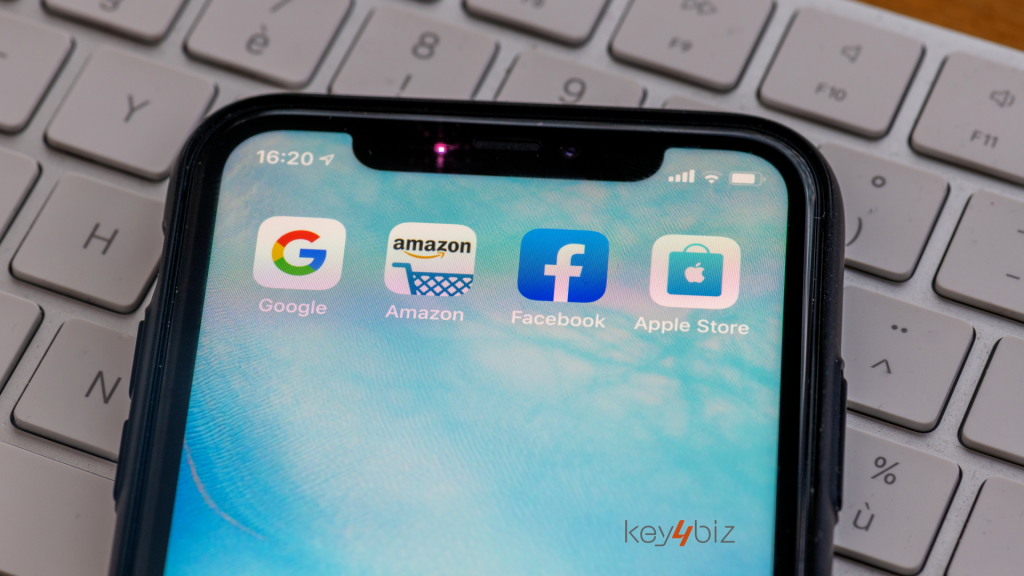
That could describe Amazon’s online marketplace, Apple’s App Store, or Google search, as those companies use their platforms to pitch their own products in competition with third-party businesses that rely on the giants’ platforms to reach users. House Democrats last year issued a long report outlining their concerns with those companies and Facebook’s “monopoly power in the market for social networking.”
Conflicts of interest
The conflicts of interest as defined in the legislation approved today would be illegal if the bill becomes law. A large company would also violate the proposed law if it “offers a product or service that the covered platform requires a business user to purchase or utilize as a condition for access to the covered platform, or as a condition for preferred status or placement of a business user’s product or services on the covered platform.”
“By operating as both the platform and as a competitor on the platform, these firms often possess an irreconcilable conflict of interest enabling them to harm competition by preferencing their own products and harming rivals,” Judiciary Committee Chairman Jerrold Nadler (D-N.Y.) said.
Companies that are found to violate the proposed law would have to terminate the offending service “as soon as is practicable.” They would get a long grace period before any punishment, though, as the amended version of the bill says that companies would face civil penalties and lawsuits from US antitrust regulators if they fail to comply “within two years of the [Federal Trade] Commission or Department of Justice designating a covered platform.”
Fines of up to 15% of annual revenue
The separate American Innovation and Choice Online Act was approved before the committee went into recess around 5 am. It passed in a 24-20 vote and would prohibit conduct that “advantages the covered platform operator’s own products, services, or lines of business over those of another business user; excludes or disadvantages the products, services, or lines of business of another business user relative to the covered platform operator’s own [offerings]; or discriminates among similarly situated business users.”
Of the 24 aye votes, 21 came from Democrats and three came from Republicans Buck, Gaetz, and Burgess Owens (R-Utah). Democrats Lofgren, Swalwell, Correa, and Stanton opposed the bill.
The bill “restores competition online and ensures that digital markets are fair and open… by preventing dominant online platforms from using their market power to pick winners and losers, favor their own products, or otherwise distort the marketplace through abusive conduct online,” Nadler said. He went on to say that “a small set of online platforms have become gatekeepers for much of the digital marketplace,” often leaving businesses and consumers with no “meaningful alternatives.” He said that “these dominant platforms often compete directly against the very businesses that rely on their platform” and that this conduct “eliminates incentives and opportunities for small businesses and entrepreneurs to compete in the digital economy.”
The bill provides for civil penalties of up to 15 percent of a company’s total revenue over the previous calendar year or up to 30 percent of the company’s US revenue in the offending line of business, whichever is higher. Companies could also face payments of restitution and refunds, “disgorgement of any unjust enrichment,” and injunctions preventing further violations.
That bill and others greenlighted by the committee must still be approved by the full House. They would also need approval from the Senate, where legislation can be blocked more easily because Democrats do not have a filibuster-proof majority and haven’t taken action to change or eliminate the filibuster. Though the bills passed through the Judiciary Committee, The Wall Street Journal wrote that “much of the effort faced intensive lobbying by affected firms that slowed the committee’s work and foreshadowed a pitched battle in the Senate.”
While these bills could benefit Internet users and businesses that need access to online platforms, there has been no similar push in Congress to regulate the regional broadband-access monopolies that leave users with high monthly bills and little to no choice.
Big Tech fights proposed laws
Google slammed the legislation, arguing that “American consumers and small businesses would be shocked at how these bills would break many of their favorite services.” Apple is hoping it won’t have to allow installation of iPhone and iPad apps outside of Apple’s App Store, citing security risks and claiming it would “eliminat[e] choice” because users who want “direct access to applications without any kind of review have sideloading today on other platforms. The iOS platform is the one where users understand that they can’t be tricked or duped into some dark alley or side road where they’re going to end up with a sideloaded app, even if they didn’t intend to.”
The committee yesterday also approved the Platform Competition and Opportunity Act. Cicilline’s press release said this proposed law “prohibits acquisitions of competitive threats by dominant platforms, as well [as] acquisitions that expand or entrench the market power of online platforms.” The House committee approved the Augmenting Compatibility and Competition by Enabling Service Switching (ACCESS) Act, which bill sponsors say “promotes competition online by lowering barriers to entry and switching costs for businesses and consumers through interoperability and data portability requirements.”
“Facebook would appear to be the target [of the ACCESS ACT], given that social media profiles are basically impossible to port from one network to another,” we wrote in previous coverage.
The Merger Filing Fee Modernization Act was approved and would raise filing fees to give the Department of Justice and Federal Trade Commission more resources “to aggressively enforce the antitrust laws.” The committee also approved the Republican-sponsored State Antitrust Enforcement Venue Act to ensure that “state attorneys general are able to remain in the court they select rather than having their cases moved to a court the defendant prefer.”
Microsoft’s status questioned by Republicans
One point of contention between the political parties is whether Microsoft would count as a “covered platform” and have to follow new antidiscrimination regulations. “Republicans questioned why the criteria for covered platforms in the legislation appeared tailored to exempt Microsoft,” Bloomberg wrote. Democrats denied that Microsoft would be exempt.
The American Choice and Innovation Online Act and other competition bills written by Democrats define “covered platform” as one that has at least 50 million US-based monthly active users and at least 100,000 US-based businesses using the platform, is owned or controlled by an entity with net annual sales or market capitalization greater than $600 billion, and “is a critical trading partner for the sale or provision of any product or service offered on or directly related to the online platform.”
Rep. Pramila Jayapal (D-Wash.) said at the hearing “that she thinks Microsoft would count as a critical trading partner because of its cloud platform,” according to Bloomberg. “‘The assumption that Microsoft is not covered is incorrect,’ Jayapal said after several lawmakers questioned why the definition in the bills appeared tailored to exclude Microsoft,” the Bloomberg article stated.
https://arstechnica.com/?p=1776055
Facebook is a hub of sex trafficking recruitment in the US, report says
Serhii Ivashchuk/Getty Images
Facebook is the most commonly used social media platform for human sex trafficking recruitment in the US, according to a new report published by the Human Trafficking Institute.
Last year, 59 percent of victims in active cases who were recruited through social media were found through Facebook, the report states, with 41 percent of all recruitment taking place online.
“The Internet has become the dominant tool that traffickers use to recruit victims, and they often recruit them on a number of very common social networking websites,” Victor Boutros, CEO of the Human Trafficking Institute, told CBS News. “Facebook overwhelmingly is used by traffickers to recruit victims in active sex trafficking cases.”
The 2020 Federal Human Trafficking Report draws its data from active federal criminal and civil human trafficking cases. Last year, there were 579 active prosecutions and 200 civil suits. Among criminal cases, there were 1,499 victims and 1,007 defendants, and 94 percent of criminal prosecutions were for sex trafficking—only 6 percent were for forced labor.
Women and girls were overwhelmingly targeted by sex traffickers, with 98 percent of criminal cases involving female victims. Most victims—91 percent—were from the US, and a majority were burdened with pre-existing vulnerabilities, chiefly substance dependency or having run away from home.
Facebook was the most common platform for child recruitment, with the report noting that “65% of child victims recruited on social media were recruited through Facebook.” Those findings run counter to trends in teen usage of Facebook. Though around 70 percent of American adults frequent the site, it’s no longer the favored platform among teens—only 51 percent used the network, while YouTube, Instagram, and Snapchat took the top spots in a 2018 survey. Yet, the report says, “Despite Facebook’s reputation as a less popular platform among teenagers, it was a more common platform for recruiting child victims than adult victims in 2020 active sex trafficking cases.”
“Sex trafficking and child exploitation are abhorrent, and we don’t allow them on Facebook,” Facebook spokesperson Jeanne Moran said in a statement to Ars. “We have policies and technology to prevent these types of abuses and take down any content that violates our rules. We also work with safety groups, anti-trafficking organizations, and other technology companies to address this, and we report all apparent instances of child sexual exploitation to the National Center for Missing and Exploited Children.”
After Facebook, the next most common venues for online socialization of child victims were Instagram and Snapchat. Among adult victims, WeChat was the most common, followed by Facebook and then Instagram. Just under half the active criminal cases researched in the report involved children; nearly all of the victims were between the ages of 14 and 17.
In 2020, the Internet was the most common venue for victim recruitment. In 244 cases across all ages, the Internet was the primary location, with recruitment on the street and at stores far behind, at 43 and 10 cases, respectively. Facebook was the primary location in 78 active cases.The Human Trafficking Institute points out that its report is not on the prevalence of human trafficking in the US but rather of cases being prosecuted at the federal level.
Part of the reason why the Internet—and likely Facebook by extension—is so prevalent in the report is because it only considers federal cases. In those cases, law enforcement appears to rely heavily on the Internet for its investigations. “The Internet is implicated in many sex trafficking situations, but the high numbers of federal prosecutions involving Internet solicitation are equally if not more reflective of the strategies law enforcement use to investigate these crimes,” the report says.
https://arstechnica.com/?p=1772081
Facebook confirms the realization of its own augmented reality software
The social network confirmed the development of an operating system for augmented reality glasses.
June 9, 2021 2 min read
This article was translated from our Spanish edition using AI technologies. Errors may exist due to this process.
Facebook confirmed that the company is already working on its own operating system for augmented reality (AR) hardware in order to optimize performance, energy efficiency and computational capacity in normal-looking glasses.
On the second day of June, Facebook shared the roadmapwith augmented reality technology in the Spark AR Studio work team, which is in charge of developing the software with which AR effects are designed and implemented in devices and applications. of the social network. It is a more long-termdevelopment project .
However, during a broadcast by the AMA account in the company of Andrew Bosworth , Facebook’s vice president of AR / VR, and Mak Zuckerberg , CEO, they shared more details about the future plans.
They commented that virtual reality glasses would be accompanied by thermal glass protection . Also, they will have a casual size so that they look like normal glasses but with a capacity similar to that of a computer. On the other hand, their design will be based on the microkernel architecture so that they are safe and reliable.
https://www.entrepreneur.com/article/374063
I no-vax valgono 1,1 miliardi di dollari per Facebook e Instagram. L’indagine
La vaccinazione contro il Covid-19 prosegue a gonfie vele nel nostro Paese, solo nell’ultimo fine settimana sono state somministrate più di 1,2 milioni di dosi. Non sembra così lontano l’obiettivo posto dal Governo Draghi di vaccinare più del 70% della popolazione entro settembre prossimo.
Un percorso però non privo di ostacoli, perché il fronte sociale, civile e politico che si oppone alla somministrazione dei vaccini contro il Coronavirus, i cosiddetti “no vax”, è ancora ampio e ramificato sul territorio regionale, anche grazie ad una diffusa campagna di disinformazione e costruita su vere e proprie notizie false che trova ampia eco sui social network e sulla stampa nazionale.
<!-- LARGE RECTANGLE POST - CORPO TESTO
-->
L’indagine americana sui no-vax e e i social
Secondo un nuovo Rapporto del Center for Countering Digital Hate (CCDH), ad oggi sono oltre 62 milioni gli utenti che in tutto il mondo seguono le pagine “no vax” sui principali social network globali come Facebook, Instagram, Youtube e Twitter.
La stessa Amazontende a favorire l’ascesa dell’universo antiscientisca seguendo l’onda della disinformazione e cercando anche di cavalcarla.
Non solo, sempre stando ai dati dello studio, il giro di affari legato alla disinformazione online dei no vax si aggira attorno a 1,1 miliardi di dollariannui per i giganti dei social, frutto del mercato degli annunci pubblicitari. La stessa industria dei contenuti anti-vaccinazione (o anti-vax) si porta a casa guadagni per 36 milioni di dollari l’anno.
L’amministratore delegato del CCDH, Imran Ahmed, ha dichiarato che la stima dei ricavi è sempre molto prudente, in generale sottostimata, perché è probabile che sia molto più alta. I social in questione sono stati più volte invitati a prendere provvedimenti contro questi gruppi, ma senza risposta.
Le responsabilità e i limiti del contrasto alla disinformazione
Facebook, attraverso un suo portavoce, ha fatto sapere che non ritiene affidabile il Report, contestandone le stime e aggiungendo che l’azienda sta facendo di tutto per combattere la disinformazione online, soprattutto relativa ai vaccini e i piani di vaccinazione, rimuovendo account, pagine e contenuti non in linea con questa sua policy e collaborando con oltre 80 organizzazioni nel mondo.
Secondo Ahmed, però, “il successo dei no-vax è legato fortemente all’incapacità dei giganti di internet di contrastare le loro campagne di disinformazione, ma anche alla lentezza con cui le Istituzioni, i Governi, le autorità regolatorie agiscono contro questi soggetti”.
La rete di marketing a supporto di questo mercato “no vax” è estesa e ramificata nel mondo dell’economia digitale e delle piattaforme, sia negli Stati Uniti, sia nel resto del mondo.