Public officials can block haters—but only sometimes, SCOTUS rules
Public officials can block haters—but only sometimes, SCOTUS rules

There are some circumstances where government officials are allowed to block people from commenting on their social media pages, the Supreme Court ruled Friday.

According to the Supreme Court, the key question is whether officials are speaking as private individuals or on behalf of the state when posting online. Issuing two opinions, the Supreme Court declined to set a clear standard for when personal social media use constitutes state speech, leaving each unique case to be decided by lower courts.

Instead, SCOTUS provided a test for courts to decide first if someone is or isn’t speaking on behalf of the state on their social media pages, and then if they actually have authority to act on what they post online.

The ruling suggests that government officials can block people from commenting on personal social media pages where they discuss official business when that speech cannot be attributed to the state and merely reflects personal remarks. This means that blocking is acceptable when the official has no authority to speak for the state or exercise that authority when speaking on their page.

That authority empowering officials to speak for the state could be granted by a written law. It could also be granted informally if officials have long used social media to speak on behalf of the state to the point where their power to do so is considered “well-settled,” one SCOTUS ruling said.

SCOTUS broke it down like this: An official might be viewed as speaking for the state if the social media page is managed by the official’s office, if a city employee posts on their behalf to their personal page, or if the page is handed down from one official to another when terms in office end.

Posting on a personal page might also be considered speaking for the state if the information shared has not already been shared elsewhere.

Examples of officials clearly speaking on behalf of the state include a mayor holding a city council meeting online or an official using their personal page as an official channel for comments on proposed regulations.

Because SCOTUS did not set a clear standard, officials risk liability when blocking followers on so-called “mixed use” social media pages, SCOTUS cautioned. That liability could be diminished by keeping personal pages entirely separate or by posting a disclaimer stating that posts represent only officials’ personal views and not efforts to speak on behalf of the state. But any official using a personal page to make official comments could expose themselves to liability, even with a disclaimer.

SCOTUS test for when blocking is OK

These clarifications came in two SCOTUS opinions addressing conflicting outcomes in two separate complaints about officials in California and Michigan who blocked followers heavily criticizing them on Facebook and X. The lower courts’ decisions have been vacated, and courts must now apply the Supreme Court’s test to issue new decisions in each case.

One opinion was brief and unsigned, discussing a case where California parents sued school district board members who blocked them from commenting on public Twitter pages used for campaigning and discussing board issues. The board members claimed they blocked their followers after the parents left dozens and sometimes hundreds of the same exact comments on tweets.

In the second—which was unanimous, with no dissenting opinions—Justice Amy Coney Barrett responded at length to a case from a Facebook user named Kevin Lindke. This opinion provides varied guidance that courts can apply when considering whether blocking is appropriate or violating constituents’ First Amendment rights.

Lindke was blocked by a Michigan city manager, James Freed, after leaving comments criticizing the city’s response to COVID-19 on a page that Freed created as a college student sometime before 2008. Among these comments, Lindke called the city’s pandemic response “abysmal” and told Freed that “the city deserves better.” On a post showing Freed picking up a takeout order, Lindke complained that residents were “suffering,” while Freed ate at expensive restaurants.

After Freed hit 5,000 followers, he converted the page to reflect his public figure status. But while he primarily still used the page for personal posts about his family and always managed the page himself, the page went into murkier territory when he also shared updates about his job as city manager. Those updates included sharing updates on city efforts, posting screenshots of city press releases, and soliciting public feedback, like sharing links to city surveys.

https://arstechnica.com/?p=2010572


“Really bad timing”: Meta is killing misinformation analysis tool on August 14

The Facebook app logo is being displayed on a mobile phone in Colombo, Sri Lanka, on March 5, 2024.

Meta is discontinuing data analysis tool CrowdTangle on August 14. The closure will come three months ahead of the next US presidential election and three years after it was reported that the platform used for spotting misinformation on Facebook and Instagram was causing internal strife.

Meta acquired CrowdTangle in 2016. CrowdTangle has been used by researchers, reporters, and government officials to identify trends about conspiracies and other forms of misinformation spreading through Facebook. Meta is going to replace CrowdTangle with a technology currently under development called Meta Content Library, but it will only be available to academic and nonprofit researchers. For-profit organizations, like many news organizations, will lose access, as The Wall Street Journal points out.

Previously, CrowdTangle had some features available to the public, like Live Displays, which tracked how people discussed trending topics on certain social media channels like Facebook Pages. Journalists working at for-profit news outlets were able to apply for access to the full CrowdTangle service, as were publishers, including music labels, content creators, and public figures.

While announcing CrowdTangle’s closure date today, Nick Clegg, president of global affairs at Meta, claimed that five months’ notice “should give people time to complete any current projects they are using it for and, if eligible, to get up to speed with our new research tools, Meta Content Library and API, or others that serve their needs.”

However, in a conversation with WSJ, Cody Buntain, a researcher at the University of Maryland’s College of Information Studies who has used the beta version of Meta Content Library, told WSJ that CrowdTangle’s EOL date is “really bad timing,” pointing to researchers looking to draw data from Facebook and Instagram throughout the 2024 election campaigns.

Meta first announced it was shutting down CrowdTangle in 2022. At the time, Jesse Littlewood, VP of campaigns for voter advocacy group Common Cause, highlighted to Bloomberg the value of having CrowdTangle for insight into social media posts, noting, “We all know that the midterms are testing grounds for 2024, when the level of disinformation will be even higher.”

Meta is telling CrowdTangle users who don’t fit the criteria for Meta Content Library access to use third-party offerings or a Meta Business Suite feature called Insights. Insights, however, helps users “understand the results of your organic and paid social media efforts across Facebook and Instagram in one place,” per Meta, and therefore isn’t appropriate for all types of users who used CrowdTangle but won’t get access to Meta Content Library.

Users who had access to CrowdTangle will still have to apply for access to Meta Content Policy.

A thorn in Meta’s side

CrowdTangle helped create many headaches for Meta. For example, in 2020, New York Times journalist Kevin Roose started using CrowdTangle to share the “10 top-performing link posts by US Facebook pages every day, ranked by total interactions,” with some lists showing severe imbalance, such as 60 percent of the top 10 spots belonging to Ben Shapiro and 40 percent to Dan Bongino, both owners of far-right Facebook accounts.

A 2021 NYT report claimed that CrowdTangle was causing internal discord within Meta, with executives arguing over how much data Facebook should share with the public. Some executives were concerned that people were using CrowdTangle to uncover “unhelpful” trends, such as how much engagement Shapiro and Bongino received compared to news organizations, NYT reported.

Meta started pulling resources from CrowdTangle, including disassembling the team and no longer releasing new features, in 2021. Its former CEO, Brandon Silverman, left in October 2021.

With Meta battling a controversial reputation when it comes to the availability of misinformation and illegal activities on Facebook and Instagram, it is limiting the ability for whistleblowers to extrapolate information that could potentially be critical for reporting on dangerous trends.

According to Clegg, Meta’s Content Library and API tools “provide access to near real-time public content from Pages, Posts, Groups, and Events on Facebook, as well as from creator and business accounts on Instagram. Details about the content, such as the number of reactions, shares, comments and, for the first time, post view counts are also available.”

Speaking to WSJ, Meta noted that its new tool will still offer more insight than what TikTok and YouTube offer to non-academics.

However, beta testers told WSJ that Meta Content Library’s flaws currently include lacking geographic-specific data, having limits on the amount of data a search result can yield, and privacy restrictions preventing seemingly reasonable tasks, like downloading data on elected officials’ public posts. It’s possible that Meta will update these flaws and/or make improvements to the tool before and after August. Some beta testers are optimistic about Meta Content Policy’s potential, but there’s also skepticism around Meta’s commitment.

Rebekah Tromble, director of the Institute for Data, Democracy, and Politics at George Washington University and a Meta Content Library beta tester, told WSJ: “Meta has a track record of making big promises to researchers, getting positive press coverage, and then backtracking.”

https://arstechnica.com/?p=2010235


Meta sues “brazenly disloyal” former exec over stolen confidential docs

Meta sues “brazenly disloyal” former exec over stolen confidential docs

A recently unsealed court filing has revealed that Meta has sued a former senior employee for “brazenly disloyal and dishonest conduct” while leaving Meta for an AI data startup called Omniva that The Information has described as “mysterious.”

According to Meta, its former vice president of infrastructure, Dipinder Singh Khurana (also known as T.S.), allegedly used his access to “confidential, non-public, and highly sensitive” information to steal more than 100 internal documents in a rushed scheme to poach Meta employees and borrow Meta’s business plans to speed up Omniva’s negotiations with key Meta suppliers.

Meta believes that Omniva—which Data Center Dynamics (DCD) reported recently “pivoted from crypto to AI cloud”—is “seeking to provide AI cloud computing services at scale, including by designing and constructing data centers.” But it was held back by a “lack of data center expertise at the top,” DCD reported.

The Information reported that Omniva began hiring Meta employees to fill the gaps in this expertise, including wooing Khurana away from Meta.

Last year, Khurana notified Meta that he was leaving on May 15, and that’s when Meta first observed Khurana’s allegedly “utter disregard for his contractual and legal obligations to Meta—including his confidentiality obligations to Meta set forth in the Confidential Information and Invention Assignment Agreement that Khurana signed when joining Meta.”

A Meta investigation found that during Khurana’s last two weeks at the company, he allegedly uploaded confidential Meta documents—including “information about Meta’s ‘Top Talent,’ performance information for hundreds of Meta employees, and detailed employee compensation information”—on Meta’s network to a Dropbox folder labeled with his new employer’s name.

“Khurana also uploaded several of Meta’s proprietary, highly sensitive, confidential, and non-public contracts with business partners who supply Meta with crucial components for its data centers,” Meta alleged. “And other documents followed.”

In addition to pulling documents, Khurana also allegedly sent “urgent” requests to subordinates for confidential information on a key supplier, including Meta’s pricing agreement “for certain computing hardware.”

“Unaware of Khurana’s plans, the employee provided Khurana with, among other things, Meta’s pricing-form agreement with that supplier for the computing hardware and the supplier’s Meta-specific preliminary pricing for a particular chip,” Meta alleged.

Some of these documents were “expressly marked confidential,” Meta alleged. Those include a three-year business plan and PowerPoints regarding “Meta’s future ‘roadmap’ with a key supplier” and “Meta’s 2022 redesign of its global-supply-chain group” that Meta alleged “would directly aid Khurana in building his own efficient and effective supply-chain organization” and afford a path for Omniva to bypass “years of investment.” Khurana also allegedly “uploaded a PowerPoint discussing Meta’s use of GPUs for artificial intelligence.”

Meta was apparently tipped off to this alleged betrayal when Khurana used his Meta email and network access to complete a writing assignment for Omniva as part of his hiring process. For this writing assignment, Khurana “disclosed non-public information about Meta’s relationship with certain suppliers that it uses for its data centers” when asked to “explain how he would help his potential new employer develop the supply chain for a company building data centers using specific technologies.”

In a seeming attempt to cover up the alleged theft of Meta documents, Khurana apparently “attempted to scrub” one document “of its references to Meta,” as well as removing a label marking it “CONFIDENTIAL—FOR INTERNAL USE ONLY.” But when replacing “Meta” with “X,” Khurana allegedly missed the term “Meta” in “at least five locations.”

“Khurana took such action to try and benefit himself or his new employer, including to help ensure that Khurana would continue to work at his new employer, continue to receive significant compensation from his new employer, and/or to enable Khurana to take shortcuts in building his supply-chain team at his new employer and/or helping to build his new employer’s business,” Meta alleged.

Ars could not immediately reach Khurana for comment. Meta noted that he has repeatedly denied breaching his contract or initiating contact with Meta employees who later joined Omniva. He also allegedly refused to sign a termination agreement that reiterates his confidentiality obligations.

https://arstechnica.com/?p=2009959


On DMA eve, Google whines, Apple sounds alarms, and TikTok wants out

On DMA eve, Google whines, Apple sounds alarms, and TikTok wants out
Aurich Lawson | Getty Images

For months, some of the biggest tech companies have been wrapped up in discussions with the European Commission (EC), seeking feedback and tweaking their plans to ensure their core platform services comply with the Digital Markets Act (DMA) ahead of that law taking force in the European Union tomorrow.

Under the DMA, companies designated as gatekeepers—Alphabet/Google, Amazon, Apple, ByteDance, Meta, and Microsoft—must follow strict rules to ensure that they don’t engage in unfair business practices that could limit consumer choice in core platform services. These include app stores, search engines, social networking services, online marketplaces, operating systems, web browsers, advertising services, cloud computing services, virtual assistants, and certain messaging services.

At its heart, the DMA requires more interoperability than ever, making it harder for gatekeepers to favor their own services or block other businesses from reaching consumers on their platforms.

Each gatekeeper will publish compliance reports in the coming days, detailing for the first time what changes they’ve made to comply with the DMA. All companies have already previewed changes coming in the buildup to the deadline. Some companies, like Google, have announced various changes impacting businesses and users, while others, like TikTok-owner ByteDance, are begrudgingly updating services now while still contesting their gatekeeper status.

Although the EC has said that the DMA is intended to protect fair and open markets—theoretically offering users more choices to enhance transparency, privacy, security, and competition online—some tech companies have warned that some of the changes coming under the DMA may increase risks or decrease choices for their users.

Last January, Apple warned that complying with the DMA required the company to take additional new steps “to reduce privacy and security risks the DMA creates.” According to Apple, DMA requirements linked to user choice—such as options to choose an alternative default contactless payment method other than Apple’s—could introduce new threats, like malware or malicious code used to scam users, that Apple can’t promise to protect against.

So far, all gatekeepers except for ByteDance have specified that changes coming soon will only impact users in the EU, the European Economic Area (EEA), and Switzerland. In a TikTok blog, ByteDance announced in March that new functionality added for DMA compliance will “roll out globally in the near future.”

However, it’s possible that other gatekeepers adjusting services may end up doing a cost-benefit analysis and, like ByteDance, eventually updating services in other parts of the world. This would potentially extend the DMA’s reach beyond the EU’s borders.

It also seems possible that other regions will quickly adopt the DMA’s standards. The EU and the US, for example, formed the EU-US Trade and Technology Council in 2021, which has been meeting more consistently in the ramp-up to DMA enforcement. Partly formed to cooperate on setting best practice technology standards, the next meeting is scheduled for this spring, just after the EC publishes summaries of gatekeepers’ compliance reports. Other countries, including Turkey, Australia, Brazil, India, and the United Kingdom, have already embraced the DMA model, according to the nonprofit tech policy think tank the Information Technology and Innovation Foundation (ITIF).

Some critics of the DMA, including ITIF, have urged countries to “carefully consider the full implications before copying the EU’s digital regulatory system,” warning of potentially burdensome restrictions possibly hampering innovation and distorting competition.

Now that the EC is preparing to enforce the DMA officially, its impact will soon become clearer. However, the EC does not expect the online world to immediately look different tomorrow in the EU than it does today.

Some companies, like Microsoft, have estimated that DMA updates may not be available to all EU users until April, while other companies may fall short of DMA standards and be ordered to make more changes after submitting their first compliance reports.

Gatekeepers are expected to share compliance reports starting this afternoon, but for now, here’s a brief overview of changes coming to core services offered in the EU by all six gatekeepers.

Apple warns DMA creates potential risks

In January, Apple announced changes coming to iOS, Safari, and the App Store that will “become available to users in the 27 EU countries beginning in March 2024.”

Some changes are small. The only change in Safari, for example, is that users will be prompted to choose a default browser when they first open Safari in iOS 17.4 or later.

But changes to the App Store and iOS are more significant.

In the App Store, developers can expect extensive changes “affecting apps across Apple’s operating systems, including iOS, iPadOS, macOS, watchOS, and tvOS.” These include new options to process payments for digital goods with alternative service providers or by linking out to a website. Developers can now offer deals, discounts, and promotions outside their apps, too.

To help developers navigate these options, Apple also developed business tools to estimate fees or potentially reduced commissions.

Specifically for iOS, updates include new options to distribute iOS apps in alternative marketplaces and new APIs enabling developers to create alternative app marketplaces, use alternative web browser engines for in-app browsing, and “submit additional requests for interoperability with iPhone and iOS hardware and software features.”

Perhaps more significantly for users, Apple introduced “new controls that allow users to select a third-party contactless payment app—or an alternative app marketplace—as their default.”

Using these alternatives, Apple warned, may diminish the user experience by impacting system performance or draining battery life. And some features, like Family Purchase Sharing and Ask to Buy, won’t work “with apps downloaded from outside of the App Store.”

https://arstechnica.com/?p=2008325


Facebook down: salta in Italia e negli USA. Problemi di accesso al servizio globalmente

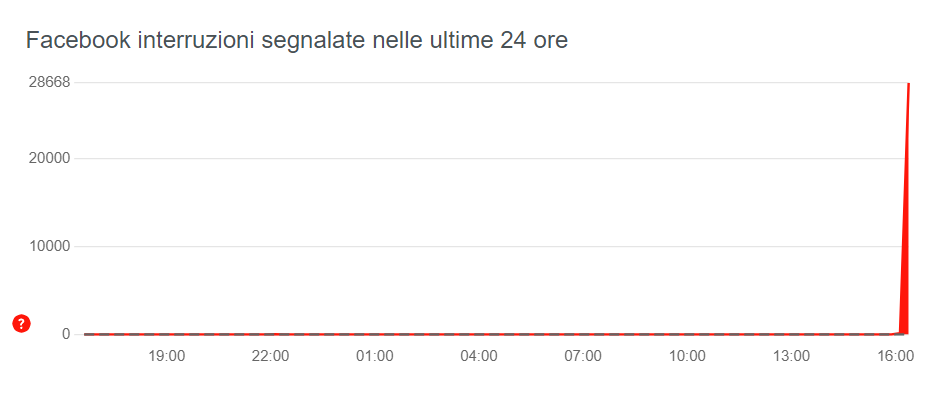
Qualcosa non va nei server di Meta,  e , anche se gli italiani si stanno lamentando, il problema è mondiale.

Vediamo i dati di Downdetector, in Italia:

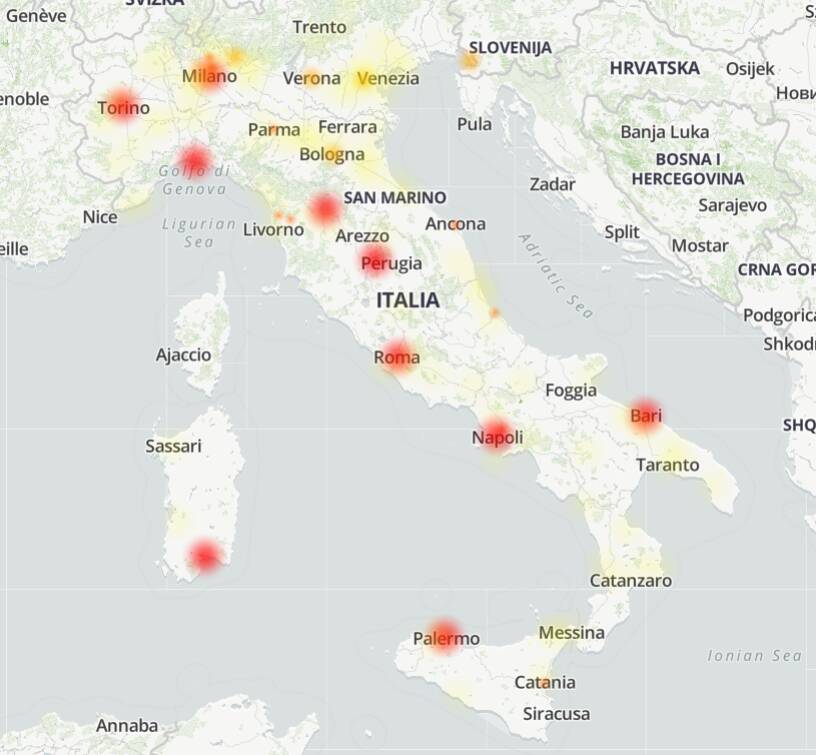
Il problema colpisce l’Italia:

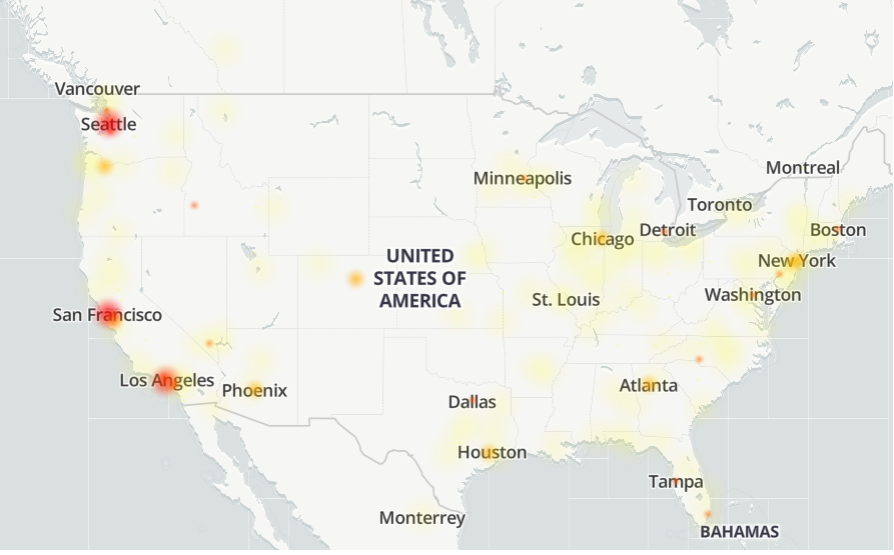
Ma è anche diffuso negli USA come segnala FOXNEWS2, e impedisce l’accesso sia via browser, sia alle app, sia a messenger

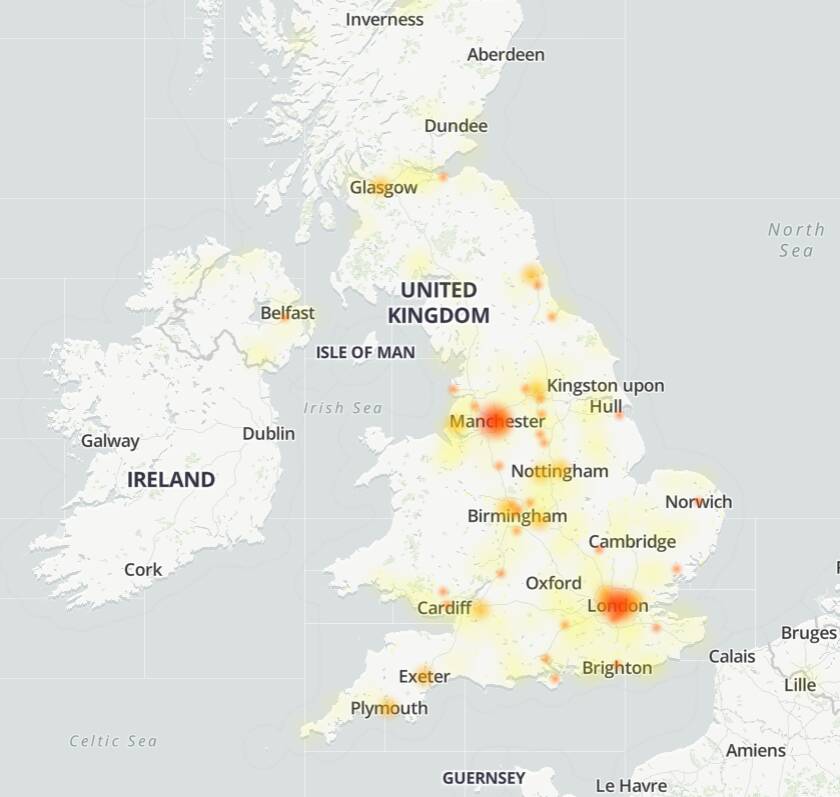
Anche nel Regno Unito il servizio è interrotto

La motivazione non è chiara, ma il problema è grave e diffuso globalmente, quindi probabilmente parte direttamente dai server negli USA, ed è legato al login.

Sicuramente questo problema avrà anche delle ricadute finanziarie sulla quotazione di Meta, la casa madre di FB.


Telegram

Telegram
Grazie al nostro canale Telegram potete rimanere aggiornati sulla pubblicazione di nuovi articoli di Scenari Economici.

⇒ Iscrivetevi subito ⇐


MindsMinds

https://scenarieconomici.it/facebook-down-salta-in-italia-e-negli-usa-problemi-di-accesso-al-servizio-globalmente/


Meta accusata di pratiche illegali che violano il GDPR (di nuovo)


Qualche mese fa su Facebook e Instagram è comparso un avviso che chiedeva ai suoi utenti di scegliere se pagare per non avere più pubblicità sui social o continuare a usare il servizio in modo gratuito, acconsentendo alla raccolta e all’analisi dei propri dati. Questa scelta non è piaciuta a otto associazioni dei consumatori dell’UE che hanno presentato denunce contro Meta, accusandola di violare il GDPR.

Dietro la mossa della compagnia c’era l’intenzione di rispettare le leggi UE offrendo una scelta ai consumatori; scelta che, però, è stata giudicata “finta” dalle organizzazioni a protezione dei consumatori e non in linea col regolamento europeo.

Come riporta The Register, l’organizzazione no-profit austriaca NOYB (Non Of Your Business) ha sottolineato che le leggi europee sulla privacy impongono che la scelta sulla condivisione dei dati deve essere libera, e non, come in questo caso, un’alternativa quasi obbligata a una tassa.

Pexels

Le associazioni dei consumatori affermano che il nuovo modello proposto da Meta per l’uso dei social viola i principi di data protection espressi nel GDPR, come il principio della limitazione delle finalità, dell’offuscamento dei dati, dell’elaborazione etica e trasparente delle informazioni. La scelta di inserire un abbonamento per usare i social senza annunci non offre una vera scelta agli utenti, ed è visto come un modo per costringere i consumatori a condividere i propri dati e continuare a proporre pubblicità.

Contattata da The Register, Meta ha affermato che è pronta a contrastare le accuse, sottolineando che “i nostri obblighi normativi sono estremamente seri e siamo fiduciosi che il nostro approccio sia conforme al GDPR”. La compagnia ha aggiunto che il nuovo modello introdotto per l’uso dei suoi social sia in linea con il regolamento dell’UE.

Le battaglie legali per Meta sembrano non finire mai: l’anno scorso la compagnia ha dovuto pagare una multa da più di un miliardo di euro per aver inviato i dati dei cittadini europei negli Stati Uniti, violando la legislazione UE.

Le organizzazioni dei consumatori hanno presentato le loro denunce lo scorso giovedì, e ora Meta è in attesa di sapere se dovrà imbarcarsi ancora una volta in una dura battaglia legale.

Condividi l’articolo


Articoli correlati

Altro in questa categoria


https://www.securityinfo.it/2024/03/04/meta-accusata-di-pratiche-illegali-che-violano-il-gdpr-di-nuovo/?utm_source=rss&utm_medium=rss&utm_campaign=meta-accusata-di-pratiche-illegali-che-violano-il-gdpr-di-nuovo


Patreon: Blocking platforms from sharing user video data is unconstitutional

Patreon: Blocking platforms from sharing user video data is unconstitutional

Patreon, a monetization platform for content creators, has asked a federal judge to deem unconstitutional a rarely invoked law that some privacy advocates consider one of the nation’s “strongest protections of consumer privacy against a specific form of data collection.” Such a ruling would end decades that the US spent carefully shielding the privacy of millions of Americans’ personal video viewing habits.

The Video Privacy Protection Act (VPPA) blocks businesses from sharing data with third parties on customers’ video purchases and rentals. At a minimum, the VPPA requires written consent each time a business wants to share this sensitive video data—including the title, description, and, in most cases, the subject matter.

The VPPA was passed in 1988 in response to backlash over a reporter sharing the video store rental history of a judge, Robert Bork, who had been nominated to the Supreme Court by Ronald Reagan. The report revealed that Bork apparently liked spy thrillers and British costume dramas and suggested that maybe the judge had a family member who dug John Hughes movies.

Although the videos that Bork rented “revealed nothing particularly salacious” about the judge, the intent of reporting the “Bork Tapes” was to confront the judge “with his own vulnerability to privacy harms” during a time when the Supreme Court nominee had “criticized the constitutional right to privacy” as “a loose canon in the law,” Harvard Law Review noted.

Even though no harm was caused by sharing the “Bork Tapes,” policymakers on both sides of the aisle agreed that First Amendment protections ought to safeguard the privacy of people’s viewing habits, or else risk chilling their speech by altering their viewing habits. The US government has not budged on this stance since, supporting a lawsuit filed in 2022 by Patreon users who claimed that while no harms were caused, damages are owed after Patreon allegedly violated the VPPA by sharing data on videos they watched on the platform with Facebook through Meta Pixel without users’ written consent.

“Restricting the ability of those who possess a consumer’s video purchase, rental, or request history to disclose such information directly advances the goal of keeping that information private and protecting consumers’ intellectual freedom,” the Department of Justice’s brief said.

The Meta Pixel is a piece of code used by companies like Patreon to better target content to users by tracking their activity and monitoring conversions on Meta platforms. “In simplest terms,” Patreon users said in an amended complaint, “the Pixel allows Meta to know what video content one of its users viewed on Patreon’s website.”

The Pixel is currently at the center of a pile of privacy lawsuits, where people have accused various platforms of using the Pixel to covertly share sensitive data without users’ consent, including health and financial data.

Several lawsuits have specifically lobbed VPPA claims, which users have argued validates the urgency of retaining the VPPA protections that Patreon now seeks to strike. The DOJ argued that “the explosion of recent VPPA cases” is proof “that the disclosures the statute seeks to prevent are a legitimate concern,” despite Patreon’s arguments that the statute does “nothing to materially or directly advance the privacy interests it supposedly was enacted to protect.”

Patreon’s attack on the VPPA

Patreon has argued in a recent court filing that the VPPA was not enacted to protect average video viewers from embarrassing and unwarranted disclosures but “for the express purpose of silencing disclosures about political figures and their video-watching, an issue of undisputed continuing public interest and concern.”

That’s one of many ways that the VPPA silences speech, Patreon argued, by allegedly preventing disclosures regarding public figures that are relevant to public interest.

Among other “fatal flaws,” Patreon alleged, the VPPA “restrains speech” while “doing little if anything to protect privacy” and never protecting privacy “by the least restrictive means.”

Patreon claimed that the VPPA is too narrow, focusing only on pre-recorded videos. It prevents video service providers from disclosing to any other person the titles of videos that someone watched, but it does not necessarily stop platforms from sharing information about “the genres, performers, directors, political views, sexual content, and every other detail of pre-recorded video that those consumers watch,” Patreon claimed.

https://arstechnica.com/?p=1998335


Meta relents to EU, allows unlinking of Facebook and Instagram accounts

Meta relents to EU, allows unlinking of Facebook and Instagram accounts

Meta will allow some Facebook and Instagram users to unlink their accounts as part of the platform’s efforts to comply with the European Union’s Digital Markets Act (DMA) ahead of enforcement starting March 1.

In a blog, Meta’s competition and regulatory director, Tim Lamb, wrote that Instagram and Facebook users in the EU, the European Economic Area, and Switzerland would be notified in the “next few weeks” about “more choices about how they can use” Meta’s services and features, including new opportunities to limit data-sharing across apps and services.

Most significantly, users can choose to either keep their accounts linked or “manage their Instagram and Facebook accounts separately so that their information is no longer used across accounts.” Up to this point, linking user accounts had provided Meta with more data to more effectively target ads to more users. The perk of accessing data on Instagram’s widening younger user base, TechCrunch noted, was arguably the $1 billion selling point explaining why Facebook acquired Instagram in 2012.

Also announced today, users protected by the DMA will soon be able to separate their Facebook Messenger, Marketplace, and Gaming accounts. However, doing so will limit some social features available in some of the standalone apps.

While Messenger users choosing to disconnect the chat service from their Facebook accounts will still “be able to use Messenger’s core service offering such as private messaging and chat, voice and video calling,” Marketplace users making that same choice will have to email sellers and buyers, rather than using Facebook’s messenger service. And unlinked Gaming app users will only be able to play single-player games, severing their access to social gaming otherwise supported by linking the Gaming service to their Facebook social networks.

While Meta may have had choices other than depriving users unlinking accounts of some features, Meta didn’t really have a choice in allowing newly announced options to unlink accounts. The DMA specifically requires that very large platforms designated as “gatekeepers” give users the “specific choice” of opting out of sharing personal data across a platform’s different core services or across any separate services that the gatekeepers manage.

Without gaining “specific” consent, gatekeepers will no longer be allowed to “combine personal data from the relevant core platform service with personal data from any further core platform services” or “cross-use personal data from the relevant core platform service in other services provided separately by the gatekeeper,” the DMA says. The “specific” requirement is designed to block platforms from securing consent at sign-up, then hoovering up as much personal data as possible as new services are added in an endless pursuit of advertising growth.

As defined under the General Data Protection Regulation, the EU requiring “specific” consent stops platforms from gaining user consent for broadly defined data processing by instead establishing “the need for granularity,” so that platforms always seek consent for each “specific” data “processing purpose.”

“This is an important ‘safeguard against the gradual widening or blurring of purposes for which data is processed, after a data subject has agreed to the initial collection of the data,’” the European Data Protection Supervisor explained in public comments describing “commercial surveillance and data security practices that harm consumers” provided at the request of the FTC in 2022.

According to Meta’s help page, once users opt out of sharing data between apps and services, Meta will “stop combining your info across these accounts” within 15 days “after you’ve removed them.” However, all “previously combined info would remain combined.”

https://arstechnica.com/?p=1997871


Zuckerberg’s AGI remarks follow trend of downplaying AI dangers

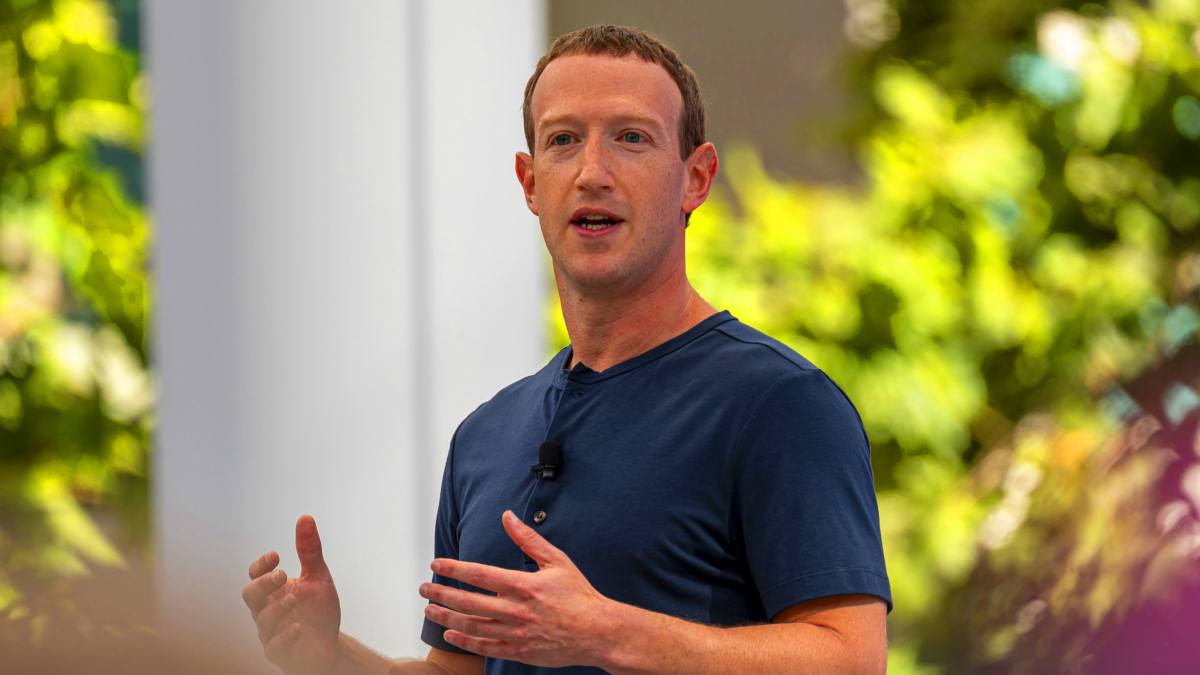
Mark Zuckerberg, chief executive officer of Meta Platforms Inc., during the Meta Connect event in Menlo Park, California, US, on Wednesday, Sept. 27, 2023.
Enlarge / Mark Zuckerberg, chief executive officer of Meta Platforms Inc., during the Meta Connect event in Menlo Park, California, on September 27, 2023.

On Thursday, Meta CEO Mark Zuckerberg announced that his company is working on building “general intelligence” for AI assistants and “open sourcing it responsibly,” and that Meta is bringing together its two major research groups (FAIR and GenAI) to make it happen.

“It’s become clearer that the next generation of services requires building full general intelligence,” Zuckerberg said in an Instagram Reel. “This technology is so important, and the opportunities are so great that we should open source and make it as widely available as we responsibly can so that everyone can benefit.”

Notably, Zuckerberg did not specifically mention the phrase “artificial general intelligence,” or AGI, by name in his announcement, but a report from The Verge seems to suggest he is steering in that direction. AGI is a somewhat nebulous term for a hypothetical technology that is equivalent to human intelligence in performing general tasks without the need for specific training. It’s the stated goal of Meta competitor OpenAI and one that many have feared might pose an existential threat to humanity or replace humans working intellectual jobs.

On the definition of AGI, Zuckerberg told The Verge, “You can quibble about if general intelligence is akin to human-level intelligence, or is it like human-plus, or is it some far-future super intelligence. But to me, the important part is actually the breadth of it, which is that intelligence has all these different capabilities where you have to be able to reason and have intuition.” He suggested that AGI won’t be achieved all at once, but gradually over time.

Business as usual?

Mark Zuckerberg, chief executive officer of Meta Platforms Inc., fist-bumps a mysterious hand during the Meta Connect event in Menlo Park, California, on September 27, 2023.
Enlarge / Mark Zuckerberg, chief executive officer of Meta Platforms Inc., fist-bumps a mysterious hand during the Meta Connect event in Menlo Park, California, on September 27, 2023.

Zuckerberg’s Instagram announcement makes the potential invention of truly general AI seem like a casual business development—it’s nothing to be particularly worried about. In fact, it’s apparently so harmless and beneficial that they might even open-source it and share it with everyone (“responsibly,” of course).

His statement is now part of a trend of downplaying AGI as an imminent threat. Earlier this week during an interview at the World Economic Forum in Davos, OpenAI CEO Sam Altman said that AI “will change the world much less than we all think, and it will change jobs much less than we all think,” and that AGI could be developed in the “reasonably close-ish future.”

This relatively calm, business-as-usual tone from Zuckerberg and Altman is a far cry from the drumbeat of world-threatening hype we heard throughout 2023 after the launch of Bing Chat and GPT-4 (and to be fair, Zuckerberg never joined the AI doom club). Even Elon Musk, who signed the six-month pause letter, is promoting a large language model in the form of Grok.

Perhaps cooler heads will prevail now—and maybe some lowering of expectations is in order as we see that, in many ways, large language models, as interesting as they are, might not be fully ready for widescale reliable use. And they might not also be the path to AGI, as Meta Chief AI Scientist Yann LeCun often likes to say.

Elsewhere in Zuckerberg’s announcement, he said that Llama 3 is in training (a follow-up to Llama 2) and that Meta is amassing a monstrous GPU capacity for the training and running of AI models—”350,000 Nvidia H100s, or around 600,000 H100 equivalents of compute, if you include other GPUs,” he said.

Here is a transcript of Zuckerberg’s full statement in his Instagram Reel:

Hey everyone. Today, I’m bringing Meta’s two AI research efforts closer together to support our long term goals of building general intelligence, open sourcing it responsibly, and making it available and useful for everyone in all of our daily lives. It’s become clearer that the next generation of services requires building full general intelligence—building the best AI assistants, AIs for creators, AIs for businesses, and more—that means advances in every area of AI. From reasoning to planning to coding to memory and other cognitive abilities.This technology is so important and the opportunities are so great that we should open source and make it as widely available as we responsibly can so that everyone can benefit.

And we’re building an absolutely massive amount of infrastructure to support this. By the end of this year, we’re going to have around 350,000 NVIDIA H100s, or around 600,000 H100 equivalents of compute, if you include other GPUs. We’re currently training Llama 3, and we’ve got an exciting roadmap of future models that we’re going to keep training responsibly and safely too.

People are also going to need new devices for AI, and this brings together AI and Metaverse. Because over time, I think a lot of us are going to talk to AIs frequently throughout the day. And I think a lot of us are going to do that using glasses, because glasses are the ideal form factor for letting an AI see what you see and hear what you hear, so it’s always available to help out. Ray-Ban Meta Glasses with MetaAI are already off to a very strong start, and overall across all this stuff, we are just getting started.

Listing image by Benj Edwards | Getty Images

https://arstechnica.com/?p=1997158


Actor paid to pose as crypto CEO “deeply sorry” about $1.3 billion scam

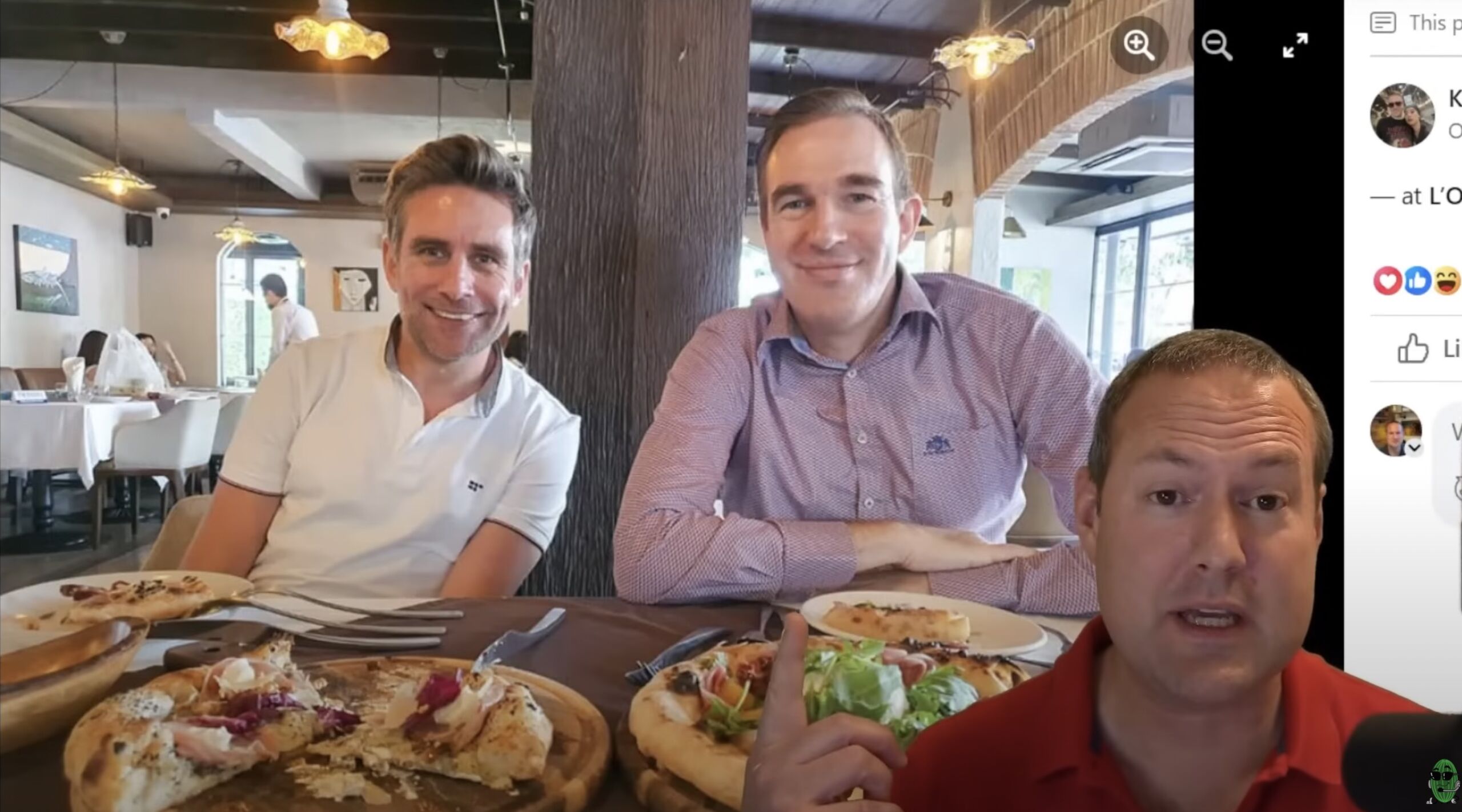
A screenshot from Jack Gamble's video outing Stephen Harrison as HyperVerse's fake CEO, posted on Gamble's "Nobody Special Finance" YouTube channel.
Enlarge / A screenshot from Jack Gamble’s video outing Stephen Harrison as HyperVerse’s fake CEO, posted on Gamble’s “Nobody Special Finance” YouTube channel.

An actor who was hired to pretend to be the highly qualified CEO of a shady, collapsed cryptocurrency hedge fund called HyperVerse has apologized after a YouTuber unmasked his real identity last week.

An Englishman currently living in Thailand, Stephen Harrison confirmed to The Guardian that HyperVerse hired him to pose as CEO Steven Reece Lewis. Harrison told The Guardian that he was “deeply sorry” to HyperVerse investors—who lost a reported $1.3 billion after buying into a cryptocurrency-mining operation that promised “double or triple returns,” but did not exist, Court Watch reported.

Harrison claimed that he had “certainly not pocketed” any portion of those funds. Instead, he told The Guardian that he was paid about $7,500 over nine months. To play the part of CEO, he was also given a “wool and cashmere suit, two business shirts, two ties, and a pair of shoes,” The Guardian reported.

Harrison said that he had no part in HyperVerse’s alleged scheme to woo investors with false promises of high returns.

“I am sorry for these people,” Harrison said. “Because they believed some idea with me at the forefront and believed in what I said, and God knows what these people have lost. And I do feel bad about this.”

He also said that he was “shocked” to find out that HyperVerse had falsified his credentials, telling investors that Harrison was a fintech whiz—supposedly earning prestigious degrees before working at Goldman Sachs, then selling a web development company to Adobe before launching his own IT startup.

Harrison claimed that he only found out about this resume fraud when The Guardian investigated and found that nothing on his resume checked out.

“When I read that in the papers, I was like, blooming heck, they make me sound so highly educated,” Harrison told The Guardian.

He confirmed that he had received general certificates of secondary education but that his expertise was “certainly not on that level” that HyperVerse claimed that it was.

“They painted a good picture of me, but they never told me any of this,” Harrison told The Guardian.

Getting hired as fake CEO

According to The Guardian, Harrison was working as an unpaid freelance sports commentator when a “friend of a friend” told him about the HyperVerse gig.

The contract that Harrison signed was with an Indonesian-based talent agency called Mass Focus Ltd. It stated that he would be hired as “presenter talent,” The Guardian reported. However, The Guardian could find “no record of a company of this name on the Indonesian company register.”

Harrison’s agent allegedly told him that it was common for companies to hire corporate “presenters” to “represent the business” and reassured him that HyperVerse was “legitimate.”

Even after those assurances, Harrison said that he was still worried that HyperVerse might be a “scam,” researching the company online but ultimately deciding that “everything seemed OK.”

“So, I rolled with it,” Harrison told The Guardian.

Harrison said that promotional videos that he recorded as HyperVerse CEO were filmed in “makeshift studios” in Bangkok. He said that he was asked to start using the fake name Steven Reece Lewis while filming the second video. When he questioned why a fake name was necessary, HyperVerse allegedly told him that he was “acting the role.”

His agent allegedly told him that this was “perfectly normal” and after that, he “never went online and checked about Steven Reece Lewis,” he told The Guardian.

“I looked on YouTube occasionally, way back when they put the presentations up, but apart from that I was detached from this role,” Harrison said.

Over nine months, Harrison mostly worked one to two hours monthly, making videos posing as HyperVerse’s CEO.

There was also a Twitter account launched under the fake name Steven Reece Lewis. The Guardian noted that the date of Harrison’s final paycheck from HyperVerse “coincided with the last date the Twitter account was active,” but Harrison told The Guardian that he “had no oversight” of that account. When he was ending his stint as fake CEO, Harrison told The Guardian that he “requested that the Twitter account be shut down.”

Harrison also told The Guardian that he had “no contact at any point” with HyperVerse heads Sam Lee and Ryan Xu, exclusively dealing with a local contact in Thailand.

https://arstechnica.com/?p=1995403