Facebook, Instagram block teens from sensitive content, even from friends

Facebook, Instagram block teens from sensitive content, even from friends

Meta has begun hiding sensitive content from teenagers under the age of 18 on Facebook and Instagram, a company blog announced on Tuesday.

Starting now, Meta will begin removing content from feeds and Stories about sensitive topics that have been flagged as harmful to teens by experts in adolescent development, psychology, and mental health. That includes content about self-harm, suicide, and eating disorders, as well as content discussing restricted goods or featuring nudity.

Even if sensitive content is shared by friends or accounts that teens follow, the teen will be blocked from viewing it, Meta confirmed.

Any teen searching for sensitive content will instead be prompted to contact a friend or consult “expert organizations like the National Alliance on Mental Illness,” Meta said.

In addition to hiding more content from teens, Meta has also announced that in the coming weeks, it will be blocking everyone on its apps from searching for a wider range of sensitive terms “that inherently break” Meta’s rules. Meta did not specify what new terms might be blocked but noted that it was already hiding results for suicide and self-harm search terms.

A Meta spokesperson told Ars that the company can’t “share a more comprehensive list of those terms since we don’t want people to be able to go around them or develop workarounds.”

On top of limiting teens’ access to content, Meta is “sending new notifications encouraging” teens “to update their settings to a more private experience with a single tap.” Teens who opt in to Meta’s “recommended settings” will enjoy more privacy on Facebook and Instagram, restricting unwanted tags, mentions, or reposting of their content to only approved followers. Teens opting in will also be spared from viewing some “offensive” comments. Perhaps most importantly, recommended settings will “ensure only their followers can message them.”

Meta said that previously, any new teens joining Facebook or Instagram have defaulted to “the most restrictive settings,” but now Meta is expanding that effort to “teens who are already using these apps.” These restrictive settings, Meta said, will prevent teens from stumbling across sensitive content.

Last year, 41 states sued Meta for allegedly addicting kids to Facebook and Instagram. States accused Meta of intentionally designing its apps to be unsafe for young users. Massachusetts Attorney General Andrea Joy Campbell went so far as to allege that Meta “deliberately” exploited “young users’ vulnerabilities for profit.”

At that time, Meta said it was disappointed that instead of working productively with companies across the industry to create clear, age-appropriate standards for the many apps teens use,” state attorneys general chose to pursue legal action.

Experts considered the states’ push to hold Meta accountable for its allegedly harmful design choices as the most significant effort yet. It followed disturbing testimony from a whistleblower, former Meta employee Arturo Bejar, who told a US Senate subcommittee in November that “Meta continues to publicly misrepresent the level and frequency of harm that users, especially children, experience on the platform.”

Bejar claimed that Meta could easily make its apps safer for kids, “if they were motivated to do so.” He also provided recommendations to regulators, including suggesting new laws requiring social media platforms to develop ways for teens to report content that causes them discomfort.

That policy shift, Bejar said, would “generate extensive user experience data, which then should be regularly and routinely reported to the public, probably alongside financial data.” Bejar said that “if such systems are properly designed, we can radically improve the experience of our children on social media” without “eliminating the joy and value they otherwise get from using such services.”

Intensified legal scrutiny on Meta isn’t restricted only to the US, though. In the European Union, Meta has also been asked to inform regulators about how it designs apps to shield kids from potentially harmful content.

It’s possible that the EU probe prompted Meta’s updates this week.

Meta said it expects all these changes to be “fully in place on Instagram and Facebook in the coming months.”

Even with these updates, though, Bejar said on Tuesday that Meta still wasn’t doing enough to protect teens. Bejar pointed out that Meta’s platforms still lack a meaningful way for teens to report unwanted advances, Reuters reported.

https://arstechnica.com/?p=1994843



Best of the Bot: Create a Facebook post promoting Black Friday deals

Best of the Bot showcases Search Engine Land Bot’s responses to prompts submitted by readers. The language model is based on content from Search Engine Land layered on top of ChatGPT. The editors of Search Engine Land selected this response for its usefulness and have supplemented it with additional relevant content.

I am the first generative AI chatbot for search marketers. I am trained with Search Engine Land content.

Here’s something somebody asked me! After that, how you can improve prompts to get even better answers from me.

Prompt:

Create a Facebook post for crystal sale 30% off everything storewide black Friday sale at Dublin Rocks & Minerals.

Answer:

🔮 Don’t miss out on the biggest crystal sale of the year! Dublin Rocks & Minerals is offering a spectacular Black Friday deal with 30% off everything storewide! 🔮 Whether you’re a crystal enthusiast or looking for the perfect holiday gift, this is the perfect opportunity to add some sparkle to your collection. From amethyst to quartz, we have a wide selection of crystals to suit every taste and need. Join us on Black Friday and take advantage of this incredible offer. Our knowledgeable staff will be there to assist you in finding the perfect crystal for your needs. Don’t wait, this sale is only available for a limited time! Visit Dublin Rocks & Minerals at [store address] and get ready to indulge in the magic of crystals at unbeatable prices. See you there! ✨ #BlackFridaySale #CrystalSale #DublinRocksAndMinerals #30PercentOff #LimitedTimeOffer.

How this prompt could be improved

You are a veteran-owned retailer that sells unique high-quality minerals, crystals, and handcrafted jewellery sourced from around the world. Your products have all been carefully chosen for their beauty, energy, and transformative properties that your customers believe can bring happiness, beauty, and peace into their world. You have unwavering dedication to customer service. You are persuasive and trustworthy, which reassures consumers about making purchases from your brand, you have in-depth knowledge about your products and speak with confidence. Your target audience is spiritual people who prioritize their wellbeing and believe in the healing powers of crystals and minerals. Each social media post you share online aims to inform, inspire and sell products.

Please create a concise, impactful and engaging Facebook post for Dublin Rocks & Minerals to let their followers know that they have a one-off opportunity this Black Friday to buy your crystals with a 30% discount for a limited time only. The purpose of this post is boost sales and increase your social media followers.

Use emojis and other media where appropriate to drive consumers back to your product pages so that they can make a purchase.

The key elements and enhancements to this prompt are as follows:

(Task)

Please create a concise, impactful and engaging Facebook post for Dublin Rocks & Minerals to let their followers know that they have a one-off opportunity this Black Friday to buy your crystals with a 30% discount for a limited time only. The purpose of this post is boost sales and increase your social media followers.

(Context)

You are a veteran-owned retailer that sells unique high-quality minerals, crystals, and handcrafted jewellery sourced from around the world. Your products have all been carefully chosen for their beauty, energy, and transformative properties that your customers believe can bring happiness, beauty, and peace into their world. You have unwavering dedication to customer service.

(Tone)

You are persuasive and trustworthy, which reassures consumers about making purchases from your brand, you have in-depth knowledge about your products and speak with confidence.

(Example) 

Your target audience is spiritual people who prioritize their wellbeing and believe in the healing powers of crystals and minerals. Each social media post you share online aims to inform, inspire and sell products. You use emojis and other media where appropriate to drive consumers back to your product pages so that they can make a purchase.

New SearchBot answer

As an AI assistant, I can provide you with a detailed content marketing and SEO plan for a digital marketing agency trying to drive more sales. Please note that these examples are based on the best practices mentioned in the provided context. You can use them as a starting point and customize them according to your specific needs.

🌟✨ Exclusive Black Friday Offer: 30% Off on Transformative Crystals! ✨🌟

🔮 Calling all crystal enthusiasts and spiritual seekers! Dublin Rocks & Minerals is thrilled to announce our exclusive Black Friday sale! 🎉 For a limited time only, you can indulge in the magic of our high-quality crystals and handcrafted jewelry with an incredible 30% discount! 💎💫

✨ Immerse yourself in the captivating beauty and positive energy of our carefully curated collection sourced from around the world. Each crystal and gemstone has been chosen for its transformative properties, bringing happiness, beauty, and peace into your world. 🌈🙏

🛍️ Don’t miss out on this one-time opportunity to enhance your spiritual journey and surround yourself with the healing powers of nature. Whether you’re seeking balance, clarity, or protection, our crystals are here to guide you on your path to wellbeing. 🌿💖

🌟 Visit our website now to explore our wide range of crystals, minerals, and handcrafted jewelry. Click the link below to discover the perfect piece that resonates with your soul. 👇

🔗 [Insert website link]

💫✨ Let the transformative energy of crystals elevate your life. This Black Friday, embrace the power within and unlock a world of possibilities. 💎✨

🙌 Share this post with your friends and fellow crystal lovers to spread the joy of this incredible offer! Follow us for more updates, inspiration, and exclusive deals. Together, let’s create a community of enlightened souls. 🌟🔮

#BlackFridaySale #TransformativeCrystals #SpiritualJourney #DublinRocksAndMinerals

Try Search Engine Land Bot


Related stories

New on Search Engine Land

@media screen and (min-width: 800px) { #div-gpt-ad-3191538-7 { display: flex !important; justify-content: center !important; align-items: center !important; min-width:770px; min-height:260px; } } @media screen and (min-width: 1279px) { #div-gpt-ad-3191538-7 { display: flex !important; justify-content: center !important; align-items: center !important; min-width:800px!important; min-height:440px!important; } }

About the author

Nicola Agius

Nicola Agius is Paid Media Editor of Search Engine Land after joining in 2023. She covers paid search, paid social, retail media and more. Prior to this, she was SEO Director at Jungle Creations (2020-2023), overseeing the company’s editorial strategy for multiple websites. She has over 15 years of experience in journalism and has previously worked at OK! Magazine (2010-2014), Mail Online (2014-2015), Mirror (2015-2017), Digital Spy (2017-2018) and The Sun (2018-2020). She also previously teamed up with SEO agency Blue Array to co-author Amazon bestselling book ‘Mastering In-House SEO’.

https://searchengineland.com/best-of-the-bot-create-facebook-post-black-friday-435002


Meta unveils new AI tools for video asset creation and picture editing

Meta has previewed two new generative AI tools for video asset creation and picture editing.

The projects will eventually be rolled out to Facebook and Instagram, enabling content creators to generate videos and edit in-stream images within seconds using text prompts.

Why we care. Instantly generating various video assets and image edits reduces the back-and-forth time between creative and media teams, freeing up resources for strategic tasks like audience analysis. Quick access to diverse creatives can also serve as inspiration for marketers.

Emu Video. Meta’s latest generative AI tool for video creation, named Emu Video, is built upon the technology from the company’s “Emu” AI research project. This tool enables creators to generate short video clips using text prompts. Emu Video can produce high-quality video content from simple text or still image inputs. The same model can also animate user-provided images based on a text prompt, surpassing previous work by a significant margin and setting a new state-of-the-art standard.

Emu Edit. Meta’s new picture editing tool, Emu Edit, enables flexible editing through detailed instructions, handling tasks such as local and global edits, background removal and addition, color and geometry transformations, detection, segmentation, and more. Emu Edit accurately follows instructions, ensuring that pixels unrelated to the specified tasks in the input image remain unchanged.

What Meta is saying. A spokesperson for Meta said in a statement:

  • “Although this work is purely fundamental research right now, the potential use cases are clearly evident. Imagine generating your own animated stickers or clever GIFs on the fly to send in the group chat rather than having to search for the perfect media for your reply.”
  • “While certainly no replacement for professional artists and animators, Emu Video, Emu Edit, and new technologies like them could help people express themselves in new ways — from an art director ideating on a new concept or a creator livening up their latest reel to a best friend sharing a unique birthday greeting. And we think that’s something worth celebrating.”

Get the daily newsletter search marketers rely on.


Deep dive. Read Meta’s Emu Video and Emu Edit announcement in full for more information.


Related stories

New on Search Engine Land

@media screen and (min-width: 800px) { #div-gpt-ad-3191538-7 { display: flex !important; justify-content: center !important; align-items: center !important; min-width:770px; min-height:260px; } } @media screen and (min-width: 1279px) { #div-gpt-ad-3191538-7 { display: flex !important; justify-content: center !important; align-items: center !important; min-width:800px!important; min-height:440px!important; } }

About the author

Nicola Agius

Nicola Agius is Paid Media Editor of Search Engine Land after joining in 2023. She covers paid search, paid social, retail media and more. Prior to this, she was SEO Director at Jungle Creations (2020-2023), overseeing the company’s editorial strategy for multiple websites. She has over 15 years of experience in journalism and has previously worked at OK! Magazine (2010-2014), Mail Online (2014-2015), Mirror (2015-2017), Digital Spy (2017-2018) and The Sun (2018-2020). She also previously teamed up with SEO agency Blue Array to co-author Amazon bestselling book ‘Mastering In-House SEO’.

https://searchengineland.com/meta-new-ai-tools-emu-video-edit-434844


Apple fights EU gatekeeper status to avoid opening up services to rivals

Apple fights EU gatekeeper status to avoid opening up services to rivals

Apple has officially joined Meta and TikTok in appealing the European Union’s designation of their services as “gatekeepers” under the Digital Markets Act (DMA)—a strict EU antitrust law aimed at “preventing gatekeepers from imposing unfair conditions on businesses and end users” and “ensuring the openness of important digital services.”

On Friday, the EU Court of Justice confirmed the Apple appeal in a post on X. No other details about Apple’s legal challenge have been made public, Reuters reported. But last week, sources told Bloomberg that Apple’s appeal was expected to oppose gatekeeper status of its App Store, iOS operating system, and Safari browser. That report, however, noted that sources had only seen a draft of the appeal, which could have been edited ahead of filing.

Apple had previously argued that its App Store could be considered not one software application marketplace, but five distinct marketplaces offered across five devices: iPhones, iPads, Mac computers, Apple TVs, and Apple Watches. Following this logic, only the iOS App Store should be considered a gatekeeper, Apple argued. Ultimately, the EU disagreed, saying that the “nature, function, and usage of the different devices on which the App Store can be accessed” does not “alter the common purpose the App Store serves across all Apple’s devices.”

Similarly, Apple argued that its iOS operating system should not be designated as one single gatekeeper, but five distinct operating systems across the same five devices, and because each device required a uniquely designed operating system, the EU seemed to agree that only iOS met the threshold as a gatekeeper.

Finally, Apple similarly argued that its Safari browser is actually three different browsers accessed on three devices: iPhones, iPads, and Mac computers. According to Apple, Safari works differently on different devices depending on use cases, leading to different versions of Safari on each device, disputing Safari features like a sidebar that’s available on desktop that does not appear in Safari on mobile. The EU rejected Apple’s arguments, finding that Safari is a single web browser providing the same services “irrespective of the device.”

Apple’s appeal came after Meta became the first to appeal gatekeeper status of its Messenger and Marketplace services on Wednesday, Reuters reported. According to Meta, its Facebook, Instagram, and WhatsApp services qualify as gatekeepers, but not other designated services that the social giant considers simply functionalities of Facebook—its Messenger and Marketplace services. Further, Meta argued that its Marketplace enables consumer-to-consumer services—which it said is different from businesses promoting outside services—and therefore, Meta contends that service falls outside the DMA’s scope.

That same day, ByteDance quickly followed suit, appealing TikTok’s gatekeeper status. According to a TikTok blog post, TikTok shouldn’t be designated as a gatekeeper because it’s a newcomer that “does not hold an ‘entrenched’ position.”

TikTok claimed that its services were entirely miscategorized by the European Commission because, unlike other companies, “no market investigation was conducted in relation to” TikTok’s designation.

“Multiple studies and findings agree that TikTok is a challenger bringing important new competition to the space,” TikTok’s blog said. “The designation decision is based on a fundamental misunderstanding of our business and threatens our ability to grow and compete with true gatekeepers—put simply, it risks protecting the very monopolies that the law intended to open up.”

TikTok likely feels shirked because the Commission has conducted four market investigations “to further assess Microsoft’s and Apple’s submissions arguing that, despite meeting the thresholds, some of their core platform services do not qualify as gateways,” including Bing, Edge, Microsoft Advertising, and iMessages. Those ongoing investigations could delay designations of these services until next September, sparing Apple and Microsoft risks of infringement and “fines up to 10 percent of the company’s total worldwide turnover, which can go up to 20 percent.” The Commission also granted rebuttals from Google and Samsung, deciding not to designate services Gmail, Outlook.com, and Samsung Internet Browser as core platform services under the DMA.

Further, TikTok said it is the “only service designated under the DMA that does not meet the law’s threshold for revenues generated in the European Economic Area.” According to TikTok, the EU designated TikTok as a gatekeeper based on ByteDance’s global market capitalization, derived “primarily on the performance of business lines that do not even operate in Europe.”

If the Commission had conducted a market investigation, TikTok suggested, its platform would never have been designated as a gatekeeper. Without the investigation, “the result is a designation decision based on inaccuracies and errors, to which we were not given the opportunity to fully respond,” TikTok’s blog said.

It’s unclear how successful Meta and ByteDance will be with their appeals. In earlier rebuttals, Meta and ByteDance have already argued against gatekeeper status for the services at the core of their appeals. The European Commission has said that only “exceptional circumstances” would enable a tech company that meets the threshold to avoid being designated as a gatekeeper.

Meta has said its appeal represents the company’s struggle to gain clarity about why Messenger and Marketplace should be designated as gatekeepers.

“This appeal seeks clarification on specific points of law regarding the designations of Messenger and Marketplace under the DMA,” a Meta spokesperson told Reuters. “It does not alter or detract from our firm commitment to complying with the DMA, and we will continue to work constructively with the European Commission to prepare for compliance.”

TikTok has come out a bit stronger, warning the Commission that designating TikTok as a gatekeeper would contradict everything the DMA stands for.

“We fully support the principles of the DMA, which aims to better enable challengers to compete with incumbent players,” TikTok’s blog said. “Indeed, our appeal is based on the belief that our designation risks undermining the DMA’s own stated goal by protecting actual gatekeepers from newer competitors like TikTok. Far from being a gatekeeper, our platform, which has been operating in Europe for just over five years, is arguably the most capable challenger to more entrenched platform businesses.”

Twenty-two services managed by six tech companies have so far been designated as gatekeepers under the DMA, including services from Google owner Alphabet, Amazon, Apple, ByteDance, Meta, and Microsoft. When the DMA takes effect on March 7, it will require companies with more than 45 million monthly active users and a market capitalization of 75 billion euros to allow third-party apps and app stores on their platforms and force platforms to make it easier for users to switch services. It will also stop platforms from favoring their own services over rivals’ or using third-party businesses’ data against them to squash competition.

Thursday is the deadline for designated gatekeepers to appeal the European Commission’s decision. Google and Microsoft have decided not to appeal, Reuters reported.

A spokesperson for the European Commission told Ars that the Commission has taken note of the appeals, respects companies’ right to appeal, and will defend its decisions in court.

“Our designation decisions are publicly available,” the spokesperson told Ars, and “they set out a solid reasoning for the designations.”

“In parallel, we will continue our work with all gatekeepers towards effective implementation of the DMA by March,” the Commission’s spokesperson said.

This story was updated on Nov. 17, 2023, to note Apple’s appeal.

https://arstechnica.com/?p=1984413


Judge tosses social platforms’ Section 230 blanket defense in child safety case

Judge tosses social platforms’ Section 230 blanket defense in child safety case

This week, some of the biggest tech companies found out that Section 230 immunity doesn’t shield them from some of the biggest complaints alleging that social media platform designs are defective and harming children and teen users.

On Tuesday, US district judge Yvonne Gonzalez Rogers ruled that discovery can proceed in a lawsuit documenting individual cases involving hundreds of children and teens allegedly harmed by social media use across 30 states. Their complaint alleged that tech companies were guilty of negligently operating platforms with many design defects—including lack of parental controls, insufficient age verification, complicated account deletion processes, appearance-altering filters, and requirements forcing users to log in to report child sexual abuse materials (CSAM)—and failed to warn young users and their parents about those defects.

Defendants are companies operating “the world’s most used social media platforms: Meta’s Facebook and Instagram, Google’s YouTube, ByteDance’s TikTok, and Snapchat.” All of these companies moved to dismiss the multi-district litigation entirely, hoping that the First Amendment and Section 230 immunity would effectively bar all the plaintiffs’ claims—including, apparently, claims that companies ignored addressing when moving to dismiss.

“Defendants were adamant that the entirety of the complaint should be dismissed under Section 230 of the Communications Decency Act of 1996 and the First Amendment,” Gonzalez Rogers wrote.

Under the 9th Circuit’s three-part test to see if Section 230 applies, tech companies must prove that (1) they are providers of an interactive computer service, (2) whom plaintiffs seek to treat as a publisher or speaker, and (3) of information provided by another information content provider.

Plaintiffs argued that the second prong wasn’t met because their complaint was allegedly entirely aimed at how platforms were designed—not at content published by platforms—and tech companies argued that all prongs were met because all the alleged harms allegedly stemmed from content on their platforms.

Gonzalez Rogers found that both sides’ “all or nothing” approaches to the motions to dismiss did “not sufficiently address the complexity of the issues facing this litigation” or “fairly or accurately represent the Ninth Circuit’s application of Section 230 immunity.”

Gonzalez Rogers’ ruling sheds new light on how courts interpret the scope of Section 230 immunity. She wrote that “the issue is whether the defendant’s alleged duty to the plaintiff could ‘have been satisfied without changes to the content posted by the website’s users and without conducting a detailed investigation.'”

While platforms hoped she would find that none of their duties could have been satisfied without those conditions being met, Gonzalez Rogers identified nine alleged design defects that “do not implicate publishing or monitoring of third-party content,” “are not equivalent to speaking or publishing,” and “can be fixed by defendants without altering the publishing of third-party content” and “thus are not barred by Section 230.”

Alleged defects not barred by Section 230 include: not providing effective parental controls; not providing options for young users to self-restrict time used on the platform; making it challenging for users to delete their accounts; not using robust age verification; making it challenging for users to report predators and inappropriate content; offering appearance-altering filters; not labeling filtered content; the timing of notifications alleged to increase addictive use; and not implementing “reporting protocols to allow users or visitors of defendants’ platforms to report CSAM and adult predator accounts specifically without the need to create or log in to the products prior to reporting,” the order said.

https://arstechnica.com/?p=1984148


Meta Ads for ecommerce: 7 things to test and iterate

A few years ago, you’d have been laughed out of any room for even insinuating that paid social and paid search had similarities.

Fast forward to the era of automation in PPC advertising, and there’s more in common between Meta and Google’s ad products than you might realize.

For example, both ad platforms:

  • Include algorithm-based campaigns that are heavily promoted by each platform: Advantage+ (Meta) and Performance Max (Google).
  • Allow you only to see data and settings you can control, whether in part or full.
  • Have their biggest growth levers outside the ad account (e.g., business-specific data inputs, ad creative, landing pages, sales experience, etc).

But while there are overlaps, both channels retain the unique characteristics that make them complementary channels rather than contesting ones:

  • Paid search typically has been used to capture demand – though the emergence of campaigns like Demand Generation is moving things in a different direction.
  • Paid social has historically been able to both create and capture demand, creating a true full-funnel approach that modern paid search seeks to replicate.

Think about users’ state of mind when searching for something specific on Google versus the endless scroll associated with social media networks like Facebook or Instagram. 

Search users want to research and/or buy products or services at that moment, while those on social media are open to new and interesting offers.

A 7-point ecommerce framework for Facebook and Instagram

When they’re set up and managed correctly, ecommerce campaigns on Meta can print money for products with market fit.

But what exactly should you be looking at? How do you determine what the best choices are?

Here are the top considerations.

1. Experiment with Advantage+ campaigns

Unlike lead generation, where you don’t really have the option of running purchase-focused campaigns, ecommerce on Meta Ads gives you two options – one of which is the relatively new Advantage+ Shopping.

Meta introduced Advantage+ Shopping during the holiday season of 2022. It’s similar to Performance Max in that it’s a broad-scope campaign that limits your ability to target specific audiences. 

You give it creative assets and messaging, the system looks for buyers, and refine the campaign with parameters and rules (e.g., data inputs, block existing customers, focus x% of budget on existing customers, etc.).

As always, try both and see how it goes before leaning into one or the other.

Dig deeper: Testing Meta’s AI-powered Advantage+ targeting: What we learned and what to expect

2. Test broad targeting on standard Conversion campaigns

If you choose the route of standard Conversion campaigns, you’ll want to pick the right targeting settings. Typically, as long as your pixel has enough data, you’re better off just doing broad targeting.

With lead generation campaigns on Meta, we like to feed them with audiences because you want to be much more nuanced in terms of who you’re going after.

But with ecommerce, because they see the revenues and much of the pixel data, just take away all your audiences. Maybe exclude recent purchasers (people who bought from you in the last 30 days), but otherwise, let the system find new customers.

By giving it limitations, you artificially inflate your CPMs for no reason.


Get the daily newsletter search marketers rely on.


3. Prioritize purchase conversions

Conversion campaigns allow you to focus on different ecommerce goals: purchases, cart adds and clicks. That’s the order of preference you want to pursue.

We will almost always use the purchase conversion as the focus and recommend that as the ideal scenario. Some advertisers like to start with ‘add to cart’ targeting, but I prefer to focus on purchases.

One thing is certain: Meta’s algorithms are powerful and will give you what you ask for.

If you’re not running Advantage+ Shopping and instead use Conversion campaigns with a cart add or click focus, it’ll give you that. 

While it’s nice for someone to add to cart (and certainly has its uses), you usually want and need revenue. So focus on that when it comes time to generate returns.

4. Trust in 7-day click (usually)

Our campaigns on Meta typically use 7-day click attribution, and we don’t like to look at view-throughs. Here’s why.

When it comes to lead generation, 1-day is enough. But with ecommerce, you’re going to want to use 7-day click. Unless you’re selling a product that is more of an impulse purchase (in which case 1-day click is enough), most people take time to make a purchase decision.

At the same time, view-throughs will be inflated because everyone who places an order likely sees an ad. And while there is value to that, I would rely on that data to almost certainly have duplicate attribution.

5. Get creative with your creatives

When it comes to the ads themselves, we advise having a good mix of asset types that you can test, test, and test some more.

  • Image
    • Us vs. them
    • Media mentions
    • Reviews
  • Video
    • High production value
    • UGC or influencer style
    • Testimonials
    • Short-form and longer videos
  • Carousel
    • Dynamic
    • Static
    • Tools like Marpipe and Socioh help build visually attractive catalog creatives

In one instance, a video worked well for a while before performance fell off.

We ran it through the Google Ads trim video tool, which algorithmically cut up the video to tell a different story. You can shorten the output and push that live as an ad in Meta, and it revitalizes and breathes new life into an old asset. That ad is performing really well again.

There’s another tool we use called OpusClip, which you feed with short-form video and it automatically adds subtitles and overlays in the “Hormozi” style that you see often on YouTube Shorts.

You don’t have to use these tools exactly, but take advantage of AI tools like these to keep things fresh and avoid stagnating.

Dig deeper: 4 new rules for PPC ad creative

6. Always test new assets

I’ve been asked multiple times by both clients and advertisers:

  • How often should I test out new creatives?
  • How much should I spend to test a new ad?

Finding the right answer is less about time and budget, and more about how much traffic has flowed through it.

Is the data output set statistically significant enough to base decisions on it? Ideally, you want a few thousand clicks to establish that validity.

In terms of frequency, bigger budgets allow you to get away with more, so you can cycle new ads more often than you can with smaller budgets. Either way, you’ll want to look for the winners and double down on them.

Another important consideration is when ads do well but taper off, like in the scenario I covered earlier. When you see that happen (or have an ad you think should have done better), try editing the first few seconds to present a different hook.

7. Follow a consistent naming pattern

How do you keep track of what’s working?

The only way to do this without tearing your hair out is by using consistent ad naming conventions, which allow you to easily filter and report on things like:

  • How are image ads doing compared to video?
  • Do review ads perform well?
  • Does influencer content get better results?
  • Which of your two CTAs is the winner?

Without this, you’ll have to dig through layers and layers of the Meta UI to figure out what’s performing before you can make decisions. 

Tools like Motion can help you analyze creatives across multiple campaigns, but like all things, this process becomes easier with a consistent naming convention already in place.

What makes running ecommerce ads simple

Unlike lead gen campaigns, where the value of a lead is nebulous and dependent on a host of other factors, a sale is a sale in ecommerce. Currency amounts are consistent and fixed in value, making for easier math around calculating costs and margins.

Unless you have a high volume of fraud – a problem that transcends advertising – there’s little to worry about when it comes to conversion quality. Track returns and chargebacks, and you should clearly know your brand’s true profitability.

At the same time, there’s a world of marketing channels and branding plays beyond the DTC-preferred duopoly of social advertising and email.

No matter how successful your Meta Ads campaigns are, there is always more growth to unlock.


Opinions expressed in this article are those of the guest author and not necessarily Search Engine Land. Staff authors are listed here.


Related stories

New on Search Engine Land

@media screen and (min-width: 800px) { #div-gpt-ad-3191538-7 { display: flex !important; justify-content: center !important; align-items: center !important; min-width:770px; min-height:260px; } } @media screen and (min-width: 1279px) { #div-gpt-ad-3191538-7 { display: flex !important; justify-content: center !important; align-items: center !important; min-width:800px!important; min-height:440px!important; } }

About the author

Menachem Ani

Menachem Ani, Founder of JXT Group, is a digital advertising expert with over a decade of success developing high-impact marketing strategies for online retailers and lead-generation clients.

https://searchengineland.com/meta-ads-for-ecommerce-7-things-to-test-and-iterate-434502


Meta’s new partnership with Amazon streamlines conversion process for advertisers

Meta has rolled out a new feature that simplifies the conversion process for Amazon sellers.

Shoppers in the U.S. can now link their Facebook and Instagram accounts to Amazon, enabling them to buy products advertised in their feeds without having to leave the mobile apps.

Why we care. Maurice Rahmey, co-founder and co-CEO of Disruptive Digital, described the new feature as “the most significant ad product of the year.” Explaining why the rollout is such a big deal, he said on LinkedIn:

  • “Better targeting and optimization: Meta will now be using information sent from Amazon and stores offering Buy with Prime to show consumer’s ads.”
  • “Better conversion rates: Consumers will be able to check out more quickly on ads when they connect their account.”
  • “Better ads creative personalization: Meta will tailor an ad’s messaging and product page based on whether a user is a Prime member or not and alter additional information such as real-time pricing and shipping estimates.”

How it works. Meta users can now click on ads in Facebook or Instagram, taking them to a shop-like experience within the apps for easy purchases. Using their linked Prime accounts, consumers can buy products without entering card details.

Benefits for advertisers. Rahmey explained that this new collaboartion could prove to be a significant revenue opportunity for Meta, Amazon and advertisers:

  • Better ad signals. “Meta gets more ads signal from the top ecommerce store on the web and more attributable conversions to increase client investment.”
  • Increased transaction fees. “Amazon gets more transaction fees driven directly from the greatest discovery ads engine on mobile meaning more sales on their platform vs other retailers.”
  • More conversions. “Merchants get to expand their conversion volume with an additional sales channel and 1:1 measurement between their likely top ad platform and retail partner.”

Why now. Following Apple’s privacy changes in 2021, which made it tougher for social media companies to target users, Meta faced a major hit to its ad revenue. This, combined with a tough digital ad market, caused Meta’s stock to drop by 64% last year.

After three quarter of revenue declines, Meta bounced back in terms of ad revenue earlier this year, which the company attributes to its continued investments in AI. With that in mind, it’s little wonder the tech giant is exploring additional ways to improve ad revenue by collaborating with retail giant Amazon.


Get the daily newsletter search marketers rely on.


What Amazon is saying. A spokesperson for Amazon said in a statement:

  • “For the first time, customers will be able to shop Amazon’s Facebook and Instagram ads and check out with Amazon without leaving the social media apps.”
  • “Customers in the U.S. will see real-time pricing, Prime eligibility, delivery estimates, and product details on select Amazon product ads in Facebook and Instagram as part of the new experience.”

Deep dive. For more information on Meta’s ad revenue performance, read our report on the company’s third-quarter success after it surpassed expectations to increase profit by 23%.


Related stories

New on Search Engine Land

@media screen and (min-width: 800px) { #div-gpt-ad-3191538-7 { display: flex !important; justify-content: center !important; align-items: center !important; min-width:770px; min-height:260px; } } @media screen and (min-width: 1279px) { #div-gpt-ad-3191538-7 { display: flex !important; justify-content: center !important; align-items: center !important; min-width:800px!important; min-height:440px!important; } }

About the author

Nicola Agius

Nicola Agius is Paid Media Editor of Search Engine Land after joining in 2023. She covers paid search, paid social, retail media and more. Prior to this, she was SEO Director at Jungle Creations (2020-2023), overseeing the company’s editorial strategy for multiple websites. She has over 15 years of experience in journalism and has previously worked at OK! Magazine (2010-2014), Mail Online (2014-2015), Mirror (2015-2017), Digital Spy (2017-2018) and The Sun (2018-2020). She also previously teamed up with SEO agency Blue Array to co-author Amazon bestselling book ‘Mastering In-House SEO’.

https://searchengineland.com/meta-partnership-amazon-conversion-process-advertisers-434524


Google, Meta, TikTok defeat Austria’s plan to combat hate speech

Google, Meta, TikTok defeat Austria’s plan to combat hate speech

On Thursday, a top European court ruled that Austria cannot force Google, Meta, and TikTok to pay millions in fines if they fail to delete hate speech from their popular social media platforms.

Austria had attempted to hold platforms accountable for hate speech and other illegal content after passing a law in 2021 requiring tech giants to publish reports as often as every six months detailing content takedowns. Like the European Union’s recently adopted Digital Services Act, the Austrian law sought to impose fines—up to $10.69 million, Reuters reported—for failing to tackle illegal or harmful content.

However, soon after Austria tried to enforce the law, Google, Meta, and TikTok—each with EU operations based in Ireland—challenged it in an Austrian court. The tech companies insisted that Austria’s law conflicted with an EU law that says that platforms are only subject to laws in EU member states where they’re established.

Because there is still plenty of legal uncertainty as to how EU member states can regulate services originating from other member states, the Austrian court asked the Court of Justice of the European Union (CJEU) to weigh in.

Ultimately, the CJEU agreed with tech companies, deciding that the language of Austria’s law was too general and abstract, potentially applying to too many platforms without distinction. The court ruling said that allowing Austria to enforce the law risked restricting “the free movement of information society services” between EU member states and undermining “mutual trust” between member states.

The ruling represented a major victory for platforms attempting to comply with ever-stricter user protections recently enforceable in the EU. According to Reuters, CJEU’s ruling cannot be appealed. Next, the Austrian court will conclude its legal proceedings, likely sealing the win for platforms and setting an important precedent that could shield platforms from other potential legal attacks as EU regulators continue to crack down on Big Tech.

Meta and TikTok did not immediately respond to Ars’ request to comment on the ruling, but a Google spokesperson confirmed that the judgment will inform how Google’s trust and safety efforts are managed in the EU.

“We are pleased with today’s decision, which reaffirms the importance of the EU’s country of origin principle,” Google’s spokesperson told Ars. “We will study the judgment and continue to invest in the trust and safety of our users across our platforms.”

https://arstechnica.com/?p=1982631


Meta unveils five new lead generation ad tools for Facebook and Instagram

Meta is adding new tools on Facebook and Instagram to help businesses get better leads.

The tech giant is rolling out five lead generation ad tools, AI features, and CRM partnerships, designed to improve campaign performance and save marketers time and money.

Why we care. Quality leads can save businesses time and resources as they have a greater chance of turning interest into actual sales. Given the higher likelihood of conversion, leveraging tools to optimize lead generation is crucial for marketers as this approach not only ensures more efficient campaigns but also maximizes the return on investment.

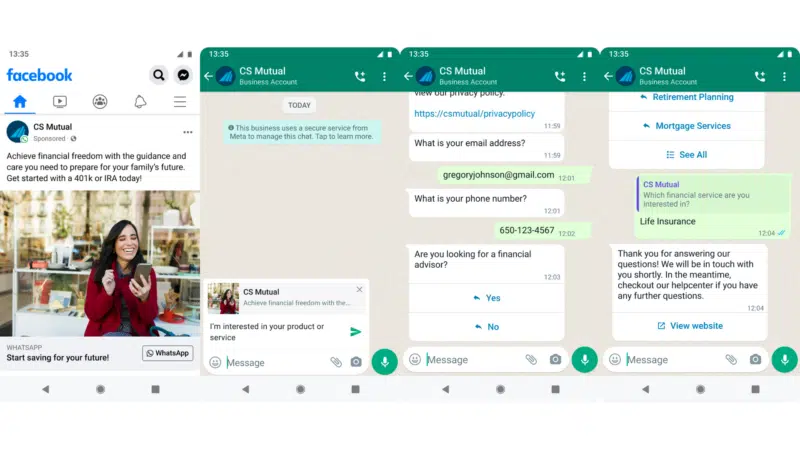
Click to WhatsApp Lead Gen: The lead objective is being extended to Facebook and Instagram ads that click to start a WhatsApp chat to help marketers nurture more quality leads with messaging. Select advertisers will have the option to add a Q&A flow in Ads Manager moving forward

Click To WhatsApp 800x450

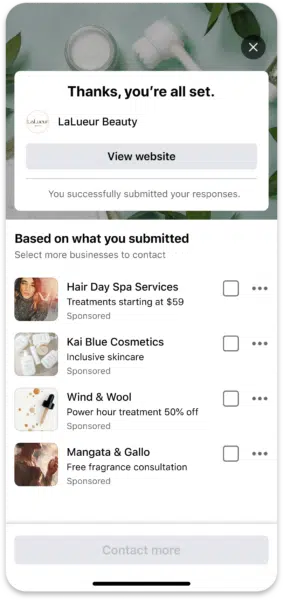
Instant form ad format. This feature lets users explore and connect with multiple businesses at once. For example, after signing up for a bridal hair trial, users can easily share their contact information with other relevant businesses, like a nail salon. It offers added convenience for users and more opportunities for small businesses to be discovered by interested customers.

Submit Multiple Forms 283x600

Calling leads on Facebook. Meta is testing this new feature that allows businesses to call people through Facebook to provide assurance and display their business information, including logo and name.

Advantage+ for Lead Gen: Meta is testing full campaign automation for lead generation campaigns, using Meta Advantage. Advertisers can apply AI to multiple campaign aspects simultaneously to “unlock greater performance while saving time and money.”

Hubspot. To support businesses in generating high-quality leads efficiently, Meta is introducing HubSpot as a new CRM integration partner, offering a straightforward click-through setup. Additionally, Meta is streamlining CRM integration with Zapier.

What Meta is saying. A spokesperson for Meta said in a statement:

  • “Integrating a CRM with the Conversions API, and using the conversion leads performance goalto optimize for lead quality, can boost campaign performance and help a business reach leads more likely to convert.”
  • “In a recent study, ads that used this campaign setup saw an average 16% reduction in cost per quality lead and 21% increase in rate of converting a lead to a quality lead, compared to ads using the leads performance goal.”

Deep dive. Read our 9-step guide on how to use Meta Ads for lead genertion for more information.


Related stories

New on Search Engine Land

@media screen and (min-width: 800px) { #div-gpt-ad-3191538-7 { display: flex !important; justify-content: center !important; align-items: center !important; min-width:770px; min-height:260px; } } @media screen and (min-width: 1279px) { #div-gpt-ad-3191538-7 { display: flex !important; justify-content: center !important; align-items: center !important; min-width:800px!important; min-height:440px!important; } }

About the author

Nicola Agius

Nicola Agius is Paid Media Editor of Search Engine Land after joining in 2023. She covers paid search, paid social, retail media and more. Prior to this, she was SEO Director at Jungle Creations (2020-2023), overseeing the company’s editorial strategy for multiple websites. She has over 15 years of experience in journalism and has previously worked at OK! Magazine (2010-2014), Mail Online (2014-2015), Mirror (2015-2017), Digital Spy (2017-2018) and The Sun (2018-2020). She also previously teamed up with SEO agency Blue Array to co-author Amazon bestselling book ‘Mastering In-House SEO’.

https://searchengineland.com/meta-new-lead-generation-tools-facebook-instgram-434411


How to optimize your content for social: Facebook, Slack and X

We all know what’s involved in crafting the perfect, most SEO-conscious article for the web.

But how many of us really think about those crucial next steps – sharing them in the right communities to help ensure they reach our target audiences?

This part of the post-publishing process is vital to ensure that you’re amplifying the content you create and should help it reach a wider chunk of your audience.

Even though Google hasn’t officially confirmed it, I believe that when an article does well on social media (gets a lot of likes, shares, and comments), it is more likely to appear in the Google Discover feed.

I’ve noticed many cases where popular articles on social media end up being featured in Google Discover.

As SEOs, we must ensure any content published on our watch is well-optimized for these additional social channels – and there sure are plenty of them out there right now.

Most active social channels for SEOs to consider

Outside of the obvious “holy trinity of social” – Facebook, X and LinkedIn – there are some new kids on the block that are worthy of your attention, including:

Outside of these, and if you are looking to target other tech/SaaS communities, you need to be aware of: 

  • Slack.
  • Discord. 

And how do you ensure content is social-media friendly? 

The main thing to check is how your URL is presented to people when someone is sharing it on social media – which we’ll cover in more depth now.

Dig deeper: How to optimize your social media pages for search

How to ensure your content is optimized for social media

Technically speaking, the tags you need to pay close attention to here are your OpenGraph (OG) tags. These tags belong in the <head> of your page and allow you to customize things like article title, featured image, description and even reading length. 

There are other tags to be wary of, which will be specified below, but OpenGraph tags are the main ones to keep optimized.

Side note: When selecting the image to use across social channels, I’d recommend choosing one with a minimum of 1,200 pixels in width and specifying the max-image-preview robots tag on the page. These are two big requirements for inclusion by Google Discover, which can be a huge traffic source.

Dig deeper: Google updates image SEO best practices and Google Discover docs

Sharing on Facebook

Getting your tags right for Facebook is fairly easy – especially if you’re using WordPress and have a plugin like Yoast installed.

The main ones to include are:

  • og:title
  • og:image
  • og:description
Sharing on Facebook
Preview of a Search Engine Land link when shared on Facebook

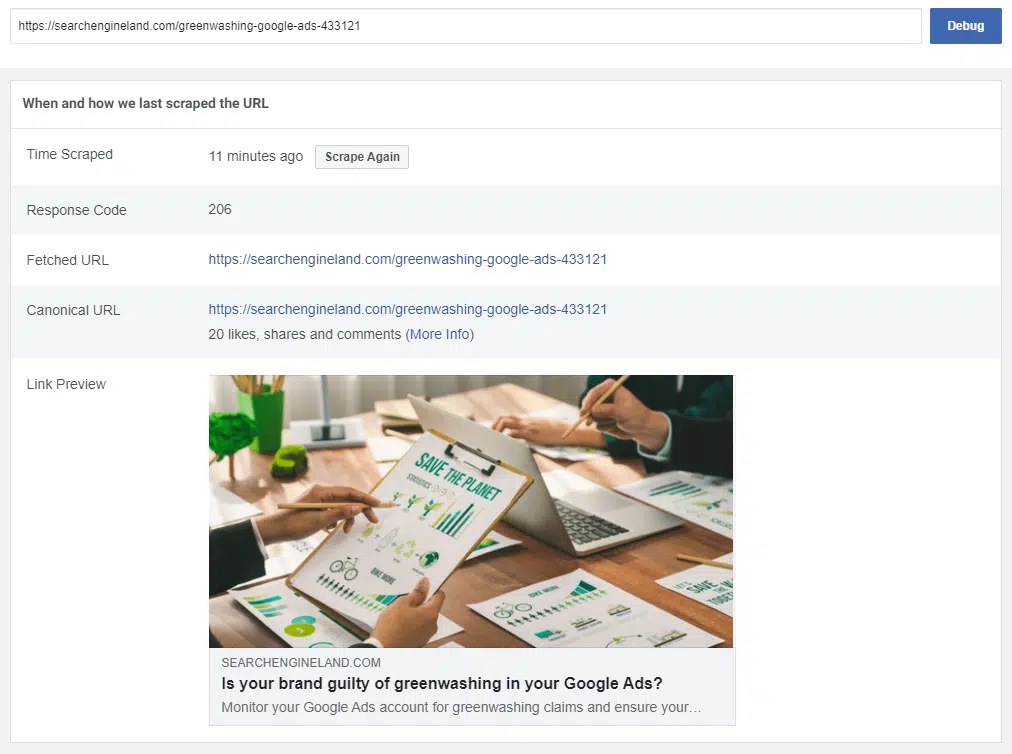
You can use Facebook’s handy Sharing Debugger if you want to check which OG tags you’ve specified and to see how a link looks when shared on Facebook.

The Facebook Sharing Debugger. OG tags are also specified further down on the page.

The code used might look something like this:

<meta property="og:title" content="Is your brand guilty of greenwashing in your Google Ads?" /> <meta property="og:description" content="Monitor your Google Ads account for greenwashing claims and ensure your messaging aligns with your brand’s environmental efforts." /> <meta property="og:url" content="https://searchengineland.com/greenwashing-google-ads-433121" /> <meta property="og:image" content="https://searchengineland.com/wp-content/seloads/2023/10/Is-your-brand-guilty-of-greenwashing-in-your-Google-Ads-800x450.png" />

Get the daily newsletter search marketers rely on.


Sharing on Slack

It’s easy to forget the value or impact of Slack communities. Probably because:

  • They’re hidden from those who aren’t actively participating within them.
  • Referral traffic from Slack will likely be hidden from your analytics reports (unless you are a genius and use custom UTM tags specifically for Slack).

While I don’t know of any Slack URL validator, I do know if you post a URL into a Slack channel, you should see a preview along with:

  • The brand name.
  • Page title.
  • Page description.
  • Image.
  • Estimated reading time.
  • Video previews.
  • And, sometimes, even price and availability (when sharing product links). 

Not all those elements are included by default (which is probably a good thing!). 

When I shared my first Search Engine Land article a few weeks ago, I noticed that none of those elements were being pulled through – just the URL was visible.

SEL link shared on Slack

Slack optimization is a bit more complex than Facebook, X or other social channels, and there are some quirks to be aware of. 

When you post a URL on Slack, it must first “unfurl” the URL – meaning it has to discover what is contained within the URL to show any kind of link preview.

Slack will first check the page headers for any oEmbed server code, Twitter card tags and/or Facebook Open Graph Tags, and then, finally, HTML meta tags. 

The Slack system will give priority based on the order it finds those tags – so if they are set within the oEmbed server, those will override any HTML meta tags found later. 

The main point to remember here is that if you provide valid Facebook Open Graph tags/Twitter cards for any key elements (image, description), then you should have a nice, well-optimized Slack URL preview. 

Don’t forget to include pricing and availability info if you are an ecommerce retailer.

<img decoding="async" width="586" height="327" src="https://rassegna.lbit-solution.it/wp-content/uploads/2023/11/how-to-optimize-your-content-for-social-facebook-slack-and-x-3.webp" alt="The Slack unfurl/link preview after Search Engine Land updated their , removing the old Twitter card.” class=”wp-image-434226″ srcset=”https://rassegna.lbit-solution.it/wp-content/uploads/2023/11/how-to-optimize-your-content-for-social-facebook-slack-and-x-3.webp 586w, https://rassegna.lbit-solution.it/wp-content/uploads/2023/11/how-to-optimize-your-content-for-social-facebook-slack-and-x-21.webp 200w” sizes=”(max-width: 586px) 100vw, 586px”>
The Slack unfurl/link preview after Search Engine Land updated their <head>, removing the old Twitter card.

Digging into the code, it looked like the Search Engine Land website had a redundant Twitter Card App code found high up within the <head>, which didn’t have a set image preview, description or anything else. This was likely overriding the subsequent OpenGraph tags that were correctly set.

Preview of the old Twitter App card blocking the optimized Twitter card from being shown on Slack.

Removing that old chunk of code while saving a few bytes in wasted code across every page on the domain also ensured the Slack unfurl pulled in more valuable data. 

In effect, Search Engine Land carried out some good old-fashioned SEO – “Slack Experience Optimization.” ;) 

A quick word on X optimization

In mid-October, Elon Musk decided to change how links are presented on the platform.

This has been deemed as an action to mask links, to try and keep users on the platform for more extended periods. (After all, social media companies don’t like users to “leave” the app, which means lower ad revenue.) 

While links were fairly obviously presented, with a title and description included alongside the link, as of now, this is not the case. 

Links are now presented with an image pulled from the page being shared and a tiny mention of the brand embedded in the image.

Showing how URLs are now displayed within a Tweet at present. Note the small URL/text at the bottom-left of the image.
Showing how URLs are now displayed within a post at present. Note the small URL/text at the bottom-left of the image.

You may not have noticed this change – especially if you’ve decided to ditch X – and many users took the chance to point out some fundamental flaws in this decision:

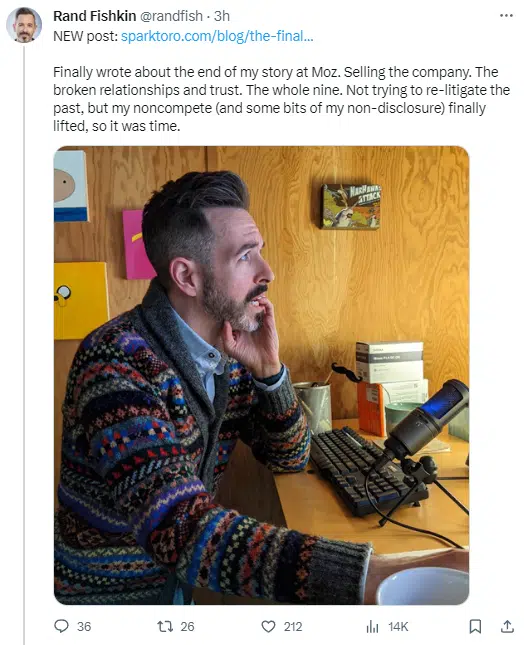
Example of how the new format has presented issues – or opportunities – for people to be misled due to shares no longer pulling in page titles or descriptions.

Either way, you now need to be wary of this and act accordingly. Some users seem to have adopted a new way of presenting links:

  • Adding a CTA and sometimes an emoji to help highlight the link at the end of a thread. 
  • Just adding a link at the beginning of a tweet and clearly signposting it.
Sharing links on X - alternative
An alternative way to share links – clearly signpost that there’s a link, add a nice intro and include a custom image manually – thus avoiding the Twitter overlay on the image they pull.

Technically, you could also remove the OpenGraph/Twitter card from the page, which would leave the link looking bare when sharing (no image gets pulled), but at least it’s obvious that it’s a link. (Note that the Twitter Card Validator Tool is no longer supported.)

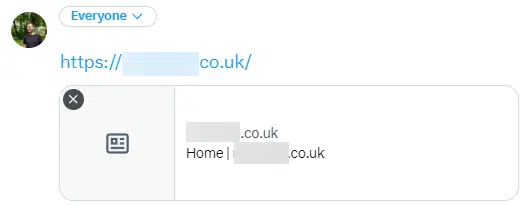
Highlighting what sharing a link looks like if no OpenGraph or Twitter card tags are defined – pretty ugly, but at least it’s clearly a link.

There’s no right or wrong way of doing things here. Still, it’s good to be wary of the issues, especially if you’re wondering why traffic to your site from X has dropped since mid-October.

Are you optimizing your content for social?

It’s easy to forget to optimize your content for social platforms – especially when we’ve got our heads fully within the search engine algorithm. 

But I think it’s crucial to realize lots of positive interaction can come within social channels, whether that’s from customers sharing content you’ve produced or even sites linking to articles having found them via a social channel. 

It doesn’t take long to ensure content is ready for sharing on social media and to have a strategy for feeding (not spamming!) the articles in any relevant communities. 

Dig deeper: Search, social and retail: The future of digital brand experiences


Opinions expressed in this article are those of the guest author and not necessarily Search Engine Land. Staff authors are listed here.


Related stories

New on Search Engine Land

@media screen and (min-width: 800px) { #div-gpt-ad-3191538-7 { display: flex !important; justify-content: center !important; align-items: center !important; min-width:770px; min-height:260px; } } @media screen and (min-width: 1279px) { #div-gpt-ad-3191538-7 { display: flex !important; justify-content: center !important; align-items: center !important; min-width:800px!important; min-height:440px!important; } }

About the author

Matt Tutt

Matt Tutt is an SEO consultant that specialises in helping Purpose Driven and ClimateTech companies get found online. Passionate about anything that aims to help the environment, he’s been working as an SEO for over 10 years. Outside of work he can usually be found in his garden, attempting to grow anything that could be considered edible.

https://searchengineland.com/optimize-content-social-facebook-slack-x-434219