A 63-Year-Old Pharmacy Chain Just Closed All of Its Locations

A message was posted to the website over the weekend to alert customers.

Key Takeaways

  • Rite Aid posted on its website Saturday that “all Rite Aid stores have closed.”
  • The pharmacy was founded in 1962.
  • Rite Aid filed for bankruptcy twice in the last two years.

Rite Aid has closed all of its locations after more than 60 years in business, according to its website.

“All Rite Aid stores have now closed, the text reads. “We thank our loyal customers for their many years of support.”

The pharmacy was founded in 1962 in Scranton, Pennsylvania. At its peak, the company had more than 5,000 stores. The New York Times reports that, by 2023, the number was down to 2,000 stores and around 45,000 employees.

Related: A Popular Drug Store Chain Is Filing for Bankruptcy Amid Opioid Lawsuits and Financial Woes

However, Rite Aid filed for bankruptcy twice in the last couple of years, in October 2023 and then again this past May, and has been closing stores ever since.

Still, as of just last week, there were 89 stores open in 78 cities, according to data company ScrapeHero.

As of press time, there have not been any public statements from Rite Aid other than the website notice. The company’s last Instagram post was in April 2025.

Related: ‘Where Most of the Value Is Generated’: CVS Plans to Open 12 Mini-Stores Centered on Pharmacy, Healthcare

The rest of this article is locked.

Join Entrepreneur+ today for access.

https://www.entrepreneur.com/business-news/rite-aid-closes-all-remaining-stores-pharmacies/497987


Stuck On ‘What If It Doesn’t Work?’ Ask Yourself These 3 Questions

Opinions expressed by Entrepreneur contributors are their own.

Key Takeaways

  • Fear stalls progress, but better questions reframe risk into opportunity and momentum.
  • Asking “how” transforms vague ideas into practical actions that generate real results.
  • Tiny steps compound over time, creating clarity and long-term success.

“What if it doesn’t work?”

That single question has stalled more great ideas than a bad economy. The moment it grabs hold, your brain starts building a case for staying put. You see risk everywhere. You find reasons to wait. You convince yourself that later is safer.

Let’s give your brain a better job. And the tools to go from entrepreneurial fear to confident action. When you want to change your life or business, swap the fear question for three better ones.

Question 1: What if it does work, and what would that make possible?

Possibility propels you forward. When you ask, “What if it does work?” your brain stops scanning for danger and starts looking for opportunity. It’s like changing the channel. New inputs, new ideas, more progress and more momentum.

And there’s even science to support this. Ever buy a new car and then see that model everywhere you go? That’s called “frequency illusion.” The world didn’t change. Your attention did. Once something becomes relevant, your brain flags it and brings it to the forefront.

Let’s use that to our advantage. Decide what you actually want, then give your attention a target. Let’s say you’re starting an online membership business. That could mean that your focus is 25 founding members, a four-day workweek or the freedom to pick up your kids every day after school.

Paint a short “if this works” snapshot you can read each morning. Two or three sentences. Clear, simple, specific, and outcome-based.

When you hold space for that picture, you’ll start noticing conversations and people aligned with it. Not because you’re manifesting, but because you’re finally tuned into the right station. Your brain works for you, not against you.

Related: Your Fear Is Lying to You. Here Are 3 Steps to Overcome It.

Question 2: How could I make this happen?

“How” turns ideas into plans and action. It’s a bridge builder. Ask it, and your brain connects dots you couldn’t see from the sidelines.

A few years back, my wife, Amy, and I were travelling through the U.K. In the airport, she spotted a gorgeous leather jacket. Price tag: $1,700. It was way outside our spontaneous shopping budget.

Instead of shutting down, Amy asked a better question. “How could I make enough to buy the jacket when we return in two weeks?”

Her brain jumped into problem-solving mode. We were heading to Kenya, and she usually picked up jewelry as gifts. Amy posted a simple note on social media to see who wanted a piece. Interest turned into orders, orders turned into just over $2,000 in sales, and two weeks later, she bought the jacket. No budget gymnastics required.

That result didn’t appear because we stared at the price tag. It happened because of a “how” question. You can do the same in your business.

  • “How could I pre-sell five spots before I build anything?”
  • “How could I launch this without it being completely done yet?”
  • “How could I test my offer with the warmest part of my audience first?”
  • “How could I partner with someone who already serves my people?”

Write ten “how” questions. Most of your ideas won’t be perfect. But one might be practical enough to try today after reading this article. That’s the one that counts.

Related: 9 Ways to Conquer Fear and Realize Your True Potential

Question 3: What’s one tiny step I can take today?

Big ideas freeze us because “big” is vague. Your brain can’t push a fog. It can, however, take one small, simple step.

My friend and mentor, Michael Hyatt, taught me this with book writing. Day one, create a new document with a working title. That’s it. Day two, sketch a rough outline. Day three, write a messy introduction. He builds momentum by making the first steps tiny and doable. Those actions create progress, and more importantly, momentum.

Stanford’s BJ Fogg calls this the power of tiny habits. Small changes change everything. When the step is small, you stop negotiating with yourself and start moving. Once you move, you keep moving.

We use this same idea when we teach a Founding Member Launch. We strip away the heavy stuff. No long sales page, no fancy video sequence, no complicated campaign, and no complicated funnels.

We teach our students to return to the essentials and focus on the small things that produce big results. To boil it down, the whole strategy is based on a simple message to your audience that says who your product or program is for (like a membership, course, or coaching program), what result you’re after, how it works, and the founding rate.

It’s so simple that people take action the same day. And here’s the wild part. Within hours, they often see sign-ups for something that was “just an idea” that morning.

Linda, a banking professional in our community, started exactly this way. Her founding launch welcomed two members. You might be thinking, is it worth it for two? Four years later, she’s about to cross $1 million a year. In hindsight, those first two weren’t small; they were just the initial starting point.

Taking action creates clarity. Even if you don’t get the result you wanted, you didn’t burn months or empty your budget. Instead, you learned what the market responds to, which is priceless because that feedback shapes your next tiny step.

So keep it super simple. Draft the interest post. Record a ten-minute Loom. Invite five past clients to a quick call. You don’t need a full website, the perfect funnel, or a highly produced video. You just need one tiny step that builds momentum today.

Your brain is a powerful tool. Point it in the right direction, and it becomes your greatest unfair advantage.

When fear asks, “What if it doesn’t work?” answer with better questions.

  • What if it does work?
  • How could I make this happen?
  • What’s one tiny step I can take today?

Ask, act, adjust. That’s the game. And when you play it, you don’t lose. You either win or learn, which means you’re always moving forward.

Key Takeaways

  • Fear stalls progress, but better questions reframe risk into opportunity and momentum.
  • Asking “how” transforms vague ideas into practical actions that generate real results.
  • Tiny steps compound over time, creating clarity and long-term success.

“What if it doesn’t work?”

That single question has stalled more great ideas than a bad economy. The moment it grabs hold, your brain starts building a case for staying put. You see risk everywhere. You find reasons to wait. You convince yourself that later is safer.

Let’s give your brain a better job. And the tools to go from entrepreneurial fear to confident action. When you want to change your life or business, swap the fear question for three better ones.

The rest of this article is locked.

Join Entrepreneur+ today for access.

https://www.entrepreneur.com/starting-a-business/how-to-turn-what-if-it-fails-into-confidence-and-momentum/497531



I’ve Been Freelancing For 13 Years — Here Are My Top 7 Strategies For Better Client Relationships

Opinions expressed by Entrepreneur contributors are their own.

Key Takeaways

  • Clarify boundaries and expectations early to prevent client stress, identify bad clients and ensure a smooth freelance experience.
  • Effective onboarding and kickoff calls are critical to ensure against scope creep and establish a professional tone.
  • Long-term client management success hinges on adapting communication styles.

One of the hardest parts of freelancing isn’t the work itself. It’s managing clients.

Clients are the lifeblood of your business, but without the right systems in place, they can also become the biggest source of stress. Over the past 13 years, I’ve worked with hundreds of clients — and I’ve learned (sometimes the hard way) how important it is to set boundaries, onboard effectively and guide clients through a structured process.

Here are my best strategies for building client relationships that are healthy, professional and sustainable.

Related: How to Make Your Clients Love Working With You

1. The boundary problem

The number one mistake freelancers make is failing to set boundaries early.

In the beginning, you’re so excited to land projects that you’ll accept almost anything. That might mean letting clients pay too little, pushing your deadlines or piling on requests. The issue is that once you start working this way, it’s incredibly hard to unlearn.

The reality? Clients aren’t necessarily being unreasonable; they’re just working with the information you gave them. If your proposal says “consulting for a month,” they might assume that means 30 to 40 hours of access to you. Unless you define it clearly, their assumption isn’t wrong.

Boundaries aren’t about being rigid. They’re about clarity. A solid scope of work, a kickoff call and documented agreements protect both you and the client.

2. Lessons from difficult clients

Early in my career, I didn’t set limits on revisions. That led to projects dragging on for weeks, endless edits and clients watering down strong drafts with overthinking.

Now I always:

  • Define the number of revision rounds in the contract (usually two).
  • Give clients instructions on how to provide feedback for each round.
  • Teach them tools like Suggestion Mode in Google Docs so I don’t drown in comments.

Another issue I ran into was vague feedback like, “I don’t like the style.” To fix this, I added an addendum where clients initial that they’ve reviewed my writing samples and agree that the project will reflect a similar style and tone.

Small changes like this prevent frustration — and they make the client experience smoother too.

3. Why freelancers struggle with boundaries

Let’s be honest: Boundaries are hard when you’re new.

You don’t yet know what red flags to watch for. You’re excited about opportunities. And clients themselves often don’t know how to work with freelancers — which means it’s your job to guide them.

My advice: Treat every project as a lesson. At the end, ask yourself:

  • What caused friction?
  • What could I add to my contract or onboarding to prevent this?
  • Where did I need to set clearer expectations?

Over time, these micro-adjustments build a system that protects your time and sanity.

Related: 3 Top Tips to Help You, as a Freelancer, Establish Long-Term Relationships With Clients

4. Onboarding as boundary insurance

Onboarding isn’t busywork. It’s insurance for the client relationship.

A strong onboarding process usually includes:

  • A kickoff call to recap deliverables, reporting cadence and timelines.
  • A written onboarding document to centralize details like logins, assets and deadlines.
  • Clear reminders about payment schedules and review periods.

My favorite tool? A kickoff call agenda template. I can use it every time, tweaking as needed. It always covers: what we agreed to, how we’ll communicate, what I need from the client and review/approval timelines.

Spending 20 to 30 minutes upfront saves hours of backtracking later.

5. Kickoff calls and scope creep

Even with a contract in place, kickoff calls are essential. Why?

They translate the contract into plain language. They also give you a written record if you use an agenda and notes. Later, if scope creep pops up, you can confidently point back to what you discussed.

A few must-ask questions in every kickoff call:

  • Do you have any questions before we start?
  • What’s your preferred communication method?
  • How would you like to provide feedback?

Kickoff calls don’t just prevent misunderstandings. They set the tone that you are a professional running a business, not a freelancer scrambling to “make it work.”

6. Ongoing client management

Once the project is underway, communication style matters.

Some clients want details. Others only want a high-level summary. My approach is to adapt:

  • Use recap emails or reports with bullet points for big-picture clients.
  • Record quick video updates for those who prefer visual explanations.
  • Hold weekly or biweekly calls when ongoing input is critical

If a client goes quiet, give them some grace. Life happens. But keep nudging gently — and if needed, explain how delays will affect the timeline. For example, “If you need two extra weeks to review this mock-up, our launch date will move to Sept. 1. Is that okay with you?”

This keeps projects moving without creating tension.

7. The golden rule

After more than a decade freelancing, here’s my golden rule: The best client management strategy is to say no to the wrong clients before you ever start.

Your initial sales call tells you almost everything you need to know. Do your personalities align? Are their expectations realistic? Have they burned through other freelancers before? Those are signs to proceed with caution — or not at all.

Screening for fit saves more headaches than any contract clause or process ever will.

Related: Want to Make Money as a Freelancer? Avoid This Mistake That Can Cost You Clients.

Final thoughts

Great client relationships don’t happen by chance. They happen when you, the freelancer, guide the process:

  • Boundaries are defined clearly.
  • Onboarding is handled professionally.
  • Kickoff calls are used to set expectations.
  • Ongoing communication is adapted to the client.

When you take control of these steps, you stop feeling like freelancing is unpredictable. Instead, you build long-term client relationships that are healthy, respectful and sustainable.

Key Takeaways

  • Clarify boundaries and expectations early to prevent client stress, identify bad clients and ensure a smooth freelance experience.
  • Effective onboarding and kickoff calls are critical to ensure against scope creep and establish a professional tone.
  • Long-term client management success hinges on adapting communication styles.

One of the hardest parts of freelancing isn’t the work itself. It’s managing clients.

Clients are the lifeblood of your business, but without the right systems in place, they can also become the biggest source of stress. Over the past 13 years, I’ve worked with hundreds of clients — and I’ve learned (sometimes the hard way) how important it is to set boundaries, onboard effectively and guide clients through a structured process.

Here are my best strategies for building client relationships that are healthy, professional and sustainable.

The rest of this article is locked.

Join Entrepreneur+ today for access.

https://www.entrepreneur.com/starting-a-business/unlock-better-client-relationships-with-these-expert/496149


Lock in Microsoft Office Pro 2021 for $40 — Zero Monthly Fees

Give your workflow a boost with this discounted Microsoft Office license.

Disclosure: Our goal is to feature products and services that we think you’ll find interesting and useful. If you purchase them, Entrepreneur may get a small share of the revenue from the sale from our commerce partners.

More than 80% of companies are using some version of Microsoft Office in their daily operations, according to data from Spiceworks. If you don’t have a license for this crucial suite of apps on your current device, you’re in luck. Right now, you can secure a lifetime license to Microsoft Office Professional 2021 for Windows for just $39.97 (reg. $219.99) through October 19.

Enjoy Microsoft Office apps for life

Whether you’re in need of a new license for your PC or you have yet to introduce the Microsoft Office staples to your business, now is a great time to take advantage of this Microsoft Office Professional 2021 deal. It comes packed with eight helpful Microsoft apps, all ready to help streamline your workflow.

Entrepreneurs can count on a sleek email interface with Outlook and a convenient way to draft spreadsheets with Excel. Word is a dependable place to draft documents, while PowerPoint can help you get your point across via a stunning presentation. You can liaise with coworkers on Teams, organize your notes with OneNote, design marketing materials on Publisher, and analyze data with Access.

This edition may hail from 2021, but the tools have been redesigned to work for everyone from designers to data analysts. It also includes more apps than the 2025 version, and doesn’t require expensive monthly subscription fees.

Note: This Microsoft Office 2021 license requires your PC to run Windows 10 or 11, and it’s recommended that you have 1GB of RAM.

Upgrade your daily workflow with this lifetime license to Microsoft Office Professional 2021 for Windows, on sale now for $39.97 (reg. $219.99) through October 19.

StackSocial prices subject to change.

More than 80% of companies are using some version of Microsoft Office in their daily operations, according to data from Spiceworks. If you don’t have a license for this crucial suite of apps on your current device, you’re in luck. Right now, you can secure a lifetime license to Microsoft Office Professional 2021 for Windows for just $39.97 (reg. $219.99) through October 19.

Enjoy Microsoft Office apps for life

Whether you’re in need of a new license for your PC or you have yet to introduce the Microsoft Office staples to your business, now is a great time to take advantage of this Microsoft Office Professional 2021 deal. It comes packed with eight helpful Microsoft apps, all ready to help streamline your workflow.

Entrepreneurs can count on a sleek email interface with Outlook and a convenient way to draft spreadsheets with Excel. Word is a dependable place to draft documents, while PowerPoint can help you get your point across via a stunning presentation. You can liaise with coworkers on Teams, organize your notes with OneNote, design marketing materials on Publisher, and analyze data with Access.

The rest of this article is locked.

Join Entrepreneur+ today for access.

https://www.entrepreneur.com/science-technology/lock-in-microsoft-office-pro-2021-for-40-zero-monthly/497848


AI Is Changing How We Start Businesses — Here’s What You Need to Know

Opinions expressed by Entrepreneur contributors are their own.

Key Takeaways

  • Coding is no longer a prerequisite for tech entrepreneurship; a hacker mindset and AI tools can equip you to launch successful startups.
  • Focusing on product-market fit and user feedback is key to startup survival, rather than perfect technical solutions.
  • Tracking the right metrics and engaging a lean, versatile team allows for rapid iteration and adaptation to market needs.

I started coding at 15, staying up all night building game scripts in Delphi. Entering university, I quickly realized that it wasn’t working for me — I could learn everything needed online much faster. So dropping out to code full-time seemed like the obvious choice.

At 24, I co-founded HOLYWATER with Bogdan Nesvit. Since then, we’ve built several products, grown into a content ecosystem and reached more than 55 million users with over 100 million hours of viewing. Our e-book platform, My Passion, is No. 2 in its niche, while My Drama, a vertical streaming app, ranks No. 1 among American and European companies, with over 30 million fans worldwide.

My story may sound like an exception, considering that 93% of startups fail. But now, AI is changing the game. You no longer need coding skills or funding to launch an MVP — with the right tools, you can start almost for free.

If you’re curious, you can start creating today. But keep in mind the new rules.

Related: How AI Can Make Starting a Business on Your Own Even Easier — and Faster

A hacker mindset is more important than tech skills

Despite building a successful tech startup, 90% of our team doesn’t know how to code. And you know what? They don’t need to. What’s really crucial is having a hacker mindset — being a general style specialist, able to solve any problem and get things done. This mindset is all about data, not assumptions. Build something simple, show it to your friends and get data fast.

Startups fail not because of technical imperfections — 42% of companies close due to their product not meeting market demand. Therefore, aim not to create the perfect product, but to get user feedback ASAP. You can do this on Reddit communities in your niche or through quick interviews with your potential users. One more tip — reach out to influencers with relevant audiences, ask them to post your idea and share followers’ feedback.

How can you show your product to your audience if you don’t know how to code and have no money for a developer? Five years ago, technical skills were critical for founders. But today, you don’t need to be a coding expert to launch a tech product. Tools like Cursor write code from simple descriptions, Make.com automates complex workflows without programming, and no-code platforms let you build sophisticated apps in days, not months.

The hacker mindset is about speed, which is extremely important when launching startups in the era of AI agents. Almost half of the startups in the Y Combinator Spring 2025 batch were based around AI agents. The AI agent market is growing at a lightning-fast projected CAGR of 46.3% from 2025-2030. Technical debt won’t destroy your company, but delaying action just might.

The future belongs to founders who can navigate problems, not just write perfect code. Ship fast, learn faster and let AI amplify your vision.

Start small, think like a lab

You don’t need a massive team to launch. Today, we run HOLYWATER with around 200 people, but we started with just two: a builder and a seller. Nesvit, my co-founder, handled business development while I focused on product and tech. That was enough.

Here’s what most founders get wrong: They hire specialists too early. Instead, think of hiring generalists who can and want to wear multiple hats. At HOLYWATER, we channel the best parts of the startup mindset: Our writers pitch product ideas, our marketers suggest technical solutions and our designers dive into user research. This approach lets us ship dozens of tests every month and keep only the 20% that show strong metrics.

You need people who can test fast, learn from failure and pivot without ego. A designer who also runs user interviews can create a unique impact — combining skills that would otherwise require several people, while developing a full understanding of the product.

Develop creativity in yourself and your team — everyone can be creative with enough effort. Don’t stop learning on various topics (even those unrelated to startups) and talking to users from different industries — you never know where you’ll find this “aha” moment. What defines successful founders isn’t innate talent, but relentless curiosity about solving real problems.

Related: 3 AI Tools to Help You Start a Profitable Solo Business in 2025

Track what really matters, not vanity numbers

Here’s a costly mistake we made early on at HOLYWATER: focused on the wrong metrics. We pursued payment metrics and payback periods, but what really mattered for our industry was content engagement.

If users aren’t engaging with your core product, they’ll never pay. We learned this the hard way. Now we track engagement depth first, then optimize the path to payment.

Start by defining your North Star metric — the one number that best captures the core value you deliver to customers. This becomes your guiding light for all decisions.

Every industry has different benchmarks. Research yours. For instance, if you’re launching B2C products like language learning apps, focus on Day 1 retention rates, daily active usage and feature adoption before worrying about revenue. If your industry benchmark is 40% Day 1 retention, and you’re at 15%, think about optimization or pivoting. Maybe you chose the wrong audience segments for the test, or you need to improve the product. If you’ve tried to optimize but are still far from the benchmark, your core experience isn’t engaging enough.

I suggest using the Superhuman Product-Market Fit Survey to understand whether users need your product. This framework includes four questions:

  • How would you feel if you could no longer use (product name)? Answer options: Very disappointed, Somewhat disappointed, Not disappointed.
  • What type of people do you think would most benefit from (product name)?
  • What is the main benefit you receive from (product name)?
  • How can we improve (product name) for you?

Aim for at least 40% of users saying they’d be “very disappointed” if your product disappeared. Set a simple rule: Gather feedback from 5-6 power users and 100 total installs, then act. Perfect data doesn’t exist, but directional insights do.

Related: The Data Looks Bad — But Is It? Here’s When You Should Ignore Your Metrics (and When to Panic).

Take action now

Founders, you don’t need coding skills or investments to start your startup right now. The barrier to entry has never been lower, but the importance of the hacker mindset has never been higher. Be curious, master AI agents, launch an MVP, plan your distribution and listen hard to your users. This way, you’ll know within days, not months, whether your idea has legs.

Key Takeaways

  • Coding is no longer a prerequisite for tech entrepreneurship; a hacker mindset and AI tools can equip you to launch successful startups.
  • Focusing on product-market fit and user feedback is key to startup survival, rather than perfect technical solutions.
  • Tracking the right metrics and engaging a lean, versatile team allows for rapid iteration and adaptation to market needs.

I started coding at 15, staying up all night building game scripts in Delphi. Entering university, I quickly realized that it wasn’t working for me — I could learn everything needed online much faster. So dropping out to code full-time seemed like the obvious choice.

At 24, I co-founded HOLYWATER with Bogdan Nesvit. Since then, we’ve built several products, grown into a content ecosystem and reached more than 55 million users with over 100 million hours of viewing. Our e-book platform, My Passion, is No. 2 in its niche, while My Drama, a vertical streaming app, ranks No. 1 among American and European companies, with over 30 million fans worldwide.

My story may sound like an exception, considering that 93% of startups fail. But now, AI is changing the game. You no longer need coding skills or funding to launch an MVP — with the right tools, you can start almost for free.

The rest of this article is locked.

Join Entrepreneur+ today for access.

https://www.entrepreneur.com/starting-a-business/how-ai-is-changing-the-way-we-start-businesses-what-to-know/496343


Every Entrepreneur Needs This Helpful PDF Tool

Disclosure: Our goal is to feature products and services that we think you’ll find interesting and useful. If you purchase them, Entrepreneur may get a small share of the revenue from the sale from our commerce partners.

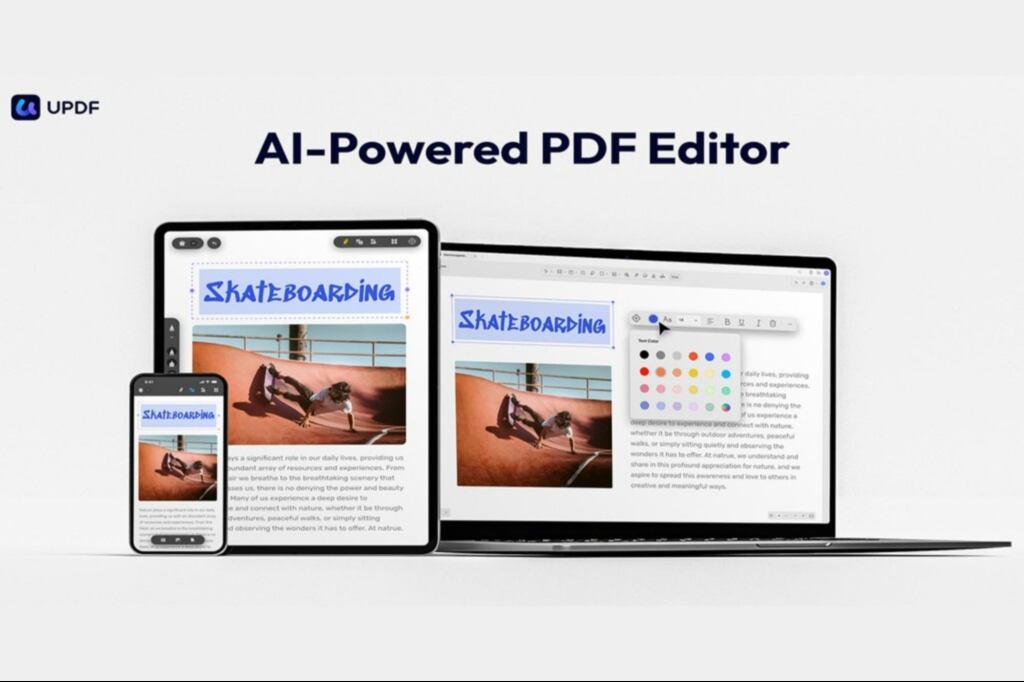
According to Adobe, 98% of businesses use PDFs for sharing external documents. As an entrepreneur, this file format is likely your go-to as well. Unfortunately, it is also a notoriously difficult file type to work with. If you are hoping to make it a little easier and save yourself some much-needed time, it’s time to check out UPDF.

Right now, a lifetime subscription to UPDF, an easier way to work with these files, can be yours for just $47.99 (reg. $149.99) with code SAVE20 through October 12.

Simplify PDF editing and conversion with this tool

If you’re tired of wasting time trying to edit, convert, or translate a PDF, UPDF is ready to give you some of that time back. This handy tool turns you into a PDF master, serving as your toolkit to help you work with these files on a daily basis, both personally and professionally.

Whether you’re using the PDF internally or sending it out to a client, UPDF makes it easy to replace, reorder, crop, extract, or insert pages into a PDF file. It also makes it straightforward to annotate PDFs via highlighting, underlining, or strikethroughs. You also have the ability to add stamps, stickers, and signatures to PDFs.

With UPDF, you can conveniently convert PDFs to Office files, images, HTML, TXT, and more with just a few clicks. And if you ever deal with sensitive information in your documents, you’ll have the ability to add passwords to PDFs or even encrypt them using three different security levels depending on your needs — 128-bit RC4, 128-bit AES, or 256-bit AES

UPDF is compatible with Windows, macOS, iOS, and Android, and you can use it on a total of four different devices with this lifetime subscription.

Get a lifetime subscription to UPDF for only $47.99 (reg. $149.99) with code SAVE20 through October 12.

StackSocial prices subject to change.

According to Adobe, 98% of businesses use PDFs for sharing external documents. As an entrepreneur, this file format is likely your go-to as well. Unfortunately, it is also a notoriously difficult file type to work with. If you are hoping to make it a little easier and save yourself some much-needed time, it’s time to check out UPDF.

Right now, a lifetime subscription to UPDF, an easier way to work with these files, can be yours for just $47.99 (reg. $149.99) with code SAVE20 through October 12.

Simplify PDF editing and conversion with this tool

If you’re tired of wasting time trying to edit, convert, or translate a PDF, UPDF is ready to give you some of that time back. This handy tool turns you into a PDF master, serving as your toolkit to help you work with these files on a daily basis, both personally and professionally.

The rest of this article is locked.

Join Entrepreneur+ today for access.

https://www.entrepreneur.com/science-technology/every-entrepreneur-needs-this-helpful-pdf-tool/497847


Stop Chasing Every AI Tool Available — Focus on These 3 to Grow Faster, Smarter and Without Burnout

Opinions expressed by Entrepreneur contributors are their own.

Key Takeaways

  • Chasing every new AI tool leads to burnout and diluted focus — instead, choose a few that directly support your startup’s growth goals.
  • Prioritize AI tools for content creation, SEO insights,and customer analytics to streamline your workflow and amplify strategic impact.

The rapid pace of AI development can feel overwhelming — especially when you’re tempted to chase every shiny new tool, just because you can.

But doing so doesn’t make you smarter, faster, or better at what you do. In fact, it often leads to the opposite: scattered marketing efforts, stale brand launches and — perhaps most dangerously — a burnt-out team.

So, what’s the smarter move?

Pause. Take a breath. And take inventory.

Identify which tools are most directly aligned with your startup’s immediate growth goals — and shelve the rest. If you’re like most entrepreneurs, you’re short on time, short on staff, and short on patience for testing every AI tool on the market.

Here’s a streamlined AI starter stack that covers the essentials:

1. Content creation tools

AI content tools are the most common — and the most misunderstood.

Yes, they’re smart. Yes, they save time. But no, they’re not a complete substitute for your brand voice.

Still, using AI to quickly generate “good enough” graphics, captions, blog drafts, and even short videos is essential to keeping up with the relentless demand for content.

Why is that important?

Because it’s not just about your audience. It’s about the bots.

Google’s algorithms — Panda, Penguin and friends — are constantly scanning your website and social pages for freshness, relevance, and helpful content. Posting regularly helps improve your site’s visibility, authority and organic ranking. And customers expect it too. They want to see new content on your site, your YouTube, your socials — all the time.

AI helps you meet that demand at scale. Use it to generate drafts of:

  • Short-form videos
  • Website updates
  • Social media posts
  • Blog intros
  • Product descriptions

Then — very importantly — don’t stop there. Add your human voice. Customize the tone. Make it sound like your brand, not a bot. That’s how you stand out.

There are countless tools available — some paid, many free. Choose one that fits your workflow, your budget and your tech comfort zone.

Related: How I Went From Side Hustle to 7 Figures Using These 4 AI Tools (No Tech Skills Needed)

2. SEO and search marketing insight tools

Too many businesses treat SEO like a one-time checklist. You optimize once, launch your site or campaign — and forget about it.

But SEO isn’t a set-it-and-forget-it game. It’s a competitive, constantly moving landscape.

Yes, Google ads and analytics give you surface-level data. But if you want to truly own your category, you need deeper competitive insights — especially around the keywords your ideal customers are actually searching.

Tools like SpyFu (one of my favorites — and no, I’m not paid to say that) let you:

  • Track how your site ranks for critical queries
  • Compare your performance with top competitors
  • See which keywords are driving their traffic
  • Get volume trends for high-intent search terms
  • Monitor side-by-side ranking changes over time

Some platforms go even further. For example, RivalFlow lets you paste in your website URL and instantly compare your content against competitors. If you’re ranking #61 and your top competitor is sitting pretty at number four, it’ll help you understand why — and even suggest copy updates based on what’s working for them.

Click a button, and you’ve got a rewritten draft that’s more SEO-friendly. All in under five minutes.

That’s not gaming the system. That’s playing it smart.

3. Predictive analytics and customer insights

AI isn’t just about content and SEO — it’s also reshaping how we analyze customer behavior.

Tools like Google’s NotebookLM (if you haven’t explored it yet, start now) offer powerful ways to understand your customers fast. You can upload a customer database and get immediate breakdowns of:

  • Behavioral segments
  • RFM (recency, frequency, monetary value)
  • Geo-targeting clusters
  • High-performing customer profiles

These insights help you target smarter, time campaigns better, personalize offers and drive better results. And they do it faster than traditional CRM or spreadsheet analysis ever could.

As always, the power is in how you use the data. AI gives you a shortcut to patterns — you apply the strategy.

Related: Not Every AI Tool Is Useful — Here’s How to Choose Ones That Will Actually Transform Your Business

Final thoughts

The AI landscape isn’t slowing down. But that doesn’t mean you need to keep running to keep up.

Instead of fearing the flood of new tools—or drowning in them — get focused. Pick the tools that align with your actual goals and workflow. Use them to automate what you can, so you can reinvest your energy into what matters most: strategy, innovation, and growth.

Let AI handle the repetition. Let you lead the vision.

Key Takeaways

  • Chasing every new AI tool leads to burnout and diluted focus — instead, choose a few that directly support your startup’s growth goals.
  • Prioritize AI tools for content creation, SEO insights,and customer analytics to streamline your workflow and amplify strategic impact.

The rapid pace of AI development can feel overwhelming — especially when you’re tempted to chase every shiny new tool, just because you can.

But doing so doesn’t make you smarter, faster, or better at what you do. In fact, it often leads to the opposite: scattered marketing efforts, stale brand launches and — perhaps most dangerously — a burnt-out team.

So, what’s the smarter move?

Pause. Take a breath. And take inventory.

The rest of this article is locked.

Join Entrepreneur+ today for access.

https://www.entrepreneur.com/growing-a-business/stop-chasing-every-ai-tool-available-focus-on-these-3/491044


The Step-by-Step Strategy Top Brands Use to Secure Domains Without Tipping Off Competitors

Opinions expressed by Entrepreneur contributors are their own.

Key Takeaways

  • Revealing your identity during a domain negotiation can inflate prices, attract competitors and compromise your brand strategy.
  • Anonymous domain brokers protect your leverage, streamline complex deals and ensure your acquisition stays confidential from start to finish.

When people think about startup growth or corporate strategy, domain names don’t always make the list of top priorities. But they should.

Whether you’re launching a new product, building a brand from scratch or planning an exit, the right domain name is one of the most valuable — and visible — assets you can own. And in high-stakes situations, how you acquire that domain can be just as important as what you pay for it.

After years of negotiating premium domain acquisitions — often in the mid-six to seven-figure range — I can tell you this: The most valuable deals are almost always invisible.

When a Fortune 500 company, global startup or high-growth brand wants to secure a domain name that could define their next chapter, they rarely approach the seller directly. Instead, they rely on anonymous domain brokers to protect their identity, strategy and leverage.

Here’s why anonymity in domain acquisition isn’t just a luxury — it’s a competitive edge.

Why domain anonymity matters — even for small teams

Whether you’re a solo founder or leading a billion-dollar brand, the moment a seller knows who wants their domain, everything changes. Prices skyrocket, timelines stretchvand word can leak to competitors — compromising launches, M&A plans or future trademarks.

We call that price bump the “brand tax.” It’s real. I’ve seen a $50,000 domain suddenly demand $500,000 just because a well-known buyer got involved.

Even if your budget isn’t in the millions, the principle applies: The less the seller knows, the more control you keep.

Related: How to Secure a Premium Domain Without Raising Prices or Attracting Competitors

What an anonymous domain broker really does

A stealth domain broker is much more than a go-between. We act as:

  • Negotiators — skilled in managing complex, high-emotion deals.
  • Strategists — protecting your brand’s roadmap and timing.
  • Risk managers — identifying legal, technical and financial red flags before you invest.

Here’s how it typically works:

  1. We evaluate the domain and establish a fair market value.
  2. We reach out to the owner anonymously, using a neutral identity.
  3. We negotiate the deal, structure legal protections and guide the transfer — all without revealing your identity.

You stay in the background until the deal is done. Sometimes, even after.

Real-world stakes — why stealth wins

Here’s a real example (identities anonymized, of course):

I once represented a tech company pursuing a domain tied to a not-yet-announced product. If their name had leaked, the domain’s price would have tripled — or worse, tipped off competitors.
Instead, we secured it quietly. Six months later, the company launched its product globally with the perfect domain — and no one outside the core team ever knew the deal was happening.

That’s the power of stealth:

  • No leaks
  • No inflated costs
  • No competitive exposure

It’s not just about cost — it’s about control

Skilled domain brokers also help:

  • Avoid legal risk: We vet for trademark issues, past disputes or hidden liabilities.
  • Speed up acquisition: In fast-moving scenarios like rebrands or acquisitions, we move quickly without setting off alarms in the market.
  • Reduce emotional friction: Some domain owners are unpredictable — and emotionally attached. We navigate those situations with professionalism, so deals don’t stall.

When (and why) you shouldn’t negotiate yourself

You might think you’re saving money by handling negotiations directly. But that usually backfires. Here’s why:

  • Every email, LinkedIn message or Whois lookup can reveal your identity.
  • Sellers use this to drive up prices, delay negotiations or hold names hostage.
  • Even a junior employee’s outreach can inadvertently leak your brand plans.

Meanwhile, your internal team is burning time on a deal that a specialist could have handled faster — and more discreetly.

Related: 5 Unforgettable Lessons I Learned Spending $1 Million on a Domain Name

Choosing the right broker matters

Not all domain brokers are created equal. If you’re considering working with one, ask:

  • Do they have experience in six- and seven-figure domain deals?
  • Can they provide references or anonymized case studies?
  • Do they have a network of trusted sellers?
  • What’s their approach to legal due diligence and escrow protection?

Look for someone who combines negotiation expertise with deep market knowledge — and understands that discretion isn’t optional. It’s essential.

Strategic invisibility is a superpower

Anonymity isn’t just about secrecy — it’s about protecting your leverage, your brand, and your future. Whether you’re a founder trying to lock down a killer .com or a corporate strategist managing a global rebrand, staying invisible in a domain negotiation can save you time, money, and momentum.

The best domain deals? They’re the ones no one hears about — until it’s far too late for the competition to catch up.

Key Takeaways

  • Revealing your identity during a domain negotiation can inflate prices, attract competitors and compromise your brand strategy.
  • Anonymous domain brokers protect your leverage, streamline complex deals and ensure your acquisition stays confidential from start to finish.

When people think about startup growth or corporate strategy, domain names don’t always make the list of top priorities. But they should.

Whether you’re launching a new product, building a brand from scratch or planning an exit, the right domain name is one of the most valuable — and visible — assets you can own. And in high-stakes situations, how you acquire that domain can be just as important as what you pay for it.

After years of negotiating premium domain acquisitions — often in the mid-six to seven-figure range — I can tell you this: The most valuable deals are almost always invisible.

The rest of this article is locked.

Join Entrepreneur+ today for access.

https://www.entrepreneur.com/leadership/the-step-by-step-strategy-top-brands-use-to-secure-domains/495871


Elon Musk’s xAI Is Paying Up to $208,000 Per Year For an AI Video Game Tutor. Here’s What It Requires.

xAI wants to hire someone who “has dedicated a lot of time to playing video games,” according to the job description.

Key Takeaways

  • Elon Musk’s xAI is looking for an AI Video Games Tutor to help the startup expand into AI video game development.
  • The role requires a portfolio showcasing knowledge of game design, plus experience playing and critiquing video games.
  • The global gaming industry is expected to reach $522 billion in revenue this year, more than the film and music industries combined.

Elon Musk just confirmed that his AI startup, xAI, is exploring video game development.

The company posted a new opening for a full-time “Video Games Tutor” to train its AI chatbot, Grok — and it pays $45 to $100 an hour, the equivalent of $93,600 to $208,000 annually.

The position will train Grok to generate “fun, innovative video games” for users and provide labels, feedback and input on gaming projects, according to the posting. The selected candidate will also work with technical staff to “develop tasks to improve AI’s ability” to generate new video games.

Related: Netflix Just Posted a Fully Remote Job That Pays $700K. Here’s What It Requires.

According to the job description, xAI is looking for someone who “has dedicated a lot of time to playing video games.”

Plenty of Americans fit the bill. Statista estimates that as of March, 22% of U.S. adults ages 20 to 29 spent six to 10 hours per week playing video games. Of this age group, 8% were heavy gamers, playing video games more than 20 hours a week on average.

However, xAI is also looking for more specialized knowledge beyond hands-on experience. The startup is asking candidates to present a portfolio showcasing game design, “strong skills in gameplay critique,” and the ability to test and evaluate AI-created video games.

The role doesn’t require a Bachelor’s degree or any other accreditation, but does ask for “demonstrated high proficiency” in fields such as computer science and game design. It’s based in Palo Alto, California, or fully remote, though the job description cautions that “remote positions require strong self-motivation.” Musk has previously called working from home “morally wrong” and ended the practice at Tesla and SpaceX.

Musk wrote that he was interested in developing video games with AI last year. In a post on X in November 2024, Musk said that there were “too many game studios owned by massive corporations.”

“xAI is going to start an AI game studio to make games great again!” he wrote at the time.

Meanwhile, Statista predicts that global revenue for the gaming category will reach $522 billion this year, more than both the entertainment and music industries combined. The majority of revenue is expected to come from the U.S., with an estimated $141 billion this year.

surpass $600 billion

Key Takeaways

  • Elon Musk’s xAI is looking for an AI Video Games Tutor to help the startup expand into AI video game development.
  • The role requires a portfolio showcasing knowledge of game design, plus experience playing and critiquing video games.
  • The global gaming industry is expected to reach $522 billion in revenue this year, more than the film and music industries combined.

Elon Musk just confirmed that his AI startup, xAI, is exploring video game development.

The company posted a new opening for a full-time “Video Games Tutor” to train its AI chatbot, Grok — and it pays $45 to $100 an hour, the equivalent of $93,600 to $208,000 annually.

The position will train Grok to generate “fun, innovative video games” for users and provide labels, feedback and input on gaming projects, according to the posting. The selected candidate will also work with technical staff to “develop tasks to improve AI’s ability” to generate new video games.

The rest of this article is locked.

Join Entrepreneur+ today for access.

https://www.entrepreneur.com/business-news/xai-is-paying-six-figures-for-an-ai-video-games-tutor/497941


How Entrepreneurs Can Spot Opportunities in Unlikely Places

Opinions expressed by Entrepreneur contributors are their own.

Key Takeaways

  • Breakthrough ideas rarely follow a straightforward path. They often emerge from connecting unexpected skills and experiences.
  • If you’re looking to apply your skills and past knowledge to new frontiers, you should draw on your background, stay focused on the mission and curate expertise early.

Most founder stories begin with a business plan, a pitch deck or a stint in a Silicon Valley accelerator. Mine started in a garage, working as a mechanic before moving into large-scale solar construction. That unconventional path gave me a perspective I believe many entrepreneurs share: The best ideas rarely follow a straightforward path. They come from connecting unexpected skills and experiences. Whether you build in energy, finance or technology, the real opportunity lies in spotting links that others overlook.

As industries evolve, founders are increasingly asked to combine insights from different fields. The next breakthrough can come from anywhere. My story is one version of that pattern: years in construction, side ventures in cycling and crypto, as well as a growing conviction that blockchain and renewable energy could merge into something bigger. The important point is that these connections are available to anyone willing to look for them.

Related: Starting a New Business? Here’s How to Leverage Transferable Skills From Your Prior Careers and Drive Success

NFTs beyond the hype

For me, the clearest connection between seemingly separate paths came in the form of NFTs. They showed how a digital tool could unlock real-world solutions when applied differently.

For many, NFTs are shorthand for speculation and hype. They recall headlines of digital art selling for millions during a bubble, but at their core, NFTs are simply verifiable certificates of ownership. They are secure, transparent and impossible to counterfeit. Those qualities give them value far beyond collectibles.

Renewable energy is a prime example. Historically, solar infrastructure has been locked behind institutional walls. You needed significant capital, specialized contracts and relationships in a closed network. By linking NFTs to renewable projects, individuals could hold digital certificates that represent direct participation in the infrastructure powering their communities. Instead of being abstract shareholders in a utility, people could have verifiable claims tied to specific assets — be it a solar farm in Spain or a wind project in Japan.

This points to a broader principle for founders: Technologies often outgrow the reputations they start with. Something like NFTs, which were dismissed as frivolous in one context, can become transformative in another. The pattern is common. Artificial intelligence was once a niche academic field before becoming the backbone of entire industries. Cloud computing was once seen as insecure and unreliable, but today no modern business can operate without it. Hype cycles can distract, but they can also be early signals of where long-term value will emerge. Leaders must learn to separate noise from substance and recognize when a tool is finally ready for serious application.

Related: Why We Need to Build an Environmentally Sustainable Web3 World

Blockchain as an equalizer

Blockchain itself grew from speculation, but its biggest benefit lies in offering access. Traditional finance and infrastructure projects often operate like exclusive clubs, requiring large amounts of money, insider knowledge and legal support. Blockchain lowers these barriers. It makes processes transparent, allows direct participation and removes unnecessary intermediaries.

In renewable energy, that means individuals and small groups can help finance and accelerate the transition alongside corporations and governments. Participation is no longer limited to the few who already sit inside the system. That is the equalizing force blockchain brings — and it is the type of structural change founders should be looking for in their own industries.

Advice for founders

From my own journey, three lessons stand out for anyone looking to apply their expertise to new frontiers:

1. Draw on your background, however unconventional. Skills picked up in unrelated fields often prove essential later. Steve Jobs famously credited a college calligraphy class with shaping the typography of the Macintosh. In my case, running construction sites taught me how to manage risk, coordinate teams and solve problems under pressure — skills that proved invaluable when I later moved into blockchain. Founders often underestimate their own experience, but the truth is that most breakthroughs are not born from a blank slate. They are built on layers of past knowledge, applied in new ways.

2. Stay focused on the mission. Every industry has hype cycles, but blockchain is especially noisy. New tokens, fads and shortcuts appear daily. The temptation to chase quick wins is strong, but they rarely build lasting businesses. Innovation requires a clear mission and the patience to execute it. Founders who withstand the noise are those who anchor themselves to a long-term vision. That discipline not only creates stronger companies, but it also builds credibility with partners, regulators and investors who are looking for stability in a volatile field.

3. Curate expertise early. Great founders are not experts in everything; they are curators of expertise. To bring my project to life, I brought in specialists from day one. Identifying gaps early and filling them before they become roadblocks is essential. It saves time, prevents costly mistakes and accelerates execution. The best founders see themselves less as lone visionaries and more as architects — assembling the right team and letting them excel in their respective domains.

Related: How My Old Job Secretly Prepared Me to Build a Thriving Business

A future of shared ownership

If there’s one lesson worth emphasizing, it’s that unconventional paths are strengths. They provide unique perspectives and resilience when things get difficult. For entrepreneurs, the playbook is simple: Embrace where you came from, stay laser-focused on your mission and surround yourself with the right expertise.

Innovation comes from combining unexpected pieces, rethinking how industries fit together and building from the ground up. That is how blockchain and renewable energy can converge, and it is how founders in any sector can turn diverse experiences into lasting impact.

Key Takeaways

  • Breakthrough ideas rarely follow a straightforward path. They often emerge from connecting unexpected skills and experiences.
  • If you’re looking to apply your skills and past knowledge to new frontiers, you should draw on your background, stay focused on the mission and curate expertise early.

Most founder stories begin with a business plan, a pitch deck or a stint in a Silicon Valley accelerator. Mine started in a garage, working as a mechanic before moving into large-scale solar construction. That unconventional path gave me a perspective I believe many entrepreneurs share: The best ideas rarely follow a straightforward path. They come from connecting unexpected skills and experiences. Whether you build in energy, finance or technology, the real opportunity lies in spotting links that others overlook.

As industries evolve, founders are increasingly asked to combine insights from different fields. The next breakthrough can come from anywhere. My story is one version of that pattern: years in construction, side ventures in cycling and crypto, as well as a growing conviction that blockchain and renewable energy could merge into something bigger. The important point is that these connections are available to anyone willing to look for them.

Related: Starting a New Business? Here’s How to Leverage Transferable Skills From Your Prior Careers and Drive Success

The rest of this article is locked.

Join Entrepreneur+ today for access.

https://www.entrepreneur.com/growing-a-business/how-entrepreneurs-can-spot-opportunities-in-unlikely-places/497258