Use These 5 Drivers to Make People Actually Care About Your Brand

Opinions expressed by Entrepreneur contributors are their own.

Key Takeaways

  • Blasting more content doesn’t work — marketers must earn attention by delivering value through entertainment, education and relevance.
  • To cut through the noise, build strategies around what your audience actually cares about, using real consumer insights — not assumptions.

Marketers love to throw the term “engagement” around like it’s some kind of magic spell. Just create more content, fire off more emails and boom — customers will line up. Except, they don’t. The reality? Human attention is the most valuable and scarce resource out there. Traditional volume-based marketing, such as blasting out more ads, posts and emails, doesn’t work anymore. Research shows it now takes an average of eight touchpoints to make a sale, and most of those touchpoints only frustrate people. Consumers are tuning out, and that’s why marketers need a smarter playbook.

So, what can marketers do to make people lean in? The answer lies in five primary drivers:

1. Entertainment: Increase engagement by making the experience enjoyable

People don’t just want content; they want a show. Whether it’s the genius of a campaign that went viral — think the ALS Ice Bucket Challenge or brands hijacking meme culture (remember Bernie’s mittens?) entertainment is a surefire way to keep people engaged. Look at the success of Pit Viper, somehow making 90s-style sunglasses a huge business empire through its sarcastic, irreverent form of humor. If your marketing doesn’t have an element of fun, you’re losing out.

Research proves humor can be a powerful attention grabber. A study by Oracle indicates that 90% of consumers are more likely to remember ads that are funny, and 72% would choose a brand that uses humor over a competitor. Yet, 85% of business leaders still shy away from delivering humor because they don’t feel they have the data insights to do so successfully.

Tip: Audit your campaigns and ask where you can inject surprise, wit or drama. Even a small tweak, like playful copy or a quirky visual, can transform otherwise forgettable content. The goal isn’t to crack a joke; it’s to create a moment worth remembering.

2. Education: Deliver practical information that drives informed decisions

Consumers are hungry for knowledge, but only if it’s packaged right. They don’t want lectures; they want quick takeaways, tips, or hacks that solve problems right away. Look at how brands like HubSpot or Neil Patel’s marketing empire use educational content to build credibility, or the way in which mattress brand Casper built its brand around quirky marketing content and the topic of sleep and wellness.

Informative content has the most sway over purchase decisions. So, if your brand can teach something valuable in a way that’s easy to consume, you’ve earned attention. The trick is knowing what type of educational content will resonate, which is exactly where consumer insights come into play to help you figure out what kind of knowledge actually resonates. And when people feel like they’ve contributed to that story, when you show them how their feedback shaped something real, it creates a genuine sense of connection.

Tip: Distill your expertise into quick, clear, attention-grabbing lessons that people can apply today. Think checklists, quick demos or short how-to videos.

3. Social clout: Enable users to share value and expand your reach organically

Most people want to look good online. Whether it’s retweeting a clever insight, sharing a cause they care about or showing off a brand they love, social capital drives behavior. The brands that understand this create content people want to share because it makes them look good in the process — and creates loyalty while they’re at it. Brands such as Fenty Beauty and Apple, for instance, with their “Shot On iPhone” campaign, make good use of “social proof” to bolster their marketing efforts. Or take the fact that Coca-Cola’s “Share a Coke” initiative boosted sales in the U.S. by more than 2% if you need more proof around the effectiveness of such a strategy.

Sharing can mean much more than instant gratification; many share milestones that represent time invested in the real world — for example, participation with a charitable organization, progress on fitness goals, business promotions and more.

Tip: Don’t just encourage sharing, design for it. Add easy share buttons, highlight user content, and create templates that make your audience look good when they spread your message

4. Sense of Accomplishment: Use progress milestones to keep users coming back

Apps like Duolingo, Peloton and even LinkedIn use progress bars, streaks and badges to tap into something hardwired: the rush of achieving, no matter how small the win. The ramifications of this sense of engagement is explored by researchers keen to know how this aspect of motivational behavior really works. From personal experience, I know it starts early. I still remember the thrill of earning a sticker on an assignment in grade school, even when my score wasn’t great. That little reward gave me a confidence boost. Fast-forward a few years, and I was playing Contra on my old Nintendo. After beating the final boss, you’d escape the island in a helicopter as it blew up behind you: pure 80s glory. And you better believe I played again just to relive that feeling. These little moments of progress, recognition, and reward keep us coming back. The best marketing taps into that same psychology. It’s not just about selling, it’s about helping people feel like they did something today that mattered, even if it was just sharing a milestone or leveling up.

Tip: Add visible progress markers, challenges, or milestones to your customer experience. Even small acknowledgements, like a “you’ve unlocked this” message, tap into that hardwired need for achievement

5. Incentives and rewards: Because sometimes, people just want free stuff

Let’s be real, sometimes attention can be bought. But the smartest brands make rewards feel earned, not handed out. Starbucks’ rewards program is a prime example: it turns coffee into a game, where the more you spend, the more exclusive the perks. Marketers need to think beyond the usual “20% off” playbook and create rewards that actually feel valuable. Done well, loyalty programs can build loyalty, increase sales, and drive long-term engagement and retention – with a study showing that 66% of consumers say the ability to earn rewards changes their spending behavior, with this behavior often resulting in a higher average transaction value.

Of course, that only works if the rewards actually matter to your audience. And that’s where research comes in. After spending my career helping brands understand their customers, I’ve seen firsthand that the most successful programs aren’t built on trends or CMO hunches. They’re built from real conversations with customers. Whether you’re Louis Vuitton or Walmart, the challenge is the same: figure out which of the five drivers matter most to your audience (sometimes it might be all five), and build rewards around that. When you understand your customers deeply, you’ll get it right and create a reason for people to keep coming back.

Tip: Design rewards people actually care about. Ask your customers directly: what perks feel like a win to them? Use that input to shape your program so it feels earned, not generic.

Reclaiming consumer attention with purpose

I wanted to write this article because I can clearly see, as a consumer, that many brands aren’t leveraging the tactics above. Instead, marketing has become a blunt instrument: blast enough emails, post enough content, and hope something sticks. The numbers don’t lie: engagement rates are dropping, open rates are plummeting, and consumers are tuning out. And now AI is adding to the noise, guessing what we care about, and trying to make us feel heard. That makes these five drivers even more important. Done with intention, they cut through the clutter and create genuine connections in a world where AI will only keep raising the volume.

Marketers need to get back to the fundamentals. Instead of relying on brute-force tactics, they need to intentionally embrace these five drivers to create experiences that people actually want to engage with. And to find out which drivers will resonate with your audiences, stop skipping the most critical step: comprehensive consumer insights programs that employ research techniques that deliver authentic, quality data.

Before you launch another campaign, pause. Ask your customers what really matters, listen to their answers, and build your strategy around those insights. It’s time to stop treating marketing like a volume game and start treating it like an attention game, because that’s the only currency that matters.

Key Takeaways

  • Blasting more content doesn’t work — marketers must earn attention by delivering value through entertainment, education and relevance.
  • To cut through the noise, build strategies around what your audience actually cares about, using real consumer insights — not assumptions.

Marketers love to throw the term “engagement” around like it’s some kind of magic spell. Just create more content, fire off more emails and boom — customers will line up. Except, they don’t. The reality? Human attention is the most valuable and scarce resource out there. Traditional volume-based marketing, such as blasting out more ads, posts and emails, doesn’t work anymore. Research shows it now takes an average of eight touchpoints to make a sale, and most of those touchpoints only frustrate people. Consumers are tuning out, and that’s why marketers need a smarter playbook.

So, what can marketers do to make people lean in? The answer lies in five primary drivers:

1. Entertainment: Increase engagement by making the experience enjoyable

People don’t just want content; they want a show. Whether it’s the genius of a campaign that went viral — think the ALS Ice Bucket Challenge or brands hijacking meme culture (remember Bernie’s mittens?) entertainment is a surefire way to keep people engaged. Look at the success of Pit Viper, somehow making 90s-style sunglasses a huge business empire through its sarcastic, irreverent form of humor. If your marketing doesn’t have an element of fun, you’re losing out.

Research proves humor can be a powerful attention grabber. A study by Oracle indicates that 90% of consumers are more likely to remember ads that are funny, and 72% would choose a brand that uses humor over a competitor. Yet, 85% of business leaders still shy away from delivering humor because they don’t feel they have the data insights to do so successfully.

Tip: Audit your campaigns and ask where you can inject surprise, wit or drama. Even a small tweak, like playful copy or a quirky visual, can transform otherwise forgettable content. The goal isn’t to crack a joke; it’s to create a moment worth remembering.

https://www.entrepreneur.com/growing-a-business/use-these-5-drivers-to-make-people-actually-care-about-your/495551




OpenAI Made More Money in the First Six Months of the Year Than It Did in All of 2024

The AI startup’s biggest expense was research and development, which incurred $6.7 billion in costs during the first half of 2025.

Key Takeaways

  • OpenAI’s revenue for the first half of 2025 was 16% more than its revenue for all of 2024.
  • The growing startup has a goal of generating $13 billion in revenue this year.
  • More people are using ChatGPT now than ever, with 700 million weekly users.

OpenAI made more money in the first half of this year than it did in all of 2024.

According to shareholder documents viewed by The Information, OpenAI generated $4.3 billion in revenue for the first six months of 2025, or about 16% more than its revenue for all of 2024.

The strong revenue growth is mostly due to OpenAI’s rapid expansion and the increased adoption of its flagship product, ChatGPT. As of August, the chatbot had 700 million weekly users, four times the number it had at the same time last year.

Related: OpenAI Is Creating a LinkedIn Competitor to Help You Find a Job

As it builds new AI infrastructure, OpenAI is simultaneously expanding what ChatGPT can do. For example, the startup announced on Monday that it would allow users to buy items from Etsy and Shopify merchants directly through ChatGPT. OpenAI also debuted new parental controls on Monday to help parents moderate what their children see through the chatbot.

OpenAI CEO Sam Altman. Photo by Florian Gaertner/Photothek via Getty Images

According to The Information, research and development (R&D) is a main expense for the company. OpenAI spent $2.5 billion on R&D in 2024, with costs soaring to $6.7 billion for the division during the first half of 2025.

At the end of the first six months of the year, the AI giant had about $17.5 billion in cash and securities. The company has set a goal of generating $13 billion in annual revenue this year, and expects its total cash burn for the year to reach $8.5 billion, according to the report.

Related: OpenAI CEO Sam Altman Thinks We’re in an AI Bubble Because Investors Are ‘Overexcited’ About Artificial Intelligence

In recent months, OpenAI has also signed agreements to build AI infrastructure. Last week, OpenAI announced that it plans to build a network of five AI data centers over the next three years. The project will require a $400 billion investment.

In a separate agreement last week, AI chipmaker Nvidia said it plans to invest up to $100 billion in OpenAI to build additional new data centers.

OpenAI’s valuation is higher than ever, with the startup last valued at $300 billion in March. An August Reuters report showed that OpenAI was in early-stage talks to administer a stock sale that would value the company at $500 billion.

Related: Here’s How People Are Actually Using ChatGPT, According to OpenAI

Key Takeaways

  • OpenAI’s revenue for the first half of 2025 was 16% more than its revenue for all of 2024.
  • The growing startup has a goal of generating $13 billion in revenue this year.
  • More people are using ChatGPT now than ever, with 700 million weekly users.

OpenAI made more money in the first half of this year than it did in all of 2024.

According to shareholder documents viewed by The Information, OpenAI generated $4.3 billion in revenue for the first six months of 2025, or about 16% more than its revenue for all of 2024.

The strong revenue growth is mostly due to OpenAI’s rapid expansion and the increased adoption of its flagship product, ChatGPT. As of August, the chatbot had 700 million weekly users, four times the number it had at the same time last year.

https://www.entrepreneur.com/business-news/openai-saw-more-revenue-in-six-months-than-all-of-last-year/497774


The Exit Planning Methodology That Will Position Your Business for a Premium Sale

The major portion of your net worth is in your company. Here’s how to maximize it.

Opinions expressed by Entrepreneur contributors are their own.

Key Takeaways

  • If you are going to sell your company for a premium, you need to answer the question: “Who will buy my company, and what are they looking for in an acquisition?”
  • To answer this question, you first need to analyze your company to know what you bring to the table in an acquisition.
  • You must also understand the major buyer types — strategic acquirers, sophisticated financial buyers, lifestyle buyers and industry buyers — and learn what they’re looking for in an acquisition.

You founded your business with two financial objectives in mind — to make enough money so that you and your family could lead a decent lifestyle and to build something of value that you could eventually sell. Depending on where you are on your career path when you exit the company, the proceeds from the sale will hopefully fund your next business venture or your retirement.

You’ve built a good company with multi-million dollar revenue and good profitability. You have good, loyal employees, and everything seems to be in good working order. You’ve now reached a point in your career where you’re thinking about an exit. Your children have all moved on in different directions and have no interest in the business, and your employees don’t have the managerial or financial resources to buy the company. If the proceeds from the sale of the company are to fund your activities going forward, you must find a third-party acquirer.

You ask, “Who will buy my company, and what are they looking for in an acquisition?” You need to know the answer to this question if you are going to sell your company for a premium. Otherwise, you’ll have to settle for the best offer from various prospective acquirers based on whatever valuation method they employ.

But how do you get the answer to the question “who will buy my company, and what are they looking for in an acquisition?” Let’s examine one methodology:

Related: How to Expertly Position Your Business for an Exit

Rating your company

First, you need to analyze your company. What does your company have that prospective buyers would want? What are your company’s strengths and weaknesses? How does your company compare with other companies in your industry? What opportunities does your company present to prospective acquirers? How does your company rate with respect to the value drivers of your business? You need to know what you bring to the table in an acquisition.

Second, you need to rate your company using various techniques discussed below. You need to be brutally honest when rating your company’s performance with respect to your value drivers. Some tools that you can use are:

  • Ratio analysis: Financial ratios are useful indicators of a company’s performance and financial condition. Ratios can usually be calculated from information taken from the Income Statement and the Balance Sheet. They can be used to analyze trends and to compare the company’s performance to other companies in the same industry. They can be classified according to the information that they provide. The following types of ratios are frequently used: Liquidity Ratios, Asset Turnover Ratios, Financial Leverage Ratios and Profitability Ratios.

  • SWOT analysis: A SWOT analysis provides a means for you to analyze your company’s Strengths, Weaknesses, Opportunities and Threats. For a complete discussion of the SWOT technique, click here.

  • Ansoff Matrix: It’s important to be able to show potential buyers that your company has a way to grow well into the future. The Ansoff Matrix is a tool to help you strategize a growth path. The Ansoff Matrix shows four ways that companies can grow from the least risky method to the most risky. For a complete discussion of the Ansoff Matrix click here.

Related: What to Know About Selling Your Business

What are the buyer types?

Third, you must learn the buyer types and what they are looking for in an acquisition. The major buyer types are:

  • Strategic acquirers: They are either public companies or large private companies, and they will pay a premium if you have specialized technology, synergistic products, skilled employees or a desired geographic location.

  • Sophisticated financial buyers: They can be a Private Equity Group (PEG) or a group of private investors. They are looking for good cash flow, a good management team in place and good growth opportunities.

  • Lifestyle buyers: This is usually an individual, and they are looking for an income and the ability to build equity.

  • Industry buyers: They usually approach you unsolicited and regard your company as vulnerable and inferior to their company. They are interested in select assets that they can buy at a discount.

Fourth, you will match what your company has to offer with what the different buyer types are looking for in an acquisition. If your revenues are under $3 million or so, the likely buyer will be a lifestyle buyer. In order to attract a strategic buyer, you must have something they are looking for, as mentioned above. Strategic buyers, PEGs and investment groups are usually looking for companies with EBITDAs of $1 million or more.

Related: 7 Steps to Qualify Potential Buyers for Your Business

You should be able to get a good idea of who you match up with in an acquisition using this methodology. In order to obtain a clearer picture of where you stand in the acquisition arena, you will need more detailed information about the current M&A marketplace.

What industries are hot? What companies are involved in roll-ups? What companies are making strategic acquisitions? What are the common deal structures by buyer type? A good broker/advisor can help you with this process. This could easily be a two-year effort, so make sure you start the exit planning process early.

Key Takeaways

  • If you are going to sell your company for a premium, you need to answer the question: “Who will buy my company, and what are they looking for in an acquisition?”
  • To answer this question, you first need to analyze your company to know what you bring to the table in an acquisition.
  • You must also understand the major buyer types — strategic acquirers, sophisticated financial buyers, lifestyle buyers and industry buyers — and learn what they’re looking for in an acquisition.

You founded your business with two financial objectives in mind — to make enough money so that you and your family could lead a decent lifestyle and to build something of value that you could eventually sell. Depending on where you are on your career path when you exit the company, the proceeds from the sale will hopefully fund your next business venture or your retirement.

You’ve built a good company with multi-million dollar revenue and good profitability. You have good, loyal employees, and everything seems to be in good working order. You’ve now reached a point in your career where you’re thinking about an exit. Your children have all moved on in different directions and have no interest in the business, and your employees don’t have the managerial or financial resources to buy the company. If the proceeds from the sale of the company are to fund your activities going forward, you must find a third-party acquirer.

You ask, “Who will buy my company, and what are they looking for in an acquisition?” You need to know the answer to this question if you are going to sell your company for a premium. Otherwise, you’ll have to settle for the best offer from various prospective acquirers based on whatever valuation method they employ.

https://www.entrepreneur.com/leadership/how-to-position-your-business-for-a-premium-sale/496691


10 Ways Entrepreneurs Can Build the Mental Toughness of an Elite Athlete

Opinions expressed by Entrepreneur contributors are their own.

Key Takeaways

  • Treat the highs and lows like part of the training, use your scars as proof you can survive again, see every challenge as a puzzle (not a wall) and build a “can-do” core.
  • Curate your circle like a team roster, ask for help before you hit the wall, lead from your assets (not your fears), control the controllables, make discipline your default setting and anchor to your identity when outcomes are unclear.

In business — as in sport — you don’t train for the easy parts. You train for the all-nighters, the pivot nights, the sudden layoffs, the eleventh-hour reversals. You train for uncertainty — because that’s when leadership matters most.

And let’s be real: Those business curveballs aren’t stopping. Supply chain disruptions, sudden technological advancements, financing constraints — it’s part of the rhythm we’re managing through.

The leaders I admire aren’t only smarter and faster. They’re the ones who stay calm, refocus their team and keep moving, even when the scoreboard reads zero. Mental toughness is what separates reacting from responding, panic from presence.

Let me offer ten principles that are the mental reps leaders can use to be tough. Think of them as drills for your leadership mindset.

Related: Why Every Leader Needs Mental Toughness

1. Treat the highs and lows like part of the training

Volatility is normal. The leaders who thrive don’t ignore that fact — they prepare for it. Like elite athletes, they know performance under pressure doesn’t come from hype. It comes from a strong foundation of leaders knowing that every challenge is required to get better. This foundation isn’t just a mindset of the leader and the culture. It’s also the operational backbone that lets your team bend without breaking. They are conditioned, trained and organized to deal with challenges as if they are a part of the normal course of business.

That’s where companies like R&K Solutions have unique insight. Working with organizations managing massive, fast-aging infrastructures, they see firsthand how fragile systems can sabotage all the preparation done by leadership. As Chris Barns, VP at R&K, puts it: “Operating with outdated, inflexible systems compromises an organization’s ability to compete. When leaders modernize their infrastructure, they’re not just upgrading tools — they’re building the capacity to make better decisions under pressure.”

Resilient leaders know perseverance under pressure can’t stop at the mindset level and culture alone. They build it into their systems, organizational structure and standard operating procedures, so when the peaks and valleys inevitably hit, the whole organization is prepared to flex and recover.

2. Use your scars as proof you can survive again

Every leader I know has a scar story. You’ve probably got many. A failed product launch. A key hire that turned out to be a disaster. A cash flow scare that nearly broke the business. A board presentation that went terribly wrong.

At 34, I had open-heart surgery — a complete surprise. It stopped my career cold, but only for a moment. What could’ve been a derailment became a reset. That experience taught me more about resilience than any boardroom ever could. I didn’t just recover — I reemerged sharper, more focused and clearer about what really matters.

Instead of hiding those stories, learn from them. Your scars, your backstory, build your values, leadership style and your authentic self. Better yet, use these lessons openly to teach others about what you learned.

I once worked with a CEO who built one of the largest online stores in their industry. For years, everything clicked. Then market conditions shifted. Inventory piled up, margins thinned, and debt stacked faster than revenue. Suddenly, they were staring down bankruptcy. It was brutal. But they didn’t give up. They had to restructure the business and its financial model and rebuild their team around a tighter, smarter strategy. Today, they’re not just back on solid ground — they’re growing again, with more resilience and less waste.

Resilience becomes cultural when it’s modeled, not just preached. Your history of survival is one of your greatest strategic assets. Scars aren’t shameful. If you and others learn from them, they can become badges of honor.

3. See every challenge as a puzzle, not a wall

When things go sideways, some leaders freeze. Others get fascinated. That’s mental toughness: retraining your mind to see friction not as failure, but as a puzzle begging to be solved. It is natural curiosity that can serve as a superpower when facing a challenge.

I always say: If it were easy, it’d be called a hobby. It’s not. That’s why it’s called work. And if it were truly easy, everyone would do it, and nobody would make any money. The better you are at solving what’s hard, the more valuable you become. This is called a competitive advantage.

That mindset isn’t just about attitude — it’s about a supportive structure. When leaders rely on outdated or fragmented systems or underdeveloped teams, solving problems becomes very hard as knowledge and data are not readily available to find root causes and/or solutions. But when those systems are modernized and people are developed, problems suddenly look more like puzzles you can piece together. As Barns put it, “Upgrading from outdated systems isn’t just about speed — it improves data quality, reduces errors and gives leaders the confidence to move faster and smarter.” In other words, better systems don’t remove the challenge. They give leaders the clarity and leverage to solve it.

Leaders who thrive aren’t the ones with perfect answers. They’re the ones willing to stay in the problem long enough, utilizing the right tools, to unlock better ones.

4. Build a “can-do” core

I’ve never met a founder who didn’t face doubt. But the great ones? They carry a quiet certainty underneath the chaos: We’ll figure this out.

That’s not optimism. It’s identity, backed by science. A 2021 study in the Journal of Business Research found that psychological capital — traits like resilience, optimism, and self-efficacy — has a measurable, positive effect on performance, emotional well-being and adaptability in uncertain conditions.

A growth mindset is the internal muscle that allows you to pivot, reframe and outlast. It keeps you from catastrophizing when the metrics don’t look great and helps you stay curious instead of crushed.

I’ve seen it play out like this: Some leaders have a solution for every problem. Others seem to have a problem for every solution. Guess which ones keep moving forward?

The good news? This isn’t something you either have or don’t. You build it — just like any other muscle. Start by remembering what you’ve already survived. Reflect on past wins that didn’t seem possible in the moment. Visualize what success looks like. Create a plan you can actually execute. Most importantly, surround yourself with people who remind you that doubt is normal, but defeat is optional. Have the courage to take action, even with the presence of fear and unknowns. Your confidence will be felt by the rest of the team, and they will look for solutions with you.

Relentless doesn’t mean reckless. It means resilient. It means betting on yourself again and again until the odds finally catch up to your belief.

Related: 2 Practical Ways to Build the Mental Toughness You Need in Business — and in Life.

5. Curate your circle like a team roster

You don’t need 50 advisors. You need a handful of truth-sayers and experienced advisors around you who you trust to provide valuable insights and don’t just tell you what you want to hear, but what you need to hear. An empathetic ear, with a critically logical mind and positive attitude next to you can go a long way.

Leadership is lonely, but it shouldn’t be isolating. We serve hundreds of top executives at incredible organizations, and just like any top athlete, they need reliable feedback from the sidelines and during the game: mentors or coaches who’ve been through it, teammates who can carry the load and peers who challenge your blind spots. And importantly: Your circle should share your values, not just your vision. That alignment matters most when things get hard. And one of the most important influences in your circle? Your life partner or spouse.

A 2024 study published in the Journal of Business Research found that a partner’s emotional regulation significantly enhances their counterpart’s psychological capital — things like optimism, resilience and self-efficacy. In other words, a stable, emotionally intelligent life partner can help you show up stronger at work, especially during high-pressure moments.

Whether it’s your spouse, coach or closest peer, the people in your inner circle don’t just offer support. They help you lead with more clarity, calm and conviction.

6. Ask for help before you hit the wall — anticipate disaster

We celebrate boldness in entrepreneurship, but we undervalue vulnerability. And that’s a mistake. As Andy Grove, the former CEO of Intel, famously said, “Only the paranoid survive.” He wasn’t advocating fear, but rather a mindset of preparedness. Confidence is critical, but so is staying alert to where things could go wrong.

Predicting disaster at the start is a key thing I do as a parent, leader and business owner. It allows you to look around corners. In fact, it allows you to avoid many of them. Too many leaders wait until things are on fire before raising their hand. But strong leaders know when to stop, pivot or call in reinforcements. Vulnerability accelerates progress. When you admit you’re stuck early, you give yourself — and your team — room to recover faster.

In my coaching sessions, one of the most powerful moments is often this: “I don’t know what to do here.” That admission isn’t weakness. It’s the moment strategy can finally begin. Vulnerability isn’t the opposite of strength. It’s what makes strong leadership sustainable.

7. Lead from your assets — not your fears

Fear is a mental weight. And in uncertainty, it’s easy to focus on what you might lose: the big client, the runway, the reputation.

But I coach leaders to flip that lens. Start with what’s left: your capabilities, your strengths, your team, your relationships, your values. Inventory what’s still working. That clarity will remind you of what you still have to build with. The “glass is half-full” mentality will make you think about what you have at your disposal to mobilize and take on an opportunity or challenge.

Gratitude is more than perspective — it’s a productivity tool. It gets you out of survival mode and back into builder mode.

8. Control the controllables

A 2023 report by Oracle found that 85% of business leaders experience decision stress, and most say the number of daily choices they face has exploded tenfold in the last three years. That kind of cognitive overload doesn’t just slow down progress. It burns people out.

Mental toughness means narrowing your focus. You don’t control the economy. You don’t control what competitors do next. But you do control your communication, your next move, your internal culture and your priorities. That’s where you put your energy.

Remember that the biggest power a leader has is not what to say “yes” to but what to say “no” to in support of clarity, focus and results. Leadership is hard. But it’s a lot harder when you’re trying to manage things no one can.

9. Make discipline your default setting

Resilience isn’t random. It’s built on ritual.

That’s why so many top leaders I know swear by non-negotiables: a morning walk, a blocked calendar, time with mentors, sleep schedules (this one is mine), reflection time. Not because it’s trendy. But because it keeps them grounded, especially when the business isn’t. Because when crisis strikes, habits hold, not hype.

And there’s data to back it up. A recent SHRM study of 620 senior leaders found that organizations identified as “thrivers” during disruption outperformed others in both employee well-being and business results — largely due to their investment in leader resilience and cultural rituals. Resilience isn’t reactive. It’s reinforced daily.

This is what athletes understand deeply: Your habits shape your capacity. You don’t rise to the occasion. You rise to your level of preparation.

10. When outcomes are unclear, anchor to identity

The industry and economy will shift. The goal line may be moved as a result. But who you are as a leader, that’s yours to own and honor.

Mental toughness isn’t about winning all the time. It’s about showing up the same way whether you’re up 10 or down 20. Anchor your behavior to your leadership identity — not just the latest result. Integrity, grit and adaptability — those are traits you can double down on no matter the numbers.

This cascades through the organization. Your steadiness will serve as a calming energy around you. Your greatest asset as a leader is your reputation; this is what people see you as, the experience they expect when working with you. Who you are should dictate how you lead. Not just how things are going.

Related: 15 Habits of Mentally Tough People

The opportunity inside the storm

One of my favorite principles? Never waste a good crisis.

Find a way to thrive on constructive conflict. Tension reveals what needs fixing. It tests your foundations. But it also sharpens your thinking. It invites bolder innovation, smarter systems and more honest conversations. This is where growth and progress happen.

Mental toughness is what allows you to see that opportunity when others only see risk. It’s not innate — it’s trained. The reps might be emotional, not physical. But the muscle is real.

So build it. Train for it. And when the storm rolls in, don’t just survive it — lead through it.

https://www.entrepreneur.com/leadership/how-leaders-can-build-the-mental-toughness-of-elite-athletes/497244


Master Global Markets With a Lifetime Rosetta Stone Subscription

Smart entrepreneurs are breaking language barriers to unlock international business opportunities.

StackCommerce

Disclosure: Our goal is to feature products and services that we think you’ll find interesting and useful. If you purchase them, Entrepreneur may get a small share of the revenue from the sale from our commerce partners.

Companies that operate in multiple languages generate 70% more revenue from international markets compared to monolingual businesses, according to data from Harvard Business Review. If you’re an entrepreneur who is considering expanding globally, language skills aren’t just culturally helpful – they can be direct pathways to untapped revenue streams and competitive advantages.

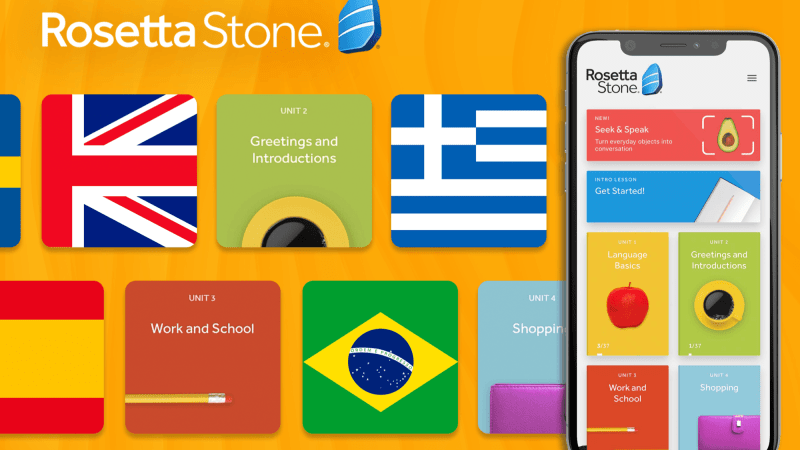
A lifetime subscription to Rosetta Stone puts 25 languages at your fingertips, giving you communication tools that can help you to negotiate deals in Madrid, manage suppliers in Shanghai, or pitch investors in São Paulo. It’s been trusted by top-tier organizations like NASA, Calvin Klein, and TripAdvisor for the past 27 years, because the company’s immersive training method is almost exactly how you learned your native language as a child.

The program’s progressive learning structure starts with the kind of business scenarios entrepreneurs will appreciate – shopping, ordering, transportation – then advances to intermediate skills like sharing opinions and discussing industry trends. That’s just the kind of language progression entrepreneurs need when they’re trying to build international partnerships or manage remote teams across different cultures.

What sets Rosetta Stone apart for busy business owners is the cutting-edge speech recognition technology that can analyze your pronunciation 100 times per second, the company says. Interactions with potential international clients, suppliers, and partners will be so much smoother when your accent and pronunciation are familiar to them. The chances of costly miscommunication issues will likely fall dramatically, as well.

The Wall Street Journal notes that Rosetta Stone “may be the next best thing to living in a country,” which matters when you’re trying to build authentic relationships with international clients without the expense of extended travel.

If you’re ready to break into global markets, this is a strategic investment in business expansion preparedness. Fortunately, the subscription’s sale price makes that investment minimal compared to potential long-term international revenue opportunities.

Get the Lifetime Subscription to Rosetta Stone for only $148.99 with code LANGO, 63% off the regular $399 subscription price.

StackSocial prices subject to change.

Companies that operate in multiple languages generate 70% more revenue from international markets compared to monolingual businesses, according to data from Harvard Business Review. If you’re an entrepreneur who is considering expanding globally, language skills aren’t just culturally helpful – they can be direct pathways to untapped revenue streams and competitive advantages.

A lifetime subscription to Rosetta Stone puts 25 languages at your fingertips, giving you communication tools that can help you to negotiate deals in Madrid, manage suppliers in Shanghai, or pitch investors in São Paulo. It’s been trusted by top-tier organizations like NASA, Calvin Klein, and TripAdvisor for the past 27 years, because the company’s immersive training method is almost exactly how you learned your native language as a child.

The program’s progressive learning structure starts with the kind of business scenarios entrepreneurs will appreciate – shopping, ordering, transportation – then advances to intermediate skills like sharing opinions and discussing industry trends. That’s just the kind of language progression entrepreneurs need when they’re trying to build international partnerships or manage remote teams across different cultures.

https://www.entrepreneur.com/living/master-global-markets-with-a-lifetime-rosetta-stone/497633


Want to Grow Both Your Business and Its Impact on the World? Here’s What You Need to Do.

Opinions expressed by Entrepreneur contributors are their own.

Key Takeaways

  • Aligning with the right nonprofit partner empowers your customers to make positive change, attracts new business for your company and creates measurable benefits for the communities you serve.
  • Choosing a cause that is deeply important to you personally makes it easier to communicate your mission to customers, recruits and other stakeholders.

In my experience, culture crushes strategy every day. But you need both to succeed. Founders who forget about core values and focus exclusively on revenue often run into problems in areas like brand loyalty. Talent acquisition and customer retention become much harder when people don’t have a compelling reason to believe in your business.

But you can’t afford to get lost in the clouds, either. The best core values in the world won’t make you successful if you don’t have a solid business strategy. So how can you, as a busy founder, dedicate the right amount of time and energy to both of these important areas?

For Roof Maxx — the company I started with my brother Todd to restore asphalt shingle roofs across North America with an innovative plant-based solution — the answer was finding the right nonprofit partner. This increased both the impact of our work and our brand reputation while allowing us to keep expanding our dealer network and delivering results for customers.

Here’s how we found the right opportunity for our brand, and how you can do the same for yours.

Related: How You Can Identify and Optimize Nonprofit Partnerships

Key lessons I’ve learned from traveling

Travel is an essential part of my life. Back in my early twenties, I met one of my future best friends on a trip to the Netherlands, who had spent the previous four years backpacking around the world.

In the following years, I joined him on numerous adventures. I’ve now been to nearly 100 different countries and have cumulatively spent more than five years backpacking.

Those journeys taught me skills that have served me as much in the boardroom as they have on the road: how to feel comfortable in unfamiliar environments, orient myself quickly and trust my gut when assessing potential opportunities. But my travels have also taught me about the things I take for granted as a business leader in America and how my work can make a greater difference.

A defining moment in Mexico

Several years ago, on a trip to Mexico, I met a young boy in Cancun named Miguel. He would go to the tourists at the open-air market near my hotel and sell little string bracelets that he made by hand.

I bought one the first time he approached me. After that, I’d see him whenever I passed through the plaza, and we’d make friendly conversation using the limited amount of English and Spanish we could both understand.

Miguel was bright, cheerful and enterprising. It was easy to assume he was happy and comfortable. But one night, while returning to my hotel later than usual, I noticed a group of homeless children huddled under a doorway for warmth on a sheet of cardboard. To my shock, I recognized Miguel among them.

I reached my room and eventually managed to sleep, but this encounter lingered in my mind. It was a window into the hardship so many children around the world face on a daily basis.

It also hit me on a personal level. Miguel and I were both entrepreneurs. We had the same name. Many of the different opportunities we had been afforded in life could be chalked up to an accident of birth. Todd and I had presented a brave face to the world years prior, when our first roofing company was on the verge of bankruptcy — but this wasn’t two grown men running a struggling business in Ohio. This was a child courageously facing down a kind of adversity I would never understand.

That day, I decided I needed to do something to help. Later, when we started Roof Maxx, we knew that it needed to be about more than providing roof restoration treatments for homeowners. We would also commit to making life-changing differences for young people in the communities we served.

So in 2024, Roof Maxx partnered with The Dave Thomas Foundation, a nonprofit charity that finds permanent housing for foster children in North America. This did more than satisfy my personal desire to make a difference; it gave our customers a way to participate in the same work. Today, any homeowner who uses our product also helps a child in foster care find a forever home.

Related: How to Know When You Should Partner With a Nonprofit

Aligning with the right nonprofit partner

Roof Maxx was able to give The Dave Thomas Foundation $283,000 during our first year of partnership, and we are now their largest supporter outside of Wendy’s International. It’s a relationship we’re immensely proud of, but also one that makes sense for us.

Our product is about helping everyday people preserve and maintain their own homes, so it’s fitting that our nonprofit partnership expands access to secure housing. Our customers are already thinking about the roofs over their own heads. When they learn they can also help provide homes for children in need, it makes them feel that much better about using our product.

Here’s my advice for setting up your perfect nonprofit partnership: Start by choosing a cause that is deeply important to you personally — this makes all the difference when communicating your mission to customers, recruits and other stakeholders. Then, contact an organization that is doing meaningful work in that area. Finally, provide your customers with opportunities to become active participants. The easiest way is to donate a portion of proceeds from each sale to your partner organization.

This creates a win-win-win scenario: It empowers your partner and your customers to make positive change, it attracts new business for your company and it creates measurable benefits for the communities you all serve.

So stop thinking of nonprofit partnerships as optional. The right one can give you the ability to grow both your business and its impact on the world.

Related: How I Built a Business That Helps People Feel Good About Doing the Right Thing — and Why You Should, Too

Key Takeaways

  • Aligning with the right nonprofit partner empowers your customers to make positive change, attracts new business for your company and creates measurable benefits for the communities you serve.
  • Choosing a cause that is deeply important to you personally makes it easier to communicate your mission to customers, recruits and other stakeholders.

In my experience, culture crushes strategy every day. But you need both to succeed. Founders who forget about core values and focus exclusively on revenue often run into problems in areas like brand loyalty. Talent acquisition and customer retention become much harder when people don’t have a compelling reason to believe in your business.

But you can’t afford to get lost in the clouds, either. The best core values in the world won’t make you successful if you don’t have a solid business strategy. So how can you, as a busy founder, dedicate the right amount of time and energy to both of these important areas?

For Roof Maxx — the company I started with my brother Todd to restore asphalt shingle roofs across North America with an innovative plant-based solution — the answer was finding the right nonprofit partner. This increased both the impact of our work and our brand reputation while allowing us to keep expanding our dealer network and delivering results for customers.

https://www.entrepreneur.com/growing-a-business/how-to-grow-both-your-business-and-its-impact-on-the-world/496764


Master In-Demand Skills Without Outsourcing or Extra Costs With This $20 Learning Platform

Learn new skills continuously with EDU Unlimited by StackSkills, now $20 for life.

StackCommerce

Disclosure: Our goal is to feature products and services that we think you’ll find interesting and useful. If you purchase them, Entrepreneur may get a small share of the revenue from the sale from our commerce partners.

As an entrepreneur, it’s important to always keep learning. Whether you’re looking to master a new skillset so you don’t have to outsource to a freelancer or simply have a passion that could lead to a new business idea, you never know where learning new things will take you.

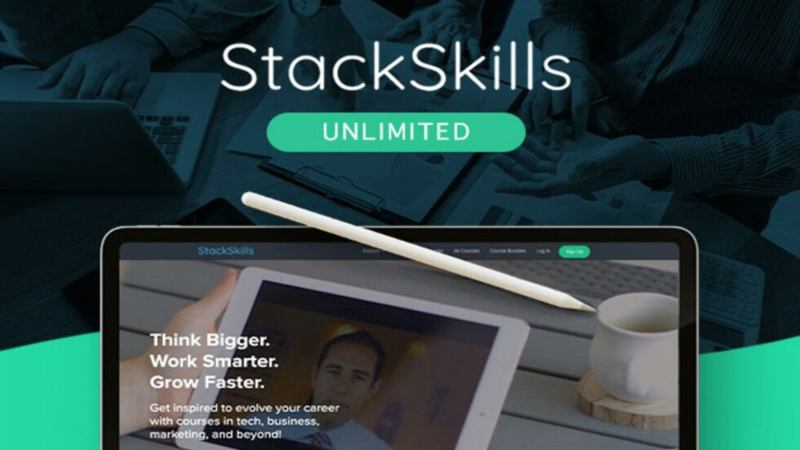
You can currently score lifetime access to EDU Unlimited by StackSkills, an online learning platform packed with more than 1,000 courses you can dive into, for just $19.97 (reg. $600) with no coupon code needed through October 12.

Never stop learning with EDU Unlimited by StackSkills

If you’re the type of entrepreneur who never wants to get complacent, EDU Unlimited by StackSkills gives you the material to make sure you’re never without something new to learn. It’s filled with courses on numerous topics, with an emphasis on the most in-demand skills of today.

With this lifetime access, you can dive into classes on topics like blockchain, graphic design, finance, business, IT, marketing, and more subjects that would seriously benefit the modern entrepreneur. Bring things in-house or start a new side hustle with your new skills.

Rest easy knowing your access includes new courses added monthly. StackSkills also makes a point of staying on top of trends so you can take advantage of relevant courses with up-to-date info. Everything is taught by a highly rated, elite instructor who is an expert in their field, so you’re always in good hands.

With 4.6 stars on Trustpilot, users are loving the convenience EDU Unlimited by StackSkills brings. PC World raved, “StackSkills Unlimited gives you a lifetime of professional training for one low price.”

Get lifetime access to EDU Unlimited by StackSkills for only $19.97 (reg. $600), no coupon code required, until October 12.

StackSocial prices subject to change.

As an entrepreneur, it’s important to always keep learning. Whether you’re looking to master a new skillset so you don’t have to outsource to a freelancer or simply have a passion that could lead to a new business idea, you never know where learning new things will take you.

You can currently score lifetime access to EDU Unlimited by StackSkills, an online learning platform packed with more than 1,000 courses you can dive into, for just $19.97 (reg. $600) with no coupon code needed through October 12.

Never stop learning with EDU Unlimited by StackSkills

If you’re the type of entrepreneur who never wants to get complacent, EDU Unlimited by StackSkills gives you the material to make sure you’re never without something new to learn. It’s filled with courses on numerous topics, with an emphasis on the most in-demand skills of today.

https://www.entrepreneur.com/living/master-in-demand-skills-without-outsourcing-or-extra-costs/497489


Save Time and Focus on Growing Your Business, Not Managing Emails With This $40 Service

Stay on top of your emails efficiently with Mail Backup X, now just $40 for life.

Disclosure: Our goal is to feature products and services that we think you’ll find interesting and useful. If you purchase them, Entrepreneur may get a small share of the revenue from the sale from our commerce partners.

Famous entrepreneur Mark Cuban receives around 700 emails a day, according to Business Insider. If you’re managing a hefty inbox, you know how much time managing your emails can take. Mail Backup X aims to change that, offering a one-stop shop for backing up, archiving, and managing your emails.

Right now, you can get a lifetime subscription for just $39.99 (reg. $179) with code SAVE20. But you’ll need to act fast — this deal ends October 5.

Take control of your inbox with Mail Backup X

As an entrepreneur, emails are your lifeline. From connecting with clients to corresponding with coworkers, they keep your business going. If you’re looking for a convenient way to stay on top of your inbox, this lifetime subscription to Mail Backup X’s Individual Edition can help.

Over 42,000 business and home users worldwide are already experiencing the joys of Mail Backup X. It works with major mail clients like Apple Mail, Microsoft Outlook, Office 365, Microsoft Exchange, Thunderbird, and Postbox, and mail services like Gmail, Outlook.com, Gmx.de, and other services that support IMAP protocol.

Easily back up your inbox with Mail Backup X, as it provides a mirror backup via cloud storage or a USB drive. If you encounter any issues, it can restore your inbox directly to the server account or a separate server account, or migrate your mail to a new account.

You can also archive correspondence, with the ability to search and view emails from the past. This archived content is highly compressed to save space. And Mail Backup X also makes sure everything is secured with military-grade AES 256-bit encryption.

Take charge of your inbox with a lifetime subscription to Mail Backup X’s Individual Edition, now just $39.99 (reg. $179) with code SAVE20 until October 5.

StackSocial prices subject to change.

Famous entrepreneur Mark Cuban receives around 700 emails a day, according to Business Insider. If you’re managing a hefty inbox, you know how much time managing your emails can take. Mail Backup X aims to change that, offering a one-stop shop for backing up, archiving, and managing your emails.

Right now, you can get a lifetime subscription for just $39.99 (reg. $179) with code SAVE20. But you’ll need to act fast — this deal ends October 5.

Take control of your inbox with Mail Backup X

As an entrepreneur, emails are your lifeline. From connecting with clients to corresponding with coworkers, they keep your business going. If you’re looking for a convenient way to stay on top of your inbox, this lifetime subscription to Mail Backup X’s Individual Edition can help.

https://www.entrepreneur.com/science-technology/save-time-and-focus-on-growing-your-business-not-managing/497487


Run Your Home Like a Pro and Save $20 on Microsoft Office 2024

AI-powered tools give Office 2024 a modern edge.

StackCommerce

Disclosure: Our goal is to feature products and services that we think you’ll find interesting and useful. If you purchase them, Entrepreneur may get a small share of the revenue from the sale from our commerce partners.

If you’re the kind of business leader who runs a tight ship during the day, why settle for anything less at home? With Microsoft Office 2024 Home, now $20 off at $129.97 (MSRP $149.99), you can bring the same reliable productivity apps you use in the office to your home Mac or PC.

Designed for students, families, and professionals alike, Office 2024 Home includes Word, Excel, and PowerPoint—updated with modern features to help you work faster and smarter. That means AI-powered writing suggestions in Word, real-time data analysis in Excel, and the ability to record full presentations in PowerPoint, complete with video and captions.

For entrepreneurs, freelancers, or anyone working after hours, this license ensures you can prepare reports, track expenses, or build client presentations without worrying about software limitations. And because it’s a one-time purchase, there are no subscription fees to track or renew.

Why Office 2024 Home:

  • Word, Excel, and PowerPoint with the latest 2024 updates
  • One-time purchase, lifetime license for Mac or PC
  • AI-powered suggestions and data analysis tools
  • Real-time collaboration and co-authoring
  • Accessibility improvements, including captioning, and screen-reader tools

If you want your home setup to match your professional standards—or need a reliable secondary device for side projects—Office 2024 Home is a straightforward, cost-effective choice.

Get lifetime access to Microsoft Office 2024 Home for Mac or PC for just $129.97 (MSRP $149.99).

Microsoft Office 2024 Home for Mac or PC: One-Time Purchase

See Deal

StackSocial prices subject to change.

https://www.entrepreneur.com/science-technology/run-your-home-like-a-pro-and-save-20-on-microsoft-office/497486


Streamline Your Workflow with This Subscription That Unlocks All the Best AI Models

Unlock unlimited access to ChatPlayground AI for life.

StackCommerce

Disclosure: Our goal is to feature products and services that we think you’ll find interesting and useful. If you purchase them, Entrepreneur may get a small share of the revenue from the sale from our commerce partners.

Ninety-eight percent of small businesses are using at least one AI-enabled tool, according to U.S. News and World Report. Since you’re likely among them, it’s time to discover a more efficient way to work with artificial intelligence. ChatPlayground AI lets you compare multiple AI models side-by-side so you can choose your preferred response.

Right now, you can secure a lifetime subscription to this handy platform’s Unlimited Plan for just $89.99 (reg. $619).

Compare more than 40 AI models side-by-side with one lifetime subscription

Whether you’re using it for personal or professional reasons, AI helps save you precious time. And as an entrepreneur, you know all too well how finite time can feel. If you’re tired of tab-hopping between different models, ChatPlayground AI is ready to show you a variety of models’ responses in one convenient spot with this easy-to-access Chrome extension.

ChatPlayground AI gives you results from Llama, GPT-4o, Claude Sonnet 4, Gemini 1.5 Flash, DeepSeek V3, Perplexity, and over 40 more models — all in one window. You can enjoy the best possible outcome AI has to offer, taking advantage of the different models’ strengths and comparing and contrasting them all simultaneously.

This AI tool also offers prompt engineering, the ability to chat with images and PDFs, and AI image creation, so you don’t have to pay for these services elsewhere. It also offers saved chat history, so you can keep track of all your past conversations if you’re working on an ongoing project or need to reference something.

This lifetime subscription to the Unlimited Plan means you pay once, and you can enjoy unlimited messages every month. You’ll also have access to priority customer support, so you can get speedy assistance when needed.

Get a lifetime subscription to ChatPlaygroundAI’s Unlimited Plan for only $89.99 (reg. $619).

StackSocial prices subject to change.

Ninety-eight percent of small businesses are using at least one AI-enabled tool, according to U.S. News and World Report. Since you’re likely among them, it’s time to discover a more efficient way to work with artificial intelligence. ChatPlayground AI lets you compare multiple AI models side-by-side so you can choose your preferred response.

Right now, you can secure a lifetime subscription to this handy platform’s Unlimited Plan for just $89.99 (reg. $619).

Compare more than 40 AI models side-by-side with one lifetime subscription

Whether you’re using it for personal or professional reasons, AI helps save you precious time. And as an entrepreneur, you know all too well how finite time can feel. If you’re tired of tab-hopping between different models, ChatPlayground AI is ready to show you a variety of models’ responses in one convenient spot with this easy-to-access Chrome extension.

https://www.entrepreneur.com/science-technology/streamline-your-workflow-with-this-subscription-that/497485