This Is the No. 1 Factor You Need If You Want Gen Z and Millennials to Buy Into Your Business

Gen Z and millennials want more than profitability from franchise ownership.

Key Takeaways

  • Franchise Insights data shows flexibility is the top franchise characteristic after financial factors.
  • Younger generations, especially millennials and Gen Z, are driving demand for lifestyle-friendly franchise models.
  • Franchisors that highlight schedule freedom and operational flexibility in their pitches are more likely to attract top candidates.

When aspiring entrepreneurs think about buying a franchise, their first concern is obvious: money. From startup costs to potential ROI, the numbers have to make sense. But once candidates look beyond the balance sheet, a new survey suggests their next priority is something less tangible: flexibility.

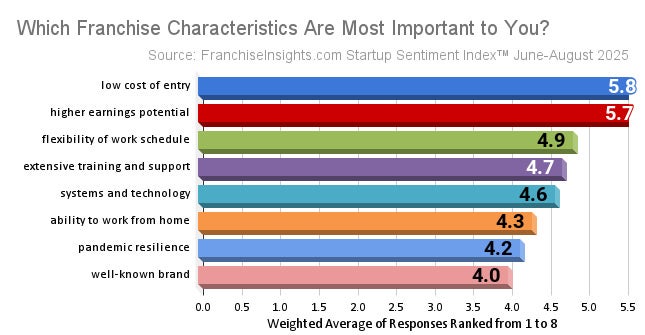
According to new data from Franchise Insights, work schedule flexibility is the most desired characteristic among franchise prospects, after financial considerations. In other words, after making sure a franchise is affordable and profitable, today’s entrepreneurs want reassurance that the business model won’t chain them to a rigid, 9-to-5 structure.

Related: Considering franchise ownership? Get started now to find your personalized list of franchises that match your lifestyle, interests and budget.

Why flexibility matters

This emphasis on flexibility reflects larger cultural and economic shifts. Over the past several years, the U.S. workforce has experienced an unprecedented reevaluation of what “work” should look like. The pandemic accelerated the move toward remote and hybrid schedules, and younger generations entering the workforce have shown little interest in returning to old models.

That sentiment carries over into franchising. Many people who explore franchise opportunities are motivated not just by financial independence, but also by the ability to shape their lifestyles. They want the freedom to attend a child’s school event, take a midday run or even manage the business remotely. A franchise that locks owners into long, inflexible hours can be an increasingly tough sell.

This helps explain the rise of non-brick-and-mortar franchises, which have surged in popularity because they allow owners to operate without being tied to a physical storefront. Similarly, home-based brands in categories like tutoring, cleaning or senior care are thriving because they give franchisees more control over their time.

Related: I Walked Away From a Corporate Career to Start My Own Small Business — Here’s Why You Should Do the Same

What this means for franchisors

This trend is both a challenge and an opportunity for franchisors. On one hand, not every business model can promise flexibility. Restaurant and retail franchises, for example, often require owners to be physically present during peak hours. But even in those sectors, many brands are finding creative ways to highlight flexibility. Some encourage franchisees to hire strong managers who handle day-to-day operations, creating a shared management structure that frees owners to focus on growth. Others lean on technology, using digital tools for scheduling, supply chain management and customer communication so franchisees can step away more easily.

Multi-unit ownership is also positioned not only as a financial growth strategy, but as a way for owners to put more distance between themselves and daily operations. For service-based and home-based franchises, the flexibility angle is even stronger. Brands in categories like tutoring, pet care or consulting can market themselves directly to prospects who want work-life balance without being tied to a storefront.

Franchise Insights’ data also aligns with generational research showing millennials and Gen Z place a higher premium on flexibility than previous cohorts. These younger buyers are not only more likely to pursue entrepreneurship earlier, but they are also less willing to sacrifice lifestyle for ownership.

For franchisors hoping to recruit from this growing pool, showcasing flexibility in marketing materials, discovery days and FDD disclosures could make the difference between winning or losing a candidate.

Related: These Are the Top Franchise Suppliers of 2025

What they don’t want

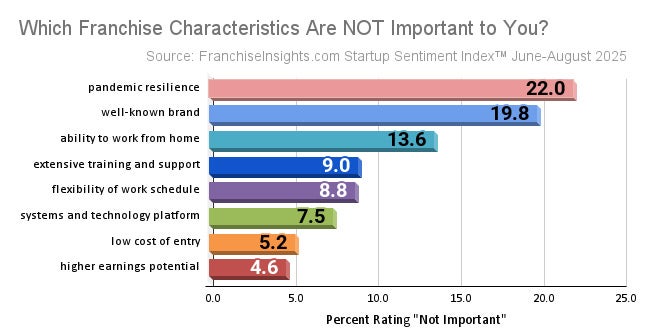
Just as important as knowing what prospects value is understanding what no longer drives their decisions. According to the Francise Insights data, concerns that once dominated the franchise conversation — such as pandemic-related health and safety protocols — have largely faded from view. For today’s buyers, Covid-19 isn’t shaping business choices the way it did just a few years ago.

Instead, prospects are showing less patience for models that demand relentless, inflexible schedules or require owners to be on-site around the clock. Many are wary of businesses that look too much like another full-time job, especially if the path to profitability requires years of long hours behind the counter. They also tend to resist brands that don’t offer clear operational support or rely on outdated systems that tether them to manual tasks.

Put simply, franchise candidates are no longer willing to trade financial independence for burnout. The winning formula now combines strong economics with modern operations — and the freedom to build a business without sacrificing lifestyle.

The bottom line

Financial considerations will always come first — no one should buy a franchise without running the numbers. But the rise of flexibility as a close second should push franchisors to rethink their pitch. Today’s prospects are asking: “Can I make money — and can I do it on my terms?”

The brands that answer “yes” to both questions will be well-positioned to thrive in an increasingly competitive franchise marketplace.

Key Takeaways

  • Franchise Insights data shows flexibility is the top franchise characteristic after financial factors.
  • Younger generations, especially millennials and Gen Z, are driving demand for lifestyle-friendly franchise models.
  • Franchisors that highlight schedule freedom and operational flexibility in their pitches are more likely to attract top candidates.

When aspiring entrepreneurs think about buying a franchise, their first concern is obvious: money. From startup costs to potential ROI, the numbers have to make sense. But once candidates look beyond the balance sheet, a new survey suggests their next priority is something less tangible: flexibility.

According to new data from Franchise Insights, work schedule flexibility is the most desired characteristic among franchise prospects, after financial considerations. In other words, after making sure a franchise is affordable and profitable, today’s entrepreneurs want reassurance that the business model won’t chain them to a rigid, 9-to-5 structure.

Related: Considering franchise ownership? Get started now to find your personalized list of franchises that match your lifestyle, interests and budget.

https://www.entrepreneur.com/franchises/this-is-one-of-the-top-factors-driving-young-franchise/497541


Costco Gold Star Membership Plus a $20 Digital Costco Shop Card for $65

Your ticket to a more streamlined shopping experience.

StackCommerce

Disclosure: Our goal is to feature products and services that we think you’ll find interesting and useful. If you purchase them, Entrepreneur may get a small share of the revenue from the sale from our commerce partners.

Sometimes it’s easy to save time and money if you look in the right spot. For just $65, new Costco members receive a 1-Year Gold Star Membership plus a $20 Digital Costco Shop Card*—a practical move for any entrepreneur, small-business owner, or professional who values efficiency.

With more than 500 warehouses nationwide, Gold Star Members can streamline errands into one reliable stop. Stock up on office supplies, grab snacks for the team, or find catering options for client meetings without juggling multiple vendors. You also get a complimentary Household Card for someone 18+ in your household—ideal for splitting shopping duties.

Beyond everyday essentials, membership comes with access to Costco Gas Stations, where you can fuel up at member-only prices, and the Costco Tire Center, available at many locations to keep your fleet—or just your commute—running smoothly.

And it’s not just about business basics. From unique seasonal décor and holiday gifts to delicious food finds, you’ll have access to products that can make both work and home life easier and more enjoyable.

Your membership must be redeemed by 12/31/25 to qualify for this promotion. This is valid for new members only (or for those whose memberships expired more than 18 months ago).

Get a 1-Year Gold Star Membership plus a $20 Digital Costco Shop Card* for just $65 before the holiday rush begins.

Costco 1-Year Gold Star Membership + $20 Digital Costco Shop Card

See Deal

StackSocial prices subject to change.

*To receive a Digital Costco Shop Card, you must provide a valid email address and set up auto renewal of your Costco membership on a Visa® card at the time of sign-up. If you elect not to enroll in auto renewal at the time of sign-up, incentives will not be emailed.

Valid only for new members and those whose memberships (Primary and Household) have expired at least 18 months or more. Valid only for nonmembers for their first year of membership. Not valid for renewal or upgrade of an existing membership. Promotion may not be combined with any other promotion. Digital Costco Shop Card will be emailed to the email address provided by the Primary Member at time of sign-up within 2 weeks to qualifying members. Digital Costco Shop Card is not redeemable for cash, except as required by law. Costco is not liable for incentives not received due to entry of an invalid address during sign-up. Digital Costco Shop Cards are not accepted at U.S. or Canada Food Court. Neither Costco Wholesale Corporation nor its affiliates are responsible for use of the card without your permission.Use the provided single-use promo code when entering your payment information. A Costco Gold Star Membership is $65 a year. An Executive Membership is an additional $65 upgrade fee a year. Each membership includes one free Household Card. May be subject to sales tax. Costco accepts all Visa cards, as well as cash, checks, debit/ATM cards, EBT and Costco Shop Cards. Departments and product selection may vary. (Note: You will see a $0.01 deduction on your membership cost after the promo code is entered. This indicates that your promo code has been successfully applied).

Sometimes it’s easy to save time and money if you look in the right spot. For just $65, new Costco members receive a 1-Year Gold Star Membership plus a $20 Digital Costco Shop Card*—a practical move for any entrepreneur, small-business owner, or professional who values efficiency.

With more than 500 warehouses nationwide, Gold Star Members can streamline errands into one reliable stop. Stock up on office supplies, grab snacks for the team, or find catering options for client meetings without juggling multiple vendors. You also get a complimentary Household Card for someone 18+ in your household—ideal for splitting shopping duties.

Beyond everyday essentials, membership comes with access to Costco Gas Stations, where you can fuel up at member-only prices, and the Costco Tire Center, available at many locations to keep your fleet—or just your commute—running smoothly.

https://www.entrepreneur.com/living/costco-gold-star-membership-plus-a-20-digital-costco-shop/497418


Couple’s Side Hustle Surpassed $1,000 a Day Fast — With ChatGPT’s Help

Key Takeaways

  • The Platts run Jam Packd as a side hustle to this day, and it’s on track for $400,000 to $500,000 in its first year.
  • Here’s how the husband and wife team harnessed their professional skill sets to take the business to the next level.

This Side Hustle Spotlight Q&A features Michelle Platt, 51, and Brian Platt, 53, the married co-founders of Jam Packd, the business behind functional, protein-packed fruit spreads. The couple is based in Minneapolis, Minnesota. Responses have been edited for length and clarity.

Image Credit: Courtesy of Jam Packd. Michelle and Brian Platt.

Want to read more stories like this? Subscribe to Money Makers, our free newsletter packed with creative side hustle ideas and successful strategies. Sign up here.

What was your day job or primary occupation when you started your side hustle?
Michelle: I ran a health and wellness website for over nine years and now work full-time as a campus director for a private school.

Brian: I’ve been an advertising creative for 30 years, working as a creative director, and now actively freelance while building Jam Packd.

Related: These 31-Year-Old Best Friends Started a Side Hustle to Solve a Workout Struggle — And It’s On Track to Hit $10 Million Annual Revenue This Year

When did you start your side hustle, and where did you find the inspiration for it?
Michelle: We first came up with the idea in April 2024. I had just returned from a conference where I spoke to online entrepreneurs about how to utilize the Amazon Influencer Program and other outreach strategies. My favorite topic to write about on my website was health foods and products. Many of these were low in net carbs, high in protein and had good-for-you ingredients. By the time I left that conference, I was convinced that I should start my own brand in the health food niche. My husband and I brainstormed about products that could be more healthful, and it was an immediate aha moment when he suggested jam. While we always had jam in the house, it was something I increasingly avoided, with its empty calories and often artificial sweeteners and fruit juice. I knew I wasn’t alone in this. We realized there was nothing out there that filled this gap in the market, and Jam Packd was born.

Related: His Salty Side Hustle Saw Revenue ‘From Day 1’ and Hit $10 Million Last Year

Image Credit: Courtesy of Jam Packd

Brian: In advertising, ageism is the one “ism” that’s alive and well and even somewhat celebrated. So at some point, I think every ad creative starts thinking about how else they can use their skills when the ad clock strikes midnight. For me, that question turned into action when Michelle found inspiration at a conference she was speaking at. She came home with the idea that we should create something ourselves, and jam naturally rose out of that conversation. Our family consumes a lot of jam, but we’ve always done it somewhat begrudgingly, as even the “good” brands have always been too sweet for us, contained no real nutrients and were often loaded with sugar. So the idea of a spread packed with organic fruit, collagen peptides, prebiotic fiber, omega 3s, vitamins and minerals and no added sugar felt like something we would be hardcore consumers of. And if it was something we would love, maybe others would, too.

What were some of the first steps you took to get your side hustle off the ground? How much money/investment did it take to launch?
Michelle: It cost us about $20,000 even before our first bench test and purchasing ingredients. This included our initial setup and R&D, from setting up our website to our logo, lawyer fees, food scientist and focus groups. Our most important first steps were securing the domain name and our trademark, hiring a logo and product packaging designer (who nailed it) and connecting with a food scientist with experience in protein. (Our home recipes didn’t have the right taste and consistency.) We also needed to find a co-packer that could handle our ingredient list.

Brian: Despite many people telling me the first thing you need is a business plan, the first thing I needed was a label. So we mocked up a placeholder label. As hideous as it was, it gave us something that felt tangible. We were no longer just a financial projections spreadsheet — we were a disgustingly ugly label. And that’s something. We used that placeholder as a proof of concept, put it in front of paid focus groups and asked the question: “Would anyone even want this?” They did.

Next, we went to a food scientist to find out if making this jam was actually possible. It was. So we hired a designer, a trademark attorney and brought the name Jam Packd and Jam Packed Jams LLC to life. The last (of the first steps) and most grueling was finding a co-packer, followed by reaching out to all the vendors and food groups. When you’re the small guy, nobody wants to talk with you. In a moment of frustration, after having left a dozen polite voicemails for a fruit vendor, my final message was a full three-minute, expletive-laden rant. They immediately called me back, and we’re still working together. So my advice is to be persistent and use naughty words on voicemails if you must.

Related: This Mom’s Garage Side Hustle for Kids Became a Business With $1 Billion Revenue

Are there any free or paid resources that have been especially helpful for you in starting and running this business?
Michelle: For me, the best resources were my experiences as a blogger. When you have a website, you have to do it all: coding, plug-ins, social media, newsletters, influencer marketing, affiliate marketing, video and SEO. Brian brought his own set of expertise. Now working full-time, however, I knew we couldn’t handle it all. We found some great freelancers on Fiverr to help with some of the technical tasks. And while you have to be cautious with AI, ChatGPT helped resolve Shopify issues, led us to the right apps and even provided some guidance on our business strategies.

Brian: I find the Startup CPG, Shopify Masters and Prof G podcasts very helpful and inspiring. But honestly, I feel I learn the most from entrepreneurs who have struggled or failed. Survivorship bias is real. The winners will say things like drop out of college or follow your instincts. To me, it often feels like random attribution. I’m sure there are lottery winners who advise on what to wear when buying a ticket. The entrepreneurs who have lost seem to know exactly why and can tell you how to avoid it.

If you could go back in your business journey and change one process or approach, what would it be, and how do you wish you’d done it differently?
Michelle: There are so many things we wish we could change, but maybe the headaches were necessary. A third set of eyes could have helped. Even though Brian and I looked at things meticulously, we found some mistakes early on in our labels and had to redo those. Also, in an ideal world, we would have continued our relationship with our food scientist for longer before moving on.

Brian: Just one? That’s tough. If I had to pick, I’d say we should have perfected our recipe before bringing in a co-packer. Our food scientists were amazing and loved experimenting with us, but co-packers aren’t built for that. I wanted to brainstorm, tinker, talk and throw jam at the wall. They rightly wanted a ready-to-run recipe they could adapt slightly for their facility. We went in too early, and it was frustrating for everyone. In the end, we circled back to our scientists, and that’s when things really clicked.

Related: This Mom’s Creative Side Hustle Started As a Hobby With Less Than $100 — Then Grew Into a Business Averaging $570,000 a Month: ‘It’s Crazy’

Image Credit: Courtesy of Jam Packd

When it comes to this specific business, what is something you’ve found particularly challenging and/or surprising that people who get into this type of work should be prepared for, but likely aren’t?
Michelle: There are so many moving parts, in everything from ordering ingredients to understanding your margins, that you have to be super organized to make this work. In all honesty, I’m not the numbers person, and had I started this business on my own, I know it would not have grown in the way that it did. Plus, it helps to have a veteran ad guy as my husband.

Brian: Few people will ever care about your thing like you do. That translates to a lot of lazy communication, ghosting and mistakes. Murphy’s Law is in full effect. If the last ingredient you need to hit your production date is delayed, that’s the week they ship it to the wrong address. When you send a purchase order, silence could mean they missed it, they saw it but don’t prioritize you or, like in my case, they’re waiting to see what their bigger clients order first, and you’ll get what’s left. Whether it’s ingredients, printing or scheduling runs, expect about 10% of the passion and responsiveness you’re putting in.

Can you recall a specific instance when something went very wrong? How did you fix it?
Brian: I sat down to write an ad about our “low net carbs” and wanted to double-check the numbers. I picked up a jar of blueberry and saw total carbs listed as four grams. But I knew that couldn’t be right. The math didn’t add up. We’d put everything through lab testing and double-checked everything, but somehow a typo made it onto thousands of labels. So Michelle and I printed new nutrition panel stickers, flew to the warehouse in Utah and painstakingly applied one to every jar of blueberry by hand.

How long did it take you to see consistent monthly revenue?
Michelle: We knew standing out as a new product would be hard, but honestly, Brian’s experience in advertising did just that from day one. We sold out of our first run in about 30 days and were consistently making over $1,000 a day soon after.

Brian: Despite all my frustrations with Meta, its ad algorithm is frighteningly good. Within a couple of weeks, we could see which messages resonated most.

What does growth and revenue look like now?
Brian: So far, we’ve passed $50,000 in sales and are on track to hit $400,000 to $500,000 in our first year through DTC. We’ve put a lot of focus on customer acquisition costs, and that’s allowed us to stay profitable on our ads every single day.

Related: After College, She Spent $800 to Start a Side Hustle That Became a ‘Monster’ Business Making $35 Million a Year: ‘I Set Intense Sales Targets’

What do you enjoy most about running this business?
Michelle: I’ve always wanted to be an entrepreneur. Both Brian and I are creatives at heart. It’s what brought us together. It’s amazing to build something out of nothing and have people appreciate your product.

Brian: The ability to publicly test our instincts. In advertising, if a brand’s CMO thinks an idea sucks, it’s dead. Now the public gets to decide. As it turns out, the ads that we have the most heart for often come back with the worst customer acquisition cost (CAC). So maybe all those CMOs I’ve cursed out over the years were on to something.

Image Credit: Courtesy of Jam Packd

Related: He Spent $36 to Start a Side Hustle. Now the Business Earns 6 Figures a Year — With Just 1-2 Hours of Work a Day: ‘Freedom.’

What is your best piece of specific, actionable business advice?
Michelle: First impressions are everything, especially in this world of social media and scrolling. Get the logo and packaging right from the start. Create an enticing website. Pick a great name. And obviously make a great product.

Brian: I like the quote “only the paranoid survive” from Andrew Grove, the old CEO of Intel. There’s plenty to be paranoid about. We’ve already had someone try to trademark our name, and an early customer is now trying to make a knockoff, even stealing one of our core ad headlines.

But I actually don’t mean it to be so negative. I just mean if paranoia isn’t innate for you, build the habit of questioning everything. I don’t really believe in overthinking because questioning if you’re overthinking is part of the thinking itself — 99% of it won’t mean much, but the 1% that does makes all the calories burned worth it. You just won’t know what 1% mattered until later. After 30 years in advertising, I can tell you the team that wins is the one that thought, feared and dreamed harder than anyone else.

https://www.entrepreneur.com/starting-a-business/couple-used-chatgpt-to-start-side-hustle-on-track-for-500k/497476


The Surprising Reason Google’s Former CEO Is ‘Not in Favor’ of Working From Home

Eric Schmidt said people have to make tradeoffs to succeed in tech.

Key Takeaways

  • Eric Schmidt was the CEO of Google from 2001 to 2011.
  • In a new interview, Schmidt said that he is “not in favor of” working from home.
  • He mentioned that remote work stops junior employees from learning from more experienced ones in the office.

Flexible work, with days spent working from home, needs to be eliminated, says Google’s former CEO Eric Schmidt.

Schmidt spoke on an episode of the “All-In” podcast, which aired on Wednesday. In the episode, Schmidt said that he was “not in favor of, essentially, working at home,” because it inhibits learning in junior employees.

He mentioned that he learned from “elder people” while he was working at Sun Microsystems, a computer manufacturer purchased by Oracle in 2010 for $7.4 billion, by being in the office and listening to conversations. Schmidt worked at Sun from 1983 to 1997, rising from a software manager role to become vice president of the Sun General Systems Group.

Related: Google Cofounder Sergey Brin Thinks Gemini Employees Should Be Working ’60 Hours’ a Week (and Not Remotely), According to a Leaked Internal Memo

“Think about a 20-something who has to learn how the world works,” Schmidt said on the podcast. “When I think about how much I learned when I was at Sun, just listening to these elder people who were five or 10 years older than I was, argue with each other, in person, how do you recreate that in this new thing?”

Though Schmidt said he was “in favor of work-life balance,” he mentioned that tech workers have to make “some tradeoffs” between the two in order to succeed.

“If you’re going to be in tech, and you’re going to win, you’re going to have to make some tradeoffs,” Schmidt said.

Former Google CEO Eric Schmidt. Photo by Shahar Azran/Getty Images

Schmidt was CEO of Google for a decade, from 2001 to 2011. Last year, he said at a Stanford University talk that Google fell behind in the AI race due to remote work policies for its staff. Google allows employees to work from home two days a week.

Related: This Big Tech CEO Just Became a Billionaire for the First Time

“Google decided that work-life balance and going home early and working from home was more important than winning,” Schmidt said at the time. “The reason startups work is because the people work like hell.”

Schmidt later walked back his remarks, saying he “misspoke.”

Companies like Amazon, JPMorgan, and AT&T have enforced strict return-to-office mandates this year, requiring staff to work from the office five days a week. The initiatives have met with pushback, as employees protested the impact on work-life balance, but have since been implemented.

Related: ‘I Don’t Care How Many People Sign’: JPMorgan CEO Jamie Dimon Fires Back at Employees Who Signed a ‘F—ing Petition’ Calling for Hybrid Work

Key Takeaways

  • Eric Schmidt was the CEO of Google from 2001 to 2011.
  • In a new interview, Schmidt said that he is “not in favor of” working from home.
  • He mentioned that remote work stops junior employees from learning from more experienced ones in the office.

Flexible work, with days spent working from home, needs to be eliminated, says Google’s former CEO Eric Schmidt.

Schmidt spoke on an episode of the “All-In” podcast, which aired on Wednesday. In the episode, Schmidt said that he was “not in favor of, essentially, working at home,” because it inhibits learning in junior employees.

He mentioned that he learned from “elder people” while he was working at Sun Microsystems, a computer manufacturer purchased by Oracle in 2010 for $7.4 billion, by being in the office and listening to conversations. Schmidt worked at Sun from 1983 to 1997, rising from a software manager role to become vice president of the Sun General Systems Group.

https://www.entrepreneur.com/business-news/why-ex-google-ceo-eric-schmidt-is-against-working-from-home/497582


How To Sell on Etsy in 2025: A Comprehensive Guide

Do you have a knack for making high-quality handmade items? Selling them on your own website as a small business owner can be tricky — figuring out the tech, targeting active buyers and setting up your shop policies are just a few hurdles you must overcome.

If you’re a small business owner or pursuing this as a side hustle, it’s possible that all the effort just won’t be worth it. However, there is a way to become a shop owner without all the hassle of developing a website independently.

Are you interested in learning more? Well, look no further — Etsy is the platform for you.

What is Etsy?

Etsy is an online marketplace that connects buyers and sellers interested in buying or selling unique handmade, vintage and craft items. Etsy buyers want to purchase the fruits of your creative gifts.

Etsy sticks out because of its ability to connect independent Etsy sellers to a global audience to sell their products online.

The best part of hand-crafted and vintage items is their unique story and origins; Etsy makes the most of this. With an Etsy business, you can sell various handmade products like jewelry, clothing and craft supplies.

What are the benefits of selling on Etsy?

Before diving in, make sure you truly understand the benefits and power of selling on Etsy versus other online platforms.

Massive reach

Because of its well-known status, Etsy allows anybody to increase visibility on their shop. Etsy reported over 96.3 million shoppers last year alone. Your shop will be exposed to all corners of the world via Etsy search. The opportunities are just waiting to be unlocked by your creativity.

Marketing tools

Because of its broad reach and influence, Etsy provides any small business with massive marketing opportunities.

Selling on this online marketplace can establish you as a seller and help you build a loyal customer base once you open your Etsy shop. All you have to do is create wanted products and provide quality service.

Related: Branding 101: The Basics of Building a Successful Brand

Growth potential

Any successful Etsy shop can provide a financial opportunity for the seller while the seller does what they do best: create. This online shop can offer a flexible way to earn income. Successful sellers can generate significant revenue from their shops to pursue their goals, whether for their business or otherwise.

Not only can it be a side gig, but with enough success, it can become a full-time job supporting you and the business itself.

Etsy gives any successful shop the tools they need to grow. Continue providing your shop with improved products and a smoother shopping experience and you might have a sustainable business.

How to get started selling on Etsy

If these benefits interest you, setting up your unique shop on Etsy is the next step. Follow the steps below to make the best start for your future business.

1. Decide if Etsy is the right platform

Starting any business endeavor is intimidating. As always, carefully research what you plan to put your time and energy into.

Because they specialize in hand-crafted goods and services, ensure you know you cannot sell mass-produced items or any items that violate Etsy’s policy.

Other than this, the only problems that you may have with Etsy will be specific to your business. Be sure that Etsy is suitable for you before investing your time in this venture.

If not, consider other ecommerce platforms, such as Amazon or eBay, or utilize Shopify integrations on your own site.

Related: E-commerce Basics: 10 Questions to Ask When Creating an Online Store

2. Create your account and open your Etsy storefront

First, you’ll need to go to Etsy.com. Click “Sign in” in the top right corner of the page, next to the shopping cart icon. If you have an account already, go ahead and sign in (and you can go ahead and skip to “the selling page” below). If not, click “Register” to create a new Etsy account. Enter your first and last name, email and password.

To finish making your account, follow the instructions to verify your email address. Once completed, go ahead and sign in.

Once you have signed in, click your profile icon in the top right. The default is a gray silhouette, but you are welcome and recommended to customize your profile to be unique and recognizable to future customers.

The dropdown menu gives you many options that you should familiarize yourself with, but go ahead and click on the “Sell on Etsy” option. This will take you directly to the seller page. Press “Get Started” and follow the simple steps to create your page.

A couple of notes to think about when filling out this information. Etsy takes your answers and puts them in an algorithm.

Once your store is created and made public, it will use these answers to appeal to customers that fit the description. So be specific with your answers to maximize the tool Etsy uses for your business.

Additionally, make sure your shop name is memorable, easy to spell and reflects what you sell.

Related: 8 Mistakes to Avoid When Naming Your Business

3. Upload your first product listing

This part is self-explanatory, and Etsy sets you up for success by requiring this listing before doing anything else on your store page. Etsy is very detailed on this part and lets you know what you need to get your first products out there for the world to see.

Even though some are optional, fill out as many product descriptions and listings as possible. The more detailed, the better.

Don’t worry about making this first listing perfect. Etsy uses this as a tutorial for uploading your products to the market and won’t show this product until you’ve made your store public. Make sure you understand the basics of listing on Etsy.

4. Choose your payment method

Once again, pretty self-explanatory on Etsy’s part. The main thing to note is Etsy’s mode of payment: Plaid. Plaid is a secure method of connecting your bank to Etsy for secure, quick and easily-received payments. Similar to a modern Paypal. So don’t worry about handing out your credit card information. Leave the security to Plaid and your bank.

Different online stores use other methods for various reasons, but Plaid is reliable. Follow the steps, fill out your information and connect to Plaid to continue registering as a store.

Don’t be concerned about security: They need information you wouldn’t usually share about your account with your financial institution, but they need it to access your bank account to pay you.

5. Customize your storefront

Now that you have officially opened your store, you have many more options to explore. It can be overwhelming, so look below for some highlights. A good business owner should know all the tools, but you can get a good start by looking below.

Start by customizing your online storefront, namely your store name, icon, cover and profile photos, banner and shop announcements. These are all specific to you and your business. If you are nervous about this part, consider using Etsy’s guide to starting a great Etsy shop.

Related: Selling Products Online? How to Build a Perfect Checkout Page

What are the fees associated with starting an Etsy store?

While selling on Etsy, there will be fees unique to Etsy that you should understand. These Etsy fees will affect profit but are mandatory for a seller on the ecommerce platform.

Listing fee

Etsy listing fees are required to list products for sale on Etsy. You’ll get charged a listing fee for each listing you post.

On Etsy, the listing fee is a flat rate of $0.20 USD per listing. This fee gets charged whether or not the item listed sells. This is important to consider in the decision of whether or not to list. It’s a small individual price but can quickly add up and negatively affect profits. This fee automatically adds to your payment account when you publish an item.

Transaction fee

Transaction fees are the fees Etsy collects when a customer makes a purchase. Unlike listing fees, transaction fees are only collected on listings that sell. There are just a few basic things to remember on the subject of transaction fees with Etsy:

  • The transaction fee is 6.5% of the total order amount in your listing
  • This fee covers the total cost of the item, along with the shipping
  • The transaction fee amount is automatically charged to your payment account for ease of viewing

Payment processing fee

Payment processing fees are a set rate of the item’s total sale price. It is important to note that this rate varies by country. The fees are taken from the item’s total sale price, including shipping fees and any applicable sales tax.

Currency conversion fees

If your listing currency differs from the currency of your Payment account, the funds you receive will be subject to a conversion fee by Etsy. Since this is a service Etsy provides, they have a certain fee based on the currency converted. However, you can bypass this fee by setting your listing currency to be the same as your Etsy payment account.

Shipping costs

While you can determine your own shipping costs, Etsy provides multiple ways to calculate and charge shipping costs. This can be done by creating shipping profiles for different product categories.

Because of the variety of items sold on Etsy, they created this tool to help people ship their products efficiently and in a profit-oriented way.

Be sure to understand what each product needs for shipping and be able to utilize this tool when you need to determine shipping costs for your business.

All of the fees discussed above are described in more detail by Etsy on their help center, so be sure to utilize this resource as you build your online store.

What are some helpful features on the Etsy platform?

There are several features to consider when considering how Etsy sets you up for success. These are tools that very few other online marketplace companies offer, so be sure to know how to use these tools.

Automatic statistics

The stats tab on your store dashboard is a great way to analyze business data quickly. Etsy compiles all of it based on your online sales, giving you an easy view of your success and what you can do better.

Streamlined marketing

As discussed, Etsy provides a great opportunity for growth because of its influence and reach in the online space. The marketing tab provides options for search analytics, Etsy ads, search engine optimization (SEO), sales and discounts, social media integration and custom web addresses.

All of these can improve your online store’s quality through marketing tools provided at the click of your mouse.

Related: 21 Ways to Market Your Business Online

Specialized integrations

It doesn’t get much easier than this. Etsy provides integrations with 21 partners specializing in their respective fields: marketing and promoting, maximizing listings and understanding buyer trends, bookkeeping, taxes and inventory analytics.

With all these tools accessible from your dashboard with a click, you can create an online store that would be impossible to do on your own.

Selling on Etsy FAQs

1. How to integrate an Etsy shop with a brick-and-mortar store?

This can be an intimidating task but also a significant milestone to set for your business as you explore your market.

Check out the “Sell in person” option in the bottom left of your dashboard. Etsy gives you another fantastic way to branch out — a physical store for your potential customers to visit.

If you’re successful enough, Etsy has this option for you to continue your business growth. Going from an online page to an in-person storefront is getting closer to the final destination in the business world.

Related: Lessons Retail Stores Can Learn From Successful E-commerce Sites

2. How much does it cost to sell on Etsy?

This question is a common question that many beginner sellers have. Unfortunately, this question can’t be simply answered across all businesses. Because of the uniqueness of Etsy’s target products, these pricing plans vary greatly.

However, there is a list that Etsy has a list of fees and taxes associated with selling on their site,some of which have already been discussed:

  • Listing fees
  • Shipping Label fees
  • Transaction fees
  • VAT
  • Pattern
  • Advertising fees
  • Etsy Payments and deposit fees

Spend time understanding which fees apply to you and which ones don’t. This can help you predict the cost of selling on Etsy and help you balance whether or not this tool is worth the fees and expenses.

3. What is Etsy Plus?

Etsy Plus is a plan provided by Etsy that comes with a subscription fee but also multiple perks to help your company get off the ground faster and jump-start growth:

  • Sign up for Etsy Plus
  • Credits
  • Access to custom web address discounts through hover
  • Restock requests
  • Advanced shop customization
  • Access to discounts and perks

While these tools can be super helpful in the promotion and growth of your business, they also may be too large a step or too expensive a fee for the size of your business. But don’t completely ignore this tool.

Keep it in mind as you grow your business because it can be a powerful way to foster growth in all aspects, whether through customer retention or marketing.

Should you open an Etsy shop?

The big question: Should you open an Etsy shop?

Unfortunately, nobody can answer that question except for you. Considering Etsy’s ease of creating a business, it is a very valuable tool for beginners in the entrepreneurial world.

At the same time, there are many examples of success in other facets of the business world, even on other platforms.

Understand that your idea, business and platform are unique and will differ from any other business endeavor. You can attempt to recreate successful formulas but never have an identical company. So embrace that part.

Be open to different strategies. Stay committed to your decision, but make sure that decision is well-researched and backed with reasoning.

Always be open to growth. Be ready to grow with your business and be ready to face hardships. Remember that there are always tools to help with those tricky spots. Fortunately, Etsy has all those tools in one place. So what are you waiting for?

Check out Entrepreneur’s other resources for more details on this topic.

https://www.entrepreneur.com/starting-a-business/how-to-sell-on-etsy-in-2023-a-comprehensive-guide/448517

Having a Great Product Means Nothing If You Ignore This Crucial Principle

Opinions expressed by Entrepreneur contributors are their own.

Key Takeaways

  • Success in entrepreneurship rarely comes from the product alone – it comes from understanding how people adopt innovation.
  • This is where the Law of Diffusion of Innovation becomes a powerful lens. It explains why some businesses scale rapidly while others stall despite offering clear value.
  • Ignoring the Law of Diffusion can lead to frustration and wasted resources.

Most entrepreneurs are familiar with the idea that a great product or service doesn’t always guarantee immediate success. That’s because the way people adopt innovation follows a pattern — a principle known as the Law of Diffusion of Innovation. It’s a framework that has been around since the 1960s, but it’s more relevant than ever in today’s hyper-competitive business environment.

Having launched businesses in digital PR, luxury tourism and brand-building, I’ve seen firsthand how this law plays out and how ignoring it can lead to frustration and wasted resources. Here’s what every founder needs to understand.

Related: 4 Ways to Ensure Adoption for a New Product or Service

1. Adoption happens in segments

The Law of Diffusion tells us that customers adopt innovation in five groups: innovators (2.5%), early adopters (13.5%), early majority (34%), late majority (34%) and laggards (16%). The key lesson? You can’t expect mass adoption from day one.

When we launched Digital24, our press release syndication platform, we first attracted the innovators — small businesses willing to try something new. Only after proving value there could we move towards the early adopters, who became our advocates and helped build credibility.

Too many founders get discouraged when they don’t see rapid adoption. But the truth is, most of the market is not designed to move fast. Innovators and early adopters are the testing ground; if you win them, the rest will follow in time.

2. The “chasm” is real

One of the biggest challenges comes between the early adopters and the early majority. Early adopters love innovation for its own sake, but the early majority want reassurance: proof, reviews, case studies. Many startups fail here because they don’t shift their messaging from “new and exciting” to “proven and reliable.”

The chasm is where good ideas often go to die. You might have solved a real problem, but if you can’t make the leap from visionary users to pragmatic ones, your growth will stall. You don’t just need product-market fit — you need proof-market fit.

3. Messaging must match the market

Each group speaks a different “language.” Innovators want cutting-edge features. Early adopters want to be first. The early majority want evidence. The late majority want guarantees. And laggards? They usually adopt because they have no other choice.

If you’re selling the same message across all groups, you’ll likely miss the mark. Tailoring your communication is what allows momentum to build.

Every adoption group hears a different frequency. The founder’s job is to tune the message, not just shout louder. If you get the frequency wrong, you’ll sound like noise instead of a solution.

Related: 4 Ways to Tailor Your Marketing to Each Customer

4. Word of mouth is the bridge

Research shows that most people trust peers over advertising. Your job is to equip early adopters with the tools and stories they need to spread the word.

When we expanded Seven Yachts into Europe, it wasn’t marketing that opened doors — it was our early adopters. High-net-worth travelers shared their experiences within their networks, and their recommendations proved far more persuasive than any advertising we could buy.

Marketing dollars can get you visibility, but trust is built peer-to-peer. The early adopters are your unpaid sales force. Treat them like partners, and they’ll do more for your brand than any billboard or digital ad.

5. Timing matters as much as product

You can have the best idea in the world, but if the market isn’t ready, adoption won’t happen. Conversely, even modest innovations can win big if they meet the market at the right moment.

Think about companies that launched video conferencing before Zoom — it wasn’t that the tech didn’t exist, it was that the world wasn’t ready. Then, when timing shifted, the adoption curve exploded.

A great founder not only builds the product but also reads the cultural and economic moment. Miss the timing, and you’ll either be too early or too late. But hit it, and you’ll ride a wave much bigger than your marketing budget.

6. The psychology of adoption

What the Law of Diffusion makes clear is that adoption is not just a rational process — it’s deeply psychological. Innovators are motivated by curiosity and risk-taking. Early adopters want identity and status. The majority seeks safety and proof.

Understanding these motivations helps entrepreneurs craft not only their marketing but also their user experience and onboarding.

Every adoption phase is really a psychological contract. Innovators are forgiving because they expect glitches. Early adopters want to feel special. The early majority expects consistency. The late majority wants simplicity. If you respect these contracts, adoption feels natural. If you break them, trust erodes instantly.

7. Building patience into growth

Many founders burn out or pivot prematurely because they underestimate how long the adoption curve takes. Mass adoption rarely happens in months — it often takes years.

Patience is not passive; it’s active preparation. While you wait for the market to catch up, you’re refining, building trust and learning. The entrepreneurs who endure are the ones who respect the slope of the curve instead of trying to skip ahead.

Related: Building Sustainable Growth with Patience and Precision

8. Practical steps for entrepreneurs

So how can entrepreneurs apply the Law of Diffusion in practice?

  • Identify your innovators early: These are the people most likely to give you raw, unfiltered feedback.

  • Build early adopter communities: Treat them as insiders. Give them stories, data and exclusivity.

  • Prepare case studies before scaling: The early majority needs proof, not promises.

  • Invest in social proof over paid proof: Peer testimonials, industry recognition and organic buzz matter more than sheer ad spend.

  • Pace your growth expectations: Build models that account for gradual adoption, not overnight mass markets.

As entrepreneurs, we often believe in the myth of instant success. But the Law of Diffusion reminds us that adoption is a journey. If you respect the curve, tailor your approach to each segment and focus on crossing the chasm, you’ll give your business the best chance of moving from niche novelty to mass market.

It’s not just about building something people need. It’s about guiding them, step by step, to realize they can’t live without it.

The adoption curve isn’t an obstacle — it’s a roadmap. If you understand where you are on it, you can make smarter moves, avoid wasted energy and build something that truly lasts.

Key Takeaways

  • Success in entrepreneurship rarely comes from the product alone – it comes from understanding how people adopt innovation.
  • This is where the Law of Diffusion of Innovation becomes a powerful lens. It explains why some businesses scale rapidly while others stall despite offering clear value.
  • Ignoring the Law of Diffusion can lead to frustration and wasted resources.

Most entrepreneurs are familiar with the idea that a great product or service doesn’t always guarantee immediate success. That’s because the way people adopt innovation follows a pattern — a principle known as the Law of Diffusion of Innovation. It’s a framework that has been around since the 1960s, but it’s more relevant than ever in today’s hyper-competitive business environment.

Having launched businesses in digital PR, luxury tourism and brand-building, I’ve seen firsthand how this law plays out and how ignoring it can lead to frustration and wasted resources. Here’s what every founder needs to understand.

Related: 4 Ways to Ensure Adoption for a New Product or Service

https://www.entrepreneur.com/growing-a-business/a-great-product-means-nothing-if-you-ignore-this-principle/496415


Nvidia Knocked From the Top? An Analyst Says Another Tech Titan Is the Most Valuable Company in the World.

Alphabet is the fourth most valuable company in the world by market capitalization, but an analyst says it’s actually first based on AI strength.

Key Takeaways

  • A new analyst note claims that, though Nvidia is the most valuable company based on market value, Alphabet is actually the most valuable based on AI strength.
  • Alphabet’s overall business is doing well, thanks to AI.
  • AI is “driving strong momentum,” Alphabet and Google CEO Sundar Pichai said in a July earnings report.

Move over, Nvidia. An analyst says the actual most valuable company in the world is Google’s parent company, Alphabet.

Research publisher MoffettNathanson wrote in a note obtained by Bloomberg on Thursday that though Alphabet isn’t the world’s largest company by market value, it is in the running for the “most valuable company in the world” based on AI strength.

Alphabet’s “combination of market leadership, diversification and scale” makes the company “not only a winner in the GenAI era” but also “a company that should rightly be considered for the title of most valuable company in the world,” MoffettNathanson Founder and Media Analyst Michael Nathanson wrote in the note.

Related: Google Reportedly Told Its Staff to Use AI More or Risk Falling Behind: ‘It Seems Like a No-Brainer’

Alphabet’s overall business is booming, thanks to AI. According to the company’s second-quarter earnings, reported at the end of July, revenue increased 14% year-over-year to $96.4 billion, with growth across the company.

“We are leading at the frontier of AI and shipping at an incredible pace,” Alphabet and Google CEO Sundar Pichai stated in the report. “AI is positively impacting every part of the business, driving strong momentum.”

Alphabet and Google CEO Sundar Pichai. Photographer: Jim Lo Scalzo/EPA/Bloomberg via Getty Images

Earlier this month, Alphabet became the fourth company in the world to achieve a $3 trillion market capitalization, joining Nvidia, Microsoft, and Apple in the $3 trillion club. Market capitalization assesses the total value of a company by multiplying the number of company shares by its stock price. Alphabet achieved the milestone more than two decades after Google first went public in 2004.

Related: This Is How Senior Leaders Are Using AI at Work, According to a Google Survey

At the time of writing, Alphabet’s market capitalization had diminished to $2.97 trillion, making it the fourth most valuable company in the world by that metric. Nvidia had the highest market value of $4.3 trillion, with Microsoft and Apple following with market capitalizations of $3.79 trillion and $3.74 trillion, respectively.

Alphabet stock has grown more than 70% this year following a market capitalization low of $1.8 trillion in April. Over the past month, Alphabet shares have gained over 17% in value.

Nathanson wrote in the note that Google is leading AI search. Google’s global market share in search overall has been approximately 89% for the past year. Last February, the company introduced AI overviews, or AI summaries of search results embedded at the top of search, which have since reached two billion monthly users.

Related: Google CEO Sundar Pichai Says ‘You’ll Be Surprised’ By How Google Search Changes

“Google remains the one to beat in GenAI search,” Nathanson wrote in the note.

Key Takeaways

  • A new analyst note claims that, though Nvidia is the most valuable company based on market value, Alphabet is actually the most valuable based on AI strength.
  • Alphabet’s overall business is doing well, thanks to AI.
  • AI is “driving strong momentum,” Alphabet and Google CEO Sundar Pichai said in a July earnings report.

Move over, Nvidia. An analyst says the actual most valuable company in the world is Google’s parent company, Alphabet.

Research publisher MoffettNathanson wrote in a note obtained by Bloomberg on Thursday that though Alphabet isn’t the world’s largest company by market value, it is in the running for the “most valuable company in the world” based on AI strength.

Alphabet’s “combination of market leadership, diversification and scale” makes the company “not only a winner in the GenAI era” but also “a company that should rightly be considered for the title of most valuable company in the world,” MoffettNathanson Founder and Media Analyst Michael Nathanson wrote in the note.

https://www.entrepreneur.com/business-news/alphabet-is-the-most-valuable-company-not-nvidia-analyst/497581


What It Really Takes to Stand Out on Social Media as a Business Today

Opinions expressed by Entrepreneur contributors are their own.

Key Takeaways

  • Social media in 2025 is more competitive than ever, with shrinking attention spans and algorithms favoring authentic, engaging content over salesy posts.
  • To stand out, businesses need to combine storytelling, skimmable design, community-driven engagement, data tracking and a mix of organic and paid strategies.

If you feel like your social media content isn’t getting the reach or engagement it once did, you’re not imagining things. In 2025, the algorithms are shifting faster than ever, attention spans are shorter, and even strong brands are struggling to keep eyes on their posts.

Businesses can still stand out, but the bar has been raised. To win on social media in 2025, you need to be intentional, data-driven and human-centered in how you show up. Here’s what will actually make your content pop this year.

Related: I’ve Helped Over 1,000 Brands With Their Marketing — Here Are 11 Social Media Secrets Every Business Should Be Using in 2025

Prioritize content formats that grab attention

In 2025, short-form video is still king, but there are updates. The endless TikTok-style scrolling has made people even more selective about what they stop for (in other words, people’s attention spans are continuing to decrease). That means your content has to hook in the first two to three seconds.

Try experimenting with quick, story-driven videos that show a transformation or “before-and-after” and personality-driven clips that let your audience see the human side of you and your business.

Educational posts are also doing extremely well in 2025, as they are value-additive to your audience.

Lean into authentic content

Social platforms are oversaturated with salesy content, and most of it gets ignored. What audiences actually crave is connecting to another human on the other side of the screen.

Instead of overdoing it on CTAs, focus on storytelling and sharing authentically about your life and business. Share customer success stories, behind-the-scenes moments or lessons you’ve learned as a founder. When you frame your content around human experience, people are far more likely to engage now and remember you when they are ready to buy.

One way to do this is to think of each post as either teaching, inspiring or having an impact on your audience. If you can consistently deliver on one of those, you’ll stand out.

Design for skimmability

People scroll quickly, and they don’t want to work hard to consume your content. That means you need to make your posts easy to digest at a glance.

To stand out in a fast-scroll world, start by using strong headlines or first lines in captions. Overlay key points as text on video and generally break up big blocks of text both on the video overlay and in captions. Graphics, especially those with faces (or animals!), are great for stopping the scroll.

Related: 7 Creative Ways to Boost Your Social Media Strategy

Experiment — and absolutely track your numbers

The algorithms are constantly changing, and what works today may not work tomorrow. The businesses thriving in 2025 are those constantly treating social media like an experiment.

Look at engagement rates, reach and click-throughs, and compare across formats. A/B test different hooks or calls to action, and track success across types of content. Data is the only way to know if your content is actually working.

Remember, virality isn’t the goal. A post that reaches a smaller but highly qualified audience can be far more valuable than one that gets broad but shallow engagement. If you are dead-set on virality, you likely are missing a great audience that’s right in front of you.

Embrace community-driven engagement

Algorithms now heavily prioritize conversations and relationships. If you’re just broadcasting content without engaging back, your reach will suffer.

Set aside 15 minutes each day to respond to comments, engage with your followers’ content and engage in two-way conversations with your audience. Simple actions like asking questions in captions or using interactive features (polls, Q&A, comment prompts) go a long way both to stick in the mind of your audience as well as to show the algorithm that you’re a human actually using the platform!

The businesses showing up authentically and consistently engaging are the ones people keep coming back to.

Repurpose and cross-pollinate

You don’t need to reinvent the wheel for every platform, especially if you’re trying to run lean. A single long-form video can be clipped into multiple Reels, TikToks or YouTube Shorts. A blog post can turn into a carousel, an email and a short video tip. Different people consume content differently, and cross-pollinating ensures your message meets them where they are.

The one thing to make sure of when cross-posting is to repackage to fit the UI of the other platforms — the areas of the screen covered by the UI features on Instagram are different than those on TikTok, for example. Making those small tweaks can keep your content looking professional across platforms!

Please, don’t ignore paid amplification

Organic reach is shrinking, plain and simple. Even if your content is excellent, platforms are nudging businesses toward ads, and if you want a shot at lead gen on social media, you almost absolutely have to pay for ads. The most successful brands today are blending organic strategy with paid amplification.

Even small boosts, for example, putting $50 to $100 behind your best-performing organic posts, can put your content in front of the right people and build momentum. Paid ads, when targeted well, can also be a powerful way to test which messages resonate before doubling down.

Related: 10 Laws of Social Media Marketing

Standing out on social media in 2025 isn’t about gaming the algorithm or chasing the latest viral trend. The businesses that will win are the ones combining great storytelling, thoughtful design, community engagement and smart use of data.

If you’re feeling stuck, start simple: Pick one content format, commit to showing up consistently, and track the numbers. Build from there, with a focus on consistency and data-driven experimentation.

The platforms may keep changing, but one thing is not — and that’s the fact that people want to connect with people. If you can keep that at the heart of your content, you’ll stand out no matter how the algorithms shift.

Key Takeaways

  • Social media in 2025 is more competitive than ever, with shrinking attention spans and algorithms favoring authentic, engaging content over salesy posts.
  • To stand out, businesses need to combine storytelling, skimmable design, community-driven engagement, data tracking and a mix of organic and paid strategies.

If you feel like your social media content isn’t getting the reach or engagement it once did, you’re not imagining things. In 2025, the algorithms are shifting faster than ever, attention spans are shorter, and even strong brands are struggling to keep eyes on their posts.

Businesses can still stand out, but the bar has been raised. To win on social media in 2025, you need to be intentional, data-driven and human-centered in how you show up. Here’s what will actually make your content pop this year.

Related: I’ve Helped Over 1,000 Brands With Their Marketing — Here Are 11 Social Media Secrets Every Business Should Be Using in 2025

https://www.entrepreneur.com/science-technology/what-it-really-takes-to-stand-out-on-social-media-today/496549


5 Rules for Hiring When Great Job Candidates Are Scarce

Opinions expressed by Entrepreneur contributors are their own.

Key Takeaways

  • Rushing to hire in a tight market often backfires, leading to costly turnover and wasted resources.
  • Instead, slowing down to clarify the role, expand sourcing and prioritize alignment over perfection builds a stronger team and long-term hiring strategy.

When the market is tight and great candidates are scarce, the temptation to “just fill the role” is real. You’ve got work piling up, a team stretched thin and clients or customers waiting.

Unfortunately, rushing a hire almost always costs you more in the long run. From turnover and retraining to the hidden drag on morale, settling for a warm body in the seat is almost always a detour that can set your business back in the end.

Instead, hiring smart in a tough market means slowing down just enough to align on what you actually need, adjusting your strategy to attract the right candidates and building the systems to make the process easier next time.

Related: 5 Tips for Hiring the Talent You Need In a Tight Labor Market

The hidden costs of a bad hire

When good candidates are hard to find, many business owners compromise. But that compromise comes with a price tag.

Studies estimate the cost of replacing an employee can run from 50% to 200% of their annual salary when you factor in recruiting (which alone can cost up to 25-50% of a year’s salary), onboarding and training time, and lost productivity. Hiring someone who leaves in six months is essentially lighting a year’s salary on fire.

A poor fit often impacts the rest of your team as well. Low performers or people who aren’t aligned with your values can drag down morale, frustrate your strongest employees and ultimately cause them to leave, too.

First, know what you actually need

One of the most common hiring mistakes is starting the process without real clarity. You know you’re overwhelmed, but what specifically do you need this person to do?

Before you draft a job description, sit down and list every task on your or your team’s plate that feels unsustainable. I call this a “time audit,” and it helps immensely in identifying where your time is drained or where things could be delegated.

This initial audit and identification of job responsibilities is a must. When you know exactly what success looks like in the role, you set yourself up to attract the right fit and filter out the rest.

Time to write a job description

In a scarce talent market, your job description is actually a marketing post as well as a way to signal to the right candidates what you stand for and why they should be interested in working for you.

The best job descriptions lead with impact, sharing how this role connects to the company’s mission and how it will help the company continue to move forward. This includes highlighting growth opportunities, since talented people want to see where the role could take them, not just what it demands.

This is your chance to be honest about the role. Painting a picture that’s too rosy only sets you up for mismatched expectations and can attract the wrong candidates. For example, if the role requires attendance at the occasional weekend event, be upfront about that in the description to make sure you’re filtering on those who can actually fit the need.

The more specific and authentic your job posting, the better chance you have at attracting candidates who are in it for the right reasons.

Related: The Real Impact Of A Bad Hire For Your Business

Expand your sourcing strategy

When the talent pool is tight, you can’t rely on a single channel. Smart hiring requires proactive sourcing across multiple channels to find the right fit.

Start by leveraging your network. The best candidates often come through referrals. Share your role with your client base, industry peers and existing team members. A warm recommendation can cut your hiring time in half and attract the right fit off the bat.

Post in the usual places online, and also look for industry-specific job boards or newsletters that already reach your ideal candidates. This can help target the right candidates who may get lost in a larger, generic job board.

Consider where you can be flexible regarding traditional requirements. In uncertain markets, great talent may be hesitant to commit full-time, or you may have to offer remote or contract roles instead. Offering fractional roles or a contract-to-hire model also lets both sides test the fit before locking in, which can be a huge benefit.

Interview for alignment, not perfection

In a tight market, you may not find a candidate who checks every box. That’s okay. What matters most is alignment on values, work ethic and ability to learn. Skills can be taught, but work ethic, problem-solving and judgement cannot.

Shift your interview focus toward behavior questions around things like how they handled challenges in past roles or what they do when priorities shift. Give them a real scenario from your business and ask them to problem-solve around it live so you can watch their process.

So many employers focus on finding the perfect background in a candidate, and of course, skills and experience are important. But remember that you’re not just looking for the right resume items — you’re looking for someone who will thrive in the way your company operates.

Related: The Biggest Mistake You Can Make When Hiring for a Job (and How to Fix It)

Build your hiring process into a long-term talent strategy

By building your hiring process into a long-term strategy, you build a system that supports hiring and retention long-term, so you don’t have to scramble next time a role comes up.

To start, document your full interview process now, and systematize your onboarding. It’s much easier to document while you are actively doing it, and it gives you a foundation to work from next time you have to hire.

In parallel, continue to invest in your employer brand year-round. Make sure that you’re showing up consistently across platforms, including your website and social media, so that you are generating interest and brand reputation as you grow. This helps attract and hire the best talent over time.

When great candidates are scarce, it’s tempting to hire the first person who says yes. But trust me, rushing the process only creates more pain later. Resist the urge to panic-hire because, at the end of the day, the cost of a bad hire is always higher than the cost of waiting for the right one.

Key Takeaways

  • Rushing to hire in a tight market often backfires, leading to costly turnover and wasted resources.
  • Instead, slowing down to clarify the role, expand sourcing and prioritize alignment over perfection builds a stronger team and long-term hiring strategy.

When the market is tight and great candidates are scarce, the temptation to “just fill the role” is real. You’ve got work piling up, a team stretched thin and clients or customers waiting.

Unfortunately, rushing a hire almost always costs you more in the long run. From turnover and retraining to the hidden drag on morale, settling for a warm body in the seat is almost always a detour that can set your business back in the end.

Instead, hiring smart in a tough market means slowing down just enough to align on what you actually need, adjusting your strategy to attract the right candidates and building the systems to make the process easier next time.

https://www.entrepreneur.com/growing-a-business/5-rules-for-hiring-when-great-job-candidates-are-scarce/496548


Creators Have Already Made $400 Million on This Platform — and GaryVee Says This Is Just the Beginning

Opinions expressed by Entrepreneur contributors are their own.

When John Hu stumbled across Gary Vaynerchuk during long hours of TikTok scrolling in the early days of COVID-19, he never imagined they’d one day be business partners. At the time, Hu was a few years out of college and grinding away on Wall Street, feeling like his path in life was already set.

But Vaynerchuk’s mantra — what value can you give to the world — pushed him to start sharing his own story online.

For Hu, the simple act of posting career coaching content was transformative.

“It was the first time in my life that I ever got to be creative. I was helping people. And I got to do my own thing,” he tells Entrepreneur.

The only missing piece was figuring out how to monetize. After testing countless AI tools that left him spending more than he was earning, Hu again followed Vaynerchuk’s playbook: he built his own solution. That solution became Stan.

‘Swiss Army Knife For Creators’

Stan is a one-stop shop for creators to sell almost any kind of digital product — courses, subscriptions, e-books, and more. Hu originally built it to host his own offerings, but it didn’t take long before friends began asking what his secret was.

“Whether it’s a content creator, a lawyer, a dentist, or an accountant, they all use Stan to generate leads through social,” Hu says. “They don’t want to deal with the tech — it’s intimidating. Stan gives them the simplest, easiest, and most affordable way to get started.”

That balance — offering a full suite of tools without overwhelming users — has been key to Stan’s growth. The platform offers tiered packages: a starter option with the essentials to begin monetizing, and a more advanced version with added features like an AI agent trained on Vaynerchuk’s content.

“Imagine a mini Gary in your pocket that coaches you step by step,” Hu says.

Importantly, Stan isn’t designed for megastars like MrBeast or Alix Earle. Its focus is on what Hu and Vaynerchuk call the “middle-class creator,” someone who can afford to pay a little for something that provides them real value.

“For many people, it’s a mistake to spend thousands of dollars right out of the gate,” Vaynerchuk explains. “It’s like someone getting into tennis — you don’t want to drop $7,000 on equipment only to find out you stink or don’t even like the game.”

Instead, Stan functions as the trainer who helps you make the most of what you have.

“Spending $300 or $400 a year on Stan is a remarkable use of money because it disproportionately allows people to monetize,” Vaynerchuk says. “It’s the Swiss Army knife for this space. Plenty of creators make $1,000 to $10,000 a year from ads or random merch. If they understood how to use this tool, they could be on their way to six figures.”

Related: Stop Doing These 3 Things on Social Media, says Gary Vaynerchuk

More than another investment

Vaynerchuk is so bullish on Stan that he created the “GaryVee Stan Challenge,” a mentorship program that pairs his expertise in audience building with Stan’s platform to help creators build sustainable businesses.

The program includes eight live coaching sessions with GaryVee, complete with Q&A and weekly growth check-ins. The top 10 sellers, along with five wildcard winners who generate at least $555 in GMV, will earn the chance to meet Vaynerchuk in New York City for an exclusive event. For participants, it’s an opportunity to learn from what Hu calls “the OG of online personal brand building.”

For Vaynerchuk, the challenge is also a source of motivation.

“People paying for it gives me the confidence that when I’m on these weekly calls, they’re actually going to do something about it,” he says. “It’s where I’m at my best — where I can really go there. Knowing they’ve already bought in gives me an extra pep in my step, because I believe they might act on it, in a world where too many people think just listening to me is ‘doing.’”

Entry costs $300, with sign-ups available here.

Related: Gary Vaynerchuck Shows You How to Get More Attention

The modern ‘American Dream’

The idea of an online store for creators to sell digital products might feel new-age, but at its core, StanStore is rooted in timeless principles.

“Gary and I are the American immigrant dream in action,” Hu says.

While it’s easy to dismiss the notion of the American dream today, he still believes in self-made success — and in creating a bright spot in an otherwise tough world. In this case, that means giving people the tools, resources, and education to make that dream a reality.

Already, StanStore has generated nearly $400 million for creators, many of whom Hu says have been able to change their lives with that revenue.

“My hope is that when we look back on this challenge and partnership, we’ll see that we helped at least a million more people pursue their dreams and make a living working for themselves,” Hu says. “With Stan and Gary’s scale, I think that’s truly achievable.”

When John Hu stumbled across Gary Vaynerchuk during long hours of TikTok scrolling in the early days of COVID-19, he never imagined they’d one day be business partners. At the time, Hu was a few years out of college and grinding away on Wall Street, feeling like his path in life was already set.

But Vaynerchuk’s mantra — what value can you give to the world — pushed him to start sharing his own story online.

For Hu, the simple act of posting career coaching content was transformative.

https://www.entrepreneur.com/starting-a-business/why-this-garyvees-challenge-could-be-the-fastest-way-for/497373