Why Great Leaders Build Other People’s Legacies First — And How It Strengthens Your Own Impact

Opinions expressed by Entrepreneur contributors are their own.

I’ll never forget the moment that changed how I think about leadership. It happened during my tenure as president of the University of Nevada, Las Vegas, when I learned that one of our longtime supporters, a commercial real estate developer named Irwin, was nearing the end of his life and despairing that his contributions no longer mattered.

We brought him to campus to show him otherwise.

He arrived in a wheelchair, accompanied by his wife and driver and we took him around to revisit the many places shaped by his generosity. As we passed each building, program and project he helped make possible, he grew emotional. He didn’t need fanfare. He simply needed to see that his work had left a lasting impression.

At the end of our visit, I told him something that came to me at that moment: “If we have seen further as a university, it’s because we’ve been standing on the shoulders of giants like you.” I hope that assurance allowed him to rest easier in his final days. It taught me a truth I’ve carried ever since: leadership should be about securing the legacies of those around you.

That realization transformed the way I lead. It deepened how I listen. And it expanded my impact far beyond what I could have accomplished by focusing on my own accomplishments.

When you build others’ impact, you amplify your own

Once I adopted a people-first mindset, something unexpected happened: I became far more effective.

During my time as dean at Washington State University, the business school was on the verge of losing its accreditation. I didn’t have all the answers, so instead of trying to devise the solution myself, I opened the accreditation documents to everyone—faculty, staff, and alumni—and asked for help.

Together, we pulled off a turnaround no single person could have achieved. Research consistently shows that leadership styles rooted in empowerment and collaboration elevate organizational performance as a whole. The collective ownership accelerated the work and built momentum I never could have generated from the top down.

Your legacy grows in direct proportion to the legacies you help build.

Surround yourself with people smarter than you

Another liberating realization I’ve had as a leader is that surrounding yourself with exceptionally talented people amplifies your influence. Throughout my career in higher education, if I wanted to transform a school or build something new, I needed people around me who could outperform me in their own domains.

Their success became a powerful extension of my own. Many went on to become deans, presidents, founders, and leaders in their own right. Their achievements were something I could be proud of, too, as a component of their journey and legacy.

How any leader can start building someone else’s legacy today

Over the years, I’ve learned that helping someone build their legacy is about consistently showing up in ways that accelerate their growth. These are the five practices I rely on most:

1. Ask people what they truly want, and listen

Impact-building begins with understanding someone’s aspirations in their own words. People open up quickly when they sense you’re listening without judgment or agenda.

2. Co-create a roadmap that aligns with their purpose

Once I understand someone’s goals, we chart the steps, experiences, and skills that will move them forward. This shifts the dynamic from “leader and subordinate” to “partners in progress.”

3. Put them in roles that stretch their confidence and capability

People grow fastest when they’re trusted with meaningful responsibility. I deliberately give people projects or roles that challenge them just beyond their comfort zone.

4. Share your platform and redirect credit liberally

Visibility is fuel for legacy. I bring emerging leaders into rooms they haven’t been in yet, hand them the microphone, and redirect praise toward them. It’s one of the most powerful accelerators of growth.

5. Connect them to people and opportunities that outlive your influence

A true legacy extends beyond your direct involvement. I intentionally introduce people to mentors, collaborators, investors, and networks that will matter to them years from now.

Start building someone’s impact today

Your legacy grows when you help someone else build theirs. You don’t need a big platform to start. Have the willingness to ask someone what they want to become and take a single step to support them in achieving it. Choose one person today. Offer an opportunity, share your platform, or make a connection that moves them forward. Small actions compound, and the sooner you invest in someone else’s future, the sooner you expand your own impact in ways that last long after your tenure ends.

Sign up for the Entrepreneur Daily newsletter to get the news and resources you need to know today to help you run your business better. Get it in your inbox.

I’ll never forget the moment that changed how I think about leadership. It happened during my tenure as president of the University of Nevada, Las Vegas, when I learned that one of our longtime supporters, a commercial real estate developer named Irwin, was nearing the end of his life and despairing that his contributions no longer mattered.

We brought him to campus to show him otherwise.

He arrived in a wheelchair, accompanied by his wife and driver and we took him around to revisit the many places shaped by his generosity. As we passed each building, program and project he helped make possible, he grew emotional. He didn’t need fanfare. He simply needed to see that his work had left a lasting impression.

https://www.entrepreneur.com/leadership/why-great-leaders-build-other-peoples-legacies-first/501081



We’re Measuring AI Agents Like Humans — and It’s Breaking Our Businesses

Opinions expressed by Entrepreneur contributors are their own.

Key Takeaways

  • AI agents don’t persist, so meaningful business metrics collapse.
  • The real customer is now the model making selections, not the human developer.
  • Moats built on loyalty vanish when every transaction resets the market.

AI agents aren’t human customers, and that breaks everything we know about how markets behave. They don’t have purchasing habits, don’t experience friction and don’t develop brand loyalty. After spending years as a quant at the global hedge fund Citadel, I’m cursed to always think in finance terms, but it’s helped me spot the patterns hidden in plain sight.

What I’m seeing is that AI agents are now our customers, but we are still measuring them like they are people. We are applying human metrics — customer acquisition cost (CAC), lifetime value and retention rates — to entities that don’t persist long enough for those metrics to mean anything.

We need new ways to measure penetration and new criteria for what makes customer relationships last.

Why agent customers break the model

For decades, venture-backed companies paid huge sums to bootstrap network effects because customers stuck around. After Uber launched, rides were heavily discounted. They operated at a loss, betting that customers would get hooked and stay. Now it’s hard for any other ride-share to threaten Uber’s incumbency, though many have tried. That upfront spending built something that has endured.

AI agents break the durability assumption. Unlike people whose loyalty can be earned, they appear, transact and disappear.

You can pay a ton of money to attract AI agents to use your product, but there’s no moat being built around it. Those relationships are fragile because agents don’t accumulate loyalty, and each interaction resets the market. With every transaction costing as much as the first one, the new model is far less cost-efficient than the prior CAC regime.

Learn to count differently

Tools like Cursor and Claude Code now generate entire applications on demand. They automatically select which services to integrate into new apps based on patterns in their training data. For example, they might choose Google login over Facebook, Stripe for payments or Salesforce for CRM. Coding agents are just one class; others will emerge in sales, procurement and consumer transactions, each shaping markets differently.

With developers no longer making these purchasing decisions, the real customer has become the large language model. The shift is already widespread. Stack Overflow’s 2024 survey found that 62% of professional developers were using AI tools in their development process, with 82% of those using them to write code.

To know whether your product is winning with AI agents, stop counting “users” as if they are your old human customers. Instead:

  • Assess what percentage of code bases that need authentication and implement your login solution.
  • Measure how often your API gets selected for apps that need payments.

This works like Nielsen ratings for television, which samples households to see what people are watching at a given time. Measure how often your API gets selected for apps that need payments when the selection is made by an agent. You can think of this as an Agent Penetration Rate (APR): the percentage of agent-driven choices for a given component (e.g., Google login vs. Facebook login).

When transitioning to agent customers, compare how agents select your product versus how humans do. You could also consider stopping spending on acquisition and see what happens. With humans, some stick around. With agents, growth stops immediately. That will tell you all you need to know.

This is a market inefficiency issue as well as a product-strategy problem. Businesses are allocating capital toward customers that no longer behave like capital assets.

Investment implications

Venture-backed startups should be much more skeptical about paying upfront amounts to acquire users because, with AI agents, you are paying for transactions that evaporate. What matters now is identifying where the customer acquisition cost doesn’t go to zero.

Vertically integrated software is one such case. When there aren’t many customers between you and the end user (and that end user is an old bureaucratic business less likely to churn), those relationships prove more valuable. For private equity firms looking to acquire companies, prioritize vertically integrated software where customer relationships are durable.

Entertainment and the service industry are two other obvious exceptions where the primary consumer remains human. Some argue that even in agent-driven markets, network effects persist. If you dominate AI-generated code for long enough, your code shows up more in GitHub repositories, and future LLMs trained on that data will be more likely to select your frameworks.

The caveat in this scenario is that the network effect is far less cost-efficient than the previous version.

Investors evaluating deals need to identify who the actual end customer is. If it’s a blink-and-you-miss-it AI agent making decisions, the old assumptions don’t hold. If it’s a human or a durable institutional relationship, they might.

Humans are the ghost in the machine

We have spent decades building businesses around the concept of a “user” as a stable entity you could identify, track and retain as discrete Customers A, B and C. Each has its own lifetime value, acquisition cost and probability of sticking around.

Elsewhere, I have called the waning of this category (and eventual death) the “twilight of the user,” and the implications go beyond fixing a few metrics. Customers that pop up only to disappear negate the business logic of the very category we have used to organize our business. You cannot calculate lifetime value for something that doesn’t have a lifetime, or measure retention for something that has no memory of you.

The AI agents making purchasing decisions today in generated code are already here. Many businesses may not have noticed yet because the old metrics still produce numbers. Recognize this shift now or your next fundraise will assume customers that no longer exist.

Key Takeaways

  • AI agents don’t persist, so meaningful business metrics collapse.
  • The real customer is now the model making selections, not the human developer.
  • Moats built on loyalty vanish when every transaction resets the market.

AI agents aren’t human customers, and that breaks everything we know about how markets behave. They don’t have purchasing habits, don’t experience friction and don’t develop brand loyalty. After spending years as a quant at the global hedge fund Citadel, I’m cursed to always think in finance terms, but it’s helped me spot the patterns hidden in plain sight.

What I’m seeing is that AI agents are now our customers, but we are still measuring them like they are people. We are applying human metrics — customer acquisition cost (CAC), lifetime value and retention rates — to entities that don’t persist long enough for those metrics to mean anything.

https://www.entrepreneur.com/leadership/why-ai-is-forcing-a-rethink-of-business-metrics/502125


How This Founder Turned ‘Dry January’ Into a Year-Round Movement — And Built America’s #1 Non-Alcoholic Beer Brand

Opinions expressed by Entrepreneur contributors are their own.

Key Takeaways

  • Athletic Brewing became America’s #1 non-alcoholic beer by eliminating the stigma around non-alcoholic beer.
  • The company created social proof by partnering with elite athletes like JJ Watt and Naomi Osaka and landing on 22% of Michelin-starred menus nationwide.
  • It turned Dry January customers into year-round buyers by offering a guilt-free option that fits modern lifestyles.

Bill Shufelt loved beer. He loved sports bars, restaurants, and the ritual of cracking open a cold one with friends. But he didn’t love the way beer made him feel. The alcohol was having negative effects on his health and his productivity.

Shufelt stopped drinking in 2013, but he was frustrated by the lack of great-tasting non-alcoholic beer options available to him at the time. After years of research and business planning, in 2017, Shufelt co-founded Athletic Brewing Company with John Walker, and the pair set out to solve a problem that had plagued the beer industry for years: Develop a range of full-flavored non-alcoholic beers that people would actually be proud to drink.

For too long, non-alcoholic beer carried a stigma. Ordering one at a bar signaled you might be an alcoholic or in recovery. The category’s legacy brands didn’t help. They tasted terrible and came with an implicit declaration that you had a problem.

“I just wanted a delicious non-alcoholic beer that I’d be psyched to hold up with the label showing,” Shufelt says.

Related: 4 Vital Lessons This Tech Entrepreneur Learned To Build a $4 Billion Company

Building a category leader

After developing a proprietary brewing process and experimenting with hundreds of trial batches, the duo launched their brews commercially in mid-2018. Simultaneously, they raised a $2.95 million angel round (led by Shufelt and his wife) that included over 66 angel investors and enabled them to build the first dedicated NA brewery and taproom in America.

“The vision started for me so authentically in my life that it really still energizes me every day,” Shufelt says.

Athletic Brewing sold just 875 barrels in its first year. In 2026, now ranked as America’s #1 non-alcoholic beer brand with 18.6% market share, the company expects to surpass 500,000 barrels. Athletic is not just a leader in the NA beer segment, it was also ranked as the 8th largest craft brewery and 18th largest overall brewing company in the country in 2024.

Related: How This Former CIA Officer Turned Her Spycraft Skills Into a Female Rucking Movement

How they got there

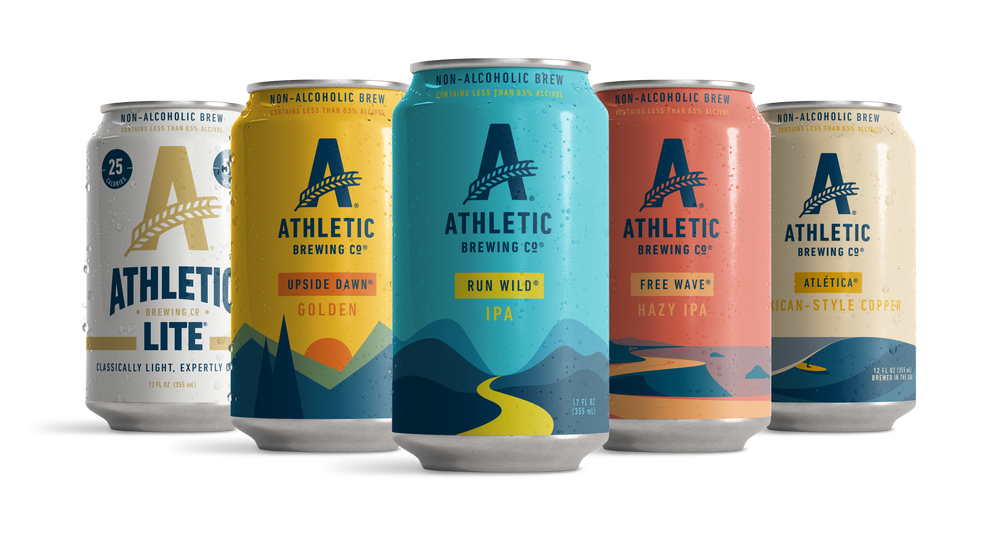
Athletic Brewing started with a simple premise: make non-alcoholic beer that actually tastes good. The company’s brewing team has won 185 taste awards. Two of its most popular brews—Run Wild IPA and Free Wave Hazy IPA—rank among the top 20 best-selling IPAs in America, competing directly with alcoholic beers.

But Shufelt’s real breakthrough was completely reframing what non-alcoholic beer could mean. Instead of hiding it, he made it aspirational.

The strategy was deliberate: attach the brand to elite athletes, Michelin-starred chefs, and earn prestigious awards for taste and quality. Celebrity investors and ambassadors include NFL star JJ Watt, cyclist Lance Armstrong, tennis champion Naomi Osaka, and chef David Chang. Today, Athletic appears on 22% of Michelin-starred menus nationwide.

It worked. The company built what Shufelt calls “a very well-armed amount of social proof” that gave people permission to drink non-alcoholic beer proudly.

Related: How He Built a $230 Million Sports Nutrition Brand ‘Without Spending a Dollar on Ads’

Beyond Dry January

Athletic’s January campaign drives massive customer acquisition, but those people also have the highest retention rates of the year.

“They realize they’re drinking almost entirely non-alcoholic beer because it fits in so many occasions in their life,” Shufelt says. “It feels like a guilty indulgence—delicious, super low calorie, not intoxicating, but still relaxing.”

And it’s not just the abstinence crowd. 80% of its customers still consume alcohol on some occasions, and the company sees another major spike the week after the Super Bowl, proving the appeal extends far beyond Dry January resolutions.

The strategy works because Shufelt isn’t asking people to declare they’re sober or make permanent commitments. He’s just giving them a healthier option that fits into their actual lives. “Athletic is beer for the modern adult,” he says.

Related: These Two Founders Built the ‘Dyson of Water Filters’ — and Hit Eight-Figures in Under a Year

The long game

Shufelt’s ambition extends far beyond building America’s largest non-alcoholic brewing company. He’s trying to change what drinking means in American culture.

“I’m really trying to break down the post-prohibition stigmas that still exist,” he says. “We want to make sure people feel like they don’t have to declare that they’re sober or how much they drink or when they drink or when they don’t.”

His ultimate vision? “That by the time my kids turn 21, the word sober is just totally irrelevant.”

The market is moving in that direction. A record 53% of Americans now believe consuming one to two drinks per day is bad for one’s health, up 14 percentage points since 2023. Nearly half of Americans are trying to drink less alcohol in 2025. When Athletic launched in 2018, non-alcoholic beer accounted for just 0.3% of total beer sales. Today it’s over 3% at grocery stores—and has grown at a 30% CAGR since 2020.

Athletic now operates custom breweries in Connecticut and California with a combined capacity of over 1 million barrels. Its beers are available at more than 75,000 retail locations nationwide, and the company has expanded to the U.K., Canada, and parts of Europe.

Slowly but surely, Athletic is reframing the entire category from one month of abstinence to a life of moderation.

Key Takeaways

  • Athletic Brewing became America’s #1 non-alcoholic beer by eliminating the stigma around non-alcoholic beer.
  • The company created social proof by partnering with elite athletes like JJ Watt and Naomi Osaka and landing on 22% of Michelin-starred menus nationwide.
  • It turned Dry January customers into year-round buyers by offering a guilt-free option that fits modern lifestyles.

Bill Shufelt loved beer. He loved sports bars, restaurants, and the ritual of cracking open a cold one with friends. But he didn’t love the way beer made him feel. The alcohol was having negative effects on his health and his productivity.

Shufelt stopped drinking in 2013, but he was frustrated by the lack of great-tasting non-alcoholic beer options available to him at the time. After years of research and business planning, in 2017, Shufelt co-founded Athletic Brewing Company with John Walker, and the pair set out to solve a problem that had plagued the beer industry for years: Develop a range of full-flavored non-alcoholic beers that people would actually be proud to drink.

https://www.entrepreneur.com/starting-a-business/how-this-founder-made-dry-january-a-yearly-movement/502331


How Your M&A Deal Could Go Sideways Even After Closing — and How to Prevent It

Opinions expressed by Entrepreneur contributors are their own.

Key Takeaways

  • Working capital disputes are common and costly. Post-closing disagreements over working capital definitions, accounting decisions and timing can lead to legal battles, frustration and damaged relationships.
  • Most disputes can be avoided by clearly defining working capital terms upfront, aligning with respective incentives and establishing a neutral third-party arbitration mechanism.
  • The deals that flow smoothly are the ones in which both parties actually agree on what they are buying and selling.

It took three months to close on a $140 million acquisition when the CFO of the company I acquired called me. We were doing a post-close working capital reconciliation, and the seller and I were at odds by $3.2 million. That was not the call you want to receive late on a Friday.

The root cause? How we defined and calculated net working capital. A simple reconciliation process turned into a six-month argument that burned through legal fees, strained relationships, and converted what felt like a smooth deal into something that created frustration for all parties involved.

During the next 18 months, I witnessed this same exact scenario occur in four more M&A transactions within our portfolio. Teams spent months discussing the purchase price, earnouts and reps & warranties. Then they tacked on a working capital clause (typically copied and pasted from prior agreements) in the final couple of weeks leading up to closing without considering the details.

Why working capital is ignored

Most people view acquisitions as a valuation exercise: What is the value of the business, and what am I willing to pay for it? All the stakeholders focus on the valuation questions. Working capital is viewed as “plumbing.” It is necessary but boring.

Working capital mechanisms are used to adjust the purchase price of the business based on the amount of working capital at closing versus the expected working capital at closing. This mechanism exists because a business’s cash position changes throughout the year. Therefore, the acquirer is purchasing the enterprise and not the business at a specific point in time.

The problem is not the concept of working capital; it is how it is executed. I have seen deals where the working capital target was established using 12 months of historical data, and yet the business was seasonal, and none of the participants accounted for it. I have also seen disputes over whether certain accruals should be included in the calculation of working capital. I have also seen disputes over what constitutes “business as usual” versus a one-time adjustment.

The biggest challenge is not the number itself, but the definition of terms that were agreed to months earlier. I have found three most problematic areas where disputes really occur:

1. Normalizing working capital:

The majority of purchase agreements define normal working capital as the trailing 12 months. If the seller managed cash aggressively prior to the sale, the target will not reflect the actual working capital requirements to operate the business. You essentially buy a business that requires more working capital than you valued in your pricing.

2. Deciding which items to include/exclude:

Simple accounting decisions with respect to cash, liabilities, deferred revenue and customer deposits can result in significant financial impacts.

3. Timing of measurement:

Deals typically close at month-end; however, working capital is finalized weeks later, after the company’s books are closed and audited. At this point, the parties are relying on estimates, cut-off determinations and professional judgments. If the purchase agreement does not provide guidance on how such estimates are to be made and who will bear the burden of any uncertainty related to those estimates, the parties are establishing grounds for a dispute.

A $2 million or $3 million dispute seems substantial, and it is. However, the higher cost of such disputes is the wear and tear on the parties involved in the deal. By the time working capital issues arise, the deal is closed. Integration has commenced. The new management team is trying to build momentum, and instead of driving growth, the parties are again in conference rooms debating accounting procedures and litigating definitions.

I have seen it destroy the relationship between buyer and seller who had previously enjoyed a strong relationship.

The irony is that most of these disputes can be avoided just by negotiating smarter and earlier.

The working capital formula

To avoid such drama, there were several commonalities between the deals I worked on:

1. Each party clearly defined its understanding of working capital from the start. In addition, each party was required to test those definitions based on the historical financial data and walk through potential edge case scenarios.

2. Each party was able to align its respective incentives. One of the deals I worked on created a working capital target in terms of a collar. A small variance either up or down did not result in an adjustment, while significant swings resulted in an adjustment. By creating this type of structure, the parties were no longer incentivized to “nickel-and-dime” each other on every accrual.

3. Finally, each party was able to establish a neutral third-party arbitration mechanism. The best purchase agreements I have seen provide for a clear, rapid dispute resolution mechanism that includes a named accounting firm that both parties agree to prior to closing. As a result, when a dispute arises, you do not need to spend time negotiating the rules of the game; you simply need to play by them.

In addition to the above three items, bringing your deal team and operating CFO into the discussions early-on also helps. While investment bankers and M&A attorneys are very good at structuring deals, it is typically your deal team and operating CFO who identify operational red flags that may not appear in a quality of earnings report.

The lesson I continue to learn about working capital is that it appears to be a minor detail until it is not. And once it is not, it is often too late. The deal is closed, the money has been transferred, and you are left to try to reverse engineer what “normal” should have been.

The deals that ultimately flow smoothly are not necessarily the ones with the most creative structures or the largest multiples. Instead, they are the deals where both parties actually agree on what they are buying and selling. And this agreement begins with the many details that everyone thinks they can determine later.

Sign up for the Entrepreneur Daily newsletter to get the news and resources you need to know today to help you run your business better. Get it in your inbox.

Key Takeaways

  • Working capital disputes are common and costly. Post-closing disagreements over working capital definitions, accounting decisions and timing can lead to legal battles, frustration and damaged relationships.
  • Most disputes can be avoided by clearly defining working capital terms upfront, aligning with respective incentives and establishing a neutral third-party arbitration mechanism.
  • The deals that flow smoothly are the ones in which both parties actually agree on what they are buying and selling.

It took three months to close on a $140 million acquisition when the CFO of the company I acquired called me. We were doing a post-close working capital reconciliation, and the seller and I were at odds by $3.2 million. That was not the call you want to receive late on a Friday.

The root cause? How we defined and calculated net working capital. A simple reconciliation process turned into a six-month argument that burned through legal fees, strained relationships, and converted what felt like a smooth deal into something that created frustration for all parties involved.

https://www.entrepreneur.com/money-finance/how-your-ma-deal-could-go-sideways-even-after-closing/501815


The Washington Post Just Laid Off One-Third of Its Staff In a ‘Broad Strategic Reset’

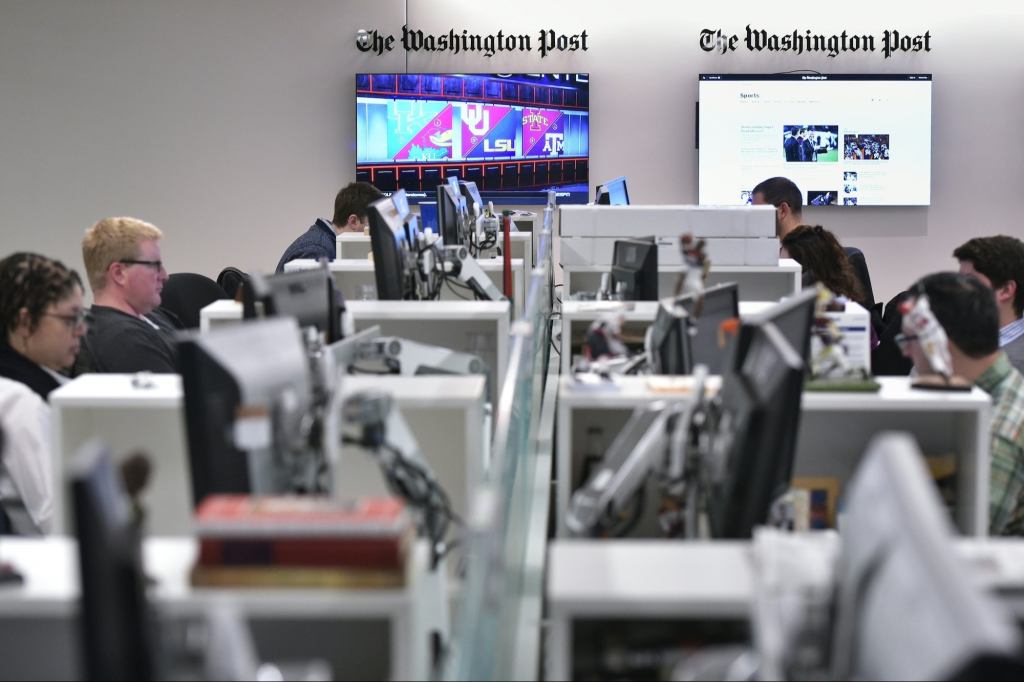
The Washington Post is cutting one-third of its staff in what may be the most dramatic reshaping in the newspaper’s modern history. Executive Editor Matt Murray called it a “broad strategic reset” during a staff meeting on Wednesday, according to The Wall Street Journal. The cuts affect the newsroom and other departments as the Jeff Bezos-owned newspaper tries to break even by the end of 2026.

The Post is closing its sports department in its current form, shrinking international coverage, and restructuring its metro section to focus on local print subscribers. The paper will also close its Books section and suspend its Post Reports podcast. The focus will shift to national news, features, investigations, and health and wellness coverage.

The shake-up comes after the Post lost $77 million in 2023 and $100 million in 2024, as it dealt with traffic declines from Google and Facebook.

Read more

The Washington Post is cutting one-third of its staff in what may be the most dramatic reshaping in the newspaper’s modern history. Executive Editor Matt Murray called it a “broad strategic reset” during a staff meeting on Wednesday, according to The Wall Street Journal. The cuts affect the newsroom and other departments as the Jeff Bezos-owned newspaper tries to break even by the end of 2026.

The Post is closing its sports department in its current form, shrinking international coverage, and restructuring its metro section to focus on local print subscribers. The paper will also close its Books section and suspend its Post Reports podcast. The focus will shift to national news, features, investigations, and health and wellness coverage.

The shake-up comes after the Post lost $77 million in 2023 and $100 million in 2024, as it dealt with traffic declines from Google and Facebook.

Read more

https://www.entrepreneur.com/business-news/the-washington-post-just-laid-off-one-third-of-its-staff/502444


How Cost Pressures And Loan Constraints Are Reshaping Small Business Decisions

Opinions expressed by Entrepreneur contributors are their own.

This article is part of the America’s Favorite Mom & Pop Shops series. Read more stories

Key Takeaways

  • Small businesses are optimizing for survival and flexibility, not rapid growth.
  • Rising costs and selective lending are reshaping how entrepreneurs define success.
  • Resilience has become a strategy, not a phase, for small businesses.

In 2025, small businesses continued to form the backbone of economic activity. This was through their widespread market presence rather than rapid expansion. Alongside accounting for the majority of operating firms, they supported more than half of the global workforce. Despite this, their operating conditions have become increasingly constrained.

Many small businesses are now adapting to tighter financing access and sustained cost pressures rather than prioritizing growth. These new challenges are reshaping how businesses plan, invest and view success.

When consolidating insights from multiple data sources, we see a business landscape centered around resilience rather than speed or scale.

Cost pressure is the primary constraint

Rising operating costs and inflation remained the most frequently cited business challenges in 2025 among small businesses. In Guidant’s Small Business Trends Infographic, 22% of business owners identified rising costs as their primary concern. Lack of capital or cash flow follows closely at 18%, reinforcing the compounding effect that financial pressure can have on small businesses.

If we analyse the overall figures, they show that the dominant constraints are no longer operating issues, such as marketing or hiring. Many decision-making processes now center around cost control and financial resilience.

Small businesses tend to prioritize flexibility over expansion if their expenses rise before their revenue stabilizes. Even if demand exists, fixed commitments become harder to justify.

Startup costs and limited margin for error

This cautious business posture is reinforced by the clearly high startup costs. Data from Guidant and SBA-referenced studies found that over 55% of U.S. small businesses need between $50,000 and $500,000 in initial capital. Shockingly, only 3% were successful with less than $50,000.

These figures suggest that businesses have little room for error in the early stages of operation. After the financial commitment is made, the ability to pivot, pause or absorb miscalculations quickly diminishes.

Because of this, many businesses are now focusing on preserving their optionality rather than expanding. This is primarily driven by structural exposure created at entry rather than risk aversion alone.

Loan access remains selective

While financing access has not disappeared, it’s become more conditional.

Approximately 40% of formal small and medium-sized enterprises globally are credit-constrained, according to figures taken from the World Economic Forum research. Because of this, these businesses are either partially or fully unable to access loans under their current operating conditions.

Small business loan approval rates in the U.S. declined in 2024 before stabilizing in early 2025. Data taken from Statista show that approval rates remain unevenly distributed according to lender type, with small banks approving more applications compared to online lenders and large banks.

These figures suggest a clear behavioural shift: business financing is no longer seen as being available on demand. Loan access for businesses is now governed by timing, borrower profiles and broader economic conditions.

Early failure risk and defensive decision-making

Conservative decision-making continues to be reinforced by high early-stage business failure rates.

Approximately 20% of U.S-based small businesses fail within their first year. This rises to 25% in the second year and approximately 50% within five years. These figures are taken from Shopify’s Small Business Statistics and SBA-aligned longitudinal studies.

This highlights that business survival risk is about much more than the initial formation period. In practice, many businesses tend to respond to this by acting early, investing in systems, services and long-term commitments designed to reduce uncertainty in the future.

In reality, this early spending can reduce business flexibility rather than increase stability, mainly due to the high-cost and capital-constrained environments. The main issue is the sequencing rather than the owner’s preparation. The downside risk can be easily amplified when commitments are made before the operational complexity is allowed to materialize.

Implications for small business strategy

Collectively, these trends suggest a shift in how small businesses define progress.

Businesses are increasingly prioritizing managing cost exposure, preserving cash flow and maintaining adaptability over the short-term, with growth remaining as a long-term objective. Owners are shaping their decisions on the need to remain viable under sustained operating pressure rather than future expansion opportunities.

This mindset is further reflected by small cost considerations. While minor in isolation, the use of promo codes or discounted access to tools and services suggests a heightened cost sensitivity among owners. This is seen especially during the early and mid-stage operations.

Many owners are now optimizing their businesses for endurance rather than speed.

Looking ahead to 2026

As we move through the start of 2026, sentiment remains cautiously optimistic despite the constraints discussed above.

Surveys from the Bank of America and Comerica show that at the start of 2026, 74% of U.S. small business owners expect noticeable revenue growth. However, only 60% plan to expand their operations.

These figures reflect cautious optimism paired with restrained growth. Business growth rates continue to be shaped by cost pressure and ease of loan access.

Conclusion

In 2025, the small business landscape is defined by structural constraints more than opportunity scarcity. Businesses are reshaping how they evaluate risk and reward based on rising costs, selective lending conditions and high startup capital requirements.

With this, many small businesses are now prioritizing durability over pursuing growth and expansion. Survival has moved from being a temporary phase to a strategic consideration.

Business uncertainty can not be eliminated by understanding cost pressure and loan access. However, it does show where the true risk really is. In the current business environment, financial restraint and disciplined decision-making should not be seen as hesitation. They are now rational responses to the reality of small business operations as we move into 2026.

When consolidating insights from multiple data sources, we see a business landscape centered around resilience rather than speed or scale.

Key Takeaways

  • Small businesses are optimizing for survival and flexibility, not rapid growth.
  • Rising costs and selective lending are reshaping how entrepreneurs define success.
  • Resilience has become a strategy, not a phase, for small businesses.

In 2025, small businesses continued to form the backbone of economic activity. This was through their widespread market presence rather than rapid expansion. Alongside accounting for the majority of operating firms, they supported more than half of the global workforce. Despite this, their operating conditions have become increasingly constrained.

Many small businesses are now adapting to tighter financing access and sustained cost pressures rather than prioritizing growth. These new challenges are reshaping how businesses plan, invest and view success.

https://www.entrepreneur.com/business-news/why-small-businesses-should-choose-resilience-over-growth/502129


Amazon Says Prime Members Avoided 64 Trips to Stores Last Year by Using Fast Delivery Instead

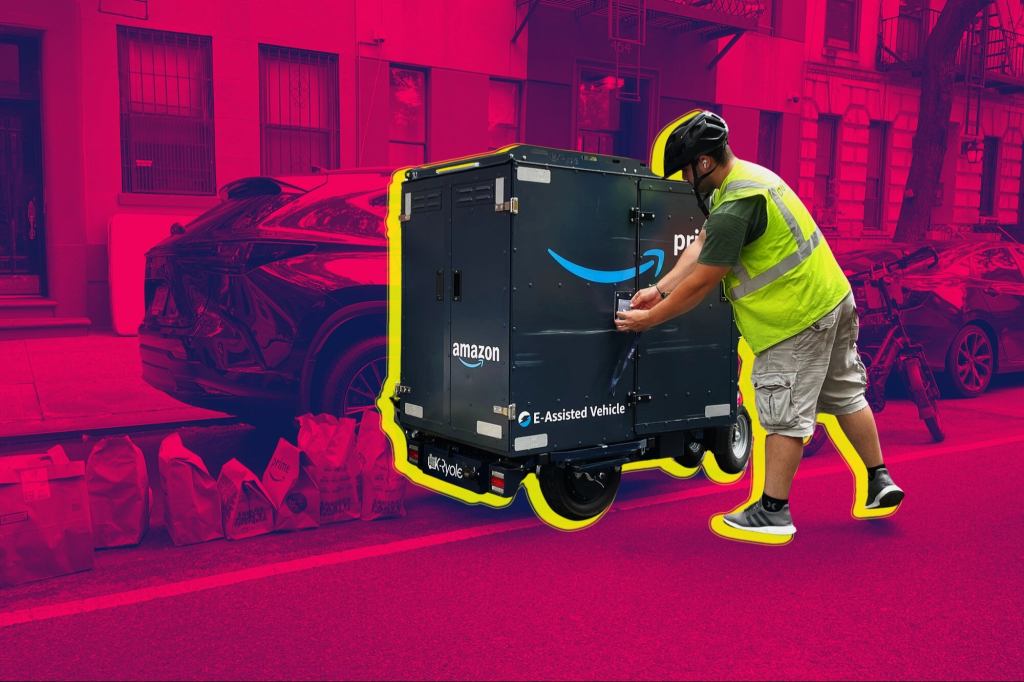
Remember grocery store runs? Amazon says those are going extinct. The company revealed that Prime members saved an average of 64 trips to physical stores last year by ordering basics online instead.

That’s a major shift. Groceries and household essentials now account for half of all fast deliveries to U.S. Prime members, compared to earlier years when fast delivery skewed toward purchases like electronics and clothing. Amazon has spent the past year integrating perishable groceries and prescription medications into its same-day delivery network.

The company also expanded same- and next-day delivery to smaller cities and rural areas. Monthly customers in rural areas nearly doubled, with 49 of the top 50 repurchased items classified as household essentials. Amazon estimates the average Prime member saved about 55 hours last year by skipping store trips.

Read more

Remember grocery store runs? Amazon says those are going extinct. The company revealed that Prime members saved an average of 64 trips to physical stores last year by ordering basics online instead.

That’s a major shift. Groceries and household essentials now account for half of all fast deliveries to U.S. Prime members, compared to earlier years when fast delivery skewed toward purchases like electronics and clothing. Amazon has spent the past year integrating perishable groceries and prescription medications into its same-day delivery network.

The company also expanded same- and next-day delivery to smaller cities and rural areas. Monthly customers in rural areas nearly doubled, with 49 of the top 50 repurchased items classified as household essentials. Amazon estimates the average Prime member saved about 55 hours last year by skipping store trips.

Read more

https://www.entrepreneur.com/business-news/amazon-prime-members-skip-64-store-trips-per-year/502442


Stuck in a Bad Mood? These 5 Steps Can Change How You Handle Stress

Opinions expressed by Entrepreneur contributors are their own.

Key Takeaways

  • Acknowledging small wins daily can shift focus from stress to success, fostering a more positive outlook.
  • Celebrating progress instead of waiting for final results can sustain motivation and joy throughout any journey.
  • Clarifying and acting upon personal values and a vision statement for your life can instill a sense of purpose and control.

Recently, a few clients have approached me in a bad mood. They’ve felt stressed or overwhelmed by a growing list of unfinished projects, tight deadlines and bosses who constantly urge them to “do more with less.”

While my clients remain committed to their work, they reported having a tough time feeling good about it lately. Here are the five steps I shared with them to snap out of it.

1. Make a list of small wins

Start a log or journal of things that are going well and add a few specific things to it daily. Look at it often. Regardless of how many things you feel aren’t going well, force yourself to think about the things that are going well (at home and at work).

Identify a productive meeting. Think of a meaningful conversation you had with a colleague over lunch. Perhaps you learned something valuable at this week’s town hall. Maybe your son scored a run in his little league game, or you finally fixed that kitchen cabinet. Great, put it all on the list.

What we think about grows, so the more you choose to focus on the good, the more you’ll automatically and immediately start noticing the good. This works the opposite way, too. So, the longer you refuse to do this, the longer you’ll feel that everything’s broken.

2. Don’t want to celebrate

When it comes to acknowledging specific outcomes or results, don’t wait until you’ve achieved them to celebrate. If you wait until the destination to acknowledge progress, you’ll miss all the joy in the journey. If you don’t celebrate along the way, you may never even reach your destination because people get so discouraged.

Regardless of how big your objective is, set milestones along the way and make the time to observe and notice progress. This means you’ll have to direct some of your focus towards lead measures (instead of just lag measures). Lead measures are predictable and influenceable actions or behaviors that ultimately help us arrive at our goals.

If you wanted to lose 50 pounds, you wouldn’t wait to see the final number on the scale to celebrate for the first time. You’d likely acknowledge your progress at 20 pounds, and you’d probably also celebrate what you were doing to achieve that progress: going to the gym, drinking water and eating healthier. We should celebrate lead measures along the way with everything that we do.

3. Watch your language

If you’re feeling down, there’s a good chance that you’ve been framing things negatively, especially in your conversations with yourself. Negative self-talk is a true thief of happiness.

Last week, an ambitious client told me that he “sat around and did nothing for a whole day, then felt guilty,” because he was so burnt out from work. I offered my highly driven client a reframe for his language. That’s because I chose to see his use of time differently from how he saw it. Instead of “sitting around and doing nothing,” I believed he was doing a very important “something:” resting, reflecting, recharging and reenergizing so that he could be his very best self the following day. It’s easier to feel comfortable and supportive of our decisions when we choose to frame them positively.

I’m not saying you should let yourself off the hook for being intentionally lazy, unethical or unkind. However, assuming you’re doing your best, it might make sense to give yourself a little grace. How you frame the tough situations you’re in is completely up to you. Berating yourself (or others) or whining isn’t going to make your problems disappear.

4. Tune into percentages

You won’t survive spending all your time on dreadful tasks. Make it a point to schedule 10% of your time (for example, at least five hours in a 50-hour workweek) doing fun things you enjoy.

Years ago, my company went through some downsizing, and I was asked to spend an inordinate amount of time in budget meetings focused on who and what we could cut. These were my least favorite topics, and it was harder to enjoy my work than usual. During that professional season, I made it a point to still host a weekly book club with other passionate leaders and recognize a few people each day. I also asked employees to send me success stories, which I made time to read daily.

Seeking out creative opportunities to smile kept me sane during this tough time. If you’re frustrated at work but aren’t forcing one or two simple joys onto your daily calendar, your frustration will quickly turn to misery.

5. Begin with the end in mind

The hardest of times feels easier when we remember our why. If you don’t have a vision statement for your career or your life, make one. If you already have one, make sure it’s in a place where you see it frequently, like your bathroom mirror, and start consulting with it daily.

Vision statements work best when we can make them actionable. If you look at some of the tenants on your mission statement and think, “I have no idea how I’m actually living that right now,” you’ve uncovered a big part of your problem. We feel our best when we align our behavior and how we spend our time with what we say is most important.

Even if you don’t know where you want to be in the future, you can probably identify who you want to be. Thinking about who we want to be is always a matter of acting on our values: for example, transparency, authenticity, courage, compassion, curiosity, etc. If you’ve identified your core values, then start each day by asking how you can live them. You’ll immediately feel a greater sense of control and clarity in your days.

Tough times are inevitable, and they come for all of us. I guarantee that using these simple five steps will help you navigate these moments in a far better mood, which will help you conserve the energy required to actually move yourself forward.

Sign up for How Success Happens and learn from well-known business leaders and celebrities, uncovering the shifts, strategies and lessons that powered their rise. Get it in your inbox.

Key Takeaways

  • Acknowledging small wins daily can shift focus from stress to success, fostering a more positive outlook.
  • Celebrating progress instead of waiting for final results can sustain motivation and joy throughout any journey.
  • Clarifying and acting upon personal values and a vision statement for your life can instill a sense of purpose and control.

Recently, a few clients have approached me in a bad mood. They’ve felt stressed or overwhelmed by a growing list of unfinished projects, tight deadlines and bosses who constantly urge them to “do more with less.”

While my clients remain committed to their work, they reported having a tough time feeling good about it lately. Here are the five steps I shared with them to snap out of it.

https://www.entrepreneur.com/leadership/5-proven-mood-reset-tricks-for-your-most-stressful-days/500300


Walmart Joins the $1 Trillion Club — The First Retailer To Do It

Walmart is one of the tech bros now. The retail giant crossed the $1 trillion market cap threshold on Tuesday, joining an exclusive club mostly made up of companies like Apple, Microsoft, and Amazon. Walmart’s stock has climbed more than 28% in the past year and over 14% so far in 2026.

The secret to its success? Walmart has transformed itself from a traditional brick-and-mortar into an tech powerhouse. Digital sales have been a major driver, with e-commerce revenue jumping 27% and advertising revenue surging 53% in its most recent quarter.

The surge also came from attracting wealthier customers during recent inflation. Efforts like curbside pickup and better private-label brands helped draw higher-income shoppers looking for deals.

Read more

Walmart is one of the tech bros now. The retail giant crossed the $1 trillion market cap threshold on Tuesday, joining an exclusive club mostly made up of companies like Apple, Microsoft, and Amazon. Walmart’s stock has climbed more than 28% in the past year and over 14% so far in 2026.

The secret to its success? Walmart has transformed itself from a traditional brick-and-mortar into an tech powerhouse. Digital sales have been a major driver, with e-commerce revenue jumping 27% and advertising revenue surging 53% in its most recent quarter.

The surge also came from attracting wealthier customers during recent inflation. Efforts like curbside pickup and better private-label brands helped draw higher-income shoppers looking for deals.

Read more

https://www.entrepreneur.com/business-news/walmart-becomes-the-first-retailer-worth-1-trillion/502417


The Lithium Gold Rush Just Minted a $1B Unicorn

Disclosure: Our goal is to feature products and services that we think you’ll find interesting and useful. If you purchase them, Entrepreneur may get a small share of the revenue from the sale from our commerce partners.

Demand for lithium is fueling a modern-day gold rush.

The industries that define our modern world, like artifiial intelligence (AI), robotics, EVs, and energy, all depend on lithium, which is used to make batteries and other energy storage systems. Microsoft CEO, Satya Nadella believes that the AI race will be won based on energy costs, not on who has the best models.

That’s why lithium demand is projected to grow a staggering 5X by 2040.1 That growth is an opportunity for investors. As Elon Musk bluntly put it, “Do you like minting money? Well, the lithium business is for you.”

One company translated this demand into substantial valuation growth since 2018, officially reaching the $1B unicorn territory last year.

Meet EnergyX. It has developed patented technology that the company says can recover 3X more lithium than traditional methods. The company says this breakthrough has already earned them more than $150 million in investments, including strategic investment and partnership from General Motors and POSCO, and a $5M U.S. Department of Energy grant.

Image Credit: EnergyX

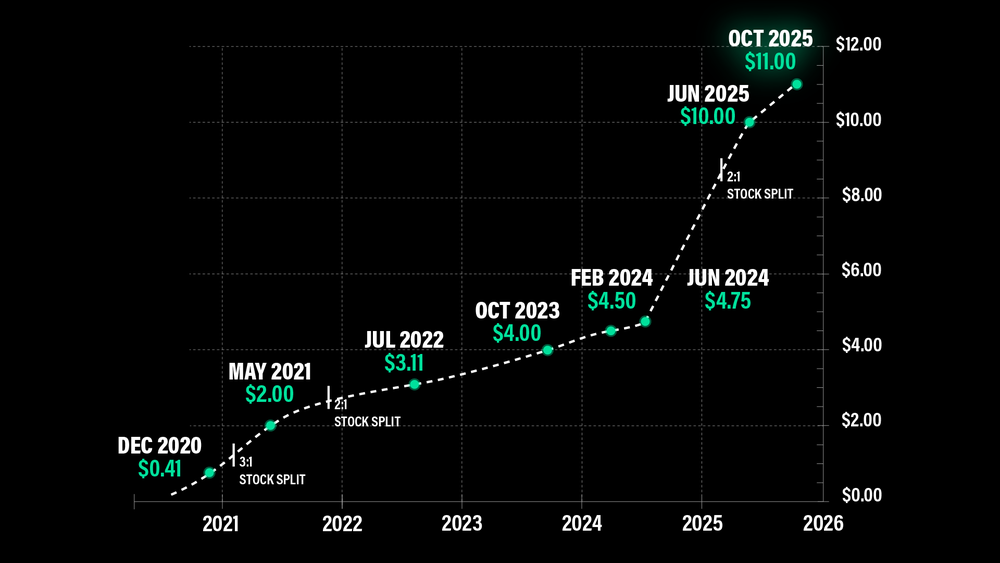
*Prices displayed have been adjusted to reflect the stock splits.

Now, EnergyX is at a pivotal transition stage, moving beyond proving the technology and into commercial-scale deployment, just as global lithium demand accelerates.

Here’s why investors are paying attention now:

  • $1.1B/yr revenue potential from 100k+ acres of Chilean land at projected market prices.
  • Goldman Sachs is engaged as a financial advisor on the Chilean project.
  • Nearly 50k gross acres of land secured for production in Arkansas and Texas.
  • An LOI for a $690M federal loan from EXIM Bank to help support large-scale builds is on the table.
  • EnergyX just announced expansion into nuclear energy, an industry Bank of America calls a $10 trillion opportunity, by supplying key lithium isotopes.

With proven tech and resources, mounting institutional support, a market poised for major growth, and new verticals emerging, the opportunity for investors today couldn’t be better timed.

That’s especially true considering that, due to growing investor demand, EnergyX’s share price is set to increase after February 26.

This is your chance to claim your stake in a private unicorn alongside General Motors, POSCO, and over 40,000 everyday investors.

Get your piece in this modern-day gold rush before their share price increases. Become an early-stage EnergyX shareholder today.

1 Global Energy, Lithium demand to grow fivefold by 2040, with cobalt demand rising by one and half times (2025)

Disclaimer:

Energy Exploration Technologies, Inc. (“EnergyX”) has engaged Entrepreneur to publish this communication in connection with EnergyX’s ongoing Regulation A offering. Entrepreneur has been paid in cash and may receive additional compensation. Entrepreneur and/or its affiliates do not currently hold securities of EnergyX.

This compensation and any current or future ownership interest could create a conflict of interest. Please consider this disclosure alongside EnergyX’s offering materials. EnergyX’s Regulation A offering has been qualified by the SEC. Offers and sales may be made only by means of the qualified offering circular. Before investing, carefully review the offering circular, including the risk factors. The offering circular is available at invest.energyx.com/.

Under Regulation A+, a company has the ability to change its share price by up to 20%, without requalifying the offering with the SEC.

Demand for lithium is fueling a modern-day gold rush.

The industries that define our modern world, like artifiial intelligence (AI), robotics, EVs, and energy, all depend on lithium, which is used to make batteries and other energy storage systems. Microsoft CEO, Satya Nadella believes that the AI race will be won based on energy costs, not on who has the best models.

That’s why lithium demand is projected to grow a staggering 5X by 2040.1 That growth is an opportunity for investors. As Elon Musk bluntly put it, “Do you like minting money? Well, the lithium business is for you.”

One company translated this demand into substantial valuation growth since 2018, officially reaching the $1B unicorn territory last year.

https://www.entrepreneur.com/money-finance/the-lithium-gold-rush-just-minted-a-1b-unicorn/502358